If the Tenants Keep on Dying, Better Get Out of that EVIL High-Rise! “The Case of the Bloody Iris” reviewed! (Celluloid Dreams / 2-Disc Blu-ray and 4K UHD Set)

Own Your 4K and Blu-ray copy of “The Case of the Bloody Iris” today!

A pair of beautiful women are heinously murdered in a respectable high-rise apartment building.  As the case remains unsolved, a real estate architect, Andrea Antinon, is looking for models to market his new property, happening upon models Jennifer Langsburgy and Marilyn Ricci during his photographer friend’s photoshoot, and entices them by offering a sublet of the now vacant apartment in the building where one of the girls was murdered.  Jennifer, who finds herself slowly falling for the Andrea, is stalked by her polyamorous sect past and the group’s leader, her ex-husband, Adam who refuses to let her go and while he proves himself dangerous, attempting to kill Andrea after one of his dates with Jennifer, Adam is found dead in her new apartment.  The suspect pool grows as police are continuing to be baffled by an elusive killer remaining at large and set their sights on Andrea with his brief connections in two of the three victims.  Evidence against Andrea swells as those around Jennifer wind up dead and she’s next on the kill list. 

“The Case of the Bloody Iris,” the Iris represented as the delicately beautiful flower that symbolized the bound between Jennifer and her deranged, sex cult ex-husband Adam, is the 1972 giallo thriller from the prolific spaghetti western, Italian director Giuliano Carnimeo (from the previous “Sartana” series and would later helm “The Exterminators of the Year 3000″) and prolific giallo screenwriter Ernesto Gastaldi (“Your Vice is a Locked Room and Only I Have the Key,” “Torso,”) shot in the city of Genoa doubling as Milan.  Full of eccentric suspects, taboo desires, and handsome principals, “The Cast of the Bloody Iris” is a very attractive, violent, and superbly shot whodunit.  Under the original native title of “Perché quelle strane gocce di sangue sul corpo di Jennifer?” aka “What Are Those Strange Drops of Blood on the Body of Jennifer?” Galassia Films serves as the production company with Luciano Martino (“The Strange Vice of Mrs. Wardh”) having produced the giallo. 

The story floats back-and-forth between a pair of co-headlining stars, one of them being the retrospective cult and sex icon actress Edwige Fenech in one of her earlier performances, and who has starred in “Strip Nude for Your Killer” and “The Strange Vice of Mrs. Wardh.  Co-star George Hamilton also stars in that latter giallo, reteaming the handsome-faced “The Case of the Scorpion’s Tail” actor born in Uruguay, and whose birth name is Jorge Hill Acosta y Lara, with Fenech in their respective roles of model Jennifer and architect Andrea intertwined into what is a romantic tale of love at first sight that becomes mangled by a crazed killer on a murder spree and they’re at the heart of the matter.  If revisiting Giuliano Carnimeo, comedies and watching some of his interviews, you can see why he folds in subtle comedic elements that doesn’t allow “The Case of the Bloody Iris,” or a good chunk of his credits, to be a totally engaged, heart-racing murder mystery; those comedic elements come in the form of bumbling police, a too dead-set on commissioner (Giampiero Albertini, “Commandos”) and his more ungainly assistant (Franco Agostini, “The Sex Machine”), who are always one step behind and in the wrong direction.  The juxtaposition may be too evident yet it’s also welcoming, breaking up the forbidding business with a little levity, and creates a backend sense of assurance knowing police, just like today, can be human and clueless on serious natured instances.  The suspect pool and other salient supporting principals include Paola Quattrini as Jennifer’s roommate Marilyn (no doubt based loosely on Marilyn Monroe), Ben Carra as Jennifer’s sex cultist ex-husband, Jorge Rigaud as the professional violinist neighbor, Annabella Incontrera as the professor’s lesbian daughter, Oreste Lionello as a sleazy photographer, Carla Brait as a nightclub’s dominating femme, and Maria Tedeschi as the unfriendly neighbor.

Even though giallos did not appeal to him nor did they really become a staple of his oeuvre, director Giuliano Carmineo had a different perspective than most and that closely aligns with masterclass filmmakers like Dario Argento.  Carmineo and cinematographer, who’ve collaborated previously on a pair of Sartana westerns, had purpose in their odd and first person camera shots and movements, such as laying the camera down and sideways as characters perform routine events before being attacked or looking up and doing a 360-degree turn as if scanning a stairway, that coincided with the usual first person perspective of the conventionally masked and gloved killer wielding a deadly blade.  The technique engages the viewer, as in a sort of tell that something is about to happen or is amiss in a scene to create breath holding, heightened anxiety, but the multi-faceted narrative itself doesn’t need assistant in keeping viewers glued to the edge of their seats with the eclectic mix of sultry and taboo eroticism, lampooning the authority figures, designed seamless red herrings, unique characters, a variety in murder, and an elaborate, mysterious complexity that’s downright deviant. 

If you’re a distributor looking to shoot your shot on your first release, new boutique physical media label, Celluloid Dreams, hit the bullseye with a 2-disc 4K UHD and Standard Blu-ray release of “The Cast of the Bloody Iris” on a HVEC encoded, 2160p resolution, 100 gigabyte 4K UHD and on an AVC encoded, 1080p, 50 gigabyte Blu-ray, scanned and restored brand new in 4K on a pin-registered Arriscan from the film’s original 2-perf Techniscope camera negative, and presented in the original widescreen aspect ratio of 2.35:1.  Coloring grading and restoration is noted on the interior insert being entirely completed by Celluloid Dreams Studios to remove all the celluloid and age imperfections and stimulate a vivid, vibrant picture quality and, by the giallo-Gods, this has to be one of the more flawless image presentations I’ve seen on 4K and Blu-ray in a very long time, or ever!  Meticulous precision techniques reveal a straight from-farm-to-table quality, organic for its era with a balanced, natural grain and color saturation.   Details have delineated trim and higher contrast leveling where appropriate for darker scenes, such as an unilluminated bedroom or a basement boiler room, that retains the rich inkiness of the negative space.  No signs of compression issues in the negative spaces as well and no signs of unnecessary enhancing.  Two, lossless audio options are available for selection:  an Italian 1.0 DTS-HD and an English 1.0 DTS-HD.  Both remastered tracks from the optical sound negative provided full fidelity through the single channel.  Concise and crisp dialogue renders through in full, robust effect with ample detail in the ambience and depth to create a dynamic space.  No hissing, crackling, or popping in the ADR dialogue or ambient tracks and swanky tuned by Bruno Nicolai’s multi-instrumental base, drum, sintir-like guitar, and more score.  English subtitles are available on the Italian track.  With the larger capacity on the UHD, both formats are able to handle the included three featurettes with star George Hilton, principal actress Paola Quattrini, and director and writer, Guliano Carnimeo and Ernesto Gastaldi in Italian language.  Also included is a new commentary track from film critic and Celluloid Dreams co-founder Guido Henkel, an outtake reel that extend out certain scenes, photo gallery, the original Italian Opening Credits that beginning of the feature, and Italian and English theatrical trailers. Inside a dual-sided cardboard slipcover with both the feature’s baptized titles and illustrated cover art representation of Edwige Fenech, the black 4K UHD Amaray case possesses a second and more fleshy-erotic illustration of Fenech. The same art and arrangement are on the reverse side but with the Italian title. Each disc is housed on either side of the interior snapped firmly on a press-lock on with a release acknowledgements and an advert for their next physical feature, “La Tarantola Dal Ventre Nero” aka “Black Belly of the Tarantula.” The region A playback release has a runtime of 94 and is not rated.

Last Rites: Showing such diligence in the restoration efforts, Celluloid Dreams is the new kid on the block, the promising young boutique label with the Midas touch, with a killer first presentation in “The Case of the Bloody Iris.” We can’t wait to see more!

Own Your 4K and Blu-ray copy of “The Case of the Bloody Iris” today!

Headstrong EVIL Bedeviled by the Past and the Younger Generation. “Peacock” reviewed! (Indiepix Unlimited / Blu-ray)

“Peacock” on Indieflix Unlimited Blu-ray!

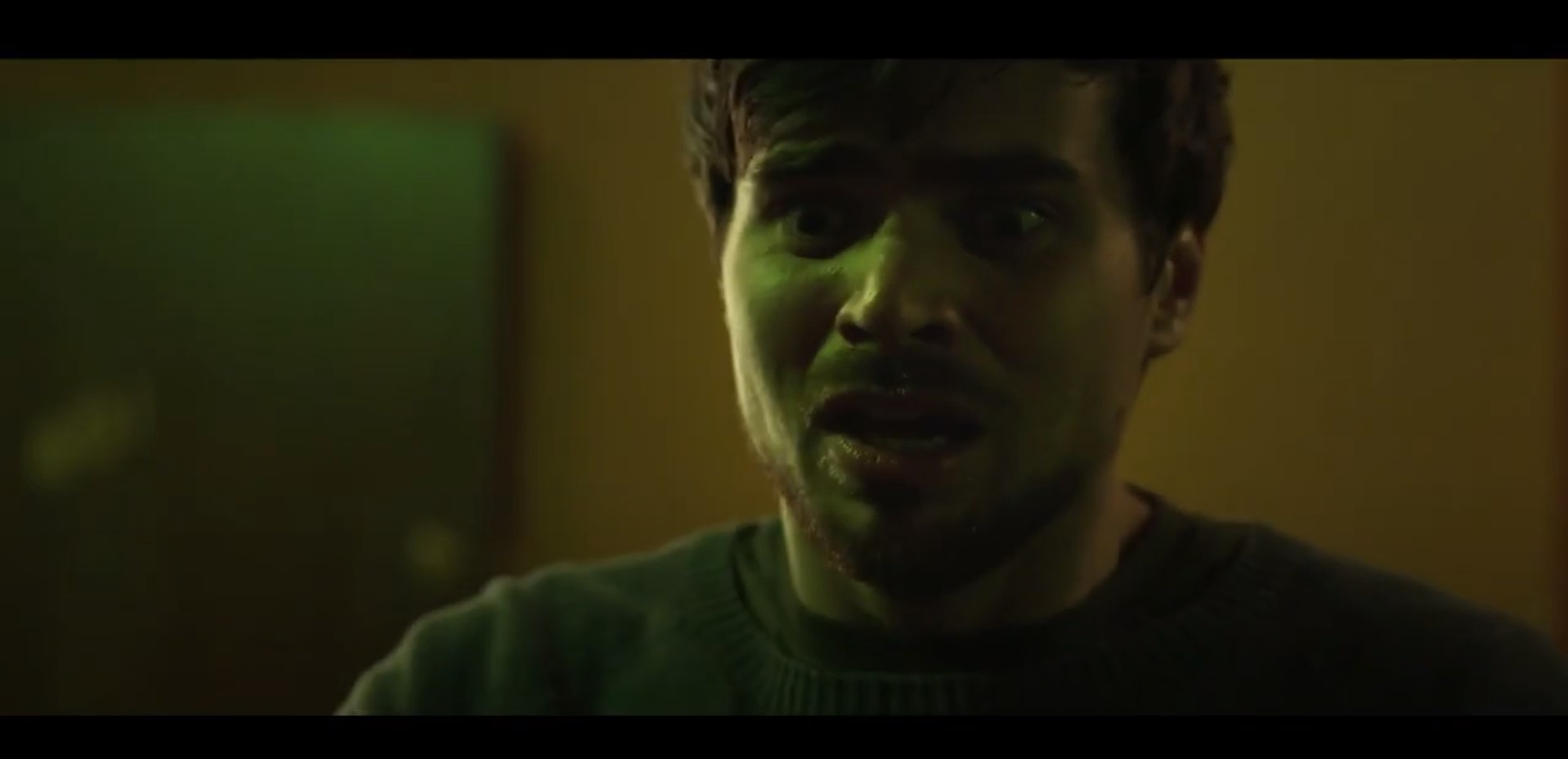
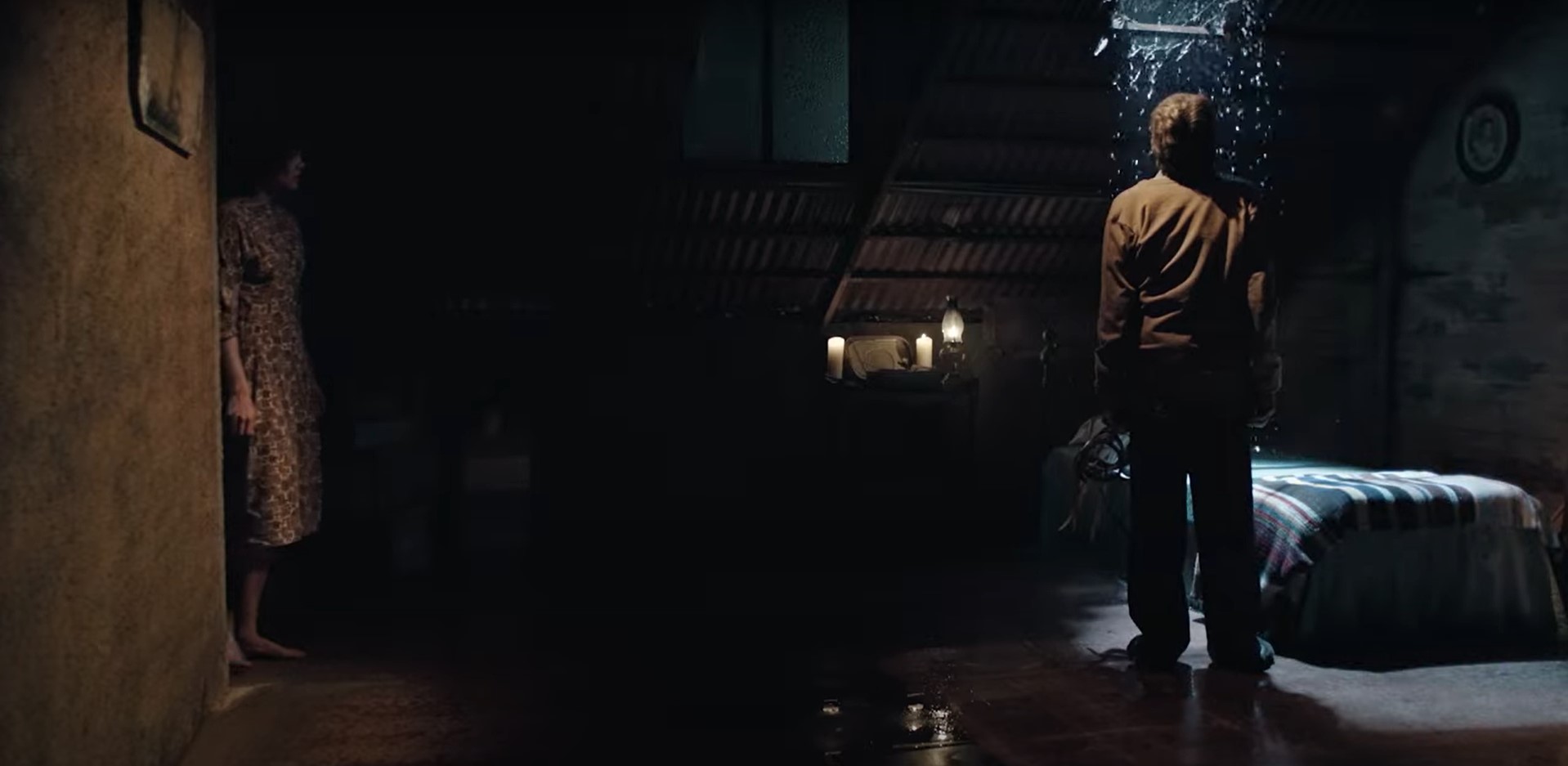
Unable to fit into The Foundation’s draconian conducts of an in-home professional caregiver, the organization decides to place Anna into the isolated home of Sarel Cilliers, a once prominent South African theologist aged into a feeble old man with prim and proper, religious convictions and living on the edge of a psychotic break.  Anna finds her hands are full with the demanding and stubborn Sarel and his almighty morality but his life’s work and past, strewn about his house as Sarel ceaselessly reopens boxes upon boxes of old files to study, draws in Anna as it strangely feels familiar to her as well as raising internal concerns about Sarel’s esteemed history.  The deeper she digs the more Anna falls into a psychosexual fixation that parallel and merge into Sarel’s own delusional state, soon the two share common afflictions of masked followers and surreal, terrifying imagery of a subjugated past that hasn’t loosened its traumatizing grip on them yet.

A psychological thriller that aims to suppress and shame youthful desire while simultaneously manifesting guilt as ghosts from an older generation’s sordid past at the behest of righteous expectations and a patriarchal society, “Peacock” is a strangely transfixing mental and sexual tug-a-war horror-thriller full of emblematic evocations and provocations from director Jaco Minaar.  Minaar’s debut 2022 feature film, under the native title of “Pou” from South Africa, is cowritten alongside David Cornwell in what has become the duo’s third collaborative project and is the first South African film to employ an intimacy coordinator for the strong sexual content scenes crucial to Anna’s storyline as well as perhaps a few bathing scenes with the older Sarel.  The Gothically-charged horror is a financial production of The Ergo Company with the organization’s Dumi Gumbi and Catharina Weinek, who produced “The Tokoloshe,” serving as co-producers alongside David Cornwell. Fever Dream Pictures, Monolith Film, and Indigenous Film Distribution are co-productions of the picture.

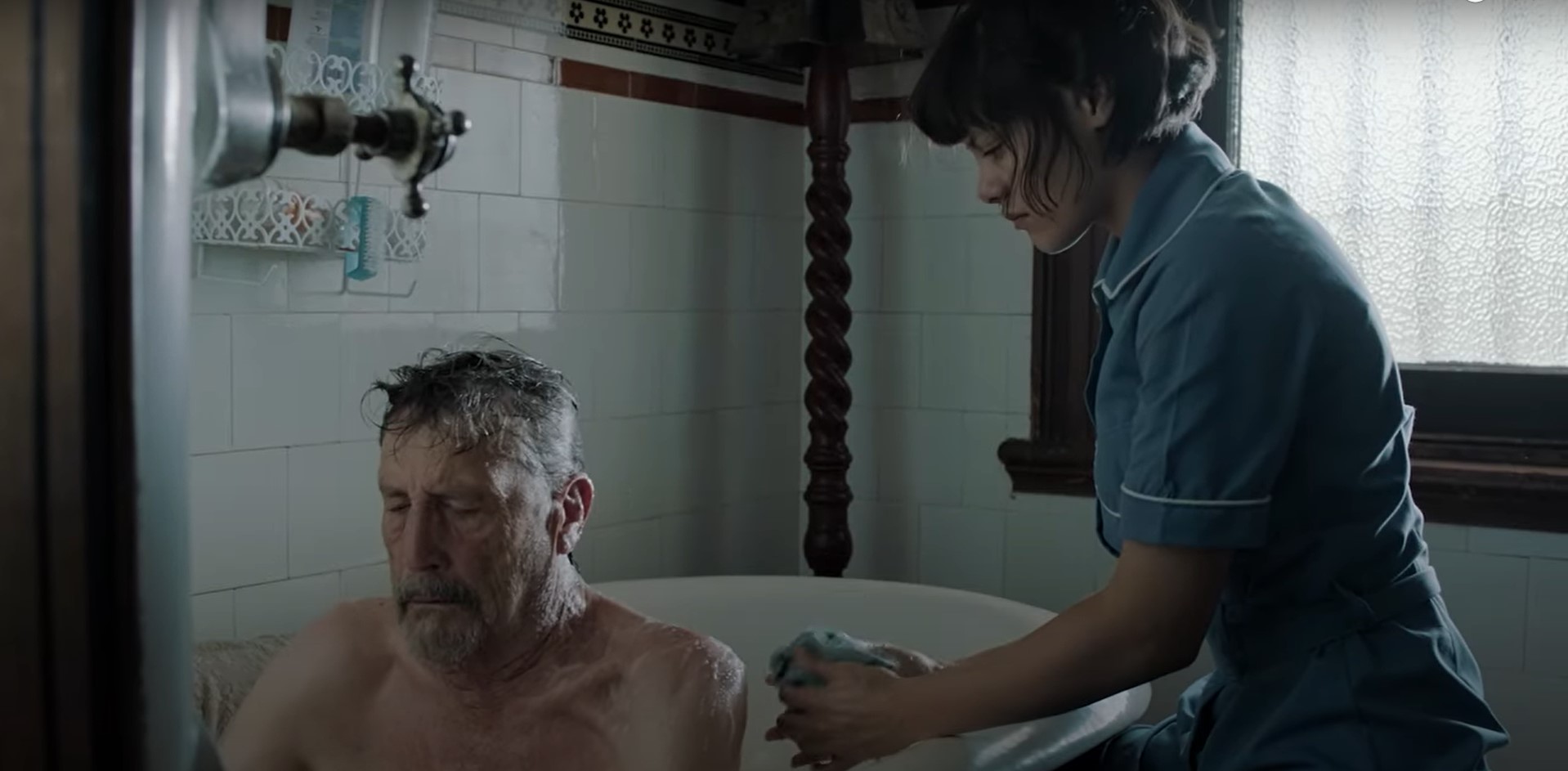
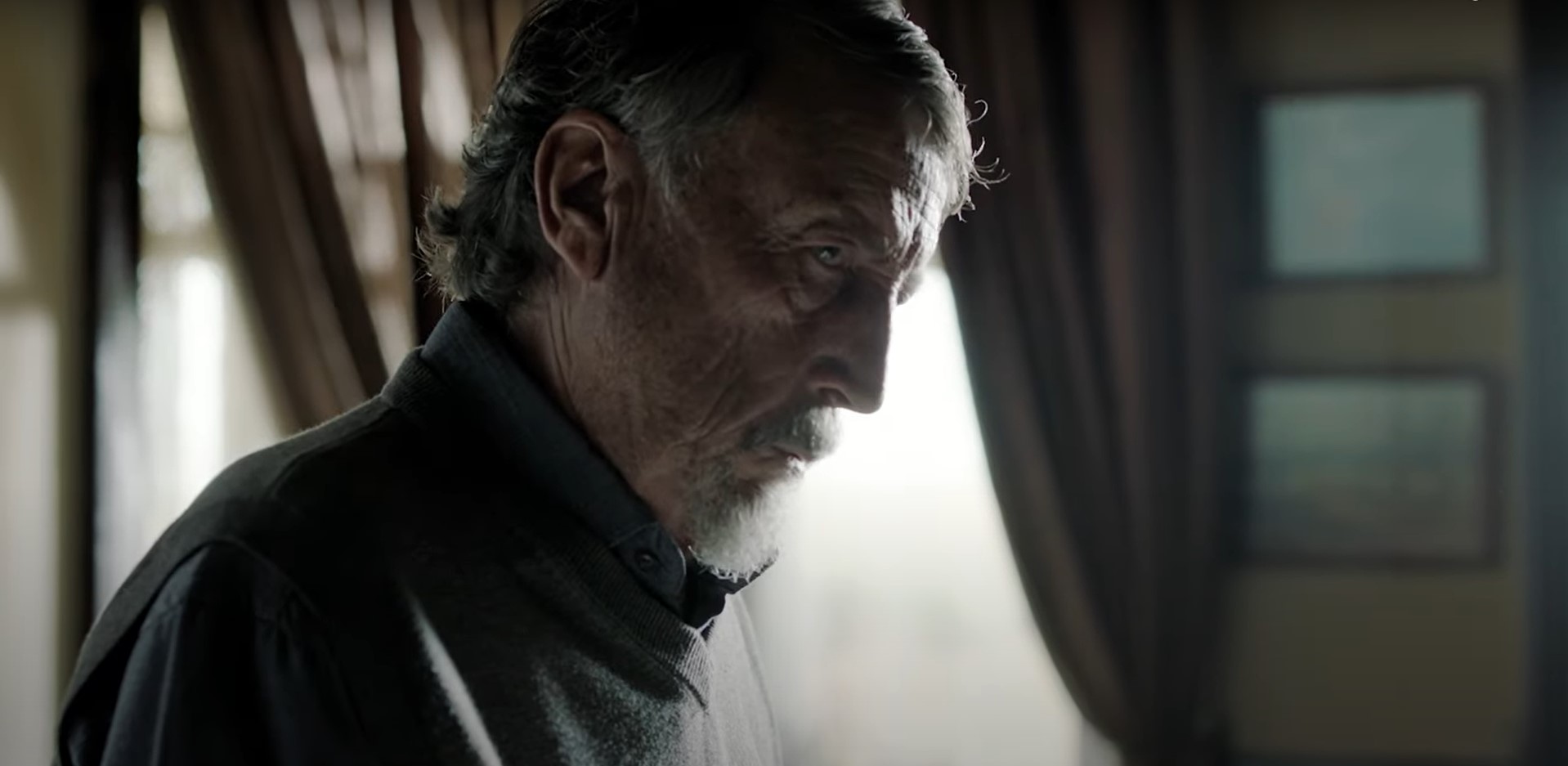
The principal pair of Anna and Sarel, played by South Africa Television actress, “Dam’s” Tarryn Wyngaard, and longtime actor Johan Botha, are representational characters in numerous ways.  Sarel is the established, iron-fisted patriarchy of yore having come to the end of his rope in life with his past transgressions, ones that represent heavily in the socio-political air of South Africa in decades ago, finally catching up to him in the form of a sort of indeterminable dementia.  Anna, on the other hand, is symbolic of youth, desire, and itching for liberty from a repressive system, such as The Foundation that houses young women, supposedly orphans, to be raised subservient and attentive but Anna’s regarded taboo lifestyle clashes with The Foundation’s, as well as the theologian Sarel’s, archaic belief system and so Anna then goes on this obstacle-laden journey of self-discovery that’s historically painful as well as excitingly new on the horizon as she meets Jean Basson (Ruan Wessels), son of Sarel’s house call doctor (Alida Theron), and whom both are virtually a mirror of Anna and Sarel on a lesser intense level.  Wyngaard and Botha earnestly stand firm as individualistic, idealistic characters butting heads to a culminating point of surreal transition of power.  Liza Van Deventer and Nicola Hanekom costar. 

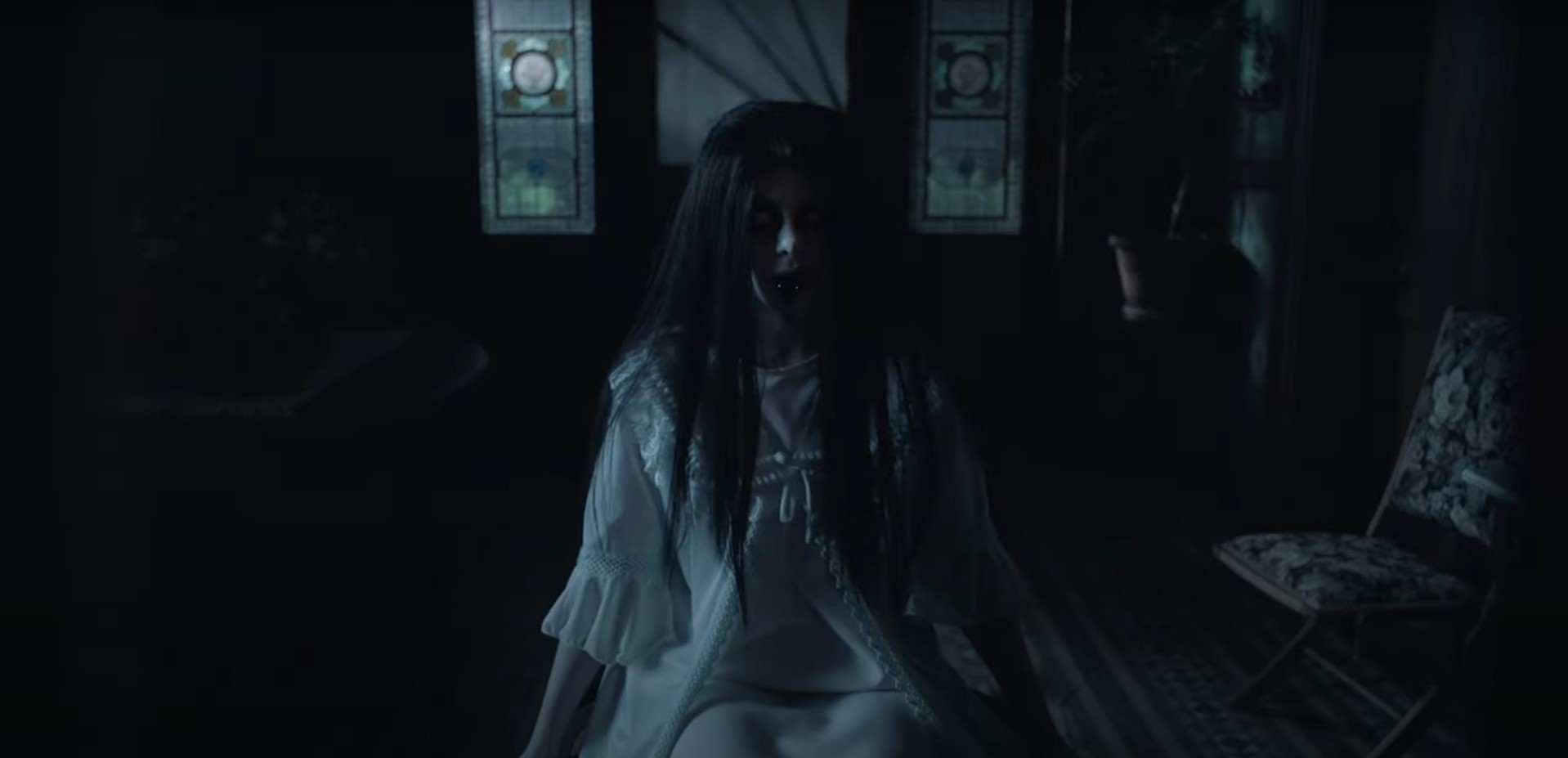
“Peacock” isn’t a knock-your-socks off, popcorn thriller with edge of your seat terror and special effects nor does it claim to be.  Instead, “Peacock’s” fable tale is fashioned delicately out of South Africa’s rough transitioning between conflicting oppositions from, and set as the period in the film, of the 1980s dealing with Apartheid.  From Anna’s atypical of the times perspective, as an outcast young woman growing and maturing in an era in which the old, patriarchal ways of doing things are quickly dwindling, much like the deteriorating mind of Sarel, the young woman tussles externally and internally in trying to conform to the brittle status quo while that’s not subsiding without a fight, yet the desires inside of her are eager to express themselves in a sexual way.  The contrasting phasing out rigidity and the phasing in tolerance courses through a single conduit of uneasy, shared surrealism that frightening and confusing to them both but affects them differently; the ghastly images forces Anna to face her past while those same images torment Sarel like a type of Hell he has to relive over-and-over and that is what the house represents to Sarel, being caged in a purgatory state that parallels the actual peacock living encaged and screeching just outside of the house.  The peacock itself embodies Sarel’s daughter, an image kindred to that of Anne’s illicit lover at The Foundation, who he locked away in the attic for having an improper relationship with a young, black man, an archaic and unfounded taboo from South Afrikaners shamefully stubborn history of the racially segregating Apartheid akin to the historical racism of American culture.  In the end, it’s the overwhelming guilt that plagues us all in “Peacock’s” thematical version of Hell.

Streaming service Indiepix Unlimited is slowly, but surely, releasing their repertoire onto physical media venue.  Granted, these DVD and Blu-ray releases are not top-notch quality, being mostly encoded onto DVD-R and BD-R with very little special features to accompany, but still better suited for viewing than the inconsistent determinants of steaming. The AVC encoded, high-definition 1080p, 25 gigabyte BD-R has sufficient storage to render a decently detailed feature that suffers little-to-no compression issues, presented in a widescreen 1.78:1 aspect ratio. Graded on a darker, bluer scale, “Peacock” does often have color reduction aspects that either is part of the story’s period approach or is a reproachable side effect of the writable disc, losing a richness to the black levels and leaning slightly more on a higher contrast. Details, too, appear smoother to a lesser degree but there are enough texture and tactile elements, such as the cracked leather of dusty old books, Sarel’s haggard and loosely wrinkled skin, or Anna’s striking dark features, to become swirled into its morose mixture of metaphors and surreal horror cerebralism. The Afrikaans language LPCM stereo 2.0 has lossless appeal that fills in the dual channel output quite substantially and with equipoise. Finding depth in a psychological thriller can be a tad be tricky to isolate the terrorizing trepidation trimmings of what’s beleaguering the mind and that can subdue the intended effect on the viewers. Dialogue is strongly delivered in the foreground of all other audio layers with the optional English subtitles available. The English subtitles are of European English translation and are without grammatical error; however, the pacing is at a breakneck speed. Other than the film’s theatrical trailer, the region A encoded, not rated, 89-minute Indiepix Unlimited release does not contain any bonus content. The traditional Blu-ray Amaray houses a lifeless in a monochrome-purple colored print out of Anna and a peacock feather over her eye. Inside is an advert of Peacock with a QR code and a disc pressed with a plain white circular sticker with the title in a font close to American Horror Story.

Last Rites: Noted having inspiration from Francisco Goya’s Black Paintings, the soul-swallowing torment of “Peacock’s” sundering, secluding visuals plays into the deteriorating psyche of forced solitude and the iniquitous guilt that eats away at our being, like an inhabiting demon, recognized in redux of South African sins that sees a trial by fire with a turning in the country’s tide.

“Peacock” on Indieflix Unlimited Blu-ray!

How Many Chickens Need to Have Their Throats Cut to Satisfying Ritualistic, Naked EVIL! “Voodoo Passion” reviewed! (Full Moon Features / Blu-ray)

Get Entranced by Full Moon’s “Voodoo Passion” Blu-ray!

Newly married Susan House travels to Haiti to join her consulate husband, Jack House, who has been stationed at the British Embassy.   Captivated by the Haitian voodoo religion and culture, Susan is eager to tour the island nation’s most ambiguous practice most don’t or will never understand all the while Jack’s naked and nymphomaniac Sister, Olga, makes forward, flirtatious advances toward her.  That fervor for voodooism and Olga’s point-blank seduction has seemingly incepted terrible nightmares of naked, animal sacrificial rituals and murder conducted beguilingly by a priestess in the form of Jack House’s native housekeeper, Inês.  When Susan awakes, the realism of her dreams afflicts her but her husband Jack and his colleague, a psychiatrist by the name of Dr. Pierre Barré swear there have been no police reported murders.  Night after night, Susan’s entranced nightmares continue to be vivid with murderous mysticism that’s slowly driving her mad in the land of voodoo. 

One of Jesus “Jess” Franco’s more bosom and bush erotic-thrillers, “Voodoo Passion” is nearly a fully naked runtime feature sprinkled with hints of the nation’s cultural religion.  The 1977 released, German Production, also known by the titles “”Call of the Blonde Goddess” or “Der Ruf der blonden Göttin,” was less about his own stylistic substance and auteur stamp and more about spasmatic, gyrating nudity under rhythmic bongo beats for the Spanish sleaze and exploitation genre filmmaker.   The gratuitously sexed-up, multinational feature is penned by the Switzerland born, sexploitation and adult genre screenwriter Erwin C. Dietrich under one of his pen names, Manfred Gregor.  Dietrich also produces the film amongst a substantially historical collaborative effort between himself and Franco over the course of the late 70s to early 80s.  Nestor Film Producktion serves as the production company, filming entirely not in Haiti but in the beautifully scenic and old-world allure of the seaside capital of Lisbon, Portugal.  

Lots of hot body action in this beat-driven, voodooism thriller primarily between a trio of character-diverse, titillating ladies and peppered with peripheral nude women and men tribals engaged in a ceaseless native, ritual thrusting, pulsing, and shaking trance dance.  “Voodoo Passion” grips itself around the rags-to-riches character of Mrs. Susan House in what is a matron-look for Spanish actress Ada Tauler (“The Sexy Horrible Vampire,” “Love Camp”) brought to Haiti at the behest of her British consult, newlywed husband Jack House, played by the stony-faced and “Eugenie” and “Pieces” American actor Jack Taylor able to swing both thrills and feminine frills in his films.  While Tauler’s doesn’t shy away from full nudity of Susan House’s fever dream state, the actress pales in comparison to the other two-thirds who are more engaged in sexual promiscuity and the liberating fervor of ethnic ceremony.   Those two actresses are “Caged Women’s” Karine Gambier as the nymphomaniac sister of Jack House and the face of most of “Voodoo Passion’s” physical marketing with French actress Muriel Montossé (“Cecilia”), under the more westernized stage name of Vicky Adams.  With a face and body like a model, Vicky Adams’s wild arm and stoic expression dance moves will hypnotize viewers entranced with the bongo tempo’s transfixing pomp, contributing to the film’s psychotronic premise of magical and religious rites, obfuscated nightmares, and, cue Austin Powers’s voice, murder.  Yeah, Baby!  “Voodoo Passion” has curves for days and in all different personas that keep things weirdly, but welcomingly, platonic on some level and not just an overly saturated sex-fest.  The film’s cast rounds out with Vitor Mendes (“Swedish Nympho Slaves”) and Ly Frey.

If asked to describe or give an opinion on “Voodoo Passion,” one would say cheekily the Jess Franco film is a thriller swathed in an eyeful of bosom and bush.  If the 4-minute introductory scene with voiceover exposition to the ceremonial voodoo band and half-naked native dancers wasn’t enough of a clue, Ada Tauler and Karine Gambier pull you right back into the soaking tub with their soapy, wet bodies as they immediately take a bath together upon meeting for the first time.  From that point on, the bosom and bush bar has been set and in that the thicket of unshaven landing strips, there’s a good story underneath about the mystics and misconceptions of Haitian voodooism.  Unfortunately, much of that story falls behind the showcases of skin, thrusting the principal ladies into the spotlight, overshadowing Jack Taylor’s performance as well as doing nothing for the poor psychologist in Vitor Mendes, and undercutting the very theme of ritual exploitation and misconduct which is half of “Voodoo Passion’s” concept.  The entirety is all quickly surmised in one fell swoop of exposition without the necessary leg work, that should have been carried out by either Susan House or the consul assistant Inês, of building evidence for or against the contrary exposed in the finale.  Then again, does gorgeous naked women dancing about really need a well-rounded plot?  All depends on the eyes of the beholder and these eyes needed that equilibrium!

Full Moon Features conjures up a Blu-ray for this Jess Franco thriller debased in sexploitation slather.  The AVC encoded, high-definition 1080p, is housed on a single layer BD25, yet not encoded heavily with bonus content, “Voodoo Passion” is able to retain a full-bodied image from a remastered German original negative owned by producer Erwin C. Dietrich.  Vivid color saturation, contrast levels accompanying each other, natural looking skin tons, and the stunning detail render this Full Moon Features release the bees’ knees.  No signs of blocking or banding but some celluloid frames are slightly grainier than others that might be a result of age, wear, or the variable of film stock.  There is only a single audio option, an English LPCM 5.1 renders lossless audio, clearing each channel with ease, and delivering a rhythmic bongo drum beat with intensity.  Dialogue mirrors the richness despite the ADR track overtop the diverse nationalities’ native tongues.  There are no English subtitles, or any setup option for that matter, for this English only track release.  Special features included are an archival interview with Jess Franco with forced English subtitles Franco, Bloody Franco, a rare photo slideshow of images from the film, the German trailer, and a Jess Franco vintage trailer reel of most of his schlocky Eurosleaze fair.  What’s party treasured about these newly re-released films onto a new full HD transfer is Full Moon’s physical package redesigns that offer a cardboard slipcover with new illustrated, pinup-esque, art.  “Voodoo Passion” has a half-naked woman, presumably the nymphomaniac sister Olga, moaning in ecstasy while holding a…hand mirror?  Wonder if that should have been the champaign bottle Olga uses to, well, you know, pleasure herself with.   There’s also a striking, NSFW, Muriel Montossé pose in a scene from the film on the traditional Blu-ray Amaray front cover with additional explicit scenes on the backside.  The disc is pressed with the same slipcover illustration and there are no inserts inside the case.  Presented uncut and region free, this Full Moon release of Jess Franco’s vintage sleaze has a runtime of 86-minutes.   

Last Rites:  Another wholly impressive picture quality presentation of another unwholesome, softcore sexploitation by Full Moon Features, a friend to Haitian voodoo and you, the licentiously greedy viewer! 

Get Entranced by Full Moon’s “Voodoo Passion” Blu-ray!

Gaudy, Superfluous EVIL Sits in Your Living Room and Destroys Your Family. “The Coffee Table” reviewed! (Cinephobia Releasing / DVD)

“The Coffee Table” Would Look Good in Your Living Room! Purchase It Here Today!

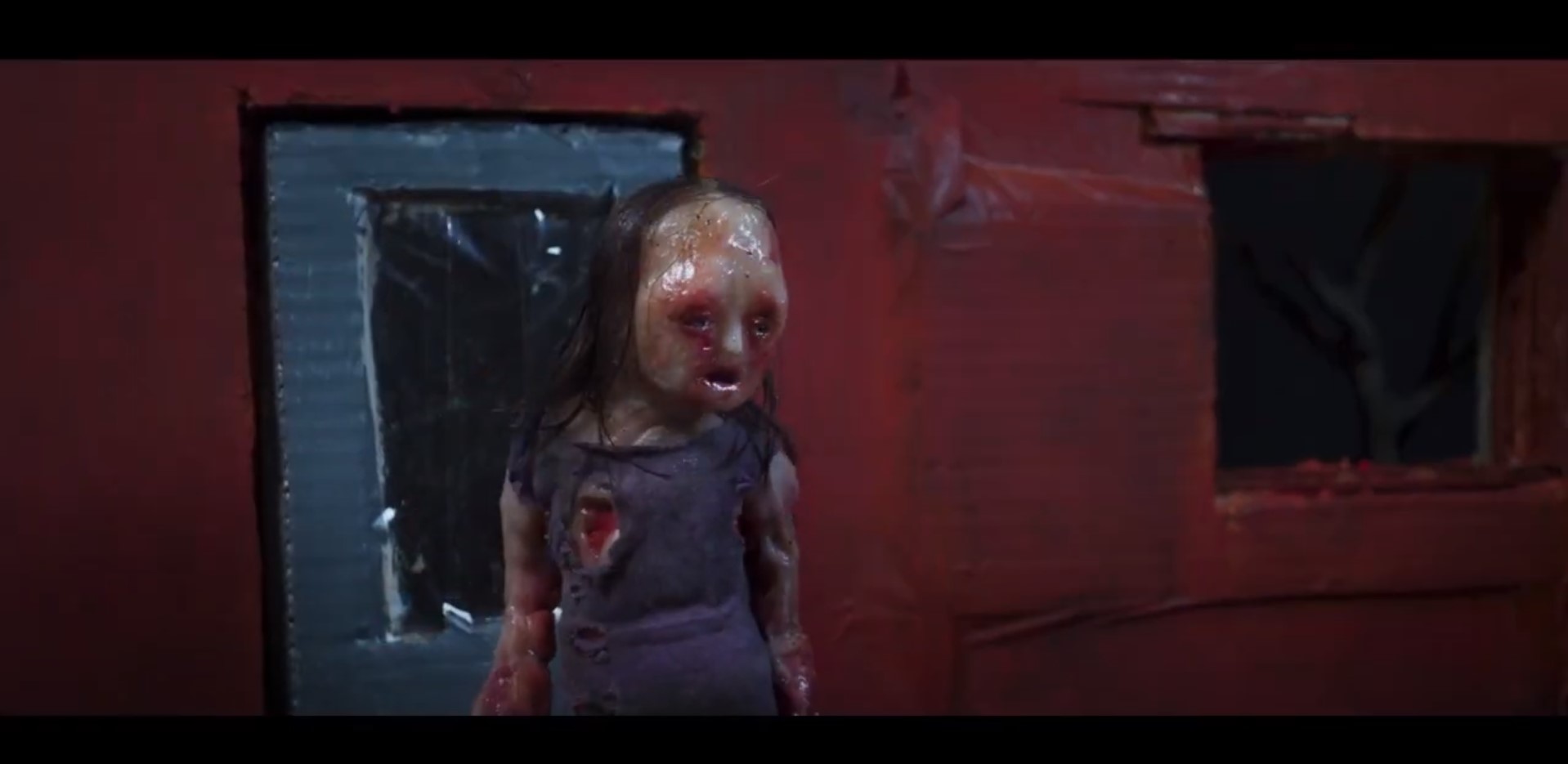
Jesús and Maria are new parents with a beautiful baby boy.  Maria has been eager for a baby and sent through several medical treatment for the bundle of joy while Jesús continuous rides the fence about being a father.  When the baby arrives, the boy becomes a source of usually one-sided bickering and jabbing contention as Maria feels Jesús could be a better father to their newborn son.  When they move into a new apartment, they find themselves in a furniture store looking at a gaudy glass coffee table Maria can’t stand the sight of, but Jesús very much can’t live without.  While Maria steps out to shop for an upcoming luncheon with Jesús’s brother and young girlfriend, Jesús briefly stops assembling the table to take care of the baby until a tragic accident happens that reshapes everything and everyone Jesús cares about, and impels him to bottle in the tragedy, hiding it in extreme guilt from his wife and guests, as he struggles to find the right moment to relieve his soul. 

Marriage is hard.  Parenting is even harder.  Choosing a coffee table should be a delicious piece of decision-making cake but for director Caye Casas choosing living room décor can be deadly.  The “Killing God” director follow up his debut feature with the 2022 released domestic disturbing comedy-horror “La Mesita Del Comedor,” aka “The Coffee Table.”   Casas cowrites the film with Cristina Borobla, her first screenwriting credit but not her first collaborative effort working with the director as the vocational Art Director has been involved in Cases’s other works, such as “Killing God,” his 2017 short “RIP,” and amongst others.  Maria José Serra (“Amigo Invisible”) and Norbert Llaràs (“Killing God,” “The Perfect Witness”) put their producer café mugs onto “The Coffee Table” with the hailing from Spain production companies La Charito Films, Alhena Production, and Apocalipsis Producciones. 

Much of “The Coffee Table” is set inside the tiny, newly moved into apartment of Jesús and Maria who even though rag on each other’s opinions and one of them don’t necessarily favor being a parent, deep down the unlikely pair do have a strong love attraction that swims upstream against the repelling.  In the roles of Jesús and Maria are David Pareja, whose worked with Casas inner circle before with “Killing God,” and Estefanía de los Santos with an unforgettable, characteristic raspy voice that magnifies the role tenfold.  Both Pareja and de los Santos are comedically bred with a long list of hilarious Spanish features to prep them to see the gut-punching, black humor of what’s to come in “The Coffee Table.”  Frankly, there’s nothing negatively to report in Pareja and de los Santo’s flawless, funny, and unfortunate family dysfunctional performances surrounding their love-hate relationship and the knot of culpability and the bliss ignorance contrast that’s delineated between them.  Floating into the mix of repressiveness are side stories that become assimilated by the untold tragedy, such as the neighbor’s daughter (Gala Flores) with an intense belief Jesús loves her, the smarmy coffee table salesman (Eduardo Antuña, “Killing God”) who also have an interest in Jesús, and Jesús’s brother Carlos (Josep Maria Riera, “RIP”) and his barely 18-year-old girlfriend (Claudia Riera, “The Communion Girl”) being ribbed for their own odd couple relationship and giving a surprise announcement of their own. 

Though a comedy and a horror, I didn’t find “The Coffee Table” all that funny but more so quirky, outrageously bold, and shockingly hard-hitting instead.  Horror, definitely without a doubt, comes through but not in a typical to be scared or to exact fear way with any of the conventional themes to support its harrowing weight.  The horror that uncoils is every parent’s worst scenario, the underlying nightmare that grabs the soul and squeezes until every drop of anxiety is wrung out of our wet bag of bones and meat.  The incident itself is gnarly and unspeakable but the post-trauma slithers in a nasty case of guilty conscious, shame, and fear that can freeze someone to the spot to where they clam up, sweat profusely, stomach twisted, and have self-harming thoughts from the conjoined cause and effect of having to tell your partner the most terrible of news and see their composure, their affection flush away in a blink of an eye.  Casas able to string along the aftermath to extract a feature length film without it ever approaching critically forced or farfetched, adding on and expanding upon the luncheon or Jesús’s wiggling through painfully with excuses on why Maria should leave the baby sleeping peacefully in their room.  The passively aggressive sparring atmosphere quickly turns into colossal tension and hopelessness through the mechanism of dark black comedy.  As a parent myself, “The Coffee Table” evokes great sadness and mental strife of the situational possibility, the greatest horror of all time.    

The cruel film by Caye Casas arrives onto a Cinephobia Releasing DVD. The MPEG2 encoded, upscaled 720p, DVD5 comes in at being the eleventh release for the Philadelphia based, eclectic independent film distributor. And, boy, is it a doozy. For “The Coffee Table’s” image, not the two, artificially gilded naked women holding an oval shape, unbreakable pane of glass, the feature’s picture quality renders about as good as any single layer capacity unit can decode in a digital age with modest details, muted hues, hard lit, and a good amount of spectrum banding in the darker areas. Not to fret, however, as there’s plenty to discern with a film that isn’t reliant on details but more reliant on hitting you wear it hurts, heavyheartedly. The Spanish language Dolby Digital 5.1 uses a lossy compression that, again, suitable to the movie’s means of conveying a contortioned, ruthless story defining the very meaning of a no way-out, no-win situation. Dialogue really is key for this type of narrative to work and progress and does come through fine without an ounce of earshot hinderance. Also, not that type of film that provides a breadth of range or depth as much of the layers express in a very near arrangement, as expected in a concentrated setting of Jesús and Maria’s apartment home. English subtitles are optionally available, and they synch up and pace well with only one noticeable grammatical error. Not much in the way of special features as only Cinephobia Releasing trailers fill that spot and there is not mid or end credits scene. The 90-minute film’s DVD release comes not rated and has region 1 playback. Other regions are untested, and the back cover does not state the official region playback capacity.

Last Rites: Caye Casas and Cinephobia Releasing has the cajónes to not table this wonderfully bleak black comedy-horror from reaching audiences far and wide. “The Coffee Table” is a painful reminder of just how fragile life can be, much like a cheapy made piece of tawdry decor from China.

“The Coffee Table” Would Look Good in Your Living Room! Purchase It Here Today!

Blind, EVIL, Undead Templar Knights Hunt for a Bite to Eat! “Tombs of the Blind Dead” reviewed! (Synapse / Special Edition 2-DiscBlu-ray)

“Tombs of the Blind Dead” 2-Disc Blu-ray Available for Purchase Here!

Maria, Betty and Roger take a train across the Spanish countryside to see the landscape sights.  When Maria feels like a third wheel stuck in between Betty and Roger’s flirtations, she jumps off the moving train, leaving her friends aboard, and camping out under the ruins of an old countryside Church.  There’s only one problem, the Church was home to the ancient order of the Knights of Templar who took a blood oath for Satan by sacrificing young virgins by drinking their blood and lynched by the Church for their crimes against man and God.  The Cursed Knights, reduced to rags, bones, and without eyes, rise from underneath their graves every night and roam the countryside on the hunt for anybody in proximity they can feast upon.  Betty and Roger learn of Maria’s strange demise without knowing the details and form a four-person search party only to step into the same dangerous den of the Knights of Templar. 

“Tombs of the Blind Dead,” or as known as the U.S. as just “The Blind Dead,” is the first in a series of four undead Templar Knights films that would come to be known as The Blind Dead collection by Spanish filmmaker Amando de Ossorio.  Natively titled “La noche del terror ciego” was released in 1971 and penned by Ossorio who laid a new path of Spanish horror that didn’t involve Paul Naschy or Jess Franco with undoubtedly slow dread of the undead that resembled more of the Italian-bred beyond the grave films where ghouls and ghosts return to life and wreak bloody havoc on the living, a guise for social context and for political dictatorship.  Themes of rebellions, rape, and bisexuality course through the feature’s necrotic veins as the film receives Spanish and Portugal co-production support from Plata Films and Interfilme with executive producer Salvadore Romero (“The Werewolf Versus the Vampire Woman”) spearheading pre-production and behind the scenes.   

Following of a newly formed trio of friends traveling the countryside to take in the sights, an underlying green-eyed trouble brews right from the moment when an enchanted Roger, the debut film and character of 1973’s “Green Inferno’s” César Burner, meets gorgeous red head Betty, “It Happened at Nightmare Inn’s” Lone Fleming,” and Roger’s travel companion and Betty’s Catholic boarding school roommate/best friend, Virginia, “The House that Screamed’s Maria Elena Arpón, feels the twinges of jealousy as her amorous covets for Roger never materializes and she sees her future with relationship with roger forever in the friend zone.  Virginia becomes so intolerant of Roger and Betty’s innocent flirtations that she’s willing to hop off a not-so-speeding train and camp inside the creepy, ruined structures at centerstage of a burial ground.  Arpón’s passive aggressive behavior is quite convincing, even the part where she tucks and rolls off a moving train in what stupid things do when people are frustrated, especially in the gray territory of love.  The love triangle is so simplistically arranged, each behavioral component goes without being farfetched.  From Virginia’s first sexual experience at the caressive, soft hands of her roommate/best friend Betty while at boarding school to Roger and Betty’s blameless attraction to one another that spurs Virginia’s irrational, self-serving behavior, Ossorio’s characters are written very well when homogeneously compared to other outside of cinema love triangles.  José Thelman (“Night of the Sorcerers”) indulges as the smuggler swine Pedro who’s roped into the reconning of the Templar tomb to clear his name with authorities by proving someone else had murdered Roger and Betty’s friend.  Joined by his floosy sidepiece María, played by another María in the iconic Spanish B-horror actress.  María Silva (“The Awful Dr. Orlof”), Pedro brutishly flaunts arrogance and confidence, taking what he wants, especially with the women uncharmed by the male sex, and that’s curious, fluid attribute when he attacks Betty but in the wake of the moment, the two of them are silently surfeited as they share the scene and that’s severely different from what anyone other filmmaker was doing at that time.  Andrés Isbert (“The Kovak Box”), Antonio Orengo (“Love Letters of a Nun”), Francisco Sanz (“Django Kill… If You Live, Shoot!”), Rufino Inglés, and Verónica Llimerá (“Hatchet for the Honeymoon”) round out the cast.

Performances give “Tombs of the Blind Dead” credibility in anxiety-riddled survival and turbulent human interactions but where those performances start to give way coincides with Ossorio’s building of dread.  No doubt the use of slow-motion sets the ghoulish, harrowing tone of the depraved, unabating, skeletally-cursed Templar Knights giving chase on horseback as they track down their flailing fresh meat, but in the process of that spinetingling, in between the Knights self-unearthing and the eventual snare and snack of their human victims, Ossorio doesn’t quite know how to flesh out formidable trepidation.  Pursued, screaming characters stand in the face of danger as if their feet are hardened in cement, stopping at every brief moment when out of sight of the hooded decaying bones and rags with dusty swords, and absentmindedly run right into the exposed radius and ulnas of the slow-moving and blind medieval damned maniacs in sequences that run out too long to be wholly gratifying.  Ossorio better pedestals the ingrained Spanish themes of never escaping your gruesome, haunting past, as seen with the circular narrative of always return back to the Knight’s ruins, and the sexual taboos of bisexuality and rape that lead to destruction.  These course through a more classically presented gothic horror. Perhaps explaining the fervent melodramatics of flamboyant fear, under the dictatorship regime of Francisco Franco and his cult-like ritualization in fascism oversight of Spain.

The sightless, flesh-feasting Templar Knights have found a new home in the Synapse Films’ tomb of terror with a new restoration transfer on a 2-Disc Blu-ray. Refurbished from the uncut original camera negative, the AVC encoded, 1080p high-definition, BD50 capacity suppresses any compression issues to display polychromatic decadence in front of a backdrop of steely graded blues. Plenty of a darker scenes to be affected by artefact corruption but the blacks are greatly dyed-in-the-wood saturated and not delineated or in spectrum of lesser decoding. Scenes never approach being flat, in color tone and in field depth, as beads of glistening sweat can be visually elaborated on and the distinction between color, shadow, and scale discern wonderfully. Two audio option tracks are available: a lossless Spanish PCM 2.0 mono track and a lossless hybrid of Spanish-English (Spanglish?) PCM 2.0 mono track. Both tracks are of a post-production dub with the Spanish option having greater synchrony with the articulating native Spanish actors of this Spanish coproduction. Audibly clean with little-to-no hissing, popping, or crackling, Synapse’s singular restoration is in good company with a high impact, high clarity, and low distortion dialogue track that meets eye-to-eye with the visual components as well as the film’s ambience cluster and Antón García Abril’s breathy and discordant, Gothically canticle score. Option subtitles are available in English on both tracks. Special features on the first disc contains individual audio commentaries by horror film historian Troy Howarth, Betty actress Lone Fleming, and the NaschyCast podcasters Troy Guinn and Rod Barnett. A feature-length documentary Marauders from the Mediterranean go from head-to-toe on not just detail Ossorio’s “Tombs of the Blind Dead” as the Spanish stamp in the juggernauting zombie genre of the times but also going in depth with the Spanish laid in horror from the 1960s to 1980s, featuring interviews with Lone Fleming, John Russo (“Night of the Living Dead”), director Jorge Grau (“The Living Dead at Manchester Morgue”), Sitges Film Festival director Mike Hostench, critics Kim Newman and John Martin, film academics Steve Jones and Calum Waddell, actors Helge Line, Manuel de Blas, Antonio Mayans, and Jack Taylor, and even Paul Naschy’s son, Sergio Molina. An alternate U.S. opening sequence Revenge of Planet Ape gives expositional insight on how the success of “The Plant of the Apes” films influenced the American distribution market to rebrand “Tombs of the Blind Dead” as an ape rebellion piece to ride the coattails of the series’ success on a lower, foreign budget. Rounding out the special features is a featurette Awakening of Spanish Horror Cinema, Salem Pop’s “Templar Tears” music video, the original theatrical trailer, and a still gallery. While Synapse has 3-Disc limited-edition set of only 4000 copies made with all the bells-and-whistles of the visual elements of new artwork, a slipcover, and a 3rd disc audio CD, the 2-Disc standard edition comes with all the same special features and all three versions of the film inside the black Amaray Blu-ray case and classic “Tombs of the Blind Dead” poster for cover art. Inside, you’ll get Synapse’s physical media catalogue and a disc on each side of the Amaray’s interior with disc 1 “Tombs of the Blind Dead” and disc 2 “The Blind Dead,” housing the shortened 83-minute U.S. re-edit on a BD25, that sport their own pressed artworks. The uncut disc 1 has a runtime of 101-minutes and has region free playback.

Last Rites: “Tombs of the Blind Dead” is Spain’s answer to “Night of the Living Dead” with discerning individualities ingrained by director Amando de Ossorio to include his country’s own social and political subtext and while Blue Underground’s The Blind Dead DVD collection is an impressive physical media crown jewel of upscaled 720p, the Blu-ray gods favor Synapse with an impressive hi-def A/V release with stellar bonus features.

“Tombs of the Blind Dead” 2-Disc Blu-ray Available for Purchase Here!