The Devil’s Tongue is a Powerful, Influencing EVIL. “The Dark and The Wicked” reviewed! (Acorn Media / Blu-ray)


Siblings Louise and Michael Straker return home to their farmland house when their terminally ill father becomes bedridden.  A long time alone and isolated before her children arrived, Virginia provided suitable care for their father up until the voices started.  Lurking in between the shadows around the rural home, a menacing presence wedges itself into an already splintered family spirit as the harbinger of death coming for their father’s soul.  The influence of voices and grim visions tatter Louise and Michael resolve, testing their unconditional love for family and moral obligations, but evil can be very persuasive the closer their father comes to his end. 

The battle grounds of losing oneself during the verge of loss has commonly been a recurrent topic amongst indie films.  For filmmaker Bryan Bertino, the concept feels deeply personal.  “The Strangers” and “Monster” writer-director’s latest discomforting horror film, “The Dark and the Wicked,” uses Devil speak in mass, detrimental volumes as an allegoric device for the internal deconstruction of family, capitalizing for his tale the use of his family’s rural Texas farm house written as a threatening locale of isolation and the tenebrous unknown.  “The Dark and the Wicked’s” paganistic undertones heavily perceive a dissipating family structure’s disconnect from not only God but from the community who has been all but absent from coming to the fictional Straker family aid.  The 2020 released film is produced by Bertino’s production company, Unbroken Pictures, alongside Shotgun Shack Pictures (“Hurt”), Traveling Picture Show Company (“The Blackcoat’s Daughter’), and in association with Inwood Road Films.

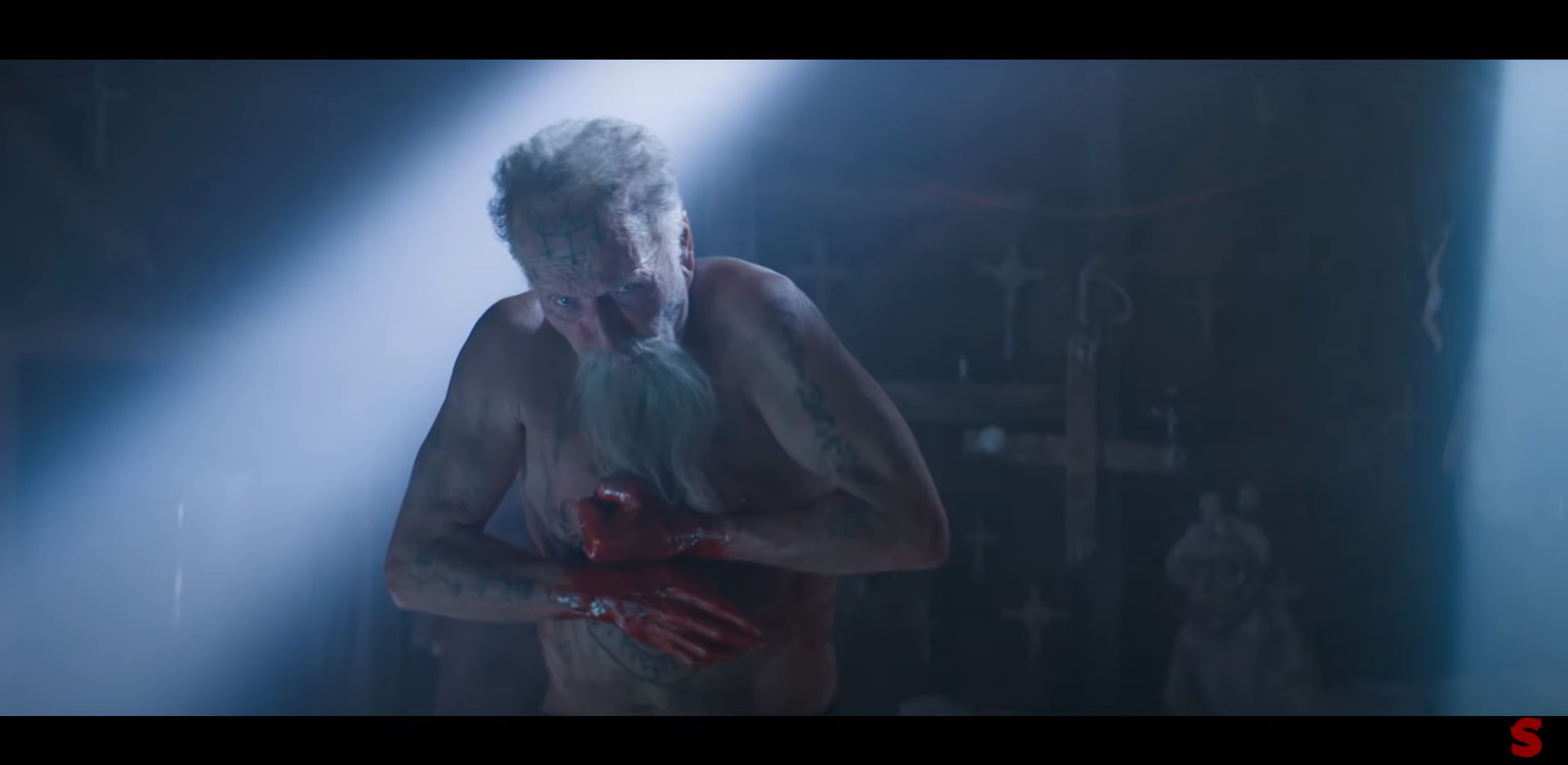
To play characters accustomed to the rural lands of the Texas outskirts, “The Dark and the Wicked” required a range submerged with leisurely movements, a Lonestar draw, and to, of course, look good in plaid and Wrangler jeans.  The cast that emerged was nothing short of spectacularly precise in fabricating the lives of remote lives rural Texans, opening with a Texas-born Julie Oliver-Touchstone (“Bounded by Evil”) sewing dresses in the barn, tending the farm’s goats, and chopping produced in her white nightgown as who will be the catalytic mother, Virginia Straker, that passes not only the 24-hour hospice care to her children but also all the beneath the light misery that drives her terrified.  The girth of the story revolves around, Louise, “The Umbrella Academy’s” Marin Ireland, and Michael, Michael Abbot Jr. from the upcoming “Hell House,” as sister and brother who return back home upon the news of their bedridden father (Michael Zagst).  At this point in the story, where we meet Louise and Michael for the first time, a shrouded background puts a delectable side dish of mystery into making them initially interesting, but over the course of the 96 minute runtime, the enigma dissolves around why Louise no longer works from the Postal Service and what’s stringently being shied away from the thick layered division between the siblings from being close to one another.  The impending standoffish goes unspoken, never comes to a head between them as like the unfolding of “The Strangers” where Liv Tyler and Scott Speedman unravel and expose their marital struggles with the invisible wall between them before, and even in the midst of, being terrorized.  There’s something there that isn’t being part of the exposition or coming back around when the Devil comes really calling for their father’s doomed soul.  Instead, Ireland and Abbot simply assimilate well enough into their falling into farm life dynamics as the sister who must shoulder the responsibility of hospice care and the brother overseeing what could be considered man’s work of handling the duties of raising livestock.   We also get some messed up supporting second fiddlers to execute Satan’s handywork with performances Lynn Andrews, Tom Nowicki (“Conjurer”), Mindy Raymond (“Bigfoot Wars”), and “The Walking Dead’s” Xander Berkeley channeling his best Julian Beck’s Kane performance as a sinister Priest making a house call.

Bryan Bertino has a stillness about his films. Their creepily quiet, stirred in a somber stew of macabre, and utterly deranged in a nihilist coating. What appeals to me about “The Dark and the Wicked,” as well as “The Strangers,” is Bertino’s gift to deliver powerful fatalist realism. His stories couple earthly family drama with otherworldly malevolence stemmed from the deeper affects of prolonged relationship breakdowns that literally assigns a demonizing blame on the supernatural for people’s own crumbling failings. Another aspect is the godless presence wholeheartedly felt throughout from the Straker’s loud and proud proclamation of atheism to the lack of religious artifacts. Michael nearly tosses the priest out of his keester just for making checking and noting his mother’s recent unbeknownst connection to God to which Michael took great offense. This leads into the Straker’s lack of community connection as they seemingly are adverse or are agonized by those who wish to help and those who rather seem them burn under the guise of the malice presence. Goats are thematically prevalent to the story, especially when the shadowy Wicked hides amongst the herd, like a wolf in sheep’s clothing. Goats are often associated with Pagan beliefs, such as with the deity Baphomet, and the evils marked upon them by cultures all around the world and by having the Straker farm be a goat farm is more than just coincidence. “The Dark and the Wicked” brings chaos and confusion much like any circumstances where one or both parents die and all the burdens, all the consequences, and all the pure emotional baggage that comes with death is passed to the children whether the Devil is involved or not. When broken down rudimentary that decline of hope and overwhelming grief can cause a great amount of destruction for any family and even extend to friends with suicide being heavily portrayed in the film. Bertino masterfully touches upon every collateral damage output leaving no one spared from death’s, the Devil’s, hopeless hold on them.

Filled with frightening imagery, plenty of toe-curling suspense, and a loud silence of utter despondency, “The Dark and the Wicked” is a must own for any horror fan and, luckily for you, Acorn Media International just released the Bryan Bertino film on Blu-ray in the UK in alliance with horror’s favorite streaming service, Shudder. Listed as region 2, but more accurately a region B in Blu-ray format, the PAL encoded release is presented in a widescreen 2.39:1 aspect ratio. If there was one word to describe the comprehensive picture that word would be dark. Bertino maintains an eclipsing cinematography through hard lighting, matted lifeless colors, and a reduction tint to give it that extra gloomy blackness. Cinematographer Tristan Nyby’s first collaboration with Bertino is also the first debut into the genre field and Nyby comes out on top with an ability to show just enough, whether through shallow focus or obscured wide shots to always keep the depth and range of the unknown factor alive and frightening. In regards to the Blu-ray quality, “The Dark and the Wicked” has little to offer in details not because of the lack there of but because much of the film is shot in the dark, a fine midnight black with little-to-no wish or noise, and dim lighting . Facial details do appear slightly soft as you can’t make out the blemishes or even skin pores, but the intentional flat coloring steers much of that away from the senses. The English language DTS-HD Master Audio 5.1 surround sound is a boost of jumpscare ambient effects. The range and depth finely pitch the position of well-timed scares, especially when the strung together bottles, glasses, and cans rattle in a discordance. Dialogue has lossy muster that makes discerning characters’, especially Michael or his mother, Virginia’s, Southern draw. English subtitles are optional. Special features include only a Fantasia Q&A with actors Merin Ireland and Michael Abbott Jr that dive into their characters quite a bit and into Bertino’s morose mindset. Bleak and genuinely personal on a whole other level, “The Dark and the Wicked” is quintessential truth when talking about the Bryan Bertino Americana horror film and, believe you me, expect more devilish descriptors that’ll shock you.

EVIL Has Layers. Colorful, Beautiful, Red Dripping Layers. “No Reason” reviewed! (Unearthed Films / Digital Screener)

On the verge of moving from her quaint apartment, Jennifer begins her morning caring for her son, Nico.  Throughout the morning, her complex neighbors come knocking at her doorstep with unusual behaviors, even so with the mailman who apathetically leaves her bathroom a mess after requesting an urgent need to use the toilet.  After leaving Nico with an elderly woman in an adjacent unit to do some light shopping, Jennifer comes home her son and neighbor not answering the door and figures they went out for a while.  As time passes and her anxiety builds, Jennifer decides to soak in a relaxing bath but when she falls asleep, she awakes amongst a pile of dismembered bodies, subjected to ultra-violent video recordings of the neighbors who she saw earlier, and a masked maestro of anguish to help Jennifer regain life purity through pain.  Through the layers of suffering, the ugliness Jennifer has to endure to survive and find her son might be an awakening she will forever regret. 

From the violence saturated mind of German auteur Olaf Ittenbach comes a battle of conscious, a gore waterlogged vision, in his 2010 blood-shedding shocker, “No Reason.”  Now, I may be over a decade late to the party on this title, but Unearthed Films has brought a newly remastered, fully uncut Blu-ray to physical and virtual retail shelves, reviving the “Legion of the Dead” and “The Burning Moon” filmmaker’s title from the North American grave as the Intergroove Media DVD has been out of print for a long time, and kicking my ass into high gear with diving into the surreal expressionism, splayed into every nook and cranny, of deviated behaviors and splintered thoughts.  “No Reason” is a production of Ittenbach’s IMAS Filmproduktion studios and co-produced by German SOV splatter film connoisseurs, Michael Nezik and Ingo Trendelbernd.

Like Alice traversing a macabre-cladded hell on Earth wonderland is Irene Holzfurtner as the confused lost soul Jennifer  More or less fully naked and bloodied half the story, crossing through portals of layered perdition in order to find her son and saving grace, Holzfurtner has insurmountable perplexity hung across her character’s face in the midst of being plopped into bedlam, taking the character on a journey pain, torment, and enlightenment bare ass naked and covered in blood in a metaphorical rebirth.  Overseeing Jennifer’s trial and tribulations into being brought back reborn as it were is a sadist donning a crude Cthulhu mask and strapped tightly into a medieval BDSM attire who speaks in riddles and verse to sermonize his cathartic guidance.  Markus Hettich towers a monolithic man of pain and pleather, calmly exercising his shrouded authority a healthy amount of sadism, masochism, and sadomasochism in order to undress the falsehood of Jennifer’s split spirit.  Hettich pins an ideal Devil-like antagonist, rupturing through the connective tissues of the psyche with a lingering omnipresence that delivers shivers down the spine.  Mathias Engel, Alexander Gamnitzer, Andreas Pape, Annika Strauss, Ralph Willmann, and Hildegard Kocian make up the supporting cast who are most cooperative being exploited by the violence and nudity that accompany their ill-fated roles of humiliation, torture, and inevitable gruesome death.

Ittenbach obviously brings the gore but the controversial director, who has sparked backlash for glorifying violence, brings a beaming arthouse allure to his “No Reason’s” gargantuan bloodletting.  Layered with multi-colored conjectures point to the unhinged state of a mind, Jennifer endures unspeakable anguish in layers encoded with red, green, and blue, each specifically engineered by the masked man to trigger a response when testing Jennifer’s will; a will to what end is something you’ll need to watch the film to understand.  What I can tell you is that each color stage bares a horrific theme – red is simply the spilling of innocent blood, green is feminine dominance symbolized by BDS&M (a running motif throughout) where uninhibited women urinate on men (explicitly shown), castrate by oral sex, and divulge themselves with lots of male body disfiguration through whips, chains, and other large dominatrix toys, and blue is filled with mutants who are just as ugly on the inside as they are on the out.  Completing each stage costs Jennifer bodily harm as a reparation for staying on the path of enlightenment, the white layer.  With a little money behind the project, Ittenbach’s able to accomplish some fantastically brutal scenes with fleshy prosthetics and I, personally found the intro credits to be insanely power in it’s composition despite the simplicity of it.  Where “No Reason” buckles is the crux of Ittenbach’s artistry with the parable that borders nonsensical guff.  I’m not going to lie, “No Reason” is difficult to follow from the pre-opening credit epilogue home movie montage of Jennifer and her parents frolicking on the grass, praising Jennifer’s smarts at such a young age, to the post-opening credit opening of a naked and bloody Jennifer holding a detective hostage, to the surreal cerebral journey through a timeless purgatory horror house Jennifer finds herself trapped, the segues, if any, often feel omitted and we’re left to assume the rest. 

The brisk 76 minute runtime perfectly balances the right amount of abstract story and gore and, now, “No Reason” has a better reason for your attention with Unearthed Films’ new scan of an uncut Blu-ray release! The May release is presented in a high definition, 1080p, widescreen 1.76:1 aspect ratio. I can’t comment too much on the audio and visuals as a digital screener was only provided, which means there were no extras accompanied with the screener as well. “No Reason” is the first collaboration between Ittenbach and director of photography, Axel Rubbel. The pair went on to work on Ittenbach’s “Savage Love” two years later, but Rubbel has more of an imprint with Ittenbach’s candy-coated eye-popper gorefest with a kaleidoscope of blushes a tinged aberrant from the normal blacks, reds, and browns that blotted onto gore and shock films. The release will include two German language audio track options, a 5.1 surround sound and a stereo 2.0. Both should include English subtitles and, if the Blu-ray is anything like the digital screener, the subtitles are synched well with the dialogue and, from what I can tell, are grammatically error free. My abnormal brain can choke down the free-for-all soul-damaging ultra-violence and gore charcuterie board and Olaf Ittenbach’s “No Reason” fits that bill with a wide berth of exhibited atrocities while also coming up for air by attaching a misdirection substance behind the graphically lurid details of skin ripping from the muscular tissue and flesh lacerated to shreds by a cat-o-nine tails to ease us into the tumultuous mind of a psycho’s path.

“No Reason” available on Uncut Blu-ray!

EVIL Will Scrape You Clean Right to the Bone in “Scavenger” reviewed! (MVDVisual – Cleopatra Entertainment / Blu-ray)

A ruthless post-apocalypse world consists of killing others for their vital organs and sell them on the black market to earn a living or to score the next high.  The latter is the life Tisha lives as a bounty hunter assassin sustaining through a bleak existence of the next job and another hit.  When a new job brings her ugly past to the present, no payment is necessary as she gladly assassinate a smutty bar owner and brutal cartel head.  Things don’t go as planned when Tisha winds up naked on one of grimy sex mats of her target’s whore house after encountering and being seduced by Luna, the boss’s best laid side piece stripper and confidant.  The assassin must fight tooth and nail to survive on her filthy course to truth-hurting vengeance.

A complete ball of filth and fury is how I would begin to describe Eric Fleitas and Luciana Garraza’s sordid wrapped “Scavenger,” hailing from Argentina with wild west undercurrents in a post-apocalypse wasteland that makes George Miller’s barren lands look like Disneyworld.   Titled originally as “Corroña” in española,  the filmmakers also pen the violent screenplay alongside a third writer in Shelia Fentana to produce their very first feature length credit together that clocks in at 73 minutes, and 73 minutes is plenty enough to be entranced and be gorged by the anarchist sleaze, galloping gore, fast cars, and loose whores.  The trio financially self-produce “Scavenger’s” journey to silver screen fruition while Ronin Pictures provides special effects work that can rival the best independent productions. 

The role of Tisha is not a pleasant one, no role in where the protagonist being raped is pleasant to begin with, but to compound the character with a nasty drug habit, a gruesome vocation, traumatically scarred past, and be the objectifiable plaything for a bunch of society-fallen degenerates, Tisha’s fortitude had to be uncompromisable and her sensitivity dialed way down to zero in order to survive in her cutthroat world where not even your bodily organs are safe.  In steps Nayla Chumuarin, a fresh face Argentinian actress unknown to the majority of general audiences, ready to slip into a demanding role antithesis to Mel Gibson’s Max Rockatansky that’s only similar in a very few ways.  Geared in masculine attire, sporting a pixie cut, and gleaming with sweat and dirt from head to toe, Chumuarin offers up an intriguing anti-femme fatale in a more cold shouldered assassin vibe with a fast barb wired cladded car and who can handle herself around all types of antagonists, even those two times her size and are a disfigured mutant!  Tisha tracks down Roger, a brothel and bar owner who has ill-fatedly crossed paths with Tisha in a previous life.  Played by Gonzalo Tolosa, the mohawk-sporting Roger abides by his own set of rules unless they’re coming out of the sensual viperous mouth of Luna (Sofia Lanaro), Roger’s stripper girlfriend with a true sense of the femme fatale archetype.  Together, Roger and Luna call the shots and lust suck each other faces in the torment of Tisha who by the end of the film just wants to waste them both from the face of the post-apocalypse Earth.  Fleitas and Garraza purposefully and rightfully omit much of the backstories from most of the film and slide them in, crashing down like a house of falling cards, right on top of not only the characters but also the audience in a moment of realization and shocking truth from everything that has happened in the story up to that climatic end.  “Scavenger” rounds out the cast with Tisso Solis Vargas, Denis Gustavo Molina, Norberto Cesar Bernuez, Vanesa Alba, Rosa Isabel Guenya Macedo, and Gaston Podesta as the Mutant.

“Scavenger” is pure debauchery nonsense.  A gore loaded free for all.  The story is about as ugly as you would expect with the exploitation of carrion from those slowly succumbing to death in one form or another.  “Scavenger” is an entertainment juggernaut doused in corrosive material that will either disgust or amuse, depending on your temperament, with no middle ground to balance.  Characters are driven by unadulterated greed or rage, even the heroine of vengeance who just a few scenes prior stabbed a man in the back to harvest his organs, without one morally redemptive character to relieve the incessant current shocking the mind’s nipples with searing voltage.  Fleitas and Garraza slather in a laissez-faire fashion the exploitation veneer of grindhouse muck to serrate the unsavory snaggleteeth even sharper, but there are points where too much of a good thing becomes bad to the film’s health.  As such is with the licking of the face motif.  Like Quentin Tarantino and his obsession with closeup shots on female’s feet, Fleitas and Garraza shoot a handful of scenes of sexually engaged males lapping the sweat and pheromone droplets from the faces of their carnal conquests in all types of scenarios from rape to consensual.  The saliva wet, grainy muscle just slides right across the soft flesh covered cheekbone in more scenes that I cared to count in what seems more like a filmmaker fetish than an object necessary to overboard the obscenities.  It’s a weird action to call out but happens more than just a couple of occasions and between different characters.  The pacing’s fine albeit a few nauseating slice and dice editing that doesn’t take away or hinder in abundance understanding the progression of Tisha’s journey, but definitely causes a bit of blurriness on the heroine’s perspective of whether what she’s experiencing is a nightmare, a flashback, or a bad trip from whatever narcotic she withdrawals from that once injected speeds her into a kill monger. 

If what I’ve gone over doesn’t entice you, I can tell you this much.  “Scavenger” is perhaps the best Cleopatra Entertainment film release I’ve seen up-to-date.  The subsidiary of the independent record label, Cleopatra Records, Inc, in collaboration with MVD Visual release the South American grindhouse-fest film on a 2-disc Blu-ray and Compact Disc set featuring the film’s soundtrack, including music from Rosetta Stone, The Meteors, The 69 Cats, Philippe Besombes, Damon Edge and more with a full artist list on the reverse side of the cover liner along with alternate cover art of the film.  Presented in a widescreen 16:9 ratio, don’t expect a high-definition output with a homage to grain and a warm high-key contrasts to augment the desert outward show under the eye of Sabastian Rodriguez.  Negative space is only used for intense shadows to cloak the lurking menace around every corner.  There’s a variety of shots, including some great wide shots and crane angles, that sell “Scavenger” beyond the frenzy of blood-soaked and furrowed brow closeups.  There are four audio options available:  a dubbed English 5.1 surround and a 2.0 stereo as well as the original Spanish dialogue track in a 5.1 surround mix and a 2.0 stereo.  Unfortunately, the Spanish tracks do not come with option English subtitles so if you don’t understand the language, you’ll need to sit through the always awful English dub; however, this particular dub track is not obviously horrendous.  With all the Cleopatra Entertainment titles, the soundtrack sticks out like a sore thumb to promote their investments with high quality sound but also in true Cleopatra Entertainment titles, the lack of bonus features continue with “Scavenger” with only a theatrical trailer and an image slideshow.  “Scavenger” is a particular breed of film where you just flip your mind’s decency switch to off and gladly watch the world burn in depravity to get your jollies off.

Own “Scavenger” on Blu-ray and Soundtrack CD combo Set!

You Can’t Run From the EVIL That Seeks Out the Competition. “Homewrecker” reviewed! (101 Films / Digital Screener)


Michelle is at the point in her life, struggling as a 30-something year old interior designer, where the urge to have children is strong.  When trying to conceive with her husband seems to be going downhill, she is befriended by an overly obsessive stranger, Linda, who has took an uncomfortably intense interest in her personal life.  An innocent enough invitation back to Linda’s house proves costly with Linda’s flickering infatuation for Michelle’s private business that turns quickly sour in a cat and mouse game of survival.  Trapped, Michelle must understand Linda’s madness in order to stay alive.

Ca-ra-zyyy!  That’s one of many ways to label Zach Gayne’s woman-on-woman scuffle in the comedy-horror “Homewrecker” that will surely turn many feminist heads at breakneck and contentious speeds with the better woman standing scenario.  Gayne’s freshman film tests the wills of two very different women and their counter mindsets while excavating a common core connection rooted subconsciously deep within them both.  A distinction that gives the 2020 riotous feature an edge is the two sole actresses, Alex Esso (“Starry Eyes,” “Doctor Sleep”) and Precious Chong (“Luba”), daughter of famed stoner comedian Tommy Chong, portraying Michelle and Linda are also “Homewreckers” cowriters alongside Gayne, equipping their characters with an authentic image by filling the roles themselves and getting out of the project exactly what’s desired.  The trio also produce the film in a coproduction with fellow producer Josh Mandel of Industry Standard Films and under the financials of Precious’s mother Shelby Chong, Chris Morsby, and Delaney Siren as executive producers.

Precious Chong, hands down, steals all the glory in “Homewrecker” with her wide-eyed, mentally unstable, zany, and stuck in the 80’s single white female that makes Glenn Close performance seem diminutive and more like an innocent and shy little crush in “Fatal Attraction.”  Linda epitomizes the very definition of crazy as a person unable to progress from an era of her peak youth being the most popular girl in school, judging by the VHS tapes, 80’s soundtrack, and outdated board games, I’d say Linda’s popular party girl inner nature hasn’t disembarked from the late 80’s to early 90’s train, and Chong delivers a singularity tweak of neurosis and delusion that frighteningly teeters from over exaggeration to real representation.  Unfortunately, Chong’s invasive, off-the-rocker performance overshadows Alex Esso’s more level-headed, amiable, and fight or flight Michelle and her unconventional responses and reactions to Linda’s incessant behavior in, perhaps, a more poorly written character.  Michelle is the too nice to the point where opportunities arise for escape or attack and she chooses the total opposite in trying to reason with an unreasonable person.  The motivation behind Michelle for even going to Linda’s house is rather slim so either something deep in her subconscious wills her to go (maybe Linda’s eagerness to lend an ear on a torrent of personal unloading) or she’s a just gullible to a fault.  Rounding out the cast is the man in the middle, Robert, played by Kris Siddiqi and the friendly neighbor Wilson, played by Tony Matthews (“The Craft: Legacy”), in a bit part that’s a clever homage to the Wilson character in Tim Allen sitcom, “Home Improvement,” as he peeps just over the fence to say hello as well as an contradictory play on the “Homewrecker” title.

Aforementioned, there is gray area in the character actions and rationales that thins much of the story’s harrowing affect and even seeps slightly into the more dark comedic moments.  Yelling (in my head) at the screen for Michelle to jump out the window (after lingering half out for clearly a minute) or taking advantage to overpower Linda (during a moment of long poignant embrace) was just a waste of my mental breath as the Michelle is frustratingly too timid, too nice, too afraid to cut the unseen bounds that holds her back from reinstalling balance in her upheaved life held in Linda’s unstable hands.  The pacing a bit of a drag as well by holding onto scenes, with various cuts, longer than necessary.  For a film slightly over an hour long, the conversing segments between the principle characters, Linda and Michelle, could last up to 20 minutes with more than most of the chat awry by Linda’s idiosyncrasies.   What works for “Homewrecker” is single day story set inside Linda’s home that really hones in and develops the snowballing turmoiled relationship between the two women. Being the film’s strong suit in unveiling the crux of the problem that’s not surface level crazy person versus sane person, the plot point revelation truly did blindside me and I was like, whoa.  Everything made sense without having to dig deeper into exposition to understand the minor details of what was happening exactly.  “Homewrecker” also has great brief climatic gore involving an emblematic sledgehammer and a pair of sharp scissors that, again, comes unexpectedly from a cat and mouse game that has been rather tame for most of the film.  Zach Gayne’s film pleasantly puts a blood red cherry on top of a deranged ice scream sundae dripping with fanaticism fudge in a scrumptious little fatal attraction.

Efficiently compact but just as aggressive as an overly jealous and overactive girlfriend plagued by psychosis, “Homewrecker” premiered it’s way digitally into UK homes by 101 Films back on May 24th.  The Toronto, Canada production is presented in a widescreen 2.39:1 aspect ratio with a lean runtime of 76 minutes.  Co-producer Delaney Siren serves as the cinematographer for “Homewrecker’s” regular split screen and multiple angle shots denoting a clear sense of where each character location is without the film feeling like a typical slasher while maintaining the focus on telling both women’s side.  “Homewrecker” marks Siren’s first feature film as a cinematography, but has multiple credits in the genre for macabre inspired music videos under the Toronto based music recording and film production company, “Reel Wolf Productions.”  For a film that has completely and satisfactory bookends, there are no bonus scenes during or after the credits.  Quirky and dark, “Homewrecker” is a read between the lines comedy-thriller about abduction, devotion questioning , delusional obsession, and honesty.

When EVIL Runs The Show, That’s When the Reality Sets In. “Funhouse” reviewed! (Magnet Releasing / Digital Screener)

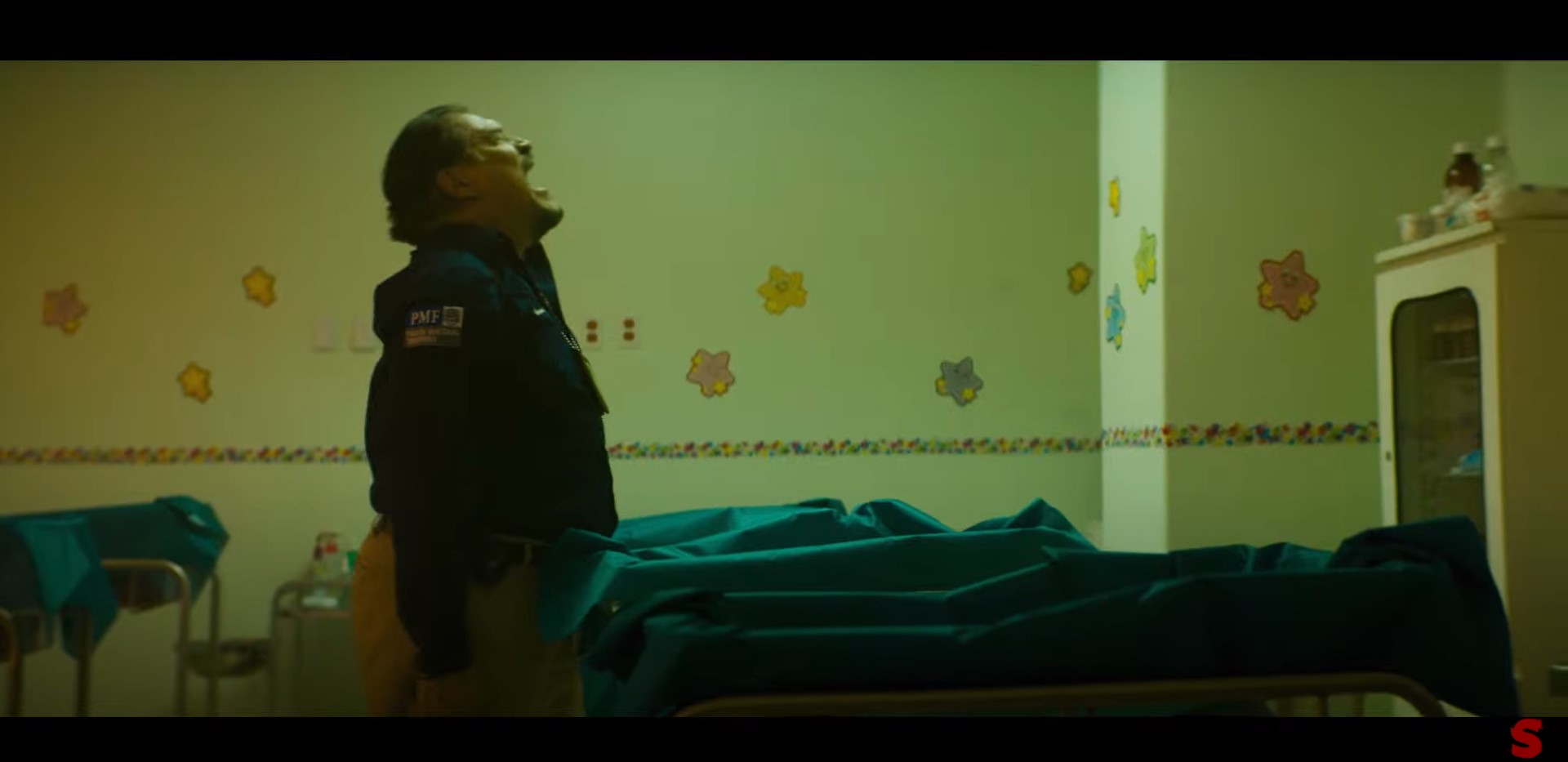
Eight C-grade social media celebrities sign a contract for a new reality show, Furcas’s House of Fun.  The reality show streams worldwide on all electronic devices in an exhibition of different and standoffish personalities locked together in apartment-size living quarters.  Contestants will have to face challenges and weekly viewer voting to be the last one standing for a chance to win a 5 million dollars cash prize  Instead of sexy making out sessions, drunken brawls, and contestant melodrama to boost viewer ratings, Furcas’s House of Fun is in actuality a syndicated snuff reality show where a contestant is voted out is a contestant receiving a brutal death in front of the entire world.  Survivors watch behind paned glass as one-by-one their castmates are dispatched in the most gruesome way possible, directed by a screen animated panda bear helmed by a sadist eager for the show to go on.

Ready to have a little fun?  The “Funhouse” is open for what is a variety show of horrors in this 2019 shot, 2021 released reality show of encroaching aggravation and gore from writer-director Jason William Lee.  “The Evil In Us” filmmaker plays his hand at personifying internalized resentful rage for hack, do-nothing, inconsequential to society celebrities by feeding them gladly and enthusiastically to the bloodthirsty wolves.  “Funhouse” isn’t your typical social media or tech horror film as Lee dishes out a thought-provoking disgust covered in a powdery sugar and popcorn veneer that’s surely to please the broad range of horror fans.  The co-ventured Canadian-Swedish story of shallow fame nihilism is shot in the Providence of British Columbia and in Stockholm, home base of Ti Bonny Productions under executive producer Henrik Santesson, in collaboration with Lee and producer Michael Gyorl’s Sandcastle Pictures.

With the surname Skarsgård, acting is in certainly in the blood.  Valter Skarsgård, the youngest son of “Nymphomaniac” and “Deep Blue Sea’s” Stellan Skarsgård’s first marriage and the brother of terrifyingly frighteningly Pennywise actor, Bill Skarsgård (“It”), branches out following his ancestral destiny by headlining as the lovable and misjudged Swede, Kasper Nordin, who leeched fame by being the ex-husband to a renowned singer.  Nearly the spittin’ image of his older brother Bill, Valter brings his name and family looks to the table while showcasing his own talent amongst a motley crew of nationalities.  That’s one of “Funhouse’s” main messages about social media stardom as a plague that has spread to every corner of the world symbolically infecting each contestant from a different country:  Dayleigh Nelson (“Island of the Dolls”) of Britain, Khamisa Wilsher of America, Gigi Saul Guerrero (“Puppet Killer”) of Mexico, Amanda Howells of the Philippines, Mathias Retamal (“The Source of Shadows”) of Chile/Canada,  Karolina Benefield of Poland, and Christopher Gerard of Ireland.  The roles of wannabe celebrities is an ostentatious representation of click bait influencers who will sell essentially their soul and show their skin to be noticed and this turns the clear antagonist villain, a merciless gamester and contract abider with business dealings more vile than from the Devil himself, to be a subtle antihero of sorts as the cast rounds out with Jerome Velinsky’s wickedly sophisticated performance as Nero Alexander that is urbane nihilism at its best. 

Outrageous, fun, and gory – “Funhouse” has all the hallmarks of a 90’s horror on cruise control.  With a bedazzling rudimentary shell of a panda bear avatar animation and blend of practical and digital blood over the simplicity of a small location and indie production, Lee is able to fly through the narrative at whiplash speed and still drop animosity-awarding and empathetic traits to believe in the cast of characters.  In the middle of the chaos of axe splitting heads and being dunked into a barrel of highly corrosive acid, a topical theme of the detrimental social media and influencer stardom to society really positions “Funhouse” on the frontline for inflammatory and anti-social media messages, harping on the noncontributing and unbeneficial role of these money-generating, like-focusing, click baiters in culture and society other than selling to their audiences sex, gossip, and violence.  Speaking of violence, I was pleasantly surprised by the right amount of gore that didn’t shoot for extravagant levels despite some smoothing around the digitally added sinew and guts, keeping a modest amount of realism to the dystopian gameshow construct.  Initially, there are dubious first act moments that quickly shuttle hapless soon-to-be-casualties into the same location, much like in “Saw II” when characters all wake up in the room together and we have no idea who they are, where they come from, and what their backstory is, but as the film progresses we learn more about them and the roles they play in the maniacal puppeteer’s design.  The twist, almost meta-like, ending leaves “Funhouse” on a low note that doesn’t fulfill any void for its existence, but a good chunk of the story is really meaty with a revolving door of plights and a small, yet efficient, compassion outpouring spicket.

Not your traditional participatory surprise-laden and mirror maze attraction, “Funhouse” will still bring old-style thrills with some new blood spills in it’s grand opening release in theaters and on demand on May 28th courtesy of Magnet Releasing. Shawn Seifert (“Dead of Night”) lays out a smorgasbord of cinematography techniques that includes rich, un-matted color filters, isolating characters in darker, dim rooms in making them seem centerstage for their own grand demise, and cultivates stationary, handheld, tracking, and some drone shots for an extremely vibrant and glossy approach and feel for reality television version 2.0. Lee edits the digital reel himself and, honestly, the pacing wanders quickly to the overly rushed section like a quick-spit-it-out story wanting to be finished before it even begins and is compounded with another intrusive quality in the hyperactive back-and-forth of shots that aims to resemble the irksome flight in and out of reality shows that speed up and slow down like a nervous teenager behind the wheel of their parents and continuously presses down on the brake pedal. Stay tuned after credits for a gag bit scene that ties into the main story but promises nothing more. No more being voted off the island or nixed by expert judges, “Funhouse” cleans house with deadly eliminations and a message of the unyielding power granted to many so easily through a rapidly reshaping medium that has become too influential on a braindead scale.