EVIL Strikes with Thousands of Disastrous, Deadly Fangs! “Calamity of Snakes” reviewed! (Unearthed Films / Blu-ray)

Save the Date!  “Calamity of Snakes” Slithers onto Blu-ray and DVD!  Available at Amazon!

A greedy, time-is-money land developer pushes his project manager and structural architect to complete his condo building earlier than scheduled, even if that means to cut corners.  While digging to lay the structure’s foundation, a massive pit of deadly snakes is unearthed.  With no times to waste, the land developer orders the mass killing of the snakes by the crew and even takes matters into his own hand using a backhoe as a weapon against the wishes of more sensible architect.  Those who are karma-included and God-fearing believe the mass murder of the snakes will result in retribution with fears being validated when workers fall victim to random snake attacks.  Shrugging it off as superstition mumbo-jumbo, the land developer finishes marvelous residential condo and fills the units in record numbers.  His success becomes the tenant’s death trap who can’t escape the swarming thousands of deadly slithery serpents infesting every nook and cranny and climbing toward his penthouse, seeking revenge against the snakebit developer’s cruelty and greed. 

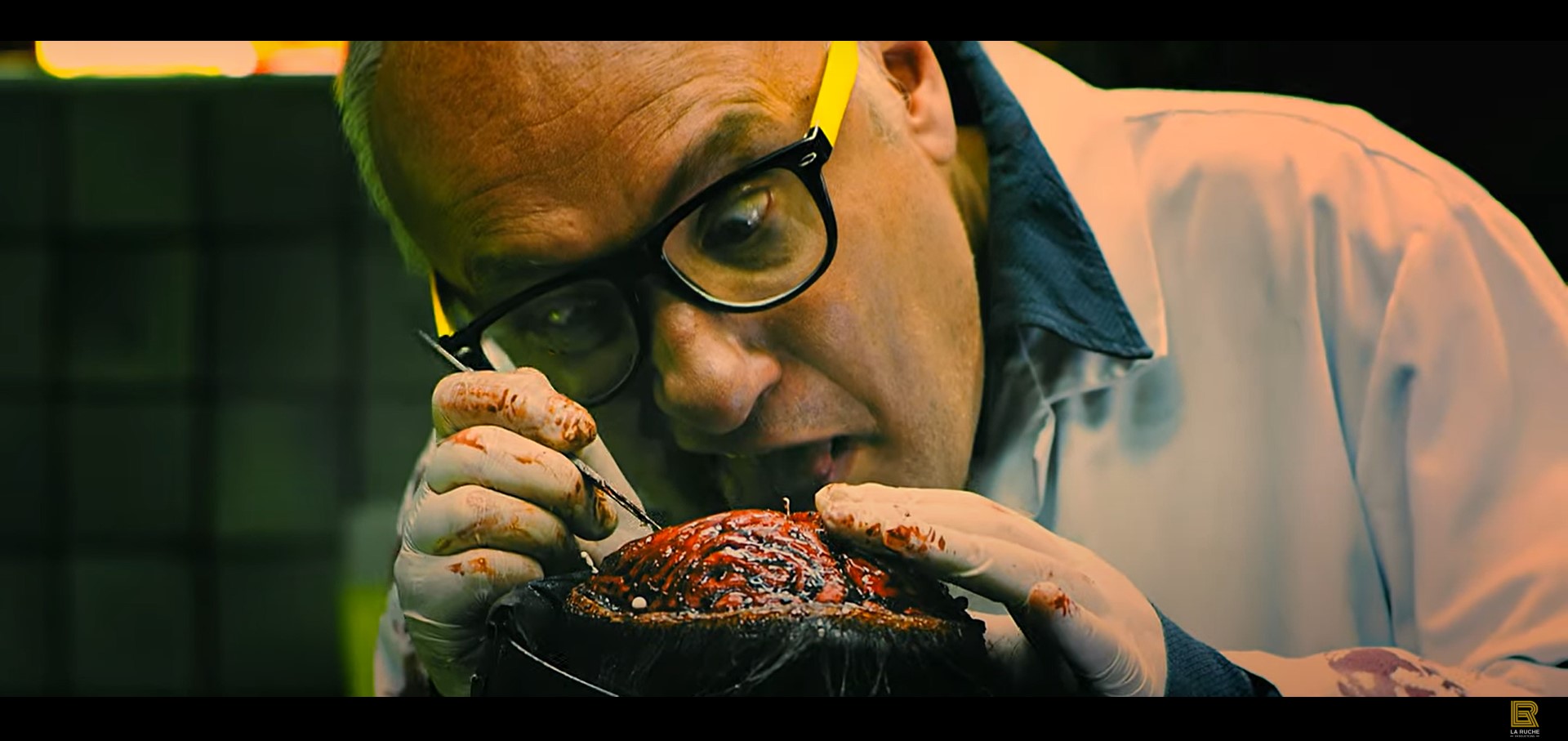
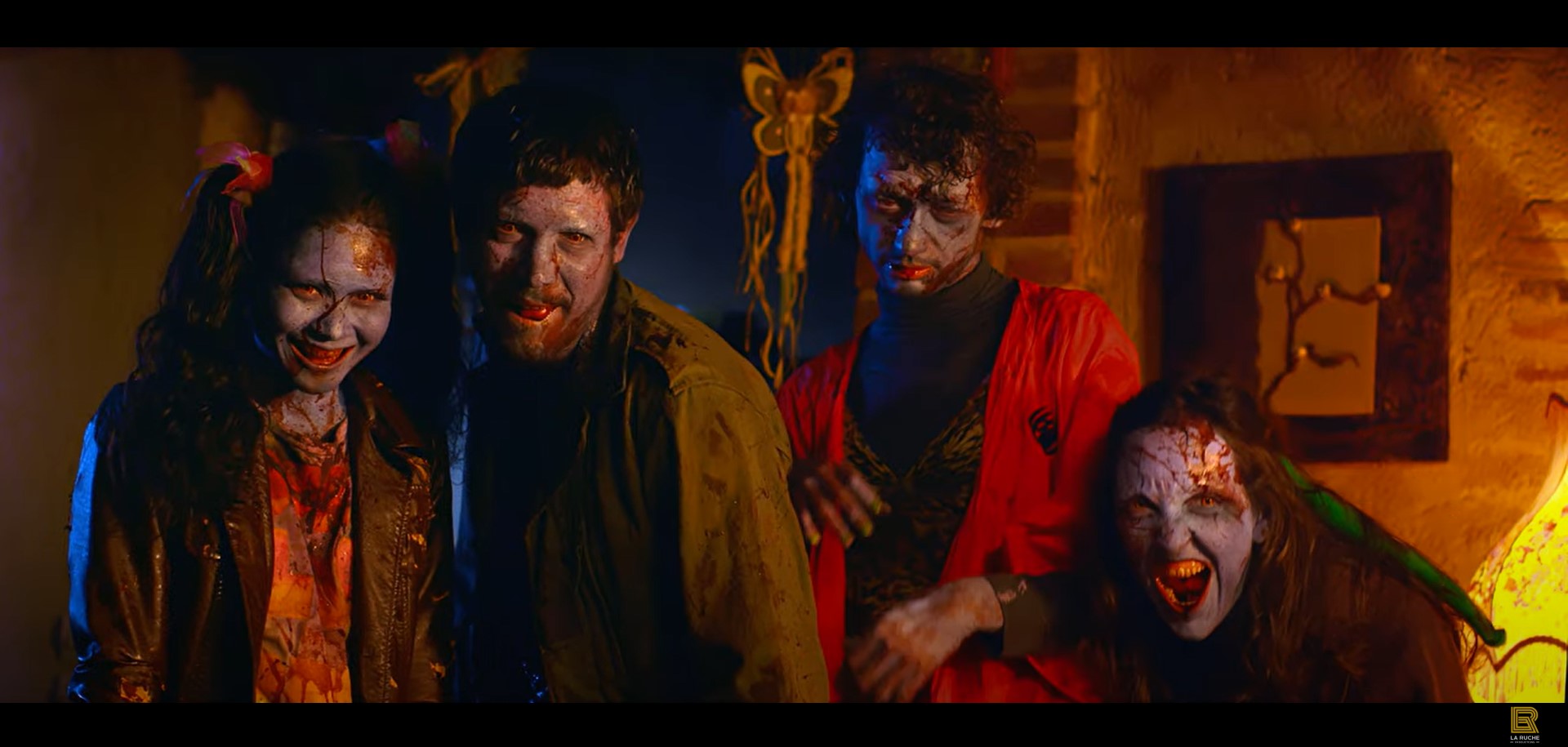
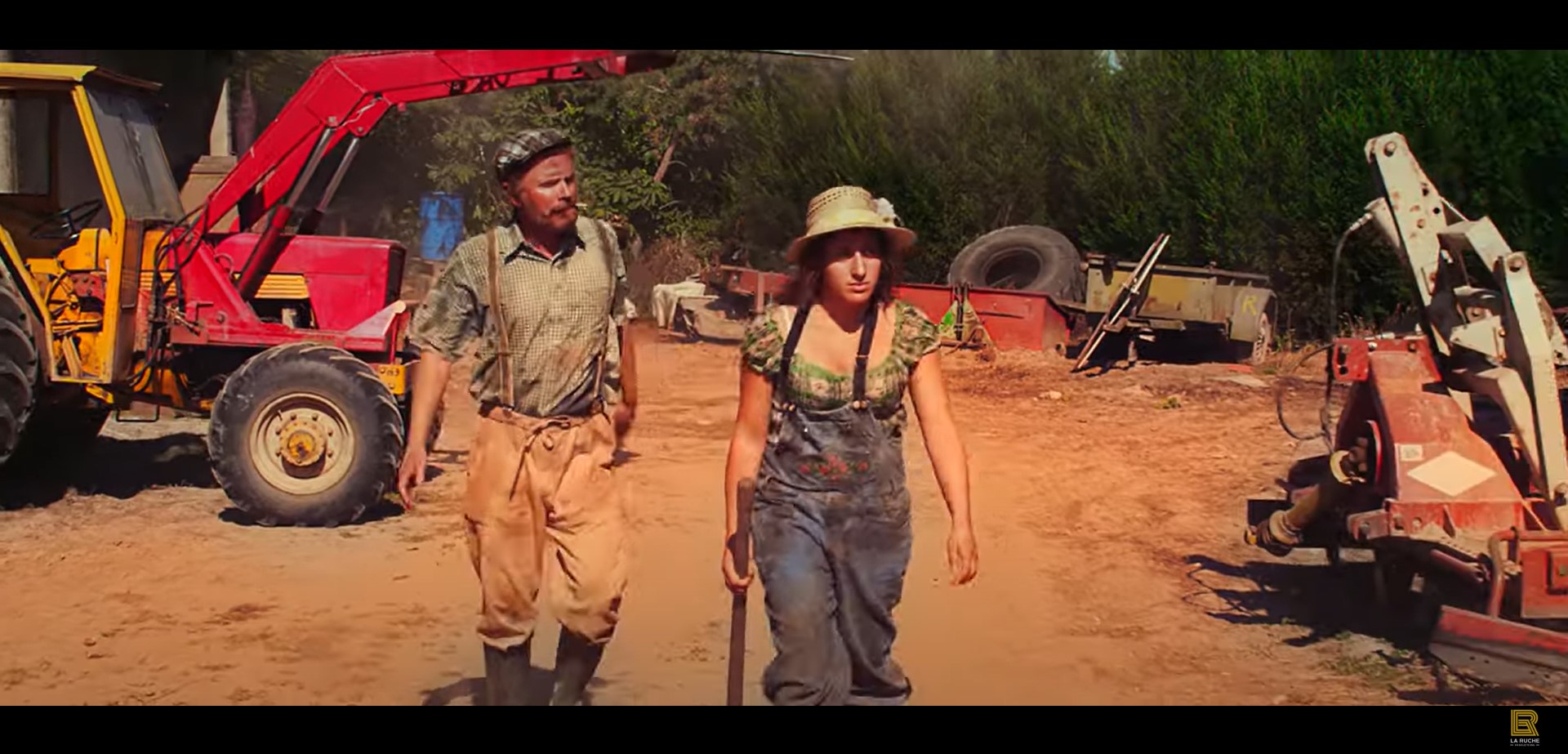
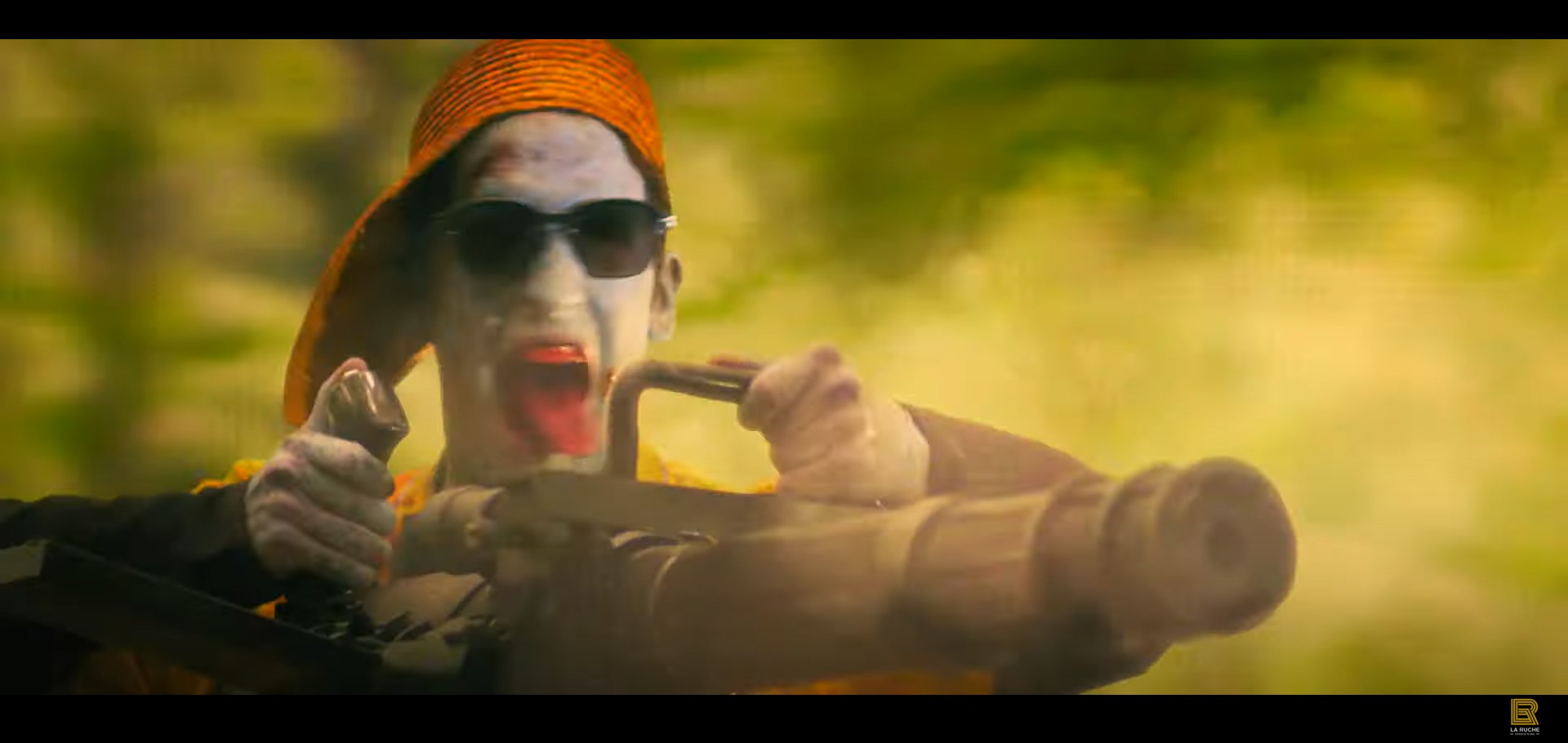
Warning.  If you have a severely crippling phobia of snakes, then do not press play on “Calamity of Snakes” or you’ll be crying in the fetal position for hours afterwards with imaginational visions of venomous serpents dangling around your neck and arms, clinging to your punctured flesh with their sharp, tapered fangs. Trust me.  I know from experience after having watched the William Chang Kee (Chi Chang) creature feature and going into the viperous vengeance film with my own form of sweat-inducing ophidiophobia, an extreme fear of snakes.  Kee’s 1982 production comes with a bit of notoriety that may put the film in hot water with Peta or other animal rights organization, it also may be a silver lining for those petrified by the carnivorous reptilians that lurk underfoot, but don’t worry, from Unearthed Films news board, the home entertainment distribution company pledges to donate a percentage of the “Calamity of Snakes’” sale profits to the Save the Snakes, an organization that aims to converse and repopulate all species of snake around the world.  Penned by Kee with cowriters Kang-Nien Li (“The Lady Avenger”) and Kuo Jung Tsai (“Crouching Tiger, Hidden Drago”), The Chinese film made in Taiwan, “Calamity of Snakes” wriggles to-and-fro between different genre elements with pieces of horror, martial arts, and comedy packed so tightly together that making diamond shaped heads and rattling tails difficult to define the kind of film Kee intended to convey, but what came to fruition fabulously depicts the can-do attitudes of developing a preposterous idea into something insane, terrifying, and effectuated with countless real snakes.  Chi He Film Company and the Hong-Kong based Kee Woo Film Co. serve as the production companies with Tsai-Ching Wang producing and Golden Sun Films (“Dr. Lamb”) distributing.

Despite the animal cruelty, which undoubtedly can’t be ignored, you have to give credit to the Chinese for their willingness to do just about anything in order to get the shot.  If that means two of the actors’ role violently around on a floor covered with live snakes, screaming their heads off, then they certainly have more cojones than I ever will.  From a recent interview I watched with Michelle Yeoh, the “Everything Everywhere All At Once” Academy Award winning actress describe the Chinese film industry of the 1980s to be stunt demanding and really did lack the strict safety standards when compared to the U.S.  “Calamity of Snakes” appears to be no different with the easily handling of cobras and an overall serpent magnitude that can’t be denied. Yun-Peng Hsiang stars as the young, U.S.-studied architect with a sensible and rational head on top of his shoulders, overcome with the feeling that his dealings with the unscrupulous land developer (Yuen Kao) and the two passive aggressively buttheads throughout the narrative that eventually lends to the developer getting what he wants by way of money, power, and backdoor dealings that denotes an allegory of affluence being blind to the perceptible cause-and-effect dangers ahead while the studiously educated are left ignored, exploited for their talents. “Calamity of Snakes” cast rounds out with Lui Cheung, Ying Lee, Tung-Min Huang, Ying Lee, Pei-Ying Lo, and Ping-Ou Wei as the land developer’s chucklehead assistant.

“Calamity of Snakes'” hardest part to digest is the disgusting display of snake homicide. In what becomes a grouping of three scenarios that are just scene after scene of killing snakes by the hacks of machetes, the release of mongoose going right for the head of the snake, and in a blaze of flame throwing fire, cruelty is terribly too integrated into the pericardium encased heart of Kee’s ecohorror and makes the snake outdoor market delicatessen scene that dispatches a cobra for use of consumption that much more palatable despite the graphic skinning, organ removal, and blood draining for a special drink cocktail that can supposedly cure what ails you. Down the hatch! After the ginormous scenes of genocide, rooting for the snakes to bite back against the unbridled cruelty of humans to come crashing down in a heap of revenge-seeking serpents is a sight of satisfactory glory. Kee, also known for his cheap but fast-paced martial arts films, creates a loose hierarchy amongst the ophidians by fabricating a boa constrictor that can kung-fu with the best human snake whisperer. The showdown scene takes flight with the constrictor whipping through the air using its large, serpentine tail as a formidable blunt object and its body to innately crush the life out of foes. In contrasts, the chop-socky, though wonderfully fast-paced and choreographed, is a bit out of place with a flying, unrealistic boa against the real slithering slitherers creeping along the floors and walls, decorating the rooms with slick, shiny scales that encircle terror around frantic condominium residents and the boss-level land developer who unsheathes a katana in another scene of snake cleaving in slow motion.

The day of the snake is here and now, on a high definition 1080p, AVC encoded, Special Edition Blu-ray from Unearthed Films as part of the boutique distributor’s Unearthed Classics sublabel and slotted at number 12 on the spine. The primary feature is presented in a widescreen 2.35:1 aspect ratio with a genuine digitized effort toward the best possible 2K scan rendition of the photograph film source print. There’s not a ton of wear, tear, or much of anything regarding damage aside from a few vertical scratches. Delineation is consistent with delivering characters and snakes transposed clearly, but often you might see the boa constrictor scenes share a softer exposure because of that accelerated camera work with the martial arts. Color reproduction does maintain a certain image fidelity, but the grading comes off placid, never giving the snake, or snakes, a chance to gleam a venomous glare with those eyelid-less and verticalized wide-angle seeing eyes. The original elements offer little to work with, but the Unearthed Films’ release is still top-notch work in delivering the best possible picture. The Mandarin, Cantonese, and English dub PCM mono 1.0 provide the typical options available when released in Taiwan decades ago; In fact, they’re all scratch tracks but I went with the Mandarin track that synchs not too adversely to viewing pleasure. With the mono, dub track, depth is done before it can even get started but “Calamity of Snakes” has immense range that conveys the whooshing actions of living things flying through the air during fight sequences, flamethrowers singe the very audible air, and the Foley keeps up to any and all actions with a more than satisfactory overlay track. Dialogue being the important aspect of anything film is fine here being in the forefront and clean albeit some moderate background crackling-static throughout. English subtitles are available and discern no issues with pacing or with spelling slips but there is a sense of something lost in translation as the dynamic discourse seesaws in an irregular way that feels forced and unnatural. Unearthed Films doesn’t just deliver one version of the film, the company offers two more edits for equality. If you’re not one for animal cruelty, a cruelty free version is available that omits the snake snuff. Also, the theatrical edit is a censored version, but Unearthed Films does include the 4:3 uncut, unrestored versions that adds back in prolonged sex acts and one very brief nudity scene. A From Shaw to Snake: The Venom And Violence of Early Chinese Language Horror Cinema brings back some key far East scholars, such as Calum Waddel, and new academic faces with Dr. Lin Feng, to discuss the background limbotic tug-a-war of Taiwan between the democratic island and mainland China that also morphs into the rising of Shaw Brothers’ films in the mid-20 century to eventually Golden Sun’s competitive rise, and subsequently the Shaw Brothers’ as well, into the kitschy crowd favorites of the horror genre. Reptilian Recollections: Lin Kuang-Yung In Conversation With Chui-Yi Chung converses in an interview with Lin Kuang-Yung recalling moments from production involving the countless number of snakes and the safety assurances with the cast and crew, despite some being bit a few times. The special features round out with a commentary track with Nathan Hamilton and Brad Slaton, alternate opening and ending credits, and a still gallery. The physical portions of the release come with a traditional Blu-ray snapper case inside a cardboard o-slip with the original Thai poster art by illustrator Kham, provided by the M. Wright Collection. The same poster art is used for the disc art as well. Inside the snapper case lies no insert or reverse cover art. The region A locked Blu-ray clocks the feature presentation in at 96 minutes and is not rated. “Calamity of Snakes’ is the original “Snakes on a Plane” of the 1980’s, a coiling revenge plotted by nature with potent venom and disturbing imagery that deserves to be a classic in its own right soon to once again see the light of day on DVD and Blu-ray come April 25 from Unearthed Films.

Save the Date!  “Calamity of Snakes” Slithers onto Blu-ray and DVD!  Available at Amazon!

On the Verge of a New Millennium, New Faces and Stories Tell Their Terror on the Same Old EVIL Video Format! “V/H/S/99” reviewed! (Acorn Media International / Blu-ray)

Found Footage is all the 90’s Craze These Days! “V/H/S/99” Available at Amazon!

The year:  1999.  The format:  VHS.  The theme:  The most horrifying experiences caught on found footage camera.  A horror anthology for the turn of the century puts together five of the most terror-drenched short films that resurrects the punk-rock dead, turns urban legends into vindictive playthings, televises Lovecraftian game show frights, peers into the stone-cold eyes of a Gorgon neighbor, and goes to Hell and back!  All caught on camera from a first-person view as VHS vicariously relives the glory days through a digital world, capsulated by the horror realm and all its fanatical acolytes for the analogue video format to live undead forever. 

Living in the age of a VHS comeback is admittedly kind of weird.  VHS has become a hot collectible, especially and obvious the rate and obscure that mostly resides in the horror and cult genre.  Most recently, a discovery on a Brazilian VHS cut of Jaws 2 has a couple of minutes of shot footage that no other release holds to this day.  That, being just one example, is sought after power of VHS that saw various versions of one film be disperse far and wide across continents, which the same could be said about DVD that too saw a variety of different cuts due to the diversity of playback formats, distribute cuts, and numerous levels of censorship between countries.  VHS is also making a comeback in format style with gritty, faded, flat colored image veneer and tracking lines and the absent transmission signal of snow statically adorning the screen with beautifully hypnotical and flickering white dots.  So, it’s now surprise that on the heels of 2021’s “V/H/S/94,” another analog anthology is greenlit in 94’s wake with “V/H/S/99” for 2022, written and helmed by newcomers to the series but not necessarily newcomers to the horror scene.  The movie’s sequential lineup Is as follows:  Short filmmaker Maggie Levin writes-and-directors “Shredding,” taking a break from killer sharks is Johannes Roberts to oversee his “Suicide Bid” entry, musician Flying Lotus directs and co-writes with Zoe Cooper with “Ozzy’s Dungeon,” “Tragedy Girls’” director Tyler Macintyre writes-directs “The Gawkers” along with co-writer and fellow “Tragedy Girls’” screenwriter Chris Lee Hill, and the husband and wife tag team of Joseph and Vanessa Winter, filmmakers of “Deadstream,” helms-and-pens “To Hell And Back.”  The Shudder exclusive series latest is produced by Josh Goldbloom (“V/H/S/94”), David Bruckner (director of “Hellraiser” ‘22), Chad Villella (producer of the of 2022’s “Scream”), Bloody Disgusting’s Brad Miska, and “Scream” ’22 and “Scream VI” director Matt Bettinelli-Olpin under the production banner of Studio 71 and presented by Cinepocalypse Productions and Bloody Disgusting.

A new set of five tales of analog rendered terror invoke a new set of actors in each short film that carrier with them a broad range of experience. While a couple of the stories shred the narrative with hectic editing (I’m looking at you “Shredding”), performances throughout come over with blistering consternation and definitely a late 90’s grunge attitude with “Shredding” and “The Gawkers” delivering the full blunt force of period, heckling away in their baggy clothing, bohemian hairstyles, and a penchant for skateboard thrashing. The other films are merely timeless with only mere mentions of date, or their timestamped on the video tape recording, or are just a thematical proverbial nod to the specific point in time, lacking the keep it real essence that is quite idiosyncratic to the hop from a phasing out decade and into a whole new other. The cast of these shorts play their roles with exuberance and wackiness, which if you have lived in or can look back to the converging decades/millennium and see some of the gameshows or cultural shenanigans that defined America as people or, if you want to go smaller, just the pop culture, wacky is a pinpoint descriptor. The short films’ of “V/H/S/99” are comprised of a cast including, selectively, Steven Ogg (“The Walking Dead”), Ally Ioannides (“Synchronic”), Keanush Tafreshi, Jesse LaTourette (“There’s Someone In Your House”), Dashiell Derrickson, Isabelle Hahn, Sonya Eddy (“Blast”), Emily Sweet (“Castle Freak” ’20), Melanie Stone (“Deadstream”), Archelaus Crisanto, Luke Mullen, and Ethan Pogue.

Anthologies have been around for decades and are a great medium to showcase a multitude of individual storytelling from a variety of filmmakers walking different paths in life.  Fans can often salivate over these types of jump-the-shark formats that can start off with the zombie undead, transition 10 minutes later into a supernatural spooky, and then segue into a creature feature with a wraparound bonus story that may or may not connect them all and squeeze each episodic terror vision in a full-length feature runtime.  Though I enjoy a good collection of short and sheer frightful films, anthologies are not my cup of sanguinary tea.  Hopefully, no partisan takes seep out of this review as I attempt to examine “V/H/S/99” objectively.  Out of the five segments, three have landed strong with a right amount combination of style, gore, performance, narrative logic, and, of course, terror, and if you like comedic sugar in your black cup of horror then “To Hell And Back” is a perfect Venti-sized, well-blended mulatto of choice that thrusts two dimwitted demonic ritual documentarians into the pits of dark, gloomy, and malformed creature Hell and fight their way back to their own plane of existence.  Though one flaw some make catch when watching the caboose film of the anthology is that it doesn’t particularly reflect 1999 other than the small caveat, which is pivotal to the story, that at the turn of the millennia is when the veil between our world and Hell is as it’s thinnest.  The other two better entries capture more infinitesimally in detail of the late 90s, early 2000s clothing and discourse.  “The Gawkers” taps hard into the weird aggressive hormones of a teenage boy while exploring the newfound ways to use technology as spyware.   Webcams aboard big boxy desktops chauffeur in a whole new way to be creepy that lands them in hot water not by the law but by the wrath of ancient femme fatale of Greek mythology.  Johannes Roberts rounds out the better half with a sorority haze gone wrong that evokes an urban legend to become more than just a story and Roberts “Suicide Bid” offers, again, that period presence that feels like a tribute throwback to the 1998 “Urban Legend” film itself, but adds a supernatural surprise that utterly creepy and not as deep with only 6 feet underground rather than a 47 meters down, the director is slowing raising his fear to the surface.  The shorts left hanging below the bar are “Shredding” and “Ozzy’s Dungeon” and for reasons that have to do with their style and story. “Shredding” promising premise is plagued not by punk phantasms back from the dead but simply pilfered of focus with a hectic, if not severely chaotic, VHS-graded editing scheme that shocks the perception senses while “Ozzy’s Dungeon” is inspired by Nickelodeon’s Legends of the Hidden Temple gameshow where kids have to compete in toned down ancient society games to race up the temple to win the big prize. “Ozzy’s Dungeon” definitely is weird, sadistic, and Lovecraftian-inspired for sure but its story design loses motivation and often cheats rounding the bases in order to reach the shocking climatic finale.

Acorn Media International brings tape to the United Kingdom with a Blu-ray home entertainment release of “V/H/S/99.” Presented in a widescreen 1.78:1 aspect ratio, though doesn’t cater to the standard 4:3 ratio of video tape, the provided image quality purposefully varies to give audiences the titular analog experience. Faded grading, tracking lines, static and that jittery playback is all part of the visual environmental experience and even a few of the filmmakers shoot the film digitally to then run it through VHS to garnish with unnatural base video turbulence. The English DTS-HD 5.1 surround sound mix heightens the exposure and familiarity to of being that person behind the camera as all of these shorts of short POV. Intense and, often, cacophonous, the audio tracks still manage to level out, be discerned, and manage to relay the chaos no matter how much bedlam is thrown at the screen. From the zoom in-and-outs of the video tape recorder, there’s a clean sense of depth and the range is bountiful as the ambient track runs the gamut of omnifarious sounds that give each episode an individualized stamp. English SHD is optional. Bonus content includes an exclusive panel from New York’s Comic Con with guests producer Josh Goldbloom, “The Gawkers'” Tyler Macintyre, and “To Hell And Back’s” Joseph and Vanessa Winter as well as a total arc gag reel. After that encompassing project feature, the girth of the bonus content breaks down into the individual shorts with “Shredding” having a deleted scene and the complete fictious band BitchCat music video, “Ozzy Dungeon” has two deleted scenes, “The Gawkers” has a deleted scene as well as bloopers, camera tests, and The Making of Medusa, and “To Hell And Back” rounds out the features with a hefty look at the raw footage, scouted location, and a storyboard and blocking rehearsals. There are no bonus features for Johannes Roberts’ “Suicide Bid.” Physical features include a slightly thicker traditional Blu-ray snapper, a Europe standard, with a cover art that matches the North American RLJE release, a city being loomed over by skull made out of colorful galactic stars and a pair of video lenses for blank eyes. The disc art is pressed with the same front cover image. Though no mention of a region playback on the back cover, I suspect a region B encoded release as per usual with Acorn Media Interntional. “V/H/S/99” has a total runtime of 109 minutes and is UK certified 18 for strong blood violence/gore. “V/H/S/99” is not my kind of off the heasy subgenre, but the latest series anthology packs a punch and I would never discourage anyone from not experiencing firsthand an homage trip through terror.

Found Footage is all the 90’s Craze These Days! “V/H/S/99” Available at Amazon!

Eventually, You’ll Have to Stand Up to EVIL. “The Retaliators” reviewed! (Quiver Distribution / Blu-ray)

Man Up and Take Back Your Life with “The Retaliators” on Blu-ray!  Click to Purchase from Amazon.

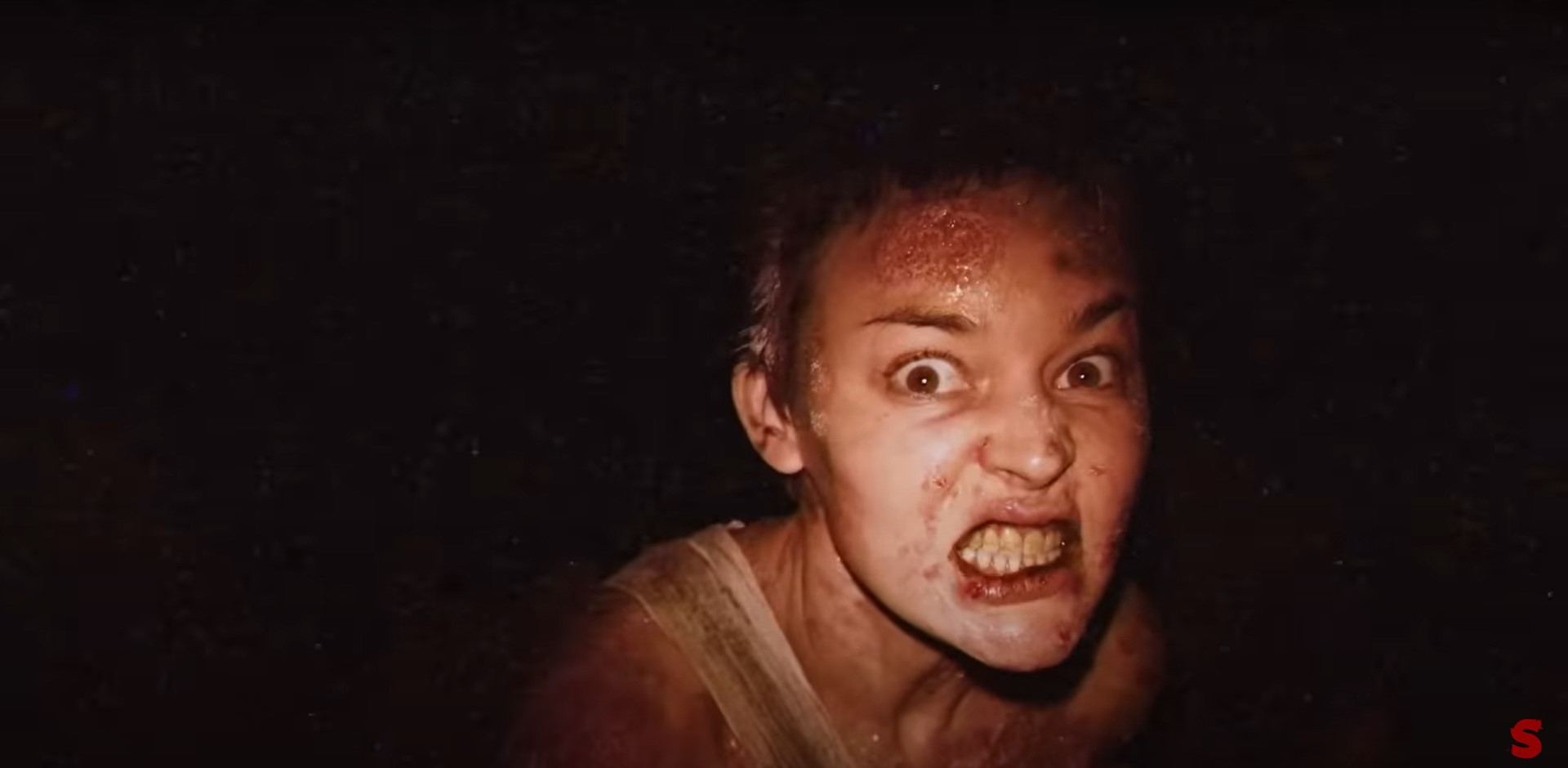
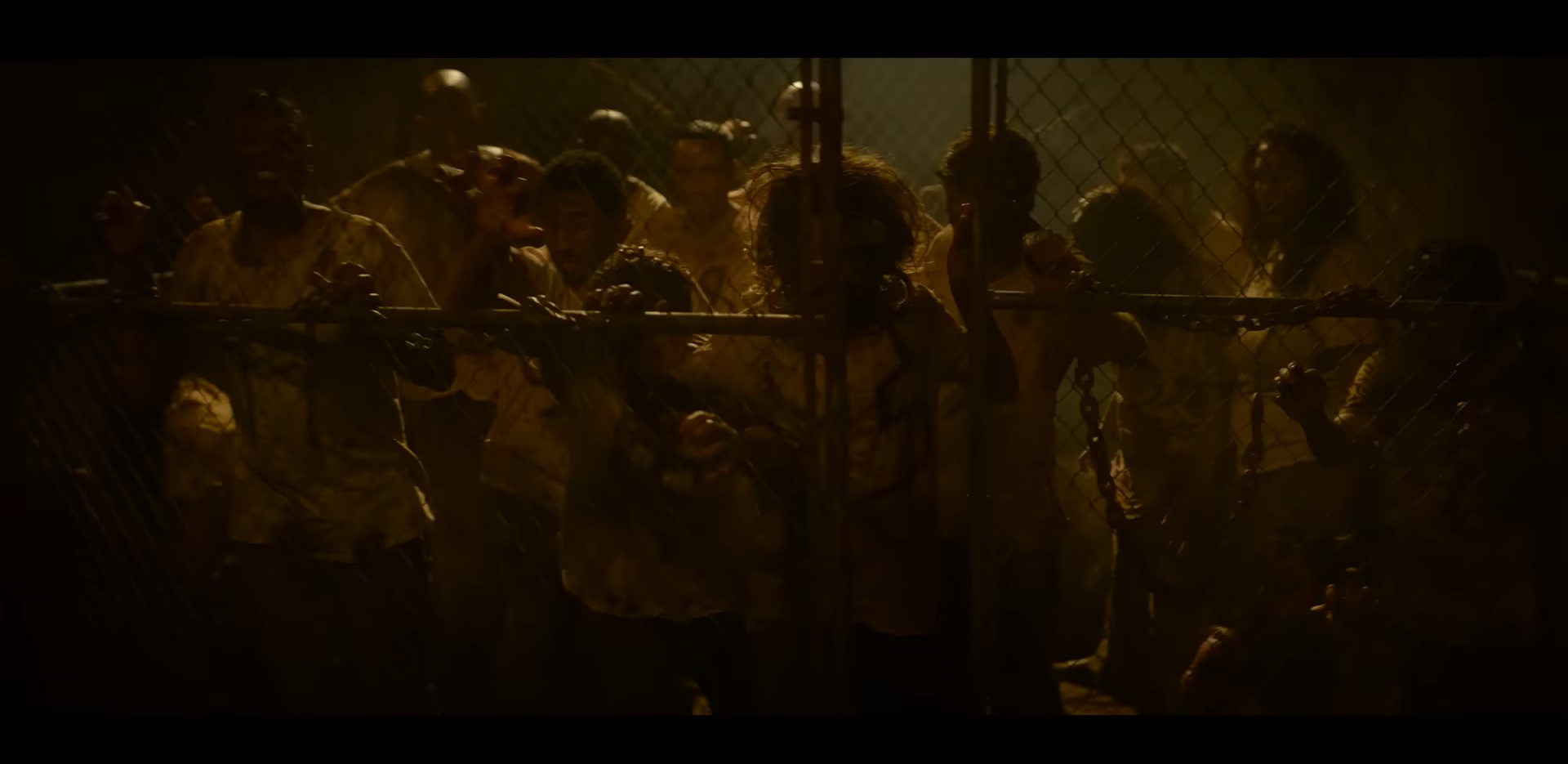
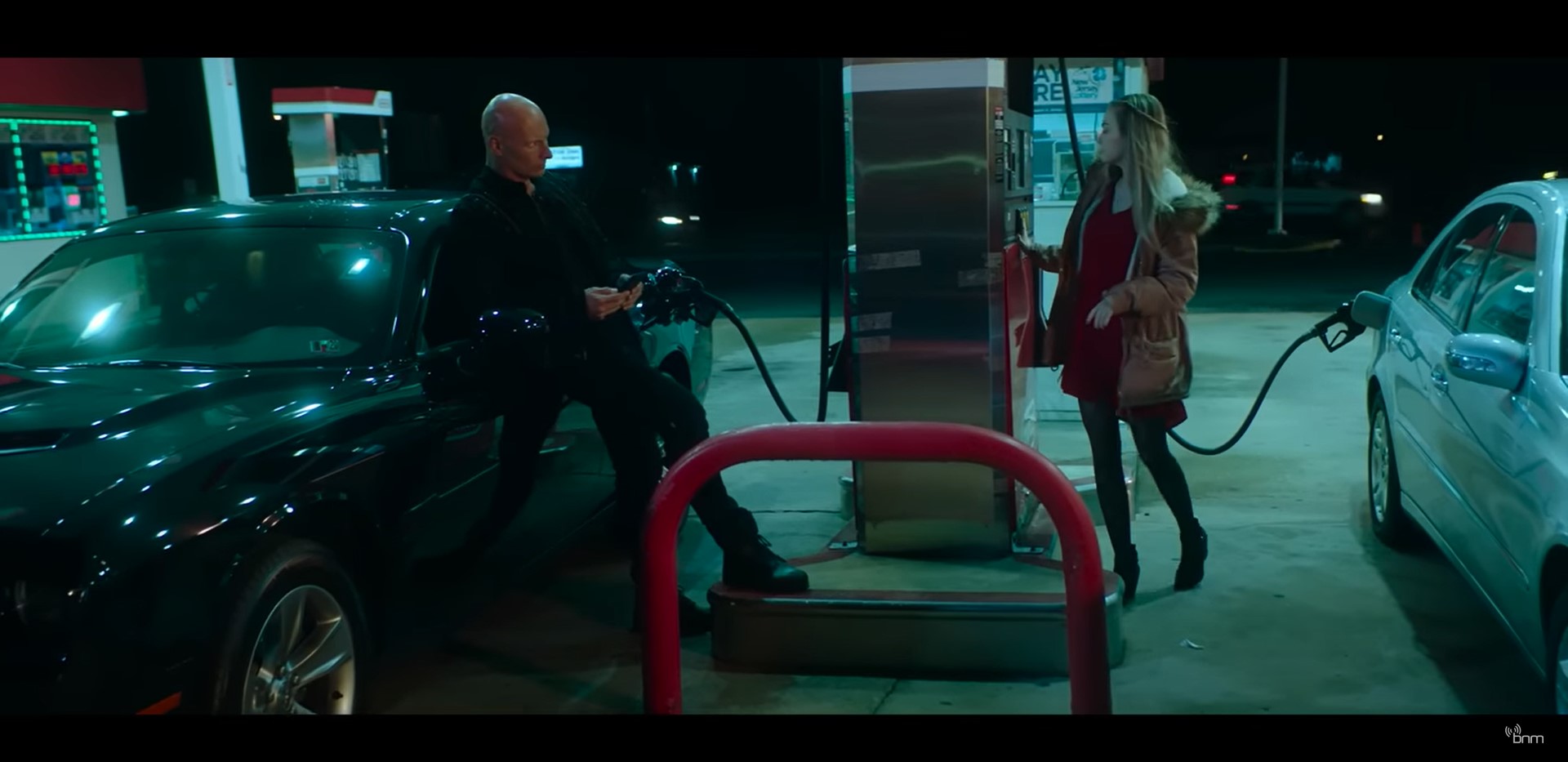
Having recently lost his wife, Pastor Bishop tries hard to keep his two school age daughters safe with an oversight thumb, but when his oldest daughter, Sarah, begs him for the car, God himself knows that the Pastor’s children can’t stay children forever. Bishop fears come reality when Sarah is chased by a sadistic man, ran off the road, and zip tied to her steering wheel as her car is pushed into a nearby ravine. Destroyed by another loss, there is seemingly no way out of the grief hole for the man of the cloth until a Detective, who once shared Bishop’s pain and suffering with a similar, personal experience, introduces him to his isolated former fallout bunker turned torture cabin in the woods with the man who killed Bishop’s daughter chained captive in the basement and next to him sits a variety of melee tools of affliction. Deeper into the Detective’s subterranean dwelling lies a more terrible, caged secret, one that is incidentally unleashed upon the world, and will wreak carnage upon the land and it’s up to the grin and bear it Pastor to take a stand against pure evil.

Frighting for yourself and for special persons in your life is crucial for any self-respecting person to be able to look at themselves in the mirror and say, “I did all I could.” Those who believe in understanding and forgiveness ultimately fall into being trampled on and biting the bullet because just surviving the other end of a contentious situation can be a false sense of security and an opaque veil to the ever-present dangers lurking in every crevice. The 2021 release of “The Retaliators” accouters that theme of following one’s combative conscious to protect what’s dear while also sporting a hefty amount of violence, blood, subhuman psychopaths, and a nearly all nu metal musician cast. Co-directed between from short and music video filmmaker, Samuel Gonzolas Jr., the film’s star and “Central Park” actor, Michael Lombardi, and music video director, Bridget Smith, “The Retaliators” aims to show an ugly, real truth that can affect and twist good men into the same abhorrence and villainy they’ve struggled to repel and resolve. “The Retaliators” mark the first screenplay from the Geare Brothers, Darren and Jeff Allen, is shot across various locations in the U.S., including states Nevada, New Jersey, and Connecticut, and is a production of Lombardi’s Better Noise Films with the company’s CEO, Allan Kovac, and Philly Born Film’s Mike Walsh also producing.

As a company that’s half part a music record label, the film was destined to showcase some of the independent rooted musical and elemental talent of the rock genre, but the narrative is convoyed by a fellow musician, who will humbly admit they are not trained or experienced actors, but rather actors who are rock artist sympathizers, in the case of principal leads Michael Lombardi and Marc Menchaca of Peacock’s new horror thriller “Sick” and who you may not have recognized in the third season of Amazon’s “Tom Clancy’s Jack Reason” as a high-and-tight, clean-cut naval captain. Menchaca is anything but burred cut as a bearded and wavy-haired, somber detective assigned to Pastor Bishop’s (Lombardi) case of his murdered daughter. Menchaca does his work in feeding off the dark energy cocktail of Lombardi’s grief, despair, and vengeance-stricken neo-pastor. Lombardi’s heartfelt performance definitely deserves praise for how one should react in losing a child and also reflects the helplessness that burdens the parent into a black hole of sorrow. As a character, Bishop struggles morally with seeping into and being swallowed by the grim circumstances gifted for him despite however the circumstances may seem to be in his favor. The gears Lombardi has to switch from a faithful person, to rancorous, to then finally a path of soul changing redemption goes smoothly enough to justify his position as principal lead. Menchaca’s demented detective almost feels left out to an extent, but the audience will get enough of a taste to satiate his unglued righteousness. While no love interest makes it into the fold of characters, the narrative does house spots for the nu metal and rock musicians in supporting or minor roles. Papa Roach’s Jacoby Shaddix, Mötley Crüe’s Tommy Lee, Ice Nine Kills Spencer Charnas, Escape the Fate’s Craig Mabbitt, From Ashes to New’s Matt Brandyberry, Lance Dowdle, Danny Case, and Matt Madiro, and Five Finger Death Punch’s Ivan L. Moody, Zoltan Bathory, and Chris Kael are just a select few of rockers you’ll see in “The Retaliator’s” lineup. Personally, I wanted to see more of Jacoby Shaddix as Quinn Brady, a homicidal madman in a horrific cat-and-mouse lark with the detective. Who knows, maybe we’ll see a prequel with Shaddix returning to the role. For the most part, like Shaddix, the musicians are well integrated with diverse roles that range from biker club, to strip club DJs, to bartenders, and to AA participants. “The Retaliators” round out the cast with Katie Kelly (“Deadly Seduction”), Abbey Hafer, Cree Kelly (“Aftermath”), and the massively built and scary-looking Joseph Gatt (“Titanic 666”) as the child-killer strapped and prepped for Pastor Bishop to physically and mentally break.

Better Noise Films is comparable to another divisional filmic offshoot of a larger parent music record label. Cleopatra Entertainment, of Cleopatra Records, often builds film structures and narrative plots around the company’s signed ensembles to promote and market their lyrical and thrash-heavy material as well as putting names to faces and thrusting them out into the world to those who may not have heard of their music. Aside from likely being a huge cost-savings benefit, these films are often scored by their artists, leading to a diverse sounding and electric soundtrack that typically works out less than desired. What the directors end up implementing, musically, yields result only half of the time while the other half is forced unto the audience for the sheer effect of promotion despite the off-putting composition. Not every intense scene needs a band backdrop to flourish raw emotion and pump up the blood but that’s what films, like “The Retaliator’s,” is bred to show off in a marbled genre that has categorical plot pivots all along the way to the grand finale of an all-out brawl, fight for your life skirmish with the criminally and tortured insane. That latter concept is perhaps one of the more interesting and original ideas of reinventing the psychopath that I’ve seen in a long time and the anticipatory excitement and thrills of their release to wreak havoc like barbaric rippers had found moments of great gore excess when Paster Bishop finds his divine strength to help the savage sadists meet their maker by way of machete, a shovel, and a woodchipper. “The Retaliators” make use of familiar horror tropes, such as the fog machine and a blend of lowkey and neon flushed lighting, to conjure an unconventional crypt of rock and homicide, putting its own unique stamp of indirect evil leading to up to another bigger, badder bedlam of things.

Chalked up to be an 80’s-stylized 90’s cinematic horror pulp, with early 2000’s soundtrack, “The Retaliators” arrives onto Blu-ray home video courtesy of Quiver Distribution. The AVC encoded, high definition, 1080p BD50 has a CinemaScope, aka anamorphic, widescreen 2.39:1 aspect ratio. The large storage formatted disc offers more variety as the capacity can handle the expansion of color and range of content. From complex, diversly lit, and heavily foot trafficked interiors to the great outdoors with trees fields, gravel terrain, and watery brooks, the quite a bit that’s going on looks pretty good on screen and the anamorphic widescreen doesn’t have that squeeze-it-in feel either but can’t escape a few scenes of lens flare. Details provide a tactile enamel, but the colors are quite soft with a lower dialed in color grading. The English DTS-HD 5.1 surround sound has more teeth in the soundtrack that overlaps and snuffs out any ambient sound design, essentially making “The Retaliators” a 96 minute, give-or-take a few scenes, music video. Dialogue doesn’t suffer the same backseat fate as the script-to-screen exchanges are in the forefront and though the soundtrack is a bit flat, the original, nebulous-electronic score in between by “Stranger Things” composers Kyle Dixon and Michel Stein does stand out to add a nice underlayer of questionability and suspense. Special features include cast interviews with actors and music artists speaking to their experience on the film, “The Retaliator’s” music video, and theatrical trailer. The physical release comes with a cardboard slipcover on the first pressing with a rendered pseudo-illustrated mockup of pyramid arranged character heads with Pastor Biship standing bloody and machete in hand right smack in the middle. The standard Blu-ray snapper includes the same cover arrangement art as the slipcover. Not listed on the back, the unrated film does support region A playback. “The Retaliators” pumps up the blood as well as the jams during an overhaul of one’s convictions in a baptism by hellfire.

Man Up and Take Back Your Life with “The Retaliators” on Blu-ray!  Click to Purchase from Amazon.

Write Down Your EVILEST Desire and Have It Become Reality. “Invitation Only” reviewed! (Unearthed Films / Blu-ray)

Have the “Invitation Only” Blu-ray Stapled to Your Face!  Purchase by Clicking the Cover Art Below!

Chauffeur driver Wade Chen wasn’t born with a silver spoon in his mouth.  The humble, low-on-the-totem pole young man has dreams and aspirations of super models and sports cars but can’t even afford a new suit.  When Wade’s accidently catches his wealthy construction tycoon passenger, Mr. Yang, sexually engaged with the beautiful model of his dreams in the backseat of the limousine, the nice guy in him didn’t think too much of it, but Mr. Yang surprises Wade with an invitation to an exclusive, high-brow party.  Unable to attend the party himself, Mr. Yang sends Wade under the pretense of being the tycoon’s cousin and hooks him up with nice clothes and money for gambling.  At the party, Wade is joined by four others who are also first timers amongst the high-class guests and are greeted with welcoming arms by the host, Mr. Warren, who offers them their wildest dreams, whatever they desire, by manifesting them into reality, but their reality turns quickly into a nightmare when the party is a façade for the opulent to put on a stage show of hunting down, torturing, and gruesomely murder the poor who believe envying the rich degrades their lives.

A class dividing social commentary where the disillusioned rich continue to believe the lower-class are exploiting their pedestaled luxuries when, in reality, the wealthy continue to take an unfair advantage for their own benefit and whimsical desires!  Labeled as Taiwan’s very first slasher, Kevin Ko’s debut pecking order demarcating film specializes in serrating into the other half a sort of social class justice.  Ko, who continues to work in and around the East Asian market having just released last year his written and directed Chinese folkloric thriller “Incantation,” helms the gore heavy script from the screenwriting duo Sung In and Carolyn Lin as their only credited treatment.  Shot near entirely inside a dilapidated converted warehouse in Taipei City, “Invitation Only” becomes the entrapment and last straw abattoir for all classes looking up and salivating over the greedy greener grass separated by that invisible, money-driven, societal line.  Maxx Tsai (“Memoria”) and Michelle Yeh (“The Heirloom”) produce what some critics and fans might denote as torture porn and, truth be told, “Invitation Only” is very “Hostel”-esque with its plot revolving around deep pockets getting away with murder, literally.  The 2009 released film is a production of principal producer Michelle Yeh’s Three Dots Entertainment company.

What’s admirable about Kevin Ko’s “Invitation Only” is its hyper local aplomb. From Taipei City location to the mostly local cast from Taiwan, Ko’s feature is a celebration of Taiwan’s filmmaking life despite the plot being about taking lives. In the lead role, Bryant (Ray) Chang (“The Perfect Girl”) plays the passive doormat that is Wade Chen, a nice and principled guy but has no gumption to claw himself out of just scraping by in life. Chang’s no confidence spell over Chen is just want the doctor ordered when casting a bumbling nobody lost in the crowd and touching elbows with plutocrats eating escargot Tapas and drinking champagne. Chen immediately meets the sweetly awestruck Hitomi with a provided backbone persona by “The Ghost Tales” Julianne Chu. At this point you’re thinking Chen and Hitomi will hit it off, become love interests, and be the Formulaic heroes of the story at stemming from this connection.  Partially, that’s true, but then Chen quickly becomes beguiled by that very same supermodel of his dreams, the same supermodel he stumbled upon in the car with Mr. Yang (Jerry Huang, “49 Days”), who is now eating from his lucky-streaked hand at the roulette table.  Former JAV starlet Maria Ozawa is the delicate tigress who beds Chens in an offshoot room of the party to bring the on cloud nine chauffeur a taste of high society to a culminating head.  Ozawa, who left the adult industry and went on to have a modest genre film career to this day with principal roles in “Erotibot” and “Geisha of Death,” is intoxicating on screen in her debut mainstream feature, but the actress doesn’t speak a lick of Mandarin and forces English to the dialect conversation to which then Bryant Chang has forced the dynamics with poor English reciprocation.  In bed, Chang and Ozawa connect charismatically, but other than that, the dialogue exchanges can be painful to get through.  Other invitees on the “Invitation Only” casting list include Joseph Ma, Ying-Hsuan Kao, Vivi Ho, and another English speaker Kristian Brodie in the mix to balance out with Ozawa to make the film a Mandarin-English hybrid.

Being a product of the early 2000’s, at the backend of the first decade after the turn of the millennium, “Invitation Only,” with Kevin Ko’s quick, erratic editing style, very much epitomizes the era of time as a party-hardy, balls-to-the-wall, slasher with a survivalist edge. “Invitation Only’s” social commentary all but surely smacks you in the face with the fairly common theme of social class division, but the story twists the biding inner dark thoughts of the one percent upper class. The story evokes this justifiable fear amongst them where those willing to cheat, scam, and steal to obtain wealth from off the back of the wealthy deserve an unmerciful, unrelenting, and unpardoning execution with an affluent audience clapping and cheering their horrible mutilation and demise. With an unlimited cash at their disposal, to them, there are an unlimited number of ways to die, and Ko certainly illuminates that ragbag of weapons of bodily destruction every chance he gets. The annual gathering of denotes a “Purge” like affect that for once a year, for the last five years as the host, the English-speaking Mr. Warren, states, the Rich handpick lowly schemers for excruciating extermination. This year, however, a simple misjudgment of character foils a night of brain bashing and staple facing into the downfall of the Rich’s unscrupulous principles and steadfast convictions as Wade is a humble nice guy at the wrong place, wrong time blundering into Mr. Yang giving Ms. Supermodel the wang. The whole annual affair is the rich cathartically getting their hands dirty, purging their distaste with a medieval axe or with jumper cable attached to a car battery. Ko invites not only the wealthy getting away with murder but being utterly brutal about it without shame or guilt as if they are truly on top of the world. The kill scenes are gorgeously horrific with the Hollywood trained special effects artists to provide that it-factor when considering blood, guts, and dismemberments.

“Invitation Only” is exclusive extreme horror not for just for anyone. Gore genre distributor “Unearthed Films” knows this and rejoices in the niche market of everything that would usually make one squeamish. “Invitation Only” is the survival horror that refuses to be a party-pooper as the Kevin Ko film arrives onto a high definition, 1080p, AVC encoded Blu-ray. Presented in a widescreen aspect ratio of 1.78:1, this particular Unearthed Films product doesn’t convey my favorite transfer quality. The codec bitrate for a high-definition release is all over the place as there are severe dips in the Mbps that can be as high as mid-to-low 30Mbps to upper DVD quality around 9-13Mpbs. With that breadth of range, the transfer supplies an inconsistent quality in waves; some scenes are sharp and very delineated while when in the dip, the scenes fall from grace into a sea of pixel blocks in low-lit scenes that nearly wash out the image entirely. Color graded virtually nonexistent as Ko keeps the scheme along the lines of neutral coloring. There are three audio options for selection: a Mandarin, with some English, 5.1 DTS-HD, a Mandarin, with some English, 2.0 PCM, and an English 2.0 PCM. Discerning between the pair of Mandarin options proves less distinctive compared to the distinct dub, for oblivious reasons, but there’s an edge more deepening into the surround sound mix with an intensity richer soundtrack. The lossy dialogue tracks often sound flat and muted as the screams and frantic getaways never pierce the ear’s soul, but for the most part, dialogue is clear and clean. There’s also an issue with the release’s coding on the in-feature audio selection as I toggle between the three audio options, they’re all listed as English with their respective format and channel output. Bonus features include behind the scenes discussions from select cast, such as Bryant Chang, Maria Ozawa, and Jerry Huang, a photo gallery, and theatrical trailers. Unearthed Films’ release comes in a clear Blu-ray snapper case with latch and reversible cover art in which both art styles reflect the dark and grim brutality of the film’s thematic nature. With a runtime of 95 minutes, the unrated and region A coded release does have an evolving story to tell unlike its likeminded brethren that usually gets in and through the dirty, ugly business in just above an hour’s time to keep the gore porn from getting stale. For a feature debut, Kevin Ko goes all in on the knife’s edge with commentary-laden “Invitation Only,” a viciously cold take on the extreme cruelty genre when money, the root of all evil, divides our common sense against one another.

Have the “Invitation Only” Blu-ray Stapled to Your Face!  Purchase by Clicking the Cover Art Below!

Vengeance Knows No Price on EVIL’s Head Alive. “L.A. Bounty” reviewed! (Scorpion Releasing / Blu-ray)

“L.A. Bounty” on Blu-ray and Available to Purchase at Amazon.com

When a Los Angeles mayor candidate is kidnapped from his home at gunpoint, suspicions immediately turn to the incumbent mayor in what seems cheap move to remove a rival, but the abduction is no snatch and grab for a quick buck and political advantage.  All-around prevailing bad guy Tim Cavanaugh is the spiritually unhinged mastermind orchestrating the scheme behind the scenes.  When the police don’t have a clue what to do next other than to wait for kidnapper demands, bounty hunter Ruger steps into the fold with a coerced hot tip about the kidnapping plan.  With a score to settle in the death of her ex-partner, Ruger is hot on Cavanaugh’s tail, foiling multiple assassination attempts on a witness, the mayor candidate’s wife, by Cavanaugh’s men, and determined to put an end to Cavanaugh once and for all.

If you’re a Sybil Danning fan whose had enough of seeing the blonde genre film icon in skimpy, or even sans, clothing, then “L.A. Bounty” should be your next upcoming feature with a leather-cladded Danning, in a nearly dialogue silent performance, blasting away henchmen left-and-right with a pump action shotgun.  The 1989 action thriller is penned by Michael W. Leighton (“Rush Week”), based off a story from the “Chained Heat” and “Howling II …. Your Sister is a Werewolf” cult actress and directed by “Power Ranger” franchise director Worth Keeter.  Before made-for-TV round house kicks, Zordon, and Kaiju monsters and machines that has become the mega “Power Ranger” franchise, Keeter had made a modest life out of obscure indie horror with “Dogs of Hell,” worked with buxom blondes such as Pamela Anderson in the thriller “Snapdragon,” and even dabbled in the exploitation ventures of Earl Owensby productions with “Chain Gang.”  Filmed in and around the Los Angeles area, “L.A. Bounty” is the ex-con gone vigilante with a vendetta from the production team of the Danny, Robert Palazzo, and S.C. Dacy founded Adventuress Productions International as well as a production of Leighton & Hilpert Productions, with Michael Leighton producing, and presented by the Noble Entertainment Group.

As one of renowned queens of scream, Sybil Danning, is a recognizable icon amongst low-budget horror fans as well as cheap thrill actioners and sexy thrillers.  So much so, that her fame has granted her the opportunity to work on a passion project where she can be the Sylvester Stallone or Chuck Norris shoot’em up action hero that was a popular juggernauting ilk in the 80’s.  Cladded in leather and denim, Danning plays the silent, strong type with emphasis on the silent. Her character, an ex-cop named Ruger now a bounty hunter looking to even the score with Cavanaugh who ruthlessly wasted her partner, has roughly three lines in the entire 1 hour and 25-minute runtime, but Ruger is in full blown view of being badass with a large gun and unafraid to use it on mindless grunts. Danning coldness compliments the contrary with Wings Hauser’s babbling, manic psychopath. The “Mutant” and “The Wind” actor’s sordid bad guy Tim Cavanaugh has a special relationship with God, warped by his twisted nature for organized chaos, but is unable to keep trusted entourage due to the fact he keeps killing them for not being able to nix Ruger. Hauser is fantastic to watch as the unconventional villain of unpredictability. For instance, Cavanaugh never leaves home base, a storage warehouse full of crates and containers and apparently inside those crates and containers are mechanism and gadgets to thwart off unwelcomed guests. As Hauser improves dancing through the hallways and displays erratic behavior while painting, we’re starting to realize Cavanaugh’s mindset is one we’ve seen before but without the Joker face paint and the act is entertaining and pairs well with Danning’s stoicism. While Ruger and Cavanaugh are obviously the main course, veteran TV actor Henry Darrow (“Tequila Body Shots”) and a slightly younger veteran TV actress Lenore Kasdorf (“Amityville Dollhouse”) appetize in between with sticking to the script of a routine kidnapper scenario, offering little to motivate the direction the story itself works toward itself. Robert Hanley, Van Quattro (“Agnes”), Bob Minor (“Commando”), Frank Doubleday (“Escape from New York”), Robert Quarry (“Count Yorga, Vampire”) and Maxine Wassa (“No Strings 2: Playtime is Hell”) as Cavanaugh’s nude muse for his art.

“L.A. Bounty” is about a bounty hunter tracking down an old adversary for retribution but other than a few pieces of wanted paper notices, there’s really no other indication that Ruger is like Dog Chapman the Bounty Hunter although the platinum blonde hair would suggest otherwise.  Sybil Danning is definitely sexier in leather and denim than Dog and sure does talk a whole lot less but as a part of general audience pool and with a title that suggest such a profession, wouldn’t it make more sense to build up Ruger’s caseload with a few introductory chases before we’re chin deep in the Cavanaugh obsession?  Also, that motivational drive that sends Ruger down a path of payback lacks substance and is sullied by a script snafu of Ruger having a flashback of Cavanaugh executed her partner despite not being present.  Fortunately, “L.A. Bounty” is not a feeble farce of an action flick.  Danning is a striking, statuesque presence, the squibs exhibit a bloody gun blazing firefight, and if you’re a disappointed perv in Danning keeping her clothes on this time around, there are a handful of brief nudity scenes from other actresses sprinkled throughout.  One of the other highlights is the eclectic score arrangement by then “Heart” guitarist Howard Leese and John Sterling of “Revenge of the Cheerleaders.”  With a Jan Hammer-esque synth-tense wave, a cop melodrama guitar riff, presumably provided by Leese, and a contemporary tribal beat, “L.A. Bounty” has immense range for every scenario with its own personal composition that’s high energy, catchy, and fits the action.

“L.A. Bounty” differs from any other role in the Sybil Danning canon that’s mostly action and barely any talk and is dead set on broadening the cult actress into the popular rogue cop role of the late 80’s-early 90’s. Scorpion Releasing presents the original MGM vault material of “L.A. Bounty” on a high definition, 1080p, AVC encoded Blu-ray release with an anamorphic widescreen 1.85:1 aspect ratio. The 35mm stock has retained its blue-ribbon quality from over the years and the transfer really accentuates the near timeless picture with a brilliant, well-balanced, color palette, an even contrast for production lighting to properly illuminate around the faint and dense shadows, and no noticeable meddling against a natural grain with a pleasant texture scheme. The English DTS-HD stereo mix is mighty donkey that might be lite but packs a punch when it kicks. The release could benefit from a multi-channel surround sound output to give a tumultuous sense of melee gun battles. Dialogue is clean, clear, and ample with good depth definition and plentiful range in ambience. Optional English SDH subtitles are available. What’s essentially a bare bones release, the Blu-ray only comes with chapter selection and setup options. The physical attributes echo the supplementary material with a traditional Blu-ray snapper with outer latch and cover art based off the film’s original one sheet. The film is rated R, is region A hard coded, and has a runtime of 85 minutes. “L.A. Bounty” remains a step or two above the Andy Sidaris guns, girls, and giant explosions fare with gilt-edge performances and stylistic avenues representing the best of the originating decade in what is the most divergent film of Sybil Danning’s typically typecasted career.


Hunt down “L.A. Bounty” into Your Sybil Danning Collection! Purchase here!