An EVIL Auction Decides One Girl’s Self-Inflicted Fate or the Entire School Massacre of Goth Students. “Eating Miss Campbell” reviewed! (Troma Films / Blu-ray)

“Eating Miss Campbell” on Blu-ray from Troma Films and Refuse Films!

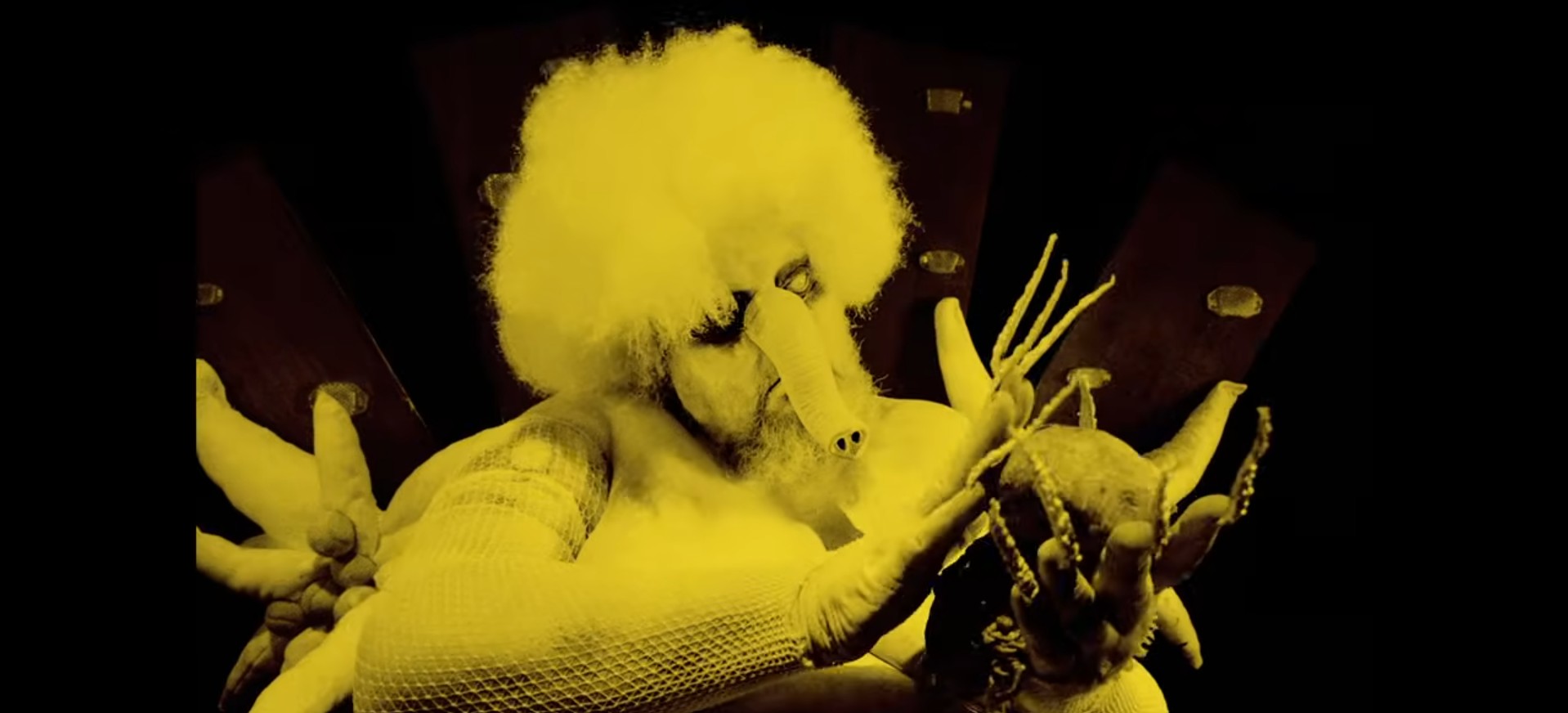
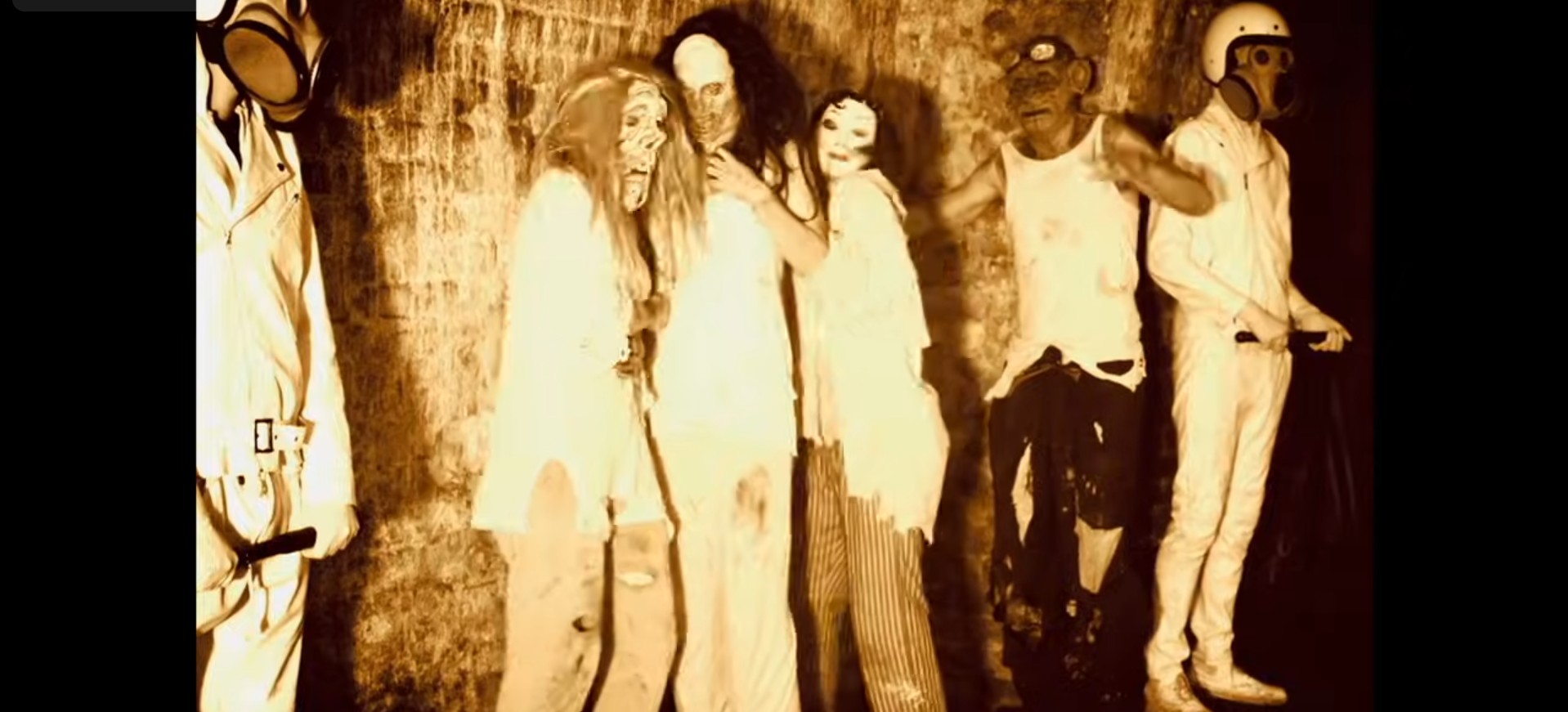
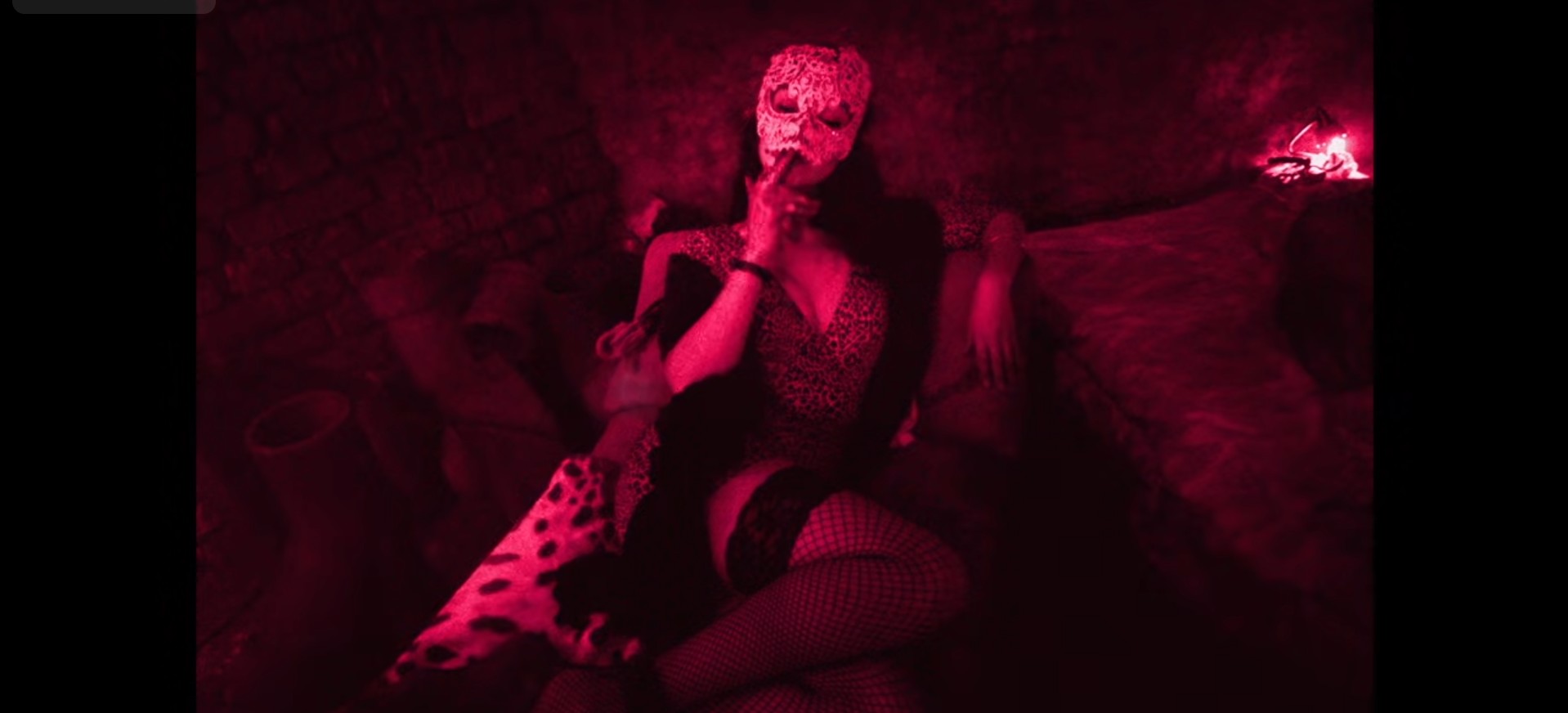
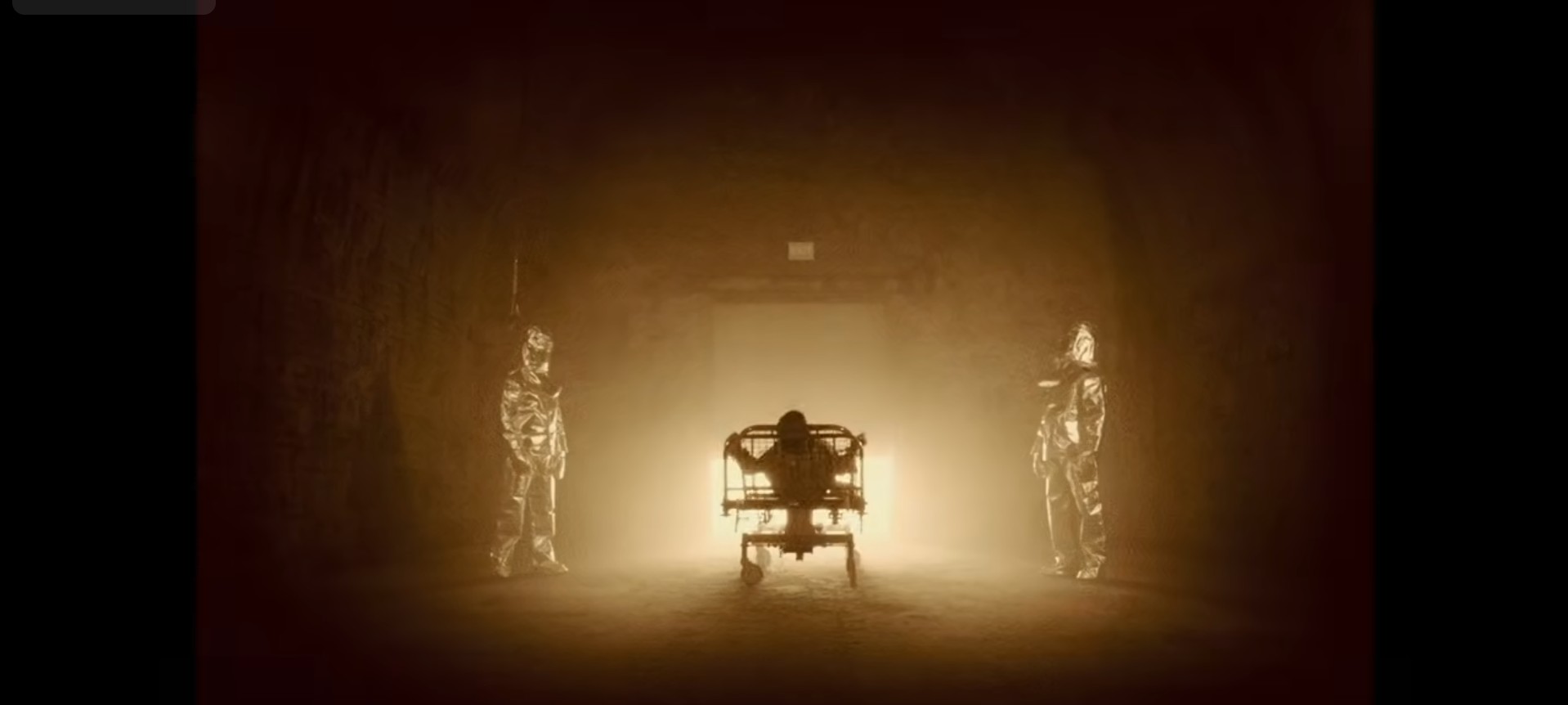
Vegan-goth Beth Connor contemplates suicide daily while attending a high school with a student body that’s cliché to a 90’s horror film and living with her grossly affectionate father and stepmother who are nonchalant and oblivious to her own self-destruction.  When a new, radical, American headmaster is hired at her British school, he creates the “All You Can Eat Massacre” contest that grants one winner a chance at a fully loaded handgun to either kill those of the winner’s choosing or blow their own brains out.  Apart of the accompanying American contingent on school staff, a new English teacher, Miss Campbell, catches Beth’s eye, and she falls heads-over-heels for her.  The contest is Beth’s way out of this clichéd life but her feelings for a morally complicated Miss Campbell and Beth’s sudden urge to consume human flesh puts a small damper on her chances to win the “All You Can Eat Massacre” that’s also highly sought after by a trio of stuck-up, TV themed-named girls aimed to eradicate every freak, geek, and goth on campus grounds.

“Eating Miss Campbell” is the meta-horror-comedy that amplifies stains of the American way, history, and culture in a concurrent saturation of satire.  The Liam Regan film is everything Lloyd Kaufman and Troma Films dreams of in a Troma presented production with a goal to subvert the routine machine of mostly rightwing establishments and conventional, cherry-coated filmmaking.  The United Kingdom film, shot in Yorkshire, is a sequel to Regan’s “My Bloody Banjo” of 2015 but only with a few returning characters in a new situation rather than direct follow-up.  Regan’s sophomore film is the second chapter to what’s being labeled as the Bloody Banjo saga and is a production of Troma, Refused Films, and the “Bad Taste” inspired-company name Dereks Don’t Run Films with Regan and Kaufman producing and Dereks Don’t Run Films’ Danny Naylor serving as executive producer.

A cast made up UK and US actors, “Eating Miss Campbell” marks the return of some familiar faces and character names from Regan’s “My Bloody Banjo” with Vito Trigo (“Return to Nuke ‘Em High Vol. 1,” “Assassinaut”) as Mr. Sawyer now the progun, proviolence American headmaster of Beth Cooper’s school, Laurence R. Harvey (“Human Centipede 2,” “Frankenstein Created Bikers”) as Mr. Sawyer’s indelicately charming number one Clyde Toulon, Dani Thompson (“No Strings 2:  Playtime in Hell,” “Rock Band vs. Vampires’) as Mr. Sawyer’s well-endowed lover with an affection for younger high school boys, and, of course, no Troma production would be complete without a Lloyd Kaufman appearance or cameo as he re-enters the role of Dr.  Samuel Weil for a brief spell on a how-to dispatch oneself.  These returning personalities are integrated into a new grotesque story that surrounds high school goth and aware of the third wall girl Beth Cooper, played by “Book of Monsters” actress, and who has killer bangs, Lyndsey Craine.  Coopers looking to break out of the horror movie cliché by nixing herself before being consumed by the prosaism of it all, and she expositions this all to the camera, talking right to the viewers, to express her discontent and reasoning.  The tongue and cheek affair doesn’t end there with Emily Haigh (“The Lockdown Hauntings”), Sierra Summers, and Michaela Longden (“Book of Monsters”) playing into that 90’s theme by being Clarissa, Sabrina, and Melissa, all different television role iterations of one of the 90’s most iconic actresses Melissa Joan Hart.  The film rounds out with real life couple James Hamer-Morton (“Dead Love”) and Charlie Bond (“The Huntress of Auschwitz”) playing Beth’s parents, Justin A. Martell (“Return to Nuke ‘Em High Volume 1”) as school board member Tusk Everbone, Annabella Rich (“Powertool Cheerleaders vs the Boyband of the Screeching Dead”) as Nancy Applegate the bloodthirsty racist, Alexander J. Skinner as the girl chaser jock Ethan Rembrandt (Hotel Paranoia), and Lala Barlow in the titular role of English teacher, flesh eater Miss Campbell.

“Eating Miss Campbell” is completely satirical, completely outrageous, complete overtop, and a Troma contemporary classic.  Director Liam Regan understands the Lloyd Kaufman’s market audience to provide an unfiltered, unfettered independent production careening with uncontrollable momentum of bloody cannibalism, screwball antics, and topless gratuitousness and, in turn, solidifies himself as a Troma archetype director.  “Eating Miss Campbell” is a practical effects believer that implements squibs, prosthetics, and buckets of stainable blood to use in borrowed locations and while gruesome aspects work for the film, the pacing and storytelling is quite patchwork.  Covid-19, like the virus did for most films in production prior to 2020 lockdown, halted Regan’s progressive flow and caused a year-and-half, 18-month gap, that required additional weeks’ worth of shots, disrupting the flow in story and in character. There’s not a ton of filler to build history, storylines, or even give a moment to connect the pieces and absorb Regan’s revolving madcap that include references to cherry-picked scenes from “My Bloody Banjo” and the whole meta concept that beleaguers audiences with rants and rancorous tudes about reliving a certain period in time, such as a cliched 90’s horror movie for example, or a culture bastardized by violence and grotesque, maligned shapeshifters, and this becomes more than providing protagonist insight and protest propaganda no matter which way you slice and rearrange the story, and that goes without saying that’s most of Troma’s cuckoo-tastic catalogue.

Troma Films and Refuse Films proudly presents “Eating Miss Campbell” onto a Lloyd Kaufman introductory stated unrated director’s cut, Hi-Def Blu-ray. The AVC encoded, 1080p, BD25 presents the film in a 1.85:1 aspect ratio. A feature and a trunk load of extras on the lower shelf of capacity format, keeping in tune with most Troma home releases, shouldn’t surprise or phase the physical media aficionados to know there are compression issues along the darker tones with banding and some posterization, smoothing out textures in poor lighting. When details do emerge, they’re noticeable and visually enriching a right-to-rebel indie production without going overboard into the clarified butter that is major studio glossiness and precision. Often heavy shadow contrasting doesn’t dispel the vivid and appeasing coloring scheme that pops intermittently and skin tones, though skin texture in general bleeds into the adjacent shade, appear about as natural as initially captured without filter, gels, or post work enhancements. The British/American English track in a lossy Dolby Digital 5.1 surround sound mix lessens what should be a quite robust hitting of every audible mark. The scale of “Eating Miss Campbell” is quite expansive from start to finish, carrying over into a number of interior and exterior sets, as well as a lucrative range of diverging, differentiating noisemakers but what’s at hand does the job adequately with plenty of emphasis on the more foolish sense of humor. Depth is rarely utilized in what’s mostly medium-to-closeup scenes and replaced with just a level playing field loading of dialogue, which is clean and clear. An English Dolby Digital 2.0 Stereo is also available. Troma releases are good for special features and “Eating Miss Campbell” is another testament to a haul of extra content, including an audio commentary by director Liam Regan, editor Jack Hayes, and foley artist Finn Brackett, a 7 Days of Hell behind the scenes documentary that looks at the making-of the film with the post-COVID pickup shots, deleted scenes and outtakes, a gag highlight reel, raw b-roll footage, even more behind-the-scenes footage that’s nearly an hour long, the FrightFest premiere, cast interviews, VFX reel, the Troma radiation march against pollution, Troma in Time Square takes a look at Troma’s streaming service, Abbie Harper’s music video Tromatized, and the trailer. There are also a couple of prologue introductions with a Ukraine support intro and a Lloyd Kaufman as character Dr. Samuel Weil with intercut video of director Liam Regan. The traditional Amaray has a dim cover with colorful lettering in a compilation of characters overtop the high school. The disc is equally black with the same colorful lettering and a black and white penciled razor blade encircled by stark red blood. The region free release has a runtime of 94 minutes.

Last Rites: “Eating Miss Campbell” has edge that favors, or even flavors, Troma’s taste with a high school shooting, cannibalistic, no holds barred, teacher-student affair alternate societal universe that’s tough to digest but easy to chew.

“Eating Miss Campbell” on Blu-ray from Troma Films and Refuse Films!

This EVIL Thanksgiving Bird Has Been Overcooked. “Amityville Turkey Day” reviewed! (SRS Cinema / DVD)

“Amityville Turkey Day” – That’s No Cranberry Sauce! Check Out the DVD Here!

Rocco, a sleazy indie film director, is given one last project to director with the stipulation of not to squander the funds and to make a competent hit movie without completely making principal photography a nightmare for the cast and crew.  Having landed a large estate to shoot his film, the house comes with a manservant named Bram to take care of their needs and see to the estate grounds.  When a man-eating Turkey from Hell, embodied by the evil soul of once infamous doctor, comes home for Thanksgiving dinner, Bram aims to curate a fine feast for the abrasive, wicked bird from the indie film production.  As cast and crew begin to dwindle down and disappear, the show-running producer takes charge to motivate and take care of the slipping through the cracks mess of, yet again, another Rocco botched production.  Yet, the turkey still hungers and when all the excess meat is consumed, he will then find a human mate to reincarnate himself for human form. 

After promising myself, swearing up and down, that I would never, ever watch and review another Amityville titled infused film again, “Amityville Turkey Day” had sucked me right back in, like a moth to the flame into another mindless and pointless, could I even call it this, money-grabbing exploitation of the Amityville title letdown of a holiday-comedy horror film.  The 2024, microbudget Thanksgiving themed sequel to “Amityville Thanksgiving” brings back the writing-and-directing duo of Will Collazo Jr. (“Amityville Shark House,” “Amityville Apocalypse”) and Julie Anne Prescott (indie film scream-queen of “The Amityville Harvest” and “Amityville Thanksgiving”) to add a little more sanguine stuffing in their continuation of a terrorizing wild Turkey.  Alternatively known as “Amityville Thanksgiving 2,” the feature is an indiegogo crowdfunded campaign that raised the $10,000 goal and became a Will Collazo Jr.’s Cult Cinema production.

The sequel doesn’t return most of the cast from the film.  Most sequels don’t, right?  Instead, a whole new batch of rough puff principals are basted over the story to try and moisten the flavor of a rather rough-and-ready follow-up.  Amongst the medley filled in with B-movie talent, there doesn’t seem to be a one standout lead role to take charge in what is more of convergence of counterproductive parts that overlap and overstep each other’s storyline.  Characters also disappear and reappear without context to about where they were and where they go, for example the sleazy director Rocco (Michael Ruggiere) vanishes for most of the story’s midriff and then just reappears in the third act without a sense of where he’s been.  Erica Dyer (“The Town Without Halloween,” “Attack of the Corn Zombies”) plays one of the few characters with an actual intact arc as the pissed off producer Ivy who storms in and takes charge of Rocco’s quickly deteriorating production, proving to be a competent leader to quickly organize the film crew into action, but as cast and crew begin to drop like flies and vanishing from the estate set within the Thanksgiving week, Ivy’s honed in focus doesn’t register the killer Turkey, voiced by Steven Kiseleski (“Amityville Karen,” “Amityville Bigfoot”), and it’s righthand caretaker Bram (Dino Castelli, “Screamwalkers”) slowly filleting the filmmakers for feasting.  A large portion of the character pie is throwaway fodder for the Turkey with only a couple of others to stand out with pointed out substance, that also point back to “Amityville Thanksgiving, with Kevin (Tim Hatch, “Amityville in Space, and the other actor to return from “Amityville Thanksgiving) on a mission to find out what happened to his sister from “Amityville Thanksgiving,” and his planted actress friend Jessica (Jen Elyse Feldy, “The Elder Hunters,” “Camp Blood 666 Part 2”), but their roles do get lost in the fray of the frenzied packed, plot hole-riddled storyline that crams in too much too hastily inside a jerry-built and unnecessary tale.  David Perry, Clint Beaver, Amanda Flowers, Shannon Hall, Jeff Webb, Thomas J. O’Brien, Ralph Rey, James Janso, Stephen Bloodworth, and the late Mark C. Fullhardt, to which this film is dedicated to, fill out as the at will Turkey fodder. And I hope all my listings of “Amityville” named films has brought awareness to this exploitative issue!

“Amityville Turkey Day” is no “Thankskilling.”  Jordan Downey has mastered the smack-talking, rude-with-tude, killer Turkey in style, substance, and outrageous kills.  Will Collazo Jr.’s film feels more like a cheap knockoff to the likes of the Italian unauthorized remakes, sequels, and spinoffs of American films of the 1980s, attaching the Amityville name to draw attention and sponge off the legitimate franchise that has now become a disgusting and disheartening running joke and parody of unoriginality. “Amityville Turkey Day” mirrors every ounce of that last sentiment with a shoddy, low rent feature that not only drags the Amityville title deeper into the overkill mud but also hurts the exposure of Jordan Downey’s “Thankskilling” to those viewers who do get their unsuspecting hands onto Collazo’s film first and leaves a residual bad taste toward more competent Turkey trot terrorizers.  That bitterness is contributed by the lack of story structure and coherency, a lost sense of unique personality and entertainment, and a brutal monotone flow that stagnates upon just one setting over the course of a few days, which is a major gap considering the film crew disappearing here and there during that time and no one happens to care or even hardly notice.  Comedy elements fall flat, reduced to fart and sexual gags and missing-the-mark cheap insults surrounded by dull kills, especially for a Turkey that goes for the juggler.  Very few moments of levity and intrigue can be pulled from “Amityville Turkey Day” with the puppeteered evil Turkey lobbing an occasional humorous one liner – “Look at all that blood!  She’s a squirter!” – and the manifested closet gimp is too strange of a guilty-allure to ignore, and these few and far in between bright spots add a layer of color to what is dull overall. 

The crowdfunded clucker had arrived just in time for this year’s Thanksgiving courtesy of indie film friendly distributor SRS Cinema.  “Amityville Turkey Day” is housed on an MPEG2 encoded, 480p resolution, 5 gigabyte DVD-R.  According to the crowdfunding page, Collazo offered an all-around bigger and better experience from the bareboned, nearly no-budget, precursor, yet the sequel didn’t live up to expectations and appeared to be more of the same slapdash as the first and this translates to a writeable DVD disc with a fuzzy picture, smoothed edges, and plenty of posterization and banding that digs the grave deeper for this overdone bird.  The ungraded picture produces unnatural lighting from a series of gelled flood lights, more so with deep red, aimed upward to evoke thicker upper shadow positions.  What the result constitutes with the unhelpful lower resolution camera is an overly hot and overly diffused image in what would be Turkey and Bram basement scheming scenes that renders any leftover details washed away from the effect.  The English LPCM 2.0 mono track is a flat fixture via the onboard microphone on the digital camera that creates an anemic dialogue presence with subtle distortion.  Range consists of post-production sound effects and the close quartered rooms of the “estate” has depth pretty much nonexistent.  I will say dialogue is prominent and clear though higher decibels overtake and clip the microphone’s volume intake.  English subtitles are optionally available. The release’s special features include a director’s commentary, a making-of behind-the-scenes, the original trailer, and other SRS Cinema prevuews. Aside from an enticing illustrated cover art, the DVD has no other supplemental cover art, inserts, and etc. “Amityville Turkey Day” has a runtime of 93 minutes, is region free, and comes not rated.

Last Rites: “Amityville Turkey Day” is difficult to gobble up. In fact, “Amityville Turkey Day” is much like having to go to your great Aunt’s house for a third Thanksgiving dinner of the day, the one that is the family’s black sheep, wears a muumuu, and her house smells like cheap cigarettes and cat dandruff, it’s a hard no thank you.

“Amityville Turkey Day” – That’s No Cranberry Sauce! Check Out the DVD Here!

EVIL Backwoods Cannibals Are Back for Seconds! “Butchers Book Two: Raghorn” reviewed! (Breaking Glass Pictures / DVD)

Ready to Eat? “Butchers Book Two: Raghorn” Available Here on DVD!

The abduction of a wealthy family’s daughter drives the four kidnappers onto the backroads of rural America toward their way to riches.  However, things turn south as their vehicle strikes a large raghorn, instantly dissolving their escape route and their previously teetering plan.  A festering betrayal and greed divide the group that leads them into the cannibalistic hands of the sadistic, backwoods inhabitant Clyde and his monstrous freak of a brother Crusher.  Always looking for a good piece of meat and with a brutal penchant for playing with his food, Clyde takes them hostage at gunpoint, ties them up, and has fun torturing and tenderizing his foraged prize before chopping them up to pieces on a bloody stump for stew makings.  Yet, the abducted woman refuses to be the victim and let terrible, awful atrocities happen to her, and not even let it happen to her kidnappers, by escaping her confines and managing to get ahold of a double barrel shotgun.  A standoff ensues but nothing gets in between Clyde and his food. 

“Butchers Book Two:  Raghorn” is director Adrian Langley’s 2024 standalone sequel to his lowkey breakout 2020 hit, the indie backwoods cannibal-survivor picture, “Butchers”.  The sequel doesn’t stray too far from the precursory film’s primary premise with a family of degenerate provincials with a taste for human flesh whisking away stranded travelers in some kind deranged version of roadside assistance.  Langley directs and writes the script for the film based off a story conceived by Langley and Kolin Casagrande, who previously collaborated with Langley as a producer on his 2010 crime thriller directed feature entitled “Donkey.”  More than a decade later, Casagrande and Langley are again making beautiful violence together with Blue Fox Entertainment’s James Huntsman (“Bunker”), a parent company of the film’s distributor, Red Hound Entertainment, and “Butcher’s” Doug Phillips as producers and another “Butcher” producer, Kevin Preece, as associate producer.

Aforementioned, “Butchers Book Two:  Reghorn” doesn’t subsequently follow the first feature and introduces new set of paltry protagonists versus a new set of insatiable and vile cannibals deep within the middle of the woods of Nowheresville, America.  The party forcibly partook in the cannibals’ cruelty isn’t necessarily all an innocent party as they’re mostly kidnappers looking to score big from their captive.  Dave Coleman (“Ghoul House”), Miguel Cortez, Sam Huntsman (“Bunker”), son of producer James Huntsman, and Hollie Kennedy portray the ensnared antiheros with the latter two being most of the focus amongst them, seeing that they are cousins that evoke more empathy than the less empathic former.  The wild car outside of that and who are not the viciously outweighing outliers is the girl in the trunk, who is actually a man named Corgand Svendsen.  The androgynous model from Canada hikes up a skirt and wears a tight top crop to become the damsel Ash but Ash is no damsel in distress.  The story shifts from Ash’s bagged head and wrists tied helplessness to become the infiltrating protagonist to take up Clyde and Crusher to do what’s right, even if that means saving the skin, literally, on a couple of her captors.  Svendsen gives a calm and subdued performance, especially as a hostage in the money scheme and in the bloody mitts of cannibals, but perhaps there’s more than what meets the eye for Ash.  Perhaps, Ash is a part of the kidnapping scheme in a theorized plot between Ash and Sam Huntsman character Josh who frequently tries to make Ash comfortable in the whole ordeal and Ash is just trying to salvage her investment, but the strength of that theory never fully materializes in Ash’s motivation to go against two ruthless killers rather than to flee free with her life.  Clyde and Crusher are the two mysteriously originated characters who live in the woods and eat people.  Their background is not specified or shared in any minute way but “What Lurks Beneath’s” Nick Biskupek plays a mean, man-eating son of a bitch in Clyde while Michael Swatton, who previously played one of the Watson brothers in original “Butchers,” compliments his “little” brother as a colossal, head-crushing freak of a nature left in the audience’s peripheral view.  The sequel’s casts ends with Mark Templin (“We Are the Missing”) as a moment of reprieve stopgap sheriff tracking down the vehicular accident victims who may not be victims after all.

Watching “Butchers Book Two:  Raghorn” is like watching in a déjà vu fog.  The similar premise to the 2020 film peruses familiar aisles of country-chic cannibals chopping careless characters who stumble into their killing grounds.  What the sequel drops is the perversive and family legacy angle, reducing the story to just two brothers living isolated on the outskirts and barbequing people as they happenstance wander by.  Langley also doesn’t up the graphic nature but sustains the same amount of gore and mordacious violence.  Even when cutting down the killer contingent down half its size, violence remains taut and palpable for shock effect as Langley does make the savagery purposeful rather than just gratuitous.  “Raghorn” is by no means a bigger, badder sequel, as most sequels tend to try and exceed expectations and outdo the first, i.e. more blood, bigger body count, detailed special effects, etc., but the indie roots that made the original film palpable are still firmly grounded with a, literally, grab-it-by-the-balls, suit yourself story without the poking and prodding influences of a rapacious producer or studio with flashing dollar signs in their eyes. 

Breaking Glass Pictures’ “Butchers Book Two:  Raghorn” would have been a perfect fit for the distributor’s short-lived extreme horror sublabel, Vicious Circle Films.  However, we’re still glad the sequel made the home video market under one of Philadelphia’s most prominent indie distributor labels with a DVD release.  The MPEG-2, single layered, DVD5 is presented in an upscaled 1080p with a widescreen 16:9 aspect ratio.  While not receiving high-definition resolution, you’ll be fairly pleased with the quality of this release that retains some faithful reproductions in textural details, such as Clyde’s cutoff jean jacket and overall grimy attire that does highlight the jacket’s frayed ends and the outlined dirt patches or the engulfing variety of foliage that naturally exhibited innate green shades, but also the general appearance is soft in the more depth of details.  Langley, who wears multiple production hats between editing, directing, and writing, also is behind the cinematographer lens to create the space of depth and to be stylistic with a few pan and track occurrences.  The English Dolby Digital 5.1 surround mix is the only lossy option available that renders a traversable diffusion of sound throughout with balanced layers between dialogue, ambience, and soundtrack layers.  Clyde’s intelligent intelligibility under a twang tongue clearly finds the audio receptors with the remaining dialogue denoting clarity in the same fashion. English subtitles are available for optional use. While Breaking Glass Pictures’ releases do not have a wealth of bonus content, most have some content to peruse; however, this particular release is feature only. The region 1 playback DVD has a runtime of 89 minutes and is not rated.

Last Rites: From the book of Andrian Langley’s cannibal misfits, a second story lives and breathe in “Butchers Book Two: Raghorn,” a gruesome, miscreant fanned, survival of the hungriest for their cravings tale wrapped just a tad too lightly for proper consumption.

Ready to Eat? “Butchers Book Two: Raghorn” Available Here on DVD!

Nothing Will Stop Detective Belli from Bringing Down EVIL Heroin Traffickers!

Perhaps the Best Itali-Crime Film Ever!

A hot-headed and determined police commissioner will not stop his pursuit until all the drug trafficking in Genoa is annihilated but the insidiousness of the crime’s reach within society is proving to be difficult to root out.  With the help of one of Genoa’s long-in-the-tooth drug kingpins, living out the last of days before terminal illness overcomes him, the commissioner is able to put a dent into a rival organization’s trafficking schemes.  When a case-building chief commissioner, aiming to get the very head of the organization’s snake, is brutally gunned down in the middle of the street and his evidence files stolen, more pressure is placed upon the criminal syndicate with more arrests, more drugs seized, and a bigger impact is made by one resolute cop while attempting to build a more damning case file his predecessor had worked on for years but the drug traffickers will not be deterred and mercilessly go after the commissioner’s loved ones.

Enzo G. Castellari’s “High Crime” is quintessential poliziotteschi.  “The Inglorious Bastards” and “Keoma” director’s 1973 Italo-crime feature is about as fast-paced as it’s energetically loose-cannon of a principal protagonist.  The screenplay, under the original Italian title of “La Polizia Incrimina, La Legge Assolve,” is treated by a conglomerate of Italian writers in Tito Carpi (“The Shark Hunter”), Leonard Martin (“Tragic Ceremony”), Gianfranco Clerici (“Off Balance”), and Castellari himself based off a story by producer Maurizio Amati (“The Eroticist”) and shot on and near the story locations of Genoa, Italy and the French city of Marseille.  “High Crime” is actually a sequel to Romolo Guerrieri’s 1969 “Detective Belli” in which that titular character reappears in “High Crime” but more righteous and justice-prone compared to the corrupt background of Belli in antecedent film.  Both movies star the same actor in the main role but have little connective elements.  The feature is a production of Star Films and Capitolina Produzioni Cinematografiche and is coproduced by Edmondo Amati, father of Maurizio. 

The blue-eyed “Django” actor Franco Nero is that actor portraying Commissioner Belli in both films.  In “High Crime,” Nero is an exuberantly moral cop to the point he looks to be almost throwing a temper tantrum when in the face of his superior Chief Commissioner Aldo Scavino, played by American actor James Whitmore of “Them!” and “The Shawshank Redemption.”  The two characters resemble night and day of how they handle crime; Scavino’s reserved nature evokes a cautionary tale to run down crime slowly but surely in building a case that would settle everything all at once whereas Belli’s take is to chase with wild abandonment that’ll risk all that he holds dear as he chips away toward a heavily fortified crime lord.  Nero and Whitmore exact the personas down to the letter, nailing in the thematic message from Scavino that that the chair he sits in is hot, heavy, and full of responsibility, much the way Uncle Ben tells Peter Parker about great power carries great responsibility.  In Belli’s ear, working his way into the mind of a gung-ho lawman, is drug kingpin is Cafiero by Fernando Rey, who two years prior played in a similar story of William Friedkin’s American, lone-wolf cop story “The French Connection.”  Rey adds sophisticated demure to his really bad guy character to appear like an ally in not only the eyes of Belli, who really puts his trust in Cafiero, but also the audiences who will forget he’s an equal in the drug game.  What’s interesting and dynamic about “High Crime” is the woven character arcs and fats that quickly develop and quickly diminish through Belli’s investigation.  In the mix of this unsafe space for any character is Della Boccardo (“Tentacles”), Silvano Tranquilli (“The Bloodstained Butterfly), Duilio Del Prete (“The Nun and the Devil”), Mario Erpichini (“Spasmo”), Ely Galleani (“A Lizard in a Woman’s Skin”), Stefania Castellari (“1990:  The Bronx Warriors”), Bruno Corazzari (“Necorpolis”), and Luigi Diberti (“The Stendhal Syndrome”).

“High Crime” deals in high impact.  Car chases, shoot outs, foot pursuits, murder hits, and more that genetically makeup Castellari’s film with a centralized hero destined for tragedy spurred by his own ambition, texturing the character with an anti-hero wallpaper as he can’t see past his own objective and the direct danger that blind ambition poses.  Kneaded into this notion is Caastellari’s fantastic use of editing and scene transition that provides a seamless continuity as also misleading truths.  Editor Vincenzo Tomassi (“Zombie”) cuts and splices with great continuity care to arrange multiple shoots of one scene, such as the opening car chase between Belli’s squad car pursing a Lebanese drug supplier, to match every angle without losing track or bewildering audiences with implausibility.  The transition scenes also stun with zoom-in and zoom-outs that segue different scenes, a previous moment may bleed into another with deceptive infiltration of the next scene, and Castellari uses sounds too to transition to the next shots.  These on-your-toes transitions commingling with the ever-dynamic, fast-paced crime story with a high mortality rate, high character development, and high emotional roller coaster loop-the-loops whirling around the abundant and impressively rounded characters solidify “High Crime” as the holy grail of highly valued and highly entertaining poliziotteschi!

If you’ve ever wanted more out of Enzo G. Castellari’s “High Crime,” Blue Underground has you covered with a limited edition 3-Disc, UHD HD Blu-ray, Standard Blu-ray, and soundtrack CD set packed with content in the HVEC and AVC encoded double layers of the 2160p 4K UHD BD66 and 1080p Blu-ray BD50.  The brand-new 2024 Dolby Vision HDR 4K master stuns.  Image resolution connected with balanced contrast results in a vibrant, crisp-sharp quality rendered from a stellar original 35mm print, presented in the original aspect ratio of a widescreen 1.85:1.  There’s not an arresting softness to be had as details emerge in the various Genoa and Marseilles ship ports, manufacturing parks, and concrete city landscapes bursting with infrastructural texture.  There’s also plenty of minute detail on skin textures with a touch of technicolor process for a dash of properly installed pigmentation.  This sort of scrutinizing care translates also to the post-ADR English 1.0 DTS-HD audio mix with an uncompressed, lossless fidelity.  Dialogue is post-recorded with the original actor’s voices providing better authenticity in comparison to other voice actors, especially over the gruff American voice of James Whitmore.  Environmental ambience doesn’t miss an action with a complete and broad line of virtual city sounds coupled with in-scene ambient sound, all converted and individualistic defined through the single channel, supported by Oliver Onions brothers Guido and Maurizio De Angelis providing a catchy copper beat whether be car chase or foot pursuit.  There also an Italian dub 1.0 DTS-HD.  English subtitles for the deaf and hard of hearing are optionally available as well as French, Spanish, and English for the Italian audio feature.  Hours of bonus materials lined the encoded BDs, more so on the second disc, the Standard Blu-ray, due to capacity.   Disc 1, the 4K UHD, houses an audio commentary with director Enzo G. Castellari, a second audio commentary with star Franco Nero, a third audio commentary with film history Troy Howarth, Nathaniel Thompson, and Eugenio Ercolani, an alternate ending that fades to black rather than the original freeze frame, and the theatrical trailer.  Disc 2, the standard Blu-ray,, has all of the above plus interviews with Castellari and Nero The Genoa Connection, an separate interview with Castellari From Dus to Asphalt, an interview with stuntman Massimo Vanni Hard Stunts for High Crimes, an interview with camera operator Roberto Girometti Framing Crime, an interview with soundtrack composers Guido and Maurizio De Angelis The Sound of Onions, a Mike Malley directed featurette The Connection Connection featured in EUROCRIME!, and a poster with still gallery.  The double wide Amaray case also comes with its own special attributes, such as a rigid O-slipcover with compositional illustration of pretty much all the action you’ll see in the film.  The slipcover also contains embossed textile elements for a junior-sized 3D effect.  The set has a reversible front cover with the primary art the same as the slipcover’s while the inside contains an original poster art replica.  The insert side contains a dual-sided cardboard track list and soundtrack info on top of the back and red original motion picture soundtrack CD.  The 4K UHD and Blu-ray on the opposite side are staggered in individual push locks where you have to remove the top disc in order to get the bottom disc and they’re too pressed with the same art from the reversible front cover.  Blue Underground outdid themselves with “High Crime’s” first Blu-ray release, curated to perfection, in the U.S.  The Not Rated Blue Underground set is playable on all regions and has an uncensored, uncut runtime of 103 minutes.

Last Rites: To simply write positively about “High Crime” and Blue Underground’s merit 3-disc set is simply not enough. Fans of William Friedkin’s “The French Connection” and other moviegoing fans can find this Eurocrime thriller to be captivating from start to finish.

Grab this Limited Edition Set of “High Crime” Before Its Gone!

Happy, EVIL Halloween, Halloween, Halloween. Happy, EVIL Halloween, Silver Shamrock! “Halloween III: Season of the Witch” reviewed! (Via Vision / Limited Edition Blu-ray)

“Halloween III: Season of the Witch” Available on Limited Edition Blu-ray from Via Vision!

Just days before Halloween, a man stumbles hurt and delusional rantings into the hospital of Dr. Daniel Challis.  Clutching a Halloween mask to his chest, Challis figures the man to be crazy before stabilizing his vitals for rest but when the man is heinously murdered in his hospital room and the murderer burns himself alive in the hospital parking lot, Dr. Challis doesn’t know now what to make of the man’s rantings about something or someone is going to kill us all.  In walks Ellie Grimbridge, the man’s daughter, who has been investigating her father’s mysterious death.  Intrigued not only by the case, but also by the lovely Ellie, Dr. Challis and Ellie’s investigative work leads them to the Silver Shamrock mask factory in Santa Mira, the same mask factory that created the mask Ellie’s father was clutching before he died.  What they uncover is a plot of sacrifice on Halloween night, spearheaded by an Irish toy maker in Conal Cochran.

With a novel concept in the hands of one of horror’s most promising filmmakers, John Carpenter, a script penned by an uncredited yet famed British science fiction writer in Nigel Kneale and touched up by Carpenter, and a young Carpenter protégé, Tommy Lee Wallace, at the helm, “Halloween III” attempted to be an off-the-beaten path of success new story for what would have an annual Halloween-themed anthology going forward.  Unfortunately, and regrettable, “Halloween III:  Season of the Witch” failed to connect with an audiences and Michael Myer fanboys too stubborn to let go of The Shape.  It wasn’t until years later that the 1982 feature, released on the coattails of 1981’s part II of the original Michael Myers saga, found footing with fans who now appreciate the unique story, its practical effects, and the bold, yet defunct, vision Carpenter and crew once envisioned.  Carpenter and Debra Hill returned to produce, alongside Joseph Wolf, Irwin Yablans, and Barry Bernadi, with Universal Pictures as the backing studio. 

Now, “Season of the Witch” just didn’t star a bunch of nobodies in this offshoot of a newly branded “Halloween” concept.  Before playing the quasi-alcoholic, deadbeat father Dr. Challis, Tom Atkins was already a rising star in the land of John Carpenter films with “The Fog” and “Escape from New York” In 1980 and 1981.  Atkins’s usual confident and charming qualities underneath the rugged good looks and trimmed mustache serve him the better part of man doing his bit part in a not-his-business investigation of a man’s death to please a good-looking woman that happens to be the dead man’s daughter.  That good-looking woman is Ellie Grimbridge, embodied by the Mad Magazine Production’s “Up the Academy’s” Stacey Nelkin, and if you blink, you might miss Atkin’s Dr. Challis being perhaps the worst father ever to his two children and ex-wife.  The subplot is so subtle and overshadowed by the Silver Shamrock Halloween plot that being invested in the crumbling family dynamics doesn’t even hold substantial weight and it truly works to subvert the subconscious and plant a destructive pipe bomb smartly into your moral compass because if you think Dr. Challis is the hero of the story, which in many perspectives he is, he’s also doesn’t keep up with his own children interests or current events, numerously bails on their planned care, runs off and sleeps with a much younger woman he hardly knows, is an active alcoholic, and is quite the handsy philanderer at that when he grabs his much older nurse’s bottom in a playful moment.  No, Dr. Challis is every ounce an antihero hidden in plain sight and in the guise of a potential savior of the children, the world, as he takes on Silver Shamrock and its founder, an Irish toymaker named Conal Cochran with tremendous evil genius and mastermind appeal by Dan O’Herlihy (“The Last Starfighter”).  “Halloween III:  Season of the Witch” rounds out the cast with Ralph Strait, Jadeen Barbor, Al Berry, Michael Currie, Garn Stephens and Essex Smith in key support roles.

Lots of previous opinionated chatter surrounding “Halloween III” collectively concludes to if the filmmakers decided to title the film anything else, maybe just the tagline of “Season of the Witch,” then the film would have won over audiences with a fresh take of science fictional horror and would not have been wrongfully panned by critics and moviegoers.  I call BS on this take.  The original intention was to deliver a new, Halloween-themed horror film year-after-year with John Carpenter attached in some way, shape, or form of bringing novelty terror to our eyeballs and brain.  Instead, public persuasion and studio submissiveness rendered the concept powerless and as a result, and no disrespect to any Michael Myers films that followed, was the departure of John Carpenter and Debra Hill and a string of mediocre and wacky Michael Myer sequels that went deep off the far end.  “Season of Witch” is not a teeny bit at all slasheresque, separating itself far from Michael Myers as much as possible by unconfining itself from location concentration by expanding the threat domestically, if not globally, with a parlor trick plot that involves special, laser-shooting masks that make kids’ heads melt into glop of crickets, snakes, and other creepy-crawly sui generis of the animal kingdom.  While strange in the cause and effect, the practical effects and superimposed visuals work to convey some taught gore and prosthetic knots that can be unraveled, even retrospectively critiquing them by today’s standards.  Wallace masters the film while, at the same time, hitting the ground running on his debut feature that has a look and feel of a graduate from the film of the John Carpenter. 

Halloween season may be months away, but Christmas comes early with Via Vision’s limited-edition Blu-ray set of “Halloween III: Season of the Witch.” The AVC encoded, high-definition 1080p, BD50 presents the film in a widescreen aspect ratio 2.35:1. Much like the Via Vision’s companion release with “Halloween II,” “Season of the Witch” mirrors the same resolution picture quality and stellar package presentation. Dean Cundey’s delivers another smoky noir realism that definably hard-edged and hard-lit that while isn’t the most colorful contrast it does create an abundance of inky shadow to lost in and sink into. A cleaner picture does bring with a reveal of how obsolete some of the composite matte effects but, simultaneously, revives what once was, nostalgia and a more tactile truth in movie magic. Details come through within contour delineation and textural elements. The English language DTS-HD Master Audio 2.0 has dual channel balance and strength with lossless fidelity. Dialogue retains saliency throughout from a rather middle-of-the-road strength ambience albeit a wide range of effects from explosions to laser beam bursts and its constructed, catchy Silver Shamrock jingle, often muted through the television programming, and John Carpenter’s and Alan Howath’s synth collaboration that’s tonally reminiscent of previous “Halloween” films but stands by itself in distinct measure to garner new-sound tension. English subtitles are optionally available. Also, like Via Vision’s “Halloween II” Blu-ray release, a 2024 commentary is recorded and encoded with film critic/historian Lee Gambin and a special appearance by “The Howling” director Joe Dante. Archival commentaries from Tommy Lee Wallace and Tom Atkins are also on the disc with all three commentaries in the setup menu. Special features content includes 2012 Scream Factory-Red Shirt productions with Stand Alone: The Making of Halloween III: Season of the Witch documentary surrounding a Micheal Myers-less picture, it’s critical shockwave, and its ultimate cult following and Horror’s Hallowed Grounds: Revisiting the Original Shooting Locations hosted by Sean Clark visiting a few of the locations used for the film. A still gallery, theatrical trailer, and television spots round out the rest. Of course, my favorite part is the lenticular cover on the limited-edition and numbered cardboard sleeve case of the three, silhouetted little trick-or-treaters with a crone-ish face coming down from above the fire red dusk sky. The slightly thicker Blu-ray Amaray case cover art is stark still image from the movie with another, different image on the reverse side. The black background disc has the skull mask and title across from each other in nice compositional juxtaposition. Next to the Amary case is an envelope with 6 art (picture) cards taken from the film. The Via Vision release is rated M for Mature for moderate violence and moderate coarse language, has a runtime of 109 minutes, and has region B playback only.

Last Rites: Who knew being the outcast looked so damn good. “Halloween III: Season of the Witch” deserved better and received the best on this Australian, limited-edition, lenticular Blu-ray set that’ll leave you whistling the Silver Shamrock jingle and fearing Halloween masks more than ever.

“Halloween III: Season of the Witch” Available on Limited Edition Blu-ray from Via Vision!