Never Weekend on Sadomasochists’ EVIL Private Island Alone! “Eugenie” (Blue Underground / 4K UHD and Blu-ray)

“Eugenie” is Waiting to Tell You Her Story of Perversion!  See It Now on 4K UHD at Amazon.com

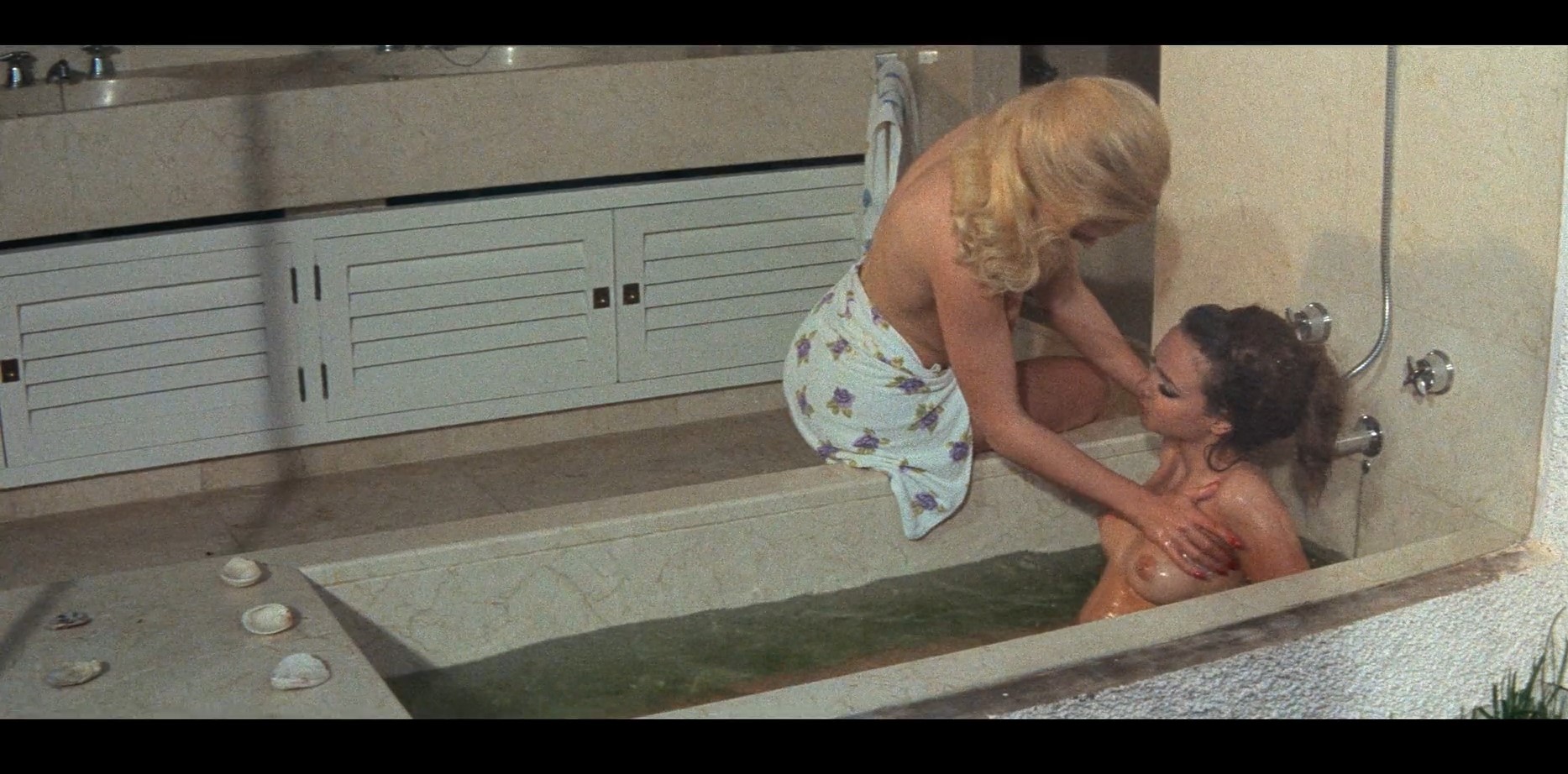
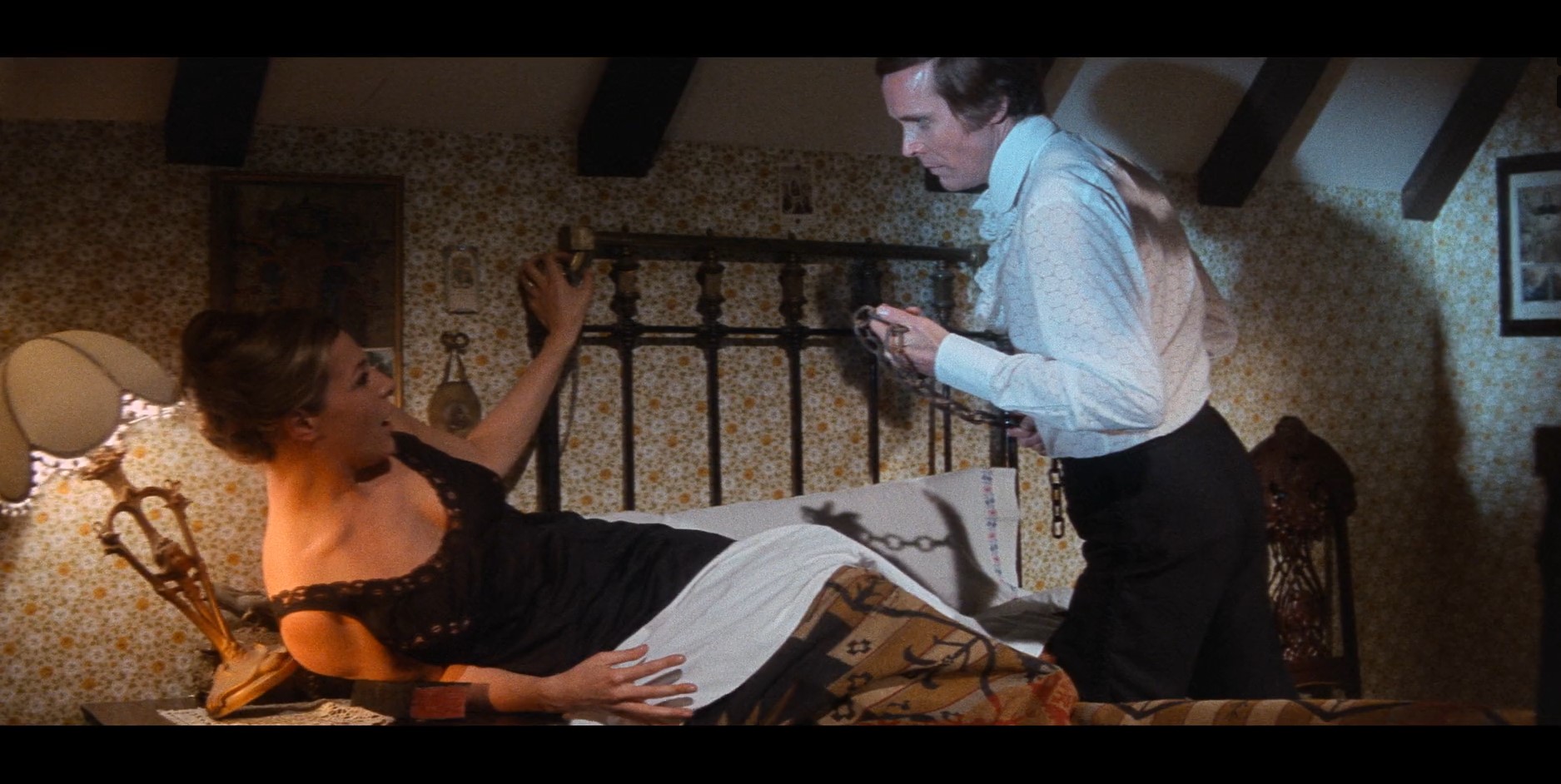
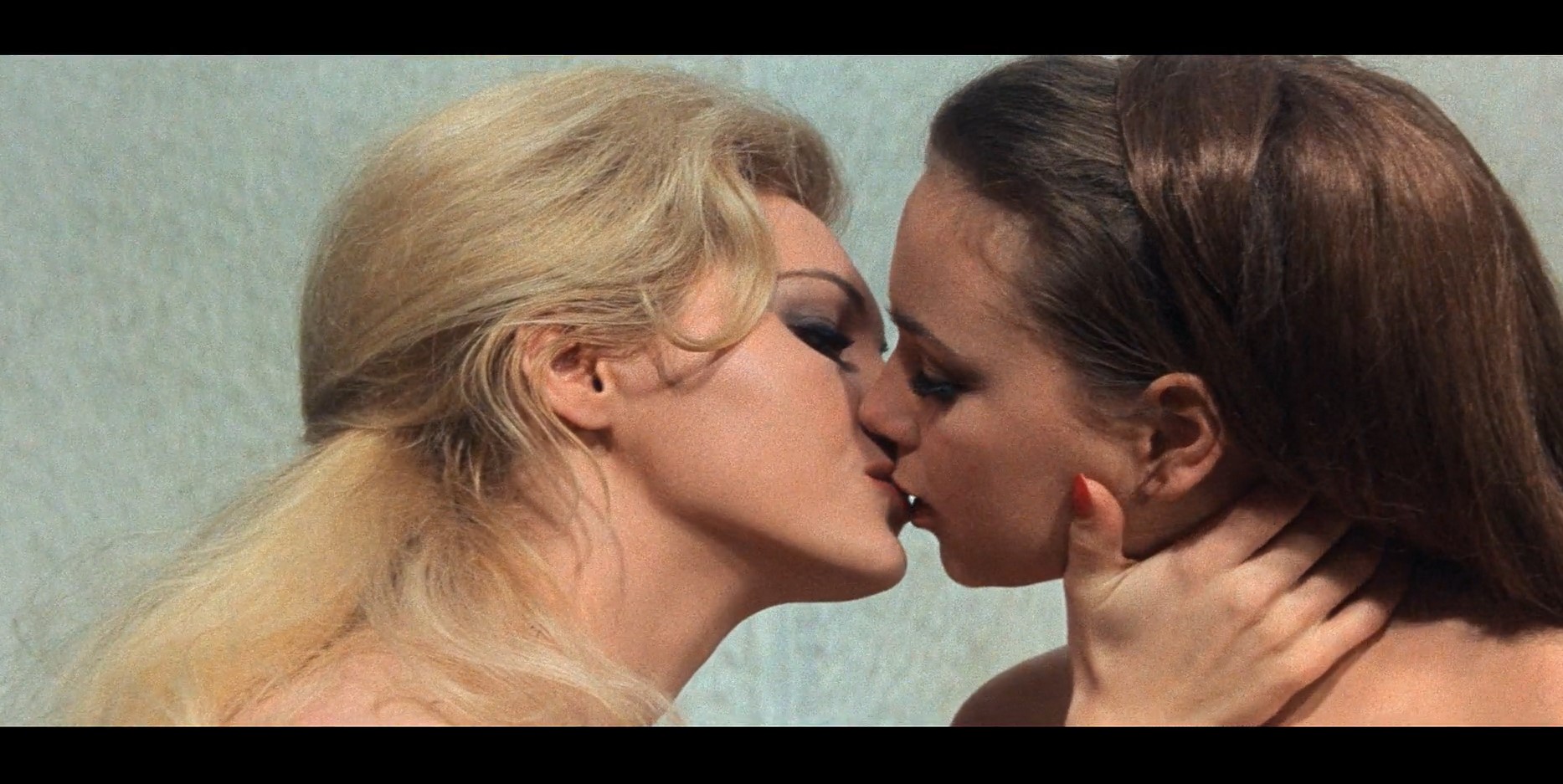
A wealthy, sexually sadistic Madame St. Ange, a specialist in the Marquis de Sade’s teachings, entices to coerce the father of a young and beautiful innocent girl, Eugenie, St. Ange befriends to permit the naïve teenager to visit Madame’s private island for the weekend.  Excited and overjoyed with the idea of feeling like an adult indulging in mature activities, Eugenie is unaware that Madame and her equally as cruel stepbrother and lover Mirvel, who has been beguiled by Eugenie’s beauty, have ulterior motives and lured the unsuspecting youth into a ritualistic trap of sexual corruption and sadomasochism.  The step-siblings drug and rape Eugenie for their unspeakable gratifications only for her to awake in what only be explained as horrible nightmares of phantasmagorical encounters but when the nightmares unveil a disturbing reality when the dogmatic Dolmance and the rest of his Marquis de Sade acolytes arrive to initiate Eugenie into more than just pain and pleasure educations but to be a pawn in a murder scheme that tears the very fabric of virtue. 

Spanish director Jesús Franco, or widely known as Jess Franco, helmed an excessive number of provocative-pushing films over his nearly 60-year-career as a filmmaker before his death in 2013.  Many of the once labeled video nasties director were crafted on a tight budget with an even more so tight timeline as Franco churned out regularly mostly trashy horror and sexploitation that would more than often wind up in the projection booth of local red light district theaters for a dime and a wank.  Yet, “Eugenie” strokes a different kind sensation, one that lies in the ethereal concept of sexploitation and the ruin of youth made to order by the Marquis de Sade himself and artfully stitched by Jess Franco’s profundo knowledge of cinematic sculpturing.  “Eugenie,” or “Eugenie…. The Story of her Journey into Perversion” in the extended title, is based off the French 1795 novel, La Philosophie dans le boudoir (Philosophy in the Bedroom) written by de Sade and the script adaptation is penned by “99 Women” and “Christina” screenwriter and profound producer of film, Harry Alan Towers.  Towers also produces “Eugenie” under the pseudonym of Peter Welbeck for Video-Tel International Productions and was theatrically distributed by Distinction Films.

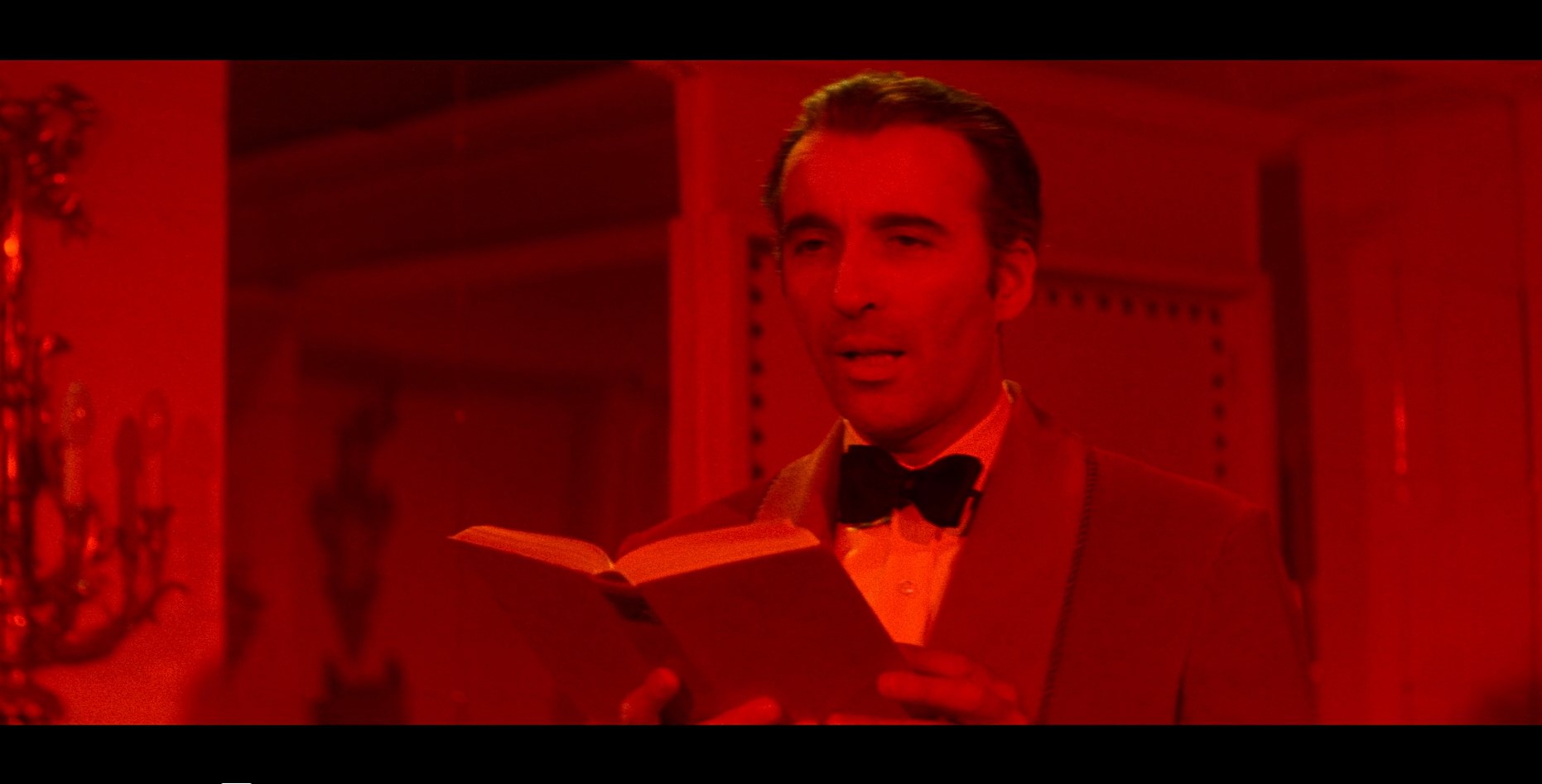
At the frayed edge of an already soul crusher subject matter, “Eugenie” repels against the grain of easily digestible roles,  Marquis de Sade’s characters are sadomasochist with abhorrent qualities of deception, malintent, and insatiability for a cathartic release from sexual pleasure and punishing pain.  On the other side of the coin, Franco and Towers film calls for the characters to push beyond the limits of their comfortability around the idea of drugging and raping, or being the victim of such, as well as violence and murder as part of a cult normalizing and rationalizing unrestrained freedom and ideology.  Swedish born actress Marie Liljedahl had a brief stint in erotica, as a power-seductress as the titular Inga, and only dabbled with sexploitation, “Eugenie” being that dabbled powder only once snorted to warrant a sudden disinterest in the theme altogether.  Liljedahl plays the titular character and she looks every bit the age later-aged teen with a round, youthful face, vibrant demeanor, and curvaceous like a ripe peach.  Like that knot forming in your gut spurred from anxiety, watching Eugenie exploited while in a stupor is the equivalent imaginations of what the deplorable effects and actions of a roofied drink that produces vague and foggy recollections and disbeliefs in what is reduced down to a vivid dream gone wild.  The two inveiglers at the heart of Eugenie’s virtuous destruction quickly become despicably loathed by not only their debauchery plans to corrupt good embodied but also by their snooty affluency and their acrid arrogance with the help.  “The Blood of Fu Manchu” and “99 Women” blonde beauty, Maria Rohm, and the stern faced “Succubus” and “The Vampires Night Orgy” actor Jack Taylor exemplify the essence of evil as the de Sade principled lovers and step-siblings Madame Saint-Ange and Mirvel.  The opened-ended lust Mirvel has for Eugenie morphs into a determined, nagging desire to have her at all costs, kept close to the chest by Taylor but knowing it’s simmering quickly to a head, and you can see in the Madame’s eyes that she’s either really internally pissed about Mirvel’s narrowed focus on a new toy or she’s basking in her ideology’s unchained gratification.  Rohm’s nonaligned decision maintains Madame’s sensual composure and undisclosed intentions until the shocking end.  The presence of Sir Christopher Lee in a Jess Franco film isn’t all that surprising.  The legendary, late British actor – “The Blood of Fu Manchu,” “The Bloody Judge,” and “Count Dracula” – where a handful of euro trashy and exploitative horror that were released around the same time as “Eugenie,” but “Eugenie” garishly bathed in the idea of sexual misappropriations and Lee being a last minute addition due to another actor’s ill-fate, agreed to fulfill the role without knowing how involved the nudity would ultimately land perverted cuts of the film into spank cinema houses.  Lee’s red smoking jacket, elegantly stoic composure and dialogue delivery, and his incredible ability to perform an intimidating figure without as much as lifting a finger compounds the value of Franco’s filmic adaptation to the point where I firmly believe with the original slated actor George Sanders (“Village of the Damned, 1951) in the ringleader and adherent role of Dolmance would likely have not have been half as good.  Anney Kablan, Paul Muller (“Vampyros Lesbos”), Uta Dahlberg, and Maria Luisa Ponte (“El Liguero Mágico”) costar.

Through an ocean of film filth, “Eugenie” may be the very film that proves Jess Franco is a cinematic genius in his own rite by capturing de Sade in the flesh, so to speak, with a plain-sighted fetish that diabolically hatches a scheme within a scheme.  In addition, “Eugenie,” dare I say it, almost feels like a Hammer film, especially with Lee in the picture.  The interior sets are modernly gothic with sleek and sterile furniture but garnished with large candle holders and the Marquis de Sade era sartorial worn by Dolmance’s muted followers. There’s a cadence to Franco’s story, one that leaves breadcrumb plot aspects to go against divulging a straightforward story right from the start, and the history between acquainted characters is contentious and fraught with unpleasant emotions in the act nice, play nice master sadists and the subservient help hierarchy that hints at a fraction of degrading minorities. Saint-Ange and Mirvel boatman Augustine, a black man who has his life reborn from the ashes of poverty only to be toiled as their attendant and frivolous plaything when the mood is right. There’s also deaf and mute woman brought on to be the new maid in a moment’s conversation between the siblings just to drop a dab of her presence amongst them. Augustine and the maid represent the lower class of people, a man of color and a woman of disability, to easily take advantage of just like Saint-Ange and Mirvel do with Eugenie’s innocence. France shies away being overly showy in slipping in this unjust dynamic that unfolds bit by bit as mentioned earlier of Franco’s revelation design. “Eugenie” not only dangles the attractive set locations and nudity carrot to draw attention but also invests in its talent as Frnaco the cherishes the cast of individual portrayers with longer shot moments to speak volumes of their unique objective or to pedestal them in their own keynote scene of power and, subsequently, obliteration that makes every occurrence worth noting and not just something to write off. “Eugenie” has no tears or apologies to spare but only inhuman indecencies separated by a blurred, unfettered line of sex and sadism satisfactions. This is Jess Franco at his finest.

The 1970 “Eugenie” print takes on more pixels, 2180p to be exact, with 4K UHD transfer and a re-release 1080p high-definition Blu-ray in a 2-disc set from Blue Underground. The 4K restoration from the original camera negative with Dolby Vision Hi-Def resolution on a 66GB, double layer UHD and is also on an AVC encoded Blu-ray that are both presented in an anamorphic widescreen 2.40:1 aspect ratio. Both transfers execute their respective program, offering an average frame rate of mid-high 30s Mbps, but there’s a focus issue with the transfer brought upon likely at the origin of filming and we know this because the frame rate never drops, staying consistent throughout the issue. Periods of unfocused detail come and go between edits and often in the same shot as if attempting to render delineation between the foreground and the background in order to get the shot on the fly (there are many instances Franco had limited time to shoot). Color grading, including skins tones, are natural appearing until the red tint, a symbol of when the subject matter becomes dark, eliminates and reduces vast color palette to one single hue. Both formats offer an English and French dub language 1.0 mono mix that buff enough to be ample; in fact, the mix is rather good considering the single channel with substantially clarity with no hissing, popping, or other blights on the dialogue track, Foley, or any track for that matter. Subtitles are offered in English, French, and Spanish. If you’re looking for special features, they mostly encoded onto the second disc, the Blu-ray, with Perversion Stories, a retrospective interview with the late Jess Franco, writer Harry Alan Towers, and stars Christopher Lee and Matrie Liljedahl discussing the behind-the-scenes measures and understandings of the sexploitation classic, Stephen Thrower on Eugenie, an interview with the author of “Murderous Passions: The Delirious Cinema of Jesus Franco,” a new interview with costar Jack Taylor Jack Taylor in the Francoverse, a newly expanded poster and still gallery, and theatrical trailer. The 4K disc also has a new commentary with film historians Nathaniel Thompson and Troy Howarth, plus a theatrical trailer. A two-disc UHD case holds a disc on each side of the interior and the case itself sports the class naked Eugenie pose with her brown locks draped over her shoulders, covering her chest. Speaking of covering, the snapper case is sheathed in a O-slipcover with oval cutout of the front to display Eugenie with a Victorian-aged mirror border. The darkened slipcover is also prominently titled under Marquis de Sade’s novel English moniker, “Philosophy in the Boudoir” that has a regal and classic aesthetic. The unrated, 87-minute film has an all-region playback. Jess Franco distills revolutionary extravagance and couples it with the notion that youth will inevitably be corrupted by family, friends, and a group of cruel Marquis de Sade cultists in what can be construed as one of the director’s most prestigious sexploitation and melodramatic films of his oeuvre.

“Eugenie” is Waiting to Tell You Her Story of Perversion!  See It Now on 4K UHD at Amazon.com

EVIL is Released When the Rent is Due! “The Dead Girl in Apartment 03” reviewed! (Wild Eye Releasing / Blu-ray)

Get Spooked by “The Dead Girl in Apartment 03” on Blu-ray!  Purchase at Amazon.com!

Massachusetts native Laurel has been living in New York City for a few months with a roommate she barely knows or sees because of their opposite work schedules.  When Laura discovers her roommate’s dead body in their shared apartment, the living space no longer feels comfortable, and the uneasiness keeps her awake long after the police and coroners remove the body that has left them baffled with a cause of death.  The mystery of her roommate’s demise, the agony splayed on the corpse’s face, and knowing her lifeless body has been undiscovered for at least a couple of days just next door to her room leaves Laura shuddered to the point of reaching out to her ex-boyfriend to hear a friendly, comforting voice, but bizarre and supernatural occurrences slip Laura in a state of panic and fright with a presence that has suddenly haunted her urban home and with the unearthing of her roommate’s black magic paraphernalia and a demonic symbol under her bed, Laura just uncovered a hidden nightmare that would have been a life saver if listed in the roommate wanted newspaper ad.

Atmospherically creepy and part of the reason I don’t like having roommates, “The Dead Girl in Apartment 03” is the little known, highly effective supernatural haunt horror from writer-director Kurtis Spieler.  Spieler has crossed our paths previously with the 2013 released lowkey thriller under the guise of a werewolf with “Sheep Skin” distributed by Unearthed Films and the review came out on top with a positive write up that noted the film as “a fresh suspenseful spin on lycanthrope mythos.”  Since then, the American filmmaker has re-directed and completed the 1984, John Liu unfinished cult and martial arts actioner, “New York Ninja,” for a Vinegar Syndrome exclusive release and has also preceded his dead girl paranormal enigma model with “The Devil’s Well” that has a similar plot but with a found footage medium.  Spieler’s latest venture provides the opportunity to work again with a couple of actors from “Sheep Skin” under the banner of Invasive Image with the director co-producing alongside longtime collaborator and Invasive Image co-founder, Nicholas Papazoglou, and one of the film’s principal leads and “The Sadist” screenwriter, Frank Wihbey. 

“The Dead Girl in Apartment 03” is one of those indie films that snags and headlines a genre icon to thrust the title into the spiraling coil of a massively oversaturated low-budget horror pool in the hopes that the film sticks to the now desensitized fans who have been burned too many times too often by radioactive junk.  The tactic is not always necessarily nefarious or a fool’s paradise to lure in fans into a schlock storm of insipid independent media as “The Dead Girl in Apartment 03” proves that though the original “Friday the 13th” actress and scream queen, Adrienne King, might be the top billed, the actress is definitely not the star and the film still manages to provoke a keen spine-tingler with a lesser known and younger cast dipping their toes into the what King has already lapped twice, if not three times, over for decades.  King’s name becomes the proverbial foot in the door for new, upcoming talent for audiences to be exposed to, such as with Laura Dooling playing as, well, the spookily chipped away, panic-induced Laura.  Dooling immerses us into her character’s complete physical cutoff from friends and family as a woman stewing in an uncomfortable sixth sense that surrounds the disturbing faculties of her roommate’s death.  Dooling nails the superb chiller despite the one-sided act with no other cast to react off of for the majority of the runtime, paralleling her character’s isolation with her own to root out goosebumps unaccompanied.  King and Frank Wihbey head up the detective detail as the around-the-block Detective Richards and the fresh understudy Detective Miller.  The older woman, younger man character dynamic rides a similar trajectory to their professional colleague one and I’m not talking about cougars, if that is where your mind take you.  Though she certainly can be a cougar if she wanted to, King is more of a mentor on camera than she is off camera, playing the seasoned detective who warns the ambitious Miller not to get involved with active case women.  Wihbey’s a suitable fit as the double-edged sword eager rookie to King’s cooler, calmer approach to bestow path-treaded wisdom for a reason.  One of the highlighted performances stems from “Sheep Skin” actor Michael Shantaz, a tall and intimidating presence that sizes up Dooling’s terror tenfold from the very first scenes of the deceased’s dazed boyfriend Derrick crossing the threshold into Laura’s apartment.  Subdued and stony-faced, Shantaz adds to the tangible terror in contrast to the paranormal one at hand, yet both are ostensibly woven from the same thread.  Fellow “Sheep Skin” actor Bryan Manley Davis along with Jasmine Peck and Jennie Osterman (“Dickshark”) fill out the cast.

I’m always intrigue, or maybe just easily entertained, by titles that goad into viewership for the simple fact of fulfilling title-spurred questions with answers.  The title “The Dead Girl in Apartment 03” elicits many unexplained uncertainties that become an itch you can’t scratch until the end credits fade to black.  I want to know who is the Dead Girl?  Why is she dead?  What’s terribly important about the specified Apartment 03?  Do the Dead Girl and Apartment 03 correlate more significantly somehow in the story?  All these internal queries, prompted by a non-generic, puzzling title, are just cascading through the mind in a deluge of I-gotta-knows and for the most part, the team behind the quaint thriller does rub the itch to a smoothed over satisfaction while also working the edits, the angles, the sound design, and the lighting toward a decent scary movie.  What’s fascinating about the story is the exploration of the immediate after when Laura is left shivering in shock, solitude, and a sense of grim thought knowing she’s been living with a corpse for the last 48 hours.   She hits all the stages of a post-traumatic situation by reaching out to family and friends, diving into comforts like making tea or taking a shower, and even finding ways to keep busy and remove the macabre image from her mind by cleaning up the crime scene herself.  That portion of etching into Laura’s psyche distracts her in an ironic, detrimental way because as she attempting to self-soothe by any means possible, she oblivious to the grotesque presence coming and going and in-and-out of the negative space with its body jerking as it glares at Laura with blood running down it’s shirt.  Laura is also not cognizant of the things that go bump in the night as they barely make a blip on her radar or trigger her into a deeper stage of fright until it’s too late.  The climatic ending stretches the story further into love hexes and demonic contracts that perk up the ears in interest as the story gets into the nitty-gritty of details of what’s happening and why but doesn’t quite reach the finish line of resolve with a deflated conclusion that supposed to leave you shocked when it really just leaves you. 

Not your typical bottom-of-the-barrel budgeted or gore-drenched debauchery Wild Eye Release, “The Dead Girl in Apartment 03” looks and feels like a big-budget ghost film with all the muscle-seizing suspense.  The bold independent home video distributor delivers the Kurtis Spieler picture onto a Blu-ray collector’s edition, which, again, is atypical for the label.  The AVC encoded, high-definition, 1080p Blu-ray is presented in a 2.35:1 widescreen aspect ratio.  Spieler has defined himself as a master of the negative space and, fortunately, there’s no lossy image from a deficient compression, leaving a crisp view of the lurking, crooked dead entity soon to fill the void or not as the director tends to position the camera for an uncertain possibility.  Details are relatively good within a muted color scheme and many of scenes are dark lit, bordering on a neutral to high contrast with a palpable delineation, with only the dead girl’s room projecting a stony mustard illumination and spotted moments of candle and hand torch lighting.  Other scenes, more so involving Detective Richards and Miller, dip into the cop-noir with gel and back lighting that looks vivid and mysterious on screen.  The surprisingly backwards tech of the English language LPCM stereo relies heavily on dialogue than ambient jolts of jumps scare sounds though there are a few, effective examples about and is balanced well with the dialogue that is a little on the mumbling side but comprehensible and free of obstruction, interference, sound design, or otherwise. The dual channel stereo works and is adequate for the size of the picture that doesn’t require a multi-channel audio format as there are no explosions, whirring bullets, or a large cast to create depth range.  Soundtrack composed by Connecticut based, VHS-inspired synthwave artist, Brian Burdzy – aka Satanic Panic ’81, delivers a low and lively and often deadened (pun intended) but rhythmic sound reminiscence of John Carpenter scores that gives Spieler’s film a very “Halloween” vibe. Aforesaid, Wild Eye Releasing doesn’t accompany a ton of special feature material with their releases unless on their Visual Vengeance sister label but the seemingly new special edition line, in conjunction with a regular standard release, bears more supplementals for the storage.  An audio commentary with filmmaker Kurtis Spieler , a behind-the-scenes featurette featuring cast and crew retrospective interviews of their time on the film, Spieler’s 2011 short western thriller “No Remorse for Bloodshed” (though mistitled on the back cover as “No Remorse Bloodshed,” Take 3S Video – a montage of actress Laura Dooling humorously pretending to be clipped by the marker clapper on third takes, an image gallery, and Wild Eye Releasing trailers of “Smoke and Mirrors,” “Wicked Ones,” and “The Bloody Man.”  The physical aspects of the release include a clear Blu-ray latch snapper with a macabre illustration of the titular dead girl holding a knife on the front cover, as you’ll see in the image below for the trailer.  The cover art is reversible with a still image of Laura Dooling in one of the more thrilling scenes on the reverse side.  Inside the snapper insert is a folded mini poster of the SE’s O-case slipcover with another illustration of two more characters in a 70s inspired retro design.  The region free, unrated film clocks in with a 72-minute runtime – an easy, breezy thriller with punch.  “The Dead Girl in Apartment 03” is a perfect selection for a Halloween night movie. An eerie apparitional residuum that’s character-driven, tense, and thoroughly carried by the small cast.

Get Spooked by “The Dead Girl in Apartment 03” on Blu-ray!  Purchase at Amazon.com!

Eventually, You’ll Have to Stand Up to EVIL. “The Retaliators” reviewed! (Quiver Distribution / Blu-ray)

Man Up and Take Back Your Life with “The Retaliators” on Blu-ray!  Click to Purchase from Amazon.

Having recently lost his wife, Pastor Bishop tries hard to keep his two school age daughters safe with an oversight thumb, but when his oldest daughter, Sarah, begs him for the car, God himself knows that the Pastor’s children can’t stay children forever. Bishop fears come reality when Sarah is chased by a sadistic man, ran off the road, and zip tied to her steering wheel as her car is pushed into a nearby ravine. Destroyed by another loss, there is seemingly no way out of the grief hole for the man of the cloth until a Detective, who once shared Bishop’s pain and suffering with a similar, personal experience, introduces him to his isolated former fallout bunker turned torture cabin in the woods with the man who killed Bishop’s daughter chained captive in the basement and next to him sits a variety of melee tools of affliction. Deeper into the Detective’s subterranean dwelling lies a more terrible, caged secret, one that is incidentally unleashed upon the world, and will wreak carnage upon the land and it’s up to the grin and bear it Pastor to take a stand against pure evil.

Frighting for yourself and for special persons in your life is crucial for any self-respecting person to be able to look at themselves in the mirror and say, “I did all I could.” Those who believe in understanding and forgiveness ultimately fall into being trampled on and biting the bullet because just surviving the other end of a contentious situation can be a false sense of security and an opaque veil to the ever-present dangers lurking in every crevice. The 2021 release of “The Retaliators” accouters that theme of following one’s combative conscious to protect what’s dear while also sporting a hefty amount of violence, blood, subhuman psychopaths, and a nearly all nu metal musician cast. Co-directed between from short and music video filmmaker, Samuel Gonzolas Jr., the film’s star and “Central Park” actor, Michael Lombardi, and music video director, Bridget Smith, “The Retaliators” aims to show an ugly, real truth that can affect and twist good men into the same abhorrence and villainy they’ve struggled to repel and resolve. “The Retaliators” mark the first screenplay from the Geare Brothers, Darren and Jeff Allen, is shot across various locations in the U.S., including states Nevada, New Jersey, and Connecticut, and is a production of Lombardi’s Better Noise Films with the company’s CEO, Allan Kovac, and Philly Born Film’s Mike Walsh also producing.

As a company that’s half part a music record label, the film was destined to showcase some of the independent rooted musical and elemental talent of the rock genre, but the narrative is convoyed by a fellow musician, who will humbly admit they are not trained or experienced actors, but rather actors who are rock artist sympathizers, in the case of principal leads Michael Lombardi and Marc Menchaca of Peacock’s new horror thriller “Sick” and who you may not have recognized in the third season of Amazon’s “Tom Clancy’s Jack Reason” as a high-and-tight, clean-cut naval captain. Menchaca is anything but burred cut as a bearded and wavy-haired, somber detective assigned to Pastor Bishop’s (Lombardi) case of his murdered daughter. Menchaca does his work in feeding off the dark energy cocktail of Lombardi’s grief, despair, and vengeance-stricken neo-pastor. Lombardi’s heartfelt performance definitely deserves praise for how one should react in losing a child and also reflects the helplessness that burdens the parent into a black hole of sorrow. As a character, Bishop struggles morally with seeping into and being swallowed by the grim circumstances gifted for him despite however the circumstances may seem to be in his favor. The gears Lombardi has to switch from a faithful person, to rancorous, to then finally a path of soul changing redemption goes smoothly enough to justify his position as principal lead. Menchaca’s demented detective almost feels left out to an extent, but the audience will get enough of a taste to satiate his unglued righteousness. While no love interest makes it into the fold of characters, the narrative does house spots for the nu metal and rock musicians in supporting or minor roles. Papa Roach’s Jacoby Shaddix, Mötley Crüe’s Tommy Lee, Ice Nine Kills Spencer Charnas, Escape the Fate’s Craig Mabbitt, From Ashes to New’s Matt Brandyberry, Lance Dowdle, Danny Case, and Matt Madiro, and Five Finger Death Punch’s Ivan L. Moody, Zoltan Bathory, and Chris Kael are just a select few of rockers you’ll see in “The Retaliator’s” lineup. Personally, I wanted to see more of Jacoby Shaddix as Quinn Brady, a homicidal madman in a horrific cat-and-mouse lark with the detective. Who knows, maybe we’ll see a prequel with Shaddix returning to the role. For the most part, like Shaddix, the musicians are well integrated with diverse roles that range from biker club, to strip club DJs, to bartenders, and to AA participants. “The Retaliators” round out the cast with Katie Kelly (“Deadly Seduction”), Abbey Hafer, Cree Kelly (“Aftermath”), and the massively built and scary-looking Joseph Gatt (“Titanic 666”) as the child-killer strapped and prepped for Pastor Bishop to physically and mentally break.

Better Noise Films is comparable to another divisional filmic offshoot of a larger parent music record label. Cleopatra Entertainment, of Cleopatra Records, often builds film structures and narrative plots around the company’s signed ensembles to promote and market their lyrical and thrash-heavy material as well as putting names to faces and thrusting them out into the world to those who may not have heard of their music. Aside from likely being a huge cost-savings benefit, these films are often scored by their artists, leading to a diverse sounding and electric soundtrack that typically works out less than desired. What the directors end up implementing, musically, yields result only half of the time while the other half is forced unto the audience for the sheer effect of promotion despite the off-putting composition. Not every intense scene needs a band backdrop to flourish raw emotion and pump up the blood but that’s what films, like “The Retaliator’s,” is bred to show off in a marbled genre that has categorical plot pivots all along the way to the grand finale of an all-out brawl, fight for your life skirmish with the criminally and tortured insane. That latter concept is perhaps one of the more interesting and original ideas of reinventing the psychopath that I’ve seen in a long time and the anticipatory excitement and thrills of their release to wreak havoc like barbaric rippers had found moments of great gore excess when Paster Bishop finds his divine strength to help the savage sadists meet their maker by way of machete, a shovel, and a woodchipper. “The Retaliators” make use of familiar horror tropes, such as the fog machine and a blend of lowkey and neon flushed lighting, to conjure an unconventional crypt of rock and homicide, putting its own unique stamp of indirect evil leading to up to another bigger, badder bedlam of things.

Chalked up to be an 80’s-stylized 90’s cinematic horror pulp, with early 2000’s soundtrack, “The Retaliators” arrives onto Blu-ray home video courtesy of Quiver Distribution. The AVC encoded, high definition, 1080p BD50 has a CinemaScope, aka anamorphic, widescreen 2.39:1 aspect ratio. The large storage formatted disc offers more variety as the capacity can handle the expansion of color and range of content. From complex, diversly lit, and heavily foot trafficked interiors to the great outdoors with trees fields, gravel terrain, and watery brooks, the quite a bit that’s going on looks pretty good on screen and the anamorphic widescreen doesn’t have that squeeze-it-in feel either but can’t escape a few scenes of lens flare. Details provide a tactile enamel, but the colors are quite soft with a lower dialed in color grading. The English DTS-HD 5.1 surround sound has more teeth in the soundtrack that overlaps and snuffs out any ambient sound design, essentially making “The Retaliators” a 96 minute, give-or-take a few scenes, music video. Dialogue doesn’t suffer the same backseat fate as the script-to-screen exchanges are in the forefront and though the soundtrack is a bit flat, the original, nebulous-electronic score in between by “Stranger Things” composers Kyle Dixon and Michel Stein does stand out to add a nice underlayer of questionability and suspense. Special features include cast interviews with actors and music artists speaking to their experience on the film, “The Retaliator’s” music video, and theatrical trailer. The physical release comes with a cardboard slipcover on the first pressing with a rendered pseudo-illustrated mockup of pyramid arranged character heads with Pastor Biship standing bloody and machete in hand right smack in the middle. The standard Blu-ray snapper includes the same cover arrangement art as the slipcover. Not listed on the back, the unrated film does support region A playback. “The Retaliators” pumps up the blood as well as the jams during an overhaul of one’s convictions in a baptism by hellfire.

Man Up and Take Back Your Life with “The Retaliators” on Blu-ray!  Click to Purchase from Amazon.

Michelle Yeoh Versus the EVIL Japanese Imperial Army! “Magnificent Warriors” reviewed! (88 Films / Blu-ray)

“Magnificent Warriors” Now on an Amazing Blu-ray from 88 Films!   Click The Poster to Purchase!

Ming-Ming is an adventurous, mercenary pilot unafraid to herself mixed up in the worst of trouble and against the tremendous odds.  When her patriotic grandfather and military uncle present Ming-Ming a mission of resistance against the Japanese Imperial Army during World War II, the odds, again, will be stacked up against her as she must track down China’s top-secret agent to extract the City Lord of Kayi City, a fortified Chinese city on the outskirts under Japanese control with ambitions to build a strategic, poisonous gas plant.  When Ming-Ming’s is shot down by a Japanese fighter pilot and the mission proves to be more difficult than expected, a small band of unlikely heroes become resistance fighters that inspire Kayi City to rise up against an oppressive, super nation threat to take back their home.  The city of spears and arrows must defend its people from an overwhelming army of rifles, mortars, and tanks in a fight to the death.

Michelle Yeoh is so hot right now.  The Malaysian-born, long-time actress has been under the U.S. mainstream radar for decades up until recently.  Before now, she was well enough for her roles in Ang Lee’s four-time Academy Award winner “Crouching Tiger, Hidden Dragon” without Yeoh receiving a nomination.  Twenty-two years later, Yeoh receives her first Academy Award nomination for “Everything Everywhere All at Once,” but we all knew she deserved the coveted U.S. award well before now.  U.S. audience never got to experience Yeoh earlier in her career as an Asian action star that rivals the likes of male counterparts Jackie Chan and Chow Yun-Fat.  In “Magnificent Warriors,” Yeoh’s diligence to the demanding workload foretells a superstar in the making.  The David Chung directed Hong Kong picture is relentless and action-packed with stunning and intense choreographed martial arts and having a large-scale showmanship of numerous grand explosions and a vast production pocket that include countless background actors.  The script is penned by frequent Stephen Chow collaborator Kan-Cheung Tsang who has wrote many of Chow’s directorial films, such as “Kung Fu Hustle,” “Shaolin Soccer,” and “The Mermaid.”  “Munificent Warriors,” also known as “Dynamite Warriors” is produced by Linda Kuk (“Hard Boiled”) and David Chung’s “Royal Warriors” producer John Sham and executive producer Dickson Poon under the D&B Films banner.

In a career that spans decades plotted by a number of strong female characters, Michelle Yeoh has embodied strength, intelligence, and beauty for this generation.  Under her early credited name of Michelle Kahn, the actress, who in the last five years has entered the Marvel Universe, the Star Trek Universe, and is slated to be in the upcoming James Cameron “Avatar” sequels,” is the driving force behind what makes “Magnificent Warriors” so engrossingly magnetic.  Trained to use a bullwhip and able to accomplish major stunts, unsafely I might add, on her own, Yeoh pulls off the demanding role with sheer confidence radiating from her performance.  So much confidence that the quality beams from her eyes to the point that her gaze nearly appears to be a sadistic grin of her own masochism.  Yeoh seizes Ming-Ming’s adventurous spirit, fully embraces it even, and stands out, but meshes well, amongst the mix of characters, including a hapless and bumbling drifter played by Richard Ng.  The “Mr. Vampire Part 3” star has a recognizable and distinguishable face as a well-known Hong Kong actor from China.  In “Magnificent Warriors,” Ng’s character is clearly the odd man out with zero ambitions and zero fighting skills, providing roughhouse comedic relief with lucky escapes with his life, but as far as character arcs go, the drifter, who cheats and scams gamblers for money and thinks about saving his own skin, succumbs to the resistance call of helping China and becomes one of the leaders of the core Kayi City defenders.  There are three others in this band of five with the City Lord (Lowell Lo, “Spider Woman”) who has a similar character arc as the drifter in being a bit of a scaredy-cat as a traitor against the Japanese Imperial Army but sees the light of his people needing his boiled down bravery and leadership, and his involvement with Shin-Shin (Cindy Lau), a daughter of a Japan loyalist who is obsessed romantically with the City Lord and can kick ass as well that surmises a feminism theme that women are just as strong as men and can have a better moral compass, especially compared to the bumbling man in power, the City Lord, and the drifter con artist.   The weakest fifth character, with an equally weak performance, in the group is Secret Agent No.1, as he’s described in the subtitles, played by Derek Yee (“Black Lizard”).  Though pivotal to the resistance operations to succeed, Secret Agent No. 1 fails to make his impact like the others, character divulging a vague history of his climbing to be China’s best secret agent and also teetering on the supposedly feelings for Ming-Ming that doesn’t ever come despite blatant suggestions to the contrary.    Matsui Tetsuya, Hwang Jan Lee (“The Drunken Master”), Meng Lo, Fung Hak-on, Jing Chen, and Ku Feng round out the “Magnificent Warrior’s” cast.

With extraordinary martial arts choreography, the impossible become possible in what can be experienced as an epic ballet of fists, kicks, and dueling weapons.  Every battling moment translates perfectly on screen without the flinch of error, though I’m sure many takes were took.  Back when outside Hollywood film studios relied on their determination and skill, with a pinch of luck, to get them through tough and rigorous stunts without the aid of wire, pads, or any union approved safety measures for that matter in what feels remarkably alien, like being on a whole other world where the rules of physics and safety do not apply.  “Magnificent Warriors” is truly a magnificent stunt-driven, wartime story revolving around revolutionism, a contemplation of the relationship between a home and its people, and a principled life of standing up for what’s right.  Director David Chung manages to massage out the numerous themes under the façade of a great thrust of nonstop action.  The set pieces, locations, and wardrobe are all fitting for the late 1930s-1940s era, especially with the Japanese uniforms that extend into their armored vehicles, such as in the brief, for show, scenes of its war plane and handful of Type 95 Ha-Go tanks. It’s refreshing to see an older film have a different angle on the overplayed World War II narrative; instead of the typical European or Asian Pacific campaigns involving American troops, “Magnificent Warriors” goes granular into The Second Sino-Japanese War during the Second Great War the world has ever experienced. Japanese implemented chemical warfare into their strategy of expanding their dominating military advances and establishing a footprint in China. “Magnificent Warriors” embellishes the poisonous gas narrative with the imperial army seeking to use Kayi City as a chemical producing plant, steering the film’s epic grapple over the city from out of underlying truth of the actual conflict. Every stage of story progresses into a larger scale of the previous skirmish which bottles up the grossing pressure between the imperial army, the resistance fighters, and the collateral damaged city folk caught in the middle. Sprinkled with comedy and charisma, and an ever so delicate dark tone, “Magnificent Warriors” is impeccable Hong Kong cinema and exposes the world to an underrated performance by Michelle Yeoh who kicked ass then in this film and still kicks ass today.

UK distributor 88 Films releases the “Magnificent Warriors” onto an AVE encoded, 1080p, high-definition Blu-ray, presented in a 2K restored transfer of the original theatrical cut on the company’s USA line. Exhibited in the original 2.39:1 aspect ratio, the anamorphic picture can appear globular at times, resulting in a packed image but more on so on pan shots than anything else. The overall picture quality suggests a pristine original print of the theatrical cut with a clean presentation from start-to-finish. Mostly warm with a flaxen degree of a desert background within a Mongolian Mountain valley, when the story does transition to a night shot or to interiors, the grain roughly sustains the change to keep a unified picture consistency that lives in a low contrast field without any deep shadow work or hard lined delineation. Compression issues are non-existent and there’s not obvious, unwanted touchups here to note. The release comes with two audio options: A Cantonese DTS-HD Mono and an English dub DTS-HD Mono. Preferrable choice is always the original intended language; however, this film’s audio options are both dubs but the Cantonese synchs better with grammatically suitable English subtitles albeit their breakneck speed to keep pace. Dialogue is clean, clear, and the action sound design is audibly potent with pinpoint precision on the homogenous strike. There are moments I thought the quick editing, especially during the plane chase, would hinder the ambient effects to keep up but I was pleasantly surprised, and the prop and gunfire intensity presents a nice exchange of open aired depth, range, and dynamisms. Software bonus features an archive interview with Michelle Yeoh (circa early 2000s), an archive interview with stunt coordinator Tung Wai, an English credits opener, the Hong Kong and International trailer, and still gallery. The hardware features are a tad better with a double-sided A3 poster, a 35-page color picture booklet with historical and filmic essay by Matthew Edwards, a limited cardboard slipcase featuring new art by Sean Longmore, and a reversible cover art in which shares its illustration with the booklet. The case isn’t the traditional slim Blu-ray snapper as it’s thicker to handle the booklet and poster. The release comes not rated, region A coded, and has a runtime of 92 minutes. Drawn into a big war shieled and overlooked by a bigger war, “Magnificent Warriors” not only time capsules a piece of Asian history but does it with fantastical fight and character that delivers one Hell of a timeless film with Michelle Yeoh at the helm.

“Magnificent Warriors” Now on an Amazing Blu-ray from 88 Films!   Click The Poster to Purchase!

EVIL Inspires a New Concert. “Nightmare Symphony” reviewed! (Reel Gore Releasing / Blu-ray)

“Nightmare Symphony” is a Falsetto of Praise for Lucio Fulci.  Purchase the Blu-ray Below!

Unable to cope with another large box-office failure, the American indie horror director, Frank LaLoggia, is in the travails of a make-or-break psychological thriller overseas in Kosovo.  With an executive producer forcibly pulling LaLoggia’s creative marionette strings and the film’s screenwriter displeased and disapproving LaLoggia’s arm-twisted version of the story, the struggling director finds himself frantic and in the middle of a breakdown caught between a rock and a hard place with a postproduction from Hell.  Those around him, the conceited producer, the upset screenwriter, the pushy wannabe actor, and more, are being hunted down and brutally murdered by a masked killer and the imaginary line between Frank’s reality and paranoia grows in intensity coming down the wire of completing his career-saving, or rather lifesaving, film.

Long time since I’ve heard the name Frank LaLoggia enter the dark corners of my brain as it relates to the horror genre.  The director of 1981’s “Fear No Evil” and 1995’s “Mother” had seemingly vanished from the director’s chair spotlight and more-or-less, or rather more so than less so, vanished from the broader film industry altogether.  Then, Domiziano Cristopharo’s “Nightmare Symphony” suddenly drops on the doorstep and there’s Frank LaLoggia, starring in the lead role of an Italian horror production.  Domiziano, known from his entries of extreme horror, such as with “Red Krokodil,” “Doll Syndrome,” and “Xpiation,” engages LaLoggia to act in an unusual role, as himself, and turns away from the acuteness depths of uber-violence and acrid allegories to a toned down, more conventionally structured, narrative inspired by the Lucio Fulci psychological slasher “Nightmare Concert,” aka “A Cat in the Brain.” Co-directed with first time feature director Daniele Trani, who also edited and provided the cinematography, and penned by the original screenwriter of “A Cat in the Brain,” Antonio Tentori, “Nightmare Sympathy” plays into questioning reality, the external pressures that drive sanities, and weaves it with a meta thread and needle. The 2020 release is produced by Coulson Rutter (“Your Flesh, Your Curse”) and is an Italian film from Cristopharo’s The Enchanted Architect production company as well as companies Ulkûrzu (“Cold Ground”) and HH Kosova (“The Mad MacBeth”).

Much like “A Cat in the Brain,” Frank LaLoggia depicts his best Lucio Fulci representation as a horror filmmaker whose storyline production mirrors the individual slayings surrounding him. As a character, LaLoggia is not entirely aware of the murders as the peacock headed slasher’s string of sadism runs parallel to LaLoggia’s post-productional workload. Cristopharo pays a simultaneous tribute to not only Fulci but also LaLoggia with a built-in brief, off-plot moment of the editor, Isabella, a good friend and longtime partner of LaLoggia, running a reel of “Fear No Evil” to reminisce over his debut picture. Antonella Salvucci (“Dark Waves,” “The Torturer”) plays Isabella but also LaLoggia’s pseudo film lead actress Catherine in a dual role performance with the latter marking Salvucci’s topless kill scene that hits and sets up the giallo notes. Isabella denotes the director’s only real friend with everyone else, from the screenwriter to the executive producer, push their own self-gratifying wants onto the American filmmaker from all angles. A vulgar herd of personalities descend upon LaLoggia to exact their strong-willed ideas on how the film should appear and be marketed. From the screenwriter Antonio (Antonio Tentori, ‘Symphony in Blood Red”), the imposing desperate actor David (Halil Budakova, “Virus: Extreme Contamination”), to the uncultured and pushy executive producer Fernando Lola (Lumi Budakova) and his aspiring actress Debbie (Poison Rouge, “House of the Flesh Mannequins”), they all look to exploit LaLoggia’s modest career for their own benefit. Performances vary with a range of experience, and we receive more noticeably rigid recites and acts from the Kosovo cast in a clashing pattern with the Italy cast that has worked with Cristopharo previously. Ilmi Hajzeri (“Reaction Killers”), Pietro Cinieri, and Merita Budakova as a chain-smoking lady stalker that has glaring eyes for Frank LaLoggia.

While not necessarily thought of as a remake, “Nightmare Symphony” is certainly a re-envision of the Fulci’s “Cat in the Brain.” What Cristapharo and Trani don’t quite well connect on is connecting all the pieces of the psychotronic puzzle together into what is meant to be expressed. The giallo imagery is quite good, a praise of the golden era period in itself, with a mask and glove killer, the closeup of gratuitous violence, most of the score, and the stylistic visuals imparted with ominous shadow work, foggy and violent dream sequences, and with congruous cinematography and editing of earlier giallo. Plus, audiences are treated to not only the aforementioned Antonio Tentori, screenwriter of “Cat in the Brain,” but also have composer Fabio Frizzi score the opening title. Frizzi, who has orchestrated a score of Lucio Fulci films, such as “Zombie,” “The Beyond,” “Manhattan Baby,” and even “Cat in the Brain” just to select a few notable titles, adds that proverbial cherry on top to evoke Fulci directing “Nightmare Symphony” vicariously through Cristapharo and Trani. There are some questionable portions to reimagining’s take on the original work that are more the brand of the contemporary filmmakers. The presence of death metal prior to one of the kill moments puts the overall giallo at odds with itself in a fish out of water aspectual scene composition. Another out of place component are the external characters that are not directly involved with LaLoggia’s peacock-head themed slasher; the ironical venatic of an animal hunting down people is the reversal of a Darwinism theory that instead of sexual selection, the beautiful and elegant peacock forgoes using grace to attract and aims to survive by natural selection and thus the killer kills to remain alive. However, the story and the directors never reach that summit of summation and with the oddball characters adrift from the core story – such as the stalking woman and the eager actor – “Nightmare Symphony” flounders at the revealing end with its severe case of blinding mental delirium.

With a cover art of an upside skull overfilled with film reels and unfurling celluloid through the soft tissue cavities, “Cat in the Brain” continues to be reflected in “Nightmare Symphony” up to the release’s physical attributes on the Reel Gore Releasing’s Blu-ray. Presented in on a AVC encoded BD25, with a high definition 1080p resolution, and in a widescreen 2.35:1 aspect ratio, the Reel Gore Releasing espouses the Germany 8-Films’ Blu-ray transfer for a North American emanation, which might explain some of the complications with the bonus features that’ll I’ll cover in a bit. Situated in a low contrast and often set in a softer detail light, “Nightmare Symphony” doesn’t pop in any sense of term with a hazy air appearance and a muted color grading that goes against the giallo characteristics, especially when the clothing and set designs have the same desaturation or are colors inherent of low light intensity. Despite appearing like a slightly degraded transfer on a lower BD storage format, compression issues are slim-to-none with artefacts, banding, or blocking and this results in no tampering edge enhancements or digital noise reduction. The release comes with three audio options: A German DTS-HD 5.1, German DTS-HD 2.0 Master Audio and an English and Italian DTS-HD Stereo 2.0 all of which are Master Audio. The German audio tracks are a dub from the 8-Film Blu-ray and the 5.1 offers an amplified dynamics of the eclectic soundtrack and limited environment ambience. Dialogue remains outside the dynamics on a monotone course but is clean and clear with good mic placement and a neat, fidelity fine, digital recording. The German dub has a distinct detachment from the video because of its own layer environment, sounding a little sterile than the natural English or Italian, but works well enough as expected with the supplement multi-channel surround sound. English SDH and German subtitles are optional. Bonus contents feature a behind-the-scenes which is entirely just a blooper reel, an English language interview with co-director Domiziano Cristopharo whose secondary language is English, the original soundtrack playlist, and the teaser and theatrical trailer. I mentioned an 8-Films’ transfer complication with the bonus content because there’s is also an interview with Italian screenwriter Antonio Tentori that’s only in German dubbed and subtitled with no option for English subtitles or dub. When you insert “Nightmare Symphony” into your player, an introductory option displays to either pick German or English and I considered this to be the issue for the German only interview with Tentori; however, that is not the case as both country options are encoded in German for the interview, so at the beginning option display, I would recommend the German selection because the setup will have contain all audio options for the feature whereas the English selection will only contain the English 2.0. Reel Gore Releasing’s Blu-ray comes housed in a red snapper case, the same as the company’s release of “Maniac Driver,” and has a less tributing reversible cover art with more revealing and illustrated aspects of the narrative. The release is region free, unrated, and has a runtime of 78 minutes. Another little fun fact about the release is the incorrect spelling of the director’s name on the back cover that credits his surname as Christopharo instead of Cristopharo. Influenced by Lucio Fulci beyond a shadow of a doubt, “Nightmare Symphony” proffers the Horror Maestro’s less notable credit with a companion piece that punctuates both films love for the giallo genre, love for the violence, and love for the morbidly unhinged human condition.

“Nightmare Symphony” is a Falsetto of Praise for Lucio Fulci.  Purchase the Blu-ray Below!