DCU Can’t Handle this EVIL! “Swamp Thing” reviewed! (MVD Visual / 4K & Blu-ray)

“Swamp Thing” on 4k / Blu-ray Combo!  Now Available on Amazon.com!

A top-secret government project in the Louisiana swamps concern the combination of aggressive animal genes into plant DNA to result in creating super food for the potential famine and overpopulated future.  Agent Alice Cable becomes assigned to the project when her predecessor is unexpectedly devoured by a gator and becomes acquainted with the passionate head scientist, Dr. Alec Holland.  However, the government isn’t the only interested party in obtaining a formula when a faction of cutthroat mercenaries invade the swampy compound in the name of Arcane, a mastermind sociopath looking to hold the fate of the world in his hands.  Storming the compound with force, all the government agents are slaughtered except for Cable who managed to escape while Dr. Holland suffers a tragic accident of combusting with his volatile formula during the attack.  Believed to be dead, Dr. Holland returns transformed into a half-man, half-vegetal thing with superhuman abilities.  Now, Arcane is after him with Cable trapped in the middle. 
Having success in the grisly rape-revengers and mutant-cannibals section of his career in the 1970s, Wes Craven tussled with creating and securing another hit film to pay the ever mounting bills.  Before “A Nightmare on the Elm Street,” one of two biggest titles that have gone synonymous with the director’s name, the other being “Scream,” Craven dived into a DC Universe project before the DC Universe ever existed as such with the script adaptation and the helming of “Swamp Thing,” a vegetational anthropomorphic superhero inhabiting elemental powers, such as regrowth and superhuman strength.  What Craven originally scripted may not have been the same as the finished product on screen but the 1982 captured audiences attention and created lifelong fans of an underappreciated hero still germane to what is now a large universe of revitalized superheroes films and television shows.  Film in and around Charleston, South Carolina in the Cypress Gardens doubling as deep South everglades, “Swamp Thing” is produced by long time DC films coproducers Benjamin Meiniker and Michael E. Uslan as their first DC superhero venture as a Melinker-Uslan production and distributed by Embassy Pictures and United Artists.
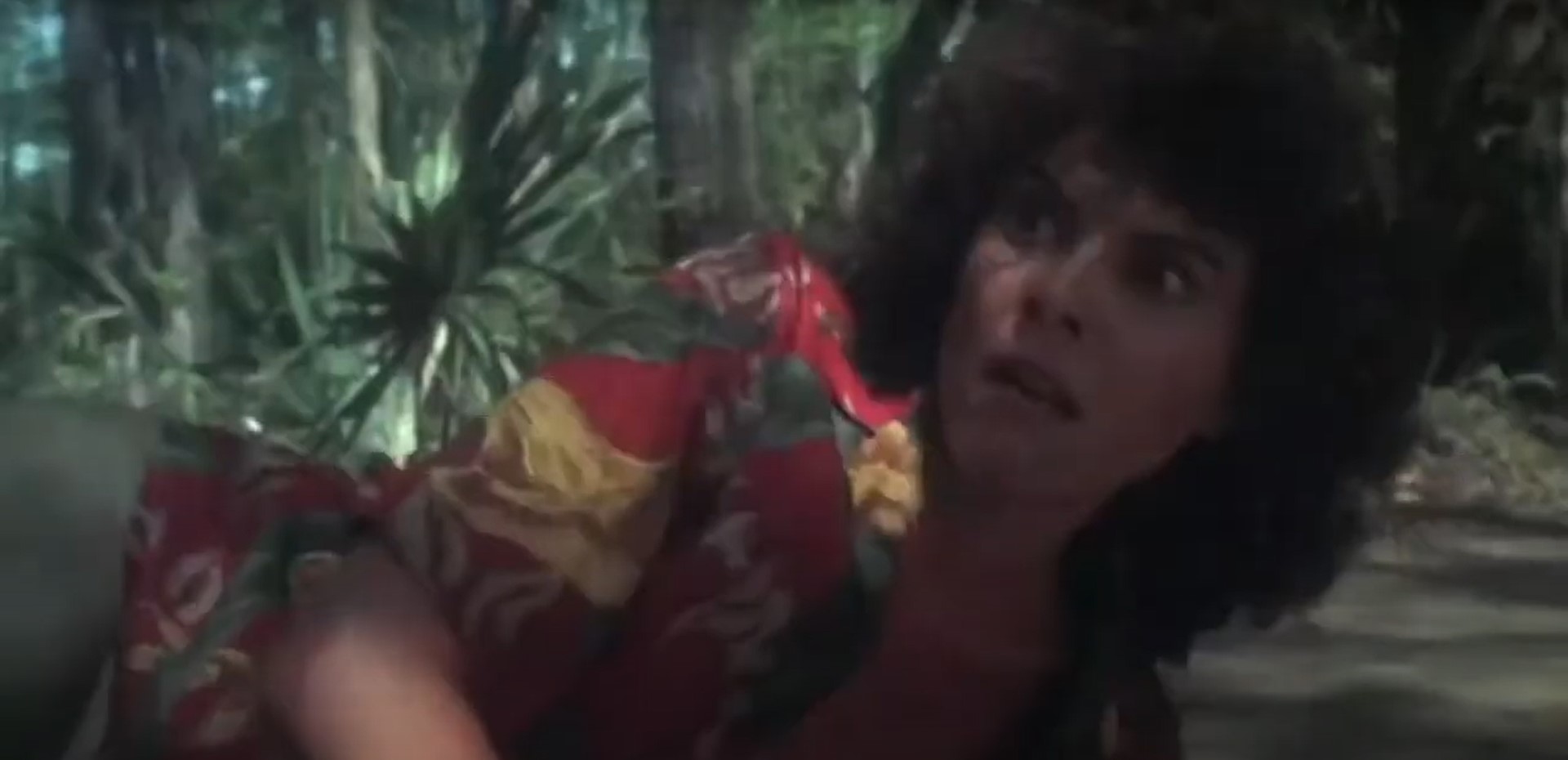
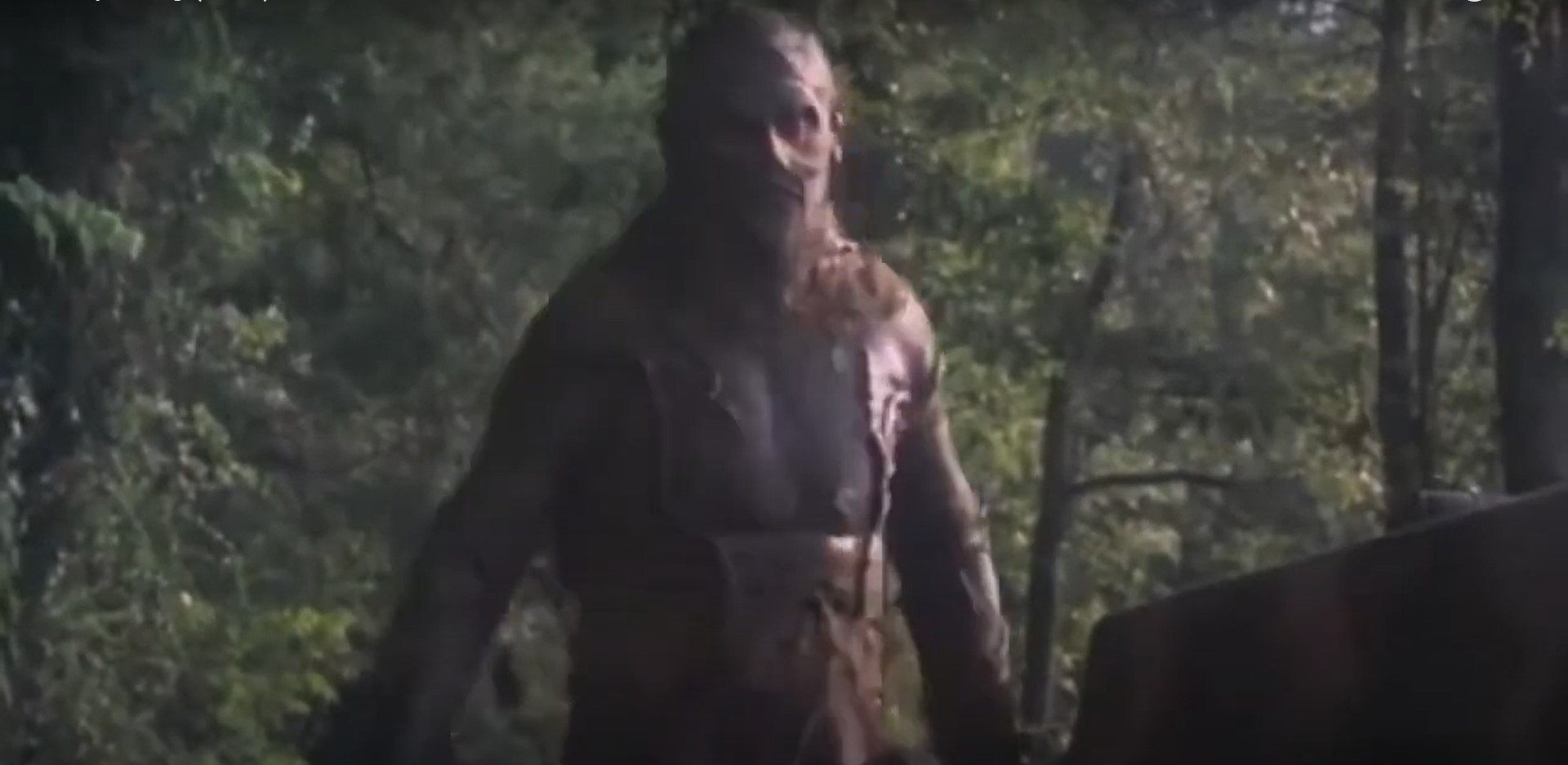
The question of who would bring this monolithic human-hydrangea?  Answer:  Dick Durock.  The 6’5” former Marine Durock was not afraid to jump into character skin, no matter how hairy, tight, or otherwise uncomfortable it might have been.  Durock may not have been the face of Dr. Alec Holland, played by genre cult actor Ray Wise (“Robocop,” “Twin Peaks”) before succumbing to transformational injury and rebirth, but the Indiana born actor certainly became the face of “Swamp Thing” throughout a decade with the sequel and the subsequent television show.  Durock captures not only the strength but also the humanity of the superhero in this origin story, a feat hard to accomplish for a man in a skin-clinging green and bulky suit.  Not to diminish Ray Wise’s performance by any means as the charismatic Wise is charming, passionate, and invested into making his Dr. Jekyll jive with the soon permanent Mr. Hyde to come, but as titular principal, Durock becomes the face of foliage on steroids.  Before solidifying herself as a scream queen, a young Adrienne Barbeau would have more difficulty in her Alice Cable role reflected in having some kind of feelings for essentially the same character in two versions played by different actors.  Yet, Barbeau beats the buggy Carolina heat as well as the differentiate obstacles by being a kickass government agent able to handle herself around the frighteningly new swamp creature and Arcane’s goon squad.  Before he was a James Bond villain in “Octopussy,” Louise Jordan donned the arrogancy of a tyrannical thinker yearning for the unique powers of others.  Jordan’s quite pretentious as the unrelentless Arcane and that makes the actor be the quintessential antagonist but I would not say his performance places his character in complete rivalry as “Swamp Thing’s” archnemesis.  Something is missing from their dynamics within their broad encounters that make the struggle appear impersonal and distant.  Even when Arcane ingests the formula and turns into a werewolf-like beast and the two superpowers clash, I wouldn’t label their conflict personally intertwined.  Perhaps Alec Holland and Alice Cable’s pre-mutation passion wasn’t strong enough or Swamp Thing’s deep-seeded desire for Alice wasn’t rooted well that makes Arcane just whither like a sun-beaten plant without water.  Another character that’s beaten into the ground is Ferret played by David Hess (“The Last House on the Left”) as head mercenary without any real power or absolute authority over his men, turning Hess more into like Tracey Walter in Tim Burton’s “Batman” but not as cool or as likeable.  “Swamp Thing” cast rounds out with Nicholas Worth (“Darkman”), Don Knight (“Death in Space”), Nannette Brown (“My Boyfriend’s Back”), Al Ruban (“1,000 Shapes of a Female”), Mimi Craven (“Last Gasp”), Karen Price, and Reggie Batts as the unlikely best child character in all of the film as an interesting and lone gas station attendant with hilarious, deadpan wisecracks. 
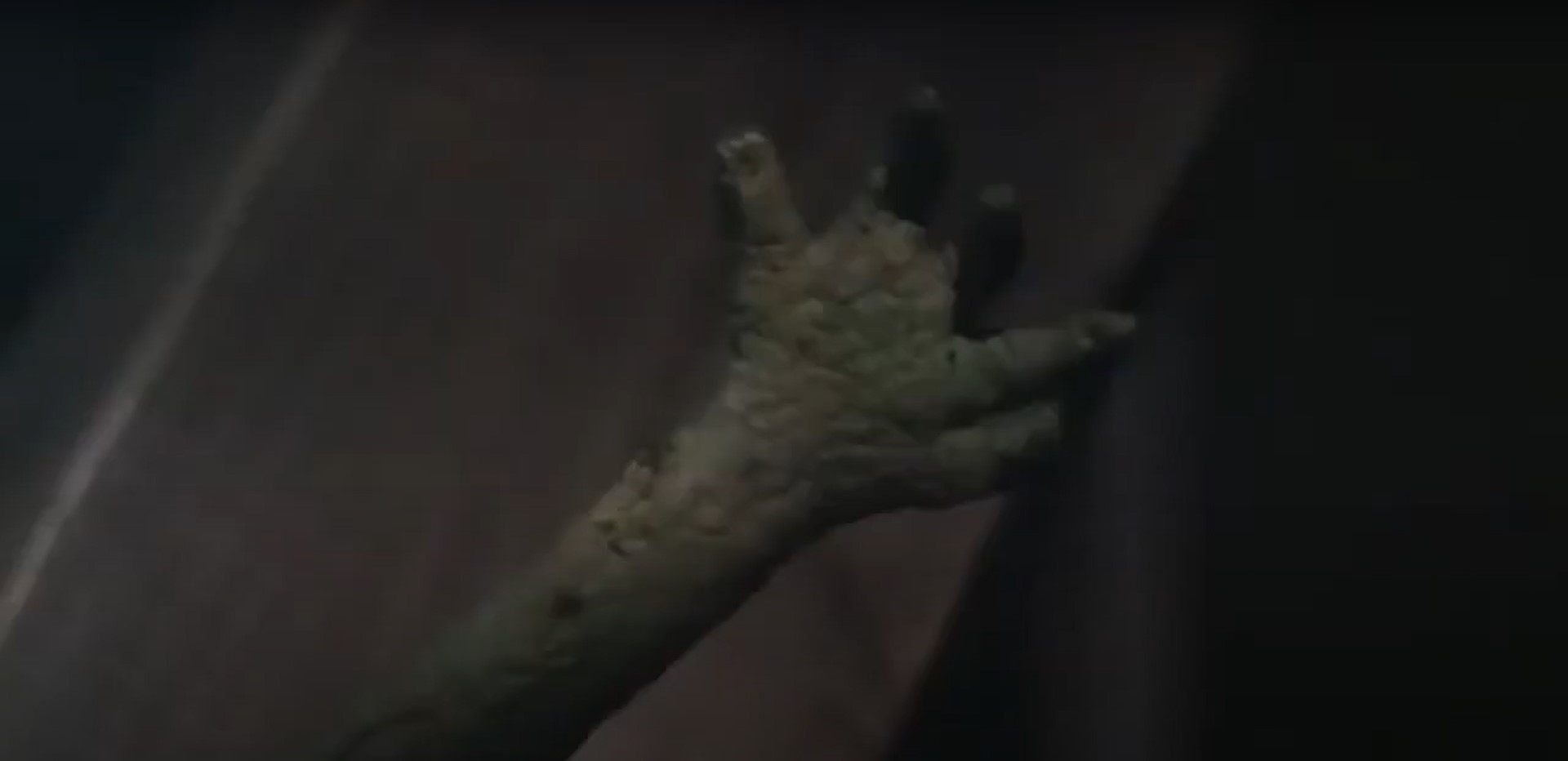
“Swamp Thing” may not be the first comic book superhero to be pulled from the DC lined colorfully illustrated and action-packed pages and adapted to the big screen but what separates the mucky-dwelling plant hero from the other is he’s cape-less, without ray guns and jetpacks, and appears as a monstrous humanoid rather than a regarded normal looking servant of justice as with Superman, Batman, or Wonder Woman.  “Swamp Thing” intrigues viewers with their own internal conflict stemmed from a foundationally laid idea that mutant creatures or unnatural monsters are inherently bad guys.  “Swamp Thing” becomes a part of that trailblazing group of grotesque good guys with hearts of gold.  Yes, the 1982 feature hasn’t held up over time with some of the low on the totem pole creatures suits and makeup I’ve seen, even with the agreeable Swamp Thing suit showing the rubbery creases and fold overs when Dirk Durock has to hold an object; however, to balance out the cut-rate features, special features picks up the tab with stunt boat chases, invisible pull wires, and a man set on fire that’s intense.  With a slashed budget, Wes Craven scripts on the fly to churn out a watered down but still flavorful cinematic origin story that’s full of heart and humanity and partly carried by the sweat and endurances of an eclectic cast and a handful of popcorn action patches.
“Swamp Thing” emerges from out of the muck yet again and onto a 2-Disc 4K/Blu-ray combo set from MVD Visual’s Rewind Collection label, specially marked as the first release on the LaserVision Collection.  The restored 4K UHD Dolby Vision is presented in 2160p and in a 1.85:1 widescreen aspect ratio on a BD100 while the Blu-ray is presented in 1080p high definition with the same aspect ratio on a BD50.  Each format presents two cuts of the film – a PG version and an international Unrated version – both of which have collated from various cuts of the film, resulting in some impressively rich grading that offers refreshed saturation levels of a lusher swamp environment.  More of that richness is conveyed through the UHD with providing deeper tones to make the swamps isolate and swallow characters while also have a sense of being alive amongst the hazy, knee-high fog, opaque waters, and thick vegetation.  Black levels look fine with the amount of grain that can vary from scene-to-scene but not compression issues to talk about on both spectacular approached formats.  The 4K offers a remastered DTS-HD MA 2.0 mono, which is same as on the Blu-ray, that unjustly limits “Swamp Thing’s” audible potential.  Dialogue has some deficiency projecting with all the tracks transmitting through a single channel that’ll force the up arrow on the volume setting or require a punchy soundbar or headphones to get to a clearer understanding of what characters are conversing.  The intrinsic ambience would have been better suited for multi-channel network to extract everything the swampy milieu had to offer, plus punchier fights, but if not an audiophile, these tracks will ultimately sate a viewer’s goal.  Range decently enough limps through despite the surround sound as we receive enough explosions and barrages of bullets to check that box, but depth struggles through the audio layers.  Both formats also include a Spanish language mono track and optional English subtitles.  Special features vary across the two releases with the UHD having limited extras due to storage but what is included is the PG version, the Unrated International version that includes Adrienne Barbeau’s topless scenes, an archive commentary with writer-director Wes Craven moderated by commentary director Sean Clark on both versions of the film, commentary with makeup artist William Munns moderated by Michael Felsher of the commentary/documentary conducting Red Shirt Pictures, also on both versions.  The Blu-ray contains the same extras above plus another Red Shirt Pictures’ interview with Adrienne Barbeau Tales from the Swamp, an interview with Reggie Batts Hey Jude, a discussion with Len Wein, the creator of “Swamp Thing,” the featurette Swamp Screen:  Designing DC’s Main Monster, the featurette From Krug to Comics:  How the Mainstream Shaped a Radical Genre Voice, photo galleries, and theatrical trailer. This must-own set, that caters to paying homage to the Laserdisc, comes retail green 4K Ultra HD snapper that in holds the 4K and Blu-ray on each side of the interior wall. The exterior features an illustrated encirclement of the main players – Dirk Durock and Andrienne Barbeau in comic character – on a single-sided front cover, sheathed inside a cardboard O-slip cover with the same cover art. Both disc presses also represent the original Laserdisc art. The insert contains a folded mini poster of the slipcover design. Two version, one release headline both the 91-minute PG and 93-minute Unrated version of the film with the entire package region locked in A. I may have finally watched Wes Craven’s “Swamp Thing,” but I won’t be the last as I highly recommend this stellar launch into ultra high-definition territory with the original quagmire superhero.

“Swamp Thing” on 4k / Blu-ray Combo!  Now Available on Amazon.com!

Is He an EVIL Vampire or a Just a Disturbed Young Man? “Martin” reviewed! (Second Sight / 4K UHD & Blu-ray)

Note:  Screen Caps do not reflect the Second Sight's A/V on this release.

“Martin” Limited Edition Second Sight Release Available at Amazon.com! 

Martin, a young man from Indianapolis and upon recently lost his mother, travels by train to Braddock, Pennsylvania where he’s greeted by his elderly cousin Cuda, an old world believer that Martin has been selectively plagued by the family curse of vampirism and will take Martin in under his roof to cleanse his soul of evil, even if that means destroying him.  Though he doesn’t believe in the vampiric superstitions and the movie depictions, Martin truly believes he’s an 84-year-old vampire and does kill young, beautiful women to intimately drink their blood.  Being reserved and shy gives Martin an advantage to observe his potential victims from afar after gaining employment working as a delivery boy out of his cousin’s shop.  Cuda’s granddaughter, Christina, believes her lonely cousin’s mental illness is being exacerbated by grandfather’s archaic and draconian beliefs, fostered by a family history based off tradition rather than science.  When Martin meets an interested housewife on one of his delivery runs, the need to consume blood trickles when sex enters the picture, but also induces slipups in his well-oiled drug and drink operation whenever the need to feed becomes too much.

By now, “Martin” needs no introduction.  The father of the flesh-eating zombie, George Romero, delivered a neo-realism take on the vampiric mythology nearly 50 years ago in 1977.  “Martin” became the writer-director’s first all around filmic success after being royally screwed by the Walter Reade Organization for having failed to copyright the prints on the trailblazing and timeless classic “Night of the Living Dead,” the reason why you see so many Tom, Dick, and Harry remakes, revisions, sequels, and such of the 1968 black-and-white film that introduced zombies as flesh eaters, and a pair of box office failures that kept Romer in severe debt until slipping into business bed with producer Richard P. Rubinstein, the associate producer for Romero’s “The Amusement Park” and who would collaborate with Romero as a producer for the next subsequent decade years.  Filmed on location in the societal and industrial crumbling Western Pennsylvania town of Braddock, “Martin” remains one of George Romero’s quintessential and provocative pieces of work outside The Living Dead series under Rubinstein and Romero’s The Laurel Group production company.

In the titular role is the introduction of John Amplas who was discovered by Romero after watching Amplas in a play and the entire lead principal was reworked to accommodate Amplas boyish youth.  Amplas is instrumental to Martin’s success in a handful of ways:  the Pittsburgh native knew how to properly slink in an unsuspecting manner, he also didn’t overbear scenes and costars with a larger-than-life presence and could dip into this awkwardly retrieved guilt for the premediated murder to fulfill a need that either’s supernatural or unnaturally mental.  Amplas could walk that thin line that keeps the audience wondering how much Martin says and does is actually true or a misconception because of mental illness and this is coupled nicely with Romero’s direction, splicing in black-and-white scenes of gothic-laden, theater-esque vampire flashbacks that could either be a delusional reality or a very real backstory to Marin’s cursed heritage.  Polarizing external family forces in his elderly cousin Cuda (Lincoln Maazel, “The Amusement Park”) and age akin cousin Christina (Christine Forrest) combat on an emotionally taut and verbal levels between their corresponding character qualities of superstition and science that parallel Martin’s eventual damnation or salvation.  The principal trio are tightly compacted to strain the dynamic with a back-and-forth debate over which truth is behind Martin’s troubles.  Romero pens a good case for both by never fleshing out a legitimate truth all the way through to the end; instead, it’s a battle of save Martin from himself who understands the problem, wants to deal with it, but barely takes up arms to combat or even face his issues.  Special F/X legend Tom Savini, pre-trademark inky black mustache and goatee, makes his debut role as Christina’s boyfriend Arthur who serves only as a device to pull reason away from the table in a conflicted measure to pressurize Christina’s capacity beyond the limits of also caring for herself.  Eventually, Christina has to make a decision and, ultimately, choses herself to save, leaving Martin to fend against a sternly superstitious and old world Cuda.  Sara Venable, Roger Caine (“Dracula Exotica”), Donaldo Soviero, Francine Middleton (“The Love-Thrill Murders”), and Elyane Nadeau make up the supporting cast.

George Romero, again, redefines, or in a more fittingly descriptive – revamps, classic horror villainy that replaces the supernatural element with a realistic approach to weave the very fabric of horror into possibility while still hinting at something beyond the limits of reason.  “There is no real magic.  There’s no real magic, ever!” says Martin about the theatrical stereotypes used to display vampires in attempt by Romero to disenchant us from the ideologized mythos, the habitual characteristics, and the physiognomies of what we consider to be a night bloodsucker.  During that scene between him and Cuda, the words are potently effective in disapproving myths about vampires, but the words are supported with fact as Martin casually debunks garlic, crosses, and sunlight as vampiric weaponry at the expense of humiliating and entertaining Cuda.  “Martin” is at the forefront of being an allegory for loneliness and is a driving reason for presumably the real vampire’s gruesome habit to slice open wrists and drink blood.  Martin only targets young, beautiful women and becomes intimate with them while they are limp under sedation.  When he meets an equally lonely Mrs. Santini, a depressed housewife on the verge of an emotional collapse, and the two embrace each other with comfort against what dispirits them; disinterested in stalking her, Martin’s need to kill dampens and Mrs. Santini unhappy marriage in nullified by the young who listens more than speaks.  Maturity and youth meld together in a moment of peace between them but their bond still shows micro fissures of incompatibility that puts doubts into Martin’s 84-year, carefully planned practice and also doesn’t save Mrs. Santini completely from her too-little-too-late despair.  Braddock, Pennsylvania, a small town sinking into the slumps of becoming forgotten, is a once industrious backdrop integrated as a metaphor for being a forsaken place where things go to die.  Martin is sent to Braddock to paradoxically be cared for by a cousin determined to destroy him because of a family curse that afflicts select generations in what can be perceived as butting of heads between the defiance of angsty youth versus the traditions of an older individual set in the world with their linear ways of thinking.  

As aforementioned, “Martin” is a cult classic from one of the most notable masters of horror and as a film, “Martin” can stand on its own two feet on any format.  However, with that being said, UK home entertainment distributor, Second Sight, celebrates this early George Romero razor-edged thriller with a definitive 3-disc, 4K and Blu-ray release jammed back with software and firmware bonus content that fans can really sink their teeth into for a lifetime.  The limited edition UHD and Blu-ray O-slip box presents a 4K and 2K scan and restoration of a 35mm duplicate negative (note:  not from the original 16mm source) that has been supervised and approved by director of photography Michael Gornick and presented in the Academy aspect ratio of 1.37:1.  Considering the blown duplicated source of a 16mm grade, the 4K UHD scan on the BD66 won’t live up to 4K potential, as some may expect.  There’s quite a bit of varying levels detail discernibility, some shots look better than others, but the overall restoration renders a better than it’s ever looked product with natural grain and damaged reduced to some blue stock flaring around the side and edges, especially during night scenes.  Shadows looked deeper than previous versions, meaning that tenebrism isn’t lost amongst a softer image but rather creates depth with the additional of better sharpened edges to outline objects between the light source  Some speckle debris filters through at times but not enough to cause major concern with the overall experience watching and enjoying the restoration that has HD enhanced grading to make blood that richer technicolor coral color used in my subsequent Romero “Living Dead” films up to “Day of the Dead.”  The Blu-ray’s 2K works just as well due to the scrappy source equipment of what the budget allowed, delivering a fine product of the best transposed transfer known to fan kind and beating out the Lionsgate’s warming grading with a cooler, more hardline detail and delineation picture. The massive release comes with three audio options – an English DTS-HD 5.1 surround sound, an English DTS-HD 2.0 stereo, and an English DTS-HD 1.0. Though Martin audiophiles will likely gravitate toward a multiple channel output, “Martin” is one of those select features that does better in a less-is-more return by not forcing the limited and stronger signals, such as the dialogue and Donald Rubenstein’s experimentally spiritual score, to encoding competition with the milieu ambient and boom recorded sound effects, that for the most part, are background support for the bigger, better one-two punch of clean, clear, and presently full dialogue and a consciously curated soundtrack to walk with Martin every step of his journey. There’s a pinch of popping and a low-emanating droning that very discreet and negligible that won’t affect the experience on bite…I mean bit. English SDH are optional. Bonus materials are what shape the Second Sight releases to be greatly desirable amongst fans as the company continues to produce high-quality encoded bonus features as well as carefully and professionally organized tangible items inside the box. Both 4K UHD and Blu-ray have the same encoded bonus features that include four audio commentaries of old and new. The two archived commentaries include George Romero, John Amplas, and Tom Savini in one set and the other with Romero, Savini, Richard P. Rubenstein, and Michael Gorrick. The new commentaries are with Kat Ellinger, editor-in-chief of Diabolique Magazine, and the second with the recently deceased film curator, Travis Crawford. A vintage 2004 documentary from the Lionsgate release is included in the set with remarks from Romero, Savini, Gorrick, Donald Rubenstein, and Christine Forrest along with a new documentary echoing much of the 2004 doc, in collaboration with Severin Films, with John Amplas, Michel Gorrick, and Tom Dubensky strolling through Braddock, which hasn’t seemingly changed from the depths of poverty, on a raining day recalling nearly every moment of production during principal photography. The new doc includes other insights from Forrest, Savini, Tony Buba, and Sarah Venable in what feels like a complete celebration and overview of their entire journey through Romero’s personal favorite film. Donald Rubenstein also has a new interview discussing his score and meeting and working with Romero on a positive level. The disc features round out with one of Tony Buba’s short films “J. Roy – New and Used Furniture” revolving around the town of Braddock and the trailer, TV and radio spots. The third disc is the CD form of Donald Rubenstein’s soundtrack laid out in 22 distinct musical numbers. The limited-edition exclusive contents include a rigid O-slip case with a simple, yet effective sterile while and red font color contrast with MADE IN U.S.A. augmented razor blood with vampire teeth and blood dripping from the bottom right corner and a blood dripping cross squarely centered on the back. Inside the slipcase, a thick 104-paged color booklet with new in-depth essays and insights from Daniel Bird, Miranda Corcoran, Heather Drain, Kat Ellinger, Andrew Graves, Alexandra Heller-Nicholas, Elena Lazic, Stephen Thrower, Jon Towlson, Simon Ward, Tony Williams and an interview with Tony Buba by Travis Crawford. The booklet also contains colorized, behind-the-scenes photos of production and numerous one-sheets, promotion poster and ads, and a beautifully, expressionistic illustrated front and back cover. Adam Stothard illustrates 5 character lobby cards, including John Amplas’ Martin, Christine Forrest’s Christina, Tom Savini’s Arthur, Lincoln Maazel’s Cuda, and George Romero’s Father Howard. All 3 disc arts are the same as the front cover the release and contained a trifold, punch-lock case in reverse colors of the slipcase. The 4K UHD is region free but the Blu-ray is confirmed region locked B so you’ll need a region free or region B player. The runtime clocks in at 95 minutes and is certified 18 for sexualized violence and sexual threat. Second Sight must be a Disney fan with their monstrous beast of a limited edition that is also a thing of beauty; “Martin” deserves every square inch of this physical and digital display of expressionistic vampirism of underrated performances and from the mind’s eye of a dauntless George Romero, unafraid to take risks, show blood, and understand the human condition.

“Martin” Limited Edition Second Sight Release Available at Amazon.com! 

The Old EVIL Scorpion and the Frog Tale in “Drive” reviewed! (Second Sight / Screener)


“Anything Happens in that Five Minues and I’m Yours.”  Drive Limited Edition Boxset at Amazon.com!

A solitary mechanic and movie stunt driver offers his services as a getaway driver for illicit odd jobs.  He falls for his single parenting neighbor and as the two begin their romantic affair, her ex-con lover returns from prison to reintegrate back into her and their son’s life.   When ex-con trouble brews an inescapable situation involving ruthless gangsters calling in their favor for prison protection, the stunt driver involves himself with his moonlighting work but when things go terribly wrong and he becomes a target, everyone he knows and cares for are threatened by the mobsters.  War is waged in the fast lane between the mysterious stunt driver and Los Angeles most feared gangsters for the sake of an innocent mother and her child caught in the middle.

Around 2010-2011, when I first heard of Nicolas Winding Refn’s “Drive” starring “The Notebook” and “Lars and the Real Girl’s” Ryan Gosling, I thought to myself, why would I watch this quirky comedy-romance actor drive around in a run-of-the-mill stunt car action film?  Immediately, I wrote off the film penned by “The Four Feathers’” screenwriter Hossein Amini, whose now penning the stories and teleplays of a little Disney+ streaming series you may have heard of called “Obi-Wan Kenobi.”  I now admit it, as painful to my pride as it is, that I was so ignorantly wrong about Refn’s “Drive” that has turned out to be a cult hit present day and a really good and exceptional crime-drama that’s subtle on the dialogue, high on the graphic violence, and all-around superb performances.  The script is the filmic adaptation based off American author James Sallis’s novel of the same title, keeping the neo-noir intact under of guise of muscle car predilection, and is a produced by Gigi Pritzker and Chris Ranta of Oddlot Entertainment (“Buried Alive”), Jonathan Oakes and Gary Michael Walters of Bold Films (“The Neon Demon”), Marc Platt of Marc Platt Productions (“Wanted”), and Motel Movies (“Blue Valentine”). 

To be upfront, Ryan Gosling has never been a go-to movie star for me, personally, so there might have been some psychogenic bias blocker keeping me away from the film over the last decade.  However, over the years, my pallet has grown in diversity and in tastes, chiefly because of influences in my life, and so curiosity got the better of me in wanting to explore the story of and the craft of Ryan Gosling’s character in “Drive.”  The way Gosling portrays the lead, known only as either the Driver or Kid, heavily relies on expression with minimal dialogue and lets all his emotions be poured through his eyes and body language as well as his actions in an anti-charismatic sense that, in a good way, leaves the character unassuming but still confident.  Watching Gosling’s methodical flow through the role and while having a little knowledge of the neurodivergence, it’s not difficult to see that the principal character comes off as a person somewhere on the autism spectrum and doing some post-credits research, I’m not the only one who had the same thought.  Unsociable, quiet, lack of facial expression, and obsessed with routine, especially when moonlighting as a criminal getaway driver with a set of very specific conditions, are just some examples of his behavior that point in the autism direction.  When the driver meets beautiful single parent neighbor Irene (Carey Mulligan, “Shame”), that is when we start seeing him deviate from his isolation, from his routine, and become more complex with what was previously a non-existent life, but of course as life blossoms into something new and safe, gangster obstacles rear their ugly head and the criminal in him is forced out for a head on collision.  “Ex Machina’s” Oscar Issacs is the first hurdle as the recently release ex-con dragged back into unscrupulous dealings with unsavory organized crime that climb the latter to “Hellboy’s” Ron Perlman and “Taxi Driver’s” Albert Brooks, business partners who oversee the West Coast turf. Perlman is a natural tough guy, as we’ve seen in countless works stretching over numerous decades and I would have never pictured “The In-Laws” and “Finding Nemo” Albert Brooks to be the minatory type but he does in fact have a dark-twinkle in his eye and can extract the false sense of security out of people before he jabs a fork in their eye and slits their throat…wrist….guts….yeah, his character loves to knife others. The all-star cast rounds out with Bryan Cranston (“Godzilla”) as the Driver’s mob-connected boss-friend-agent and Christina Hendricks (“The Neon Demon”) in a lowkey accomplice role that makes a gruesome, unforgettable impact.

Speaking of “The Neon Demon,” a more recent Nicholas Winding Refn film, you’ll begin to absorb the Denmark-born filmmaker’s stylistic motifs between the two films involving lingering shots, graphic violence, and the integration of electro-pop tracks into an eclectic soundtrack. Many of the scenes convey an emotion through dialogue-less scenes and the soundtrack to contrast actions speak louder than words. However, there is one radical theory of mine that I believe has a firm foundation is that everything from point A to point Z in the story is all in the Driver’s fantasy world. I know “Drive” is a movie and the need to suspend belief is important but only to an extent and depending on the quality derived from the filmmaker. Refn’s a good filmmaker, we know this, but everything the Driver experiences pitches upon pure imagination when the truth is stretched to be in his favor for the length of the feature. First example – the Driver slams into the side of another car head on, but the headlights, front bumper, and ventilation grille are all clearly intact. Second example – a tense-elevator scene involving the Driver, Irene, and a mobster assigned to take the Driver out takes an improbable turn when the Driver turns to Irene, both bathed in the sudden appearance of a spotlight, and they kiss passionately for quite a while. The moment become the perfect opportunity for the goon to blow away his target. Instead, he lets them kiss and then a close-quarter fight ensues shortly after. Third example but not last – the Driver is nearly an unstoppable force with no background to who he really is or why he is in Los Angeles, but he fights like a hardened criminal and knows how to play the organized crime game, never really have bad hand in his deck of cards, and even is given an ambiguous “Shane” ending. So, I ask again, is the beautiful girl, the ripe for the picking off gangsters, and the prodigious skillset all in his head?

I’ve clearly misjudged Nicolas Winding Refn’s “Drive” to be pretty-boy, stock-story, waste of time. Though I’m still not convinced about Ryan Gosling’s acting, like a Supreme Court Judge nowadays, I’m overturning my naive judgement and calling “Drive” a true modern day cult film hiding in plain sight, receiving new life from Second Sight films with an UK limited edition 4K UHF/Blu-ray release as well as a standard 4K and Blu-ray release. Unfortunately, this review covers only a BD-R screener so commenting on the true quality of the image and audio will not be recorded, but release specs include a new 4K master produced by the original post-production company with Refn’s approval, the UHD is presented in Dolby Vision HDR graded by the film’s original colorist, audio options include a Dolby Atmos and a DTS-HD Master Audio 5.1 with optional English subtitles, and the 4K UHD are region free while the Blu-rays are region locked encoded on region B. Standard bonus features include a new exclusive commentary by director Nicolas Winding Ren and The Guardian critic Peter Bradshaw, a feature length conversation with Refn, editor Mat Newman, and composer Cliff Martinez reminiscing about their sudden post-theatrical career success with “Drive” when the film saw more success on video, Gutting a Getaway – a new interview with Mat Newman, and 3 Point Turns – a new video essay by Leigh Singer. The limited-edition contents include a premium box set with new Driver Scorpion artwork by AllCity, a 240-page hardback book with new essays by various authors, an exclusive interview with “Drive” author James Sallis hosted by Matthew Thrift, original storyboards, stills, behind-the-scenes photos, the original Sallis novel with new AllCity artwork as well, and 7 collectible art cards. What a massive, massive haul for the film that didn’t do great in theaters due to poor financial support by investors who saw the film as a failure. The film has a runtime of 100 minutes and is UK certified 18. Don’t be like me and neglect a chance to see “Drive,” a great piston-pumping and violently beautiful crime-drama paralleled love story that deserves our time, our attention, and everything including the kitchen sink Second Sight Films pumped into the tremendous limited-edition boxset that dropped this week for release!

“Anything Happens in that Five Minues and I’m Yours.”  Drive Limited Edition Boxset at Amazon.com!

The Best Spies Seek Thrills When Taking Down EVIL! “Deathcheaters” reviewed! (Umbrella Entertainment / Blu-ray)

If Anyone Can Hide from the Grim Reaper, It’s the “Deathcheaters” on Blu-ray from Umbrella Entertainment!

Vietnam War brothers-in-arms Steve Hall and Rodney Cann banded together well after the fighting was over and channeled all their pent up energy into being adrenaline junky stuntmen for movies, television series, and commercials as a living and as a lifestyle.  When the two Australians are duped and setup into a high speed chase and a daring rescue mission by one of their country’s own clandestine government agencies in a ploy to test Steve and Rod’s daredevil abilities, they pass the qualifying assessments and are offered an espionage job by agency head under the pseudonym of Mr. Culpepper who has no other incentive to provide other than the job to be the most challenging, death-defying operation to gorge on by two extreme sport enthusiasts.  Unable to resist, the stuntmen embark to a secret base on a remote island of the Philippines where they’ll dodge bullets, explosions, and over 100 guards to fight their way in and out to obtain classified documents for their country.

“Deathcheaters” became the third viewing adventure involving the actor-director combination of stuntman Grant Page and director Brian Trenchard-Smith that falls right in between “The Man from Hong Kong” and “Stunt Rock” and clearly delineates an understanding that Grant Page was a genuine fascination for Trenchard-Smith who sought to take the daring stuntman out of solely stunt role and puree him into a leading man role, showcasing Page’s hang-gliding, dune buggy, and skyscraper falls,  for the director’s second feature film released in 1976.  And, then, there’s John Hargreaves who we will dive into his there-but-not there presence later on. “Deathcheaters” is an ozploitation action-comedy that fulfilled two of Trenchard-Smith’s obsessions – stuntmen and spy films – from a story by the director and penned to script by Michael Cove and is produced by Trenchard productions alongside a conglomerate of production companies, including “Mad Max’s”  Roadshow Entertainment (a subsidiary of Village Roadshow), D.L. Taffner (“Ghost Stories”), Nine Network Australia, and the Australian Film Commission.

Undoubtedly, “Deathcheaters” stars Grant Page as the relationship unattached and cocky Rodney Cann whose only other interest besides bedding the single ladies is his enamored basset hound, Bismark.  Cann’s best friend, Steve Hall, is newly hitched to Julia who more-or-less disapproves of her husband’s risky vocation.  “Long Weekend’s” John Hargreaves plays the cheeky Steve Hall with sarcastic charm, matching his complement stunt partner and while Hargreaves has the chops to pull of the persona, the late Sydney born actor is well behind the curve when matched up with Grant Page.  Page is a stuntman playing a stuntman while Hargreaves is an actor portraying to be a stuntman and, unquestionably, that delta shows pretty radically when Page is driving the dune buggy, is descending rapidly from a tall building, or scaling a rock cliff without a harness and Hargreaves is relatively stationary.  Hargreaves has his moments but is greatly overshadowed by the veteran Page.  Before she was Brian Trenchard-Smith’s wife, “Stunt Rock’s” Margaret Gerard was John Hargreaves on screen romance who is vocal but wishy-washy on her husband’s exploits, even on the highly dangerous, international espionage mission assigned by the enigmatic Mr. Culpepper (Noel Ferrier, “Turkey Shoot”).  “Deathcheaters” round out with Judith Woodroffe, Drew Forsythe, Annie Semler, and Vincent Ball.

“Deathcheasters’ falls on the heels of the martial arts success of “The Man from Hong Kong” and is another stunt celebratory film from the ozploitation director with a penchant for large explosions and need-for-speed car chases.  All the stunts were perfectly poised in design and well executed.  Trenchard-Smith isn’t at all afraid to have the camera right in the middle of the action, strapping the 16mm camera to whatever plausible to place the audience in the action with the heroes.  As much as Trenchard-Smith goes full throttle with a tour de force, the same tricks become a little stale after, unfortunately, having previously watched “Stunt Rock” and “The Man from Hong Kong” that also featured self-set wet-gel fires, hang gliding, free falling, and among others aerobatic and dangerous acts that are seemingly in Page’s limited bag of showstopping routines.  There’s rarely anything new in “Deathcheaters” that warrant an awe response and that can be cliched, tiresome, and overall detrimental to the experience unless you’ve never seen a Trenchard-Smith film. If you’re one of those people never to have popped in one of his films, don’t expect “Deathcheaters” to be gritty, tough-as-nails, spitfire. Many of Trenchard-Smith’s earlier films, including “Deathcheaters,” sells solely on the witty, clean banter and a knack for the implied something really terrible happened to the bad guys with nothing ostentatiously explicit in the demise category. “Deathcheaters” can be wholesome, light, and aromatic of a repartee trashcan, but you get some great stunt work, explosions, and a car chase from this 1970’s Australian picture.

Like “The Man from Hong Kong” and “Stunt Work,” “Deathcheaters” too receives the Ozploitation Classics Blu-ray honor bestowed upon it from Umbrella Entertainment as spine number 10. Newly scanned in high definition 4K for the first time, John Seale’s cinematic vision has never looked better in this region free release, presented in standard widescreen 1.85:1 aspect ratio. The original vault materials held up nice enough to warrant a clear picture with only a few, brief blemishes. The super 16mm shot film, blown up to 35mm, often still feels ever so lightly flat in contour definition and in color; yet all the scenes look naturally aboriginal from the masters. The English language DTS-HD master audio 2.0 mono is a naturally lossy single speaker audio mix that doesn’t exact full representation of the action on screen though robust in fidelity. Dialogue perceives feebler during exterior scenes as capturing dialogue competes with the elements due to poor boom placement or just inferior equipment. Like the other releases, bonus features are nicely packed with a newly extended interviews with Brian Trenchard-Smith, Grant Page, and John Seale from the Not Quite Hollywood documentary, a new audio only interview Remembering “Deathcheaters” with executive producer Richard Brennan, new liner notes from Trenchard-Smith, a 2008 commentary with the director, executive producer, and leading lady Margaret Gerard (listed as Margaret Trenchard-Smith), Trenchard-Smith trailer reel, theatrical trailer, and a Trenchard-Smith directed bonus feature in “Dangerfreaks – The Ultimate Documentary.” The clear snapper case is housed inside a cardboard slipcover and inside the snapper’s liner is a 16-page comic book adaptation from Dark Oz, much like Umbrella accompanied with “Stunt Rock.” “Deathcheaters” shows its age but still pulls out all the stops with amazing stunt choreography and gave way to Grant Page being solidified lead man material, even with his corny one-liners, and simultaneously building upon Brian Trenchard-Smith’s early career in a niche field of being obsessed with overachieving, arrogant, and unafraid stuntmen.

If Anyone Can Hide from the Grim Reaper, It’s the “Deathcheaters” on Blu-ray from Umbrella Entertainment!

EVIL Cowboys Up! “Ghostriders” reviewed! (Verdugo Entertainment / Blu-ray)

A small Texas town in 1887 took lynch mob tactics upon a jailed outlaw Frank Clements after a prominent resident and his family were slain.  In a last-ditch effort to save their gang boss, Clements’ men come in guns blazing but mob leader, the Reverend Thadeous Sutton, pulls the gallows lever to send Frank Clements to his doom.  Fast forward 100 years later to 1987, renowned historian Professor Jim Sutton researches the notorious murdering bandit, even owning a piece of Clements’ property with a cursed sawed-off double barrel shotgun, but the 100th year anniversary delivers good on the Clements’ curse as he and his men return from the dead and gun down all in the rural Texas backland.  Walking into a supernatural showdown with the undead is the professor’s son Hampton and his friends on a road trip to his father’s isolated estate where surviving the night of continuously respawning malevolent six-shooters will seemingly never happen.

Ghost cowboys.  That small and obscure piece of particular subgenre stemmed from the broad western horror pie can be and has been a hard product to peddle, bucking audiences off its hind side faster than a mechanical bull full of amateur rodeo saddlers.  Think about it.  Can one even name a handful of horror westerns involving cowboys, especially gunslingers back from the grave?  There’s Lee Vervoort “Gun Town” that’s more of a saloon town slasher.   “Ghost Brigade” might be the closer to the theme with Civil War soldiers possessed by evil voodoo spirits.  However, the relatively unknown TV movie “Ghost Town” from 2009, surrounding a group of college students pursued by ghostly outlaws in an abandoned western town, hits the nail on the head.  Again, these titles are rare and if you find one that does exists, more than likely the film’s a waste of cinematic space.  In any case, if you’re hellbent on a decent gunslinging ghoul film, Alan Stewart’s “Ghostriders” will saddle up just nicely.  Penned by Clay McBride (“Ghetto Blaster”) and James Desmarais (“Victim of Love”), the debut film of Alan Stewart resurrected a ruthless gang of gunslingers for pure retribution set on location at the Texas Safari Ranch in Clifton, Texas and was self-produced by Stewart, under Alan L. Steward Productions, along with fellow producers in cinematographer Thomas Callaway, who went on to be the DoP of “Slumber Party Massacre II” and “Deep Blue Sea 2,” as well as composer Frank Patterson, and Alan’s wife/production manager Susan Stewart. 

As you’ve probably noticed, the “Ghostriders” crew is small and wears many large brimmed hats by engaging themselves deeply into this 1987 released indie production.  Same can be certainly said about the cast.  Actor turned stunt man Bill Shaw was booked for dual performances between two characters stretching 100 years apart with the zealous Reverend Thadeous Sutton and the reverend’s grandchild, professor Jim Sutton.  The ancillary gunfighters, led by Frank Clements himself, Mike Ammons, are actually members of a roadside replica of a wild west town.  The actors, trained to shoot revolvers, take fake bullet hits, and learn to be rootin-tootin’ cowboys and townsfolk, took to the camera’s key antagonist roles that required them to also do some stunt work.  When considering the other cast, “Ghostriders” struggles to emerge a lead out of the various roles.  In the role of Professor’s Sutton’s son, Hampton, Jim Peters’ often subtle comedic timing, towering stature, and his cool-and-calm intellect as a stunt pilot points to lead man material, yet there are elements and qualities surrounding his young adopted sidekick Cory, played by Ricky Long, who went on to have a very long and extensive career working on the purple dinosaur kid show “Barney,” that qualifies the often inept and lovesick grease monkey to Hampton’s stunt planes as another candidate for lead man.  Even Bill Shaw could be considered principal.  Either way, for an 80’s flick, “Ghostriders” campy characters and dialogue flatten whatever substance McBride and Desmarais tries to wedge into their narrative.  Whether be the tragic bond that glues Hampton and Cory’s strong friendship or Cory’s inability to read his recent court Pam (Cari Powell) and her fascination toward Hampton, those moments of human depth are cannibalized by “Ghostriders’” round’em-up, shoot’em-down gang of ghosts.

Alan Stewart’s “Ghostriders” might be an intelligible film, but it’s certainly not an intellectual one due to budget and inexperience complications.  Pacing is good with the historical backstory opening transitioning into the present’s continued lawlessness of curse-resurrected 19th century killers after building up the prominent players with depth and humanism in order for us to care about their plight, but also in regard to the characters, there’s much left unsaid and undone to nearly every role for a complete and justifiable narrative arc.  Point in case, Clements and his gang’s ability to return 100 years after the hangman’s knot tightened around their throats goes very much unexplained along with their connection to Clements’ shotgun that seemingly holds the key to their supernatural slaying.  A lack of essence towards the titular antagonists’ return from the pine box to wreak havoc on the Sutton bloodline really has no merit to stand on, leaving a void in the crux that doesn’t serve well within the parameters of an imagination reasoning.  We need some sort of resolution for Clements return, whether it’s a deal with the Devil or perhaps stolen Native American necromancy rituals used to cheat an outlaw’s own foretelling of death, to make sense of the senseless driven chaos because, as far as we’re shown, Clements and his gang are no more than just abnormal bad dudes doing normal bad dude things.  “Ghostriders” also won’t knock your boots off with high dollar special effects.  There’s some superimposing of people and items disappearing and some solid stunt work (again – some of these hombres are moonlight as stunt people), but the most impressive practical special effects used are the blood squibs.  If you like firecracker pops making craters and spurting blood off of bodies, “Ghostriders” has you covered with plenty of squibs with a select few in slow-motion.  

“Ghostriders” rides into the black sunset with a rare cowboy horror from Alan Stewart and the film is receiving new life on an unrated Blu-ray from Verdugo Entertainment and MVD Visual.  Verdugo Entertainment’s an independent cult film distributor seeking to release forgotten retro features of the 70s and 80s, centralizing themselves mainly around westerns, horror, or in this case, a blend of both.   The region free Blu-ray converts the 16mm A & B negative into a 4K scan resolution that maintains impeccable image quality with little to fuss about, such as extremely faint and seldom vertical scratches.  There wasn’t any noticed forced enhancement or cropping which provides logical evidence to a pristine original negative. Though the original English language mono soundtrack bears the same unblemished qualities as the video, the difference lies within the soundtrack’s weak decibel levels that leaves the dialogue corridor stuffy and muddled behind a curtain a fairly perceivable static interference through the duration. The release labels the audio as remastered, and I’m certain the audio was spruced up from a worser quality, resulting in a much more palpable and persistent outcome that works at your attention rather than leaving caution to the wind. Verdugo offers up a nice selection of special features with an audio commentary with cinematographer-producer Thomas L. Calloway, writer-producer James Desmarais, and moderator Steve Latshaw, a brand-new original documentary “Bringing Out the Ghosts: The Making of “Ghostriders” with Desmarais and Calloway recollecting memories of being on set and talking about the cast and crew, an archived documentary “Low Budget Films: On the Set of “Ghostriders” is a Baylor University funded vintage doc about the makings of independent film, more so about this particular one, feature stills and behind-the-scenes photo gallery, the original trailer, and a new reissued trailer, which you can see below, all packaged nicely in a Blu-ray case with a cardboard slipcover with a cheeky illustration of three skeleton desperados cladded in cowboy attire and brandishing Winchester rifles. Nowhere near what the film is like but the comicbook-esque cover is eye-catching and whimsical enough to draw you in. Verdugo Entertainment could have easily chewed up this unknown cult film and spat it out with cheap distribution ease into the marketplace spittoon. Yet, the indie distributor dressed the late Alan Stewart film with respect, properly showcasing a neater, cleaner, and far from forgotten meaner spirited square off against the living and the dead.