Hail Down EVIL for a Ride! “Taxi Hunter” reviewed! (88 Films / Blu-ray)

“Taxi Hunter” Now Available on Blu-ray!

A moderately successful and mild-mannered insurance salesman is soon to be a new father.  As he and his wife baby prep with shopping around town for supplies, a few run ins with crabbily rude and scamming cab drivers make it known that the cab drivers flood the market with lawlessness.  When his wife unexpectedly goes into labor and his personal car out of service, he has no choice but to hail a cab but when the cabbie refuses the fare due excess vaginal bleed, the cabbie quickly shuts the passenger door and speeds off during the torrential rain stop, not realizing snagging the woman night gown and dragging her down the street a few yards, killing her and the unborn child, and speeding off in attempt to save his own skin.  Spiraling down into a deep depression and pushed beyond his moral limit, he justifies killing the taxi drivers for their abhorrent behavior that makes him a hero of the common people while also making him be public enemy number one with the taxi union and the police. 

History has proven, at least since the pre-2000s, that taxi drivers have had a long notorious stigma of being rude, uncouth, and greedy, especially in big metropolitan areas where traffic jams on a daily basis and the amount of fares determine your livelihood wage can eventually and insidiously get under a driver’s skin and turn the once service-needed necessity into a crabby-cabbie, a side-effect symptom of the profession one could assume.  Hong Kong’s 1993, Cat III shocker “Taxi Hunter” releases that pent up anger most of us have experienced under the clicking of the fare meter when Joe cab takes the long way around town.  Written by Wing-Kin Lau (“The Untold Story III”) and Kai-Chung Mak (“Twist”), “Taxi Hunter” marks the second collaboration effect of the same year as “The Untold Story” and “The Untold Story’s” co-director Herman Yau.  “Black Blood’s” Hung-Wah “Tony” Leung and “Tiger Cage” franchise’s Stephen Shin produce under Galaxy Films Limited and distributed theatrically by Media Film Asia.

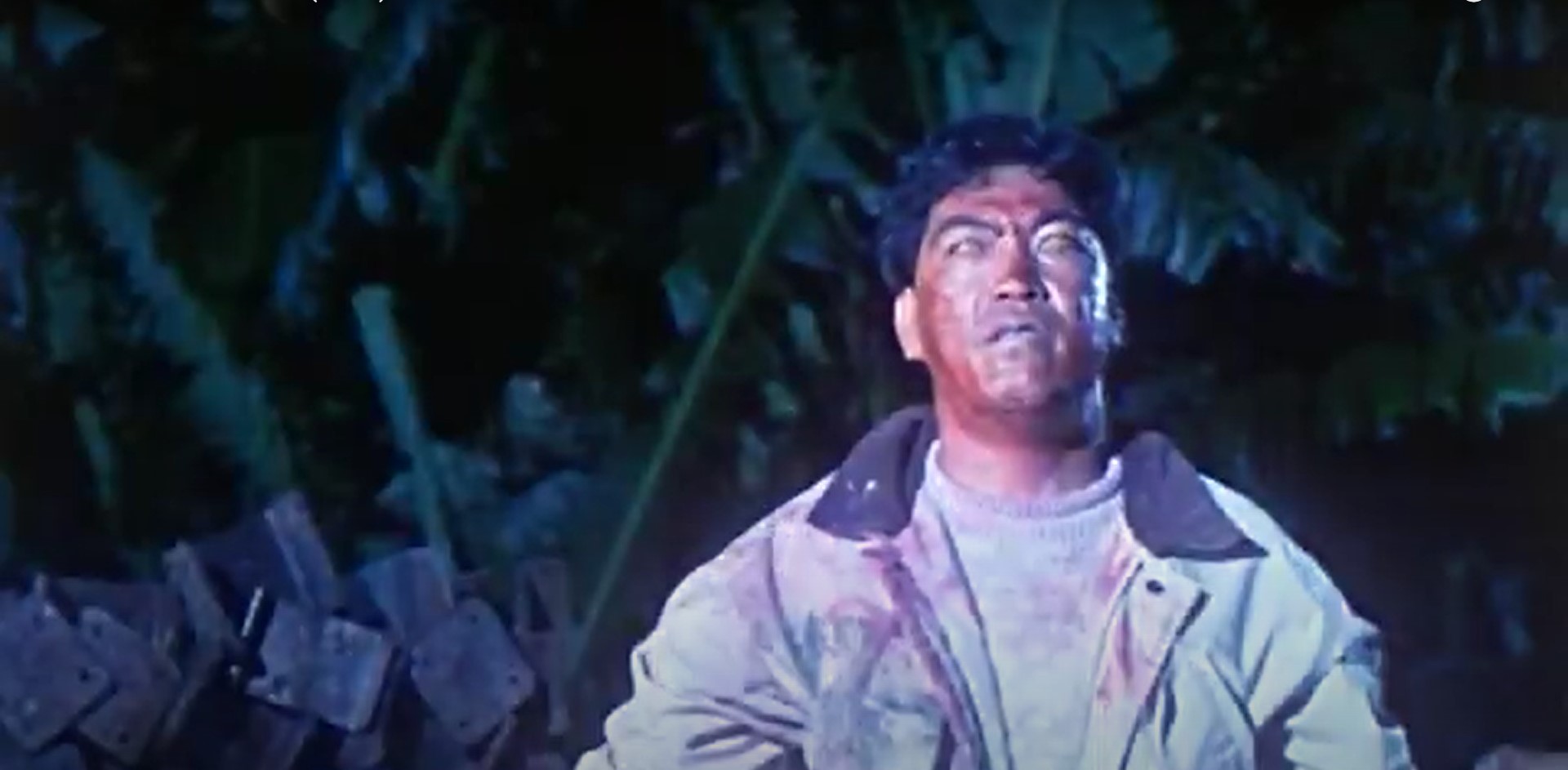
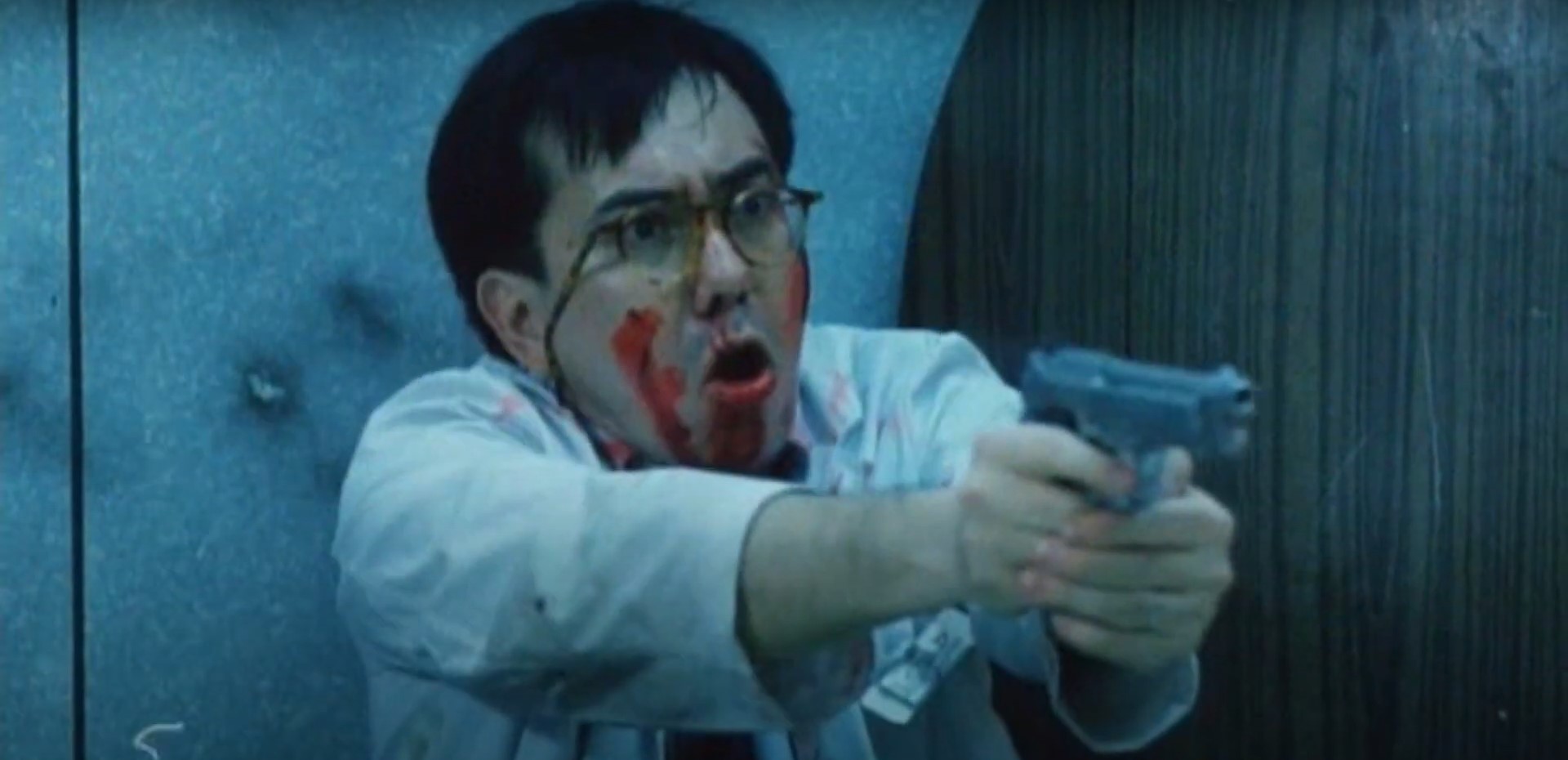
Not only do the writers and director Herman Yau reteam to develop another controversial Category III picture but “The Untold Story’s” star Anthony Wong steps foot into another unraveled monster of a man with Kin, an amicable insurance salesman good at his job and eager to be the best father as possible quickly spins into melancholy and murder after the death of his pregnant wife at the hands of an unprofessionally hasty taxi driver.  Unlike the quietly stewing and maniacally murderous pork bun shop owner, Wong’s villainous runs takes backseat to his anti-hero performance, a punisher of taxi scum.  As Kin, Wong can be the delicately wonderful husband and the brazen barbaric with an easy slippery slope transition in between as he works to perfect Kin’s killing craft.  Unbeknownst to him, tracking him down is Kin’s own police detective brother Yu and his fun-loving goofy partner Goh, but unbeknownst to the detectives is the taxi serial killer is Kin.  “Iron Monkey” star Rongguant Yu offers up tough cop like it’s his job, mixing a humble blend martial arts and entrenched investigator into his character while also being blind to his brother’s moonlighting massacres.  Goh, on the other hand, played Man-Tat Ng (“Shaolin Soccer,” “Tiger Cage”) is supposed to provide the levity, the comic relief, the humor, but the cartoony way Goh is portrayed, in garb and in gab, reduces him to be nothing more than a Western Poser of the East with NBA and other Western branded gear from head to toe.  Goh feels very much like an attempt to jab fun at what Hong Kong might have perceived as American culture:  tasteless, worthless, and clueless.  Goh seemingly only exists to be a link between Kin and his brother when Kin hops into Goh’s undercover operation of pretending to be a taxi driver to which Kin takes his numbskull manner as cantankerous cabbie.  “Taxi Hunter” chauffeurs in the rest of the core supporting cast with Athena Chu (“Super Lady Cop”) and Hoi-Shan Lai (“Dr. Lamb”).

However still managing to provoke potency in parental guidance, to me, “Taxi Hunter” is perhaps the least intense Category III film I’ve experienced to date, but don’t let that keep you from taking a ride in Herman Yau’s rancorous retribution vehicle that has scores of variable car action scenes and a sordid glaze of street-level grime amongst the taxi industry.  “Taxi Hunter” engages us to think about the minor point As to point Bs in our lives that can easily subvert the well-oiled machine that is our existence.  Kin has a promising career, money (a motif we’ll revisit later), and a baby on the way and aside from the money, bizarrely enough, it all comes crashing down in the moment of a car door slamming shut. Those micro-fissions separating our good moments with nastiness slog us into another mindset, a killer’s mindset, when we’re wading at the very bottom of the losing everything depression. Lau and Mak don’t immediately set Kin’s path shortly after the turning point event, which also had a good chunk of setup. Posthumous need to kill cabbies didn’t occur directly after the tragedy as the script allowed time for Kin to try and stomach digesting tremendous loss, even giving away much of his money, as aforementioned, for services gone unrendered such as with the prostitute he didn’t end up sleeping with or being overcharged a child’s trading card just to make a crying child, a future version of his own child now deceased, happy when his parents would not purchase it. “Taxi Hunter” has more than just a singular character-driven story with plenty of suspense from Kin’s evolving practice of killing taxi drivers to the plethora of practical car action. “Taxi Hunter” is metered madness that shies away disgusting you with overt violence or seducing you with graphic sex of other Cat III film in its purer requital black comedy only Herman Yau and Anthony Wong could chauffeur in.

Presented in full high-definition 1080p from the original 35mm stock, “Taxi Hunter” has been flagged down for a new Blu-ray release from 88 Films, shown in anamorphic widescreen 1.85:1 aspect ratio. The transferred print keeps the natural grain of the 35mm film but swells the pixelations to ramp up details and textures tenfold without appearing touched up or improperly enhanced. 88 Films’ coloring grading leans slighting into the metallic blue steel, offering a gritty detective thriller with the overcast effect. The print also shows hardly any age or damage that results in a clean redress of a pristine print. Only one audio option is available for selection, a Cantonese LPCM 2.0 mono. Curious to why there isn’t a Mandarin option leads to speculation that Cantonese sole use was due to the dialect being more widespread in Hong Kong to keep a product of Hong Kong, typically with CAT III products where mainland China censorship would have picked “Taxi Hunter” to pieces. Though in original language, ADR is still used in post and while dialogue is cleaning in the forefront of the rest of the audio tracks, there’s not a ton of depth being too at the forefront, especially with Goh’s goofball gab. However, the action-laden and quarrelsome dynamics provide a plentiful range of sounds from screeching of tires, to the car crashes through windowfronts, to the multiple gunshots that make this sound design rich and energetic. English subtitles are offered and though glibly bland and concise, a lot of repetitive words and phrases, such as a wide use of bro, the subtitles are error-free and paced well. This special edition release includes a new audio commentary with Hong Kong film expert Frank Djeng, a new interview with producer Tony Leung Hunting for Words, a new interview with actor Anthony Wong Falling Down in Hong Kong, a new interview with action director James Ha How to Murder Your Taxi Driver?, still gallery, and trailer. Physical features available, if you’re quick enough, include a limited-edition cardboard slipcover with Sean Longmore’s compositional illustrated art and a folded poster insert of the same art. Also available inside the green Blu-ray case is reversible cover art with the initial same design as the slipcover or, my personal favorite, the original Hong Kong poster art that I proudly display on the shelf. Disc art is pressed with a slight variant of Longmore’s art and the not rated disc’s format comes region A and B playback with the film clocking in at evenly paced 90 minutes. Classic 1990’s fare without charging us an arm and a leg in wasted time, “Taxi Hunter” is solid CAT III with more vindictive and veridical visceral moments that change gears often and punches the gas into accelerating this terminal taxi tormentor.

“Taxi Hunter” Now Available on Blu-ray!

EVIL Has the Right to Remain Dead! “Magic Cop” reviewed! (88 Films / Blu-ray)

No Two-Bit Magician In ‘Magic Cop” on Blu-ray!  

Hong Kong cops are confounded by a chaotic drug bust when learning that their female suspect, who had managed to overpower an entire unit of male officers and even take a bullet ambling deadpan into the streets, had died 7 days prior.  An outlying officer, and practicing Taoist, Uncle Feng is called to Hong Kong to not only quickly solve the narcotic crime but also investigate the unnatural properties of the case.  Feng is accompanied by his city eager niece Lin and two Hong Kong cops, a Taoist devotee and skeptic of Ancient Chinese spiritual mythologies.  Together, they track the drug trail to The Sorceress, a Japanese witch with powers that rival Feng and that can resurrect the dead into zombies and vampires to do her bidding, such as trafficking narcotics.  When the investigation closes in her business, The Sorceress and her right arm, skilled fighter plan to remove the only man worthy of stopping her.

Fans of Ricky Lau’s “Mr. Vampire” will once again be amazed and entertained by the fantastical and mystical action of Stephen Tung Wai’s “Magic Cop.”  Tung, a fellow martial artist and stunt man who had roles in “The Fatal Flying Guillotine” and John Woo’s “Hard Boiled,” helms his debut directorial penned by Chi-Leung Shum (“Vampire vs Vampire”) and the longtime Stephen Chow script writer Kan-Cheung Tsang (“Shaolin Soccer,” “Kung-Fu Hustle”).  The screenwriting duo brought lighting quick comedy to the mostly fictionally invented yet sprinkled with slivers of hard-pressed veracity and definitive entertaining occultism and what resulted resurrected “Mr. Vampire” semblance out of the being a period piece and into the modern day, backdropped in the year of 1990 when the film was released.  Long rumored to be the fifth sequel of the “Mr. Vampire” franchise, “Magic Cop” is a coproduction between Movie Impact Limited, Millifame Productions Limited, and Media Asia Film with star Ching-Ying Lam producing.

“Magic Cop,” and even “Mr. Vampire,” wouldn’t have such a cult following if it wasn’t for the Vulcan eyebrows and thin mustache of Ching-Ying Lam in costume.  The short-statured, Shanghai-born Lam delivers the same vigorous choreography and tranquil demeanor to this particularly stoic character of Uncle Feng, a Taoist practitioner to essentially wrangle unruly entities and please the spirits in the in-between our world.  Feng is old world and finds himself in surrounded by modernism when in Hong Kong, goaded by the young lead sergeant attached the case.  Practical as well as disrespectful, Sgt. Lam (Wilson Lam, “Ghost for Sale”) epitomizes today’s, or rather back then the 1990’s, modern man who has forgotten tradition and deference to those who came before.  Though padded with a fair amount of comedy coursing throughout, balanced against the impeccably edited tango fight sequences, Sgt’ Lam’s partner, known only as Sgt. 2237 played by “Centipede Horror’s” Kiu-Wai Miu, risibly wants to understudy Uncle Feng’s powers while Feng’s niece Lin, played by Mei-Wah Wong of “The Chinese Ghostbusters,” provides the subtle and quirky opposite sex that catches of the philandering eyes of Sgt. Lam.  The ragtag quartet of influx mindsets and personalities become challenged by their single common goal, to stop whoever is behind breathing life into the formidable dead and stop the unorthodox method of drug smuggling.  Former Japanese bodybuilder Michiko Nishwaki (“City Cops”) embodied that very dark magic antagonist.  Nishiwaki handles The Sorceress character with ease despite not having a surfeit army under her thumb; instead, this forces Nishiwaki to become the entire villain body with the slight, full-contact support for her right-hand bodyguard (Billy Chow, “Future Cops”) and a couple of undead lackeys, including Frankie Chi-Leung Chan of “Riki-Oh.”  “Magic Cop’s” cast rounds out completely with well-versed and seasoned, late actor Wu Ma (“Mr. Vampire,” “Return of the Demon”) as the chief inspector polarized in a complicated history with Uncle Feng.

What director Stephen Tung Wai boils down in essence is another variation of good executants of spirit humbled caretakers versus the wicked necromancers existing inside the fabric of the highly praised and cult-following “Mr. Vampire” universe.  Frankly, there’s nothing wrong with that derivativity since Ching-Ying Lam, Mr. Vampire himself, produces and stars as the titular hero.  Lam can conjure whatever-the-hell he wants in order to battle Hell itself.   “Magic Cop” is also a well-made, entertaining story, balanced between the contest wizardry, slapstick comedy, and the character dynamics, and stacked with improbable yet gratifying step-intensive fight orchestration that has gawked early martial arts films a wonder to behold and continues to do so to today but now trickles with pizzazz more-after-more due to put in place industry safety measures.  “Magic Cop” contains that lost art of potentially hazardous palatable physicality that beguiles more than the movie’s faux magic exhibited on screen.  To add to the authenticity, very little painted composited visual effects were used with makeup and the actors doing much of the heavy lifting with the editing team of Ting-Hung Kuo and Kee Charm Wu in full cut-and-paste fortifying mode to button up each sequence with comprehendible continuity of each punch, kick, and magical chopsocky.  One overtone made well known in “Magic Cop” is the unfillable chasms between old and new, respect and disrespect, and myth and science from whence solves no problems until some unified common ground can be reached in order to succeed, in this case, to stop a bitch of a witch.    

An age-resistance 35mm print scanned onto a buffed 2K Blu-ray that extracts the best print elements to-date. The AVC encoded, 1080p, Blu-ray presents Stephen Tung Wai’s picture in a widescreen 1.85:1 aspect ratio. A fine-tooth comb through the celluloid couldn’t unveil any major issue with the 88 Films release. Colors are richly grafted within the sabulous surfaces that are exceedingly defined with delimited, shadow-creating depth. Decoding speeds average around 35Mbps on a BD50, securing categorical choiceness amongst other releases and formats (that is until the potential 4K release). The release comes packed with four audio options to explore: The original Cantonese DTS-HD master audio 2.0 mix, a Cantonese DTS-HD 2.0 home video mix, an English DTS-HD 5.1 master audio dub, and an English DTS-HD 2.0 dub. Between the variated audio mixes, we preferred the original Cantonese DTS-HD 2.0 due to its cadence with the image and welcoming exactness through the lossless compression process. You can make do with the other three options, but the fidelity is much better with the original mix and only anti-subtitle sectarians would be pleased with an English dub. English subtitles are optional and synch well the dialogue but be prepared to speed read as the pacing is quick much like the dialect. Software special features include an audio commentary with Hong Kong film experts Frank Djeng and Marc Walkow, an alternate, standard definition Taiwanese cut of the film with alternate score, an interview with director Stephen Tung Wai, image gallery, and trailer. Endowed with a limited-edition, cardboard slipcover, the dark green Blu-ray snapper has newly illustrated, front cover artwork by Manchester graphic designer and 88 Films resident artist Sean Longmore, which is also on the cardboard O-slip. The reversible cover art has a reproduction of the original Hong Kong poster art. Stuffed in the insert is a mini-folded poster of Longmore’s front cover and a disc art, a scene moment captured in spherical rotunda, of the opening sequence. Available with a regional playback limited to A and B, the 88 Films release is not rated and has a runtime of 88 minutes. ‘Magic Cop, perhaps, wasn’t the sole proprietor of influence but certainly had a black talisman plying hand in the substrata of more Western favorites like “Big Trouble in Little China” and is a crucial cornerstone in representing the best of the Hong Kong Golden Age of cinema.

No Two-Bit Magician In ‘Magic Cop” on Blu-ray!  

Romance and Chinese Boxing Don’t Equal EVIL and That’s Okay! “Gorgeous” reviewed! (88 Films / Blu-ray)

Fall in Love with “Gorgeous” on Blu-ray at Amazon.com!

Bu believes in true love.  The young Taiwanese girl, with immense positivity, travels from her small fishing village of Jibei to the big city of Hong Kong after discovering a bottle containing a romantic note floating in the sea.  When Bu is let down by the originating sender, a gay makeup artist in an attempt to use fate and fortune to bring back an ex-lover, she strikes up a friendship with him which leads to a wealthy business owner and Chinese boxing enthusiast C.N. Chan who serendipitously comes into her life.  With a well-known reputation of being a rake, Bu pretends to be a prominent ex-lover of a notorious crime boss in order to not be taken advantage of as she slowly falls for Chan’s playful charm.  A longtime rival businessman causes conflict by driving a wedge between Bu and Chan as fight training intensifies after losing to his rival’s hired professional fighter and Chan loses sight of what’s really important in life – happiness.  

International martial artists superstar Jackie Chan makes his debut on our little boutique review blog for his Hong Kong cult film, the 1999 romantic comedy with stellar fight sequences, “Gorgeous.”  “Forbidden City Cop” writer-director Vincent Kok teams up with Yiu Fai Lo and the “Rush Hour” star to pen a new kind of story for the stuntman and martial artists that would put a roundhouse kick of insecurities onto any action star’s chin.  Based on the Ivy Ho (“The Accidental Spy”) story, “Gorgeous” involves more than just punches, kicks, and high-flying antics with a comedy romance story about two very different people and perspectives finding commonality in unflinching happiness, joy, and love.  Jackie Chan does comedy very well but the comedy in “Gorgeous” is half non-physical, which the action star has mastered the craft by integrating into his physical model.  “Gorgeous” is a production of Golden Harvest Productions and is produced by Jackie Chan and then Golden Harvest president the late Raymond Chow.

Obviously, you can’t have a Jackie Chan movie without high-level martial arts action.  In the same breath, Jackie Chan wanted to give his Asian fans another movie after the tremendous success of “Rush Hour” that sent the longtime East-adored icon into global stardom.  Thus, “Gorgeous” was born, developed, and rewritten to add Jackie Chan as the lead character, playboy and business tycoon C.N. Chan, alongside costar Shu Qi of “Sex and Zen II” and “The Transporter” with Jason Statham.  As Bu, Qi develops a starry-eyed longing for unequivocal romance that you can only find in fairytales and storybooks as she is confronted by the puppy dog eyes of the local fishing boy proclaiming his love for her only to be rejected by Qi’s downplayed naivety that makes her appear to be the village simpleton.   Yet, the character is surrounded by a carefree comedic mom-and-dad of beer-drinking restaurant owners, Sung-Young Chen (“Hello Dracula”) and Elaine Jin (“The House That Never Dies”).  As a flirtatious couple of Bu’s hopeless romanticism driven by the signs and kismet and Chan’s all-business, no-play waning for a girl to be childlike to bring out the dormant happiness inside him, Jackie Chan and Shu Qi manage to never close that gap to fully immerse themselves as onscreen love interests in their 80’s structured amorous narrative and go get’em montage.   Where “Gorgeous” charisma lies is with Chan’s mano-on-mano dual with Jackie Chan’s hired member of his stuntman team, Brad Allan.  The former Australian gymnast and Chinese circus acrobat has a towering magnetism about him despite only standing 5’4” tall, shorter than Jackie Chan.  The fight sequences between the two nimble men with incredible speed and form, mirror each other with precision in their own individual styles, garner some the best one-on-one choreographed bouts ever to hit the screen and to be felt by the audiences with hard-hitting throws.  While the impact of the Chinese boxing is palpable, Chan and Allen pepper in lighter moments of great physical comedy that take the intensity down a notch in a welcoming reprieve from solemn combat.  That solemnity in Allen’s character is greatly received and adds to his magnetic appeal that doesn’t make the mercenary fighter a bad guy though hired by the antagonist (Emil Chau, “Super Cop 2”) of the story; instead, Allen’s fair without pulling punches and without dirty tricks, as he mentions to Chan to avoid, and we end up rooting for both men’s dignified square up being battled not in a square ring.  Tony Leung Chiu-wai (“Internal Affairs”), Ken Lo (“Holy Virgin vs. The Evil Dead”), Tats Lau (“Dating Death”), Richie Jen (“Tales from the Occult”), Siu Wai Cheung, and “Kung Fu Hustle’s” Stephen Chow costar.

While “Gorgeous” may not be evil in the least for our conversational liking and our in-depth coverage with its abundance of lighthearted goodness, romanticized ideals, and slapstick comedy, the turn of a century film has cult qualities with shoddy 90’s effects, intricate fight choreographies, and eclectic, eccentric performances that make the Hong Kong-Taiwan product standup and standout to be noticed.  The fight sequences alone swallow much of the attention and overwhelm a rather flimsy passionate plotline between C.N. Chan and Bu in what stirs between feels more platonic than desire.  “Gorgeous” attempts, and succeeds to a version of a successful end, a theme about positivity and happiness and how that brightness can be diminished by deceits, workaholism, and distracting contentions, sucking the joy from out of life and spitting out a solitude bitterness without any kind of understanding of how it all happened.  We see this more in the dynamics of business rivals Chan and L.W. Lo, two childhood friends driven apart by their subjective comparisons as they try to top one another, culminating from their back-and-forth to see who is the best at everything into the realization that their bond was ultimately worth more than success at material things.  This enriching theme, plus Jackie Chan’s stunt team work, pushes asides the infatuation glop of Chan and Bu’s playful childlike intimacy that just seems to slip through your fingers, unable grasp traction to be interesting enough.

“Gorgeous” receives an 88 Films’ 2K overhaul with a Blu-ray upgrade from the original film materials of the Hong Kong & International versions of the film, delivering two cuts in high definition 1080p and presented in an anamorphic widescreen 2.35:1 aspect ratio.  The AVC encoded BD50 offers plenty of room for “Gorgeous” to look, well, gorgeous on hi-def with a vibrant, spotless transfer of the 35mm shot print.   Coloring is consistently stable and rejuvenated for a fresh picture image; no one-off blips or glitches on the grading in sight on this very azure and teal toned production.  Despite holding two features and a handful of extras, the dual-layered single disc offers no hint of compression issues, creating a smooth beginning to end viewing.  The Hong Kong cut comes with a Cantonese DTS-HD 5.1 MA while the International Cut comes with the same as well as an English DTS-HD 5.1 dub track.  For authenticity purposes, the original native language is always the preferred choice and the Cantonese track on the HK cut simply shines with an orotund dialogue track, robust milieu and ambience, and a blended bubbly and businesslike score whenever the mood hits by Dan-yee Wong.  Balanced and kept in the check, neither track overtakes the other with a timely parallel consonance.  The newly translated English subtitles are paced well with error-free transcription.  Special features include Shy Guy – Andy Cheng, a member of Jackie Chan’s stunt team, discusses the rise of Brad Allen as well as note on the stunt team in general and Jackie Chan’s success at the time of “Gorgeous,” an interview with director Vincent Kok on Chan’s unfamiliar territory into romantic comedies, an archived making-of “Gorgeous” with raw and behind-the-scenes footage and interviews, “Gorgeous” music video in Cantonese and Mandarin, and the Hong Kong and International trailers.  The limited edition slipcover feature is a cardboard o-slip with illustrative art from 88 Films graphic artist Sean Longmore overtop a 2 to 3 millimeter thicker Blu-ray snapper to house the 32-page color booklet with daily set report of “The Accidental Spy” by writer Matthew Edwards and behind the-scene photos, a dual-sided mini-poster of Longmore’s slipcover art and the original poster one-sheet, a disc pressed with the image of Shu Qi smiling, and reversible cover art with the original poster one-sheet and a couple of “Gorgeous” stills joined together on one half.  Each cut is drastically different in length with the international cut heavily trimmed at 99 minutes while the HK cut keeps unedited at 2 hours.  Both features are not rated and are both have a region A and B playback with C untested.  Jackie Chan has always been a pillar of entertainment and “Gorgeous” is no exception to the rule.  88 Films refreshes the now 24-year-old film with a new, exciting transfer and physical package that commits one of the best fights in cinematic history to hi-def.

Fall in Love with “Gorgeous” on Blu-ray at Amazon.com!

Michelle Yeoh Versus the EVIL Japanese Imperial Army! “Magnificent Warriors” reviewed! (88 Films / Blu-ray)

“Magnificent Warriors” Now on an Amazing Blu-ray from 88 Films!   Click The Poster to Purchase!
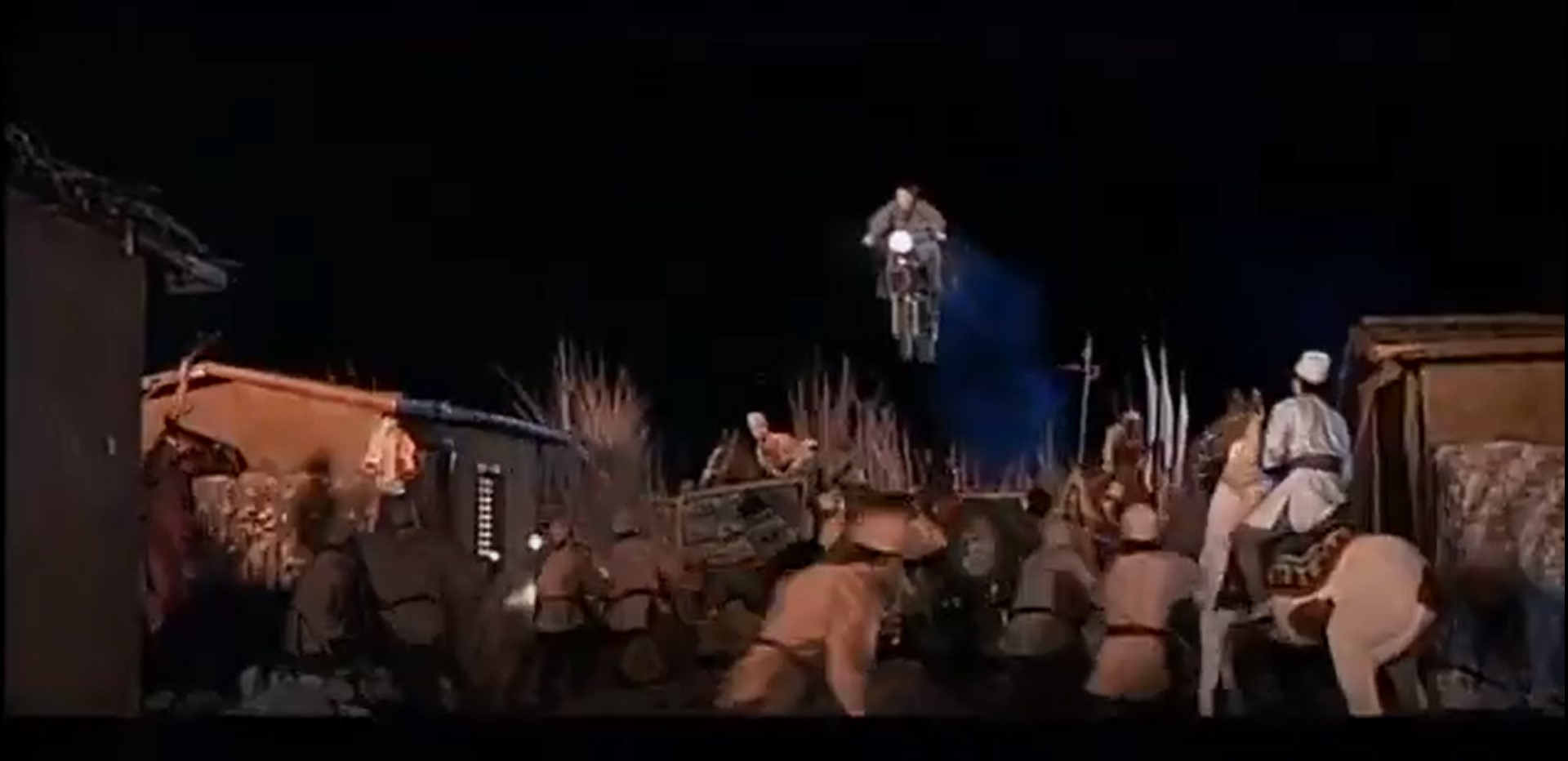
Ming-Ming is an adventurous, mercenary pilot unafraid to herself mixed up in the worst of trouble and against the tremendous odds.  When her patriotic grandfather and military uncle present Ming-Ming a mission of resistance against the Japanese Imperial Army during World War II, the odds, again, will be stacked up against her as she must track down China’s top-secret agent to extract the City Lord of Kayi City, a fortified Chinese city on the outskirts under Japanese control with ambitions to build a strategic, poisonous gas plant.  When Ming-Ming’s is shot down by a Japanese fighter pilot and the mission proves to be more difficult than expected, a small band of unlikely heroes become resistance fighters that inspire Kayi City to rise up against an oppressive, super nation threat to take back their home.  The city of spears and arrows must defend its people from an overwhelming army of rifles, mortars, and tanks in a fight to the death.

Michelle Yeoh is so hot right now.  The Malaysian-born, long-time actress has been under the U.S. mainstream radar for decades up until recently.  Before now, she was well enough for her roles in Ang Lee’s four-time Academy Award winner “Crouching Tiger, Hidden Dragon” without Yeoh receiving a nomination.  Twenty-two years later, Yeoh receives her first Academy Award nomination for “Everything Everywhere All at Once,” but we all knew she deserved the coveted U.S. award well before now.  U.S. audience never got to experience Yeoh earlier in her career as an Asian action star that rivals the likes of male counterparts Jackie Chan and Chow Yun-Fat.  In “Magnificent Warriors,” Yeoh’s diligence to the demanding workload foretells a superstar in the making.  The David Chung directed Hong Kong picture is relentless and action-packed with stunning and intense choreographed martial arts and having a large-scale showmanship of numerous grand explosions and a vast production pocket that include countless background actors.  The script is penned by frequent Stephen Chow collaborator Kan-Cheung Tsang who has wrote many of Chow’s directorial films, such as “Kung Fu Hustle,” “Shaolin Soccer,” and “The Mermaid.”  “Munificent Warriors,” also known as “Dynamite Warriors” is produced by Linda Kuk (“Hard Boiled”) and David Chung’s “Royal Warriors” producer John Sham and executive producer Dickson Poon under the D&B Films banner.

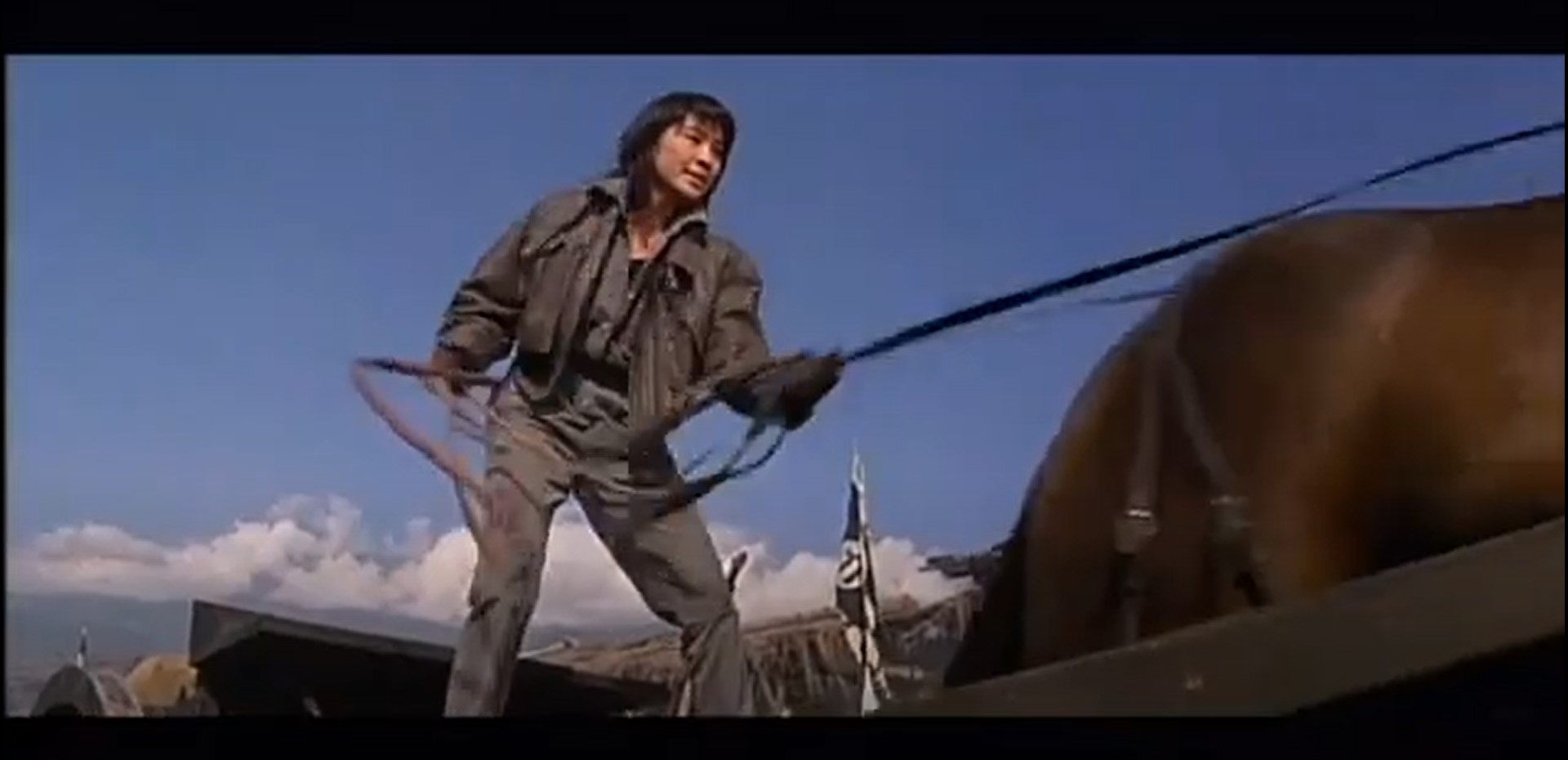
In a career that spans decades plotted by a number of strong female characters, Michelle Yeoh has embodied strength, intelligence, and beauty for this generation.  Under her early credited name of Michelle Kahn, the actress, who in the last five years has entered the Marvel Universe, the Star Trek Universe, and is slated to be in the upcoming James Cameron “Avatar” sequels,” is the driving force behind what makes “Magnificent Warriors” so engrossingly magnetic.  Trained to use a bullwhip and able to accomplish major stunts, unsafely I might add, on her own, Yeoh pulls off the demanding role with sheer confidence radiating from her performance.  So much confidence that the quality beams from her eyes to the point that her gaze nearly appears to be a sadistic grin of her own masochism.  Yeoh seizes Ming-Ming’s adventurous spirit, fully embraces it even, and stands out, but meshes well, amongst the mix of characters, including a hapless and bumbling drifter played by Richard Ng.  The “Mr. Vampire Part 3” star has a recognizable and distinguishable face as a well-known Hong Kong actor from China.  In “Magnificent Warriors,” Ng’s character is clearly the odd man out with zero ambitions and zero fighting skills, providing roughhouse comedic relief with lucky escapes with his life, but as far as character arcs go, the drifter, who cheats and scams gamblers for money and thinks about saving his own skin, succumbs to the resistance call of helping China and becomes one of the leaders of the core Kayi City defenders.  There are three others in this band of five with the City Lord (Lowell Lo, “Spider Woman”) who has a similar character arc as the drifter in being a bit of a scaredy-cat as a traitor against the Japanese Imperial Army but sees the light of his people needing his boiled down bravery and leadership, and his involvement with Shin-Shin (Cindy Lau), a daughter of a Japan loyalist who is obsessed romantically with the City Lord and can kick ass as well that surmises a feminism theme that women are just as strong as men and can have a better moral compass, especially compared to the bumbling man in power, the City Lord, and the drifter con artist.   The weakest fifth character, with an equally weak performance, in the group is Secret Agent No.1, as he’s described in the subtitles, played by Derek Yee (“Black Lizard”).  Though pivotal to the resistance operations to succeed, Secret Agent No. 1 fails to make his impact like the others, character divulging a vague history of his climbing to be China’s best secret agent and also teetering on the supposedly feelings for Ming-Ming that doesn’t ever come despite blatant suggestions to the contrary.    Matsui Tetsuya, Hwang Jan Lee (“The Drunken Master”), Meng Lo, Fung Hak-on, Jing Chen, and Ku Feng round out the “Magnificent Warrior’s” cast.

With extraordinary martial arts choreography, the impossible become possible in what can be experienced as an epic ballet of fists, kicks, and dueling weapons.  Every battling moment translates perfectly on screen without the flinch of error, though I’m sure many takes were took.  Back when outside Hollywood film studios relied on their determination and skill, with a pinch of luck, to get them through tough and rigorous stunts without the aid of wire, pads, or any union approved safety measures for that matter in what feels remarkably alien, like being on a whole other world where the rules of physics and safety do not apply.  “Magnificent Warriors” is truly a magnificent stunt-driven, wartime story revolving around revolutionism, a contemplation of the relationship between a home and its people, and a principled life of standing up for what’s right.  Director David Chung manages to massage out the numerous themes under the façade of a great thrust of nonstop action.  The set pieces, locations, and wardrobe are all fitting for the late 1930s-1940s era, especially with the Japanese uniforms that extend into their armored vehicles, such as in the brief, for show, scenes of its war plane and handful of Type 95 Ha-Go tanks. It’s refreshing to see an older film have a different angle on the overplayed World War II narrative; instead of the typical European or Asian Pacific campaigns involving American troops, “Magnificent Warriors” goes granular into The Second Sino-Japanese War during the Second Great War the world has ever experienced. Japanese implemented chemical warfare into their strategy of expanding their dominating military advances and establishing a footprint in China. “Magnificent Warriors” embellishes the poisonous gas narrative with the imperial army seeking to use Kayi City as a chemical producing plant, steering the film’s epic grapple over the city from out of underlying truth of the actual conflict. Every stage of story progresses into a larger scale of the previous skirmish which bottles up the grossing pressure between the imperial army, the resistance fighters, and the collateral damaged city folk caught in the middle. Sprinkled with comedy and charisma, and an ever so delicate dark tone, “Magnificent Warriors” is impeccable Hong Kong cinema and exposes the world to an underrated performance by Michelle Yeoh who kicked ass then in this film and still kicks ass today.

UK distributor 88 Films releases the “Magnificent Warriors” onto an AVE encoded, 1080p, high-definition Blu-ray, presented in a 2K restored transfer of the original theatrical cut on the company’s USA line. Exhibited in the original 2.39:1 aspect ratio, the anamorphic picture can appear globular at times, resulting in a packed image but more on so on pan shots than anything else. The overall picture quality suggests a pristine original print of the theatrical cut with a clean presentation from start-to-finish. Mostly warm with a flaxen degree of a desert background within a Mongolian Mountain valley, when the story does transition to a night shot or to interiors, the grain roughly sustains the change to keep a unified picture consistency that lives in a low contrast field without any deep shadow work or hard lined delineation. Compression issues are non-existent and there’s not obvious, unwanted touchups here to note. The release comes with two audio options: A Cantonese DTS-HD Mono and an English dub DTS-HD Mono. Preferrable choice is always the original intended language; however, this film’s audio options are both dubs but the Cantonese synchs better with grammatically suitable English subtitles albeit their breakneck speed to keep pace. Dialogue is clean, clear, and the action sound design is audibly potent with pinpoint precision on the homogenous strike. There are moments I thought the quick editing, especially during the plane chase, would hinder the ambient effects to keep up but I was pleasantly surprised, and the prop and gunfire intensity presents a nice exchange of open aired depth, range, and dynamisms. Software bonus features an archive interview with Michelle Yeoh (circa early 2000s), an archive interview with stunt coordinator Tung Wai, an English credits opener, the Hong Kong and International trailer, and still gallery. The hardware features are a tad better with a double-sided A3 poster, a 35-page color picture booklet with historical and filmic essay by Matthew Edwards, a limited cardboard slipcase featuring new art by Sean Longmore, and a reversible cover art in which shares its illustration with the booklet. The case isn’t the traditional slim Blu-ray snapper as it’s thicker to handle the booklet and poster. The release comes not rated, region A coded, and has a runtime of 92 minutes. Drawn into a big war shieled and overlooked by a bigger war, “Magnificent Warriors” not only time capsules a piece of Asian history but does it with fantastical fight and character that delivers one Hell of a timeless film with Michelle Yeoh at the helm.

“Magnificent Warriors” Now on an Amazing Blu-ray from 88 Films!   Click The Poster to Purchase!

EVIL Lights Up When Peeling Skin! “Human Lanterns” reviewed! (88 Films / Blu-ray)


Own this beautiful release from 88 Films of the “Human Lanterns”

Two respected and wealthy Kung-Fu masters have a long rivalry, trying to one-up each other at any cost even if that means stooping into their personal life to gain the most public admiration.  With the annual lantern festive approaches, to have the best and brightest lantern would sustain at least a year of gloating over the other master.  When a lantern maker with a retaliation mindset against one of the more boastful masters is hired to make his festival entry, the lantern maker exacts horrifying revenge by fueling their feud behind the scenes. Kidnapping beautiful women who are dear to each master and exploiting their soft delicacies for his crazed creations, the maniac lantern maker turns the village upside down, forcing the local constable into an impossible investigate into the village’s most popular residents when none of the evidence points to the other.

“Ren pi den long,” aka “Human Skin Lanterns,” aka “Human Lanterns” is a grisly Kung-Fu murder-mystery that’ll make your skin crawl right off from your body. The stylishly colored and ethereally varnished 1982 Hong Kong film is written-and-directed by Taiwanese director Chung Sun (“Lady Exterminator) that blended the likes of a giallo mystery into the well-choreographed martial arts mania with the profound Kung-Fu screenwriter, Kuang Ni (“The One-Armed Swordsman,” “The Flying Guillotine”), co-writing the script alongside Sun. While not as ostentatiously gory or as cinematically profane as the 80’s released Category III certified films that rocked Hong Kong audiences, and the censor board, with shocking, gruesome imaginary and content, “Human Lanterns” does sit teetering on the edge with mostly a tame Kung-Fu feature that quickly turns into the blistering carnage of a basket case, or in this a lantern maker, who uses hiding as a double entendre. “Human Lanterns” is a Shaw Brothers Studio production executively produced by the oldest of two brothers, Rumme Shaw, and, then new to the Shaw Brothers’ board of directors, producer Mona Fong.

“Human Lanterns” starred two the renowned names in martial arts films from the 1970s and well into the 1980s with “Fist of Fury” and “The Swordsman and the Enchantress’s” Tony Liu as the impeccably arrogant Lung Shu-Ai with a self-image to protect more than the women in his life and “Bloody Monkey Master” and “Return of the Bastard Swordsman” Kuan Tai Chen sporting a sweet mustache as Lung’s longtime rival, Tan Fu. Shu-Ai and Chen have really spot on, well-versed, fight sequences together braided into their play off each other’s character’s haughty personas. While behind the curtain of overweening and defiance between the two masters, Chao Chun-Fang unceremoniously sneaks into the fold by happenstance as Lung offers him money for the best lantern this side of the lantern festival. Lung and Chao Chun-Fang, played with a demented, idiosyncratic duality from Leih Lo (“The Five Fingers of Death,” “Black Magic”), another master in the art of fighting in his own style, have an inimical past…well, at least thought so by Chun-Fang. In a sword dual over a woman, Lung defeats Chun-Fang and purposefully scars him above the left eye, causing him the inability to look up, and while the lantern maker has stewed for many years, training all the while to be the best fighter, his tormentor Lung Shu-Ai has nearly all forgotten about the incident and found trivial enough to ask Chung-Fang to make him a lantern and offer him out for drinks for being old buddies of yore. However, this yard pulls the wool over the eyes of self-centered, the upper class, and the unruffled nonchalant as Chung-Fang takes advantage of the Kung-Fu masters naivety and uses the rival as a screen to cover up his kidnapping deeds of the women in their lives, played by Ni Tien (“Corpse Mania”), Linda Chu (“Return of the Dead”), and Hsis-Chun Lin. “Human Lanterns” rounds out the character list with a hired assassin in Meng Lo (“Ebola Syndrome”) and a competent but out of his league village constable in Chien Sun (“The Vampire Raiders”).

The look of “Human Lanterns” is often dreamy. No, I don’t mean dreamy as in gazing into the strong blue eyes of your tall and dark fantasy man. The dreamy I’m speaking of is produced by cinematographer An-Sung Tsao’s luminescence that radiates of background and the characters through the wide range of primary hues. Tsao’s colorful and vibrant eye doesn’t clash with the vintage era piece consisting of impressively detailed sets, a costume design plucked straight from the 19th, and hair, makeup, and props (which I’ve read some of the blades were authentic) to bring up the caboose of selling the completed package of delivering a spot-on period film. When Leih Loh dons the skull mask, an undecorated and unembellished human skull, with wild, untamed hair sprouted from every side of the eyeless mask, Loh transforms into a part-man, part-beast jumping, summersaulting, leaping, and seemingly flying through the air like a manically laughing ghost. The visual cuts petrifyingly more than described and if you add an extensive amount of Kung-Fu to the trait list, “Human Lanterns” has a unique and unforgettable villain brilliantly crafted from the deepest, darkest recesses of our twisted nightmares. “Human Lanterns” has a wicked and dark side that balances the more arrogantly campiness of Lung and Tan’s hectoring rivalry. When Lieh Loh is not skinning in his workshop or Lung and Tan are not bullying each other into submission, there’s plenty of action with the heart stopping, physics-defying martial arts that just works into the story as naturally as the horror and the comedy. With shades of giallo and fists of fury, “Human Lanterns” is Hong Kong’s very own distinctive and downright deranged brand of good storytelling.

88 Films lights the way with a new high-definition Blu-ray of the Shaw Brothers’ “Human Lanterns” from the original 35mm negative presented in Shawscope, an anamorphic lensed 2.35:1 aspect ratio that more than often displays the squeeze of the picture into the frame. One could hardly tell the upscale to 1080p because of the very reason I explained in the previous paragraph of the airy An-Sung Tsao façade that softly glows like bright light behind a fog. Nonetheless, the image quality is still stunning and vivid, a real gem of conservation and handling on this Blu-ray release. The Mandarin dubbed DTS-HD 1.0 master audio is synched well enough to the action for a passing grade. The foley effects, such as the swipes and hits, are often too repeated for comfort, but adds to “Human Lantern’s” campy charm. The newly translated English subtitles are synchronous with the picture and are accurate but, in rare instances, come and go too quickly to keep up with the original language. The release comes not rated with a run time of 99 minutes and is region locked at A and B. Why not go full region free is beyond me? Licensing? Anyway, special features include an audio commentary by Kenneth Brorsson and Phil Gillon of the Podcast On Fire Network, “A Shaw Story” interview with then rising Hong Kong star Susan Shaw who talks about the competitive and easy blacklisting Hong Kong and Tawain cinema market, “The Beauty and the Beasts” interview with in story brothel mistress played by Linda Chu often harping upon not wanting to do nudity despite directors begging her, “Lau Wing – The Ambiguous Hero” interview with Tony Liu that comes with its own precaution title card warning of bad audio (and it is really bad and kind of ear piercing) as the lead man really regales his time on set and in the industry between Golden Harvest Productions and Shaw Brothers Studios, and rounding out the main special features is the original trailer. The package special features is a lantern of a different color with a limited edition cardboard slipcase with new artwork from R.P. “Kung-Fu Bob” O’Brien, a 24-page booklet essay entitled “Splicing Genres with Human Lanterns” by Barry Forshaw accompanied by full colored stills, posters, and artwork by O’Brien, a double-sided fold out poster, and reversible Blu-ray cover art that can be flipped from the same, yet still awesome, O’Brien slipcover art to the original release art. The new 88 Films’ Blu-ray set conjures a renaissance satisfaction like none other for a highly recommended, genre-ambiguous, vindictive affray.

Own this beautiful release from 88 Films of the “Human Lanterns”