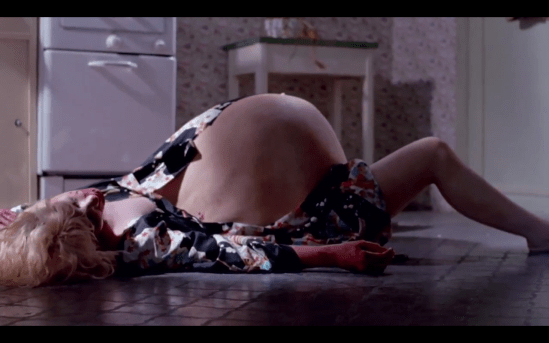
EVIL Wants the Industry Hot and Desired Jana Bates to be in His Movie! “The Last Horror Film” reviewed! (Troma / Tromatic Special Edition Blu-ray)

“The Last Horror Film” is Now Available on Blu-ray to Obsess Over!

Obsessed with horror scream queen Jana Bates, New York City cabby Vinny Durand heads to France’s Cannes Film Festival to cast her in his own horror movie, “The Love of Dracula.”  Halted at every entry point of the private, star-studded events that include Jana Bates and being intercepted and rejected by Bates’s producer ex-husband, a rival producer, current boyfriend-manager, her agent, and a director, all of whom are in an intergroup conflict concerning the starlet, Jana, nothing will deter Durand from his perfect star.  When Jana walks in on the decapitated corpse of her ex-husband, a series of murders and missing persons involving her close friends and colleagues ensues in the days after and in all the while, Durand tries every attempt to meet the actress, stalking her with a video camera to film the perfect leading lady in his secret horror movie, invasively stepping into her life in the same instance the murders began to occur. 
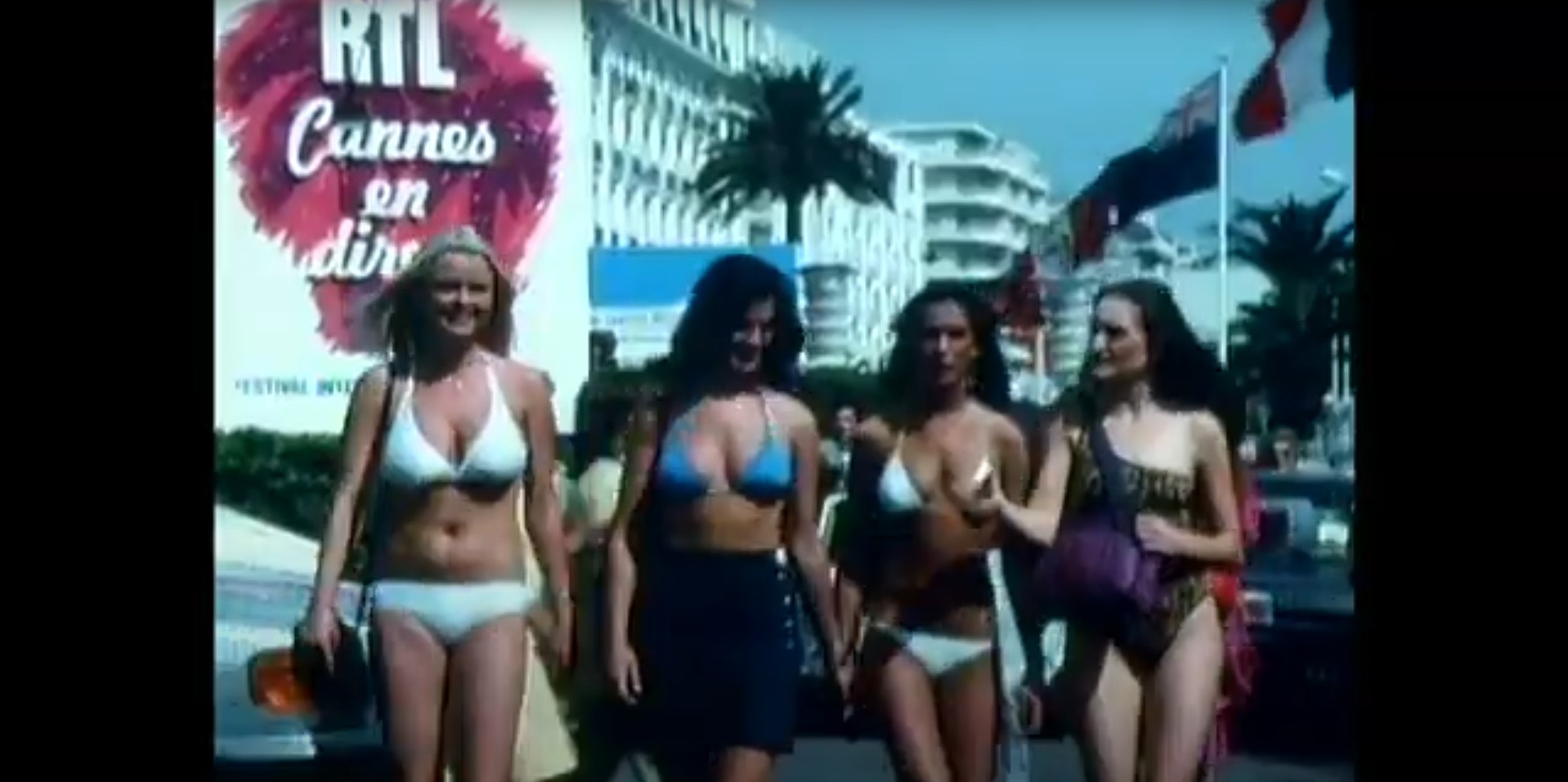
A deranged NYC taxi driver flying to Europe for an aggressive meet, greet, and casting of a totally unaware horror actress to be in his own B-picture is the plotline everyone could, should, enjoy!  What’s not the love?  “The Last Horror Film” takes us from the grimy streets of the Big Apple to the exquisite sights and sounds of the seashore Cannes along the scenic French Riviera.  Helmed by London-born David Winters (“Thrashin’”) and penned by Winters, Tom Klassen, and Judd Hamilton (“Maniac”), “The Last Horror Film,” also known as “Fanatic,” is one of the best obsessed fan thrillers out there, such as containing the same context of the Clint Eastwood picture “Play Misty for Me,” but is lesser known to mainstream audiences because it features genre icons Joe Spinell and Caroline Munroe and has been primarily distributed under the unconventional indie picture and filmmaking risk taker, Troma Films, who at times isn’t everyone’s cup of tea distributor.  David Winters’s Winters Hollywood Entertainment and Shere Productions with Judd Hamilton and David Winters producing the 1982 American feature. 

Fans of Joe Spinell (“Maniac,” “Rocky,”) already know this but those who haven’t experienced the New York City-born and bred actor, “The Last Horror Film” role of Vinny Durand is one of his best.  Spinell obviously suits psychosis well, but Vinny Durand takes it down a different path and, believe me or not, Spinell finesse with the character is beyond magnificent in all his mannerisms, expressions, and intonations, in addition to his egg-shaped physical, slick greasy hair, and thin black mustache, that make Vinny Durand a likeable and infatuated with obsessed crazy.  “The Last Horror Film” is the third costar collaboration with female lead, and genre icon in her own right, Caroline Munroe behind “Starcrash” and “Maniac.”  The “Dracula A.D. 1972” and “Captain Kronos:  Vampire Hunter” Munroe essentially plays herself in the role of Jana Bates but with a role that comes with more glamour and prestige as horror actresses rarely received such recognition in the major industry circuits.  Munroe equals Spinell in performance but in her own right as more of normie actress with accolades living it up at Cannes and eventually landing in the final girl trope, exceled into terror within the radius of her killer.  Being embroiled in a different kind of love triangle, one that includes her silver fox husband ex-husband Bret Bates (Glenn Jacobson, “Wild Gypsies”), current boyfriend Alan Cunningham (Judd Hamilton, “Starcrash”), and rival producer Marty Bernstein (Devin Goldenberg, “Savage Weekend”).  As the potential body count rises, so does the continued cast list with David Winters himself in a reflected cameo role as a horror director named Stanley Kline, Susanne Benton (“That Cold Day in the Park”) playing an orthographic variant of her namesake in Susan Archer, and Sean Casey as a rockstar lending his castle to Alan and Jana for retreating safety.  The cast rounds out with Spinell’s mother, Flilomena Spagnuolo, playing Durand’s mother in a convincingly nagging and comedic way that makes me it’s not terrible too far from the truth of their off-screen relationship. 

For a Spinell, Munroe, and David Winters production, “The Last Horror Film” is surprisingly vaulting with ambition for an unpermitted guerilla shot feature through the streets of Cannes.  Large parapet roof signs, gothic castles, the ritzy and beachy French Riviera, a score of happenstance and scripted extras,  and lots of topless women on the beach shots, Winters musters moneyed shots to coincide the well-dressed interiors of Durand’s apartment and hotel room and a slew of exteriors to play into the stalking fold.  Couple these manifested scenes of grandeur with the shocking moments of precision and effective gore and Spinell’s theatrically pleasing, creepy behavior performance and you got yourself a halfway decent meta slasher full of red herrings and a high body count, circling and overlapping itself within Duran’s directorial vision, the fake films within the critic panel and festival screenings and, as well as, the gotcha moment ending that gives one pause to think if what was just witnessed was actually the story, but while you’re scratching your head, perhaps feeling like a cinematic dummy of storytelling comprehension, there’s no doubt that David Winters successfully produced one hell of a horror picture starring Joe Spinell.

The new Tromatic Special Edition of “The Last Horror Film” is seemingly a repeat in some ways to the Blu-ray release from a decade earlier down to the exact cover art without the Tromatic Special Edition banner.  The AVC encoded, 1080p resolution and 1.78:1 widescreen aspect ratio, is compressed onto a BD50, an uptick in format storage from the 2015 to warrant it a Tromatic Special Edition.  However, image refinement is not in this re-release’s repertoire with a mirrored result of a lightly anemic look that still fails to color pop the feature in its eclectic set designs.  Darker scenes are in and out based of contrast, losing definition, and are inclined to be grainer negatively in the negative spaces.  In the brilliance of light, details can rooted out, especially in skin textures as Spinell’s pot marked face is exhibited in great detail amongst the other casts’ individual facial features.  Winter’s diverse and organized framing, plus with a little editing garnish, elevates whatever kitschy content there might have been into a grade-A B-picture; yet that doesn’t go without saying that there weren’t any editing flaws in the print that was subsequently transposed to the Troma transfer as horizontal cut lines and breaks in recurrent cells kink the chain ever so slightly.  The release also features the same English Dolby Digital 2.0 mix, a fidelity lackluster that doesn’t reflect the power the action medley and the score, the latter from composers Jesse Frederick, the vocalist of the “Full House” theme, and musical instrument compliment, Jeff Koz.  Dialogue renders above the layers but is on the softer side of volume, diluting the more intense moments of chase and murder without that impact punchiness.  Troma, like in my instances, flaunt a noteworthy tidbit in their releases, if there is one to flaunt, and in “The Last Horror Film’s” case, Depeche Mode’s track Photographic is the quoted feature music, says in big white and yellow font on the front cover.  What primarily separates the 2015 and the 2025 releases are the special features.  Archived commentary with Joe Spinell’s assistant and associate producer Luke Walter commentary moderated by Evan Husney from 2009, “The Return of Dolphin Man” short film by director John Patrick Brennan, a segment entitled “Kabukiman’s Cocktail Party,” the feature scrapped “Maniac II:  Mister Robbie’s” promotional trailer, the theatrical trailer, and a Lloyd Kaufman intro that dresses him in drag in the streets of an uninterested NYC are included on the special edition that features additional supplements with two more, 2023 produced, re-used commentaries from 1) Caroline Munro moderated by FrightFest’s Alan Jones and 2) again with Luke Walter by moderated by Severin Films’ David Gregory for the label’s own 2023 release.  Also from the Severin vault is the Like a Father Figure:  Sal Sirchia Remembers Joe Spinell interview with Sirchia’s memories and phoned tape recordings of Spinel’s voice messages, My Last horror Film Ever audio interview with producer Judd Hamilton, and “The Last Horror Film” location revisit featurette from New York City to Cannes, plus additional trailers under the title “Fanatic” (2) and the main title (1).  There are additional Troma materials with trailers from “Return to Nuke ‘Em High Vol. 1” and “Vol. 2,” The Toxic Avenger,” “Class of Nuke ‘Em High,” and “#Shakespeare Shitstorm.”  Aforementioned, the physical properties of the release nearly identical aside from the special edition banner across the top and the additional bonus content.  The 2015 Troma release is region locked A but a decade later Troma realized region free is the smarter move with the single 87-minute cut defining the release that comes not rated.

Last Rites: Take “Maniac” out of the equation, “The Last Horror Film” is Joe Spinell’s finest performance not taken lightly and though the story’s lurching flashes the check engine light, David Winters is able to still cruise along in his fanatic slasher.

“The Last Horror Film” is Now Available on Blu-ray to Obsess Over!

This EVIL, Straight-Razor Killer Has a Novel Idea! “Tenebrae” reviewed! (Synapse / 4K-Blu-ray Combo Set)

2-Disc 4K UHD and Blu-ray Set Now Available of Dario Argento’s “Tenebrae”

While on a media book tour for his latest popular crime thriller novel, “Tenebrae,” American novelist Peter Neal is swiftly entangled in a killer’s puritanical wrath shortly after landing in Rome.  Using Neal’s story as an inspirational guideline to rid the world of what the fictional book labels as depraved people, the killer brutally murders women closely resembling characters in Neal’s book with a straight razor and sends Neal a deranged poetic message shortly after each death.  Police are on the case but always once step behind, even when the murders have seemingly stop connecting to the pages of Neal’s novel.  When the writer investigates by running through the list of possible suspects, the writer in him goes rogue by setting off to solve the case himself that would sensationalize and authenticate him as a crime writer, but the deeper Neal directly involves himself, the more the grislier the murders become and they’re starting to come closer to home than before. 

Dario Argento is unequivocally one of the best masters of horror for half a century, writing and directing not only some of the best Italian crime-mystery Giallos, splashed with hue vibrancy and caked in gruesome blood splatter, but also writing and directing those same films with major success internationally as his films connect with a global audience.  “The Bird with the Crystal Plumage,” “Deep Red,” and “Suspiria” have skyrocketed the filmmaker within the first decade of movie-crafting and Argento would not have been who is now without the guidance and the financial foundation constructed by father, Salvatore Argento.  Before his death in 1987, Salvatore produced one more of his son’s ventures in 1982 with “Tenebrae,” an emblematic mystery that brings Italian and American actors into the fold of Argento’s violent pulp puzzler.  Argento’s younger brother, Claudio, co-produced the feature under the Sigma Cinematografica Roma production company.

The Italiano-Americano production casts a pair of native New Yorkers in Anthony Franciosa (“Death Wish II,” “Curse of the Black Widow”) and John Saxon (“A Nightmare on Elm Street,” “Black Christmas”) who regularly crossed over the Atlantic for roles in international pictures.  Franciosa plays the novelist Peter Neal with Saxon as Neal’s newly hired agent Bullmer.  Their portrayed amicable relationship succeeds expectations of client and manager professionalism, but a good publicity campaign can be torpedoed by a sadistic killer with a throat cutting fetish and Roma’s best officers on the case intruding into the Neal’s personal promotion with Detective Germani, played by spaghetti western regular Giuiliano Gemma (“Day of Anger”), and his partner, Inspector Altieri, played by Carola Stagnaro (“Phantom of Death”).  The third English speaker is John Steiner (“Caligula”), a proper Englishman setup as an Italian television host on the docket to interview Peter Neal’s latest release success.  Steiner becomes an early favorite as the suspected killer with his odd pre-show questioning that falls in line with the Killer’s motives, but he isn’t the only person of interest as Neal’s estranged lover Jane (Veronica Lario) holds a lover’s quarrel with the writer who has seemingly become intimately close with his personal assistant Anne (Daria Nicolodi, “Deep Red”).  A conglomerate of characters gyrate Argento’s maelstrom mystery, each exhibiting profound performances that make each rich in their own right, and fill out with an assemblage of robust supporting characters diffusing through the story with Ania Pieroni (“The House by the Cemetery”), Lara Wendel (“Ghosthouse”), Eva Robins (“Eva man”), and Mirella Banti (“Scandal in Black”), the model most infamously on the front cover of most home video releases and poster one sheets with the iconic neck-sliced open and dripping blood along with her wavy hair suspended in a pose of vivid void and color.

“Tenebrae,” in Latin translates to darkness, describes Argento’s post-“Suspiria” feature intently.  Giallo lives within this time capsulated enigmatic madness, color-coated and visually complex to become an easy pill to swallow amongst all others in the Italian-reared niche.  Accompanying all the hallmarks of a Giallo construct – the killer’s gloved hands in POV, psychosexual tropes, mental instability exposures, violent and gory – Argento also impresses us with baroque mise-en-scene of lavish houses, detailed interiors, and extremely broad, emotionally phrenic individuals.  We also receive technical style wonders like a long boom shot that cranes up a house exterior to follow the idiosyncratic and opposing activities of two presently quarrelling lesbian lovers on a dark, stormy night in a tensely presage moment mixed with the synth-rock sounds of the “Goblin” theme track.  “Tenebrae” is chic in its ugliness and the patience Argento shows is formidably impenetrable without being flawed with lingering stagnancy.  While wallowing into what we’re led to believe, red herrings and other subterfuges to throw off audiences’ keen-to-solve sniffers, the story stirs a cauldron of coherent progression that is, more often than desired, lost in most gialli trying to weave through an intelligible punchy crime-mystery without becoming disoriented by the twists, turns, and topsy-turvy outcomes.   

“Tenebrae” hits 4K onto a 2-Disc, UHD and Blu-ray combo set from the genre-leading distributor, Synapse Films. The HEVC, mastered in Dolby Vision, encoding 2180p UHD and the AVC encoded 1080p high-definition Blu-ray are presented in a widescreen 1.85:1 aspect ratio in both the English and Italian versions of the feature.  One of the more gorgeously restored versions ever to be presented, with sharp delineation and organic popping colors within the narrow margins of infrequent gel lighting, the near flawless original negative is greatly elevated by Synapse’s ultra high-def facelift that resound the lavish textures of various sets, the expressional details of the characters’ face, and the glistening shine of the spraying blood.  There’s real balance between the colors in this presentation, offering not only a wide variety of hues but a great display of the mix.  Gels are not overly used and are more key lighting spotlights to heighten tension or introduce moods on an almost subconscious level.  Both English and Italian versions score a lossless DTS-HD Master Audio 2.0 mono.  This release caters to the very suspense Argento acoustically and phonically propounds that, in the same regard to the eyes, places viewers’ ears right in the middle of the action.  Every sound is distinct and unassuming during the throes of violence, a cleanly serrating effect that compounds killer consternation of being everything, everywhere, all at once.  Typical of the time and cost-efficient ADR usually retains some dubbing disharmony, but “Tenebra’s” tracks are neatly synchronous with Anthony Franciosa and John Saxon’s recordings timed exact and as if captured in the scene.   Some of the dubbing isn’t as in the bag, such as with Giuliano Gemma’s recording that’s does denote that space in between intensified by likely another voice actor’s reading overtop Gemma’s actual dialogue.  UHD offers English SDH on the English version while the Italian version has just regular English subtitles; the Blu-ray disc has the same.  Hours of bonus content, identical on both formats, begin with an audio commentary by Dario Argento: the Man, the Myths, the Magic author Alan Jones and film critic/historian Kim Newman, a second audio commentary by Dario Argento expert Thomas Rostock, and a third audio commentary by Maitland McDonagh, author of Broken Mirrors/Broken Minds:  The Dark Dreams of Dario Argento.  The fun doesn’t end there with a 2016 feature-length documentary “Yellow Fever:  The Rise and Fall of the Giallo” with interviews from Dario Argento, Umberto Lenzi, Luigi Cozzi, and Ruggero Deodato amongst the biggest names in film critic authoritarians, a newly edited archival interview with actor John Steiner, a newly edited archival interview with Maitland McDonagh, an archival featurette Voices of the Unsane with “”Tenebrae’s” Dario Argento, Daria Nicolodi, Eva Robins, Luciano Tovoli, Claudio Simonetti, and Lamberto Bava interviews, an archival interview with actress Daria Nicolodi, an archival interview with writer-director Dario Argento, an archival interview with composer Claudio Simonetti, an archival introduction from Daria Nicolodi, an international theatrical trailer, the Japanese Shadow trailer, an alternate opening credits sequence, “Unsane” end credits sequence, and an image gallery to wrap things up.  Inside the rigid O-slipcover, graced with a high quality and beautifully macabre illustration rendered by Nick Charge, is a Synapse Films’ black, 4K UHD labeled Amaray case with a double side disc lock and a reversible cover art with the Nick Charge graphic as default underneath the slipcover with the reverse side the Synapse Films’ standard Blu-ray cover art pulped with a famous death scene in pop art color. The insert houses a Synapse Films’ catalogue, and the discs are pressed with two notable kill scene frozen moments pulled in still image form. Feature runs at 101-minutes with an uncut presentation of the feature with a region free playback on both formats. ”Tenebrae” is Dario Argento in a cracked-up nutshell, paradoxically beautiful and horrible and burgeoning with suspense and color. The restored and remastered Synapse Films’ UHD and Blu-ray set is equally as such in its gorgeously grotesque packaging of film, its director, and its legacy that will outlive us all.

2-Disc 4K UHD and Blu-ray Set Now Available of Dario Argento’s “Tenebrae”

Daddy’s Home and He Brought Evil With Him! “Xtro” review!


A father mysteriously goes missing when visiting aliens violently abduct him from his serene cottage home. Thought to be a deadbeat husband and father for abandoning his family, the man returns three years later at the doorstep of his wife’s London flat. A bewildered and conflicted wife struggles with his return while the live-in boyfriend makes it clear that he wants the man out, shelling out a vicious cold shoulder whenever in the same room, but the returned father seeks to resume his patriarchal position amongst his family; however, he’s not exactly the same person he used to be as he garnishes an exterior shell of a human and the interior of a hostile extraterrestrial with ulterior motives. His return has nightmarish affects on his traumatized son whose becoming a device of deviancy at the hand of his father’s otherworldly influence, issuing carnivelesque ill will toward other flat tenants. By the time the boyfriend suspects something, the not-so-friendly alien might have already established the intended invasion into a family so eager and willing to accept their sorely absent loved one.

Perhaps one of the most out of this world science fiction horror films ever made that’s set on Earth, “Xtro” is the Don Coscarelli-like bizarre horror film from British filmmaker Harry Bromley Davenport. Co-written the story with Michael Parry (“The Uncanny”), Davenport’s blended American and British financed 1982 unsettling venture was penned by Iain Cassie (assistant director on “Schizo”) and Robert Smith. Honestly, no other film comes within a comparison zone of “Xtro’s” sheer creativity that doesn’t just redesign the genre or it’s tropes, but, rather, embraces a new kind of fragmented oddity by telling an uncomfortable story consisting with the graphic birth of a full grown adult, the flesh crawling sensation of an adult man bending down to child level to drink from the bare skin of a child’s shoulder, and the exhibition of the dark pageantry of humor underlined death. Over an umbrella of horror shades metaphorically a fairly common family crisis baseline premise of an inattentive father’s return home to try to reinstate himself with conflicted wife and eager son only to, once again and concretely, destroy them internally.

Philip Sayer sets foot into the duplicitous titular space invader. The trained veteran actor had experience from the stage that translated to what could be considered performance art in “Xtro” to embodied a creature on the inside to his humanity on the out. Sayer costars alongside an unseasoned child actor, Simon Nash, as the young Tony and the pair make a inharmonious father and son with cankerous performances by Nash who doesn’t exactly fit, when considering accent and even appearances, his portrayed parents. Bernice Stegers is the other half of Tony’s folks and the “Macabre” star does a phenomenal job as the stiffly conflicted mother and wife Rachel Phillips, straining toward more what’s best for her love life rather than to the care of her son. The live-in boyfriend Joe, portrayed by Danny Brainin, limps by as a fairly useless character who doesn’t contribute either way to a conclusion. Other than providing a minor tether to Rachel Phillips life to normalcy, Joe can’t swallow his emotions and the best the character can offer is to abandoned his girl and son, another frail male in their life. Brainin’s performance is good for the character’s weak minded attitude. The cast rounds out with Maryam d’Abo (who goes onto to be a bond girl in “The Living Daylights”), Peter Mandell, and Anna Wing.

Though thought provoking and wildly entertaining through soul rattling imagery, “Xtro” is by far from a perfect film. Sure, the Tom Harris special effects pull at innard chords you may never knew you garnished and certain scenes would be the subject of mysterious gif images in the dark corners the internet that proclaimed creatures do live unknown amongst us, but the British science fiction horror film, a video nasty of the time, just might have been too absurd in the nonconformist form that struck unpopular opinions with audiences and critics because the villain wasn’t necessarily tangible and wielded a blood stained machete and more so involved obscure telepathic references that were non-explicit. There’s literally no connective tissue which makes this film so beyond the mind’s grasp. “Xtro’s” niche saw non-homaging aspects, but had familiar flavors such as a bit of Peter Jackson humor, a dry slapstick that’s hard to enjoy, but fascinating to take in at the same time. That’s the whole idea behind “Xtro” was to create an off-structured horror film that pushed the limits while not just replicating other great horror movies.

New Line Cinema’s “Xtro” is coming to a limited edition Blu-ray set from UK distributor Second Sight. The newly restored extended presentation of the transfer will also have option alternate ending plus will also be accompanied with the original video version. Unfortunately, a screener disc was provided for this particular review and comments about the image and audio presentations will not be commented on. The disc did include extras such as a brand spanking new 57-minute documentary that included new interviews with Harry Bromley-Davenport, Mark Forstater (producer), Bernice Stegers, Susie Silvey, Tim Dry (Tik), Sean Crawford (Tok), Robert Pereno, Alan Jones and Craig Lapper. Also included is a new featurette with Dennis Atherton, Harry Bromley-Davenport and Mark Forstater, ‘Beyond Xtro’ – a new featurette with Harry Bromley-Davenport and Mark Forstater looking ahead to new reboot, ‘Xtro – The Big One’, including exclusive test footage, ‘Loving The Alien: A Tribute to Philip Sayer’ featuring exclusive Brian May music tribute, and ‘Xtro Xposed’ archive interview with Harry Bromley-Davenport. A venturous Robert Shaye at New Line Cinema wanted to match wits with his own one-two punch version of a video nasty. The result was an out of body experience alien feature with unapologetic tastes and unafraid wills to push the shock market limits. “Xtro” might be one of the billions of stars in the film archive, but at least it’s one of a kind.

Evil’s One Kaboom Step Away! “Landmine Goes Click” review!

vlcsnap-00011
Three backpacking American tourists and good friends Daniel, Alicia, and Chris tour through the Georgian countryside, looking for that one last hurrah before Daniel and Alicia tie the knot. When the trip seems to be going well, Chris steps on an old landmine, leaving him grounded and motionless to the spot. The next series of events will determine their fate as an psychopathic local and his Rottweiler happen upon the frightened and helpless Americans. Caught in a maniac’s twisted game, their only chance for survival is to play by the local’s Machiavellian rules or otherwise take their own life-risking chances by stepping off the a shrapnel-exploding, flesh-piercing, life-ending mine.
vlcsnap-00001
“Landmine Goes Click” bares no one identity. The Georgian thriller from director Levan Bakhia cleverly abridges four genres together, resulting in one intensely merciless story of unfortunate and deadly circumstance intently set to destroy one’s emotions. Bakhia teams up again with writer Lloyd Wagner, both who’ve previously worked on heated horror chiller “247°F,” and are joined by Adrian Colussi to substantiate a story that’s dices through a range of plot subdivisions from thrilling and exploitive to revengeful and tragic.
vlcsnap-00005
Kote Tolordava, the late Georgian actor who tragically died of a heart attack shortly after filming, defines the look and the manner of a sleazeball psychopath. A straggly comb over laid upon unkempt shoulder length hair with a stubbly five o’clock shadow that rests beneath a bushy Georgian bred mustache combined with an over extended gut stretching a bulbous silhouette in a white under shirt that’s covered with a breast opened, military-like navy colored coat sizes up Tolordava’s Iiya character as a harmless human joke, but pair that look with a loaded Remington, a muscle-laden Rottweiler, and a taste for taking advantage of the situation and you have a maniacal genius ready to reap the benefits of your misfortune. Tolordava’s wears Ilya’s clammy skin as if it’s his own, playing the local kook with a sadistic hard-on.
vlcsnap-00008
But Sterling Knight, as Chris, carried the film to a jarring conclusion, especially in the last acts. My initial reception of Chris was a big question, why does Chris, whose unable to move from the landmine, severely antagonize a creature like Ilya? Once the characters progress to a level of no return, to a level of depravity and maliciousness, understanding Chris was no longer an enigma and how Chris follows up with Ilya begs, absolutely begs, for retribution. Knight’s day and night performance tells tales of his acting talent. Don’t let the youthful face, the deep blue-eyes, or the Justin Beiber vocals fool you, Sterling Knight demonizes handsomeness.
vlcsnap-00004
With Tolordava and Knight, Spencer Locke, K-Mart from “Resident Evil: Extinction” and “Resident Evil: Afterlife,” had the toughest role to be burdened with as Alicia being an object of affection for not one, not two, but three characters and, in two of characters’ cases, in a malevolent way. Locke’s scenes were the most difficult to gape at, but her character ends up being the driving force behind almost everything that happens, even to divulged information prior to the beginning of this film to which we are not privy. Alicia is essentially the epicenter that crumbles the foundations of lives around Daniel, Chris, and even Ilya and like an epicenter, Alicia becomes the butterfly effect that ripples devastation from a single event. Like I said, a role that bares a heavy burden.
vlcsnap-00010
Bakhia utilizes effects that can be easily overlooked. His use of miniatures of the Georgian countryside, compositing them with the live action motor vehicles, is a stunning visual, alluring to our minuscule selves in the world. Also, the director, I noticed, does many long takes by swerving the camera from side-to-side that may consist of a stationary position or even tailing to characters, obtaining individual reactions and letting the scene play out without as much as a single edit for a lengthy period of filming. My first experience with Bakhia at the helm isn’t spoiled with gaudy gore or an outlandish unrealistic script; “Landmine Goes Click” thoughtfully provokes our inner animal and is constructed and edited similar to the style of Oscar winner Martin Scorsese. No film goes without flaws as I thought some of the fade to black editing was oddly placed and the overlapping during genre transition didn’t settle with the mood at the time. However, I’m not a big fan of exposition, but I thought there was enough exposition to get us through on how Chris managed to step on a landmine and also to what really happened to Alicia. Any more footage would have been overkill, making the 110 minute runtime that much smoother.
vlcsnap-00007
“Landmine Goes Click” rightfully found a home as an Icon Home Entertainment Frightfest Presents. Spurred with volatile tension and a dynamically charged cast, “Landmine Goes Click” is the tip of the Levan Bakhia ice berg and watch out for more films from Sterling Knight, an actor that can steal a scene, or in this case, a movie right from under another talented actor Kote Tolordava. Since the disc sent to me was a screener, I am unable to review the audio and video qualities, but I can say that there wasn’t much bonus material aside from an introduction of the film by Frightfest’s Alan Jones and Paul McEvoy and the other Frightfest film trailers. Like a good concealed explosive device, “Landmine Goes Click” exploitatively shreds through your soul, cleaving barbed shrapnel to linger and rot in the confined spaces of psyche.