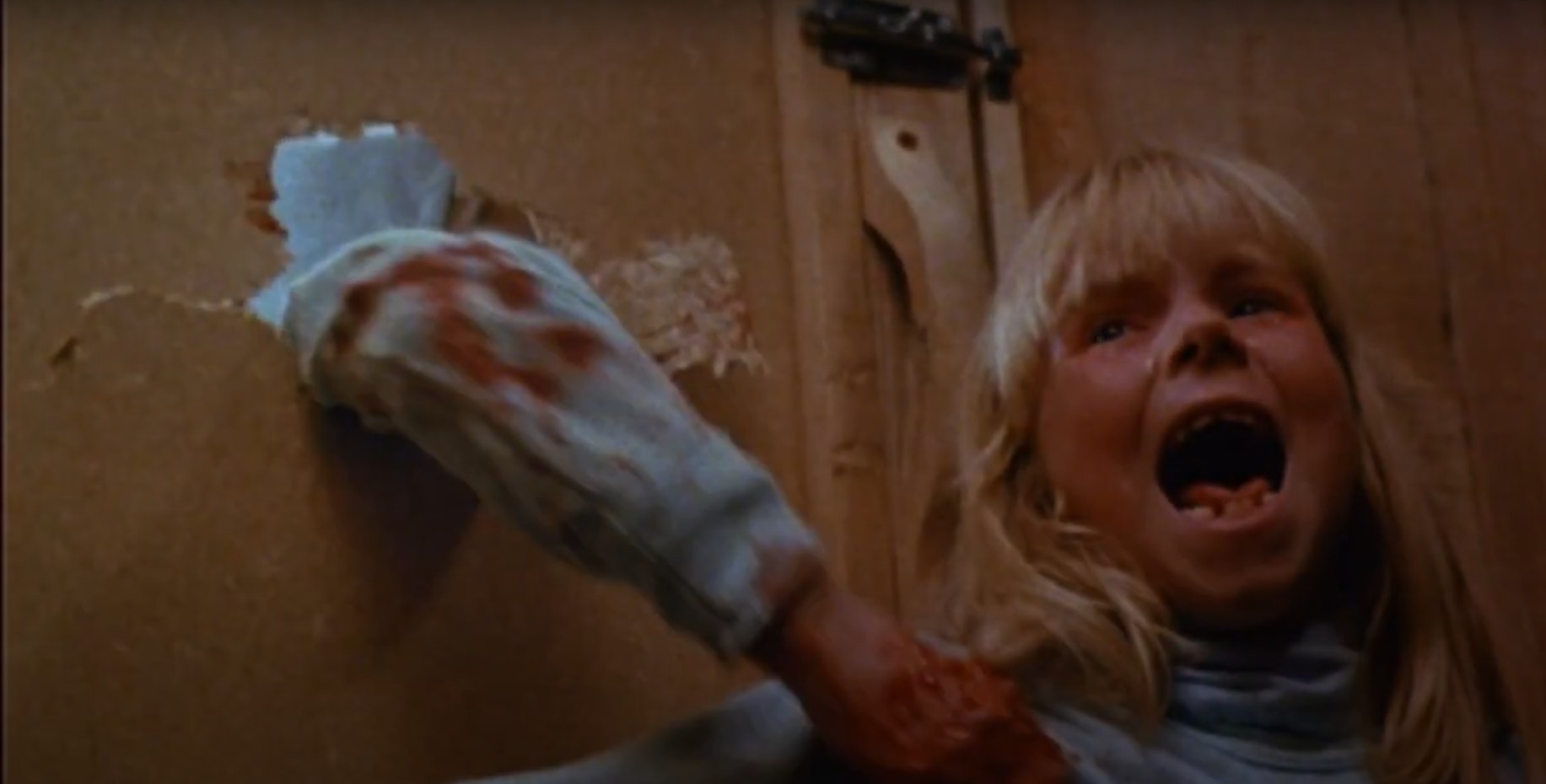
Cinderalla’s Beauty Evokes an EVIL of Jealously, Obsession, and Beauty Standards. “The Ugly Stepsister” reviewed! (Second Sight Films / Blu-ray)

“The Ugly Stepsister” on 4K UHD Blu-ray from Second Sight!

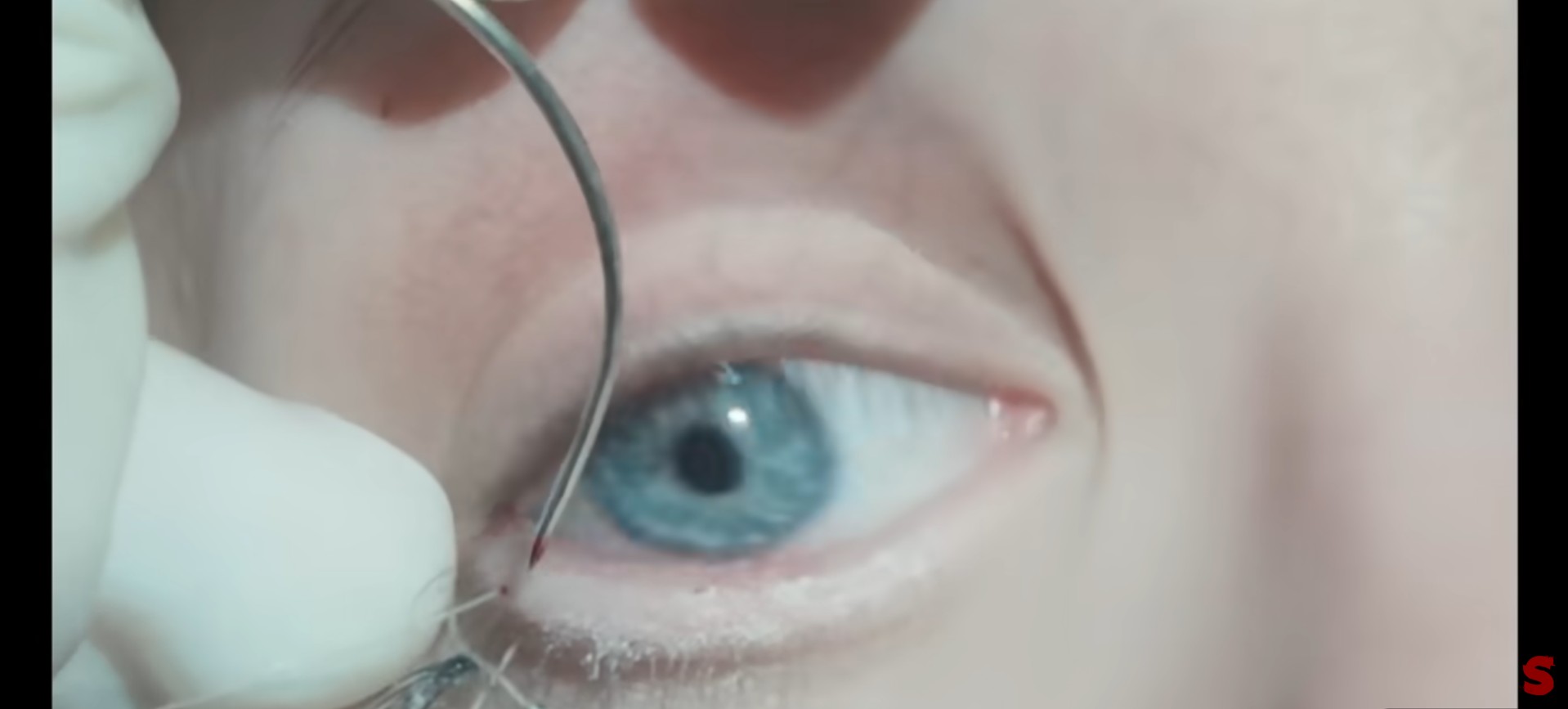
Elvira’s mother weds a wealthy estate owner to re-establish life and permanence in high society.  Alongside living with her sister Alma and her new, beautiful stepsister Agnes, Elvira keeps on smile on her braced teeth though she’s passively mistreated by those around her.  When Agnes’s father suddenly passes away and it’s unearthed the estate has no money to its name, the opportunity to attend the monarchy ball for the prince to select a wife from a pool of available the virginal maidens is Elvira’s persistent dream to marry a prince and get her family back in wealth and power.  Elvira attends finishing school to learn proper lady etiquette but her braces, round nose, and pudgy exterior pushes her aside of teacher’s attention in favor of the beautiful, blond Agnes.  Primeval cosmetic surgeries, tape worms, and no sympathy from her mother send Elvira down a path of obsession despite the harm to herself as she eyes the prize of landing the prince of her dreams over her stepsister. 
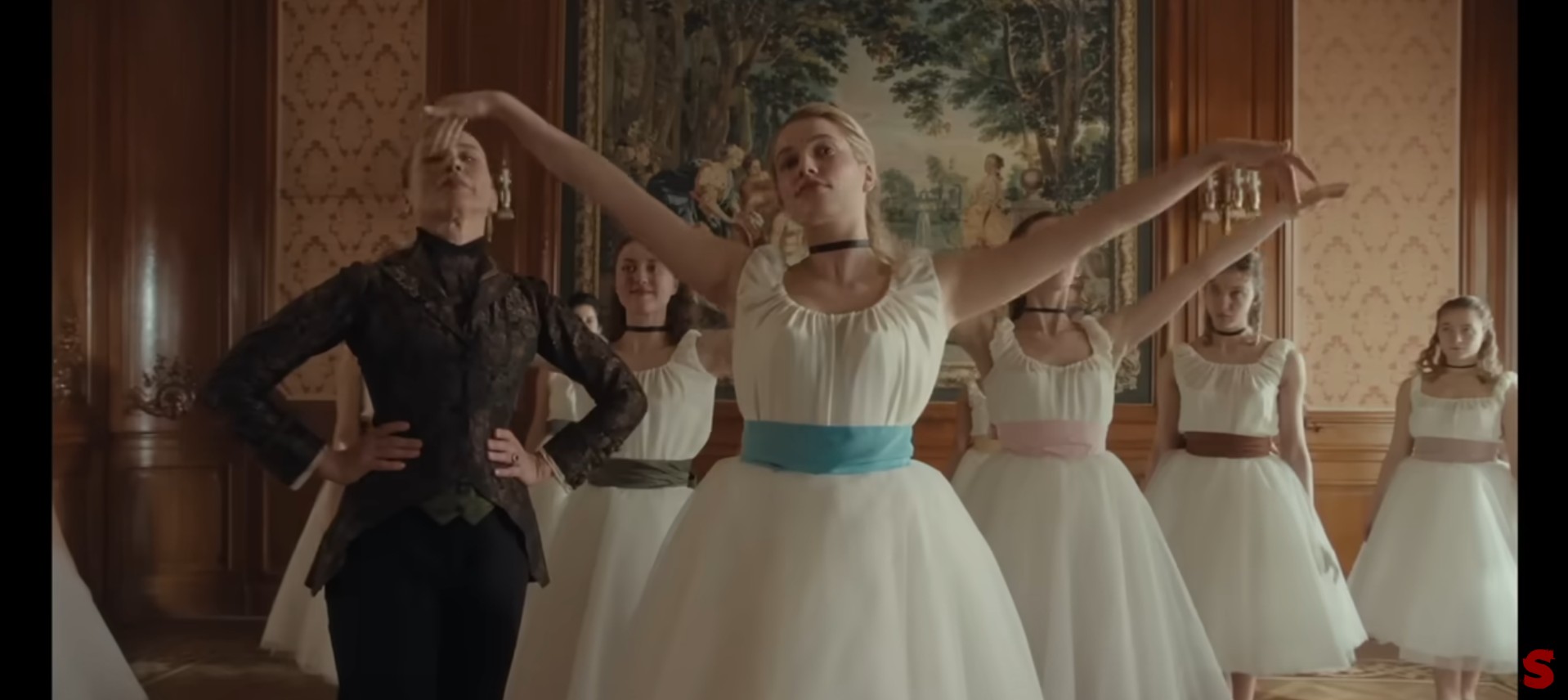
Based off the classic folk and fairy tale Cinderella, debut feature film director Emilie Blichfeldt takes a different perspective on the story that retains its roots in happily ever after but redirects the core narrative to the eldest stepsister in immense obsession, pain, and suffering to obtain the seeming unobtainable, to marry a prince.  “The Ugly Stepsister” the 2025 dark comedy and body horror from Norway that emphasizes the lengths one will take to become noticeably perfect in every aesthetic way.  Blichfeldt regularly visit the concept of a deranged perception of beautiful in her short films from the 2013 documentary “Do You Like My Hair?” that aims to spin a reinvention on beauty standards by finding it from within and the more body fantastical “Sara’s Intimate Confessions” that follows a big and tall disproportional woman exploring what it means to be feminine with her overly talkative vulva.  “The Ugly Stepsister” also tackles beautiful in a more painfully, cathartic way in order to achieve, much the same way a cheerleader sustains a lower body weight to make the squad or the self-harm models put themselves through to stay thin and beautiful.  The film, entitled in it’s native Norwegian as Den stygge stesøsteren, is a coproduction between Lava Films, Film i Väst, Scanbox Entertainment, Zentropa International Sweden, and Mer Film with Lizette Jonjic, Ada Soloman, Mariusz Wlodarski, and Maria Ekerhovd in the role of international producers. 
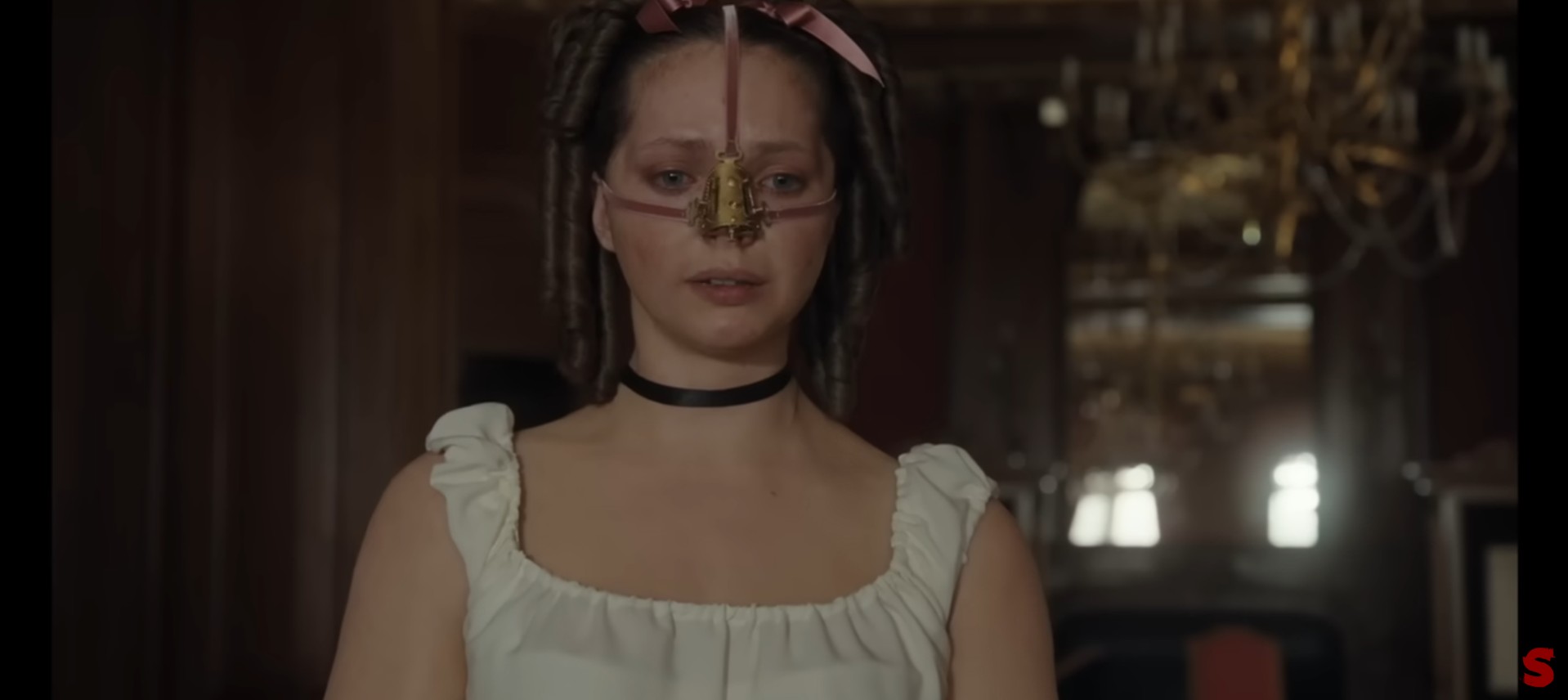
Though a beauty already in her own right, Lea Myren donned prosthetics and makeup for the titular Elvira to make the appearance of later teen, early 20s woman just on the verge of losing the baby fat.  Other personal traits added to Elvira’s character are braces, dark corkscrew curls, and muted toned outfits to further and contrast as a perceived ugliness within the context of the era, but in reality, Elvira’s beautiful young woman already with soft, large eyes, a curvy physique, and a natural gift of goodness within her that’s twisted by exterior conventions on what is defined as beauty. Shedding some of those elements, like the braces and weight, transform Elvira into a more desirable young lady now visible to all, from her draconian etiquette teacher who initially wouldn’t give her the time of day to the Prince who first looked upon Elvira with disgust in her natural state before become an exquisite creature stemmed from surgery and other unnatural body manipulations.  Myren wonderfully careens the character right into the dirt as Elvira cuts off her nose to spite her face, damn near literally, on the quixotic quest to change her outer shell that ultimately changes her from the inside.  Constants in Elvira’s life, or way, are Agnes, who’s only referenced as Cinderella once in a look that isn’t too cinder-y, played by Thea Sofie Loch Næss (“Arctic Void”) who doesn’t struggles with her character’s looks but contends with her new family’s acute empowerment, mostly rooted in family favoritism and jealousy, as well as Alma, Elvira’s younger sister with a by far majority much more comfortable in her own skin despite having dressed similarly with frizzier, unkempt hair by way of Fo Fagerli’s approach. Loch Næss doesn’t portray the as pure and innocence of the Disney classic, with her passionate romance with the stable boy in the hay barn, but the character is fairly close in all other regards with the more significant change to the characters being the stepsisters, especially Elvira’s reserved notions turned bitter when being compared to Agnes.  Alma is altogether out of the equation with no bitterness in her heart nor with any malice whatsoever to anybody but tends to her sister’s rise and downfall with little pushback.  Ane Dahl Torp (“The Wave”) is in the role of the mother Rebekka who will do anything to advance her daughter in society, mostly for selfish reasons as we’ll gather later on through a course of characters, such as the Prince Julian (Isac Calmroth), stable boy Isak (Malte Gårdinger), brutal plastic surgeon Dr. Esthétique (Adam Lundgren), and finishing school head mistresses/lesbian lovers (Katarzyna Herman & Cecilia Forss) who have contrasting approaches, both negative, toward Elvira’s waistline. 
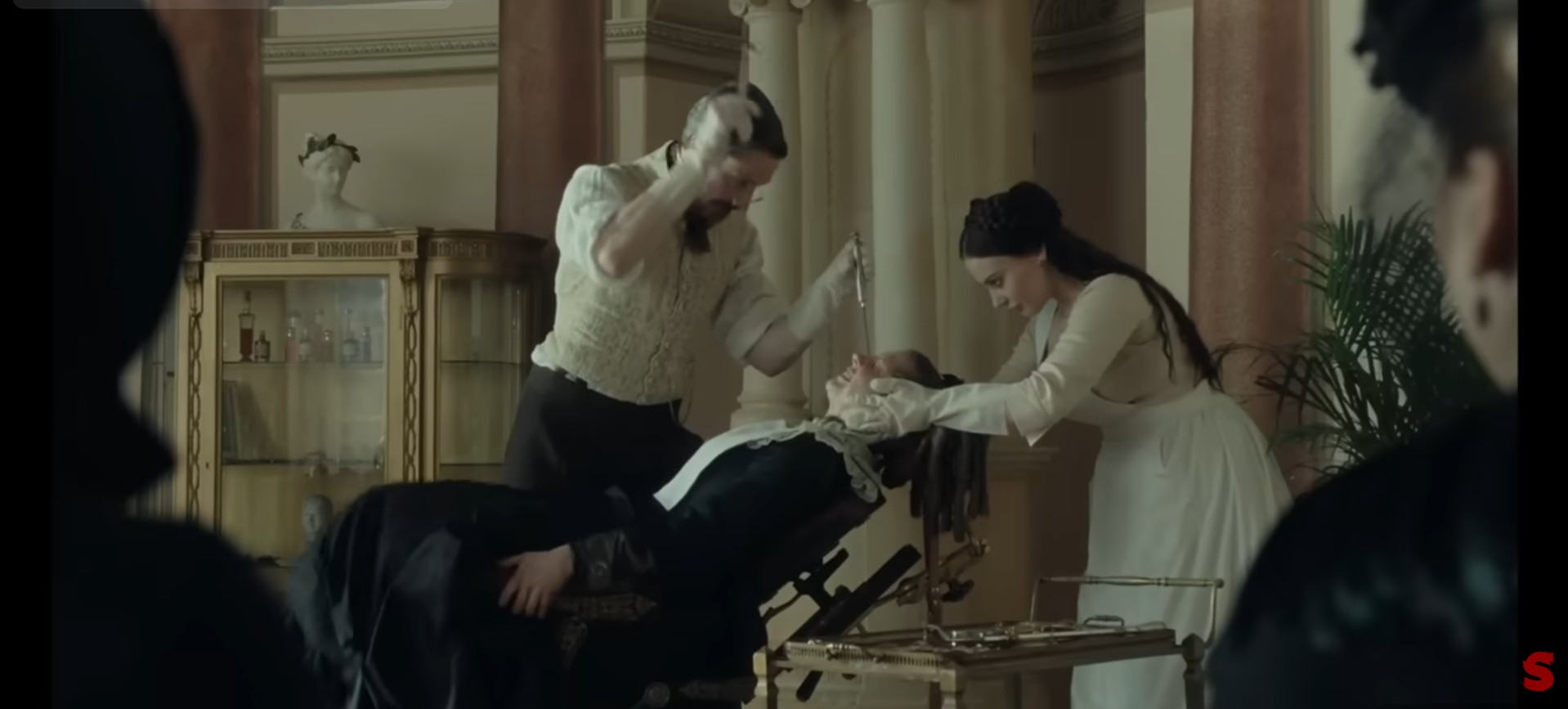
“The Ugly Stepsister’s” body horror is more than just a serious manipulation in losing weight and cutting more than corners toward image perfection.  The real horror is in the shame, the shaming of the body that’s overlooked, called out, and humiliated and to make matters worse for Elvira, her body type is by all of today’s standards curvy in the right places and beautiful albeit a body double was used for her pre-trim down nude scene.  Prosthetics are in place around the face and arms to make Lea Myren appear a little weightier, but the difference is extremely negligible and that’s the real power of horror when it’s terribly subtle, an already beautiful young girl succumb to peer and societal pressures that induces crazy self-harm for opinionated ideals and appearances.  Blichfeldt’s ideas of body-shaming extreme measures done by Elvira are not a far stretch from what self-conscious people do today about their weight.  Instead of swallowing a tape worm egg, one can stick a figure down their throat to achieve the same effect.  Instead of breaking a nose to re-mold with a hammer and chisel, surgery and medicines are abused ot be the new, easy, fast weight lost solution.  Blichfeldt comparative shots linger on Agnes with Elvira seething with envy and with the director’s bold choice of provocative nudity, exposing genitalia and depiction of X-rated acts, engages an alluring perversity that sheds light on a superficial world of beauty and sex, shielding the core, deeper problem of societal shame. 
Second Sight Films brings the Shudder and Vertigo Releasing North American marketed  “The Ugly Stepsister” to 4K UHD Blu-ray.  The ultra high-definition release is HVEC encoded onto a BD66 and presented in HDR10 with Dolby Vision, at 2160p, and in it’s the original aspect ratio, a European 1.66:1 widescreen.  Match the dark toned nature, the grading also exacts a somber coating with mahogany and ebony wooden structures and dimly lit castles of a Victorian era to bask in an austere state were, more so with personal happiness, is hard to come by.  Details are hard to stomach, in a good way, with proximate detail in the special effects closeups, such as in the mutilation scene where a nearly severed toes are hanging on for dear life by what little skin in left tethered to the foot, that go into macrolevel detail and is accentuated by the additional pixels.  Skin tones appear natural and unique to each individual in a purposeful contrast of fair and tanned skin along with different layers of texturing between organic qualities and the fabric outfits they wear, such as Agnes more single block outfit with a smoother design compared to Elvira’s multiple layers and pattern garb.  The Norwegian DTS-HD Master Audio 5.1 has an eclectic powerhouse soundtrack of synth and string orchestra from John Erik Kaada and Vilde Tuv.  The story doesn’t have a great deal of direction use for the 5.1 mix with mostly a conversating piece with mostly diegetic ambience, leaving the 5.1 less immersive than required, but there is vitality and strength behind the dialogue and action, clear and unobscured in its clean presence.  The multitude of squishiness, again the severed toes and also the removal of the tape worm through an orifice, is highly emphasized more max effect.  Areas of depth mostly lingers around the front but there are opportune moments in medium shots for audio expression.  English subtitles are clean, accurate, and well-paced.  Special features on the standard 4K release include a new audio commentary with director Emilie Blichfeldt and filmmaker Patrik Syversen, a new audio commentary with critic Meagan Navarro, a new interview with Blichfieldt This is my Ball, a new interview with star Lea Myren Generational Trauma, a new interview with Cinderella actress Thea Sofie Loc Naess Take Up Space, a new interview with special effects artist Thomas Foldberg Character and Gore, a special effects featurette The Beauty of Ugly:  The Effects of the Ugly Stepsister, a visual essay from Kat Hughes A Cinderella Story, deleted scenes, and both the Blichfiedt short films mentioned earlier in this review:  “How Do You Like My Hair?” and “Sara’s Intimate Confessions.”  The review here is for the standard 4K UHD Blu-ray set but there is a limited edition set that includes the 1080p Blu-ray as well.  The black Amaray case features a character still of Elvira on the front cover in all her dark maiden and sweet-faced glory.  There are no physical extras inside.  UK certified 18 for strong sex, nudity, and gore, “The Ugly Stepsister” from Second Sight Films is region free and has a runtime of 109 minutes. 

Last Rites: “The Ugly Stepsister” is a yarn not yet explored in other Cinderella tales, especially when it involves body horror and a sexually explicitness that that will forever make watching the Disney classic now uncomfortable when a recalled thought from Blichfeldt’s film pops into the visual cortex. Yet, it’s a remarkably twisted story from a different perspective that isn’t magically fantastical but grim and tragic.

“The Ugly Stepsister” on 4K UHD Blu-ray from Second Sight!

Let EVIL Give You a Hand! “The Beast Hand” reviewed! (Cleopatra Entertainment / Blu-ray)

“The Beast Hand” Grabs A Blu-ray Release! Buy it Here!

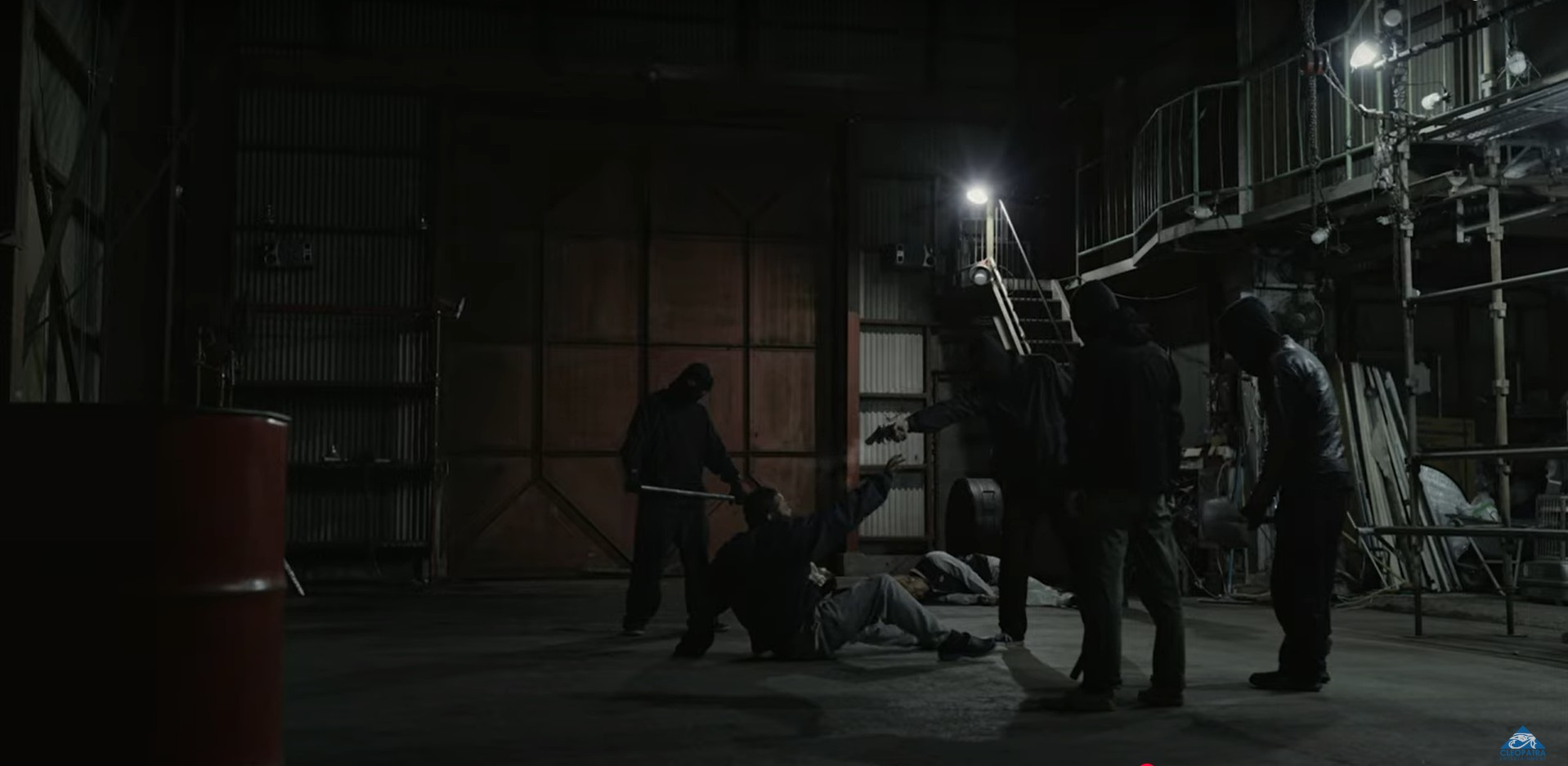
A derelict criminal Osamu Kogure finds himself back in the company of his jumped parole crime boss Akira Inui, Kogure is back to being a manipulated puppet at the whims of a conceited and aggressive Inui.  When Inui persuades Kogure to give up the whereabouts of an old, reluctant fling Koyuki Igarashi, who went through full body surgery to wipe away her past with Inui, Kogure and Igarashi are trapped by Inui’s bull-headed intimidation, forcing them into a rushed heist that ends with Korgure’s hand being severed.  A syndicate surgeon grafts a deformed, experimental monstrous limb on his wound that turns Kogure into a superhuman beast when provoked.  Now gone rogue out of the surgeon’s reach, Kogure and Igarashi are hunted down across the region by a powerful crime boss’s clan to extract the success of Kogure’s new, powerful extremity but the once timid and submissive delinquent will no longer go down without a fight. 

Taichiro Natsume, the director behind the Big Summer Psychic Team shark series, such as “Ring Shark,” “Love Shark,” and “Last Shark,” moves away from the supernaturally swimming maneater terrorizing the sands and lands surrounding the creature’s resident watering well and popping up out of the bathwater of those clutched in its curse, forgoes another shark infested entry for a monstrous transplant tentacle in his latest outrageous indie horror, “The Beast Hand,” aka “Koletise käsi,” or original titled “Kemonote.”  The Japanese film is one part science-fictional body-horror thriller and one part yakuza splatter strife and is all part penned from the mixed-up monstrosity and melancholy swirling inside Natsume’s mind with cowritten efforts from Yasunori Kasuga.  Lead actor Takahiro Fukuya wears multiple production for producing the production under his studio company Eigabatake that foots the partial budget combined with the crowdfunding remaining purse pieces to bring this splatter dream to reality. 

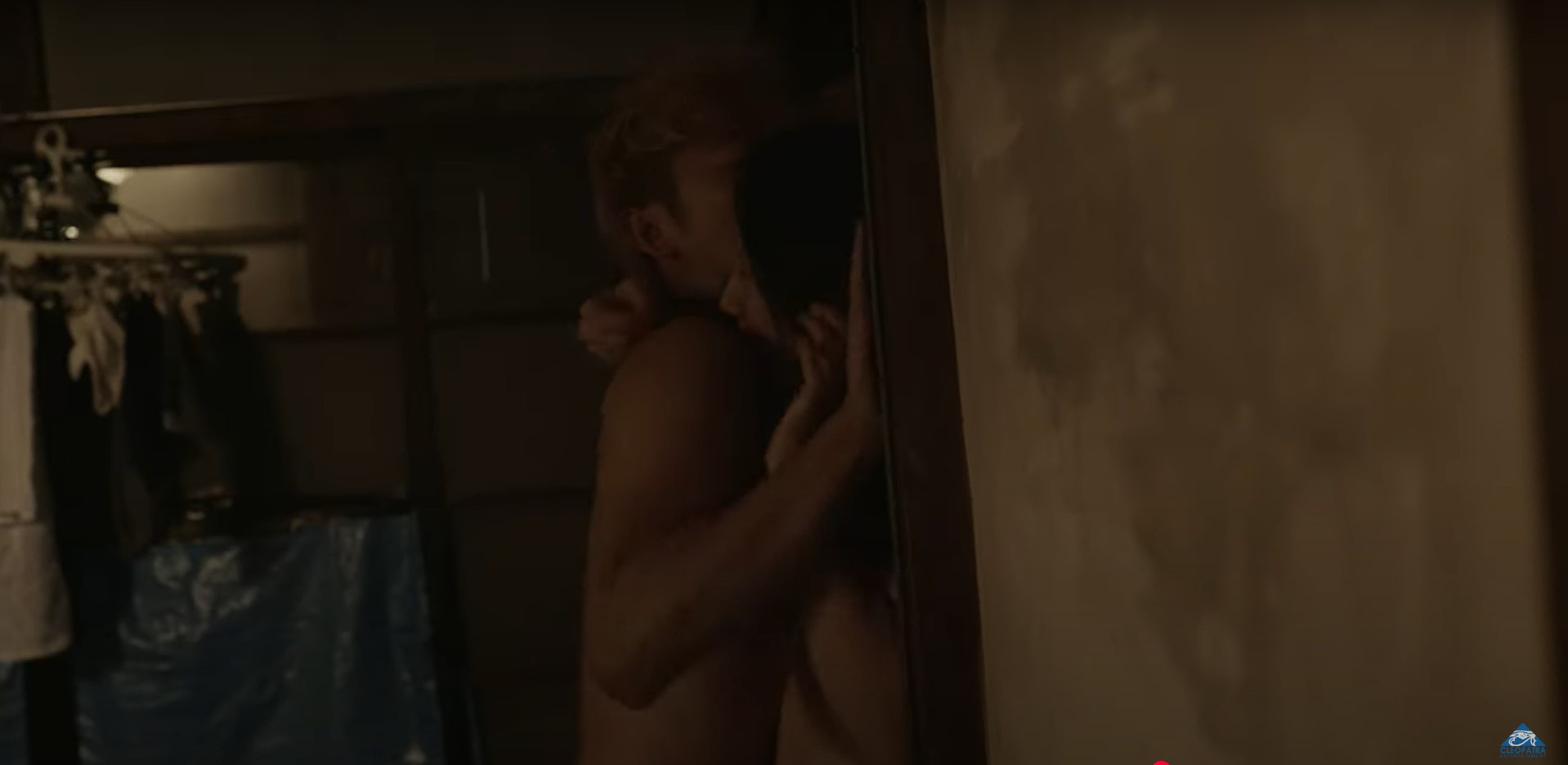
Takahiro Fukuya invests himself full throttle into the role of Osamu Kogure leading to his real life and role to nearly be parallel to each other as Fukuya quits his day job, spends most of his money, and, likely, leads a temporary pauper lifestyle, much like his character, in order to get his vision off the ground and into production.  Fukuya embodies the weak-minded aspects of a fragile delinquent, submissive to a much more apex predator in the recently prison released, escaped parolee Akira Inui (Yôta Kawase, “Slave Ship,” “Maniac Driver”) in a take-all, give-nothing leader position in what Inui considers is his gang, completed by Misa Wada’s objectified into sexual slavery of Koyuki Igarashi.  The pink eiga actress, of such hits as “Corpse Prison” and “Black Tears,”  has lingering anxiety and timorous defensiveness for her character’s subject of sexual and verbal abuse by Inui only for it to transfigure it into a slap-across-the-face affection for the even more cowardly Kogure in an unforgettable sex scene prior to the monstrous hand augmentation.  The second half of the story rather abruptly butts into Korgure and Igarashi’s departure of the city and into more humble means of making a go of their relationship, especially now Igarashi is months pregnant after their slappy-rollick on top of the sleeping bag sack.  Character exposition of the couple’s circumstances at this point is nonexistent as Natsume uses images and exterior shaping scenes to fabricate their current, still poor, state trying to make it work until the surgeon and the gang leader come to collect their handy work.

“The Beast Hand” embarks into different subcategories of splatter subgenre filmmaking.  Natsume certainly pays homage to the Japanese gore-and-splatter films in his own miniscule way but keeps the blood down to the minimal level allowed for labelling as such, but the filmmaker invests into the hardships of the accounted characters without unleashing too many background details or story dynamic particulars to that doesn’t allow audiences to become too involved leaving characters banally wrapped in their strife from point A-to-Z.  Instead, Natsume concenters around two sides of the story;  the first being the elegancy of Kogure and Igarashi’s unlikely and oddly misshapen relationship with scenes of beach walking, comforting, cheap meals in a humble home, and of course, the slap-happy sex scene of two belittled and downtrodden people tying one off in expressive fit of passion while the second part is more tension-riddled hearty with a yakuza hunt for Kogure’s one-of-a-kind beast hand.  Both sides balance awkwardly along a sporadically dotted line of limited detail and time passed but ultimately collide at a culminating point of a beast hand slaughterhouse when Igarashi’s safety boils up the beast from within Kogure, tracking “The Beast Hand” as a horror with to some extent a rivulet of romantism often clunky and riddled with holes. 

Cleopatra Entertainment distributes in association with Reel Suspects the Blu-ray release of Taichiro Natsume’s “The Beast Hand.”  The AVC encoded, 1080p high-definition resolution, BD25 decodes an anemic picture presented in widescreen 1.78:1 aspect ratio.  Visually, “The Beast Hand” has nothing going for it other than a clean experience with no aliasing, minor banding, and other immaterial compression issues.  The lack of color pop and the feather washed grading dampen with a lifeless aesthetic toward a Japanese splatter subgenre that’s literally soaked in a manga style or pop art.  Dialogue renders over cleanly and with clarity in a Japanese Dolby Digital 2.0 stereo that syncs timely with the forced, grammatically errorless English subtitles.  Immersive qualities are limited to the two front channels that are vigorous only during the intermittent action full of Lou Ferringo Hulk snarls and growls when Kogure goes full milky-eyed beast mode and good squishy Foley as stomachs and heads are eviscerated and sliced down.  Bonus features are typical run of the mill for Cleopatra Entertainment with a cache of trailers for the company’s recent releases.  There’s also marketing promo clips for “The Beast Hand” but in Japanese without English subtitles.  The standard Blu-ray Amaray encases a decent, and uncredited, original photoshop illustration that is, however, partly inaccurate, and awkwardly arranged with a beast hand resembling nothing like the body horror hand transplant in the movie.  The cover feels like right off the commercial printer, raw homemade art.  Inside is the same art pressed to the disc with no other accompaniments.  The region free, not rated Blu-ray has a runtime of 77 minutes. 

Last Rites: As far as J-horror goes, “The Beast Hand” has average appeal inside a strung along story and not enough absurd Japanese off-the-wall concepts and violence to stand out amongst the crowded subgenre.

“The Beast Hand” Grabs A Blu-ray Release! Buy it Here!

Next Step in Evolution Leads to EVIL’s War Against the Common Man. “Scanners” reviewed! (Second Sight / 4K UHD)

“Scanners” 4K is Head Popping Good! Buy it Here!

Dr. Paul Ruth is a ConSec scientist, the head of the private contract weapons department on the “Scanner” project.  A Scanner is a highly developed human with psychic and telekinetic powers able to control and damage the minds of others through the nervous system.   Ruth’s latest case is Cameron Vale, a vagrant helped by Ruth to control his self-detriment powers with the use of a scanning suppressive drug known as ephemerol.  When one of Ruth’s past subjects, a renegade Scanner known as Revok, infiltrates and assassinates a live public demonstration of the Scanner project with the intent to wage war on non-Scanners, Ruth’s only hope is to convince to conscript Vale to join the fight and infiltrate against Revok who kills any Scanner who doesn’t join his growing army.  Vale’s search for Revok leads him to learn of a treacherous mole within ConSec and that ephemerol is being weaponized against the normal human race.

On the heels of our Second Sight 4K review of David Cronenberg’s 1979 film “The Brood,” Cronenberg’s following film “Scanners” released two years later in 1981 ups the ante in elaborate special effects and high conceptual themes twirling around in a bowl of body horror soup and is now also available on 4K UHD from the UK Second Sight label!  Like “The Brood,” Cronenberg writes-and-direct a dysphoric film in his birth country of Canadian, per his normal track record of principal production countries, specifically shooting in in the urban and greater areas of Québec, Canada.  The first film of a trilogy, to which Cronenberg did not return to direct the subsequent sequels with both films released a decade later in 1991 and helmed by “Screamers” director Christian Duguay, is a production of the  CFDC (Canadian Film Development Corporation), Filmplan International, and Montreal Trust Company of Canada with Pierre David and Claude Héroux both returning from “The Brood” as executive producer and producer, respectively. 

The face of Scanners has been and always will be Michael Ironside, included on most poster and home video release stills and artworks of a flaringly distorted Ironside as Revok deep in a frighteningly milky-white eyed scanner turbulence.  The “Total Recall” and “Starship Troopers” actor has a face the camera loves, especially in an antagonistic role with Ironside’s gifted devilish grin, dagger eyes, and sarcastic stoic expressions.  However, he is not the heroic lead of Cronenberg’s “Scanners.”  Ironside is not even in the top three headlining credits.  That foremost distinction is consumed by Stephen Lack (“Perfect Strangers,” “Dead Ringers”) in the Cameron Vale role and Lack’s performance is indicative of his name in a completely overshadowed protagonist role.  Lack’s monotonic bordering dangerously to catatonic presence is swallowed up by Ironside who has fewer scenes but instills punchier passion toward his character’s rebellion against humanity cause, plus the contour control over his mannerism and expressions are impeccably cinematic  There are other actors credited ahead of Ironside, beginning with the greatly dramatical Patrick McGoohan (“Escape from Alcatraz”) as the pro-scanner ally Dr. Paul Ruth whose commanding the Vale assignment, “The Clown Murders’” Lawrence Dane as a traitorous ConSec company man Keller in Revok’s pocket lining, and “The Psychic’s” Jennifer O’Neill as fellow pacificist scanner and Vale love interest Kim Obrist.  Each actor finds their individual, attributable, character voice while giving into the required performance with commitment, a sentiment that was not shared by Lack in a strong leading man contender against the forces that face him or scan his mental space.  “Scanners” rounds out the cat with Robert A. Silverman (“The Brood,” “Jason X”), Mavor Moore (“Heavy Metal”),  Fred Doederlein (“Shivers”), Adam Ludwig (“Short Circuit 2”), and Victor Desy (“Rabid”) with that iconic head explosion scene.

To follow up “The Brood” almost right on its heels with “Scanners,” David Cronenberg’s creative synapses were just thunder stroking on all cylinders with ways to evolve mankind into next level grimdark science fiction.  The simple premise of the advanced human condition sparking a potential war between normal man and Scanner man with a private weapons developer in the middle, perhaps inadvertently or intentionally coaxing a new breed of man, is elevated by the special effects of Gary Zeller (“Visiting Hours, “Amityville II: The Possession”) and the makeup alley-oop by Dick Smith (“The Exorcist”) to give audiences those head-exploding, vein-popping, fire-starting special effects that are sear so well into the mind they’re virtually unerasable from the mind, as if real life scanners were implementing the reel into the occipital lobes themselves.  Plot devices like these inarguably saturate the cloak-and-dagger, on-the-run, and species-eradicating storyline with leadup anticipation, building suspense through the truth and lies of Vale’s assignment as well as Vale understanding and, ultimately, accepting his gift rather than seeing it as a burden or a blight to his being.  Unlike “The Brood,” “Scanners” leans more into the physical method of effects with not only the pulsing veins and the white contact lenses but Cronenberg amps up the pyrotechnics with violent and fiery explosions, both of which do a number of the body with blunt invisible force ravaging soft tissue, and also sets ablaze characters’ specific, isolated areas for visual awe and a presentation of a whole new possibility dimension plane of the mind and body that can create, endure, and eventually destroy.   

“Scanners” rounds out the pair of Second Sight’s David Cronenberg releases onto 4K UHD, in conjunction with “The Brood.” The HEVC encoded, 2160p ultra high-definition, BD100 houses the director approved 4K restoration transfer, presented in Dolby Vision HDR10 and in a widescreen 1.85:1 aspect ratio. Previous HD releases favored a slightly anemic image with a tilted color grading that never approached the aesthetics of the cinematic era. Second Sight improves on this with a present in time natural grading true to the late 70s into the early 80s. Healthy, organic grain filter through with an agreeable measure, never overtaking the details that effect upon texture and substance, such as from the massive head explosion with all the intricate gory bits of hair and flesh flying splattering about make for ideal visual immersion to the more macrolevel of inside circuitry when Vale enters the computerized nervous system through scanning. Skin tones render over organically with no flashes of a slightly orange tinge as in previous releases, corrected to overall completed neatness on the finer points. An English DTS-HD 5.1 master audio and a LPCM 1.0 mono consummate the release with fidelity honoring mixes. The surround sound offers a constructed immersive dynamic riddled with explosions and a feverish Howard Shore score engulfing the echoing of the scanner waves to denote the telekinetic or psychic use, but the mono track offers something far greater than any retroactive designed immersion track could offer, a genuine, unforced mix. Both tracks offer clean, robust dialogue with a clarity to match. English subtitles are available on both. Special features include a new audio commentary by Canadian film writer Caelum Vatnsdal and a second audio commentary by film academic William Beard. If comprehensive interviews straight for the horses’ mouths are your thing, than Second Sight has you covered with new and archive interviews with Stephen Lack My Art Keeps Me Sane, Michael Ironside A Method in His Madness, Lawrence Dane Bad Guy Dane, cinematographer Mark Irwin The Eye of Scanners, composer Howard Shore Mind Fragments, executive producer Pierre David The Chaos of Scanners, makeup artist Stephen Duplus Exploding Brains & Popping Veins, and with makeup effects artist Chris Walas Monster Kid. A new visual essay by Tim Coleman Cronenberg’s Tech Babies cabooses the special features. Encased in a traditional back UHD Amaray, the new artwork also sports a prominent and looming Michael Ironside as a raging scanner Revok but now Stephen Lack has presence space with his own iconic and disturbing moment from the film now on the front cover, as the little spoon of course. The companion standard Second Sight release of “Scanners” is UK certified 18, has a runtime of 103 minutes, and is region free!

Last Rites: “Scanners” never looked so good. An exceptional inception of a release from Second Sight Films that continues to aim high and raise the bar with every title they touch, like King Midas without being cursed by their success.

“Scanners” 4K is Head Popping Good! Buy it Here!

Rage EVIL Leads to A Legion of Drone Dwarfs! “The Brood” reviewed! (Second Sight / 4K UHD)

“The Brood” Available Now from Second Sight!

After a series of mentally abusive behavior, Frank Carveth’s wife Nola resides under the unorthodox psychology of Dr. Hal Raglan whose controversial impersonation techniques to break down his patients’ dissociative psychological hangups and destructive blocks.  After months of therapy and witnessing Dr. Raglan’s methods in action, Frank is ready to pull the plug on the doctor’s sideshow sessions he deems are doing more harm than good when his daughter shows signs of physical abuse after a visit with her mother.  The prolonged verbal bout to get his wife out of Raglan’s care leads to Frank confiding in Nola’s mother who is found brutally murdered soon after.  When Nola’s estranged father comes into town to oversee the burial arrangements, he’s also brutally murdered.  Frank begins to connect pieces, theorizing that Dr. Raglan’s procedures and the murders may be linked and as he investigates further, the truth is more terrifying than he could ever imagine. 

Surging with emotional turmoil through a bitter divorce with ex-wife Margaret Hindson, Canadian body-horror director David Cronenberg pulled the rancorous inspiration from that turbulent time to write the originial screenplay for “The Brood,” a 1979 released thriller between an estranged couple, the effect of their ascending troubles upon their only child during the separation, and the sort of radical and systematic behaviors and practices used to reform a relationship bond that actually divides the emotional expanse even further.  Sprinkle a little of the unknown and grotesque abilities of unnatural corporeal world in there and you have yourself one hell of a dysfunctional and undomesticated horror only the unconventional David Cronenberg could conjure.  “The Brood” is produced by Claude Héroux, who would go on to produce Cronenberg’s next series of films, “Scanners” and “Videodrome,” and the Ontario filmed production is a studio venture from the CFDC (Canadian Film Development Corporation), Elgin International Films, and Mutual Productions.

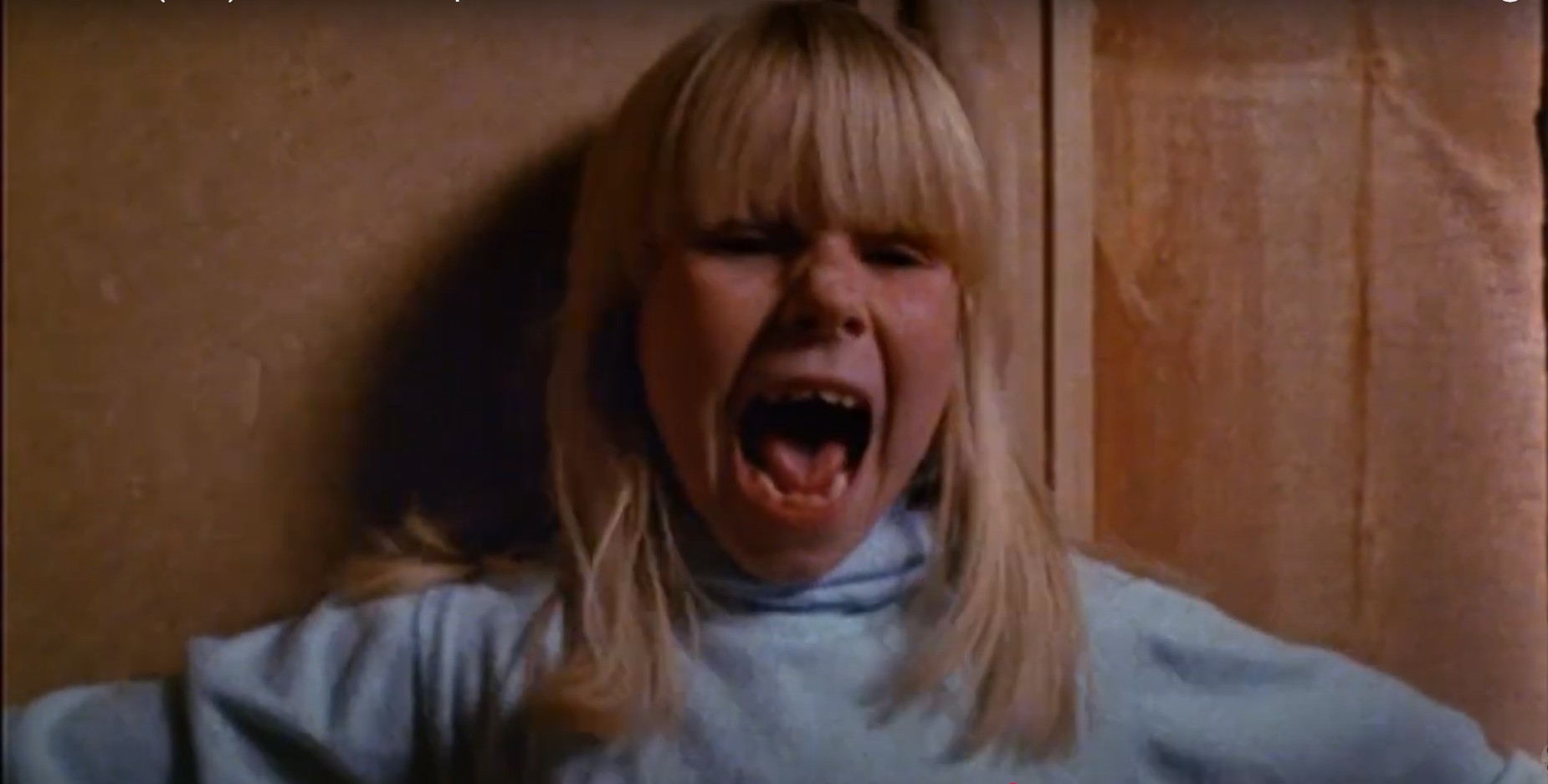
Art Hindle is in the role of Frank Carveth, a father initially skeptical and frustrated with his wife’s supervised treatment and care.  The “Black Christmas” and “Invasion of the Body Snatchers” actor Hindle plays the role of a hinged investigative husband-parent involved into something far more unbelievable than initially imagined.  Next to his on screen dazed and mentally tarnished wife by Samantha Eggar, of “The Exterminator” and “Demonoid,” Hindle enacts normal responses that carry over into extreme situations when those around him – his mother-in-law (Nuala Fitzgerald, “Obsession”), his father-in-law (Henry Beckman, “Side Roads”), and his daughter’s teacher (Susan Hogan, “Phobia”) who might have had a little something-something with while on the rocks with the misses – dies a violent death at the hands of kid-sized mutants that resemble, partially, his own daughter Candace (Cindy Hinds, “The Dead Zone”).  As Nola Carveth, Eggars is only present in a few scenes alongside Dr. Raglan, played by the formidable British actor Oliver Reed (“Paranoiac,” “Gladiator”), as a staring into space, emotionally compromised woman struggling to cope with her past that makes her angry and upset and, in turn, makes her inexplicably conjure do-bidders in the birthing means of advanced evolution or in a parallelism to eusocial insects, like bees or ants.  Reed is the monkey in the middle of all of this between fending off Frank Carveth who challenges the results of his unorthodox psychological methods while also using those methods to unearth the root cause of Nola Carveth’s strange and unusual behavior and, eventual, psychic abilities.  Reeds delivers his typical stoic indifference which makes him ideal for a confident character of the scientific community eager for results rather than feeding his motivations with emotional fodder by empathizing with Carveth’s concerns.  Gary McKeehan (“Rabid”) and Robert A. Silverman (“Naked Lunch”) costar.

In his 50-year plus career, David Cronenberg has evolved in style, substance, and story that dip into more of alternate universes and deliver new ways to blend the future into an organic composite with commercial and social sub context.  While technology and personal and professional growth have developed the director into what he has accomplished and known for today, especially on the verge of his latest release with the living and dead connection theme in “The Shrouds,”  the core of what David Cronenberg does best and still does today has an etiology leading back to his earlier work and “The Brood” is definitely an archetype of his niche.  Cronenberg works the narrative up to his reveal of body horror, and “The Brood” is dangerously on the edge of being atypical, subjecting audiences to more of a buildup in the story and the delimitation of character  disclosure without a steady course of the maladjusted, mutated or modified human body as the villain or the escape, only for that theme to be quasi hinted and then unveiled at the end in a shocking reveal.  “The Brood” plays more of the slasher tones, using the children, dwarfs, or however you want to describe the little, mutant minions to be unknown villain tropes, even when one is laid up on a morgue slab for examination of its biology, or lack thereof.  Cronenberg’s directed ambiguity tees up one of the best endings of his career and, perhaps, even horror cinema as “The Brood” is queen sized stomach-churner, literally.

David Cronenberg’s “The Brood” arrives in 4K on a Ultra HD Blu-ray from UK boutique label Second Sight Films.  The BD100 is HEVC encoded with a 4K resolution or a pixel count of 2160 with Dolby Vision HDR10 and presented in a widescreen 1.85:1 aspect ratio.  On the back cover, the 4K restoration is approved by David Cronenberg.  There’s definitively a more positive treatment of the restored transfer that brightens with a slightly tweaked color grading compared to other DVD or Blu-ray releases, improving delineation as well as rectifying intended details to burst through what’s been long frustrating by a darkened wall of low-resolution definition.  Retaining and sustaining cinema coarse grain, the picture looks and feels incredibly natural without the presence of compromising touchups and smoothing overs that do more harm than good in the plastic-like approach to restoration.  The UHD reinforces the coloring with vibrant richness and range, boosting the once little Canadian film that could into an expensive-appearing optical overhaul that puts to shame previously shelved videos.  Audio fidelity is too retained with a LPCM 1.0 mono that although funnels through a single output is more than an adequate mix all in thanks to the competent sound engineering of Peter Burgess and team to amalgamate recorded sound and post-production ADR into a brawny singular unit that meshes nicely.  Dialogue foots the bill as a clean and clear presentation, the ambient sound design renders distinctly over without ambiguity, and longtime David Cronenberg collaborator and friend Howard Shore conducts an orchestra score that breaks through and keeps the course with an unforgettable amount of tension build.  English subtitles are available.  Special features are aplenty with a new audio commentary by film critics and historians Martyn Conterio and Kat Ellinger, a second commentary with film academic William Beard, interviews with actors Art Hindle and Cindy Hinds moderated by Fangoria’s editor Chris Alexander Meet the Carveths, an interview with executive producer Pierre David Producing the Brood, interview with cinematographer Mark Irwin The Look of Rage, interview with composer Howard Shore Scoring the Brood, an interview with actor Robert A Silverman Character for Cronenberg, a new video essay by film journalist Leigh Singer Anger Management: Cronenberg’s Brood and Shapes of Cinematic Rage, and an archived David Cronenberg interview The Early Years.  The standard Second Sight release comes in the traditional 4K UHD black Amaray case with new unnamed, unsigned illustrated cover art.  The UK certified 18 film is presented region free in this release and has a runtime of 92 minutes. 

Last Rites:  Cronenberg’s play on the word Brood is next level genius with litter rage as a result of mental health and a broken home.  The director’s filmic roots have proved time-and-time again his mastery of moviemaking as his body horror and thought-inducing stories, intermixed with social commentary, are complex visual and narrative devices braised an organic edge. 

“The Brood” Available Now from Second Sight!

The 90’s Played Videotapes by a Different Set of EVIL Rules. “V/H/S/94” reviewed! (Acorn Media International / Blu-ray)

V/H/S/94 Blu-ray Can be Purchased Here!

A police S.W.A.T. team raid a large warehouse where suspected drug storage and trafficking is being conducted.  Tagging along a camera man for code of conduct review, what the team discovers inside is more alarming than a stash of street narcotics.  The nearly empty warehouse is filled with gruesomely recorded VHS tapes, snowy television sets in every room, and recently deceased bodies with their eyes plucked from their heads.  As the investigation frantically continues through the labyrinth corridors that turns the capture and arrest mission into a mission of escape, the pre-recorded tapes they come across show vivid, nightmare-fueling horrors, including footage of a sewer-dwelling rat man, a near empty funeral home on a dark-and-story night, inhuman surgeries joining man and machine, and a militia preparing themselves to unleash true evil onto the government establishment.  What the officers see can’t be unseen as analog madness ensues them spurred by the motivations of a deadly cult.

The fourth installment of the David Bruckner and Brad Miska created analog-influenced V/H/S horror anthology.  Known as V/H/S/94, as in 1994 to mark the period of social and cultural influence, six new directors take the short movie helm in a new line of videotape terror.  “Night’s End” director Jennifer Reeder tackles the wraparound story “Holy Hell” that fills in between and shepherds in four frightening tales with “Watcher’s” Chloe Okunols “Storm Drain,” “V/H/S/2’s Simon Barrett’s “The Empty Wake,” “May the Devil Take You’s” Timo Tjahjanto’s “The Subject,” and “Lowlife’s” Ryan Prows’ “Terror.”  “Psycho Gorman” and “Manborg” filmmaker Steven Kostanski also directs a mini-pseudo infomercial entitled “The Veggie Masher.”  Together, the filmmakers for a new lot of under-the-radar talent to showcase an eclectic blend of 90’s set scary stories with Josh Goldboom, Kurtis David harder, and Brad Miska producing, Studio 71, Cinepocalypse Productions, and Hangar 18 Media as the production credits, and Bloody Disgusting and Raven Banner Entertainment presenting the production.

With any type of anthology, a variety of roles are laid out for different scenarios.  From newscasters (Anna Hopkins, “Tin Can”) and cameramen (Anthony Christian Potenza, “Bad Dreams”) to body-transfiguring mad scientists (Budi Ross), to greenhorn funeral home attendants (Kyal Legend), “V/H/S/94 reaches into the far corners of world while also breeding home grown terror right into suburban America.  Each episode develops and nurtures layered characters with fast-setting concrete, quickly building who and what they are in a matter of minutes to which some full-length features have to build in a whole act or in all three acts.  The writing of and the colorful depiction of each character sets the tone for the rest of short and whether the short will be a success hit or not.  An example of this would be in Timo Tjahjanto’s “The Subject” with The Creator, played renationalized and crazy by Budi Ross.  An eccentric acute accent in Ross’s Creator apexes the overall expectation of a mad scientist and in that there is an understanding of what’s coming while there’s still a simultaneous shroud of mystery of how batshit crazy things can really become. The episode that didn’t quite flesh out enough, in character and in story, was the wraparound “Hell Hole” segment that sees a S.W.A.T. team (Kimmy Choi, Nicholette Pearse, Dru Viergever, Thomas Mitchell) and ride-a-long cameraman (Kevin P. Gabel) storm a suspected drug warehouse and find nothing but death and VHS.  Tremendous pandemonium as the team charging into the multi-layered complex is roughly cleaved to not smoothly segue in-and-out with the intercut VHS episodes that also hinder the characters from really being built upon to relate any interest in them.  “Holy Hell’s” climatic reveal has little weight to then stand on without that much needed seething of every detailed bubble that pops in between the short films.  However, the wraparound story doesn’t snuff out the rest of eye-gluing terror you’re witnessing with solid, edge-of-your-seat performances from Donny Alamsyah, Tim Campbell, Brian Paul, Conor Sweeney, Devin Chin-Cheong, Juan Blone Subiantoro, Christian Lloyd, Cameron Kneteman, Steven McCarthy, Brenand McMurtry-Howlett, Slavic Rogozine, and Daniel Willston.

Zombies, cults, body horror, vampires, subterranean creatures, and much more are the selected subgenres that invade insidiously into our visual receptors and straight down to shake and scare stiff our stable core, each one idiosyncratically crafted and tailored by the filmmakers tastes to deliver a unique tale under the guise of those beautiful VHS artefacts.  Whether ran through a VHS recorder or filters are applied, each era-idolized short has a distinct visual approach and feel how the 1990s tape decks presented the goods that can be saturated in horizontal noise strips, tracking lines, and image ghosting.  Granted, and likely subjectively by yours truly, some shorts are better than others with a narrative outline and in special effects.  “Holy Hell” doesn’t let time to breath and let the dust setting to effectively lay in fear and frights because of the constant cacophony of the S.W.A.T. team’s frantic ambling through the complex, seeing each disturbing scene as if breezing through a museum and glimpsing at the exhibits.  I’m fully aware of the short film time crunch Reeder was under but breakneck pacing didn’t have time to elicit any type of reaction or setup a story.  “The Empty Wake,” “The Subject,” and “Terror,” reel in and piece together all the components of their tales and find room to make them thriller and terrifying.  Barrett’s is one of the simplest yet most anxiety-riddled shorts to come out of the V/H/S anthology run, creating a couped up Funeral home atmosphere, the background threat of a tornado out of the story night, and a coffin that goes bump-bump with a sole wake service attendant on the edge of fright for fear of what’s inside trying to get out.  Ryan Prows puts a spin on the whole vampire trope by never mentioning the creature as the living dead bloodsucker held captive by a radical, ring-wing militia under the influence of its power to destroy.  Instead, the creature is just plain and pure evil that, as the militia men find out by the flaws in themselves, can’t be contained.

Acorn Media, the United Kingdom subsidiary label of RLJ Entertainment, releases the Shudder exclusive anthology on Blu-ray home video.  THE AVC encoded, 1080p high-definition, BD50 of “V/H/S/64” goes by the oxymoronic details in the videotape artefacts.  Through various VHS filters and VHS recording deck converter, the widescreen 1.78:1 aspect ratio image is purposefully distorted, worn, and in standard definition to meet the standards of the V/H/S series, providing an anomalous analog outer shell so if you’re expect fine delineation, natural skin tones, or any clear details of any sorts, then the V/H/S franchise is not for you.  For the rest of us, “’94” parades the paltry resolution like gold in a true celebratory style, embracing the chroma spectrum for a maximum retro throwback.  However, the color bands on a couple shorts appear too vibrant, creeping more into digital age with flusher hues rather than tape degraded coloring.  The English and Indian language tracks are ran through a lossless DTS-HD 5.1 surround sound mix that offers punchy kbps decoding filtering through the appropriate side and back channels and right into your ears. The sonic palette has great depth and range in the midst of the crackling and warp-pops of damaged tape. Dialogue is clean, clear, and concise and there’s synched-well, error-free English subtitles for “The Subject.” Bonus features include a behind-the-scenes featurette with the directors speaking about how they were approached and crafted each of their respective shorts, a panel interview at the San Diego Comic Con, deleted and extended scenes, the special effects discussed by Patrick Magee, a quick glimpse at “The Wake’s” visual effects piece to the pie, the full-length Steven Kostanski “Veggie Masher” commercial, behind-the-scenes images, and Hail Raatma!, a special look at the sewer-dwelling creature. There are also two commentaries: a feature-length commentary track with the filmmakers and producers hosted by The Boo Crew and a second commentary track on “The Empty Wake” with writer-director Simon Barrett. There is no mid-credit or after-credit stingers. Sheathed inside a thicker UK Blu-ray casing is the “V/H/S/94” blocky cover art of a face screaming while tape emerges from their mouth and eyes. Inside lies bare with no insert but the disc art is different with a snow-static tube televisions outlining a techno-skull. With PAL encoded playback, the Acorn Media Blu-ray comes region free (tested) despite not proclaiming so on the back cover. The UK certified 18 releases has a runtime of approx. 104 minutes.

Last Rites: If anthologies get your horror rocks off, the “V/H/S” franchise continues to disturb, disgust, and dread with new filmmakers, new stories, and new horrors, but with the same amount of thirst-quenching blood shot on video!

V/H/S/94 Blu-ray Can be Purchased Here!