A Gang’s EVIL Ransom Elicits the Wrath of “Zero Woman: Red Handcuffs” reviewed! (Neon Eagle Video / Blu-ray)

“Zero Woman: Red Handcuffs” is Number One on Our Must Have Lists!

When undercover officer Rei lets her overwhelming emotions kill a suspect on an assignment, her displeased colleagues lock her into a cell, unable to decide her fate with fear of public outcry of police brutality that would blemish the department and force leadership regsinations.  When a prime minister candidate’s daughter is kidnapped by a ruthless gang of rapists and murderers and brought to a cathouse for sale, the brothel madam believes the young woman is better exploited by issuing a large ransom for her safe return.  Unwilling to face public scandal, the politician and a rigid yet loyal investigator of the clandestine Zero Division rig up a covert plan to eliminate every person involved with the kidnapping by offering a murderous deal to Rei in exchange for her freedom.  Rei’s able to infiltrate the gang’s inner circle only to see the plan devolve into chaos and blood between the gang and corrupt authorities.   

Japan doesn’t make films like “Zero Woman:  Red Handcuffs” anymore!  The violent Toei company pinkusploitation production, released in 1974, played a major role in unifying the sexual appetites of Japan’s pink pornos with the rough-and-tumble violence of exploitation action films.  The rising of Nikkatsu Roman Pornos forced the hand of the Toei Company to expand their portfolio, creating such as combinational conquest over salivating grindhouse cinema patrons that the radical subgenre deserved a new sublet coinage labeled pinky violence.  Toei company man Yukio Noda, a staple yakuza filmmaker for the company, helms the visuals translated from a script penned by “Female Prisoner #701:  Scorpion” writers Fumio Kônami and Hirô Matsuda.  Loosely based off the manga written by Tooru Shinohara (who also penned the manga of “Female Prison Scorpion series”), “Zero Woman: Red Handcuffs” stitches its own blood soaked and sexually provocative clothing that would later continue “Zero Woman’s” adventures throughout the years with more films.

Cladded in a chic long red coat, black boats strapped up just below the knee, and wielding an extra-long connector chain pair of red handcuffs, Rei is the anti-heroine of our manga fantasies.  Miki Sugimoto works deep into that fantasy vision as Rei, Division Zero’s lady cop who will do anything and everything, clothed or undressed, to get the job done, even with extreme prejudice.  A frequent delinquent girl portrayer for Toei Company’s gritty bad girl gang pink pictures (try saying that five times fast), Sugimoto’s filmography include the “Girl Boss” series, “Terrifying Girls’ High School:  Women’s Violent Classroom, and “Criminal Woman:  Killing Melody,” and so Sugimoto already had established this foundational layer for Rei as a fortitude of badassery and now tacking on another layer of a moral high ground, justified only by seeing her word through to the end.  Rei is up against a gang of five – four street thugs led by the recent prison released Nagumo (Eiji Go,” The Executioner”) and one lesbian brothel madam (Yôko Mihara, “Sex & Fury”) – as she agrees to a back-against-the-wall deal and slyly subverts the gang by helping Nagumo during a faux ransom sting operation.  Along with Sugimoto’s stoicism, the Toei porn actress retains her promiscuous allure, one where she doesn’t have to do anything to be seductive but just be herself, working not only toward the favor of her character, who continuously is taken advantage of sexually without shame, but also keeping the integrity of the Toei élan for Japanese sleaze.  “Harakiri’s” Tetsurô “Tiger” Tanba resides to the general’s overlooking hill as the prime minister candidate who sends his battlefield colonel in Hideo Murota (“Rape and Death of a Housewife”) to be the Zero Woman’s handler.  Their scheme quickly devolves as their plan evolve when the operation goes slower than expected and the gang’s leader Nagumo begins feel the pressure of paranoia and starts to unhinge, especially around his ruffian acolytes played by Seiji Endô, Rokkô Toura, Iwao Dan, Kôji Fujiyama, and Ichirô Araki as Saburo the mysteriously quiet, aviator-waring knifeman who in himself is an interesting character.  Cast fills in with the Japanese speaking Westerner Ralph Jesser in a wild opening sequence that results in a gunshot to the groin!  

Like most pinky films, “Zero Woman:  Red Handcuff’s” incorporates an X-rated sexual violence but unlike most pinky films, the pinky violence subgenre omits the softer side of sensuality, creating more of a nihilistic viewpoint toward sex of taking what you want, when you want it, and aggressively at that.  Yukio Noda picture contains hostile lesbianism, gang rape, and pressurized perversions that take control thematically in pinky violence.  The corrosive context that has a guilty pleasure pull in most patriarchal dominated cultures and fleapit cinemagoers goes hand-in-hand with the over-the-top violence conjoined at the hip of cause-and-effect.  Usually, the narrative goes an ugly rape equals hard-fought revenge; in Noda’s film, the cause is the kidnapping, and subsequent deflowering of a power politician’s little girl leas to the Zero Woman effect of silencing with corporal punishment that circumvents the law.  Stylish like a spaghetti western and brutally violent, “Zero Woman:  Red Handcuffs” is a meanspirited, out-for-blood, femme fatale engendered on the verge of the pinkusploitation genesis.

Neon Eagle Video, a collaborative boutique label effort between Cauldron Films and Mondo Macabro’s Jared Auner, releases “Zero Woman: Red Handcuffs” onto a new Blu-ray, restored in 4K from the 35mm print. The transfer is AVC encoded, 1080p high-definition, onto a BD50 and shown in the widescreen aspect ratio of 2.35:1. A relatively clean 50-year-old print hardly displays any age wear, if any at all. Scarcely marred by blue vertical emulsion scratches in only a single scene, the print retains and is stored with care to diffuse the range of color and to effectuate as much detail as possible in textures and skin while without taking away from Noda’s underbelly surrealism. The lower contrast infuses a pulpy layer to create softer shadows, but contouring manages to stick an outline thanks to key Rembrandt lighting precision, akin to Hammer Horror with a splash of Kensington gore. The uncompressed Japanese DTS-HD MA 2.0 mono peaks with the best possible optical audio. While not much in the way of depth creation, there’s plenty of range in the Foley, even if it’s artificially abstract and illogical compared to shotgun microphone captured audio. The ADR synch is one of the best inlaid post-recordings with visuals that renders hardly any feedback or unnatural noises on the audio layer. English subtitles are burned into the only available Japanese language picture on the release. Special features include a feature length audio commentary by author and producer for Vinegar Syndrome Samm Deighan, Sex + Violence = Pink Violence TokyoScope author Patrick Macias analyzes “Zero Woman: Red Handcuffs,” and an image gallery. Graphic designer Justin Coffee produces a new, rich-in-red, and taletelling composite illustration of what kind of film to expect on the front cover art of the clear Amaray Blu-ray. The reverse cover houses another illustration, one pulled from the feature’s original poster line. The BD is pressed with more Coffee fiery and red-laced artwork. This particular copy reviewed is not the limited edition set with accompanying slipcover and neither copy contains insert material. The region A playback release comes unrated and has a runtime of 88 minutes.

Last Rites: “Zero Woman: Red Handcuffs” is a fine introductory film into the world of Pinky Violence, a starting line for those perverse-thirsty for the unification of sex and violence in Japanese cinema. Neon Eagle Video delivers excellences with their restored print, second to none in its picture and audio quality that will provide a sterling experience.

“Zero Woman: Red Handcuffs” is Number One on Our Must Have Lists!

Out With the Old EVIL. In With the New! “Modern Vampires” reviewed! (Ronin Flix / Blu-ray)

“Modern Vampires” available for purchase on Blu-ray at Amazon.com

Blacklisted for not killing the vampire nemesis Dr. Van Helsing, Dallas is shunned by most of the underground Los Angeles vampire scene now presided over by Count Dracula himself, but as he returns to the city after decades of being gone and gathers with old – very old – dear friends, Dracula threatens him with being burned alive if he overstays his begrudged welcome.  When a newly turned rogue vampire under the pretense of a corner prostitute starts ripping the throats out of unsuspecting Johns, Count Dracula doesn’t want the potential public attention drawn on his species.  Taking a shine to this mysterious woman’s insubordinate nature, Dallas finds her, cleans her up, and introduces her to his inclusive friends, but little do any of the bloodsuckers know is that the Van Helsing is in town and has recruited local Crips to be the holy servants of God in wasting away the vampiric filth that plagues humanity.

Here I thought Casper Van Dien’s only good film was 1997’s galactic war with the extraterrestrial bug species in “Starship Troopers!”  Nope, one year later, Dien follows up his iconic global militant-nationalism and gory-filled sci-fi blockbuster with the little-known American comedy-horror “Modern Vampires.”  Better known around the world as “The Revenant” to not confused American audiences with a highly ingrained British term, “Modern Vampires” is directed by a principal one-half of the 80’s American new wave band Oingo Boingo in Richard Elfman.  The other half of that duo is Richard’s brother, who we all know and love in his unmistakable musical scores of “Batman” ’89 and “Edward Scissorhands,” Danny Elfman who also scores the opening theme to “Modern Vampires” with recognizable and trademark notes from those previously stated Tim Burton pictures.  The script was also penned by a fellow Oingo Boingo original member and the Kiefer Sutherland and Reese Witherspoon “Freeway” film, and its sequel, screenwriter Matthew Bright.  Bright and Richard Elfman had previously collaborated on the comedy-musical “Forbidden Zone” surrounding sixth dimensions and damsels in distress as well as the Charles Band produced “Shrunken Heads.”  “Modern Vampires” is produced by Elfman, Brad Wyman (“Barb Wire”), and Chris Hanley (“American Psycho”) under the Storm Entertainment and Muse/Wyman productions.

Ladies, if you thought you’ve seen the last of Casper Van Dien’s backside in “Starship Troopers,” then worry not! As the hunky, cigar-smoking, former World War II pilot Dallas, Van Dien, once again, shows off his hind parts in a steamy sex scene one top of Dallas’s car with costar Natasha Gregson Wagner (“Vampires: Los Muertos,” “Urban Legend”). As the indifferent vampire Nico under the pretense of a prostitute who seduces men into vulnerability before gashing open their necks, Wagner adds a bloodthirsty ferocity to her uncouth, undead character’s tremendous and tragic depth surrounding a trailer park trash childhood of sexual abuse and a grandstand mother. As a pair, Dallas and Nico are essentially made for each other or, rather, Dallas turned Nico because under all that pretty boy veneer, Dallas still has a beating heart for compassion and friendship as noted with Dr. Frederick Van Helsing’s crippled son, Hans, and the choice made between the two young men before the whole debacle of nixing to the fearless and relentless vampire killer of all time. Rob Stieger plays that character beautifully manically. “The Amityville Horror” and “End of Days” actor graces the production with seasoned vitality while also trying something new himself, a slightly fascist German vampire hunter who hires L.A. gangsters to help him do his dirty work and has to be the butt of the joke at times at the hands of Count Dracula (“Striking Distance”) as well as Dallas. Stieger does his scenes with great earnest yet great fun that puts the legendary actor into a new perspective. “Modern Vampires'” star-studded cast doesn’t end there was Dallas’s friends include performances from Kim Cattrall (“Big Trouble in Little China”), comedian Greg Furgeson, Natasha Lyonne (“Slums of Beverely Hills”), and the legendary Udo Kier (Andy Warhol’s “Dracula”) as well as a cast round out with Natalya Andreychenko, Gabriel Casseus, Peter Lucas, Victor Togunde, Cedric Terrell, Flex Alexander, and Conchata Ferrell.

Gory, sexy, and overflowing with politically incorrect humor, Richard Elfman’s “Modern Vampires” more than likely would not be a film made today, but definitely suits the 90’s scene.  There are stereotypes and jokes radically exaggerated for comical effect and land with such insouciant ease that the entire production felt at peace with the humor, emitting “Modern Vampires” as an enjoyable, blood-soaked, outrageous vampire comedy unearthed from over 20-years ago and landing onto a new Blu-ray release where the Elfman film deserved an upgraded treatment.  Los Angeles in ’98 didn’t look extremely different than what’s depicted in the film – late night clubs with half-naked patrons doing all sorts of weird and bloodletting fetishes, leeching prostitution on the delinquency riddled streets, and unsavory, unwilling gang bangs but, in “Modern Vampires’ case, the one tied to the bed is a female vamp fully-transformed into a human-sized bat and those who have sex with her, turn into a vampire themselves.  See the humor and symbolism in that?  Almost as if having unprotected sex with a creature of night is akin to contracting a sexually transmitted disease.  Despite the waggishness, “Modern Vampires” holds other staid themes as well with an arteria one being reflective in the title.  The genesis of the species emerged from Count Dracula who had moved from his old Germanic country to the hip and upcoming L.A. area. With each generation of vampire, the loyalty gap becomes wider until the turned from the 20th century are fully unmanageable by the Count’s supreme power. Nico, the youngest turned is in her vampiric infancy often noted throughout the film, can’t be contained and won’t be told what to do, much like teenagers butting heads with their parents on every little subject. Traditions are broken, heads are severed, bodies are burned, and the “Modern Vampires” is a wildly funny and gruesomely gnarly.

“Modern Vampires” is now the vintage vampires that hit the silver screen some 24 years ago and is now basking with the great 90’s flair of special effects, clothes, and hair on a new Blu-ray release from Ronin Flix in association with Quiver Distribution (“To Your Last Death”). Newly scanned in 2K of the Richard Elfman’s personal film print, the picture retains an unsullied quality with impeccable detail delineation for a story that’s mainly set/shot at night. There’s quite an overlay of purple flush that I’m fairly positive is not intended that pulls away, at times, from clearcut contrasting and blend the objects in the scene together. The film is presented in full high definition1080p in a widescreen aspect ratio of 1.85:1 with an English language DTS-HD master audio 2.0 stereo that retains the amplitude of every categorical track. Dialogue track provides a clean depth and clarity that doesn’t swerve into boxy territory like many indie productions do. Ambient and foley range is quite limited for a bunch of different locational shots and in a crowded location full of extras but the extent of the quality is good enough. The 91-minute film comes not rated and has an exclusive extra with an introduction by director Richard Elfman plus archival features, such as audio commentary with Richard Elfman and star Casper Van Dien, a behind-the-scenes featurette with on set mini-interviews with the cast and crew. and the theatrical trailer. “Modern Vampires” might now be long in the tooth (get it?) but has the classic campy escapades of an unpretentious good time and, that my friends, is timeless.

“Modern Vampires” available for purchase on Blu-ray at Amazon.com

EVIL Doesn’t Stop Until the Director Yells “Cut” reviewed!


In 1985, director Hilary Jacobs sets her sights to finish her Australian low budget horror film, “Hot Blooded,” at all cost, but the ambitious cast and crew struggle to compete with riley personalities that slow down production. The film’s masked killer goes mad and gores with an indefinite stake into the film’s heart after mercilessly murdering Jacobs before being violently killed himself by the film’s vain star, American Vanessa Turnbill. Fourteen years have past and the “Hot Blooded” reels have been deemed cursed for whenever they’re viewed, someone dies, but a group of determined film students are keen on finishing Hilary Jacobs’ last directorial and even gain the original leading lady, Vanessa Turnbill, to return and finish her staggering performance. With the partial, unfinished reel screened by all cast and crew and filming begins shooting on the original set premises, the evil masked killer returns to finish each one off diligently before they’re able to finish the film.

With the late Wes Craven pumping new spirit into the a life support stricken slasher subgenre in 1996 with “Scream,” masked killers surged into proper restoration once more right before the turn of the century and Mushroom Pictures, the cinematic banner of one of Australia’s most notable indie music publisher, Mushroom Group, asserts their debut title into the stratosphere grazing genre that who’ve now initiated a creative footing into film production and distribution with a commemorating meta-slasher entitled “Cut.” Directed by Kimble Rendall (“Bait”) and penned by Dave warner, “Cut” dares to ride the newly rediscovered genre wave early in the wake of establishing predecessors that strived to formulate an un-formulaic counter measure against the slasher status quo, but “Cut” doubles down with Warner’s script that meshes subgenres, compounding the horror to uncharted territories where filmmakers do not dared trek sitting comfortably in their less is more recliner. “Cut” relates more to Wes Craven than most genre fans would like to admit but the similarities the two directors’ characters and killer are compelling to explore and compare. The filming is mostly shot in the Adelaide region of South Australia; the same region that produced recent horror such as 2017’s zombie post-apocalyptic “Cargo” starring Martin Freeman and the great white shark thriller “The Reef.”

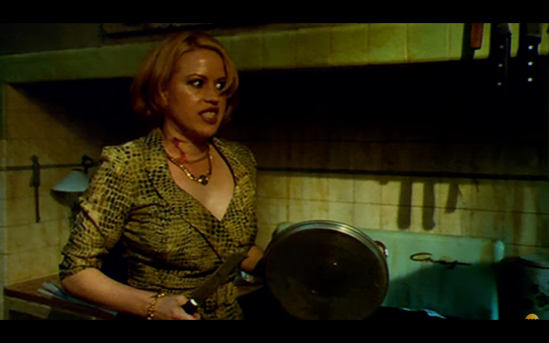
Comprised mainly of an Australian cast, “Cut’s” headlining leading lady is an American “Sixteen Candles” sweetheart taking a leap into unfamiliar territory and I’m not talking about of the Outback kind. Molly Ringwald has only ever starred in one other horror film in her 40 year professional acting career and after the dismally reviewed 1997 cubicle-cutthroat thriller, “Office Killer,” the “Breakfast Club” star steps into a more complex role that involves her multi-tasking two persona performances of essentially the same character spanning a story lined fourteen years apart. As a true testament to “Cut’s” makeup and stylist department, Ringwald, who was about 30 years old at the time of filming, goes incognito as she’s barely recognizable as Chloe, a role within a role played by Vanessa Turnbill playing the teenage character in the scrapped “Hot Blooded” slasher. Though a far cry from a coming to age film, Ringwald pivots to a coming to terms with her character’s handling of prolonged fear from the fateful and deadly night the masked killer almost ended Vanessa’s life by strongly playing to the character’s overpowering sense of self worth and brash Hollywood attitude against the one thing she can’t control…her past. Vanessa is not alone in her quest for finishing a scarring afterthought as “Hot Blooded’s” newest director, student filmmaker Raffy Carruthers, picks up where Hilary Jacobs’ left off after being butchered and is determined to wrap Jacobs’ legacy short of being a hack director. As the other half of the two resilient female characters, Raffy is played by New Zealand actress Jessica Napier who channels her inner Sidney Prescott as a strong feminine survivor unnerved by the macabre that’s closing in around her brought upon a sadistic masked killer and braves sacrificing herself to thwart pure evil’s carnage. The rest of “Cut’s” cast disperses the right amount of character building performances by Sarah Knats, Stephen Curry (“Rogue”), Matthew Russell, Erika Walters, Cathy Adamek (“The Babadook”), Steve Greig, Sam Lewis, and pop singer Kylie Minogue (“Street Fighter”) whose had collaborative projects with Mushroom Group and also a role in a Kimble Rendall 11-minutel short, “Hayride to Hell.”

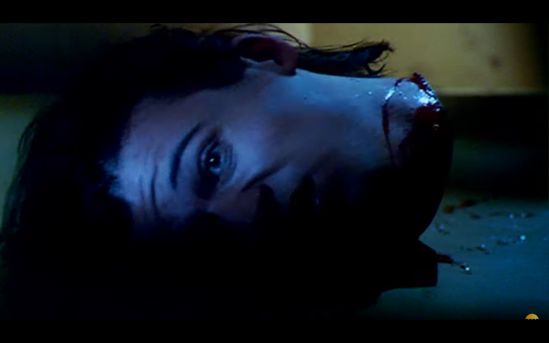
The meta approach “Cut” takes might detach itself from the plot of “Scream,” but in essence, the Kimble Rendall film is derivative work of Wes Craven who aimed to expose and exploit cliched tropes of the slasher flicks to upheave audiences wits on what they know about the genre and where the plot might eventually boil down to in a orthodox simmer of uncreative sensationalism. “Scream” smartly broke down plot structures, revealed character flaws, and even name dropped popular directors and films that became the very foundational basis of the Renaissance slasher era that went unchanged for years, decades perhaps. “Cut” also reasserts shout outs as references, along with Rendall’s creative knack of making every character swim in the pool of suspicion, to build up a catalytic twist no one would or could predict despite all the subtle clues, generally abundant in slashers, toward revealing the killer’s true identity and motivation. I wouldn’t be bold enough to say Rendall’s “Cut” deserves to be above or on the same level as “Scream,” because, frankly, it doesn’t, but “Cut” has a singular, unique identity with all of its own loaded modern day slasher traits such as a high kill count and an intriguing self-referential plot. Where “Cut” shakes at the knees a bit is how the practical effects were accomplished and the scores of cheesy late 90’s-to-early 2000 visual effects bared an ugly resembles of something that could have come straight out of the Super Mario Bros. film adaptation. A minority of the kills were decently crafted to bring a honorable character death, but there were many that succumb to a quick edit or stemmed from an off screen cut down that took away the breadth of impact and left more to be morbidly desired. Where “Cut” struggles shouldn’t be deemed ineligible for attention because of those reasons and, in fact, “Cut” sustains a high entertaining rating with immense value in the replay sector to catch thematical intimations and do a comparative analysis on Crave and Rendall’s films on how they experiment, treat, and respect the greats that were once lost to success over a long period mediocre financial and routine blundering.

Umbrella Entertainment and Beyond distribution debuts the Blu-ray release of the Mushroom Pictures and Kimble Rendall’s “Cut” with a full HD, 1080p 4K restoration from the original film’s 35mm interpos and presented in a widescreen, 1.85:1 aspect ratio. The 4K scan illuminates the hard, dark lighting used primarily for tone setting, granting an extremely gothic look without being inside the parameters of inherently gothic set design and the scanned transfer also revitalizes the snaps of color where appropriate while still leaving the natural grain from the 35mm filmstock. The English language dual channel DTS-HD Master Audio track has lossy quality because there is such contentious and explosive moments that warrant audio quality; however, the 2.0 track is sufficient to lay simple groundwork of depth, range, and clarity and the soundtrack, no matter how generic, elevates to a concentrated level with the killer on the hunt. Dialogue murkiness is no issue here with a clear path of discernible lines. Special features seem limited and antiquated for a 4K, Blu-ray debut release, but do include archived cast interviews with Molly Ringwald, Kyle Minogue, Jessica Napier, and Kimble Rendall, behind-the-scenes of some of the shots, a commentary with director Kimble Rendall and writer Dave Warner, storyboard and concept art gallery, “Hayride to Hell” short from Rendall that stars Minogue and Richard Roxburgh, and the theatrical trailer of the film. The back cover states a region B disc, but my player was set on A and prior press releases suggested a region free release so this particular gem should play in any region. If a die hard Wes Craven fan, place the 20-years-young “Cut” into your queue as a forward thinking slasher with brass balls and a marred killer with modified gardener sheers that provokes the genre still to this day.

Why settle for standard definition when “Cut” makes a 1080p debut onto Blu-ray!!! Click to buy it now!

Bank Robbers Find Evil in “The Vault” review!


Leah and Vee, Two estranged sisters, their knee deep in debt brother, Michael, and a couple of money hungry hired hands take siege of an old bank to score a half a million dollar payday. With hostages bagged and tagged, security cameras disabled, and no outside communication to the police transmitted, the situation and plan seems to be going smoothly, but when the actual pay load is lighter than expected, desperation takes over and panic overwhelms when the prospect of load sharks will seek to take more than just fingers for payment. A more than helpful assistant bank manager is eager and willing to share information about how to obtain the 6 million dollars in an archaic vault beneath the upper levels just as long as nobody gets hurt, but the heist’s meddling into the basement’s vault stirs a malevolent evil force and their fates will be sealed inside an unsafe repository.

The 2007 “The Signal” director, Dan Bush, directs and co-writes 2017’s “The Vault,” a supernatural thriller co-written by “The Reconstruction of William Zero” scriber Conal Byrne. Tense and polished, “The Vault” has the makings of a velvety heist film that holds up formidably strong, setting up a hostage situation after a well-executed pilferage involving zesty characters with dire complexities that drive them to villainy. The opening credits provide glimpses into the duration along with associative theme, much along the same lines as Victor Salva’s “Jeepers Creepers” that scores the Harry Warren and Johnny Mercer’s jazzy “Jeepers Creepers” track from 1938 that inspired fear before the arrival of The Creeper. “The Vault” uses a song 30-years junior to “Jeepers Creepers” with Tommy James and the Shondells’s psychedelic pop track, “Crimson and Clover.”

The sisters could be exemplary examples of fire and ice; Vee’s hotheaded obstinacy and violent tendencies makes her a volatile wildcard whereas Leah’s calm, cool, and calculating measures maintain their heist from derailing into violent panic. Their estrangement boils from a tiff about Leah’s loyalty to her family as Vee burgeoningly bludgeons Leah and her their brother, Michael, that Leah will skate soon after their escape, leaving the family one-third complete yet again, but Leah being involved in this heist, coming to her brother’s aid from her possible story bred locale of South America, or wherever she might have been, has Michael questioning Vee’s steadfast position. “Orange is the New Black’s” Taryn Manning is a natural born roughneck on screen and Vee is no stretch from her Pennsatucky character on the Netflix hit comedy-drama. Manning opposites Clint Eastwood’s piercing round-eyed daughter, Francesca Eastwood, whose a complete badass in her own rite. The two actresses might be short in stature, but Manning and Eastwood effectively symbolize large personalities in “The Vault” to the point where no other character can come close to competing with them, not even James Franco as an assistant bank manager with an all-too-happy to help personality. Franco, who sports a sweet stash and wavy dark hair, provides a steeliness shroud around his character, whose credited as Ed Mass in the credits, but never specially mentioned by name. Mass is a pivotal character to the story and, if analyzed thoroughly, can be unsurprisingly figured out with relative ease, but the who, what, and why are vital questions that go unfortunately unanswered. Scott Haze rounds out the four main roles with Michael, the gentle brother to Vee and Leah whose deep in debt with collectors who have already diced off one of his fingers. Haze, who has worked alongside “127 Hours’” star in a number of films such as “The Institute,” “Future World,” and “In Dubious Battle” to name a few, doesn’t have much interaction with Franco, but is more a satellite in his own regard becoming the protector of his two more than capable sisters. Supporting cast includes Q’orianka Kilcher as lead teller, “Day of the Dead: Bloodline’s” Jeff Gum as bank officer, the late Keith Loneker as a shotgun toting cohort, Michael Milford as the safe cracker, and “Traffic’s” Clifton Collins Jr. as the shady detective Iger.

Initially, Dan Bush played his cards right setting up the pre-heist all the way through the locking down the bank and all bank employees and customers are bound and gagged. Conal Byrne’s characters spill enough backstory to water our mouths, eager to know more about the angst between the two sisters, the lopped off finger of their brother Michael, and how the turmoil between the robbers is spurred and transitioned to resolution with the introduction of the helpful assistant bank manager and his helpful information about more money in a dank, dark basement vault. At this point, the salivation is intense when only tidbits of bank’s frightening phantasms are given that place the ball on the tee, stomach high, ready to knock the living daylights out our hapless and woebegone thieves, but the surefire, can’t miss swing tops the ball that scuttles in and out of bounds. The second and third acts are a completely clunky with abrupt and disjointed storytelling involving a copout exposition on the bank’s wretched backstory that ultimately leaves that important Ed Mass character hanging out in the pointless wind. Near the tail end, the film just didn’t feel complete, bordering dangerously in choppy filmmaking waters without a woolly and unexplored antagonist at the helm and Bush can’t quite pull all the end strings together to tightly knit a harrowing climax, vacating character substance with disingenuous plot twists.

MVDVisual and FilmRise introduce “The Vault” for the first time on a full HD Blu-ray home video. The widescreen, 2.39:1 aspect ratio, presentation is a great digital asset that favors a night and day conception. Ground level on the bank is pure daylight or exact lighting that vibrant and clear, not a lot of noise, and no observation of aliasing. In the basement, the abyss like somber darkness doesn’t fade away any details, but in all fairness, the haunting figures in the dark are nearly saturated with creeping ill-lit blackness. The English Dolby Digital 5.1 and stereo 2.0 audio tracks evenly set the dialogue and ambient tracks with diverse depth, but with the 5.1 surround sound and basement dwelling apparitions that indirectly cause explosions, the range didn’t embark through the varying to and fro levels appropriately and, thus, impresses a lackluster lasting impact. FilmRise has been quite a bust for bonus content lately and “The Vault” is no different with only the theatrical trailer attached. “The Vault” has sturdy initial framework of agitated vehement characters and a clouded venomous basement, teasing the prospect of two powerful rams running to tangle horns, but, without warning, the narrative unfairly falls to pieces as if one of the male sheep decided to swerve last minute before the game of chicken came to a crash and morbid curiosity becomes sorely deprived of cinematic lethal misgivings.

Buy “The Vault” on Amazon.com