Romance and Chinese Boxing Don’t Equal EVIL and That’s Okay! “Gorgeous” reviewed! (88 Films / Blu-ray)

Fall in Love with “Gorgeous” on Blu-ray at Amazon.com!

Bu believes in true love.  The young Taiwanese girl, with immense positivity, travels from her small fishing village of Jibei to the big city of Hong Kong after discovering a bottle containing a romantic note floating in the sea.  When Bu is let down by the originating sender, a gay makeup artist in an attempt to use fate and fortune to bring back an ex-lover, she strikes up a friendship with him which leads to a wealthy business owner and Chinese boxing enthusiast C.N. Chan who serendipitously comes into her life.  With a well-known reputation of being a rake, Bu pretends to be a prominent ex-lover of a notorious crime boss in order to not be taken advantage of as she slowly falls for Chan’s playful charm.  A longtime rival businessman causes conflict by driving a wedge between Bu and Chan as fight training intensifies after losing to his rival’s hired professional fighter and Chan loses sight of what’s really important in life – happiness.  

International martial artists superstar Jackie Chan makes his debut on our little boutique review blog for his Hong Kong cult film, the 1999 romantic comedy with stellar fight sequences, “Gorgeous.”  “Forbidden City Cop” writer-director Vincent Kok teams up with Yiu Fai Lo and the “Rush Hour” star to pen a new kind of story for the stuntman and martial artists that would put a roundhouse kick of insecurities onto any action star’s chin.  Based on the Ivy Ho (“The Accidental Spy”) story, “Gorgeous” involves more than just punches, kicks, and high-flying antics with a comedy romance story about two very different people and perspectives finding commonality in unflinching happiness, joy, and love.  Jackie Chan does comedy very well but the comedy in “Gorgeous” is half non-physical, which the action star has mastered the craft by integrating into his physical model.  “Gorgeous” is a production of Golden Harvest Productions and is produced by Jackie Chan and then Golden Harvest president the late Raymond Chow.

Obviously, you can’t have a Jackie Chan movie without high-level martial arts action.  In the same breath, Jackie Chan wanted to give his Asian fans another movie after the tremendous success of “Rush Hour” that sent the longtime East-adored icon into global stardom.  Thus, “Gorgeous” was born, developed, and rewritten to add Jackie Chan as the lead character, playboy and business tycoon C.N. Chan, alongside costar Shu Qi of “Sex and Zen II” and “The Transporter” with Jason Statham.  As Bu, Qi develops a starry-eyed longing for unequivocal romance that you can only find in fairytales and storybooks as she is confronted by the puppy dog eyes of the local fishing boy proclaiming his love for her only to be rejected by Qi’s downplayed naivety that makes her appear to be the village simpleton.   Yet, the character is surrounded by a carefree comedic mom-and-dad of beer-drinking restaurant owners, Sung-Young Chen (“Hello Dracula”) and Elaine Jin (“The House That Never Dies”).  As a flirtatious couple of Bu’s hopeless romanticism driven by the signs and kismet and Chan’s all-business, no-play waning for a girl to be childlike to bring out the dormant happiness inside him, Jackie Chan and Shu Qi manage to never close that gap to fully immerse themselves as onscreen love interests in their 80’s structured amorous narrative and go get’em montage.   Where “Gorgeous” charisma lies is with Chan’s mano-on-mano dual with Jackie Chan’s hired member of his stuntman team, Brad Allan.  The former Australian gymnast and Chinese circus acrobat has a towering magnetism about him despite only standing 5’4” tall, shorter than Jackie Chan.  The fight sequences between the two nimble men with incredible speed and form, mirror each other with precision in their own individual styles, garner some the best one-on-one choreographed bouts ever to hit the screen and to be felt by the audiences with hard-hitting throws.  While the impact of the Chinese boxing is palpable, Chan and Allen pepper in lighter moments of great physical comedy that take the intensity down a notch in a welcoming reprieve from solemn combat.  That solemnity in Allen’s character is greatly received and adds to his magnetic appeal that doesn’t make the mercenary fighter a bad guy though hired by the antagonist (Emil Chau, “Super Cop 2”) of the story; instead, Allen’s fair without pulling punches and without dirty tricks, as he mentions to Chan to avoid, and we end up rooting for both men’s dignified square up being battled not in a square ring.  Tony Leung Chiu-wai (“Internal Affairs”), Ken Lo (“Holy Virgin vs. The Evil Dead”), Tats Lau (“Dating Death”), Richie Jen (“Tales from the Occult”), Siu Wai Cheung, and “Kung Fu Hustle’s” Stephen Chow costar.

While “Gorgeous” may not be evil in the least for our conversational liking and our in-depth coverage with its abundance of lighthearted goodness, romanticized ideals, and slapstick comedy, the turn of a century film has cult qualities with shoddy 90’s effects, intricate fight choreographies, and eclectic, eccentric performances that make the Hong Kong-Taiwan product standup and standout to be noticed.  The fight sequences alone swallow much of the attention and overwhelm a rather flimsy passionate plotline between C.N. Chan and Bu in what stirs between feels more platonic than desire.  “Gorgeous” attempts, and succeeds to a version of a successful end, a theme about positivity and happiness and how that brightness can be diminished by deceits, workaholism, and distracting contentions, sucking the joy from out of life and spitting out a solitude bitterness without any kind of understanding of how it all happened.  We see this more in the dynamics of business rivals Chan and L.W. Lo, two childhood friends driven apart by their subjective comparisons as they try to top one another, culminating from their back-and-forth to see who is the best at everything into the realization that their bond was ultimately worth more than success at material things.  This enriching theme, plus Jackie Chan’s stunt team work, pushes asides the infatuation glop of Chan and Bu’s playful childlike intimacy that just seems to slip through your fingers, unable grasp traction to be interesting enough.

“Gorgeous” receives an 88 Films’ 2K overhaul with a Blu-ray upgrade from the original film materials of the Hong Kong & International versions of the film, delivering two cuts in high definition 1080p and presented in an anamorphic widescreen 2.35:1 aspect ratio.  The AVC encoded BD50 offers plenty of room for “Gorgeous” to look, well, gorgeous on hi-def with a vibrant, spotless transfer of the 35mm shot print.   Coloring is consistently stable and rejuvenated for a fresh picture image; no one-off blips or glitches on the grading in sight on this very azure and teal toned production.  Despite holding two features and a handful of extras, the dual-layered single disc offers no hint of compression issues, creating a smooth beginning to end viewing.  The Hong Kong cut comes with a Cantonese DTS-HD 5.1 MA while the International Cut comes with the same as well as an English DTS-HD 5.1 dub track.  For authenticity purposes, the original native language is always the preferred choice and the Cantonese track on the HK cut simply shines with an orotund dialogue track, robust milieu and ambience, and a blended bubbly and businesslike score whenever the mood hits by Dan-yee Wong.  Balanced and kept in the check, neither track overtakes the other with a timely parallel consonance.  The newly translated English subtitles are paced well with error-free transcription.  Special features include Shy Guy – Andy Cheng, a member of Jackie Chan’s stunt team, discusses the rise of Brad Allen as well as note on the stunt team in general and Jackie Chan’s success at the time of “Gorgeous,” an interview with director Vincent Kok on Chan’s unfamiliar territory into romantic comedies, an archived making-of “Gorgeous” with raw and behind-the-scenes footage and interviews, “Gorgeous” music video in Cantonese and Mandarin, and the Hong Kong and International trailers.  The limited edition slipcover feature is a cardboard o-slip with illustrative art from 88 Films graphic artist Sean Longmore overtop a 2 to 3 millimeter thicker Blu-ray snapper to house the 32-page color booklet with daily set report of “The Accidental Spy” by writer Matthew Edwards and behind the-scene photos, a dual-sided mini-poster of Longmore’s slipcover art and the original poster one-sheet, a disc pressed with the image of Shu Qi smiling, and reversible cover art with the original poster one-sheet and a couple of “Gorgeous” stills joined together on one half.  Each cut is drastically different in length with the international cut heavily trimmed at 99 minutes while the HK cut keeps unedited at 2 hours.  Both features are not rated and are both have a region A and B playback with C untested.  Jackie Chan has always been a pillar of entertainment and “Gorgeous” is no exception to the rule.  88 Films refreshes the now 24-year-old film with a new, exciting transfer and physical package that commits one of the best fights in cinematic history to hi-def.

Fall in Love with “Gorgeous” on Blu-ray at Amazon.com!

The Absence of EVIL is Found in the Deepest of Cleavages. “Bigfoot or Bust!” reviewed! (MVD Visual / Blu-ray)

The Bustiest of the Busty on the Hunt for Bigfoot.  Check out “Bigfoot or Bust” on Blu-ray!

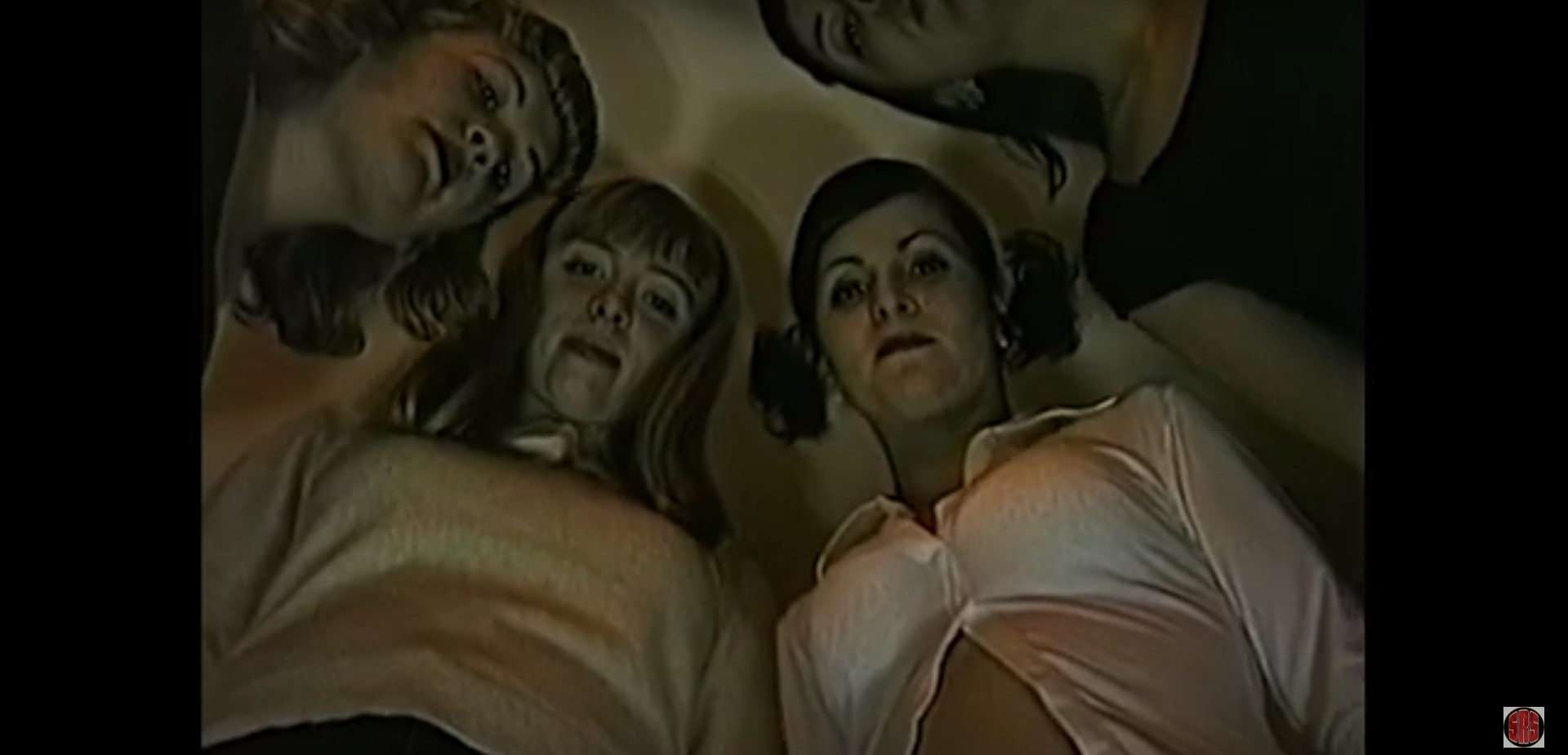
Bigfoot – the mythical legend of half-man, half-beast roams the quiet, dense, and uninhabited forests of anywhere USA, scarcely spotted by campers, hikers, and mythical creature enthusiasts looking to catch a glimpse of the dirty furry being.  There are those who are even more keen in catching bigfoot as a small group of big chested women set off into the wilderness to capture bigfoot and make their fantasies come true as they have their way with the beast.  However, two other groups are after the big, bad bigfoot – a brother-sister hillbilly duo seek to lay legitimacy to the legend’s blood relationship to their family and a trio of time travelling blonde babes have come to the past to export Bigfoot’s excrement worth trillions in the future.  Factions collide in this chesty-chase to be the first to snag the elusive, big-breast loving Bigfoot.

I’ve aforesaid that my quest for just an okay bigfoot storyline and film would suffice a lifelong dream of the big man getting some big respect in the movie industry.  You can’t count William Dear’s “Harry and the Hendersons” because it’s frankly not a horror movie though one of the best representations of our common and collective perceptive concepts of the creature.  You can’t also count Ryan Schifrin’s gory and intense “Abominable” as the Yeti is more of Bigfoot’s mountainous cousin.   Would Jim Wynorski, the director of “Chopping Mall” and “Return of Swamp Thing,” have the answer to my, and maybe all of our, prayers with his latest entry “Bigfoot or Bust?”  Far from it.  In fact, Wynorski’s Bigfoot entry, although purposefully campy and slathered with sex appeal, has put Bigfoot films many steps back, creating major concern for the subgenre (as well as the future of comedies) that may never see the light of day with a good installment.   Wynorski also penned the film produced by buxom blondes and feature stars Becky LeBeau, Gail Thackray, and director Jim Wynorski under Coldwater Canyon Pictures.

Instead of “Bigfoot or Bust,” the film should have been retitled as “Bigfoot vs. Bust” as the screen time volume is bursting with more breasts than of Bigfoot, but, likely, both selling features are equal in being not the genuine articles.  Becky LeBeau and Gail Thackray lead a very busty, very mature (as in age, not behavior) cast of cult erotica and exploitation of yore.  The former Playboy centerfold and Pay-Per-View starlet LeBeau’s longstanding work history with Wynorski basically gives her the freedom to do whatever her heart desires and if that means chasing down a man in an Sasquatch suit in skimpy clothing, jumping on random trampolines in the middle of nowhere, and being a DJ producing ACME-style noises with expensive audio equipment with her chesty counterparts, then, by God, that’s what she gets.  “Hard to Die” and “Curse of the Komodo’s” Gail Thackray, once again donning a Dawn-role as Dr. Dawn, a doctor of paranormal psychological and internal medicine, is LeBeau’s co-captain in the rundown expedition with former adult actress Christine Nguyen (“Bikini Jones and the Temple of Eros”, “Girls Guns and Blood”), Cindy Lucas (“Bikini Car Wash Massacre,” “Sharkanasas Women’s Prison Massacre”), and Melissa Brasselle (“Sorceress,” “Camel Spiders”) playing an leather-cladded ancestor of the outlaw Jesse James.  A similar titty train chugs along with Tane McClure (“Death Spa, “Commando Squad”), Deborah Dutch (“Caged Women II,” “Dances with Werewolves”), and Antonia Dorian as time-travelers with oversized plastic future guns and a pair of local bumpkins in Lisa London (“Samurai Cop 2:  Deadly Vengeance,” “Xtro 3:  Watch the Skies”) and Lauren Parkinson (“Halloween Pussy Trap Kill! Kill!,”  “CobraGator”).  Nguyen, Lucas, and Parkinson add young hot-bod blood to the cast of mature erotica icons, bringing down the average age to approx. 45-50 years, in an unofficial way of shepherding in the new while giving the past a grand finale. 

Even though a blatant, unbridled farce, I found “Bigfoot or Bust” to be skeezy and unsettling.  And I actually own two copies of “A Serbian Film” and “Slaughtered Vomit Dolls” without an emotional apprehension! Maybe it’s because there’s not a basic storyline and even one single decent performance. Maybe it’s because the inundated buffoonery plays to the oldest tunes of comedy. Or, maybe, the thought of those two previous aspects are as diluted as they are because the hyper focus is on Jim Wynorski and his elderly band of crewmates direct and film mature women in mostly their underwear, squirting themselves with water bottles and having pajama dance parties at night. The whole production wreaks of schlocky, slimy porn with no script and bad acting, but progresses entirely without the main sell of goods – porn! I wouldn’t even label “Bigfoot or Bust” softcore or even a panty sniff of erotica with the profound lack of skin and hard, sweaty bodies rubbing up against each other in a form of passion from that cast that has decades of body display under their itty-bitty tiny bikinis. Wynorski has directed graphic sexploitation films complete with snazzy, spoof-titles in “The Bare Wench Project,” “Alabama Jones and the Busty Crusade,” and “The Witches of Breastwick,” but Wynorski seemed determined to be anti-nudity, anti-explicit, and overall anti-film in his latest venture without thematically breaking stride in a genre that has become second hand to the filmmaker. “Bigfoot or Bust” is erotica-lite, a lofty romp that’s self-aware of it’s own brand of comedy and exhibits no shame for it’s peep-less peepshow.

The 90’s has come to call to infiltrate the 22nd century with bygone lust idols in “Bigfoot or Bust” on Blu-ray home video from MVD Visual. The not rated, region free Blu is presented in a widescreen 1.78:1 aspect ratio. Image-wise, the digital picture is unsurprisingly free and clean of spoils, has discernible details, and retains the natural lighting to reflect the natural skin tones on the unnatural cosmetic enhancements which reflects Wynorski’s long-time, director of photography collaborator Chuck Cirino usual plain as the air in front of you style. Fred Olen Ray’s Retromedia, along with Cirino, handle the visual effects which is nothing more than a convex visual effect around the actress’ chest areas and the speaker system cones for the cheap effect of bursting at the seams. There are also ostentatious, future-gun, energy beams that add that tickle of excitement much needed against the long-winded triteness and scores of unfulfilled teasing. The Blu comes with one audio track, an English 5.1 surround sound that perhaps the most genuine part of this release. Since most of the film is shot exteriorly, the dialogue is an echt harvest of tones and captures the surrounding natural elements within the same track with leveled volumes. English subtitles are available. Special features include Becky LeBeau’s hit single for the film, “Animal,” which is just a still photo gallery with an overlay of LeBeau’s single, audio commentary with director Jim Wynorski, a deleted scene of LeBeau changing outfits, a behind-the-scenes featurette worth seeing how Wynorski’s snappy, commanding directorial style and to see the love-or-hate-or-flirtatious dynamics between him and the actresses, and the original theatrical trailer. Runtime is a decelerated 75 minutes. “Bigfoot or Bust” is intentionally whimsy and garners sexploitation royalty for a self-deprecating good time, but the end result is unfunny, unattractive, and kitschy for a director and cast wandering outside their normal niches.

The Bustiest of the Busty on the Hunt for Bigfoot.  Check out “Bigfoot or Bust” on Blu-ray!


EVIL Moves in When Sister Goes Missing! “Sister Tempest” reviewed (Darkside Releasing / Blu-ray)


“Sister Tempest” – on Blu-ray home video at Amazon.com

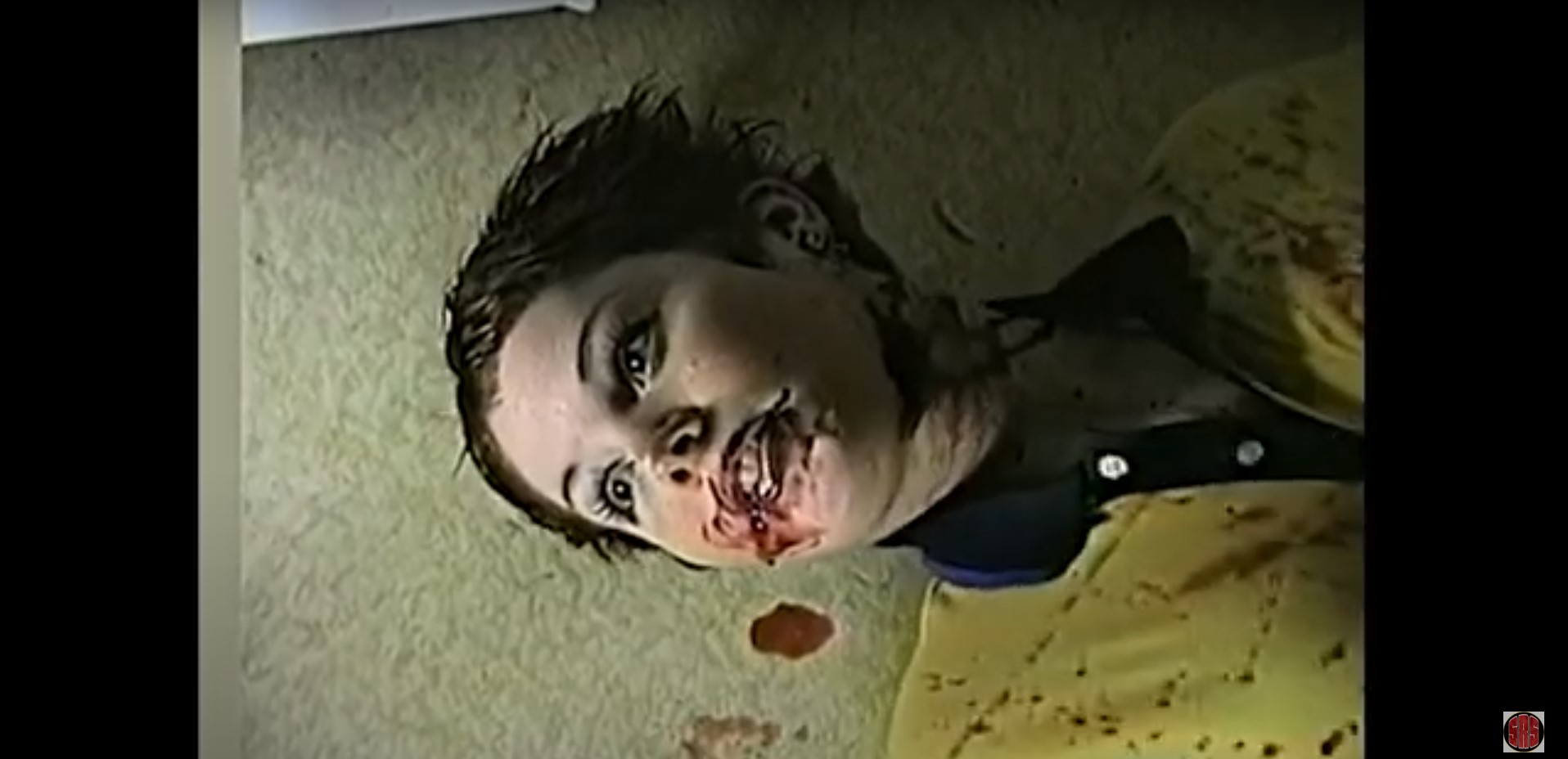
Private school art teacher Anne Hutchinson faces an alien tribunal on the set of circumstances surrounding the sudden disappearance of her younger sister.  Anecdotally going through the chapters of her life, beginning with her parents perishing when the sisters were young into growing up in a confrontation household between the sisters’ warring personalities to Anne’s desperate search for her younger sister after an ugly fight one night.  Still reeling from the abrupt disappearance, a new student joins her class that ensues a sudden fascination from Anne.  When the student shows up one night at Anne’s house, unloading woes of being kicked out of school due to lack of funds, Anne offers sympathy and suggests staying in her sister’s room that’s now been vacant for some time, but Anne’s new roommate hides a secret as she must feed on raw meat to combat of a body-covering boil sprouting illness.  Little does the art teacher know that there’s a connection between her sister’s disappearance and her former blood-thirsty pupil that will shock her very core.

What happens when a promise to another person can’t be kept because that person’s will and commitment is so strong it’s becomes a severe fault?  From an not from this world alien perspective, the contradictory and irrational nature of humankind has a profoundly illogical pattern to it that bears hardly any understanding to an unlike mind.  There’s fragility to interpersonal relationships and to the people devoted to those relationships that force unforeseen, sometimes fatal, consequences when expected coherency and harmony turns into irrational chaos from seemingly arbitrary means.  This is how Joe Badon’s genre-bending “Sister Tempest” expresses that conundrum of curious conscious with a surrealistic sci-fi-horror-drama that teeters on the edge of deadpan.  The 2020 released “Sister Tempest” is the second written-and-directed feature film from Badon, following his 2017 experimental horror “The God Inside My Ear,” which falls upon similar “Sister Tempest” lines of emotionally distress-induced bale.  Filmed in New Orleans, Louisiana, “Sister Tempest” is a produced by Badon, editor/sound designer Joseph Estrade, Dustin Rosemark (“Inferno”) and cinematographer Daniel Waghorne with visual effects artist Clint Carney (screener of “Dry Blood”) and Miles Hendler serving as executive producers.

After a series of prefacing introductory and non-linear story scenes, Anne Hutchinson, a debut feature role for New Orleans based actress Kali Russell, sits in negative space wearing an orange jumpsuit and being introduced to her alien tribunal council.  Dazed and confused, but not totally in shock and frightened about being in the presence of otherworldly extraterrestrials, Anne recounts events surrounding the disappearance of her sister, played by Holly Bonney (“Bird’s Eye).  As sisters, a defined line between the older responsible and the younger immature is contentiously formed between Anne and Karen as they deviate from earlier promises after their parents’ untimely death to take care of each other.  Through Anne’s retelling of her life, her mother, though hard and disciplined, had a conditioning care that burdened the eldest child with a sense of duty and care at a young age and this really is no different from most firstborns who shoulders already a ton of responsibility regardless in taking on even more when the parents are no longer around.  You love them to death is great idiom that rings true in Badon’s subversive-cinema standards tale when the sisters can’t see eye-to-eye on matters and there’s a loss of connection, accountability, and gratitude that the audience can relate to.  For much of the picture, Holly Bonney takes a backseat to Kali Russell’s spiraling disconnect that affects her relationship with love interest Jeffrey the Janitor (Alex Stage, “Eat Brains Love”) and new life-entangling pupil Ginger (Linnea Gregg).  The latter Greg played character has a little more layers to peel back that involves directly with Anne.  Ginger’s is venom in disguise as vampire of sorts who requires raw meat and to keep her human appearance intact.  There’s a representational duality in Ginger, reflecting both a monstrous quality and a sweet innocence that ties into Anne personally and into the search for the sister.  “Sister Tempest” rounds out the cast with Clint Carney (“Dry Blood”), Lucas Boffin (“Return to Sender”), Andre LaSalle (“The God Inside My Ear”), Cami Roebuck (“Children of Sin”), and Sarah Rochis.

“Sister Tempest” has a foundational design we’ve all likely seen before with breaking points, dualities, and downhill-racing mystery unfathomable to the naked eye, but the Josh Badon story inexplicitly feels different from the others.  Perhaps because of Badon’s unconventional storytelling style that throws the normal perceptions for a loop, literally and figuratively, with a 50’s-ish callback to science fiction films or its glamour of 70’s-ish British horror in color and macabre or an unsane mixture of both. I’m not going to sugar coat “Sister Tempest” as an easy to follow, low-hanging fruit film that simple, straight-forward, and is everybody’s cup of tea. That would be a waste of peddle spiel. There’s a zaniness quality that can’t be ignored that surrounds the principal Anne character as if she’s experiencing an ersatz world normally. Some would say that Anne’s caught in a maelstrom, or tempest, of unclear thought and her ordeal is catalytically charged by the work and the love that is poured into her sister’s wellbeing only to be thrown back into her face. Badon has a flair for the unusual, an eye for the odd, and can extravasate an uneasy air from a capsule of seemingly randomized happenstance and beyond the already preternatural events to aggregating the wayward tension.

“Sister Tempest” is the very definition of independent movies with a take it or leave it spellbinding archetype that’s unlike anything ever seen before. You can bear witness to Joe Badon’s mesmeric madness and melancholy with a brand-new Blu-ray from Darkside Releasing. Presented in two aspect ratio formats, a 2.39:1 and 1.33:1, the screen really runs the side-to-side gamut. Image quality shows zero sign of issues from the high-definition digital video, shot on a 4K black magic pocket cinema camera. The blacks are deep and rich as well as the coloring through Daniel Waghorne’s versatile cinematography involving gel lighting, color reduction, and spotlighting. The English language 5.1 surround sound shows no sign of slowing down this A/V wonder with clean and lively multi-audio tracks that come through every channel definitively. Bonus material includes an audio commentary with the director, produces, and actors, a blooper reel, a deleted scene, and trailers for Darkside releasing surreal and giallo films. “Sister Tempest” Lynchian style is not going to please the masses, but it’s certainly the wildest ride in the theme park of contemporary indie cinema.

“Sister Tempest” – on Blu-ray home video at Amazon.com

EVIL Lights Up When Peeling Skin! “Human Lanterns” reviewed! (88 Films / Blu-ray)


Own this beautiful release from 88 Films of the “Human Lanterns”

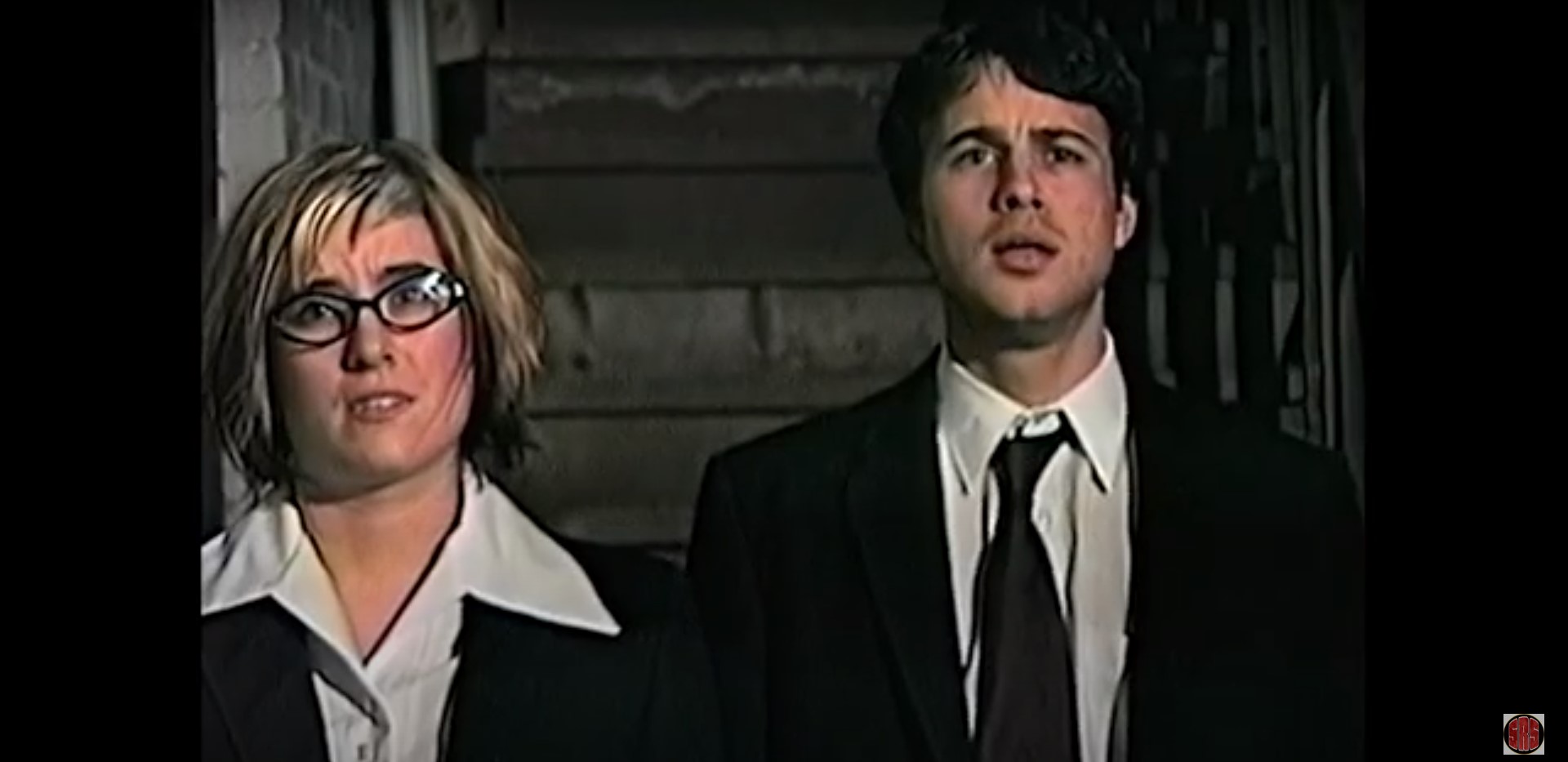
Two respected and wealthy Kung-Fu masters have a long rivalry, trying to one-up each other at any cost even if that means stooping into their personal life to gain the most public admiration.  With the annual lantern festive approaches, to have the best and brightest lantern would sustain at least a year of gloating over the other master.  When a lantern maker with a retaliation mindset against one of the more boastful masters is hired to make his festival entry, the lantern maker exacts horrifying revenge by fueling their feud behind the scenes. Kidnapping beautiful women who are dear to each master and exploiting their soft delicacies for his crazed creations, the maniac lantern maker turns the village upside down, forcing the local constable into an impossible investigate into the village’s most popular residents when none of the evidence points to the other.

“Ren pi den long,” aka “Human Skin Lanterns,” aka “Human Lanterns” is a grisly Kung-Fu murder-mystery that’ll make your skin crawl right off from your body. The stylishly colored and ethereally varnished 1982 Hong Kong film is written-and-directed by Taiwanese director Chung Sun (“Lady Exterminator) that blended the likes of a giallo mystery into the well-choreographed martial arts mania with the profound Kung-Fu screenwriter, Kuang Ni (“The One-Armed Swordsman,” “The Flying Guillotine”), co-writing the script alongside Sun. While not as ostentatiously gory or as cinematically profane as the 80’s released Category III certified films that rocked Hong Kong audiences, and the censor board, with shocking, gruesome imaginary and content, “Human Lanterns” does sit teetering on the edge with mostly a tame Kung-Fu feature that quickly turns into the blistering carnage of a basket case, or in this a lantern maker, who uses hiding as a double entendre. “Human Lanterns” is a Shaw Brothers Studio production executively produced by the oldest of two brothers, Rumme Shaw, and, then new to the Shaw Brothers’ board of directors, producer Mona Fong.

“Human Lanterns” starred two the renowned names in martial arts films from the 1970s and well into the 1980s with “Fist of Fury” and “The Swordsman and the Enchantress’s” Tony Liu as the impeccably arrogant Lung Shu-Ai with a self-image to protect more than the women in his life and “Bloody Monkey Master” and “Return of the Bastard Swordsman” Kuan Tai Chen sporting a sweet mustache as Lung’s longtime rival, Tan Fu. Shu-Ai and Chen have really spot on, well-versed, fight sequences together braided into their play off each other’s character’s haughty personas. While behind the curtain of overweening and defiance between the two masters, Chao Chun-Fang unceremoniously sneaks into the fold by happenstance as Lung offers him money for the best lantern this side of the lantern festival. Lung and Chao Chun-Fang, played with a demented, idiosyncratic duality from Leih Lo (“The Five Fingers of Death,” “Black Magic”), another master in the art of fighting in his own style, have an inimical past…well, at least thought so by Chun-Fang. In a sword dual over a woman, Lung defeats Chun-Fang and purposefully scars him above the left eye, causing him the inability to look up, and while the lantern maker has stewed for many years, training all the while to be the best fighter, his tormentor Lung Shu-Ai has nearly all forgotten about the incident and found trivial enough to ask Chung-Fang to make him a lantern and offer him out for drinks for being old buddies of yore. However, this yard pulls the wool over the eyes of self-centered, the upper class, and the unruffled nonchalant as Chung-Fang takes advantage of the Kung-Fu masters naivety and uses the rival as a screen to cover up his kidnapping deeds of the women in their lives, played by Ni Tien (“Corpse Mania”), Linda Chu (“Return of the Dead”), and Hsis-Chun Lin. “Human Lanterns” rounds out the character list with a hired assassin in Meng Lo (“Ebola Syndrome”) and a competent but out of his league village constable in Chien Sun (“The Vampire Raiders”).

The look of “Human Lanterns” is often dreamy. No, I don’t mean dreamy as in gazing into the strong blue eyes of your tall and dark fantasy man. The dreamy I’m speaking of is produced by cinematographer An-Sung Tsao’s luminescence that radiates of background and the characters through the wide range of primary hues. Tsao’s colorful and vibrant eye doesn’t clash with the vintage era piece consisting of impressively detailed sets, a costume design plucked straight from the 19th, and hair, makeup, and props (which I’ve read some of the blades were authentic) to bring up the caboose of selling the completed package of delivering a spot-on period film. When Leih Loh dons the skull mask, an undecorated and unembellished human skull, with wild, untamed hair sprouted from every side of the eyeless mask, Loh transforms into a part-man, part-beast jumping, summersaulting, leaping, and seemingly flying through the air like a manically laughing ghost. The visual cuts petrifyingly more than described and if you add an extensive amount of Kung-Fu to the trait list, “Human Lanterns” has a unique and unforgettable villain brilliantly crafted from the deepest, darkest recesses of our twisted nightmares. “Human Lanterns” has a wicked and dark side that balances the more arrogantly campiness of Lung and Tan’s hectoring rivalry. When Lieh Loh is not skinning in his workshop or Lung and Tan are not bullying each other into submission, there’s plenty of action with the heart stopping, physics-defying martial arts that just works into the story as naturally as the horror and the comedy. With shades of giallo and fists of fury, “Human Lanterns” is Hong Kong’s very own distinctive and downright deranged brand of good storytelling.

88 Films lights the way with a new high-definition Blu-ray of the Shaw Brothers’ “Human Lanterns” from the original 35mm negative presented in Shawscope, an anamorphic lensed 2.35:1 aspect ratio that more than often displays the squeeze of the picture into the frame. One could hardly tell the upscale to 1080p because of the very reason I explained in the previous paragraph of the airy An-Sung Tsao façade that softly glows like bright light behind a fog. Nonetheless, the image quality is still stunning and vivid, a real gem of conservation and handling on this Blu-ray release. The Mandarin dubbed DTS-HD 1.0 master audio is synched well enough to the action for a passing grade. The foley effects, such as the swipes and hits, are often too repeated for comfort, but adds to “Human Lantern’s” campy charm. The newly translated English subtitles are synchronous with the picture and are accurate but, in rare instances, come and go too quickly to keep up with the original language. The release comes not rated with a run time of 99 minutes and is region locked at A and B. Why not go full region free is beyond me? Licensing? Anyway, special features include an audio commentary by Kenneth Brorsson and Phil Gillon of the Podcast On Fire Network, “A Shaw Story” interview with then rising Hong Kong star Susan Shaw who talks about the competitive and easy blacklisting Hong Kong and Tawain cinema market, “The Beauty and the Beasts” interview with in story brothel mistress played by Linda Chu often harping upon not wanting to do nudity despite directors begging her, “Lau Wing – The Ambiguous Hero” interview with Tony Liu that comes with its own precaution title card warning of bad audio (and it is really bad and kind of ear piercing) as the lead man really regales his time on set and in the industry between Golden Harvest Productions and Shaw Brothers Studios, and rounding out the main special features is the original trailer. The package special features is a lantern of a different color with a limited edition cardboard slipcase with new artwork from R.P. “Kung-Fu Bob” O’Brien, a 24-page booklet essay entitled “Splicing Genres with Human Lanterns” by Barry Forshaw accompanied by full colored stills, posters, and artwork by O’Brien, a double-sided fold out poster, and reversible Blu-ray cover art that can be flipped from the same, yet still awesome, O’Brien slipcover art to the original release art. The new 88 Films’ Blu-ray set conjures a renaissance satisfaction like none other for a highly recommended, genre-ambiguous, vindictive affray.

Own this beautiful release from 88 Films of the “Human Lanterns”

EVIL Spam E-Mail Wants to Play a Game! “Planet Zee” reviewed! (Darkside Releasing / Blu-ray)

Land onto “Planet Zee” now on Blu-ray! 

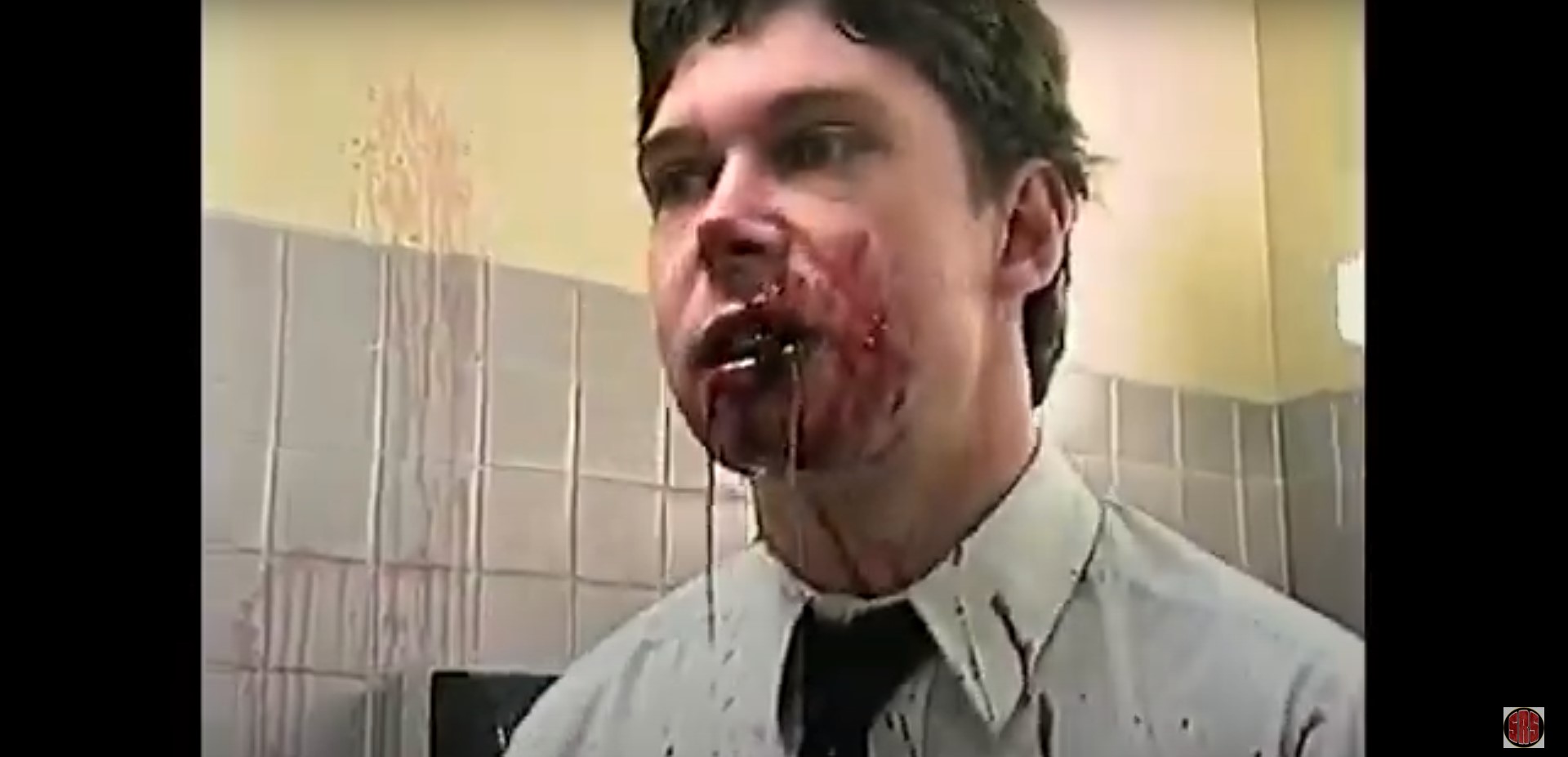
Struggling woman filmmaker Zee Bronson is trying to make what she loves a supportive career. Smoking pot, drinking beer, and living with her grandmother Sam mellows out Bronson’s anxiety of potentially landing a writer-director’s gig one day. When her sleazy producer, Serge, closes a deal with an investor interested in her script, Zee eyes widen with excitement, but her premature celebration quickly turns sour when Serge notes the financer wants someone else to direct her screenplay. A vexed Zee turns to a weird email spam virus that has seemingly appropriated her computer to propose a game of life with superpowers or death. Convincing Serge into joining her, the two unwittingly open a diabolical portal that traps them inside the apartment, subjecting them to battling a demon and persuading them to kill one another. As their relationship dissolves slowly throughout the night, lines a drawn between friend and foe in order to escape the grip of a computer-commanding Game of Power.

There is bottom-of-the-barrel independent schlock done with very half-hearted inspiration and then there’s bottom-of-the-barrel independent film done with A for effort around a difficult to sell single-locale story that includes witty dialogue and humble homemade effects. Some of these mighty, homegrown indies stem from one ultra-eccentric Berlin, Germany physics and prehistoric archeology studied-turned-artful filmmaker Zetkin Yikilmis in her second written and directed feature, “Planet Zee.” Her B-movie, or should I say Z-movie, is the epitome of independent filmmaking in knowing the production’s limits and how to make the most of a film with what little material is available to use, such as a deluging cash flow for big budget grandstanding that’ll get your name on marquees, posters, and regional commercials. Instead, “Planet Zee” is very much meta love and confidence concept toward Zetkin Yikilmis herself, as the title implies, being a woman in a typically projected masculine dominated industry. Yikilmis follows up her sophomore film from an array of micro shorts and her 2019 released debut feature, “Some Smoke and a Red Locker,” incorporating elements of the stoner horror-comedy into her 2021 film that’s self-produced by Yikilmis and her cinematographer husband, Dominic, as well as longtime collaborator S.B. Goldberg.

Zetkin Yikilmis, obviously, stars as Zee Bronson, a bohemian screenwriter attempting her hand at filmic success while having her grandmother live with her in a small apartment. Having surveyed Yikilmis’s micro shorts, her droll act as stoner-chic Zee Bronson imitates far from her other self-applied roles with a sluggish repartee and often tinkering with slapstick with fellow costar Alexander Tsypilev as squalid producer Serge. Yikilmis and Tsypilev’s reconnection after “Some Smoke and a Red Locker” gives way to a natural onscreen dynamic that has experience role reversal, gender role reversal, and to test their association connection. With a tight-fitting shirt that flirts with exposing his slightly protruding belly, Serge fits swimmingly into the cesspool of sexist producers with Tyspilev crafting Serge’s slimy mold with little pinches of details toward the producers first-rate me-first attitude. While Bronson and Serge are the two chief residents of “Planet Zee,” there is often a forgotten third wheel who bookends the narrative. Sam, Zee’s elderly only in looks grandmother played by Trish Osmond who had a small role in Zack Snyder’s “Army of Thieves.” The 1944 born English actress bloomed late in her career that begin in 2014, but that doesn’t stop Osmond from being a dominating player of goodwill toward bizarre films and roles, especially playing ones involving an usually vigorous old woman with underlying uncanniness probably important to the story. Minor characters fill in the rest with small brushes with minor scenes from Roland Bialke and Michael Tietz.

Through the veneer of bare budget and puerile comedy, “Planet Zee” puts together a couple of ugly statements well versed like a stain amongst the film industry but only brought up more recently during the #MeToo movement and seen as ingrained into industry as par for the course. Yikilmis mentions in the dialogue that as a woman filmmaker she fears oppressive struggles in forming a passionate career in creating art, her art being satirical comedy-horror motion-pictures, insinuating female-driven aspirations are often squashed by misogynistic viewpoints akin to the British journalist and author Christopher Hutchinson’s claim that women are not funny because they are pretty and do not need to appeal to men through humor. Yikilmin writes pitting herself, as Zee Bronson, against a sleazy and dismissive producer who exploits her with pretense friendship, mirroring the real-life exploitation of certain long-standing, fundamental moguls who instead of being held responsible for distasteful chauvinistic corruption, held women’s careers in the palms of their hands with a conniving, convincing promise of blacklisted ruinous slander or unfounded gossip if unethical compliance to their advances were denied. In lighter terms of the film’s satire, Yikilmis uses the situation as an allegorical parallel of who really has control over the story – the creator or the producer. As the creator, Zee Bronson yearns to maintain creative rights in telling her tale whereas the producer gives into the meddling whims of the highest bidder, reaching for the dollar signs that illuminate over their eyes. Serge’s me-first persona during the game offers no collaboration as he literally pushes down Zee for the faint prospect of survival and causes more harm than beneficial good. Look past the stock electricity effect visuals, polished lens flares, and the cheaply made demon getups and you’ll see inside “Planet Zee’s” fiery core, a passively seething call to overcome the darker side of a biased film industry.

Explore the terrain of Zetkin Yikilmis’s “Planet Zee” now on Blu-ray home video a part of the Darkside Releasing, as feature #24 on their Darkside Collection line, and distributed by MVD Visual. Shot and released in an aspect ratio of 1.78:1 widescreen, “Planet Zee” isn’t breathtaking with nearly the full 97-minute runtime inside Zee’s tight apartment living room, aka Yikilmis apartment where many of her shorts were filmed, and so the 1.78:1 aspect ratio is overkill or wasted on nothing spectacular aside from the trippy wallpaper or the bone-curtain that linger the background. In truth, “Planet Zee” could have been shot in a 4:3 for better framing inside a vertical inclined ratio. The full high definition, 1080p output does look good in the details. The trippy-cladded apartment and warm toned outfits pop with robust color. Though not labeled on the Blu-ray back cover, the release offers a DTS-HD 5.1 surround mix and despite being produced in Germany with Germany actors, the original language track is in English thick with a dialect accent but overall adequate and clean in delivering dialogue. Ambient effects often feel just as distant or separated from the visual trunk as their digitally rotoscoped onto the frame. Special features include a behind-the-scenes that actually isn’t anything relevant to behind-the-scenes material with a couple of rehearsed statements on set from Alexander Tsypilev pretending to be scared of Zetkin Yikilmis’s feigned dictator-like direction. Other bonus content includes a string through of Zetkin Yikilmis’s micro-shorts with Yikilmis serving as a host in between and a woman in horror trailer reel. “Planet Zee” is an unpretentious good time. Small, yes. Limited in budget, yes. Unknown cast, yes. Yet, where the film lacks with high dollar density it makes up for in free reign creativity and breezy humor that becomes a middle finger to inequality and duplicity.

Land onto “Planet Zee” now on Blu-ray!