Football, God, Family, and EVIL! “Him” reviewed! (Universal Pictures / Blu-ray)

“Him” Collector’s Edition Now Available from Universal Pictures!

Cameron Cade’s father has been firmly preparing his son to be a football GOAT since Cam was a young boy.  Inspired by the 8-time champion Isaiah White, star quarterback of the Saviors, Cam had trained and played through the years and ranks to be the game’s next promising rising superstar athlete.  When a mascot-dressed manic derails Cam with a head trauma-induced attack, Cam takes a step back from competing in the football showcase but receives hope when he receives an invitation from the Saviors to work with Isiah White at his isolated training camp deep in the desert.  Before long, a dream-come-true turns into a terrifying nightmare as the training sessions go deeper into something far more sinister and Isiah’s greatness may be contributed to unnatural forces bound by limited contracts.  How far and how much will Cam have to sacrifice to be the best football player ever and to live up to his idolized hero before the game and those who control it swallow his own soul. 

Jordan Peele, once skit comedian with Keegan-Michael Key in “Key and Peele” turned provocative social commentary director of such films as “Get Out” and “Us,” produces the next potshot at cultural critiquing with 2025 released “Him,” a football themed psychological horror that puts sacrifice for the game over family, intensifies the pressures of equating performance with success, and a misguidance from fatherhood/mentorship that intends on grooming a young person into superstardom.  “Him” is the sophomore feature length film for Justin Tipping who also cowrite the script along with Two-Up Productions cofounders Skip Bronkie and Zack Akers as the first major movie release for the company associated with Peele’s Monkeypaw Productions that not only produces his Peele’s own films but also invests into minority-driven projects, such as “The Candyman” remake, “Monkey Man” with Dev Patel, and Spike Lee’s the “BlacKKKlansman.” 

At top bill of “Him’s” roster is an established comedian, writer, and producer with an even more well-established and famous last name.  Marlon Wayans’s breakout project was the sketch comedy TV show “In Living Color” that also highlighted and rocketed the career of Jamie Fox and Jim Carrey but was also considered a family affair as Marlon’s siblings, Shawn, Kim, Keenan Ivory and Damon Wayans, cohosted with him the African-American centric comedy show.  In “Him,” Marlon plays the 8-time champion quarterback for a football team that is as venerated as his character Isiah White playing for the Saviors.  Wayans, known for his comedic role stints in favorites “Don’t Be a Menace to South Central While Drinking Your Juice in the Hood,” “Scary Movie,” and “White Chicks,” has a surface scratched darker side to his onscreen personas that leave him no stranger to a role like Isaiah White that’s dispassionate yet ferocious – his drug addiction role in  “A Requiem for a Dream” is one of those examples.  Opposite Wayans is the strong, muscular facial features underneath soft, piercing eyes of Tyriq Withers.  The then mid 20-year-old is in peak physical condition for his rising star quarterback Cameron Cade under the pressure cooker of family, agents, and a football league that expects greatness on every level.  Withers’ recent principal parts in perceptively pointless and under-the-radar remakes of classic cult films, “Don’t Tell Mom the Babysitter is Dead” and “I Know What You Did Last Summer,” didn’t elevate the Florida born actor into the spotlight, preparing him for an upcoming lead in a more visible original psychological horror themed around one of America’s favorite sports, but Withers meets the challenge with a promising performance for his promising character that makes “Him” standout above the rest and being his biggest role of his career catalogue.  Wayans and Withers battle out with testosterone trumping into a gray area of occultism that’s not so unlikely from the reality of professional sports.  The principal leads are supported by an eclectic supporting cast of eccentric oddities of the isolated training camp with Julia Fox (“Presence”) as Isiah White’s fast-and-loose, high-end wife Elise, standup comedian Jim Jefferies as White’s personal athletic physician Marco with baggage regrets, Tom Heidecker (“Us”) as Cade’s hype manager Tom, Indira G. Wilson (“The Perfect Host”) as Cam’s mother, and Richard Lippert (“Scare Us”) as the saviors behind-the-scenes owner. 

“Him” came and went from its theatrical run so fast it feels like only yesterday trailers were being played on commercial breaks and on online previews, denoting Justin Tipping’s movie offering not finding a significant audience for the anti-pro sports treatment of players message.  That’s what “Him” powerfully engrosses with is an anti-football message of dog-eat-dog cruelty that cannibalizes itself for what’s best of the sport and discard those who give the sport it all once their eliteness has been completely emaciated, as if the sport is a vampire and drains their athleticism through the carnivorous canines of fans, team, and ownership.  Tipping and his cowriters integrate religious and Roman motifs that relate the gridiron as Church or the blood of the GOAT coursing through another that offers divine playing sacrifice and supremacy while certain aspects of the film regard the football fields as coliseum with players being gladiators with even the finale reenacting scenes similar to that of “Gladiator.”  Along with those strong imageries, iconographies, and representations, Tipping’s linear telling of the story feeds off the phantasmagory and being on the edge of experimental that, in turn, puts into question Cameron Cade’s reality as everything he experiences from the ominous weirdness pulsating his path forward in football to the macabre training and cultish indoctrinations of Isiah White’s desert training camp don’t come about until Cam’s whacked over the head with a long handled and ornate hammer.  Then, the question becomes, is Cam in dead and a warped purgatory?  Is Cam hallucinating?  Or is Cam actually experiencing the darker side of a game he’s been bred to believe in and be the best at.  All of those existential and surreal components overload “Him’s” highbrow and social commentary horror that will fly over the audiences’ head like pre-game ceremony fighter jets. 

“Him” arrives onto a collector’s edition Blu-ray and digital combo set from Universal Pictures.  The AVC encoded, 1080p high-definition, film is stored on a BD50, ensuring room for a visually and audibly stimulating tryout of pigskin piety.  Infused darker tones of shadows, Brunswick greens, and plenty variations of brown from the football to the desert located training camp, there are a very few contrasting moments that embolden cinematographer Kira Kelly (“Skin in the Game”) to emerge out from the hefty draping shadows that obscure much of the compounding and confounding irrationality of the insular football fanaticisms.  Kelly utilizes an array of long to closeup shots from different scenes or even the same scene to throw off the balance and provide depth when needed for the moment.  In addition, the same moments can be implanted with a personal bubble of surrealism through Cameron’s perception of events, never leaving other characters to define the atmosphere or the behaviors that are inherently set by the principal lead character, who or who may not be suffering from an intense concussion untreated unintentionally by the internal turmoil of family politics.  Detailed textures and skin tones have organic qualities, and the X-ray vision has seamless segue with all its intensified bone crunching hits.   “Him” is presented in a widescreen 2.39:1 for an extra stretch of spherical sighted surroundings that work to enclose on Cameron the deeper he’s in with the mentor’s program as well as to fully embrace his destiny with obstinance in the grandest of finales.  The Blu-ray has encoded four audio option a with English Dolby Atmos, a Dolby Virtual Speaker 2.0, a Spanish Dolby Digital Plus 7.1, and a French Dolby Digital 7.1.  All options offer extended reach into the audio localization areas of the compressed, multiple channel formats, and even the DVS adds a little extra to throw sound inside a three-dimensional space which is important for “Him’s” haunting and bizarre oneiric structure.  The Atmos provides more depth and richer lagniappe effort where it comes with Cameron’s perceptive discords of racing arguments and whispering inceptions.  Dialogue is clean and clear throughout, and no issues imposed on The Haxan Cloak aka Bobby Krlic’s subtle descent of a score.  English, French, and Spanish subtitles are available.  Bonus contents include feature commentary with director Justin Tipping touching upon production areas and the cast to create his footprint as a movie artist, an alternate ending, a removed end credits scene, a handful of deleted scenes, two deconstruction of scenes on how they’re made, Becoming Them looks at Tyriq Withers and Marlon Wayans transformation into elite athletes, The Sport of Filmmaking featurette offers a behind-the-scenes look at production of “Him,” and the Hymns of a G.O.A.T. has composer Boby Krlic’s detailing the elements in creating his movie score for the film.  The collector’s edition also comes with a digital code insert to stream or download from anywhere on any device.  The physicality of the collector’s edition is more to the tune of a play fake that doesn’t allow the release to run with an overloaded package.  Instead, Universal laterally passes with a cardboard slipcover with an embossed title for some smooth font texture.  Instead, the standard VIVA case houses the same artwork as the slipcover without the raised lettering and the disc is translucently pressed with the title and film and format technical credits.  “Him” has a runtime of 97 minutes, region A encoded playback, and is rated R for strong bloody violence, language, sexual material, nudity, and some drug use.

Last Rites: If you’ve ever thought professional sport players were commodities before, “Him” brings the blitz of putting football above it all by bringing divine blood, sweat, and tears into a cult of sadists and stardom.

“Him” Collector’s Edition Now Available from Universal Pictures!

If Highschool Didn’t Already Have Enough EVIL In It! “Homework” reviewed! (Unearthed Films / Blu-ray)

Purchase “Homework” Blu-ray Here!

Highschooler Tommy can’t take it anymore.  His friends all talk about their sexual experiences and he’s still a virgin.  Talking to a therapist to help redirect his sexual energy into something else, Tommy becomes inspired with the idea to form a rock band with best friend Ralph.  The eager students secure three classmates from the student body to round out the band, one not being the obsessed competitive swimmer Sheila whom Tommy has strong feelings.  Each band member’s lives revolve around their own sexual activities from sneaking around from their God-fearing, prudent parents, embellishing fantasy from late night tutoring sessions gestured by a hot, young French teacher, or contracting a venereal disease from a rockstar idol.  As Tommy continues to plead with Sheila to attend just playing session, he becomes sorely frustrated by not only her lack of reciprocated affection but also lack of friendship towards the rest of the group, resulting in him finding his sexual prowess in the arms of a classmate’s mother who also recounts fondly her sexualized youth. 

Not just another teen sex comedy from the 1980s, “Homework” is the provocative, controversial, and obscure teenage comedy-drama from James Beshears, his one-and-only director credit behind his day jobs of being a film sound editor on such a range of films from “True Lies,” to “Day of the Dead,” to “Porky’s Revenge.”  The script is the debut feature from cowriters Maurice Peterson and Don Safran that carves out story subdivisions from Tommy’s friend and denotes Tommy as the as the epicenter of sexual hangups.  The late, legendary producer Max Rosenberg, producer of many B-reels such as “Dr. Terror’s House of Horrors,” “And Now the Screaming Starts!,” and “Perdita Durango,” secured funding for the feature alongside Robert Fenton (“The Incredible Melting Man”) with Beshears and Safran producing under the production and distribution label of Jensen Farley Pictures. 

The top bill was denominated to actress Joan Collins of the television series “Dynasty” fame, but the once voluptuous English brunette, who starred in “Fear of the Night” and “Sharon’s Baby,” sizzles in a more mature role in early 80s production with a screen time of about a third of “Homework’s” runtime.  Much of the story focuses on Tommy, played by the late Michael Morgan (“Midnight Offerings”), who succumbs to Collins’ character’s subtly and sudden sultry desires for her daughter’s school friend when helping her hang a picture.  The building up to this moment isn’t as plain on it’s face as it would seem with audiences subjugated to teenage fantasy and mature women’s reminiscence that doesn’t even hint cougar encounters.  Collins, unfortunately for you sleazoids out there, had a body double for the character’s topless scene and romantic entanglements but the then late 40s actress had plenty of curves and sex appeal to make any man, no matter than carbon-date, sweat with arousal anticipation.  “Homework” spreads the love, literally, as each band member goes through a totality of teenage sexcapades, individualized and customized to their own story’s arc, and there’s not a path of sexual conquest to be had but rather a variety situational scenarios where teens either learn the hard way, face the consequences, or leave their hearts at the door to avoid disappointment because at that age, the youth are the most impressionable and angsty with mixed up emotions.  A young cast of Lanny Horn (“Tarantulas:  The Deadly Cargo”), Erin Donovan (“Mack the Knife”), Renee Harris, Shell Kepler (“The Great American Girl Robbery”), Mark Brown, and John Romano (“Dandy”) act toe-to-toe with Lee Purcell (“Necromancy”), Carrie Snodgress (“The Attic”), Ernestine Jackson (“Aaron Loves Angela”), Bill Knight, Rosemary Alexander (“Madhouse”), Howard Storm, and Wings Hauser (“Vice Squad”) in this eclectic casting. 

What’s most memorable about the little-known production is not the sex-driven antics and mischievousness of high school boys but rather the day-in-a-life of touch choices and toucher consequences interlaced with regular adolescent customs, such as missing the cut for the swim team and beating yourself up for it, smoking dope in the school locker room, have the fantastical hots for the new young teacher, starting a garage band, etc.  “Homework” has comparable, lighter traits to the 1995, Larry Clark coming-of-age film “Kids.”  While not as crass or violent, “Homework” has high-impact themes like sexual transmitted diseases accompanied with visits to the women’s health clinic, a misunderstanding of sexual education, and, even to go as far as, the exploitation of minors to an extent and a spiral of obsession as we see with Shelia is won’t leave the pool in order to shave time off her laps, neglecting friendships, and even romantic relationship with Tommy whom ends up in the arms of her equally emotionally irresolute mother reminiscing a past of first time and exciting sexual encounters.  While the story manages to stay afloat with multiple sub-stories, technically, “Homework” falls below the conventional quality standard of the period with visible boom mics, a deficient picture quality, and lack of artistical knowhow from a new director in James Beshears.  Luckily for viewers of obscurity, lovers of the long-forgotten, and retro-adventurers, there are boutique labels salivating for the chance to revive and resuscitate these titles back into our field of vision. 

That boutique label is for those who are in the know wouldn’t expect “Homework” to be released on.  Unearthed Films brings the James Beshears film to Special Edition Blu-ray, the first time on the format, with a new 2K scan a part of their Unearthed Classics banner, numbered at 15.  The AVC encoded, 1080p high definition, BD25 presents to date the best image quality possible from the original 35mm negative shot on an Arriflex camera.  There’s slightly more grain presented on this transfer that stems from Paul Goldsmiths’ cinematography and with that there’s a loss of detail in darker scenes that become victims of black crush where delineation bleeds into the environment and darker clothing no longer renders outstanding with the proper shades.  Better lit scenes have more distinction coherency, but the color diffusion is limited and the original image retains a lower resolution akin to 720p and seldomly increases an upscaled 1080p in the 1.85:1 widescreen aspect ratio.  What’s notable about this release, and despite the visible equipment gaffs, is the uncompressed LPCM 2.0 mono audio mix that doesn’t reflect any kind of hissing, popping, or damage to the track.  There’s not a ton of range or depth representation with mostly interior shots containing dialogue, which is prominent and clear under the lossless compression.  English subtitles are available.  With the obscure nature of “Homework” comes with it not a lot of special features but what’s included is an archived interview producer Max Rosenberg going into detail of the film’s genesis and controversies, a promotional gallery, and the trailer along with other Unearthed Classic prevues.  Unearthed Classics’s illustrated, cardboard O-slipcover of the prefacing sex scene between boy and woman covers the same image on the standard Amaray’s front cover.  There are no inserts or other physical contents.  The rated R release has a runtime of 89 minutes and is listed as region A for playback; however, I did have my player set to region B during play and so the release is tested for A and B regions.

Last Rites:  Plenty of nudity and surrounding controversy keeps “Homework” relevant in today’s every-stimulating, ever-producing retro-release market but it’s the film’s pertinent application of teenage troubles that tips the scales to seeking this unconventional Unearthed Film’s Blu-ray release.

Get an A on this “Homework” Blu-ray Release!

The 90’s Played Videotapes by a Different Set of EVIL Rules. “V/H/S/94” reviewed! (Acorn Media International / Blu-ray)

V/H/S/94 Blu-ray Can be Purchased Here!

A police S.W.A.T. team raid a large warehouse where suspected drug storage and trafficking is being conducted.  Tagging along a camera man for code of conduct review, what the team discovers inside is more alarming than a stash of street narcotics.  The nearly empty warehouse is filled with gruesomely recorded VHS tapes, snowy television sets in every room, and recently deceased bodies with their eyes plucked from their heads.  As the investigation frantically continues through the labyrinth corridors that turns the capture and arrest mission into a mission of escape, the pre-recorded tapes they come across show vivid, nightmare-fueling horrors, including footage of a sewer-dwelling rat man, a near empty funeral home on a dark-and-story night, inhuman surgeries joining man and machine, and a militia preparing themselves to unleash true evil onto the government establishment.  What the officers see can’t be unseen as analog madness ensues them spurred by the motivations of a deadly cult.

The fourth installment of the David Bruckner and Brad Miska created analog-influenced V/H/S horror anthology.  Known as V/H/S/94, as in 1994 to mark the period of social and cultural influence, six new directors take the short movie helm in a new line of videotape terror.  “Night’s End” director Jennifer Reeder tackles the wraparound story “Holy Hell” that fills in between and shepherds in four frightening tales with “Watcher’s” Chloe Okunols “Storm Drain,” “V/H/S/2’s Simon Barrett’s “The Empty Wake,” “May the Devil Take You’s” Timo Tjahjanto’s “The Subject,” and “Lowlife’s” Ryan Prows’ “Terror.”  “Psycho Gorman” and “Manborg” filmmaker Steven Kostanski also directs a mini-pseudo infomercial entitled “The Veggie Masher.”  Together, the filmmakers for a new lot of under-the-radar talent to showcase an eclectic blend of 90’s set scary stories with Josh Goldboom, Kurtis David harder, and Brad Miska producing, Studio 71, Cinepocalypse Productions, and Hangar 18 Media as the production credits, and Bloody Disgusting and Raven Banner Entertainment presenting the production.

With any type of anthology, a variety of roles are laid out for different scenarios.  From newscasters (Anna Hopkins, “Tin Can”) and cameramen (Anthony Christian Potenza, “Bad Dreams”) to body-transfiguring mad scientists (Budi Ross), to greenhorn funeral home attendants (Kyal Legend), “V/H/S/94 reaches into the far corners of world while also breeding home grown terror right into suburban America.  Each episode develops and nurtures layered characters with fast-setting concrete, quickly building who and what they are in a matter of minutes to which some full-length features have to build in a whole act or in all three acts.  The writing of and the colorful depiction of each character sets the tone for the rest of short and whether the short will be a success hit or not.  An example of this would be in Timo Tjahjanto’s “The Subject” with The Creator, played renationalized and crazy by Budi Ross.  An eccentric acute accent in Ross’s Creator apexes the overall expectation of a mad scientist and in that there is an understanding of what’s coming while there’s still a simultaneous shroud of mystery of how batshit crazy things can really become. The episode that didn’t quite flesh out enough, in character and in story, was the wraparound “Hell Hole” segment that sees a S.W.A.T. team (Kimmy Choi, Nicholette Pearse, Dru Viergever, Thomas Mitchell) and ride-a-long cameraman (Kevin P. Gabel) storm a suspected drug warehouse and find nothing but death and VHS.  Tremendous pandemonium as the team charging into the multi-layered complex is roughly cleaved to not smoothly segue in-and-out with the intercut VHS episodes that also hinder the characters from really being built upon to relate any interest in them.  “Holy Hell’s” climatic reveal has little weight to then stand on without that much needed seething of every detailed bubble that pops in between the short films.  However, the wraparound story doesn’t snuff out the rest of eye-gluing terror you’re witnessing with solid, edge-of-your-seat performances from Donny Alamsyah, Tim Campbell, Brian Paul, Conor Sweeney, Devin Chin-Cheong, Juan Blone Subiantoro, Christian Lloyd, Cameron Kneteman, Steven McCarthy, Brenand McMurtry-Howlett, Slavic Rogozine, and Daniel Willston.

Zombies, cults, body horror, vampires, subterranean creatures, and much more are the selected subgenres that invade insidiously into our visual receptors and straight down to shake and scare stiff our stable core, each one idiosyncratically crafted and tailored by the filmmakers tastes to deliver a unique tale under the guise of those beautiful VHS artefacts.  Whether ran through a VHS recorder or filters are applied, each era-idolized short has a distinct visual approach and feel how the 1990s tape decks presented the goods that can be saturated in horizontal noise strips, tracking lines, and image ghosting.  Granted, and likely subjectively by yours truly, some shorts are better than others with a narrative outline and in special effects.  “Holy Hell” doesn’t let time to breath and let the dust setting to effectively lay in fear and frights because of the constant cacophony of the S.W.A.T. team’s frantic ambling through the complex, seeing each disturbing scene as if breezing through a museum and glimpsing at the exhibits.  I’m fully aware of the short film time crunch Reeder was under but breakneck pacing didn’t have time to elicit any type of reaction or setup a story.  “The Empty Wake,” “The Subject,” and “Terror,” reel in and piece together all the components of their tales and find room to make them thriller and terrifying.  Barrett’s is one of the simplest yet most anxiety-riddled shorts to come out of the V/H/S anthology run, creating a couped up Funeral home atmosphere, the background threat of a tornado out of the story night, and a coffin that goes bump-bump with a sole wake service attendant on the edge of fright for fear of what’s inside trying to get out.  Ryan Prows puts a spin on the whole vampire trope by never mentioning the creature as the living dead bloodsucker held captive by a radical, ring-wing militia under the influence of its power to destroy.  Instead, the creature is just plain and pure evil that, as the militia men find out by the flaws in themselves, can’t be contained.

Acorn Media, the United Kingdom subsidiary label of RLJ Entertainment, releases the Shudder exclusive anthology on Blu-ray home video.  THE AVC encoded, 1080p high-definition, BD50 of “V/H/S/64” goes by the oxymoronic details in the videotape artefacts.  Through various VHS filters and VHS recording deck converter, the widescreen 1.78:1 aspect ratio image is purposefully distorted, worn, and in standard definition to meet the standards of the V/H/S series, providing an anomalous analog outer shell so if you’re expect fine delineation, natural skin tones, or any clear details of any sorts, then the V/H/S franchise is not for you.  For the rest of us, “’94” parades the paltry resolution like gold in a true celebratory style, embracing the chroma spectrum for a maximum retro throwback.  However, the color bands on a couple shorts appear too vibrant, creeping more into digital age with flusher hues rather than tape degraded coloring.  The English and Indian language tracks are ran through a lossless DTS-HD 5.1 surround sound mix that offers punchy kbps decoding filtering through the appropriate side and back channels and right into your ears. The sonic palette has great depth and range in the midst of the crackling and warp-pops of damaged tape. Dialogue is clean, clear, and concise and there’s synched-well, error-free English subtitles for “The Subject.” Bonus features include a behind-the-scenes featurette with the directors speaking about how they were approached and crafted each of their respective shorts, a panel interview at the San Diego Comic Con, deleted and extended scenes, the special effects discussed by Patrick Magee, a quick glimpse at “The Wake’s” visual effects piece to the pie, the full-length Steven Kostanski “Veggie Masher” commercial, behind-the-scenes images, and Hail Raatma!, a special look at the sewer-dwelling creature. There are also two commentaries: a feature-length commentary track with the filmmakers and producers hosted by The Boo Crew and a second commentary track on “The Empty Wake” with writer-director Simon Barrett. There is no mid-credit or after-credit stingers. Sheathed inside a thicker UK Blu-ray casing is the “V/H/S/94” blocky cover art of a face screaming while tape emerges from their mouth and eyes. Inside lies bare with no insert but the disc art is different with a snow-static tube televisions outlining a techno-skull. With PAL encoded playback, the Acorn Media Blu-ray comes region free (tested) despite not proclaiming so on the back cover. The UK certified 18 releases has a runtime of approx. 104 minutes.

Last Rites: If anthologies get your horror rocks off, the “V/H/S” franchise continues to disturb, disgust, and dread with new filmmakers, new stories, and new horrors, but with the same amount of thirst-quenching blood shot on video!

V/H/S/94 Blu-ray Can be Purchased Here!

100-Year Return Brings a Plague of Flesh-Eating EVIL to a Small Town! “Messiah of Evil” reviewed! (Radiance Films / Blu-ray)

The “Messiah of Evil” has Come to Blu-ray Home Video!

Arletty travels up the California coast to a small beach town known as Point Dune.  The reason for her visit is to find her artisan father after a series of bizarre letters came to an abrupt stop.  She arrives at his mural-graffitied home to discover it empty and decides to stay a few days to ask around town about his whereabouts and to be present for his return home.  Her inquiries at art gallery shopkeepers lead to a motel where Thom, a wealthy collector of urban legends and spooky stories, and his two travelling female companions, Laura and Toni, have also sought out Artletty’s father for his bizarre experiences.  As the days pass, Point Dune slowly becomes a literal ghost town that forces Thom and his companions to stay with Arletty and, together, they experience the horrible truth of what’s really happening to the  residents of the west coast community who eagerly await the arrival of the dark stranger. 

Once married filmmakers Willard Huyck and Gloria Katz are the creative minds behind the stories of “Howard the Duck” and “Indiana Jones and the Temple of Doom.”  They also wrote “American Graffiti” in what was to become their link toward working on Steven Spielberg’s Indiana Jones sequel since both “American Graffiti” and “The Temple of Doon” were both produced by the father of “Star Wars,” George Lucas.  Yet, in the midst of “American Graffiti,” the couple also penned and Huyck came into the entrance of directing with the 1974 horror-thriller “Messiah of Evil” that pulled from various themes of mindless consumerism and the rising fears of dangerous and deadly cults in the U.S.  Also known by a variety of titles around the world, including “Dead People,” “Night of the Danmed,” “Messiah of the Evil Dead,” “Revenge of the Screaming Dead,” and “Blood Busters” to name a few, the Californian coast shot film is a production of the International Cine Film Corp and V/M Productions with Gatz producing and Alan Riche (“Deep Blue Sea”) serving as executive producer. 

“Messiah of Evil” slinks into the soul leaving behind dread’s unwashed pull against what we know as conventional horror.  In order to accomplish such a fear-induced feat, a cast must envelope themselves fully in world of weird and irregularities that nestle an uneasiness stemmed not solely from their performances but from how they react to the eccentric environment, to the crumbling small town society, and to ghastly behaviors of normal-looking people.  Like most daughters, Arletty has concerns for her father and seeks to understand the truth behind his unhinged letters.  Marianna Hill (“Schizoid,” “The Baby”) plays the quietly curious at a cat daughter dabbing residents with barely an effort in interrogational questioning of her father’s whereabouts.  Hill floats Arletty through stages of a slow descent into madness that simmers slowly to a boiling point understanding of what’s taking shape around her.  The same happens to Thom, played by Richard Greer (“The Curious Female”), who initially is a fraction of the nonconformity surrounding Point Dune with his obsession toward collecting strange stories and his polyamorous collection of women.  Of character, Greer is resoundingly in control without being dominating with Thom who has wealth and magnetisms but isn’t someone to be beholden to forever as we see with Laura (Anita Ford, “The Big Bird Cage”) who deserts him for his open-door intimacy policy in his pursuit of Arletty and with the childish Toni (Joy Bang, “Night of the Cobra Woman”) in her infinitely naïve opinions surrounding the dull Point Dune.  One actor I wish we had more of but is utilized perfectly as Arletty’s father and a harbinger of what’s coming is Royal Dano (“Ghoulies II,” “Spaced Invaders”) in a non-humorous nor drunken idiot role that seemed to typecast him later in his career.  Dano’s short but sweetly terrifying stretch divulges a man torn between his previous life and a new terror that now occupies him as he interacts with Marianna Hill as concerned and contaminated father holding it all within toward his frightened, confused daughter.  “Messiah of Evil’s” cast rounds out with Elisha Cook Jr (“Rosemary’s Baby”), Bennie Robinson, and Charles Dierkop (“Grotesque”). 

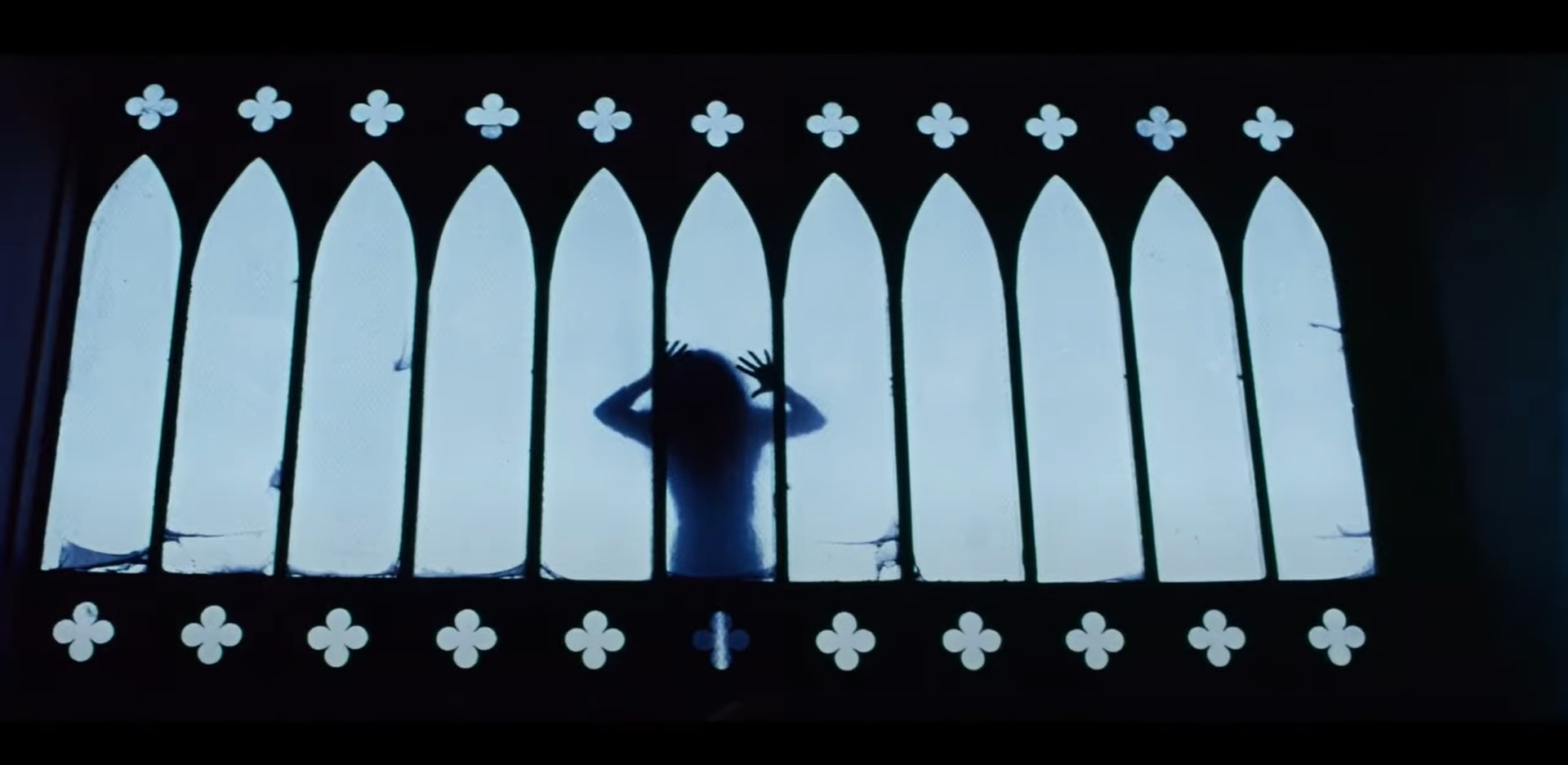
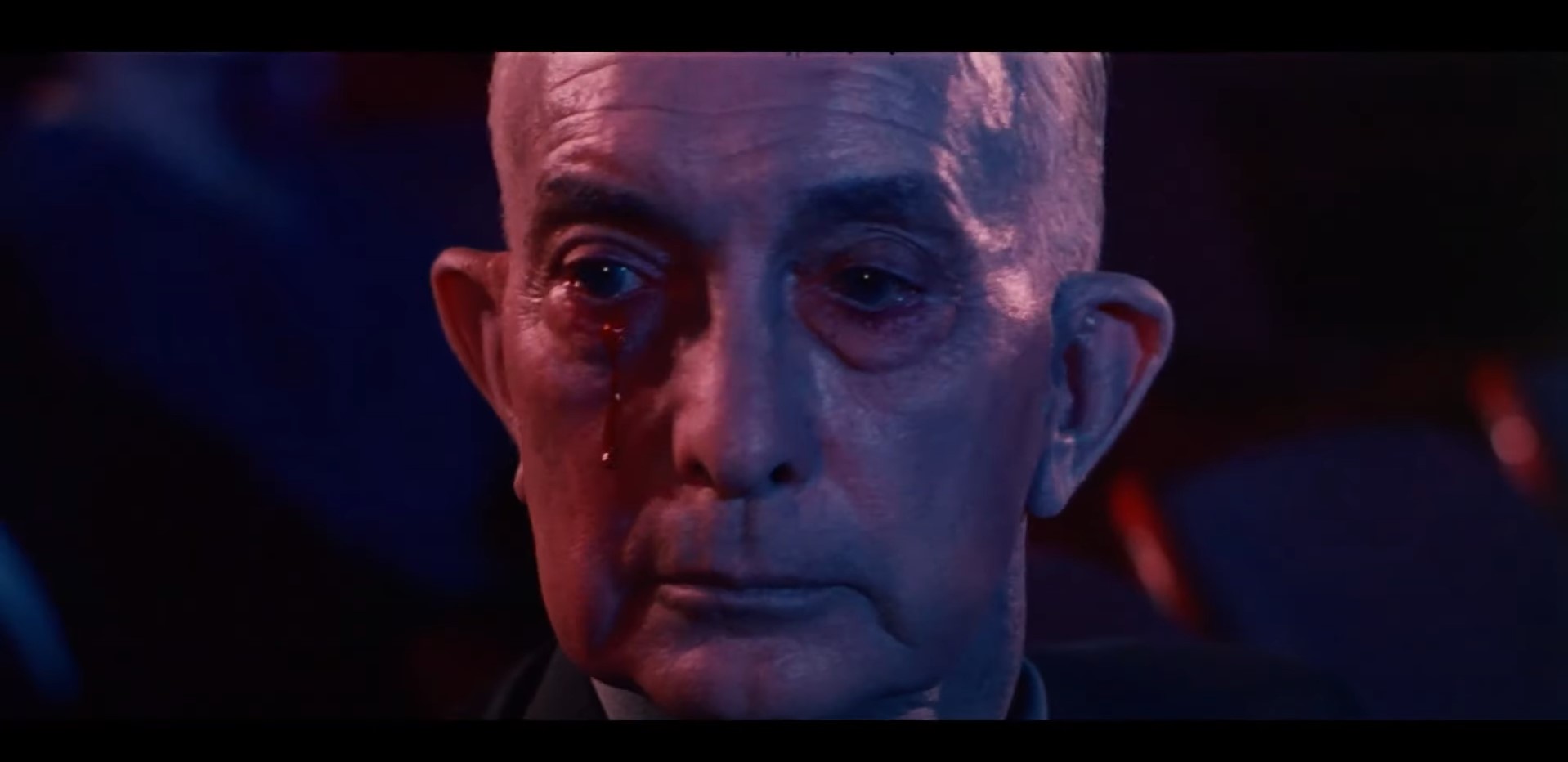
Huyck directs with colorful and verismo synergism that takes the positives of what should be life’s routine pleasures and turns them against us as fantastical and harrowin deadly elements of false securities.  The rolling crashes of Point Dune’s waves takes on a constant cacophony of sinister foreshadowing, a bright and welcoming supermarket becomes a vacant trap in every aisle, the entertaining movie theater darkens with blood on the screen, and an artist’s home, full realistic murals and colors, is an oppressive feast of lifeless eyes.  Point Dune becomes a dead town, literally, as the inhabitants succumb to dark forces from beyond their years, turning primeval in their contemporary three-piece suits and evening blouses.  Huyck and Gatz story pulls inspiration from U.S. history and folklore to mark the 100-year return of spreading evil amongst the land, an evil that resorts to cannibalism by either spellbinding archfiend, an internal infection, or the rise of the undead and not just any mindless, shuffling, flesh-eating zombie but a transmogrified plotter able to move fast and think as a single unit with the touched by evil masse with telltale signs of a single rivel of blood seeping from out of their eye and their insatiable need to consume other people. ”Messiah of Evil” is not overtly graphic like George A. Romero zombies or like the unbridled number of zombie films to follow inspired by Romero’s zombie game-changing wake for the last 60 plus years, separating the flesh-eaters from Romero’s gut-gnashing, pale faced, and slow-walking undead and Huyck and Gatz’s transmitted pestilent receiving horde running fast in their best church shoes with vastly different traits. Huyck and Gatz dip into more eldritch means with the return of a paganistic dark stranger in a pared down explanation without explicitly being definitive who or what the dark stranger (a demon?Antichrist?) is that is driving foreboding signs to a doomsday-disseminating end. ”Messiah of Evil” thrives as the mysterious and strange fulcrum of the beginning of the end told through the point of view of young woman left to tell the world of what’s to come only to be about as believed as much as a man wearing a polka-dotted tutu who has delusions of unicorns dancing the waltz with garden gnomes in his front yard. 

United Kingdom distributor Radiance Films releases a new restoration transfer of “Messiah of Evil” also on their U.S. line. The AVC encoded, 1080p high-definition, BD50 presents a 4K scan of the best-known surviving 35mm print from the Academy Film Archive in a widescreen 2.35:1 aspect ratio. As noted in the release’s inserted booklet, the restoration processes used was the Digital Vision’s Phoenix Finish and DaVinci Resolve was used for color correction, under the supervision of Sebastian del Castillo at the Heavenly Movie Corporation. Audio was also restored with the Izotope RXB. For a surviving print, the original elements look pretty darn good with barely any celluloid hiccup. No vinegar syndrome, not significant tearing, or exposure to name a few issues of possibility. There are a few minor blemishes and missing or damaged frames that seem to provide an unwanted cut but most of “Messiah of Evil’s” film problems stem mostly behind the camera with a rework of the story during the stop-and-go production and conflicts in marketing the film, hence the various title aliases of the film from around the globe. Other detail low points are when the film is bathed in blue and purple gels and tint for to set an apprehensive wander and wonder while retaining more natural grading in its majority throughout. The resorted audio is a lossless English LPCM mono mix. Really focusing on the electronic score of Phillan Bishop (“The Severed Arm”), the low-frequency score sets a perpetual and durable tone of dread out of place in a prosaic small town, much like the Arletty’s father’s work-of-art home that sticks out amongst the mediocrity. In design, dialogue remains robust yet delicate when the scene calls for it, such as Elisha Cook Jr. story of how he was born in what is essentially him, as a vagrant paid for his story, making the only noise in the room. Dialogue in these moments is greatly discernible with negligible electronic interference. Depth layers the permeating isolation of a town gone mad in unison with the range stretching from the distressing design of rolling, crashing, oppressive waves to the scuffles of zombies’ consuls and heels scuffing against asphalt, pavement, and shattering through panes of glass. Radiance provides English subtitles with their release. Bonus features include a new audio commentary by film historian and horror archetype authors Kim Newman and Stephen Thrower, an archived interview with director Willard Huyck, and a new, feature-length documentary showcasing “Messiah of Evil’s” background, themes, production, and influences by various horror scholars, including Kat Ellinger who also voiceovers a visual essay on American Gothic and Female Hysteria, which if I’m being honest, parallelly treads on similarities with Ellinger’s Motherhood & Madness: Mia Farrow and the Female Gothic on Imprint’s “The Haunting of Julia.” Radiance has in the short time poured their heart and soul into their releases and “Messiah of Evil” is no different with a sleek cladded and clear Amara Blu-ray case that’s subtle in showing less but feeling more on the cover art, opposite of the reverse side that houses a classical black and white compositional illustration of characters. Inside the 28th release for the label is a 23-page color booklet insert with the appraisal writings of Bill Ackerman, transfer notes, release credits, and acknowledgements. The disc is pressed red, much like the red moon in the film, with a stark black title. The Radiance release is unrated, region free, and has a runtime of 90 minutes. ”Messiah of Evil” uses cult fears, satanic panic, and the loss of ordinary life to penetrate the spirit by way of slowly eating at it. The crawling, creeping dread meanders, much like Artletty who is seemingly held in place at Point Dune, and we’re glued to the engrossing rate of the terror to come orchestrated by the captivations of a once married couple on a fast track toward success.

The “Messiah of Evil” has Come to Blu-ray Home Video!

Down the Path of Darkness is EVIL. “The Long Dark Trail” reviewed! (Cleopatra Entertainment / Blu-ray)

“The Long Dark Trail” on Blu-ray at Amazon.com

Set in the idyllic boondocks of Northwestern Pennsylvania, two young brothers plan to escape the abusive grasp of an alcoholic father in search for a better life.  Without a plan and nowhere to go, they go around the small town to collect money from the odd jobs the brothers worked in preparation for their abscond.  While doing so, they come upon information about their mother, who abandoned them at a younger age, that sparks an desire to track her down in hopes that once she’ll lay eyes on them, she’ll want to rekindle the relationship with her two sons, but the trek deeper into the northern woods would be long and arduous through abandoned aqueducts, pine forests, and numinous burial stones belonging to an inimical cult of women controlled by a sadistic leader.  It is the cult where their mother left them to reside and it is there where they are headed on their haunting journey in hopes for a better life.

Tackling impoverished, ill-treated youth haunted by their past and uncertain about their future, directors Kevin Ignatius and Nick Psinakis write-and-direct “The Long Dark Trail” as a tale of resiliency for two close brothers relying on each other to climb out from a pit of despair.  Ignatius and Psinakis have collaborated previously together as writer-director and cowriter-actor in the misfortunate happenings comedy “My Best Friend’s Famous.”  The 2022 drama-thriller marks the first feature film for the filmmakers who explore coming-of-age through trial by fire, or by the supernatural psychological manipulation of enchanted rocks and by the coarse portents of a blood sacrificing cult.  Shot in Ignatius’s birthplace home of Warren County, PA, the two New York filmmakers shoot the low-budget venture under their independent production company, Four Eighteen Films, in association with El Jean Productions and with associate producers Michael Kraetzer (“The Slaughterhouse Killer”) and Nicholas Onetti (“Francesca”) of Black Mandala presenting the film.

“The Long Dark Trail’s” story follows two brothers played by real-life brothers, Brady and Carter O’Donnell, debuting in their first feature film.  You can tell the brothers don’t have a ton of acting experience as their dialogue is very mechanical and their movements are bit stiff and hesitant, but since the narrative revolves around their characters, antisocially bred by the abusive father’s impropriety, being socially awkward on screen, even between each other despite their off-screen brotherhood, doesn’t necessarily feel far-fetched.   “The Long Dark Trail” isn’t a heavy on the dialogue narrative, leaving much of the plot to unfold with the brothers’ wondering the forest grounds, natural and unnatural visual imagery, and the hypnotic folksy score.  From start to finish, Brady and Carter carry the entire storyline from start-to-finish with intermittent spliced in scenes of hooded cult acolytes doing obscure and violent things in what looks to be the upstairs of a vacant barn or with the earlier scenes of the boys visiting and conversing with a purpose with Mr. Barrow as he rambles on about his veteran war stories while the boys take full advantage of his porch sitting to steal food form his cupboards; a role undertook by Kevin Ignatius’s father, Paul “Doc” Ignatius.  The O’Donnell siblings shepherd much of the trail journey’s harrowing phantasms to the best of their ability but are also not limited to being just reactionary to the spooky woods.  Practical makeup effects and some visual compositions are chartered for divisive inducing dynamics in order to drive a wedge between the brothers’ already contentiousness of wanting to traverse a dark corner of God’s country to see a mother that has already forsaken them once.  Trina Campbell plays the indoctrinated mother now embedded into an outskirt cult led by Paul Psinakis’s version of a cult leader in Zeke.  Psinakis has the maniacal wild eyes and brooding aura demarcating him as a clear cut bad guy with a bunch of vary-in-age women in tow but the cult is not very clearly defined as a whole or with a purpose and when the boys stumble into their isolated camp, near that aforesaid barn full of now chopped up body parts and hunting game skulls, the exposition to follow is not presented and the real sense of danger is only palpable from Zeke and Zeke alone. 

While cast and story struggle to make ends meet with relative clarity, what Ignatius and Psinaki do really well in fashioning for effect is depicting the rural folk horror elements of vast natural landscapes that can turn looming and inescapable.  As a resident of Southeastern Pennsylvania, convenience and concrete genetically makeup my quasi suburban-urban scenery, but I can appreciate the opposite side of the state with greenery up to your neck and beyond, the solitude of a different way of life, and how one could also appreciate how menacingly engulfing that can all feel as well.  We’re also not completely stuck to the forest setting as the directors’ use riverbeds and lakeshores, sprawling grasslands, and the quaint town structures to enlarge the presence of a smaller shoot.  Kevin Ignatius isn’t just the co-director of “The Long Dark Trail,” he’s also the film’s composer, another aspect of highlight, amongst other hat wearing titles.  The catchy and mesmeric folk/bluegrass score is a real tribute to Ignatius’s musical background, having formed a band, Das Tapes, with brother Mark, by adding a layering combination of vocal sounds and banjo strumming.  The latter banjo reminisces a little bit of “Deliverance” but with an elongated cadence integrated into the brothers’ long road tour, becoming a mainstay importance to the overall lingering feel of backwater chills.  Where “The Long Dark Trail” fumbles is at the heart of project – the story.  Never really tying the elements all together, the narrative often feels abstract and unhinged in a series of randomized events between the cursed rocks, vivid hallucinations, the boys’ trauma, the women stuck in a cult of a madman, and the message on blood ties.  Was the father’s verbal and physical abuse the root cause of psychological and family brokenness?  Are the brothers’ bond and endurance being tested on the trial trail toward their last form of hope, their abandoning mother?  “The Long Dark Trail” is in a long, dark well of questions without any return of answers in a conclusion that can’t be roughly swallowed along the course of an exceptionally scored and formidable atmospheric thriller. 

“The Long Dark Trail” path leads to at home Blu-ray release from Cleopatra Entertainment, the film banner of Cleopatra Records, and MVD Visual.  The AVC encoded BD25 provides high-def resolution in 1080p of a widescreen presentation.  The Cleopatra Blu-ray does not list the aspect ratio and IMDB.com lists the film at 2.39:1 which is accurate in accordance to the release.  A combination blend of natural and lowkey lighting doesn’t appear to present too many issues with the format storage.  A few signs of pixilation in deeper negative spaces cease to only a handful of decoded moments stark contrast.  For a digital recorded film that’s churning out an average of 25Mpbs, par for the course for Hi-Def, the details don’t display to the fullest sharp potential but are certainly on the edge of so.  You can get better visuals from the brightly lit of primarily color contrasting scenes for a film that’s remains in natural grading.  Also not listed on the Blu-ray back cover is the audio specifications, but according to my player, the release comes with an English Dolby Digital 5.1 surround sound and an English LPCM stereo. The five-point multi-channel audio mix studs the soundtrack with piquant notes, harmonies, and twanging banjo chords. Dialogue is pleasantly defined through the robust soundtrack and the ambience has a nice range of rustle and depth. I’m quite surprised by this Cleopatra Entertainment release that doesn’t come with a second disc, a CD, of the soundtrack, likely due to the score not produced by the parent record label. English subtitles are optionally available. The bonus features include blooper outtakes and behind the scenes footage, an image slideshow, and the original trailer. The back cover also notes an interview with the director, but what’s on the disc is a featurette surrounding artist R.L. Black’s graphic novel artwork for the film and for the forthcoming comic based off the film. There is no interview with the director. The rest of the bonus material rounds out with Cleopatra Entertainment trailers of “The Ghosts of Monday,” “Frost,” “A Taste of Blood,” “Escape from Area 51,” Baphomet,” and “Scavenger.” The film is housed in a traditional Blu-ray snapper with a rough and ready composite of a skull looking to swallow the bicycling boys on the dark path with a dark lit moon overhead; a missed opportunity in my opinion as there’s a better poster out there for the film, a more graphic poster, of one brother’s bloody head split down the middle and opening for the other’s brothers face to show. The Blu-ray is region free, unrated, and has well-paced runtime of 78-minutes. Likely not to please by or understand by most, “The Long Dark Trail’s” coming-of-age narrative wrangles with what’s most important for a folk horror film of its kind – either to be an apparatus for breathtaking countryside imagery or of trauma that is tense-laden and tearing families to pieces – and unfortunately, the feature couldn’t be both.

“The Long Dark Trail” on Blu-ray at Amazon.com