Tony Todd’s Last EVIL Released Film! “Cutter’s Club” reviewed! (Full Moon Feature / Blu-ray)

“Cutter’s Club” is Ready for Your Corpse! Buy it Here!

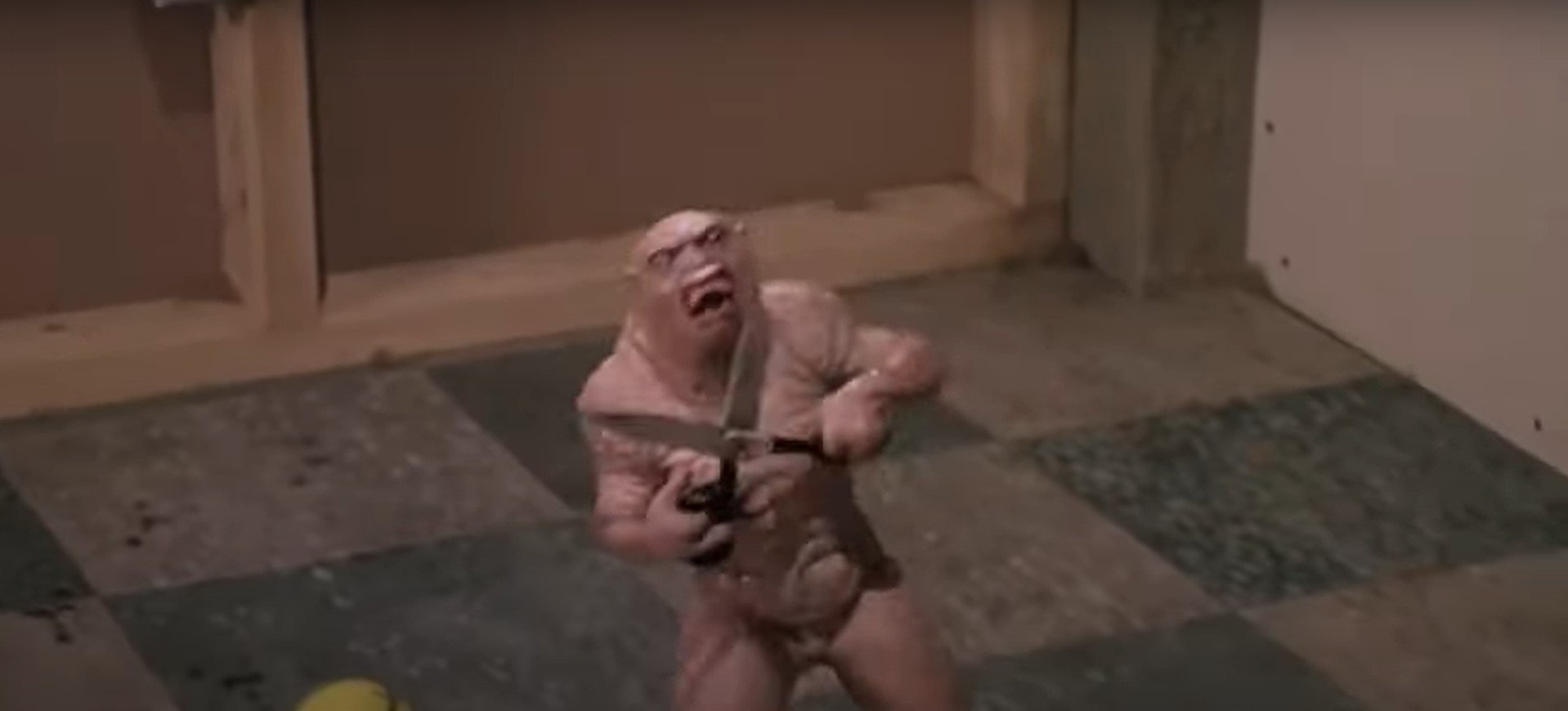
Two promising surgeons Jack and Jill seeking to reach new heights beyond their Hippocratic oath find themselves in presence of Dr. George Roberts, a once renowned surgeon turned obsessed head of a secretly society of surgeons known as the Cutter’s Club who use their skill to be monster makers, craved from slivers of fresh human flesh and harvested internal organs.  Suffering from a severe dissociative order, Dr. Roberts is eager to recruit his former lover and colleague Jill who has the necessary surgical skillset and medical knowledge to bring his two-headed, pint-sized monstrosity to life.  There’s only one problem, Jill’s boyfriend Jack is not in Dr. Roberts’s good graces and is kept out of secret operations to piece together a monster.  As Dr. Roberts’s split personality divides even further and the police become aware of the missing corpses used in their experiments, all of the Cutter’s Clubs efforts, two-headed monster, and even their lives are in jeopardy.

Filmed in 2005, shelved due to lack of funding, and thought lost by the lab storing the negative, the Charles Band directed “Cutter’s Club” went through hell and back to be finally released 20 years later.  The science fiction-horror teeters the same basic premise and principals of David Cronenberg’s “Crimes of the Future” where surgery is the new sex and expressive art, a concept Cronenberg had for decades prior, yet the “Videodrome” director couldn’t fully flesh out the idea into cinematic fruition until recently, starring Viggio Mortensen and Léa Seydoux in 2022.  The script that’s less body horror and more mad science than Cronenberg’s vision is penned by “Thir13en Ghosts” and “AMIEE:  The Visitor” writer, and long time Full Moon narrative collaborator, Neal Marshall Stevens under his pseudonym of Benjamin Carr.  Re-discovered, ironically, the same month Tony Todd died, the “Cutter’s Club” was restored to be the unreleased swan song production from the late and great “Candyman” actor.  Band produces the venture under his founded company Full Moon.

This November is the one-year anniversary of Tony Todd’s death, yet the actor still has new movie releases with “Cutter’s Club” being one of them.  As Dr. George Roberts, Todd plays to his stereotyped tune of being large and in-charge, commanding the screen with his low-frequency voice and intense stares, but Dr. Roberts also has a softer side in his disassociation, a side that’s kinder and gentler against the mad doctor version of himself but that more gentile version barely surfaces and Todd’s ultimately stuck playing an aggressor role he’s all too familiar with and known for.  Not to speak too ill of the dead, but Todd does a bit of overacting with the character by stretching into unnecessary exposition and melodrama, especially when kinder Dr. Roberts briefly sits behind the driver’s seat.  A more down-to-Earth performance comes from Melissa Searing (“Deadly Beloved”) as the anti-heroine Jill.  Grounding an overly articulated Todd to the story, Searing makes for a decent ambitious surgeon trapped inside the confines of the law and ethics and being romantically attached to colleague Jack who’s own self-indulgent inclusion is motivated by the affection he has for Jill.  Played by Davee Youngblood (“Bigfoot County”), Jack looks like the typical Full Moon principal white guy actor that’s more surfer dude with an early 2000’s spikey hair and puka pendant necklace and less defined as a serious surgeon other than wearing the blue scrubs.  Along with Todd’s Dr. Roberts, the Cutter’s Cub society is comprised of lesser disturbed promising medical professionals with David Sean Robinson, Jemal McNeil, and Raelyn Hennessee in various facets of medicine from anesthesiology to retrieving dead bodies from the morgue to being star students when it comes to surgery.  The latter Hennessee is also supposed to playing the jealous other woman to Jill with an at interval relationship with Dr. Roberts that suggests a level perversion or infatuation we’re never privy to.  Jon Simanton, from another Charles Band production “The Creeps,” fills out the cast as the man in a monster suit, stuffing himself into Two-Head, the pieced together monstrous creation.

Without a doubt, horror fans will flock to get their hands on the last and once lost Tony Todd title, but as with many notable genre actors, only a handful of first-class films out of many of the horror legends’ filmographies deserve to be stamped and sealed into their legacy.  “Cutter’s Club” will not be one of those remarkably renowned films.  And like usual, the interesting story of monster making and crafting art out of the flesh of the recently deceased is cut off at the knees by the production’s lack of funding, funding that has rarely been outside the inbreeding of crew talent that retains a certain staleness and the necessary funding to elevate “Cutter’s Cub” from out of the depths of dirt cheap filmmaking and into novel and crisply stylish territory.  Charles Band also nearly always finds a way to integrate his fascination with miniaturized dolls and creatures by having Two-Head be short and stout side villain, adding his directing trademark where he can.  You know it’s a dime-store production not by the rudimentary crafted man-in-a-shoddy-monster suit or the bunch of greenhorn actors that can’t express lines or actions without sullying themselves but rather by the obvious nude nipple pastie on Melissa Searing as she rides an over-sex acting Davee Youngblood nearly convulses out of the bed while lying on his back.  While nude nipples pasties themselves don’t indicate the production’s value, its the from behind-and-over-the-shoulder perspective camera shot that provides a little Searing side boob with the bubbling and loose pastie that really speaks to the fast-and-loose “Cutter’s Club” construction, screaming to the top of it’s lungs that not even a nipple pastie is worth the time and effort to fix for realism.  The story itself has the bone density to stand on it’s own two feet but has hardly any flesh clingy on the Jill love triangle with Jack and George, Jill’s intense motivation to be beyond the grave of a conventional surgeon’s oath to help people, and the secretly society’s wishy-washy goal that doesn’t quite materialize whether their objective is to sculpt art out of flesh or to be monster makers as their deranged core values.

Todd fans will surely want to pick up this lost but not forgotten movie that has been resurrected from the tomb of misplaced films. Full Moon Features handles their own production and distribution with a Blu-ray release on an AVC encoded, 1080p high-definition resolution, BD25, formatted in a widescreen 1.78:1 aspect ratio.  For an early-to-mid 2000s horror, that pleasant film layer of 35mm stock grain is a sight for sore eyes from modern day digital capturing with natural saturation and texturization that provide better practicality to the picture quality. Depth between medium to close up shorts offer plenty of outline and detail around the simultaneous focus points.  There’s not a ton of color range or texture with a most of the mise-en-scene blends a bland swirl of greens, browns, and blacks mostly only a few micro pops of brighter hues, though muted from the desaturated grading, coming through with Jack and Jill’s blue scrubs and we do get some nice sliminess from Two-Head’s stucco flesh.  Full Moon encodes two English audio options:  a Dolby Digital 2.0 and a Dolby Digital 5.1.  Both mixes keep put mostly in front with little atmosphere surround through the back and a front channels, resulting in the stereo mix to be just as adequate as the surround.  Dialogue retains prevalence throughout with the carnivalesque soundtrack of a usually tagged team of Charles Band-directed and Richard Band scored mix replaced with the Jonathan Walters trickling keyboard struck alto keys of menacing science.  English closed captioning is available.  Special features include an interview featurette with director Charles Band and actors Melissa Searing and Davee Youngblood.  The official trailer rounds out the special content laid out alongside a Full Moon promotional trailer for their streaming video magazine, VIdeoZone.  The standard Amaray Blu-ray contains collective character compositional artwork with no other physical trimmings.  The 82 minute, not rated film has region free playback capabilities. 

Last Rites: Jack and Jill might have went to fetch a pail of water, but “Cutter’s Club” is the one that fell and broke its crown. Nice to see Tony Todd in a relatively new project posthumously; yet, having no more financial standing to finish, “Cutter’s Club” feels just that, unfinished, as another slapdash, get-it-out-there-on-the-shelves, product to bank as the unseen film.

“Cutter’s Club” is Ready for Your Corpse! Buy it Here!

Next Step in Evolution Leads to EVIL’s War Against the Common Man. “Scanners” reviewed! (Second Sight / 4K UHD)

“Scanners” 4K is Head Popping Good! Buy it Here!

Dr. Paul Ruth is a ConSec scientist, the head of the private contract weapons department on the “Scanner” project.  A Scanner is a highly developed human with psychic and telekinetic powers able to control and damage the minds of others through the nervous system.   Ruth’s latest case is Cameron Vale, a vagrant helped by Ruth to control his self-detriment powers with the use of a scanning suppressive drug known as ephemerol.  When one of Ruth’s past subjects, a renegade Scanner known as Revok, infiltrates and assassinates a live public demonstration of the Scanner project with the intent to wage war on non-Scanners, Ruth’s only hope is to convince to conscript Vale to join the fight and infiltrate against Revok who kills any Scanner who doesn’t join his growing army.  Vale’s search for Revok leads him to learn of a treacherous mole within ConSec and that ephemerol is being weaponized against the normal human race.

On the heels of our Second Sight 4K review of David Cronenberg’s 1979 film “The Brood,” Cronenberg’s following film “Scanners” released two years later in 1981 ups the ante in elaborate special effects and high conceptual themes twirling around in a bowl of body horror soup and is now also available on 4K UHD from the UK Second Sight label!  Like “The Brood,” Cronenberg writes-and-direct a dysphoric film in his birth country of Canadian, per his normal track record of principal production countries, specifically shooting in in the urban and greater areas of Québec, Canada.  The first film of a trilogy, to which Cronenberg did not return to direct the subsequent sequels with both films released a decade later in 1991 and helmed by “Screamers” director Christian Duguay, is a production of the  CFDC (Canadian Film Development Corporation), Filmplan International, and Montreal Trust Company of Canada with Pierre David and Claude Héroux both returning from “The Brood” as executive producer and producer, respectively. 

The face of Scanners has been and always will be Michael Ironside, included on most poster and home video release stills and artworks of a flaringly distorted Ironside as Revok deep in a frighteningly milky-white eyed scanner turbulence.  The “Total Recall” and “Starship Troopers” actor has a face the camera loves, especially in an antagonistic role with Ironside’s gifted devilish grin, dagger eyes, and sarcastic stoic expressions.  However, he is not the heroic lead of Cronenberg’s “Scanners.”  Ironside is not even in the top three headlining credits.  That foremost distinction is consumed by Stephen Lack (“Perfect Strangers,” “Dead Ringers”) in the Cameron Vale role and Lack’s performance is indicative of his name in a completely overshadowed protagonist role.  Lack’s monotonic bordering dangerously to catatonic presence is swallowed up by Ironside who has fewer scenes but instills punchier passion toward his character’s rebellion against humanity cause, plus the contour control over his mannerism and expressions are impeccably cinematic  There are other actors credited ahead of Ironside, beginning with the greatly dramatical Patrick McGoohan (“Escape from Alcatraz”) as the pro-scanner ally Dr. Paul Ruth whose commanding the Vale assignment, “The Clown Murders’” Lawrence Dane as a traitorous ConSec company man Keller in Revok’s pocket lining, and “The Psychic’s” Jennifer O’Neill as fellow pacificist scanner and Vale love interest Kim Obrist.  Each actor finds their individual, attributable, character voice while giving into the required performance with commitment, a sentiment that was not shared by Lack in a strong leading man contender against the forces that face him or scan his mental space.  “Scanners” rounds out the cat with Robert A. Silverman (“The Brood,” “Jason X”), Mavor Moore (“Heavy Metal”),  Fred Doederlein (“Shivers”), Adam Ludwig (“Short Circuit 2”), and Victor Desy (“Rabid”) with that iconic head explosion scene.

To follow up “The Brood” almost right on its heels with “Scanners,” David Cronenberg’s creative synapses were just thunder stroking on all cylinders with ways to evolve mankind into next level grimdark science fiction.  The simple premise of the advanced human condition sparking a potential war between normal man and Scanner man with a private weapons developer in the middle, perhaps inadvertently or intentionally coaxing a new breed of man, is elevated by the special effects of Gary Zeller (“Visiting Hours, “Amityville II: The Possession”) and the makeup alley-oop by Dick Smith (“The Exorcist”) to give audiences those head-exploding, vein-popping, fire-starting special effects that are sear so well into the mind they’re virtually unerasable from the mind, as if real life scanners were implementing the reel into the occipital lobes themselves.  Plot devices like these inarguably saturate the cloak-and-dagger, on-the-run, and species-eradicating storyline with leadup anticipation, building suspense through the truth and lies of Vale’s assignment as well as Vale understanding and, ultimately, accepting his gift rather than seeing it as a burden or a blight to his being.  Unlike “The Brood,” “Scanners” leans more into the physical method of effects with not only the pulsing veins and the white contact lenses but Cronenberg amps up the pyrotechnics with violent and fiery explosions, both of which do a number of the body with blunt invisible force ravaging soft tissue, and also sets ablaze characters’ specific, isolated areas for visual awe and a presentation of a whole new possibility dimension plane of the mind and body that can create, endure, and eventually destroy.   

“Scanners” rounds out the pair of Second Sight’s David Cronenberg releases onto 4K UHD, in conjunction with “The Brood.” The HEVC encoded, 2160p ultra high-definition, BD100 houses the director approved 4K restoration transfer, presented in Dolby Vision HDR10 and in a widescreen 1.85:1 aspect ratio. Previous HD releases favored a slightly anemic image with a tilted color grading that never approached the aesthetics of the cinematic era. Second Sight improves on this with a present in time natural grading true to the late 70s into the early 80s. Healthy, organic grain filter through with an agreeable measure, never overtaking the details that effect upon texture and substance, such as from the massive head explosion with all the intricate gory bits of hair and flesh flying splattering about make for ideal visual immersion to the more macrolevel of inside circuitry when Vale enters the computerized nervous system through scanning. Skin tones render over organically with no flashes of a slightly orange tinge as in previous releases, corrected to overall completed neatness on the finer points. An English DTS-HD 5.1 master audio and a LPCM 1.0 mono consummate the release with fidelity honoring mixes. The surround sound offers a constructed immersive dynamic riddled with explosions and a feverish Howard Shore score engulfing the echoing of the scanner waves to denote the telekinetic or psychic use, but the mono track offers something far greater than any retroactive designed immersion track could offer, a genuine, unforced mix. Both tracks offer clean, robust dialogue with a clarity to match. English subtitles are available on both. Special features include a new audio commentary by Canadian film writer Caelum Vatnsdal and a second audio commentary by film academic William Beard. If comprehensive interviews straight for the horses’ mouths are your thing, than Second Sight has you covered with new and archive interviews with Stephen Lack My Art Keeps Me Sane, Michael Ironside A Method in His Madness, Lawrence Dane Bad Guy Dane, cinematographer Mark Irwin The Eye of Scanners, composer Howard Shore Mind Fragments, executive producer Pierre David The Chaos of Scanners, makeup artist Stephen Duplus Exploding Brains & Popping Veins, and with makeup effects artist Chris Walas Monster Kid. A new visual essay by Tim Coleman Cronenberg’s Tech Babies cabooses the special features. Encased in a traditional back UHD Amaray, the new artwork also sports a prominent and looming Michael Ironside as a raging scanner Revok but now Stephen Lack has presence space with his own iconic and disturbing moment from the film now on the front cover, as the little spoon of course. The companion standard Second Sight release of “Scanners” is UK certified 18, has a runtime of 103 minutes, and is region free!

Last Rites: “Scanners” never looked so good. An exceptional inception of a release from Second Sight Films that continues to aim high and raise the bar with every title they touch, like King Midas without being cursed by their success.

“Scanners” 4K is Head Popping Good! Buy it Here!

Rage EVIL Leads to A Legion of Drone Dwarfs! “The Brood” reviewed! (Second Sight / 4K UHD)

“The Brood” Available Now from Second Sight!

After a series of mentally abusive behavior, Frank Carveth’s wife Nola resides under the unorthodox psychology of Dr. Hal Raglan whose controversial impersonation techniques to break down his patients’ dissociative psychological hangups and destructive blocks.  After months of therapy and witnessing Dr. Raglan’s methods in action, Frank is ready to pull the plug on the doctor’s sideshow sessions he deems are doing more harm than good when his daughter shows signs of physical abuse after a visit with her mother.  The prolonged verbal bout to get his wife out of Raglan’s care leads to Frank confiding in Nola’s mother who is found brutally murdered soon after.  When Nola’s estranged father comes into town to oversee the burial arrangements, he’s also brutally murdered.  Frank begins to connect pieces, theorizing that Dr. Raglan’s procedures and the murders may be linked and as he investigates further, the truth is more terrifying than he could ever imagine. 

Surging with emotional turmoil through a bitter divorce with ex-wife Margaret Hindson, Canadian body-horror director David Cronenberg pulled the rancorous inspiration from that turbulent time to write the originial screenplay for “The Brood,” a 1979 released thriller between an estranged couple, the effect of their ascending troubles upon their only child during the separation, and the sort of radical and systematic behaviors and practices used to reform a relationship bond that actually divides the emotional expanse even further.  Sprinkle a little of the unknown and grotesque abilities of unnatural corporeal world in there and you have yourself one hell of a dysfunctional and undomesticated horror only the unconventional David Cronenberg could conjure.  “The Brood” is produced by Claude Héroux, who would go on to produce Cronenberg’s next series of films, “Scanners” and “Videodrome,” and the Ontario filmed production is a studio venture from the CFDC (Canadian Film Development Corporation), Elgin International Films, and Mutual Productions.

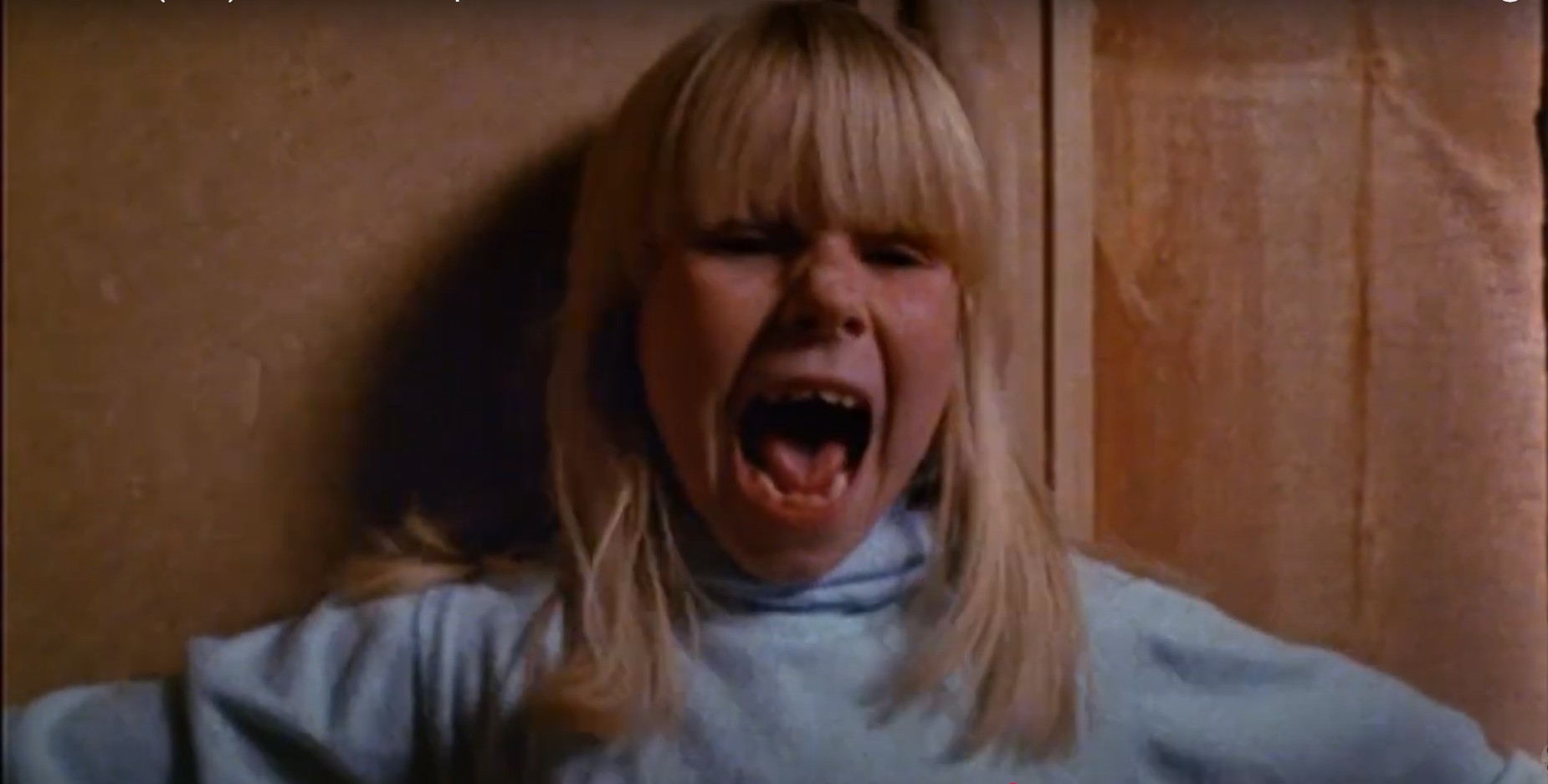
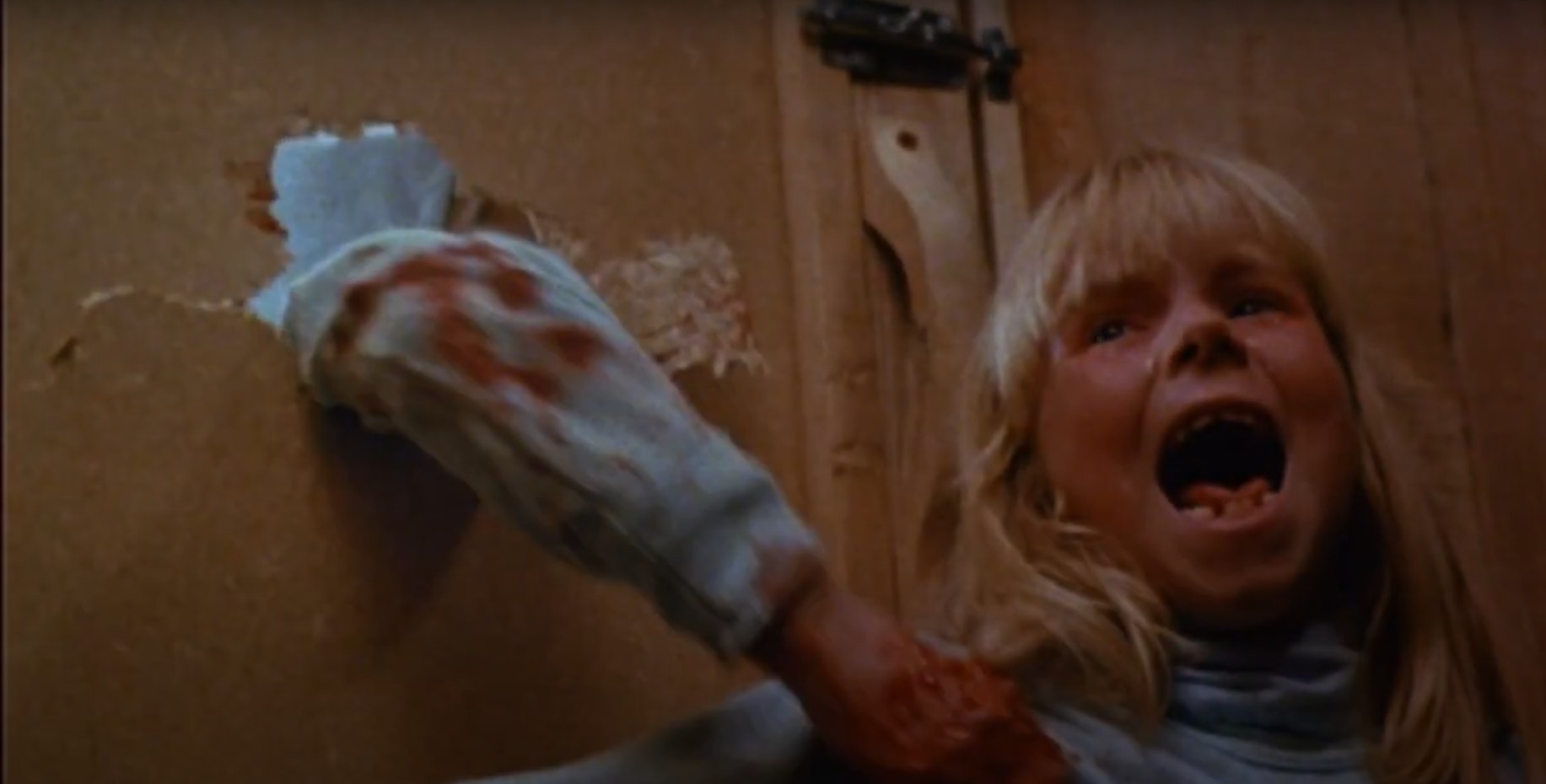
Art Hindle is in the role of Frank Carveth, a father initially skeptical and frustrated with his wife’s supervised treatment and care.  The “Black Christmas” and “Invasion of the Body Snatchers” actor Hindle plays the role of a hinged investigative husband-parent involved into something far more unbelievable than initially imagined.  Next to his on screen dazed and mentally tarnished wife by Samantha Eggar, of “The Exterminator” and “Demonoid,” Hindle enacts normal responses that carry over into extreme situations when those around him – his mother-in-law (Nuala Fitzgerald, “Obsession”), his father-in-law (Henry Beckman, “Side Roads”), and his daughter’s teacher (Susan Hogan, “Phobia”) who might have had a little something-something with while on the rocks with the misses – dies a violent death at the hands of kid-sized mutants that resemble, partially, his own daughter Candace (Cindy Hinds, “The Dead Zone”).  As Nola Carveth, Eggars is only present in a few scenes alongside Dr. Raglan, played by the formidable British actor Oliver Reed (“Paranoiac,” “Gladiator”), as a staring into space, emotionally compromised woman struggling to cope with her past that makes her angry and upset and, in turn, makes her inexplicably conjure do-bidders in the birthing means of advanced evolution or in a parallelism to eusocial insects, like bees or ants.  Reed is the monkey in the middle of all of this between fending off Frank Carveth who challenges the results of his unorthodox psychological methods while also using those methods to unearth the root cause of Nola Carveth’s strange and unusual behavior and, eventual, psychic abilities.  Reeds delivers his typical stoic indifference which makes him ideal for a confident character of the scientific community eager for results rather than feeding his motivations with emotional fodder by empathizing with Carveth’s concerns.  Gary McKeehan (“Rabid”) and Robert A. Silverman (“Naked Lunch”) costar.

In his 50-year plus career, David Cronenberg has evolved in style, substance, and story that dip into more of alternate universes and deliver new ways to blend the future into an organic composite with commercial and social sub context.  While technology and personal and professional growth have developed the director into what he has accomplished and known for today, especially on the verge of his latest release with the living and dead connection theme in “The Shrouds,”  the core of what David Cronenberg does best and still does today has an etiology leading back to his earlier work and “The Brood” is definitely an archetype of his niche.  Cronenberg works the narrative up to his reveal of body horror, and “The Brood” is dangerously on the edge of being atypical, subjecting audiences to more of a buildup in the story and the delimitation of character  disclosure without a steady course of the maladjusted, mutated or modified human body as the villain or the escape, only for that theme to be quasi hinted and then unveiled at the end in a shocking reveal.  “The Brood” plays more of the slasher tones, using the children, dwarfs, or however you want to describe the little, mutant minions to be unknown villain tropes, even when one is laid up on a morgue slab for examination of its biology, or lack thereof.  Cronenberg’s directed ambiguity tees up one of the best endings of his career and, perhaps, even horror cinema as “The Brood” is queen sized stomach-churner, literally.

David Cronenberg’s “The Brood” arrives in 4K on a Ultra HD Blu-ray from UK boutique label Second Sight Films.  The BD100 is HEVC encoded with a 4K resolution or a pixel count of 2160 with Dolby Vision HDR10 and presented in a widescreen 1.85:1 aspect ratio.  On the back cover, the 4K restoration is approved by David Cronenberg.  There’s definitively a more positive treatment of the restored transfer that brightens with a slightly tweaked color grading compared to other DVD or Blu-ray releases, improving delineation as well as rectifying intended details to burst through what’s been long frustrating by a darkened wall of low-resolution definition.  Retaining and sustaining cinema coarse grain, the picture looks and feels incredibly natural without the presence of compromising touchups and smoothing overs that do more harm than good in the plastic-like approach to restoration.  The UHD reinforces the coloring with vibrant richness and range, boosting the once little Canadian film that could into an expensive-appearing optical overhaul that puts to shame previously shelved videos.  Audio fidelity is too retained with a LPCM 1.0 mono that although funnels through a single output is more than an adequate mix all in thanks to the competent sound engineering of Peter Burgess and team to amalgamate recorded sound and post-production ADR into a brawny singular unit that meshes nicely.  Dialogue foots the bill as a clean and clear presentation, the ambient sound design renders distinctly over without ambiguity, and longtime David Cronenberg collaborator and friend Howard Shore conducts an orchestra score that breaks through and keeps the course with an unforgettable amount of tension build.  English subtitles are available.  Special features are aplenty with a new audio commentary by film critics and historians Martyn Conterio and Kat Ellinger, a second commentary with film academic William Beard, interviews with actors Art Hindle and Cindy Hinds moderated by Fangoria’s editor Chris Alexander Meet the Carveths, an interview with executive producer Pierre David Producing the Brood, interview with cinematographer Mark Irwin The Look of Rage, interview with composer Howard Shore Scoring the Brood, an interview with actor Robert A Silverman Character for Cronenberg, a new video essay by film journalist Leigh Singer Anger Management: Cronenberg’s Brood and Shapes of Cinematic Rage, and an archived David Cronenberg interview The Early Years.  The standard Second Sight release comes in the traditional 4K UHD black Amaray case with new unnamed, unsigned illustrated cover art.  The UK certified 18 film is presented region free in this release and has a runtime of 92 minutes. 

Last Rites:  Cronenberg’s play on the word Brood is next level genius with litter rage as a result of mental health and a broken home.  The director’s filmic roots have proved time-and-time again his mastery of moviemaking as his body horror and thought-inducing stories, intermixed with social commentary, are complex visual and narrative devices braised an organic edge. 

“The Brood” Available Now from Second Sight!

Your Hopes and Dreams Come Down to Beating an EVIL Fitness Center in a Workout Marathon! “Heavenly Bodies” reviewed! (Fun City Video / Blu-ray)

Move Your Butt to this Fun City Edition of “Heavenly Bodies” on Blu-ray!

Working 9-to-5 has a secretary, Samantha quits her grinding job to pursuit her passion of owning her own dancercise studio.  Leasing a vacant building with her girlfriends, they form Heavenly Bodies to let the craze of group dancing and aerobics take hold of all those interested.  The success of her rapidly flourishing business persuades her to audition to host a regional workout show while at the same time juggling being a single mother and decrypting feelings for a new man in her life.  After winning the audition, Samantha is targeted by fellow finalist and rival aerobicize instructor from a bigger fitness center having felt deserving to be the television host.  With her relationship heading for the rocks and her fitness studio building being bought outright by the larger investor, Samantha insists on an all or nothing dancercise contest against the rival studio heads, challenging her best versus their best in an hours long workout made for the TV world to see.

Dancercise.  A craze I know all too well watching my mother high-knee kick, arm-twirl, and run-in-place to the programs hosted by Jane Fonda and Denise Austin right in the middle of our living room.  “Flashdance,” “Footloose,” and “Dirty Dancing” are just some examples of the dance centric subgenre that swept through the 1980s.  In the middle of that mix is 1984’s “Heavenly Bodies.”  Written-and-directed by Lawrence Dane, an actor, who had more of a horror lining with roles in “Scanners,” “Happy Birthday to Me,” and “Seed of Chucky, who tried his hand being behind the camera, co-wrote also his first script alongside Ron Base.  The Canadian feature was co-produced by Stephen J. Roth and Robert Lantos, both of whom shared a string of erotic dramas early in his career with “Paradise” starring Phoebe Cates and the sex-comedy “Scandale” but the two parted and became more mainstream on their paths with Roth financing “Scrooged” with Bill Murray and “Last Action Hero” with Arnold Schwarzenegger” while Lantos partnered off-and-on with fellow Canadian and body-horror director David Cronenberg on “eXistenZ,” “Eastern Promises,” and “Crimes of the Future.”  “Heavenly Bodies” is a production of Producers Sales Organization, Moviecorp VIII, and is one of the few less erotic features from Playboy Enterprises.  

Leading the casting headline like her character Samantha leading a group in a dancercise routine is Cynthia Dale.  The “My Bloody Valentine” actress with curly shoulder length brown hair, an infectiously joyful smile, and killer dance body is the heart and soul of what makes “Heavenly Bodies” truly worth watching.  Her long take choreographed dances are breathtakingly fun and gracefully executed, full of energy and sizzle with the camerawork angles that move along every part of her kinetic body.  Samantha embodies the strong, independent single mother who do it on her own terms after setting passion aside once for a man, her son’s father, and is determined to not make the same mistake twice nor back down from being intimidated, but her arc is to change, to fall in love again, and to make sacrifices for not only the sake of her dream but to let someone else into her heart by being flexible and compassionate to their needs.  That person ends up being Richard Rebiere (“Happy Birth to Me”) as the football player who falls for Samantha after his team’s instructed to attend her classes to shape up.  The duo is pitted up against an established, powerhouse fitness center managed by Jack Pearson (Walter George Alton, “10”) and his head aerobics instructor Debbie (Laura Henry) to marathon their way to the last person standing in a 8-versus-8 fitness free-for-all, not to forget some scandalous moments of smooching, swindling, and woman abusing in between.  Pam Henry, Cec Linder, and Patricia Idlette, round out the principal cast with a slew of backup dancers working their butts in shape and officiating contests. 

You think Playboy Enterprises, you think erotic, romantic sleaze with dumbed down dialogue, a half-cooked story, and jazzy, yet soulless soundtrack coupled with candle lit moments and insignificant drama a la carte.  That’s not the case here.  Yes, “Heavenly Bodies” has moments of tenderness between dancer Samantha and football star Steve and fleeting glimpses of nudity, but those bare skin moments are more of a garnish than a main course as the story dishes being a dramedy with a killer soundtrack and a solid acting from main street, legitimate actors, and liberal art performers.  Articles on the film accuse it of being a “Flashdance” imitator and I would be so bold to accuse the authors of those articles to have never seen “Flashdance.”  Dancing along to a hot track does not equivalate two features that share no other plot similarities.  “Heavenly Bodies” stands, or rather dances, on its own two peppy feet in its whimsical nature of an aerobics showdown that determines the fate of a single woman, single mother, and single business owner to topple the threatened-felt commercial giant in a desperation attempt to save face and be relevant. 

Fun City Video steps up to release a new, debut high-definition transfer of “Heavenly Bodies” on an AVC encoded, 1080p, BD50.  The film has been out-of-print for over three decades but now there’s a 4K scan and restoration of the original 35mm internegative presented in the widescreen 1.85:1 aspect ratio.  The new transfer is absolutely gorgeous and rejuvenates the dance-craze 80s right before our very eyes.  Hyper facticity of detail has remarkable texture and color, diffused nicely over all aspects of costume from the leg warming socks to the diversity hued headband assortments, and punctuated distinguishably when sweat soaks shirts and skin.  The grain has natural analog appeal with no hints of DNR or other types of video smooth over or manipulation.  Original elements appear mostly damage free with an occasional dust speckle here and there.  The sole English LPCM stereo 2.0 is suitable mix for this originally at home, premium cable title that pumps and spreads layers through a dual channel output.  Dialogue renders cleanly without a confluence of popping or hissing along the audio.  The integrated soundtrack has stepping and staying power, full-bodied to frenzy synthesizing sound and catchy ballads and motivation lyrics.  Faint crackling or interference in the background but nothing worth really concerning over as there are plenty of other elements audio senses with attune to.  English subtitles are optionally available.  Special features under a fluid menu of one of more ramping up dance scenes includes a new Cynthia Dale interview, a new feature-length audio commentary track with Atlanta based film programmer of cult and late-night cinema and podcaster Millie de Chirico and Jeffrey Mixed, aka Jeffrey Nelson, co-creator of the horror media label Scream Factory, and an image gallery.  The clear Amaray case showcases a retro vibe of multiple boxy colored lines underneath a framed, perspiring Cynthia Dale in low side crouch of her promotional shot for the film’s one sheet.  The reversible side has more artistic illustration of the same post with a tagline and Samatha striking anther aerobic pose in opposite.  The white disc is pressed with a two-tone, darker emphasized silhouette of a dancercise group.  A 15-page one-part faux channel guide, one-part essay by Cinema Studies academic Nathan Holmes is a nice touch of 80s nostalgia and historical context on dance movies of the era.  The region free release is rated R and has a 90-minute runtime.

Last Rites: By no means is “Heavenly Bodies” horror or sleazy sexploitation this reviewer usually injects right into his caustic-cinema arteries, but the Lawrence Dance directed, Cynthia Dale danced cult film embodies eighties elegance this guy grew up in. Those with similar nostalgia enthusiasms or those who find room in their hearts for ridiculous-raving, dancercising dramedies can’t miss out on this intense workout wonderment.

Move Your Butt to this Fun City Edition of “Heavenly Bodies” on Blu-ray!

Backyard is Spacious, Green, and has an EVIL Portal to the Underworld! “The Gate” and “The Gate II” reviewed! (Via Vision / Blu-ray)

Better Hurry! Amazon Has a 20% Coupon for This Very Release! Limited to 1500 Copies.

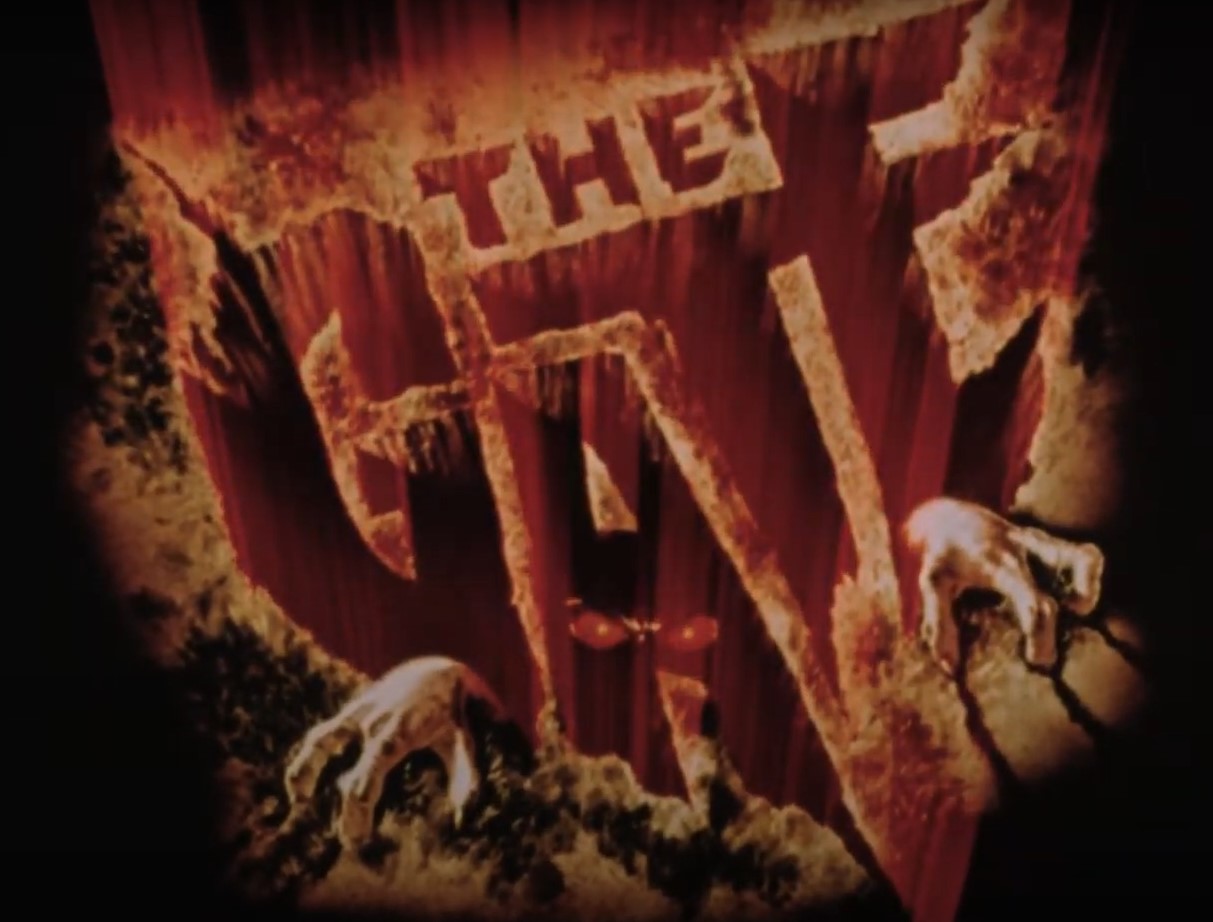
The Gate

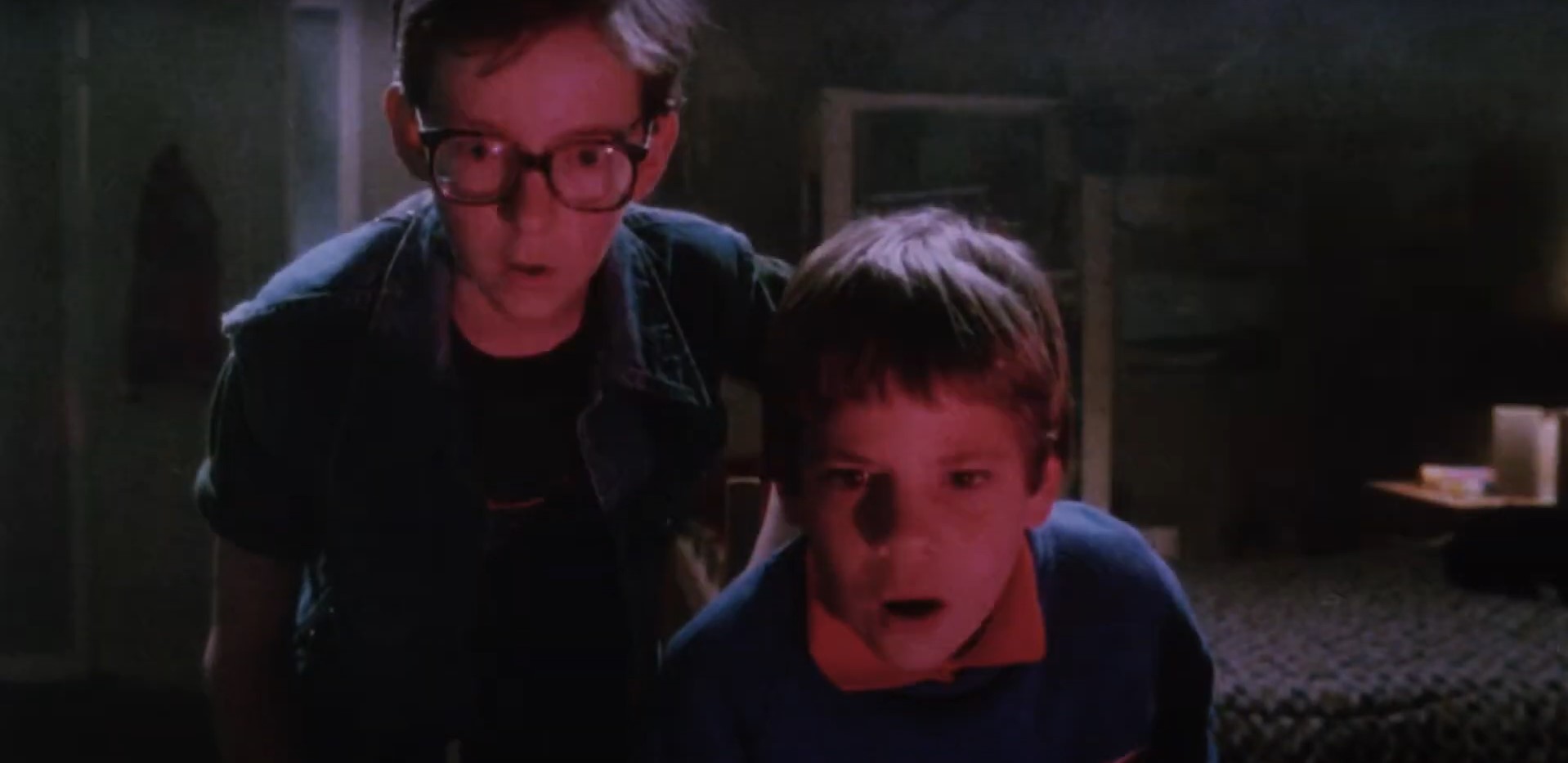
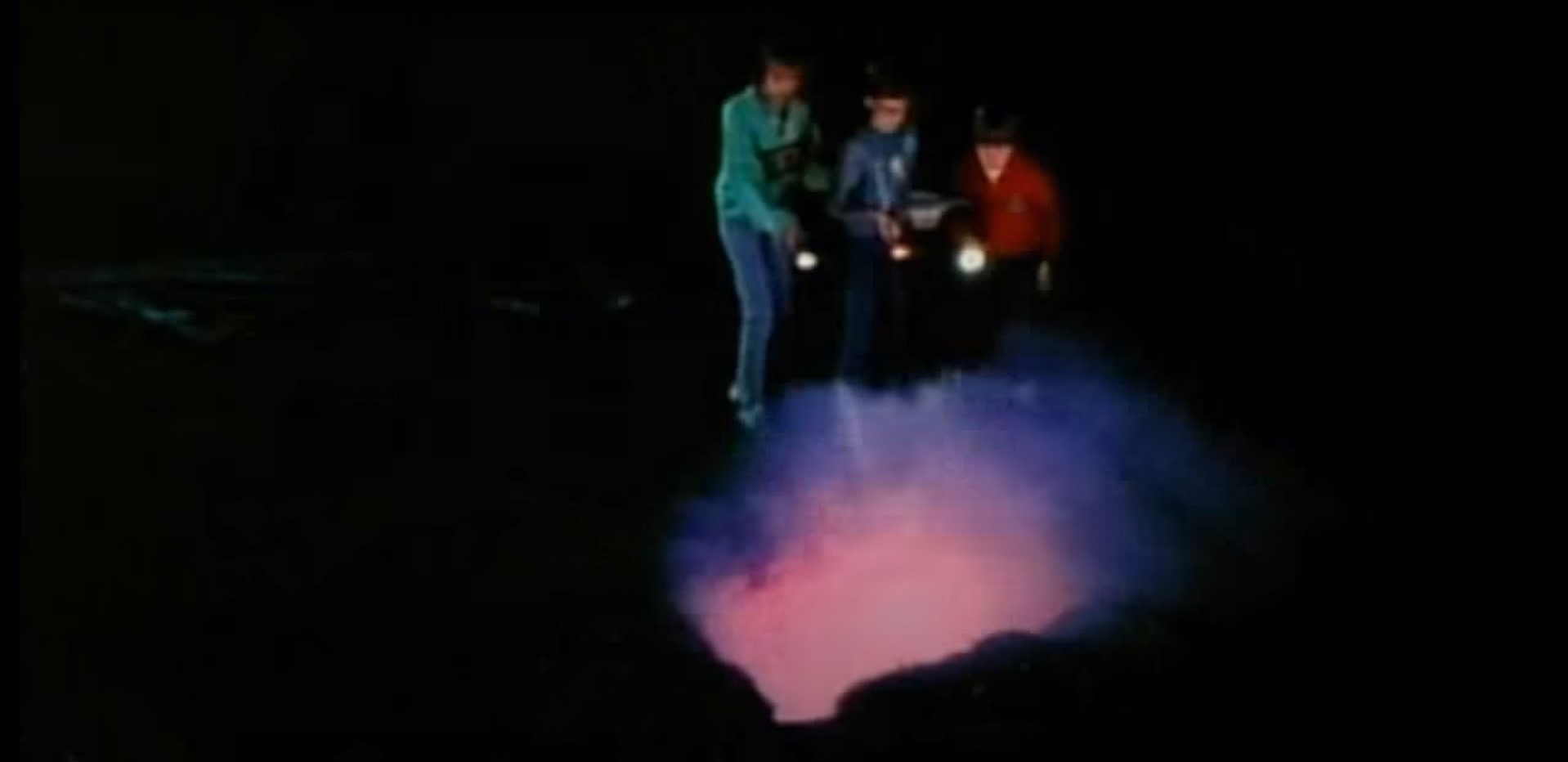
A severe storm brings down Glen’s treehouse, leaving a giant hole in his background.  Discovering what looks to be precious geode rocks, Glen and his friend Terry continue to dig hoping to strike larger, more valuable, geodes.  When they come upon a sizable rock, breaking it open unveils a crystalized liner of colorful minerals as well as a strange gas that unearths an incantation to open a gate to the underworld.  With Glen’s parents gone for the weekend, he, his teenage older sister Al, and Terry must somehow reverse the opening of the gate but demonic-serving, pint-sized minions hunt down a pair of human sacrifices in order to unleash their powerful demon master, an old God reemerging from being locked away from Earth for billions of years.  Serving the night is a fight for their very lives as the minions use their cunning tricks and supernatural powers to deceive the home alone kids into traps in order for there to be Hell on Earth. 

Created in mind to appeal to children with the limitless possibilities of a child’s imagination, “The Gate” caters to a wide audience of all ages.  Hungarian-born Director Tibor Takács and American-born writer Michael Nankin bring out of the shadows the scary corners of a young mind into the light with a demonic tale, a portal from another plane of existence, and a theme of growing up and being accountable in a context of taking head on a doomsday event without mommy and daddy.  The 1987 released Canadian production, shot mostly around Ontario, is the first of two “The Gate” films under the studio flag of Alliance Entertainment.  Presented by New Century Entertainment, as one of the company’s limited credits, “The Gate” is produced by fellow Hungarians in Andras Hamori, who went on to produce fellow Canadian filmmaker David Cronenberg’s “eXistenZ,” and “Quest for Fire” and “The Wraith’s” John Kemeny.

The Gate II:  The Trespassers

Five years after narrowly surviving near Hell of Earth, Terry’s obsession to return to Glen’s abandoned and dilapidated home and resurrect the demonic powers of wish granting stems from his jobless father’s dwindling livelihood, drinking himself into a stupor every night at the bottom of a bottle.  With equipment powered to project his incantations and protect him from evil, Terry is about to begin his summoning when interrupted by three teens led by bad boy John who mostly ridicules his fixation until one of the pint-sized minions comes out of the shadows and is quickly gunned down by John.  The injured minion self-heals and is captured for wish granting exploitation but when the wishes turn into a disastrous chimera, Terry soon realizes that his summoning has not just been answered for selfish motives, but it also re-opened the portal for three power demons to transmogrify from within him and his friends. 

The success of “The Gate” sought the fast tracking of a follow-up story produced within two years’ time after that spoke a different tone and came in a different approach to the nightmarish content and the age of the kids.  Takács and Nankin reteam for “The Gate II:  The Trespassers” who, at the authoritative behest of executive powers, had to take the fantastical lining of a child’s imagination to more extreme measures that evolved the original film’s grotesquely saturated PG-13 rating into a lighter, water downed R rating, removing a good chunk of the viewer base from a theatrical run.  The 1990 released venture was also shot at some of the same sets in Ontario Canada as the first film with Alliance Entertainment returning as producing studio and Vision International presenting to the world.  Andras Hamori and John Kemeny also return as producers.

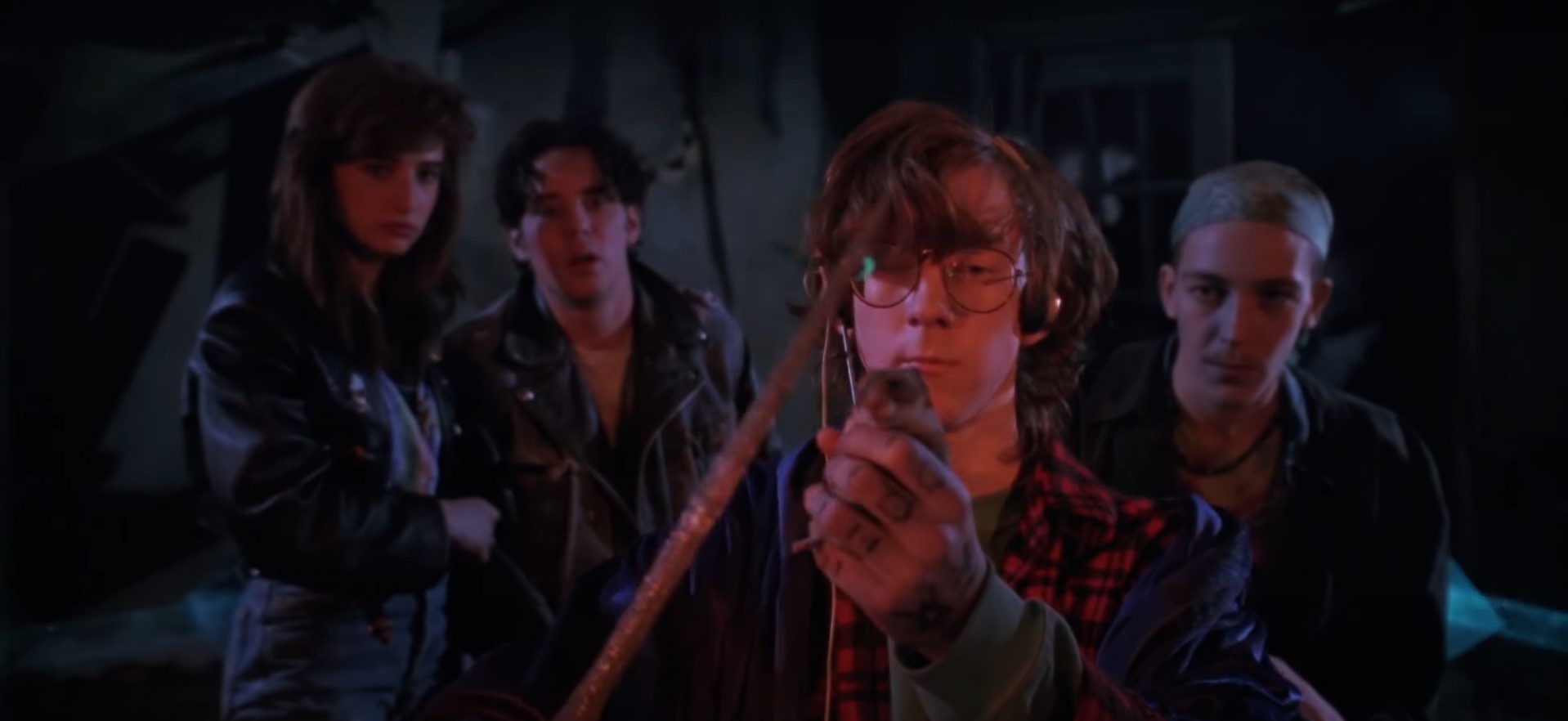
Doesn’t take the understanding mechanisms of rocket science to discern “The Gate’s” cinematic victory.  Demons were all the rage in 80’s from Italian eurotrash to American grindhouse and why shouldn’t the Canadians get into the action?  Special and makeup effects, in themselves, are tremendously impressive, as aspect we’ll go thoroughly more into later in the review.  Yet, the one golden ticket area that deems “The Gate” as an unsullied hero of PG-13 horror is the unaccompanied children misadventure narrative coupled with, or maybe elevated by, good dialogue sanctioned by even better performances.  The 80’s saw scads of children in danger storylines that either had no responsible adult in sight or the adult party was the adversarial danger.  “Explorers,” “Adventures in Babysitting,” “E.T.,” and, one of the biggest examples of all, “The Goonies,” caddied the action-adventure and thrills-and-chills long game for the better part of the 80s decade and “The Gate” teed up on the opportunity, bringing together a trio of varying degrees of adolescents to go toe-to-toe with an ancient evil in what would have been seen as a no-win situation.  In his feature film debut, the barely teenage Stephen Dorff (“Blade”) lead the trio as the highly impressionable and model rocket enthusiast Glen, the youngest of the cast to be the one to save them all, including big sister Al, played by Christa Denton, and best friend Terry, played by Louis Tripp.  Tripp would go on to be principal lead in the sequel that veered away from the fantastically supernatural misadventures of innocence into a more older teen intrinsic narrative that no longer saw the world warp through youthful eyes.  While Tripp segues seamlessly in his role, he finds himself in new territory as the heavy metal and demonology aficionado sparks potential romantic interest in Liz (prolific voice actress Pamela Adlon, “Vampire Hunter D:  Bloodlust”) and is seized by arrogant bullies with two pot smoking hooligans Moe (Simon Reynolds, “P2”) and John (James Villemaire, “Zombie 5:  Killing Birds”), both instances a premiere example of the raw rite through to adulthood.  Again, “The Gate II” keeps adults at an arm’s length away, forsaking youth the challenge of cleaning up their own mess.  Both films fill out their respective performances from Kelly Rowan (“Candyman:  Farewell to the Flesh”), Jennifer Irwin (“Another Evil”), Deborah Grover (“Rated X”), Scot Denton (“Murder in Space”), Carl Kraines (“The Slayer”), and Neil Munro (“Murder by Phone”).

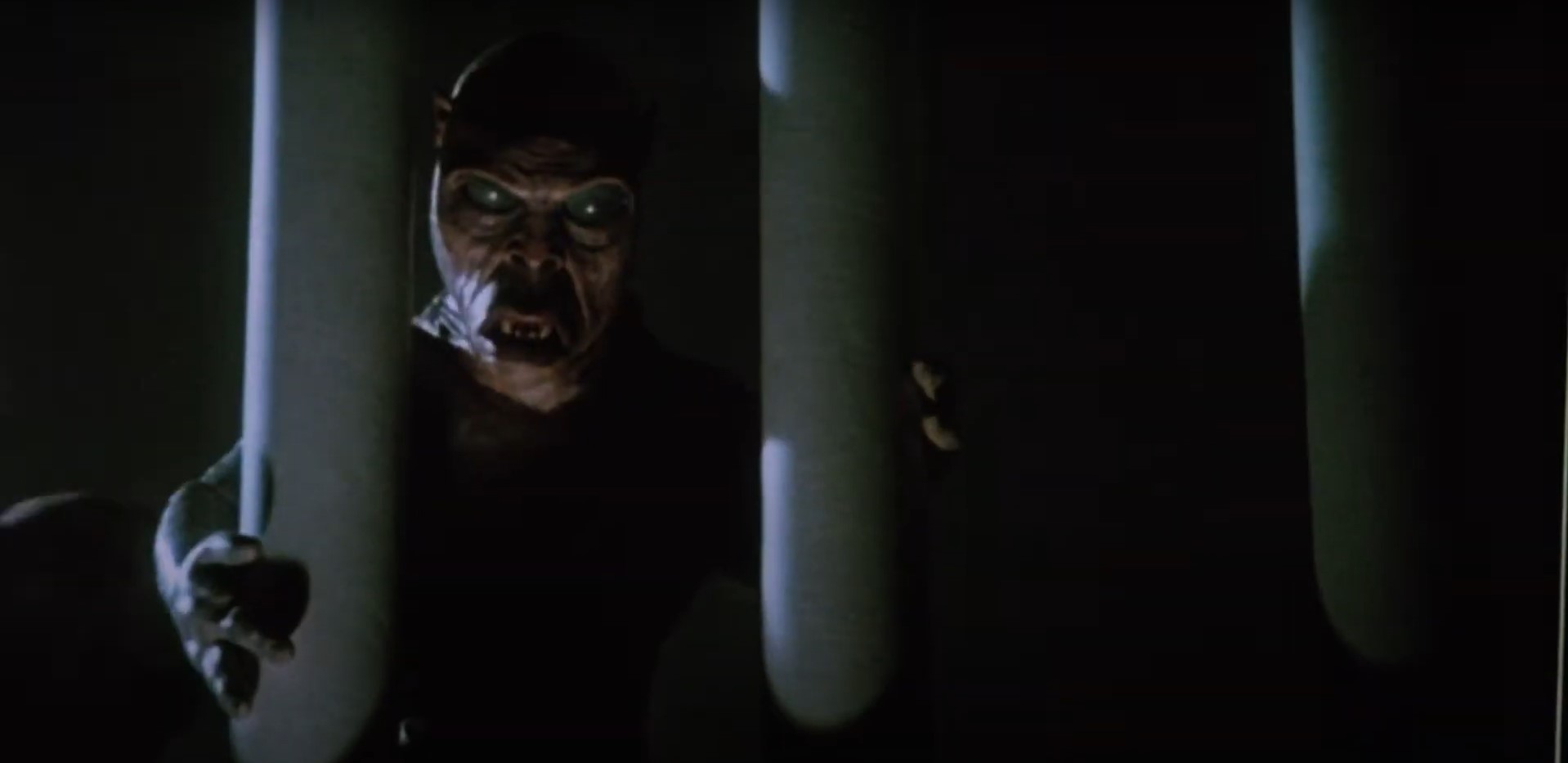
Special effects by the team of Randall William Cook, Craig Reardon, and Frank Carere couldn’t have pulled off an ambitiously suburban horror hyper focused inside Glen’s home any better.  Fashioning mind-bending illusions that are still marveled at to this day, Cook’s forced perceptions eliminates mostly the use of stop motion tactics for the miniature sized minions, replacing the rigid effect with a more lively physical man-in-suit option that smooths out the actions, attributing the creatures idiosyncratically with not only depth of perception to contrast sizes but also shot in a faster camera speed compared to which the seemingly normal sized actors would have to slow down their performances to become level with the creature.  The whole process is crazily multifaceted and mind-boggling effective if pulled out in great detail and “The Gate” team does so, twice, in face, between the two films, with Reardon’s fleshy creature designs enhancing the hideous zeal in the bulbously decaying Workman zombie and even in Reardon’s blamelessly slapped together endgame demons for the ordered change of a quickly surmised climax in the sequel.  As a collaborating unit, the special effects crew pulls off seamless transitions in what is captivatingly pure eye-candy of movie magic.  The stories themselves, especially in “The Gate,” are enchanting, full of mysterious and unpredictability, and stretches the imagination beyond the confining limit as we’re led to inevitable showdown only to be pleasantly accosted on the optics.  The sequel has a rougher go with the story as the narrative feels like a wound-up toy twisted tight to the threshold only to be released spinning in all different types of directions that ultimately lead to an exhausted stopping point. The stark contrast between the two films doesn’t offer a lot of subsequential continuity in narrative and even in some areas of the special effects but the silver lining in that last statement can be a sigh of relief in not receiving a rehashed product sought to recap or repeat off the back of the original’s success. Instead, “The Gate II” begs to be separated to be its own entity and does so while being a homage to the practical illusions that sparks awe, joy, and terror!

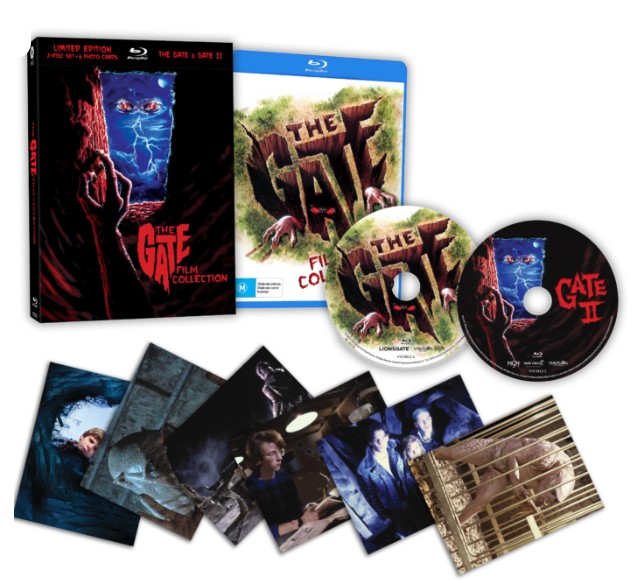
If looking to physically own both “”The Gate” and “The Gate II” in one deluxe package, the Australian based distributor Via Vision has set the bar high with their 2-disc, numbered limited edition, Blu-ray collector’s set. Both films, shown in a widescreen 1.85:1 aspect ratio, are AVC encoded with a high-definition, 1080p resolution on a BD50 (“The Gate”) and BD25 (“The Gate II”) and we’ll come to the reasoning to that split later on. Shot on 35mm and scanned into a 2K print, not many details are noted about what film negative or other print element is scanned to 2K but most of the bonus content on this particular release is Vestron produced, leading to believe the same Vestron print is also used here. Between the two pictures, “The Gate II” has a better saturated image whereas the original film almost seems ungraded with a slight gray concealer that somewhat mutes the hues. The forced perception shots are seamless yet are also delineated nicely that curves into a believable and pleasing symmetry without an inkling of divisional depths. Skin tones are natural looking and textures, such as practical prosthetic masks and molds, score high in all the nooks and crannies of the folds and surface level haptics. The English encoded tracks include a lossy DTS-HD 2.0 stereo codec on “The Gate” and an uncompressed, lossless PCM 2.0 stereo on “The Gate II.” These sole options provide suitable stereophonics without significant compression issues, other than “The Gate’s” minor fidelity data loss, or original source damage or technical gaffs, such as hissing or popping. Dialogue design sees the “The Gate” come out on top over the course of layering and projecting atmospheric augmenting. I don’t get that same sense from “The Gate II” that modulates the dialogue with a redounding heavy-handed echo effect in locations it does not make sense for reverberations. “The Gate” has English and Spanish subtitles with the sequel reduced to just English subs available. “The Gate’s” greater format capacity holds most of the special feature cards with a number of duplicated Vestron produced bonus content, including two audio commentaries: commentary one with director Tibor Takács, screenwriter Michael Nankin, and special effects designer/supervisor Randal William Cook and second commentary with Cook again along with his f/x crew Graig Reardon, Frank Carere, and Bill Taylor. Composer Michael Hoenig and J. Peter Robinson discuss the score with selected isolated tracks to enjoy, a conversation between Takács and Cook in The Gate: Unlocked, Craig Readon in an interview about creating the pint-sized creatures in Minion Maker, an interview with co-producer Andras Hamori From Hell it Came, an interview with actor Carl Kraines aka The Workman aka Terry the Demon The Workman Speaks!, an interview compilation from the local Toronto talent involved Made in Canada, a 2009, archival retrospective look and discussion from Reardon and Cook at their monstrous being handiwork From Hell: The Creatures & Demons of The Gate with Randall William Cook and Craig Readon, a 2009, archival retrospective look and discussion with director and writer Tibor Takács and Michael Nankin The Gatekeepers, a vintage making-of featurette, teaser and theatrical trailers, TV spots, and storyboard and behind-the-scenes galleries. In what is a David and Goliath size imbalance, “The Gate II” special features ultimately will not trump with smaller disc capacity and the lack thereof content but the second disc sequel does contain a new, 2023 audio commentary by Tibor Takács and film historian Jarret Gahan as well as a documentary with Takács, Nankin, and Cook Return to the Nightmare: A Look Back at The Gate II that discusses how and where the film strayed off the intended course, an interview with make-up effects artist Craig Reardon From the Depths, the theatrical trailer, and retain video promo. Via Vision’s limited-edition packaging is another world chic and cool with a rigid sleeve box and a lenticular “The Gate II” front cover art. Slipped inside from the right is a single Amary Blu-ray case with a center stationed second disc attachment. While the front cover on the sleeve box showcases the sequel cover, the Amaray’s reversible cover sports the original “The Gate” cover art with a Glen still image and film cast/crew credits on the other side. Also inside the sleeve box are six fully colored glossy photo cards! Both films are Australia certified Mature for moderate violence and moderate course language and have a runtime of 84 minutes (“The Gate”) and 93 minutes (“The Gate II”). The Via Vision release is region B locked (note: the release did play on my region A setting).

Last Rites: Digging a hole to open “The Gate” and the contradistinctive sequel unburies a pair of underrated underworld-creeping-toward-the-surface 80’s phantasmagorias, a regular doomsday fait accompli with children standing between Hell of Earth and saving the world, and what better wait to see the world potentially burn to the ground than with a beautiful new Blu-ray collector’s set from Via Vision!

Better Hurry! Amazon Has a 20% Coupon for This Very Release! Limited to 1500 Copies.