Cheese Isn’t the Only Snack on this EVIL Rodent’s Diet! “Rat Man” reviewed! (Cauldron Films / Blu-ray)

See Nelson de la Rosa as the “Rat Man” on Blu-ray!

On the Caribbean Island of Santo Domingo, a genetic fiend scampers on the streets.  By injecting the sperm of a rat into a Monkey embryo, one fervent geneticist’s desires to be globally renowned creates a small yet deadly human rat.  Intelligent, agile, and with a lethal poison under its fingernails that could kill a normal size human in a matter of seconds, the creature escapes confines and roams the streets looking for fresh meat to eat.  One of the victims is a photoshoot supermodel from New York City that prompts an unofficial investigation of the mistaken sister to the supermodel and a mystery writer who are now on the hunt for the whereabouts of the others from the photoshoot group.  As the bodies pile up, the rat man wreaks havoc on the small island villages where the survivors and investigators must fight for their life to avoid being gnawed upon.

“Rat Man,” aka “Quella villa in fondo al parco,” translated to “That Villa at the End of the Park,” is the 1988 the Italian-made, creature feature of predominant spaghetti western and poliziotteschi director Giuliano Carnimeo in what would become one of his last feature films  Credited as Anthony Ascot, the western “Sartana” franchise and “The Exterminators of the Year 3000” director tackles the horrors of genetic manipulation with survivalist rodent given primate intelligence, a far cry from Carnimeo’s usual genres.  The screenplay comes from “Demons” and “The Ogre” writer Dandano Sacchetti under the penname David Parker Jr.  Carnimeo and Sacchetti Americanize their credits to appeal more to western audiences who, in the late 80’s, were lapping up Italian horror and creature features starring known international actors in tropical republics and “Rat Man” falls perfectly into that category.  “Zombie” and “The Beyond” producer Fabrizio De Angelis produces the film from production companies Surf Film and Fulvia Film.

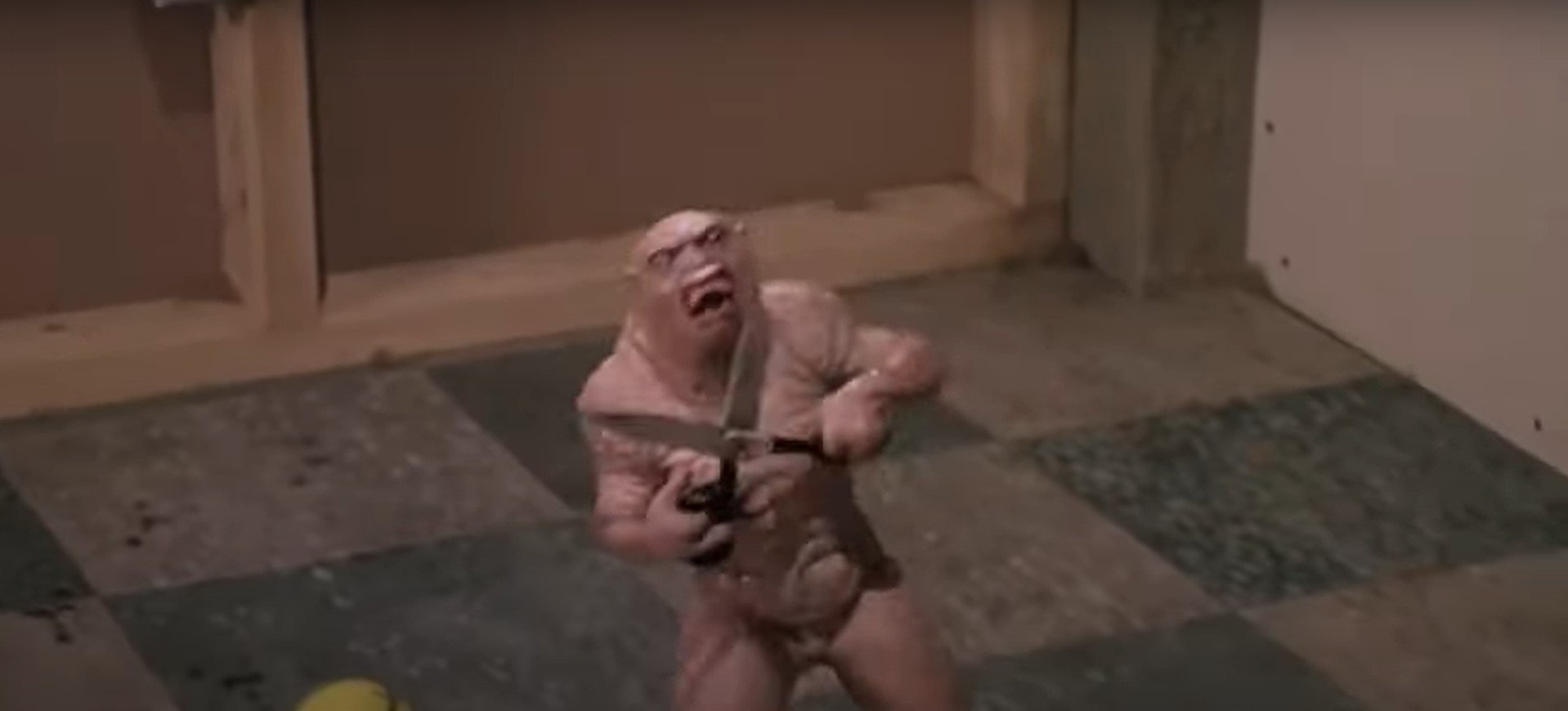
While usually Italian productions go after American names, like John Saxon, Christopher George, or Robert Vaughn, “Rat Man” looked elsewhere amongst the surrounding Anglo-Saxon countries and plucked a few names that lead the charge in what would become a cluster of principals to become ensnared by tropical bred, genetically tainted vermin standing just over 2-feet tall, with elongated sharp teeth, and poisonous fingernails.  Without a defined lead, the script swirls through possible hero and heroine tropes, such as the investigating team-up between New Zealand actor David Warbeck (“The Beyond”) and Swedish actress Janet Agren (“Eaten Alive”) who are no strangers starring Italian productions.  Agren plays Terry who flies into Santo Domingo under the impression her supermodel sister was brutally murdered, and she happenstance meets at the same hailed cab Warbeck’s character, work vacationing mystery writer Fred Williams, who for some reason, some how becomes involved in helping Terry without significant cause or benefit other than possibly the mysterious case being a good plot for his next book.  There’s also the case of the false hero and final girl with the pursuit of photoshop photographer Mark, played by Austrian actor Werner Pochath (“Devil in the Flesh”) and his hot model Marilyn, by Italian actress Eva Grimaldi (“Covent of Sinners”).  These intended, or perhaps not intended, red herrings do make “Rat Man” favorably unpredictable as well as grim in regard to centric characters.  Grimaldi becomes the object of obsession with gratuitous nudity and a showcase of her other assets.  In more forgiving times when the diverging physical differences subjected actors into selective roles, the film employed one of the shortest men in our lifetime with Nelson de la Rosa.  Standing all of 2’ 4 ¼” because of Seckel Syndrome, the Dominican Republic born actor donned the makeup, false teeth, glued-on nails, and the ratty clothes to be transformed into the titular villain.  Limited movements and with no dialogue, de la Rosa’s underrated, give-it-his-best performance reveals to be a bright spot in story about a rat spliced with a monkey with the assistance of some movie magic; that one scene where he climbs up the window drapes and looks over his shoulder at Eva Grimaldi as she sleeps in a dark room and he’s slipping into the shadows gives proper chills.  Cast rounds out with Anna Silvia Grullon, Luisa Menon, Pepito Guerra, and Franklin Dominguez. 

Out in the cinema land, there have been worse genetical abomination movies through the decades.  “Rat Man,” surprisingly enough, champions for the middle ground as a solid, campy, man-made creature-on-the-loose feature with, dare I say it, okay performances, competent camerawork, and a villain unlike any other scampering around.  Sure, there are cheesy moments, but rats do like cheese, or so the stereotype goes, and that adds a layer of relaxation and ease knowing Giuliano Carnimeo had a sense of acceptability rather than trying to make a absolute, serious horror movie.  The one aspect I will mention where there was difficulty in swallowing was the scattered story flow.  “Rat Man” seemed to be everywhere all at once from beaches to the jungle to the vacant streets of Santo Domingo without rhyme or reason.  For a while I ran with the theory the Rat Man followed the photoshoot group, targeting the eye candy for its own perverse desires, but that promising concept was blown to smithereens when the little village of St. Martin had been terrorized and abandoned in a moment of exposition awareness.  Carnimeo’s jump from out of the western pot and into the horror fire translates his eye for the lingering and peripheral dread, much like a showdown of glares that has revolutionized to the lie and wait of the rat man cometh but if only the director could yoke the loose story for a straighter edge, “Rat Man” would have been acute as pestilence in the Italian horror mercati.

The “Rat Man” chews its way onto a brand-new Blu-ray release from Cauldron Films.  The restored in 4K transfer is pulled from the 35mm original negative and presented on an AVC encoded, high-definition 1080p, dual-layered BD50, exhibited in the original European widescreen aspect ratio of 1.66:1.  Primarily in low key, shadows run the range of a creature lurking in every nook and cranny, turning “The Naked Doorwoman’s” Roberto Girometti’s, credited as Robert Gardner, cinematography from darkened eyesore to a penetrating thriller of what’s scuttering beneath the shadows.  Emerging from the color is the perfect diffusion of color and texture underneath the natural looking stock grain.  There also isn’t a compression blemish insight or any kind of unnecessary enhancements from this good-looking print.  The only audio optional available is an English dub 2.0 mono track.  Despite an assortment of nationalities, the English dub does make the distinct accents go away with language uniformity.  Foley strength lies principally in the forefront but does champion the beast with a low growl always at your feet, or face depending on the camera angle.   English subtitles are optionally available and synch well with no errors in spelling or in grammar. Cauldron Films exclusive bonus features include an audio commentary, also available on the audio setup portion of the fluid menu, with film historians Eugenio Ercolani, Troy Howarth, and Nathaniel Thompson, and three Italian language with English subtitles interviews with cinematographer Robert Girometti, camera operator Federico Del Zoppo, and post-production consultant Alberto De Martino. “Rat Man’s” trailer rounds out the special features encoded content. The standard release comes in a clear Amaray Blu-ray case with new illustrated artwork that gives a real sense of what to expect by Justin Coffee. The reverse has the original, and if I might add beautiful, poster art that’s less surmising but more intriguing. Authored for region free playback, Cauldron Films’ “Rat Man” scurries with an 82-minute runtime and is not rated.

Last Rites: Forget setting out the poison, “Rat Man” can’t be exterminated with a phenomenally invincible release from Cauldron Films. In the slim pickings of the killer rat subgenre, “Rat Man” leads the pack rats as one of the more bizarre, degrading, and omnipotent villains ever to be on prowl.

See Nelson de la Rosa as the “Rat Man” on Blu-ray!

An EVIL Cult Summons Back “The Hangman” reviewed! (Dread / Blu-ray)

“The Hangman” Now Available on Blu-ray!

Turbulent connecting father and teenage son, Leon and Jesse, retreat to the West Virginia wilderness for a little rekindling before Jesse goes off to college.  Still reeling after his mother’s death five years ago, Jesse blames his father’s inactivity and his rebuff mismanagement of their family’s pain.  The next morning, Jesse has disappeared, the car has been sabotaged, and Leon fears his son might be in the hands of a pair of racist rednecks encountered the day before.  However, what Leon finds himself in the middle of is much worse when a demon summoning cult retrieves The Hangman from the depths of one of Earth’s seven gates of hell and needs a fresh, young, and angst-riddled body to continue his unharnessed hell on Earth.  Jesse becomes the unfortunate soul at stake and it’s up to his father, and a few local God-fearing allies, to try and stop The Hangman’s noose from gripping tighter.

New York City-based director Bruce Wemple has teamed up again with Dread Production to bring another terrifying tale.  The “Monstrous” and “Island Escape” director cowrites the script with frequently collaborator, actor LeJon Woods (“Baby Oopsie:  The Series,” “Island Escape,” to deliver “The Hangman,” a demonic horror thriller that catapults a father and son’s dysfunctionality into the throes of Hell.  Filmed in the rural regions of upstate New York, doubling as the rural Appalachian wilderness of West Virginia, which makes filming having occurred likely around the Adirondack Mountains instead, “The Hangman” carries with it a longstanding racial infamy attached to a father’s supernatural pickle, being the middle of a demon conjuring cult and the lynching-loving demon itself.  Traverse Terror productions, a division of executive producers Cole Payne Traverse Media, in association with Dread Presents sees executive producer Patrick Ewald from the Epic Pictures Group back “The Hangman” feature while Daniel Booker and Vincent Conroy coproduce.

LeJon Woods not only cowrites the script but the actor for Cleveland, Ohio essentially customizes the role of the father, Leon.  What starts as a man looking to just escape into the great outdoors quickly closes in around him as he feels the pressures of latent hostility when son Jesse (Mar Cellus, making his feature film debut) accuses him of running from his past after the death of his mother, Leon’s wife.  What exactly happens to her is not yet apparent other than an offscreen gunshot but the palpable tension between Woods and Cellus is worth noting in a handwringing moment of enmity around the first night’s campfire; a good tall tale sign that this camping trip is going to be doomed from the start.  This tension sets the stage for what’s to come, a missing son, aggressive bigots, murderous cultists, and a Netherworld lyncher, showcased with an awfully underutilized purpose and screentime appeal, especially being the titular villain.  “An Angry Boy’s” Scott Callenberg gets his chance to shine as an inhuman character, prosthetically made-up with burn scars, greasy strands of hair, and cladded darkly in country chic, but doesn’t have the room to spread havoc or really build the character who’s mostly reduced to lurking the background and letting the telekinesis-driven rope to asphyxiate those not in the know of cult activity.  There’s also a slew of throwaway characters that either are too short-lived to really flesh out their role, such as the eye-gouged, bedridden clairvoyant and the tied-up local Leon saves and becomes a flirtatious love interest/gun-toting assassin (see what I mean by not really understanding the character?) in Lindsay Dresbach (“Pitchfork”).  Except for LeJon Woods, the rest of the cast is comprised of mostly short film or background actors and actresses given the opportunity for an expanded principal performance, including Kaitlyn Lunardi, Rob Cardazone, Jefferson Cox, Daniel Martin Berkley, William Shuman, Ameerah Briggs, Jessy Holtermann, and Richard Lounello.

Riding parallel to “The Hangman’s” resurrected demon on Earth, a father and son’s struggle to grow in postmortem of the only woman in their lives, and the fact that there is one of the gates of Hell located in the West Virginia’s Appalachians premise, the story entails a rather barefaced, as well as slightly overtone, racism theme coursing through its veins.  The Confederate flag sporting rednecks and the all-white, Southern accent contingent of white people against a black man and his son shout bigotry as louds as possible through your personal media setup.  Yet, the Hangman himself is the very representation of lynching, a heinously taboo act that has become a stain on America history, typically executed by racially prejudice Southerners on black people when that simmering, seething hate turns red and vigilante justice rears its ugly head.   Though the villain doesn’t don a white hood and gown or perform any gesture of white power, to say Leon, a black man, who must stop the evilly monikered hangman from taking his son’s soul to Hell, is too big a coincidence to not call a spade a spade.  Wemple and Woods make it clear that Leon’s calling is to be a savior, the chosen heroic that can destroy the Hangman, but while the first two acts climb the ladder of an naïve hero, all the indicating signs point to arbitrary means met with arbitrary characters for Leon with no concrete reasoning why his being deceived into the gateway to Hell area is more than just serendipitous destiny, turning the last act of “The Hangman” into just a one man wrecking ball of hillbilly hell spawn that loses that fate-driven connotation.

“The Hangman” nooses a high-definition, 1080p Blu-ray from Epic Picture Group, the at-home distribution label of Dread Presents.  The AVC encoded, single-layered, BD25 has good curb appeal with negligible compression issues in the feature’s 2.00:1 widescreen aspect ratio, so we get a deeper, broader picture with less resolution flaws.  While the certain background or tree-top scenes present a good visual intake of a bird’s eye views, the grading resides to just above a flat overlay, likely within the 10th percentile of grading possibilities, resulting in a more natural tone.  Details are generally fine when in focus or out of the shadows, which is where the Hangman lurks most of his screentime.  The presented audio options are a lossy English Dolby Digital 5.1 and a Dolby Stereo 2.0.  Dialogue has clear and prominent staying power throughout the stock soundtrack that slightly chintzy the ambience audio works of self-acting rope and other mystical milestones whenever the hangman comes calling.  There’s not a ton of spatial volume to diffuse the audio with balance, leaving a lot of the milieu and action resonances as lopsided near the foreground.  English and Spanish subtitles are optionally available.  The Blu-rays special features include a Bruce Wemple commentary track, a making of featurette with interview snippets with LeJon Woods, a lengthier interview with writer-star LeJon Woods, and a deleted scene.  Physically, the deep scar recesses of “The Hangman”s” white-eyed face and long, unkempt hair becomes the front cover face of Dread’s conventional Blu-ray with a disc pressed with more fascination of a coiled hangman’s noose working down the center ring.  There are no tangible bonus materials included. The region free release comes not rated and has a runtime of 90 minutes. 

Last Rites: “The Hangman” won’t snap the neck of novelty and wanders off the path of the tangent, but does instill a strength of cause, a father-son bond that’s being challenged and motivated when threatened, backdropped by systemic racism.

“The Hangman” Now Available on Blu-ray!

Backyard is Spacious, Green, and has an EVIL Portal to the Underworld! “The Gate” and “The Gate II” reviewed! (Via Vision / Blu-ray)

Better Hurry! Amazon Has a 20% Coupon for This Very Release! Limited to 1500 Copies.

The Gate

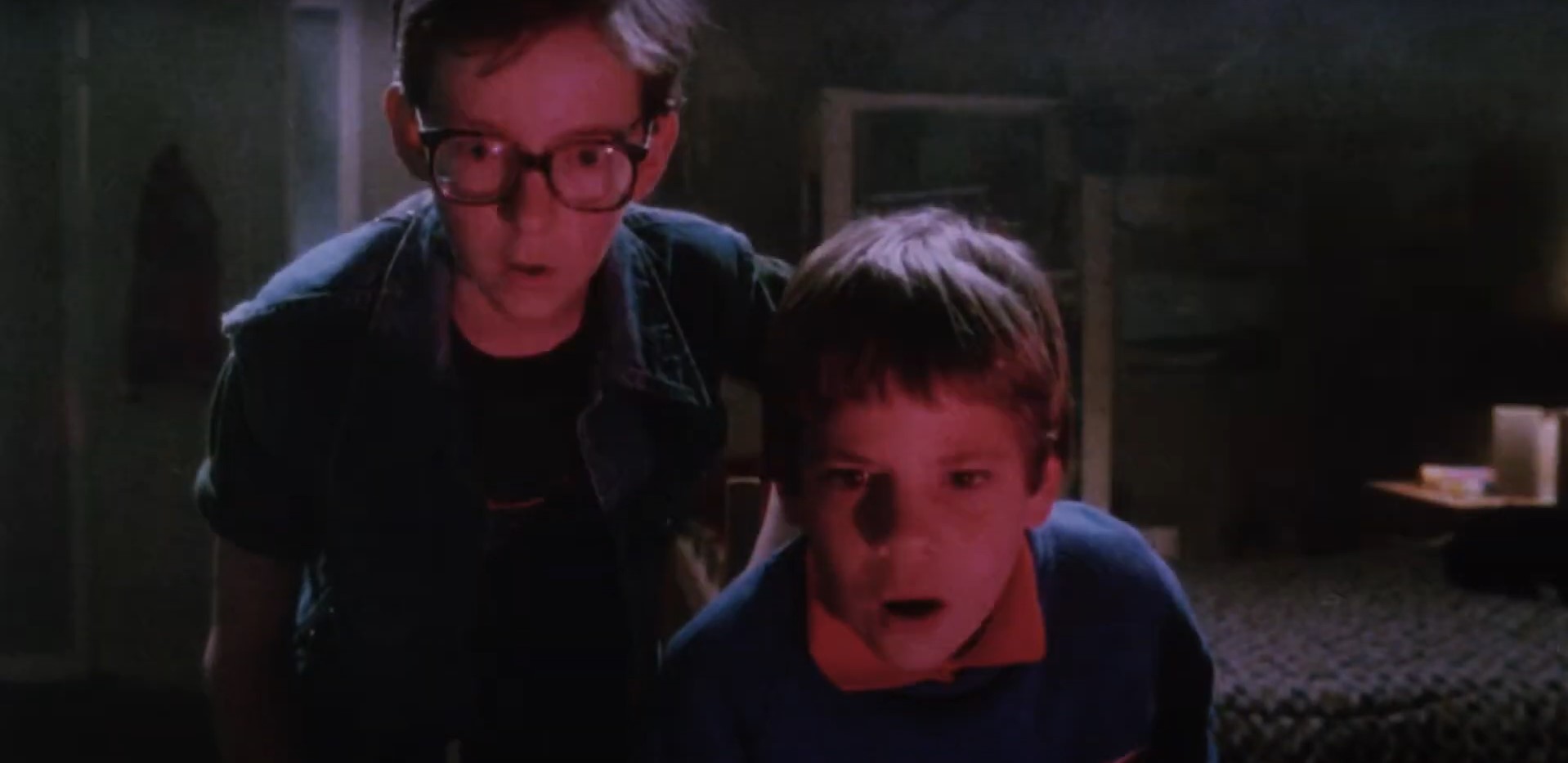
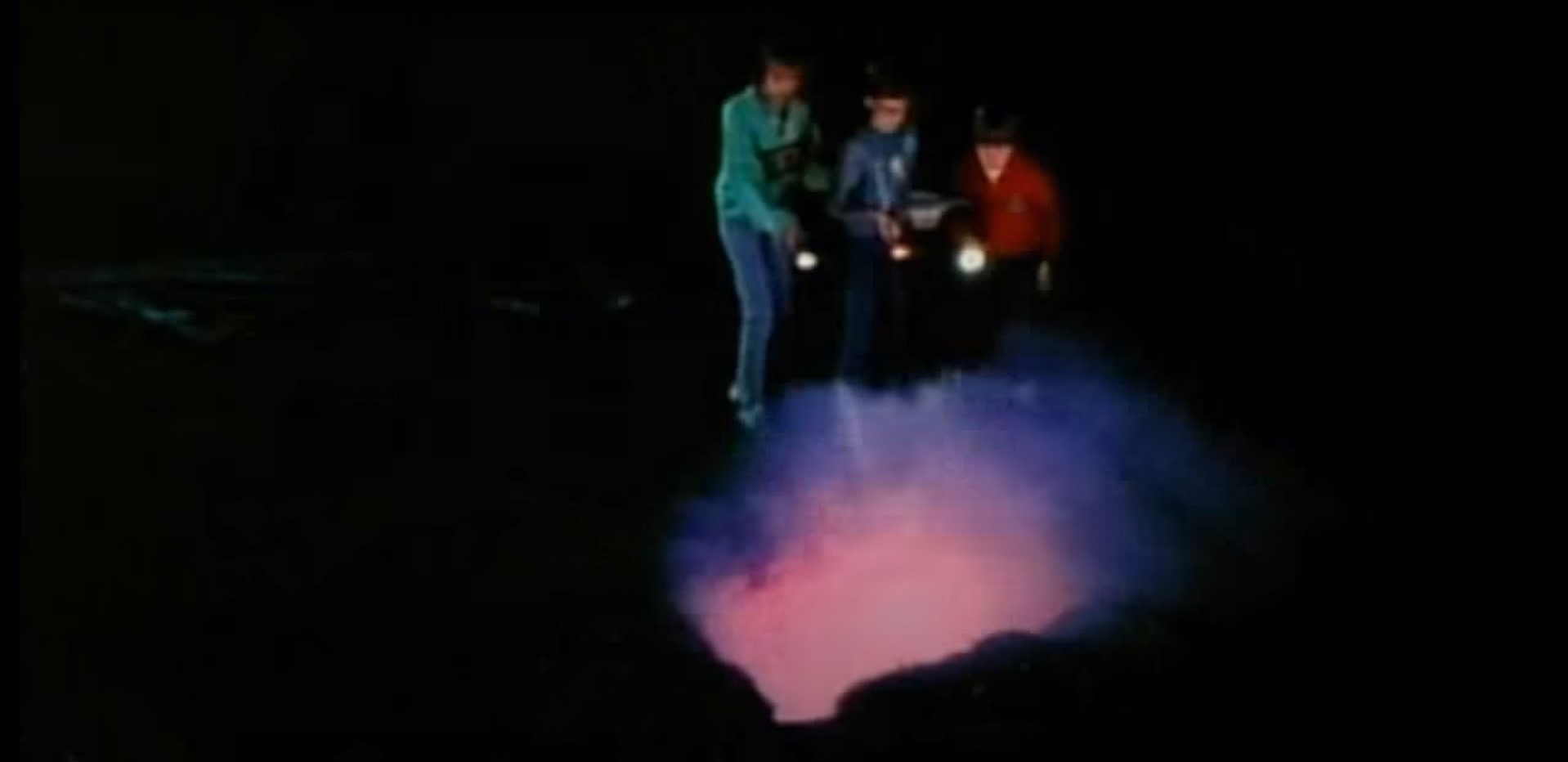
A severe storm brings down Glen’s treehouse, leaving a giant hole in his background.  Discovering what looks to be precious geode rocks, Glen and his friend Terry continue to dig hoping to strike larger, more valuable, geodes.  When they come upon a sizable rock, breaking it open unveils a crystalized liner of colorful minerals as well as a strange gas that unearths an incantation to open a gate to the underworld.  With Glen’s parents gone for the weekend, he, his teenage older sister Al, and Terry must somehow reverse the opening of the gate but demonic-serving, pint-sized minions hunt down a pair of human sacrifices in order to unleash their powerful demon master, an old God reemerging from being locked away from Earth for billions of years.  Serving the night is a fight for their very lives as the minions use their cunning tricks and supernatural powers to deceive the home alone kids into traps in order for there to be Hell on Earth. 

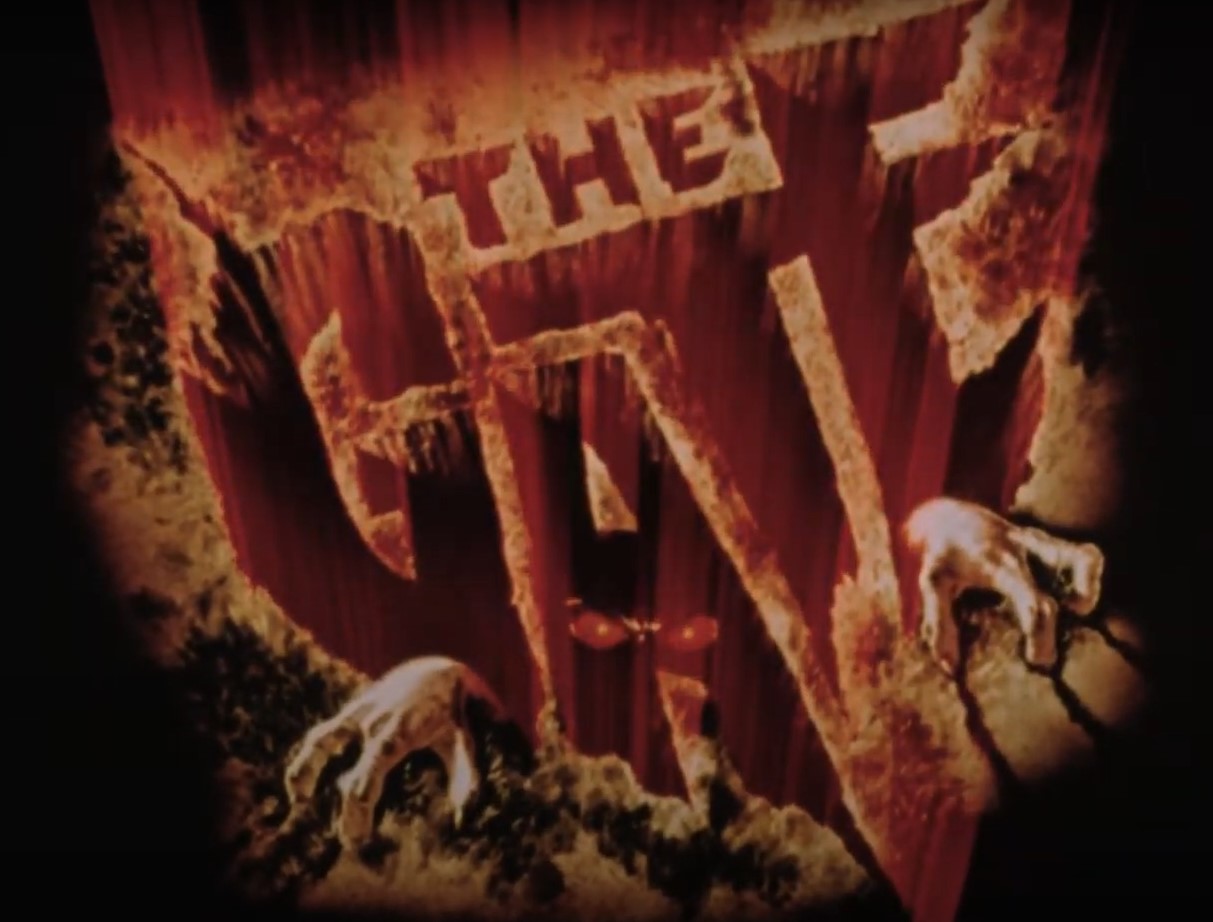
Created in mind to appeal to children with the limitless possibilities of a child’s imagination, “The Gate” caters to a wide audience of all ages.  Hungarian-born Director Tibor Takács and American-born writer Michael Nankin bring out of the shadows the scary corners of a young mind into the light with a demonic tale, a portal from another plane of existence, and a theme of growing up and being accountable in a context of taking head on a doomsday event without mommy and daddy.  The 1987 released Canadian production, shot mostly around Ontario, is the first of two “The Gate” films under the studio flag of Alliance Entertainment.  Presented by New Century Entertainment, as one of the company’s limited credits, “The Gate” is produced by fellow Hungarians in Andras Hamori, who went on to produce fellow Canadian filmmaker David Cronenberg’s “eXistenZ,” and “Quest for Fire” and “The Wraith’s” John Kemeny.

The Gate II:  The Trespassers

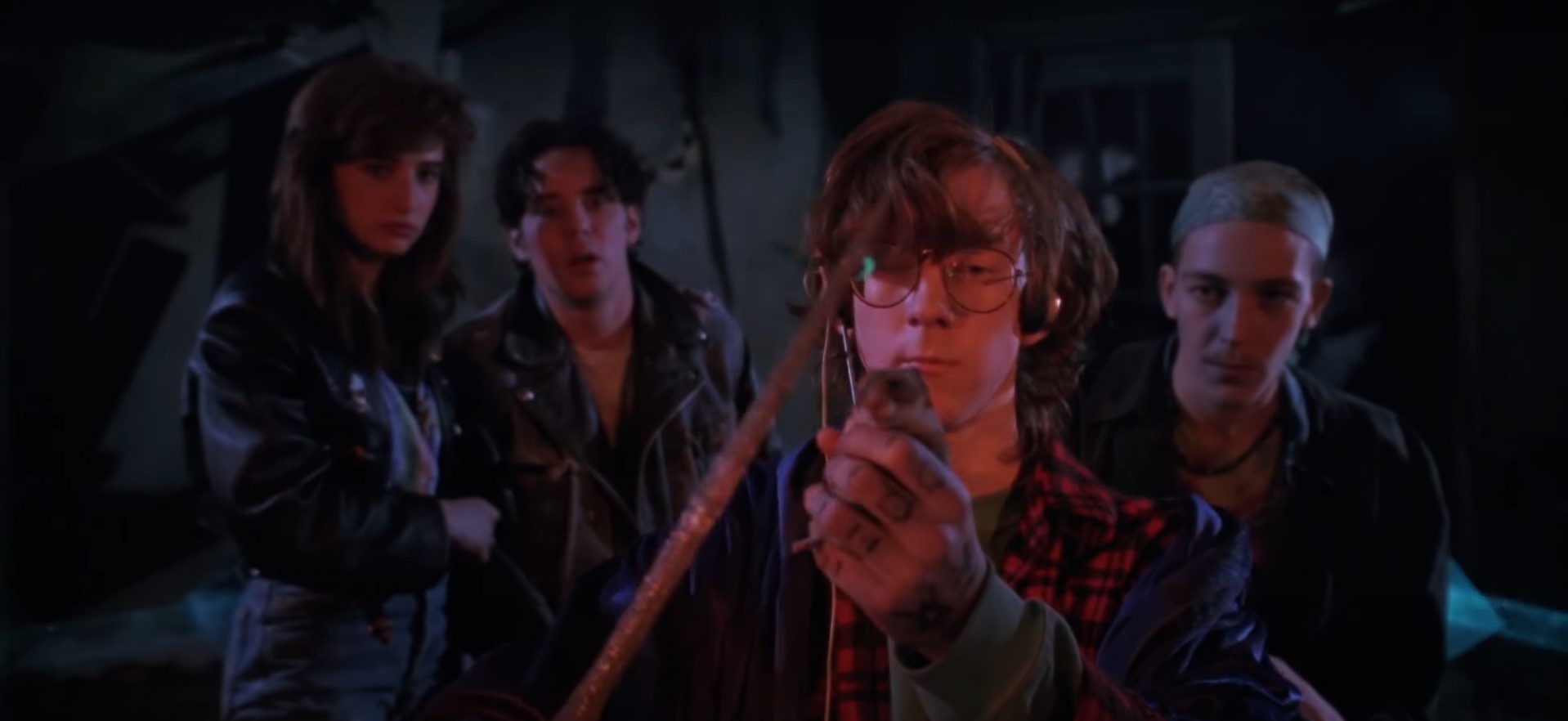
Five years after narrowly surviving near Hell of Earth, Terry’s obsession to return to Glen’s abandoned and dilapidated home and resurrect the demonic powers of wish granting stems from his jobless father’s dwindling livelihood, drinking himself into a stupor every night at the bottom of a bottle.  With equipment powered to project his incantations and protect him from evil, Terry is about to begin his summoning when interrupted by three teens led by bad boy John who mostly ridicules his fixation until one of the pint-sized minions comes out of the shadows and is quickly gunned down by John.  The injured minion self-heals and is captured for wish granting exploitation but when the wishes turn into a disastrous chimera, Terry soon realizes that his summoning has not just been answered for selfish motives, but it also re-opened the portal for three power demons to transmogrify from within him and his friends. 

The success of “The Gate” sought the fast tracking of a follow-up story produced within two years’ time after that spoke a different tone and came in a different approach to the nightmarish content and the age of the kids.  Takács and Nankin reteam for “The Gate II:  The Trespassers” who, at the authoritative behest of executive powers, had to take the fantastical lining of a child’s imagination to more extreme measures that evolved the original film’s grotesquely saturated PG-13 rating into a lighter, water downed R rating, removing a good chunk of the viewer base from a theatrical run.  The 1990 released venture was also shot at some of the same sets in Ontario Canada as the first film with Alliance Entertainment returning as producing studio and Vision International presenting to the world.  Andras Hamori and John Kemeny also return as producers.

Doesn’t take the understanding mechanisms of rocket science to discern “The Gate’s” cinematic victory.  Demons were all the rage in 80’s from Italian eurotrash to American grindhouse and why shouldn’t the Canadians get into the action?  Special and makeup effects, in themselves, are tremendously impressive, as aspect we’ll go thoroughly more into later in the review.  Yet, the one golden ticket area that deems “The Gate” as an unsullied hero of PG-13 horror is the unaccompanied children misadventure narrative coupled with, or maybe elevated by, good dialogue sanctioned by even better performances.  The 80’s saw scads of children in danger storylines that either had no responsible adult in sight or the adult party was the adversarial danger.  “Explorers,” “Adventures in Babysitting,” “E.T.,” and, one of the biggest examples of all, “The Goonies,” caddied the action-adventure and thrills-and-chills long game for the better part of the 80s decade and “The Gate” teed up on the opportunity, bringing together a trio of varying degrees of adolescents to go toe-to-toe with an ancient evil in what would have been seen as a no-win situation.  In his feature film debut, the barely teenage Stephen Dorff (“Blade”) lead the trio as the highly impressionable and model rocket enthusiast Glen, the youngest of the cast to be the one to save them all, including big sister Al, played by Christa Denton, and best friend Terry, played by Louis Tripp.  Tripp would go on to be principal lead in the sequel that veered away from the fantastically supernatural misadventures of innocence into a more older teen intrinsic narrative that no longer saw the world warp through youthful eyes.  While Tripp segues seamlessly in his role, he finds himself in new territory as the heavy metal and demonology aficionado sparks potential romantic interest in Liz (prolific voice actress Pamela Adlon, “Vampire Hunter D:  Bloodlust”) and is seized by arrogant bullies with two pot smoking hooligans Moe (Simon Reynolds, “P2”) and John (James Villemaire, “Zombie 5:  Killing Birds”), both instances a premiere example of the raw rite through to adulthood.  Again, “The Gate II” keeps adults at an arm’s length away, forsaking youth the challenge of cleaning up their own mess.  Both films fill out their respective performances from Kelly Rowan (“Candyman:  Farewell to the Flesh”), Jennifer Irwin (“Another Evil”), Deborah Grover (“Rated X”), Scot Denton (“Murder in Space”), Carl Kraines (“The Slayer”), and Neil Munro (“Murder by Phone”).

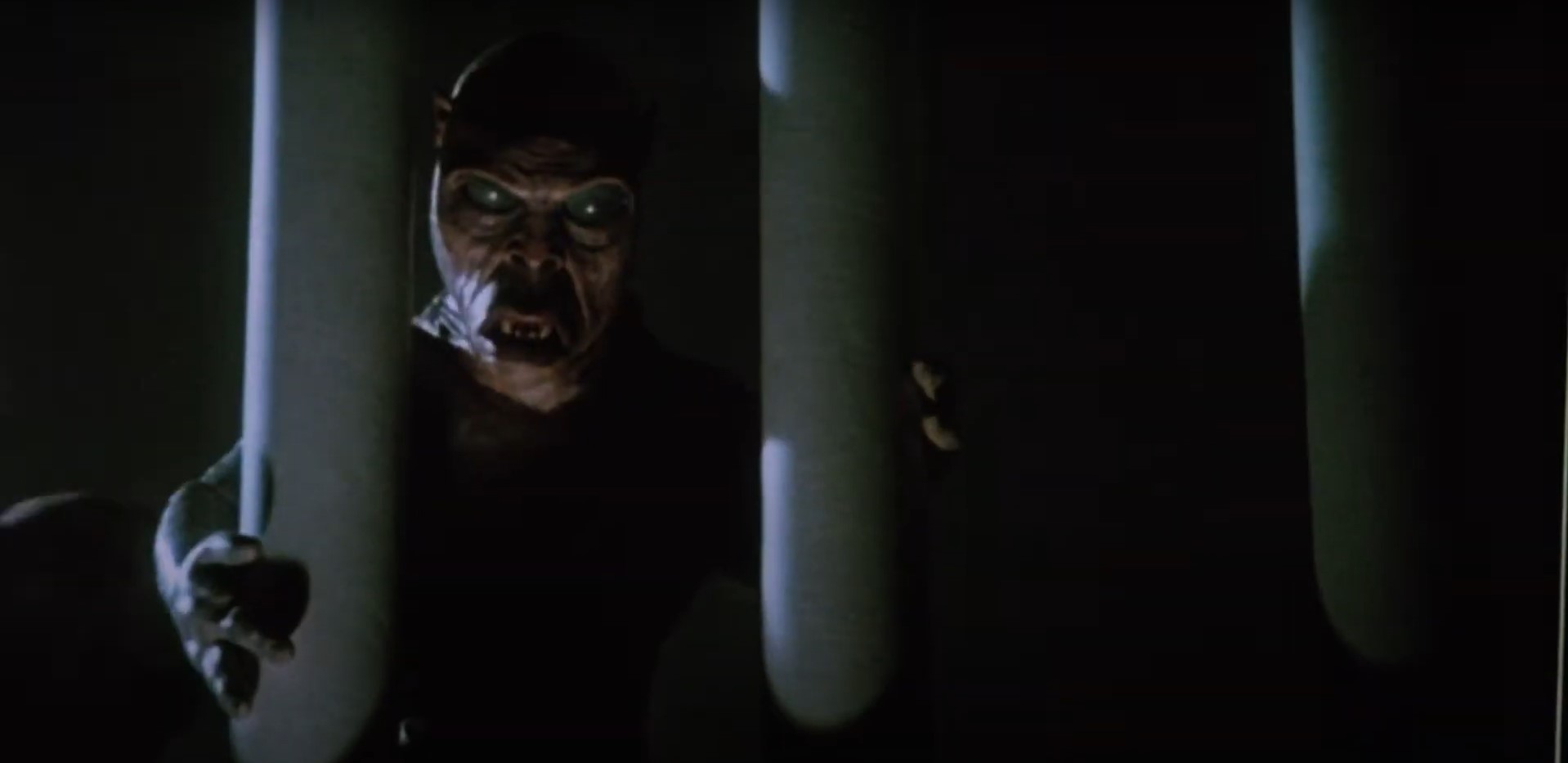
Special effects by the team of Randall William Cook, Craig Reardon, and Frank Carere couldn’t have pulled off an ambitiously suburban horror hyper focused inside Glen’s home any better.  Fashioning mind-bending illusions that are still marveled at to this day, Cook’s forced perceptions eliminates mostly the use of stop motion tactics for the miniature sized minions, replacing the rigid effect with a more lively physical man-in-suit option that smooths out the actions, attributing the creatures idiosyncratically with not only depth of perception to contrast sizes but also shot in a faster camera speed compared to which the seemingly normal sized actors would have to slow down their performances to become level with the creature.  The whole process is crazily multifaceted and mind-boggling effective if pulled out in great detail and “The Gate” team does so, twice, in face, between the two films, with Reardon’s fleshy creature designs enhancing the hideous zeal in the bulbously decaying Workman zombie and even in Reardon’s blamelessly slapped together endgame demons for the ordered change of a quickly surmised climax in the sequel.  As a collaborating unit, the special effects crew pulls off seamless transitions in what is captivatingly pure eye-candy of movie magic.  The stories themselves, especially in “The Gate,” are enchanting, full of mysterious and unpredictability, and stretches the imagination beyond the confining limit as we’re led to inevitable showdown only to be pleasantly accosted on the optics.  The sequel has a rougher go with the story as the narrative feels like a wound-up toy twisted tight to the threshold only to be released spinning in all different types of directions that ultimately lead to an exhausted stopping point. The stark contrast between the two films doesn’t offer a lot of subsequential continuity in narrative and even in some areas of the special effects but the silver lining in that last statement can be a sigh of relief in not receiving a rehashed product sought to recap or repeat off the back of the original’s success. Instead, “The Gate II” begs to be separated to be its own entity and does so while being a homage to the practical illusions that sparks awe, joy, and terror!

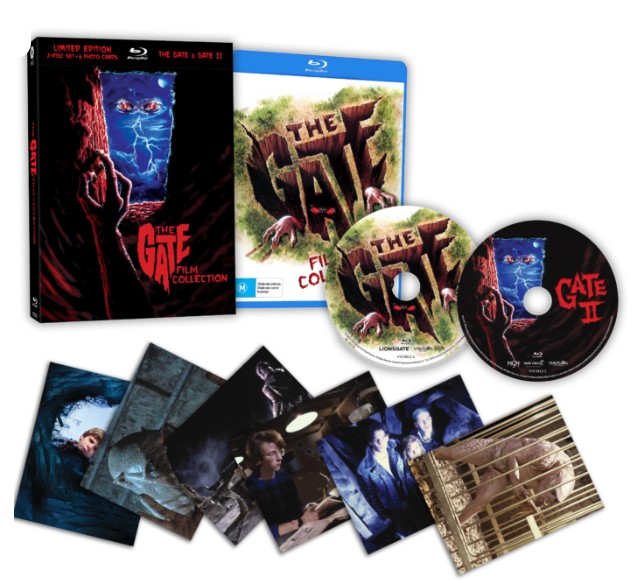
If looking to physically own both “”The Gate” and “The Gate II” in one deluxe package, the Australian based distributor Via Vision has set the bar high with their 2-disc, numbered limited edition, Blu-ray collector’s set. Both films, shown in a widescreen 1.85:1 aspect ratio, are AVC encoded with a high-definition, 1080p resolution on a BD50 (“The Gate”) and BD25 (“The Gate II”) and we’ll come to the reasoning to that split later on. Shot on 35mm and scanned into a 2K print, not many details are noted about what film negative or other print element is scanned to 2K but most of the bonus content on this particular release is Vestron produced, leading to believe the same Vestron print is also used here. Between the two pictures, “The Gate II” has a better saturated image whereas the original film almost seems ungraded with a slight gray concealer that somewhat mutes the hues. The forced perception shots are seamless yet are also delineated nicely that curves into a believable and pleasing symmetry without an inkling of divisional depths. Skin tones are natural looking and textures, such as practical prosthetic masks and molds, score high in all the nooks and crannies of the folds and surface level haptics. The English encoded tracks include a lossy DTS-HD 2.0 stereo codec on “The Gate” and an uncompressed, lossless PCM 2.0 stereo on “The Gate II.” These sole options provide suitable stereophonics without significant compression issues, other than “The Gate’s” minor fidelity data loss, or original source damage or technical gaffs, such as hissing or popping. Dialogue design sees the “The Gate” come out on top over the course of layering and projecting atmospheric augmenting. I don’t get that same sense from “The Gate II” that modulates the dialogue with a redounding heavy-handed echo effect in locations it does not make sense for reverberations. “The Gate” has English and Spanish subtitles with the sequel reduced to just English subs available. “The Gate’s” greater format capacity holds most of the special feature cards with a number of duplicated Vestron produced bonus content, including two audio commentaries: commentary one with director Tibor Takács, screenwriter Michael Nankin, and special effects designer/supervisor Randal William Cook and second commentary with Cook again along with his f/x crew Graig Reardon, Frank Carere, and Bill Taylor. Composer Michael Hoenig and J. Peter Robinson discuss the score with selected isolated tracks to enjoy, a conversation between Takács and Cook in The Gate: Unlocked, Craig Readon in an interview about creating the pint-sized creatures in Minion Maker, an interview with co-producer Andras Hamori From Hell it Came, an interview with actor Carl Kraines aka The Workman aka Terry the Demon The Workman Speaks!, an interview compilation from the local Toronto talent involved Made in Canada, a 2009, archival retrospective look and discussion from Reardon and Cook at their monstrous being handiwork From Hell: The Creatures & Demons of The Gate with Randall William Cook and Craig Readon, a 2009, archival retrospective look and discussion with director and writer Tibor Takács and Michael Nankin The Gatekeepers, a vintage making-of featurette, teaser and theatrical trailers, TV spots, and storyboard and behind-the-scenes galleries. In what is a David and Goliath size imbalance, “The Gate II” special features ultimately will not trump with smaller disc capacity and the lack thereof content but the second disc sequel does contain a new, 2023 audio commentary by Tibor Takács and film historian Jarret Gahan as well as a documentary with Takács, Nankin, and Cook Return to the Nightmare: A Look Back at The Gate II that discusses how and where the film strayed off the intended course, an interview with make-up effects artist Craig Reardon From the Depths, the theatrical trailer, and retain video promo. Via Vision’s limited-edition packaging is another world chic and cool with a rigid sleeve box and a lenticular “The Gate II” front cover art. Slipped inside from the right is a single Amary Blu-ray case with a center stationed second disc attachment. While the front cover on the sleeve box showcases the sequel cover, the Amaray’s reversible cover sports the original “The Gate” cover art with a Glen still image and film cast/crew credits on the other side. Also inside the sleeve box are six fully colored glossy photo cards! Both films are Australia certified Mature for moderate violence and moderate course language and have a runtime of 84 minutes (“The Gate”) and 93 minutes (“The Gate II”). The Via Vision release is region B locked (note: the release did play on my region A setting).

Last Rites: Digging a hole to open “The Gate” and the contradistinctive sequel unburies a pair of underrated underworld-creeping-toward-the-surface 80’s phantasmagorias, a regular doomsday fait accompli with children standing between Hell of Earth and saving the world, and what better wait to see the world potentially burn to the ground than with a beautiful new Blu-ray collector’s set from Via Vision!

Better Hurry! Amazon Has a 20% Coupon for This Very Release! Limited to 1500 Copies.

Prancing Forest EVIL Will Seduce You to Death! “Devil Times Two” reviewed! (SRS Cinema / DVD)

“Devil Times Two” on DVD from SRS Cinema

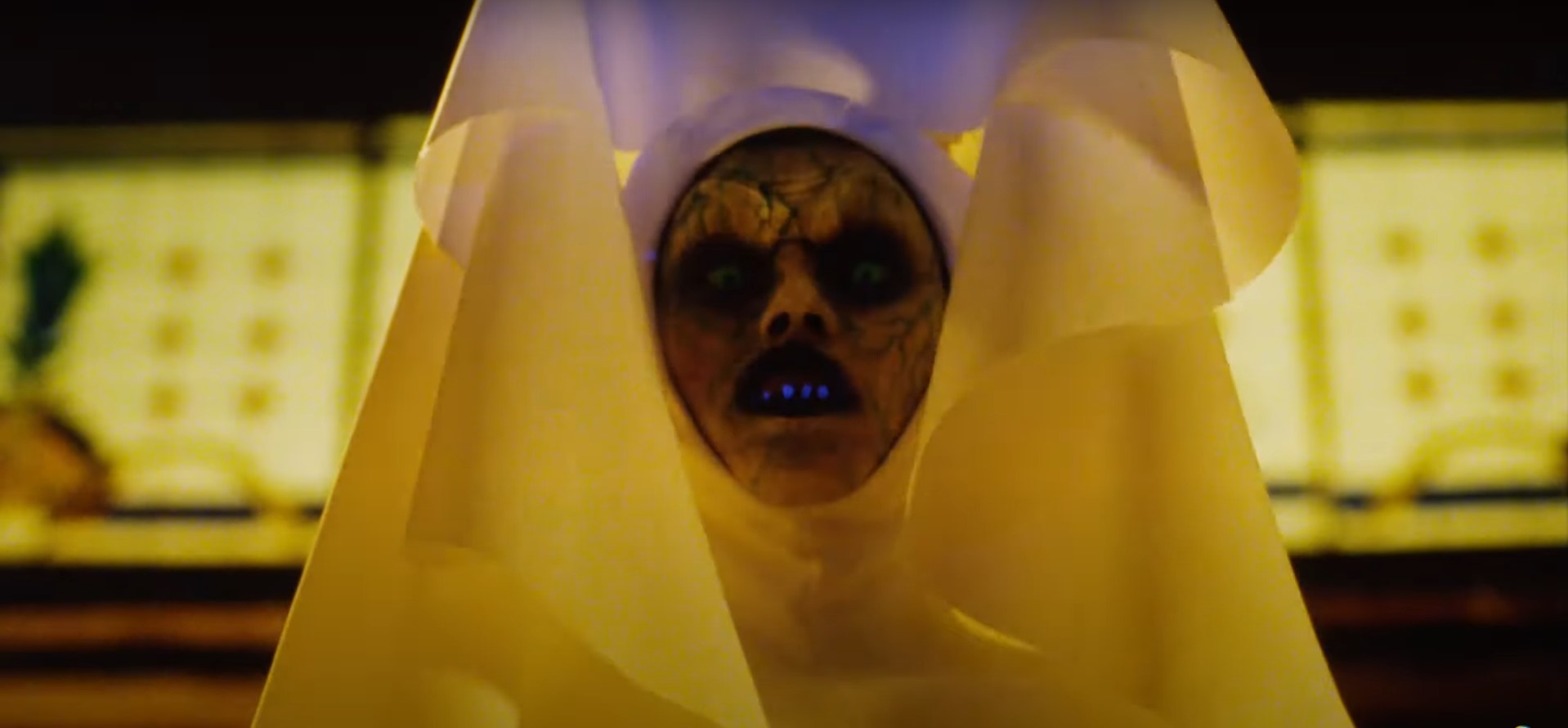
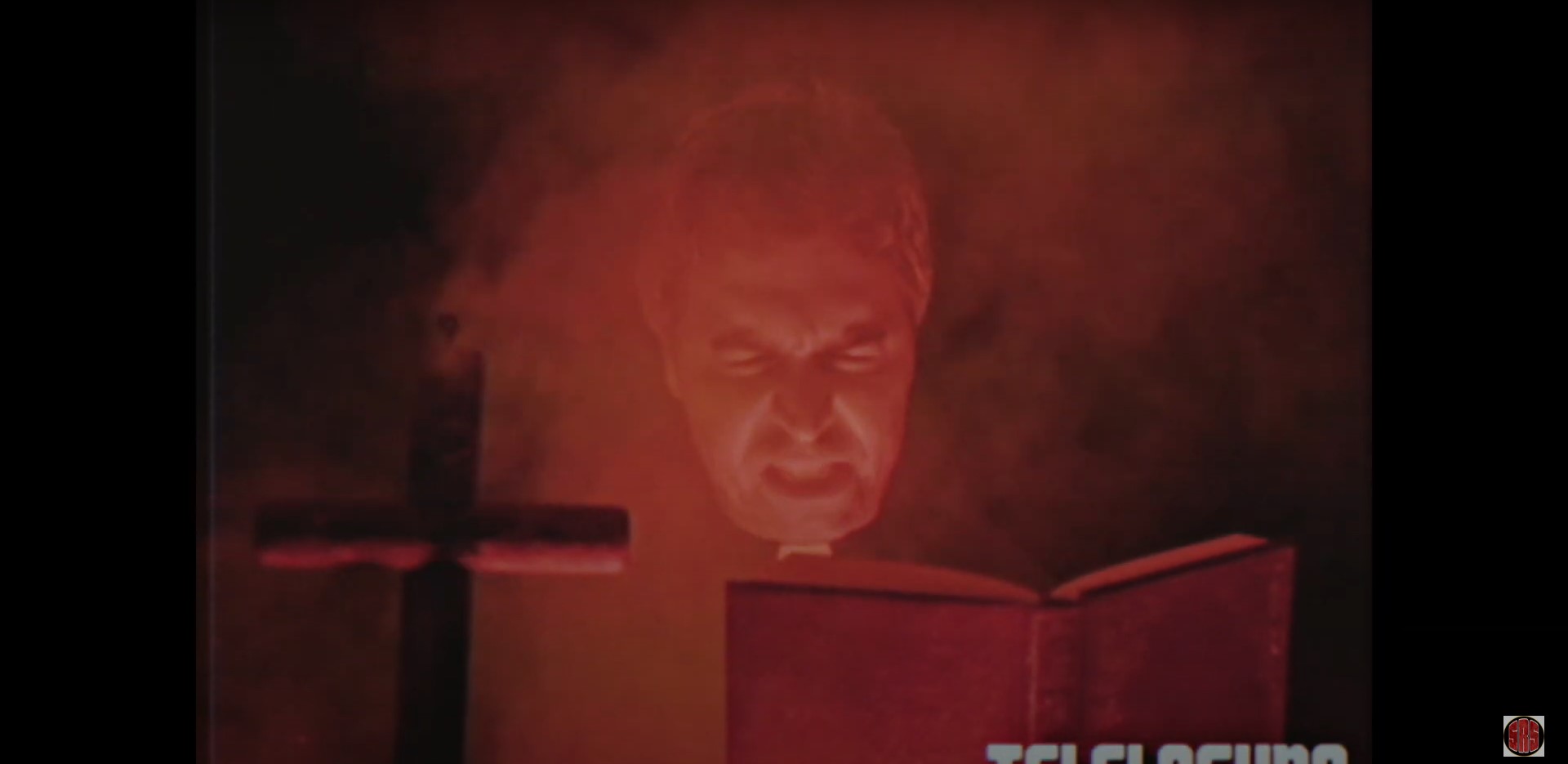
A forest encircled convent hidden away from the Milan population undertakes an occult responsibility to keep bloodthirsty and callous demons from entering the human world.  On the verge of retiring, Father Ernesto Taro, a once formidable force for good who exorcised a powerful demon decades ago that cost the lives of many in his fellow cohort except for Mother Dolores, takes on a younger understudy to be his replacement, the ambitious Father Chuck Bennet.  Father Taro and Bennet were summoned by Mother Dolores when grisly body of a young hiker is discovered.  A pair of former Nazi sadists turned Netherworld demons come to Father Bennet in a vision and are suspected to be the carnage culprits.  Souls are at stake and the world is on the brink of falling into darkness as the Returnees are only the right hand of a more profound evil itching for complete and utter omnipotence. 

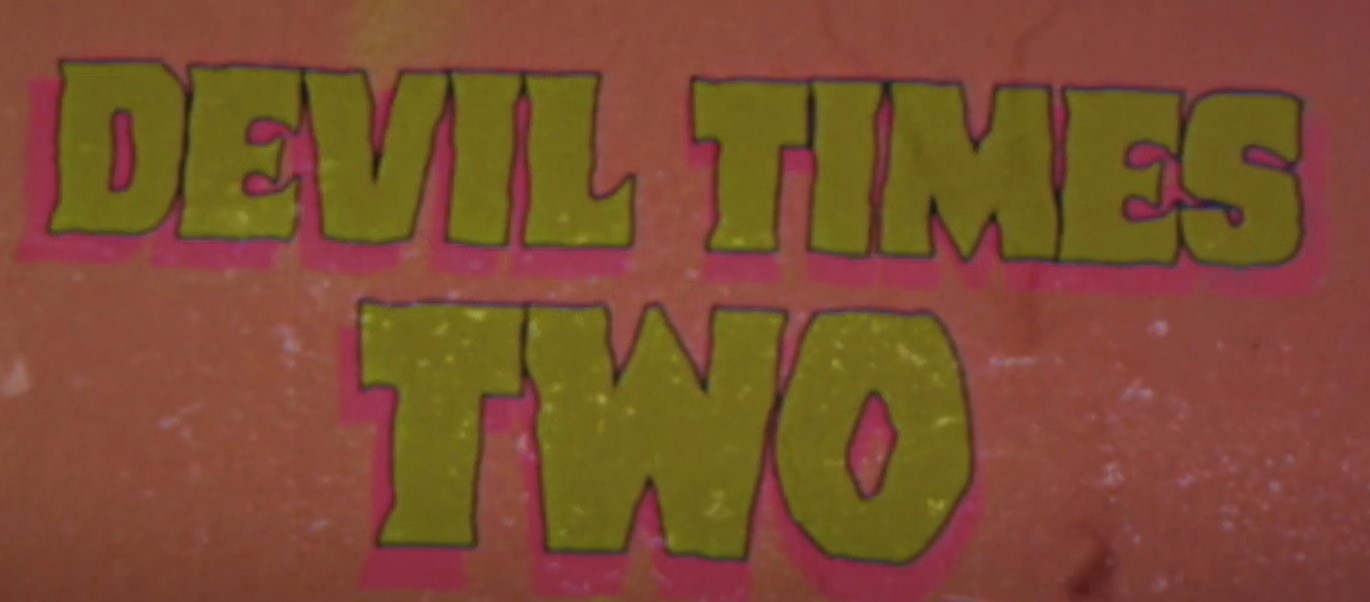
“Devil Times Two” is an Italian-made, demonology-contextualized horror from Italy writer-director Paolo del Fiol.  Having purveyed grindhouse horror in anthological means with previous films “Connections” and “Sangue Misto,,” del Fiol branches out into his solo feature-length narrative set in the 1970s as a faux lost film recovered onto VHS from the only known syndicate televised program on Telelaguna to account the terrible tale full of profane hostilities, sexual stimulating supremacy, and, of course, gore in the interlacing recognition between the popular devil, demon, or hell on Earth inspired movies and the obscenities connected to eurotrash and sleaze movement of the 70s topped a hint of Japanese adulation, a motif heavily sprinkled into the film carried over from the director’s previous work as well.  Underscored by the tagline Quado le Tenebre escono al Bosco, or When Darkness comes out of the Woods, “Devil Time Two” once again pits religious good versus irreligious evil in this Himechan Movie Production self-produced by Paolo del Fiol.

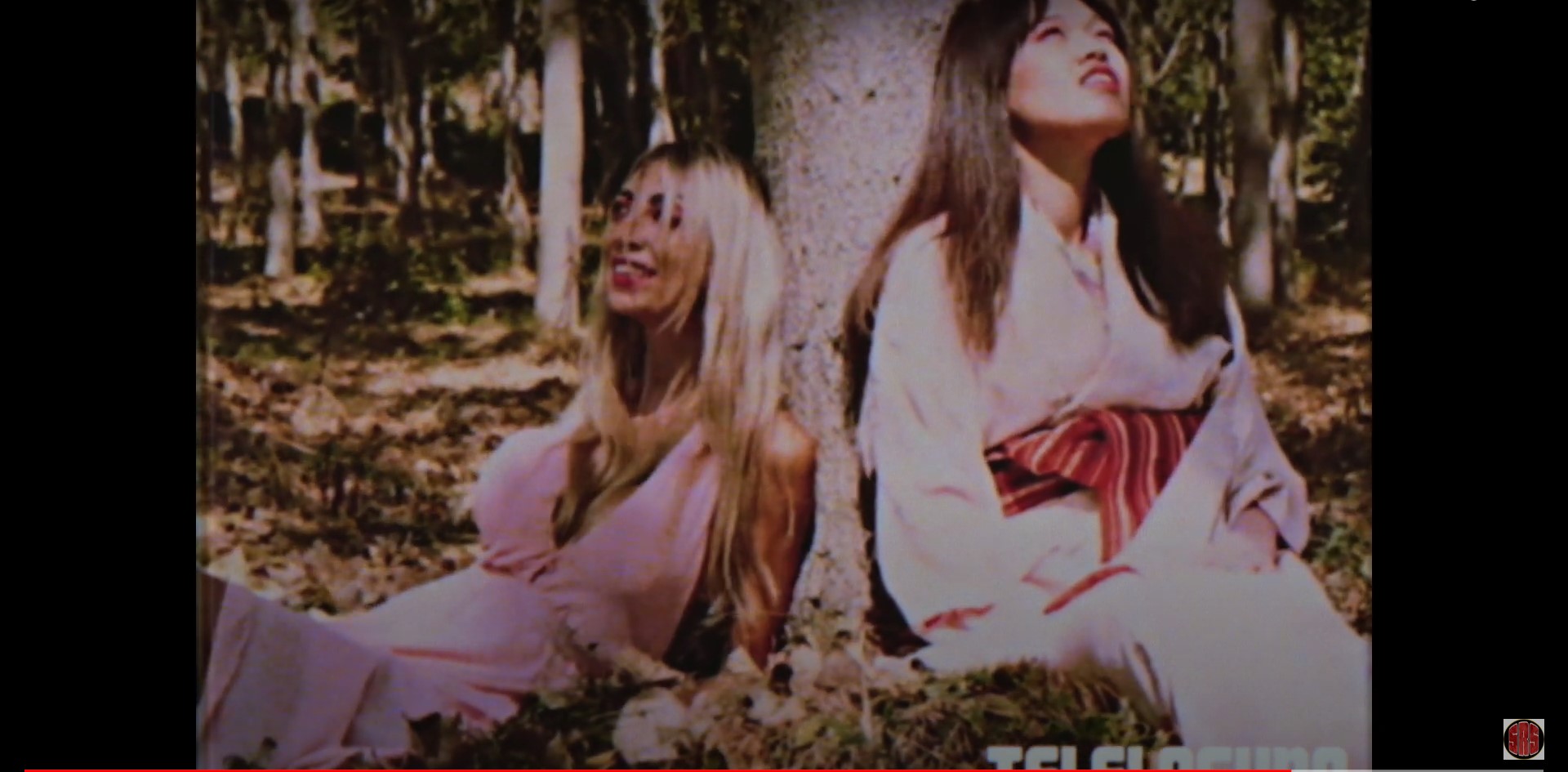
Characterized as the titular pair, Returnees Jasmine and Umeko are the ethereally evil duet of diabolical detriment who seemingly float in and out of the material world as alluring succubi, seducing prey into their web of demonic lust and languish.  Some turn up grotesquely inside out while some others disappear, saved for later for special ritualistic planning.  Erika Saccà, an Italian fitness instructor in her debut role, plays the blonde Returnee Jasmine in a sleeveless, lowcut gown and with nearly ever kill, exposes and massages her augmented bosom with underboob scarring in a change to showoff her toned physique, and Reiko Nagoshi (“Re-Flesh”) wears a kimono without any unveiling of skin but does a bit of thrust-damage on her quarry that initially and inexplicable appears to be a strange phenomena when everyone in the scene is a woman but becomes apparent there’s something unholy and very “War of the World’s” alien under that traditional Japanese garb.  Saccà and Nagoshi wear many hats in this product but also don’t have the dialogue to hoist their demonesses higher.  The dialogue is left with the trio of convent gatekeepers in Father Taro (Enrico Luly), Father Bennet (Paolo Salvadeo, “Occultus”), and Mother Dolores (Amira Lucrezia Lamour, “Re-Flesh”) in what becomes a deeper understanding of their backstories around Father Taro’s deadly bittersweet exorcism decades ago, his on the sly and subtle affection for Mother Dolores, and Father Bennet’s questionable rise to supersede Father Taro, laying a foundation of doubt within the current gatekeeper.  While I like the contrasting dynamics of the two factions within the cast, I found the discourse overly bulk and tedium between the trio of piety that strung on scenes way too long with way too much talk that it ultimately suppresses the pacing when every little detail has been uncovered and explained. All the casted bits in between are slaughter fodder with Denise Brambillasca, Alessandro Carnevale Pellino (“The Wicked Gift”), and Martina Vuotti in non-defying death roles.

Paolo del Fiol’s unaccompanied and independent deluge of demonian debut has doses of phantasmagorical imagery sublet by its more shocking and odd immolation of incognizant individuals unlucky enough to cross paths with the Returnees. Likely to have never seen, Fiol’s film very similarly compares to James Sizemore’s “The Demon Rook” by creating unique mythos not reliant on a religious bedrock and use independency as an advantage for showcasing practical makeup and effects and while “The Demon Rook” would overwhelm with prosthetic made-up characters, “Demon Times Two” focuses attention more on the guts of the matter, the gore, but though not pernicious enough to the story, the eyeball sucking, throat lacerating, or intestine exposing bloodshed is prosaic panoply that won’t outshine in the sea of subgenre synonyms. Aforementioned dialogue scenes can be a slog to get through with many exchanges overstaying its course between the pious gatekeepers, especially between Father Taro and Dorlores, and that hurts the pacing to pick up the gore more frequently for more potency. Instead, exchanges are more elucidations that go around-and-around to where we’re lost on the mounting reveal of the Returnees’ mission and master which turns out to be visually more stimulating and visceral in the last ten minutes than in the first 100 minutes of runtime. The backlot lore is Fiol’s greatest achievement simulating a 70’s style grainy movie caveated as only broadcasted once on December 8th, 1983 (a few days before this reviewer’s birthday) and never seen again until it’s VHS recording is recovered.

Under a pretense of being a buried lost film, under the tribute of a grainy and scratched psychotronic celluloid, and under the falsity of genuine huge knockers, “Devil Times Two” is twice baked into a classic contemporary dish served by SRS Cinema on DVD. Arriving on the SRS Cinema: Extreme and Unrated Nightmare Fuel label, “Devil Times Two” is nothing short of being a modern-day emulator of once was with suitable grain overlay, a hazy, if not washed, overcast grading, and trope-laden atmospherics with dense fog, unnerving dissonances within earshot, and blood brilliantly cut with pseudo Telelagua commercial programming of brief adverts until returning to regular scheduled programed checked in and out by a gondola and it’s gondolier in dusk silhouette. Presented in a pillar box 1.33:1 aspect ratio, the fuzzy and non-delineated details are not a punch to the salient gut as the intent here is to be obscure, opaque, and ominous in nature and in technique bathed in 480p. The Italian PCM is the exact recreation of a time period post-dubbing with the actors re-dialoguing their performances as it was common practice in most motion picture industries, especially Europe, at the time. ADR is clear but not necessarily clean to recreate that shushing and crackling of an older recording. The subtitles are also forced or burned into the film with the sole Italian audio option. Bonus content includes what is called Backstage, a raw filming look into the production shoots and behind-the-scenes footage with no real direction or cosmetics, a photo gallery, a trailer with English subtitles, and other SRS Cinema released trailers. The SRS Cinema DVD front cover resembles mock-70’s, thick-red font with a bare woman’s back dressed in a painted Satanic symbol within the border of a VHS-esque rental casing with rental stickers. Inside the amaray case is a pressed disc with an extreme close up and crop of the same front cover with no insert in the adjacent slot. Pacing burdens this release, especially in its near 2-hour runtime with a clock-in at 114 minutes which is approx. 24-minutes too long in my opinion and the film comes not rated and has region free playback. No matter how much arcane the content is, or how grotesque the horror show, or how much perversity and skin can be unclothed, “Devil Times Two” has difficulty retaining a flow of fascination in a rather windbag approach to a rather devilishly good salvo construction.

“Devil Times Two” on DVD from SRS Cinema

Southern Hospitality is all EVIL Cloaks and Daggers! “The Long Night” reviewed! (Well Go USA / Blu-ray)

“The Long Night” now available on Blu-ray home video!

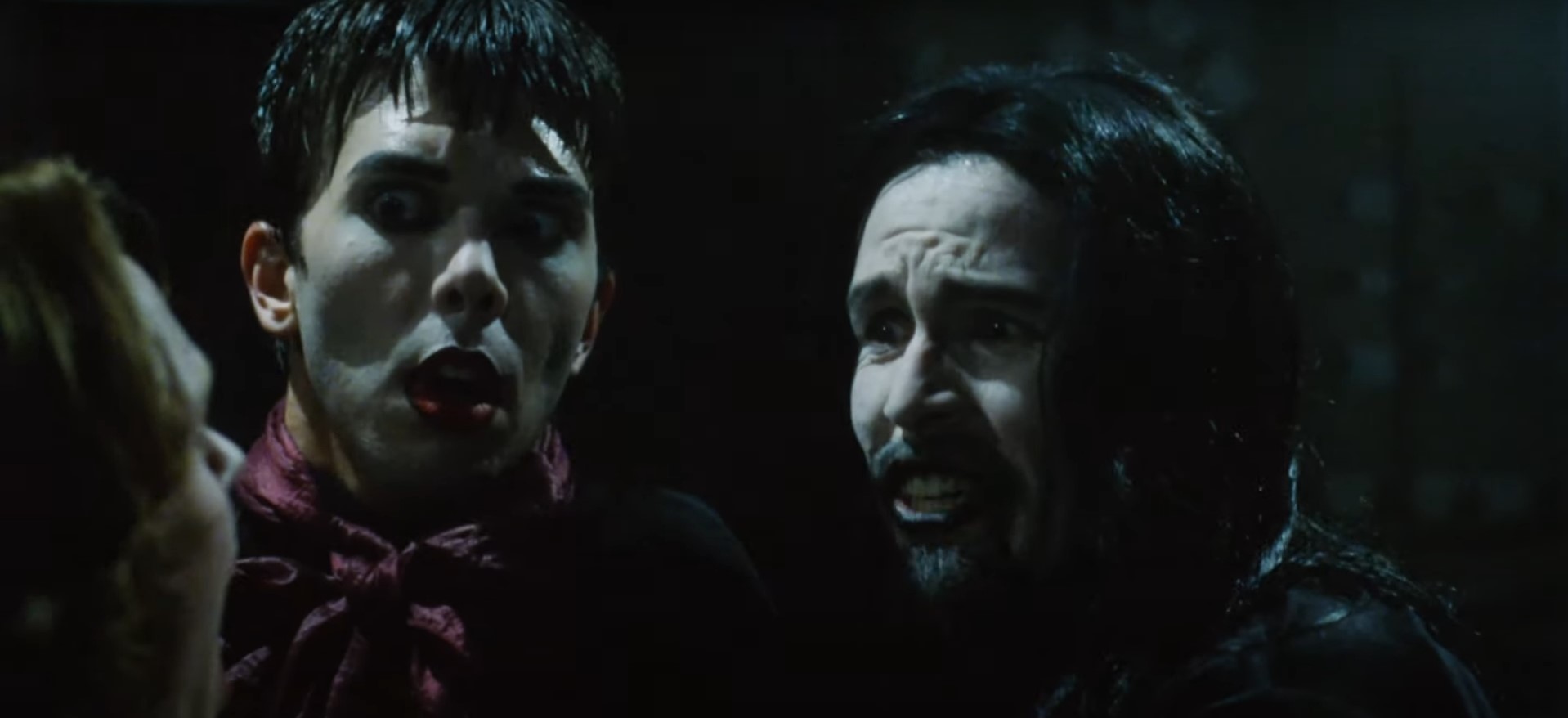
After spending years in foster care as a child, the now adult Grace tries to track down any information or background about her biological parents with the help of affluent boyfriend Jack.  The New York City couple travel into the rural, deep south on a seemingly solid lead about her folks.  As Grace and Jack drive up to their contact’s isolated and grand manor estate, their contact with the information doesn’t greet them upon their arrival and as they search the house, they find it as empty and still as the wide open land around them.  When darkness falls, cloaked members of a demon worshipping cult surround the estate, using their telekinetic and telepathy powers to infiltrate and corral Grace toward being a host for the prophesized return of 400 year slumbering and powerful demon the night of the equinox.  The couple battle the subservient minions inside and outside the manor as the night progresses into terrifying visions of Grace’s predestined lineage and the hope of surviving the night is quickly dwindling.

A longstanding demonic cult with supernatural psychotronic abilities besieging two city slickers armed with broken cell phones and a fireplace poker feels like the mismatch from Hell.  Somehow, “The Curse of El Charro” director, Rich Ragsdale, was able to stick the landing with loads of dourly, yet intensely powerful, cinematography crafted from a Mark Young (“Tooth and Nail”) and Robert Sheppe script based off the Native American mythology of the Horned Serpent, Utkena.  Keeping with the mythos’ descriptors involving snakes and horns or antlers, Ragsdale utilizes his usual bread and butter music video talents to fashion psychedelic imagery out of an extremely committed cult mercilessly stopping at nothing in resurrecting their preeminent master who will cleanse the world of corrupted humanity to start the world afresh…or so they believe.  Shot on site at a deep-rooted and isolated plantation house and property in Charleston, South Carolina, “The Long Night,” also known as “The Coven, is a production of Sprockefeller Pictures (“Fatman”) and Warm Winter in association with Adirondack Media Group, El Ride Productions, and Hillin Entertainment.

Super stoked that “The Lurker” and Rob Zombie’s “Halloween” remake star Scout Taylor-Compton is playing an age-appropriate role and not another high schooler, the actress plays the soul and parent searching Grace who has a strong desire to track down her parents, which never comes to the forefront why Grace was placed in foster care to begin with. Compton is completely competent assuming a role that requires her physicality as well as her emotional range in fear through resistance against a group of mostly unknown cast of characters that mostly keep their hoods and masks on for the entire engirdling of the manor house. Compton can also exude being a badass at times, but the script shamefully holds the character back that never allows Grace to become a true opposition to their exalting will toward their demon god. Nolan Gerard Funk (“Truth or Dare”) might ooze that trope persona of a dude-bro bred out of spoiled opulence as Grace’s boyfriend Jack. Despite his unappealing swaggering veneer, Jack reaches for depth more than any other character in the film and Funk pins it pretty well. Jack loves Grace but can’t face his Hamptons residing parents’ derision of a woman, of any woman in fact, who will never be good enough for their son and that creates some nice early on tension that fizzles out to being actually nothing of real importance to the couple. Yet, Jack continues to be the one with more common sense, receiving pre-plot point hump bad vibes since arriving at the manor and also making some of the better decisions when the bottom drops out and snake-charming demonists come calling for his main squeeze to squeeze out the resurrection of an unholy being. Funk adds bits of comedic charm throughout like someone who watched too many horror movies and tries to reenact scenes that could be beneficial to their survival in theory but hopelessly fails in a humorous way. A real waste of a raw cinematic talent is in Jeff Fahey (“Body Parts”) who plays the brother of the missing manor owner. Fahey feels very much used for solely his veteran star power, a recognizable face, just to be nearly instantaneously forgotten at the same time and by the climatic ending, you might not even remember Fahey being a part of the story. “The Long Night” rounds out with Deborah Kara Unger (“Silent Hill”) and Kevin Ragsdale (“Little Dead Rotting Hood”).

“The Long Night” is a delicate incubus uncoiling its snake-biting venom of inexorable fate. Rich Ragsdale hyper stylizes flashbacks and often mundane moments to conspicuously denote unimaginable and resistant-futile power over a pair of out of their league NYC outlanders. Speaking of which from within the script, there is a sting of contrast between North and South, as if the Civil War was still relevant, ever since the first moment Jack and Grace hit the screen with their travel plans. Jack passively continues to harp upon his dislike of South and even looks to Grace to make sense of a demon cult outside on the front and back lawn, hoping that her Southern roots can explain the provincial nonsense raising torches and speaking in tongues that’s blocking any and all exits. Even Grace, a character originating from the South, believes that the makeshift totems surrounding the property are resurrected to ward off evil. As a Southern, I never heard of such a thing. The concept for a Lazarus possession out of the depths of dimensional binding sounds like a winner in my book, but Ragsdale can’t quite smooth out the edge to effectively and properly give the cult and Grace a banging finale of supercharged hellfire that sees our heroine fight to the bitter end. Instead, the entire third act and ending feels like a sidestep because not a single better thought came to the writers’ imaginations. Cool visuals, good special effects, but a banal trail off ultimately hurts “The Long Night’s” longevity.

Well Go USA Entertainment delivers the Shudder exclusive, “The Long Night,” onto Blu-ray home video with a region A, AVC encoded, high definition 1080p release. Presented in 16X9 widescreen, some scenes look compressed or rounded suggesting an anamorphic picture, but the overall digital codec outcome is really strong elevated by the creepy folkloric and the pernicious dream atmospherics of “Escape Room’s” Pierluigi Malavasi who can masterfully casts the light as well as he shields it in a menacing silhouette. Some of the nightmares or hallucinations see more of compression flaws in the mist, smoke, or gel lighting with faint posterization. The English language 5.1 DTS-HD master audio balances a vigorous surround sound output, catching and releasing all the appropriate channels with a range of environmental ambient noise and the scuffle between violent contact, denoting a strong amplitude with depth between foreground and background. Dialogue comes out nice and clear with a vitality that’s reverberates in the ear channels whenever a momentous moment sparks an outburst of rage and dominion. Special features include a behind-the-scenes featurettes that look at the raw footage of the birthing flashback scene, the overall aesthetic tone of the film, and the resonating tribal score. Also included is a Rich Ragsdale commentary track, the theatrical trailer, and Ragsdale’s 2019 short film “The Loop,” a meta-horror surrounding a scary VHS tape and two young brothers. While “The Long Night” has flaws with unfinished plot details that will leave a lingering unsatisfied aftertaste, entrenched within the narrative is a contemporary premise revolving around dark fate and that gut feeling toward belonging to something bigger that unfortunately turns out to be murderous summonsing of a demon scratching at the door wanting to be let out in the world. An unforgettable long night of terror.

“The Long Night” now available on Blu-ray home video!