Feminism Fights EVIL The Only Way Possible in “Broken Mirrors” reviewed! (Cult Epics / Blu-ray)

The Best Depiction of the Unpleasant Side of Brothels.  “Broken Mirrors” on Blu-ray.

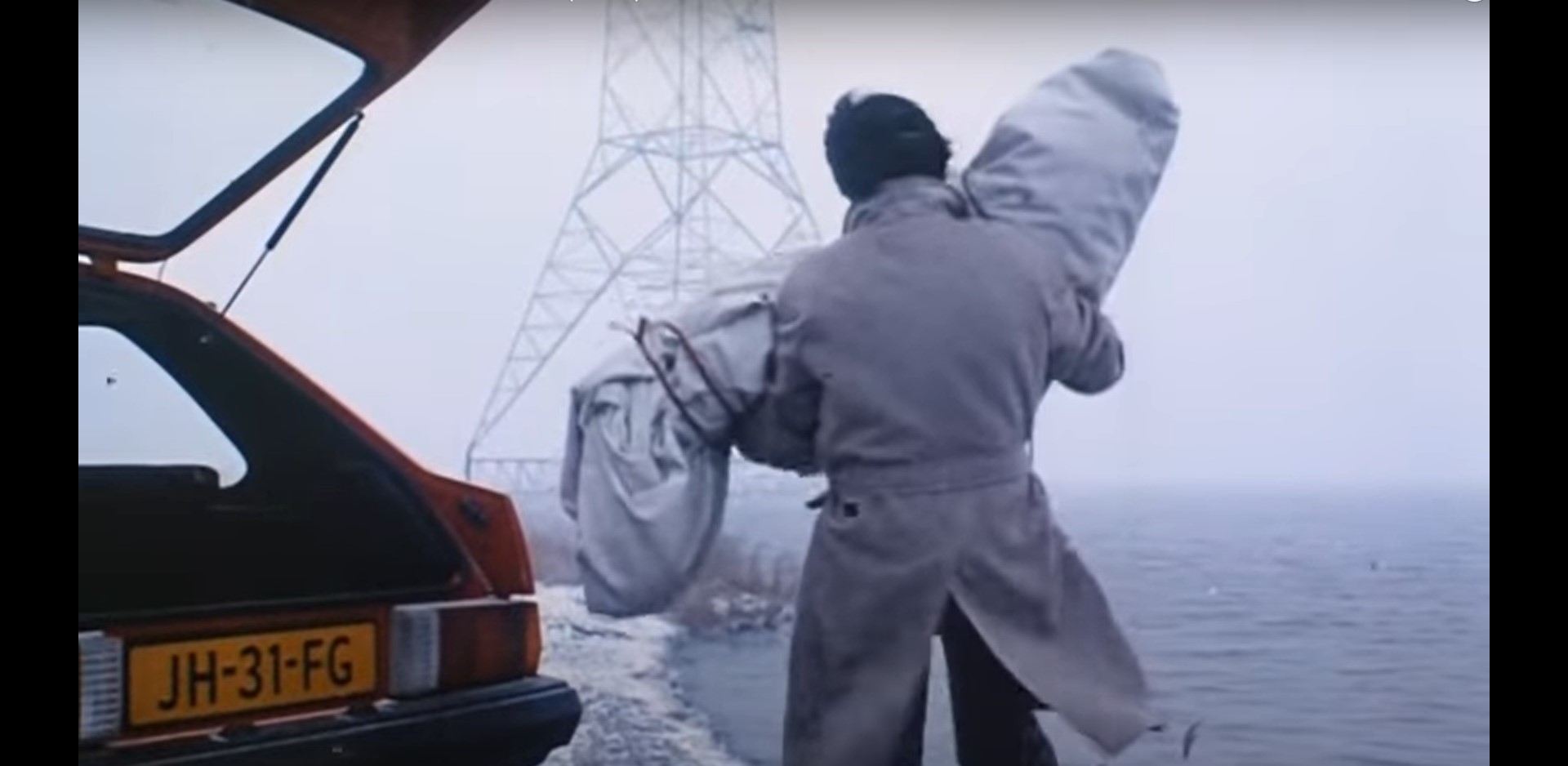
An Amsterdam brothel Happy House Club clings to the good girls that remain employed to pleasure the reprobate and insensitive johns that visit.  Dora, a virtual working girl lifer, brings in new blood, Diane, a young mother desperate in need of financial support because of her drug addicted husband.  Night after night, customers select through the ever-growing service list the club’s owner deems profitable while the women and the matron manager naively cope with a profession that’s quick, easy cash.  They create a process, a standard of procedure so to speak, that tries to make the work that much less degrading but with each client, a little piece of their humanity is chipped away.  Simultaneously, a methodical serial killer abducts the women he previously surveillances from off the street, chains them to a bed in a remote room, takes snapshots of them in confinement, and slowly starves them to death, which could last months.  The two stories are intertwined and connected by a gender dominance disease in which a slow resistance begins to build to an explosive head.
The unofficial sobriquet of the Queen of Feminism Marleen Gorris had made a name for herself as a staunch supporter of feminism and lesbianism with her controversial and provocative films.  Her acclaimed 1982 debut written-and-directed “A Question of Silence” show oppressed gender solidarity and mutiny against a systematically enslaved masculine society.  Continuing her crusade against the patriarchal grain, Gorris followed up “A Question of Silence” with another powerfully messaged, social commentary film that, again, places women emotions and safety under the unyielding thumb of men two years later with “Broken Mirrors.”  Natively known in the Netherlands as “Gebroken Spiegels,” the film marks the return of select cast from her inaugural feature, marshalling in a new narrative in the neo-feminism cinema under the returning production company Sigma Film Productions with producer Matthijs van Heijningen (“A Woman Like Eve,” “The Cool Lakes of Death.”).

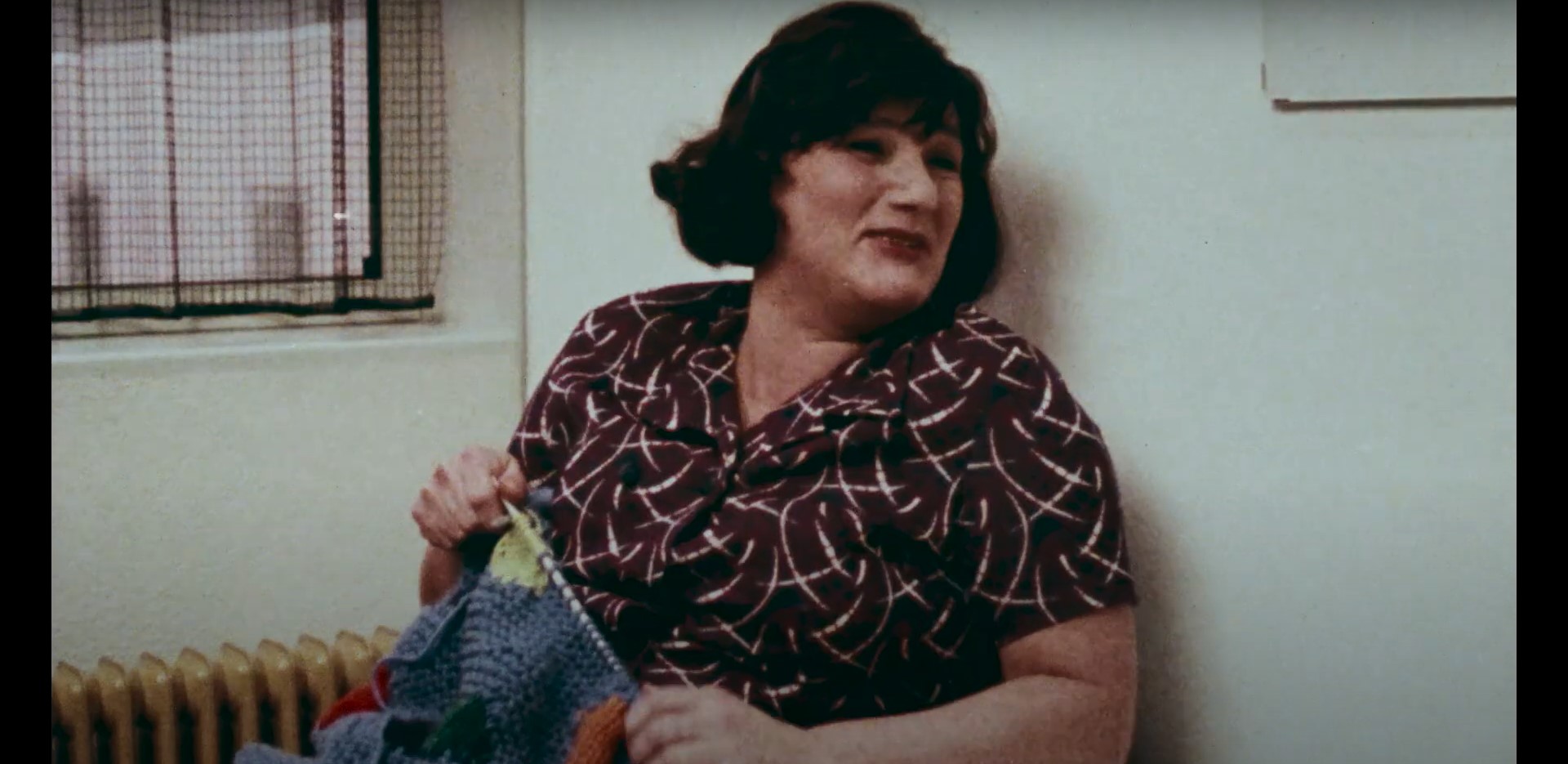
As mentioned, a pair of actresses have carried over from “A Question of Silence” to maintain a principal performance in “Broken Mirrors,” beginning with Henriëtte Tol who played the outwitting secretary in Gorri’s debut returns as a woman working in Amsterdam’s red-light district as a seasoned employee of the Happy House Club.  Tol ups the ferocity levels of her previous performance while still maintaining a gradually steady sex appeal.  Another returning actress who nearly didn’t have any dialogue in her previous role as a mother without a voice is Edda Barends now in a character that can’t stop screaming for her life as the latest abductee chained to a cruddy bed in a cruddy room with a coming-and-going, polaroid-enthused sociopath. In Barends starkly different rage against the man machine archetype, the actress finds herself discomposed in the face man she can’t understand but eventually recognizes his nasty need and withdraws it.  Both women excel beyond the unsavory current conditions and transfer the power that’s been dangling over their heads into themselves.  Newcomer Diane, played by Lineke Rijxman, becomes the key to initiate the unraveling of power of a man-owned brothel that subjugates women not as mere employees of a man-owned business but as nothing more than moneymaking ass-shakers and back-layers.  Rijxman puts in the work of having her character be resilient at work and at home as she juggles a wide variety of disgusting clients to please their whims while coming home to deal with a junkie husband’s mess.  As the story progresses and the women fall deeper under life’s heel, Dora and Diane spark what begins as a mutual friendship that slips gradually into sexual tension, giving them more assurances when they need it the most as the brothel parties become bigger and more intense.  The parallel story runs along the same oppressive path but in unconventional, unlawful, and inhuman way with the kidnap and starvation torture of a young mother.  Eddie Brugman is also a returning “A Question of Silence” actor who now finds himself in the shoes of Jean-Pierre, a mild-manner husband and by all rights societally normal seemingly man who visits the brothel for a quickie, easy money as Francine (Marijke Veugelers) would proclaim, but his dark hobby is to snatch unsuspecting women for his own perverse pleasure of watching and hearing them plea for their lives.  By the end of both stories, connected by Jean-Pierre and who finds himself at the end of the disappointing stick for his kicks, crafts more than one way to not give in and to stand up against male malarkey and nastiness.  The cast rounds out with Carla Hardy, Coby Stunnenberg, Anke van ‘t Hof, Elja Pelgrom, Hedda Oledzky, Arline Renfurm, Johan Leysen, Wim Wama, and Elsje de Wiljn.
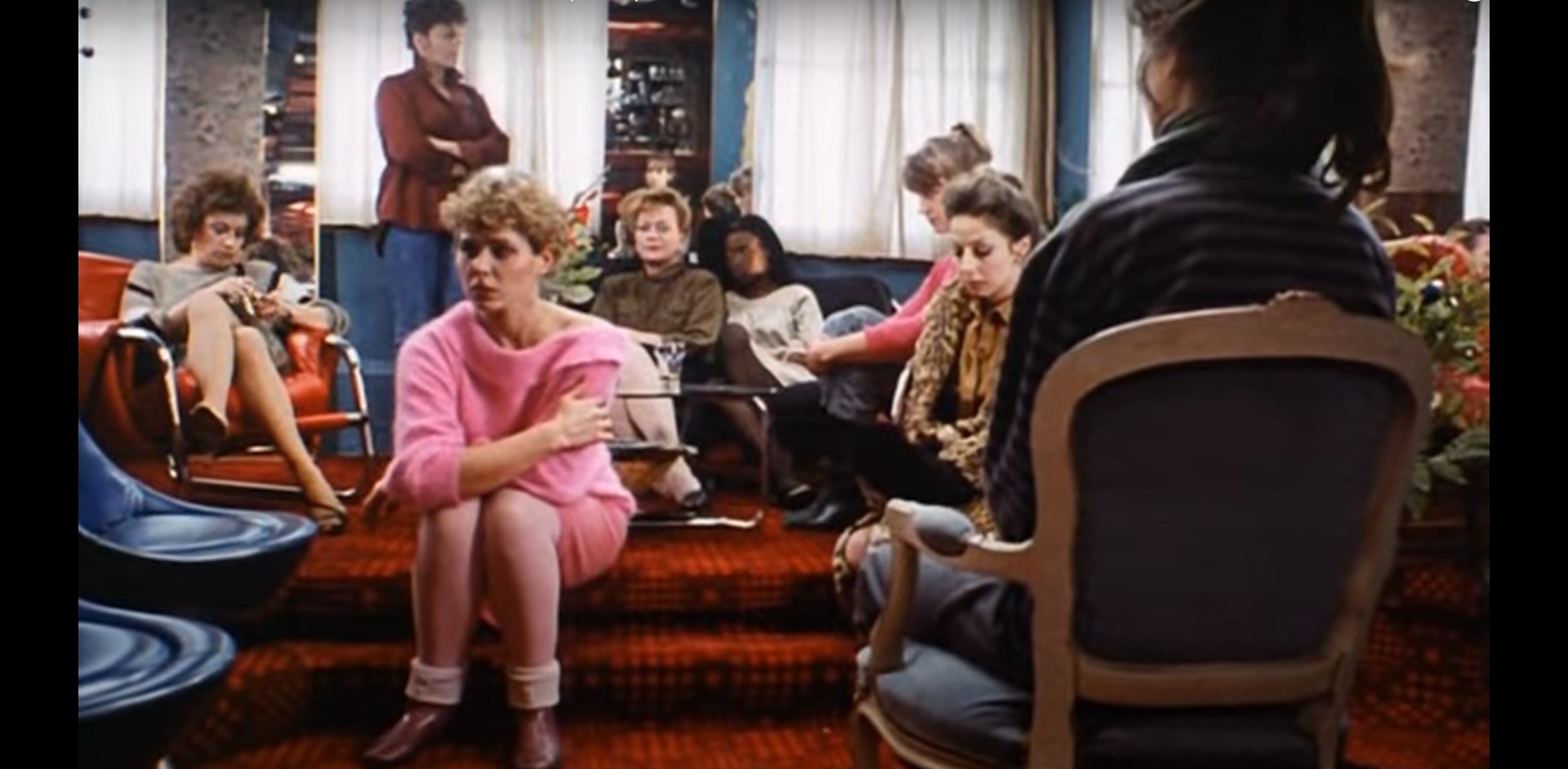
Not only is “Broken Mirrors” another contentious and provocative incendiary story that wedges apart men and women, with the latter being victimized and justified in their actions, but Marleen Gorris also directs one hell of a boiling point intertwining between parallelisms that almost have no link to each other until the reveal.  Gorris doesn’t necessarily employ red herrings to keep audiences guessing but rather keep the killer obscure, as all that we are exposed to see is from behind the man, who doesn’t speak much either and if he does speak, his responses are to the point with as little descriptors and adjectives as possible.  Not only is the editing between simultaneous stories organic but also the other editing techniques that materialize the characters’ emotional decaying befit the mostly linear structure, such as with the student party montage at the brothel that does a roundtable of individualized scenarios between the women and their slimeball clients in an emotionally painful grin-and-bear it series that culminates to which one character best describes the ordeal as feeling like a human lavatory.  The feeling is very much mutual with viewers as well, like a used wet nap to scrub off a soul staining filth covering head to toe, as Gorris represents a thematic exactitude of fiercely dividing feminism that would define her career. A clear understanding of how brothels operate is greatly depicted with that flimsy layer of excitement and efficiency to mask the ugliness underneath.
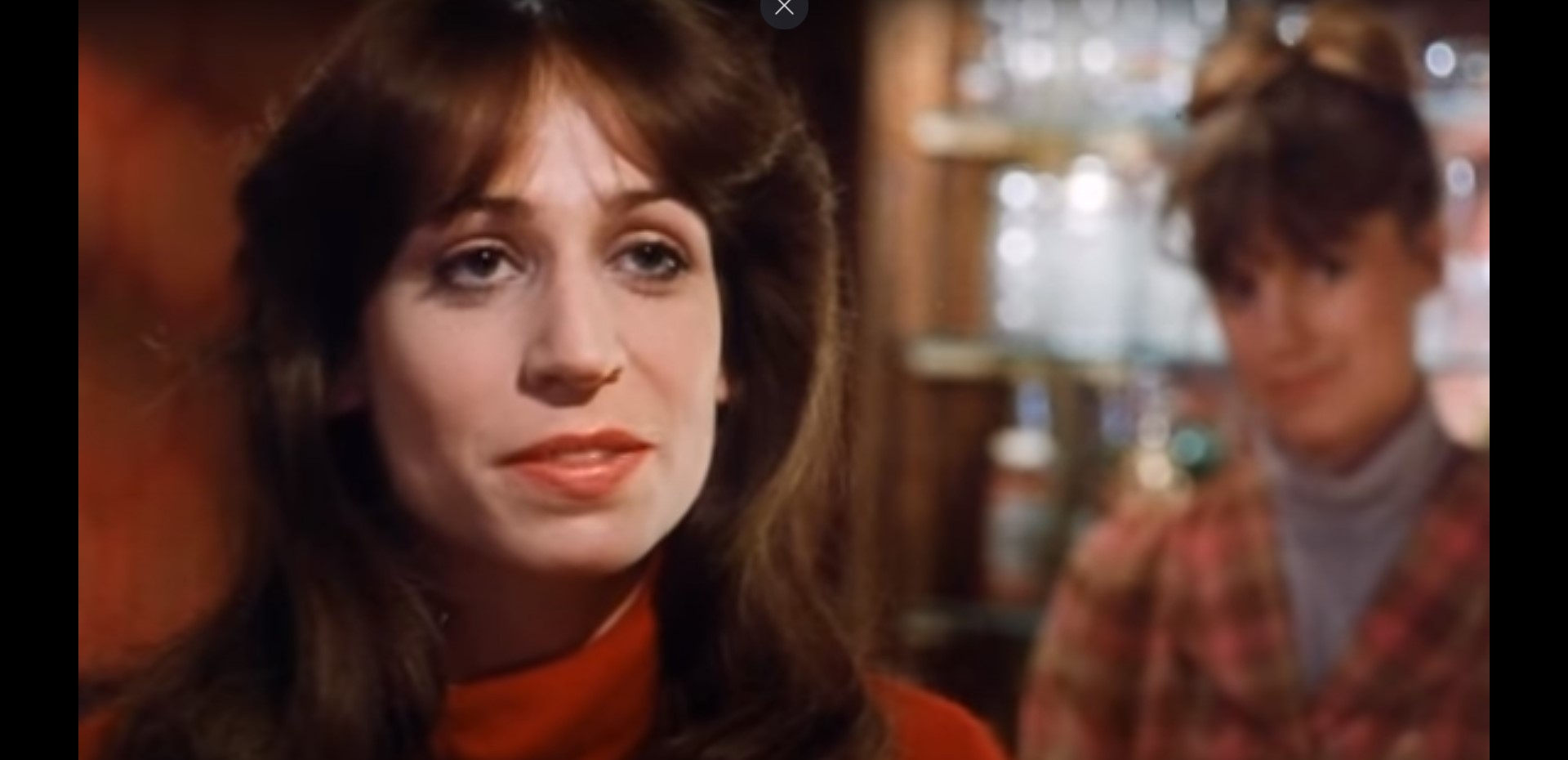
“Broken Mirrors” arrives on a Blu-ray home video from Cult Epics and, once again, resurrects and restores a pièce de résistance of Netherland celluloid. The new 4K high-definition transfer from the original 35mm negative is presented in European widescreen 1.66:1 aspect ratio on an AVC encoded, 1080p, BD50. 35mm print looks none worse the wear over the course of father time with a mint print. Restored color graded has freshened up the natural print palette of the brothel story while the kidnapper’s tale sustains a grayscale to bisect the narrative and the delineation for both presents a palatable depth. The aplenty natural grain doesn’t swarm and takeover the higher pixelations to award us with a satisfying vintage image that now enriched without any smoothing enhancements nor any compression issues to note. The Danish language release comes with two audio tracks: A DTS-HD MA 2.0 Mono and a LPCM 2.0 Mono. “Broken Mirrors” fair well from both dual channel formats with the DTS-HD aggrandizing the Lodewijk de Boer razor synth score with intent that in itself is a character. Comparatively elsewhere, the two outputs offer little differences and sate with forefront dialogue, balanced in front an equally balanced ambient track. Optional error-free English subtitles are available with haste text to keep up with the fast-paced Dutch. Special features include an audio commentary by Leiden University film scholar Peter Verstraten, an archived 1984 interview with U.S. sex worker and activist Margo St. James with Cinema 3 host Adriaan van Dis, a promotional still gallery, and trailers. The Cult Epics Blu-ray comes in a clear, traditional snapper sporting the film’s most iconic and titular moment, displayed also on the disc art, while the reverse side of the cover depicts a still image of Carla Hardy. The region free Blu runs at a not rated 110 minutes. A good double bill against “A Question of Silence,” “Broken Mirrors” makes for a morosely on the trot sister feature in more ways than one to further a Marleen Gorris artfully aired agenda.

The Best Depiction of the Unpleasant Side of Brothels.  “Broken Mirrors” on Blu-ray.

Three Women Murder to Stand Up Against EVIL! “A Question of Silence” reviewed! (Cult Epics / Blu-ray)

“A Question of Silence” Laughs Louder than Words on Blu-ray!

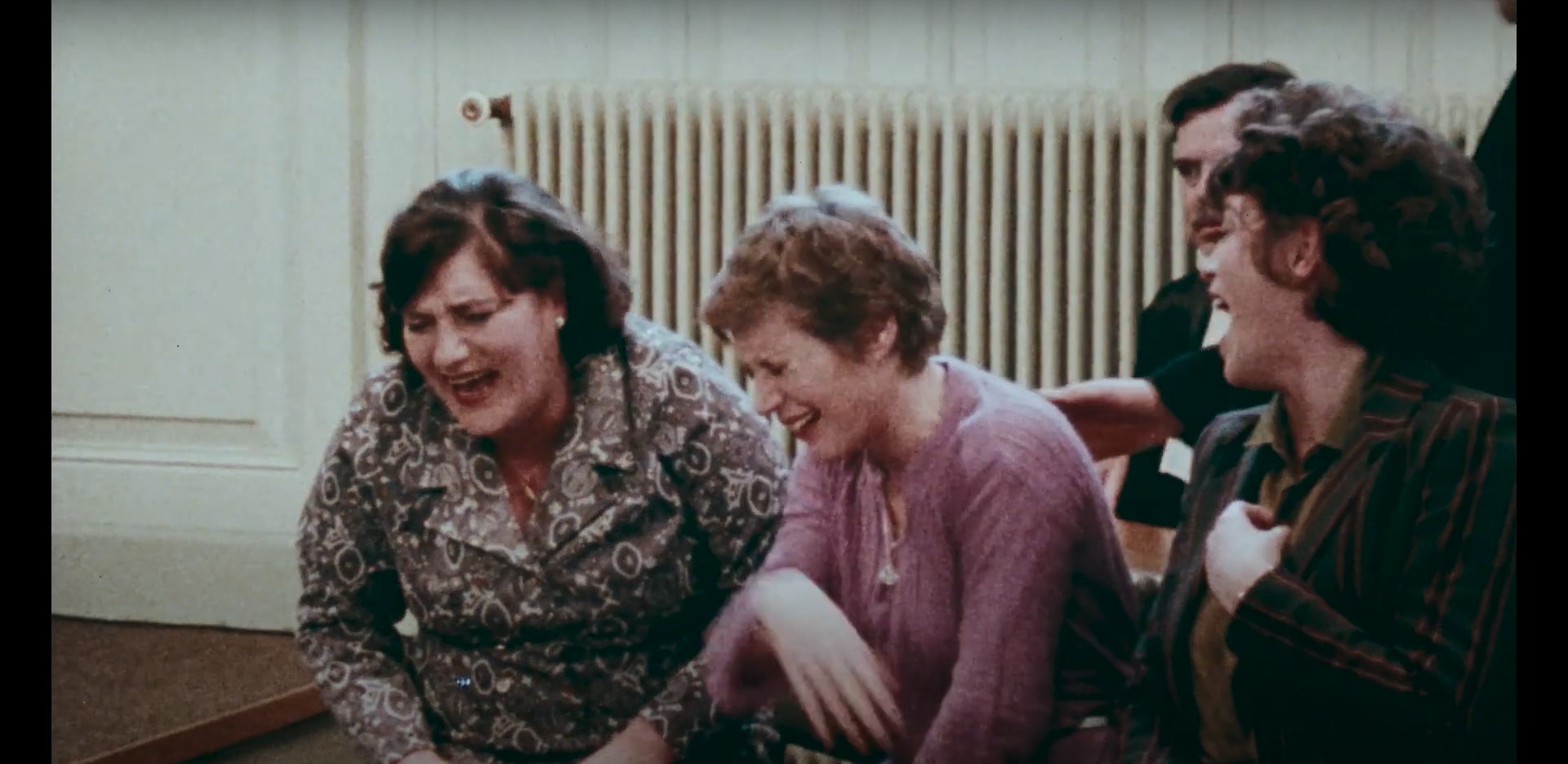
Three different in age and lifestyle women carry on with the routine of their normal lives until police offices arrest them on the charge of murdering a male owner of a clothing boutique.  Having seemingly no motive and have no connection to each other, never having met each other before, the confounded prosecution hire a psychiatrist to determine the women’s mental state for the brutal beating of the shopkeeper.  As the psychiatrist interviews and digs into their personal lives to give rationality to an irrational crime, she finds herself drawn to the women and their heinous act stemmed by a life history that paints a picture of dehumanizing neglect and of providing zero respect.  Subjectively overwhelms objectivity the deeper she looks into their case and her professionalism is put to the test when she has to decide whether being labeled insane fits the accusation or if a more gender bias systemic issue is at play.

After a rousing first part of feminist revenge with “Red Sun” from 1970, we fast-forward slightly over a decade later in 1982, and moving from out of Germany and into the Netherlands, with Marleen Gorris’s acclaimed crime drama “A Question of Silence.”  With little-to-no film prior film experience, Gorris becomes a provocateuse with her debut picture that stirs controversy amongst one side of the sexes.  “A Question of Silence,” natively titled “De stilte rond Christine M,” or “The Silence around Christine M.,” became the best Dutch film of the year with local accolades, including a Golden Calf for best film at the Netherlands Film Festival the year of release.  Along with the Rudolf Thome’s “Red Sun” and the German social commentary on women integrating into equal social and professional positions, Gorris comes at a time where the status of Dutch women were on the lower end of the gender equality scale, especially in the workforce.  Matthijs van Heijningen, who produced polemic features directed by women filmmakers, such as Nouchka van Brakel’s “A Woman Like Eve” and “The Cool Lakes of Death,” risked yet another credit to his name with the virtually unknown writer-director Marleen Gorris and her sizeable undertone story under his company, Sigma Film Productions.

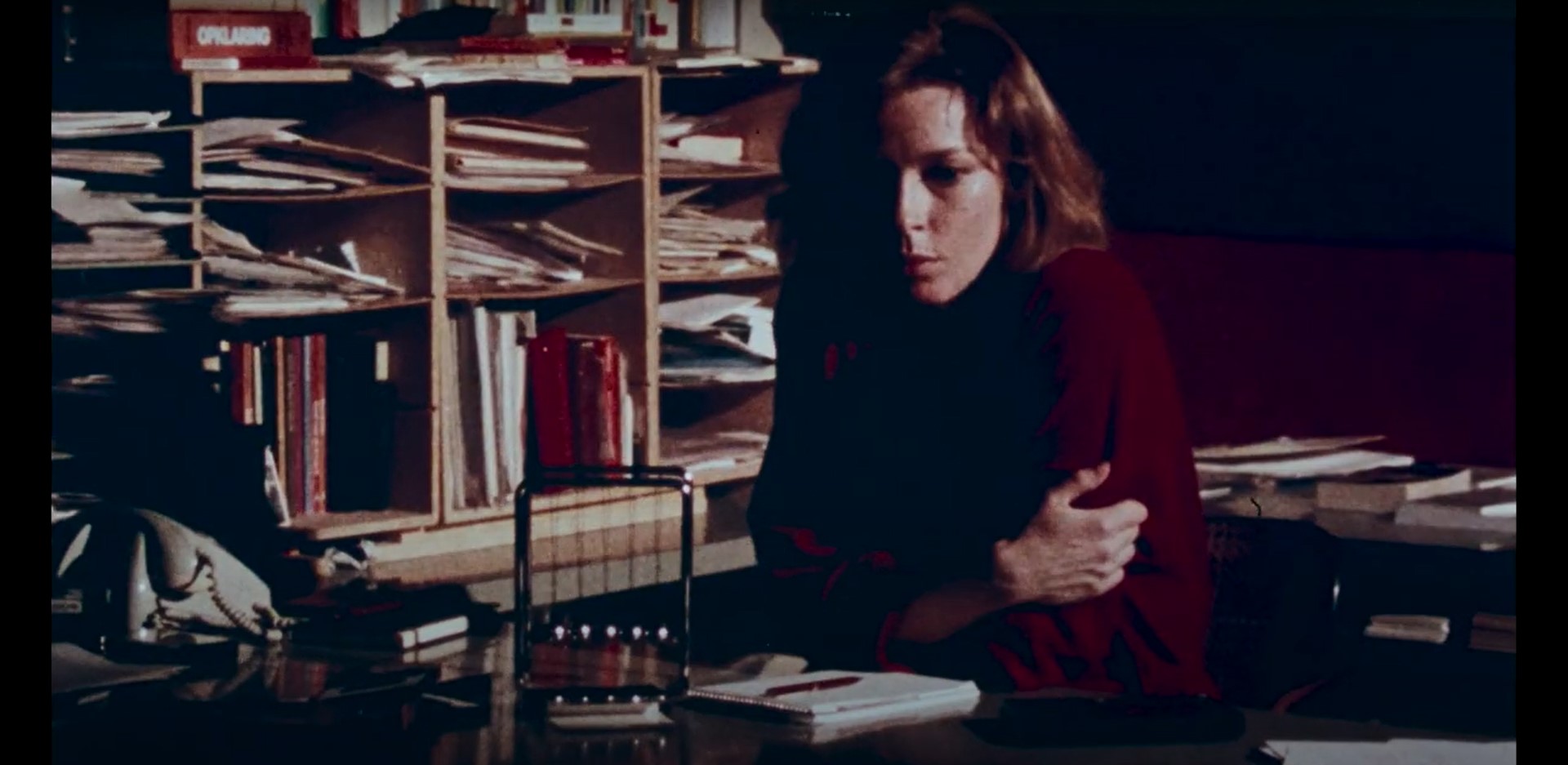
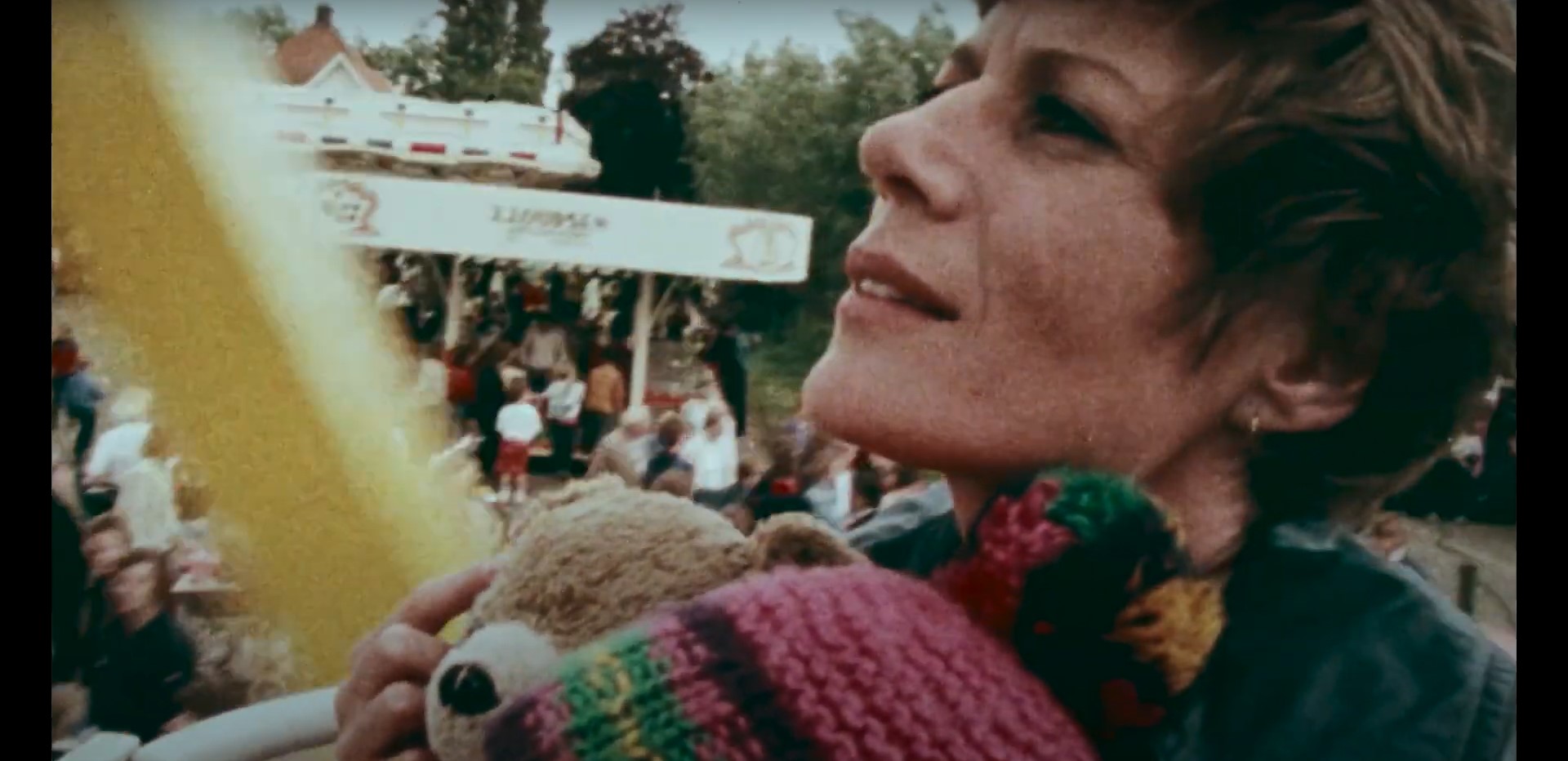
The narrative opens with Janine van den Bos and her husband Ruud having a flirtatious moment on the couch where Janine playfully annoys her book-reading husband with advances sexual foreplay.  Without knowing who these two people are exactly, other than they’re in a version of a relationship, Janine, played by Cox Habbema, and husband Ruud, played by Eddy Brugman setup metaphorically what’s inherently wrong with society with a woman seeking something and the man ignoring her and practically commanding her to stop the foolishness in a dismissive way.  This opening scene then cuts to the three women being arrested, led up to by intercuts of their daily routine before the police confront them.  We’re treated to some of the most idiosyncratic and grounded performances by Edda Barends as the muted housewife Christine, Nelly Frijda as the cackling coffee barista Annie, and Henriëtte Tol as the beautiful and intelligent secretary Andrea.  The three women never met before, never plotted before, and never killed before but a sudden epiphany while shopping became the straw that broke the camel’s back, turning watershed into bloodshed that unveiled something just as sinister as murder.  Cox Habbema engrosses herself into the psychiatric role as an educated woman analyzing and judging other women while also being judged herself by the opposite sex despite a higher-level of learning and professionalism.  Without exposition, characters express themselves through action while being ambiguous through dialogue, working to convey the lopsided gender equality across the screen perfectly without even one ounce of explanatory detail dropped. 

What’s most intriguing about Gorris’s film is it’s mirroring quality to society.  “A Question of Silence” doesn’t fabricate grand futures or alternate universes with eccentric, wily characters to be metaphorical fodder of expression; instead, Gorris remains earthbound, present, and timely by incorporating true-to-form examples that create derogatory silence on women.  The non-linear narrative, cutting back-and-forth from investigative present to the chronicled past visualizes the women’s struggles and frustrations living inside a male-dominated culture.  From being expected to handling all aspects of the household and childcare, to being brushed off and dismissed by colleagues, to forgotten and underappreciated, Gorris forces a frank contemplation on a patternized and patronized patriarchy.  Heightening the tension, Lodewijk de Boer and Martijn Hasebos’s giallo-esque and experimental soundtrack adds a layer of loadstone to see whether these extempore femme fatales executed a crime. 

Cult Epics, in association with the Eye Film Institute, continue their campaign on delivering thought-provoking, provocative, and controversial Dutch masterpieces onto the high-definition stage with their latest release, “A Question of Silence.”  The AVC encoded, 1080p, BD50 stored feature is presented in the 1:66:1 European widescreen aspect ratio.  The 2K HD scanned transfer and restoration is based off the 35mm print; however, judging by the grain levels and very little preserved detail, especially in a HD scan, I’d say the original negative was 16mm and then blown up for 35mm project, which was a fairly common process.  The noticeable enlargement of grain dampens picture details less favorable yet not the image quality is not a total wash with a stable graded rendering, with a natural skin tone and pigment of objects, and the presence of imperfections kept in a minimum – such as the occasional cigarette burns and dust/dirt.  What excels here mostly is the lack of compression issues so we’re only treated to the innate quirks of the original celluloid film.  The release offers two Dutch language audio options – a LPCM 2.0 mono and a DTS-HD MA 2.0.  Toggling between both tracks, there’s not much different between them until Nelly Frijda’s crone-cackle distinguishes itself with robust HD prominence projecting full-bodied through the dual channel.  Again worth noting, Lodewijk de Boer and Martijin Hasebos synthesizing score, coupled with Marleen Gorris’s tense and taut flashback storyline, casts a disquieting tone that’s very fitting for a film entitled “A Question of Silence.”  Dialogue, as well as the score and overall soundtracks, suffer very little from the slight hum of the running camera and some minor hissing but the general result has tremendous.  English subtitles are optional and synch well with error-free translation; however, upon watching the special features, the Cult Epics’ feature translations differ from the copious amount of snippet clips of the interview segments.  Roughly the same interpretation but the phrasing maybe clearer and less wordy in the snippets so I’d be interested in the, what I assume would be, the original English translation.  Special features include an audio commentary by film scholar Patricia Pisters, an archival Cinevise interview with Marleen Gorris from feature release year 1982, a sit-down, one-on-one interview with lead actress Cox Habbema and Cinevise host a year later, a Polygoon Journal Newsreel from ’82 that mentions the Golden Calf award from the Netherlands Film Festival, a promotional gallery, and trailers.  The clear Blu-ray cover comes with the tear-drenched and shadow-obscured face of Cox Hebbema with a reversible still image of the three accused women on the inside.  No insert included and the disc is pressed with the same front cover art.  Cult Epics Blu-ray comes with region free playback and the feature is 97-minutes and unrated.  Marleen Gorris first run as a filmmaker denotes her as a masterful storyteller with a timeless tale of close-quartered and subtle masculine tyranny in an attempt to open the unwilling eyes of the narrow focused. 

“A Question of Silence” Laughs Louder than Words on Blu-ray!

Furbish the Four Walls EVIL Lives Inside of Your Brain with “The Yellow Wallpaper!” (Hysteria Pictures / Digital Screener)

A prominent physician escorts his wife, Jane, and newborn child to a secluded countryside home after a severe episode of hysteria rattles Jane’s mental state.  For three months in the Summer, Jane is confined to the house grounds with strict instructions to do nothing to exert herself other than to partake in a little gardening.  Even writing, which was profusely Jane’s pursuit, is harshly forbidden.  The bedroom she shares with her husband is nearly unadorned with only their bed in the middle of the room and yellow wallpaper ornamenting all four walls.  As the weeks pass in isolation, Jane can’t escape the feeling the yellow wallpaper is creeping into her mind, imprisoning her, and driving her mad, lending her relaxing retreat from societal nervousness be laid to waste in solitude. 

Charlotte Perkins Gillman’s short story, “The Yellow Wallpaper,” has seen a fair share of filmic adaptations in over a span of a century since being published back in 1892, but all of those variated works have been grounded in the last four decades .  Amongst the numerous shorts and a handful of features, the most notable version of “The Yellow Wallpaper” would be Logan Thomas’ 2012 interpretation, starring Juliet Landau, daughter of the late Martin Landau.  That’s the funny thing about public domain property is it opens up a plethora of pathways to spin and redefine creativity to rework Gillman’s feminist tale from the artists’ voices speaking of the times when women’s mental health, and mental health in general, was perceived naively as anxiety.  Kevin Pontuti steps up to the plate to take a crack at the spiraling to madness story as the filmmaker’s inaugural feature directorial of the American and Ireland co-produced celluloid from an adapted screenplay written by the director and co-written with the story lead actress and producer, Alexandra Loreth.  Under the duo’s entertainment banner, Hysteria Pictures in association with Ireland’s Emerald Giant Productions, the crowdfunded “The Yellow Wallpaper” project receives the latest contemporary treatment that brings Gillman’s words back to the screen.

Co-writer and producer, Alexandra Loreth, takes the lead as Jane coming down off the ledge of a nervous breakdown but still ballooning with instability that’s stretching her fashioned societal-front seams. “The Yellow Wallpaper” is also the California based filmmaker’s first feature film alongside Pontuti, basically penning Jane’s entire mindset of combating the time’s unfamiliar sexisms and mental health. Loreth crawls on her hands and knees, feign glossy, far away eyes, and be cold and distant to be in tune to a woman disassociating with herself and reality and, truth be told, portrays a convincible case that shows feature debut courage with on screen nudity and a stamina for being the focus for the entire 99 minute runtime; however these acts remain stuck in a excessive loop that roots Loreth’s character decline to one a taciturn setting, lacking range and depth to carry Jane into full metal straightjacket crazy. Opposite Loreth is Irish actor Joe Mullins as John, the physician, the only character mentioned in Gillman’s short story. Mullins impels like an automaton through the role with not a lick of zestful misogyny to contrast against. Loreth completely dominates the screen as you barely notice Mullins whisk in and out of scenes to medicate Jane or comfort her with little white lies. John’s dismissive attributes were more dispassionate with Mullins behind the wheel that leaves only half the work’s presence omitted and it’s sorely felt. In the role of Jane’s domicile caregiver, Jeanne O’Connor paves a road of sturdy era authenticity that also is fleeting from “The Yellow Wallpaper” and with her 19th century genteel aesthetics, we’re sucked into the period to keep us grounded in time. Performances round out with Clara Harte as the abstruse infant caregiver and Mark P. O’Connor briefly standing in as Jane’s doctor brother.

Pontuti and Loreth’s “The Yellow Wallpaper” targets the very essence of Gillman’s journal narrated themes of the downplayed and untapped mental health and the secondary expectations of women in 19th century society.  The differences between the 1800’s paper and 2021’s movie narratives are ever so slightly tweaked into the contemporary medium with Loreth narrating right from Gillman’s pages word-for-word in between the auxiliary scripted dialogue and the finale concluding toward a more grim avenue that will surely satisfy the more macabre of hearts.  Yet, not enough material could be extracted from the short story to entice as entertainment as the adaptation lingers in monotone fashion. Jane carries on about the woman trapped behind the yellow wallpaper and is shown going in circles of staring at the wallpaper, crawling on her hands and knees on the estate grounds (as describe in the short story), and just being listless throughout the entirety with her mental issues linked to post-partum and drowning in passive despair.  Perhaps better suited for a short film, as many have been completed already, audiences will become tiresomely and frustratedly lost in all of Jane’s 99-minutes of tedium as there just isn’t enough to sate a feature length film unless you add embellishing bells and whistles in the realm of supernatural or the puppeteering of an unseen force symbolizing Jane’s fractured mindset. Don’t expect “The Yellow Wallpaper” to paint a gripping tale of feministic horror as the story peels off in a superannuated ream of soapbox issues.

“The Yellow Wallpaper” made its world premier this past March at Cinequest in San Jose, California. The film is shot in a modernly unconventional 4:3 pillarbox aspect ratio aka the black bars on each side of the near square image presentation. The intention by cinematographer Sonja Tsypin (“Scare Package”) was to meet the age of Gillman’s original. Yes, I know in 1892, video wasn’t exactly a thing, let alone pillarboxed formats, but aspect ratio does point the a modern adaptation into the right blast from the past direction. What is also curious about Tsypin’s photography, and I’m not positive if this is in fact intentional or not, is the lesser frame rate that induces jumps in the picture in an almost lag effect that doesn’t add much but of annoyance to the viewing pleasure. I was slightly more impressed with Robert J. Coburns score fathomed the depth of disturbance going through Jane’s head and lured out the creepy that played like a broken-melody music box. There were no bonus scenes during or after the credits. Even with a well established and powerful ending shot, a preserving memento of the patriarchy’s ill-conceived mansplaining of a woman’s mind and body, and an intrepid performance by Alexandra Loreth, “The Yellow Wallpaper” stagnates in faithfulness to Gillman’s short and doesn’t offer new and improved ideas of century old, feminist gothic literature.

Nurses’ Put Up With All Kinds of EVIL in a “12 Hour Shift” reviewed! (Magnet Releasing / Digital Screener)

In the dwindling days leading up to the turn of the century, Mandy is about to start a 12 hour nursing shift at an Arkansas Hospital.  As a side gig, Mandy must supply fresh internal organs to her dimwitted cousin and organ mule, Regina, to earn a little extra cash to pay for her narcotic habit, a condition prolonged and sustained by a front desk colleague.  When Regina misplaces the bag full of internal organs and doesn’t deliver them to her ignoble black market boss, she returns to the hospital desperate and corners Mandy into coughing up more, even if that means killing a patient or two.   When Mandy profusely refuses, but reluctantly complies, Regina still takes matters into her own reckless hands and as the bodies begin to pile, Mandy has to stave off police interrogation and suspicion long enough to get through the long night shift of twisted circumstances and peculiar characters.

As if nurses didn’t already work tediously long hours on normal circumstances as it is, Brea Grant’s pitch black comedy, “12 Hour Shift,” is a cardiac inflamed melee of drug users, a convicted cop killer, and black market goons slaughtering it out with hapless patients caught in the middle.  “12 Hour Shift” is the sophomore film written and directed by Grant, released 7 years following her feature debut of the apocalyptic drama, “Best Friends Forever,” in 2013 as Grant also costars alongside Vera Miao as a pair of BFF journeywomen.  Now, Grant steps fully behind the camera, cherry picks real life headlines, and blends them with urban myths to inject cynicism right into our plump veins with pulpy anti-heroes and a graphic violence backdropped with a Y2K hyperbole.  Shot on location in Jonesboro, Arkansas, the film is produced by Matt Glass and Jordan Wayne of HCT Media and alongside actors, Tara Perry and David Arquette, and David’s wife, Christina McLarty Arquette. 

“May” star Angela Bettis jumps into scrubs as the steely junkie, Mandy, who teeters on benevolence after a streak of merciful killings of terminally ill patients for vital organs in exchange for addiction withdrawal averting cash. Mandy is stuck between a motley nursing staff, unpredictable cops, and a pair of bad guys as the coupling link scrambling to tread above water.  Bettis brings her harried eyed fortitude as a sarcastic and solitude-immersed nurse who is a jack of all trades contending internally with paper thin sympathetic motivations paralleling her self-preserving abilities.  Mandy’s calculating, on-the-fly smarts comes under threat by Regina’s halfwit, caution to the wind, sociopathy, housed under blonde teased hair sitting upon a model’s thin frame from the build of Chloe Farnsworth (“Crying Wolf 3D”) who dons crazy like a dunce cheerleader of a Renaissance slasher of an 80’s throw back, but instead of being the chest-baring victim killed while having prematernal sex in the woods, Regina is a scrappy and determined go-getter with more Cheeto dust on her fingers than braincells in her brain.  Grant paints a hefty list of colorful characters, written to ooze their own sanctimonious nature or Podunk refinement, a pair of inglorious splendor fallacies of small Southern townsfolk.  Dusty Warren plays one of those roles in the tactless ponytail wearing Mikey, the right hand muscle of the organ trafficker, and Mikey has nerveless feelings toward those that surround him except for his boss and, then, there’s Tara Perry’s Dorothy, a religious chatty-Cathy nurse who is essentially the most good, but less influential character of the whole rotten bunch.  “12 Hour Shift” cast rounds out with Kit Williamson as the cute, but hopelessly funny beat cop, Nikea Gamby-Turner as Mandy’s side hustling quasi-employer/colleague of drugs and organ, Brooke Seguin as the tireless nurse shift supervisor, and a pair of wrestlers, the only and only Mankind, Mick Foley, and the actor-turned-wrestler, David Arquette (“Scream”), who I must note is perhaps in the best shape of his life for this film.

“12 Hour Shift” comes off as like a big, crass joke on Southerners with a bloody knuckle one-two punch domino effect of disaster after disaster mayhem.  Grant satirically captures the hackneyed perceptions of a small Arkansas town from the late 1990s, complete with tube televisions and really bad hairstyles, that doesn’t the support the age old Southern mantra that is Southern Hospitality.  Every character touts an awful version of themselves.  Even Mandy, a junkie who commits unauthorized euthanasians with bleach in exchange for cash, crowns being perhaps the absolute worst of the entire character pool, but endeavors through the chaos as an anti-heroine we want to cheer for but is nowhere on the brink of amiability.  A strong point for Grant is giving every character, from scarce to principle, a once over and also touching on them periodically throughout to keep the minor parts existing in the back of the mind  Only David Arquette’s convicted death row inmate, emitted into the hospital due to self-harm, is the only role that feels half-heartedly fleshed out as a small story outlier or maverick whose dynamic is to only add another layer of obstacle fear without becoming too involved with the heart of the organ trafficking plotline.  The comedic air is dry, bloody, and not egregiously over the top in savoring enough plausibility of the abstracted truths to be told in a verse narrative that relies much on Matt Glass’ cymbal, bass, and snare drum soundtrack to provide an unique rhythm for a feminist story.  The two female leads absorb, react, and solve the issues on their own without male assistance; Mandy’s very own half-brother lies comatose for all of the duration and he’s even the reason for Mandy’s pounding addiction, but she still exhibits compassion for family, as we also see with her cousin by marriage, Regina, in the last act, and will do anything to guarantee his safety.  The attributes of the male characters are inversely heroic with qualities like whining, coquettish, uncouth, and gullible running rampant amongst the behaviors; ergo, female characters Mandy, Regina, and even Nikea Gamby-Turner’s Karen have room to grow in the timespan of Brea Grant’s “12 Hour Shift.”


Magnet Releasing and HCT Media in association with One Last Run presents “12 Hour Shift,” stat, releasing this Friday, October 2nd in theaters and video on demand.  The black comedy from the United States clocks in at 87 minutes of a shift from hell.  Since the screener provided was of a new theatrical release, there will be no A/V specs listed and critiqued.  The only bonus feature outside the any kind of physical release is an extended last scene after the principle credits role that encourages more hospital mayhem, but will alas leave open ended about the destruction that would ensue.   Aforesaid, Matt Glass serves as the composer on the film, but the multi-hatted filmmaker also serves as the director of photography, producing tactile scenes with a lot of rich, natural lighting on a slightly higher contrast scale and with pockets of brilliant, soft hues to exude more dastardly situations. “12 Hour Shift” goes to show you, in extreme measures and unpredictable circumstances, much like real life hospital scenarios, the rigors and pressures of nursing can be unfathomably taxing, but under the gun (literally in the movie), the nursing staff can overcome all obstacles and filmmaker Brea Grant, in her own style, honors with a gritty, black comedy for the profession that, in many instances, goes unappreciated and thankless.

Sion Sono’s Brings the Evil Back to the Japanese School Girls! “Tag” review!


Life is seemingly pleasant and happy-go-lucky when two fully loaded coach buses of high school girls travel down a forestry passageway toward a lakeside hotel until sudden violence and gore turns Mitsuko’s classmates into minced meat. Overcome with shock and fear, Mitsuko escapes the terror only to find herself in another horrifying scenario. The vicious cycle continues as Mitsuko is thrusted into one chaotic, blood-splattering world after another, quickly losing her identity with each threshold crossing, and with no clue of what’s going on and how she got into this limbo of hell, Mitsuko must stay alive and unearth the truth behind the surreality of her being.

Nothing is more terrifying than being in a heart-pounding situation and not having one single clue why bodies are being sliced in half like corks popping violent out of champagne bottles, why childhood mentors break their professional oath and slaughter students with a ferocity of a mini-gun, or why being chased by a tuxedo-decked out groom with a gnarly pig head is in tow ready to drop kick anything, or anybody, standing in the way. Writer-director Sion Sono manifests that very chaos entrenched world in the 2015 action-horror “Tag” and, once again, the “Suicide Girls” director puts Japanese school girls back into the harrowed ways of gore and death over salted with an existential surrealism based off a novel by Yûsuke Yamada entitled Riaru Onigokko aka Real Game of Tag. Yamada’s story is followed more closely to that of Issei Shibata’s 2008 “The Chasing World” that involves a Government influence and parallel universes, “Tag” serves more as an abstract remake that Sono masters a soft touch of irrational poetry bathed in gore and strung with chaos rectified with a tremendously talented cast of young actresses.

Actresses such as the Vienna born Reina Triendl. Being Japanese doppelgänger to Mary Elizabeth Windstead with soft round eyes and the picturesque of youthfulness, Triendl transcends tranquility and innocence when portraying a content Mitsuko in the midst of many of her classmates boorishly bearing the typical, low-level adolescent anarchy. When Mitsuko’s thrusted into phantasmagorical mayhem, Triendl steps right there with her discombobulated character in an undried eye panicky frenzy whose character then spawns into two other fleshy vessels, a pair of recognizable names of J-Pop fandom in Mariko Shinoda and Erina Mano, when Mitsuko enters another zone in her fictional world. Though different in all aspects of their appearance and in name – Misuko, Kieko, and Izumi, the three women share the same existence and fathom a unbroken entity of character that hacks her way through the brutal truth. The remaining cast, Yuki Sakurai, Aki Hiraoka, and Ami Tomite, sport the high school miniskirt wardrobe and garnish a bubbly-violent J-horror persona very unique to the genre.

“Tag” is a plethora of metaphors and undertones likely to be over-the-head of most audiences, but if paying close enough attention and understanding the subtle rhythmic pattern of Sono’s direction, the gore and the fantastic venues are all part of an intrinsic, underlining message of feminism and sex inequality that’s built inside a “man”-made, video game structure thirty years into the future. Sono points out, in the most graphic and absurd method, how men treat women like objects or playthings. There’s also a message regarding predestination with white pillow feathers being the metaphor for fate and being spontaneous is the key to break that predestined logic and all of this corresponds to how Misuko, the main character, needs to break the mold, to choose her path, and to remember her past in order to free all the women trapped inside a male-driven purgatory of pain, punishment, and pleasure. Supporting Sono’s ability to disclose an epic survival-fantasy horror in such a way comes from multiple production companies, one of them being NBCUniversal Entertainment, providing the cash flow that allows Sono to flesh out the gore, to acquire massive amount of extras, and to scout out and obtain various locations.

Eureka Entertainment presents a dual format, Blu-ray-DVD combo, of “Tag” for the first time in the United Kingdom. However, the disc provided was a feature-only screener and a critique on the video, audio, and bonus material will not be conducted, but in itself, “Tag” is a full throttle encephalon teaser warranting a need for no supplementary content aside from conventional curiosity into what makes Sono’s “Tag” tick. When all pistons are firing, from the visual effects of Satoshi Akabane to “The Walking Dead” familiar score, “Tag” is no child’s game with a heavily symbolic, touch-and-go and bloodied pro-feministic essence that would serve as an abrupt and acute wakeup call to all the Harvey Weinsteins in the world that women are not to be simply playthings and that their gender destiny lies solely with them despite the misconstrued male manipulation.