This EVIL, Straight-Razor Killer Has a Novel Idea! “Tenebrae” reviewed! (Synapse / 4K-Blu-ray Combo Set)

2-Disc 4K UHD and Blu-ray Set Now Available of Dario Argento’s “Tenebrae”

While on a media book tour for his latest popular crime thriller novel, “Tenebrae,” American novelist Peter Neal is swiftly entangled in a killer’s puritanical wrath shortly after landing in Rome.  Using Neal’s story as an inspirational guideline to rid the world of what the fictional book labels as depraved people, the killer brutally murders women closely resembling characters in Neal’s book with a straight razor and sends Neal a deranged poetic message shortly after each death.  Police are on the case but always once step behind, even when the murders have seemingly stop connecting to the pages of Neal’s novel.  When the writer investigates by running through the list of possible suspects, the writer in him goes rogue by setting off to solve the case himself that would sensationalize and authenticate him as a crime writer, but the deeper Neal directly involves himself, the more the grislier the murders become and they’re starting to come closer to home than before. 

Dario Argento is unequivocally one of the best masters of horror for half a century, writing and directing not only some of the best Italian crime-mystery Giallos, splashed with hue vibrancy and caked in gruesome blood splatter, but also writing and directing those same films with major success internationally as his films connect with a global audience.  “The Bird with the Crystal Plumage,” “Deep Red,” and “Suspiria” have skyrocketed the filmmaker within the first decade of movie-crafting and Argento would not have been who is now without the guidance and the financial foundation constructed by father, Salvatore Argento.  Before his death in 1987, Salvatore produced one more of his son’s ventures in 1982 with “Tenebrae,” an emblematic mystery that brings Italian and American actors into the fold of Argento’s violent pulp puzzler.  Argento’s younger brother, Claudio, co-produced the feature under the Sigma Cinematografica Roma production company.

The Italiano-Americano production casts a pair of native New Yorkers in Anthony Franciosa (“Death Wish II,” “Curse of the Black Widow”) and John Saxon (“A Nightmare on Elm Street,” “Black Christmas”) who regularly crossed over the Atlantic for roles in international pictures.  Franciosa plays the novelist Peter Neal with Saxon as Neal’s newly hired agent Bullmer.  Their portrayed amicable relationship succeeds expectations of client and manager professionalism, but a good publicity campaign can be torpedoed by a sadistic killer with a throat cutting fetish and Roma’s best officers on the case intruding into the Neal’s personal promotion with Detective Germani, played by spaghetti western regular Giuiliano Gemma (“Day of Anger”), and his partner, Inspector Altieri, played by Carola Stagnaro (“Phantom of Death”).  The third English speaker is John Steiner (“Caligula”), a proper Englishman setup as an Italian television host on the docket to interview Peter Neal’s latest release success.  Steiner becomes an early favorite as the suspected killer with his odd pre-show questioning that falls in line with the Killer’s motives, but he isn’t the only person of interest as Neal’s estranged lover Jane (Veronica Lario) holds a lover’s quarrel with the writer who has seemingly become intimately close with his personal assistant Anne (Daria Nicolodi, “Deep Red”).  A conglomerate of characters gyrate Argento’s maelstrom mystery, each exhibiting profound performances that make each rich in their own right, and fill out with an assemblage of robust supporting characters diffusing through the story with Ania Pieroni (“The House by the Cemetery”), Lara Wendel (“Ghosthouse”), Eva Robins (“Eva man”), and Mirella Banti (“Scandal in Black”), the model most infamously on the front cover of most home video releases and poster one sheets with the iconic neck-sliced open and dripping blood along with her wavy hair suspended in a pose of vivid void and color.

“Tenebrae,” in Latin translates to darkness, describes Argento’s post-“Suspiria” feature intently.  Giallo lives within this time capsulated enigmatic madness, color-coated and visually complex to become an easy pill to swallow amongst all others in the Italian-reared niche.  Accompanying all the hallmarks of a Giallo construct – the killer’s gloved hands in POV, psychosexual tropes, mental instability exposures, violent and gory – Argento also impresses us with baroque mise-en-scene of lavish houses, detailed interiors, and extremely broad, emotionally phrenic individuals.  We also receive technical style wonders like a long boom shot that cranes up a house exterior to follow the idiosyncratic and opposing activities of two presently quarrelling lesbian lovers on a dark, stormy night in a tensely presage moment mixed with the synth-rock sounds of the “Goblin” theme track.  “Tenebrae” is chic in its ugliness and the patience Argento shows is formidably impenetrable without being flawed with lingering stagnancy.  While wallowing into what we’re led to believe, red herrings and other subterfuges to throw off audiences’ keen-to-solve sniffers, the story stirs a cauldron of coherent progression that is, more often than desired, lost in most gialli trying to weave through an intelligible punchy crime-mystery without becoming disoriented by the twists, turns, and topsy-turvy outcomes.   

“Tenebrae” hits 4K onto a 2-Disc, UHD and Blu-ray combo set from the genre-leading distributor, Synapse Films. The HEVC, mastered in Dolby Vision, encoding 2180p UHD and the AVC encoded 1080p high-definition Blu-ray are presented in a widescreen 1.85:1 aspect ratio in both the English and Italian versions of the feature.  One of the more gorgeously restored versions ever to be presented, with sharp delineation and organic popping colors within the narrow margins of infrequent gel lighting, the near flawless original negative is greatly elevated by Synapse’s ultra high-def facelift that resound the lavish textures of various sets, the expressional details of the characters’ face, and the glistening shine of the spraying blood.  There’s real balance between the colors in this presentation, offering not only a wide variety of hues but a great display of the mix.  Gels are not overly used and are more key lighting spotlights to heighten tension or introduce moods on an almost subconscious level.  Both English and Italian versions score a lossless DTS-HD Master Audio 2.0 mono.  This release caters to the very suspense Argento acoustically and phonically propounds that, in the same regard to the eyes, places viewers’ ears right in the middle of the action.  Every sound is distinct and unassuming during the throes of violence, a cleanly serrating effect that compounds killer consternation of being everything, everywhere, all at once.  Typical of the time and cost-efficient ADR usually retains some dubbing disharmony, but “Tenebra’s” tracks are neatly synchronous with Anthony Franciosa and John Saxon’s recordings timed exact and as if captured in the scene.   Some of the dubbing isn’t as in the bag, such as with Giuliano Gemma’s recording that’s does denote that space in between intensified by likely another voice actor’s reading overtop Gemma’s actual dialogue.  UHD offers English SDH on the English version while the Italian version has just regular English subtitles; the Blu-ray disc has the same.  Hours of bonus content, identical on both formats, begin with an audio commentary by Dario Argento: the Man, the Myths, the Magic author Alan Jones and film critic/historian Kim Newman, a second audio commentary by Dario Argento expert Thomas Rostock, and a third audio commentary by Maitland McDonagh, author of Broken Mirrors/Broken Minds:  The Dark Dreams of Dario Argento.  The fun doesn’t end there with a 2016 feature-length documentary “Yellow Fever:  The Rise and Fall of the Giallo” with interviews from Dario Argento, Umberto Lenzi, Luigi Cozzi, and Ruggero Deodato amongst the biggest names in film critic authoritarians, a newly edited archival interview with actor John Steiner, a newly edited archival interview with Maitland McDonagh, an archival featurette Voices of the Unsane with “”Tenebrae’s” Dario Argento, Daria Nicolodi, Eva Robins, Luciano Tovoli, Claudio Simonetti, and Lamberto Bava interviews, an archival interview with actress Daria Nicolodi, an archival interview with writer-director Dario Argento, an archival interview with composer Claudio Simonetti, an archival introduction from Daria Nicolodi, an international theatrical trailer, the Japanese Shadow trailer, an alternate opening credits sequence, “Unsane” end credits sequence, and an image gallery to wrap things up.  Inside the rigid O-slipcover, graced with a high quality and beautifully macabre illustration rendered by Nick Charge, is a Synapse Films’ black, 4K UHD labeled Amaray case with a double side disc lock and a reversible cover art with the Nick Charge graphic as default underneath the slipcover with the reverse side the Synapse Films’ standard Blu-ray cover art pulped with a famous death scene in pop art color. The insert houses a Synapse Films’ catalogue, and the discs are pressed with two notable kill scene frozen moments pulled in still image form. Feature runs at 101-minutes with an uncut presentation of the feature with a region free playback on both formats. ”Tenebrae” is Dario Argento in a cracked-up nutshell, paradoxically beautiful and horrible and burgeoning with suspense and color. The restored and remastered Synapse Films’ UHD and Blu-ray set is equally as such in its gorgeously grotesque packaging of film, its director, and its legacy that will outlive us all.

2-Disc 4K UHD and Blu-ray Set Now Available of Dario Argento’s “Tenebrae”

EVIL Inspires a New Concert. “Nightmare Symphony” reviewed! (Reel Gore Releasing / Blu-ray)

“Nightmare Symphony” is a Falsetto of Praise for Lucio Fulci.  Purchase the Blu-ray Below!

Unable to cope with another large box-office failure, the American indie horror director, Frank LaLoggia, is in the travails of a make-or-break psychological thriller overseas in Kosovo.  With an executive producer forcibly pulling LaLoggia’s creative marionette strings and the film’s screenwriter displeased and disapproving LaLoggia’s arm-twisted version of the story, the struggling director finds himself frantic and in the middle of a breakdown caught between a rock and a hard place with a postproduction from Hell.  Those around him, the conceited producer, the upset screenwriter, the pushy wannabe actor, and more, are being hunted down and brutally murdered by a masked killer and the imaginary line between Frank’s reality and paranoia grows in intensity coming down the wire of completing his career-saving, or rather lifesaving, film.

Long time since I’ve heard the name Frank LaLoggia enter the dark corners of my brain as it relates to the horror genre.  The director of 1981’s “Fear No Evil” and 1995’s “Mother” had seemingly vanished from the director’s chair spotlight and more-or-less, or rather more so than less so, vanished from the broader film industry altogether.  Then, Domiziano Cristopharo’s “Nightmare Symphony” suddenly drops on the doorstep and there’s Frank LaLoggia, starring in the lead role of an Italian horror production.  Domiziano, known from his entries of extreme horror, such as with “Red Krokodil,” “Doll Syndrome,” and “Xpiation,” engages LaLoggia to act in an unusual role, as himself, and turns away from the acuteness depths of uber-violence and acrid allegories to a toned down, more conventionally structured, narrative inspired by the Lucio Fulci psychological slasher “Nightmare Concert,” aka “A Cat in the Brain.” Co-directed with first time feature director Daniele Trani, who also edited and provided the cinematography, and penned by the original screenwriter of “A Cat in the Brain,” Antonio Tentori, “Nightmare Sympathy” plays into questioning reality, the external pressures that drive sanities, and weaves it with a meta thread and needle. The 2020 release is produced by Coulson Rutter (“Your Flesh, Your Curse”) and is an Italian film from Cristopharo’s The Enchanted Architect production company as well as companies Ulkûrzu (“Cold Ground”) and HH Kosova (“The Mad MacBeth”).

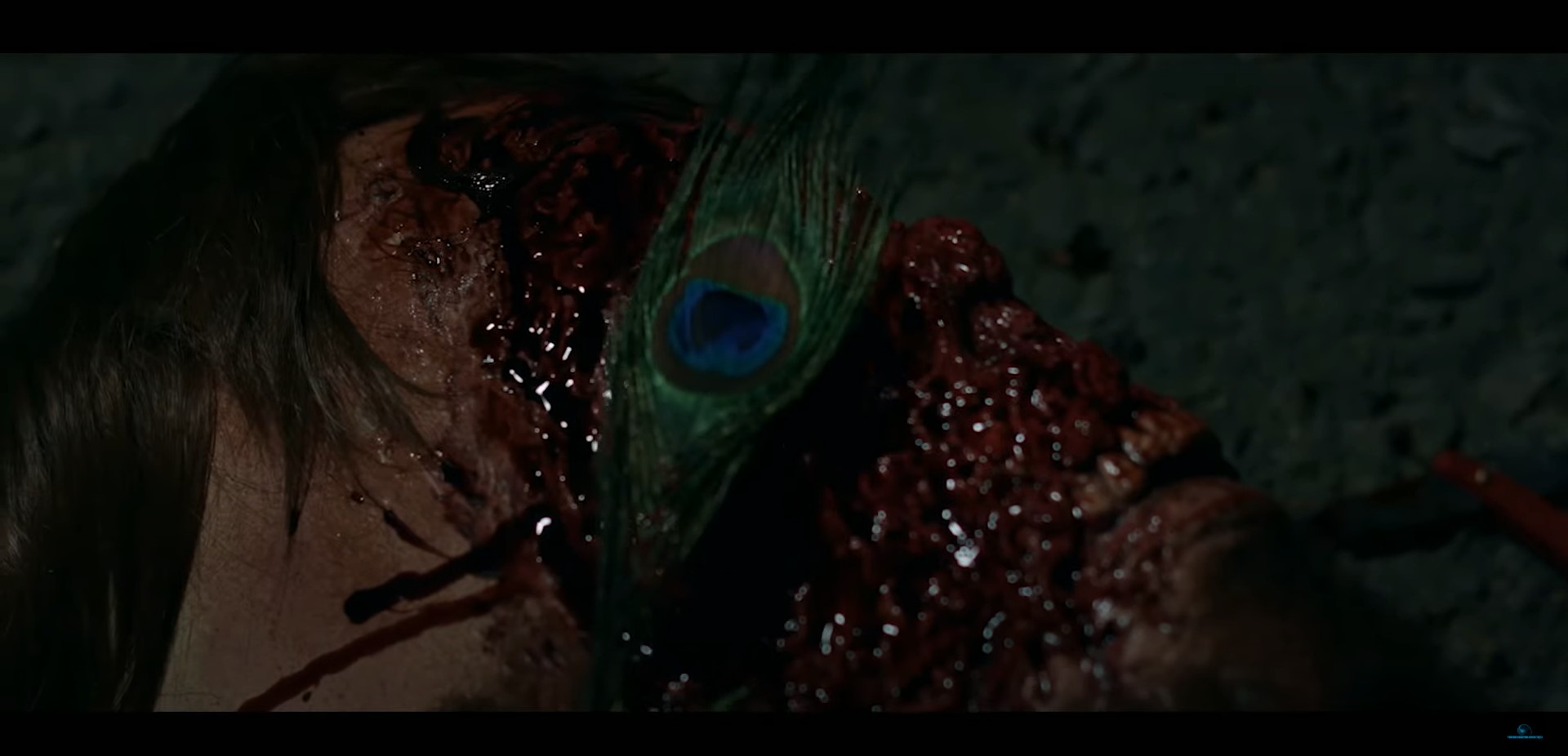
Much like “A Cat in the Brain,” Frank LaLoggia depicts his best Lucio Fulci representation as a horror filmmaker whose storyline production mirrors the individual slayings surrounding him. As a character, LaLoggia is not entirely aware of the murders as the peacock headed slasher’s string of sadism runs parallel to LaLoggia’s post-productional workload. Cristopharo pays a simultaneous tribute to not only Fulci but also LaLoggia with a built-in brief, off-plot moment of the editor, Isabella, a good friend and longtime partner of LaLoggia, running a reel of “Fear No Evil” to reminisce over his debut picture. Antonella Salvucci (“Dark Waves,” “The Torturer”) plays Isabella but also LaLoggia’s pseudo film lead actress Catherine in a dual role performance with the latter marking Salvucci’s topless kill scene that hits and sets up the giallo notes. Isabella denotes the director’s only real friend with everyone else, from the screenwriter to the executive producer, push their own self-gratifying wants onto the American filmmaker from all angles. A vulgar herd of personalities descend upon LaLoggia to exact their strong-willed ideas on how the film should appear and be marketed. From the screenwriter Antonio (Antonio Tentori, ‘Symphony in Blood Red”), the imposing desperate actor David (Halil Budakova, “Virus: Extreme Contamination”), to the uncultured and pushy executive producer Fernando Lola (Lumi Budakova) and his aspiring actress Debbie (Poison Rouge, “House of the Flesh Mannequins”), they all look to exploit LaLoggia’s modest career for their own benefit. Performances vary with a range of experience, and we receive more noticeably rigid recites and acts from the Kosovo cast in a clashing pattern with the Italy cast that has worked with Cristopharo previously. Ilmi Hajzeri (“Reaction Killers”), Pietro Cinieri, and Merita Budakova as a chain-smoking lady stalker that has glaring eyes for Frank LaLoggia.

While not necessarily thought of as a remake, “Nightmare Symphony” is certainly a re-envision of the Fulci’s “Cat in the Brain.” What Cristapharo and Trani don’t quite well connect on is connecting all the pieces of the psychotronic puzzle together into what is meant to be expressed. The giallo imagery is quite good, a praise of the golden era period in itself, with a mask and glove killer, the closeup of gratuitous violence, most of the score, and the stylistic visuals imparted with ominous shadow work, foggy and violent dream sequences, and with congruous cinematography and editing of earlier giallo. Plus, audiences are treated to not only the aforementioned Antonio Tentori, screenwriter of “Cat in the Brain,” but also have composer Fabio Frizzi score the opening title. Frizzi, who has orchestrated a score of Lucio Fulci films, such as “Zombie,” “The Beyond,” “Manhattan Baby,” and even “Cat in the Brain” just to select a few notable titles, adds that proverbial cherry on top to evoke Fulci directing “Nightmare Symphony” vicariously through Cristapharo and Trani. There are some questionable portions to reimagining’s take on the original work that are more the brand of the contemporary filmmakers. The presence of death metal prior to one of the kill moments puts the overall giallo at odds with itself in a fish out of water aspectual scene composition. Another out of place component are the external characters that are not directly involved with LaLoggia’s peacock-head themed slasher; the ironical venatic of an animal hunting down people is the reversal of a Darwinism theory that instead of sexual selection, the beautiful and elegant peacock forgoes using grace to attract and aims to survive by natural selection and thus the killer kills to remain alive. However, the story and the directors never reach that summit of summation and with the oddball characters adrift from the core story – such as the stalking woman and the eager actor – “Nightmare Symphony” flounders at the revealing end with its severe case of blinding mental delirium.

With a cover art of an upside skull overfilled with film reels and unfurling celluloid through the soft tissue cavities, “Cat in the Brain” continues to be reflected in “Nightmare Symphony” up to the release’s physical attributes on the Reel Gore Releasing’s Blu-ray. Presented in on a AVC encoded BD25, with a high definition 1080p resolution, and in a widescreen 2.35:1 aspect ratio, the Reel Gore Releasing espouses the Germany 8-Films’ Blu-ray transfer for a North American emanation, which might explain some of the complications with the bonus features that’ll I’ll cover in a bit. Situated in a low contrast and often set in a softer detail light, “Nightmare Symphony” doesn’t pop in any sense of term with a hazy air appearance and a muted color grading that goes against the giallo characteristics, especially when the clothing and set designs have the same desaturation or are colors inherent of low light intensity. Despite appearing like a slightly degraded transfer on a lower BD storage format, compression issues are slim-to-none with artefacts, banding, or blocking and this results in no tampering edge enhancements or digital noise reduction. The release comes with three audio options: A German DTS-HD 5.1, German DTS-HD 2.0 Master Audio and an English and Italian DTS-HD Stereo 2.0 all of which are Master Audio. The German audio tracks are a dub from the 8-Film Blu-ray and the 5.1 offers an amplified dynamics of the eclectic soundtrack and limited environment ambience. Dialogue remains outside the dynamics on a monotone course but is clean and clear with good mic placement and a neat, fidelity fine, digital recording. The German dub has a distinct detachment from the video because of its own layer environment, sounding a little sterile than the natural English or Italian, but works well enough as expected with the supplement multi-channel surround sound. English SDH and German subtitles are optional. Bonus contents feature a behind-the-scenes which is entirely just a blooper reel, an English language interview with co-director Domiziano Cristopharo whose secondary language is English, the original soundtrack playlist, and the teaser and theatrical trailer. I mentioned an 8-Films’ transfer complication with the bonus content because there’s is also an interview with Italian screenwriter Antonio Tentori that’s only in German dubbed and subtitled with no option for English subtitles or dub. When you insert “Nightmare Symphony” into your player, an introductory option displays to either pick German or English and I considered this to be the issue for the German only interview with Tentori; however, that is not the case as both country options are encoded in German for the interview, so at the beginning option display, I would recommend the German selection because the setup will have contain all audio options for the feature whereas the English selection will only contain the English 2.0. Reel Gore Releasing’s Blu-ray comes housed in a red snapper case, the same as the company’s release of “Maniac Driver,” and has a less tributing reversible cover art with more revealing and illustrated aspects of the narrative. The release is region free, unrated, and has a runtime of 78 minutes. Another little fun fact about the release is the incorrect spelling of the director’s name on the back cover that credits his surname as Christopharo instead of Cristopharo. Influenced by Lucio Fulci beyond a shadow of a doubt, “Nightmare Symphony” proffers the Horror Maestro’s less notable credit with a companion piece that punctuates both films love for the giallo genre, love for the violence, and love for the morbidly unhinged human condition.

“Nightmare Symphony” is a Falsetto of Praise for Lucio Fulci.  Purchase the Blu-ray Below!

EVIL Cabbie Takes Beautiful Women for the Ride of their Lives. “Maniac Driver” reviewed! (ReelGore Releasing / Blu-ray)

Hail down the “Maniac Driver” on Blu-ray!

Taking a taxi should be a reliably safe to get from point A to point B and once you settle the serviceable transaction with payment, you can forget you ever saw that taxi driver again.  But what if that taxi driver follows you home, obsesses over you, and has psychotic plans to take your life as well as his own?  One Tokyo cabbie has those very inclinations toward the beautiful women.  These women intoxicate his severe guilt over a past personal tragedy involving the merciless murder of his wife.  He scours his passenger pool for the perfect beauty to be his closing opus, a gift to society that dealt him the same hand and will take her life as a maniacal masked killer with a blade before he turns the blade on his own neck. 

From the director of “Gun Woman” and “Karate Kill” comes the latest gore-soaked, nudity-laden, psychotronic grindhouse picture from Tokyo filmmaker Kurando Mitsutake.  Labeled as a Japanese giallo film, the writer-director Mitsutake pulls inspiration from one of most influential and prolific Italian giallo filmmakers ever, the late Lucio Fulci, and stylizes his idolizing film with his own proclivity for flair.  The 2020 released film is a thirst trap of the subgenre upon reading the heavily enticing description and its basic but effective cover art of a leather glove and jacket cladded masked maniac holding tightly onto a half-naked woman, almost in an embracing manner rather than a malice one.  Sex and blood sell and “Maniac Driver” doesn’t disappoint but what about the story?  What drives the killer from one woman to the next and does it all make sense?  “Maniac Driver’s” title suggests not, and I believe Kurando Mitsutake felt the same way when writing the script, produced by “After Life” and “Paster Shepherd” producer Mami Akari under the Akari Pictures banner.

Titling the story around the maniac driver binds the film solely to the cab driver, much in the same way William Lustig’s “Maniac” focuses on Joe Spinell’s spiraling madness and scalping mutilations, and we’re pretty much left with the driver’s innermost thoughts, about his process, about his reasons, and about his plans.  Essentially, the maniac driver drives the narrative with a contemplative fare.  Tomoki Kimura has surpassed the challenge with a pendulum crazed performance sought to not only express his derangement but can also infect the viewers with the character’s warped mind.  Kimura keeps his expression stoic and sour in a role that barely requires him to speak as we mostly hear prosy, abstract, and murderous inner thoughts.  In regard to the women the driver stalks and involves himself sleazily with, Kurando Mitsutake goes the JAV actress route and is familiar with as having the alluring Asami star pretty much naked through the entirety of “Gun Woman.”  With adult actresses, Mitsutake receives uninhibited support for the victimized characters the maniac driver fantasizes over and kills as well as Mitsutake’s satirical whims in exploiting the subgenre’s penchant for gratuitous flesh.  Adult starlets from softcore actress Saryû Usui (“Sex Detective Hatenashi”) to the hardcore Ai Sayama (“Date with a Busty Nymph”), Ayumi Kimito (“Love Kimomen”), and SOD (Soft on Demand) Create’s Iori Kogawa (“One Wife + 10 Husbands) add a little titillation with gratuitous exposure, bondage, and fornication to the max. 

“Maniac Driver” paves its own neo-giallo path that swerves away from the traditional calling cards. Instead of a typical Italian murder-mystery, Mitsutake intentionally divulges the killer cab driver with a delusional hunger and fate. All the other hallmarks of a giallo killer are there in a Fulci tribute form with leathery glove hands, a gleaming blade, a masked face, and a killer who makes a duck-like sound that’s far more menacing than comical. “Maniac Driver” also pulls from other inspirations, such as Lustig’s “Maniac” as well as Martin Scorcese’s “Taxi Driver” with Tomoki Kimura channel his best Robert De Niro impression with the iconic You Talkin’ To Me line. Behind the whole ghastly facade and polychromatic style, entrenched is a theme of survival’s guilt that leads the cab driver to the point of no return. Severely injured and helpless to save his wife from a crazed killer, he’s wrought with putting forth into the world exactly what was taken from him in the same fashion, but how the deeper we spiral with and into his derangement, piecing together his mental episodical puzzle might not be so easily pegged. Mitsutake’s seemingly straight forward narrative is a blindsiding blade to the throat when looking in the opposite direction, expecting a different outcome, and when the principal character is kept to his innermost thoughts, viewers are treated with only the maniac’s disenchantment of life. The curveball is more than welcome despite all evidence being in plain view, but with the bizarre fiendishness, schizo-universe, and the T&A, to see clear through it all is impossible, especially when Mitsutake really goes off the rails with the maniac driver’s fantasies that mesh seamlessly with reality. Scenes with Iora Kogawa and Tomoki Kimura are intolerably hazy as the actors engage coquettishly as an exquisite, kimono dressed female passenger and a public transportation service man peering his eyes through the review mirror and this leads to an explicit one-on-one encounter that includes some bondage as well as a Iaido showdown with swords drawn. Through Mitsutake’s various closeups and depth-shots, sprinkled with tight up shots to emphasize body parts and to create an oppressive world, “Maniac Driver” ebbs and flows that sort of satirical, aggrandized chaos to make light of the oversexualization, as skirts hike up while running and exposed chest flop out underneath tightly bound tops, and the sheer madness of a broken mortal man. “Maniac Driver” is an uber giallo of sleaze and psychosis, a steady ride of burning yearning, and is gory where it counts.

To be honest with you, I thought I’d never see a ReelGore Releasing again. When speaking with Cult Epics founder Nico B., who launched the label with producer Steve Aquilina (“Violent Shit: The Movie”) in 2016, I had asked the popular curator of cult cinema whether he would continue with banner that sought to specialize in the release of extreme, violent horror after the releases of the ItsBlogginEvil generally well received “The Orphan Killer” and “The Curse of Doctor Wolfenstein?” The answer I received was a flat out no from Nico B. because, simply, the label didn’t generate enough profit. Well, lo and behold, ReelGore Releasing has been resurrected and the blood is flowing once again with a pair of new titles with “Manic Driver” being one of them. Though Nico B. has confirmed no involvement with the releases, it’s still great to see the label back in action again. “Maniac Driver” is released on a ReelGore Releasing AVC encoded Blu-ray, a BD25, and presents the Mitsutake film in 1080p, high definition and a 2.35:1widescreen aspect ratio. Despite heavily saturating to a blur scenes with brilliant, primary coloring, familiar to the giallo subgenre, the overall details are quite pleasant and palpable. Mitsutake utilizes different lighting and shadowing techniques to create different atmospherics but never seems to inherently kill the textures as they maintain a sharp, tactile presence. The Japanese DTS-HD 5.1 audio track, with forced English subtitles, is vibrant with an 80’s inspired blend of synth and riff-rock. Japanese dialogue is strong, clear, and innately clean with the digital recording, balanced by an error free and aptly timed English subtitles. “Maniac Driver” has a robust, yet sometimes overelaborated, sound design that outputs nicely through the side channels. The killer’s leather glove sounds can be overkill with every scene being loused with the individual stretches of the fabric while the energy-thumping engine combined affixed shots around the tire and grill is a powerful effect of the cab driver’s routine hunting method. The release also comes with French and Spanish subtitles. Bonus features include a making of featurette with interviews with the cast and crew, an audio commentary with director Kurando Mitsutake, photo slideshow, and the trailer. There are no stinger scenes during or after the credits. The physical appearance sheaths the 25GB disc inside a sleek red Blu-ray snapper case with reversible cover art that has two alternate posters on the inside. The film is not rated, region free, and has a run time of just under 75 minutes. “Maniac Driver” is no passenger in the giallo subgenre; the Kurando Mitsutake might be a bundle of homages and inspirations but takes the wheel of the Japanese sexploitive-giallo gas guzzler with deranged brutality.

Hail down the “Maniac Driver” on Blu-ray!

A Gondola Ride of EVIL! “Gore in Venice” reviewed! (Full Moon Features / Blu-ray)

Check out “Gore in Venice” on Blu-ray at Amazon.com!

A man stabbed to death in the abdomen. A few feet away, a drowned woman, pulled from an adjacent Venice canal, wearing no underwear beneath her dress. A double murder of a husband and wife has baffled a young, hardboiled egg-eating Inspector named De Pol, but the inspector knows one thing for sure, drugs were certainly involved. As the inspector digs deeper into the horribly confounding case, he learns that husband and wife were into a wide variety of kinky perversions that may have led to their untimely demise. Unable to make sense of some of the case’s facts and as more bizarre murders flare up all over town, De Pol leans on the behavior expertise of the department’s medical examiner as well as anecdotes by key suspects to piece together a prurient plot of perversion-killings sought to be handled quietly and quickly before tourists catch wind of what’s happening, and more dead bodies are discovered in the unparalleled canal-laden landscape of Venice.

Sex, drugs, and eggs run rampant on the walkway bridges and watery canals of the beautifully conglomerated Venice, Italy in Mario Landi’s “Gore in Venice.”   Also known by other titles such as Giallo a Venezia, Mystery in Venice, and Thriller in Venice around the globe, the “Supersexymarket” and “Patrick Still Lives” director Landi helms one of the more controversial Italian crime mysteries to come out of the golden age of giallo horror during the turn of the decade of 1979.  A script that houses a hellbent killer in super cool and reflective aviator shades, a sex-crazed married couple, and a detective racking his brain to connect the motive dots is the last treatment penned by writer Aldo Serio in what’s a non-linear, flashback driven, sordid piece of salacious culprit candy that’s more sexually explicit than is a whodunit thriller.  “Gore in Venice” is one of the few productions of Elea Cinematografica produced by Gabriele Crisanti who has produced “Satan’s Baby Doll, “Malabimba,” “Burial Ground:  The Nights of Terror,” and many others notorious for their sleazy and gory controversial content.

In the cast’s lead of this Italian production is an American actor.  The California-born, “Weapons of Death’s” actor Jeff Blynn has lived in Italy for much of his career and had become tapped to play youthful inspector De Pol, an arrogant prodigy of Venice sleuths with a habit of constantly cracking open and eating hard boiled eggs in the office, out of the office, at the crime scene, during the questioning in suspect’s home, and in just about every single scene Blynn is messing with an egg in a symbolic gesture of trying to trying to crack a strange case is to crack an egg strangely.  Blynn’s pale complexion, large perm afro, and thick caterpillar mustache make him stick out against his Italian counterpart costars that include Leonora Fani (“The House by the Edge of the Lake”) and Gianni Del (“Sex, Demons and Death”) as the deceased wife and husband, Flavia and Fabio.  Fani and Del’s impeccable Euro traits are flaunted all over Venice as sexual maniacs, exhibitionists, and voyeurs who take their relationship to the next level every time they step outside their character’s love nest full of erotica books and wall-to-wall mirror bedroom.  However, trouble in paradise sends the couple hurling toward jagged rocks with salacious orgy photos involving a prostitute (Maria Mancini), a drug-dealer named Marco (Maurizio Streccioni), and Flavia’s best friend Marzia (Mariangela Giordano, “Killer Barbys”) that omits no one from the suspect pool.  Not even Flavia’s ex-lover, a cartoonist Bruno Neilson (Vassili Karis, “An Angel for Satan”) is safe from Inspector De Pol’s investigation.  Unlike traditional giallo films, we’re already privy to the killer, a voyeuristic madman (Andrea Caron) with slick aviators and a complex hardon to kill everyone involved in the orgy and it’s up to Del Pol and his troupe of professional colleagues and chums, who provide not only the vigor (“Private House of the SS’s” Eolo Capritti’s gung-ho assistant to the inspector) but also sage, scientific guidance surrounding sexual deviancy (“Satan’s Baby Doll’s” Giancarlo Del Duca as the case’s pathologist).

As noted in the previous paragraph, “Gore in Venice” is less giallo than one would expect despite an alternate title denoting the film as such in Italy as “Giallo a Venezia.” Does the killer have gloved hands? Yes. Is Landi’s film stylish enough to pass criteria? Absolutely. Does “Gore in Venice” live up to the eponymous title? Blood flows freely. Yet, why doesn’t “Gore in Venice” feel like a traditional giallo? One of the more clinching reasons is the mystery dissolves roughly halfway into the story by exposing the unmasked, unconcealed killer, trailing off from that unsolved perplexity of who the killer might be at the conclusion. However, one could argue that though the killer is revealed, the question of why all the carnage still remains, leaving the giallo more or less intact. Violent tropes aside, Landi’s film abundantly saturates itself into carnal exploits that linger on-and-on more than necessary to get the point across. These scenes of masturbation, public exhibition, and raging erotic zigzag along a blurry, indistinct line of pornography, coming (and coming!) away from the intended murder-mystery subgenre with more skin and slaughter. That’s not the say “Gore in Venice” fails to live up to the moniker as the kills are as grisly as implicitly promised with a large blade to the vaginal cavity, one poor soul gas drenched and lit up like a bonfire, and a one gal having the naked legs cut out right from under her complete with an extreme closeup of the sawing pellicle perfection. Whether because of Mario Landi’s direction or Aldo Siro’s script, the explicit eroticism eats way too far into the story that, in turn, ultimately betrays any kind character development aside from the tragic perversive arc of Fabio and Flavia. Inspector De Pol often skirts around much of the action being only an investigator continuously trapped in the accounts of other people’s tales of debauchery and always one step late to the crime scene party that baffles his keen scrutinizing eye. I’m not one to deprecate graphic sexual content, especially in works that display actual fondling and masturbation in their art, but “Gore in Venice” mildly entertains as a low-end giallo albeit a spectacularly vivid and vehement blood show in front of the unique waterways of Venice.

Under one of the more slapped together and detailed shrouded cover arts I’ve seen this year comes “Gore in Venice” onto Blu-ray home video as one of the revisited classics purchased and redistributed by Full Moon Features. The Blu-ray is an AVC encoded, region free, 1080p presentation of an uncut (and uncensored) remastered feature exhibited in a full frame 1.66:1 aspect ratio. The Full Moon back cover mentions the transfer was compiled from the best available materials, but, honestly, the original 35mm print looks great with only sparse dirt specks and an occasional frame omission. Details look good as well despite the flat coloring. The Italian language LCPM 2.0 and 5.1 offer nearly identical outputs with no real composition distinction between the two others than a slightly more complex background track of motorboats ripping through the canals. There are no bonus materials with this feature only release that’s house in a standard blue snapper case and a red on black, cheesy, Eurotrash cover art for the 99-minute film. Libidinous with a capital L, expect more of sesso e depravazione with profound tidbits of gore than an engrossingly intelligent crime thriller in Mario Landi’s “Gore in Venice.”

Check out “Gore in Venice” on Blu-ray at Amazon.com!

To EVIL, Death is Only the Beginning. “Girl With a Straight Razor” reviewed! (Darkside Releasing / Blu-ray)

“Girl With A Straight Razor” available on Blu-ray and DVD at Amazon.com!

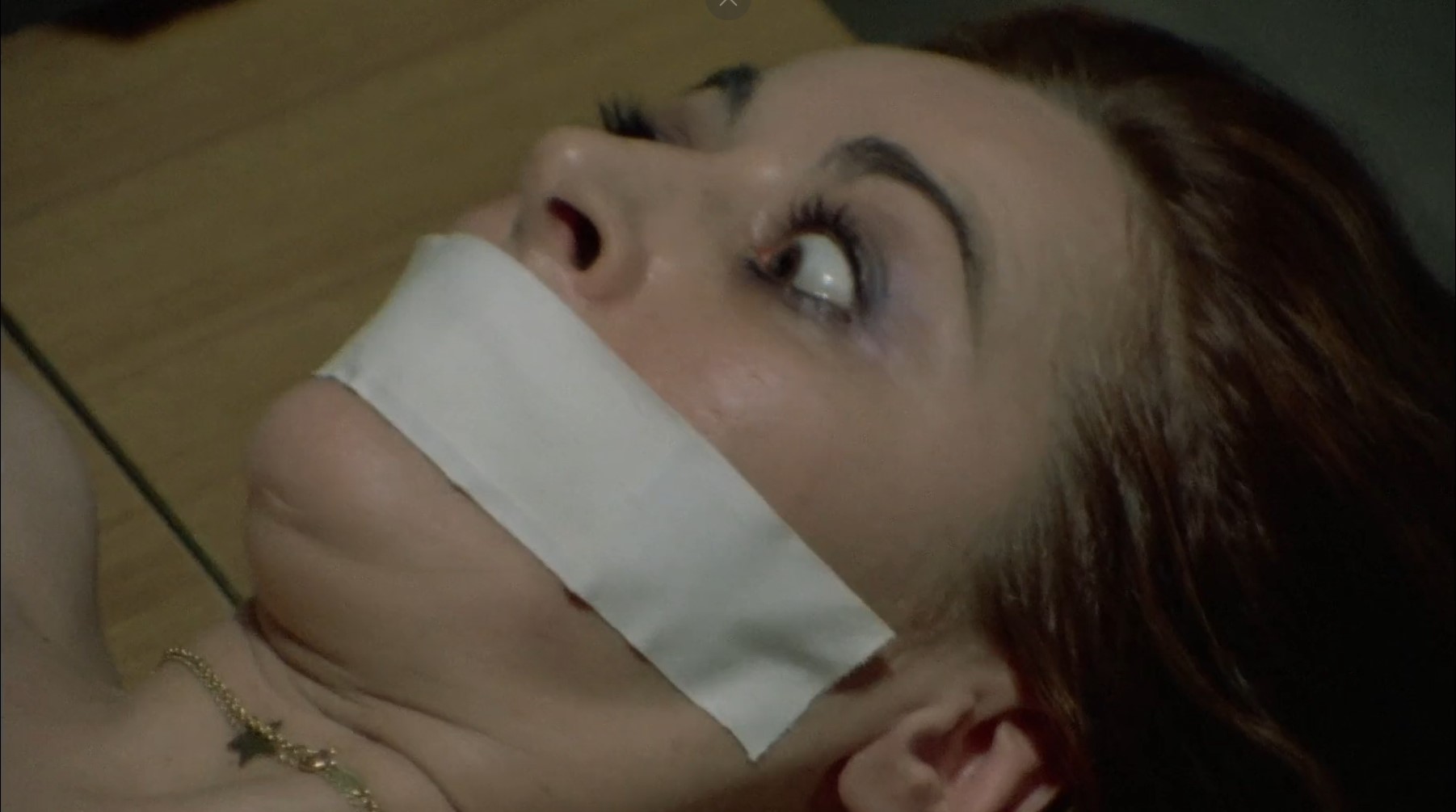
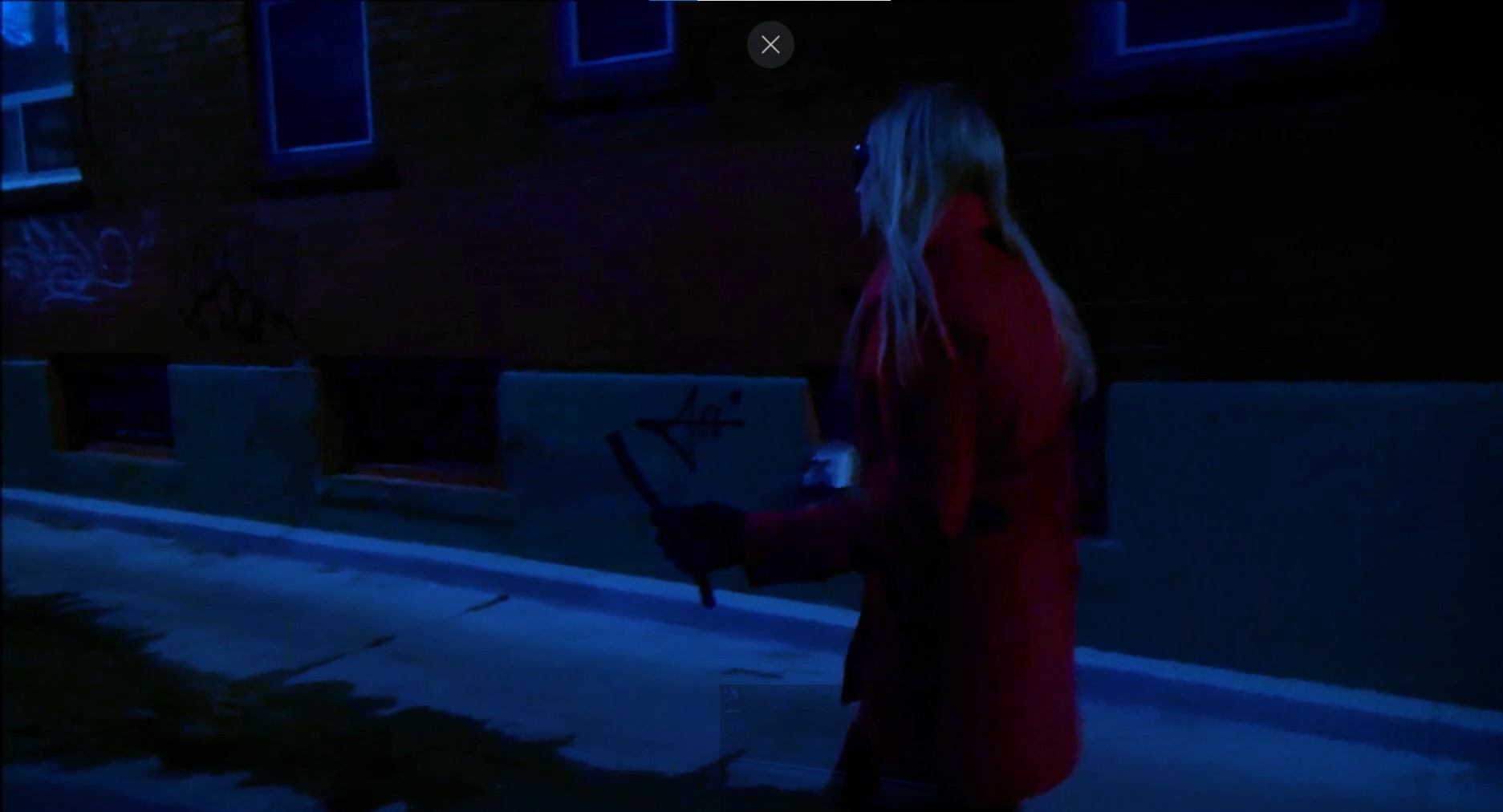
A placid woman waits in her modern chic apartment until dark. She ritualistically dresses elegantly and exits her apartment building wearing sunglasses, a bright red coat, and an unsheathed straight razor. As she wanders the streets, she locates a target, another woman, and stalks her with a bloody thirst in her eyes. When approaches from behind to only turn around her victim and come face-to-face with an exposed neck, she slashes away at the jugular, slicing crudely a blood-splattering spree that manifests a smile across her face. She returns to her apartment where she’s visited in between her straight razor murders by a lady dressed and veiled in black, priming the elegantly dressed woman for the next kill. The blade continues to slash through napes nightly, memories of the woman’s past seep into her psyche to a terrifying outcome of how she became a killer.

“Girl With a Straight Razor.” Simple, yet effective. The eye-catching, razor-sharp title certainly has a couple of key words combined together audiences often drool over just by the very straight-forward approach and appealing word sequences that make the appearance of an idiosyncratic title that much more desirable. Canadian horror-filmmaker Chris Alexander seizes advantage writing-and-directing a script that’s a numbing-gaze reminiscent in homage to giallo by assembling the trademark motifs of stark red coloring, gloved hands shot in a first-person view, and the use of a melee blade familiar to the Italian-made mystery-thriller genre for a fever dream highlighted as a pain-pleasure principled purgatory. The “Female Werewolf” and “Necropolis: Legion” director also composes the film and controls the overall look of the colorfully prone to epilepsy cinematography that jars sense the visual cortexes. “Girl With a Razor Blade” is the first feature production of the Vancouver based Molemen Entertainment and is produced by Vince D’Amato, the founder and managing partner of Darkside Releasing who released the film on home video this year.

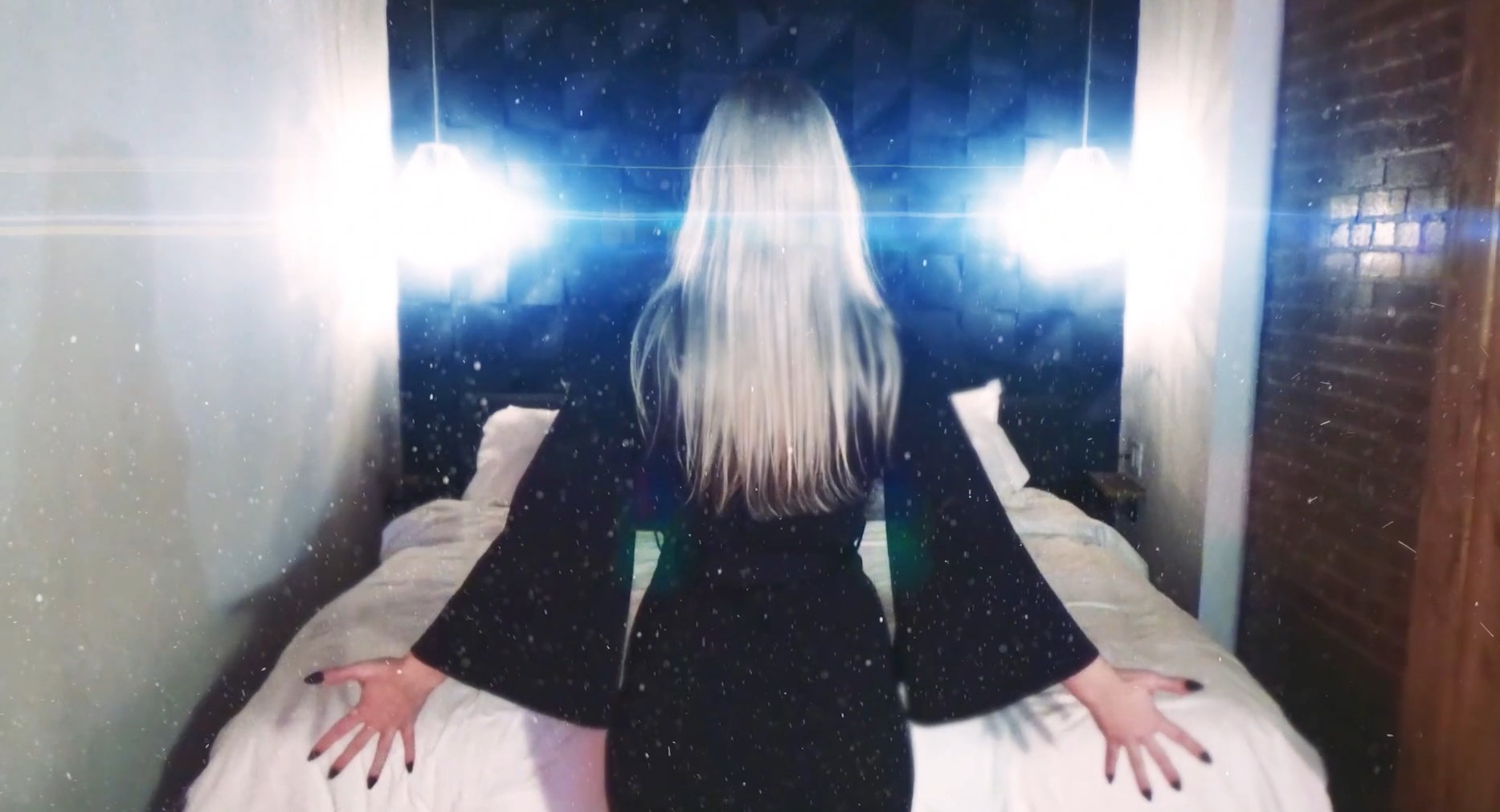
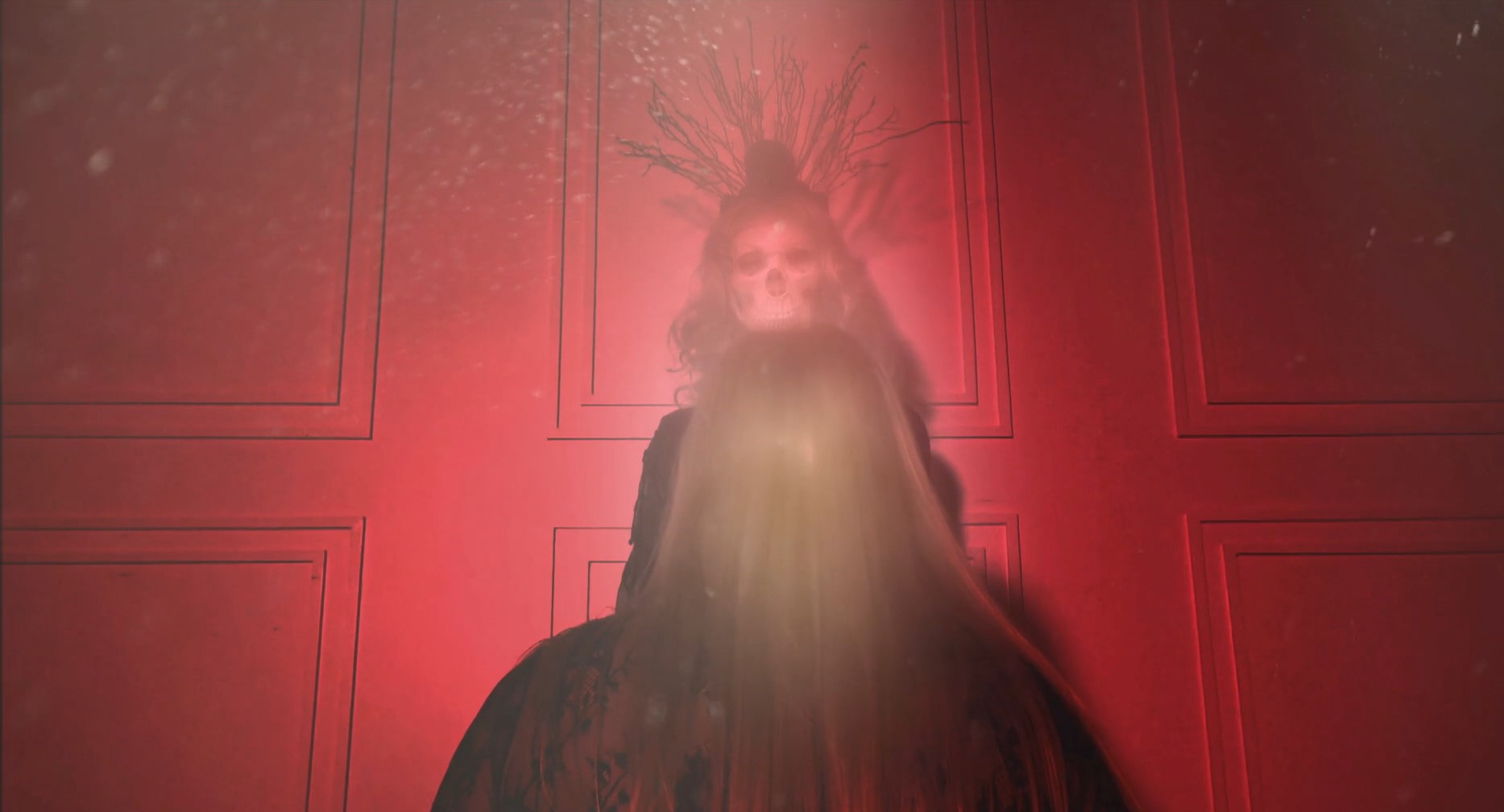
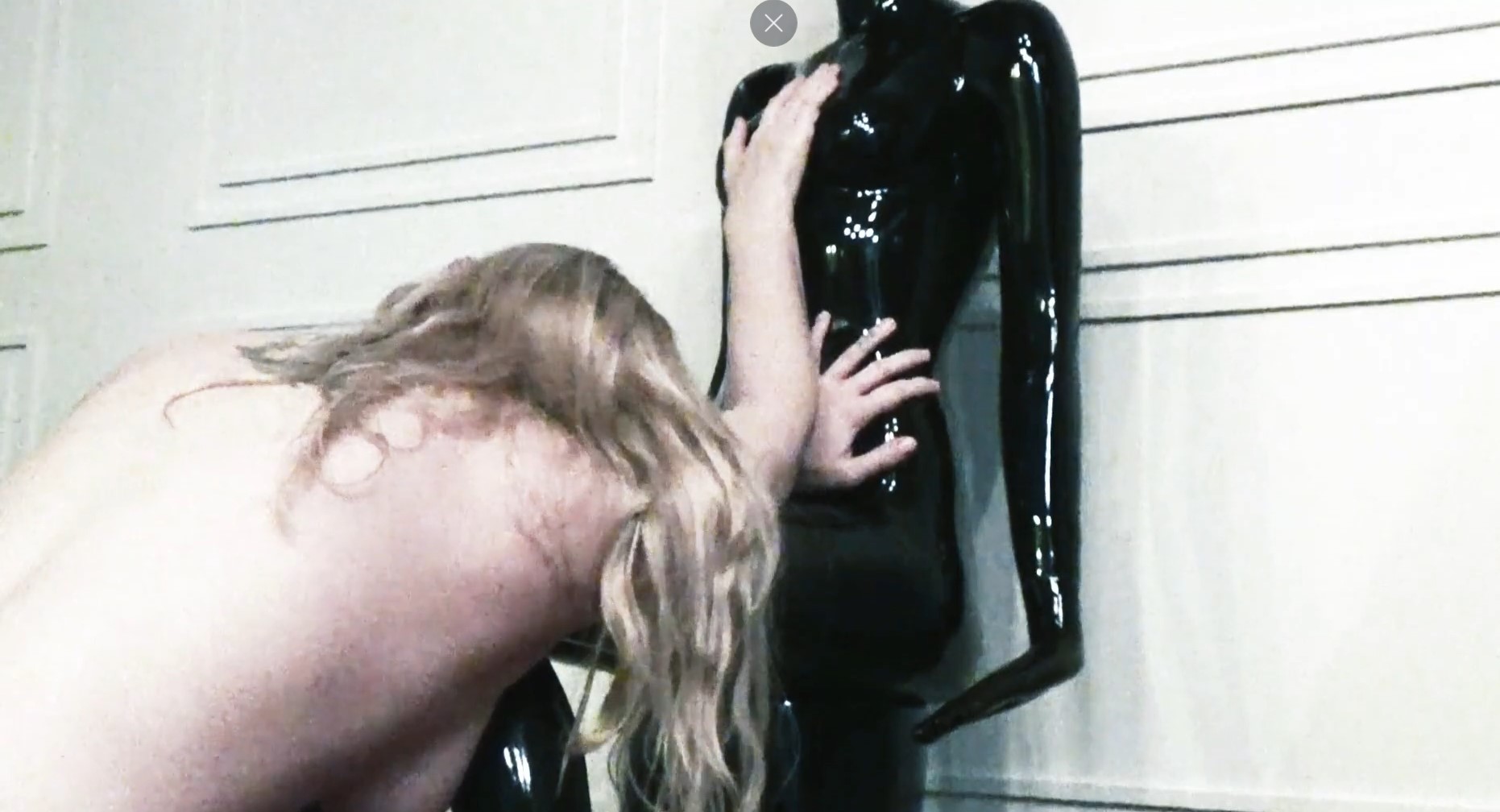
If you want to make a low-budget film and keep a lot of change in your pocket, hire only a handful of decent, well-rounded actors and actresses to maintain the spirit of independent filmmaking that balances the budget as well as balances the filmmaker’s creativity with semi-creditable performances. If you want to make a low-budget film and keep dollar bills in your pocket, hire two actresses where one only has two to three scenes max with no dialogue and the other have them play four different versions of themselves with very little dialogue. The minimal dialogue forces Alexander into a creative environment where express the principal’s emotional deluge, or lack thereof, can be displayed in a range of camera angles, his musical composition, and the variegated kill scenes contrasted against contrasting black and white visuals. In these scenes are a pair of Chris Alexander regulars. Having had roles in some capacity 2019 re-imagining of Bruce Hickey’s “Necropolis” from 1986, Thea Munster finds herself again in front of the director as a ghostly, haunting figure costumed in an old-fashioned lacy black dress as if going to a funeral, to which she’s properly playing a character called Lady Death so there’s no ambiguity about the status and intentions from the grim reaper concept, and Ali Chappell who isn’t foreign to leading lady role with Alexander and has the nearly the entire story on her shoulders with scenes of her as the lady in red cutting the throats of window shoppers on a nightly basis that becomes reverse engineered into the deconstruction of her as a killer with humanizing sympathy. Despite not much dialogue, both Munster and Chappell hit their marks and cater to Alexander’s idea of posturing expression that mostly involves Chappell laying topless in an egg-shaped chair, an animal skinned carpet, or on a black mannequin chair.

“Girl With a Razor Blade” is cutting-edge existentialism and novel re-imagining around the idea of death’s plans for us all. Alexander dives into the depths of mortal consequences that limbo the soul into a loop of insensible pain and suffering.  As we learn more about this woman and her marital troubles, presumably separated by legal force and a resentfully angry husband, from her child, Chappell’s character has no other place to go than down into darkness, mentally and physically.  Its during that time Lady Death approaches to become a harbinger of death, puppeteering her subject’s will to conduct more self-harm as the villain and the victim in a mind warping illusion that’ll fool the viewers’ perception of the woman’s insatiable lust for red jugular juice.  Alexander’s cinematography style is simply ethereal and elegant with a touch of precise choreography in the characters positions and movements to reflect a vivid dichotomy between the present stillness of surrealism and the past’s stressful reality. “Girl With a Razor Blade” is grim bordering the line of certain religious doctrines in condemning oneself to an unsavory existence, if you can even call it an existence, of facing yourself, your fate, over and over again until no longer the feeling the need to spill blood is gnawing at the marionette strings and waking up to the truth, facing it, can be free. There are moments the blade is a sexual object, almost like an obsession with what it represents, which would be death, that can be addicted, can’t be ignored, and won’t let you forget it.

Stylish, cryptic, and thought provoking, Chris Alexander’s seventh film “Girl With a Straight Razor” cuts onto a high-definition, AVC encoded, Blu-ray home video courtesy of Darkside Releasing. Two versions of the film are available – a Darkside Releasing expanded cut with a runtime of 67 minutes and a director’s original cut of the film with a runtime of 57 minutes. Both produced during the pandemic films are presented in a widescreen 1.78:1 aspect ratio. Picture quality wasn’t the best for Darkside Releasing with a shaky, often banding, image mostly throughout due to compression issues. You can see the blurry splotches in the darker portions of the scenes. Delineation is also difficult during rainbow strobe effect when the woman slices at away during a kill moment in a fit of haziness that leaves barely an outline of the contours. In fact, Alexander’s style is all over the map with filters, lens flares, and gel lighting that can be a little too much and gaudy to digest. The English language 5.1 surround sound has a lossy framework that’s more of a soft crunch than a sharp crisp. There isn’t much dialogue to be hand in the film, but the clarity is there, it’s just not robustly defined. Aside from two versions available of the film, bonus features also include an audio commentary on the director’s cut, three short music videos by co-star Thea Munster and her band “Night Chills” as she spotlights her niche playing of the theremin instrument, and Darkside Releasing 2021 Giallo and Surreal trailer reels. A character-driven and introspective “Girl With a Razor Blade” laments as an acquiescent nightmare breaded lightly in giallo features and fried heavily in the abstract qualities of surrealism. Don’t expect Chris Alexander’s film to be straight forward giallo with a straight blade razor and you’ll come out with only a close shave nick into your expectations.

“Girl With A Straight Razor” available on Blu-ray and DVD at Amazon.com!