Sadomasochism and Decapitation Seen by a Child Turns Him into An EVIL Adult! “Nightmare” reviewed! (Severin / 4K UHD – Blu-ray)

Your “Nightmare” Should Be in 4K! Own it Here!

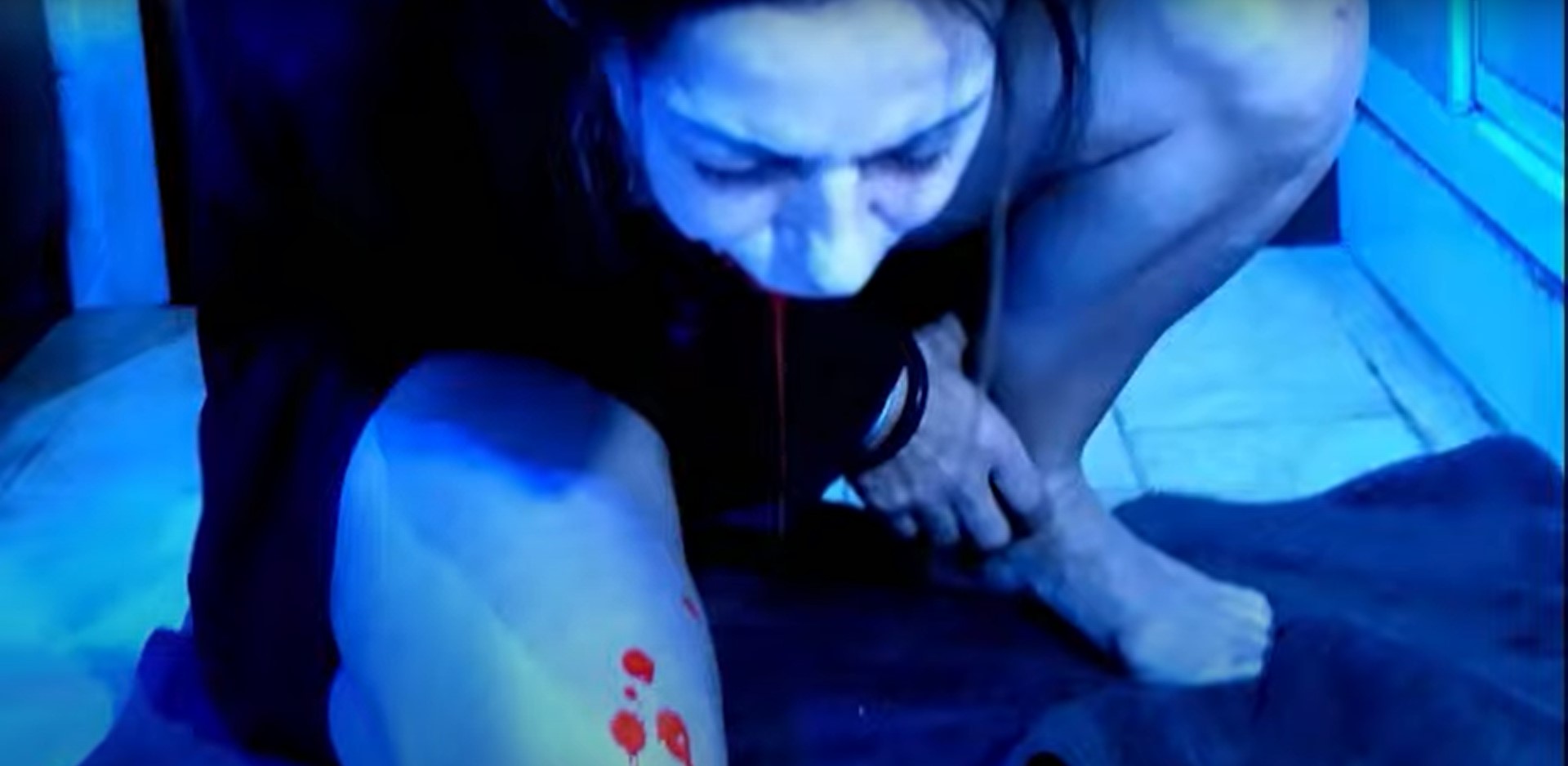
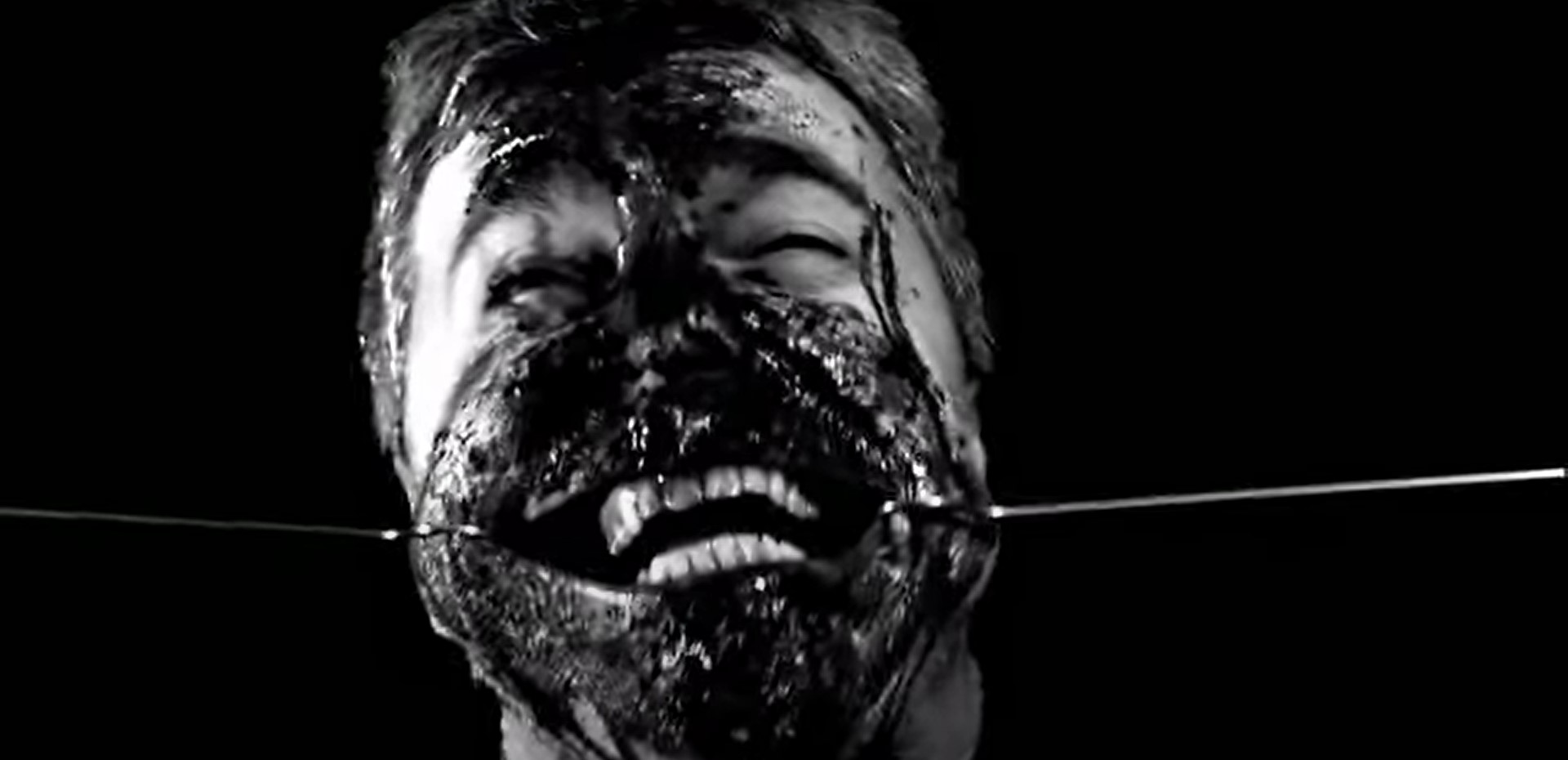
A schizophrenic patient continues to have reoccurring dreams of a young boy chopping the head of a woman in the midst of rough sexual fetishism.  The intense nightmares send him into violent stints, delusional states, and severe seizures.  As a test subject for an experimental behavior drug, the troubled man shows promise of recovery and enough so that he’s released from the mental hospital with continued outpatient therapy sessions.  Not long after his release does he skip his sessions to hightail it from New York City to Daytona Beach, Florida, killing people along the way after decapitating nightmare continues to plague and force him to murder.  In Daytona Beach, single mother of three becomes his obsession as he stalks the youngest boy, a mischievous troublemaker, and even breaks into their house when it’s not occupied , but as the bodies begin to pile up on the hands of his need to kill, the more brazen he becomes to entering while they’re home alone. 

Based loosely on the improprieties of government spy agencies using drugs to bend the minds of home and oversee terrorism to their wills, “Nightmare” sensationalizes the concept for the public sector involving a mental patient, experimental drugs, and exasperating an already instable person’s constitution into a hyperdrive of bloodletting carnage.  The U.S. production is written-and-directed by Italian filmmaker Romano Scavolini who came to America to shop around his scripts having failed to secure financial support in Europe, including, you guessed it, “Nightmare.”  Shot in New York and mostly around the Cocoa Beach Florida, the crime thriller filmmaker flexes his muscle with his first attempt at horror and the outcome is nothing short of unadulterated madness.  Once considered to be titled “Dark Games,” and goes loosely by “Blood Splash” and “Nightmare in the Damaged Brain,” the 1981 film is a feature of Goldmine Productions with John Watkins and Bill Milling (“Silent Madness”) producing.

The man behind the nightmare is George Tatum and the man behind George Tatum is Baird Stafford in one of his only two roles as an actor.  “Nightmare” wouldn’t be as skin-crawlingly shocking if it wasn’t for Stafford’s distressing performance of a man whose psychology is being peeled away and you can see Tatum physically fighting the urge, fighting to stay sane, but losing the battle as the grisly terror replays over and over inside his mind.  Stafford’s asunder of Tatum’s equilibrium has unequivocal transference to the audience.  Parallel Stafford is a child, a young child by the name of C.J. Cooke who essentially played his own version of himself in C.J. Temper, a mischievous prankster that ran babysitters up a wall mad and frightened and frustrated the living daylights out of his mother.  C.J. is part of the family Tatum is hellbent on driving down from New York to Florida to see for a reason that isn’t made clear yet until the shocking reveal.  C.J.’s single parent, a mother desperate for love and affection, is played by Sharon Smith who has become romantically involved with nice guy, and yacht owner, Bob Rosen, with Mik Cribben in the role.  Cribben was actually part of the cast but the original actor for Bob Rosen dropped out and Cribben quickly filled into the role that suited him well enough as a suitable suitor for C.J.’s mother.  “Nightmare” rounds out the cast with Danny Ronan, Scott Praetorius, Christina Keefe, William Kirksey, Tammy Patterson, Kim Patterson, Kathleen Ferguson, Candese Marchese, Tommy Bouvier, and producers John L. Watkins and Bill Milling as drug trial executive and psychologist tracking down Tatum to clean up their mistake. 

“Nightmare” combines excellent U.S. thespianism with an Italian way of suspense and violence glued together by the success of the late Leslie Larraine and team’s special effects albeit the controversial assertion on the film’s posters that Tom Savini (“Dawn of the Dead” ’78, “Friday the 13th, ’80) had been the effects supervisor on the film albeit Savini’s adamant claims of the opposite and denying the credit being false and liable for using his name to draw in audiences.  Savini continues to state his contribution “Nightmare” was limited to best to the action of a decapitating swing of the axe.  Ultimately, the whole ordeal mars Larraine’s due recognition for some of the more up-close and personal gory effects this side of the early 80s.  Scavolini also deserves well-received credit for his narrative vision of Tatum’s psychosexual struggles that drive him to kill.  Robert Megginson’s editing and the re-recording mixing team tackle a form of character plummeting that’s unlike any other from the intercut concatenation of events between Tatum’s horrific, blood-soaked nightmares and his antagonizing, sweat-inducing impulses that propel him without a choice.  The simultaneous parallels between Tatum and young C.J., as Scavolini aims to connect the two against-the-grain personalities as a singular link with back-and-forth subplots, leach the shock out of Sharon Smith’s acme line as mother Susan Temper that uncovers the truth when the chaotic smoke clears.  Why Tatum would drive so far from New York City to Daytona Beach, Florida with reason to stop and make roost on this one particular family fails to form mystery around what’s often crafted to be an arbitrary target with some minute hints that may provide clues to the audience is because even without those inklings, the shooting script defines the rationale right from the beginning thus bringing the viewers out from a shrouded suspenser and into being buckled in just along for the ride. 

Severin Films’ 4K scan of the 35mm internegative compositions the print with various foreign element sources for a comprehensive version of Romano Scavolini’s “Nightmare” on a 4K UHD and Blu-ray 2-dsic set.  The UHD is on a HEVC encoded, ultra high-definition 2160p with a 4K resolution, BD66 and the Blu-ray is housed on an AVC encoded, high-definition 1080p, BD50.  What’s released is a very enriched saturation of the technicolor process that defines and differentiates the innate hues.   Details are more than consistent throughout as we’re able to pinpoint the beads of sweat down Tatum’s face or feel the palpable slick sinew of a decapitated head amongst the examples.  Blood is a deep, glossy red and contrasts strikingly in the more sopping moments despite Savini’s claim that it needed more green dye to better pop for the camera.  A consistent layer of agreeable grain runs throughout from the 35mm film stock, as it should, without any inimical dust, dirt, scratches, flares, or of the like to obstruct viewing or cause lapse in the narrative, as it shouldn’t.  Between the resolution diverse formats, there’s a slightly more grindhouse look to the Blu-ray whereas the HDR10 crisps the image for better vibrancy.  Both formats retain inky blacks without shimmering or banding.  The English language audio tracks are available in two lossless options:  DTS-HD 5.1 and a DTS-HD Stereo 2.0.  The surround mix’s dialogue has resounding infusion, spread through the multi-channels to encompass a multi-directional approach to centralize.  The design is effective as it’s prominent to not understate the vocals but leaves little room for spatial distant to which no matter where characters stand, they are almost audible on the same audio plane.  Jack Eric Williams warping harmonica and twangy guitar, intrinsically integrated with piano notes, a variety of percussion, interjecting funk bass chords, and hints of string instruments, that ebb and swell with great intensity and favorable discordance is a real celebration of Williams’ score on Severin’s latest restorative edition of “Nightmare.”  English subtitles are optionally available.  The Ultra HD release comes the film’s trailers and a pair of audio commentaries as the only accompanying special features; commentary one has features star Baird Stafford and special effects assistant Cleve Hall with Lee Christian and David Decoteau and commentary two features producer William Paul.  The Blu-ray also has the commentaries and trailers plus an extended lot of interviews, such as a feature length (71-minute) Kill Thy Father and Thy Mother interview with director Romano Scavolini (Italian with English subtitles), Dreaming Up A Nightmare interview with cast and crew, a brief interview with Tom Savini discussing his role, or rather his not role, in The Nightmare of Nightmare to which Savini looks a little tired of answer the same question about his inaccurate involvement, an interview with makeup artist Robin Stevens The Stuff that Nightmares Are Made of.  Also included is an open matte peepshow as well as untouched deleted scenes, extending beyond the already newly achieved 99-minute runtime for the film.  “Nightmare” from Severin comes in a standard 4K Amaray case with original poster art used for the front cover.  The discs are separated and tab locked on either side of inner casing and this particular release, the 2-disc set, does not come with any insert or content.  The front cover is reversible with the European title “Nightmares in a Damaged Brain” and a different image composition of the European poster art. The disc has region free playback and is not rated.

Last Rites: “Nightmare” on a new, extended restoration in 4K and Blu-ray is a dream of a release. A nerve-wracking performance in Baird Stafford’s schizo vilifies the very classification of the mentally ill in what is sure to go down in history as one of the most disturbing, and disturbed, characters of the video nasty era.
Your “Nightmare” Should Be in 4K! Own it Here!

Playboy Discovers Vengeful EVIL’s Hidden BDSM Room A Little Too Snug. “Emanuelle’s Revenge” reviewed! (Cinephobia Releasing / DVD)

Emanuelle’s Revenge now on DVD from Cinephobia Releasing!

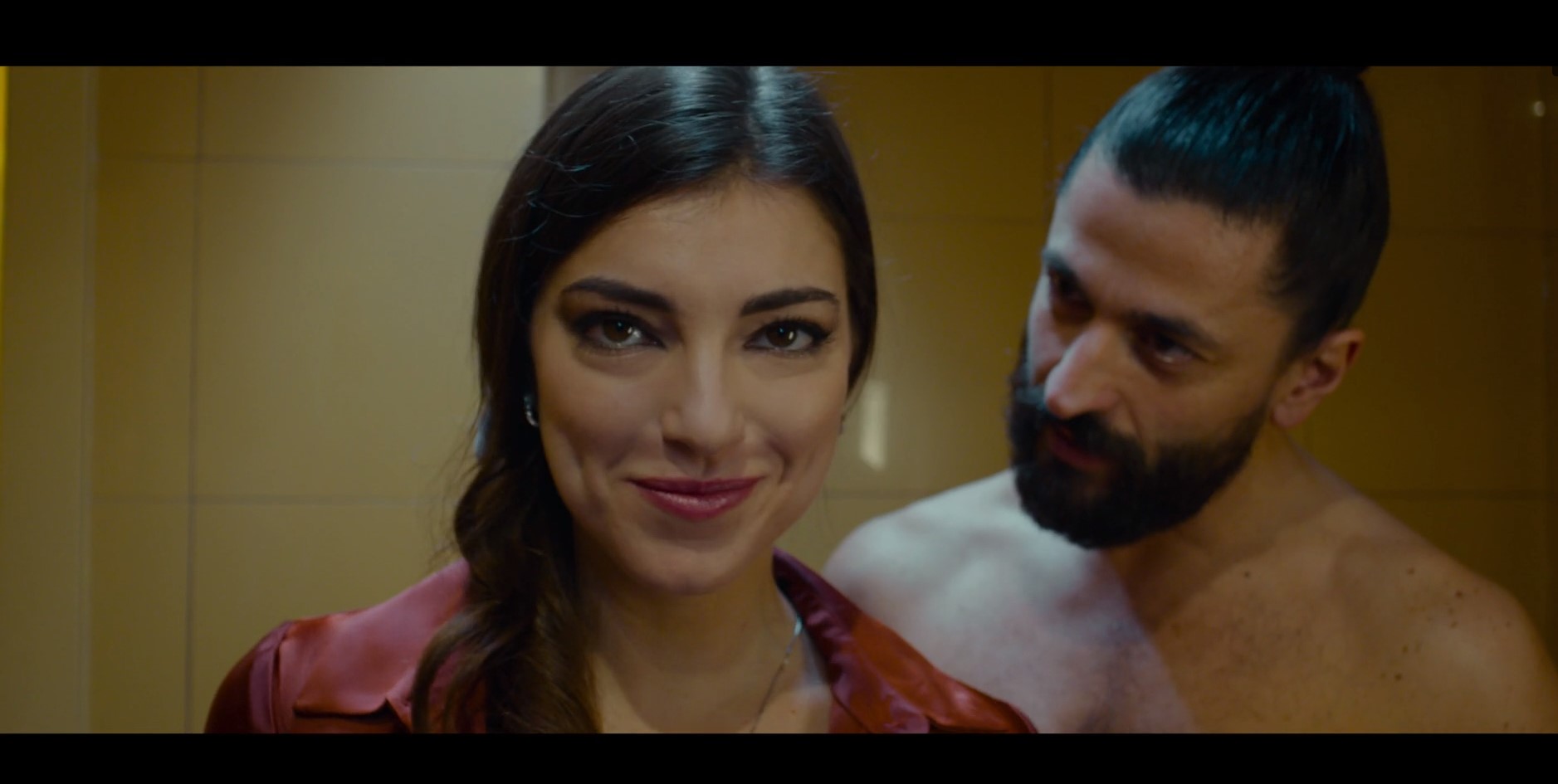
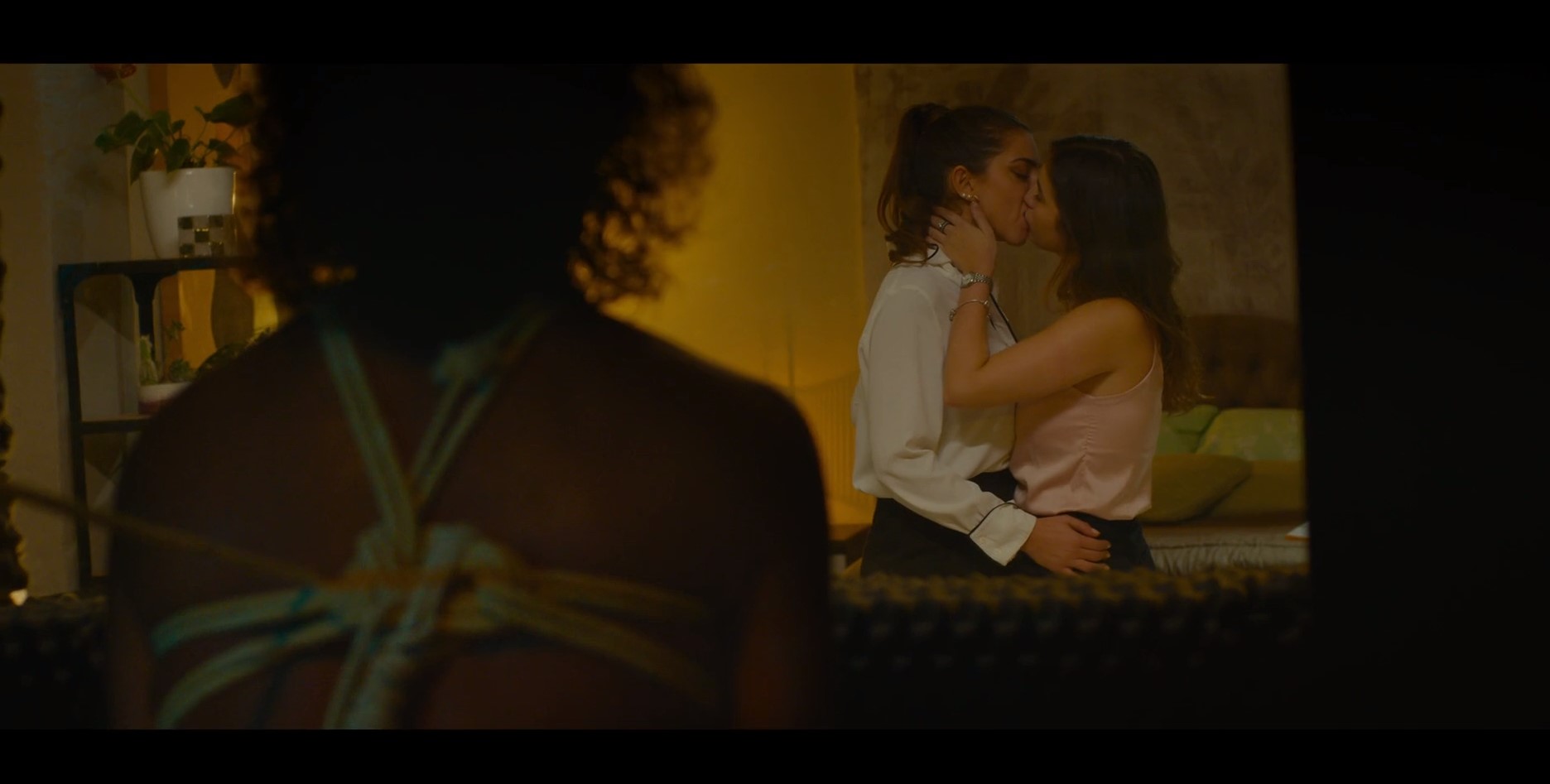
A wealthy businessman philanders his way through woman in a pursuit of satisfactory conquest.  The formidable challenge of bedding a hard-to-get woman arouses him and the chase is all that more thrilling and erotic.  His persistence and perfect man act pays off with up-and-coming model Francesca, but for the playboy, Francesca becomes another notch in his belt and quickly implodes Francesca’s romanticized relationship after a sexual tryst in the public eye.  A year later, he begins his surmounting quest again with Emanuelle, a renowned writer in a lesbian relationship.  The beautiful and darkly seductive woman catches his eye and the game begins as he uses every excuse to rendezvous with her despite the Emanuelle’s partner standoffish opposition, but as his tenacity appears to be paying off as she leads him on, awarding his constant charm with favorable kittenish returns, Emanuelle is actually leading him straight into the jaws of a deceitful plan.

Italian co-directors Monica Carpanese and Dario Germani are copiously inspired by the heyday of Italian Eurotrash cinema.  The actress-turned-debut director Carpanese has starred in a handful of erotic and horror thrillers of the prolific trashy filmmaker Bruno Mattei, such as “Dangerous Attraction” and “Madness,” while also having a principal performance in the 2022 sequel to Joe D’Amato’s notorious cannibalism film “Anthropophagus.  Her colleague Dario Germani is also the cinematographer for the spaced-out follow-up as well as establishing himself in the genre not as a filmmaker behind the lens but also a director with genre films under the belt with “Anthropophagus II,” a dissimilar lover’s anguish in “Lettera H,” and a snuff-slasher “The Slaughter.”  Carpanese and Germani’s next collaborating venture continues with another D’Amato influence mixed with the popular erotic series, and its tangent spinoffs, of Just Jaeckin’s “Emmanuelle” that has official and unofficial sequels spanning all through Europe with enticingly, titillating erotic stimuli and thrills.  Their explicit explication of the near 50-year-old sexy-laced franchise comes in the form of “Emanuelle’s Revenge.”  Dropping the second “m” along with the choice of similar story and title moves the film closer to being a remake of the Joe D’Amato “Emanuelle and Francoise,” aka “Emanuelle e Francoise” or “Emanuelle’s Revenge.”  Carpanese pens the Marco Gaudenzi and Pierpaolo Marcelli produced script under the production flags of Flat Parioli, Haley Pictures, and TNM Productions. 

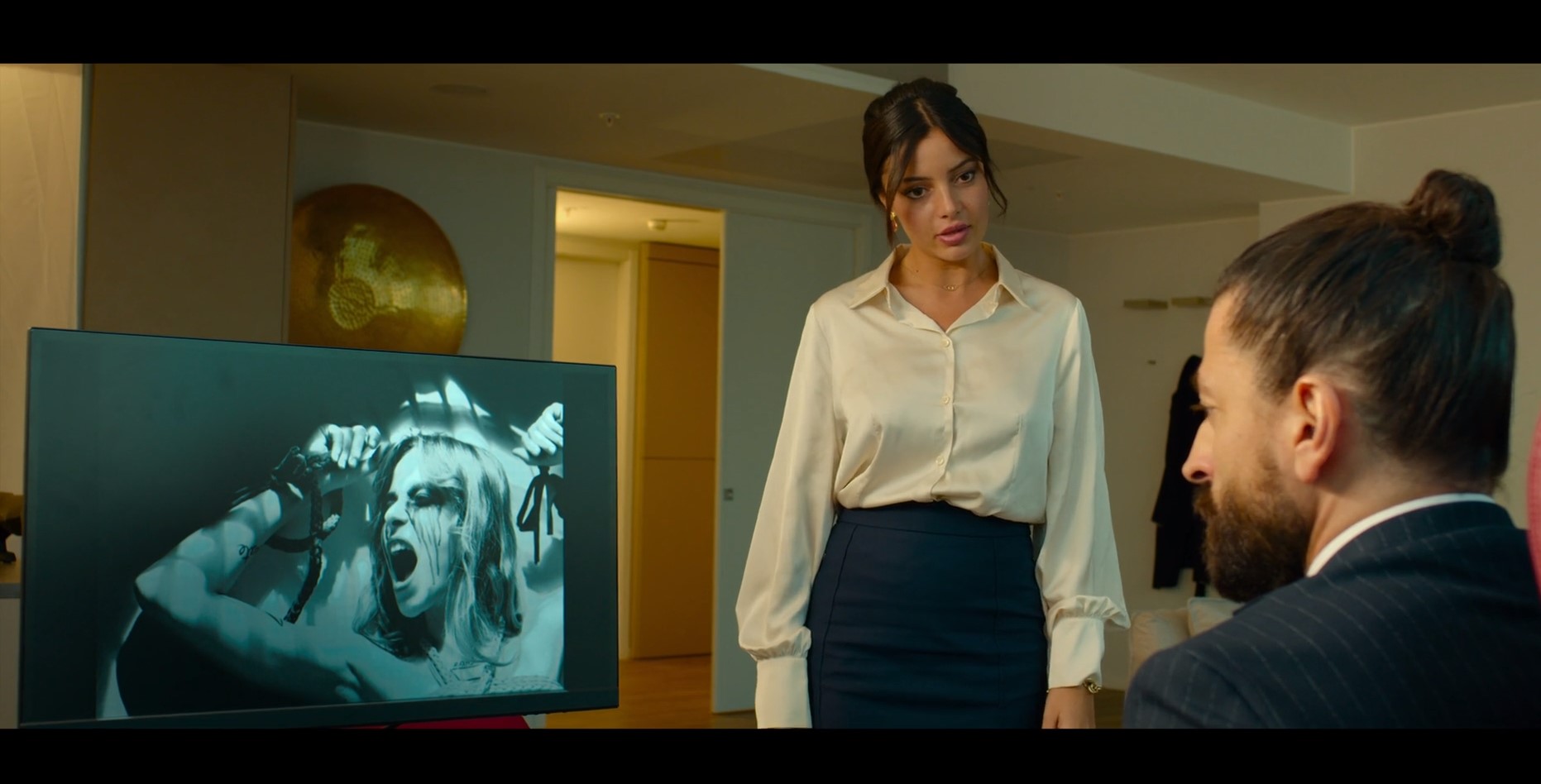
“Emanuelle’s Revenge” is carried by a small, four-person principal cast and half that for peripheral players within a dual-timeline story that provides the same cat-and-mouse game but with different, yet shocking outcomes on both of them.  At the tip of the spear is playboy Leonardo played by Gianni Rosato.  Sporting his best bandholz beard and pony bun, Rosato’s aggressive entrepreneurship extends beyond the working stiff hours and into the extracurricular activities of hunting down and dominating the opposite sex to sate his kicks for kink.  As the primary principal, Rosata receives the screen time that digs further into Leonardo’s psyche and what’s revealed about Leonardo’s nature is obvious trouble with an aggressive flirtation to the point where his whole game is akin to a stalker, showing up unannounced where he knows his targeted woman will be, obtaining their property that he has no right to, and essentially sucking their face with really bellicose kisses that look like they hurt.  Okay, maybe the latter is more overzealousness on Rosata’s part but certainly adds to Leonardo’s alarming behavior to which women seem to be attracted to as if giving into the idea that women prefer bad boys.  Such as the case in the first narrative with Francesca, a promising model with a now sex-relationship smart attitude after a previous relationship went terribly wrong with revenge porn.  Played by Ilaria Loriga in her own credited role, the young actress isn’t quite the epitome of innocence but is understandably weary to fall in love again with the persistent Leonardo but with all the foretell warnings of a disaster in the making, Francesca’s penned as sorely naïve and having learned not one single lesson of her past relationship with promiscuous men.  A year later, in the second act’s story, Emanuelle strolls into the picture under the olive-skin and deep eyebrows of Beatric Schiaffino who bats enticing eyes of the titular character’s hidden agenda. Schiaffino’s crafts a demeaner starkly different against her previous year counterpart as Emanuelle’s coquettishness doesn’t refrain from the fact she’s already in a hot-and-heavy relationship and matching Leonardo’s hot-to-trot escapade with a come-hither that’s just out of his reach. If a rake beckons a game of amorous desire, then Emanuelle enacts a game of her own, one of a lure to lead the blind right into her spider’s web and Schiaffino properly tightropes pleasure and purpose to a somatosensory stimulation level. “Emanuelle’s Revenge” rounds out with Luca Avallone as Leonardo’s licentious friend and business understudy, Ilde Mauri as Emanuelle’s lesbian partner, and Miriam Dossena as Leonardo’s 20-something daughter who suddenly pops into play in the Emanuelle story.

Even though “Emanuelle and Francoise” has never traipsed across my eyes, from what I’ve read the Joe D’Amato and the coproduction of Monica Carpanese and Dario Germani share a lot in common, but the modern-day version of this sordid tale of lust and revenge sticks to the venereal veneer only whereas D’Amato engages a cannibalism and other ghastly horrors. “Emanuelle’s Revenge” seduces with melodramatics, frisky fantasies, and contemptible thralldom because of one man’s wandering libido, focusing tremendously on the building game of mostly pavalar rather than diving into shock value. The narrative begins with a suicide of Francesca, jumping half nude off a busy passenger vehicle bridge, and this segues into Leonardo’s assertive activity into Francesca’s life and so the tale’s non-linear format is already incredulously fated with tossed in opening scene just to grab attention. When following Leonardo’s uncomfortable pursuit, and uncomfortable henpeck kissing, of Francesca, the audience is just along for the ride up to the point of incident where they’re abruptly blue-balled by cut-to a year later without knowing why Francesca decided to throw in her life towel. The brain and our movie-watching experience eventually catchup with the fact everything will be explained at the climatic, but the format jars the assimilating process a tad. Throughout the narrative, there’s plenty of a T&A to go around as I believe nearly every actress with speaking lines drops at least her top, living up to the long history of “Emmanuelle’s,” or “Emanuelle’s” fleshy affluence and erotic elements. Considering the plot twist, Carpanese’s approach doesn’t compel any creativity into the mostly remade erotic-revenger and makes contact with formulaic properties that poison any kind of novel ideas that might have been indited in the inner story layers.

Arriving at number 8 on the spine for Cinephobia Releasing, “Emanuelle’s Revenge” is now on DVD, presented in a widescreen 2.35:1 aspect ratio. The MPEG-2 encoded DVD9 has a sleek look albeit tumbling through a bitrate spread of 5 to 7 Mbps. Some surface coloring suffuse, especially on skin where similar tones seep into the adjacent due to block boundary artifact, but the amount is very little and doesn’t sully much to render the picture an admixed wash in the lion’s share of soft lighting. Details are okay here with the stunning urban landscapes and more opened metropolitan venues, such as a rooftop party, opening up audiences to the chic levels of high society’s profanation of control and sex. The release offers two Italian language audio tracks: A Dolby Digital 5.1 surround and a 2.0 stereo. If asked, I would suggest less channels as they are redundant and useless and go for the 2.0 stereo as there’s not much frequential range in what is essentially a talking head film with an exposition driven narrative. Dialogue is clearly and cleanly stated overtop other audio layers with a powerfully boosted stock file soundtrack in parallel unison to the theatrics. English subtitles are optionally available and the error-free translations keep up with dialogue pacing. Only other Cinephobia Releasing film trailers, including “Brightwood,” “The Goldsmith,” “The Human Trap,” and “Amor Bandido,” are available bonus content. The black background front cover delineates deliciously Beatric Schiaffino as the titular Emanuelle sitting open robed, in thigh-high laced stockings, and on her wicker chair throne. This image reminds me of a mistake in this revealing scene with the very first image of Emanuelle sitting in the oversized back chair resembling closely the front cover image, but the subsequent scenes have her once flesh exposed chest to midriff covered up with censurable continuity. Inside the DVD Amary case lie no insert and the same provocative front cover Emanuelle image more centrally cropped down and blow up to emphasize the seductive siren. The not rated, 83-minute feature is limited to a region one playback. “Emanuelle’s Revenge” spices up the contemporary franchise with erotic entails, exorbitant egos, and illicit indecencies despite its sacrificing of pacing and organization for sleaze, skin, and a side dish of kink.


Emanuelle’s Revenge now on DVD from Cinephobia Releasing!

Prancing Forest EVIL Will Seduce You to Death! “Devil Times Two” reviewed! (SRS Cinema / DVD)

“Devil Times Two” on DVD from SRS Cinema

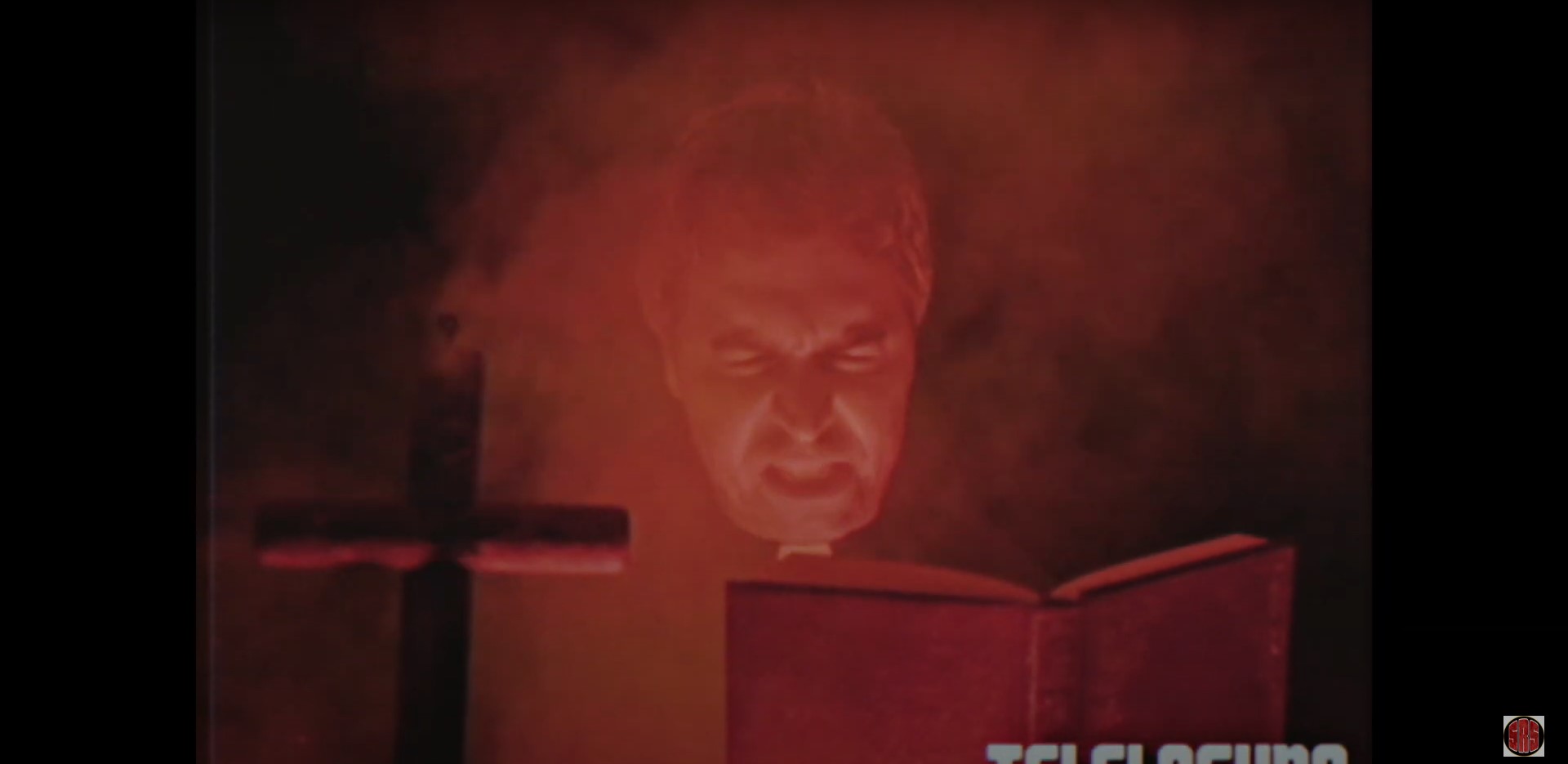
A forest encircled convent hidden away from the Milan population undertakes an occult responsibility to keep bloodthirsty and callous demons from entering the human world.  On the verge of retiring, Father Ernesto Taro, a once formidable force for good who exorcised a powerful demon decades ago that cost the lives of many in his fellow cohort except for Mother Dolores, takes on a younger understudy to be his replacement, the ambitious Father Chuck Bennet.  Father Taro and Bennet were summoned by Mother Dolores when grisly body of a young hiker is discovered.  A pair of former Nazi sadists turned Netherworld demons come to Father Bennet in a vision and are suspected to be the carnage culprits.  Souls are at stake and the world is on the brink of falling into darkness as the Returnees are only the right hand of a more profound evil itching for complete and utter omnipotence. 

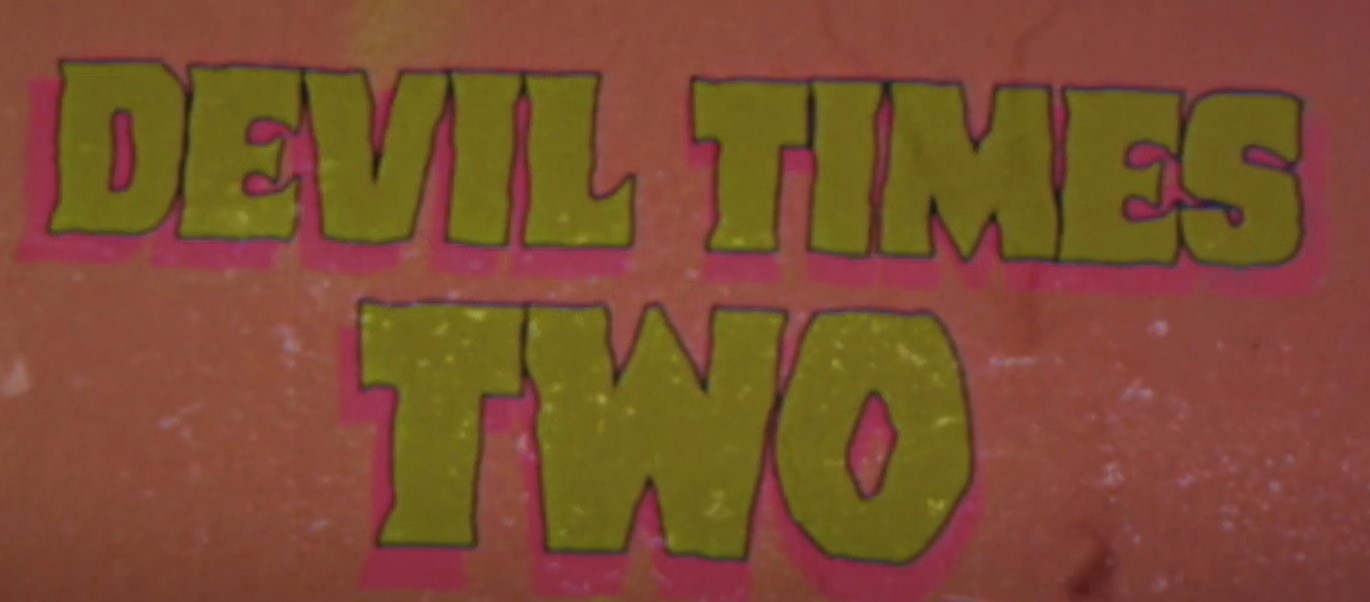
“Devil Times Two” is an Italian-made, demonology-contextualized horror from Italy writer-director Paolo del Fiol.  Having purveyed grindhouse horror in anthological means with previous films “Connections” and “Sangue Misto,,” del Fiol branches out into his solo feature-length narrative set in the 1970s as a faux lost film recovered onto VHS from the only known syndicate televised program on Telelaguna to account the terrible tale full of profane hostilities, sexual stimulating supremacy, and, of course, gore in the interlacing recognition between the popular devil, demon, or hell on Earth inspired movies and the obscenities connected to eurotrash and sleaze movement of the 70s topped a hint of Japanese adulation, a motif heavily sprinkled into the film carried over from the director’s previous work as well.  Underscored by the tagline Quado le Tenebre escono al Bosco, or When Darkness comes out of the Woods, “Devil Time Two” once again pits religious good versus irreligious evil in this Himechan Movie Production self-produced by Paolo del Fiol.

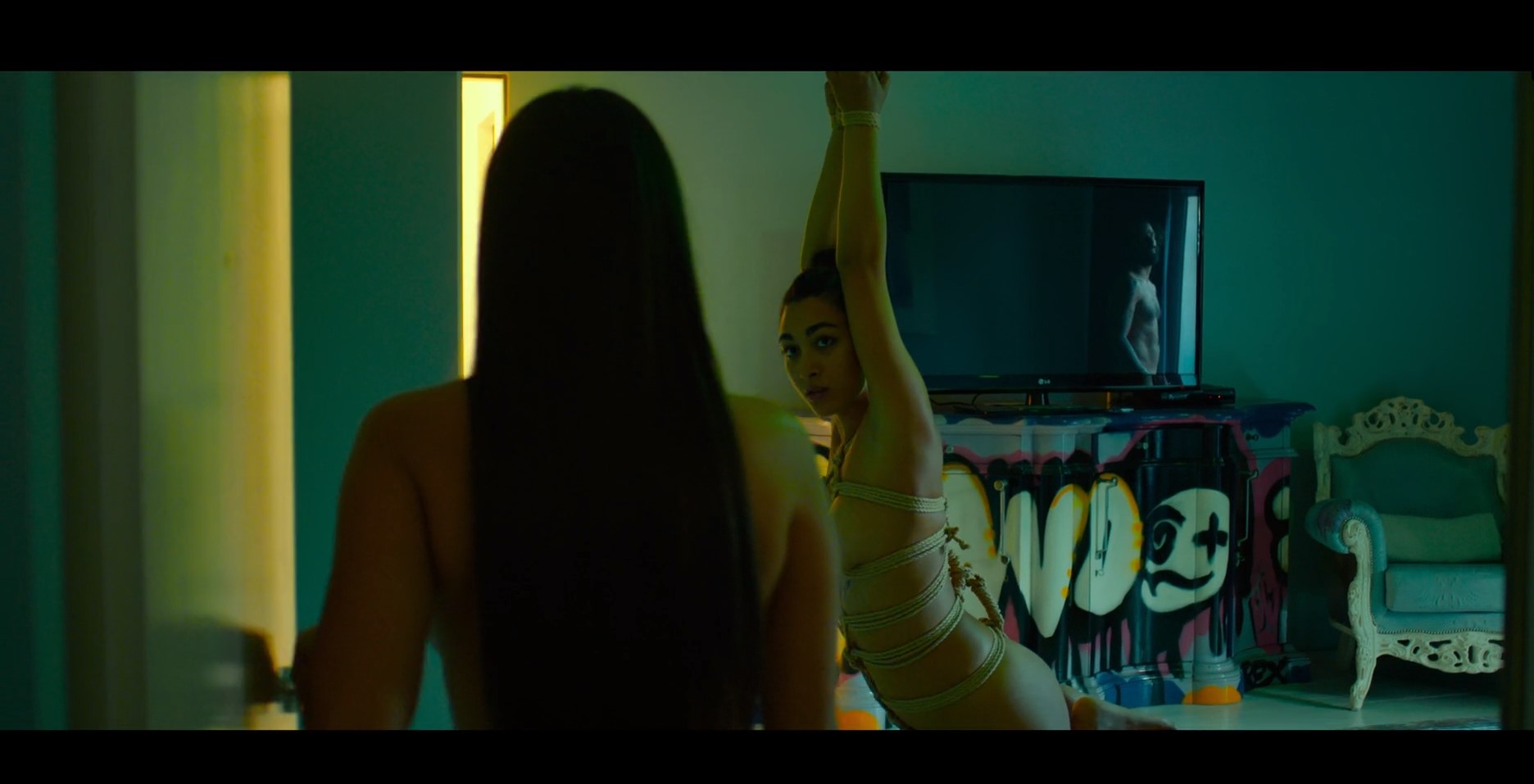
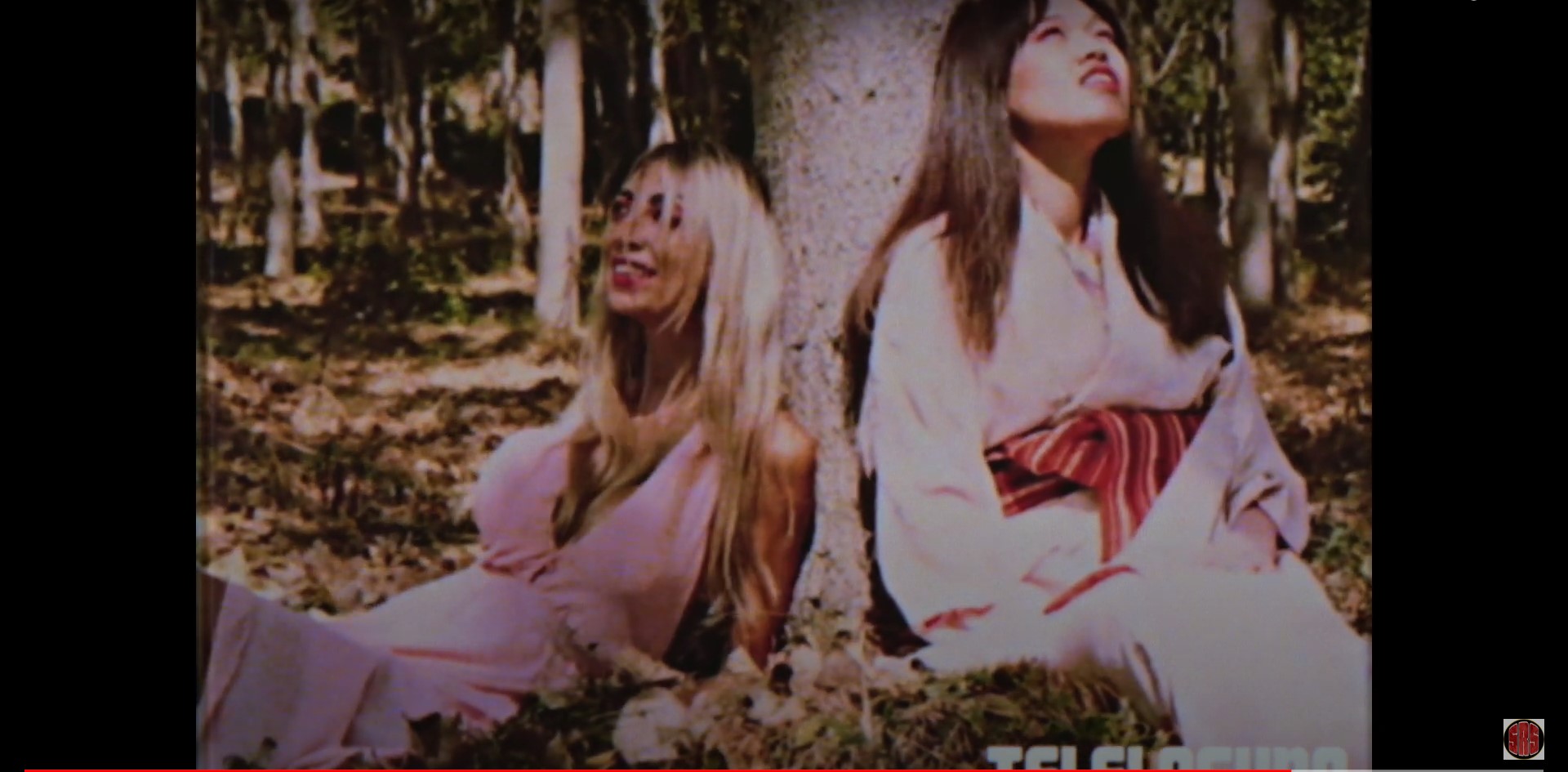
Characterized as the titular pair, Returnees Jasmine and Umeko are the ethereally evil duet of diabolical detriment who seemingly float in and out of the material world as alluring succubi, seducing prey into their web of demonic lust and languish.  Some turn up grotesquely inside out while some others disappear, saved for later for special ritualistic planning.  Erika Saccà, an Italian fitness instructor in her debut role, plays the blonde Returnee Jasmine in a sleeveless, lowcut gown and with nearly ever kill, exposes and massages her augmented bosom with underboob scarring in a change to showoff her toned physique, and Reiko Nagoshi (“Re-Flesh”) wears a kimono without any unveiling of skin but does a bit of thrust-damage on her quarry that initially and inexplicable appears to be a strange phenomena when everyone in the scene is a woman but becomes apparent there’s something unholy and very “War of the World’s” alien under that traditional Japanese garb.  Saccà and Nagoshi wear many hats in this product but also don’t have the dialogue to hoist their demonesses higher.  The dialogue is left with the trio of convent gatekeepers in Father Taro (Enrico Luly), Father Bennet (Paolo Salvadeo, “Occultus”), and Mother Dolores (Amira Lucrezia Lamour, “Re-Flesh”) in what becomes a deeper understanding of their backstories around Father Taro’s deadly bittersweet exorcism decades ago, his on the sly and subtle affection for Mother Dolores, and Father Bennet’s questionable rise to supersede Father Taro, laying a foundation of doubt within the current gatekeeper.  While I like the contrasting dynamics of the two factions within the cast, I found the discourse overly bulk and tedium between the trio of piety that strung on scenes way too long with way too much talk that it ultimately suppresses the pacing when every little detail has been uncovered and explained. All the casted bits in between are slaughter fodder with Denise Brambillasca, Alessandro Carnevale Pellino (“The Wicked Gift”), and Martina Vuotti in non-defying death roles.

Paolo del Fiol’s unaccompanied and independent deluge of demonian debut has doses of phantasmagorical imagery sublet by its more shocking and odd immolation of incognizant individuals unlucky enough to cross paths with the Returnees. Likely to have never seen, Fiol’s film very similarly compares to James Sizemore’s “The Demon Rook” by creating unique mythos not reliant on a religious bedrock and use independency as an advantage for showcasing practical makeup and effects and while “The Demon Rook” would overwhelm with prosthetic made-up characters, “Demon Times Two” focuses attention more on the guts of the matter, the gore, but though not pernicious enough to the story, the eyeball sucking, throat lacerating, or intestine exposing bloodshed is prosaic panoply that won’t outshine in the sea of subgenre synonyms. Aforementioned dialogue scenes can be a slog to get through with many exchanges overstaying its course between the pious gatekeepers, especially between Father Taro and Dorlores, and that hurts the pacing to pick up the gore more frequently for more potency. Instead, exchanges are more elucidations that go around-and-around to where we’re lost on the mounting reveal of the Returnees’ mission and master which turns out to be visually more stimulating and visceral in the last ten minutes than in the first 100 minutes of runtime. The backlot lore is Fiol’s greatest achievement simulating a 70’s style grainy movie caveated as only broadcasted once on December 8th, 1983 (a few days before this reviewer’s birthday) and never seen again until it’s VHS recording is recovered.

Under a pretense of being a buried lost film, under the tribute of a grainy and scratched psychotronic celluloid, and under the falsity of genuine huge knockers, “Devil Times Two” is twice baked into a classic contemporary dish served by SRS Cinema on DVD. Arriving on the SRS Cinema: Extreme and Unrated Nightmare Fuel label, “Devil Times Two” is nothing short of being a modern-day emulator of once was with suitable grain overlay, a hazy, if not washed, overcast grading, and trope-laden atmospherics with dense fog, unnerving dissonances within earshot, and blood brilliantly cut with pseudo Telelagua commercial programming of brief adverts until returning to regular scheduled programed checked in and out by a gondola and it’s gondolier in dusk silhouette. Presented in a pillar box 1.33:1 aspect ratio, the fuzzy and non-delineated details are not a punch to the salient gut as the intent here is to be obscure, opaque, and ominous in nature and in technique bathed in 480p. The Italian PCM is the exact recreation of a time period post-dubbing with the actors re-dialoguing their performances as it was common practice in most motion picture industries, especially Europe, at the time. ADR is clear but not necessarily clean to recreate that shushing and crackling of an older recording. The subtitles are also forced or burned into the film with the sole Italian audio option. Bonus content includes what is called Backstage, a raw filming look into the production shoots and behind-the-scenes footage with no real direction or cosmetics, a photo gallery, a trailer with English subtitles, and other SRS Cinema released trailers. The SRS Cinema DVD front cover resembles mock-70’s, thick-red font with a bare woman’s back dressed in a painted Satanic symbol within the border of a VHS-esque rental casing with rental stickers. Inside the amaray case is a pressed disc with an extreme close up and crop of the same front cover with no insert in the adjacent slot. Pacing burdens this release, especially in its near 2-hour runtime with a clock-in at 114 minutes which is approx. 24-minutes too long in my opinion and the film comes not rated and has region free playback. No matter how much arcane the content is, or how grotesque the horror show, or how much perversity and skin can be unclothed, “Devil Times Two” has difficulty retaining a flow of fascination in a rather windbag approach to a rather devilishly good salvo construction.

“Devil Times Two” on DVD from SRS Cinema

When Machine and Man Merge, Which EVIL Will Emerge? “Re-Flesh” reviewed! (SRS Cinema / DVD)

“Re-Flesh” DVD Available Now to Replace Your Old Skin!  

In a dystopian future, machine and man have merged into an asymmetrical symbiosis where machine is preponderantly present to corrupt man’s benevolent humanity.  Such corruption removes compassion at the core level with the use of neurol inhibitors of technological ascendency over mankind in a gruesome, unpleasant fashion.  The exhibited process is exampled with a masked nurse pushing a wheelchair bound masked man down a dank and dark hallway and into a reprocessing room where he’s plugged with a cable attached to his arm.  From there, the man is fitted with a virtual viewfinder displaying five short reprocessing-to-repair files, transmitted before his eyes to incite organic machinery violence that’ll absorb and eradicate years of human psychological evolution.  Slowly through the images and videos of visceral excision does the man morph into an automaton of flesh, blood, and commingled organic cabling and mechanical veins that will render him resolved as biologically re-fleshed.

Japanese splatter punk Body horror inspired “Re-Flesh” becomes “Deep Web XXX” and “Suffering Bible’s” director Davide Pesca’s tribute to the very distinctive denaturalization of the man-machine mix cinematic movement from the unabashed narrative risktakers hailing from land of the rising sun, Japan.  Made popular by the likes of auteurs Shinya Tsukamoto and Shozin Fukui and cult favorites like “Tetsuo:  The Iron Man” and “Tokyo Gore Police,” “Re-Flesh” adds to the niche palate with an unconfined, Italianized take to ambiguate that blurry line between the soul and the soulless as man comes to terms with a terror-inducing technological takeover.  Writer-director Pesca’s underground anthological tale pits the human condition, it’s mortal coil if you will, up against the cold and heartless tech to create coded layers of neova carne, or new flesh.  Pesca and fellow coproducer Massimo Bezzati reteam after “Night of Doom” to collaborate the 2020 released production under their respective indie companies Demented Gore Productions and M.B. Productions.

The five-story anthology with the interweaving wraparound of a man being reprogrammed casts a lot of visual performances without the need for dialogue.  Dialogue is reduced to only a pseudo medical television advert or surgical endorsements for a better, prosperous life to eliminate human flaws, advancement in new, and improved, flesh, and can even cure homeless afflictions like drugs and addictions.  Pesca keeps a simplicity about his scenes by keeping sullying dialogue removed to just retain the beauty of body horror and a sonorously cacophonous industrial soundtrack.  Each story’s characters are also fairly simplified.  Without dialogue, individual complexities and depth remain shallow in what is “Re-Flesh’s” sole celebration of horror based cybernetic organisms.  This creates no emotional attachment to any of the characters being violated by fiber optic cables and experimentally operated on with crude animatronic gizmos, but Pesca does implant an imploration of at least one emotional response from his audience through gratuitous nudity on half of the female protagonists going through a rapture and ruination of bodily rape and mutate connected by inhumane sentient cybernetics.  Most of the women protagonists are half-naked women ensnared by the inescapable new world of merged new flesh but the tail end episodes dig a little deeper, perhaps even stretch the theme to the limits of cyberpunk horror, to where women are more than just ravaged victims.  “Re-Flesh” sees skin in the game from Alessandra Pellegatta (“Night of Doom”), Giacomo Clerici, Mery Rubes (“Rage Killers’), Reiko Nagoshi (“Devil Times Two – Quando le Tenebre escono dal Bosco”), Giulia Reine, Paolo Salvadeo, Amira Lucrezia Lamour (Devil Times Two – Quando le Tenebre escono dal Bosco), Alessandro Davoili (“Alice Was My Name”), Ivan Brusa (“7 Days, 7 Girls”), and Marco Cinque.

David Pesca is no stranger to short, gore-laden, underground films having been a featured segment director on a pair of anthologies in the last decade from “A Taste of Phobia” and “After Midnight.”  For “Re-Flesh,” Pesca doesn’t have to share the spotlight in his very own tech-themed, feature length compilation that narrates transmitted computer files as tech insidiously infiltrating our insubstantial innards.  The first three episodes revolve around phones and solitary women become enslaved to the devices with a link of invading their bodies with a foreign object, whether be adopted a virtual, grotesque pet to being the reason for infection that spreads throughout the body like a flesh-eating disease, to being beamed up and constrained for a thorough, if not sexual, examination of one of mother nature’s creatures.  I’m intentionally skipping the review of fourth short and head straight into the terminal episode that is more dystopian splatter punk than the others with an experimental bio-cybernetics company called Neo Vita, or New Life, ridding the world of lowlifes by module implants that turn them into society-controlled puppets.  Yet, all these stories are not terribly straight forward with the rub being the ambitious nature of interpretation and the fact there isn’t a dialogue track for most of the runtime.  Taking a step backwards to the fourth short, I found this particular short doesn’t fit “Re-Flesh’s” theme with a demonic woman damning three inert souls to a black void of pain and death.  Perhaps, a construal could be constructed to lay in code into the technology sequence strand, but the code would be a fractional stretch in comparison to the surrounding system.  As a whole, “Re-Flesh” may side more with gory sanguine than an illuminating story but does depict the scourged with a front row seat in this bloodcurdling network of body horror.

Befitting to be distributed on SRS Cinema’s Nightmare Fuel – Extreme and Unrated sublabel, “Re-Flesh” emerges as a bizarre aghast mix of tentacle erotica and technical dysfunction onto a 480p DVD, presented in a widescreen 1.85:1 aspect ratio.  Technical dysfunction also applies to the image quality.  Though combating some lossy compression issues, the standard definition resolution and budget filming equipment sustain a level of image softness under a desaturated color palette.  Depth and delineation range from hazily outlined to a complete wash out from the frame’s JPEG conversation.  Pesca operates under a wide-stylistic format that incorporates varied black-and-white schemes (a gritty B&W wraparound story compared to a more defined desaturated monochrome for the fourth segment), natural lighting, harsh gel lighting and tint, and green screen for CGI backdrops.  The English dub stereo 2.0 mix will obliterate your sound setup if not careful and without a subwoofer with a booming LFE industrial soundtrack that has produced an inherent crackle and since there is no in-scene dialogue or ambience, all of which is 100% done in ADR, the lower frequencies engulf the other channels that may pop in for phone effects or squishy surgery sounds.  “Re-Flesh” is an Italian film, but the cybernetic implant advert shot, originally spoken in Italian, is dubbed in a burned-in expeditious English dub that is what it is.  Bonus features include a promo and original trailer, a behind-the-scenes featurette entitled Backstage which is a look at some of the gory scene effects the first two segments, the short “Electric Dreams” which is an alternate graded version of the second segment, and other SRS trailers.  The traditional DVD snapper case comes with the illustrated front cover art of the man plugged in under a faux harsh white neon glow with the disc art containing the same art but superimposed with a red hue layer.  There is no insert inside the casing.  The unrated feature has a runtime of 72 minutes, more than enough time for this type of anthology, and has a region free playback.  A kitschy and schlocky graft of “Re-Flesh” will get under your skin, but this anthology quickly grinds gears toward a blue screen of death.      

“Re-Flesh” DVD Available Now to Replace Your Old Skin!  

Become Wrapped Up in EVIL with “The Shroud” reviewed! (SRS Cinema / DVD)

“The Shroud” now available on DVD from SRS Cinema!

Centuries before, an evil witch is brutally tortured and killed while covered in a white shroud. In present day, a nun, part of a special sect vowed to never let the unholiness of the shroud deviltries be unearthed from the forgotten rubble of a divine stupa, is raped by two men wearing masks. With the help of a hired obtainer, the nun will stop at nothing to get her hands on, even at the defiance of her brother’s advice, but the shroud’s a bewitching mistress and its power are intoxicating. Breaking her piety pact with God and her sworn duty to protect man from wickedness, the nun succumbs to the sin that drips from the shroud’s blood-soaked fabric and exploits its personification powers of evil doings by not only exacting revenge on her attackers, sending the shroud to assassinate her attackers without an ounce of mercy, but also converting her devout habit to a shameless, promiscuous one of immorality.

A made-in-Italia possession film about a killer burial garment and a nun with big guns giving out the last rites. What could go wrong? The immediate impression arises a lot of interest in this 2022 released inanimate killer object flick from writer-director Fabrizio Spurio. As Spurio’s third feature in the horror genre, “The Shroud” envelopes the 50-year-old, Rome-born director’s first ambitious single story length venture behind the more episodic anthology, “Innesti,” and the more obscure “Vanity,” that taps into the willingness participation to do anything for stardom. “The Shroud” embarks into a more religious and supernatural discourse that clashes the sin and the sinner with a blurry line of empowerment. Made with pennies, or rather made on the Italian centismos on the Euro, “The Shroud,” or “Sindome,” is a production of the Dario Argento and Lucio Fulci inspired Goreproduction company, cofounded by Spurio with Francesco Lagonigro tacked on as a fulltime collaborator in shooting low-budget, independent, free-thinking cinema of underground horror.

The last time I saw the sultry lead Italian actress and extreme indie horror luminary, Chiara Pavoni, was in the avant garde “Xpiation” helmed by one of, if not the dominant, underground horror filmmaker, Domiziano Cristopharo.  In her motherly-voyeuristic role, Pavoni radiated with dark, sphinxlike desire in her well-dressed, pin-up sex-symbol performance of longing and control.  Pavoni doesn’t stray far from that archetype with her latest role in Spurio’s “The Shroud” as she plays a woman of virtue, a nun to be more exact, who has quickly turned lubricious and vindictive after her being raped.  Pavoni is certainly bodacious on screen as she adorns tight-fitting outfits that barely contain her snugly-packed large chest, exposing a Mariana Trench deep cleavage in a Spirit Halloween sexy nun getup for much of her role’s sordid side.  As a thespian performer, Pavoni has the subtle moves of a temptress who knows what she wants but dialogue deliveries are something left to be desired as the “Demonium” actress goes through the motions of plain speak as does much of the other cast, including the Goreproduction producer costar Francesco Lagonigro. Lagonigro plays her object obtainer who, by the seducing forces of the shroud, turns into her sex-slave or gothic lackey as visions of death please feed him the sensation of guilty pleasures. Lagonigro’s version of a factotum is about as cheesy as they come with a glaring lowered brow and white and black face paint to embellish something that looks nowhere near sinisterism. If we’re supposed to take Lagonigro’s maniacal manservant role seriously than Spurio, and Lagonigro for that matter, misses the mark badly in a poorly sized up rendition of a Renfield like stooge. “The Shroud” rounds out the cast with many miniscule, nearly nonspeaking roles with Paolo Di Gialluca (“7 Sins”), Andrea Pucci, Allesandro Massari, Giuseppe Andreozzi, Sara Lagonigro, Monica Rondino, and Andrea Pacilli and Samuele Lagonigro who composed the score for the film under the moniker, Sam and Andy.

As you can see, “The Shroud” is a family production for the Lagonigros who won’t hesitate to pitch in to make Francesco’s lewd and crude extreme horror on a bar tab’s worth. Conceptually, “The Shroud’s” an appealing idea of religious hypocrisy and the natural human desire to be immoral. Rules are meant to be broken as Spurio seizes control the very one thing a woman should have control over – her body. By introducing rape by two masked men, Spurio rips away that control and for a nun who whole schtick is to abide by God by maintaining purity in keeping her holy temple intact, she must seethe with humiliation in front of her Lord and inevitable turn away from him because there is nothing left unadulterated to give. She has sinned, whether intentional or not, and so the tainted nun must keep on sinning in various ways: lust, revenge, and murder. Despite being on a budget, Spurio’s ability to liven up a plain white tablecloth is what making movies is all about as the shroud lives and breathes on screen, moving in an agile manner, and becomes a physical presence that can gore a man through. Sleight of hand scene reversals bestows the shroud with a life of its own, creating a slithering dolman of death that looks great in the humble presentation. That kind of DIY special effects translates the same across the slender 76-minute with practical gore gags that rest above mediocracy, and I can say that with a straight face. “The Shroud” will have very few claims to cult fame with a slew of sloppiness that takes the zero-dollar expenditure and makes it appear even cheaper than pocket change. There’s even a scene where the director is clearly reflected into the frame, not even an attempt to hide or review for need to reshoot.

“The Shroud” is warm and cozy when it’s not trying to kill you! SRS Cinema, a leading purveying of underground cinema, releases Fabrizio Spurio’s “The Shroud” on DVD as part of the company’s extreme and unrated nightmare fuel label. Distributed through MVD Visual, the region free DVD5 is presented in an unmatted widescreen 1.85:1 aspect ratio with a commercial grade quality of a standard definition camcorder that maxes out on the higher side of output of a 720p resolution and so the final result looks fairly okay for DVD. For much of the natural lighting, the high contrast works extremely well, creating deep shadows that make the film feel richer than its actual value, but the details and textures are often soft and bleary, washing out any kind of tactile material. Luminescence of green and blue gels as well as double overlays are used to symbolize nightmares and shroud vision are more headache inducing than a stylish solution when mingled with an industrial engine rumble or high-pitched and stretched vocal score with some piano keys tossed in to mix it up. The Italian language dual-channel stereo is a lossy, unbridled catchall. As much as the audio is purely soundtrack, there is still an insurmountable of sounds being captured by the camcorder mic that softens the desired prominent audiles, such as dialogue which becomes trapped in a cavernous state of echos and various levels of pitch inconsistences. The subtitles on the SRS DVD appear to be translated by a person with English as not their primary language as a tone of grammatical errors, punctuation mistakes, and absolutely zero capitalization tarnish an already low-rent feature. If you can work your way through the strangely designed menu options to the bonus features, you’ll find included raw take bloopers, photo gallery, music videos starring Chiara Povani and Francesco Lagonigro, and SRS trailers. The physical package is perhaps the best part of “The Shroud” with a true-to-form beautifully dark illustration of the most memorable character faces to exhibit in the film, crafted and designed by Avery Guerro. “The Shroud” is an estimable underground piece of the extreme horror art pie but slacks in unnecessary places and becomes an exemplar of a shoddy and careless production that ultimately hurts the overall value of its genus.

“The Shroud” now available on DVD from SRS Cinema!