With Fame Comes Absurd EVIL Exploitation. “A Tale of Sorrow and Sadness” reviewed! (Radiance Films / Limited-Edition Blu-ray)

Limited Edition Blu-ray of “A Tale of Sorrow and Sadness” Now Available!

To compete against a rival fashion magazine who found profound success after hiring a famous gymnast as their spokesmodel, an ambitious fashion company sees potential in amateur golfer Reiko Sakuraba with her beauty, grace, and a decent enough golf game.  The only problem is Reiko has not won a championship.  The fashion company representative and Reiko’s sport’s columnist writer/manager/boyfriend Miyake strike a deal to get intensely train and mentally exhaust Reiko to be the best by the next tournament.  When Reiko outperforms the tournament’s veteran players, she instantly becomes a fashion icon and celebrity that leads to her own show for the magazine, photoshoots, and a large house in the middle of the suburbs.  Miyake’s aloof behavior continues even after Reiko’s success and while he drives her back home, he hits-and-runs a woman form the neighborhood who blackmails and guilts Reiko into letting her into the rich and famous lifestyle.  Reiko’s mental health slowly declines as pressures mounts.

“A Tale of Sorrow and Sadness” is a tale of how the sudden rise of fame and fortune can quickly lead to world of hurt through inexperience, obsession, misguided love, abuse, and the day-to-day tasks that can even burden even the most common person.  The story also represents a dichotomy between fame and the mundane.  The 1977 Japanese surreal drama is helmed by Seijun Suzuki, a filmmaker once blacklisted by the head of Nikkatsu Studios after his film for the company, “Branded to Kill,” was deemed terrible by Nikkatsu execs, and rode the filmic bench for nearly a decade until his theatrical release of the Shochiku Ltd. Released production that allowed him the freedom for artistic expression.  Also concisely known as “A Tale of Sorrow,” the Suzuki picture is written by Atsushi Yamatoya based off manga by Ikki Kajiware and produced by Yoshiki Nomura, Kenzo Asada, and Tokuya Shimada.  

Yoko Shiraki steps into the tragic golf-cleated shoes of golfer-turned-spokesmodel Reiko Sakuraba who finds herself unknowingly being exploited as object of marketable objectification.  What’s interesting about Sakuraba is she’s totally alone amongst other adults in a real cutthroat and cruel way through her trajectory of success.  In the fashion world, the magazine representative behind the concept (Masumi Okada, “The Living Skeleton”) only wants her for her beauty and success, her boyfriend Miyake (Yoshio Harada, “Lady Snowblood 2:  Love Song of Vengeance”), and even an once starstruck housewife, Kayo Senba (Kyôko Enami, “Killer Whale”) who was struck by Miyake’s car and resents Reiko’s, blackmailing her way into the superstar golfer’s life by forcing her hand to relinquish all from her worldly possessions to her mind, body, and soul.  Shiraki gifts Sakuraba the fault of inability to say no with her innocence and naivety ravaged and exploited beyond the point of no return and beyond repair but Sakuraba clings to dear life, perhaps even sanity, because of tone person that too only reacts negatively around her but since their blood reaction is thicker in the watery connections manipulating her, Sakuraba’s hand is forced to do much all of the golfing and modeling hell for her adolescent younger brother Jun (Tetsu Mizuno), a smart yet reclusive boy with off screen aggression getting into fights with school bullies stemmed likely by his sister’s constant absence.  Sakuraba’s not only a slave to external obsessions of success, image, and greed but also a slave to internal obsessions with Mikyake who deprives her of the most basic primal needs for financial gain and for manipulative control.  Kôji Wada, Shûji Sano, Noboru Nakaya, sao Tamagawa, Tokie Hidari, and Jô Shishido co-star.

“A Tale of Sorrow and Sadness” is Seijun Suzuki’s tour de force return to feature films.  A linear narrative speckled with surrealistic doses creates an unsettling and bizarre atmosphere of strongarm manipulation on the unassertive character of Reiko Sakuraba.  Her raw talent is mined and minced without much consent and pushed past mental exhaustion and collapse in what is an all too true theme surrounding the early television era of celebrity branding with esteemed figures being puppets for large scale companies in order to sell their promoted products.  Money, image, and success steer the helm without any due remorse to the elegant centerpiece of the room, driving Suzuki’s social commentary to extreme levels of misappropriation of a human person with feelings and ambitions of their own.  Instead, Reiko’s meekness is measured by Suzuki’s fabricated milieu of mistreatment represented partly in a behavioralism of semi-surrealism – Miyake’s stoic aloofness, Senba’s brazen hijack of Reiko’s fame and wealth, and even Jun’s withdraw and reclusion are all good archetype of strange conducts illegitimizing Reiko as person.  She’s dehumanized so much so she stops whatever little rationality she had to begin with and becomes a vessel of command that allowed those around to walk all over her.  Suzuki’s suburban reach toward fame theme is satirical for “A Tale of Sorrow and Sadness’s” thin blanketing of dark comedy and the filmmaker often accentuates the moments with elongated sequences, randomized bits of eccentricity, and highly stylized contrasts of sex and violence as well as commercially sensationalized imagery versus Stepford wives’ expectations.

A bleak absurdist dream, “A Tale of Sorrow and Sadness” becomes rightly a part of the Radiance obscure, high level lineup with a new, limited-edition high-definition transfer Blu-ray release.  The AVC encoded, 1080p, BD50 receives the high definition transfer from the Shochiku Corporation, who currently distributes a fair amount of Anime and since “A Tale of Sorrow and Sadness” is adapted from a Ikki Kajiware’s Manga, the film fits right in, and is presented in by Radiance in the original aspect ratio of a widescreen 2.35:1.  Radiance’s image quality surpasses expectations as visually bold in a wide variety of contrasting colors, especially in primaries of yellow and reds juxtaposed against achromatic shades of brilliant whites and deep blacks.  The original print is beyond pristine with virtually no dust, dirt, scratches, or any kind of visual impediments in what appears to be a well-preserved 35mm reel.  Skin tones appear naturally organic and textures pop in their specific fabrics inside an overlay of natural stock grain for that bare-faced aesthetic of clear based film strip.  The Japanese uncompressed mono PCM audio, again, surpasses expectations with a diverse mix through a single output that creates excellent note individualism rather than an indistinct amalgam.  The omitted compression codec provides the original audio framework comfortably upholding against the test of time without a flurry of issues in the single layer.  Hissing, popping, crackling and other types of interference are kept either suppressed or to a bare minimal in another pristinely kept transfer.  ADR dialogue clearly affixes to the images with synchronous efforts being no worse compared to other films of the era out of Japan.  The newly improved English subtitles render without error, are compositionally more-or-less within syntax range of translation, and pace nicely throughout.  Special features include a new audio commentary by film historian and author Samm Deighan, a new interview with assistant editor Kunihiko Ukai, and the film’s trailer.  The clear Amaray case contains Sam Smith commissioned artwork on an obi-strip included reversible sleeve – primary cover composition is of a live still of exhausted Reiko Sakuraba lying next to a bunker with a spirally title font and the reverse cover is more NSFW with a partially nude Reiko with boyfriend Miyake portrayed in soft, dreamy glow.  The white and red disc is pressed with eye-pleasing contrast and the inserted 31-page color booklet provides cast and crew credits, essay “Sorrow, Sadness, and the Sweet Smell of Excess” by Radiance regular contributor Jasper Sharp, an archive essay “The Realisation of a Seijun Sizuki Film” by Atsushi Yamatoya, and the Blu-ray acknowledgements. “A Tale of Sorrow and Sadness” Radiance Blu-ray has a runtime of 93 minutes, is unrated, and since Radiance is a UK boutique label, collectors and film aficionados will get the best of both worlds with a region A and B playback.

Last Rites: Seijun Suzuki’s return to theatrical feature films with “A Tale of Sorrow and Sadness” is a remarkable comeback for the ages and the decade interruption didn’t even cause a missed step for his artistic expression of exploitation and consumerism control ruining young, raw talent which is a clear-cut archetype of sorrow and sadness.

Limited Edition Blu-ray of “A Tale of Sorrow and Sadness” Now Available!

Experimental, Recreational Drug Use in College has Killer, EVIL Effects! “Blue Suneshine” reviewed! (Synapse Films / 3-Disc 4K UHD, Blu-ray, and CD Limited Edition Set)

Trip Out on Synapse’s Limited Edition “Blue Sunshine”

A party between friends turns deadly when one of them goes into a violent frenzy after being reveled his loss of all his hair.  Blamed for the murders, floating through life Jerry Zipkin is evading police investigators while also trying to connect the pieces on why a good friend of his would suddenly turn into a madman with no body hair and with five times the strength of any ordinary man.  His own investigation leads him to Blue Sunshine, an LSD variant connected to every transgressive event similar to the party, and at the center of it all is congressional frontrunner Edward Flemming who peddled Blue Sunshine 10 years ago at Stanford.  The latent consequence is now slowly surfacing to a head and more people are starting to experience the aggressive, alopecia effects, all Zipkin has to do to prove his innocent and a major ticking timebomb is to take a sample from a living specimen to show aberrant chromosome damage caused by the designer drug. 

Before becoming outed and investigated that the U.S. government experimented LSD on human subjects and it’s unknown but possible dormant side effects of years later, writer-director Jeff Lieberman put theory into sensationalized practicality with his post-psychedelic horror “Blue Sunshine” that turned ordinary, friendly people into headache-induced phonophobia sufferers and hairless, homicidal maniacs with super strength.  Lieberman’s 1977 released film snugs in between his killer Earthworm creature feature “Squirm” and one of the better backwoods slashers titled “Just Before Dawn,” tackling with themes of adverse effects from manmade drugs, political corruption, and to never judge a book by its cover.  The film is produced by “Squirm’s” George Manasse with “He Knows Your Alone” and “The Clairvoyant” producers Edgar Lansbury and Joseph Beruh serving as executive producers on the Ellanby Films production.

While the plot point that pushes Jerry Zipkin in the direction of investigation of the sudden fury and death surrounding his friend treads a threadbare rope with little background to suggest Zipkin is characteristically dedicated, loyal, curious, or all of the above to find out what happened, Zalman King’s overall performance as the path unaffixed Zipkin overshadows those missing background pieces and motivations.  In more key precise terms, Lieberman’s misdirection toward King’s erratic and strange behavior puts a lot of the focus on Zipkin rather than obvious derangement of the latent LSD maniacs with corrupted chromosomes in what was meant to puzzle the audiences in believing Zipkin himself might be the loose cannon cause behind the murders or, even perhaps, another ignorant victim of blue sunshine, which the latter would have been more intriguing and powerfully motivating for the Zipkin character as what drives him to solve the mystery and save himself.  None of the relationship resolve any type of secure or genuine interactions, specifically with Alicia Sweeney (Deborah Winters, “Tarantulas:  The Deadly Cargo”) with an unrealistic strong undying love for Zipkin despite only knowing him for a couple of months and the entire Stanford contingent from a decade earlier who Zipkin was able to easily link together within a matter of seconds of either examining a bloody crime scene or meeting a pair of the blue sunshine fiends.  One of the better, solid bonds is between the will-do-what-it-takes congress candidate Ed Flemming (Mark Goddard, Lost in Space) and his towering former college football buddy Wayne Mulligan (Ray Young, “Blood of Dracula’s Castle”) who becomes Flemming’s 6’6” advisor and bodyguard.  While might not seem like a well-rounded bond, Flemming and Mulligan have something tangible one can grab and understand when compared to other dynamic relationships that float in arbitrary.   Robert Walden (“Rage”), Charles Siebert (“Tarantulas:  The Deadly Cargo”), Ann Cooper, and Stefan Gierasch (“Carrie”) costar. 

“Blue Sunshine’s” premise has long stood the test of time because its more relatable now than ever as scientists and medical experts are in a fluid state of studying the effects of drugs digested, snorted, injected, or smoked weeks, months, years, and decades ago.  This premise also translates over to contaminants that cause sicknesses, such as the link between asbestos and cancer were tumors form years after exposure.  Lieberman catches wind early of the dangerous latent effects and manipulates it for the basis his film that is more fact than fiction.  Lieberman’s ability to minimize assurances on who is transfiguring into a killer is all in his characterizing nuances, shading in gray areas with excellently crafted character profile vignettes in between the opening credits that instill suspicion, fear, and some unknown stemmed danger ahead.  The unique setup is the filmmaker’s only real unconventional course in the narrative that plays out mostly a routine hand in a natural style albeit the surrealism of extreme closeups and angles on bald headed balefulness when the rage takes over or the slow, insidious madness that seeps into Zipkin’s mind causing hallucinations to exact an audience experiencing disturbance in the envisaged air.  Engaging and self-security eviscerating, “Blue Sunshine” is carbonated madness in a bottle, shook up and ready to pop. 

Synapse continues to upgrade their catalogue with Blue Sunshine next on the augmentation block with a new and mighty 3-disc Blu-ray and 4K UHD restoration release.  Presented in Dolby Vision HDR10, the restoration of the original 35mm camera negative sees it’s 4K transfer compressed with a HEVC codec that produces 2160p and is stored onto a BD100 while the Blu-ray is a compressed AVC, 1080p resolution, on a BD50.  The restoration will blow you away with diffused color palette and organic details that by far are the best they’ve ever looked with a balanced, natural grain level that keeps the speckling down in darker portions of the film to retain inkiness while securing the authenticity of the film stock without any smoothing over and artificial enhancements.  Vivid coloring, immersive details, and natural skin tones, when not softly grayed by the drug’s effects, throughout are appreciatively stable with no qualitative loss between cuts, creating a pleasurable and seamless visual experience on both formats.  Each format comes with two English audio options, a lossless DTS-HD master audio 5.1 surround sound, supervised and approved by director Jeff Lieberman, and a lossless DTS-HD master audio original theatrical mono 2.0.  While the amplification of the same sound output through the dual channels is inviting for purist, I highly recommend the immersive 5.1 surround sound that retains the genuine article of audio fidelity.   Charlie Gross’s orchestral strings instruments, percussive gongs, and synthesizing score fully engrosses the characters and audiences alike into a fold of unnerving, lingering tingles that evoke the monstrous maniac effect possibilities beyond the Jerry Zipkin tale.  Dialogue renders over with fine precision that hangs on every word and sentence with no hissing and crackling to obstruct it’s sweeping clarity.  A bountiful amount of Mind-Altering special features that fill this limited to 4000 copies set that include a new feature prologue introduction with director Jeff Lieberman.  There are two audio commentaries, an archived 2003 interview with Lieberman, a Channel Z Fantasy Film Festival ”Lieberman on Lieberman” interview with the director hosted by “Sleepwalkers” Mick Garris, a Q&A video from the Fantasia Film Festival 4K premiere moderated by Michael Gingold and Lieberman, an anti-drug scare-film “LSD-25” from 1967 and “LSD:  Insight or Insanity?” From 1968 from the American Genre Film Archive, Jeff Leiberman’s first film “The Ringer” with two cuts of the film, the original uncut version from the projection print source and the final release from the remastered Synapse Films 4K transfer with audio commentary included on the uncut version by Jeff Leiberman and moderator Howard S. Berger, still gallery and theatrical trailers. Synapse’s limited-edition boxset is nothing you’ve ever seen before from the company with not only a rigid slipbox case but there’s also a cardboard O-slipcover, both housing the clear, inch-thick Blu-ray Amaray case and both showcasing new illustrative, compositional, air brushed artwork of some of the key character scenes and expressions by Wes Benscoter, which is a real thing of beauty. The Amaray cover art is the regular 70’s grade cover art seen on previous releases from DVD to Blu-ray with a reverse side an image of the tripped-out Ed Flemming icon photo of his drug peddling days at Stanford. Overlapping 4K and Blu-ray discs display graphic presses in story moment compositions, though I don’t recall a half-naked woman in the film yet is on the cover. Not quite yet done with the bonus material, the 3rd disc is a 13-track Soundtrack CD of the score and laid overtop is the 11-page liner note booklet from Jeff Lieberman’s 2020 memoir “Day of the Living Me: Adventures of a Subversive Cult Filmmaker From the Golden Age,” plus the CD track listing, production credits, and special thanks on the backside. A reproduction of the original one sheet poster is stored in the insert as a mini-folded poster along with Synapse’s 2024 catalogue for your perusing pleasure. The rated-R film has a runtime of 95 minutes, and the limited edition doesn’t limit itself to a confined playback with region free decoding.

Last Rites: In order to snag a copy of this stellar Synapse set, muscles are required as this heavy boxset feels like 5lbs of software and hardware special features regarding Jeff Leiberman’s drugs-are-bad thriller “Blue Sunshine” with chrome dome, blank-stare killers doing the dormant bidding of 10-years-old recessed LSD.

Trip Out on Synapse’s Limited Edition “Blue Sunshine”

Milan Has All the Best Short Film EVIL! “Drag Me To Fest” reviewed! (Rustblade / DVD)

Hurry! Grab the Limited Edition Copy of “Drag Me to Fest” Before Its Gone!

An outpatient nurse is requested by an old woman leaving by her lonesome.  Always forgetting and troubling eccentric, the humble nurse finds he’s in way over his head with a clearly unstable, possibly delusion woman, until the truth of her hidden secret unveils a web of horror.  A young couple looking to help a lonely farmer find themselves erecting a sheep fence as well as maintaining the upkeep of a strange rock formation known as a Tursemorkel that emits ooze out of black orifices and soon find the psychological and physiological energy from the Tursemorkel is more than they can withstand.  An elderly couple, tucked away inside their roadside camper trailer, whips up a finger-licking meaty stew made from all natural, locally sourced ingredients as they watch the nightly news’ top story of a missing person.  A man answers the doorbell and finds a package on his step, scratching and crawling out is a festering corpse eager to play with him.  A priest with an obsessive bug collection has him turnaround when a recently caught rare beetle toys with his mind.  Dafne, a young woman lost in another state of mind, is in the presence and in the arms of her own, personal demon. 

These bloodcurdling tales are the latest batch of horror shorts from the annual Milan, Italy hosted Drag Me to Fest.  The festival brings together Italy and international filmmakers to submit their unique brand of terror.  The 2024 lineup were submitted to the Milan collection in 2023, hit the festival the following year, and has now been compiled onto a home video release for North American audiences to enjoy and cower in teeth chattering fear under its namesake title, “Drag Me to Fest,” from Italian distributor Rustblade Records in association with MVD Visual, a subsidiary of MVD Entertainment Group.  Norway’s “Vevkjerring,” or “The Weaving” by Øyvind Willumsen and “Tistlebu” by Matthew Valentine kick off the anthology followed by Italian filmmaker’s Riccardo Suriano’s “Long Pig”, Julie Gun’s “Dafne is Gone,” and Jacopo Vismara’s “Il Coleottero” and finally rounding out with Japanese director Nori Uchida’s “For What the Doorbell Tolls,” all of which are self-produced.

Three countries, six distinct films, and all packed into the unusual side of ambiguously horrifying elements contained inside six short films.  Each character is curated to fit inside the narrative design, no matter how outrageous or avant grade the message is.  Willumsen’s “The Weaver” is a more straight forward, common structured horror of building up tension in an already uncomfortable situation of a friendly, living assisted male nurse Henrik (Fredrik Hovdegård) knocking on the doorstep of a haggard and kooky old croon named Gudrun, played devilishly and disgustingly by Isa Belle.  The next four episodes become a bit vaguer in their intentions of madness, purgatory, survival, and obsession that intends to either harm or transfigure into something beyond the dimensional standard.  “Tistlebu” aims to transfigure as a young city couple (Sascha Slengesol Balgobin and Sjur Vatne Brean) look to connect with nature and their curiosity, coupled by intrusive misuse and sexuality, toward an earthy pillar of energy inside a widow’s (Oda Schjoll) barn enraptures them into something more primordial, literally connecting them to an omnipresent natural world that’s much bigger than their insignificant need.  Uchida provides his own one-of-a-kind performance based immensely off Sam Raimi’s “Evil Dead” by playing not only the hero but also the decaying plaything that arrives at the hero’s doorstep in one’s mirrored rotting of loneliness.  “Il Coleottero’s” Don Antonio (Mimmo Chianese) has a crisis of faith that become sidetracked by his diligent hobby of entomology when his prized find, a rare beetle, suddenly disappears from his collection.  Chianese finds the balance between being a disenchanted priest and an anxious man hunting for the beetle that got away and that will eventually destroy him.  Julie Gun’s “Dafne is Gone” is more operatically finessed with interpretive dance between Dafne (Giulia Gonella) and a demon (Jason Marek Isleib) that’s completely absent of dialogue, stagecraft visualized, and characteristically naked to showcase Dafne’s descent into the Demon’s spellbinding movements.

The collected and presented works are not the highest dollar productions but do encase a prosthetic practicality as seen in Willumsen’s “The Weaver” with a shedding of an exterior layer into a more grotesque freak of nature while Uchida takes the tribute route using filleted flesh and milky contacts, along with LFE tones and grading, modulated vocals, to accomplish his own version of “Evil Dead” without the presence of Ashley Williams.  The others are not as cut and dry with their infinite interpretational insights that likely will speak more on a personal level than a glossy buttered popcorn one that requires little effort to absorb.  “Tistlebu” and “Dafne is Gone” entrench themselves in their respective unknown and modern art by providing very little in the one thing they both have in common, a shared sense of unsettlement.  There’s also an undertone of sexualism as if it equates to the very beast that entrances, which in these shorts is the Tursemorkel, which is a large surface growth that emits an allurement of safety and gratification, and, in comparison, to the demon, perhaps her own visceral demon, that frolics to breach Dafne’s temptation, drawing her closer to his own colorfully neon netherworld in a production of warmly dark euphemism.  “Il Coleottero” is perhaps the best understated undercurrent between the skepticism that plagues man and his faith.  Shot mostly naturally, tension is built on Father Antonio continuous deviations from his religious duties, distracted in his homilies and divine surroundings, by the mere fact of a lost beetle, a beetle, similar to the appearance of a Stag Beetle, that toys with him.  One could assume the beetle represents a test from God to challenge the priest’s diversification balancing his faith between realism against spirituality, to quote biologist J.B.S. Haldane, and I paraphrase, if the creator had made life, it must have been inordinate fondness for beetles because of their profound species diversity.

“Drag Me to Fest” has now hit DVD home video for the first time in its 3rd annual run with a limited edition to 500 copies courtesy of Rustblade Records, routed through the North American distribution channels of MVD Entertainment Group under their MVDVisual label.  The region free release, presented in a widescreen 1.78:1 aspect ratio, is encoded onto a MPEG2, upscaled 1080p, DVD5 with palatable average of image quality in its varying degrees of filming equipment, lighting, and technical know-how to get the intended look without suffering cinematography faux pas.  Compression wise can be a different story but, generally, “Drag Me to Fest” has an adequate presentation albeit a less-than-desirable color saturation, especially Gun’s “Dafne is Gone” that implements warm neon primary coloring in a high contrast, hard light emulsion.  Skin and pattern textures vary from short-to-short, but the delineation is there to not blend depth nor create solid, smoothed out surfaces.  Valentine’s “Tislebu” relies heavily on the rolling hills and greenery farmscape to enact its character qualities for an Earthy or terrestrial mystery important to the sentient and engrossing formation.  The Italian, Japanese, and Norwegian language Dolby Digital 2.0 Stereo offers a passable mix that doesn’t elevate the atmospherics or construct tension to the max but neither does it flounder or lay waste to the support of the shorts.  There’s not a profound amount of leveled depth or creative sound design to fabricate space as much of the dialogue and environment resides in the foreground, and the dialogue does render over clean and clearly with forced errorfree English subtitles, but the focus is primarily on moving the story in a matter of minutes for some of the shorts, leaving narrative devices, such as characters and the effects, to drive the story and its tension.  The DVD is a barebones released that does not come with any encoded extra content, but the slim, trifold jewel case does depict a grouping of cherry-picked ideas from the shorts in a green bath illustration from graphic artist Gonz and has individual taglines and color stills for each short.  The 92-minute anthology is unrated. 

Last Rites: Abroad anthology with a goal to highlight and amplify short filmmaker voices, “Drag Me to Fest” finishes up from the main screen and extends to home video for the first time! Rustblade and MVDVisual illuminate the cinema obscure for the general public and we’re all the richer for it!

Hurry! Grab the Limited Edition Copy of “Drag Me to Fest” Before Its Gone!

Three Million and Staying One Step Head of the Cops is EVIL’s Masterplan! “The Cat” reviewed! (Radiance Films / Limited Edition Blu-ray)

“The Cat” Limited-Edition Blu-ray From Radiance Films Now Available!

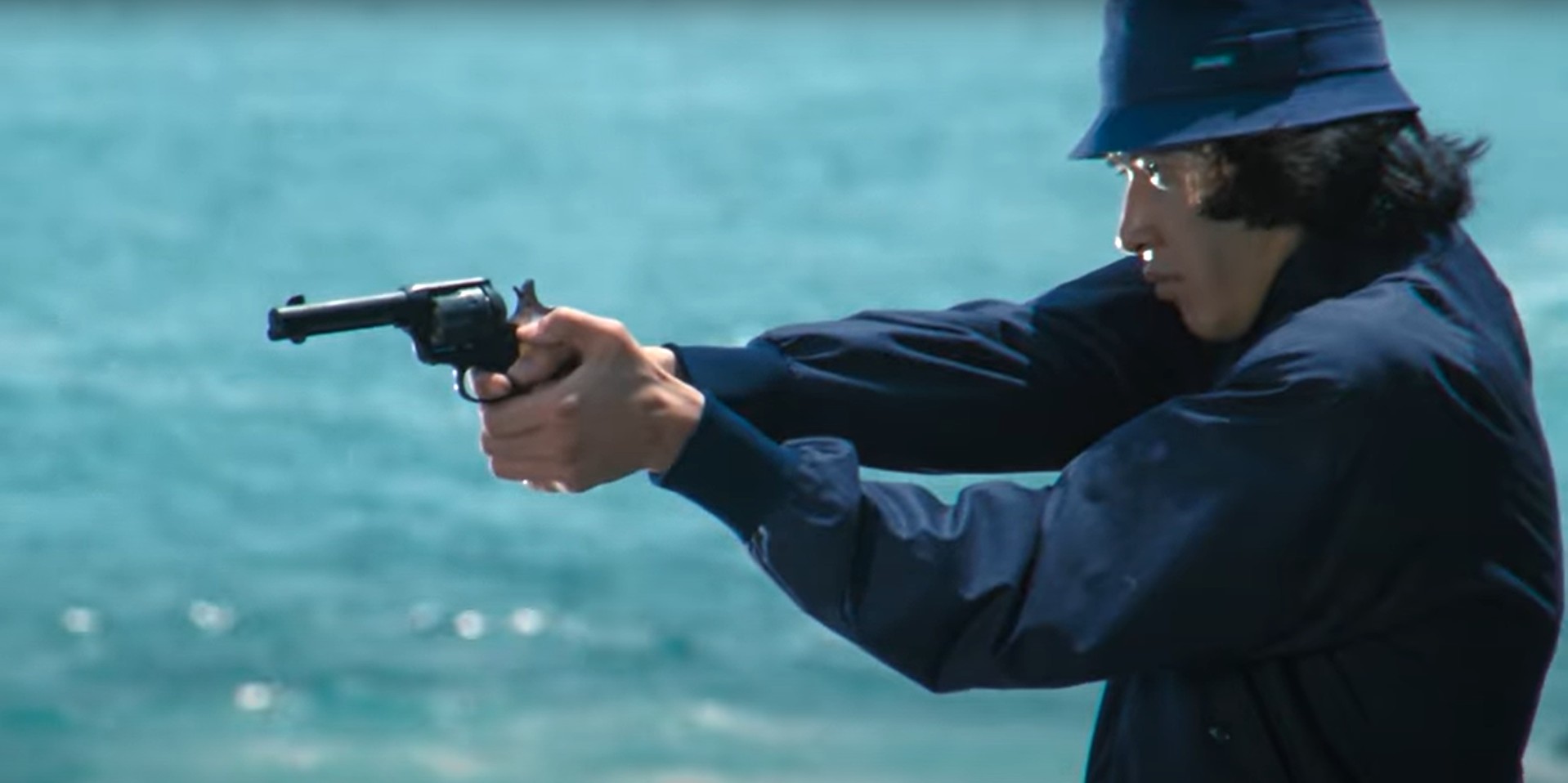
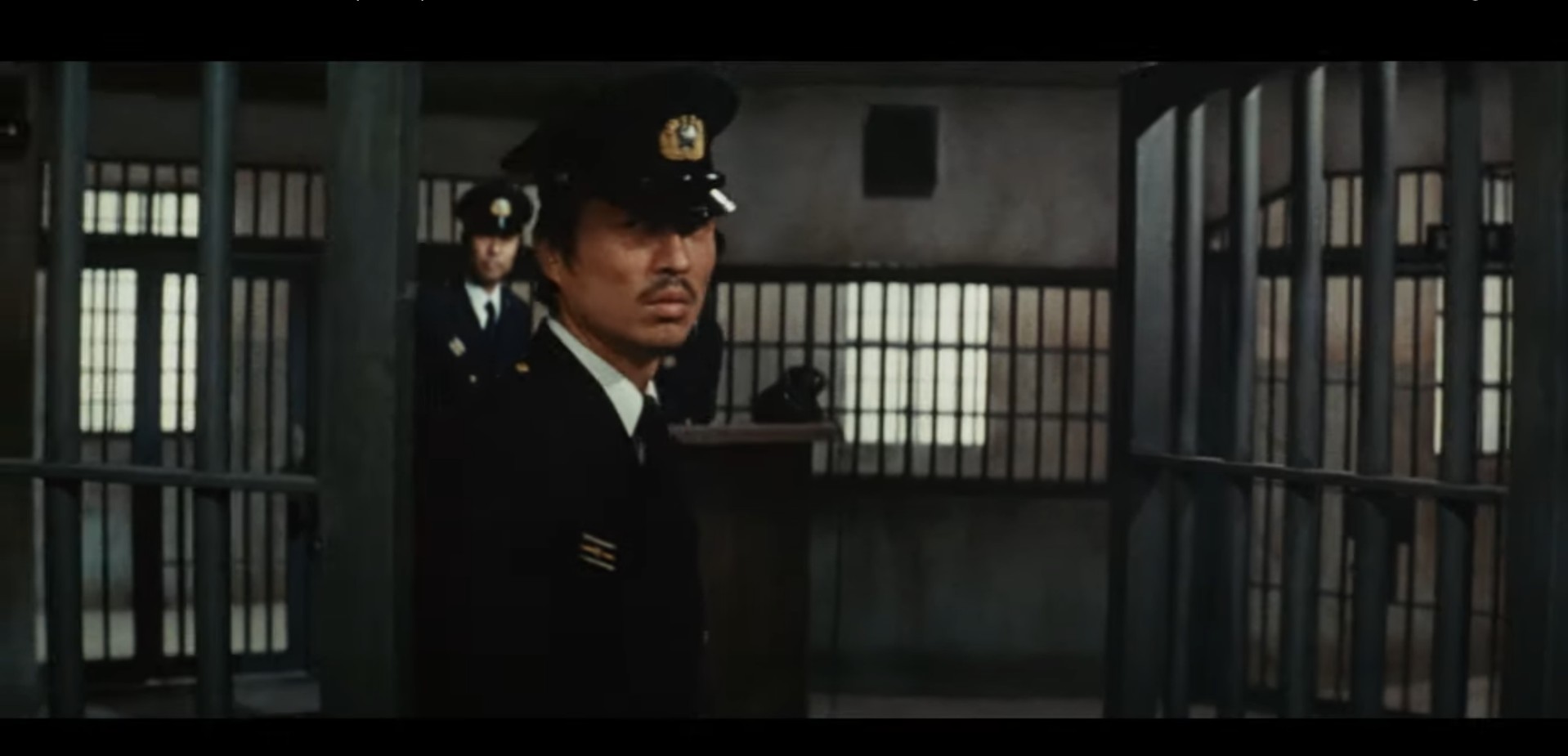
Two ex-cons hold up a Düsseldorf bank for 3 million German marks.  Armed with handguns and brazen with their daytime theft, the two men hold hostage a handful of alarmed employees, rounded up before the bank opens for business, including the bank manager.  Going into the heist with a money figure in mind, the vault is discovered with only 200,000 inside, but that was to be expected as the arrival of the police surround the building adjacent to the towering Nikko Hotel where a third man, the mastermind, spies down from one of the upper floors, instructing the two armed men inside of his plan as well as spying on the police activity aimed to thwart the robbery.  Always one step ahead, police, bank employees, and even the bank manager’s wife are all a part of the organized crime for the riches, and maybe even exact a little retaliation in the process too. 

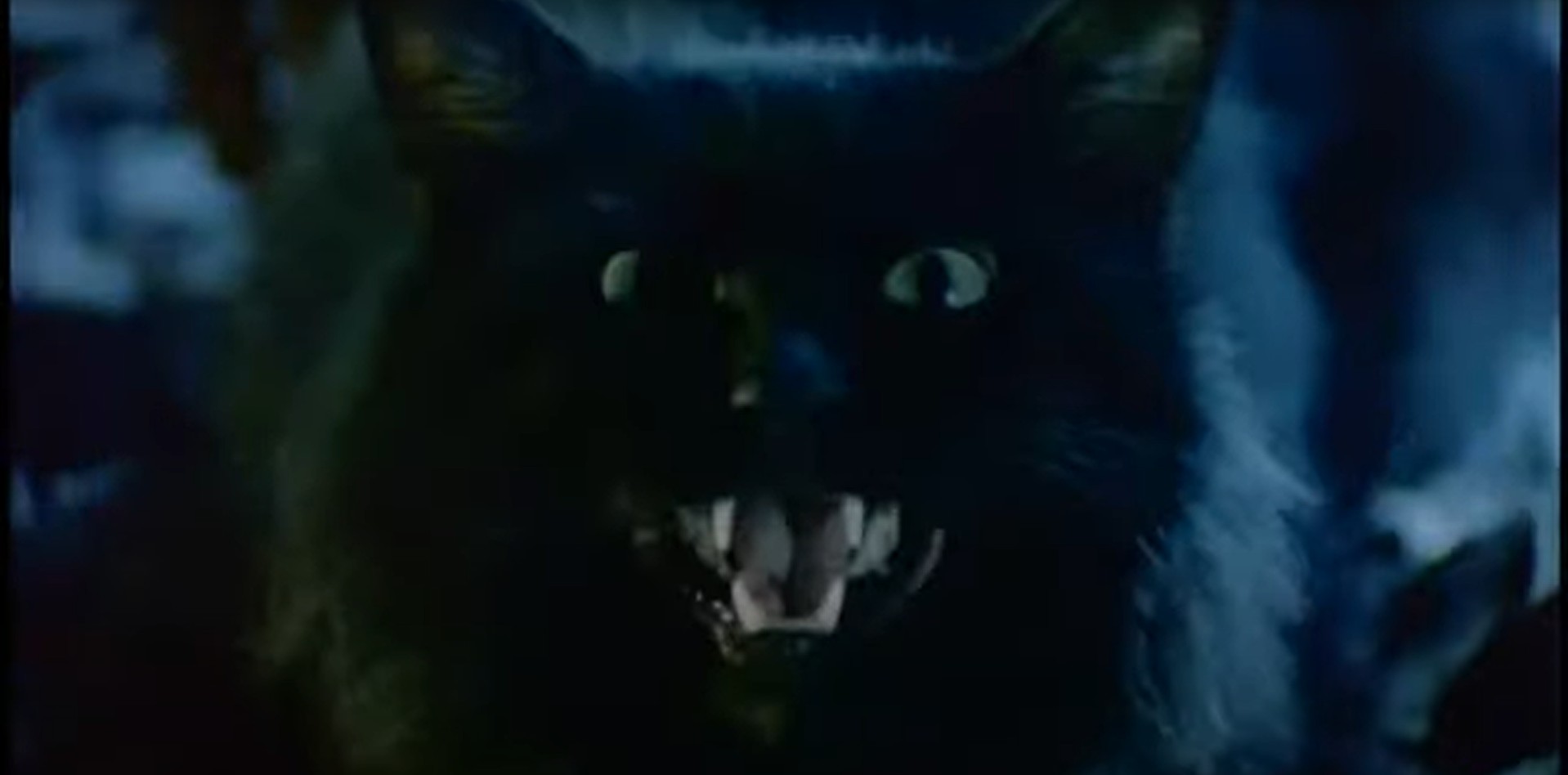
The 1988 released, German crime-thriller “Die Katze,” or “The Cat,” is an intense ruse engrained with deception, affairs, and a saturated with emotional weight.  Helmed by directed Dominik Graf (“The Invincibles”) put the Munich-born, drama-comedy filmmaker to the test with the Christoph Fromm script, adapted from the 1984 novel Uwe Erichsen, entitled Das Leben Einer Katze, aka The Life of a Cat.  “The Cat” would be Graf and Fromm’s second feature together who, four years previously, collaborated on the slice of life for carefree, bike friends suddenly finding themselves in the unemployment lane of “Treffer” and who would then go to after “The Cat” with the gambling comedy “Spieler” two years later.  “The Cat” is a production of Bavaria Film and Zweites Deutsches Fernshehen and is produced by George Feil and Günter Rohrbach (“Das Boot”), shot on location at the Hotel Nikko in Düsseldorf as well as in studios in Munich.

“The Cat” contains a hierarchy amongst the thieves with Britz (Ralf Richter, “Das Boot,” “Sky Sharks”) being at the bottom as a hot-headed hired gun, Jungheim (Heinz Hoenig, “Das Boot,” “Antibodies”) is next step up as the managerial ex-con looking to score big with reprisal, untamed purpose, and, lastly, the only man who can keep Jungheim from spiraling out of control and the spying eye from the tower radioing orders is the mastermind behind the heist plan with a calm as a cucumber demeanor and a cool cat, or katze, finesse and his name is Probek (Götz George, “The Blood of Fu Manchu,” “Scene of the Crime: A Tooth for a Tooth “).  But, as we all know and as the old proverb goes, there is no honor amongst thieves, yet Graf’s filmic adaptation does instill some counterbalance against that adage by keeping a sliver of diligence within their circle but there is an underlining truth well-hidden under-the-table, only informing those down the ladder what they need to know, when they need to know.  As tension ebb and flow from each personality type, throw into the mix an equivocal loyal woman (Gudrun Landgrebe, “Rosinni”), an intelligent officer in charge of hostage operation (Joachim Kemmer, “The Vampire Happening”), and a stubborn and quick to catch-on bank manager (Ulrich Gebauer) and the ensembles ensues an edge of your seat volatility elevated by the steadfast performances with the actors unhinged and let loose to exact their roles.  With lots of moving pieces to the characters’ actions, supporting parts are key to the success, adding flavor to their persona types and unravelling more about who they are and how audiences are supposed to perceive them as either friend or foe.  Sbine Kaack, Heinrich Schafmeister, Claus-Dieter Reents, Iris Disse, Water Gontermann, Bernd Hoffman, Uli Krohm, and Klaus Maas co-star. 

Hardboiled in a game of pursuit and evasion, Dominik Graf finds without difficulty the essence of Uwe Erichsen’s thrilling crime novel staying mostly in one location, evolving the story as the police try every trick in the book to thwart who they believe to be ordinary bank robbers and as the confidence, and perhaps a little brazen cockiness, slowly builds self-assured success. This constant stream of checks and balances between the hard focused, unobservant antitheft division of Germany’s finest and the cooperative crooks consisting of brawns following instructions of the brain keeping ahead of a fate less fortunate never lets down, never idles, and never diverts attention. “The Cat,” in a way, feels very much like 1988’s “Die Hard” from director John McTiernan, a steady source of one-upping the good guys peppered with moments of unvarnished, graphic violence and dark, unforeseen levity, minus a lone wolf John McClane hero behind enemy lines. The very opening scenes of Götz George and Gudrun Landgrebe engaged sexually are raw, sensuous, and sweaty but are under top a jaunty soundtrack that mismatch the heat of the moment in its cheerful, breezy Eric Burden and the Animal’s tune “Good Times,” a track with lyrics that speak of regrets of negating better moments with unsavory choices finds more of a potent meaning at the gun blazing finale where facing death is an inevitable outcome for one’s poor decisions.

UK label Radiance Films releases “The Cat” in the North American market for the first time with English subtitles in a limited-edition Blu-ray with a Dominic Graf approved high-definition transfer, newly graded by Radiance Film, onto an AVC encoded, 1080p, BD50. While the heist concept may be familiar conceptually to “Die Hard,” the look of the film also has that natural grading of “Die Hard” as well with Radiance infused punctuations on skin tones with a natural hardness. The print used was a digitized file, likely already spruced from an extracted print used by Euro Video in 2017, but Radiance retains the organic grittiness as well as the grain in their own sprucing up that sees a muted hues appear more intense. Presented in a widescreen 1.85:1 aspect ratio, I’m curious to know if “Die Katze” was cropped in post to avoid nudity in the love scenes between George and Landgrebe that appear stretched with more pixelation and are oddly framed, as if portions were sliced off and positioning did not change. The German audio mixes include lossless DTS-HD 5.1 Master Audio and a stereo 2.0. The surround mix lets loose and gives way to all to all of “The Cat’s” range in securing side and rear channels with ambient police activity, fireball explosion crackling, and the echoing of cavernous settings juxtaposed against more intimate and cozy locations. Dialogue renders clear, robust, and prominent with a seemingly errorfree, newly translated English subtitle synchronicity albeit the pacing being a little rapid. No signs of compression issues nor any print damage or unpleasant hissing or crackling. Special features include new German-languaged, English subtitled interviews with Dominik Graf, screenwriter Christoph Fromm, and producer George Feil, a scene-select commentary with Graf, and the film’s trailer. Like the rest of Radiance’s catalogue, “The Cat” comes with a clear Amaray with an OBI strip overtop the reversible cover art. The reverse side displays the original home video and poster art. A 19-page color picture booklet features an essay by freelance culture writer and film critic Brandon Streussnig All the Good Times That’s Been Wasted, plus cast and crew credits and transfer information and acknowledgements. The region A/B encoded playback release has a runtime 118 minutes, is not rated, and is limited to only 3000 copies.

Last Rite: A masterful crime thriller, “The Cat” claws away the fuss to unsheathe realism and Radiance Films delivers the Germanic, harrowing heister in all its glory with a Hi-Def release.

“The Cat” Limited-Edition Blu-ray From Radiance Films Now Available!

Tonight’s Next Guest is EVIL! “Late Night with the Devil!” reviewed! (Second Sight Films / Limited-Edition 4K UHD and Standard Blu-ray)

Check Out the Package on Second Sight’s Latest Limited Edition – “Late Night with the Devil!

In the golden age of late-night television shows, Jack Delroy was one of the hottest late-night comedians and talk show hosts of the early 1970s, only to be beaten out by inches by rival talk show host Johnny Carson every year.  By 1977, Delroy’s viewers and popularity on his show Night Owls was slipping after multiple failed attempts to revive the show’s viewership figures and to hit the number one spot for syndicated station UBL during sweeps week year after year.  That years Halloween episode, during the sweeps week, would promise to be one to be remembered when Delroy brings a medium, a magician-turned-magician promulgator, a paranormal psychologist, and her adopted subject, a young girl who was the last known survival of a Satanic cult.  While the lineup entertains the live audience and those viewers at home throughout the night as well as being excellent for the ratings game, Halloween thins the layer between the real world and the supernatural world and an awry demon summoning goes horribly wrong, caught on the station’s camera, and with Jack Delroy and his guests caught in the middle.

If you’ve never had the pleasure of seeing “100 Bloody Acres,” the 2012, underrated Australian comedy-horror has a fine entertaining balance of black humor, gore, and suspense.  The directors behind the little-known venture, brothers Cameron and Colin Cairnes, may not have moved the needle with their debut feature in Australia, nor globally for that matter, but their latest, a 1970s, found footage, period piece surrounding demonic catastrophe on live television entitled “Late Night with the Devil,” carries with it significance and growth, personally and globally.  Having also written the script, the Cairnes recreate a time period when television use to capture grotesque and jarring images to shock the masses in full, unbridled color through the whimsical lens of a late-night television show.  In a production company opening that seemingly would never end, “Late Night with the Devil” is a conglomerate effort from IFC Films, Shudder, Image Nation Abu Dhabi, Spooky Pictures, Good Fiend Films, AGC Studios, VicScreen, and Future Pictures and produced by Adam White, Steven Schneider (“Trap”), John Mulloy (“Killing Ground”), Mat Govoni, Derek Dauchy (“Watcher”), and Roy Lee (“Barbarian”).

In order for “Late Night with the Devil” to work, the Carines brothers needed a principal lead to understand what it means to be a charismatic and funny host of 1970s late night television.  They found niche trait in “The Last Voyage of the Demeter” and James Gunn’s “Suicide Squad’s” David Dastmalchian who is an adamant man of horror himself from genre scripts, articles, and comic books to being a horror themed host himself as Dr. Fearless hosted by Dark Horse comics.  Dastmalchian plays a different sort of host for the film, a quick-wit, neat as a pin, and handsome Jack Delroy who has lofty goals of elevating his show to the number one spot in the domestic market.  Early success drives Delroy who will do anything to outscore late night king Johnny Carson but when his wife (Georgina Haig, “Road Train”) falls ill and dies early, the ratings battle slows for Delory’s show until his return to try and revive glory with kitschy content.  Halloween 1977, sweeps weeks, proves to be a chance for Delroy and his manager (Josh Quong Tart, “Little Monsters”) to spice things up with phantasmagoric guests in Christou (Fayssal Bazzi), an arrogant former magician turned cynic (Ian Bliss, “The Matrix Reloaded”), and a paranormal psychologist (Laura Gordon, “Saw V”) and her adopted subject Lilly, the debut feature-length film of Ingrid Torelli.  Aside from Chicago-born Dastmalchian, the rest of the Australian production is casted natively and do an impeccable vocal mimicry of an American accent while stunning and convincing in their respective roles, especially for Torelli whose piercing blue eyes, rounded check line, and gently raspy voice gives her an uneasy accompaniment to her off-putting innocence that works to the story’s advantage.  The cast rounds out with key principal Rhys Auteri playing Jack Delroy’s quirky sidekick host Gus McConnell whose story progression trajectory borders the voice of reason ironically enough and without McConnell and Auteri’s spot-on depiction of host announcer and comedic adjutant, there wouldn’t be steady fidelity for those who grew up on late night TV.

Late night TV essence is beautifully captured with mock production set of a 70s television studio, acquired era garbs, costumes, and accessories, and performances that provide a real flavor for programming of that time, and I would know as I would obsessively glue my attention to Johnny Carson reruns at a young age in the 1980s to early 90s.  The Cairnes and director of photography Matthew Temple deploy a studio reproduction of a three-way camera system to unfold the carnage; yet the forementioned behind-the-scenes moments in between live-air tapings feels forced, unnecessary, and artificial to the story with a lack of explanation to who and why these in-betweens are being done.  The black-and-white scenes vary in cameraperson positions from behind the coffee and snack table, behind fake floral, or just right in their face that steals from the live-tape realism.  What then ensues when the demonic light beams from one of the guest’s split open head does redirect attention to the psychokinesis death and destruction and this removes those behind-the-scenes fabrications with a replaced personal, interdimensional Hell for Delroy, shot in a more conventional style outside the confines of found footage under omnipotent means.  Cameron and Colin’s part-documentary, part-found footage, and part-conventional efforts prologue the story with an out, one that sets up connections to link violence on a single character lightning rod with maximum collateral damage, and that lead up of information almost seems trivial but works to the advantage on not only the character’s background but also generates a real spark of juicy, full-circle, nearly imperceptible greed that comes with a cost. 

Second Sight Films knows a good movie when they see one and quickly snatches up the rights to release “Late Night with the Devil” on a limited-edition, dual-format collector’s set.  The UK distributor’s 4K UHD and Standard Blu-ray combo box comes with an HVEC encoded, HDR with Dolby Vision 2160p, BD66  and an AVC encoded, 1080p high-definition, BD50, both formats decoding at a refresh rate around 24 frames per second and presented in the three aspect ratios to reproduce 70’s era television ratios with a 1.33:1 and European ratio 1.66:1 as well as seldomly switching to a 2.39:1 widescreen for more down the rabbit hole sequences.  Much like the variety of aspect ratios, an intentional ebb and flow design between color and black-and-white draws demarcating lines from the colorful live tapings to the monochromic backstage footage after the live cameras stop broadcasting.  To help lift the period piece, three-way studio cameras film within a broadcast simulated fuzzy aberration, interlacing or analog abnormalities, and color reduction used to flatten out the vibrancy some, just enough to be perceptible, until the transcendental camera takes hold and the color because richer, glossier in a moment of unclear clarity.  Textures are often lost in the fuzziness but emerge better out of the backstage footage and the eye-in-the-sky scenes.  The lossless English language DTS-HD Master Audio 5.1 adds an eclectic charge to the mostly grounded television broadcast, rooted by a single set nearly most of the duration.  In frame band elements and instrumentation adds that upbeat and jazzier score denoting late night introductions and commercial breaks.  Vocals are often muffled when viewing the show on a screen and in depth but becomes more robust and clearer when switched to camera angle; this goes hand-in-hand with the dialogue which is clear and acute when needed.  The demonic presence can come off as artificial but still manages to work within the construct.  The range is impressive for a single setting that sees audience’s reactions and loop tracks, the hustle and bustle of backstage when off air, spontaneous combustion, sickening wrangling of bodies, and, naturally of course, a blazing beam of light.  English subtitles are optionally available for the hearing impaired.  With Second Sight’s limited-edition contents, you know you’re getting your money’s worth in exclusives.  Both formats include bonus features, which is surprising considering the UHD takes up a lot of space.  These features include a new audio commentary by film critics Alexandra Heller-Nicholas and Josh Nelson, a new interview with The Cairnes brothers Bringing Their ‘A’ Game, an interview with actor Ian Bliss Mind if I Smoke?, an interview with actress Ingrid Torelli We’re Gonna Make a Horror Movie, an interview with actor Rhys Auteri Extremely Lucky, a video essay entitled Cult Hits by Second Sight content creating regular Zoë “Zobo With A Shotgun” Rose Smith, behind-the-scenes, the making-of the Night Owls brassy band music, the SXSW 2023 Q&A panel with star David Dastmalchian and directors Colin and Cameron Cairnes.  Limited-edition contents come with a rigid, black slipcase of minimalistic but effective artistic work of Jack Delroy and the devil’s pitchfork complete with pentagram on the backside.  Inside the slipcase is a tall, media jewel case to hold both discs on each side, each represented with a story character in front of black backdrop.  A 120-page color book provides new essays by Kat Hughes, James Rose, Rebecca Sayce, Graham Skipper, Juliann Stipids, and Emma Westwood, plus storyboards, costume designs, and a behind-the-scenes gallery.  Lastly, there are six 5 ½’ by 7” character collector cards.  Second Sight’s Blu-ray release is hard encoded region B playback only but the 4K is region free with both formats clocking in with a runtime of 93 minutes and are UK certified 15 for strong horror, violence, gore, and language.

Last Rites: Once again, Second Sight Films clearly has their eyes on the prize and contributes to dishing out the best possible transfers and exclusives when considering physical media. Their latest, “Late Night with the Devil,” is no longer the host but the hosted with a tricked out limited-edition set best watched from under the sheets late at night and thoroughly enjoyed within its special features after the film credits roll.

Check Out the Package on Second Sight’s Latest Limited Edition – “Late Night with the Devil!