A Boy’s Imagination Can Conjure Up EVIL Death and Sex. “Viva La Muerte” reviewed! (Radiance Films / Limited Edition Blu-ray)

“Viva la Muerte” Limited Edition Won’t Be Around Long. Grab Your Copy Here!

At the peak low of the Spanish Civil War, naïve adolescent boy Fando doesn’t understand what is happening between the Catholic-blessed fascist takeover of his country nor exactly why his father was arrested and what has since happened to him.  He stumbles upon letters written by his mother suggesting that she had something to do with his sudden arrest because of his parents’ rival principles paralleling their nation’s bloody conflict of dividing beliefs.  Fando asks his remaining family questions, especially pelting his mother with detailed inquiries, about his father, death, and the fascist opposition, and while he’s lives under the draconian rule of a fascism reality and his family who abides it closely, the inquisitive boy intersperses his new, complex reality with his own way of comprehending, filling in the blanks with his vivid imagination of childish macabre, oedipal maturing, and an uninhibited interpretation of the evolving revolution surrounding him.   

“Viva la Muerte,” aka “Long Live Death,” is the 1971 surrealistic war horror from then debut filmmaker Fernando Arrabal.  Arrabal, who went on to modest yet esteemed career with such arthouse films such as “I Will Walk Like a Crazy Horse,” “Car Cemetery” and another Spanish Civil War set drama “L’arbre de Guernia,” also wrote the film that cemented his contributions to the surrealistic performance art movement known as the Panic Movement.  Though Arrabal was born in Spain and tells the story of the Spanish Civil War, the filmmaker had lived in France where the movement’s genesis began solely as street shock performances alongside fellow filmmaker Alejandro Jodorowsky (“El Topo”) and writer/actor Roland Topor, the latter had penned the novel of inspiration for what would be Roman Polanski’s “The Tenant.”  Eventually, the Panic Movement slid into cinemas and the French production/language “Viva la Muerte” was designed to not only exhibit chaotic, childlike account of the Spanish Civil War but also shock audiences with bizarre imagery.  Isabelle Films and S.A.T.P.E.C. fund the film under the producing credits of Hassene Daldoul and Jean Velter.

What better way to express an arthouse film than with arthouse performances from a blend of European actors and actresses from the French and Spanish territories.  “Viva la Muerte” couriers a perception through the eyes of a preteen child, a young boy of approx. 10 years of age, in Fando played with infatuation innocence and a model of child-to-adult growth in Mahdi Chaouch.  Fando’s virtue through the Spanish Civil War becomes shaped by not only the sudden loss of his father but also the quick onset of maturity being left and lifted as the man of the house.  Fando slips into a mix of fantasy and disdain for his mother, played by Spanish actress Núria Espert, surrounded and shaped by a political conflict climate as he interprets every statement she makes regarding his father’s irresolute fate between imprisonment and execution and every desirably suggested aspect of her action that drives him to internally create visuals of sex and death.  In the effect of one’s different self is the subtle infusion of the aunt whom Fando lives with for a while, a role by French actress Anouk Ferjac (“Hallucinations sadiques”) and mirrors the mother in appearances and in the same taboo risking amorous ways that creates thick, nearly line-crossing, sexual tension between adult woman and male child, especially topped by its incestuous nature.  Unknowns Jazia Klibi, Jean-Louis Chassigneux, Suzanne Comte, and Ivan Henriques as Fando’s dissident father round out the cast with a sense of authenticity for real world conflict. 

Arrabal’s “Viva la Muerte” becomes a beaconing example of merging stern reality with liberal imagination.  Though starkly apposition in film styles and surreal contrasts against the backdrop of a new world and bleak order of a fascism regime, reality and fantasy do blend to a degree as Arrabal sought to have one and the other bleed into one another to evoke questions of motives and symbolize with child caricaturizing the authoritarian oppression.  The overtly sexual fantasies of a naked mother and aunt in the presence of the boy can be egregiously sensed outside the dreamlike context with paused moments of starring and awkward touching.  Same can be said about Fando’s father’s demise as the boy goes through an array of grotesquely creative possibilities regarding father’s fate with most often being death and while Fando is spoon-fed lesser punitive measures by his mother, the chances of the father being alive after being arrested are likely zero based off earlier graveside executions of military firing squads for those with strong ideology opposition.  Fando’s mother plays a hefty role in his deadly, warped thoughts and just not sexually either as her role in his colorfully constructed explanations pin her as the chief executioner after reading her letters to the church about his dissident behavior.  Catholicism, or rather the Church, plays a huge role in shaping young Fando’s personal arc.  Religious imagery of his mother as the virgin Mary, a priest blessing fascist swords before battle, and also the same priest having his manhood violently removed and fed to him represents a way to explain how Catholicism has essentially failed stand against the violence to which, later exhibited in the story, molds Fando as a trouble instigator or rebel in his Catholic nun run school for the Church’s complicity in his father’s death.  Fando’s rejection of the Church confirms his character’s growth from the story’s beginning of his extreme self-penancing and opposition to such aberrant thoughts; thoughts that are not just sexual in nature but also incline themselves to be dirty, literally, with skin-covering mud and scat in playful mirth to signify enjoyment equates to being sinful and filthy.  Arrabal really does give you lots to unravel and the panic really starts to set in, hence his Panic Movement.

Limited to 3000 copies, “Viva la Muerte” arrives to the U.S. on its first Blu-ray release here in the States from Radiance Films.  The beautiful, new 4K restoration scan, with the collaboration of director Fernando Arrabal, pulled from the best elements of the original 35mm negative, 35mm French sound negative, and 35mm interpositive negative fathoms a rich spectrum of a diffused color palette on the AVC encoded, dual layer, BD50, presented in a high-definition 1080p and in the original European aspect ratio of 1.66:1.  Reality scenes are grounded by natural lighting, brighter contrast of the mountainous desert landscape, and a thorough macro-examination of the details and textures that pop the imagery between the grandfather’s bloodletting scene on the shaved portion of his fibrous head to the wet-slick and soapy naked Fando as he stands to get scrubbed down in the bath.  Blacks are solid without signs of a weaker compression encoding.  The surreal imagery switches gears, harshly, from 35mm film to an interlaced videotape, changing and reducing the quality down significantly but with the tape image is heavily colored in mostly primary colors to denote an artful way of imaginary explanations in Fando’s head.  No other issues arise from the video portion, retaining Radiance Films’ attention to detail and respect intact for their culturally valuable and extensive catalogue.  The French language uncompressed LPCM 2.0 mono track fairs well from a virtually damage free preservation.  A slight background hiss or hum can be found as the only audio blemish to note.  ADR dialogue is clean and clear throughout and with usually any post dialogue recordings there’s a bit of enclosed reverberations that don’t synch well with the scene that should sound airier.  Optional English subtitles synch fine and are error free with seemingly proper translational grammar.  Special features include an audio discussion between Projection Booth podcast’s Mike White, esoteric and horror film writer and former Video Watchdog contributor Heather Drain, and filmmaker-writer Jess Byard whom provide commentary overtop of the feature but not in synch with watching feature, a feature-length documentary on Arrabal by French novelist Xavier Pasturel Barron that contains interviews with friends, family, and fans of the director, an exclusive interview with cinema historian David Archibald, a new cut trailer from Radiance, and an image gallery.  Radiance continues to impress with the encoded special features and, not to be outshined, the physical features are also a bright light that reflects the essence of the Panic Movement with a clear, a millimeter thicker Amaray presenting the yellow and red background with provocative character imagery at the center that speaks the sex and death motif.  The reverse side has the same color scheme mixed up with an illustration of one of the characters displayed infamously in the film.  The insert contains a 35-page color booklet, bounded end-to-end with the strange and uneasy drawings of Fernando Arrabal, with a 1976 Arrabal interview by film critic and historians Peter Brunette and Gerald Peary and an exclusive essay from Sabina Stent.  Transfer notes as well as a complete cast and crew acknowledgement bookends the booklet’s main courses.  The disc is pressed in a solid, canary yellow with black lettering for the title.  Radiance’s 66th title comes region free release has a runtime of 88 minutes and is not rated. 

Last Rites: War is hell. For Fernando Arrabal, war is ambiguous and surreal. Radiance spotlights every ambivalent corner of Arrabal’s “Viva la Muerte” to light up its anti-nondescript digestion of one boy’s survival of his own maturity during a post-war fascist scrub, a task none too simple to undertake much like Arrabal’s storytelling.

“Viva la Muerte” Limited Edition Won’t Be Around Long. Grab Your Copy Here!

One Out of 7 Most Freaky, if not EVIL, Places on the Planet! “Gonjiam: Haunted Asylum” reviewed! (Second Sight / Limited Edition Blu-ray)

Become Engulfed by the “Gonjiam: Haunted Asylum” on Second Sight’s LE Blu-ray!

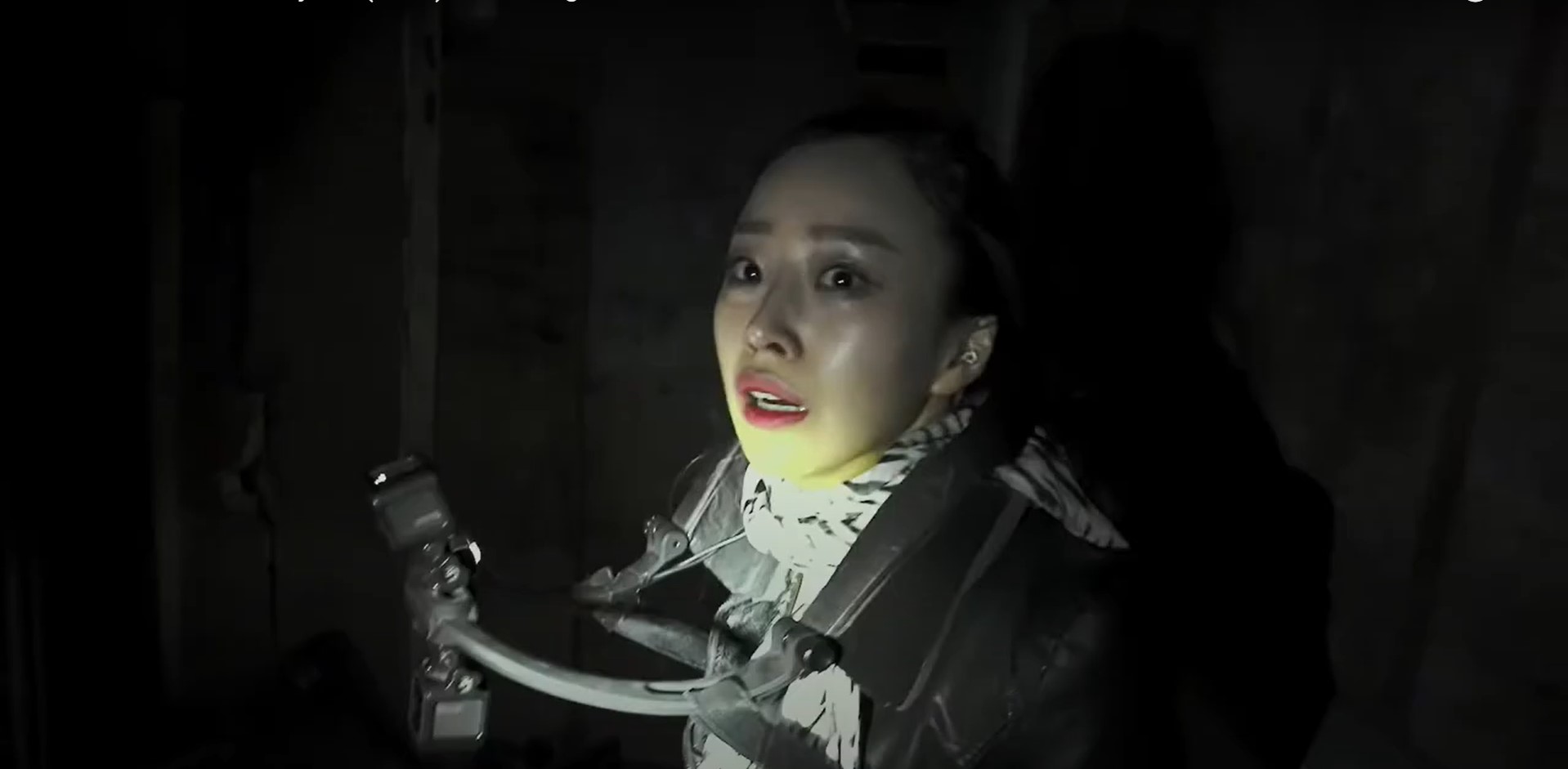
Horror Times, a web series dedicated to horror and hits, travels to the Gwangju providence for their next big event, a special episode aimed to rake in 1 million views worldwide as they explore the supposedly haunted, deserted, and derelict Gonjiam psychiatric asylum after midnight on its anniversary date of its closing.  Already buzzing with historical disappearances of those curious and brave enough to investigate the dilapidated corridors and rooms, Horror Times brings in four guests to join his three-man crew to record every second of what CNN labels one of the seven freakiest places on the planet.  Setup with wall-mounted motion activated cameras, harnessed with individual GoPros, and given a multi-layered script to follow on each of Gonjiam’s four floors, all is going as planned broadcasting live the strange atmospherics that slowly see climbing views from the director’s camped base outside the structure, pulling some fabricated strings to not only heighten his viewer pool but also get genuine frightened reactions from his guest team, but when the team and the cameras unexplainable paranormal occurrences, how far will a director go to reach his milestone goal.

Based off the actual CNN listicle of the top 7 freakiest places on the planet, “Gonjiam:  Haunted Asylum” was a real brick-and-mortar edifice committed to the committedly insane and one of the most suspected haunted places in South Korea until it’s demolishment shortly after the 2018 film’s release.  “Epitaph” writer-director Jung Bum-shik joins the ranks of the South Korean supernatural spookies, accompanying notable entries such as “The Tale of Two Sisters,” “Phone,” and “Cinderella.”  Cowritten by Sang-min Park, Gonjiam:  Haunted Asylum” refreshens the ramshackle mental institutionalized horror subgenre with a dash of social media influence and found footage that entangles grudging ghosts with cyber terror.  Historical thriller and drama producer Won-guk Kim spearheads the project under Hive Media productions and distributed globally by Showbox Films. 

Like a cable-aired, modern-day version of “Ghost Hunters” or “Kindred Spirits,” the vessel Horror Times exploits people’s spirituality beliefs by mingling the exploration of urban legends with gimmicky ploys to keep eyes glued to the show, run up viewership, and earn the root of all evil, money.  The Mystery Incorporated meddling kids might not have a talking Great Dane, but the Gonjiam ghost hunters are a dynamically doomed blend of greed and curiosity, helmed by their captain Ha-joon (Wi Ha-joon, Squid Game) and his on-the-ground, string-pulling marionettes Seung-wook (Lee Seung-wook) and Je-yoon (Yoo Je-Yoon) to conjure up not spirits but pranks under the guise of Gonjiam ghosts.  The unsuspecting portion of the team react as expected, believing the unexplainable as genuine articles of a haunted asylum, until the jokes bleed into the reality of the structure’s incensed force.  Other than Charlotte (Mun Ye-won), a Korean American who travels to Gonjiam to add the location to her lists of CNN’s freakiest places on the planet, there isn’t another mise-en-place character.  Perhaps the others’ backstories are lost in translation but Sung-hoon (Park Sung-hoon, “Hail to Hell”), Ji-hyun (Park Ji-hyun, “The Divine Fury”), and Ah-yeon (Oh Ah-yeon) lose sympathy points for just being there for the sake of being there.  If you haven’t caught on already, the characters and actors name match to add to the faux realism of found footage. 

Veritably surrounded by the actual notoriety of the former Gonjiam psychiatric hospital, the story adds to the established frightening folklore of the rundown building and though the filmmakers were not allowed to shoot inside or on the grounds of the restricted abandoned building, Gonjiam blueprints were used to reconstruction the grimy, trash-laden hallways and various rooms inside a high school.  The effect works like charm used to teleport audiences, along with the help of social media GoPros, selfie sticks, and the like, right into the crumbling ruins; you can almost smell the mold and stank of beyond putrid chemicals and filth.  Yoon Byung-Ho’s cinematography plays with the signal disruption touch, often deploying randomized and intentional interference to convey signal disruptions or, perhaps even, the foreshadowing with the wraithy wrath of spirits; yet “Gonjiam” never truly feels like a found footage film due to its radical differences in video media being implemented and there’s often the unexplainable, no camera-in-use angle that dilutes the subgenre medium.  “Gonjiam” falls into this unquantifiable realm of storytelling that’s hard to digest.  The chaos that ensures in the third act is more palpable, geared toward developing a heavily reliant, hard and fast tension and trembling fear without needing bloodshed for the crowd-pleasing shock factor.

Second Sight sees through the dense barrage of found footage films and spots the pearl amongst the muck with “Gonjiam:  Haunted Asylum,” curating a limited edition, big box, Blu-ray release.  The AVC encoded, 1080p high-definition, BD50, presented in a widescreen 1.85:1 aspect ratio, nears 24 FPS and has flawless technical recording in its digital capturing.  Blacks are dense and rich to create that unknown void apprehension, the neglected belongings of a forlorn hospital have palpable consistency that’s grimy and rusty, and skin textures appropriate lose definition but maintain quality to the extent of equipment limits with GoPros, cell phones, and camcorders in low and hazy key lighting, onboard camera lighting, and some night vision for authentic found footage grip.  There’s not much in the way of diverse color for what is a graded tone of tenebrous obscurity throughout.  I’ve already touched upon Byung-Ho’s purposeful transmissive trouble that impresses more of an annoyance than an integrated factor of fear.  The Korean DTS-HD Master Audio 5.1 delivers on the need-to-hear atmospherics that shudders in echoes and the frantic churn of survival.  What there is not a ton of, and gratefully kept to a minimum, was the eerie wails of the dead as their moments are kept mostly visual in a virtually scoreless runtime that focuses on the surrounding milieu rather than building tension artificially through minor key notes.  Dialogue comes through clearly and clean, especially when muzzled by video camera audio band transmissions.  English subtitles are translated well and synch fine enough with the rapid procession.  Special features include an feature-length audio commentary by Mary Beth McAndrews (Dread Central editor-in-chief) and Terry Mesnard (Gayly Dreadful editor-in-chief), UK’s Zoë Rose Smith’s Fear the Unknown visual-essay on the Gonjiam’s origin, history, and what makes the Korean film scary, and archived featurettes with interviews, including with director Jung Bum-shik amongst various crew, that explore the rumored beginnings of Gonjiam’s notoriety that fuels the production into recreating Gonjiam nearly identically, live recordings of the film’s sheer eeriness told through the images captured by the camera harnesses and phone footage, the new faces of fear that circles around the cast and behind-the-scenes table reads, The Sanctum of Horror that aims to explore the connection between the actual freaky locations and their cinematized yarn to create a legacy of folklore for the now demolished Gonjiam hospital, The Truth of the Ghostlore explores Gonjiam’s history and urban myth and how that forms the ghosts in the film, Korean press conference film launch, and the film’s trailers.  As much as we love Second Sight’s authored special features, which from films of the East are rarely produce, there also plenty to be excited about with the physical attributes of the limited edition set, including a rigid and thick sleeve box with a Luke Headland designed Gonjiam building in red and black.  The inside contents include a 6 collector’s art cards in the same red and black color scheme, a 70-page book with new essays from Sarah Appleton (“The J-Horror Virus”), James Marsh (“Wisconsin Death Trip”), film critic Meagan Navarro, and horror content creator Amber T, and finished off with the film itself, encased in a green-colored Amaray with the same front cover artwork as the rigid slip box.  There are no inserts, and the disc is pressed simply with the title, English and Korean, splashed in red on a black background.  The LE set is hardcoded with a region B playback, has a runtime of 94 minutes, and is UK certified 15 for Strong Supernatural Threat and Language.

Last Rites: “Gonjiam: Haunted Asylum” is not just another shaky cam of paranormal activity. The film incorporates a component of reality, embellishing more on top an already suspected haunted building by giving the story teeth, and released with cultural purpose that binds fact and fiction with a terrorizing outcome of some really pissed off spirits.

Become Engulfed by the “Gonjiam: Haunted Asylum” on Second Sight’s LE Blu-ray!

Happy, EVIL Halloween, Halloween, Halloween. Happy, EVIL Halloween, Silver Shamrock! “Halloween III: Season of the Witch” reviewed! (Via Vision / Limited Edition Blu-ray)

“Halloween III: Season of the Witch” Available on Limited Edition Blu-ray from Via Vision!

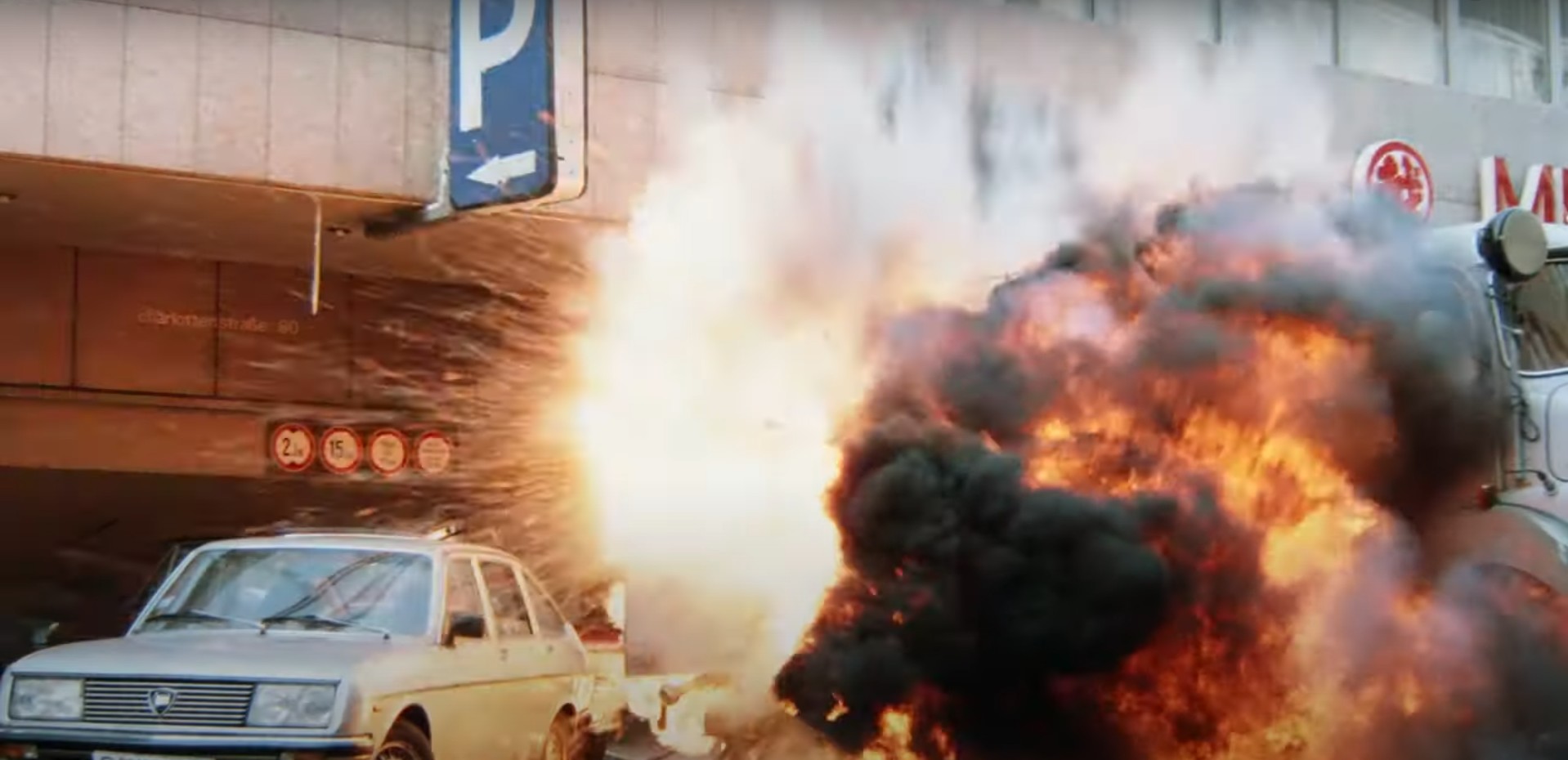
Just days before Halloween, a man stumbles hurt and delusional rantings into the hospital of Dr. Daniel Challis.  Clutching a Halloween mask to his chest, Challis figures the man to be crazy before stabilizing his vitals for rest but when the man is heinously murdered in his hospital room and the murderer burns himself alive in the hospital parking lot, Dr. Challis doesn’t know now what to make of the man’s rantings about something or someone is going to kill us all.  In walks Ellie Grimbridge, the man’s daughter, who has been investigating her father’s mysterious death.  Intrigued not only by the case, but also by the lovely Ellie, Dr. Challis and Ellie’s investigative work leads them to the Silver Shamrock mask factory in Santa Mira, the same mask factory that created the mask Ellie’s father was clutching before he died.  What they uncover is a plot of sacrifice on Halloween night, spearheaded by an Irish toy maker in Conal Cochran.

With a novel concept in the hands of one of horror’s most promising filmmakers, John Carpenter, a script penned by an uncredited yet famed British science fiction writer in Nigel Kneale and touched up by Carpenter, and a young Carpenter protégé, Tommy Lee Wallace, at the helm, “Halloween III” attempted to be an off-the-beaten path of success new story for what would have an annual Halloween-themed anthology going forward.  Unfortunately, and regrettable, “Halloween III:  Season of the Witch” failed to connect with an audiences and Michael Myer fanboys too stubborn to let go of The Shape.  It wasn’t until years later that the 1982 feature, released on the coattails of 1981’s part II of the original Michael Myers saga, found footing with fans who now appreciate the unique story, its practical effects, and the bold, yet defunct, vision Carpenter and crew once envisioned.  Carpenter and Debra Hill returned to produce, alongside Joseph Wolf, Irwin Yablans, and Barry Bernadi, with Universal Pictures as the backing studio. 

Now, “Season of the Witch” just didn’t star a bunch of nobodies in this offshoot of a newly branded “Halloween” concept.  Before playing the quasi-alcoholic, deadbeat father Dr. Challis, Tom Atkins was already a rising star in the land of John Carpenter films with “The Fog” and “Escape from New York” In 1980 and 1981.  Atkins’s usual confident and charming qualities underneath the rugged good looks and trimmed mustache serve him the better part of man doing his bit part in a not-his-business investigation of a man’s death to please a good-looking woman that happens to be the dead man’s daughter.  That good-looking woman is Ellie Grimbridge, embodied by the Mad Magazine Production’s “Up the Academy’s” Stacey Nelkin, and if you blink, you might miss Atkin’s Dr. Challis being perhaps the worst father ever to his two children and ex-wife.  The subplot is so subtle and overshadowed by the Silver Shamrock Halloween plot that being invested in the crumbling family dynamics doesn’t even hold substantial weight and it truly works to subvert the subconscious and plant a destructive pipe bomb smartly into your moral compass because if you think Dr. Challis is the hero of the story, which in many perspectives he is, he’s also doesn’t keep up with his own children interests or current events, numerously bails on their planned care, runs off and sleeps with a much younger woman he hardly knows, is an active alcoholic, and is quite the handsy philanderer at that when he grabs his much older nurse’s bottom in a playful moment.  No, Dr. Challis is every ounce an antihero hidden in plain sight and in the guise of a potential savior of the children, the world, as he takes on Silver Shamrock and its founder, an Irish toymaker named Conal Cochran with tremendous evil genius and mastermind appeal by Dan O’Herlihy (“The Last Starfighter”).  “Halloween III:  Season of the Witch” rounds out the cast with Ralph Strait, Jadeen Barbor, Al Berry, Michael Currie, Garn Stephens and Essex Smith in key support roles.

Lots of previous opinionated chatter surrounding “Halloween III” collectively concludes to if the filmmakers decided to title the film anything else, maybe just the tagline of “Season of the Witch,” then the film would have won over audiences with a fresh take of science fictional horror and would not have been wrongfully panned by critics and moviegoers.  I call BS on this take.  The original intention was to deliver a new, Halloween-themed horror film year-after-year with John Carpenter attached in some way, shape, or form of bringing novelty terror to our eyeballs and brain.  Instead, public persuasion and studio submissiveness rendered the concept powerless and as a result, and no disrespect to any Michael Myers films that followed, was the departure of John Carpenter and Debra Hill and a string of mediocre and wacky Michael Myer sequels that went deep off the far end.  “Season of Witch” is not a teeny bit at all slasheresque, separating itself far from Michael Myers as much as possible by unconfining itself from location concentration by expanding the threat domestically, if not globally, with a parlor trick plot that involves special, laser-shooting masks that make kids’ heads melt into glop of crickets, snakes, and other creepy-crawly sui generis of the animal kingdom.  While strange in the cause and effect, the practical effects and superimposed visuals work to convey some taught gore and prosthetic knots that can be unraveled, even retrospectively critiquing them by today’s standards.  Wallace masters the film while, at the same time, hitting the ground running on his debut feature that has a look and feel of a graduate from the film of the John Carpenter. 

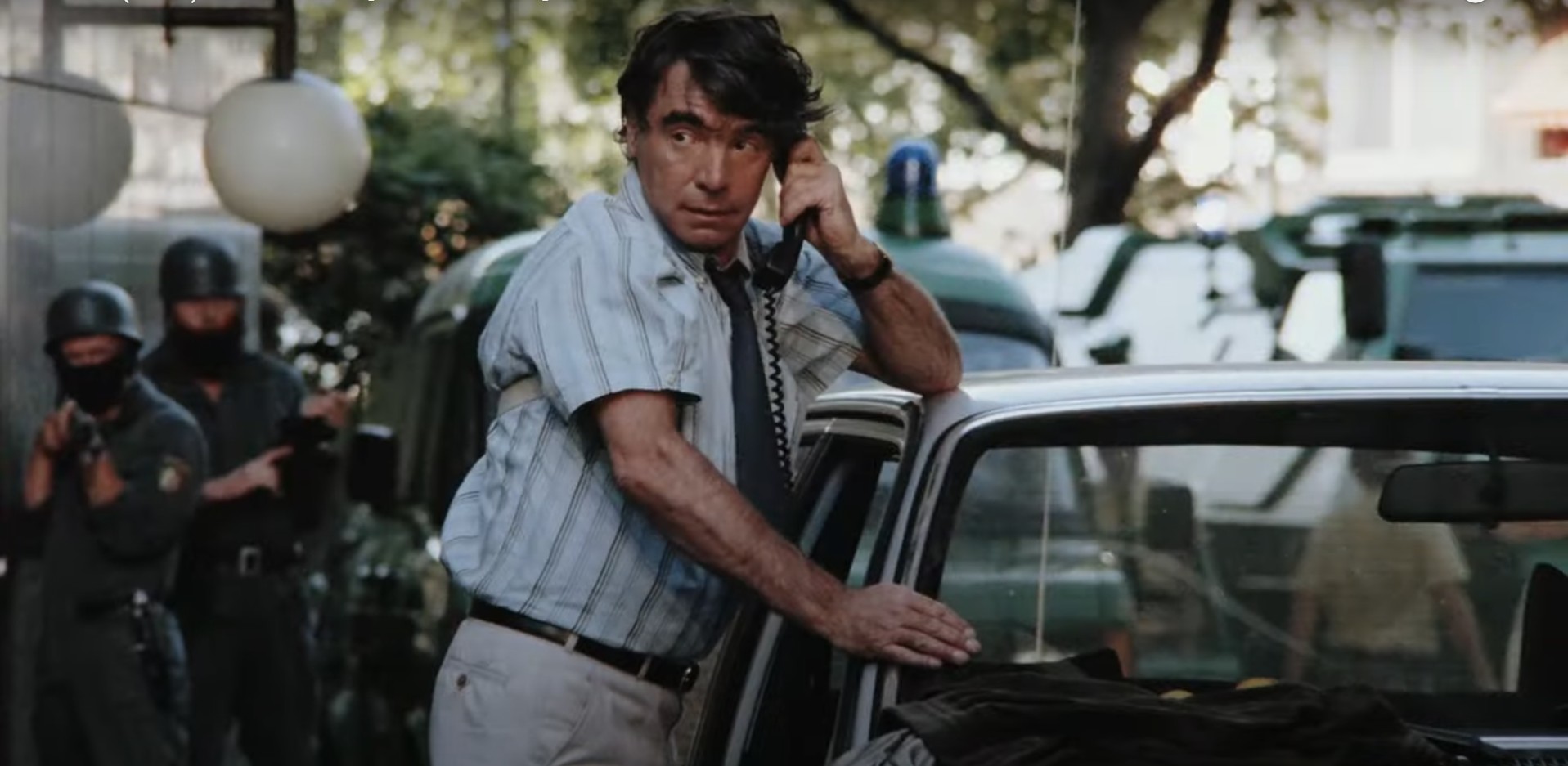
Halloween season may be months away, but Christmas comes early with Via Vision’s limited-edition Blu-ray set of “Halloween III: Season of the Witch.” The AVC encoded, high-definition 1080p, BD50 presents the film in a widescreen aspect ratio 2.35:1. Much like the Via Vision’s companion release with “Halloween II,” “Season of the Witch” mirrors the same resolution picture quality and stellar package presentation. Dean Cundey’s delivers another smoky noir realism that definably hard-edged and hard-lit that while isn’t the most colorful contrast it does create an abundance of inky shadow to lost in and sink into. A cleaner picture does bring with a reveal of how obsolete some of the composite matte effects but, simultaneously, revives what once was, nostalgia and a more tactile truth in movie magic. Details come through within contour delineation and textural elements. The English language DTS-HD Master Audio 2.0 has dual channel balance and strength with lossless fidelity. Dialogue retains saliency throughout from a rather middle-of-the-road strength ambience albeit a wide range of effects from explosions to laser beam bursts and its constructed, catchy Silver Shamrock jingle, often muted through the television programming, and John Carpenter’s and Alan Howath’s synth collaboration that’s tonally reminiscent of previous “Halloween” films but stands by itself in distinct measure to garner new-sound tension. English subtitles are optionally available. Also, like Via Vision’s “Halloween II” Blu-ray release, a 2024 commentary is recorded and encoded with film critic/historian Lee Gambin and a special appearance by “The Howling” director Joe Dante. Archival commentaries from Tommy Lee Wallace and Tom Atkins are also on the disc with all three commentaries in the setup menu. Special features content includes 2012 Scream Factory-Red Shirt productions with Stand Alone: The Making of Halloween III: Season of the Witch documentary surrounding a Micheal Myers-less picture, it’s critical shockwave, and its ultimate cult following and Horror’s Hallowed Grounds: Revisiting the Original Shooting Locations hosted by Sean Clark visiting a few of the locations used for the film. A still gallery, theatrical trailer, and television spots round out the rest. Of course, my favorite part is the lenticular cover on the limited-edition and numbered cardboard sleeve case of the three, silhouetted little trick-or-treaters with a crone-ish face coming down from above the fire red dusk sky. The slightly thicker Blu-ray Amaray case cover art is stark still image from the movie with another, different image on the reverse side. The black background disc has the skull mask and title across from each other in nice compositional juxtaposition. Next to the Amary case is an envelope with 6 art (picture) cards taken from the film. The Via Vision release is rated M for Mature for moderate violence and moderate coarse language, has a runtime of 109 minutes, and has region B playback only.

Last Rites: Who knew being the outcast looked so damn good. “Halloween III: Season of the Witch” deserved better and received the best on this Australian, limited-edition, lenticular Blu-ray set that’ll leave you whistling the Silver Shamrock jingle and fearing Halloween masks more than ever.

“Halloween III: Season of the Witch” Available on Limited Edition Blu-ray from Via Vision!

Classic Sequel Gets a Lenticularly EVIL! “Halloween II” reviewed! (Via Vision / Limited Edition Blu-ray)

“Halloween II” Limited Edition Blu-ray + 6 Photo Lobby Cards! Order here!

The horrific Halloween night massacre in Haddonfield where a masked escaped mental patient named Michael Myers murdered the close friends of Laurie Strode has not yet ended.  Hurt and in shock after narrowly escape Michael’s relentless pursuit, Laurie is rushed to Haddonfield Memorial Hospital to receive treatment from a skeleton shift while Dr. Loomis, who shot Michael six times, continues his hunt for the hard-to-catch, hard-to-kill killer.  Frantic about the evil inside his former patient, Dr. Loomis will not stop at nothing to track him down with police assistant and try to puzzle together just why Michael had returned to his hometown in the first place.  As Laurie recovers from her injuries and copes with her friends’ deaths, The Shape arrives at the hospital, continuing his emotionless killing spree of hospital staff in order to get to Laurie, and with nowhere to run, Laurie’s only hope is in the hands of a determined Dr. Loomis. 

Picking up where the highly successful independent horror, John Carpenter’s “Halloween,” that changed the slasher genre to what we know it as today, “Halloween II” provides more illumination on The Shape, Laurie, and shuts the door on the significant open-ended and fear-inducing mystery at the finale of Carpenter’s masterpiece.   The 1981 sequel, released three years after the first film, was not helmed by Carpenter whose success skyrocketed post-“Halloween.”  Instead, Carpenter and creative producer Debra Hill agreed to the executive producer title with some creative control in penning the script that would be a what-happens-immediately-next continuation with newcomer Rick Rosenthal sitting in the director’s chair.  The director who would helm later the follow year’s “Bad Boys” with Sean Penn had a goal to retain the same Carpenter stylistic choices to make the sequel seemingly seamless.  Alongside Carpenter and Hill in the melting pot of producers, the more narratively opinionated Moustapha Akkad and Dino De Laurentiis served as executive producers along with Joseph Wolf (“A Nightmare on Elm Street”) and Irwin Yablans (“Tourist Trap”) in what became a coproduction between Universal Studios and Dino De Laurentiis’s production company.

“Halloween” converted the then unknown Jamie Lee Curtis into a couple of things.  She instantly became a household name that at the same time also made Laurie Strode a household icon.  Curtis also became what was a relatively new coined term at the time of a scream queen, propelling her career in the horror genre with “Halloween” subsequent films such as “The Fog,” “Prom Night,” “Terror Train” and, of course, the more recent titular television series “Scream Queens” and the contemporary “Halloween” sequels.  What also emerged post Lee’s performance is the actress was eager for the role and effortless to work with making the 23-year-old daughter of Janet Leigh and Tony Curtis a treat to work with, malleable toward her role, and enthusiastic about returning as Laurie Strode for the sequel.  Curtis falls right back into the role as if filming didn’t stop rolling with Strode in a confounding state of shock and injury from her the relatively short scuffle with Michael Myers until Dr. Loomis intervenes with six gunshots into The Shape at the key and climatic moment, saving Strode from being strangled.  The difference in the sequel is Curtis’s instilled knowledge for her frightened character.  It’s that kind of touch that doesn’t hesitate to react to a force of evil.  Returning as Dr. Loomis, and again as if he never stopped performing as the paranoid and fervent good psychiatric doctor, is the iconic and late Donald Pleasence tracking down his former patient with trench coat sagacity, an understanding that no one else shares except for maybe Myers’ ultimate prey, Laurie Strode.  A new cast of relegated kill fodder magnifies part two’s grislier death count with Lance Guest (“Jaws: The Revenge”), Pamela Susan Shoop (“The One Man Jury”), Leo Rossi (“Maniac Cop 2”), Tawny Moyer (“Looker”), Ana Alicia (“Romero”), Gloria Gifford (“Virgin Paradise’), Hunter Von Leer (“Trancers III”), Cliff Emmich (“Hellhole”), Ford Rainey (“The Cellar”), and Dick Warlock putting on the mask as The Shape with Charles Cyphers and Nancy Stephens returning in their respective roles as Sheriff Brackett and Marion Chambers.

What new can be said about “Halloween II” that hasn’t been already said?  Dichotomously, “Halloween” and its sequel share a single narrative that emanates the same stylistic tone; however, both films couldn’t be more different in their surface level and underlying intentions and that gnaws raggedly on the connective tissue that binds them.  Carpenter’s original embraces the mystery enshrouding Michael Myers motivations with a merciless, yet nearly bloodless, killing spree of horny hopped-up teenagers who wiggle themselves out of responsibility for a little trick-or-treat fun under the sheets or for just being alone in their house.  Myers unneeded and unheeded explanation formed The Shape as evil personified, an incarnate force compelled to return home where the light switch was flipped to an expressionless compassion for human life.  Rosenthal’s part two subverted the unknown by providing Michael reason and that reason being Laurie Strode, anyone else who gets in his way, could foil his plans, or are just in the vicinity of the hunt are eliminated with extreme prejudice, and that leads into the ramped-up gore with large pools of blood and other gratuitous displays of damage to unsuspecting soon-to-be stiffs.  Despite the different strokes, the sequel is not bad by a longshot.  In fact, “Halloween II” is just an extension spiraling in intensity and terror, a product of its time when everyone and their brother had directed gore-ladened slashers during the steep beginnings of the slasher renaissance. 

Though a many number of “Halloween II” video media exists between the current formats, the collaboration of Via Vision and Lionsgate release from Australia is beyond reproach for any kind of transfer print woes, lackluster bonus features, and drab packaging.  The limited edition and numbered 2-Dsic Blu-ray set is a physical media thing of beauty with an AVC encoded, full high-definition 1080p, BD50 on both discs.  Disc one houses the theatrical cut of film, presented in a widescreen 2.35:1 aspect ratio, from pristine print, likely the original negative licensed through Universal Pictures for this very release, with the Via Vision caveat of every effort has been made to produce the highest quality on the back cover.  Not a single reason comes to mind on that statement being false as the Dean Cundey’s cinematography retains an undiluted facsimile of the original “Halloween,” represented here with phenomenally suitable contrast that can presumably hide Micheal Myers in every shadow and create the apprehension in every darkly lit scene with minimal key lighting in various, sometimes neon, shades of red, yellow, and white.  The 35mm film grain has a pleasant consistency of a low-to-medium low visual viscosity that never reaches levels of blotting out picture quality, presenting no issues with zoomed in images or any other touchup enhancements to note for that matter.  Perceptible details sanction The Shape’s tactile and weathered look of a rough night in Haddonfield.  Colorfully warranted scenes, such as the Nurse Alves on a gurney in the middle of a pool of her blood, are robust to display the carnage whereas other, more minimalistic approaches detail just enough for the imagination to take over.  Disc two contains the standard-definition, upscaled to 1080p, television cut of the film, presented in a made-for-TV 1.33:1 aspect ratio, that omits some of the gorier moments, suitable for broadcast viewers.  Audio options include two lossless English language selections with a DTS-HD Master Audio 5.1 and a DTS-HD Master Audio 2.0.  The audio codec distributes punchier ambiences of Myers’s rhythmic breathing through the mask, the jarring alert of a hospital room buzzer, and the impactful moments of Myers slamming his fist-loaded weapon into the skull, back, and….a pillow with the cringe-worthy associated crunch and thud.  No impediments on the dialogue track that’s free of crackling, hissing, and popping and is consistently prominent and mixed well within more chaotic, milieu-mania scenes, such as with the finale with hissing air tanks and scalpel swoops.  Optional English subtitles are available.  Special features are consolidated to the theatrical cut disc only with Shout Factory’s inaugurated 2012 documentaries – The Nightmare Isn’t Over:  The Making of Halloween II and Horror’s Hallowed Grounds:  The Locations of Halloween II – featuring cast and crew interviews with director Dean Cundey, Tommy Lee Wallace, Dick warlock, Leo Rossi, and more as well as visiting locations in a modern time with host Sean Clark, and two commentaries featuring director Rick Rosenthal and Leo Rossi in one and stunt man/The Shape Dick Warlock in the other.  There’s a brand new 2024 commentary with author Dustin McNeill, co-author of Taking Shape:  Developing Halloween from Script to Scream.  The encoded features round out with the alternate ending with more explanation on the fate of a certain left ambiguous character, deleted scenes, a theatrical trailer, TV and radio spots, and a still gallery.  What makes the Via Vision a limited, numbered set is the neat package and physical goodies inside.  The rigid lenticular cardboard sleeve of the skull pumpkin has eyes that follow you at every angle.  Inside is a slightly thicker Blu-ray Amaray casing with reversible cover art displaying notable stills from the feature.  The extra disc, disc 1 likely, is in a clear push-lock, page-turner disc holder.  Six photo lobby cards featuring stills from the movie come alongside the Blu-ray.  Via Vision’s release has a region B playback encoding, a runtime of 93 minutes on both cuts, and rated R.

Last Rites: Michael Myers has been slashing away in the cinema for nearly half a century and “Halloween II” has been a staple entry that, to this day, is a memorable fan-favorite in the grand scheme of most of the franchise’s sequels. Via Vision’s limited edition, lenticular Blu-ray packaging just sweetens the deal with a crystal clear and top-tier quality release worthy in any physical media collection.

“Halloween II” Limited Edition Blu-ray + 6 Photo Lobby Cards! Order here!

Underneath the Pulpit Waits an EVIL Difficult to Stomach! “The Borderlands” reviewed! (Second Sight Films / Limited Edition Blu-ray)

Order the Limited Edition Blu-ray of “The Borderlands” Here at Amazon.com

After exposing phony divine miracles at a Catholic Church in Brazil that resulted in the death of fellow Catholics, including a Cardinal, Vatican investigator and religious brother Deacon starts to lose faith with every fraud upon fraud case that points to the non-existence of a higher being.  Having fallen on the drink, the skeptical Deacon is dispatched to the English countryside of Devon where a Father Crellick had reopened a 13th century abandoned church and has been experiencing, in the Father’s words, miracles from God.  Joined by a Gray, a hired technology expert with agnostic beliefs, and a stern Father Mark, eager to disprove another false hope, the three men descend upon the Church with full, unequivocal examination to swiftly reveal the hoax and part ways.  Tensions rise between when logical explanation can’t be unearthed during Church rumblings, disembodied baby cries, and a behind-the-wall, shifting scratch sound that leads them to an underground labyrinth that will swallow them whole. 

Released in the U.S. under the title “Final Prayer,” Elliot Goldner’s 2013, found-footage UK horror “The Borderlands” is the director’s debut, and only, feature that places you right into the belly of the beast at POV level.  In a sea of found footage horror, “The Borderlands” seizes the opportunity to separate itself from the overwhelming portions of shaky camera, purposeful variable video and audio quality, and practical, obscured effects to put into question the strength of faith, specifically here in the Catholic setting, and what ultimately brings about the inevitable in that no matter what religious denomination or outlook you might have, no one is exempt from the grim reality that awaits.  Filmed mostly on location in Devon, UK, as well as West Ogwell and Chislehurst, London for many of the interior scenes, “The Borderlands” is a production of Metrodome Distribution and is produced by Jennifer Handorf (“Prevenge”) with Jezz Vernon (“They’re Outside”) serving as executive producer. 

Our team of Vatican investigators follows three men with starkly differing handles on religious faith.  Coinciding on their stance on the existence of a higher power, individualistically, they’re also incompatible to each other which makes for palpable tension and livens up the dynamic when predictability and patterns can be discerned with likeminded characters.  On the scale of human compositions, polar opposite of both spirituality and comportment is Father Mark (Aidan McArdle, “Metamorphosis”), a by-the-book priest unamused by the elaborate ruses created by those swimming in the same faith pool as himself, and Gray (Robin Hill, “Meg 2:  The Trench”), an untroubled, exuberant, hired techie eager to believe the face-value of the supposed miracles before him.  Aidan McArdle’s tenacity for dogma character comes through well enough to know that good Irish Catholic Father Mark is about as numb as the next investigating Catholic never on the verge of a true miracle as the frustration just oozes out him after one after another hoax divine ephiphany.  Robin Hill, on the other hand, could be the best John Oliver, of Max’s “Last Week Tonight,” impersonator I’ve ever seen and heard.  In all serious, Hill exacts a man looking for religion through the lens of paycheck and a fanboy of the supernatural, like as if the average horror movie enthusiastic came upon the real Freddy Kruger and just geeks the Hell out.  Then, there’s Deacon (Gordon Kennedy, (“T2 Trainspotting”) and like Father Mark, Deacon’s faith hangs in the balance after a botched investigator inadvertently sees the death of a Cardinal at the hands of pious locals.  Kennedy doubles down with Deacon’s wavering faith by drowning the character in alcohol and doubting every inexplicable Devon church oddity.  Yet, Deacon and Gray meld together to a near swap of credence, seesawing in their religious principles, when the things that go bump in the church can’t be explained.  Luke Neal (“Wilderness”) and Patrick Godfrey (“The Count of Monte Cristo”), who’s been practicing the acting craft for over half a century, play a couple of dissimilar priests lured by the Church’s mysterious forces.

What’s noticeably different about this particular bleak found footage nailbiter is the audience is integrated into story by the investigator’s strapped-on headcam, not just some schmo glued to a handheld camcorder running, yelling, and hiding for his life while still depressing the record button.  There’s also the element of a shrouded backstory that becomes unraveled overtime and speaks volumes to a couple of the character’s colorful conducts.  Those elements are then intensified by the cinematic crux, an archaic, resurrected small church’s unexplainable, mostly terrifying, daily disturbances the local priest indiscriminately deems miracles.  Not a single character has arbitrary or useless purpose for the sake of being an in-frame victim of circumstance as each exhibit a radical change over the course of investigation, adding copious ground to the big question, the question that’s on every character’s mind, is there an almighty presence beyond our corporeal plane and cerebral understanding really exist?  Come to find out, the characters are not asking the right question and get sucked into a terror on the terra the more curious they become in finding God amongst them.  Often times, found footage doesn’t fit into the storyline, whether be the aforesaid necessarily handling of the camera through the an insane ordeal or just doesn’t work with a regularly structured narrative, but “The Borderlands” couldn’t be received with success without the stunt of seeing through the eyes of the characters that subsequently emits a trick of light or an overactive imagination that smooths out solid jump scares when needed in what is a definitely watch in the dark type diabolical goosebumper. 

Second Sight Films takes charge with curating a definitive, all-expense paid trip to Elliot Goldner’s “The Borderlands” on Blu-ray home video.  The AVC encoded, high definition 1080p, BD50, hovering around 24 FPS and presented in an anamorphc widescreen 1.78:1 aspect ratio, leverages the capacity and the encoding to sharpen a relatively dark picture with more clarity without losing the unsettling spookiness with overreaching contrast.  Image presentation resembles closer to an upscaled 720p because of the found footage piece, and so we experience patchy spots, static ripples, and other miscellaneous plays into the supernatural sarcophagus that is the Devon church.  Skin tones and grading stays in tune with a brightly lit infusion of handheld torches as well as delineating the necessary with night vision cameras.  Goldner does a fine job with depth with the viewers being the foreground and using a lot of the peripheral and background to keep things hair-raising and interesting.  The English DTS-HD 5.1 audio track has lossless compression and really does throb with a wallop of balanced LFE and to-scaled dialogue.  What throws me off about this particular found footage, as well as some select others, that I find more a bothersome nuisance than a technical gaffe is an inlaid soundtrack.  A slow burn industrial score is used for “The Borderlands” to promote a greater sense of ominous omniety, like a background, repetitive, and sometimes swelling drone you might hear in certain first-person shooters from 20 to 30 years back. Dialogue tops the audio layers without being diluted by poor onboard cameras or having to contend with too much with the score, suggesting well-placed mics and sound design to achieve appropriate range and depth inside the frame configuration or even off-frame, behind or to the side of camera. Optional English subtitles are available. Like most Second Sight Films limited editions, “The Borderlands'” set packs a punch with encoded special features, such as a new audio commentary with actors Robin Hill and Gordon Kennedy, producers Jennifer Handorf, and special effects designer Dan Martin, a new interview that brings Robin Hill and Gordon Kennedy recollecting the behind-the-scenes and their characters in Dressed the Part, a new interview with producer Jennifer Handorf in Losing Faith, a new interview with special effects artist Dan Martin in Monster Goo, and a behind-the-scenes archival featurette. The limited-edition portion of this set includes a rigid slipcase with gorgeously bleak and grim illustrated artwork by Christopher Shy, a thick, 70-page color and black and white book with pictorials and new perspective and analytical essays from Tim Coleman, Martyn Conterio, Shellie McMurdo, and Johnny Walker, and 6 collector’s art cards, mostly resembling a distorted interlaced video and in an imperial purple-ish appearance from haunting scenes of the film. The artwork sheathed inside the translucent green Amaray case is the same as slipcase with no reverse cover work; it’s also pressed on the disc art. This release came with no inserts. One of the few Second Sight limited edition pieces to be licensed with a region free playback and the film itself has a runtime of 89 minutes and is UK certified 15 for strong language and threat.

Last Rites: Second Sight’s filmic selection pool for major league limited editions has been nothing short of stellar with “The Borderlands” being their latest, but definitely not their last, to be knighted worthy of physical media acclaim. Yet, it’s not like “The Borderlands” needed the boost as the film itself has a cult following for its shuddering tale and its monstrous ending that will have you reeling, maybe even screaming, in horror.

Order the Limited Edition Blu-ray of “The Borderlands” Here at Amazon.com