Back to the Past to Hunt Down EVIL! “Trancers” reviewed! (Full Moon / 4K Ultra HD and Blu-ray)

Become a Slave to “Trancers” on 4K Ultra HD and Blu-ray!

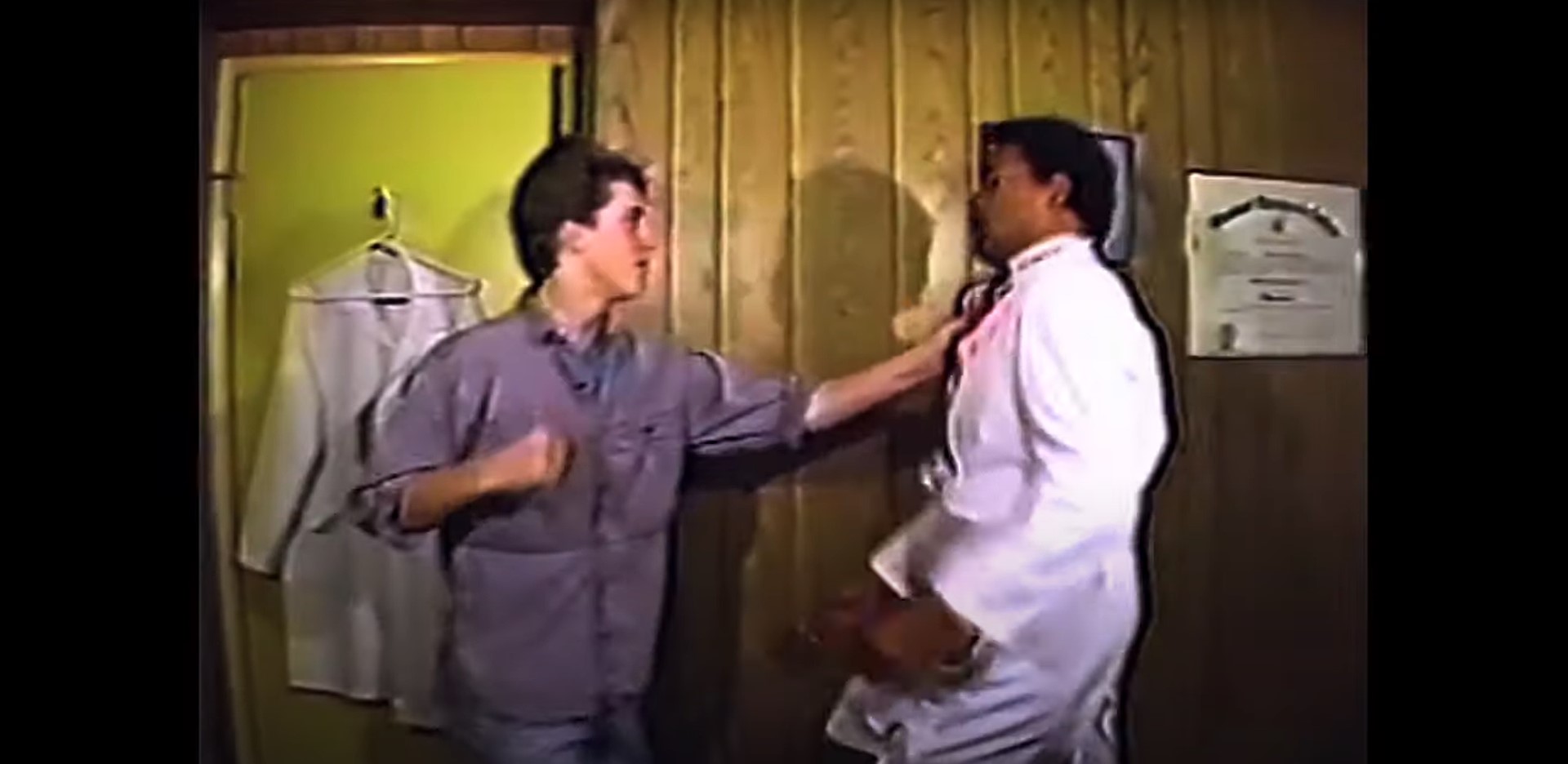
In the post-apocalyptic ravaged 23rd century, Jack Deth, a brusque and hardened trooper, hunts down Trancers, a group of easily influenced and entranced people turned zombified slaves by a power-hungry hypnotizer named Whistler.  With Whistler killed, Deth lives out his raged-filled days vindictively bounty hunting Trancers still beckoning to Whistler’s lingering snake charming after one of Trancers kills his wife, but when Whistler appears to have cheated death and sent his conscious mind to the year 1985 into a Police detective relative to assassinate ancestors of the Trooper council and gain control of what’s left of the future world, Deth gives chase, sending his consciousness into a journalist predecessor with a fast car, a relaxed lifestyle, and in the arms of a beautiful young woman who Deth must recruit and rely on if he wants to survive the past.
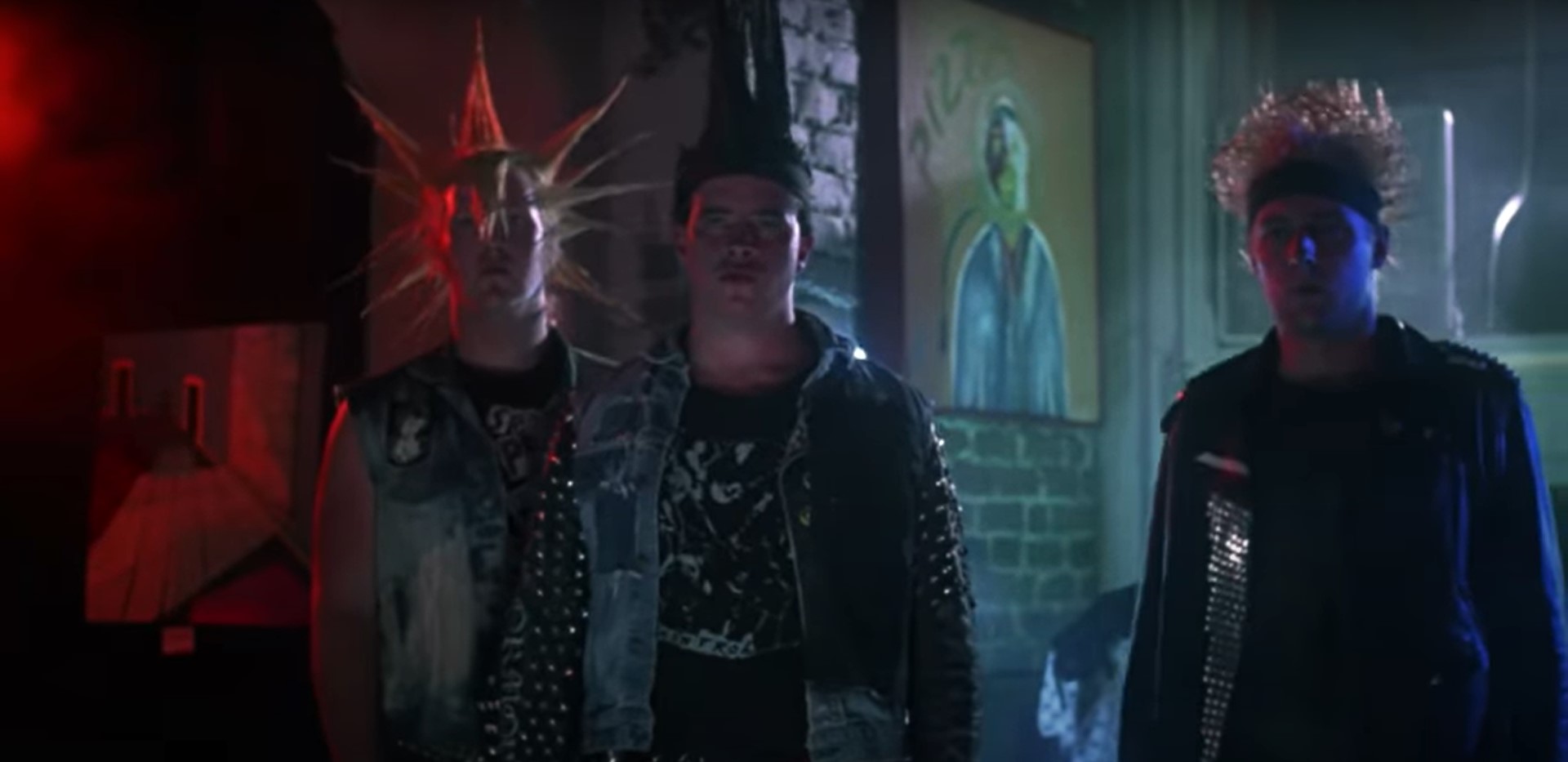
Charles Band’s Homeric Sci-fi opus “Trancers” is time-travelling neo-noir at its boldest.  With a limited budget and loads of talent, the 1984 future bounty hunter with a grudge actioner, the first of a franchise that spawned five sequels stretching over two decades, was penned by then Band hired screenwriters Danny Bilson and Paul De Meo, whose careers have run the variety spectrum of treatments from the Empire days of WWII soldiers battling aliens in a UFO in “Zone Troopers” in the mid-80s to finding themselves on the same credits screen as Spike Lee in the filmmaker’s post-war Vietnam drama ‘Da 5 Bloods.”  “Trancers” has nothing to do with war but has everything to do with a crumbling society, a hardnosed cop, and acrid acolytes with purple chapped lips and a yellowish green tinted complexion.  Also known as “Future Cop” in other parts of the world, the Los Angeles-shot “Trancers” is produced by the “Puppet Master” Charles Band and Debra Dion under Band’s Empire Pictures.

One of the aspects I adore most of the early Full Moon productions, before Charles Band even dubbed his Empire Pictures as Full Moon, was the star power behind the pictures.  Tim Thomerson is a versatile actor who can star in just about anything from microbudget indie productions (“Dollman,” “Left in Darkness”) to big Hollywood celluloids (“Air America,” “Iron Eagle”) as one of the most recognizable faces amongst viewers.  In “Trancers,” Thomerson relishes playing the 5 O’clock shadowed, brooding in a long trench coat, Sam Spade-type detective, Jack Deth, with skin in the game and a gruff attitude to take him to the edge.  Thomerson makes for a good grouchy gumshoe as Deth goes plays the cat-and-mouse game with his onscreen nemesis Whistler, played by Michael Stefani in his one and only feature film credit and also marks his last acting appearance.  Stefani has the long-ominous stare of a conventional villain, but I yearned for more toe-to-toe action between Thomerson and Stafani that what appears on screen in what was only a brief less than handful of moments that weren’t edge of your seat encounters, even the finale was underwhelmingly brisk.  More of the penetrating thrills were held in the future when Jack Deth is ambushed by an old Diner lady wielding a clever or when Deth laser blasts Whistler’s unconscious body to explosive smithereens.   What’s nurtured more in the past is the relationship between Deth and the half-his-age Leena, a role donned by a young Helen Hunt (“Twister,” “As Good as It Gets”) as the L.A. 80’s pop-goth girl with a thing for older men.  Thomerson and Hunt have chemistry that would turn heads clouded with ageism but they’re cute enough to work, especially when they ride matching mopeds around the city to either thwart Whistler’s plans or escape the police under Whistler’s control. The rest of cast that rounds out “Trancers” is just as inundated with individualism as the principal leads with Anne Seymour (“Big Top Pee-Wee”), Biff Manard (“Blankman”), Richard Herd (“Get Out”), and legendary supporting actor, Art LeFleur (“The Blob”).

With any story dealing with time traveler, undoubtedly, plot holes will exist and will stick out like a 23rd century cop time-hopping to 1985. “Trancers” is no different. When Whistler eventually assassinates an ancestor of one of the future council members, the memory of the slain still exists to those in the future. Though the council member never existed in the 23rd because his ancestor was wasted by a mind-melding maniac, their energy and presence is remembered and so that would suggest the 23rd century and the 20th century timelines coexist and move at the same time rate and once the future is written, the memory of can’t be undone? This transtemporal travel stymie comes early into the story and leaves me to chew on this paradoxical gobstopper for the rest of the film, but my advice to other views is to manage it just like I did with forcing that problematic plot hole into the backseat recesses of your mind and focus more on enjoying the nonstop clash and laughs high of a “Trancers” sci-fi speedball. Production value and location security is key to “Trancers” success and Band and his filmmaking team score multiple locations around Los Angeles that are often small but are neon lit or are crazed dress to reflect an era that offer relatability and style. Composited laser beams and vaporized dead bodies effects are an effulgence of neon layered with digitized 8-bit audio bytes for that futuristics flair. The matte work landscapes and set interiors of a crumbling Los Angeles with a blend of new styles are a thing of beauty. Iconic buildings engulfed by the ocean’s rising tides that never ebbed, the neo-totalitarian architecture, and the retrofuturism of a classic interior diner with a newfangled facade borders a dystopian metropolis on the brink of collapse and only held together by the glue of the council and the troopers who enforce the law.

“Trancers” receives the 4K Ultra HD treatment with a 2-disc release from Full Moon Features with the second disc a high-definition, 1080p Blu-ray, distributed MVD Visual. The 4K comes from a scan of the original camera negative; however, the Blu-ray and the 4K are fairly even in detail and clarity. Each format, presented in a widescreen 16:9 aspect ratio, decodes at a disconcerting average of 25Mbps and maintain the luminescence, detail repressive glow which tells me a regrading wasn’t completed to counter the intense neon on darker scenes. The glow shouldn’t be emanating half a foot off of characters. Despite a couple of minimally invasive spotty print damage, details are better in the natural lit and gaffer lit scenes though still quite soft around skin textures. Two English audio are available – a DTS-HD 5.1 surround sound and a Stereo 2.0. As soon as the Empire Pictures logo seizes the screen and the soundtrack begins, I knew the 5.1 was going to be worthwhile with a robust multi-channel output that leverages the Phil Davies (“Society”) synth-beat, adrenaline-producing score while still maintaining an even-keeled and appropriately layered ambient and dialogue track. Dialogue remains clear and clean throughout that compliment a range of action track like an exploding body with a short burst LFE explosion, the pew-pew-esque laser shots as discussed earlier, and the scattering of shattered glass when a moped goes through a sugar glass window. Bonus features are identical on each formatted disc with a commentary from Charles Band and Tim Thomerson, a 2013 documentary of the making of “Trancers,” the complete short film “Trancers: City of Lost Angels, Trancers: A Video Essay, the official trailer, archival interviews, and a still gallery. The physical attributes include a blacked-out Blu-ray snapper case with a cardboard slipcover, both the snapper and the slipcover have the same front artwork of Jack Deth pointing a gun out of a floating open door in space. The region free release has a runtime of 76 minutes and is rated PG-13. With a name like Jack Deth, you can’t go wrong with the science fictional film noir that is “Trancers,” a rustling time-travel good versus evil showdown with the future hanging in the balance.

Become a Slave to “Trancers” on 4K Ultra HD and Blu-ray!

Night Terrors Are Not EVIL Enough. “While We Sleep” reviewed! (VMI Releasing/ DVD)

“While We Sleep” available on DVD home video at Amazon.com!

Neurologist Nina Evanko is perplexed by the unusual CAT scans of 13-year-old Cora whose been suffering from sudden onset sleepwalking after her birthday party.  Believing the CAT scan is going through calibration issue with imaging process, Nina orders another set of scans, but when the scans produce the same result and a death of another patient right in front of Cora sends her home early before Nina’s arrival to study the results, Nina convinces Cora’s parents to an at-home sleep observation to root Cora’s sleepwalking cause.  What Nina finds is far more sinister than night terrors or any other kind of parasomnia as a demon has inhabited Cora’s body with nefarious intentions.  Cora’s only hope to save her soul is her bewildered parents, a rattled neurologist, and a rogue priest but a family secret may consume everything. 

If you’re still looking to support Ukraine during the now 6 plus months Russia invasion of their sovereign neighbor, why not support the Ukrainian-U.S. collaborative cinema?  Why not start more precisely with Andrzej Sekula’s 2021 child-possession thriller “While We Sleep” set in the Ukrainian capital and flagship city of Kiev.  Sekula, known more for his work with Quentin Tarantino as a cinematographer on “Reservoir Dogs” and “Pulp Fiction” as well as “American Psycho” and “Hackers,” has quietly and seldomly helmed a handful of films over the two decades with “Cube 2:  Hyperspace” being one of them.  “While We Sleep” returns Sekula to the director’s chair for the first time since 2006 with a script by Rich Bonat and the film’s supporting costar Brian Gross, the first feature script penned by the “Jack Frost 2:  Revenge of the Mutant Killer Snowman” and remake of “2001 Maniacs” actor.  “While We Sleep” is coproduced by American Brian Gross and Kiev-Los Angeles based CinemAday productions, which include company bigwigs Rich Ronat, Yuriy Karnovsky, and Yuriy Prylypko. 

While much of the story begins with Cora and her parents (real life family of husband Brian Gross, wife Jacy King, and daughter Lyra Irene Gross) cursed by Cora’s acute and disconcerting sleepwalking disorder and moody behavior, the daily battle to understand their predicament is not left in the out of their league but most lovable hands of the parents as the film leads you to believe.  Roughly half hour into the film, the narrative switches from the convincing family perspective, despite building background on their low-band relationship troubles and move it nearly 100% to Nina’s problem-solving perspective with a hint of her own troubled past.  Kiev born and “Stranger” actress Darya Tregubova plays the neurologist too curious to shrug off the mysterious case of Cora’s abnormal scans.  Tregubova is fetching without saying but she doesn’t provide the necessary emotional weight of person who’s going through grief and loss issues from the past.  Tregubova also doesn’t convey the necessary weight toward her strong connection to Cora and Cora’s case with only a few expositional moments that hint at such.  These aspects leave Nina outside the bubble of plot events that make the character stick out as unnecessary even more with the character’s negligent professionalism surrounding the wellbeing of Cora and with the parent interactions.  Once the story butts in randomly the blacklisted priest, Father Andrey (Oliver Trevena, “The Reckoning”), with an intimate familiarity with the demon that possess Cora, we know that the story is lost as it tries to quickly and covertly wrap its grip around how to come to a head with this storyline.  You can’t have a possession film without a priest, right?  Father Andrey feels very much like a leftover thought, but Trevena tries his darnedest to sell a washed-up man of the cloth with desperation pouring from word out his mouth despite looking like an English hooligan in a pop collared leather jacket. 

“While We Sleep” has not-so-brittle bones of demonism and possession albeit lacking its own or established cultural mythos, yet there’s a disjointed nature about the story structure and plot points that just don’t make sense that crumble that coherency faster than Cora descending into the depths of demonic disorder. The opening scene is the most perplexing of all with an elaborate birthday cake that neither mom nor dad had made or bought for Cora’s 13th year. Without a care in the world, mom and dad don’t explore further who could have possibly made such a beautiful cake and little do they know, the cake, or rather the cake’s candles, are a conduit for demonic transmission into the soul. This part is never explained through the rest of the picture and, in fact, Gross or Bonat don’t touch back upon a possibility of explaining the odious presence. Much of everything is taken a face value, such as the fact Cora cuts her long hair to a pixie style without an eyelash being bat or in what’s more crtical to the plot is with Cora’s real and darkly unholy father backstory. Those facts are a shot to the brain and we’re still not understanding where Cora’s biological father fits into Cora’s space, into her mother’s space, or even into Father Andrey’s space, but you would think as important as this twist was suddenly deluged in a quick spit of point-blank honesty, the edges would be smoothed over and the picture would become clear as the holy water that was cross was spritzed with; yet, that the aggregation of aggravation of little-to-no details continues to carry out as if everything is perfectly peachy and comprehendible within the story context.

From the at-home release distributor that delivered John Travolta as “The Fanatic,” VMI Releasing, a subsidiary of VMI WorldWide, releases “While We Sleep” on DVD home video. The clear snapper cased DVD, a MPEG-2 formatted DVD5, is presented in a widescreen 2.39:1 aspect ratio with an average speed bitrate of 4-5 Mbps. You can see noticeable banding issues in the darker bedroom scenes sporadically throughout. Aside from that, the picture result is fair with more than enough detail for viewing. The English-Ukranian soundtrack is not listed on the back cover, but my SEIKI player reads two audio options: a Dolby Digital 5.1 and a Dolby Digital dual channel 2.0. Discerning the difference between two is not worth the effort as there’s only subtleties in the output. The 5.1 surround sound has obvious better capacity for multi-channeling. Optional English subtitles are available but neither one of the audio tracks available nor the subtitles offer English captioning for the Ukranian dialogue and often times, there are back and forth exchanges that are intended to carry worth behind the exchange. The subtitles just state foreign language speaking which doesn’t help at all so there’s a bit of lost in translation in the dialogue unless you happen to speak or understand East Slavic languages. The 92-minute film comes unrated but doesn’t come with any bonus material as a feature only release. “While We Sleep” only nips at attempting to be a better than average “Exorcist” akin contemporary but remains on the haphazard course of shaky character building and bumpy, unpaved developments that make only for a rocky portrait of possession.

“While We Sleep” available on DVD home video at Amazon.com!


The Reining Bullies Get the EVIL They Deserve! “Massacre at Central High” reviewed! (Synapse / Blu-ray)

“Massacre at Central High” is Grade A Exploitation!

David just transferred to Central High School, reuniting with his good friend Mark, but Mark is no longer a part of the outcasted crowd at his new high school as he has joined Bruce and his pals to be the apex elite in the school’s lopsided social hierarchy.   Refusing to abide by the relentless and ruthless bullying, attempted rape, and intended bodily harm, David stands up for the oppressed with firm and actionable rebuke.  Bruce and his gang don’t take kindly to David’s opposing behavior and purposefully cripple him to teach him a lesson in disobedience punishment under their sovereign thumb, but what doesn’t kill David makes him a retribution killer as he begins his one-by-one takedown of the disparaging upper-class.  When there are no more bullies left at Central High, the once oppressed turn into the oppressors and it’s up to David to continue the cleanse of megalomanias.   

Now here’s a unique take on the revenge thriller that doesn’t involve the conventional concepts of a slaughter escapade return from being nearly raped to death or to exact revenge for the untimely and heinous murder of a loved one at the hand of sociopathic other.  “Massacre at Central High,” written and directed by the late Netherlands filmmaker Rene Daalder, is the sociopolitical, slashereseque picture from 1976 that is just as parentless and bizarre as it is cold in its exaggerated truth of undiplomatic ways.  Also known as “Sexy Jeans,” the Italian X-rated interposed cut, “Massacre at Central High,“ is Daalder’s second feature behind his 1969 exploitation and organized crime thriller “The White Slave” that tells the story of one man’s righteous crusade turns into a bungled mess with him being intertwined in a scheme to sell unsuspecting young Dutch women into sexual slavery.  Daalder’s sophomore film might not be as controversial, but certainly maintains that provocative and erotica bravado under the otherworldly shadow of an ultra-angsty high school veneer.  Filmed in and mostly around Los Angeles’s Griffith Park that included an abandoned private high school in Burbank, “Massacre at Central High” is produced Harold Sobel (“Very Close Quarters”) with Jerome Bauman serving as executive producer.

Before he was the four-eyed face of the franchise where it was cool to be square in “Revenge of the Nerds,” Robert Carradine landed one of his first principal roles in Daalder’s “Massacre at Central High” as free-lovin’ hippie, Spoony. Though Spoony is an activist idealist and gets two chicks, the half-brother of David Carradine wasn’t in the star lead though he certainly had the presence and the state of mind to withstand it. Instead, Derrel Maury enveloped the role David that seeks vigilante justice to a bunch of entitled school bullies lead by Bruce (Ray Underwood, “Jennifer”) with Craig (Steve Bond, “The Prey”) and Paul (Damon Douglas) being a part of his gang. Maury’s deep eyes and good looks make him a shoe in to be one of the top-predators to join Bruce’s paleoconservative circle and, as David, his personal connection with good friend Mark (Andrew Stevens, “The Terror Within”) who eggs, basically begging and pleading, David continuously to join or face the consequences of Bruce’s wrath. The acting and dynamics between this already complicated group of late teens is basic in its formulaic high school turmoil but also very disturbing on many levels that puts the boys-will-by-boys mantra into a whole new comfortless light. We all know characters like Bruce and his lackeys from High School where guys like him think the student body pledges allegiance to their unofficial rule; Ray Underwood, Steve Bond, and Damon Douglas do a phenomenal job of letting you hate them for who they portray with characters who are not beneath attempting the rape of two female peers in broad daylight and in one of the classrooms. To provide another twist to this tale, Bruce and his gang are not the real antagonists in the story but rather just a part of a bigger, broader discernment that’s infectious as it is dangerous in the realm of political power and hierarchy. Kimberly Beck is the angling love interesting that teeters between good friends Mark and David and “Friday the 13 Part IV: The Final Chapter” actress ultimately doesn’t become the focal purpose to David’s revenge (remember, this isn’t a typical revenge narrative) as Beck more than spurs jealously with her feelings for David as well as become eye candy with gratuitous and beachy full frontal nudie scenes. “Massacre at Central High” rounds out the cast with Steve Sikes (“Horrid”), Tom Logan, Jeffrey Winner, Rainbeaux Smith, Dennis Kort, and Lani O’Grady.

The sociopolitical aspect of “Massacre at Central High” is by far the most compelling with the story’s uncompromising subcomponents of teenage high school perils. The fact that are zero parents introduced into the mix makes Daalder’s narrative that much crisper in its poignancy as these children are left to fend for themselves in like some bizarro version of William Golding “Lord of the Flies” that dives into similar themes such as groupthink mentality, social organizations that reshuffles into a lemming trajectory, and even outlier themes comparing Bruce’s gang to Nazism. Behaviors turn on a dime for the worst and bring out the worst when the opportunity to govern the school affairs leads to an asymmetrical power struggle. Even David, our hero of the story, isn’t immune to the adverse effects of change when pushed beyond reasonable reaction after having his leg crushed and he left maimed by Bruce. To David, this turning point reduces down below differentiating the difference between morality and immorality as he views them as equals to right-the-wrongs and to be a way to level out toward equity for all, a quality that’s been an attribute to David’s pre-murderous existence ever since transferring to the school, but the all-around good guy couldn’t rub off the impartial view of the world to others and so he finds himself in a continuous solo crusade of course correcting. “Massacre of Central High” isn’t as austere as “House of the Flies” as its facade is campy and contrived in an artificial manner. The parentless environment disintegrates principles right at the door in “Massacre of Central High’s” biodome of guttersnipes and that sections off this gem from other exploitation ventures in a must-see good way.

Enroll yourself for September 13th releasing of “Massacre at Central High” on Blu-ray home video from Synapse! The spectacular course offers a region free, AVC encoded BD50 Blu-ray that presents the feature in 1080p at a widescreen 1.78:1 aspect ratio and the take on the director’s approved 35mm remastered presentation is tight, detailed, and utterly clean. Color palette is warm but diverse with a great bit of contrast where needed, such as the nighttime skinny dip and love-makin’ beach scenes. Virtually free of wear and imperfections, the impeccable transfer dodges four and half decades of negative ageing with great delineation to show for it. The original English DTS-HD Master Audio mono soundtrack is the only audio option on this release and is more than adequate with the same clarity as the picture. There’s quite a few, ACME-ish style explosions, a tumbling rocks scene, and spates of variable automobile revs, exhausts, and engines to quench an audiophile’s interest with a broad ambient range. With the original soundtrack comes Tommy Leonetti’s clashing lead melodic and easy listening track “Crossroads” that sticks out like a sore love song thumb in the background of murderous revenge. Newly translated optional English subtitles are available. The bonus material includes an audio commentary by “The Projection Booth” podcaster Mike White interviewing cast members Andrew Stevens, Robert Carradine, Derrel Maury, and Rex Steven Sikes. Also included is an archived audio interview with director Renee Daalder with horror historian Michael Gingold, Hell in the Hallways making of featurette with new recollection interviews from the cast and cinematographer, fellow Netherlands native Bertram van Munster, theatrical trailer, TV, and radio spots, and a still gallery. The film is rated R and has a runtime of 88-minutes. “Massacre at Central High” focuses more on detonation than detention as bodies pile high in this explosive dog-eat-dog hatchetjob of unsupervised minors gone wild.

“Massacre at Central High” is Grade A Exploitation!

Nothing Left To Lose Wants to Plunge It’s EVIL Blood Into Everyone! “L.A. AIDS Jabber” reviewed! (Visual Vengeance / Blu-ray)

A Dirty Needle Party in the “L.A. AIDS Jabber” Now Available on a Blu-ray Collector’s Edition

Jeff has just received terrible news about his health. He has contracted the deadly disease AIDS. Already mentally imbalanced with uncontrollable rage and a preconceived kill list, his damning diagnosis enrages him to act on his list of quarries. Isolating himself as a loner by kicking his endearing girlfriend to the curb, a furious-fueled Jeff uses a syringe to extract his blood and turns the needle in a weapon of mass infection by condemning others to the same diseased fate, starting with a high-turnover prostitute he suspects infected him six months ago. L.A. cops are hot on his trail as the unhinged hypodermic needle jabber continues his stabbing-spree, puncturing contaminated blood into anyone who has crossed him. A news reporter becomes Jeff’s next target after chiding his attacks on televised news and as the police keep close tabs on the potential next victim, Jeff aims to outsmart them with a single pinprick tactic.

AIDS. The very mention of the acronym rocked the U.S. nation to its knees in the late 80s-early 90’s as the country went through an epidemic inflation and the numerous scared communities and unprepared medical professionals were still learning from and evolving to the disease that took lives in rapid succession. Initially, no one knew how it spreads and so the scientific body had to dredge through tons of research and trails to determine cause and effect and get a sense of the true death sentence percentage from those infected. This was the turbulent scare baseline of Drew Godderis’s “L.A. AIDS Jabber, also formerly known as simply “Jabber,” the 1994 shot-on-video feature that became Godderis’s first and only written-and-directed work to deliver, in turn, a lasting impression revolving around the AIDS epidemic with a spin on fear mongering. Self-produced on a microbudget and shooting on the weekends paled in comparison to the extended year of principal photography that became the tedious portion in the making of the “L.A. AIDS Jabber” come to fruition.

Godderis printed a casting call in the Los Angeles periodical Drama-Logue to find his principal players in this would-be crime thriller and lessened slasher of sorts. The film scored its leading man in the fresh-faced Jason Majik. Majik’s introductory leading role as Jeff the jabber hardened the then teenage actor to discover depth and motivation of a character but ended up playing on screen an angsty young man bent out of shape and taking his revenge against the world he saw unfair, downtrodden, and hopeless. There’s a love interest that would seemingly be a good de-escalation of drama or tap into the vein of choice between revenge and love; instead, Godderis completely benches Jeff’s love interest by literally having Jeff run away from his adoring girlfriend like a 5-year-old who didn’t get a lollipop. At the opposite side of the law spectrum is a heroine, a detective Rogers played by Marcy Lynn. Lynn’s by-the-book L.A. detective performance is practically wrought iron with her character not only determined to catch the AIDS jabber but also to be an antagonist against her fellow cops’ corruptive wrongdoings. Lynn does a solid job being the tough cop while also being a sensitive soul going through a workaholic-stemmed separation from her husband and child, another excursion, like Jeff’s tumultuous relationship with his girlfriend, that goes unexplored. Since the principal photography extended way beyond the usual indie feature timeline of 7 to 14 days with slight differences as well as major changes to the actors. Lynn’s weight fluctuates throughout the story and Lynn’s costar, Tony Donangelo as Detective Smithers, was quickly written off having died in an accident since the actor was no longer available. Justin Mack replaces Donangelo as Rogers’ new partner, Detective Smithers, and continues the pursuit the protection of the in danger female report (Joy Yurada) from being punctured by an AIDS infected crazed maniac.

Despite a fluid cast of changes and a shooting schedule’s full of weekend work and on a tight budget, Drew Godderis was able to pull off a provocative themed project without having to go into the details of how AIDS, back during the initial flareups and scares, transmitted mostly between homosexual men. Godderis purposefully skirted around the issue with the intention of not declaring a rooted spreader event. Godderis only ever so delicately alludes to Jeff’s pansexual flings. We know for a fact that Jeff has two sides to him: a gentlemen side who refrains from sleeping with his good-natured girlfriend and a libidinous side to get his jollies off by paying a hooker by the hour, the latter he suspects his point-of-contact with the disease. There’s a moment of monologuing early on, shortly after his diagnosis, suggesting to the audience other sexual endeavors that made purposefully ambiguous and this is where Godderis sidesteps the homosexuality angle without having to completely forgo it. As for a SOV feature, an earnest approach would be that even though “L.A. AIDS Jabber” is a killer title that rolls right off the tongue, the film itself doesn’t appeal itself in a Super Video cassette. The feature would have likely done better and would have certainly looked better if kept on the original recording format of 35mm, but due to constant technical difficulties with the camera, the decision to change video formats was decided since video was seeing better outputs. The story isn’t strong enough for the then already rickety format at the time and there’s not spectacle gore to subsidize the playing field. “L.A. AIDS Jabber” is more of a stab to the face approach toward a 1980’s hot topic whereas more cryptic stories, such as John Carpenter’s “The Thing,” use allegories with the ferocity facade of carnage hungry monsters to mask any kind of conspicuously conceived thought regarding AIDS.

Now, I’m not saying “L.A. AIDS Jabber” shouldn’t be on the Wild Eye Releasing SOV sub-label, Visual Vengeance, but as spined number three on the newly curated SOV-horror and cult line, Drew Godderis’ film probably should have been a later constituted release and not in the top five. That’s just my two cents. Yet, the newly illustrated and design crafted slipcover and Blu-ray cover art is top notch from a marketing standpoint and an overall aesthetic. Much like “The Necro Files,” this Visual Vengeance release also comes with a technical disclaimer regarding the acquiring the best-known source materials, standard definition master tapes, and that the quality of the image presentation is by far the best known to exist. Presented in a fullscreen 1.33:1 aspect ratio, the feature lives up to the disclaimer with highly visible aliasing, macroblocking, and soft details that render any delineation fuzzy at best. Blacks see the worst of the compression issues and daytime scenes are often one-sided washed in contrast. The lossy English Dolby 2.0 is unable to withstand some of Jeff’s temper tantrum moments yet still holds up well enough to provide clear enough dialogue throughout. There’s a slight hum from start-to-finish that can takes away from the experience but isn’t a fatal blow to the audio presentation. Special feature is where it’s at with these Visual Vengeance releases with bonus content including a new director’s introduction to the film, a making-of featurette Lethal Injections: The Making of L.A. AIDS Jabber, a lengthy and in-depth interview with star Jason Majik Bleeding the Pack, an interview with “Blood Diner” director Jackie King, interviews with Drew Godderis’ son Justin, who had a small role in the film, costar Joy Yurada, cinematographer Rick Bradach, actor Gene Webber, a 2021 location tour around L.A., photo gallery, and the L.A. AIDS Jabber 2021 trailer as well as Visual Vengeance trailers. The physical release holds just as much bonus material with a cardboard slipcover, collectible mini-poster, Retro Wild Eye Releasing stickers, and reversible cover art of the original Drew Godderis mocked up VHS cover. Interesting concept that misses the vein and tries to cash in on shockvertising by not necessarily making a statement in “L.A. AIDS Jabber” purely exploitation bio-hazard waste.

A Dirty Needle Party in the “L.A. AIDS Jabber” Now Available on a Blu-ray Collector’s Edition

Out With the Old EVIL. In With the New! “Modern Vampires” reviewed! (Ronin Flix / Blu-ray)

“Modern Vampires” available for purchase on Blu-ray at Amazon.com

Blacklisted for not killing the vampire nemesis Dr. Van Helsing, Dallas is shunned by most of the underground Los Angeles vampire scene now presided over by Count Dracula himself, but as he returns to the city after decades of being gone and gathers with old – very old – dear friends, Dracula threatens him with being burned alive if he overstays his begrudged welcome.  When a newly turned rogue vampire under the pretense of a corner prostitute starts ripping the throats out of unsuspecting Johns, Count Dracula doesn’t want the potential public attention drawn on his species.  Taking a shine to this mysterious woman’s insubordinate nature, Dallas finds her, cleans her up, and introduces her to his inclusive friends, but little do any of the bloodsuckers know is that the Van Helsing is in town and has recruited local Crips to be the holy servants of God in wasting away the vampiric filth that plagues humanity.

Here I thought Casper Van Dien’s only good film was 1997’s galactic war with the extraterrestrial bug species in “Starship Troopers!”  Nope, one year later, Dien follows up his iconic global militant-nationalism and gory-filled sci-fi blockbuster with the little-known American comedy-horror “Modern Vampires.”  Better known around the world as “The Revenant” to not confused American audiences with a highly ingrained British term, “Modern Vampires” is directed by a principal one-half of the 80’s American new wave band Oingo Boingo in Richard Elfman.  The other half of that duo is Richard’s brother, who we all know and love in his unmistakable musical scores of “Batman” ’89 and “Edward Scissorhands,” Danny Elfman who also scores the opening theme to “Modern Vampires” with recognizable and trademark notes from those previously stated Tim Burton pictures.  The script was also penned by a fellow Oingo Boingo original member and the Kiefer Sutherland and Reese Witherspoon “Freeway” film, and its sequel, screenwriter Matthew Bright.  Bright and Richard Elfman had previously collaborated on the comedy-musical “Forbidden Zone” surrounding sixth dimensions and damsels in distress as well as the Charles Band produced “Shrunken Heads.”  “Modern Vampires” is produced by Elfman, Brad Wyman (“Barb Wire”), and Chris Hanley (“American Psycho”) under the Storm Entertainment and Muse/Wyman productions.

Ladies, if you thought you’ve seen the last of Casper Van Dien’s backside in “Starship Troopers,” then worry not! As the hunky, cigar-smoking, former World War II pilot Dallas, Van Dien, once again, shows off his hind parts in a steamy sex scene one top of Dallas’s car with costar Natasha Gregson Wagner (“Vampires: Los Muertos,” “Urban Legend”). As the indifferent vampire Nico under the pretense of a prostitute who seduces men into vulnerability before gashing open their necks, Wagner adds a bloodthirsty ferocity to her uncouth, undead character’s tremendous and tragic depth surrounding a trailer park trash childhood of sexual abuse and a grandstand mother. As a pair, Dallas and Nico are essentially made for each other or, rather, Dallas turned Nico because under all that pretty boy veneer, Dallas still has a beating heart for compassion and friendship as noted with Dr. Frederick Van Helsing’s crippled son, Hans, and the choice made between the two young men before the whole debacle of nixing to the fearless and relentless vampire killer of all time. Rob Stieger plays that character beautifully manically. “The Amityville Horror” and “End of Days” actor graces the production with seasoned vitality while also trying something new himself, a slightly fascist German vampire hunter who hires L.A. gangsters to help him do his dirty work and has to be the butt of the joke at times at the hands of Count Dracula (“Striking Distance”) as well as Dallas. Stieger does his scenes with great earnest yet great fun that puts the legendary actor into a new perspective. “Modern Vampires'” star-studded cast doesn’t end there was Dallas’s friends include performances from Kim Cattrall (“Big Trouble in Little China”), comedian Greg Furgeson, Natasha Lyonne (“Slums of Beverely Hills”), and the legendary Udo Kier (Andy Warhol’s “Dracula”) as well as a cast round out with Natalya Andreychenko, Gabriel Casseus, Peter Lucas, Victor Togunde, Cedric Terrell, Flex Alexander, and Conchata Ferrell.

Gory, sexy, and overflowing with politically incorrect humor, Richard Elfman’s “Modern Vampires” more than likely would not be a film made today, but definitely suits the 90’s scene.  There are stereotypes and jokes radically exaggerated for comical effect and land with such insouciant ease that the entire production felt at peace with the humor, emitting “Modern Vampires” as an enjoyable, blood-soaked, outrageous vampire comedy unearthed from over 20-years ago and landing onto a new Blu-ray release where the Elfman film deserved an upgraded treatment.  Los Angeles in ’98 didn’t look extremely different than what’s depicted in the film – late night clubs with half-naked patrons doing all sorts of weird and bloodletting fetishes, leeching prostitution on the delinquency riddled streets, and unsavory, unwilling gang bangs but, in “Modern Vampires’ case, the one tied to the bed is a female vamp fully-transformed into a human-sized bat and those who have sex with her, turn into a vampire themselves.  See the humor and symbolism in that?  Almost as if having unprotected sex with a creature of night is akin to contracting a sexually transmitted disease.  Despite the waggishness, “Modern Vampires” holds other staid themes as well with an arteria one being reflective in the title.  The genesis of the species emerged from Count Dracula who had moved from his old Germanic country to the hip and upcoming L.A. area. With each generation of vampire, the loyalty gap becomes wider until the turned from the 20th century are fully unmanageable by the Count’s supreme power. Nico, the youngest turned is in her vampiric infancy often noted throughout the film, can’t be contained and won’t be told what to do, much like teenagers butting heads with their parents on every little subject. Traditions are broken, heads are severed, bodies are burned, and the “Modern Vampires” is a wildly funny and gruesomely gnarly.

“Modern Vampires” is now the vintage vampires that hit the silver screen some 24 years ago and is now basking with the great 90’s flair of special effects, clothes, and hair on a new Blu-ray release from Ronin Flix in association with Quiver Distribution (“To Your Last Death”). Newly scanned in 2K of the Richard Elfman’s personal film print, the picture retains an unsullied quality with impeccable detail delineation for a story that’s mainly set/shot at night. There’s quite an overlay of purple flush that I’m fairly positive is not intended that pulls away, at times, from clearcut contrasting and blend the objects in the scene together. The film is presented in full high definition1080p in a widescreen aspect ratio of 1.85:1 with an English language DTS-HD master audio 2.0 stereo that retains the amplitude of every categorical track. Dialogue track provides a clean depth and clarity that doesn’t swerve into boxy territory like many indie productions do. Ambient and foley range is quite limited for a bunch of different locational shots and in a crowded location full of extras but the extent of the quality is good enough. The 91-minute film comes not rated and has an exclusive extra with an introduction by director Richard Elfman plus archival features, such as audio commentary with Richard Elfman and star Casper Van Dien, a behind-the-scenes featurette with on set mini-interviews with the cast and crew. and the theatrical trailer. “Modern Vampires” might now be long in the tooth (get it?) but has the classic campy escapades of an unpretentious good time and, that my friends, is timeless.

“Modern Vampires” available for purchase on Blu-ray at Amazon.com