Rash Decisions Permeate EVIL’s Presence. “When Evil Lurks” reviewed! (Second Sight Films / 4K UHD Blu-ray)

“When Evil Lurks” 4K UHD Blu-ray for Purchase!

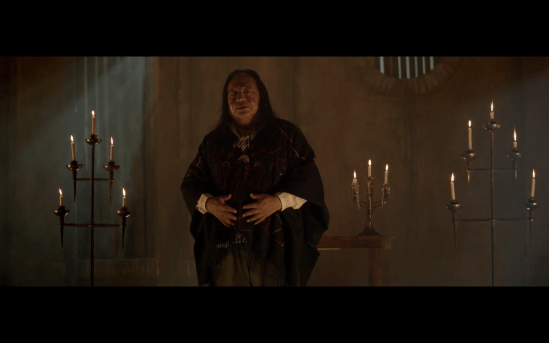
Two brothers in a small, remote community discover a neighboring man infested and rotting with a demon inside the body.  Fearing evil will spread once the birthed demon is free from the bloated and pus-oozing human host, they move the body miles out of town with the help of an impatient and bellicose farmer, but when they lose the body, a dark violent force spreads across their rural outlook, beginning with the horrendous death of the farmer and his pregnant wife.  Escaping to the city, the two brothers hightail out of town, picking up family along the way, only to unintentionally spread evil from contamination by the rotting body.  Local folklore has a set of established rules, seven rules in fact, when face-to-face with a demon and they enlist a reclusive woman, a proper cleaner of the rotten, to help them against the clinging evil determined to never let their family go unscathed. 

The 2023 released, heavy demonic and folkloric horror from Argentina, entitled “When Evil Lurks,” tells the whole story of a family’s past regrets, the road-splitting life choices they make, and the consequences that follow using graphic, unabashed violence and a campiness that’s corrosive to the soul.  Demián Rugna writes-and-directs “When Evil Lurks,” aka “Cuando acecha la maldad,” after his breakout hit “Terrified” from 2017.  The Buenos Aires filmmaker continues to push a singular amalgamate of wide-range tradition and horror to the extent the world has never seen, and he continues to shoot on location from his own country, mostly in or around his home municipality.  Fernando Díaz of Machaco Films alongside Roxana Ramos under her founded production company Aramos Cine with the support of the national cinema institute, the Instituto Nacional de Cine y Artes Audiovisuales or the INCAA, and the streaming horror service and productions, Shudder.

“When Evil Lurks” primarily follows Pedro and Jimi, two brothers living on the outs of their own lives stagnantly inside their rural family home.  Ezequiel Rodríguez (“Legions”) sports a grizzly beard as the lead, older brother Pedro who frantically and desperately needs to get his family away from the spreading evil while returning to collaborate with Rugna “Terrified” actor Demián Salomón tracks as a more youthful footloose, Jimi, not tied down by a family or even a girlfriend but rather is dialogued as free lover amongst women.  Every character they encounter exposes them to the evils that lie ahead, or generally around the vicinity, as the this rotten, as they label the formless rotten presence that is solely an inhabitant of people and animals alike, can jump to another host if the rules are not followed, with the most common rule being broken is using gun powder to kill the possessed rotten.  Up for to be demonic fodder is Pedro’s estranged family who have alienated him because of his ambiguities’ surrounding possible unforgivable crimes and family abandonment.  The latter speaks more specifically to his severely autistic son Jair (“Emilio Vodanovich, “Fever Dream”) Pedro once hated himself for spawning, per his ex-wife and restraining order enacting Sabrina (Virginia Garófalo, “La Vagancia”), but his Pedro’s pre-narrative occurred change of heart sends him frantically into the fire to save his children Jair and younger brother Santino (Marcelo Michinaux, “Fever Dream”).  Also demonically targeted is Jimi’s once city affair now turned socially isolated former cowwoman-turned-rotten cleaner Mirta (“Silvina Sabater, “The Wrath of God”).  Mirta pivotally provides audiences insight by solidifying what other characters only know by hearsay or try to understand intuitively about the rottens, or the possessed, and how it spreads and what rules to follow.  Without Mirta, a lot of the supernatural circumstances involving children, the insidiousness, and the mindset of evil.  Other cast members interlocked with the gruesome violence and gut-wrenched storytelling is Luis Ziembrowski (“The Rotten Link”), Paul Rubinstesztein (“Portraits of the Apocalypse”), Isabel Quinteros (“High Heels”), Lucrecia Nirón Talazac, Ricardo Velázquez, Desirée Salgueiro (“Luciferina”), Federico Liss (“Portraits of the Apocalypse”), and Berta Muñiz (“Plaga Zombie”) as the voice of the bloated rotten Uriel.

“When Evil Lurks” accompanies with it a strong theme of children replacing their parents or adults in a metaphorical, supernatural demon enriched context.  Children are drawn to the demon as the demon is drawn to children, a verbatim more-or-less statement said by Mirta about the rotten, or demon, that shows children as it’s bewitched devoted servants and protectors, like little underage Renfields, who try and trick adults off the rotten’s hidden location or carry out for more sinister acts.  One of those acts is literally devouring adults which becomes a regular theme throughout seen with Jair and Eduardo, and even in anecdote told by Mirta about a previous witness to a rotten’s case of regurgitation.  In a way, the demon is a child itself being birthed into the world under a swelling and oozing Uriel’s sinew and viscera and indulges in childish acts of fibbing, mischievous tricks, and playful portents that happen right under our noses and can be shocking to the system as we want to believe what our children, our flesh and blood, have to say but there’s always that inkling of untruthfulness in our minds. Rugna couples the manipulation with bold, visceral violence, even some on children, and a grotesque folklore inflamed by poor and naïve choices by those who don’t understand or are unwilling to fully comprehend the extent of consequences that follow because of their hastiness to act, solve, and be rid of a threat.  “When Evil Lurks” clearly points out our innate flawed existence and makes abundantly clear our mortality with our progeny to dominate the world. 

Second Sight Films emerges “When Evil Lurks” onto a 4K UHD Blu-ray.  The BD66 is HVEC encoded with an ultra high-definition, 2160p resolution and presented in the original widescreen aspect ratio 2.39:1.  Second Sight Films produce the high dynamic range with Dolby Vision, approved by director Demián Rugna.  The result is immense image immersion that inarguably has the wherewithal for a fluently stable color timing, a range of depth, and phenomenal detail.  Every aspect of what is on screen is crisp to the bone and Rugna’s violence, under Mariano Suárez’s eclectic cinematographer eye that builds toward suspense, benefits from the grisly faced display.   Audio fidelity through a Spanish DTS-HD 5.1 Master Audio holds and delivers exact reproduction.  Plenty of back and side channel clinks and clunks to establish a presence created coincidingly with the image.  Dialogue is unobstructed, confidently paced, and above the layers whenever appropriate with Pablo Fuu’s score sneaking int folkloric tones and a despairing timbre and tempo there in the mix but subconsciously eats away the soul of the viewer.  Optional English subtitles are available and accurate but in moments of great hasty dialogue, the rhythm of display can be quick.  Special features include a new audio commentary by cinematic academic Gabriel Eljaick-Rodriguez, four new interviews with director Demián Rugna It Was Always There, actor Ezequiel Rodríguez Tragedy is Inevitable, actor Demián Salomón We Made a Movie, and actress Virginia Garófalo Stripped to the Bone, and a video essay by UK film podcaster Mike Muncer Terror and the Unknown in When Evil Lurks.  There are no during or after credit scenes.  The 4K UHD Blu-ray release comes in a black UHD Amaray with a new monochromatic art rendition of young Vicky holding the leach of the French Mastiff, same as the pre-release promo still for the film.  There are no internal supplements with the region free release that has a runtime of 100 minutes and is UK certified 15 for Strong Horror, Bloody Violence, Gore, and Language.

Last Rites: There’s no stopping death. Our children will replace us no matter how hard we try. A seemingly evil accursed death will come for us all and the choices that are made will be the design to our destruction. Director Demián Rugna sees the path and knows “When Evil Lurks” it has us completely encircled with no escape, no hope, and no compassion. How soon we choose to parish depends on how rash and unwise our decisions are in the grand scheme of life.

“When Evil Lurks” 4K UHD Blu-ray for Purchase!

We Are All Just Playing Characters in an EVIL Movie! “Virtual Reality” reviewed! (Artsploitation Films – Kino Lorber / Blu-ray)

Believe Everything You See.  “Virtual Reality” on Blu-ray at Amazon.com

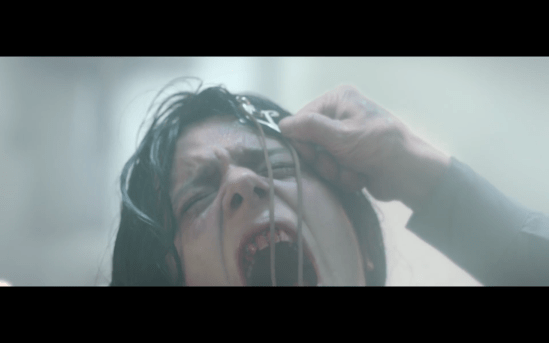
A horror movie about a supernatural Celtic killer has just wrapped production and goes into post.  The cast and crew what to succeed at all costs, not only in the movie but also in their stagnant careers.  However, the director, Matias, craves fame and legacy to the point of committing his soul to whatever it takes to cement his film in acclaimed success.  Matias and the arcane producer form a pact with a diabolical computer program and artificial intelligence that’ll bind their movie to esteemed infamy as well as bind their cast and crew to their characters.  When Matias invites select cast and crew to a private screening at his home, they realize the movie has scenes of their characters that weren’t shot during principal photography and that whatever happens to their characters in the movie, being chased by the Celtic killer, will happen to them in real life.  The only way to survive the movie is to last the full 90-minute runtime.

Hailing from Argentina, the South American country that brought us “Terrified” and the “Plaga Zombie” films, comes another tale of terror with the metaverse horror “Realidad Virtual,” aka “Virtual Reality.”  The 2006 “Director’s Cut” and 2009 “Breaking Nikki” shot caller Findling continues his traipse through psychotronic land with a story that couldn’t be more relevant today than if artificial intelligence synthesized the narrative itself out of binary ones and zeros.  The script comes from Findling and cowriter Lourdes Prado Méndez, an Argentinian romance novelist.  Having virtually no romance in “Virtual Reality” whatsoever, the 2021 film stretches Méndez’s range into crafting characters with a foot in two planes of existence while under immense fear and pressure to survive a supernatural slashening.  “Virtual Reality” is produced by Gabriel Lahaye under Lahaye Media, who has supported and collaborated on a number of Findling’s previous films, such as “Breaking Nikki” and “Impossible Crimes,” and is also a production of Wit Producciones, Cine Argentino, APIMA, FilmSharks, and INCAA of Argentina.

The story circles around a selectively small and independent film cast and crew finishing up a concluding scene of another to-be-forgotten horror movie by director, Matias (Guillermo Berthold), who has had multiple failed films before now.  Yet, the production team remains positive, hopefully the film with jumpstart careers as desperately expressed through the first act, especially with the film’s final girl star Guadalupe (Vanesa González, “Hypersomnia”), or Guad as she’s called by her friends, and her director’s assistant brother Pablo (Santiago Magariños).  Berthold plays the sneaky-sadistic director about as a well as most with a fervent penchant to do anything for his creative filmic art even if that means colluding with a shady, mysterious producer in César Bordón (“She Wolf”) whose performance’s obscured or lack of purpose is due in part to the character’s flimsy connection to the diabolical computer program.  Bordón can’t help but just be an inhuman human, violent by necessity instead of being violent with a purpose.  The producer seeks success for every single one of his films with a subsequent plotted course for the next idea – whether be a sequel or a brand new story – yet his connection to the network of evil of unexplained runes, sporadic pixilation, and artificial intelligent adaptations that can re-edit recordings into a new and inexplicable account of the story has been sorely severed in regard to understanding his background and his motivation of mortal sacrifice for movie fame.  Other connects that were left on the cutting room for, so to say, were between the siblings Guada and Pablo and their dying mother in what I suspect was an attempt to shove the sister and brother some sympathy, clearing the way for the two to be the unambiguously heroic duo, but the scene with their mother on her deathbed offered little-to-no compassion, producing a gelatinous lasting effect in what was a more visual one-off of two children spending the time they have left with their mother versus an incentive or arc scene that would hopefully rally up character expectations to look after each other.  “Virtual Reality” rounds out the cast with Frederico Bal (“Impossible Crimes”), Francisco González Gil (“El último zombi”), Sofia Del Tuffo (“Luciferina”), and Christian Sancho in a Johnny Depp inspired dressed part of a self-centered actor with a suspected pill addiction. 

As far as plot designs go, “Virtual Reality” has an interesting concept that involves filming two different harrowing situations and joining them into one parallel plight with the actors reacting more to the events happening on the television screen, which in itself becomes living, breathing character of sinisterism, rather than what’s happening outside the box in the present.  Both realities are virtually live and in play for their very being and whatever happens in one, affects the other.  “Virtual Reality’s” state of duality, not only in character, but also in linear lines of an alternate universe with lifeline connections, is smart, fresh, and terrorizing to know that your life depends on an A.I. created character coursing through a maze for their very lives.  This mirror-meta-effect continues to evolve as the story plays out that leave survivors questioning reality and questioning their individuality of some higher force that has used them like some free-thinking avatar for filmdom fame.  This is where “Virtual Reality” starts to become complicatedly crisscrossing as instances of a distorted reality spiral down a rabbit hole of what we thought was true.  Findling is nonapologetic for his layered universes that spins and wraps a narrative around another in what is a show of forced fantasy subsisting in that gray area of reality.  The Celtic slasher storyline is just a sublevel to the story’s higher level view that defines greed and worth amongst people longings for more and also models itself to reflect that thin line some people cross between reality and fantasy, as foreshadowed early on into the film during the shooting of the final girl scene when method actor Julian gets into the headspace of his Celtic killer character and really starts to strangle Guada in a climactic moment.  By the finale, you’re comprehensible pencil might have wandered off the connective dot trail in trying to see the bigger picture of Hindley’s meta-movie but “Virtual Reality” is innovative tech horror that just requires a smidgen of tweaking to be impeccable.

2020.  That was the last time I reviewed an Artsploitation Films title.  The long 3-year hiatus was due in part of King Lorber purchasing the boutique Philadelphia label that specialized in bringing independent global horror to the U.S.  Artsploitation Films and Kino Lorber continue that pursuit with Hernán Findling’s “Virtual Reality” from Argentinian now on a Stateside Blu-ray disc courtesy of the joint label.  The AVC encoded, 1080p High-Definition, BD25 is presented in a widescreen 1.85:1 aspect ratio.  Cinematically, the format storage is able to capture the true quality of the image with hardly any compression artefacts.  There’s not a ton of visual augmenting but what’s presented is a draining of color to a near black-and-white image with pigmented primary color lighting to give the scenes a dash of color that’s in contrast to the moderate-to-heavy in-movie, trope-heavy lack of lighting to create deeper shadows for that gloomy horror movie effect of interior trapped victims running for their lives in the dark.  Two Spanish language audio options are available on the release, a DTS-HD 5.1 Master Audio surround sound and a DTS-HD Master Audio 2.0. The 5.1 track has good balance between the ambient, soundtrack, and dialogue tracks albeit a little heavy on the score to clutter, at times, a clear exchange, especially when everyone’s yelling at the television set.  Other than that, no technical issues throughout the multi-channel output. English subtitles run at startup but can be turned off.  The unrated, region A encoded release has a runtime of 84 minutes but doesn’t come with a menu for special features; however, there is the film’s trailer and, if you stay tuned after the credits, there’s a bonus scene where you, the viewer, becomes the star of your own movie.  Artsploitation Films is back, baby!  Courtesy of Kino Lorber, “Virtual Reality” is barely tapped meta-horror, that has become all the craze nowadays, and Hernán Findling unboxes that fine line between real and unreal to only merge them together to be one and the same in a twisted interpretation of when art imitates life. 

Believe Everything You See.  “Virtual Reality” on Blu-ray at Amazon.com

Evil Takes Form in the “Terror 5” review!


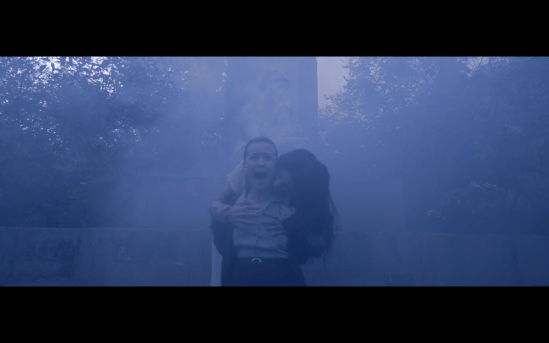
In the wake of a tragedy that resulted in the loss of life, a small Argentinian funeral procession progresses in tandem with the court hearings of a supposedly corrupt politician, the governmental figurehead indirectly responsible for the deaths of innocents. When the verdict of not guilty surfaces over the news media waves, the grief-stricken family and friends, praying at a cemetery memorial, shrill in anguish their displeasure that becomes a calling for the undead to rise up and exact revenge toward the capital. In the midst of the resurrecting chaos, others simultaneously face terror in other forms such as exacting sadistic punishments in a backwards universe of role reversals, the elaborately ill-fated plan of swapping girlfriends on the streets of the city, a night of sordid carnalities at a hotel becomes a night of horrendous violence, and a group of candid friends indulge in a snuff film comfortably and safe inside an apartment, but an evil is slowly boiling to ahead right before their very unsuspecting eyes.

“Terror 5,” a title that one would assume on first thought that five horror icons team together for utter slaughter of hapless cheerleaders or, perhaps, clash in one epic villainous mêlée of monumental proportions, but the film is actually an Argentinian anthology of urges and terror and for the record, if “Terror 5” was a collection of the top five horror icons, this reviewer’s enlistment would include Michael Myers, Freddy Krueger, Pinhead, Predator, and Charles Lee Ray aka Chucky. Jason Voorhees is a bit of a mama’s boy, if you ask me! Let’s get back on the topic of the brothers Sebastian and Federico Rotstein’s helming of an interweaving, anthological horror film from 2016. The Buenos Aires born siblings collaborate with the “The Vampire Spider” writer, Nicholas Gueilburt, to construct five tales that plant the seed of danger from the sordid impulses that motivate impure, and sometimes supernatural, malevolencies. The five tales digs into the depths of quivering human interaction and the immorality of their choices that inevitably leads them toward their own gruesome destruction.

The complete South American cast will be more than likely unknown faces to audiences of the United States, unless broadening your film library is a must-do compulsion. In which case, Gaston Cocchiarate is a familiar face who had a supporting role in Gonzalo Calzada’s devilishly feministic empowering thriller, “Luciferina.” Cocchiarate’s character goes from being a naïve college kid in “Luciferina” to a bullied simpleton that gets pushed too far by his peers in “Terror 5.” Nicknamed Cherry for his plump figure and, more likely, his untapped virginity, Cocchiarate’s character seems like a nice enough guy, but powerful when provoked and Cocchiarate embraces the oppression punishment-to-maniacal psychosis well. Another fascinating actor to look for is Walter Cornas as the KISS-cladded Juan Carlos on a night of costumes, drugs, and booze during a small get-together. The dirt-bike riding jokester has a hard on for it all: booze, women, Cherry, and even snuff porn. The character is brutally charming like that one asshole guy who always manages to get with the girls no matter how much of a douchebag they are and the character is very relatable to us all because we all know someone like Juan Carlos. Under the black and white makeup and reckless cruelty is Walter Cornas whose versatile demo reel on IMDB.com and performance in “Terror 5” gives a great insight into his vibrant character performances that make him so enjoyable to behold. Cocchiarate and Cornas stand out with the better and most chilling performances amongst the remaining cast that includes Augusto Alvarez, Juan Barberini, Nai Awada, Magdalena Capobianco, Cecilia Cartasegna, Rafael Ferror, Lu Grasso, Flavia Marco, Jorge Prado, and Marcos Woinsky,.

As far as anthologies are concerned, “Terror 5” favors a string of scary stories to be strung together being each a cataclysm spun from the negativity produced by the outer story that includes blazingly blue-eyed revenge zombies and the result is, on the surface, quite convoluted. What doesn’t help “Terror 5’s” case either is that the Rosenstein brothers decided to interwoven all but one of the stories together, creating a multi-narrative mesh. Instead of individual chapters or title card introductions, the stories have a lattice blueprint and the audiences are forced to go back and forth between the dissimilar story lines that, on initial viewing, would be assumed that one story is a fraction to the other. The stories also didn’t have that killer kick in the pants that makes you go , “WTF!” Each tale ends rather abruptly, leaving morsels of the carnage to be further imagined rather than be digested in full and I’m sure, though couldn’t locate any background about it, that these tales are based in part of an Argentinian, or even in a broader South American sense, contemporary urban legends that are unfortunately not explored in detail. If approached positively, the human thirst for flesh, morbid curiosity, and unflinching corruption is well laced throughout and that’s the real terror behind the surface level macabre.

Artsploitatoin Films and Reel Suspects introduces Sebastian and Federico Rotstein’s “Terror 5” onto DVD home video presented in an anamorphic widescreen, 2.39:1 aspect ratio. Director of photography Marcelo Lavintman works in the shadows with a very cloaked and dark alleyway approach. Some minor digital jumping in the blacks that’s underwhelming at best and in more lit scenes, clarity reigns with promising detail and natural coloring, despite not being variably hue heavy. The Spanish language 5.1 Dolby Digital surround sound has prominent dialogue and a balanced, foreboding score by Pablo Borghi, but the tracks lack a range and a depth magnitude and, essentially, all the sound is right in front of you without the bulk of the surround sound too enhance the effect. English subtitles are available and though generally translated well, there were some slight typos. The only bonus material included is the trailer. As far as Argentinian horror anthologies go, “Terror 5” leads the pack with directors, Sebastian and Federico Rotstein, pulling from familiar filmic influences and gutter cravings with turnaround consequences and mortal coil tussles. Schematically, “Terror 5” has profound leap frogging narratives that challenge the conventional way we view anthologies or overall films, creating a bit of havoc on the tale or tales at hand.

Argentinian horror anthology available to purchase at Amazon.com

The Devil’s Greatest Trick is His Evil Being a Part of You. “Luciferina” review!


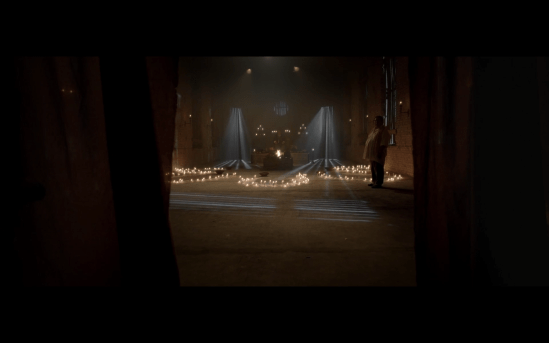
Natalie’s dedication to her religious vocation has led her to become a nun. Her celibacy is a symptom of disgust with her family’s household, a home the young virgin could not bear to live in another second or much rather return to that stems from an uncomfortable inkling of unnatural circumstance, but when she is informed her parents were in a tragic accident involving the death of her mother and a father bedridden by shock, Natalie reluctantly returns home. She’s greeted by Angela, her university studying older sister, and her delinquently dangerous boyfriend, Mauro, and alongside a few of Angela’s classmate, the decision to track down a shaman on an secluded island on the outskirts of town has convinced the group to seek alternative and holistic treatments, such as a brew made from the mystical Ayahuasca plant, to battle their own self-complications. What they discover is that some inner demons should be left untapped and undisturbed or else their souls will pay the consequence.

“Luciferina” is a black rites narrative saturated with psychosexual tendencies and religious divergences from writer-director Gonzalo Calzada whose horror mystery footprint, the Argentinian filmmaker’s common foundation for his prior work in “Resurrection” and “The Clairvoyant’s Prayer,” maintains a strong foothold for his latest venture from 2018 with a story of solid foreboding and overshadowing complication that’s naturally opaque, guiding viewers seemingly toward one direction and then obliterating their conjectures in an in a blink of an eye about how characters or events might play out. Layered with themes and heavy with motifs, Calzada summons the internal demon, figuratively and literally, from within an indie picture budget that’s complete with accidental demonic conjuring, eye-devouring effects, and a climax involving temple fornication of various Kama Sutra positions.

Young, beautiful, and, yet, withdrawn and plain, Natalia has embedded herself into nun-hood, a means to escape the unexplainable discomfort inside her own home and even in herself as she’s haunted by visions of a disheveled woman with crooked arms popping unnaturally out of a white nightgown, but not all of Natalia’s visions are bleak as she’s able to, at times, define a person’s gleaming aura during a momentary spell. Sofia Del Tuffo stars as the troubled vocational woman, a role that demands much from the young actress who can easily transition from a screaming and scared postulate to taking charge of her destiny by gripping Satan’s horns. Tuffo opposites Pedro Merlo as Abel who is, well, more or less a potential love interest. Abel has fire inside him sparked by his desire for Natalia, but goes full inferno after downing the Ayahuasca juice. The light and dark of Abel has Merlo flipping the script continuously and the actor keeps up with relative ease. The opinionated downside to roles Natalia and Abel might be lost in translation, but there’s a sense of disconnect between their multiple purposes: shaman visit, the unspoken connection for each other, and their intertwined destinies. These aspects go fairly unexplored or are either, in the script, diluted in the details. The supporting cast also don’t add volume to the story and though not all of the cast are like this, a good chunk are rather auxiliary for the moment of pinnacle prominence and their sub-stories are quickly squished – that’s the Gonzalo Clazada affect. The remaining cast includes Marta Lubos (“Darkness by Days”), Melena Sanchez, Francisco Donovan, Stefania Kossl, Gaston Cocchiarale (“Terror 5”), and Desiree Gloria Salgueiro.

“Luciferina’s” themes bubble quite easily to the surface, the more obvious found in the religious field, but an interesting theme is a woman’s protective, if not problematic, stance toward copulation and the guarded uterus and their right to chose. Natalia has no experience with sex and she’s constantly under the pressure of having sex, even inside the chaste nunnery. Natalia nonchalantly pushes away one of the boys in the nun’s drug rehab program with not much oomph, she then comes under siege by the forcibly accosting Mauro and his verbal rape fantasies toward his girlfriend’s younger sister, and then Abel’s internal struggle with his Faustian under guise who enthusiastically confesses his hard on to score with Natalia to bring forth more evil spawn. A common motif from the baby making is the uterus that pops up in Natalia’s dreams and her late mother’s frantic paintings that circle around the pressures of motherhood and as Natalia procrastinates under the semblance of saving her own life to further prolong her inevitable destiny, she comes to the realization running will prove for naught and becomes empowered. One thing weird in relation is not the uterus in itself, but rather the computer generated baby in the womb; the impression is okay in construction as the baby has some realism in the detail, but the adverse effect is the use of the effect that seems pointless and ostentatious.

Artsploitation Films and Reel Suspects presents “Luciferina” onto Blu-ray home video. The anamorphic widescreen, 2.35:1 aspect ration, presentation is quite sharp with textures and details in a lossless image. Calzada uses much of the natural coloring in daytime sequences and the night scenes are moderately bluish and director of photography, Claudio Beiza, has immense range and depth that provide astonishing interior and exterior backdrops that can be subtly pleasing. The Spanish language Dolby Digital 5.1 surround sound substantially keeps with the tone and pacing of the story. Dialogue is balanced and verbose in the forefront. The release also comes with a Spanish language 2.0 stereo track. Both audio tracks come with English subtitles that saw minor issues with translation errors and timing. The only bonus feature available is the film’s theatrical trailer. “Luciferina’s” contemporary tale of possession and sexual innuendo is rabid. Director Gonzalo Calzada’s ambiguity of mystery horror is grossly engaging while “Luciferina” can also be glossy with splayed monstrous savagery and graphic sexual content, two genre commodities that churn easy entertainment.