A Father Goes Looking for His Missing Daughter but All He Finds is EVIL! “The World of Kanako” reviewed! (Drafthouse Films and MVD Visual / Blu-ray)

Purchase “The World of Kanako” From Drafthouse Films and MVD Visual

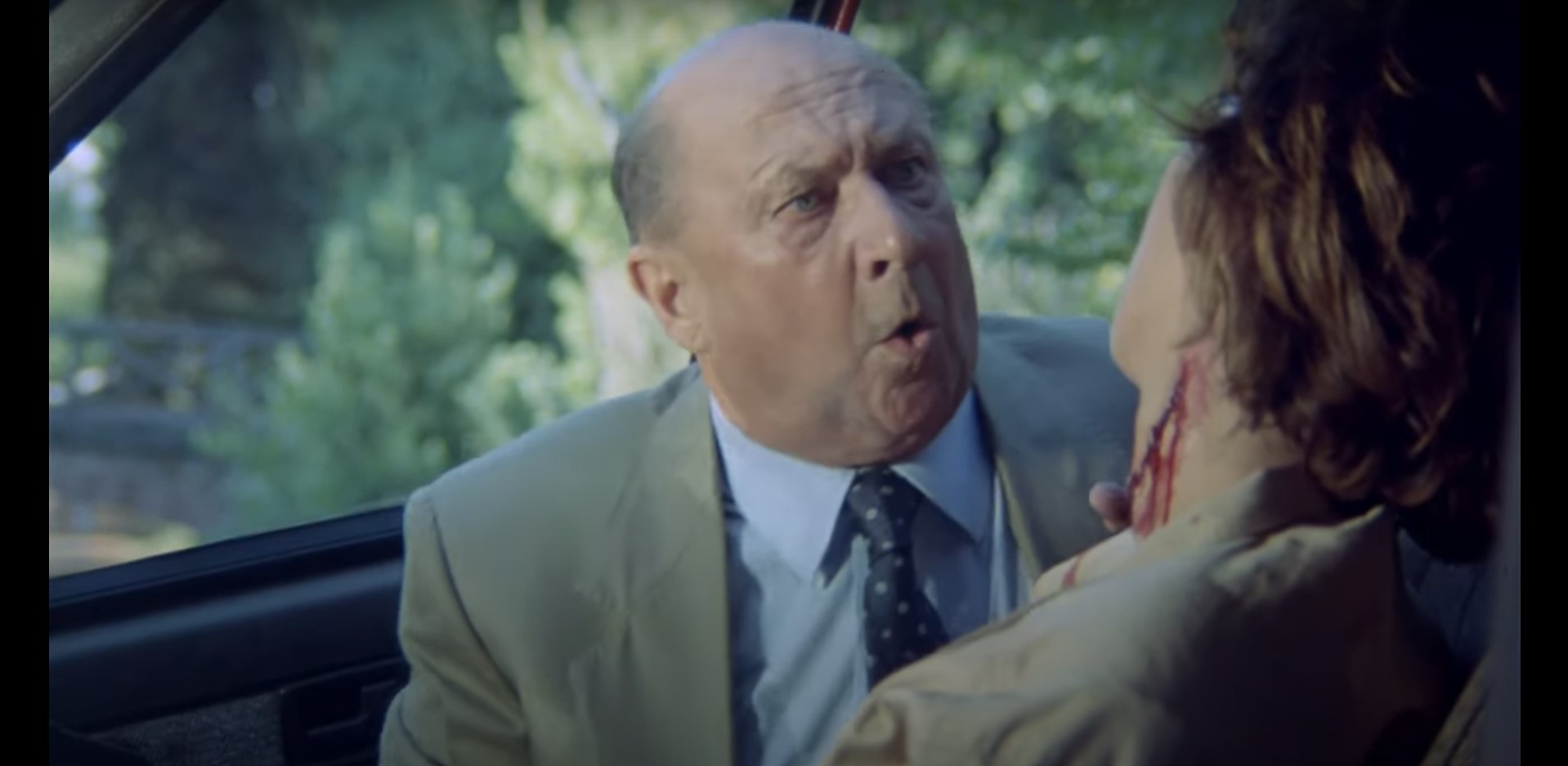
A washed-up former lieutenant detective now working as a lowly security guard becomes the first person to stumble into the aftermath of a gruesome, convenient store triple homicide.  After being questioned by police who suspects him of being involved because of his manic-depressive disorder, stemmed by his historical violent behavior and ugly divorce that virtually left him with nothing but his medication, the indecorous alcoholic floating through life receives a frantic call from his ex-wife about their teenage daughter, who he hasn’t seen in years and has suddenly gone missing for nearly a week.  Eager to have his family back in his life, he takes on the responsibility of investigating his daughter’s disappearance but the deeper he digs into her whereabout the more of the ugly truth surfaces between his daughter and the criminal underworld where deception, prostitution, and murder tells a different story than the one in his muddled head. 

In 2004, novelist Akio Fukamachi wrote “Hateshinaki Kawaki,” the rummaging into a lurid and pulpy underbelly of crime network through the eyes of one charismatic high school girl and her former detective father pursuing answers to her disappearance.  Fast-forward a decade later to 2014, director Tetsuya Nakashima (“Kamikaze Girls,” “Confessions”) adapts the novel’s darkness into a visual descent into lunacy under the title “The World of Kanako” from a script by Nakashima cowritten with collaboration writers Miako Tadano and Nobuhiro Monma of “3 Year Pregnant.”  The adaptation retains fidelity to the original Fukamachi story filled to the brim with violence, yakuza, sordid themes, and coldness that translates effortlessly and is well received in the likes of Japanese cinema that has decades of trenchant crime films under its wing.  “The World of Kanako” is no different yet still stands alone as an engaging entry produced by Satomi Odake (“Himizu”) and Yutaka Suzuki (“Confessions”) under the production of Gaga Communications.

The film interweaves the past and present with a bi-story to help unearth cruel intentions from what starts off as a seemingly routine plotted mystery with a degenerate, deadbeat father looking to make recompences using his investigative skills to find his daughter to quickly spiraling recklessly into an abyss of bombshell revelations.  Yet, Akikazu Fujishima continues his crusade out of his own self-pity to a more deserving, rewarding, and if not, diverting objective that reveals just about as much of his cataleptic state of being than the exhuming of his daughter’s disappearance from out of the criminal underground.  Veteran, international actor whose had roles in such films as “Memoirs of a Geisha,” “Pulse,” and “Babel,” Koji Yakusho gives a conscious performance of a flawed man with flawed tactical awareness charging headfirst and sternly stubborn into a complex web where the giant carnivorous spider of seediness hides behind the veil.  At the opposite end of the casting table is then newcomer Nana Komatsu (“Destruction Babies”) making her filmic debut in a past timeline as the titular Kanako, paralleling her father’s story by accompanying fellow high school student and constantly bullied narrator of the historical account in Hiroya Shimizu (“The Outsider”).  Kanako’s story unfolds a yakuza narrative that’s nasty and perverse while shepherding in Kanako’s role that teeters upon the audience’s perception throughout.  What Akikazu fleshes out and discovers is the reason for all the mayhem that has, more-or-less, started with him, retorting whatever sliver of moral intentions he had begun with with the fact we can’t change who we are and the children we raise in a Darwin nature or nurture, or perhaps in this case both, environment.  Akikazu and Kanako meet a variety of unsavory characters along the way that ends shockingly and cynically, completely obliterating the happy family and happy ending conventionalities.  Satoshi Tsumabuki (“Tomie:  Re-Birth”), Asuka Kurosawa, Ai Hashimoto (“Another”), Fumi Nikaidô (“Lesson of the Evil”), Aoi Morikawa (“The Killing Hour”), Miki Nakatani (“Ringu”), Mahiro Takasugi (“12 Suicidal Teens”), Munetaka Aoki (“Godzilla:  Minus One”) and Jun Kunimura (“Ichi the Killer”) portray some of those uncharacteristic archetypes.

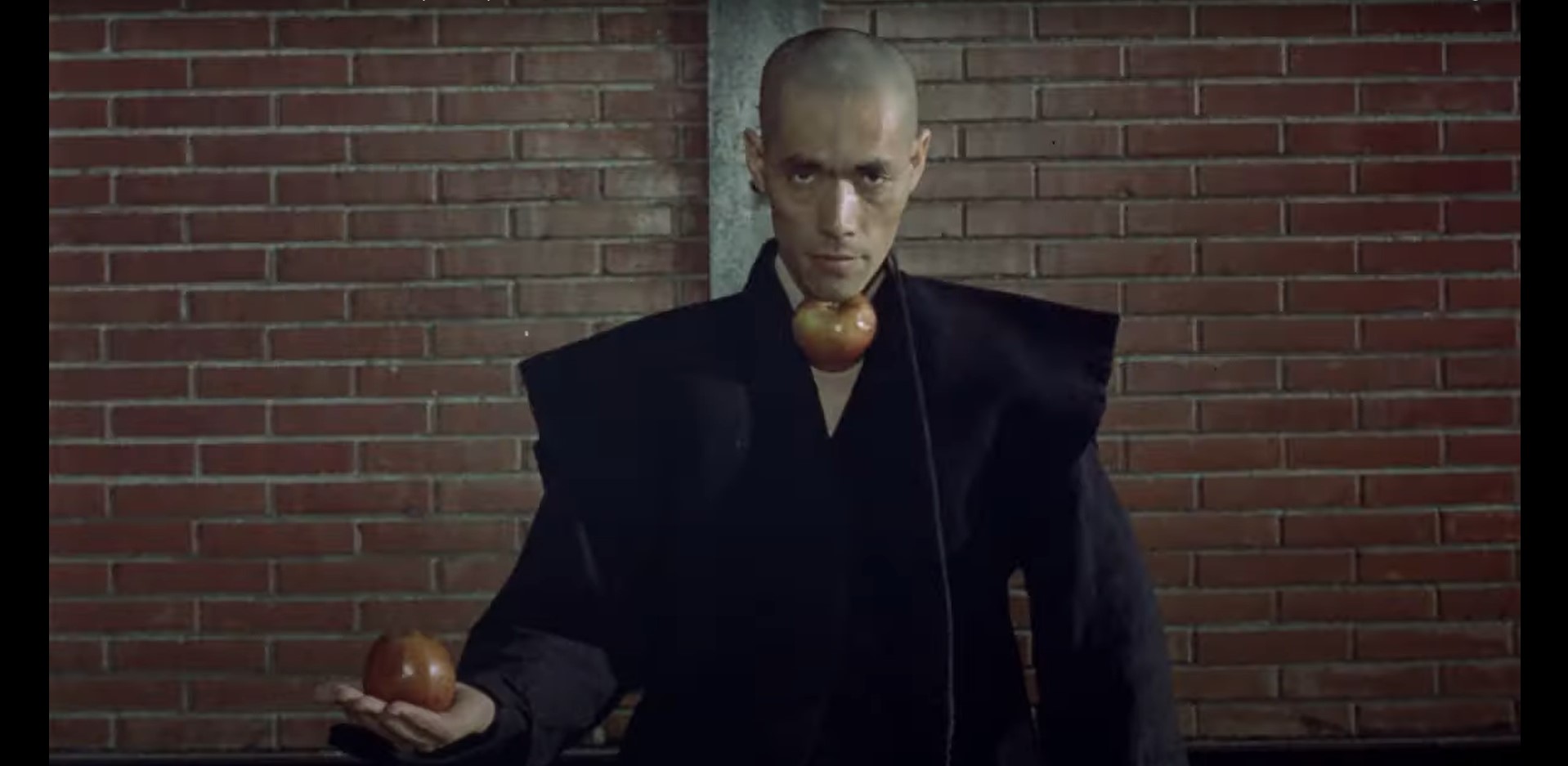
Stylish, pulpy, and darkly themed, “The World of Kanako” has a modern grindhouse pastiche of the hardboiled Japanese noir.  The story is a wrecking ball of all good ideals and hopes, a genuine cynical representation of an unpleasant situation.  An 80/20 mixture of live action and animation splice ins, Kanako’s world is certainly represented as a chaotic coup d’état over pedestrian storytelling and dissects the human condition to test family ties, reveal lost bonds, and really scrutinize hereditary genetics.  The film’s opening is a flurry of converging images, past and present, live and animation, and narration, soundtrack, and bits of dialogue that open with the gruesome convenient store murders of three people, seemingly strangers, setting the stage and tone for the rest of the Tetsuya Nakashima’s film that’s bleak to the dying core.  The rapid editing style doesn’t incur fluff or filler moments in a slimmed down for exactly what we’re supposed to experience.   While Akikazu Fujishima may not be the best example of a hero, a loafer with anger issues, physical abuse tendencies, glutton for food, alcohol, and manic-depressive pills, a rapist, and perhaps even engaging in incestual pedophile, the protagonist majority pushes forward with relentless determination and beyond the scope of being a good father to find his daughter, but for what purpose is about as ambiguous as the imbalanced human mind and Akikazu mind sizzles with insanity that affects his legacy to the point where he feels responsible for taking care of his own.  On the flipside of the protagonist narrative, Kanako begins as a savior of bullies, working to remove the threat from those too weak to defend themselves only for them to be exploited by that defenseless and vulnerability when the yakuza and more extremists take from their emotions and bodies.  

Tetsua Nakashima speaks an entirely new language in “The World of Kanako,” derived from a mix of the compellingly twisted story of “Old Boy” and the appalling violence of filmmaker Takashi Miike.  Drafthouse Films and MVD Visual re-release “The World of Kanako” on a high-definition Blu-ray.  The 2024 release comes with AVC codec on a dual-layer BD50 and presented in a widescreen 1.78:1 aspect ratio.  The various animation styles spliced into the live action coupled with some choice primary color grading in the opening gives “The World of Kanako” a very nostalgic touch of passé pink films of the 1980s and slight arthouse surrealism feel to the likes of Nobuhiko Obayashi (“House”).  The mixture doesn’t meld into one another with detrimental effect and leaves a stark impression between the formatted visuals that creates definitive delineation.  Details also don’t bleed in the sharp textures of character faces and clothing with objects being distinct and well defined.  Darker scenes are enshrouded in intentional shadow amongst grittier interiors to better understand the gritty context, losing some details but no issues with compression, such as blocking or banding. Two audio options are available, and both are in Japanese with a lossless DTS-HD Master Audio 5.1 and a DTS-HD Master Audio 2.0. Presented with fidelity, “The World of Kanako” produces no issues with either audio track with a clear and absolute. The ambience denotes a nicely spaced standard fare of common routine movements and actions around the environment setting. Outside of that, punches and kicks knock with an authenticity and same goes with gunshots and the hit-and-runs during more tense and thrilling heights. Yes, there was a lot of hit-and-runs with Akikazu behind the wheel for most of them. English subtitles synch well and appear to be error free. Bonus features a making of featurette in Japanese with English subtitles, an equally as long interview with principal leading actress Nana Kamatsu, an interview with Akio Fukamachi, and the theatrical trailer and teaser for the film. Physical features pale in comparison to Drafthouse’s first release that came with a 11″x17″ folded mini-poster and color booklet with essays and acknowledgements. This re-release favors the slimmer model with no tangible goodies inside. The standard Blu-ray Amaray has a stark front cover image of Kanako starring forward with a blood smear behind her; the disc is also pressed with this image. The Not Rated presentation has a runtime of 110 minutes and has region A playback.

Last Rites: Welcome to “The World of Kanako,” a savage acceptance of responsibility down the rabbit hole of malfeasance. Family ties be damned as one father takes it upon himself to ensure the deed is done right by his own destructive hands.

Enter “The World of Kanako” On Blu-ray Now Available at Amazon!

Nothing Will Stop Detective Belli from Bringing Down EVIL Heroin Traffickers!

Perhaps the Best Itali-Crime Film Ever!

A hot-headed and determined police commissioner will not stop his pursuit until all the drug trafficking in Genoa is annihilated but the insidiousness of the crime’s reach within society is proving to be difficult to root out.  With the help of one of Genoa’s long-in-the-tooth drug kingpins, living out the last of days before terminal illness overcomes him, the commissioner is able to put a dent into a rival organization’s trafficking schemes.  When a case-building chief commissioner, aiming to get the very head of the organization’s snake, is brutally gunned down in the middle of the street and his evidence files stolen, more pressure is placed upon the criminal syndicate with more arrests, more drugs seized, and a bigger impact is made by one resolute cop while attempting to build a more damning case file his predecessor had worked on for years but the drug traffickers will not be deterred and mercilessly go after the commissioner’s loved ones.

Enzo G. Castellari’s “High Crime” is quintessential poliziotteschi.  “The Inglorious Bastards” and “Keoma” director’s 1973 Italo-crime feature is about as fast-paced as it’s energetically loose-cannon of a principal protagonist.  The screenplay, under the original Italian title of “La Polizia Incrimina, La Legge Assolve,” is treated by a conglomerate of Italian writers in Tito Carpi (“The Shark Hunter”), Leonard Martin (“Tragic Ceremony”), Gianfranco Clerici (“Off Balance”), and Castellari himself based off a story by producer Maurizio Amati (“The Eroticist”) and shot on and near the story locations of Genoa, Italy and the French city of Marseille.  “High Crime” is actually a sequel to Romolo Guerrieri’s 1969 “Detective Belli” in which that titular character reappears in “High Crime” but more righteous and justice-prone compared to the corrupt background of Belli in antecedent film.  Both movies star the same actor in the main role but have little connective elements.  The feature is a production of Star Films and Capitolina Produzioni Cinematografiche and is coproduced by Edmondo Amati, father of Maurizio. 

The blue-eyed “Django” actor Franco Nero is that actor portraying Commissioner Belli in both films.  In “High Crime,” Nero is an exuberantly moral cop to the point he looks to be almost throwing a temper tantrum when in the face of his superior Chief Commissioner Aldo Scavino, played by American actor James Whitmore of “Them!” and “The Shawshank Redemption.”  The two characters resemble night and day of how they handle crime; Scavino’s reserved nature evokes a cautionary tale to run down crime slowly but surely in building a case that would settle everything all at once whereas Belli’s take is to chase with wild abandonment that’ll risk all that he holds dear as he chips away toward a heavily fortified crime lord.  Nero and Whitmore exact the personas down to the letter, nailing in the thematic message from Scavino that that the chair he sits in is hot, heavy, and full of responsibility, much the way Uncle Ben tells Peter Parker about great power carries great responsibility.  In Belli’s ear, working his way into the mind of a gung-ho lawman, is drug kingpin is Cafiero by Fernando Rey, who two years prior played in a similar story of William Friedkin’s American, lone-wolf cop story “The French Connection.”  Rey adds sophisticated demure to his really bad guy character to appear like an ally in not only the eyes of Belli, who really puts his trust in Cafiero, but also the audiences who will forget he’s an equal in the drug game.  What’s interesting and dynamic about “High Crime” is the woven character arcs and fats that quickly develop and quickly diminish through Belli’s investigation.  In the mix of this unsafe space for any character is Della Boccardo (“Tentacles”), Silvano Tranquilli (“The Bloodstained Butterfly), Duilio Del Prete (“The Nun and the Devil”), Mario Erpichini (“Spasmo”), Ely Galleani (“A Lizard in a Woman’s Skin”), Stefania Castellari (“1990:  The Bronx Warriors”), Bruno Corazzari (“Necorpolis”), and Luigi Diberti (“The Stendhal Syndrome”).

“High Crime” deals in high impact.  Car chases, shoot outs, foot pursuits, murder hits, and more that genetically makeup Castellari’s film with a centralized hero destined for tragedy spurred by his own ambition, texturing the character with an anti-hero wallpaper as he can’t see past his own objective and the direct danger that blind ambition poses.  Kneaded into this notion is Caastellari’s fantastic use of editing and scene transition that provides a seamless continuity as also misleading truths.  Editor Vincenzo Tomassi (“Zombie”) cuts and splices with great continuity care to arrange multiple shoots of one scene, such as the opening car chase between Belli’s squad car pursing a Lebanese drug supplier, to match every angle without losing track or bewildering audiences with implausibility.  The transition scenes also stun with zoom-in and zoom-outs that segue different scenes, a previous moment may bleed into another with deceptive infiltration of the next scene, and Castellari uses sounds too to transition to the next shots.  These on-your-toes transitions commingling with the ever-dynamic, fast-paced crime story with a high mortality rate, high character development, and high emotional roller coaster loop-the-loops whirling around the abundant and impressively rounded characters solidify “High Crime” as the holy grail of highly valued and highly entertaining poliziotteschi!

If you’ve ever wanted more out of Enzo G. Castellari’s “High Crime,” Blue Underground has you covered with a limited edition 3-Disc, UHD HD Blu-ray, Standard Blu-ray, and soundtrack CD set packed with content in the HVEC and AVC encoded double layers of the 2160p 4K UHD BD66 and 1080p Blu-ray BD50.  The brand-new 2024 Dolby Vision HDR 4K master stuns.  Image resolution connected with balanced contrast results in a vibrant, crisp-sharp quality rendered from a stellar original 35mm print, presented in the original aspect ratio of a widescreen 1.85:1.  There’s not an arresting softness to be had as details emerge in the various Genoa and Marseilles ship ports, manufacturing parks, and concrete city landscapes bursting with infrastructural texture.  There’s also plenty of minute detail on skin textures with a touch of technicolor process for a dash of properly installed pigmentation.  This sort of scrutinizing care translates also to the post-ADR English 1.0 DTS-HD audio mix with an uncompressed, lossless fidelity.  Dialogue is post-recorded with the original actor’s voices providing better authenticity in comparison to other voice actors, especially over the gruff American voice of James Whitmore.  Environmental ambience doesn’t miss an action with a complete and broad line of virtual city sounds coupled with in-scene ambient sound, all converted and individualistic defined through the single channel, supported by Oliver Onions brothers Guido and Maurizio De Angelis providing a catchy copper beat whether be car chase or foot pursuit.  There also an Italian dub 1.0 DTS-HD.  English subtitles for the deaf and hard of hearing are optionally available as well as French, Spanish, and English for the Italian audio feature.  Hours of bonus materials lined the encoded BDs, more so on the second disc, the Standard Blu-ray, due to capacity.   Disc 1, the 4K UHD, houses an audio commentary with director Enzo G. Castellari, a second audio commentary with star Franco Nero, a third audio commentary with film history Troy Howarth, Nathaniel Thompson, and Eugenio Ercolani, an alternate ending that fades to black rather than the original freeze frame, and the theatrical trailer.  Disc 2, the standard Blu-ray,, has all of the above plus interviews with Castellari and Nero The Genoa Connection, an separate interview with Castellari From Dus to Asphalt, an interview with stuntman Massimo Vanni Hard Stunts for High Crimes, an interview with camera operator Roberto Girometti Framing Crime, an interview with soundtrack composers Guido and Maurizio De Angelis The Sound of Onions, a Mike Malley directed featurette The Connection Connection featured in EUROCRIME!, and a poster with still gallery.  The double wide Amaray case also comes with its own special attributes, such as a rigid O-slipcover with compositional illustration of pretty much all the action you’ll see in the film.  The slipcover also contains embossed textile elements for a junior-sized 3D effect.  The set has a reversible front cover with the primary art the same as the slipcover’s while the inside contains an original poster art replica.  The insert side contains a dual-sided cardboard track list and soundtrack info on top of the back and red original motion picture soundtrack CD.  The 4K UHD and Blu-ray on the opposite side are staggered in individual push locks where you have to remove the top disc in order to get the bottom disc and they’re too pressed with the same art from the reversible front cover.  Blue Underground outdid themselves with “High Crime’s” first Blu-ray release, curated to perfection, in the U.S.  The Not Rated Blue Underground set is playable on all regions and has an uncensored, uncut runtime of 103 minutes.

Last Rites: To simply write positively about “High Crime” and Blue Underground’s merit 3-disc set is simply not enough. Fans of William Friedkin’s “The French Connection” and other moviegoing fans can find this Eurocrime thriller to be captivating from start to finish.

Grab this Limited Edition Set of “High Crime” Before Its Gone!

If Highschool Didn’t Already Have Enough EVIL In It! “Homework” reviewed! (Unearthed Films / Blu-ray)

Purchase “Homework” Blu-ray Here!

Highschooler Tommy can’t take it anymore.  His friends all talk about their sexual experiences and he’s still a virgin.  Talking to a therapist to help redirect his sexual energy into something else, Tommy becomes inspired with the idea to form a rock band with best friend Ralph.  The eager students secure three classmates from the student body to round out the band, one not being the obsessed competitive swimmer Sheila whom Tommy has strong feelings.  Each band member’s lives revolve around their own sexual activities from sneaking around from their God-fearing, prudent parents, embellishing fantasy from late night tutoring sessions gestured by a hot, young French teacher, or contracting a venereal disease from a rockstar idol.  As Tommy continues to plead with Sheila to attend just playing session, he becomes sorely frustrated by not only her lack of reciprocated affection but also lack of friendship towards the rest of the group, resulting in him finding his sexual prowess in the arms of a classmate’s mother who also recounts fondly her sexualized youth. 

Not just another teen sex comedy from the 1980s, “Homework” is the provocative, controversial, and obscure teenage comedy-drama from James Beshears, his one-and-only director credit behind his day jobs of being a film sound editor on such a range of films from “True Lies,” to “Day of the Dead,” to “Porky’s Revenge.”  The script is the debut feature from cowriters Maurice Peterson and Don Safran that carves out story subdivisions from Tommy’s friend and denotes Tommy as the as the epicenter of sexual hangups.  The late, legendary producer Max Rosenberg, producer of many B-reels such as “Dr. Terror’s House of Horrors,” “And Now the Screaming Starts!,” and “Perdita Durango,” secured funding for the feature alongside Robert Fenton (“The Incredible Melting Man”) with Beshears and Safran producing under the production and distribution label of Jensen Farley Pictures. 

The top bill was denominated to actress Joan Collins of the television series “Dynasty” fame, but the once voluptuous English brunette, who starred in “Fear of the Night” and “Sharon’s Baby,” sizzles in a more mature role in early 80s production with a screen time of about a third of “Homework’s” runtime.  Much of the story focuses on Tommy, played by the late Michael Morgan (“Midnight Offerings”), who succumbs to Collins’ character’s subtly and sudden sultry desires for her daughter’s school friend when helping her hang a picture.  The building up to this moment isn’t as plain on it’s face as it would seem with audiences subjugated to teenage fantasy and mature women’s reminiscence that doesn’t even hint cougar encounters.  Collins, unfortunately for you sleazoids out there, had a body double for the character’s topless scene and romantic entanglements but the then late 40s actress had plenty of curves and sex appeal to make any man, no matter than carbon-date, sweat with arousal anticipation.  “Homework” spreads the love, literally, as each band member goes through a totality of teenage sexcapades, individualized and customized to their own story’s arc, and there’s not a path of sexual conquest to be had but rather a variety situational scenarios where teens either learn the hard way, face the consequences, or leave their hearts at the door to avoid disappointment because at that age, the youth are the most impressionable and angsty with mixed up emotions.  A young cast of Lanny Horn (“Tarantulas:  The Deadly Cargo”), Erin Donovan (“Mack the Knife”), Renee Harris, Shell Kepler (“The Great American Girl Robbery”), Mark Brown, and John Romano (“Dandy”) act toe-to-toe with Lee Purcell (“Necromancy”), Carrie Snodgress (“The Attic”), Ernestine Jackson (“Aaron Loves Angela”), Bill Knight, Rosemary Alexander (“Madhouse”), Howard Storm, and Wings Hauser (“Vice Squad”) in this eclectic casting. 

What’s most memorable about the little-known production is not the sex-driven antics and mischievousness of high school boys but rather the day-in-a-life of touch choices and toucher consequences interlaced with regular adolescent customs, such as missing the cut for the swim team and beating yourself up for it, smoking dope in the school locker room, have the fantastical hots for the new young teacher, starting a garage band, etc.  “Homework” has comparable, lighter traits to the 1995, Larry Clark coming-of-age film “Kids.”  While not as crass or violent, “Homework” has high-impact themes like sexual transmitted diseases accompanied with visits to the women’s health clinic, a misunderstanding of sexual education, and, even to go as far as, the exploitation of minors to an extent and a spiral of obsession as we see with Shelia is won’t leave the pool in order to shave time off her laps, neglecting friendships, and even romantic relationship with Tommy whom ends up in the arms of her equally emotionally irresolute mother reminiscing a past of first time and exciting sexual encounters.  While the story manages to stay afloat with multiple sub-stories, technically, “Homework” falls below the conventional quality standard of the period with visible boom mics, a deficient picture quality, and lack of artistical knowhow from a new director in James Beshears.  Luckily for viewers of obscurity, lovers of the long-forgotten, and retro-adventurers, there are boutique labels salivating for the chance to revive and resuscitate these titles back into our field of vision. 

That boutique label is for those who are in the know wouldn’t expect “Homework” to be released on.  Unearthed Films brings the James Beshears film to Special Edition Blu-ray, the first time on the format, with a new 2K scan a part of their Unearthed Classics banner, numbered at 15.  The AVC encoded, 1080p high definition, BD25 presents to date the best image quality possible from the original 35mm negative shot on an Arriflex camera.  There’s slightly more grain presented on this transfer that stems from Paul Goldsmiths’ cinematography and with that there’s a loss of detail in darker scenes that become victims of black crush where delineation bleeds into the environment and darker clothing no longer renders outstanding with the proper shades.  Better lit scenes have more distinction coherency, but the color diffusion is limited and the original image retains a lower resolution akin to 720p and seldomly increases an upscaled 1080p in the 1.85:1 widescreen aspect ratio.  What’s notable about this release, and despite the visible equipment gaffs, is the uncompressed LPCM 2.0 mono audio mix that doesn’t reflect any kind of hissing, popping, or damage to the track.  There’s not a ton of range or depth representation with mostly interior shots containing dialogue, which is prominent and clear under the lossless compression.  English subtitles are available.  With the obscure nature of “Homework” comes with it not a lot of special features but what’s included is an archived interview producer Max Rosenberg going into detail of the film’s genesis and controversies, a promotional gallery, and the trailer along with other Unearthed Classic prevues.  Unearthed Classics’s illustrated, cardboard O-slipcover of the prefacing sex scene between boy and woman covers the same image on the standard Amaray’s front cover.  There are no inserts or other physical contents.  The rated R release has a runtime of 89 minutes and is listed as region A for playback; however, I did have my player set to region B during play and so the release is tested for A and B regions.

Last Rites:  Plenty of nudity and surrounding controversy keeps “Homework” relevant in today’s every-stimulating, ever-producing retro-release market but it’s the film’s pertinent application of teenage troubles that tips the scales to seeking this unconventional Unearthed Film’s Blu-ray release.

Get an A on this “Homework” Blu-ray Release!

Poor Quality Dynamic Effects That Have a Horrendously EVIL Bite! “Bad CGI Gator” reviewed! (Full Moon Features / Blu-ray)

“Bad CGI Gator” is an Amazon Choice item! Order it Here!

Six college students end the schoolyear with a long weekend at a lakeside cabin in rural Georgia.  Looking forward to the youthful debauchery of drinking themselves into a stupor and engaging in lots of sexual hanky-panky, they each throw their school issued laptops into an alligator’s lake habitat for an Instagram moment to go viral and also in a moment of jovial release to be finally done with school and kick off Summer.  When the small gator encounters the laptop’s electrical current, the gator grows into a monstrosity and has the unique ability to float through the air.  Now larger than man, the gator is ravenous for his next meal and the college students are an easy, convenient dish.  Trapped inside the cabin, brawn stupidity won’t save them against the mutated reptilian that circles outside, and they have to use every ounce of their brainpower to outsmart the insatiable beast. 

You’ve (probably) heard of “Bad CGI Sharks!”  Now, get ready to sink your horribly rendered jaws into “Bad CGI Gator,” the latest alligator creature feature comedy-horror from Charles Band’s camp of Full Moon Features.  Helmed by resident Full Moon filmmaker, “Deathbed” and “Dark Walker” director Danny Draven, the 2023 film removes practicality and plausibility for the sake of following in the wake of the badly rendered shark film from brothers Jason and Matthew Ellsworth.  “Bad CGI Gator” is also a family affair with Charles Band’s son, Zalman Band, in his first full-length feature writing credit that, like “Bad CGI Sharks, gives into itself and doesn’t take itself seriously with genre tropes, the gore and nudity one-two punch, and, of course, bad computer-generated imagery.  Shot in the location state of Georgia as well as in Charlie Band’s Full Moon estate in Cleveland Heights, Ohio, “Bad CGI Gator” is produced by the father-son duo of Charlie and Zalman with Nakai Nelson (“Evil Bong 420,” “Don’t Let Her In”) picking up the rest of the producing slack. 

If there was ever a time to root for a visually vexing constructed alligator and not the young people trying to save their lives from its floating ferocity, the time would be now.  The cast is compromised of the very worst caricatures of millennial youth with their “bros,” Instagram virality, and overall toxic behavior.  As a whole it’s all purposefully scripted to be painted like pure putrid of personas that sodomize the very essence of heroic protagonists.  Ben VanderMey (“Malicious”) and Cooper Drippe are impeccable at being gym bro chads, even VanderMey’s character is named Chad, and their on screen slay honeys, in Rebecca Stoughton and Sarah Buchanan, are social media influencing prejudgers with thigh-high skirts and low cut blouses.  The obnoxiously coarse foursome becomes grounded by contrasted counterparts in Sam and Hope, played by Michael Bonini (“#ChadGetstheAxe”) and Maddie Lane (“Monster Mash”), and this clues in audiences of the two more level-headed potential gator bait as the likely, predictable heroes who will either survive with their life or end up destroying the floating gator.  While the Chads and Paisleys are an exaggeration of arrogantly crass people, led with the worst of qualities for easy kill digestion, Sam and Hope are also to the extreme in a polar opposite manner.  Sam’s cautious philosophy makes him the butt of many jokes while the neutral Hope, a rival hottie shoulder-to-shoulder with the other ladies, can whip Chad into place with almost a stare being his stepsister.  The common dislike for tasteless jerks force Sam and Hope together with the gator being a keynote in closing the door on the once ajar flirtations.  Lee Feely rounds out the cast as a fisherman badmouthing the gator’s size, but the opening scene doesn’t do much for the rest of story nor does it come back to bite, literally, with the lack of Feely’s return in his short-lived moment. 

A title like “Bad CGI Gator” doesn’t come with any strings attached; there is no subtext, no character development, or convoluted storyline to really tickle and tease the brain in a sophistication of foreplay.  What you get are dumb, unlikeable characters for a deathroll of laughs and gnarly kills.  What you also get is a badly rendered giant floating alligator that on a one to ten on the badly rendered scale, this poor design is a four, resulting in a not too terribly layered and not the worst we’ve seen to date but obviously stands outs as a cut and pasted fake with animated movements.  Also entailed, in complete Full Moon fashion, is the alligator’s transmogrified size and supplied new abilities that allows it to chomp heads clean off, savagely gnaw on half-naked beauties, and swallow hole it’s biggest, most arrogant opponent.  What castrates the story is the limited locations with much of the cat and mouse play at the house and around the only vehicle for escape.  The adjacent lake is virtually untapped for watery carnage, an area of helplessness for prey, aka people, to float in suspension while something more dangerous lurks below the surface or meets them at eye level.  “Bad CGI Gator” is swampy camp at its best and, at the same time, at its worst but never pretends to be anything more.

Not only an ode to the monster movies of yore and a lampoon hit to the gross, schlocky creature features of more modern times, “Bad CGI Gator” emerges onto an AVC encoded, high-definition Blu-ray from Full Moon Features. The 1080p resolution on the single-layered BD25 of Full Moon’s feature number 395 has no digital discord regarding sharpness around the details. Gator POVs remark good pixel counts under and above water, delineating around the aquatic ecosystem including the plants and lake’s mucky floor. Night sequences bathed in a softer, illuminatingly spreading blue see equal amount of definition where the, what is considered to be, moon light hits and transition into the exterior cabin juxtapositions nicely with a warmer, shadowy outlined tone. The release’s audio mixes include a LPCM 5.1 surround sound and a LPCM Stereo 2.0. Early on, dialogue has a conical sound with reverberations that seemingly bounce back almost immediately. Though not totally free of audio fallibility, the dialogue does come across prominent and clean of distortion. Conical echoing dissipates later in the runtime and is replaced with the impenetrable sounds of a growling gator and its stomping around the cabin property that doesn’t seem to occupy the same space, much like the gator, ridiculing this particular creature feature sub-subgenre even more. English subtitles are optionally available. Special features include an audio commentary from director Danny Draven and screenwriter Zalman Band, a Screams from the Basement Podcast interview with the director, A second director interview on the Dead Talk Live Podcast, an isolated Jojo Draven musical score that sounds just as carnivalesque, humorous horror blend as Richard Band would compose, a blooper reel, a cast table read at the Full Moon mansion in Ohio, and the original trailer. The standard Blu-ray comes a fairly telling illustration of a savage-looking gator mouth agape just below a bitten-ripped Spring Break banner. There are no insert or other tangible bonus content alongside a humorously standing upright gator, slight smirking with the catalogue film number. “Bad CGI Gator” Blu-ray comes region free, has a runtime just under an hour at 58 minutes, and is not rated.

Last Rites: Full Moon’s satirical take on lousy alligator anarchy is spot on and though the cast of characters deserve every rendered tooth ripped into their flesh, the glossy gator pales in comparison to practical effects of its predecessors, and the story stinks as much as gator bait, “Bad CGI Gator” doesn’t false advertise this uncanny predator’s X-factors and that’s brownie points in my book.

“Bad CGI Gator” is an Amazon Choice item! Order it Here!