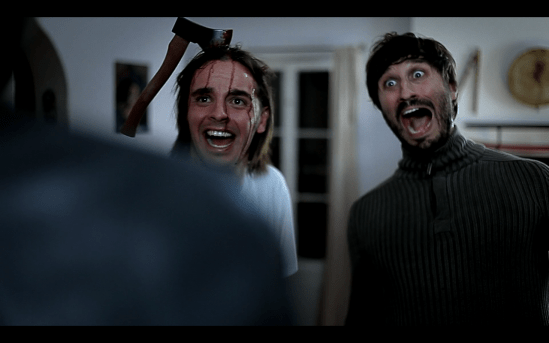
On the gorgeous and lively beaches of San Diego, an atomic level predator lurks underneath the clear, blue water, splitting the ocean surface with a large glowing red dorsal fin. Lifeguards, Gina and Kaplan, track a series of scorched dead fish washed ashore and determine that a catastrophic environmental event is afflicting the shoreline in the form of an atomic shark, a sunken Russian nuclear submarine byproduct roaming unstable through the ocean, ravenously devouring ablaze any boat or any person that it comes in contact with, and unwittingly ready to deploy a one megaton nuclear explosion if provoked with enough ammunition. Bogged down by incompetent supervisors and purposeful governmental misdirection, Gina and Kaplan turn to radical social media journalists, a perverted drone enthusiast, and a salty boat captain to form a ragtag team of shark hunters to save the West Coast from becoming a fallout wasteland for thousands of years.

Just when you thought it was safe to return to the genre, another made-for-TV cheesy killer shark movie breaches to the small screen surface, but this particular man-eater has bite. “Sharktopus” doesn’t have enough tentacle fortitude. Tornado sharks are just a bunch of wind bags minnows in comparison. And “Dinoshark,” well, that beast is just ancient history. All these other silky, grey predatory kings of the ocean are no match for this man-made mistake of a Godlike creature in the 2016 horror-comedy “Saltwater: Atomic Shark.” You’ll need a bigger boat or a bigger ocean or a bigger sense of humor as this nuclear fish bestows havoc and mayhem upon a usually quiet California coastline with a fiery belly. “Lake Placid vs. Anaconda” director A.B. Stone helms a script by Scott Foy, Jack Snyder (“Fatal Exam”), Griff Furst (“Ghost Shark”) that’s essentially Baywatch chummed with “Sharknado!”

Leading a group of amateur shark hunter is the novice environmental scientist and lifeguard Gina, played by Rachele Brooke Smith who has worked with writer-director Griff Furst previously on the 2016’s horror-mystery “Cold Moon.” Almost immediately, Rachele won the heart of this viewer as the amazonian built actress is tough as she is beautiful and all the while, never out of her lifeguard swimsuit. Her performance against a CGI monster shark is the best amongst her cast mates. She’s opposite Bobby Campo, as an injury sidelined lifeguard with a cavalier life persona. “The Final Destination” actor has the charm and the looks of a spring breaker, ready to drink tequila shots from between the cavernous cleavage of intoxicated co-ed, but Campo’s rides the fine line into as an attentive and cooperative friend to his leading lady costar. Bud Bundy, I mean David Faustino, reprises a similar role from his “Married with Children” days with Fletcher, a drone enthusiast with a penchant for videotaping babes on the beach. Second shark flick being released in the same year along with “Sharknado 4,” Faustino keeps the old comedy schtick well lubed for a slick chuckle or two in his scenes. “Atomic Shark’s” headliner, “The Lawnmower Man” Jeff Fahey, gears up as a stern boat captain hellbent on leaving himself out of trouble. Fahey provides his trademark soft blue eyes under a furrowed brow and a solid performance to earn him his payday as the most recognizable name on the credits. The remaining cast include Isaiah LaBorde (“Cold Moon”), Adam Ambruso, Mariah Bonner, Jake Chiassen (“Trailer Park Shark”), and Jessica Kemejuk, producer of “The Neighbor.”

While “Saltwater: Atomic Shark” can be appreciated for not taking itself too literal or too serious as it organically shouldn’t, the comedy portion teeters on a fine line between stalely outdated or casually tongue-and-cheek. For plot progression during one of the movie’s pivotal discoveries that lead the would-be heroes to the shark, A.B. Stone mocks up a yelp.com review graphic image for one of the story’s locales at a beachside restaurant named Tales from the Grillside that loses one star when characters are caught in the middle of restaurant patrons, and the catch of the day, start simultaneously exploding via radioactive instability. The spontaneous combustion of a snobby Guy Fieri type to kick off the magnificent event after eating the infected fish spells classical campiness in all it’s oddball allure, but when that yelp.com review comes up on screen and downgrades the grill’s three star review scale to two, the moment feels out of place, cheap, and unnecessary post bombastic detonations of fish guts and human entrails, splattering into the crevices every nook and cranny, are more than satisfying. Scenes containing comedic tension highlight some of the film’s best moments not involving the shark itself, especially when Mariah Bonner’s Felice, after losing her conspiracy theorist companion Troy to radiant jaws of the shark, takes all her angst out on Gina. Felice pins down Gina’s head while trying to spark a lighter to ignite a yacht full of dynamite and as the anxiety riddled score inches closer with Felice moving toward to lighting the explosives, the score abruptly cuts with each time Gina blows out the small flame. It’s a simple, yet well thought out moment with poised performances from both actresses to bring that flash of comedy to ahead.

ITN distribution and MVDVisual distribute the Curmudgeon Films’ “Saltwater: Atomic Shark” onto DVD home entertainment. Presented in a widescreen, 1.78:1 aspect ratio, the imagery consists of numerous ariel shots, especially from the implemented drones. The overhead view of the water is immaculate, yet portions of the picture, mostly in wide and long shots, faintly go into pixeling state due to most likely the data transferring speed. It’s not as heinous as imagined as the pixeling is quite miniscule. The English Dolby Digital 5.1 audio track is a well-rounded machine that pickups up the generic, yet sometimes catchy score, conveys a clear dialogue, and produces ambient sounds like the beach, explosions, and drones inside the metrics of surround sound. If you want to see vengeful, eco-friendly lifeguard ride an outboard motor under the ocean surface to deliver bundled sticks of TNT to a giant, radioactive shark, then this shark frenzy flick, “Saltwater: Atomic Shark” is right for you!
Tag Archives: MVDVisual
Become Evil’s Best Bud in “My Friend Dahmer” review!

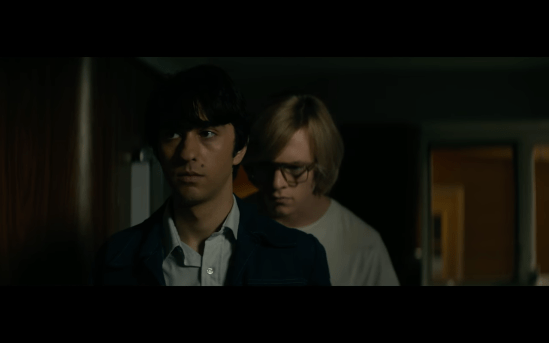
Senior year 1978, right before the start of his 13 year killing spree, Jeffrey Dahmer struggled to fit into the high school equation. Spending much of the time in his makeshift laboratory, dipping roadkill into jars of acid to retrieve the bones that were still intact, Dahmer didn’t have many friends to socialize his unbalanced behavior. His interest in dissecting animals and an unearthed fascination with the same sex drove him to stay in serene isolation, but when his parents, between the marital spouts and his father’s projections, pressure him to make friends, to live an active lifestyle, Dahmer reduces himself to being the class clown for acceptance, catching the attention of three students who befriend him because of his classless antics. Just as his life begins to form something that similar normalcy, the familiar urges overwhelm when he fantasizes about a young male doctor of sleeping with his fresh corpse. With the inkling to kill creeping to ahead, Dahmer drowns himself in alcohol while still maintaining what’s left of his friendship that suddenly feels more like his exploitation for the benefit of others.

What a hell of an origins story! “My Friend Dahmer” is the 2017 biographical docudrama from writer-director Marc Meyers that becomes the looking glass into the catalytic events, or even last moments of hope to reform, infamous serial killer Jeffrey Dahmer. The film is a visual adaptation of John “Derf” Backderf’s graphic novel of the title. Backderf was also one of Dahmer’s only friends in high school and relates his experiences through exaggerated illustrations of his graphic novel. With in the film, Meyers notably recounts the pages of the Backderf’s novel with a story that puts Dahmer justifiably at the epicenter that focuses almost entirely from Dahmer’s disturbed and warped point of view of inner body interest, homosexuality, and standards of social acceptance. Rarely, does Meyers stray from that structure in obtaining the external thoughts and opinions of Dahmer’s friends, and perhaps even enemies, who’ve made some sort of interaction, but being that the novel is a work of someone else’s non-fictional perceptions and not of Dahmer’s, Meyers puts weight forthright with Backderf’s opinion with the characterized Backderf interjecting here-and-there on accounts that significantly courses Dahmer’s actions.

Surely an eye brow raising casting choice, Disney Channel actor and Kids’ Choice Award winner Ross Lynch enters into a polarizing role that is the pre-monster of Jeffrey Dahmer and creepily channels in a powerful performance the embattled younger image of the soon-to-be murderer, cannibal, and necrophiliac. Lynch portrays Dahmer as a rare emission of emotion and almost frighteningly stiff or mechanically with hunched shoulders just below his wavy blonde hair that wrap around the large and rounded rectangle glasses. New York City born actor Alex Wolff picks up the graphite pencil to spun out probably Dahmer’s closest friend John “Derf” Backderf. Perhaps in a way, Backderf had manufactured a piece of Dahmer’s destined genetic makeup and Wolff lays in the guilt, and the fear, thick when around Dahmer near the end. Anne Heche (“Psycho” remake) and Dallas Roberts (“The Walking Dead” and “Mayhem”) become Joyce and Lionel Dahmer, Jeffrey’s parents. Heche and Roberts seize every on screen opportunity to lay into one another, a persistent and regular difficulty that stemmed between Joyce’s mental and physical heath and Lionel’s withering patience for his anxiety riddled wife. The cast rounds out with Vincent Kartheiser Liam Koeth, Tommy Nelson, and Harrison Holzer.

Aside from the retelling of Backderf’s recollections, “My Friend Dahmer” shoots scenes right inside what was once Dahmer’s actual home in Ohio. That bit of realism adds monumental flavor to enrich the inherently dark subject matter of how a young Dahmer was subjected to compounding blows to his psyche in the short timespan that was his senior year. From his father tearing down his makeshift laboratory and junking his precious dead animal experiments, to his mother’s divorce inducing schizophrenia, and to being the class clown in order to make friends, Dahmer couldn’t maintain control over his ebb and flow urges and Meyer effectively highlights these chapters in Dahmer’s frayed playbook of life that tipped the scales of unfavorable malice.

FilmRise and MVDVisual present “My Friend Dahmer” on a AVC encoded 1080p High Definition Blu-ray with a 2.40:1, widescreen presentation. Through a vista of small town quaintness, picture quality immensely defines a cold embrace of a softer, fluffier effect. The color palette strongly reflects the whitewashed and faded of the era. The English Dolby Digital 5.1 stretches the ambient with a film that doesn’t necessary pack an audio punch. The dialogue is rendered cleanly and the retro soundtrack is a boost to docudrama with clarity and pace. Bonus features are a bit thin for a non-fictional individual with humungous notoriety and they include a brief interview with star Ross Lynch, Behind-the-Scenes slide show, and a theatrical trailer. “My Friend Dahmer” revitalizes the feelings and the chills that washed over us who are old enough to remember Jeffrey Dahmer’s grim-storied apprehension and, yet, director Marc Meyers is able to strip Dahmer of his monstrosity for 107 minutes and make him simply human as a young man with everyday problems without a ounce of parental, professional, or friendship guidance, funneling to the notion that we all have a little Jeffrey Dahmer in us.
Free Your Soul With the Evil Mad Doctor! “The Soultangler” review!

Experimental doctor, Anton Lupesky, invents a controversial drug that can free a human soul from its vessel and travel through into the lifeless eyes of a corpse, possessing the body to reanimation. The only side effect is grotesque hallucinations that are so horrible, few survive the experience. After a stint of missing persons and a string of mysterious deaths at the Whitebriar Institution, Lupesky is fired from his position, banned from the medical board, and brought up on criminal charges. His acquittal sparks him to embark on a journey overseas to continue his radical medical experiments, away from regulations and tremendous oversight. The doctor returns six months later for far superior medical innovations in America and begins practicing again in his own basement with the unscrupulous help from a couple of lackey acolytes that leaves Lupesky’s supply of “patients” not in short demand. One reporter keeps investigative tabs of the good doctor as she suspects a connection between him and her father’s death at Whitebriar and when her and her friends starts to snoop around, Lupesky has no choice but to use any means necessary to thwart her investigation, even if that means secretly administrating the drug to her in hopes that her soul can fly with his – if she survives.

Thirty years ago, “The Soutangler” hit the cinema market. A low-budget gruesome mad scientist flick with a penchant for some fantastically grisly practical special effects. The 1987 shocker was directed by Pat Bishow, penned by John Bishow and Lance Laurie, and shot on location on Long Island, New York. The Do-It-Yourself and Lovecraftian macabre does a bit of soul-searching to find resurrection from the video graveyard. Luckily, Bleeding Skull! Video and the AGFA come to the rescue with a chock-full of extras release that digs up the Bishow’s lost creation, dusts it off, cleans it up, pats it on the butt, and sends it back out into the world onto DVD home video. “The Soultangler’s” niche envisioning goes against the grain of traditional filmmaking, bordering experimental, but definitely a must-see for those interested in existentialism horror: the removal of free will to be replaced by another’s.

Pierre Devaux stars in his only credited as the mad Dr. Anton Lupesky that resembles along the lines of a Dr. Herbert West from that little known trilogy of the H.P. Lovecraft inspired “The Re-Animator.” With a wiry frame, stringy shoulder length hair, and government-like issued classes, the very animated Pierre Devaux casts the ideal character whose maniacal and perverse in his medical malpractices. The only one willing to stop the Lupesky’s experiments is investigating journalist Kim Castle of The Daily Chronicle. Castle, played by Jane Kinser, is about as ferocious as her beautiful as an aggressive reporter, unwilling to stop to unearth the truth of her father’s tragic death. Kinser’s not much of an onscreen force to reckon with as she’s quite timid, but she manages to hold her own up against Devaux wild eyed lunacy. Rounding out the cast is Bob Cederberg as a Carl the drugged addict henchman, Louise Millman as a loyal minion to Lupesky, and Tom Ciorciari as Castle’s concerned friend who battles the zombified corpses embodied by Dr. Lupesky.

While a strong appreciation exists from the outstanding attention to detail with the decayed bodies and the explicit violence in the finale that nightmarishly flourish in a heap of ghastliness, the rest of the film is as disjointed as the dismembered bodies in Lupesky’s basement of horrors. Despite being submersed in various talking head scenes that divulge significant backstories between Dr. Lupesky and Kim Castle, the story struggles to keep the straight line focus, swerving erratically between subplots and the main premise. Castle’s horrific dreams of aggressive zombies loosely makes a connection other than prepping Castle’s subconscious when ingesting Lupesky’s soul freeing drug. The story of Dr. Simpson also flounders to the waist side with her and Dr. Lupesky’s love affair, the only women he would even consider getting close to and not slaughter for his own amusement.

“The Soultangler” arrives onto full-bodied, graphically illustrated DVD from the B-movie collaborators Bleeding Skull! Video and the American Genre Film Archive (AGFA) and distributed by MVDVisual from the original 1″ master tapes. Shot on 16mm, but edited on video, “The Soultangler” has a SOV experience in it’s original aspect ratio of a full frame 1.33:1. Quality varies from the source material, including some tracking and edge flare issues, but overall a solid transfer with a sizable color palette that includes tints, natural skin tones, and visceral dream sequences that show little-to-no sign of diminishing. Stereo mono track does the job despite poor mic placements to get the full girth of dialogue. HypnoLoveWheel’s indie synth/rock soundtrack has more popularity on the B-level than in the mainstream music, but serves “The Soultangler” with broad depth to solidify a wedge between “The Soultangler’s” whimsical charm and the Gothicism that is Stuart Gordon’s “Re-Animator.” Bonus features include, for the first on any release, the Unseen 62 minute alternate director’s cut, a commentary track with director Pat Bishow, behind the scenes footage, trailers for “The Soultangler” and “Dead of Night Town,” music video for “wow” by HypnoLoveWheel, and liner notes by Bleeding Skull’s Zack Carlson. Conceptually, “The Soultangler’s” premise oozes originality and creativity involving soul transformations through the portal eyes of a dead body and that’s simply brilliant and what today’s horror genre certainly craves. Constructionally, Pat Bishow couldn’t push the momentum to pickup the pace to overripe an engaging story, but the climax, out of left field, unsheathes a bloodbath of ultra-stellar, DIY proportions!
This is One Evil Pussy! “Hell’s Kitty” review!

A Hollywood screenwriter named Nicholas owns a very special household feline. Angel, his Cat, has a unique relationship with her owner Nicholas. Yet, their unbreakable bond has put a severe damper on Nicholas’s intimacy with women as Angel slaughters any and all who becomes close with her beloved human. When Nicholas finally catches wind of the reason behind his love life woes and learns that Angel is actually possessed by an obsessive and dangerous demon, he and his friends Adam, whose also his downstairs neighbor in the apartment complex, seek to exorcise Angel back to being a nice kitty, but all who’ve challenged Angel thus far have been unlucky enough to be scratched to death. A medium, two priests, and even a cat therapist haven’t seem to help Nicholas through the bombardment of weird dreams and death that surround him in his lonely and tiny one bedroom apartment.

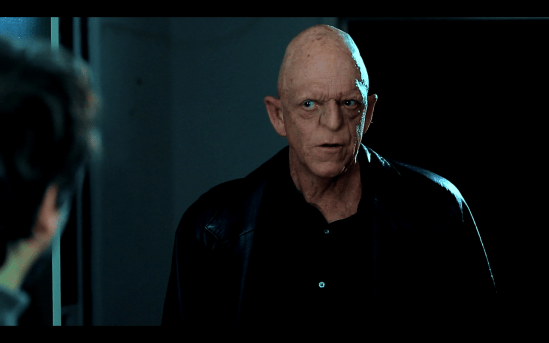
Cat lovers beware! “Hell’s Kitty” is purring up your leg to claw you in this new horror-comedy by writer-director Nicholas Tana. If you had thought cats were already contemptible enough to begin with then sit down in your air freshening kitty litter and get a can of Friskies out because you’re about to take a 666 ride with this demon kitty. “Hell’s Kitty” is original a web series created by Tana that began all the way back from 2011 to 2015 and, since then, has been immensely popular through the inter-webs with the extra special casts of genre vets ranging from “The Hills Have Eyes'” Michael Berryman to “The Fog’s” Andrienne Barbeau. From the web series, the episodes were pieced together, forming one hairball adventure of Nicholas and his demon cat, Angel.

Aforementioned, Nicholas Tana headlines as himself because, essentially, “Hell’s Kitty” is based off true events of his turmoiled love life. Series regulars also become essential players in the film, such as Nicholas’s downstairs loafing neighbor and best friend Adam (Adam Rucho), Lisa Graves (Lisa Younger of “Cold Creepy Feelings”), and Dr. Laurie Strodes (Nina Kate of “Snake Club: Revenge of the Snake Women”). Then, there’s a slew of special guests that, at times, pay homage to the works that made them household names in horror or relating genres. Special guests that include “Children of the Corn’s” John Franklin and Courtney Gains semi-reprising their roles as Isaiah and Mordicia. Lynn Lowry (“The Crazies”), Doug Jones (“The Shape of Water”), Bill Oberst Jr. (“Coyote”), Kelli Maroney (“Night of the Comet”), Dale Midkiff (“Pet Sematary”), Lee Meriweather (Catwoman from “Batman” television series), Victoria De Mare (“Killjoy” franchise), and porn star goddess, and legend, Nina Hartley (“Pleasure Maze”)! That’s one heavy-hitting lineup! As a cherry on top, even a Killer Klown, you know, the ones from Outer Space, made an appearance!

If a viewer didn’t know of or research into “Hell’s Kitty” web series past, the thought of low-budget junk just might scroll across a judgmental mindset. Let’s be honest for a second; “Hell’s Kitty” is grade-A camp with schlocky special effects and the editing quality of a ramshackle shackled ram. Along with the unique cast being intertwined into the story, other aspects of the Frankenstein-glued together film, such as the sharp pivoting subplots, stir up Nicholas ever so chaotic life into a new and interesting fold. From his fruitless sex life with various attractive women to the friend who always makes himself welcome in Nicholas’s apartment, Nicholas only has one consistent thing in his life and that is his relationship with the cat from hell and that journey is explored from episode-to-episode that climaxes with an ultra-drag musical rendition of something out of the “Birdcage.” Another quality to watch for, and enjoy, are the homages to fan favorites like “Children of the Corn” and “Killer Klowns From Outer Space” as mentioned before, “The Exorcist,” and “Psycho.”

MVDVisual and Wild Eye Releasing presents the Smart Media LLC,. production of “Hell Kitty,” as a whole, on DVD home video that’s visually subpar when considering the quality. The low bitrate crudely displays blotchy image quality, leaving details to the waist side. The 5.1 surround sound is the best attribute to the DVD with clear dialogue and a modest soundtrack. There are no extras included aside for the film’s trailer. While technically incompetent, “Hell’s Kitty” meows murderously onto DVD in a cultivation of cult actors and hellacious comedy by writer-director Nicholas Tana that does sometimes feel rehashed or borrowed from previous films, but the quirky evil pet element gnaws on an inner layer to be enjoyed and enthralled in a day-and-a-life of one man’s skewed, if not deranged, version of events of a lackluster romantic lifestyle blamed toward one jealous feline.
The Evils After World War III! “The Aftermath” review!

On the space shuttle Nautilus, three astronauts are returning home after one year in deep space. Their outbound transmissions to Earth are not being returned nor are they being received and as their ship draws closer to Earth, the only option for reentry is to take a risky crash landing into the Pacific Ocean, just off the coast of California, hoping someone, anyone, would see their shuttle coursing downward from the sky. Only two survive the crash and swim to shore where no boats, no planes, nor onlookers were around to receive them. They soon find out why. World War III had engulfed much of the Earth during their time in space, reaping the land of the urban jungles and making food and living conditions scare. Germ warfare had mutated much of the population to cannibalistic creatures and when torrentially raining, acid rain pours from the war torn atmosphere from ferociously brilliant and deadly clouds. Only a small band of good people remain and the two astronauts seek to keep them safe from the harsh elements, even against a merciless gang of thugs.

In the early 1980s, an ambitious and visionary filmmaker sought to produce, write, direct, and star in his very own modest budget feature film that would rival Hollywood’s glamourous and expensive effects while still maintaining a down-to-Earth independent production. That filmmaker was none other than Steve Barkett, creating his debut film, the 1982 science fiction post-war catastrophe, “The Aftermath.” “The Aftermath” is like if the “Planet of the Apes” met “The Walking Dead,” a sheer blunt for trauma of returning to your home to discover the world in shambles with different factions of hard nose killers ready to plunder all that you own and all that you will ever have. Barkett, with assistance from the brothers Dennis and Robert Skotak, who’ve went on to work on major studio films such as “Aliens” and did the matte work for John Carpenter’s “Escape from New York,” create a destroyed Los Angeles landscape through the power of some serious movie magic considering the time period and the budget.

Steve Barkett is Newman, one of the three astronauts with no first name, and the tough hombre’s hard disposition comes from his background exposition where he lost his wife and child before going up into space. Newman’s cold, but not heartless, and Barkett taps into that fairly well despite some robotic and formulaic performances. However, Christopher Barkett, Steve’s son, was a complete first generation cyborg, a regular toaster oven with teeth and eyeballs that monotones through all the lines and actions. The most interesting casting here is Lynne Margulies, who at the time of this release, was or was not yet the late Andy Kaufman’s girlfriend. Margulies, who previous worked on an adult film entitled “Young, Hot ‘n Nasty Teenage Cruisers,” continued the racy trend with a shirt-pokey role in Sarah, Newman’s quick-to-sack love interest with a briefly, well-endowed nude scene. Yet, Sig Haig manages to steal the Barkett’s film from right under his nose. The young and ruggedly muscular “The Devil’s Rejects” star sports his trademark shaved head and thick, dark goatee, labeling him the perfect casting choice in gang leader Cutter. Alfie Martin, Forrest J. Ackerman (“Dead Alive”), Larry Latham, Linda Stiegler, and Steve’s young daughter, Laura Anne Barkett costar.

One aspect that’s really appreciated in Barkett’s enterprising venture through post-war commentary and morally righteous themes is the special effects matte work from the Skotak brothers. Detailed paintings, such as exampled in the war-ravaged metropolis that was formerly L.A. embodying the once towering buildings, are now destructively cut short in a mangled heap in a matte effect with live actors. Practical effects work wonders for Barkett’s large scale premise despite the small scale performances, except from Sid Haig. The detail in the violence dawns a newly restored faith in early 1980’s sci-fi films; violence that was more prevalent in the genre later in the decade, in such films as “Aliens” or “Robocop,” making Barkett’s film a trail blazer that paved the way to deliver more sensational savagery and lots of blood of a high body count to a already fantastic genre.

MVDVisual and VCI Entertainment release Steve Barkett’s “The Aftermath” onto a dual format, DVD and Blu-ray, combo pack. Presented in 1080p on a MPEG-4 AVC encoded BD-50, the post apocalypse never looked so good in a widescreen 1.78:1 aspect ratio from a 2K remastered transfer of the original 35mm negative. VCI has bested the rest with colorfully enriched scenes and untouched framing. Slight grain more so over the matte special effects that optically contrasts between the two different layers where a little touchup could have smoothed out the indifferences, but other than that, the details are quite stark. The clean and untarnished English LCPM 2.0 mono track is also vastly well constructed that contains minuscule hissing and the occasion pop, clearly making the dialogue a prevalent force. Composer John Morgan’s traumatically dramatic score is full-bodied and robust that coinciding renders well with the action sequences and tranquil moments. The extras offer the original laserdisc bonus material that provide snippets of interviews from cast and crew, Steve Barkett’s short film “Night Caller,” over an hours’ worth of John Morgan’s soundtrack complete with title information, VCI promo announcement for Barkett’s other director “Empire of the Dark, and the original theatrical trailer. A retrospective journey to the early 1980’s science fiction indie sector is also a visually stunning resurrection of “The Aftermath” courtesy of VCI Entertainment and with impressive effects and a bigger-than-life concept despite an underwhelming performance as an actor, director Steve Barkett’s legacy as a filmmaker remains stronger than ever with this prominent and well-deserved upgrade of the lazer-gun and mutant inhibiting world reckoning.