Three Men, a Boat, and One Giant, EVIL “Crocodile” reviewed! (Synapse Films / Blu-ray)

“Crocodile” on Blu-ray and Lurking Behind the Wates of Thailand’s Film Industry!

Along the serene Thailand shores, a doctor and his young colleague take their family and fiancé to a beach resort for some much-needed time away after a massive casualty natural catastrophe on a nearby island swallows the entire village with seismic volcano bedlam.  Little do they know that a component of the disaster has swam to their very watery spot on the beach resort and gnashed without remorse on the doctor’s family and fiancé.  Not knowing what kind of creature could do such carnage, they soon discover through first hand witness accounts and the evidence gathered that a large crocodile, mutated by man’s own disregard for mother nature, is the culprit.  The men, along with a fisherman who believes in a destiny of a beastly showdown, swear to track down the killer croc and kill it.  The crocodile’s bloodlust on mankind is seeming unstoppable as it wreaks havoc swimming down river, destroying entire villages in its destructive and hungry path.

Thailand’s reptilian “Jaws” equivalent, “Crocodile” wriggles with wayward ferocity in this giant creature feature horror that rivals Bruce the shark.  “Computer Superman” director Sompote Sands oversees the enormous amphibious aggressor versus frantic and frightened man film that merged or morphed from Won-se Lee’s “Crocodile Fangs” into a blending of the two productions of the same film of one seamless man versus animal hunt above and below the surface of the water.  Sompote Sands produces the venture along with a postdated credit toward exploitation producer Dick Randall (“Pieces,” “Escape from Women’s Prison”) from “Crocodile Fangs.”  Coproduced by Robert Chan and Pridi Oonchitti, “Crocodile,” or rather “Crocodile Fangs,” was a multi-national undertaking with Thailand and Korean actors and crew and a Japanese special effects company bringing the giant, carnivorous maneater to cinematic actualization.  The Chaiyo Productions spliced feature was distributed into the U.S. under Cobra Media. 

Doctors Tony Akom and John Stromm have it all; Akom (Nard Poowanai, “Ghost Hotel”) has a beautiful wife and child and leads a charmed life despite his vocation challenges of being a doctor always on call. and Stromm (Min Oo) is recently and happily engaged to Angela (Ni Tien, “Black Magic” 1 & 2).  Their vacation doses audiences with a picturesque double date plus one child but does a rough patch setup of Dr. Akom’s family neglecting workaholism that isn’t crafted to be a strain on the relationship he has with his family but rather bring upon him tremendous guilt and inset the good doctor into a studious montage of crocodile research after his family becomes crocodile chow.  Sympathy toward the doctors is incurred but the level of sympathy falls low as the ladies’ death scene falters in the editing room, or perhaps was only partially shot, as only one of them is visually attacked while the others are grieved over in postmortem.  Character will is strong enough to carry the anticipated revenge but the giant crocodile is truly the main star stud, a vicious, village-obliterating mammoth of armor and teeth goes full Godzilla on the riverside communities and dining buffet style on anyone, land or sea, who makes a splash in his kill radius.  Unlike in “Jaws,” “Crocodile” is back-and-forth without the mysteriousness of the shark’s lurking underneath the glassy surface, snatching swimmers and boaters to a watery, gory grave, and this really solidifies the crocodile as an intended principal figure as a well-known, full-visible, antagonistic killing machine spurred by man’s own atomic-making hand; an idea that’s only theorized in exposition and not practically fleshed out.  “Crocodile’s” cast fills out with Kirk Warren, Angela Wells, Hua-Na Fu, Bob Harrison, and Nancy Wong.

“Crocodile” very much embodies the “Godzilla” and “Jaws” with deference without being a total negligent rip of either more widely successful hit.  The crocodile, in the form of its oversized whipping tail and rather big and detailed puppet head, raze miniaturized villages, much the same way Godzilla tramples over Tokyo in the 50s through the 80s, and the storyline for “Crocodile” parallels portions of Steven Spielberg’s 25-foot man-eating Great White tale of three men boarding a boat to hunt down a formidable creature, complete with yellow barrels and a sinking ship to an exploding finale.  Antiquated by today’s standards, for late 70’s, the special effects are a marvel to behold.  Kazuo Sagawa, of the special effects company, Tsuburaya Productions, lead the department with size-mattering scale and detailed depictions of villages and boats being quickly and violent undone by either a crocodile puppeteer or a mini-croc circling the boat and even, at times, being wire-flown through the air, bombarding the model ship with WWF elbows (do crocodiles have elbows?).  Action sustains an intensity that’s wrathful and keeps the heart palpitating with excitement.  The same thing can’t be said about the story through the choppy editing style, often times revisiting cut scenes being spliced into progressive context, but the setting, exterior weather, and clothing haven’t changed.

Synapse Films obtains the original Cobra Media distributed U.S. release and meticulously restores “Crocodile” in a 2K scan from the original 35mm camera negative, premiere the film for the first time on Blu-ray worldwide.  With an aspect ratio of 2.35:1, the AVC encoded, 1080p high-definition, BD50 is a deathroll of beauty and when Synapse says meticulously restored, the poof is in the details and coloring.  Not a ton of age wear or damage, a nearly pristine print for some intricate touchups to invigorate the content.  One brief series of scenes appeared as if the film cell was folded with a blended vertical line down the right side, much like a scratch would appear on the film but this looked different; however, the line did not substantially affect viewing.  Between the rapid severity of the crocodile thrashing and the reduced frames of select slow-motion sequences, there is nothing to fault about Synapse’s compression with objects keeping intact and away from ghosting or aliasing.  Blacks are generally faded but don’t show signs of posterization or banding.  The English print audio spec is a DTS-HD MA 2.0 mono dub.  Fidelity of the original audio is retained, uncompressed for lossless sound in all areas of the ADR, Foley ambience, and the cue soundtrack of the impending or attacking crocodile, with a hint of John Williams theme in the opening credit track.  English subtitles are available, but the dub is perfectly clear and prominent.  Special features include an audio commentary with writer and film historian Lee Gambin, a video interview with Won-se Lee, director of “Crocodile Fangs,” deleted and alternate scenes from different country versions of the film, and the original theatrical trailer.  The standard release comes in a green Blu-ray Amaray without the “nude” slipcover but has the same original, clothed illustrated artwork.  Inside, the disc is pressed with a toothy faceless creature versus and a scantily cladded bikini woman.  Opposite side is the usually accompanying Synapse catalogue for this year, 2024.  The R-rated feature has a runtime of 92 minutes and is region free! 

Last Rites:  A Thailand terrorizing monster movie with unrelenting savagery and terrific special effects for circa late 70s.  if you can withstand the story’s choppy waters, “Crocodile” is a fun and fierce swim through predatory, blood-suspended waters. 

“Crocodile” on Blu-ray and Lurking Behind the Wates of Thailand’s Film Industry!

How Many Chickens Need to Have Their Throats Cut to Satisfying Ritualistic, Naked EVIL! “Voodoo Passion” reviewed! (Full Moon Features / Blu-ray)

Get Entranced by Full Moon’s “Voodoo Passion” Blu-ray!

Newly married Susan House travels to Haiti to join her consulate husband, Jack House, who has been stationed at the British Embassy.   Captivated by the Haitian voodoo religion and culture, Susan is eager to tour the island nation’s most ambiguous practice most don’t or will never understand all the while Jack’s naked and nymphomaniac Sister, Olga, makes forward, flirtatious advances toward her.  That fervor for voodooism and Olga’s point-blank seduction has seemingly incepted terrible nightmares of naked, animal sacrificial rituals and murder conducted beguilingly by a priestess in the form of Jack House’s native housekeeper, Inês.  When Susan awakes, the realism of her dreams afflicts her but her husband Jack and his colleague, a psychiatrist by the name of Dr. Pierre Barré swear there have been no police reported murders.  Night after night, Susan’s entranced nightmares continue to be vivid with murderous mysticism that’s slowly driving her mad in the land of voodoo. 

One of Jesus “Jess” Franco’s more bosom and bush erotic-thrillers, “Voodoo Passion” is nearly a fully naked runtime feature sprinkled with hints of the nation’s cultural religion.  The 1977 released, German Production, also known by the titles “”Call of the Blonde Goddess” or “Der Ruf der blonden Göttin,” was less about his own stylistic substance and auteur stamp and more about spasmatic, gyrating nudity under rhythmic bongo beats for the Spanish sleaze and exploitation genre filmmaker.   The gratuitously sexed-up, multinational feature is penned by the Switzerland born, sexploitation and adult genre screenwriter Erwin C. Dietrich under one of his pen names, Manfred Gregor.  Dietrich also produces the film amongst a substantially historical collaborative effort between himself and Franco over the course of the late 70s to early 80s.  Nestor Film Producktion serves as the production company, filming entirely not in Haiti but in the beautifully scenic and old-world allure of the seaside capital of Lisbon, Portugal.  

Lots of hot body action in this beat-driven, voodooism thriller primarily between a trio of character-diverse, titillating ladies and peppered with peripheral nude women and men tribals engaged in a ceaseless native, ritual thrusting, pulsing, and shaking trance dance.  “Voodoo Passion” grips itself around the rags-to-riches character of Mrs. Susan House in what is a matron-look for Spanish actress Ada Tauler (“The Sexy Horrible Vampire,” “Love Camp”) brought to Haiti at the behest of her British consult, newlywed husband Jack House, played by the stony-faced and “Eugenie” and “Pieces” American actor Jack Taylor able to swing both thrills and feminine frills in his films.  While Tauler’s doesn’t shy away from full nudity of Susan House’s fever dream state, the actress pales in comparison to the other two-thirds who are more engaged in sexual promiscuity and the liberating fervor of ethnic ceremony.   Those two actresses are “Caged Women’s” Karine Gambier as the nymphomaniac sister of Jack House and the face of most of “Voodoo Passion’s” physical marketing with French actress Muriel Montossé (“Cecilia”), under the more westernized stage name of Vicky Adams.  With a face and body like a model, Vicky Adams’s wild arm and stoic expression dance moves will hypnotize viewers entranced with the bongo tempo’s transfixing pomp, contributing to the film’s psychotronic premise of magical and religious rites, obfuscated nightmares, and, cue Austin Powers’s voice, murder.  Yeah, Baby!  “Voodoo Passion” has curves for days and in all different personas that keep things weirdly, but welcomingly, platonic on some level and not just an overly saturated sex-fest.  The film’s cast rounds out with Vitor Mendes (“Swedish Nympho Slaves”) and Ly Frey.

If asked to describe or give an opinion on “Voodoo Passion,” one would say cheekily the Jess Franco film is a thriller swathed in an eyeful of bosom and bush.  If the 4-minute introductory scene with voiceover exposition to the ceremonial voodoo band and half-naked native dancers wasn’t enough of a clue, Ada Tauler and Karine Gambier pull you right back into the soaking tub with their soapy, wet bodies as they immediately take a bath together upon meeting for the first time.  From that point on, the bosom and bush bar has been set and in that the thicket of unshaven landing strips, there’s a good story underneath about the mystics and misconceptions of Haitian voodooism.  Unfortunately, much of that story falls behind the showcases of skin, thrusting the principal ladies into the spotlight, overshadowing Jack Taylor’s performance as well as doing nothing for the poor psychologist in Vitor Mendes, and undercutting the very theme of ritual exploitation and misconduct which is half of “Voodoo Passion’s” concept.  The entirety is all quickly surmised in one fell swoop of exposition without the necessary leg work, that should have been carried out by either Susan House or the consul assistant Inês, of building evidence for or against the contrary exposed in the finale.  Then again, does gorgeous naked women dancing about really need a well-rounded plot?  All depends on the eyes of the beholder and these eyes needed that equilibrium!

Full Moon Features conjures up a Blu-ray for this Jess Franco thriller debased in sexploitation slather.  The AVC encoded, high-definition 1080p, is housed on a single layer BD25, yet not encoded heavily with bonus content, “Voodoo Passion” is able to retain a full-bodied image from a remastered German original negative owned by producer Erwin C. Dietrich.  Vivid color saturation, contrast levels accompanying each other, natural looking skin tons, and the stunning detail render this Full Moon Features release the bees’ knees.  No signs of blocking or banding but some celluloid frames are slightly grainier than others that might be a result of age, wear, or the variable of film stock.  There is only a single audio option, an English LPCM 5.1 renders lossless audio, clearing each channel with ease, and delivering a rhythmic bongo drum beat with intensity.  Dialogue mirrors the richness despite the ADR track overtop the diverse nationalities’ native tongues.  There are no English subtitles, or any setup option for that matter, for this English only track release.  Special features included are an archival interview with Jess Franco with forced English subtitles Franco, Bloody Franco, a rare photo slideshow of images from the film, the German trailer, and a Jess Franco vintage trailer reel of most of his schlocky Eurosleaze fair.  What’s party treasured about these newly re-released films onto a new full HD transfer is Full Moon’s physical package redesigns that offer a cardboard slipcover with new illustrated, pinup-esque, art.  “Voodoo Passion” has a half-naked woman, presumably the nymphomaniac sister Olga, moaning in ecstasy while holding a…hand mirror?  Wonder if that should have been the champaign bottle Olga uses to, well, you know, pleasure herself with.   There’s also a striking, NSFW, Muriel Montossé pose in a scene from the film on the traditional Blu-ray Amaray front cover with additional explicit scenes on the backside.  The disc is pressed with the same slipcover illustration and there are no inserts inside the case.  Presented uncut and region free, this Full Moon release of Jess Franco’s vintage sleaze has a runtime of 86-minutes.   

Last Rites:  Another wholly impressive picture quality presentation of another unwholesome, softcore sexploitation by Full Moon Features, a friend to Haitian voodoo and you, the licentiously greedy viewer! 

Get Entranced by Full Moon’s “Voodoo Passion” Blu-ray!

The Gates Are Opening and The EVIL Wants to Squish Your Brains! “City of the Living Dead” reviewed! (Cauldron Films / 4K UHD – Blu-ray)

Cauldron Films’ “City of the Living Dead” on 4K and Blu-ray 3-disc Release!

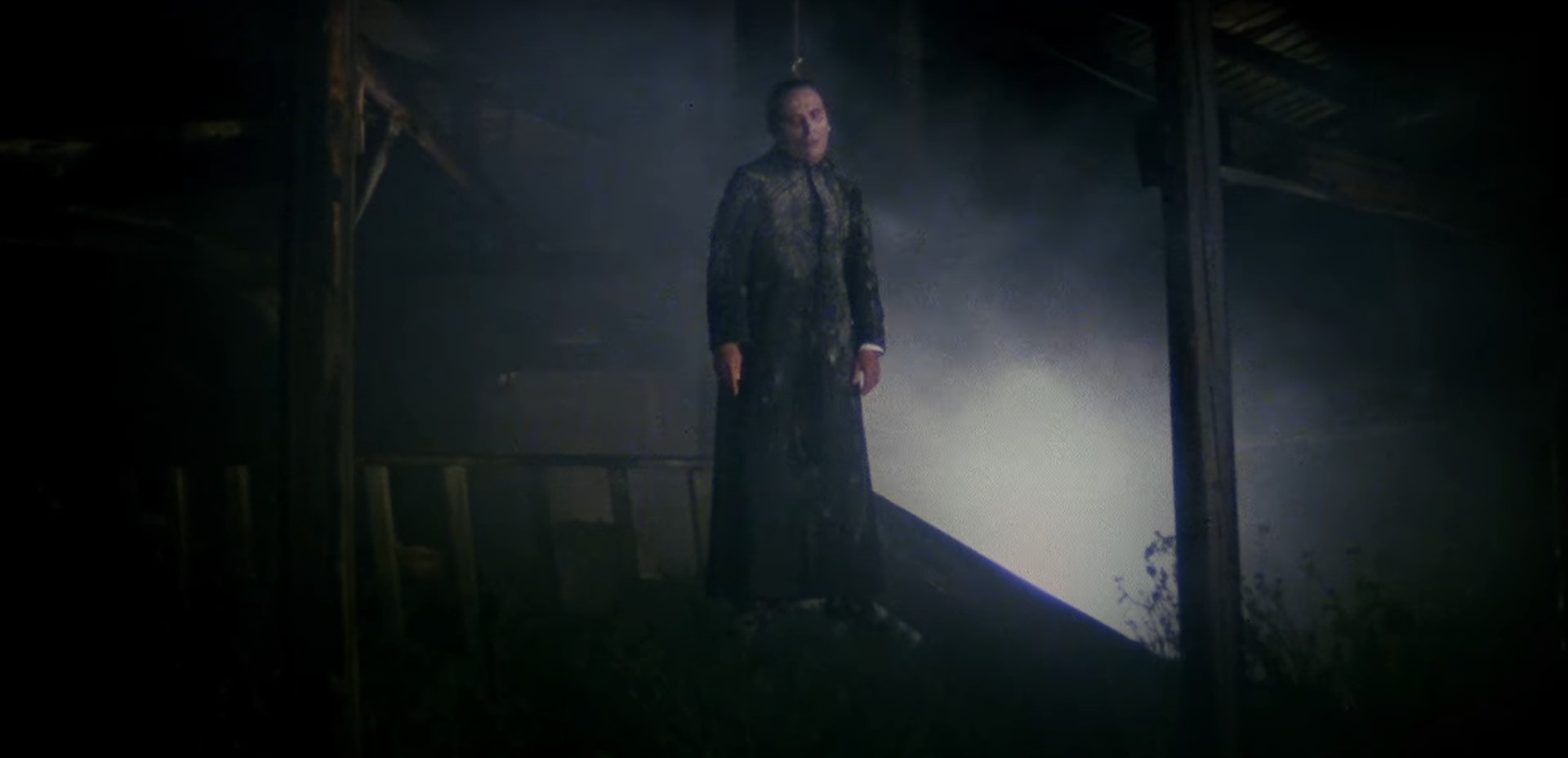
In the Dunwich, a priest commits suicide by hanging himself in the Church’s graveyard.  In the same instance, a psychic based in New York City holds a séance where she witnesses the beginning of the gates of hell opening.  The order sends the psychic into sheer fright that nearly kills her.  A reporter digging deep into the near death of the young woman also buried alive and befriends the psychic, following his nose for a good lead despite its absurd sounding hoodooism of death apocalypse in less than 72 hours.  The psychic and reporter travel to the hard-to-find Dunwich town where the residents have been mysteriously vanishing or discovered dead of curious causes.   Baffled by all the strange occurrences is the town psychiatrist who witnesses first hand the troubles that stir fear into those close to him.  When the psychiatrist teams up with psychic and reporter, they must venture to the very depths of crypt Hell to close the gates and stop the dead for rising before All Saints Day.

The Godfather of Gore Lucio Fulci undoubtedly lives up to his title, establishing himself as one of Italy’s more profound and substantial horror filmmakers before his death in 1996.  “City of the Living Dead” came at the height of Fulci’s success after his breakout into the American market with “Zombie” or “Zombi 2,” an unofficial sequel to George A. Romero’s superb “Dawn of the Dead.”  Yet, Fulci didn’t follow suit with “Dawn’s” social commentary and pale-faced flesh eaters; instead, the writer-director stemmed his undead creatures from black magic hoodooism set in the sunny and sandy Caribbean islands with just as much visceral violence as his inspiring mostly Pittsburgh-based counterpart.  Alternatively known as “The Gates of Hell,” the Italian production of “City of the Living Dead” remains set in the U.S., filmed in New York and the surrounding metropolitan northeast, as the first part of the Gates of Hell trilogy that coincided with “The Beyond” and “The House by the Cemetery,” both of which were released approx. a year later.  “City of the Living Dead” is a Dania Film, Medusa Distribuzione, and National Cinematografica production with Fulci producing as well as the American Robert E. Warner (“Return of the Swamp Thing”) as executive producer.

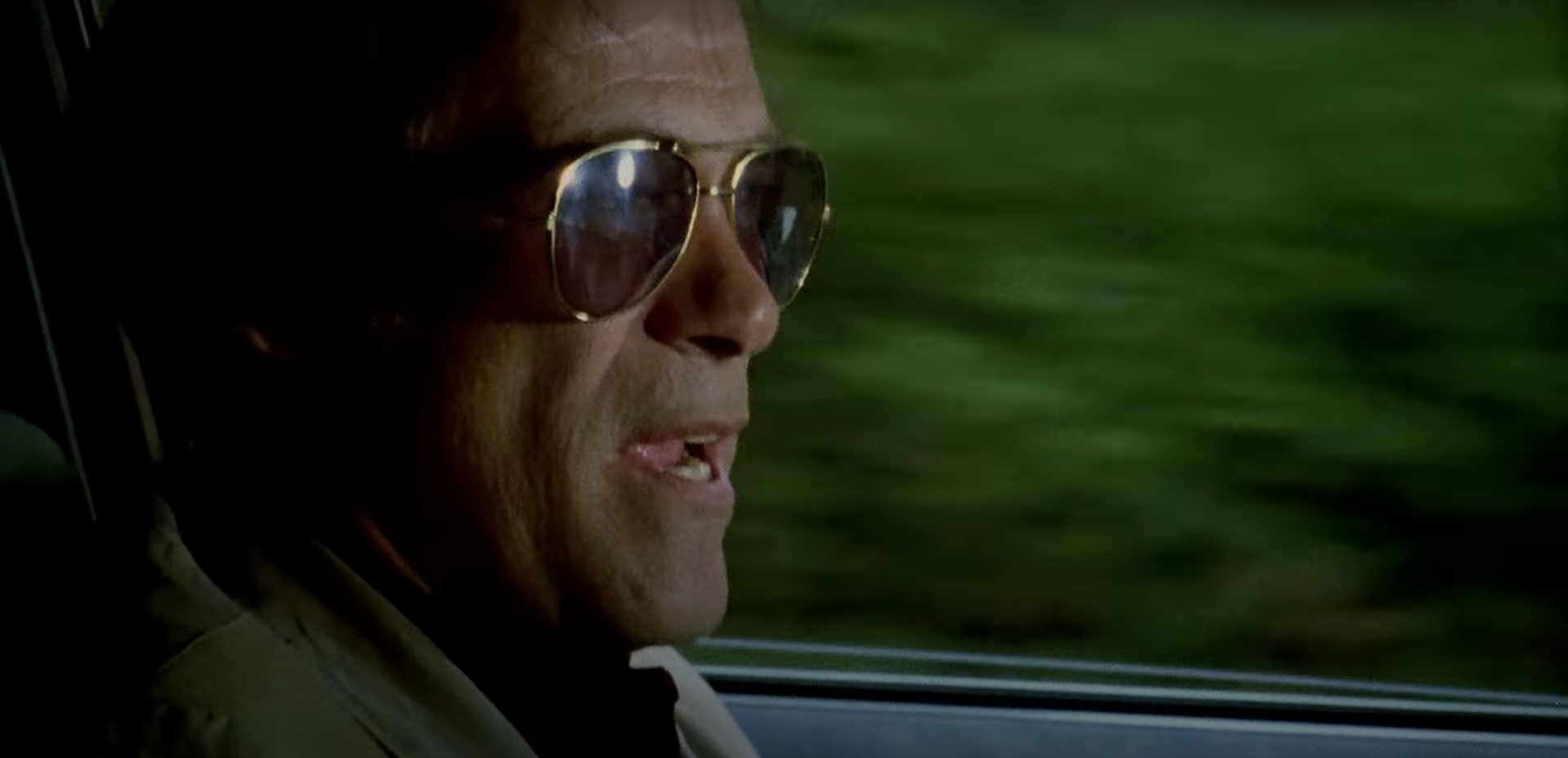
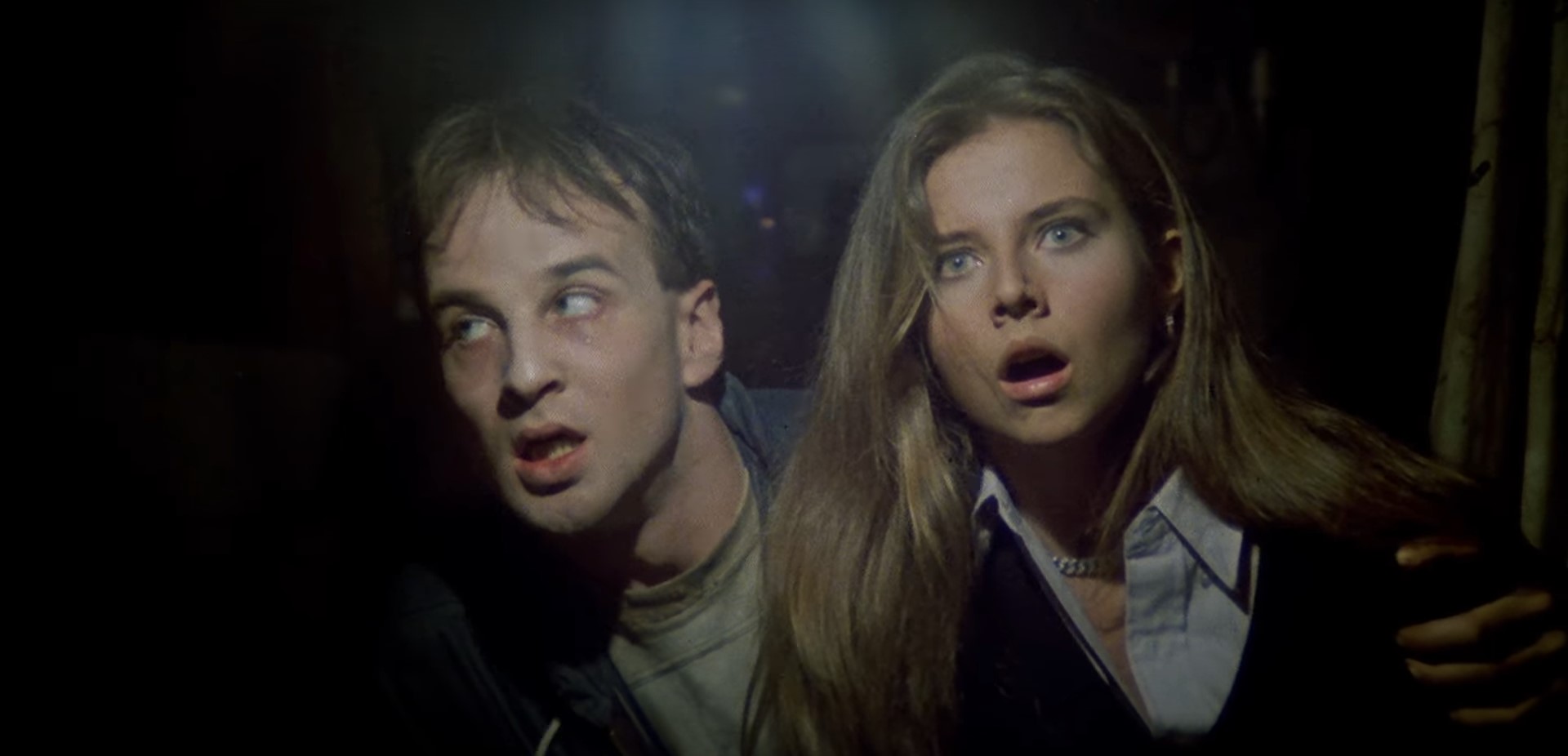
A medley of nationalities make up “City of the Living Dead’s” who either are or are playing American characters.  Comprised mostly of Italian actors Antonella Interlenghi (“Yeti: Giant of the 20th Century”) as one of the first doomed Dunwich victims, Michele Soavi (director of “The Church”) as a canoodler with his brains being squished, Daniela Doria (“New York Riper”) as the other canoodler having her innards become outers, Fabrizio Jovine (“The Psychic”) as the hung priest who started all this mess and as the harbinger of the living dead, and Carlo de Mejo (“Women’s Prison Massacre”) in the psychiatric lead.  There’s an abundancy of diverse Italian flavor that definitely grounds “City of the Living Dead” as an Italian production, but a minor chunk of the cast are Americans with co-principal Christopher George (“Graduation Day,” “Pieces”) as a rakish NYC reporter forcing his way into a minor lead turned major forthcoming day of reckoning and Robert Sampson (“Re-Animator”) in a minor law enforcement role that bears little significance.  Sprinkled in the cast is also the Swedish-born-turned-Italian actress Janet Argen (“Eaten Alive”) as the psychiatrist patient and UK actress Catriona MacColl rounding out the principal cohort as the psychic.  MacColl is the only actress to have a role in all three of Fulci’s Beyond the Gates films, playing different characters in each.  Between Christopher George’s skeptic playfulness, Janet Argen’s uncontrollable hysterics, and in the unmalleable wrought shock of fear, the sundry cast doesn’t hinder the performances that mesh well under the greater air of portent and the hours leading up to end of days.  Giovanni Lombardo Radice (“Cannibal Ferox”), Luca Venantini (“The Exterminators of the Year 3000”), Adelaide Aste, Venantino Venantini (“Cannibal Ferox”), Robert Spafford, James Edward Sampson (“StageFright”), Perry Pirkanen (“Cannibal Holocaust”), Michael Gaunt (“Forced Entry 2”), and filmmakers Robert E. Warner and Lucio Fulci costar.

Through an unexplained mysticism and preformed stipulations on why the priest was the be all end all gatekeeper to the dead’s awakening on Earth other than Dunwich was original built upon the ruins of a witch-burning Salem, Massachusetts or why the day after the unmentioned Halloween season (likely because Italians do not celebrate Halloween with an abundance of candy and custome), All Saints Day, becomes the zero hour date when clearly the dead are already fatally impacting lives in the corporeal realm, Lucio Fulci masterful magician qualities diverts attention away from seemingly crucial elements of the plot toward a complete and total elemental atmosphere of fear, using eerie fog, whipping wind, and phantasmagoria imagery of the macabre to implant chthonic horror slowly rising above ground.  Makeup artist Franco Rufini recesses the sight sockets with deep, infraorbital darkening under the eyes in stark contrast with the pale shade skin, creating that classic yet effective zombified corpse casing in conjunction with special effects artists Gino de Rossi (“Burial Ground:  The Nights of Terror,” “Cannibal Ferox”) use of ground raw meat or whatever the gushy material used to construct the cerebrum contents that just squishes to a pulp between the fingers of the undead when they grab a fist full of hair, skin, and brains from behind an unlucky left living.  There’s quite nothing like a Lucio Fulci film where the ghouls knock on the door from the other side, threatening the land of the living, the world even, with a sound and steady ghoulish malevolence and death in a well-lit and framed Fulci-scope to hammer down defined purpose that drives a penetrating stake through the chest bone and into a chilled soul.

“City of the Living Dead” goes beyond the format gates and arrives onto a 3-disc 4K/Blu-ray release from Cauldron Films.  2160p Dolby Vision 4K and a 1080p AVC encoded high-definition options really put this Fulci classic back on the map, unlike the small, forsaken city of Dunwich. The 4K UHD is an HEVC encoded, 2160p Dolby Vision ultra high-definition resolution while the AVC encoded Blu-ray sports 1080p high-definition, presented in a widescreen 1.85:1 aspect ratio. Through the translucent mist of natural, good-looking grain, Cauldron Films have hyper-accentuated the atmospherics with a clean rendering of the innate cooler-to-warner photography grades of blue-to-yellow with creating a harsh contrast transition. The encoding never shows an ounce of detail distress to keep textured and palpable image of the darkened crypt or the thick fog exteriors that often would degrade decoding with omitted data. The Cauldron Films release retains and sustains bitrate that fastens the dark levels to a robust and effective pitch black. What’s neat about this release is the ability to toggle between the English DTS-HD 2.0 Mono and the Italian DTS-HD 2.0 mono, both post-recorded in standard with Italian productions. Both tracks are comprehensibly sound with a clear and clean dubbing with the only detailed differences being one in English language and the other in Italian and the title card switched out for the each. Between the two, range is exact on both with not a lot of superfluous ambient sound and both tracks offer a near blemish free experience in a robust context of atmosphere. Disc 1 and 2, 4K UHD and Blu-ray respectively, come with new audio commentaries, including with cult film critic Samm Deighan, author of Italian horror cinema Troy Howarth and film critic Nathaniel Thompson, as well as individual archival commentaries with actors Catriona MacColl and Giovanni Lombardo Radice. Disc 3 includes an interview with production Massimo Antonello Geleng, actor Giovanni Lombardo Radice, and on-stage Q&A with Venantino Venantini and Ruggero Deodata (“Cannibal Holocaust”), a Q&A with Catriona MacColl, a Q&A with composer Fabio Frizzi, interviews with special effects artist Gino de Rossi and principal actor Carlo de Mejo, A Trip Through Bonaventure Cemetary – an explorational and historical account on the main cemetery where the priest in the film hangs himself, trailers, an image gallery, and other archival interviews in a near feature-length collection of conversations with cast and crew reminiscing about Lucio Fulci during filming. The 4K UHD and third disc packed with special features are region free while the Blu-ray remains region A locked in licensed playback on the format. Both features have a runtime of 93 minutes and the release is unrated. Emerging from the gates of standard definition hell, Cauldron Films tempers Lucio Fulci’s “City of the Living Dead” to a foreboding crust, burgeoning with ominous clout the undead’s underscoring resurrection.

Cauldron Films’ “City of the Living Dead” on 4K and Blu-ray 3-disc Release!

Early Bill Paxton EVIL in “Mortuary” reviewed! (MVD Visual / Blu-ray)

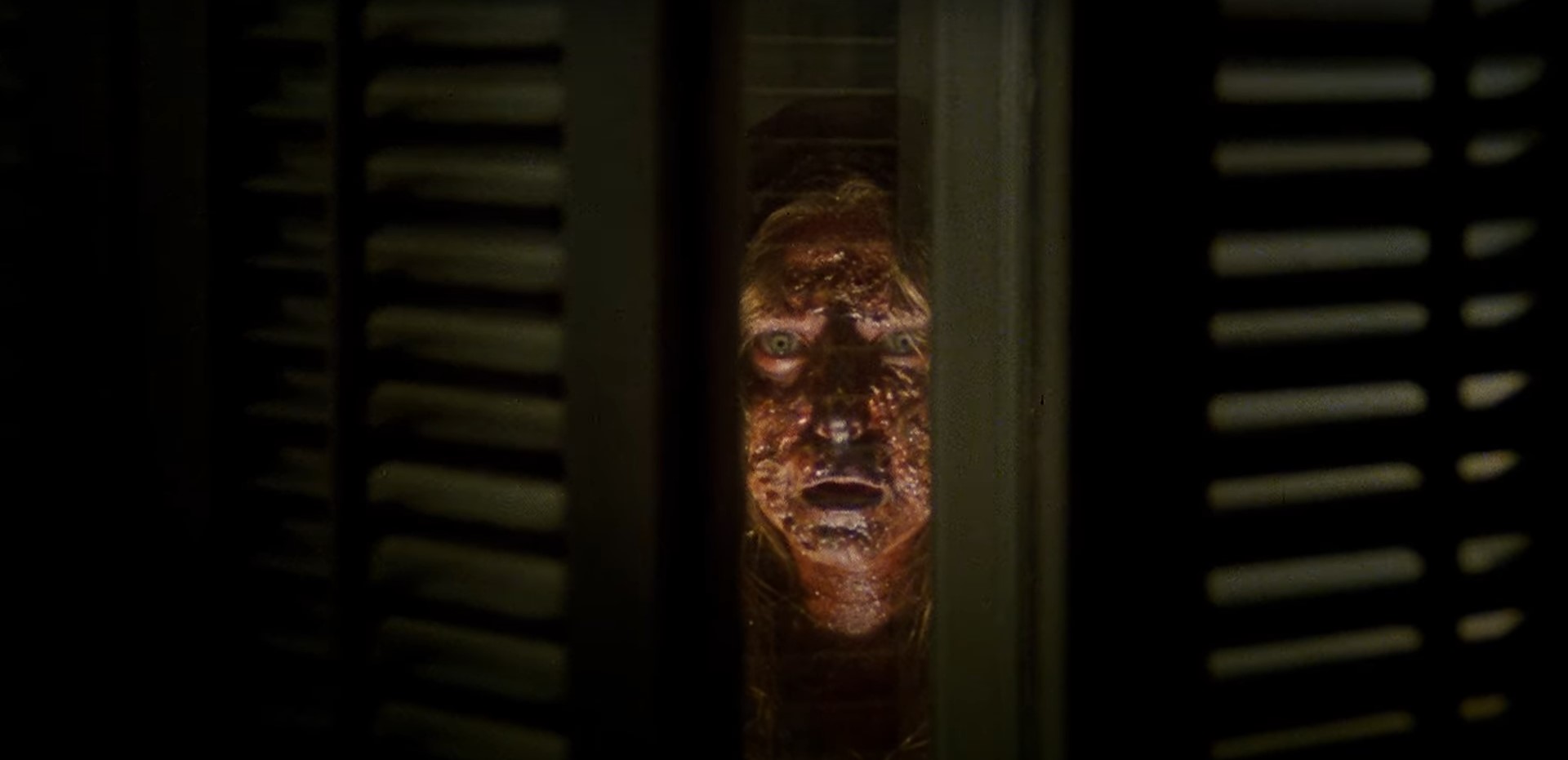
The tragic swimming pool drowning of Dr. Parsons might not have been an accident as determined by the police.  At least that is what his daughter, Christie, believes and she is for certain her mother has some involvement in the so called accident.  Plagued with nightmares followed by a stint of sleepwalking a month after her father’s untimely demise, Christie tries to maintain a semi normal life as a high school student romantically involved with boyfriend Greg Stevens.  Meanwhile, Greg’s best friend disappears after the two trespass onto local mortician Hank Andrews’s storage warehouse.  Christie and Greg unwittingly become embroiled into sinister intent by a masked and caped ghoulish killer stabbing victims with a detached embalming drain tube and at the center of it all is Hank Andrews and his son Paul’s family morgue that processes and possesses all the dead’s secrets. 

Before Wes Craven’s “Scream” mega-franchise turned caped killers revolutionary cool with meta-crafting horror tropes of the genre slasher, there was the little known “Mortuary” that perhaps paved just a slab of keystone for the Ghostface Killer who has become the face of slasher films for more than 20 years, much like Jason Voorhees or Michael Myers back in the 1980s and early 90s.  Written and directed by the Baghdad born filmmaker, Hikmet Labib Avedis, credited under the more westernized stage name of Howard Avedis, the 1983 film nearly had all the hallmarks of a peculiar macabre dance that skated around the slasher sphere.  “Mortuary” had seances, pagan rituals, a shrouded murderer, and, of course, the embalming of dead, naked bodies that are the inevitable, natural, mortality reminding entities in movies regarding morgues.  The late director, who passed away in 2017, cowrote the film with wife, producer, and actress Marlene Schmidt who had a role in every single piece of his body of work.  “Mortuary” was self-produce by the husband and wife filmmakers under their Hickmar Productions company and by grindhouse producer Edward L. Montoro (“Beyond the Door”).

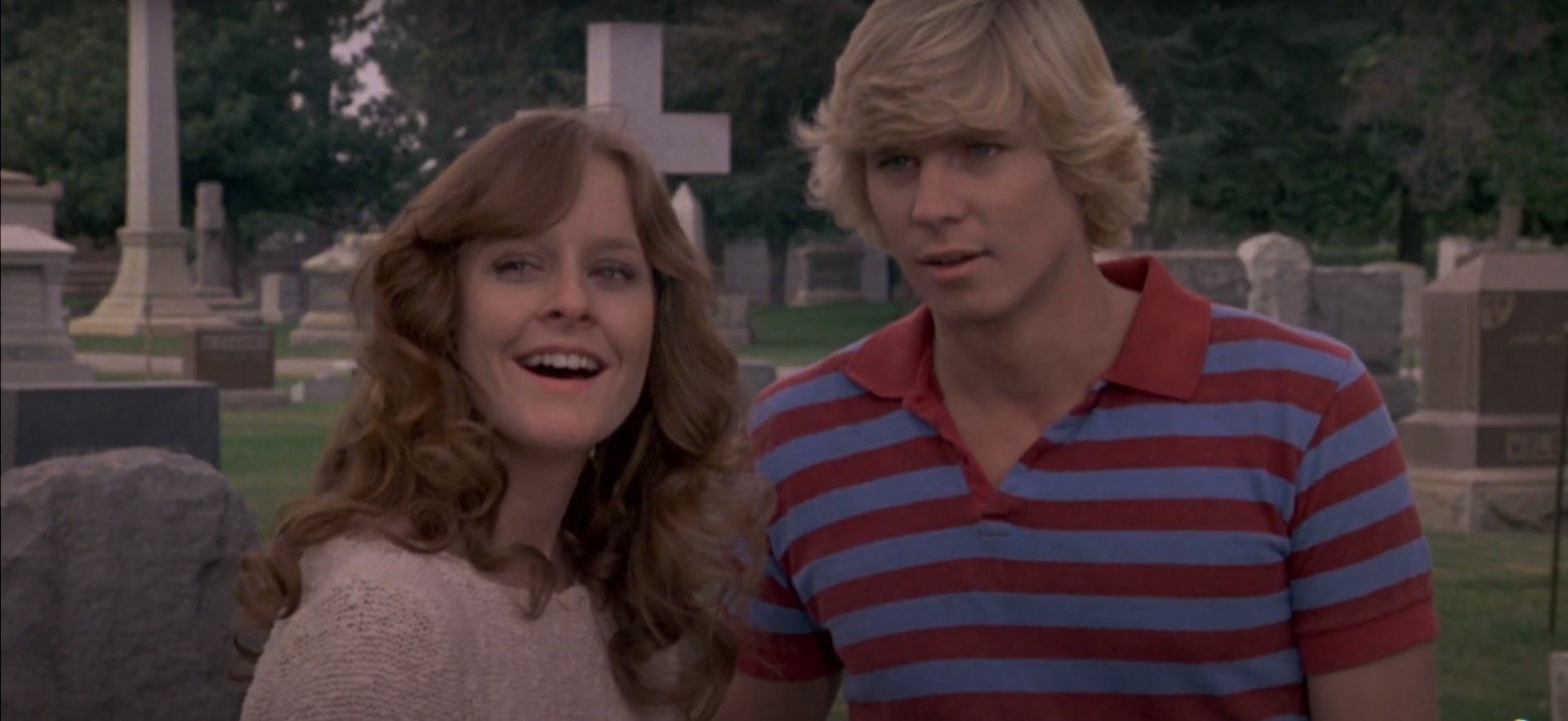
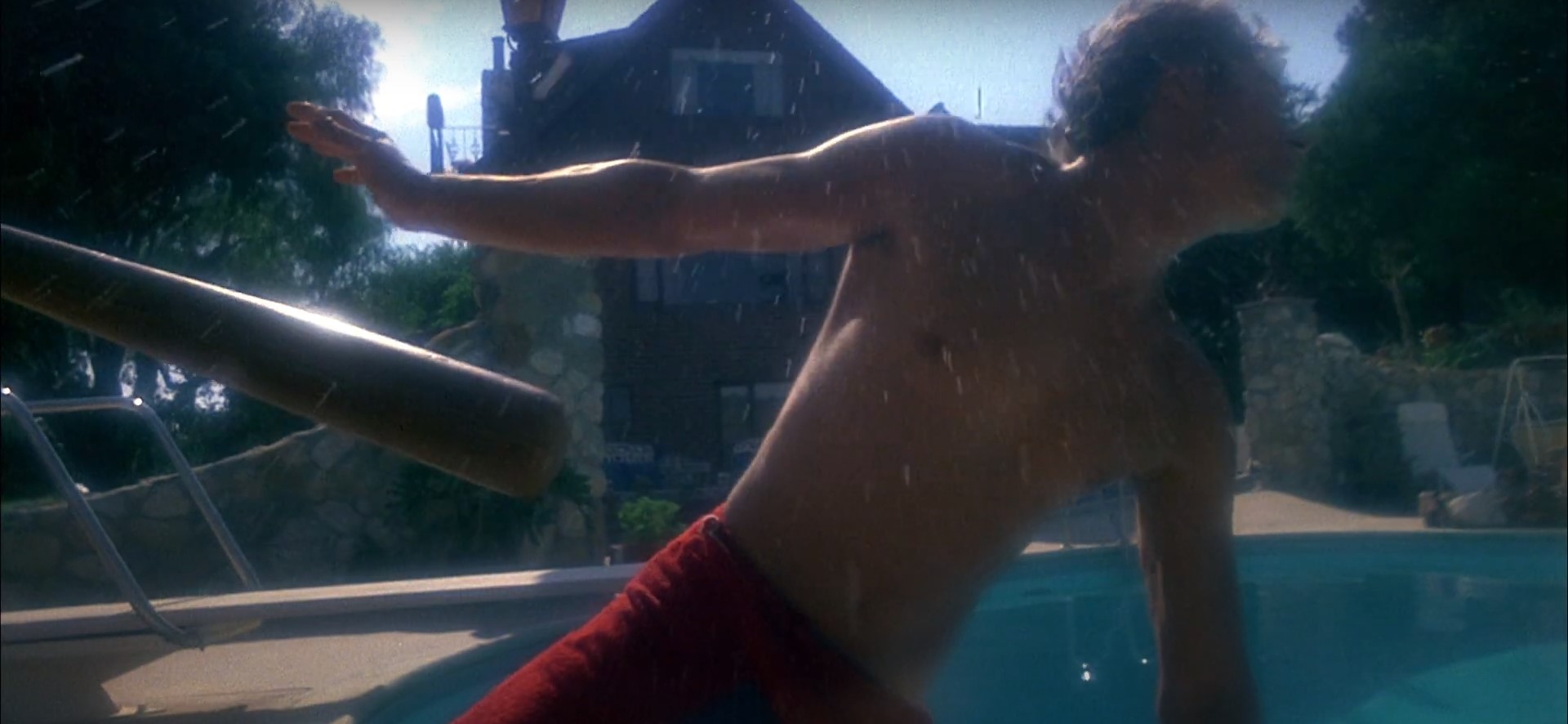
Though the post-credit opening scenes begins unscrupulous enough with Greg Stevens, played by television soap opera star David Wysocki whose credited as David Wallace, and his best friend Josh (Denis Mandel) stealing tires from Josh’s ex-employer, morgue owner Hank Andrews, the late “Day of the Animals” and “Pieces’s” Christopher George’s last cinematic role, because of being fired without being paid for his services, “Mortuary” inconspicuously moves from Stevens’ infringing on local law to surround itself more aligned with Stevens’ girlfriend Christie Parsons who feels more like a backseat character upon introduction.  Yet in a flurry of exposition with her mother, Christie, who is played by “Mom” actress Mary Beth McDonough, circles back and ties into the opening credit scenes of an unknown man being bashed over the head with a baseball bat and falling into his pool.  We learn that the man is Christie’s father whose death has been rule an accident (no evidence of baseball bat related injuries? Was evidence collecting really that low-tech in the 1980s?), but Christie begs to differ as she point blank accuses her mother, Christopher George’s life co-star Lynda Day George, being involved in his poolside death.   While performances statically hover inside the wheelhouse of teen horror with Greg and Christie seemingly unaffected by the mysterious incidents happening all around them until someone literally is grisly murdered in their adjacent bedroom, a fresh-faced Bill Paxton (“Frailty”) inevitably steals the show with this enormous presence on screen as Paul Andrews, the town’s mortician loony son working for his father as an embalmer.  Paxton’s zany act borders “Mortuary” as either a diverse trope horror with an awkward outlier character stuff into the eclectic mix or a seriously unserious bluff of being a serious horror film – see what I did there?  Paul listens to Mozart on vinyl, has an obsession for Christie, and likes to prance and skip through the graveyard as a son broken by his mother’s unhinged suicide.  “Mortuary” rounds out with Curt Ayers (“Zapped!”), stuntwoman Donna Garrett (“The Puppet Masters”), Greg Kaye (“They’re Playing With Fire”), Alvy Moore (“Intruder”), stuntman Danny Rogers, Marlene Schmidt, and Bill Conklin as a walking contradiction as a beach town sheriff wearing an unabashed cowboy hat like a sorely out of place rootin’-tootin’ lawman from the West complete with country draw lingo. Also – don’t miss the bad nude body double used for McDonough when Christie is lying on the morgue slab.

Now, I’m not saying “Mortuary” is the sole inspirational seed that sowed the way for the “Scream” franchise, as I’m sure many, many other iconic classics inspired Kevin Williamson, but, in my humble opinion as an aficionado about the genre components and how they’re all connected by a few or many degrees of separation, “Mortuary’s” villain could be the long, lost ancestral sperm donor responsible for the origins of Ghostface.  The purposeful movements and actions align very closely in a parallel of deranged defiance and floaty black and white costumes.  However, “Scream” is just packaged nicer as “Mortuary” continuously drips all over the place like a three scoop ice cream cone on a hot summer day.  Containing Avedis’s arc on Christie was nearly impossible as each act jumps and focuses on someone entirely different while also exposing the killer blatantly without even trying to misdirect or repel any kind of suspicion.  It was as if Avedis and Schmidt swung for the fences with a convoluted giallo mystery plot but couldn’t figure out how to build that into the narrative without drawing from and drowning in exposition and that’s how the cards came crashing down by unfolding with talking head pivotal plot points that steered to a rather quick, yet pleasant, climatic head of a total mental meltdown that’s much more cuckoo than Billy Loomis and Stu Macher will ever be. 

If you didn’t score a copy of Scorpion Releasing’s limited edition release of “Mortuary” on Blu-ray, then sing the praises of second chances with this Scorpion Releasing Blu-ray reissue through the MVD Visual Rewind Collection line. The all region release is presented in a high definition, 1080p, widescreen 1.78:1 aspect ratio of the Scorpion Releasing AVC encoded transfer on a BD25. Quality-wise, the release delivers the perhaps the full potential of a cleaned up 35 mm restore with no sign of cropping, edge enhancing, and a healthy amount of good grain, but there are noticeable gaffes with select scenes that seemed to have missed or left out of the restoration all together, reverting back to the rough, untouched image. Coloring, skin and objects in the mise-en-scene, come out lively, naturally, and without a flutter of instability with transfer damage at a minimum. Probably the most surprising is the original 2.0 mono LPCM track. The English language mix does the job without climbing the audiophile corporate latter, leaving in the wake a soft dialogue that’s a struggle to get through if you’re not wearing headphones. Depth seems a little slim, but the range keeps progressing nicely that often feeds into the late John Cacavas score. Cacavas operatic film score is bigger than the movie itself, often grandiose the Gary Graver one-note cinematography. The overexposed ethereal flashback has slapped redundant fatigue plastered all over it but, then again, the film is from the 80’s. Option English subtitles are available. Special features include only an interview with John Cacavas from 2012, from the original Scorpion Releasing print. Two upsides to the MVD Visual release are the cover art mini-poster tucked inside the casing and the added cardboard slip cover that resembles a tattered VHS rental tape slip box complete with a faded Movie Melt yellow caution sticker, a Be Kind, Remind sphere sticker, and a Rated R decal. If you’re a big Bill Paxton fan, “Mortuary” reveals another shade of talent from the late actor. Other than that, the Howard Avedis production often haphazardly stumbles bowleggedly to a giallo-errific-type ending made in America.

Young Girl Gets Her Insides Shattered by a Large, Evil….Dildo?


Inspector Gianni Di Salvo is called in to investigate the discovery of a wrapped in plastic nude body of a young girl, located and waterlogged at the base of a dam. Her death was ruled a homicide after the coroner discovers her insides ripped apart from the blunt trauma of an extremely large dildo. The case leads the detective to an all-girl private school that aims to keep it’s pristine reputation, but with many suspects at hand, Inspector Di Salvo has no choice but to play the wildcard in tracking down a killer and breaking all the rules handed down to him by his superior, Chief Inspector Louis Roccaglio. The deeper he digs into the case, his long list of suspects shortens when they turn up murdered themselves, but the inspector’s key to solving this case lies with the young girl’s inseparable friends, Franca, Paola, and Virginia, whom frantically try to keep their secret under a tight lip.

“Someone with a cock this big raped Angela Russo and threw her in the river!” Trust me, thats not a line from a porn, but spoken by popular lead actor Fabio Tetsi is the ultimate hook. The long, hard, veiny lure that sucks you deep into this 1978 giallo known as “Enigma Rosso,” the first feature film by television director Alberto Negrin. Also known as “Red Rings of Fear” or just simply “Rings of Fear,” a plethora of screenwriters penned the uber-sleazy murder mystery, including Marcello Coscia (“The Living Dead at Manchester Morgue”), Massimo Dallamano (“What Have They Done to Your Daughters?”), Franco Ferrini (“Demons 2”), Peter Berling, Stefano Ubezio, and, the director as well, Alberto Negrin. “Enigma Rosso” completes the “school girl in peril” trilogy, following director Massimo Dallamano’s two films, “What Have You Done to Solange?” and “What Have They Done to Your Daughters?”, that don’t connect via a storyline but the reigns were unfortunately handed to Negrin to finish the task after tragedy struck Dallamano that rendered him deceased before production.

Lucio Fulci’s “Contraband” star Fabio Tetsi sizes up as the determined Inspector Gianni Di Salvo with a penchant for his kleptomaniac girlfriend. Tetsi’s a handsome, rugged actor with a defined jawline, dark and thick features, and a dimpled chin when he’s not sporting a beard or a goatee, such as in “Enigma Rosso.” Di Salvo goes from suspect-to-suspect with his equally eager assistant Bruno Allessandra. The two cops report to the off hands Chief Inspector played by a very worldly Ivan Desny and Desny’s casual style is polar opposite of the act first, look later of Tetsi. The officers go through a slew of suspects, including one played by American actor Jack Taylor (“Pieces”) as a very wealthy and scandalous shop owner who likes young women and three lovelies, Silvia Aguilar, Taida Urruzola, and Carolin Ohrner as “The Inseparables” form a forbidden click of girls who know what has transpired but are too scared to say a word. Tony Isbert (“Tragic Ceremony”) also has a role of a German teacher whose too involved with one female student in particular. Rounding out the cast is Helga Liné, from the sexploitation “Madame Olga’s Pupils,” María Asquerino, and Christine Kaufman as the Inspector’s love interest with a insatiable habit for stealing, but that romance fizzles in a matter of two scenes that don’t quite build up the tension between them.

“Enigma Rosso” puts the school girl in obscene peril, for sure. And, also, puts the school girl full frontal in various scenes ranging from desire to showers and in such scenes that exhibit the exploits of a large dildo being used during a sex party to pave the way for a crime, giving the film a perverseness air about it that glorifies the giallo that it embodies and embraces. Complete with the killer’s first person point of view, ominous gloved murderous hands, and the mysterious allure of an elaborate reason behind the murder, “Enigma Rosso” has everything a thirsty giallo drinker would gulp down. However, with the long list of writers, Negrin’s film partakes in a nonconformist pattern from intriguing and intricate mystery to wild hair hunches and scattered brain antics that jive about as a well as grape jam on a hot dog. the finale also wraps up too easily that Inspect Di Salvo doesn’t even break a sweat figuring out the whodunit aspect and more goes in line with a talking head scene that’s an exposition of events rendering a lackluster finale. However, the ending does wrap up the story nicely, leaving no unanswered or unsolved enigmas about the crime.

Scorpion Releasing and Doppelgänger Releasing present “Enigma Rosso,” also known as “Trauma” or “Virgin Terror,” onto a not rated 1080p High-Definition Blu-ray in a widescreen 2.35:1 aspect ratio. From brand new scans of the original negatives with extensive color correction, noted as done in The States, this is, and will ever be, the best version of the Negrin’s giallo. For instance, the coloring vastly outscores any other version with natural skin tones and in the brilliancy of conventional giallo color palettes. Some issue still surface to rear the unfortunate blemishes from the original negatives, such as vertical (blue) scratches that poison a couple of scenes. Also, there’s also a color correctness issue far right of the screen through the entire 85 minute duration, showing an fault in the scan with the unintentional exhibition of the untouched negative. Two audio versions exist on the static menu: an Italian language with English Subtitles and an English dubbed. The mono track has no real serious issues other than a slight static during more high frequency effects. “Don’t Torture a Duckling’s” Riz Ortolani furnished score has a robust quality that highlights the upbeat swanky tones of a 1970’s Italian crime film. Only an audio commentary with historian and author of the Mondo Digital website Nathaniel Thompson. Sizzlingly laced with casual nudity, glued together by elaborate criminal coverup, “Enigma Rosso” is one of Alberto Negrin’s most memorable shiplapped pieces of work in the most polished impressions of the original negative.