Never Trust an EVIL Trucker with a Drug and Prostitute Addiction! “The Bunny Game” reviewed! (Jinga Films, Danse Macabre, MVDVisual / DVD)

“The Bunny Game” is Not for a Weak Stomach! Now on DVD!

Bunny, a prostitute on the streets of Los Angeles, subjects herself to the lowest of clientele lists looking to exploit her services with their own abusive fetishisms.  Just to get by to her next meal.   Bunny is constantly in coked out state when tricking becomes nearly unbearable.  Manhandled, abused, and unconsciously raped, there seems to be no end, and she must persevere to survive the streets, beautifying and feeding herself physical and mental nourishment to keep up strength.   When she encounter’s a trucker named Hog, Bunny’s just looking to endure another insufferable John, but Hog has other plans for Bunny, kidnapping her, driving somewhere isolated, and chaining her up deep within his trailer, and tormenting and torturing her to a different kind of no end Bunny has never experienced.  Hog’s derangement is fueled by his extreme drug use in what is not his first rodeo with working in whores for his own personal enjoyment and the girls’ own personal Hell. 

Banned in the UK, “The Bunny Game” is an extreme torture porn horror based off the real events that happened to principal star Rodleen Getsic with being abducted.  There’s not much publicly known on her own horrible experience, but the “The Bunny Game” is a baseline shockumentary written in collaboration between Getsic and filmmaker Adam Rehmeier with in the director’s chair of his debut feature film.  Rehmeier, director and cinematographer of numerous music videos and shorts, conjures up a story and a completed film with singer-actress Getsic without ever materializing an official script.  Instead, improvising and extemporizing fluff up Rehmeier’s storyboarding bullet points of where people and places should be in the narrative construct, hence why much of the story goes without dialogue, replaced with frenetic visuals and montages of recalcitrant convention.  Rehmeier co-produced the film under his company Death Mountain Productions alongside Rodleen Getsic.

For having been abducted herself and for the film to be an overemphasis of it, Getsic steps into the main role’s fishnet stockings to be the used and abused sex worker, known only in the credits as Bunny, and the role is no walk in the park or for the faint of heart.  Bunny is a self-inflicted punishing performance and mostly what you see on screen being inflicted upon Bunny is genuinely be done to Getsic which includes branding of the caduceus symbol on her back, as well as the same symbol seared into the flesh of Getsic’s friend, Drettie Page, who was game to receive much of the same for-the-story, for-the-film punishment as another victim of Hog in, supposedly, flashback sequences.  Hog is played by Jeff F. Renfro, a regular in the industry for his transportation services owning a big rig and tractor-trailer, but as the formidable serial killer Hog, Renfro brings and matches the intensity of “The Bunny Game’s” near free for all improvisation and experimentation provocation.  Getsic’s willingness to go the extra mile, from being branded, lighting scored by knife play, having her head shaved, is equally matched by Renfro’s being the recipient of being spit in the face, handling the fondling and the other physical exploitation of Getsic and Page, and being a total wild eyed, masked and shirtless, top of his lungs maniac with a mindset that’s cruel and oppressive with another human being’s life in his hands.  Dynamically, it’s a cat playing with a mouse, a deplorable show of chauvinism, and a callously cruel picture of control with the players in full control and full acceptance of their characters.  Gregg Gilmore, Loki, Curtis Reynolds, and Norwood Fisher cast a supporting line to trawl the Rehmeier, and what Rodleen Getstic refers to, monsterpiece

Rehmeier and Getsic have both been recorded stating every action on screen, aside from the excess drug and alcohol use, is 100% real.  Now, “The Bunny Game” immediately slaps viewers in the face with Bunny on her kneeds giving extended, adult industry-enthusiastic, fellatio to some unknown man only shown from his clothed backside at mid-section down to the top of the knee.  While not as sloppy as one might think despite Getsic’s vigorous efforts, the opening oral provides that provocative, eye-opening, banned-in-the-UK scene that now has snuck insidiously in the recesses of our minds and, in conjunction with the previous Rehmeier and Getsic authentic claims that never really specifying sex as one of them, audiences will wonder if what they’re subjected to is in fact a real act of oral sex.  To digress briefly, what’s the deal with movies with Bunny in the title (“The Bunny Game,” “Brown Bunny”) and oral sex?  From there, if you’re not disgusted by the voyeurism and chauvinism of sex work and misogyny, you’re digging Rehmeier’s film and hooked with curiosity tied to Bunny’s unfortunate fate, but what ensues embodies the essence of a crazed industrial music video of minor, discordance chords that produce harsh sounds and tones to envelope the choppy and cutting editing that shatters linear time, as well as the struggling soul, especially in montages of maniacal torture and onset introspective  between the punishment giver and taker in the Hog and Bunny intersection that will instill a catalytic crossroad for one of them.   There’s plenty of empathy to be had for Bunny, or maybe even sympathy if one has gone through similar abduction, torture, or has had a previous life on the streets, but the coarse nature of Hog’s slow and measured wrath can certainly be felt in the 1 hour and 16-minute runtime as revisiting Bunny for another dash of screaming, laughing, and misuse of her body and being at the hands of Hog is often on a wash, rinse, and repeat cycle of cynicism, an unavoidable problematic staleness often associated with films that do not have a shooting script, or any script for that matter.  Ideas tend to run dry and the then cornered concept is to bedazzle with nonstop bedlam but the fresh frenzy of exploitation is often fleeting and expires a lot quicker than the film’s runtime does.

A tale of street tragedy and what should be an always constant reminder that deranged killers are here, there, and everywhere, “The Bunny Game” scores high in extreme exploitation within its experimental execution.  Jinga Films, Danse Macabre, and MVDVisual bring the corrosively cuddly film back onto DVD after the original Autonomy Pictures release has been out of print for a while.  The single layer DVD5’s codec is of MPEG-2 compression and presented in 720p resolution in a widescreen 1.85:1 aspect ratio.  The achromatic black and white image stacks additional bleakness to the already soulless content with a low field of contrast creating borderless shadows but the use of handheld key lighting, aka flashlight, does create a miniscule delineation at times when under a blank of black.  Blacks succeed in being solid for the most part with only a couple instances of minor banding which is pretty good DVD compression, likely a result of the zero color to encode and decode.  The English LPCM Stereo is not a girthy mix of dialogue, soundtrack, and ambience.  Now, all three elements exist, but since “The Bunny Game” has zero script, there’s not much in the way of conversating and what’s there is prominent enough amongst the layers of industrial jarring dissonance that, at times, beats in sync with the visceral montages.  Inside the mic recording scope, ambience comes and goes based off the intensity of the scene and score but there are quieter moments to reflect on the improper handling of Bunny with Hog and the other indiscriminately disgusting Johns her life as a prostitute absorbs.  Special features include an archival Caretaking the Monster behind-the-scenes interviews with cast and crew, including actors Rodleen Getsic, Jeff Renfro, Greg Gilmore, and director Adam Rehmeier, discussin the original concept that was more aligned with Getsic’s personal abduction accounts but then evolved into something more horrifying that lead to the casting of Renfro, their isolated locations, and the realism inflicted upon Getsic as well as the teaser and theatrical trailer.  The DVD packaging is much the same as previous editions with a video aesthetic resembling black and white contrast but unlike previous releases, the cover art shows off its graphically artistic masked bunny in shackle design that speaks to the content.  The Jinga, Danse Macabre Danse, and MVD release lists this as a rated R release whereas the previous version was unrated; however, both releases have a 76-minute runtime.  A quick review suggests this “R” cut is actually the same as previous versions.  The DVD also has region free playback.

Last Rites: This game is not for the faint of heart. “The Bunny Game” tests willpower to stay through to the end, through the torture, rape, and the real violence in a one-sided acrid affair. If you can survive the brutality, this game is for you.
“The Bunny Game” is Not for a Weak Stomach! Now on DVD!

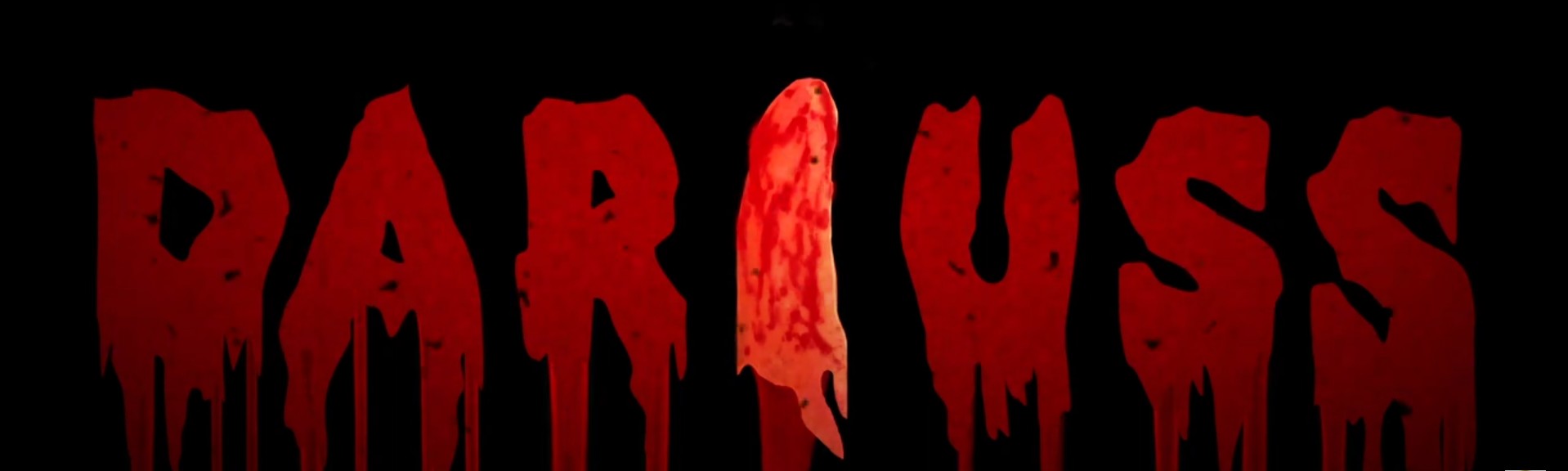
Who is This EVIL Named “Dariuss” reviewed! (SRS Cinema / DVD – Extreme and Unrated)

Find Out Who “Dariuss” Is With this SRS Release!

An experimental vision quest of loss, grief, and death takes refuge in a small English town, inside an old and quaint English house.  A mother grieves for the loss of her child, sobbing uncontrollably and mindlessly wanders with distant stares as the heart pains for her child.  The grandmother, doing what she can, comforts her daughter’s newfangled distraught nature while the husband, grieving in his own isolated way, stays out late at night to drink himself into a stupor.  When madness lurks about their home and intrudes upon their privacy, a vile and heinous loss of life bathes a depraved lunatic in their fluids.  Neither mother, father, nor grandmother is safe from terrific travesty in corporeal form.  A sickness has arrived to cure the inconsolable, eradicating them slowly of the pain in the most painful of ways imaginable, and doing it all with a bloodstained maniacal grin stretching from ear-to-ear.

A hellish loop of defeating pessimism, “Dariuss” fringes the black void areas around reality and escapism that evoke the uncomfortable nature of people and the unpredictable tides that turn for the worst when already at rock bottom.  “Dariuss’s” brackish, brainsick narrative is the brainchild of Guerrilla Metropolitana, an Italian artist crafting his underground and dark cinemaverse of misanthropic mayhem and esoteric eroticism.  The writer-director Metropolitana lives and creates out of London, UK and “Dariuss” is his 2023, debut feature-length film behind an oeuvre of distressing shorts of human imperfection and immortality encroached by a constant line of madness.  Metropolitana not only self-funds and produces his film, where he achieves total control to push back against not only major studio norms but also conventional independent stratagem, but provides the avant-garde cinematography, unorthodox editing, an experimental score and sound design, and even costars the trench coat covered naked body of the antagonistic killer. 

One element to not forget to mention before going through the cast is that “Dariuss” is completely without dialogue.  Metropolitana’s sound design manipulates and repeats many sound clips, such as the plops of water droplets or the high-pitch lip trilling, to fashion an uncomfortable audio sensation sporadically strung throughout that parallel’s the coupled low tumbling score and baby laughter, the later more so when referring to child loss or the abhorrent reincarnation of the child.  Ila Argento holds the majority screen time, especially since the pregnant woman credited as Sarah Isabèl is also Argento as well in some sort of meta crafting or illusion, and she plays the grieving, depressed wife wailing, screaming, and just distantly starring in vast quantities and in a daze of mirrored or painted inversions about the English home.  “Dariuss” is more than just extreme performance art as it embodies interval wretchedness associated with trauma, or in this case more specifically, loss through a reverse world looking glass.  As the wife is tended to by the grandmother, played with apneic conditions and posturing concern is Marie Antoinette de Robespierre, Archibald Kane’s the husband role is scantily around for a father who just lost a child and when the father is in frame, he’s idling in his car drinking, or rather gulping, from a bottle.  Both the grandmother and father roles are a part of Metropolitana’s message of a shattered family structure of insincerity and disconnect. Feeding on that dysfunction is the childlike maniac, played by Metropolitana himself, with rapacious amusement off the back of the household’s suffering.  Almost as if the maniac is a reincarnation of the lost child, perceived by play like antics in a nearly naked and hairless state and audible by the babylike, post-introduced laughter, returning home to exact horrific horseplay on his family involving rape and murder and cannibalism alongside the frolicking and breast milk chugging.  

Let’s preface with an important fact that “Dariuss” will not be everybody’s cup of tea; in fact, Metropolitana’s film is more like bitter black coffee with a pungent, sour smell as a narrative series of images, like a splayed, taped together string of polaroids, giving godawful glimpses of grief and gore.  Sounds and images repeat that beg for madness to emerge out of the nouvelle vague filming style, experimenting with various inverted images, mirrored and angled shots, different types of aged filters and strange lighting, various camera speeds, and oddly framed shots will subject audiences to pricklier sensory sensations than the depicted violence and gore, which is graphically ghastly and extreme with necrophilia and cannibalism.  Story structure also veers into non-linear territory but the gist of the acts is present, if not loose and equivocal for open interpretation and choice cinema characteristics that stray from normal convention, to mold a beginning, middle, and end in only a way Metropolitana can construct by contrasting melancholic grief with stagnating indifference, with a maniacal pleasure of a sandbox of sinew, and, in way, comical by way of the insanity with disturbing imagery mixed with playful mischievousness. 

Just who is Dariuss?  That’s the obstruse person perhaps at the centermost of this ghastly, grisly story that’s now on DVD from SRS Cinema as a part of their Extreme and Uncut label.  The DVD comes MPEG2 encoded, 480p standard definition, 5-gigabyte DVDR that showcases a wide-range of filters, inversions, lighting designs, grading, and you name it, “Dariuss” likely did it of cinematography techniques that stay in the rough patches of eccentricity rather than being comfortable in the fairways.  Picture quality fluctuates and varies depending on the aesthetic chaos methods being deployed, leaving behind not the sharpest looking picture with noticeable pixelation on anything above a 32″ television but not enough of an eyesore to be an imperceptibly deterrent.  Depth has fair spatial qualities but range and saturation is pretty limited to an anemic neutral palette to only when the monochrome or higher contrasts are not in play. The LPCM 2.0 stereo contains no organic matter, meaning that none of the sound is captured within the scenes, as Metropolitana modulates, manipulates, and modifies singular notes and tones for creepy and ear-splicing effect. This also pertains to the soundtrack being completely devoid of dialogue to give the auteur complete authority of how his film she be heard and every bit of that sound design is front loaded and high-powered but to an intended unrefined audio art. English captioning for the deaf and hard of hearing is available. Special features encoded are a behind-the-scenes still gallery and SRS trailers while the standard Amaray comes with an SRS illustration of the film’s original one-sheet, transposed to the disc pressing. There are no inserts included nor slipcover. SRS Cinema’s release is region free and has a runtime of 62, ideal, or even a tad bit too long, for this type of experimentation.

Last Rites: Not to be confused as a nail-biting, popcorn thriller, “Dariuss” will only speak to a select few able to bend the mind to impressionistic, dark eroticism and savagery, both qualities of which Guerrilla Metropolitana has and depicts in droves.

Find Out Who “Dariuss” Is With this SRS Release!

Mother Russia’s Most EVIL Serial Killer is “Evilenko” reviewed! (Unearthed Films / Limited Collector’s Edition 4K UHD and Blu-ray)

Limited Collector’s Edition 4K and Blu-ray Available Here!

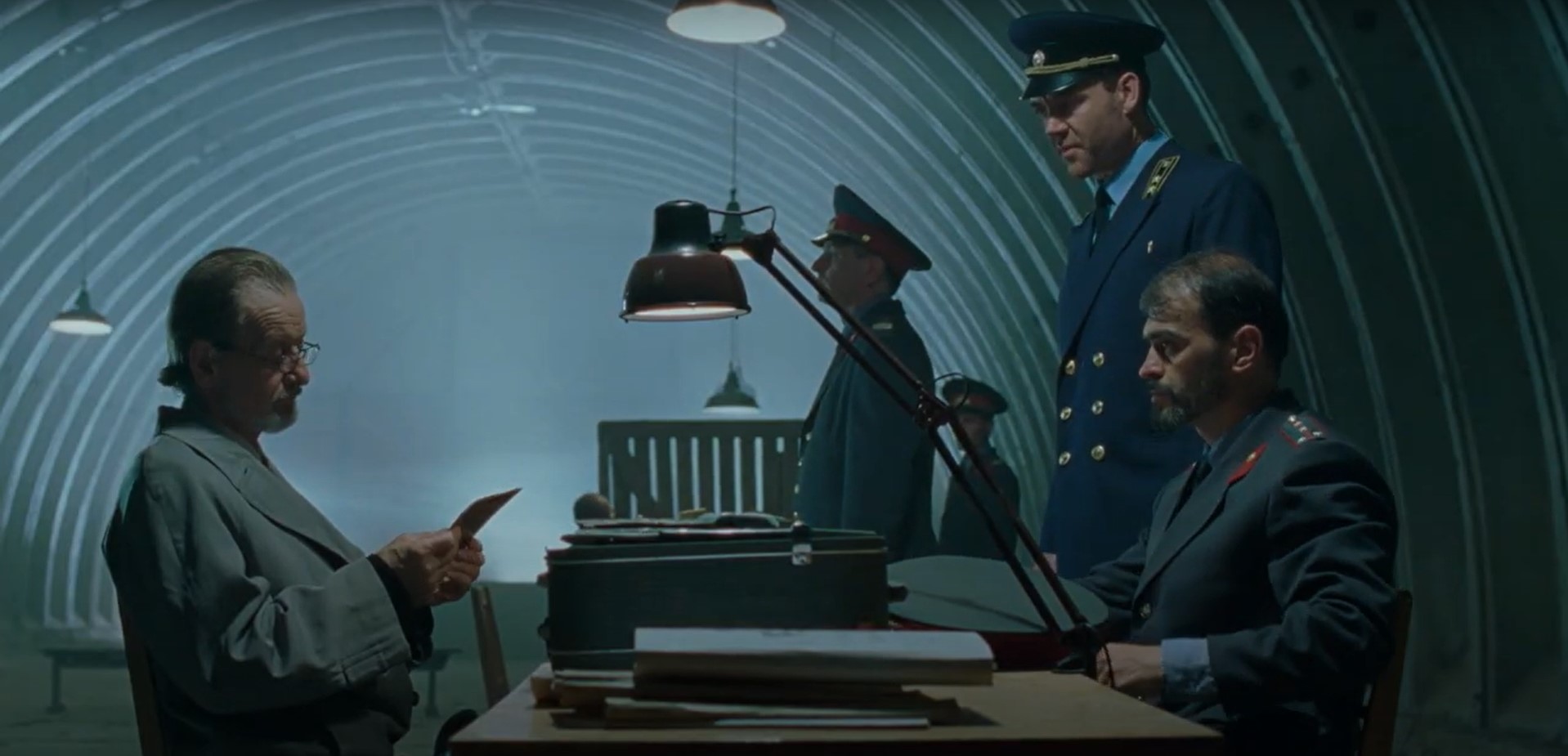
Kyiv, 1984 – An aging schoolteacher named Andrej Evilenko is stuck in Josef Stalin’s quickly dwindling sociopolitical communism party and finds himself dismissed from the school after being accused of attempted rape of one of his preteen students.  His release from vocation obligates him to write letters to the Communist party still clinging to control and from those letters comes a job with the KGB under the guise of a railroad inspector.  Evilenko’s empowerment by the party drives his dangerous urges to rape, kill, and cannibalize women and children over years around Kyiv and Crimea, using his position of inspector to travel.  In 1987, Magistrate inspector, Vadim Lesiev, is assigned by the D.A. to hunt down the serial killer who has by then murdered over 30 victims.  Over the course of the next eight years, Lesiev finds himself chasing his tail and fearing for his own family’s safety against a monster that has all of Kyiv frightened. 

Based off the true crime story of notorious Soviet Russian serial killer Andrei Chikatilo, “Evilenko” tells the fantastically frightful tale of the real “Butcher of Rostov” who did confess and was convicted for rape, murder, and the cannibalization of 52 young women and children, of both sexes, from 1978 to 1990.  The Italian-English production is spearheaded by Italian filmmaker David Grieco who directs the film as well as supplies the story’s base material from his own semi-biographical novel on Andrej Chiktilo, entitled “The Communist Who Ate Children” (“Il comunista che mangiava i bambini”).  Grieco, the son of the of the founding members of the Communist party, finds a financial means to produce a visual adaptation from Britain’s Pacific Pictures consisting of Michael Cowan and Jason Plette of “Killer Tongue” and produced by Italy’s Mario Cotone (“Malena”), representing the MiBAC, the Italian Ministry of Cultural Activity.

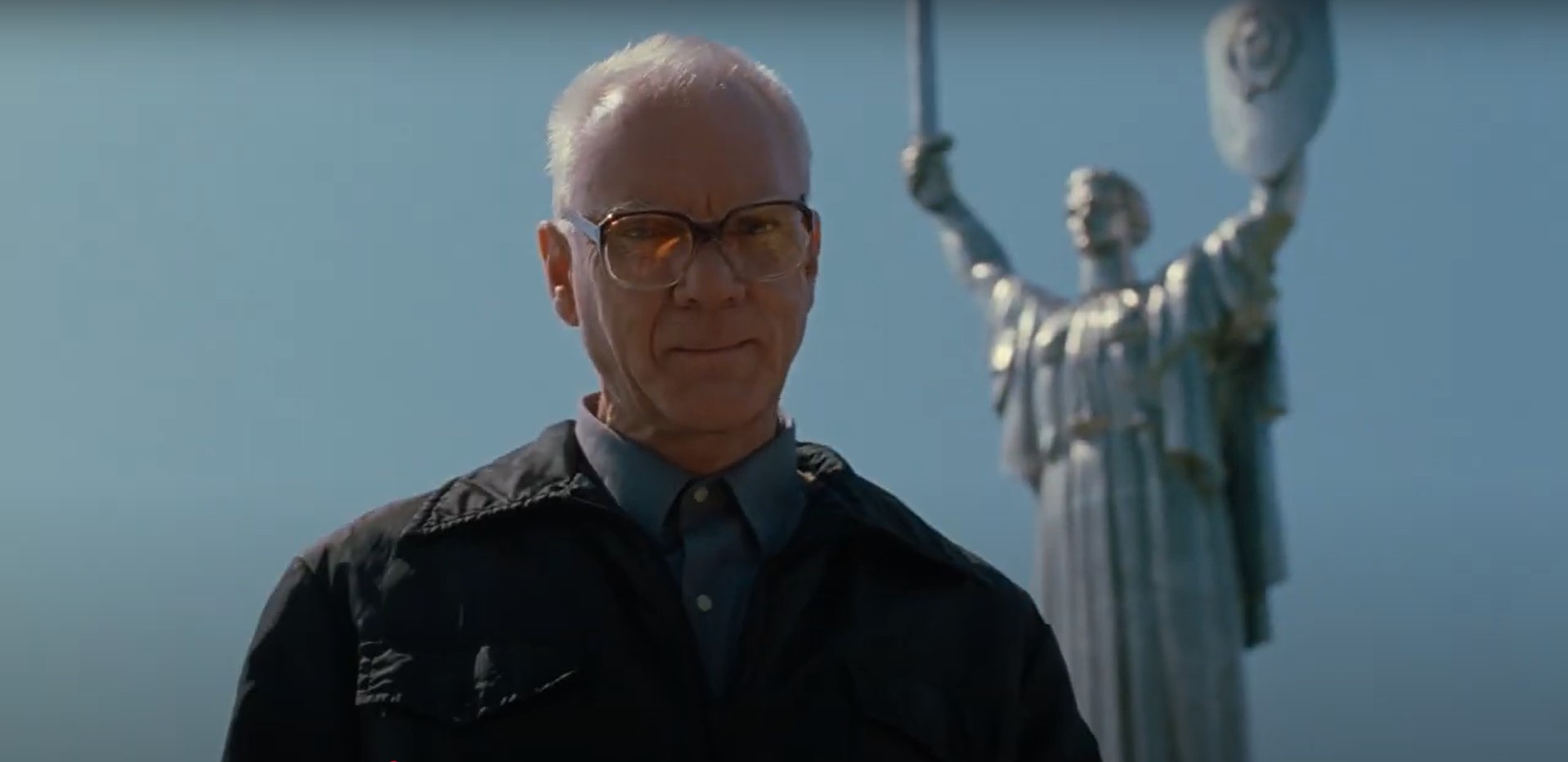
Who better than to portray a variant of the child molesting, murdering, and eating Soviet Andrej Chikatilo than Malcolm McDowell, the British actor who is no stranger to controversial films and performances having the lead roles in both Stanley Kubrick’s celebrated violence in a dystopian society in “A Clockwork Orange” and in the pornography spliced infiltrated titular performance film of the sultry period drama “Caligula.”  Being older and wiser doesn’t phase McDowell to shy away from committing to difficult scenes involving minor aged costars, especially scenes with sexually ambiguous dialogue and being pants less while speaking it, and while not a physically demanding role for McDowell nor is it filled with the intense-eyed actor’s usual fiery fervor, but in the shoes of Evilenko, he nails down the real serial killer Chikatilo’s exterior appearance, despite attempting to make McDowell appear younger with just only a wig to convince audiences of the 20-year span in the story, and touches upon the oddities and the quirks that make Chikatilo a delusionally faithful comrade, justified by his own investment into the communist party.  Evilenko’s archnemesis comes in the form of district attorney magistrate investigator Vadim Lesiev, played by the underutilized New Zealand born actor Marton Csokas (“Lord of the Rings,” “Cuckoo”).  “Evilenko” is clearly the Malcolm McDowell show but Csokas gives his all to a man not only doing his duty as an official of the Russian pervading prosecution but also as a family man haunted by his inadequacies and his inabilities to catch the perverted serial killer that might just strike close to home, putting Lesiev on edge with that nagging worriment.  Grieco’s editing and story development greatly undercurrent Csoka’s motivations and plights, distorting his complexities to a minor key of his true self, and letting McDowell have free reign over his subsidiary counterpart.   Yet, neither character is fleshed out definitively, none to compel a reason for their idiosyncratic methods and behaviors, which goes hand-in-hand with the purgatorial editing that is loose with the timeframe.  Ruby Krammer (“Alien Exorcism”), Frances Barber (“Superstitition”), Vladimir Levitskiy, Ihor Ciszkewycz, John Benfield (“Hitler’s S.S.:  Portrait in Evil”), and Ronald Pickup (“Zulu Dawn”) as a psychotherapist assisting tracking down the killer.  

As much as the Grieco and McDowell dynamic works to monstrously depict a coldhearted and crafty serial killer coupled with a sliver of slithering supernatural propensities to lure women and children in a fixed trance or, in more conventional means, into doing what he wants with an spellbinding combination of stares, manipulative conversation, or just overall emitting a towering communist cloud of authority, “Evilenko” is deflated by the story’s time lapsing.  Opening with Kyiv 1984 and then subsequently in Crimea five years later in 1989, the noting of years or periods is hereafter eliminated from the narrative that becomes a back-and-forth yarn between a select of Evilenko’s pied piper lures and kills and magistrate Lesiev always behind the eightball pursuit of the elusive, unknown killer.  There’s a loss of sight on Lesiev’s psyche that is very important to the story and more so at the climatic interrogation scene where both men are stark-naked in a power and controlling situation that harks back to Evilenko’s mesmerizing tactics used against the adolescent prey and Lesiev’s fear and obsession of losing his family to what once was an uncatchable slaughterer who hallmarked with mutilation and devouring.  Grieco’s willingness to be grisly is tamer than the expected based off the prologue scenes of Evilenko exploiting and nearly raping a preteen girl but doesn’t take away the effect that the entire narrative arouses an uncomfortable experience teased to always be on the edge of overly graphic but never breaking that threshold; “Evilenko” is one of the biggest blue balls instigators is in last 20 years and that rush of not seeing or knowing can be more thrillingly charged for some than anything totally explicit ever could produce. 

Unearthed Films limited collector’s edition has 2-disc, dual format capacity with a 4K UHD and Blu-ray.  The second 4K UHD from the label, behind their release of “The Guyver,” solidifies the extreme horror company a player in the ultra high-definition game.  The New 4K transfer restoration of the original camera negative is HVEC encoded, presented in a widescreen 1.85:1 aspect ratio with 2160p UHD, on a massive three layered BD100.  The Blu-ray comes AVC encoded, 1080p high-definition, on a BD50, presented in the same aspect ratio.  What’s gathered from both presentations is that there’s nothing to fault them with as both excel to their max output abilities.  In fact, the transfers are pretty much identical, integrally achieved by digital optimization of an already optimized digital camera, a Sony PMWEX3 with 35mm adapters, which at that time was the bigger brother and flagship model of the Sony line.  A slight grading reduction instills a sense of austere or lackluster coloring that mocks a communist Russia veneer.  Close ups on McDowell’s unique features and the expound of particulars in the surroundings, especially when engulfed in leaf-covered and tree-thick woods, tell of the emerged details and textures in a higher pixel count.  An English DTS-HD 5.1 Master Audio is the sole mix available.  The back and side channels are essentially used sparing for a few flakes of brief ambient hubbub in what’s mostly a frontloaded conversational piece of mostly McDowell in one of his great monologuing moments. We get some nice oblong orchestral pieces from the late David Lynch regular composer Angelo Badalamenti (“Lost Highway,” “Twin Peaks”) that incorporates haunting harmonies and soft, ethereal vocals that play into the loss of innocence theme. Dialogue’s healthy and prominently favorable next to the unchallenged low ran range. English subtitles are available for selection. The BD100 offers only the feature, and a new commentary track with director/writer David Griece and star Malcolm McDowell while the Blu-ray offers the same commentary plus Evilenko Dossier: Andrei Chikatilo, the examination of the real killer against the onscreen rendition, cast and crew interviews with Grieco, McDowell, and Badalamenti, a photo gallery, and the original film trailer all within the bonus content of a fluid menu with Badalamenti’s and vocalist Dolores O’Riordan’s main track “Angels Go to Heaven.” The limited collector’s edition is housed in a cardboard slipcover of one of the many variants of Malcolm McDowells face slathered in soviet red. The black Amaray has the same cover art with no reversible cover. The discs are snap-locked in place on opposite sides, pressed with another slathered in red image pulled from powerful interrogation scene between Evilenko and Lesiev. Both formats are not rated, locked region A encoded, and have a runtime of 111 minutes.

Last Rites: “Evilenko” is a heavy story that needed to be told. You don’t hear much about the USSR vulnerability and the real-life serial killer had frightened the proud, the stoic, and the impoverished alike as “Evilenko” seers as a case study mental illness, is a metaphor for deteriorating Communism, and a tale too terrible to forget and despite some pacing issues and timeline infractions, Grieco and McDowell pull off a rather nasty semi-doc of one of the worst killers to ever live.

Limited Collector’s Edition 4K and Blu-ray Available Here!

EVIL, Over a Decade in the Making! “Profane Exhibit” reviewed! (Unearthed Films / Blu-ray)

“The Profane Exhibit” is Finally Here! Come And Get It!

Forged, smelted, and baked from the fiery grounds of hell, 10 stories of bleak and utter horror crimson the soul with blood and pale it with terror.  Ten directors, ten stories, ten obscure unfathomable depictions tell of a draconian religious sister matron with a despotic rule over a child orphanage, a daughter held prisoner by her parents in her own home basement, a cult willing to sacrifice newborns for the sake of their demonic tribute, the Third Reich submitting to extreme measures to keep their ranks pure, a reenactment of a father and son’s unnatural skin-to-skin bonding, a nightclub’s underground bloodletting witchery, and more unnervingly bizarre ballads.  These tales of torment tatter the life force piece-by-piece until there’s nothing left to exhibit, nothing left of one’s humanity, nothing left of being human.  A cruel anthology awaits just beyond the play button, ready to shock, appeal, and maybe even stimulate the perverse, primal nature in us all.   

An anthology a decade in the making or, to be more specific, a decade plus one year in the making in the long awaited “The Profane Exhibit.”  The 10-short film anthology is the brainchild of Amanda Manuel that began principal production in 2013 and finally saw completion and release in 2024 after a slow slog of shoots, edits, and post-production this-and-thats to finally crossover the finish line.  Varying from micro shorts and to average length short films, the anthology employed 10 different in degree genre directors from all over the world to make the mark in what would become a manic syndrome of monsters, mayhem, and molestation.  Yes, we’re talking about some really gross things, some terrifying things, and some other abnormal, abstract, and abysmal things that could be happening right now in your nightmares, or under your nose.  Anthony DiBlasi (“Malum”), Yoshihiro Nishimura (“Tokyo Gore Police”), Uwe Boll (“Bloodrayne”), Marian Dora (“Cannibal”), Ryan Nicholson (“Gutterballs”), Ruggero Deodato (“Cannibal Holocaust”), Michael Todd Schneider (“August Underground’s Mordum”), Nacho Vigalondo (“Timecrimes”), Sergio Stivaletti (“The Wax Mask,”) and Jeremy Kasten (“Attic Expeditions”) helm shorts they’ve either written themselves or by contributing screenwriters Carol Baldacci Carli (“The Evil Inside”) and Paolo Zelati (“Twilight of the Dead,”).  Harbinger Pictures and Unearthed Films, who also premiered it’s at-home release, co-produced the anthology.

Much like the diversity of directors, the cast is also an assortment of aggregated talent that stretches the global gamut.  Popular and classic horror figures like Caroline Williams (“The Texas Chainsaw Massacre 2”) and Clint Howard (“Ice Scream Man”) play the normal couple next door conversating about politics, date night, and work while all the while they’ve locked their daughter away from the world and use her as daddy’s little sex slave in Uwe Boll’s “Basement,” depicting the normal and safe is actually abnormal and danger right in the middle of suburbia.  Others such as the underrated scream queens Monique Parent (“The Witches of Breastwick”) as a fully naked and willing “Goodwife” to her sadistic husband, Mel Heflin (“Queen Dracula Sucks Again”) donning a pig mask, naked by the way, in a rave club along with Tina Krause (“Bloodletting”), Elhi Shiina (“Audition”) and Maki Mizui (“Mutant Girl Squad”) finding happiness amongst death, and notable global genre actors Thomas Goersch (“Voyage to Agatis”) as the German father crippled by his son’s retardation, Dan Ellis (“Gutterballs”) as the hardworking husband who has everything but it all means nihilistically nothing, and Art Ettinger, the editor name and face of Ultra Violent Magazine doing his part with a bit patron part in the nightclub.  Mostly all listed have previously worked with their short film directors previously that denotes a sense of ease and expectation from their performances but that still makes their acts nonetheless shocking.  “The Profane Exhibit” also sees a few newer faces in the conglomerated cast with Christine Ahanotu, Tayler Robinson, Tara Cardinal, Mario Dominick, Witallj Kühne, Valentina Lainati, Josep Seguí Pujol, Dídac Alcaraz, and Stephanie Bertoni showing us what they can dish out disgustingly. 

Was the 11-year wait worth it?  Over the last months years, “The Profane Exhibit” received substantial hype when Unearthed Films announced its home video release, pelting social media with here it comes, get ready for it posts, tweets, and emails and for fans who’ve been following the decade long progress, director Amanda Manuel’s “The Profane Exhibit” does not disappoint as the content storyline harks back to the lump-in-your-throat, gulp-swallowing roots of general discomfort from an Unearthed Films release.  While it may not “Slaughter Vomit Dolls” level gross of upheaved bile and whatever was ingested moments before shooting, the filmmakers go deeper into the viscerally ignorant, ugly truths.  We’re not talking monsters or supernatural entities tearing Hell a new rectum, but “The Profane Exhibit” delineates the sordid nature of the human condition in an egregiously behavioral way that some of these ideas are not so farfetched.  A select few of the filmmakers incorporate surrealism into their shorts, such as with Yoshihiro Nishimura’s aberrant Mary Poppins, known as Hell Chef, replaces a spoon full of sugar with a bowl full of cooked human when turning a frown upside down of a young girl who just killed a man who she suspected tried to rape her.  The Geisha-garbed Hell Chef flies through the air holding up her Wagasa, Japanese umbrella, when her job is done.  Most others are grounded by realism with sadism being the primary culprit – “Basement,” “Goodwife,” and, to an extent, “Sins of the Father” and “Mors of Tabula.”  And then, there are shorts like the late, and great, Ruggaro Deodato’s “The Good Kid’s” that feels hackneyed and unimpressive coming up short amongst the others and makes one think if his name alone awarded the short a spot in Manuel’s lineup. 

In all, “The Profane Exhibit” delicately caters to the indelicate and is a visual instrument of visceral imagery curated for pure shock value. Unearthed Films’ Blu-ray release has finally arrived and is now in our bone-exposed and gory fingertips. The AVC encoded, 1080p high-definition, BD50 allows for dual-layer capacity for not only to squeeze in the 108-minutes’ worth of micro shorts, but allow for extended extras, deserving to fans who’ve waited years for this production to see the light of day.  Like any other anthology, a mishmash of styles but up against each other with the assemblage of different stroke directors and cinematographers but there seems to be no issues with compression, such as banding, blocking, aliasing, or any abundance of blurry noise, in the flexing widescreens aspect ratios of 2.35:1 and 1.78:1.  A good example of Unearthed Films’ codec processing is Deodato’s bridge scene; while I don’t care for the short all that much, the long shots of the bridge are nicely detailed in the nighttime, lit only be the bridge’s powered light poles, creating a downcast of warm yellow along a solid shadow-spotty bridge.  You can see and realize the stoned texture without even using your imagination on how it should look and that tell me there’s not a ton of lossy codec at work here.  An English, Spanish, Italian, and German mix of uncompress PCM 2.0 audio serves as the common output to be as collective and unified as possible.  No issues with hampered dialogue with a clear and focused track.  There dual channel quality is robust and vibrant, living up to Yoshihiro Nishimura’s surreal energy and a commanding Japanese tone while still finding voice prominence in other shorts, if dialogue exist.  Depth is fleeting without the use of a surround mix with an anthology that’s centered around the human condition rather than atmospherics, but I do believe Jeremy Kasten’s Amuse Bouche would have greatly benefited from the distinct gnashing, squirting, and smacking sound elements of a pig being processed to consumption in his wraparound.  English and Spanish subtitles are optionally available. Years of bonus content has been produced and collected for this special release which includes an audio commentary Director Michael Todd Schneider, Producer Amanda Manuel and Ultra Violent Magazine’s Art Ettinger, a world premiere interview with creator Amanda Manuel and short director Michael Todd Schneider at the Buffalo Dreams Fantastic Film Festival, a world premiere Q&A, a 15-minute mini documentary Ten Years Later with “Mors in Tabula” director Marian Dora, an extended short entitled “Awaken Manna” with introduction and discourse, PopHorror’s Tiffany Blem Zoom interviews select directors with Michael Todd Schneider, Uwe Boll, Jeremy Kasten, and showrunner Amanda Manuel, image gallery, and trailer. The 2024 release has a runtime of 110 minutes, is not rated, and is region free.

Last Rites: Worth it. That’s the bottom line for this long-awaited film imbuing with bottom-feeders. Unearthed Films returns to roots with rancidity and fans will find their bloodlust satisfied.

“The Profane Exhibit” is Finally Here! Come And Get It!

A Father Goes Looking for His Missing Daughter but All He Finds is EVIL! “The World of Kanako” reviewed! (Drafthouse Films and MVD Visual / Blu-ray)

Purchase “The World of Kanako” From Drafthouse Films and MVD Visual

A washed-up former lieutenant detective now working as a lowly security guard becomes the first person to stumble into the aftermath of a gruesome, convenient store triple homicide.  After being questioned by police who suspects him of being involved because of his manic-depressive disorder, stemmed by his historical violent behavior and ugly divorce that virtually left him with nothing but his medication, the indecorous alcoholic floating through life receives a frantic call from his ex-wife about their teenage daughter, who he hasn’t seen in years and has suddenly gone missing for nearly a week.  Eager to have his family back in his life, he takes on the responsibility of investigating his daughter’s disappearance but the deeper he digs into her whereabout the more of the ugly truth surfaces between his daughter and the criminal underworld where deception, prostitution, and murder tells a different story than the one in his muddled head. 

In 2004, novelist Akio Fukamachi wrote “Hateshinaki Kawaki,” the rummaging into a lurid and pulpy underbelly of crime network through the eyes of one charismatic high school girl and her former detective father pursuing answers to her disappearance.  Fast-forward a decade later to 2014, director Tetsuya Nakashima (“Kamikaze Girls,” “Confessions”) adapts the novel’s darkness into a visual descent into lunacy under the title “The World of Kanako” from a script by Nakashima cowritten with collaboration writers Miako Tadano and Nobuhiro Monma of “3 Year Pregnant.”  The adaptation retains fidelity to the original Fukamachi story filled to the brim with violence, yakuza, sordid themes, and coldness that translates effortlessly and is well received in the likes of Japanese cinema that has decades of trenchant crime films under its wing.  “The World of Kanako” is no different yet still stands alone as an engaging entry produced by Satomi Odake (“Himizu”) and Yutaka Suzuki (“Confessions”) under the production of Gaga Communications.

The film interweaves the past and present with a bi-story to help unearth cruel intentions from what starts off as a seemingly routine plotted mystery with a degenerate, deadbeat father looking to make recompences using his investigative skills to find his daughter to quickly spiraling recklessly into an abyss of bombshell revelations.  Yet, Akikazu Fujishima continues his crusade out of his own self-pity to a more deserving, rewarding, and if not, diverting objective that reveals just about as much of his cataleptic state of being than the exhuming of his daughter’s disappearance from out of the criminal underground.  Veteran, international actor whose had roles in such films as “Memoirs of a Geisha,” “Pulse,” and “Babel,” Koji Yakusho gives a conscious performance of a flawed man with flawed tactical awareness charging headfirst and sternly stubborn into a complex web where the giant carnivorous spider of seediness hides behind the veil.  At the opposite end of the casting table is then newcomer Nana Komatsu (“Destruction Babies”) making her filmic debut in a past timeline as the titular Kanako, paralleling her father’s story by accompanying fellow high school student and constantly bullied narrator of the historical account in Hiroya Shimizu (“The Outsider”).  Kanako’s story unfolds a yakuza narrative that’s nasty and perverse while shepherding in Kanako’s role that teeters upon the audience’s perception throughout.  What Akikazu fleshes out and discovers is the reason for all the mayhem that has, more-or-less, started with him, retorting whatever sliver of moral intentions he had begun with with the fact we can’t change who we are and the children we raise in a Darwin nature or nurture, or perhaps in this case both, environment.  Akikazu and Kanako meet a variety of unsavory characters along the way that ends shockingly and cynically, completely obliterating the happy family and happy ending conventionalities.  Satoshi Tsumabuki (“Tomie:  Re-Birth”), Asuka Kurosawa, Ai Hashimoto (“Another”), Fumi Nikaidô (“Lesson of the Evil”), Aoi Morikawa (“The Killing Hour”), Miki Nakatani (“Ringu”), Mahiro Takasugi (“12 Suicidal Teens”), Munetaka Aoki (“Godzilla:  Minus One”) and Jun Kunimura (“Ichi the Killer”) portray some of those uncharacteristic archetypes.

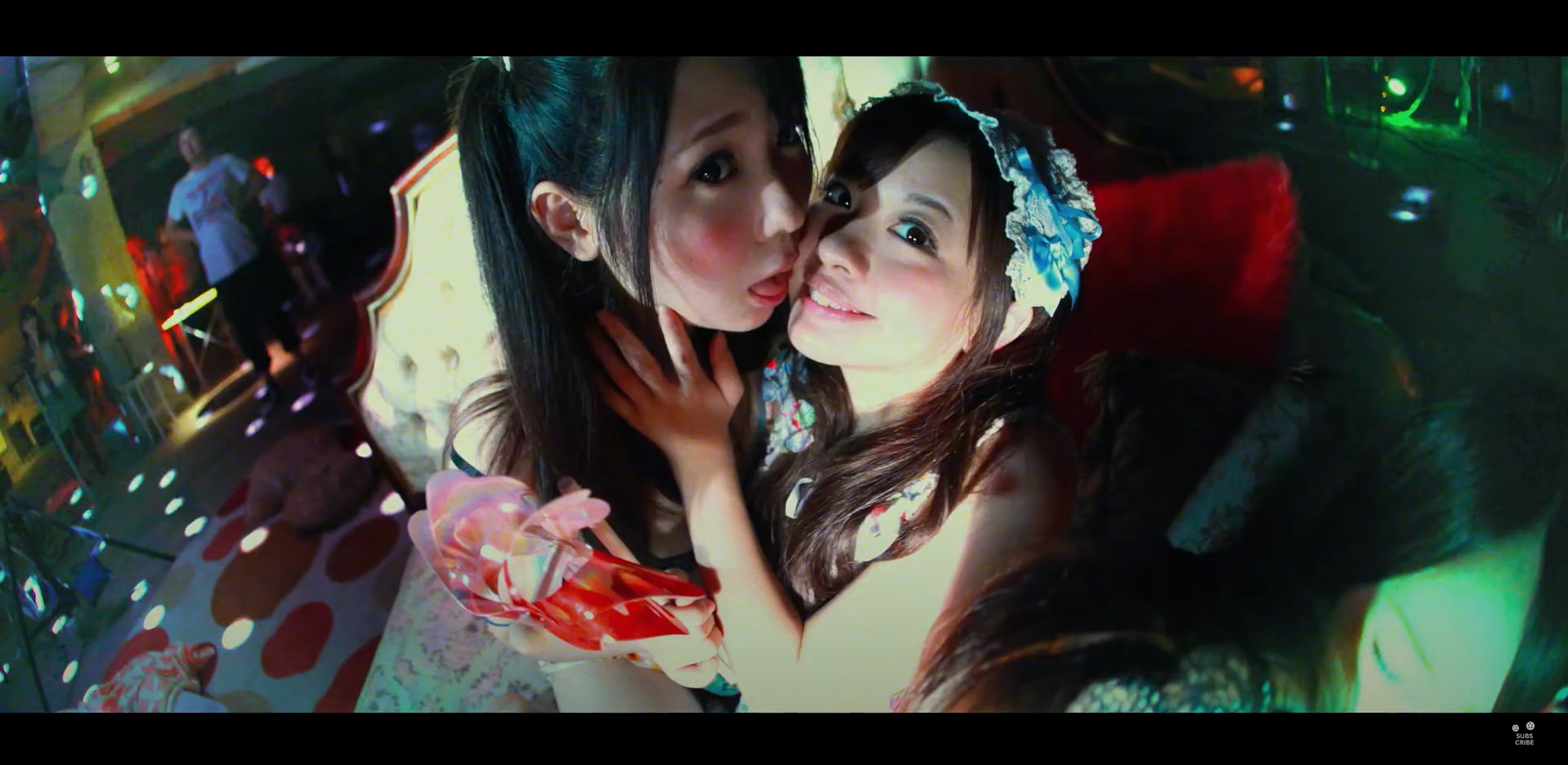
Stylish, pulpy, and darkly themed, “The World of Kanako” has a modern grindhouse pastiche of the hardboiled Japanese noir.  The story is a wrecking ball of all good ideals and hopes, a genuine cynical representation of an unpleasant situation.  An 80/20 mixture of live action and animation splice ins, Kanako’s world is certainly represented as a chaotic coup d’état over pedestrian storytelling and dissects the human condition to test family ties, reveal lost bonds, and really scrutinize hereditary genetics.  The film’s opening is a flurry of converging images, past and present, live and animation, and narration, soundtrack, and bits of dialogue that open with the gruesome convenient store murders of three people, seemingly strangers, setting the stage and tone for the rest of the Tetsuya Nakashima’s film that’s bleak to the dying core.  The rapid editing style doesn’t incur fluff or filler moments in a slimmed down for exactly what we’re supposed to experience.   While Akikazu Fujishima may not be the best example of a hero, a loafer with anger issues, physical abuse tendencies, glutton for food, alcohol, and manic-depressive pills, a rapist, and perhaps even engaging in incestual pedophile, the protagonist majority pushes forward with relentless determination and beyond the scope of being a good father to find his daughter, but for what purpose is about as ambiguous as the imbalanced human mind and Akikazu mind sizzles with insanity that affects his legacy to the point where he feels responsible for taking care of his own.  On the flipside of the protagonist narrative, Kanako begins as a savior of bullies, working to remove the threat from those too weak to defend themselves only for them to be exploited by that defenseless and vulnerability when the yakuza and more extremists take from their emotions and bodies.  

Tetsua Nakashima speaks an entirely new language in “The World of Kanako,” derived from a mix of the compellingly twisted story of “Old Boy” and the appalling violence of filmmaker Takashi Miike.  Drafthouse Films and MVD Visual re-release “The World of Kanako” on a high-definition Blu-ray.  The 2024 release comes with AVC codec on a dual-layer BD50 and presented in a widescreen 1.78:1 aspect ratio.  The various animation styles spliced into the live action coupled with some choice primary color grading in the opening gives “The World of Kanako” a very nostalgic touch of passé pink films of the 1980s and slight arthouse surrealism feel to the likes of Nobuhiko Obayashi (“House”).  The mixture doesn’t meld into one another with detrimental effect and leaves a stark impression between the formatted visuals that creates definitive delineation.  Details also don’t bleed in the sharp textures of character faces and clothing with objects being distinct and well defined.  Darker scenes are enshrouded in intentional shadow amongst grittier interiors to better understand the gritty context, losing some details but no issues with compression, such as blocking or banding. Two audio options are available, and both are in Japanese with a lossless DTS-HD Master Audio 5.1 and a DTS-HD Master Audio 2.0. Presented with fidelity, “The World of Kanako” produces no issues with either audio track with a clear and absolute. The ambience denotes a nicely spaced standard fare of common routine movements and actions around the environment setting. Outside of that, punches and kicks knock with an authenticity and same goes with gunshots and the hit-and-runs during more tense and thrilling heights. Yes, there was a lot of hit-and-runs with Akikazu behind the wheel for most of them. English subtitles synch well and appear to be error free. Bonus features a making of featurette in Japanese with English subtitles, an equally as long interview with principal leading actress Nana Kamatsu, an interview with Akio Fukamachi, and the theatrical trailer and teaser for the film. Physical features pale in comparison to Drafthouse’s first release that came with a 11″x17″ folded mini-poster and color booklet with essays and acknowledgements. This re-release favors the slimmer model with no tangible goodies inside. The standard Blu-ray Amaray has a stark front cover image of Kanako starring forward with a blood smear behind her; the disc is also pressed with this image. The Not Rated presentation has a runtime of 110 minutes and has region A playback.

Last Rites: Welcome to “The World of Kanako,” a savage acceptance of responsibility down the rabbit hole of malfeasance. Family ties be damned as one father takes it upon himself to ensure the deed is done right by his own destructive hands.

Enter “The World of Kanako” On Blu-ray Now Available at Amazon!