Its Punk to Fight Back Against EVIL Neo-Nazis! “Green Room” reviewed! (Second Sight Films / 4K UHD – Blu-ray)

“Green Room” Now Available on a 4K UHD and Blu-ray Limited Edition Release. Purchase Here!

Hardcore punk band Ain’t Rights struggle to make ends meet as they syphon gas and crash at a pursual journalist’s apartment just to make it across country to the west coast.  When the initial paying gig falls through the cracks, the journalist’s backup plan is his cousin’s spot out in the isolated Pacific Northwest for decent pay.  The only downside to the job is it’s at a neo-Nazi bar.  A successful go-hard set pays off until one fatal witness of a heinous murder confines the band to the bar’s green room and outside, waiting, are plotting neo-Nazi’s concocting a cover up strategy that doesn’t let the Ain’t Rights see another day alive.  Surrounded with nowhere to go, the ruthlessly calculating skinheads use attack dogs, machetes, and other vicious tactics to keep the Ain’t Rights from escaping and learning the truth behind the skinheads’ already sordid and bigoted movement but the tightknit band won’t go quietly down without fighting for their very lives. 

If there is any chance of seeing Captain Jean-Luc Picard himself, the knighted Sir Patrick Stewart, act in a neo-Nazi leadership role, then everyone should share the experience of just how terrifying Stewart can be as a cold-hearted villain.  Jeremy Saulnier’s breakout 2015 film, chockfull of violence and suspense, titled “Green Room” is masterclass grit for survival and to never underestimate the underdog.  Saulnier, the debut filmmaker of 2007’s “Murder Party,” wrote and directed the film shot on site in the densely large forests of Oregon and set the stage for being one of the truest and vehement hardcore punk-laced stories to be told that happens to have a side dish of killer instinct.  Produced by Neil Kopp (“Paranoid Park”), Victor Moyers (“Orphan:  First Kill”), Brian S. Johnston (“Wish Upon”), and actor and longtime Jeremy Saulnier associates, Macon Blair and Anish Savjani, “Green Room” is a production of Broad Green Pictures and Film Science.

Though Sir Patrick Steward is a thespian legend, having been in numerous films and stage plays in the decades of the practice, practically a household name amongst fanatical and the casual moviegoer, the now 83-year-old English actor is not the principal star of “Green Room.”  That falls under the late Anton Yelchin in his late theatrical role.  The established new kid on Hollywood’s block, having seen success in roles from “Alpha Dog,” “Star Trek,” to “Terminator:  Salvation” along with indies such as “Odd Thomas,” and yet was still an up-and-coming young actor who tragically joined the infamous urban legend of the 27 club, where celebrities have died too young at the age of 27, Amy Winehouse and Kurt Cobain are also members of this pop culture phenomena, helmed as lead guitar Pat of the fictional punk band called the Ain’t Rights and Pat becomes intwined as spokesperson to negotiate with Darcy, the manipulatively devious neo-Nazi leader played by Sir Patrick Stewart.  Yelchin’s realistic approach to do the right thing favors the nervously anxious and uncertain body language amongst an already prejudice crowd who are known to be unpredictable and dangerous.  Stewart’s role is emotionless but not taciturn as Darcy who quickly and cleverly decides the fate of witnesses to a brutal murder inside his place of business in what is nearly a duplicated performance from Stewart’s role in “Conspiracy Theory,” as the calm and collected Dr. Jonas eager to get his hands on Mel Gibson’s agitated knowledge of secret dubious schemes.  Pat fights for his life whereas Darcy plans for his death and Yelchin and Stewart apt those two behaviors in a contrast of contention.  Yelchin is backed by his costars, aka Ain’t Right bandmates, Alia Shawkat (“The Final Girls”), Joe Cole (“Pressure”), and Collum Turner (“Victor Frankenstein”) along with a traitor of the fascist cause in Imogen Poots (“28 Weeks Later”) who, in varying degrees, deal with being mice caught inside a shoebox inside a cat factory.  As for the skinheads, a lot is squeezed out from Macon Blair’s Gabe, an uneasy, unsure, bordering fumbling go-along neo-Nazi, as Darcy’s plan unfolds and pivots into more and more of the uncomfortable for the character, but for the rest of the skinheads, such as Clark (Kai Lennox, “Apartment 143”) the dog handler, Big Justin (“Eric Edelstein, “The Hills Have Eyes 2”), and even Darcy don’t fully flesh out once they’re fully engaged in the problem at hand.  David Thompson (“Fear Street:  Part 1”), Brent Werzner, Taylor Tunes (“The Motel ‘6’”), and Mark Webber (“13 Sins”) fill out the cast.

The ”Green Room” narrative is in itself very punk, following an ethos of anti-establishment and a do-it-yourself anarchist pathway in protest for what is right and against greed.  Engrained is the very subculture “Green Room” exposes on the surface level but the essence of the direct action is right there in front of us the whole time soaked into a group of true believers of the punk music and movement, struggling with less than nothing to live on, are trying to do what’s right after witnessing the aftermaths of a gruesome murder and wants to correct the action immediately despite seemingly to look like they would turn the other cheek toward crime.  Instead, they have to go against the xenophobic-authoritarian grain with nothing but grit and whatever is in proximity of arms’ length.  Authenticity is so important to writer-director Jeremy Saulnier and to the film’s success that the Ain’t Right actors actually play the instruments and perform the music themselves with a couple of them learning how to be instrument proficient for the character and the story.  Another truth attributed to the “Green Room” is Saulnier penchant for graphic violence.  From the very first fray, the tone sets in at grim and grue with no one being safe and no one pegged to be the clearcut hero from the get-go. “Green Room” is viscerally charged, uncompromisingly bloody, and embodies all the best characteristics of punk. 

In the 9 years since the film’s release, nearly 8 years since Anton Yelchin’s untimely death, the “Green Room” finally receives the attention and respect it deserves with a new and deluxe limited edition collector’s set from UK distributor Second Sight Films. The 2-Disc, 4K UHD and Blu-ray set, presenting the feature in a widescreen 2.35:1 aspect ratio, offers the ultra-high definition resolution Dolby Vision to brings to the table the best image representation possible and what lands is a delineated and detailed image that’s de facto devoid of any kind of compression artefacts. Blacks saturate without losing contours or bearing the brunt of banding or posterization and distinctly lays out the color palette with an overlay of some dingy-filmed gel lighting in a few scenes inside the neo-Nazi club or low-key lighting in other areas, again in the club or even outside the club, that usually tend to see more problems which is non-existent in this conversion. The transfer fairs well within the smaller UHD range of a HVEC encoded BD66 capacity while still leaving room for bonus content. The 2K scanned Blu-ray is AVC encoded BD50 renders nearly an identical in faultless image quality, decoding at the same rate of 23-24Mbps, yet still an inferior presentation to the 4K with the depth of detail. Both video transfers are clean yet the upgrade to UHD bests all other releases to date. Both formats offer a lossless English language DTS-HD 5.1 master audio mix that are identical technically and to the untrained/trained ear, offering clean, true fidelity with a punk rock soundtrack that’s welcoming hardcore yet can differentiate between the layers with a clean, prominent dialogue and near proximity ambience. Depth and range are good on both accounts but add little to the creation of suspense as much of that area is handled by situational context and depiction of graphic violence. English subtitles are optionally available. The software special features include a new audio commentary by film critics Reyna Cervantes and Prince Jackson, an older, archival commentary by writer-director Jeremy Saulnier, a new interview with the director Going Hardcore, a new interview with actor Callum Turner Punk Rock, a new interview with composes Brooke and Will Blair Rocking Out, and a new interview with production designer Ryan Warren Smith Going Green. Also found on the special features are the Thomas Caldwell on “Green Room” archival featurette Nazi Punks Fuck Off and the making of the film, a behind-the-scenes featurette Into the Pit. Hardware special features, that we all love from Second Sight’s limited-edition sets, come with that rigid box slipcase with new artwork by commercial illustrator Adam Stothard, a 120-page new essay book with contributions by Eugenio Ercolani and Gian Giacomo, Alexandra Heller-Nicholas, Josh Hutardo, Jolene Richardson, Shelagh Rowan-Legg, and Thomas Watson, and six collectors’ art cards to round out the contents in a nice tight and quietly opulent sensational packaging. The region free UHD and region B set is UK certified 18 for strong blood violence and gore with a runtime of 95 minutes.

Last Rites: This new and limited edition “Green Room” release is red hot and the deserving, contemporary thriller, the last for the gone-too-soon Anton Yelchin, couldn’t have been better curated by a more devil-in-the-detail and fan-focused label of Second Sight Films.
“Green Room” Now Available on a 4K UHD and Blu-ray Limited Edition Release. Purchase Here!

Backyard is Spacious, Green, and has an EVIL Portal to the Underworld! “The Gate” and “The Gate II” reviewed! (Via Vision / Blu-ray)

Better Hurry! Amazon Has a 20% Coupon for This Very Release! Limited to 1500 Copies.

The Gate

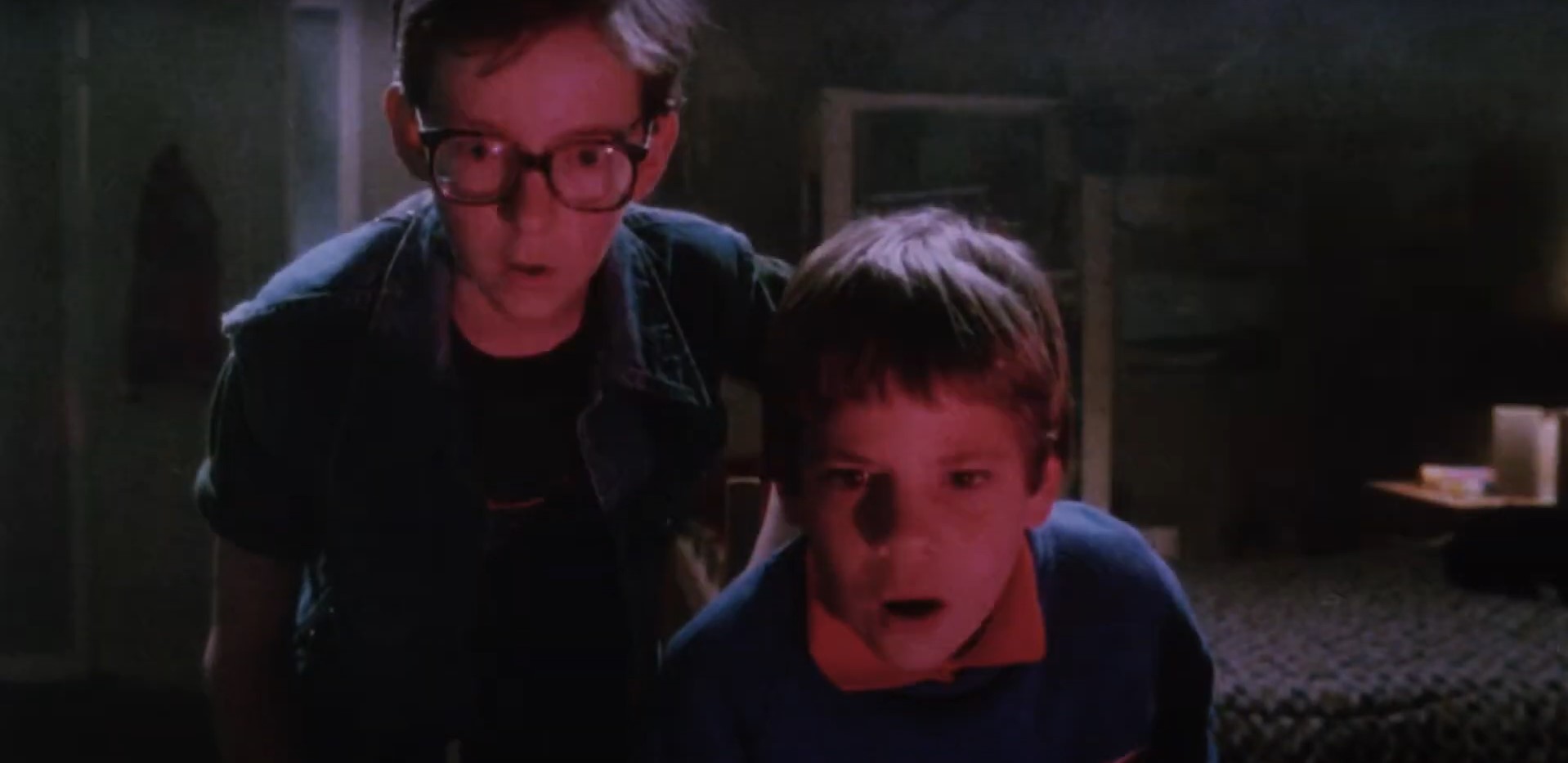
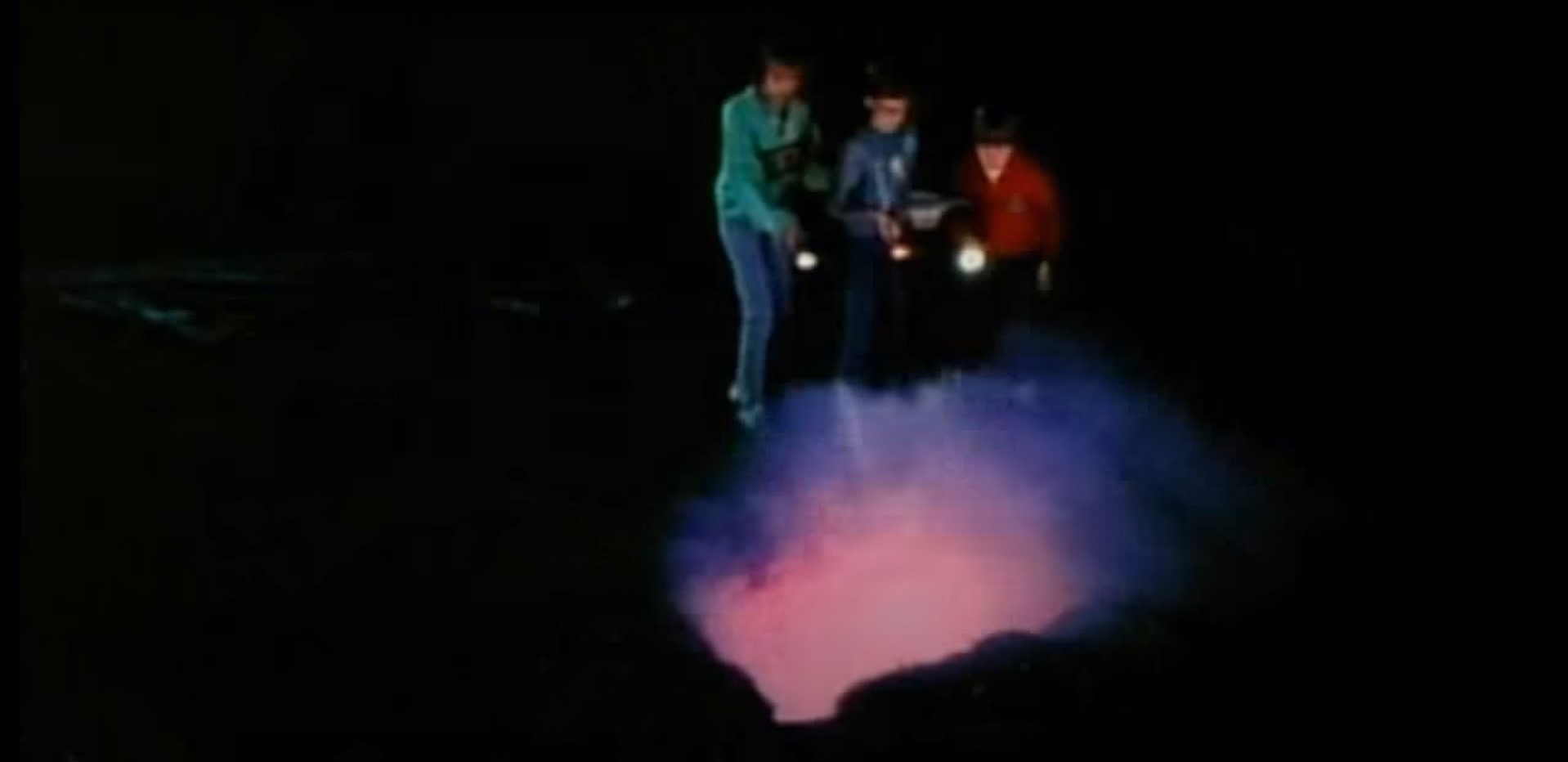
A severe storm brings down Glen’s treehouse, leaving a giant hole in his background.  Discovering what looks to be precious geode rocks, Glen and his friend Terry continue to dig hoping to strike larger, more valuable, geodes.  When they come upon a sizable rock, breaking it open unveils a crystalized liner of colorful minerals as well as a strange gas that unearths an incantation to open a gate to the underworld.  With Glen’s parents gone for the weekend, he, his teenage older sister Al, and Terry must somehow reverse the opening of the gate but demonic-serving, pint-sized minions hunt down a pair of human sacrifices in order to unleash their powerful demon master, an old God reemerging from being locked away from Earth for billions of years.  Serving the night is a fight for their very lives as the minions use their cunning tricks and supernatural powers to deceive the home alone kids into traps in order for there to be Hell on Earth. 

Created in mind to appeal to children with the limitless possibilities of a child’s imagination, “The Gate” caters to a wide audience of all ages.  Hungarian-born Director Tibor Takács and American-born writer Michael Nankin bring out of the shadows the scary corners of a young mind into the light with a demonic tale, a portal from another plane of existence, and a theme of growing up and being accountable in a context of taking head on a doomsday event without mommy and daddy.  The 1987 released Canadian production, shot mostly around Ontario, is the first of two “The Gate” films under the studio flag of Alliance Entertainment.  Presented by New Century Entertainment, as one of the company’s limited credits, “The Gate” is produced by fellow Hungarians in Andras Hamori, who went on to produce fellow Canadian filmmaker David Cronenberg’s “eXistenZ,” and “Quest for Fire” and “The Wraith’s” John Kemeny.

The Gate II:  The Trespassers

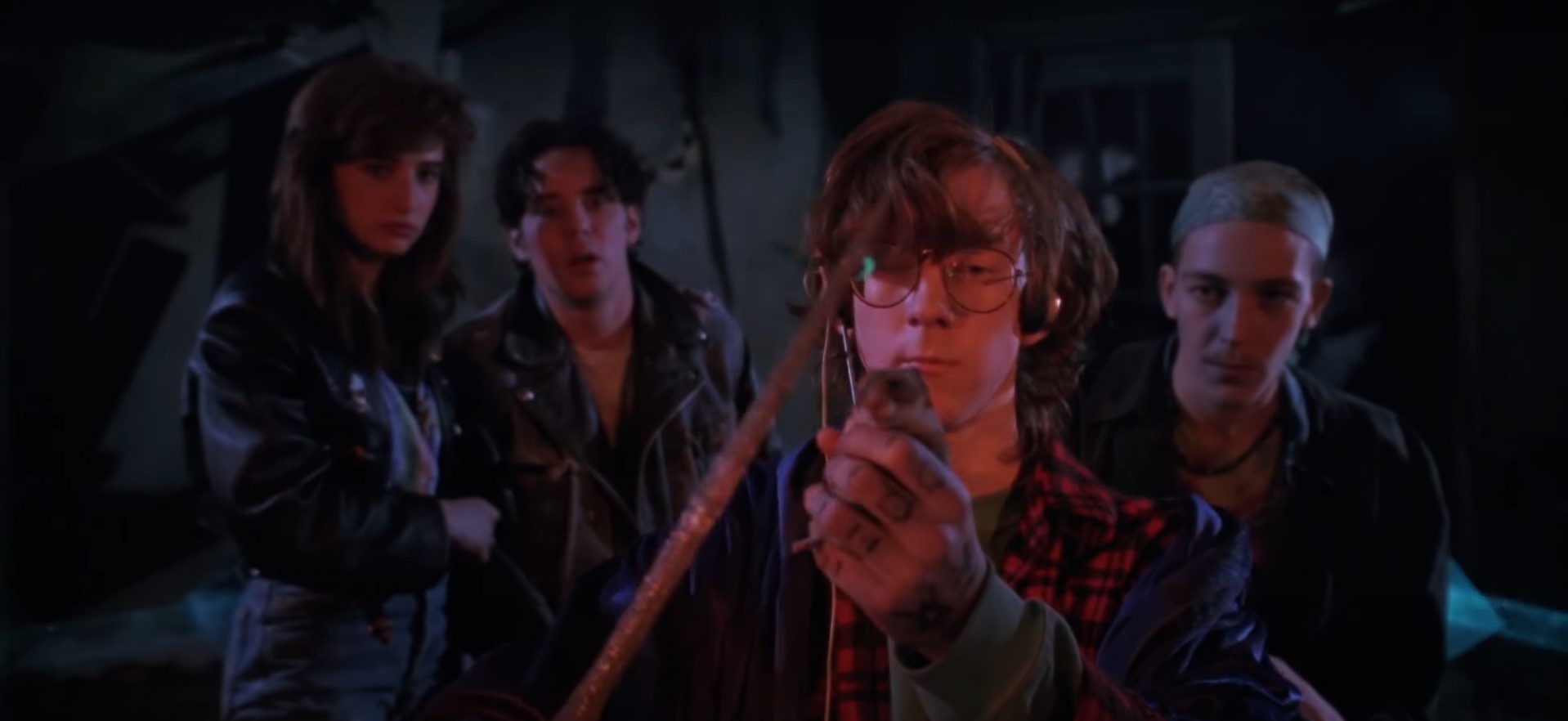
Five years after narrowly surviving near Hell of Earth, Terry’s obsession to return to Glen’s abandoned and dilapidated home and resurrect the demonic powers of wish granting stems from his jobless father’s dwindling livelihood, drinking himself into a stupor every night at the bottom of a bottle.  With equipment powered to project his incantations and protect him from evil, Terry is about to begin his summoning when interrupted by three teens led by bad boy John who mostly ridicules his fixation until one of the pint-sized minions comes out of the shadows and is quickly gunned down by John.  The injured minion self-heals and is captured for wish granting exploitation but when the wishes turn into a disastrous chimera, Terry soon realizes that his summoning has not just been answered for selfish motives, but it also re-opened the portal for three power demons to transmogrify from within him and his friends. 

The success of “The Gate” sought the fast tracking of a follow-up story produced within two years’ time after that spoke a different tone and came in a different approach to the nightmarish content and the age of the kids.  Takács and Nankin reteam for “The Gate II:  The Trespassers” who, at the authoritative behest of executive powers, had to take the fantastical lining of a child’s imagination to more extreme measures that evolved the original film’s grotesquely saturated PG-13 rating into a lighter, water downed R rating, removing a good chunk of the viewer base from a theatrical run.  The 1990 released venture was also shot at some of the same sets in Ontario Canada as the first film with Alliance Entertainment returning as producing studio and Vision International presenting to the world.  Andras Hamori and John Kemeny also return as producers.

Doesn’t take the understanding mechanisms of rocket science to discern “The Gate’s” cinematic victory.  Demons were all the rage in 80’s from Italian eurotrash to American grindhouse and why shouldn’t the Canadians get into the action?  Special and makeup effects, in themselves, are tremendously impressive, as aspect we’ll go thoroughly more into later in the review.  Yet, the one golden ticket area that deems “The Gate” as an unsullied hero of PG-13 horror is the unaccompanied children misadventure narrative coupled with, or maybe elevated by, good dialogue sanctioned by even better performances.  The 80’s saw scads of children in danger storylines that either had no responsible adult in sight or the adult party was the adversarial danger.  “Explorers,” “Adventures in Babysitting,” “E.T.,” and, one of the biggest examples of all, “The Goonies,” caddied the action-adventure and thrills-and-chills long game for the better part of the 80s decade and “The Gate” teed up on the opportunity, bringing together a trio of varying degrees of adolescents to go toe-to-toe with an ancient evil in what would have been seen as a no-win situation.  In his feature film debut, the barely teenage Stephen Dorff (“Blade”) lead the trio as the highly impressionable and model rocket enthusiast Glen, the youngest of the cast to be the one to save them all, including big sister Al, played by Christa Denton, and best friend Terry, played by Louis Tripp.  Tripp would go on to be principal lead in the sequel that veered away from the fantastically supernatural misadventures of innocence into a more older teen intrinsic narrative that no longer saw the world warp through youthful eyes.  While Tripp segues seamlessly in his role, he finds himself in new territory as the heavy metal and demonology aficionado sparks potential romantic interest in Liz (prolific voice actress Pamela Adlon, “Vampire Hunter D:  Bloodlust”) and is seized by arrogant bullies with two pot smoking hooligans Moe (Simon Reynolds, “P2”) and John (James Villemaire, “Zombie 5:  Killing Birds”), both instances a premiere example of the raw rite through to adulthood.  Again, “The Gate II” keeps adults at an arm’s length away, forsaking youth the challenge of cleaning up their own mess.  Both films fill out their respective performances from Kelly Rowan (“Candyman:  Farewell to the Flesh”), Jennifer Irwin (“Another Evil”), Deborah Grover (“Rated X”), Scot Denton (“Murder in Space”), Carl Kraines (“The Slayer”), and Neil Munro (“Murder by Phone”).

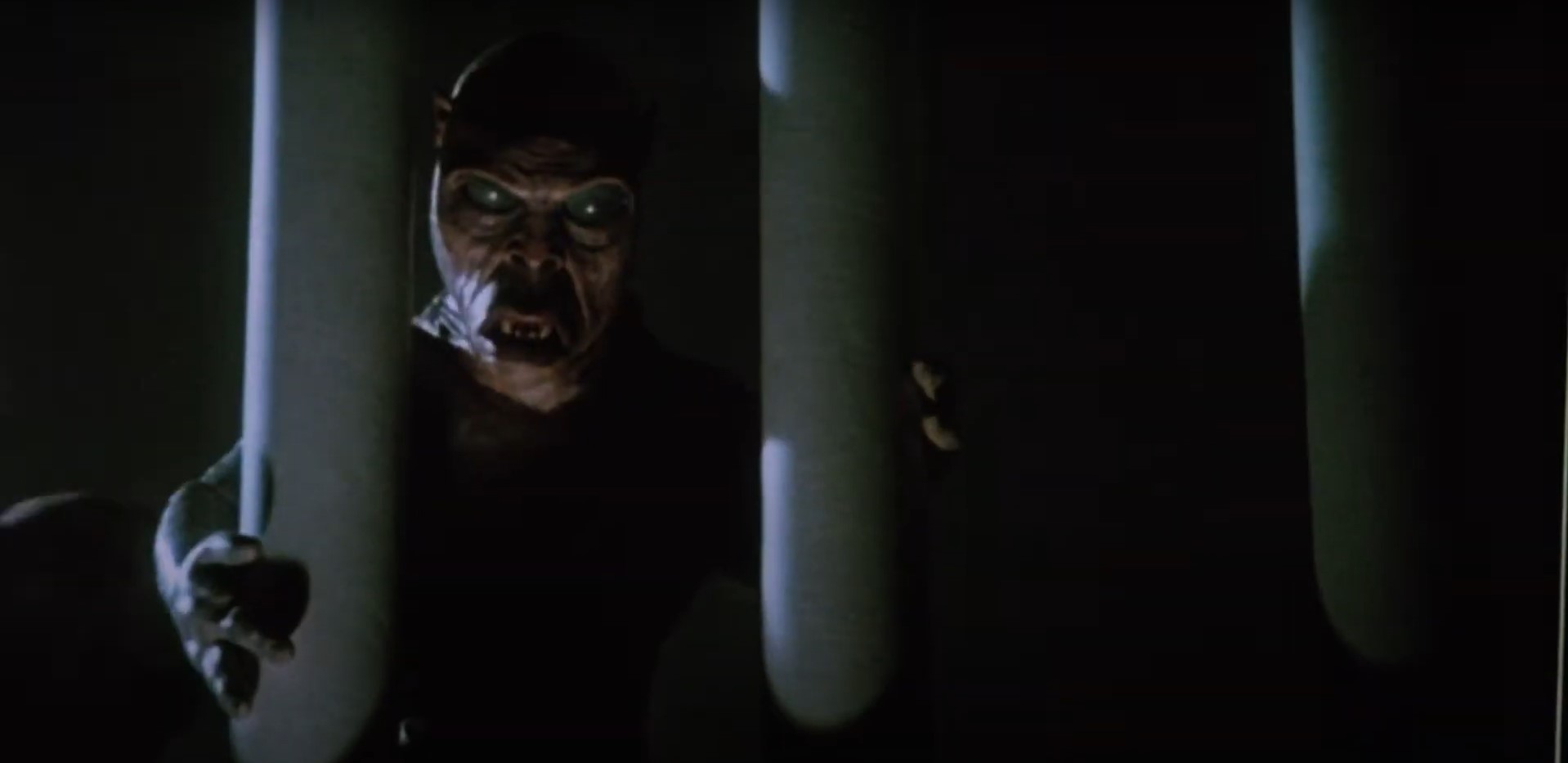
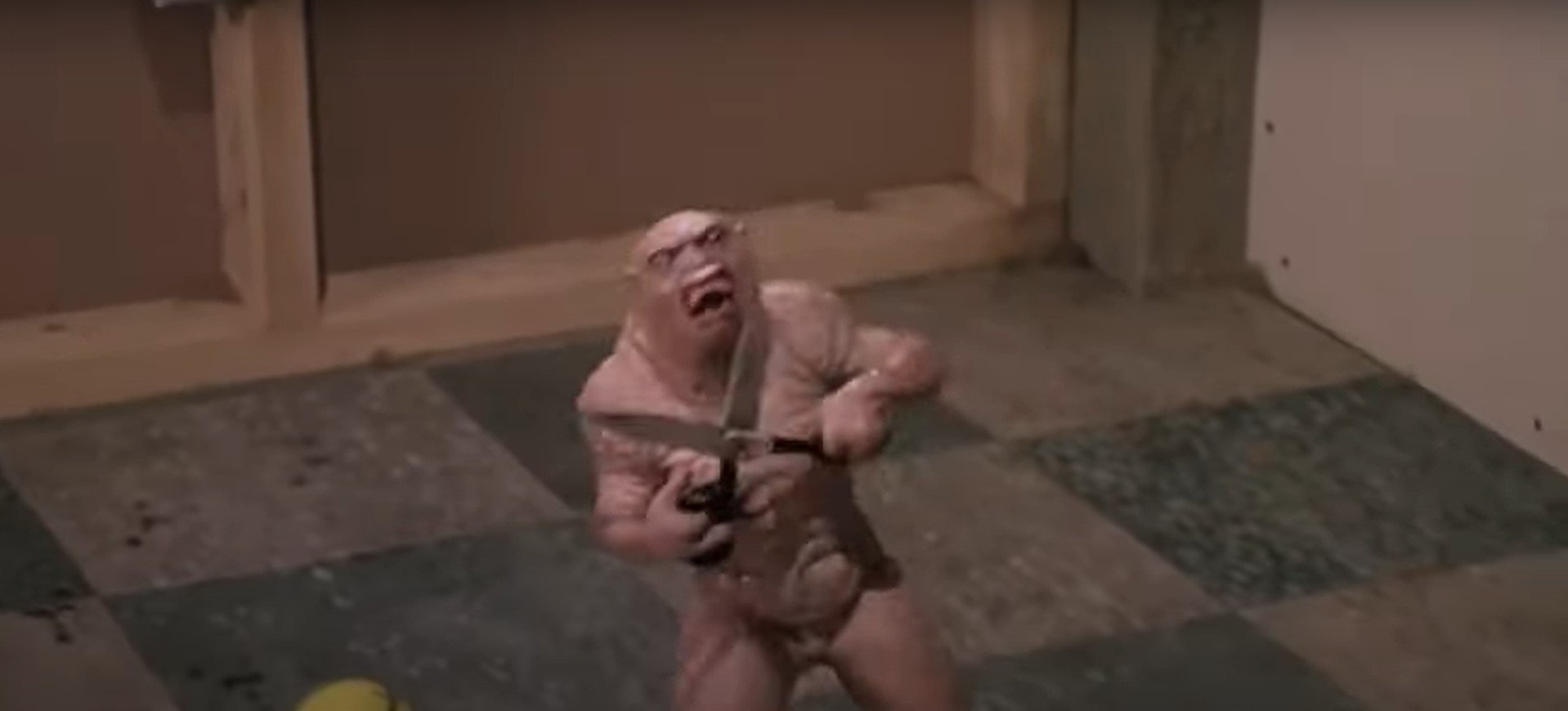
Special effects by the team of Randall William Cook, Craig Reardon, and Frank Carere couldn’t have pulled off an ambitiously suburban horror hyper focused inside Glen’s home any better.  Fashioning mind-bending illusions that are still marveled at to this day, Cook’s forced perceptions eliminates mostly the use of stop motion tactics for the miniature sized minions, replacing the rigid effect with a more lively physical man-in-suit option that smooths out the actions, attributing the creatures idiosyncratically with not only depth of perception to contrast sizes but also shot in a faster camera speed compared to which the seemingly normal sized actors would have to slow down their performances to become level with the creature.  The whole process is crazily multifaceted and mind-boggling effective if pulled out in great detail and “The Gate” team does so, twice, in face, between the two films, with Reardon’s fleshy creature designs enhancing the hideous zeal in the bulbously decaying Workman zombie and even in Reardon’s blamelessly slapped together endgame demons for the ordered change of a quickly surmised climax in the sequel.  As a collaborating unit, the special effects crew pulls off seamless transitions in what is captivatingly pure eye-candy of movie magic.  The stories themselves, especially in “The Gate,” are enchanting, full of mysterious and unpredictability, and stretches the imagination beyond the confining limit as we’re led to inevitable showdown only to be pleasantly accosted on the optics.  The sequel has a rougher go with the story as the narrative feels like a wound-up toy twisted tight to the threshold only to be released spinning in all different types of directions that ultimately lead to an exhausted stopping point. The stark contrast between the two films doesn’t offer a lot of subsequential continuity in narrative and even in some areas of the special effects but the silver lining in that last statement can be a sigh of relief in not receiving a rehashed product sought to recap or repeat off the back of the original’s success. Instead, “The Gate II” begs to be separated to be its own entity and does so while being a homage to the practical illusions that sparks awe, joy, and terror!

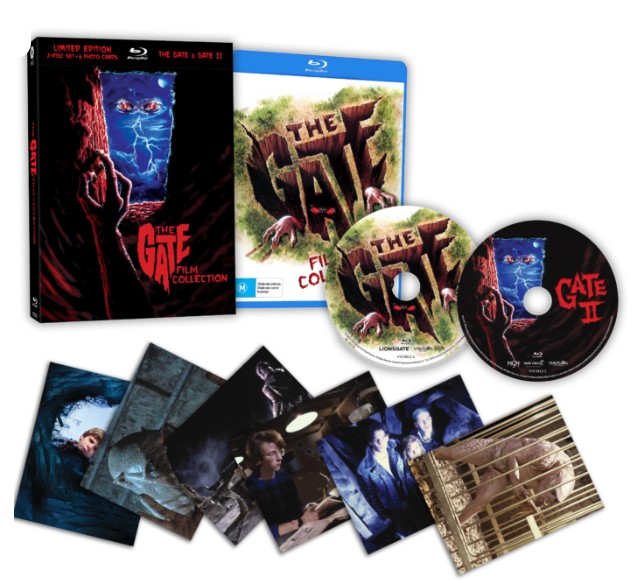
If looking to physically own both “”The Gate” and “The Gate II” in one deluxe package, the Australian based distributor Via Vision has set the bar high with their 2-disc, numbered limited edition, Blu-ray collector’s set. Both films, shown in a widescreen 1.85:1 aspect ratio, are AVC encoded with a high-definition, 1080p resolution on a BD50 (“The Gate”) and BD25 (“The Gate II”) and we’ll come to the reasoning to that split later on. Shot on 35mm and scanned into a 2K print, not many details are noted about what film negative or other print element is scanned to 2K but most of the bonus content on this particular release is Vestron produced, leading to believe the same Vestron print is also used here. Between the two pictures, “The Gate II” has a better saturated image whereas the original film almost seems ungraded with a slight gray concealer that somewhat mutes the hues. The forced perception shots are seamless yet are also delineated nicely that curves into a believable and pleasing symmetry without an inkling of divisional depths. Skin tones are natural looking and textures, such as practical prosthetic masks and molds, score high in all the nooks and crannies of the folds and surface level haptics. The English encoded tracks include a lossy DTS-HD 2.0 stereo codec on “The Gate” and an uncompressed, lossless PCM 2.0 stereo on “The Gate II.” These sole options provide suitable stereophonics without significant compression issues, other than “The Gate’s” minor fidelity data loss, or original source damage or technical gaffs, such as hissing or popping. Dialogue design sees the “The Gate” come out on top over the course of layering and projecting atmospheric augmenting. I don’t get that same sense from “The Gate II” that modulates the dialogue with a redounding heavy-handed echo effect in locations it does not make sense for reverberations. “The Gate” has English and Spanish subtitles with the sequel reduced to just English subs available. “The Gate’s” greater format capacity holds most of the special feature cards with a number of duplicated Vestron produced bonus content, including two audio commentaries: commentary one with director Tibor Takács, screenwriter Michael Nankin, and special effects designer/supervisor Randal William Cook and second commentary with Cook again along with his f/x crew Graig Reardon, Frank Carere, and Bill Taylor. Composer Michael Hoenig and J. Peter Robinson discuss the score with selected isolated tracks to enjoy, a conversation between Takács and Cook in The Gate: Unlocked, Craig Readon in an interview about creating the pint-sized creatures in Minion Maker, an interview with co-producer Andras Hamori From Hell it Came, an interview with actor Carl Kraines aka The Workman aka Terry the Demon The Workman Speaks!, an interview compilation from the local Toronto talent involved Made in Canada, a 2009, archival retrospective look and discussion from Reardon and Cook at their monstrous being handiwork From Hell: The Creatures & Demons of The Gate with Randall William Cook and Craig Readon, a 2009, archival retrospective look and discussion with director and writer Tibor Takács and Michael Nankin The Gatekeepers, a vintage making-of featurette, teaser and theatrical trailers, TV spots, and storyboard and behind-the-scenes galleries. In what is a David and Goliath size imbalance, “The Gate II” special features ultimately will not trump with smaller disc capacity and the lack thereof content but the second disc sequel does contain a new, 2023 audio commentary by Tibor Takács and film historian Jarret Gahan as well as a documentary with Takács, Nankin, and Cook Return to the Nightmare: A Look Back at The Gate II that discusses how and where the film strayed off the intended course, an interview with make-up effects artist Craig Reardon From the Depths, the theatrical trailer, and retain video promo. Via Vision’s limited-edition packaging is another world chic and cool with a rigid sleeve box and a lenticular “The Gate II” front cover art. Slipped inside from the right is a single Amary Blu-ray case with a center stationed second disc attachment. While the front cover on the sleeve box showcases the sequel cover, the Amaray’s reversible cover sports the original “The Gate” cover art with a Glen still image and film cast/crew credits on the other side. Also inside the sleeve box are six fully colored glossy photo cards! Both films are Australia certified Mature for moderate violence and moderate course language and have a runtime of 84 minutes (“The Gate”) and 93 minutes (“The Gate II”). The Via Vision release is region B locked (note: the release did play on my region A setting).

Last Rites: Digging a hole to open “The Gate” and the contradistinctive sequel unburies a pair of underrated underworld-creeping-toward-the-surface 80’s phantasmagorias, a regular doomsday fait accompli with children standing between Hell of Earth and saving the world, and what better wait to see the world potentially burn to the ground than with a beautiful new Blu-ray collector’s set from Via Vision!

Better Hurry! Amazon Has a 20% Coupon for This Very Release! Limited to 1500 Copies.

Is He an EVIL Vampire or a Just a Disturbed Young Man? “Martin” reviewed! (Second Sight / 4K UHD & Blu-ray)

Note:  Screen Caps do not reflect the Second Sight's A/V on this release.

“Martin” Limited Edition Second Sight Release Available at Amazon.com! 

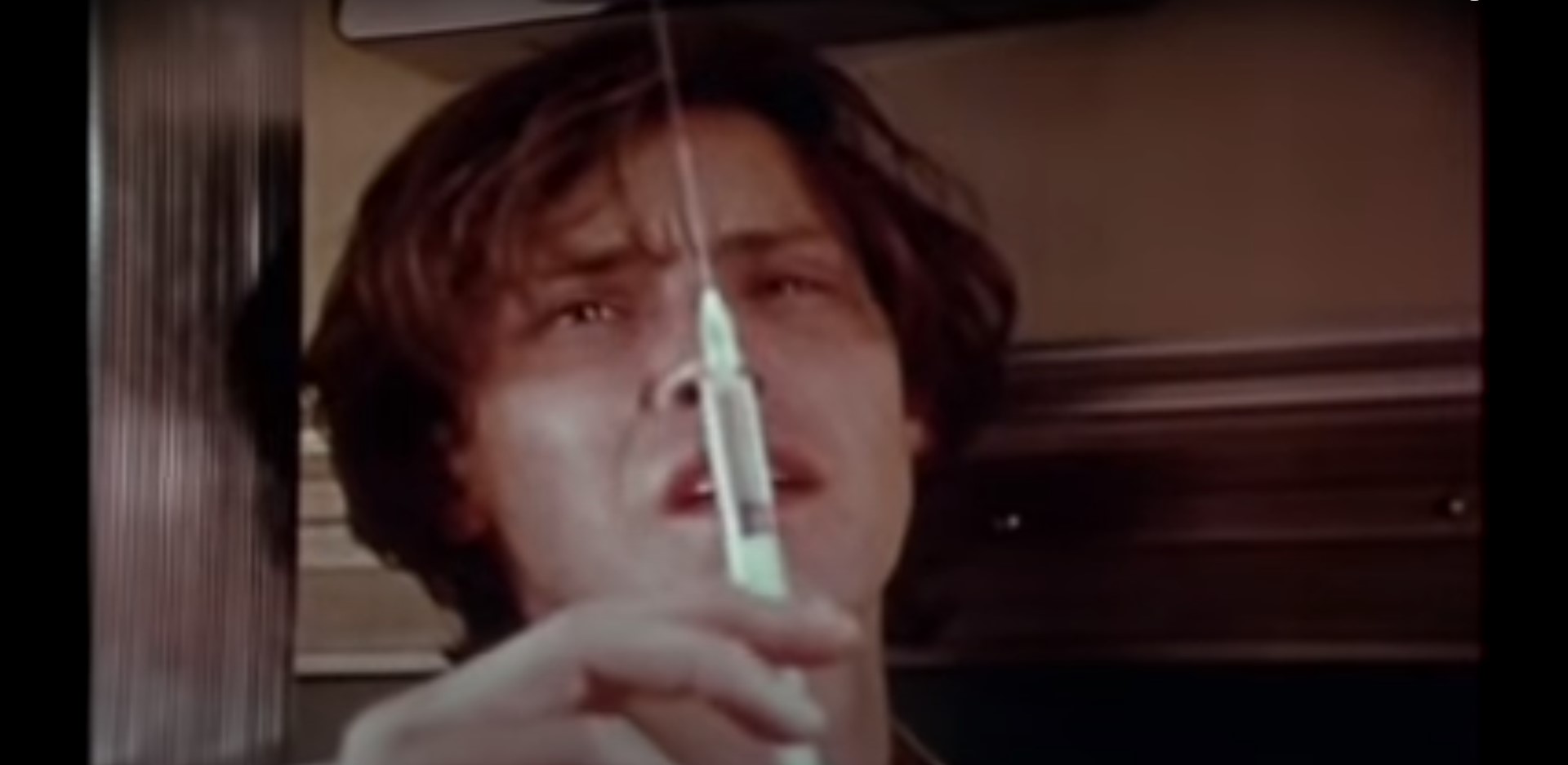
Martin, a young man from Indianapolis and upon recently lost his mother, travels by train to Braddock, Pennsylvania where he’s greeted by his elderly cousin Cuda, an old world believer that Martin has been selectively plagued by the family curse of vampirism and will take Martin in under his roof to cleanse his soul of evil, even if that means destroying him.  Though he doesn’t believe in the vampiric superstitions and the movie depictions, Martin truly believes he’s an 84-year-old vampire and does kill young, beautiful women to intimately drink their blood.  Being reserved and shy gives Martin an advantage to observe his potential victims from afar after gaining employment working as a delivery boy out of his cousin’s shop.  Cuda’s granddaughter, Christina, believes her lonely cousin’s mental illness is being exacerbated by grandfather’s archaic and draconian beliefs, fostered by a family history based off tradition rather than science.  When Martin meets an interested housewife on one of his delivery runs, the need to consume blood trickles when sex enters the picture, but also induces slipups in his well-oiled drug and drink operation whenever the need to feed becomes too much.

By now, “Martin” needs no introduction.  The father of the flesh-eating zombie, George Romero, delivered a neo-realism take on the vampiric mythology nearly 50 years ago in 1977.  “Martin” became the writer-director’s first all around filmic success after being royally screwed by the Walter Reade Organization for having failed to copyright the prints on the trailblazing and timeless classic “Night of the Living Dead,” the reason why you see so many Tom, Dick, and Harry remakes, revisions, sequels, and such of the 1968 black-and-white film that introduced zombies as flesh eaters, and a pair of box office failures that kept Romer in severe debt until slipping into business bed with producer Richard P. Rubinstein, the associate producer for Romero’s “The Amusement Park” and who would collaborate with Romero as a producer for the next subsequent decade years.  Filmed on location in the societal and industrial crumbling Western Pennsylvania town of Braddock, “Martin” remains one of George Romero’s quintessential and provocative pieces of work outside The Living Dead series under Rubinstein and Romero’s The Laurel Group production company.

In the titular role is the introduction of John Amplas who was discovered by Romero after watching Amplas in a play and the entire lead principal was reworked to accommodate Amplas boyish youth.  Amplas is instrumental to Martin’s success in a handful of ways:  the Pittsburgh native knew how to properly slink in an unsuspecting manner, he also didn’t overbear scenes and costars with a larger-than-life presence and could dip into this awkwardly retrieved guilt for the premediated murder to fulfill a need that either’s supernatural or unnaturally mental.  Amplas could walk that thin line that keeps the audience wondering how much Martin says and does is actually true or a misconception because of mental illness and this is coupled nicely with Romero’s direction, splicing in black-and-white scenes of gothic-laden, theater-esque vampire flashbacks that could either be a delusional reality or a very real backstory to Marin’s cursed heritage.  Polarizing external family forces in his elderly cousin Cuda (Lincoln Maazel, “The Amusement Park”) and age akin cousin Christina (Christine Forrest) combat on an emotionally taut and verbal levels between their corresponding character qualities of superstition and science that parallel Martin’s eventual damnation or salvation.  The principal trio are tightly compacted to strain the dynamic with a back-and-forth debate over which truth is behind Martin’s troubles.  Romero pens a good case for both by never fleshing out a legitimate truth all the way through to the end; instead, it’s a battle of save Martin from himself who understands the problem, wants to deal with it, but barely takes up arms to combat or even face his issues.  Special F/X legend Tom Savini, pre-trademark inky black mustache and goatee, makes his debut role as Christina’s boyfriend Arthur who serves only as a device to pull reason away from the table in a conflicted measure to pressurize Christina’s capacity beyond the limits of also caring for herself.  Eventually, Christina has to make a decision and, ultimately, choses herself to save, leaving Martin to fend against a sternly superstitious and old world Cuda.  Sara Venable, Roger Caine (“Dracula Exotica”), Donaldo Soviero, Francine Middleton (“The Love-Thrill Murders”), and Elyane Nadeau make up the supporting cast.

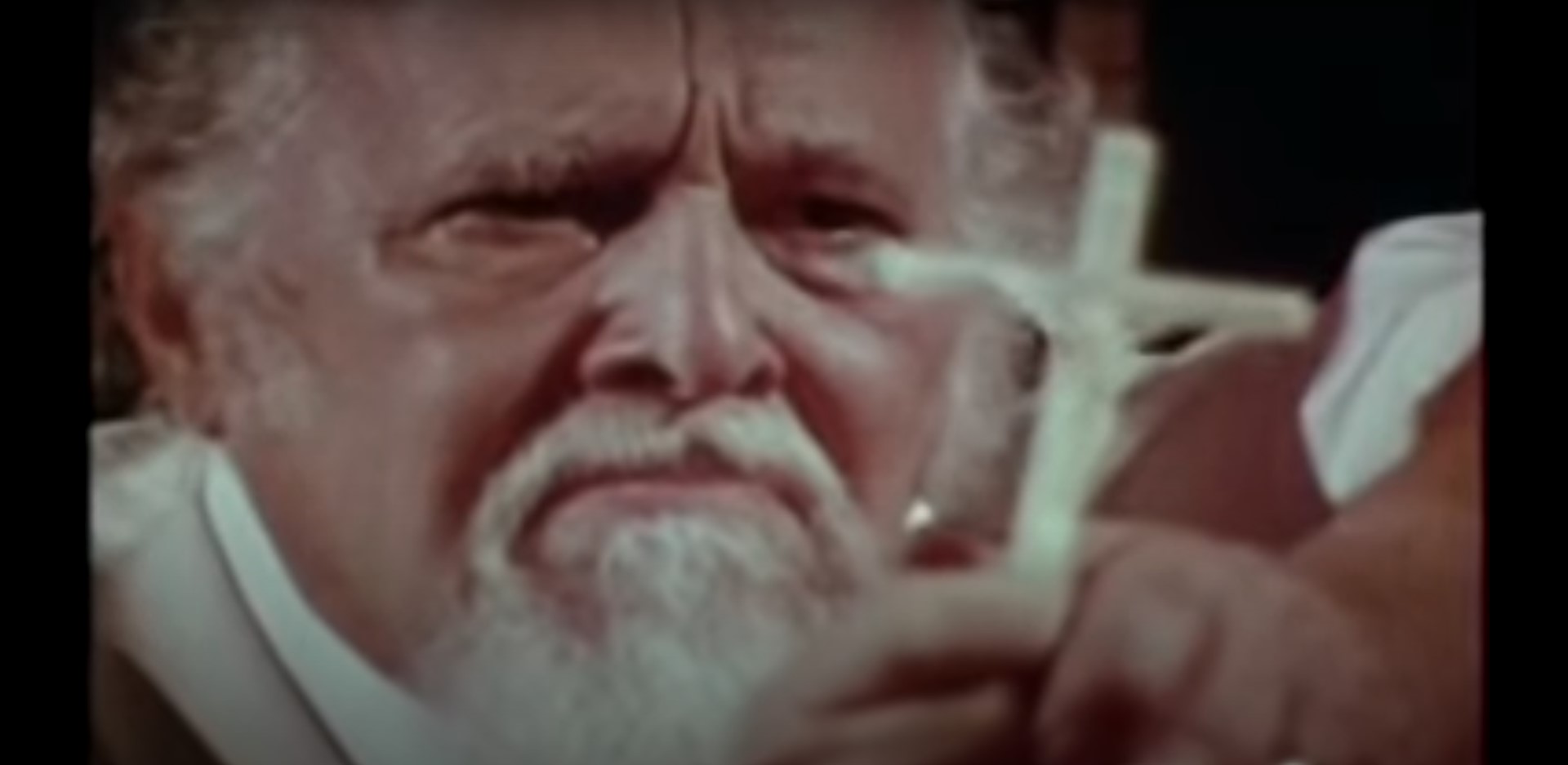
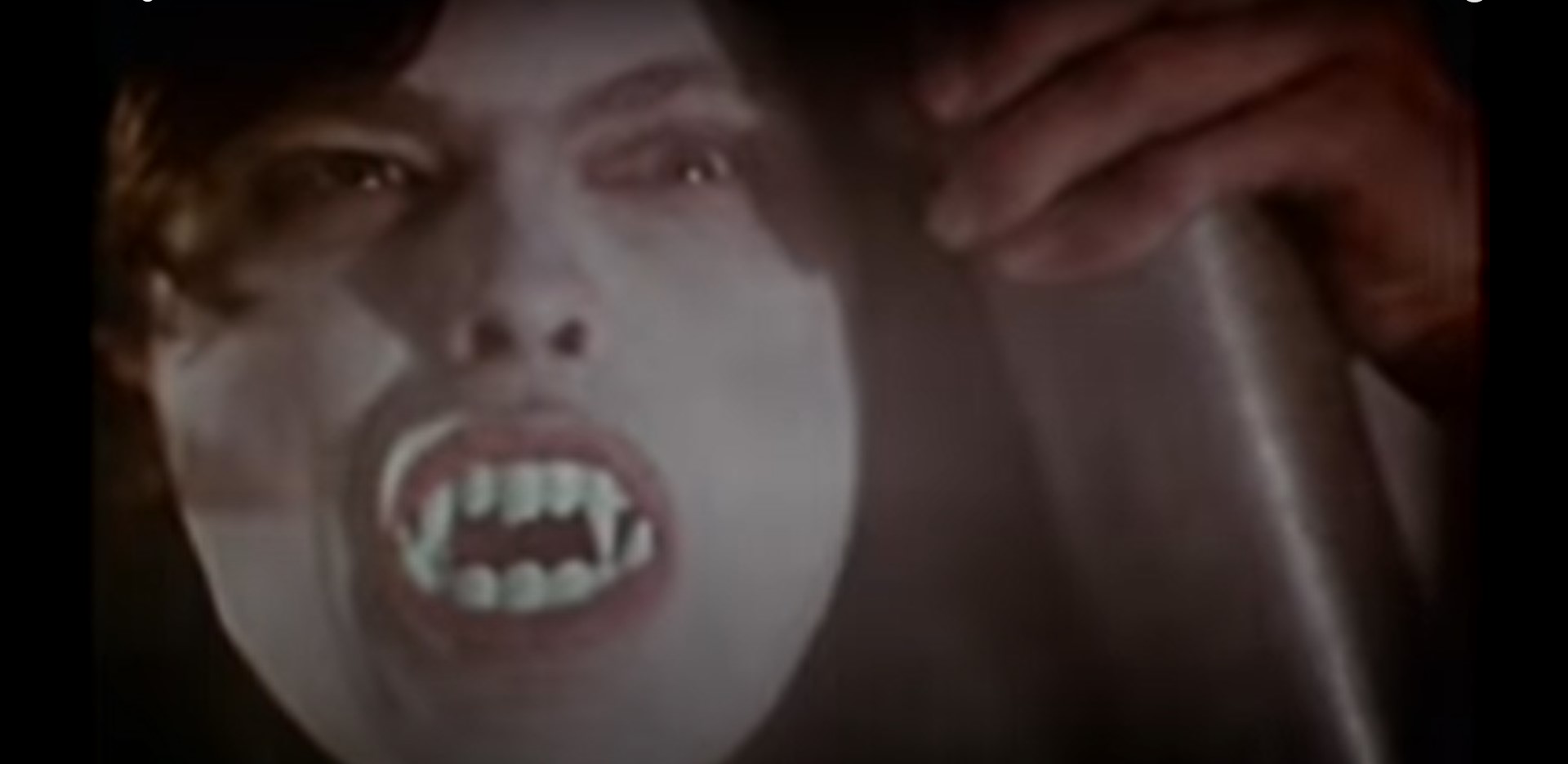
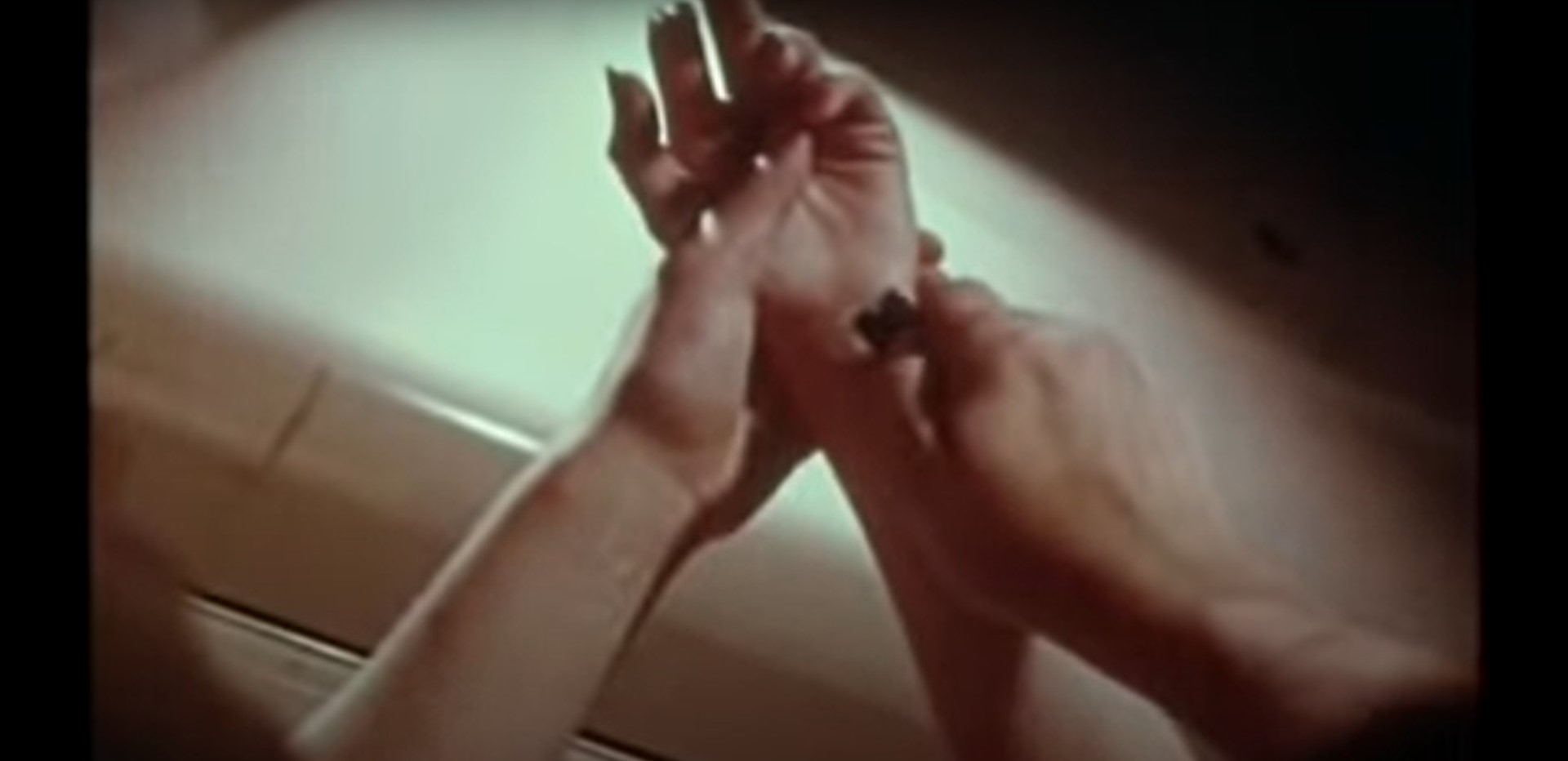
George Romero, again, redefines, or in a more fittingly descriptive – revamps, classic horror villainy that replaces the supernatural element with a realistic approach to weave the very fabric of horror into possibility while still hinting at something beyond the limits of reason.  “There is no real magic.  There’s no real magic, ever!” says Martin about the theatrical stereotypes used to display vampires in attempt by Romero to disenchant us from the ideologized mythos, the habitual characteristics, and the physiognomies of what we consider to be a night bloodsucker.  During that scene between him and Cuda, the words are potently effective in disapproving myths about vampires, but the words are supported with fact as Martin casually debunks garlic, crosses, and sunlight as vampiric weaponry at the expense of humiliating and entertaining Cuda.  “Martin” is at the forefront of being an allegory for loneliness and is a driving reason for presumably the real vampire’s gruesome habit to slice open wrists and drink blood.  Martin only targets young, beautiful women and becomes intimate with them while they are limp under sedation.  When he meets an equally lonely Mrs. Santini, a depressed housewife on the verge of an emotional collapse, and the two embrace each other with comfort against what dispirits them; disinterested in stalking her, Martin’s need to kill dampens and Mrs. Santini unhappy marriage in nullified by the young who listens more than speaks.  Maturity and youth meld together in a moment of peace between them but their bond still shows micro fissures of incompatibility that puts doubts into Martin’s 84-year, carefully planned practice and also doesn’t save Mrs. Santini completely from her too-little-too-late despair.  Braddock, Pennsylvania, a small town sinking into the slumps of becoming forgotten, is a once industrious backdrop integrated as a metaphor for being a forsaken place where things go to die.  Martin is sent to Braddock to paradoxically be cared for by a cousin determined to destroy him because of a family curse that afflicts select generations in what can be perceived as butting of heads between the defiance of angsty youth versus the traditions of an older individual set in the world with their linear ways of thinking.  

As aforementioned, “Martin” is a cult classic from one of the most notable masters of horror and as a film, “Martin” can stand on its own two feet on any format.  However, with that being said, UK home entertainment distributor, Second Sight, celebrates this early George Romero razor-edged thriller with a definitive 3-disc, 4K and Blu-ray release jammed back with software and firmware bonus content that fans can really sink their teeth into for a lifetime.  The limited edition UHD and Blu-ray O-slip box presents a 4K and 2K scan and restoration of a 35mm duplicate negative (note:  not from the original 16mm source) that has been supervised and approved by director of photography Michael Gornick and presented in the Academy aspect ratio of 1.37:1.  Considering the blown duplicated source of a 16mm grade, the 4K UHD scan on the BD66 won’t live up to 4K potential, as some may expect.  There’s quite a bit of varying levels detail discernibility, some shots look better than others, but the overall restoration renders a better than it’s ever looked product with natural grain and damaged reduced to some blue stock flaring around the side and edges, especially during night scenes.  Shadows looked deeper than previous versions, meaning that tenebrism isn’t lost amongst a softer image but rather creates depth with the additional of better sharpened edges to outline objects between the light source  Some speckle debris filters through at times but not enough to cause major concern with the overall experience watching and enjoying the restoration that has HD enhanced grading to make blood that richer technicolor coral color used in my subsequent Romero “Living Dead” films up to “Day of the Dead.”  The Blu-ray’s 2K works just as well due to the scrappy source equipment of what the budget allowed, delivering a fine product of the best transposed transfer known to fan kind and beating out the Lionsgate’s warming grading with a cooler, more hardline detail and delineation picture. The massive release comes with three audio options – an English DTS-HD 5.1 surround sound, an English DTS-HD 2.0 stereo, and an English DTS-HD 1.0. Though Martin audiophiles will likely gravitate toward a multiple channel output, “Martin” is one of those select features that does better in a less-is-more return by not forcing the limited and stronger signals, such as the dialogue and Donald Rubenstein’s experimentally spiritual score, to encoding competition with the milieu ambient and boom recorded sound effects, that for the most part, are background support for the bigger, better one-two punch of clean, clear, and presently full dialogue and a consciously curated soundtrack to walk with Martin every step of his journey. There’s a pinch of popping and a low-emanating droning that very discreet and negligible that won’t affect the experience on bite…I mean bit. English SDH are optional. Bonus materials are what shape the Second Sight releases to be greatly desirable amongst fans as the company continues to produce high-quality encoded bonus features as well as carefully and professionally organized tangible items inside the box. Both 4K UHD and Blu-ray have the same encoded bonus features that include four audio commentaries of old and new. The two archived commentaries include George Romero, John Amplas, and Tom Savini in one set and the other with Romero, Savini, Richard P. Rubenstein, and Michael Gorrick. The new commentaries are with Kat Ellinger, editor-in-chief of Diabolique Magazine, and the second with the recently deceased film curator, Travis Crawford. A vintage 2004 documentary from the Lionsgate release is included in the set with remarks from Romero, Savini, Gorrick, Donald Rubenstein, and Christine Forrest along with a new documentary echoing much of the 2004 doc, in collaboration with Severin Films, with John Amplas, Michel Gorrick, and Tom Dubensky strolling through Braddock, which hasn’t seemingly changed from the depths of poverty, on a raining day recalling nearly every moment of production during principal photography. The new doc includes other insights from Forrest, Savini, Tony Buba, and Sarah Venable in what feels like a complete celebration and overview of their entire journey through Romero’s personal favorite film. Donald Rubenstein also has a new interview discussing his score and meeting and working with Romero on a positive level. The disc features round out with one of Tony Buba’s short films “J. Roy – New and Used Furniture” revolving around the town of Braddock and the trailer, TV and radio spots. The third disc is the CD form of Donald Rubenstein’s soundtrack laid out in 22 distinct musical numbers. The limited-edition exclusive contents include a rigid O-slip case with a simple, yet effective sterile while and red font color contrast with MADE IN U.S.A. augmented razor blood with vampire teeth and blood dripping from the bottom right corner and a blood dripping cross squarely centered on the back. Inside the slipcase, a thick 104-paged color booklet with new in-depth essays and insights from Daniel Bird, Miranda Corcoran, Heather Drain, Kat Ellinger, Andrew Graves, Alexandra Heller-Nicholas, Elena Lazic, Stephen Thrower, Jon Towlson, Simon Ward, Tony Williams and an interview with Tony Buba by Travis Crawford. The booklet also contains colorized, behind-the-scenes photos of production and numerous one-sheets, promotion poster and ads, and a beautifully, expressionistic illustrated front and back cover. Adam Stothard illustrates 5 character lobby cards, including John Amplas’ Martin, Christine Forrest’s Christina, Tom Savini’s Arthur, Lincoln Maazel’s Cuda, and George Romero’s Father Howard. All 3 disc arts are the same as the front cover the release and contained a trifold, punch-lock case in reverse colors of the slipcase. The 4K UHD is region free but the Blu-ray is confirmed region locked B so you’ll need a region free or region B player. The runtime clocks in at 95 minutes and is certified 18 for sexualized violence and sexual threat. Second Sight must be a Disney fan with their monstrous beast of a limited edition that is also a thing of beauty; “Martin” deserves every square inch of this physical and digital display of expressionistic vampirism of underrated performances and from the mind’s eye of a dauntless George Romero, unafraid to take risks, show blood, and understand the human condition.

“Martin” Limited Edition Second Sight Release Available at Amazon.com! 

The Evil Inside and Out Won’t Stop You From Protecting Your Own! “Cargo” review!


A pandemic sweeps across the Australian land, transforming the infected into hunger-driven cannibals. Andy and his wife, Kay, boat down river in hopes to find a safe zone for their baby daughter Rosie in attempt to avoid major populations and even the occasional infected, but when Kay falls victim to a bite aboard an apparent abandoned sailboat while salvaging for supplies, the couple have no choice but to seek help on the mainland. Desperation leads to carelessness when Andy veers off the road and crashes. He awakens to his wife having turned rabid, sustaining a bite on his arm when saving his daughter from the backseat. With maybe two days until the virus overcomes him, Andy must find a way across a mostly vacant landscape to find someone to take care of his young daughter. With time running out, Andy’s plight takes him through a barren-inhabited land where he encounters various walks with some being too unsavory and too unsuitable for his daughter’s welfare.

Ben Howling and Yolanda Ramke are the first time directors behind the 2017, zombie-classified horror-drama “Cargo.” The screenplay was also penned by Ramke stemming from a remake of the directing duo’s short film of the same title. The short, that went on to be a finalist at the world’s largest short film festival, Tropfest, and went viral back into 2013, being showcased on the internets most popular genre sites. From there, the success of Howling and Ramke’s 7-minute short, encouraged by a strong fan base, was able to land equity to fund a full-length feature set in Howling and Ramke’s home country of Australia. The 2017 film added a star cast, a grittier and gut-busting bigger budget, and even landed back the main actor from the short film in a smaller, but significant role. “Cargo’s” bigger, more organic, and exalts the very essence of being human in an isolated, catastrophic, capitalism dystopia overrun with the chrysalis monsters.

English actor and star of the “Hobbit” series, Martin Freeman, lands the lead role of Andy. Freeman’s usual knack consists of being mild-mannered with a variety of facial expressions and his performance in being a desperate father in “Cargo” is no different; yet Freeman expresses another quality that consistently stays in the shadows of his other worth and that is strength. Andy might be conservative and portrayed as meek, but when push comes to shove, Andy steps to the plate and Freeman shows us his upper hand of his character’s abilities. Freeman works alongside first time child actress, Simone Landers, as Thoomi, an indigenous native offspring who relies on Andy to return her to her family while Andy relies on her to bring safety to his infant daughter. For a first time performance, Landers couldn’t have been more of a perfect fit aside the experienced “Sherlock Holmes” actor. Also co-starring in “Cargo” is Anthony Hayes, Susie Porter, Caren Pistorius, Kris McQuade, and, “Crocodile Dundee’s” David Gulpili who, to quote Ben Howling who said it best, is essentially Australian actor royalty.

“Cargo” isn’t your typical genre zombie film. In fact, I wouldn’t even brandish it the label of a zombie film. Ramke’s post-epidemic story reverberates a more familiar “28 Days Later” echo that spurs more life altering contagion than the dead resurrecting to feast on the living. The infect do not run, but stumble, like a zombie and also crave living delicacies; yet, their tainted blood seeps an inhuman generated neon-orange-like sap through facial orifices that feels more like the European zombie of an organic or voodoo nature. These human-turned-monsters also bury their heads below the dirt up to their shoulders in a state of transformation or a rebirth in a sense. The essence of “Cargo’s” villainy is expanded further from Howling and Ramke’s initial short film that just introduced a milky-eyed dead head and these types of infected give “Cargo” a better, more substantial presence in an overcrowded living dead genre, but the infected are not the main villains as people, essentially one capitalistic vulture, is the real threat against the protagonists.

Umbrella Entertainment presents “Cargo,” a Netflix film, onto Blu-ray home video in a sleek full HD 1080p and presented in a widescreen, 2.35:1 aspect ratio. The region B, MPEG-4 AVC encoded disc has great detail over the dry Australian countryside stocked with brown and brown vegetation, natural coloring across the board, especially in the infected’s neon-orange ooze, and an overall favorable viewing experience. The English 5.1 DTS-HD Master Audio doesn’t necessarily have a bombastic track, as it isn’t that kind of film, and the range is fairly around a mild-mannered tonality with a hiccup of gunfire and shouting in the ambient tracks. Dialogue is perfectly crystal clear in the forefront. Bonus material includes two featurettes, one entitled “Cargo: Shaping A Fragile Future” and the other “Cargo: Maternal Combat,” interviews with cast and crew, Q&A from May 2018 in Melbourne, the original Tropfest 2013 short, and the theatrical trailer. “Cargo” breathes fresh air into a threadbare genre with a sheer look into humanity’s willpower and callous.

Evil on the Quick Draw! “Day of Anger” review!

dayofanger

In the quiet western town of Clifton, Scott is the naive town fool. As a simple bastard of a prostitute, Scott grew up without a place in Clifton and without knowing who fathered him and is belittled. Scott is only good for is taking up sweeping outside homes, taking care of the horses, and collecting the residential human waste for disposal in order to earn a better living for himself. But That all changed when Frank Talby rode into town. The infamous gunslinger takes the adoring Scott under his wing and turns the town fool into Talby’s right hand gun for hire, making Scott a fast drawing force in Clifton. When Talby takes the reigns over the town of Clifton, Scott doesn’t pity those who mistreated him as Talby turns the disrespectful rich into the town fools, but the one man that cared for Scott is the one man Talby hates the most from his past and Scott must choose between his long time mentor or his newly found idol when the two showdown.

This is a first; a spaghetti western review on Its Bloggin’ Evil! But I just love the genre with the rich story lines and colorful dialogues and dynamics between characters. The genre never becomes dull, the desert stricken west never looks unbearable on screen, and, just like that Seth MacFarlane movie, there are certainly are a million ways to die in the west. Director Tonino Valerli’s “Day of Anger” fits the bill for the Italian Western genre. Also entitled “Gunlaw” or “I giorni dell’ira,” Rome born Giuliana Gemma stars as Scott Mary to make this an authentic spaghetti western and genre veteran, and overall on screen bad guy, Lee Van Cleef, who you may recognize form “The Good, The Bad, and The Ugly,” as the downright mean snake Frank Talby.

The story directly sets up Scott as this blundering idiot, but if you watch closely during the progression of the character, Scott is written with easter eggs showcasing him as being quick, agile, and strong. With Talby schooling him on how to be a gritty gunslinger, Scott is well on his way to being what he always idolized and instead of being the town joke, the town fears him. This is also where the script becomes a bit of enigma because you want Scott, the fool, to be respected by the people of Clifton. Yet, the people still don’t respect Scott and only fear him because he’s becoming like the ruthless Talby who the town folk despise. Giuliana Gemma does a fine job at portraying the nitwit part of Scott, but not so much the quick draw, new and improved Scott. Gemma made the character growth too easy and didn’t sell it properly to have Scott earn the right to be tough.

Lee Van Cleef, on the other hand, is damn nasty. The natural look of undermining and deceptiveness with power and brutality just can’t be undone in any project Cleef undertakes. The character Talby is formidable, cutthroat, and smart and Cleef plays those qualities to the exact tune. Scott is severely overshadowed by Talby making Cleef more of the stud as the “Day of Anger” headlining actor than Giuliana. Giuliana had some success in the niche genre under the pseudo name Montgomery Wood, maybe because it sounded more American or more Hollywood, but when death came for the genre, so did it for Gemma’s lucrative Italian career. Overall, both male leads are not hindered by a female love interest. “Day of Anger,” from start to finish, only contains a handful of scenes were women become prevalent.

The Arrow Film’s Blu-ray released from MVDVisual is quite awe-inspiring sharp with a beautifully brilliant picture that is presented in it’s original aspect ratio 2.35:1 format from the transfer of the original negative. The long range shots of the desert are unbelievable with the 1080p transfer. The contrasting colors amongst the town of Clifton organically bring the town to life, constructing a seemingly realistic town rather than a stage or a set. The audio comes in three soundtrack options: English (longer cut of the film), Italian (longer cut of the film), or English (shorter international version). The Riz Ortolani soundtrack really stands out clearly and firmly but not in annoying overbearing style that doesn’t sync with the film or with the characters’ dialogues. There are a few high frequency pops during a couple of transitional scenes, but these won’t distract from the amazing film. This Region A and B Blu-ray is absolutely stunning with loads of extras just waiting to be experienced. MVD and Arrow Film’s Blu-ray version of “Day of Anger,” the first time on Blu-ray anywhere in the world, would be a fine piece for anybody’s western collection.