Demonic Nuns Want Virgins to Resurrect EVIL! “The Convent” reviewed! (Synapse Films / 4K UHD and Standard Blu-ray)

4K and Blu-ray “The Convent” Demonically Entering Your Soul! Buy It Here!

A woman strides into a convent carrier a can of gasoline and a shotgun during the sacrament of Eucharist between priest and nuns.  After setting the humble nave ablaze, she unloads shotgun shells into all the screaming bodies.  40 years later, a group of Greek life college students look to make their Greek letter mark on the same derelict convent now swarming with urban legends and ghost stories.  When a virginal student is kidnapped by wannabe Satan worshippers, they accidentally open the gate for dormant demons to arise through the corporeal vessels of the dead.  The possessed dead slaughter all in their way to seek another virgin, one that will embody their unholy master until this plane of existence.  The only chance for survival is to track that now woman from four decades ago to finish what she started after 30 years in an insane asylum, to blow away the demonic beasts of Hell!
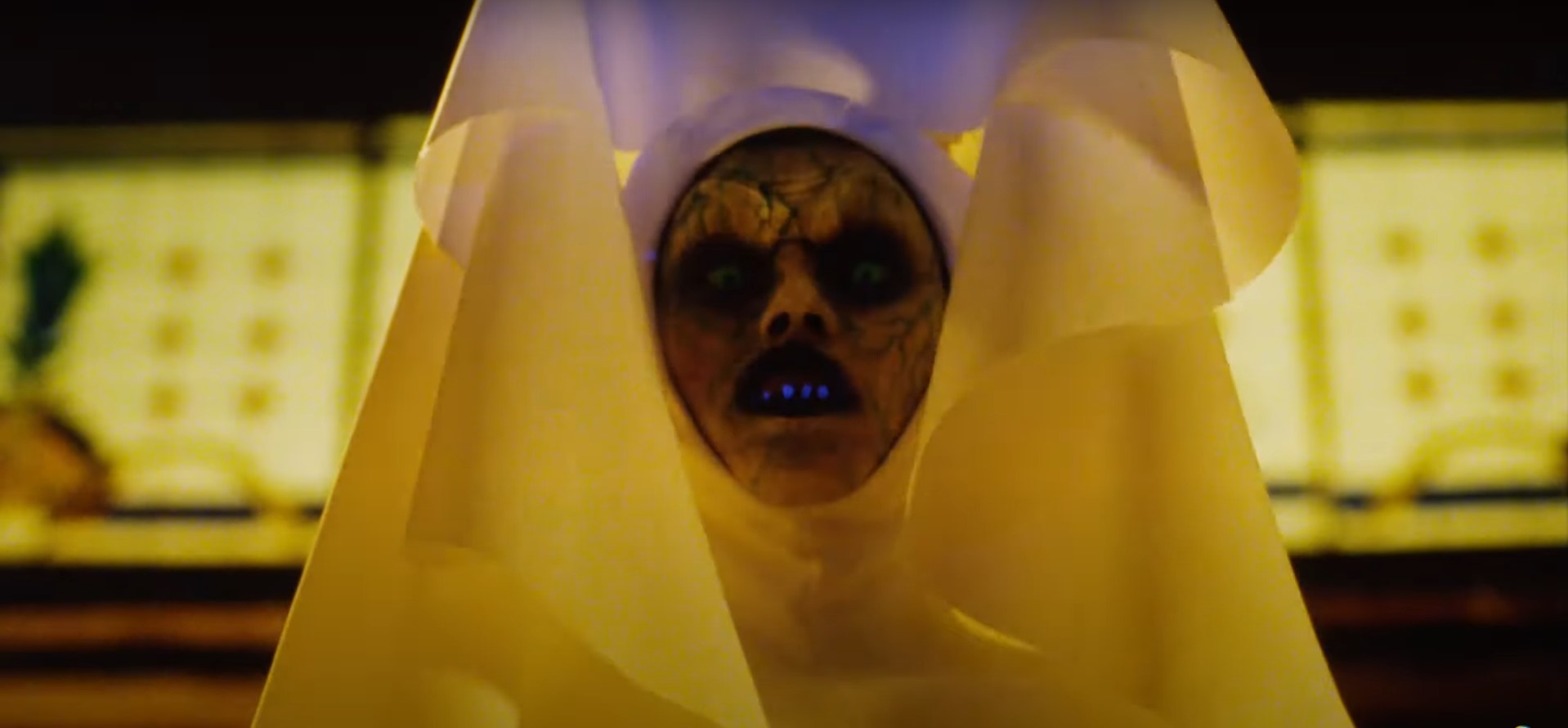
At the turn of the century in the year of Lord of 2000, a year some Christians believed marked the 2,000th anniversary of the incarnation of Jesus Christ, saw another reincarnation of Hell passing through Catholic sacred ground from the creative culinary of profanity director Mike Mendez.  The one of a handful of creative talents behind the “Satanic Hispanics” anthology film and the native Los Angeleno helmed “The Convent,” his third directorial in horror behind breakout pyscho-hit “Killers” and the male-chauvinist be damned horror-comedy “Bimbo Movie Bash,” from the Chaton Anderson’s debut script full of sacrilegious imagery, glow-in-the-dark veined demons, and the dark comedic charm of early 2000s.  Shot entirely in Los Angeles, the demon-comedy is produced by Anderson and Jed Nolan (“Jurassic Women”) on a microbudget from executive producers Ryan and Roland Carroll of Alpine Pictures (“Dark Honeymoon”), Elliot Metz, and Rene Torres, who served as associate producer on the cult favorite, “Night of the Demons.” 

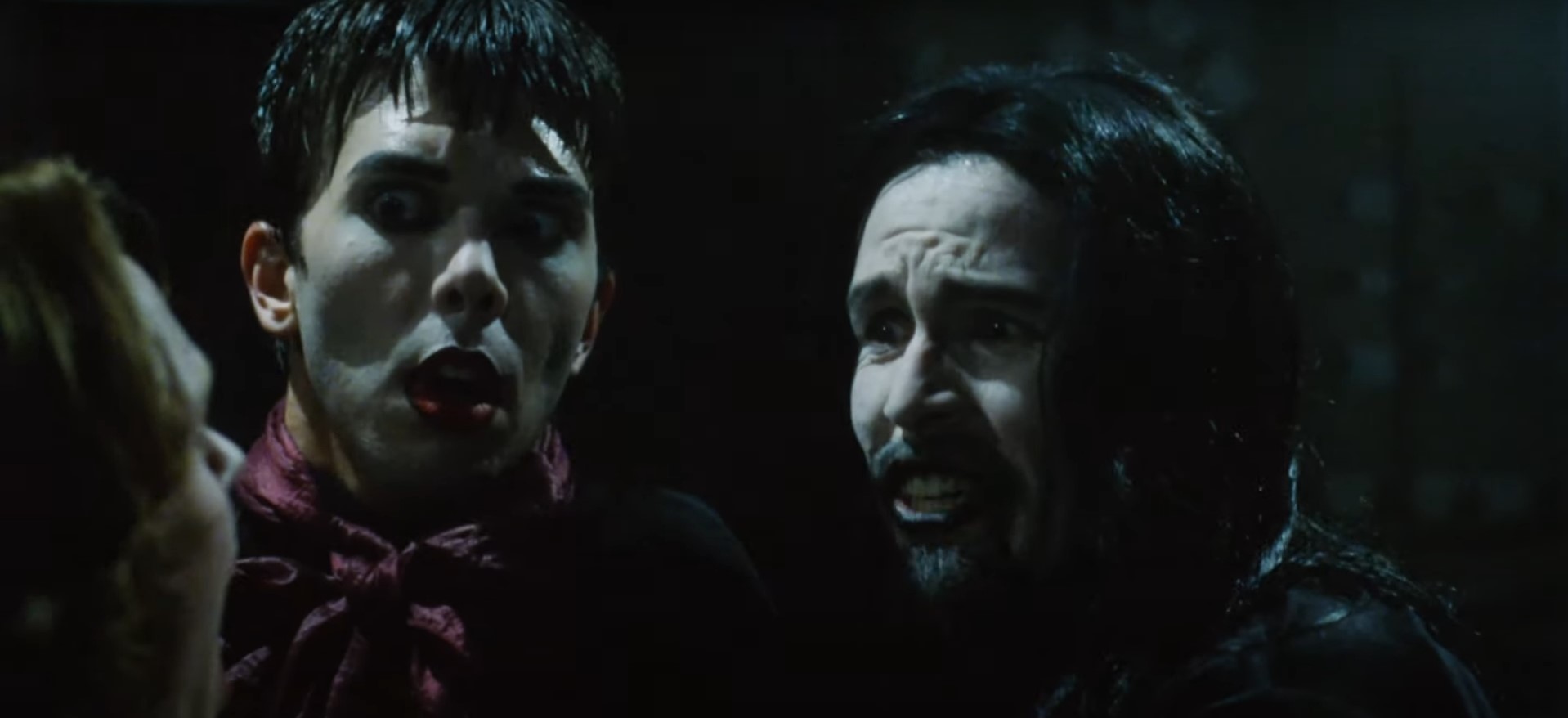
The collegiate characters are not only surrounded by twitching, carnage-dishing demons under the nuns’ habits but they’re also surrounded by headlining genre greats Adrienne Barbeau (“The Fog,” “Swamp Thing”) and, briefly, Bill Moseley (“The Devil’s Rejects,” “Texas Chainsaw Massacre II”) and gangster rapper, the late Coolio.  Barbeau doesn’t lose a step being the beautiful badass we all know and love from her reign as an 80s-90s scream queen, shotgun barreling down demons left and right as her character’s 40-years-senior self from the Nun-torching and blasting opener, the accused certifiable crazy lady called to action in Christine.  She’s called to once again stop a demonic Catholic kerfuffle she immobilized from spreading four decades back by a new set of naïve, older teenagers looking to get high, get lucky, and get the kicks.  Joanna Canton, who had three seasons in her on “That 70’s Show,” battles back-to-back with Adrienne Barbeau as Clorissa, the lead principal of the trespassing teens.  Canton is joined by story boyfriend Chad (Dax Miller, “Blood Surf”), story friends Biff (Jim Golden), Kaitlin (Renée Graham, “Shriek If You Know What I Did Last Friday the Thirteenth”) and Frijole (Richard Trapp, “Re-Cut”), story little brother and abuse-taking pledger Brant (Liam Kyle Sullivan, “Rideshare”), and story gothic bestie of another life time in Mo (Megahn Perry, “The Perfect Host”) whose been ostracized by mostly Clorissa’s friends and even a little by Clorissa trying to escape a gothic lifestyle for more fit in “normal.”  A dark and spooky night in a rundown convent transforms into a night of terror when Satan Worshippers Sapphira (writer Chaton Anderson, “Wither”), Davina (Allison Dunbar, “Browse”), and Dickie-Boy (“Kelly Mantle, “The Evil Within”) are led by so-called Satanist expert and a poorly 17th century speech replicator Saul (David Gunn, “Killers”).  “The Convent” does have dynamic trope characters, ranging from jock, to druggie, to cheerleader, to goth, and to the nerd, following formulaic footsteps to face forces of ferocious, fanged demons and doing it oh not so well and oh so gloriously bloody.  Casting rounds out with Oakley Stevenson, Larrs Jackson, and Elle Alexander.

Mendez’s “The Convent” has a real identity crisis issue walking in the familiar territory that closely resembles Kevin Tenney’s “Night of the Demons.”  Hell, I would go as far as stating Mendez’s Y2K-personified horror is a near step-by-step remake of Tenney’s 1988 demon possession carnage in an abandoned structure film.  However, minutia differences, a fall of Catholicism theme, and the addition of a motorcycling, demon-destroying Adriene Barbeau keep similarity nuances at bay and the acquainted plot lively and entertaining with a glow-party, nightclub maquillage on the demons to give them a fascia of techno-effervescence veins.  Mendez also adjusts the demons’ movements to a rapid twitch with increased frames per second and having the actors jerk their movements in a wild array.  Seems a little bizarre at first but the effect grows on you, and you can’t imagine “The Convent” demon without the spasmatic shots, as their glowing eyes set on seek-and-destroy roam from dilapidated hallway to dilapidated hallway, succumbing to the evil spirit’s will after the life force leaves the body.  Themes of an evil Catholic perspective will challenge those with a Christian value upbringing, especially with nuns and priests being gunned down and torched, and more character specific concepts of personal growth in deciding what’s right versus what’s popular run a paced course of dispersed too late to fix what’s already broken. 
As part of the Mike Mendez 4K UHD double bill release from Synapse that includes his individual inaugural film “Killers,” which we will review soon too, “The Convent” comes in a 2-disc, dual format set, making it’s uncensored, U.S. debut remastered in Dolby Vision 4K from the original 35mm internegative elements.  HEVC encoded, 2160p ultra-high definition, BD66 and the AVC encoded, 1080p, BD50 rockets the previously out of print film right past a standard Blu-ray release and into the land of 4K with 2k hitching a ride.  Both formats presented in a widescreen 1.78:1 aspect ratio, the definition and color saturation advancement are a huge leap from previous DVD releases with more delineate means inside a broadly shadowed interior.  Light and shadow have now divided fully and agreeably to shapes are now more obscured or in illumination.  With that being said, details are not knocked out of this part and that’s especially surprising since director Mike Mendez supervised the 4K remastering.  Facial features do appear smoothed out, more so on the standard Blu-ray release.  UHD has a slightly better rooting out skin details and customer texturing which Adrienne Barbeau leather jacket and tight denim jeans, with all the folds, zippers, buckles, and such, seeing the most promise.  The superimposed glow f/x has rich lamination with the emanating pulses creating reflection being done well on character faces and throughout an enclosed room.  The UHD and standard Blu-ray come with an English DTS-HD master audio 5.1 surround sound from the original 16-track master audio.  Uncompressed fidelity is a complete win here for “The Convent” that seizes side and back channels with monstrous grunts and growls, and not to forget to mention the often-neglected spooky house ambience of creaks, cracks, and killer hits to the body.  A broad range helps diffuse distinct layers to the individual channels.  Dialogue renders clean and clear with no pitchiness of hissing or crackling to note.  English subtitles are available on both formats. While the UHD only has eyes for the feature, the Blu-ray has the movie plus Hell-Raising bonus content, including two audio commentaries with a cast and crew commentary with director Mike Mendez, Megahn Perry, and Liam Kyle Sullivan and a Lords of Hell commentary featuring David Gunn and Kelly Mantle in full character of Saul and Dickie-Boy, a behind-the-scenes featurette, a location featurette, a single deleted scene, gore/kill scene outtakes, the original EPK (Electronic Press Kit), a pair of promotional trailers, and a still gallery. The new primary cover art and the reverse cover art inside the black Amaray case is illustrated by Ralf Krause and Samhain1992. A 6-page essay from Corey Danna has cropped color pictures along with release acknowledgements on the backside. The not rated film has a 80-minute runtime and is region free.

Last Rites: Never intended to take itself seriously, “The Convent” has wicked style, makeup, and effects under an early 2000’s feng shui and is balls-to-the-wall nonstop with demonically dark humor laughs and the barbaric blasphemy of a savagely railed faith!
4K and Blu-ray “The Convent” Demonically Entering Your Soul! Buy It Here!

Digging Up the EVIL Disentombs the Past! “Exhuma” reviewed! (Well Go USA Entertainment / Blu-ray)

Open the Blu-ray Coffin on “Exhuma” Today!

A shaman and her assistant recruit a geomancer and a mortician to investigate the case of an American newborn boy’s distressing grave calling that has also haunted every patriarch member of the family for generations.  The large paying job sends them to remote forest where the unmarked grave of the boy’s great, great grandfather lies beneath the dirt.  For the geomancer, all signs point to not disturbing the grave but the father’s eagerness to cure his son’s troubles and the shaman’s persistence for a big payday goes against the wise geomancer’s better judgement.  All is seemingly well after exhuming and transferring the ancestral coffin to be cremated at a nearby hospital the next day until a greedy, hospital official pries open the sealed casket, releasing a long-awaited evil, and digging up out of the same burial ground another malevolent and mysterious ancient force that reaches far beyond the borders of Korea. 

Here as of late, ItsBlogginEvil.com’s last three reviews have taken readers on a genre-diverse tour of Asia, from Japan with Yu Nakamoto’s meta-slashers in “Ikenie Man” and “Harawata Man,” to Hong Kong with David Chung’s affrayed police actioner “Royal Warriors,” to conclude in South Korea with the supernatural horror in the realm of cultural superstitions of P’ungsu, or geomancy, in Jang Jae-hyun’s latest written-and-directed thriller “Exhuma.”  The 2024 film follows a string of religious related, supernatural themes Jae-hyun has put out in his prior two directed projects with “The Priests” and “Svaha:  The Sixth Finger,” and like “Ikenie Man,” “Harawata Man,” and “Royal Warriors,” a portion of Jae-hyun’s films are touched by Japanese culture.  “Exhuma” amounts to the same standard of crisscrossing the two cultures with dangerous results with “Exhuma” digging up a past better left alone.  Park Hyeong Jin and Kwon Ji Yong (“Ghost Mansion”) produce the spiritually turbulent story under Showbox Entertaiment and Pinetown Productions. 

“Exhuma” encircles four culturally inclined characters that entrench themselves into an unorthodox means of exhuming a disturbed essence for what is essentially an exorcism variant to alleviate living perturbation beyond the grave.  The superstition here revolves around the land temperament.  Geomancers find good sites to lay people to rest, ones that exert extrasensory, or grave call, troubles onto family members that place upon them a grief, anxious, and other mentally uneasy state, and it’s the “Exhuma’s” Geomancer who has story predominance, shared only with the young and beautiful shaman woman with tagalongs who resemble more of assistants than coequals.  In an age-old and cautionary tale of wisdom and inexperience, Choi Min-sik (“Oldboy”) and Kim Go-eun (“Monster”) play the respective roles of the reluctant and experienced Geomancer Kim Sang-deok and the naïve eager yet gifted shaman Lee Hwa-rim.  Receiving character voice over monologue introductions and becoming the ultimate deciding factors of this new job is worth the pay, they completely overshadow the Shaman apprentice (Lee Do-hyun,) and the mortician (Yoo Hae-jin) who works with the Geomancer.  Pivotal as these support characters are to the story, not only buffers for the evil that beleaguers them but also as latched on friends and family of the isolating weird and strange subculture to most but normalized in Korea, the shaman apprentice and mortician definitely take a back seat to the more prominent players to the point where they almost seem contributorily worthless to the task.  As a whole, the dynamic works because the shaman and geomancer alone would not be sufficient for diabolical misadventures of an exhumation gone wrong and supplement only when necessary to aid the fight against an ancient evil twice over.  The cast fills out with Hong Seo-jun, Jeon Jin-ki, Kim Jae-Cheol, and Lee Jong-goo.

The wafting back and forth between Korean and Japanese culture, the fraternization of beliefs and superstitions, tells “Exhuma” differently than most hilltop haunts and horrors.  Themes of a haunted past and inexplicable guilt riddle holes through family lineage, resulting rancorous ripples in the form of mental illness, and devised as a story vehicle device of supernatural subverting trauma from the sins of the father.  In America, Shamanism and Geomancy don’t exist, especially in the history, but for Korea and its people, the country is rich in transcendent ritual and mythology that shapes society, even in their cinematic culture as regularly do we see period films of feudal Korea.  History also dictates “Exhuma’s” need to be a representation of purging the long Japanese occupation of Korea for nearly three and half decades from 1910 to 1945.  The occupation was a disruption in Korean way of life with oppression and war machinations stitched into Korean’s fabric, hence the Korean plot of land being very spoiled with vileness in “Exhuma’s” tale of one historically troubled family’s course to remove that uneasiness that has plagued and followed them to America.  Yet, the past is rooted deep and Jang Jae-hyun’s understands the difficulty of eradicating a sullied ancestry by dichotomizing his darkly toned, folklore valued, and occult twisted story into two parts with sublayers as deep as the dirt surrounding the coffin, or rather, coffins with a formidable presence created and conjured by malicious Japanese Yōkai and represented in one of the most iconic Japanese figures as remnants of an Imperial Japan occupation.

Lying in wait underneath the high-definition terra firma is Well Go USA Entertainment’s “Exhuma” on an AVC encoded, 1080p resolution, BD25, presented in a widescreen 1.78:1 aspect ratio. Accompanied by no information on the video vehicle, IMDB.com lists Jang Jae-hyun and cinematographer Lee Mo-gae shoot with an Arri Alexa Mini which offers the ease of use of multiple lenses, and that shows here with a vast stretch to encompass the Korean mountains into the frame as well as keeping tight on characters while keeping in focus the immediate surroundings. Details are sharp under a flinty tone of saturated grays and blacks with spot pops and glows of in-scene lighting and under the capacity’s umbrella, finer textural elements suffuse through the darkness and into the fold. Audio options include the original Korean language DTS-HD 5.1 and an English dub DTS-HD 5.1. Crystal clear dialogue runs through parallel with the visual counterpart and is well timed and potent, touching the side and back channels with the eerie callings of the grave and its inhabited spirits running rampant free while harnessing focus on the character on scene to create a ranging discarnate of deep, ominous sounds that stalk and haunt the principals. English translation paces well and appears to be translated grammatically and is error free. Well Go USA Entertainment releases are feature focused and this one too containing only a making of featurette in the bonus content along with the trailer. The interior of the traditional Blu-ray Amaray comes with a disc pressing of the four principal characters peering into a dug grave. The exterior has a two-tone, subsoil profile forming a face out of a grave with the four principals on the topsoil and the same image also graces the cardboard O-slip that has a pseudo-lenticular sheen. Authored to have a region A playback, “Exhuma” runs just over two hours long at 135 minutes and is not rated.

Last Rites: The addition of learning authentic, practiced rituals benefits “Exhuma’s” folklore frights tenfold and with neat, grounded performances and a superb blend of visual and practical effects, this original, supernatural thriller raises the Korean movie industry up a notch on the global scale.

Open the Blu-ray Coffin on “Exhuma” Today!

This EVIL Has Brains! “Head of the Family” reviewed! (Full Moon Features / Remastered DVD)

Get Ahead in Life with “Head of the Family” on DVD!

The Stackpooles are a little strange and are usually the talk of the small town of Nob Hollows when the zombified trio of siblings pick up the groceries at Lance’s Stop and Shop general store and diner.  Yet, the Stackpoole’s are not Lance’s problem, not yet anyway, when Howard, a no-good shakedown thug, forces his might into Lance’s business as a silent partner.  Little does Howard know that Lance has an ongoing affair with his wife, Loretta, and they devise a plan to get rid of Howard using the newly discovered dirt on the Stackpoole family’s bizarre kidnappings to take care of Howard once and for all.  Lance figures he’s found his meal ticket after blackmailing Mryon, the fourth, and unseen, sibling who’s the mastermind and head of the family – literally a giant head – using telepathy and mind control to against his brothers and sister to do his bidding, but Myron is no fool to be taken advantage of so easily. 

Who just is this Robert Talbot?  The director of “Head of the Family,” who hides behind a black mask and speaks through a voice modulator, is none other than Full Moon’s secret identity for Charles Band under a pseudonym persona to exact a different kind of picture outside the context he’s expected to continue as well as an empire built on the image of horror.  “Head of the Family” may not be tiny dolls inflicting an affliction based on their evil ways or the resurrection of the formerly dead and abnormal to, once again, inflect damage upon their creators, and possibly, the world we know it.  Instead, “Head of the Family” slips out of Full Moon’s comfort zone and into another, different kind of shadowy namkeen to small plate audiences’ bizarre fascination with the weird and fantastical.   Also, to exhibit T&A more than like the usual in the Full Moon repertoire.  The less horror, more zany cult 1995 feature structures around the titular big headed villain, a band of his freakshow kin, and a constantly copulating couple that’s penned by Neal Marshall Stevens (“Thir13en Ghosts”), also under a pseudonym of Benjamin Carr, based off a “Talbot” story, and produced by, also “Talbot,” and “Hideous!” and “Witchouse” producer, Kirk Edward Hansen.

I couldn’t tell you if J.W. Perra is big-headed or not in real life, but the actor is certainly quite cranial as the family-telepathic, wheelchair bound Myron Stackpoole.  The literal pun of the title plays in tune with Full Moon’s madcap maniacal ties while having Perra’s large head shine, or rather sweat gland glisten, under a miniature lame body.  Myron’s enfeebled corporeal flesh drives his hunger to join the ranks of normal people as he kidnaps and surgically operates on the minds of unsuspected townsfolk to incorporate a portion of his higher intellect into a stronger body.  Myron uses his stupefied siblings’ talents, bestowed upon them through a paternal quadruplet birthing, with Wheeler (James Jones, “Dark Honeymoon”) given superhuman bugeye sight and hearing, Otis (Bob Schott, “Gymkata”) given the twice the strength of a normal man, and Georgina (adult actress Alexandria Quinn, “Taboo VIII”) given, you guessed it, the hot and voluptuous body to attract men like moth to a flame.  Speaking of hot bodies, former adult actress and “Femalien” star Jacqueline Lovell, aka porn handle Sara St. James, is absolutely supple as Loretta, a twangy blonde girlfriend to the scheming Lance, played with Cajun confidence by Blake Adams (“Lurking Fear”), and every chance Lance and Loretta get, they’re steaming the scene with erotically charged expo and exposition.  I’m fairly certain Lovell has more lines topless than she does with her clothes fully on.  In the supporting cast inventory, Vicki Lynn (“Fugitive Rage”) and Gordon Jennison Noice (“Virtuosity’) make up the remaining. 

I’ll admit I fell into that hole of expecting “Head of the Family” to play out just like any conventional Full Moon feature, comprised of pint-sized and mischievous devils to a carnivalesque tune of irregular horror.  To my surprise but not to my dismay, Band’s incognito oddity has the bones of a blackmailing thriller spiced with eccentric and caricature types and gratuitous sex at every turned corner.  “Head of the Family” progresses through interacting conversation to outline exploitation arrangements and to be informed of dangers of crossing a big headed brainiac, interjected with the occasional display of drooling operated rejects, Otis and Wheeler’s utilizing their inborn side effects, and, I keep coming around to this motif and hopefully not in a pervy way, the female toplessness that bares bountiful.  The depth perception effect to enlarge J.W. Perra’s head as Myron is executed pretty well with Adolfo Bartoli’s camera work that reflects the actors facing generally at the correct angle, as if they’re eye-to-eye with the Myron, and the edits do the effect justice as well, spliced precisely to account for dimensional space, the effects are reminiscent of Randy Cook’s illusionary work on “The Gate” films using dimensional animation and scale between live actors in the same frame but some distance apart.  If you excuse the upcoming intended pun, Band’s film is more of a talking head production than one of grotesque action, a realization you won’t be aware of until well stretched into the runtime and because of this that’s the reason there’s likely a ton of Jacqueline Lovell nudity.  Okay, okay, I’ll stop blabbering on about the nudity!   

“Head of the Family” arrives onto newly remastered DVD from Full Moon Features.  The MPEG2, upscaled 720p, DVD5, presented in a widescreen 1.78:1 aspect ratio, doesn’t have any detail regarding the remastering on the latest re-release but I suspect it’s the identical image or a slightly touched up 35mm negative used for the original Full Moon release from 1999 scanned in 2K.  15 years later, a reimagined “Head of the Family” retains the softer, radiant picture quality with a highly extensive color palette through the aura glow and a natural, yet reduced, grain.  The negative does have a flaw in what looks to be cell damage a little halfway through the runtime with a brief, dark cut line making itself known, if you blink, you’ll miss it.  This sort of obvious damage does lean more toward an identical transfer being used for the 2024 release with just a 2k scan without restorative elements.  Remastered restoration likely went hot and heavy into the audio elements.  The English language LPCM is available in two channel formats, a dual-channeled 2.0 and a surround sound 5.1 mix.  Robust with added nuances, “Head of the Family’s” soundtrack breathes new aural acuities that not only clean any distortions, if there was any, but also sharpens the tracks like a knife on a wet stone, cutting and clean.  Dialogue is clear and assertive through what is mostly a talking head span.  English close caption subtitles are available.  Much of the special features are reused from the 2016 Blu-ray release, including an audio commentary track from Actor J.W. Perra (Myron), promo behind-the-scenes video of the long anticipated “Bride of Head,” which has been stagnant for years, the original trailer, and other Full Moon Features’ trailers.  The DVD release is an exact mirror image of the physical Blu-ray release from 8 years prior with a disc press image of Myron’s closeup through a murky filter and no inserts included.  The region free release has an 82-minute runtime and is rated R without specifying the content but there is language, nudity, strong sexuality, and violence. 

Last Rites: “Head of the Family” bucks the lucrative trend of miniature killer imps for the Full Moon empire but keeps moderately in line with eccentric characters, unabashed skin, and a Richard Band jaunty soundtrack, accentuated even more in a brand-new remastered DVD version of the film that was helmed by Charlie Band himself in anonymity.

Get Ahead in Life with “Head of the Family” on DVD!

One Out of 7 Most Freaky, if not EVIL, Places on the Planet! “Gonjiam: Haunted Asylum” reviewed! (Second Sight / Limited Edition Blu-ray)

Become Engulfed by the “Gonjiam: Haunted Asylum” on Second Sight’s LE Blu-ray!

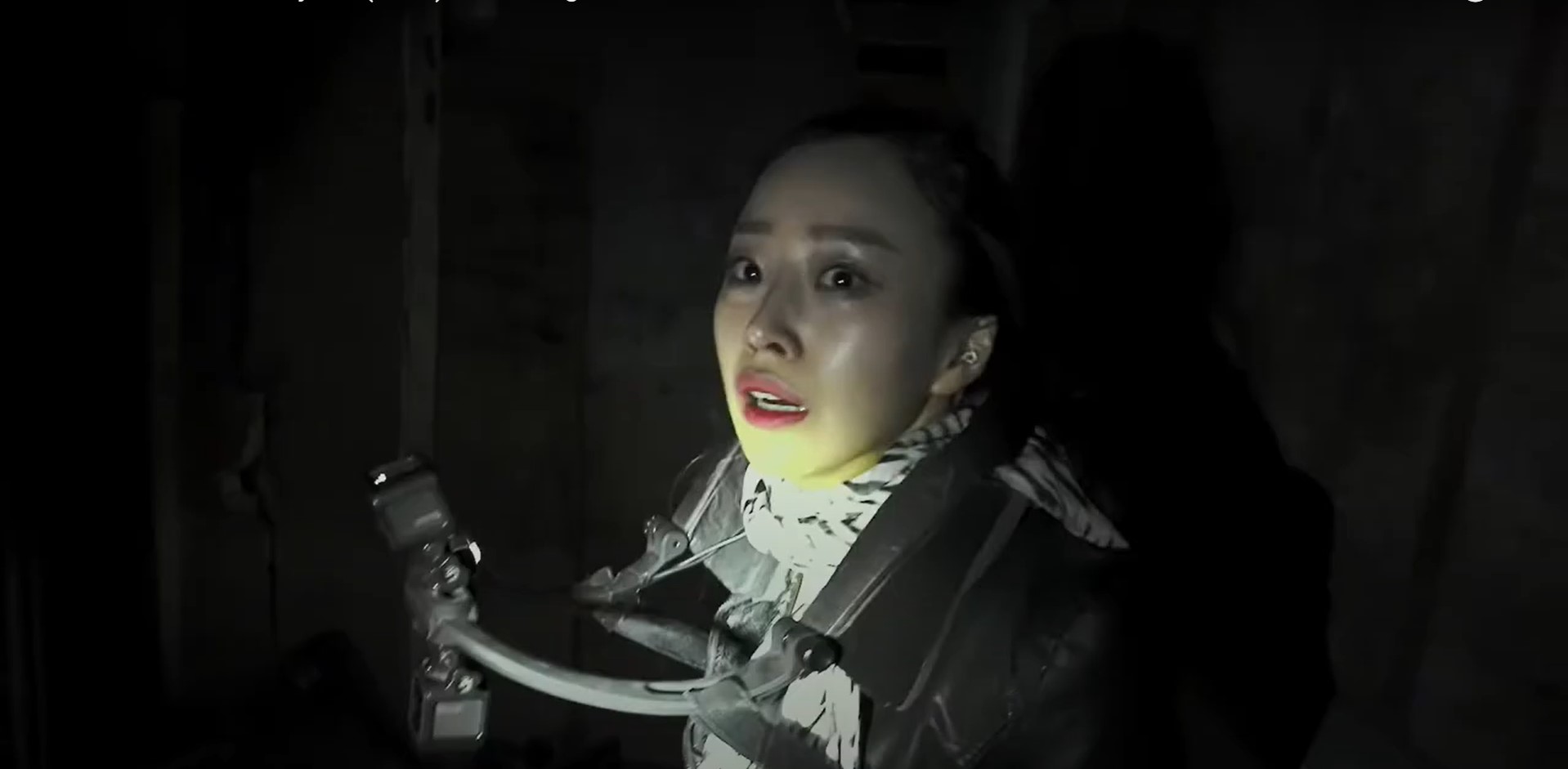
Horror Times, a web series dedicated to horror and hits, travels to the Gwangju providence for their next big event, a special episode aimed to rake in 1 million views worldwide as they explore the supposedly haunted, deserted, and derelict Gonjiam psychiatric asylum after midnight on its anniversary date of its closing.  Already buzzing with historical disappearances of those curious and brave enough to investigate the dilapidated corridors and rooms, Horror Times brings in four guests to join his three-man crew to record every second of what CNN labels one of the seven freakiest places on the planet.  Setup with wall-mounted motion activated cameras, harnessed with individual GoPros, and given a multi-layered script to follow on each of Gonjiam’s four floors, all is going as planned broadcasting live the strange atmospherics that slowly see climbing views from the director’s camped base outside the structure, pulling some fabricated strings to not only heighten his viewer pool but also get genuine frightened reactions from his guest team, but when the team and the cameras unexplainable paranormal occurrences, how far will a director go to reach his milestone goal.

Based off the actual CNN listicle of the top 7 freakiest places on the planet, “Gonjiam:  Haunted Asylum” was a real brick-and-mortar edifice committed to the committedly insane and one of the most suspected haunted places in South Korea until it’s demolishment shortly after the 2018 film’s release.  “Epitaph” writer-director Jung Bum-shik joins the ranks of the South Korean supernatural spookies, accompanying notable entries such as “The Tale of Two Sisters,” “Phone,” and “Cinderella.”  Cowritten by Sang-min Park, Gonjiam:  Haunted Asylum” refreshens the ramshackle mental institutionalized horror subgenre with a dash of social media influence and found footage that entangles grudging ghosts with cyber terror.  Historical thriller and drama producer Won-guk Kim spearheads the project under Hive Media productions and distributed globally by Showbox Films. 

Like a cable-aired, modern-day version of “Ghost Hunters” or “Kindred Spirits,” the vessel Horror Times exploits people’s spirituality beliefs by mingling the exploration of urban legends with gimmicky ploys to keep eyes glued to the show, run up viewership, and earn the root of all evil, money.  The Mystery Incorporated meddling kids might not have a talking Great Dane, but the Gonjiam ghost hunters are a dynamically doomed blend of greed and curiosity, helmed by their captain Ha-joon (Wi Ha-joon, Squid Game) and his on-the-ground, string-pulling marionettes Seung-wook (Lee Seung-wook) and Je-yoon (Yoo Je-Yoon) to conjure up not spirits but pranks under the guise of Gonjiam ghosts.  The unsuspecting portion of the team react as expected, believing the unexplainable as genuine articles of a haunted asylum, until the jokes bleed into the reality of the structure’s incensed force.  Other than Charlotte (Mun Ye-won), a Korean American who travels to Gonjiam to add the location to her lists of CNN’s freakiest places on the planet, there isn’t another mise-en-place character.  Perhaps the others’ backstories are lost in translation but Sung-hoon (Park Sung-hoon, “Hail to Hell”), Ji-hyun (Park Ji-hyun, “The Divine Fury”), and Ah-yeon (Oh Ah-yeon) lose sympathy points for just being there for the sake of being there.  If you haven’t caught on already, the characters and actors name match to add to the faux realism of found footage. 

Veritably surrounded by the actual notoriety of the former Gonjiam psychiatric hospital, the story adds to the established frightening folklore of the rundown building and though the filmmakers were not allowed to shoot inside or on the grounds of the restricted abandoned building, Gonjiam blueprints were used to reconstruction the grimy, trash-laden hallways and various rooms inside a high school.  The effect works like charm used to teleport audiences, along with the help of social media GoPros, selfie sticks, and the like, right into the crumbling ruins; you can almost smell the mold and stank of beyond putrid chemicals and filth.  Yoon Byung-Ho’s cinematography plays with the signal disruption touch, often deploying randomized and intentional interference to convey signal disruptions or, perhaps even, the foreshadowing with the wraithy wrath of spirits; yet “Gonjiam” never truly feels like a found footage film due to its radical differences in video media being implemented and there’s often the unexplainable, no camera-in-use angle that dilutes the subgenre medium.  “Gonjiam” falls into this unquantifiable realm of storytelling that’s hard to digest.  The chaos that ensures in the third act is more palpable, geared toward developing a heavily reliant, hard and fast tension and trembling fear without needing bloodshed for the crowd-pleasing shock factor.

Second Sight sees through the dense barrage of found footage films and spots the pearl amongst the muck with “Gonjiam:  Haunted Asylum,” curating a limited edition, big box, Blu-ray release.  The AVC encoded, 1080p high-definition, BD50, presented in a widescreen 1.85:1 aspect ratio, nears 24 FPS and has flawless technical recording in its digital capturing.  Blacks are dense and rich to create that unknown void apprehension, the neglected belongings of a forlorn hospital have palpable consistency that’s grimy and rusty, and skin textures appropriate lose definition but maintain quality to the extent of equipment limits with GoPros, cell phones, and camcorders in low and hazy key lighting, onboard camera lighting, and some night vision for authentic found footage grip.  There’s not much in the way of diverse color for what is a graded tone of tenebrous obscurity throughout.  I’ve already touched upon Byung-Ho’s purposeful transmissive trouble that impresses more of an annoyance than an integrated factor of fear.  The Korean DTS-HD Master Audio 5.1 delivers on the need-to-hear atmospherics that shudders in echoes and the frantic churn of survival.  What there is not a ton of, and gratefully kept to a minimum, was the eerie wails of the dead as their moments are kept mostly visual in a virtually scoreless runtime that focuses on the surrounding milieu rather than building tension artificially through minor key notes.  Dialogue comes through clearly and clean, especially when muzzled by video camera audio band transmissions.  English subtitles are translated well and synch fine enough with the rapid procession.  Special features include an feature-length audio commentary by Mary Beth McAndrews (Dread Central editor-in-chief) and Terry Mesnard (Gayly Dreadful editor-in-chief), UK’s Zoë Rose Smith’s Fear the Unknown visual-essay on the Gonjiam’s origin, history, and what makes the Korean film scary, and archived featurettes with interviews, including with director Jung Bum-shik amongst various crew, that explore the rumored beginnings of Gonjiam’s notoriety that fuels the production into recreating Gonjiam nearly identically, live recordings of the film’s sheer eeriness told through the images captured by the camera harnesses and phone footage, the new faces of fear that circles around the cast and behind-the-scenes table reads, The Sanctum of Horror that aims to explore the connection between the actual freaky locations and their cinematized yarn to create a legacy of folklore for the now demolished Gonjiam hospital, The Truth of the Ghostlore explores Gonjiam’s history and urban myth and how that forms the ghosts in the film, Korean press conference film launch, and the film’s trailers.  As much as we love Second Sight’s authored special features, which from films of the East are rarely produce, there also plenty to be excited about with the physical attributes of the limited edition set, including a rigid and thick sleeve box with a Luke Headland designed Gonjiam building in red and black.  The inside contents include a 6 collector’s art cards in the same red and black color scheme, a 70-page book with new essays from Sarah Appleton (“The J-Horror Virus”), James Marsh (“Wisconsin Death Trip”), film critic Meagan Navarro, and horror content creator Amber T, and finished off with the film itself, encased in a green-colored Amaray with the same front cover artwork as the rigid slip box.  There are no inserts, and the disc is pressed simply with the title, English and Korean, splashed in red on a black background.  The LE set is hardcoded with a region B playback, has a runtime of 94 minutes, and is UK certified 15 for Strong Supernatural Threat and Language.

Last Rites: “Gonjiam: Haunted Asylum” is not just another shaky cam of paranormal activity. The film incorporates a component of reality, embellishing more on top an already suspected haunted building by giving the story teeth, and released with cultural purpose that binds fact and fiction with a terrorizing outcome of some really pissed off spirits.

Become Engulfed by the “Gonjiam: Haunted Asylum” on Second Sight’s LE Blu-ray!

Spiraling Vloggers Seal Their Fate When Face-to-Face with the “Woods Witch” reviewed! (SRS Cinema / DVD)

“Woods Witch” Available on DVD from SRS Cinema!

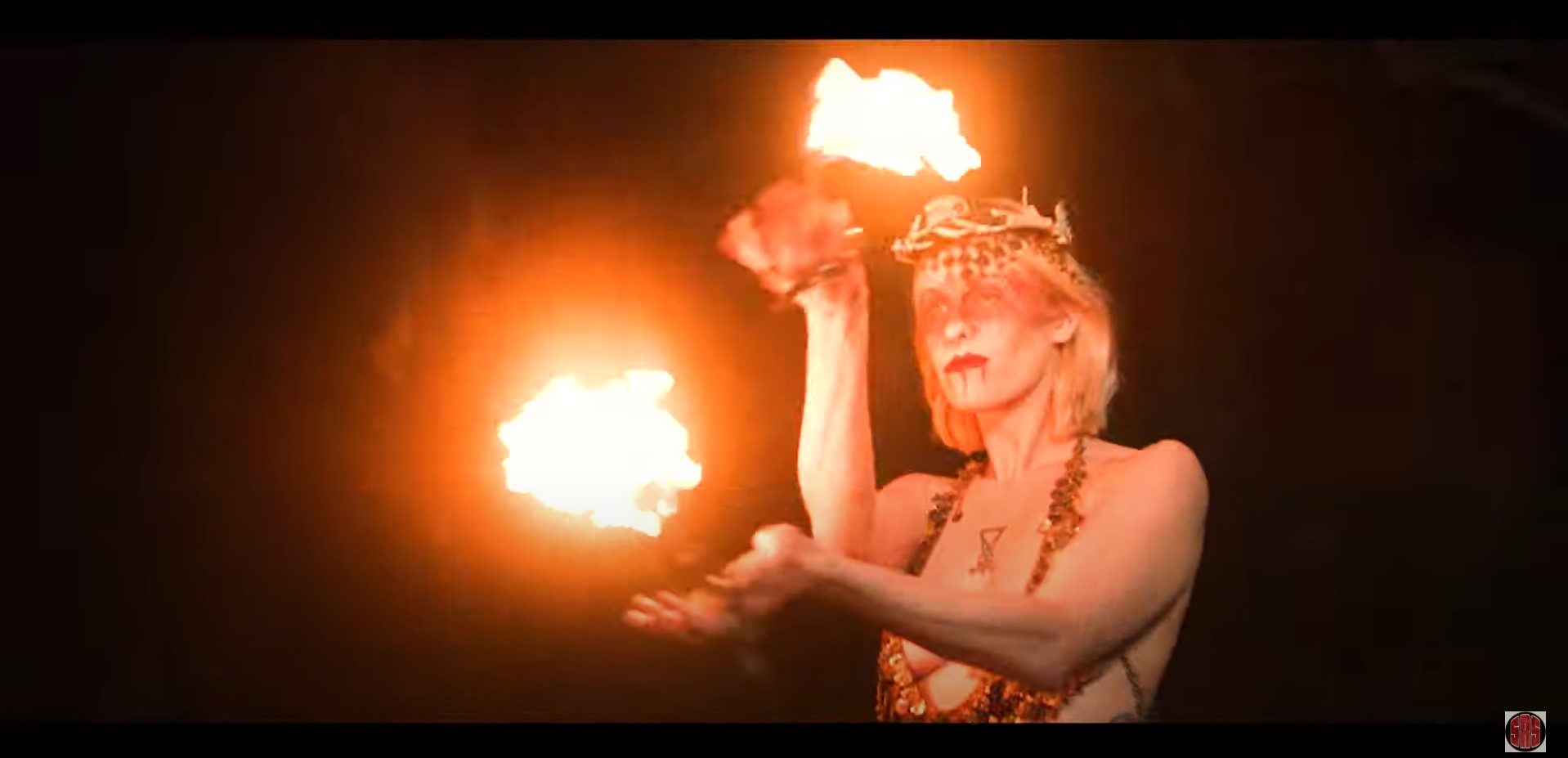
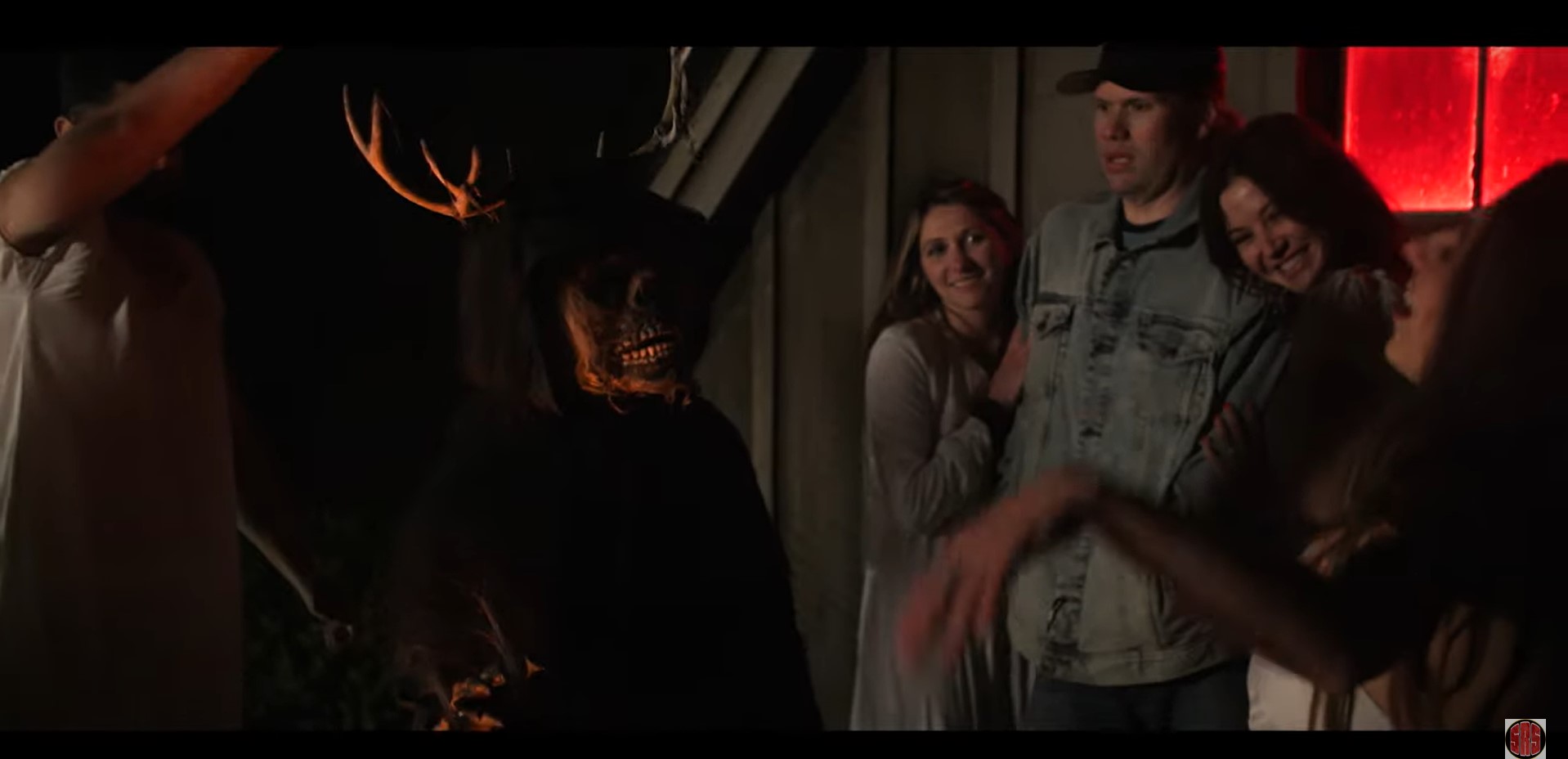
Vloggers Jonah and Jocelyn struggle to sustain a healthy dose of followers for their internet channel.  To spice things up and increase follow traffic, the two embark on a 48-hour challenge to stay in the nearby haunted woods of Allensville where a number of people have gone missing, even a fellow, more popular, vlogger named Garrett Gasper after he was self- recording and suddenly vanished when stumbling upon the blood tree, a tree that oozes a blood-like substance from the trunk.  Tagging along are vlogging, ambivalent friends Dacia and Eugene to help capture the spooky essence of what should be an easy, follower-increasing stunt for the impulsive influencers.  They’re also joined, reluctantly I might add, by a local cowboy, two bar patrons, and a father looking for his daughter who don’t know what they’re instore for as what ensues the unorganized, slapdash survey of the woods is far from being simple and safe when they stumble into the area of a seemingly hippie commune that’s actually a sex cult devoted to the woods witch Melora.

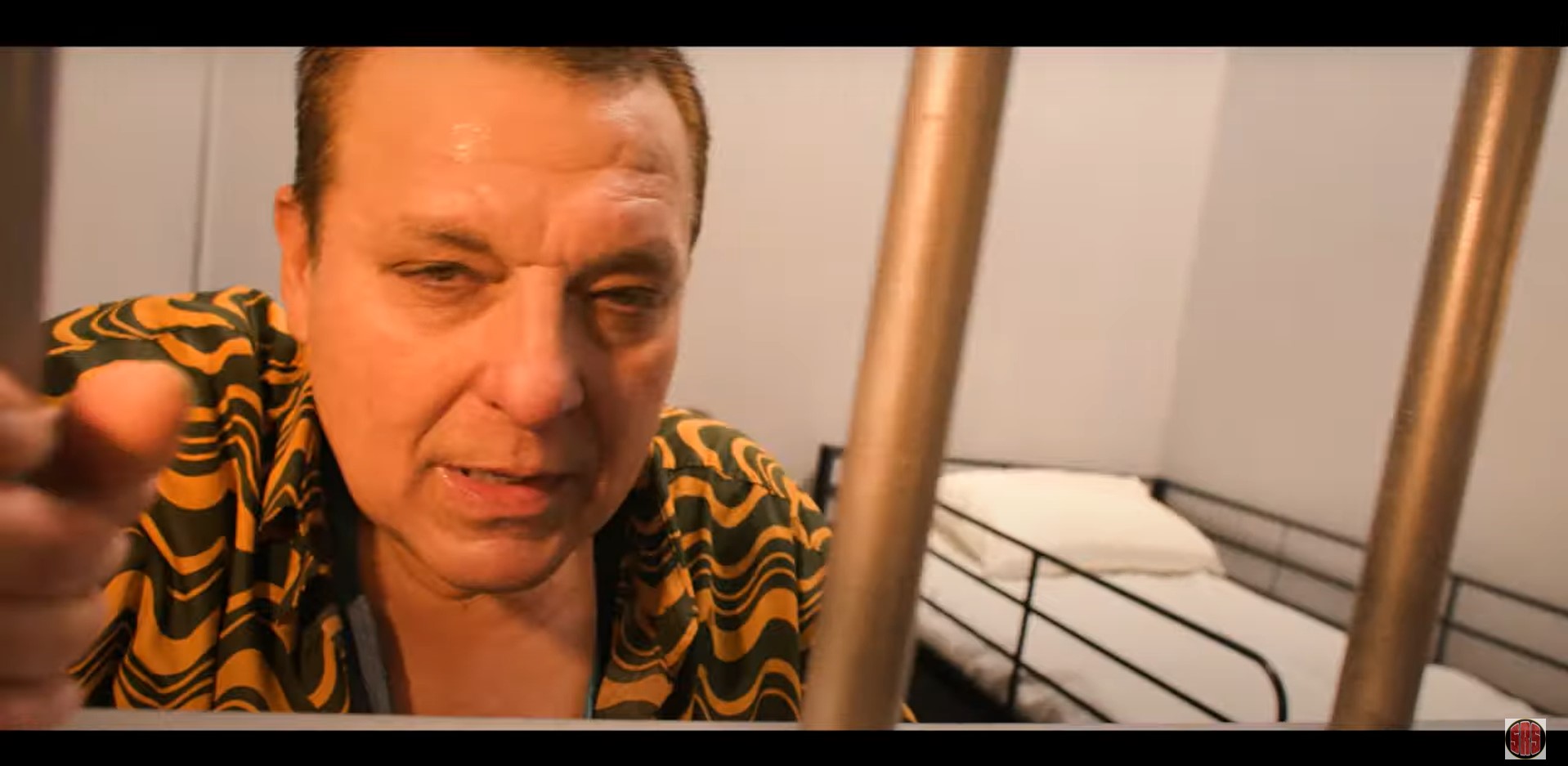
If you’re a diehard horror fan, or even just a physical media movie aficionado, you might have heard of the name Shawn C. Phillips.  The eccentric, high-energy, social media personality buys, watches, and reviews the latest and greatest on home video weekly on this Youtube channel under the handle Coolduder.  Aside from being also a movie actor with a range of roles in mostly low-budget, independent, B-to-Z grade horror films, such as “Girls Gone Dead,” “Blood Orgy at Beaver Lake,” and “WTF!,” Phillips’s social media presence further extends to an inspirational weight loss journey, shedding over 235 lbs.  Having been a longtime actor and producer, one of the Baltimore, Maryland native’s newest ventures is directing having shot mostly self-recorded videos to be inserted into other filmmakers’ movies.  Phillips’s latest is “Woods Witch,” a found footage comedy-horror that’s one-part “Blair Witch Project,” two-parts ADHD (Attention Deficit, Hyperactivity Disorder).  He codirects the film with costar and “Amityville Karen” actress Lauren Francesca in her debut directorial and cowrites with Julie Anne Prescott, writer of many more recent “Amityville” inspired budget horrors like “Amityville Karen,” “Amityville Shark House,” and “Amityville Bigfoot.”  DRAX Films (“Bae Wolf,” “Acorn”) is the production company behind feature that provided most of the funding in conjunction with crowdfunded portion.

Obviously infatuated about being in front of the camera, taking a backseat to his own co-directed film wouldn’t be enough for the nearly 40-year-old personality who costars alongside Lauren Francesca as social media influencing boyfriend and girlfriend Jonah and Jocelyn.  Loud and opinionated, the couple struggle with maintaining viewership but, before that, they also they also struggle with the foulmouthed, death-threatening volley between Jonah and Jocelyn’s robbing-the-cradle by robbing-Jonah’s-cameraman mother, played by Sally Kirkland (“Fatal Games,” “Two Evil Eyes”).  And that sort of leads into a couple of themes “Woods Witch” harps on.  One theme is the constant bickering, shouting, and squabbling between anyone and everyone in a free-for-all of one-upping each other or to not take humility very well in front of others.  None of the characters side with one another, steadying a position of satellite attitudes and courses that lead the story into all different types of unhinged and unfocused directions.  The second theme connects with Sally Kirkland and the other in-and-outs of overripe star power for what crowdfunded money could afford and while there are some likeable and decent names in the cast, such as the late Tom Sizemore (“Relic,” “Saving Private Ryan”) in his last role before his death, James Duvall (“May,” “Donnie Darko”), Robert LaSardo (“Strangeland,” “Death Race”), and Lisa Wilcox (“A Nightmare on Elm Street 4:  The Dream Master”), they used to headline the attraction with only minutes to shine in their respective scenes.  The cast fills in with Kelly Lynn Reiter, David Perry, Carl Soloman, Bill Dawes, Lorelei Linklater, Nicole Butler, Ken Davitian, Bryant Smith, Eva Hamilton, G. Larry Butler, Mary Jones, Tom Harold Batchelder, Jake Pearlman, Brian Metcalf and Sadie Katz. 

“Woods Witch” uses multi-media found footage to tell the story where a bunch of egregiously entitled vloggers trek into infamously mysterious woods for hits, likes, subscribers, and e-revenue.  Not an original bone in its narrative body by any means, Antoine Le’s “Followed” comes to mind, but “Woods Witch” doesn’t hit where it should as a heavily improv comedy-horror that lampoons found footage horror in the woods and, instead, has undeniably become massively cacophonous of in all areas.  Going into the feature familiar with some of the cast and the distributing banner, expectations of a Shawn C. Phillips directed film were all fastened at the lower screwball level with horror elements tacked in here and there, aptly fitting the mold the social media influencer has established for himself with the eccentric personality of a physical media farceur who adores horror, but nothing can prepare audiences for how much confused noise is strewn about with the constant yelling, backbiting, and randomizing introduction of characters that turns what should have been an entertainingly crass and witchy film into just being a completely crass and witchy yawner.  Being completely flat and unfunny wouldn’t be a totally fair statement as “Woods Witch” does have its moments, such as the tree blood being rubbed all over Phillips’s naked torso and him, as Jonah, proclaiming naively Dascia’s kinkiness can be found humorous, but these funny bit moments are far and few in between and there’s just not enough new, fresh, or actor-driven comically-inclined wit and materially to feast on to support the lack of horror despite a few morsels of gore that are left in the dust, overshadowed by an immense pre-trip setup of interviews and infighting that ruins the rest of the reel. 

Enter the world wide web and wacky world of Shawn C. Phillips with his co-directed film with Lauren Francesca in “Woods Witch” on an SRS Cinema DVD. The MPEG2 encoded, 480i upscaled to 720p, DVD9 pulls the differing, clashing video qualities together, mostly earlier on and near the finale, for a coherent beginning, middle, and end narrative telling. If only I could say the same about the story, themes, and character roles. Anyway, not a lot of banding as there’s not a lot of dark scenes in what mostly is fill lighting that brightens up what’s in the scene. Details are okay enough when not implementing shaky cam’s in-and-out focusing found footage and lighting doesn’t completely washout the miniscule bits of texture. The coloring also has a naturally graded look as well as the objects’ organic color palette as budget doesn’t allow for too much fancy cinematography to also evoke a sense of realism. The English language PCM 2.0 stereo mix is consistent as it is coherent with the clarity and the dialogue. Even with pandemonium breaks out, which is often with the screaming and snappy conversations between each other, dialogue remains unscathed without audible squashing feedback or other interferences. English closed captioning is optionally available in the extras. Special features include a behind-the-scenes raw footage from fellow Youtuber Kenneth Ramone who has a small part in the film, a handful of cut scenes, theatrical trailer, funny trailer, an audio commentary by director/star Shawn C. Phillips going deep into the casting, locations, backstories, script and improv moments, etc., and there’s a Lisa Wilcox stinger in the post-credits as the mayor for an additional or extended scene with some improv. The SRS Cinema package comes in a standard DVD Amaray case with eye-catching illustrated artwork, disc pressed with the same artwork, and is an unrated, region free release with a 96-minute runtime.

Last Rites: Humor and horror underperform in the film “Woods Witch” that’s sole purpose is to be a comedy-horror. What the film does do is parody other found footage features and their filmmakers under a misguided sense that in-the-woods horror, from a camera lens point of view, is past its prime when in reality, the long-in-the-tooth subgenre is better than this parody by far.

“Woods Witch” Available on DVD from SRS Cinema!