Never Trust a Script Written by an Egotistically EVIL “Scream Queen” reviewed! (Visual Vengeance / Blu-ray)

This Chainsaw’s Made for Cutting! “Scream Queen” on Blu-ray!

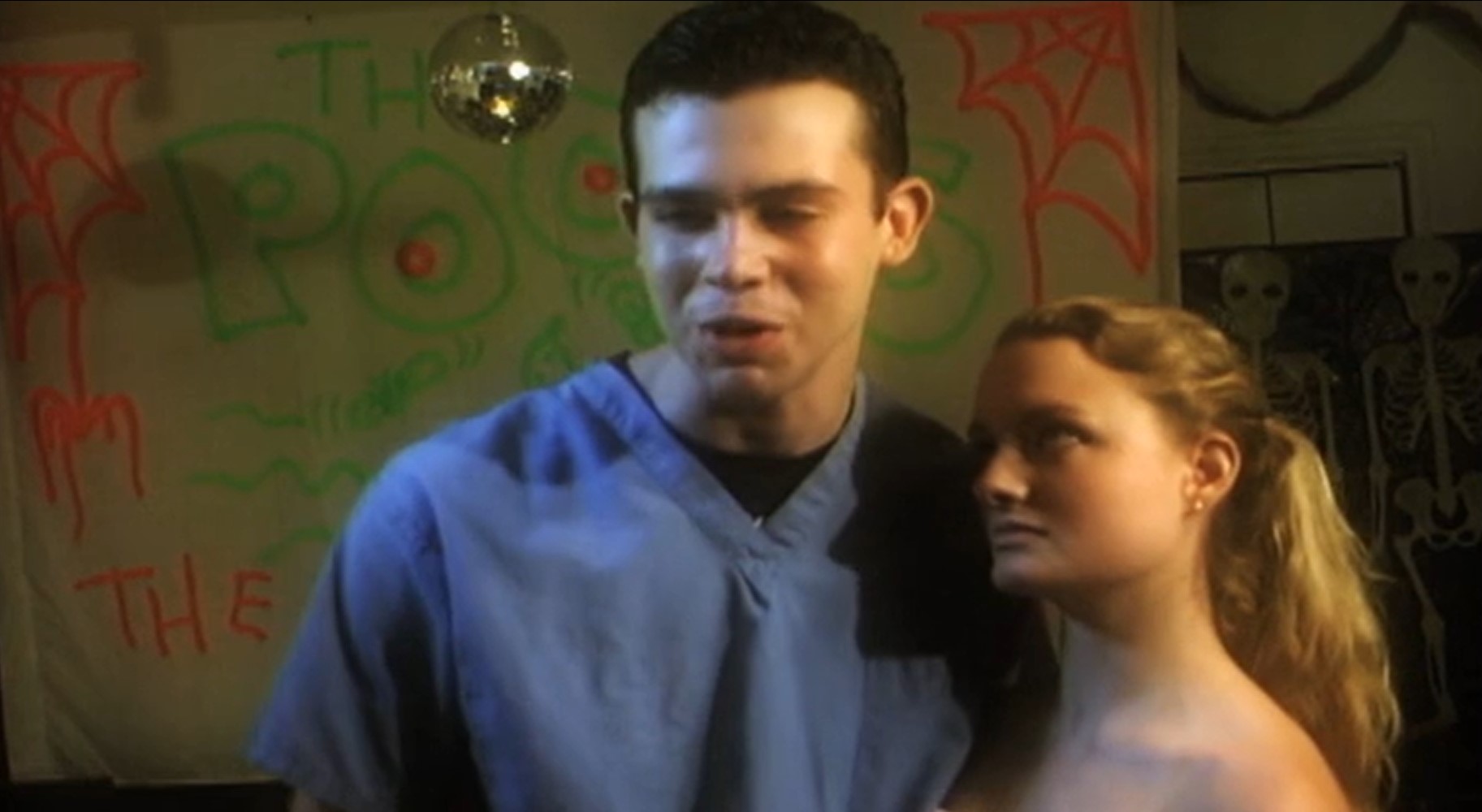
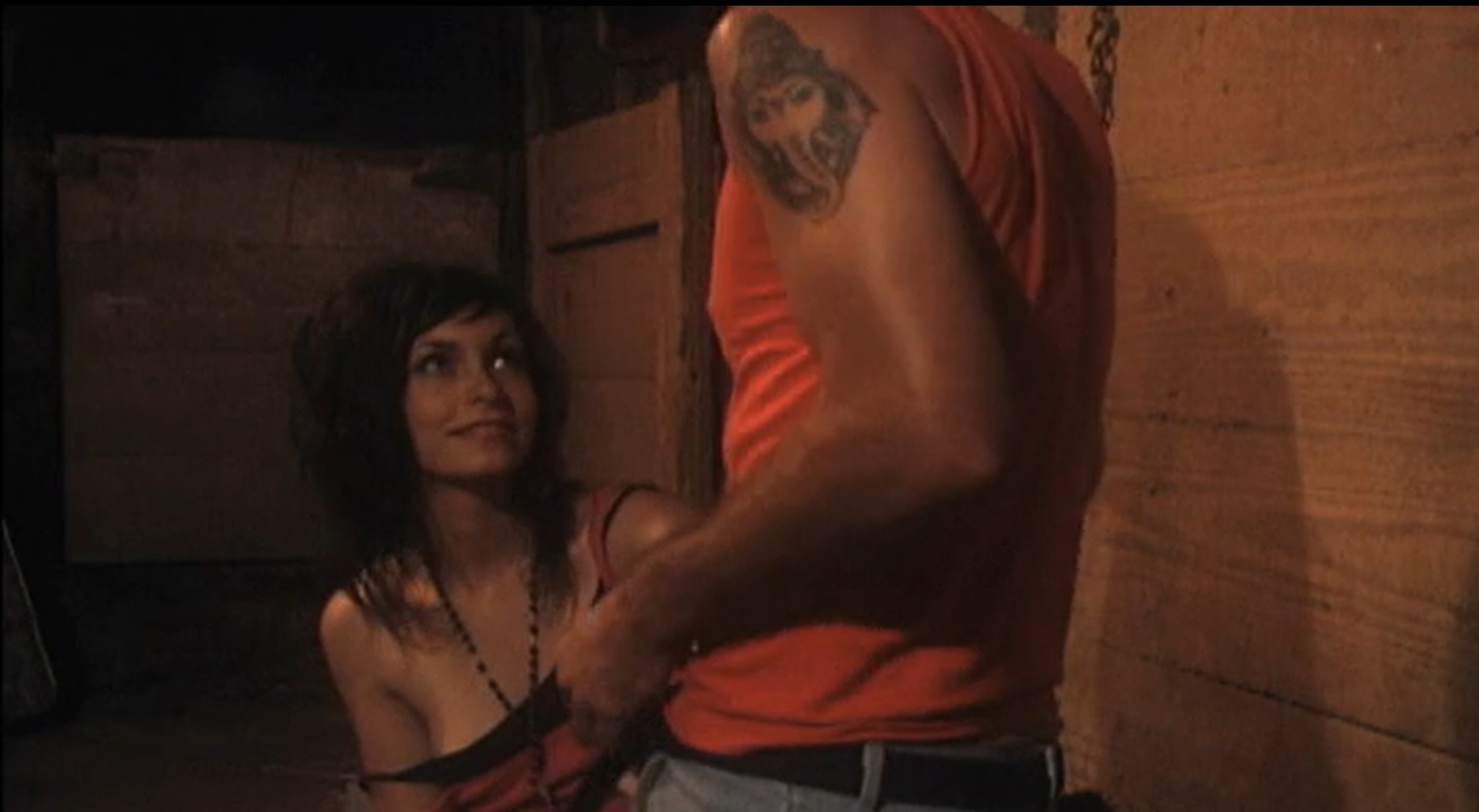
Malicia Tombs, an acclaimed horror actress known for B-movies and bad attitude, bursts into a wreckage of flames when her car sudden explodes after storming off the set of her new movie, “Scream Queen,” in which she wrote and starred as the titular character.  Part of the cast and crew were devastated by the accident that had cut their own career short while others were relieved the egotistical Tombs had perished despite publicly feigning grief over the loss of a genre fan-favorite.  Months later, the small cast and crew receive a mysterious invitation to gather at a creepy mansion butlered by Runyon.  When their host is unveiled as to be a very much alive Malicia Tombs, she offers them a lucrative sum of money to finish the film they’ve started but with a new script.  As the guests read through the new treatment, the cast and crew realize their present moments read just as their being played out in the script, even their deaths. 
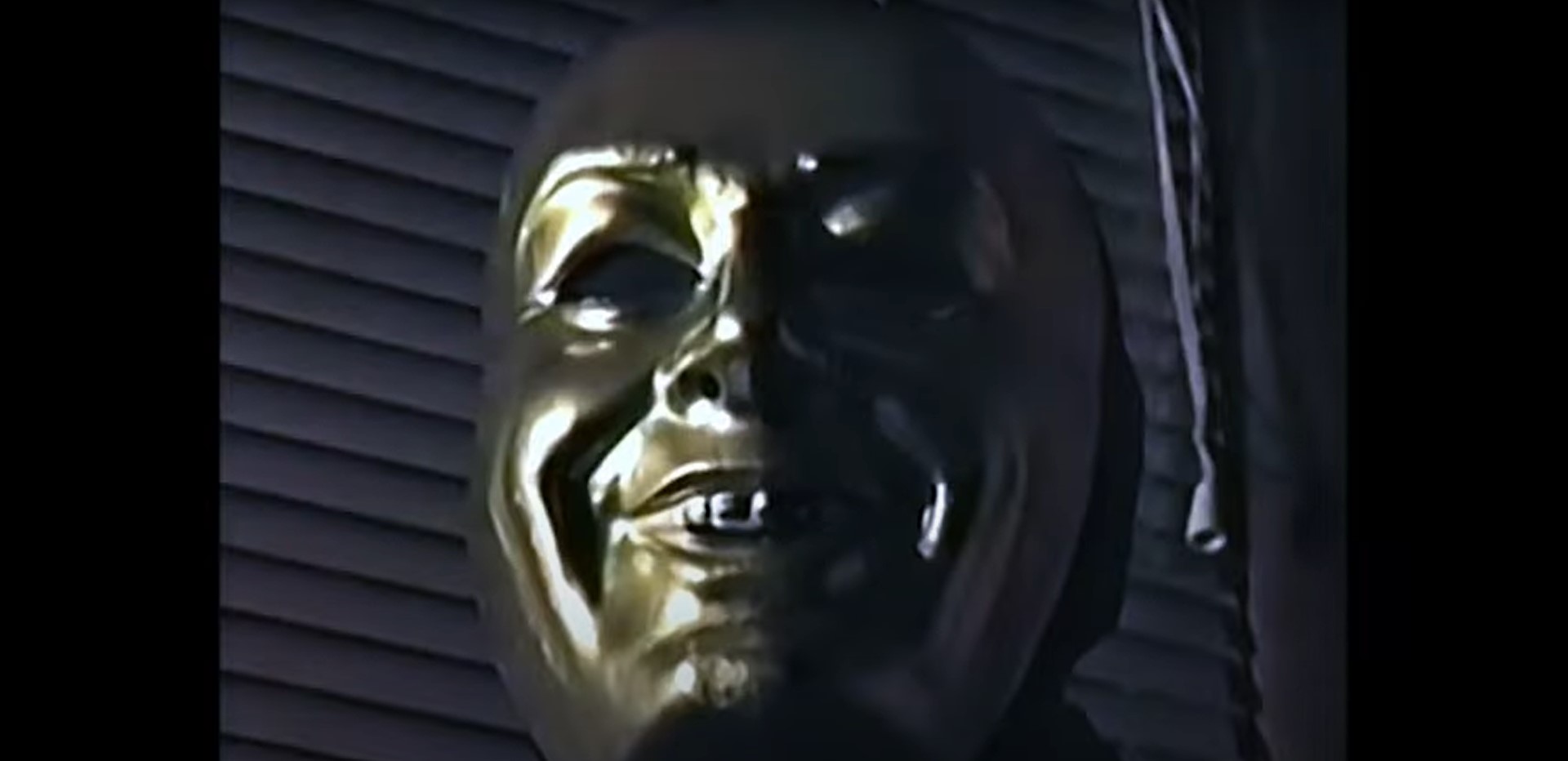
If there was ever a single face deserving the representative distinction within an overpopulated categorized scream queen genus, Linnea Quigley would be that green-eyed, blonde-topped, beautiful face with an infectious smile.  Quigley worked with an array of filmmakers, ranging from some of the most renowned cult films of all times amidst reams of horror movies for nearly half a century (yes, we’re feeling old now) to the most independent of the independents films never having really receive the proper exhibition format or audience attention.  To what would be a delight to Quigley’s fanbase, one of those obscure features is Brad Sykes’ “Scream Queen,” a late 90’s filmed, 2002-released, SOV, U.S. slasher written-and-directed by the “Camp Blood” and low-budget filmmaker with Quigley in mind to play the scream queen character Malicia Tombs, now available, officially, on Blu-ray.  “Scream Queen” is the first major project for Brad Sykes in a collaborating effort in not only as a director but also as a co-producer alongside David Sterling of Sterling Entertainment.
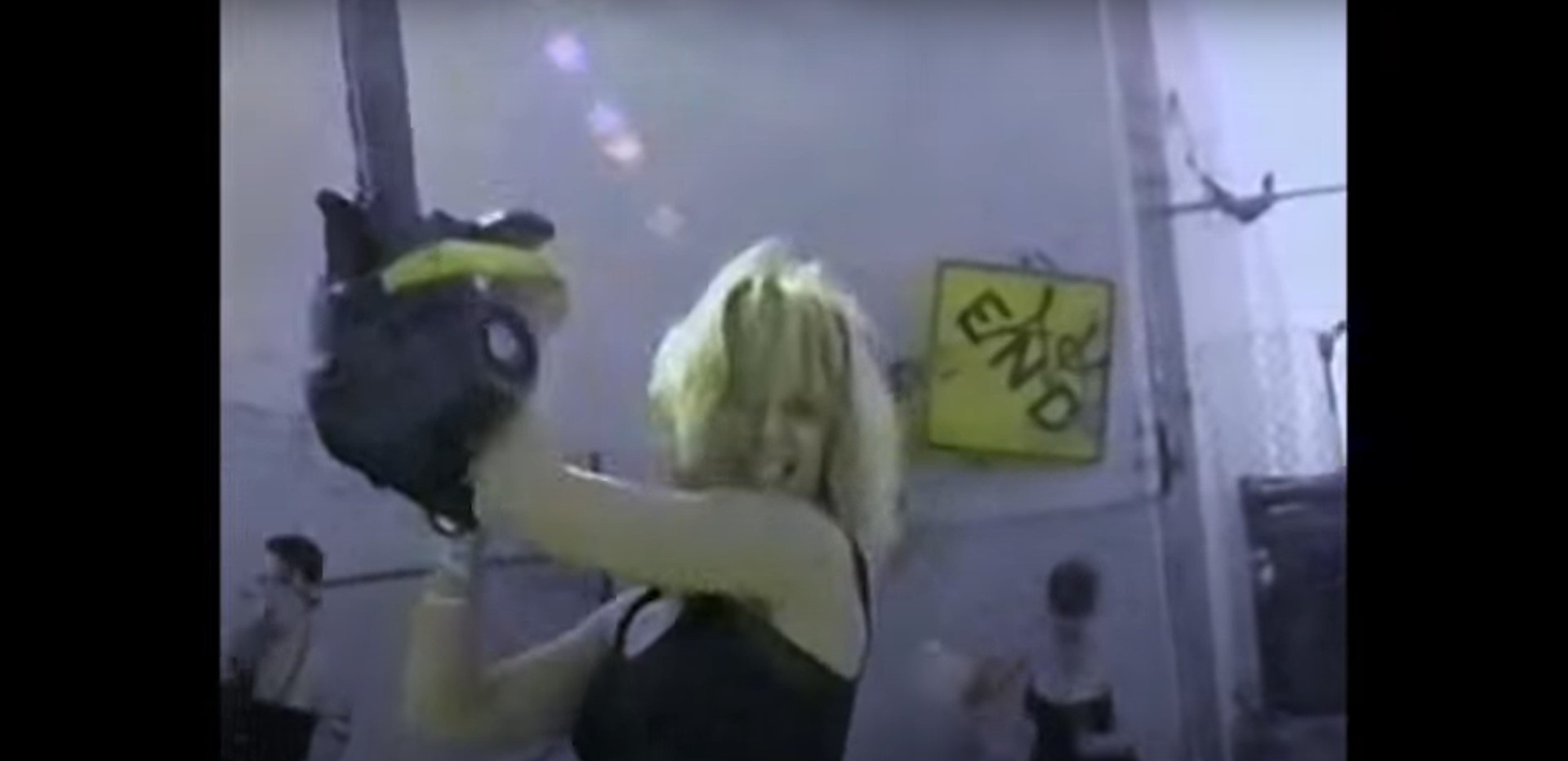
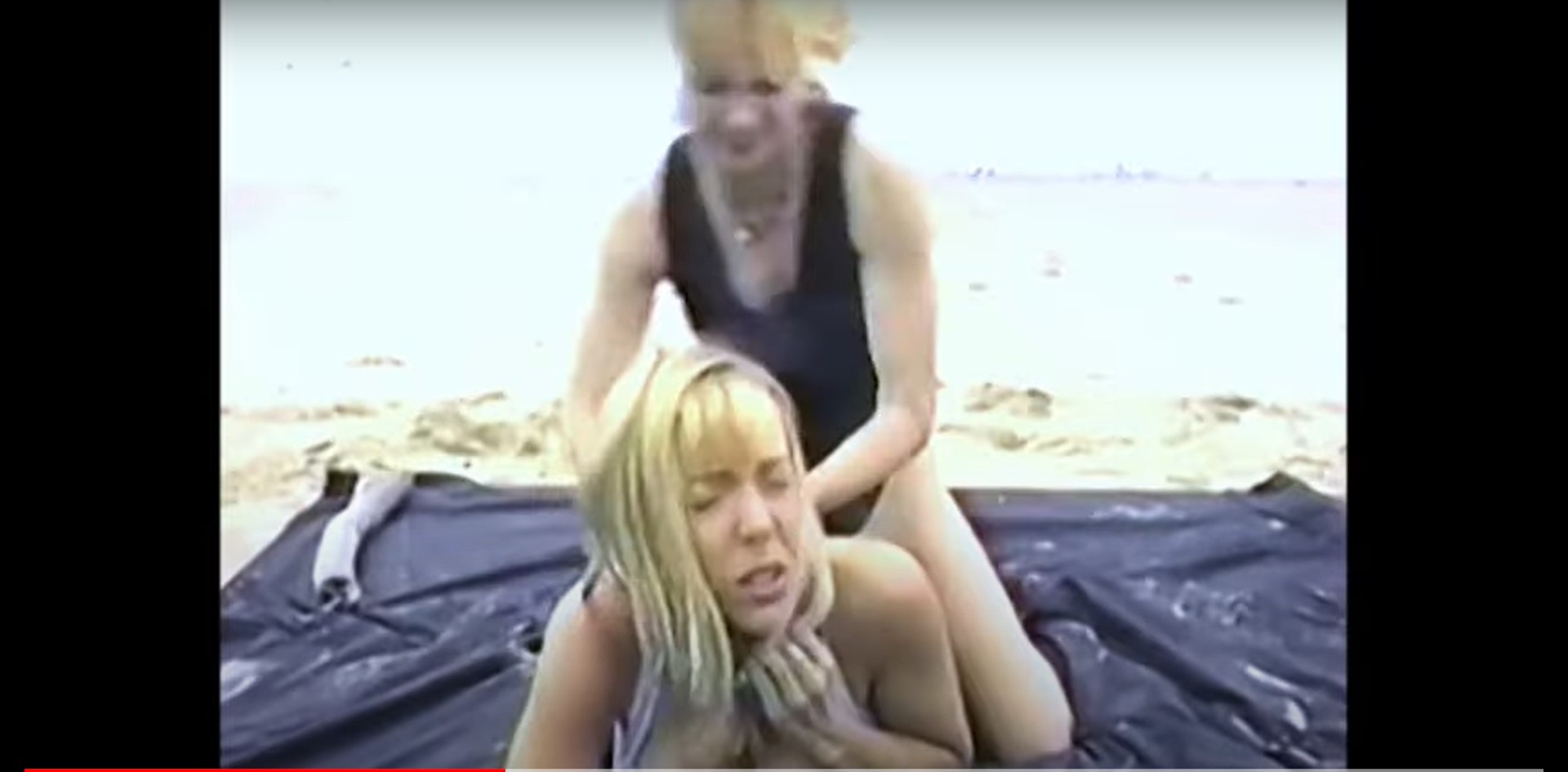
“The Return of the Living Dead” and “Night of the Demons” Quigley puts on another memorable and wickedly fiendish performance as the haughty genre scream queen Malicia Tombs who superiority has gone to her head as she embraces her designation to an exact mania, displayed early on when her character’s character attempts to choke-kill another actress despite the numbered scene not being a death scene and Malicia harps on wanting to continue with the resembling act of murder.  As much as Malicia Tombs embraces the killer instinct inside of her, Linnea Quigley very much embraces Malicia Tombs without having to take her top off and despite having less screen time than her costars.  While Quigley fades in and out of the linear story, the narrative progresses with livelihood hardships of the now out-of-work cast and crew who relied heavily on that small film to boost their acting and filmmaking careers.  That crop of characters falls short tipping into their expectations, aspirations, and even their relations to be just slasher fodder for the mysterious maniac roaming the house.  Jenni (Emilie Jo Tisdale,” Escape from Hell”) and Devon (Nova Sheppard) are inferred romantic roommates who sell clothes on the side of the street to make ends meet post failed film but don’t have surmountable direction to either be a full-fledged couple to sympathize or seem terribly concerned about opening their own clothing shop other than what would be a bad decision to reside at the mansion overnight.  Again, no sympathy there either.  The special effects goof Squib (Bryan Cooper churns chuckles relentlessly by relating more to his crafted effects dummy more than people, marking him conclusively comedy relief as well as fated for death that, like in life, no one takes him seriously when he shows up gruesomely mutilated.  The other principal actress across from Tombs is Christine (Nicole West, “Dimension in Fear”), a buxom blonde tired of secretary work succumbing to lead man flirtations in a dark and scary house where every shadowy corner is lodged with threat.  The pair fall into that horror character cliché of have sex, will die, quickly downgrading their pre-professional relationship into nothing more than dark house desire.  Director Eric Orloff (Jarrod Robbins, “Evil Sister 2”), a presumed spin on the Awful Dr. Orloff and perhaps hints at his motives, seems to be stuck in angsty avoidance and melancholy stemmed by what could have been with Scream Queen but that also peters to a gross negligence end of an arc waste.  Rounding out the cast are a couple of special bit parts played by prolific Full Moon Entertainment and overall horror movie screenwriter C. Courtney Joyner (“Puppet Masters III,” “From A Whisper to Scream”) as a televised homicide detective and Kurt Levee in a quasi-return of his character Runnion from “Evil Sister” but alternatively spelled “Runyon” in “Scream Queen.”  
Though obviously and definitely not the first to do this, “Scream Queen” humors metacinema measures built upon horror tropes and spherical plot points that redirects the story back upon itself for a killer effect.  The feature has no issues making and poking fun at itself within a campy context albeit the usually grave apprehensions of a true scary slasher movie that’s less campy of which a scream queen is born – think Jamie Lee Curtis in “Halloween” or Neve Campbell in “Scream.”  Bryan Cooper not only portrayed the foolish effects guy persona but also actually did a lot of the gore gags for the film, achieving very detailed inlaid gore prosthetics for a smalltime picture with an axe embedded into a chest and a mangled face to name a few.  The story itself feels a bit rough and ready as it slips into supernatural obscurity and, as aforementioned, character setups flounder to a stagnation, killing instantly the miniscule arcs that were structured prior to their mansion gathering in what becomes a slapdash of serial offing that wraps up the story post-haste without much cat-and-mouse tension.  With that said, “Scream Queen’s” unpolished plot had once mirrored its fallowed physical release until recently but now witnessing its birth out of twilight has been multitudinous worth the wait. 
Another of Linnea Quigley’s lost films has been resurrected from the format graveyard by Visual Vengeance with a new Blu-ray release of “Scream Queen.”  The Wild Eye Releasing sublabel release comes with an AVC encoded, high definition interlaced scanned and director approved 1080i transfer from the 480p tape elements on BD50 capacity and comes also with the qualitative joys of a standard definition shot on video experience.  SOV tape upconversion can never completely eradicate the imperfections associated with tape and we also know this going in courtesy of Visual Vengeance’s standard practice of a fair warning before the film, but the overall “Scream Queen” presentation passes as clear content despite some minor tracking blips, 1.33:1 aspect ratio, original lower resolution, and scan line visibility, which is smoothed out nicely by the 1080i conversion. Exteriors and brightly lit scenes take on more shape compared to darker and low-lit areas that become like a void in standard DEF, which also hits the natural grading into a washed-out drab.  The English Dolby Digital 2.0 stereo labors to maintain some form of auricular strength but often nearly goes dark to where certain Linnea Quigley monologues periodically go silent for a few seconds, so the dialogue isn’t entirely clear but when it is, it’s relatively clean. There’s no hardiness pop in the audio track, staying suppressed throughout, and having little-to-no range or depth to the compile contexture. Some electro-interference throughout but nothing to be bothered by considering the grade of the SOV. Optional English subtitles are available. Special features include a commentary with writer-director Brad Sykes, a new behind-the-scenes documentary Once Upon A Time Horrowood that’s mostly Brad Sykes going through the stages of making “Scream Queen” and his recollections of his first big time produced film, a new interview with star Linnea Quigley, a new interview with one of the three various editors Mark Polonia (director of “Splatter Farm”), an original full-length feature producer’s cut of “Scream Queen,” a behind-the-scenes image gallery, Linnea Quigley image gallery, snippets from the original script, original trailer, and other Visual Vengeance distribution trailers. Along with the hearty software special features, hardware physical features include a six-page trifold with behind-the-scenes color photos notes by Weng’s Chop Magazine’s Tony Strauss and beautifully illustrated with dripping blood, a chainsaw, and Linnea Quigley on the front cover, a folded up mini color poster of a scantily-leathered Linnea holding one of the film’s murderous weapons, retro stickers, and your very own Four Star Video plastic rental card. All of this great stuff is stuffed inside a clear Blu-ray Amary case with a pressed disc art of a bloody illustrated Linnea sawing some unknown guy’s face off. The same illustrated graces the front cover in an expanded form and under a different hue. If you don’t like it, which I would be hard-pressed if you don’t, the reverse side contains one of the original cover arts with, again, a scantily-leathered Linnea holding that murderous weapon. The entire package is sheathed inside a rigid O-slipcover with an extended view of that chainsaw scoring with a bloody spray the eyeball from some guy’s face. The 13th Visual Vengeance release comes region free, unrated, and has a runtime of 78-minutes. Lost vintage now found and digitally revived to give us even more Linnea Quigley than we knew we needed with a meta-film shows initiative and fit special effects but swerves off trajectory into a more-of-the-same pathway. 
This Chainsaw’s Made for Cutting! “Scream Queen” on Blu-ray!

Be Careful Of Your Friends. They May Be EVIL! “Stabbed in the Face” reviewed! (Wild Eye Releasing / DVD)

“Stabbed in the Face” is now on DVD!

A high school Halloween party becomes the catalytic event for a motley of friends that plan a party in a remote haunted house where the urban legend of the three legged lady had brutally slain her husband and his mistress before her own insanity was gunned down by local authorities.  Simultaneously, a prison escaped murderer roams free around the same area, living a few friends on edge but reassured by the others that nothing will happen.  As the party begins, sex, drugs, and alcohol fuel the night away until one of the girls winds up missing and all that is left is a blood-stained bathroom where she was last seen heading.  Fingers begin pointing at each other as panic and anxiety sets in but as the thought of a deranged escape convict overtakes as best suspect, the others quickly split up to find more of their roll-in-the-hay and pothead friends only to discover the hard way that splitting up is a bad idea when hidden agendas come to light.

A character trope loaded slasher forms the foundational framework and sets up filmmaker Jason Matherne’s 2004 feature with a killer-thriller twist.  With an unambiguous forthcoming of brutality right smack-dab in the middle of the title of “Stabbed in the Face,” Matherne, the low-budget director of the franchised “Goreface Killer,” an if-you-can-believe-it less profane name to the film’s true title of “the Cockfaced Killer,” helms his sophomore gruesome gorescape off a script by fellow “Goreface Killer” writer and collaborator Jared Scallions.  The independent gore-and-shocker set in the late 1980s lands a setting in Louisiana and Mississippi, specifically around the off-beaten trails and areas of New Orleans, under Matherne’s New Orleans-based horror and exploitation yielding Terror Optics Films, under the copyright of CFK (Cockface Killer) Enteratinment, which innately chairs Matherne with the executive producer hat as well as with Jaren Scallions co-executive producing and having a principal role in the story.

Character clichés clutter the chain of events with your typical pot smokers (Jared Scallions and André Le Blanc), bad boy (Eric Fox), jock (Bill Heintz), nerd (Steve Waltz), slut (Kristen McCrory), bitch (Dana Kieferle) and goody two-shoe virgin (Amanda Kiley).  The gang is all here for the slaughter, initiating formulaic conventionalisms that would make any horror aficionado cringe with an internal “here we go again” snide rippling through their gore-bore heads at the lack of originality and creativeness from another indie production.  Yet, if you stick with the story and pay attention (instead of doom scrolling your phone), Scallion’s script evolves out of being a simplistic carbon-copy primate and into a singular, secerning Homo Sapien with idiosyncrasies because though most characters remain on the routine attribute course, more than one don’t in an an uncommon but rarely explored concept that puts audience theories and callouts to bed before the unsuspecting reveal.  If needing a comparison, think about the “Scream” franchise as those films are really good at playing out the whodunit in complicated pairings with a big surprise at the very end.  In “Stabbed in the Face,” the unmasking is not as potent but the possible advents serpentine the story, some more obvious than others, and each carry a different motivation crashing head-on with each other after a few Matherne measured red herrings to throw off the plot predictable scent as well as building up tropes to the max of their mechanics, such examples would be the overly unchaste Starr who bed hops men without shame or overstating Bruce’s money and smarts with talks of getting into Harvard and his girlfriend is only with him for his family’s wealth.  Scallion slathers principals thick with stenciled overflow and when that bottom drops and all hell breaks loose, the ostensible outcome dissolves like wet paper.  Katheryn Aronson, Samantha M. Capps, Matt Mitkevicious, Bonnie W. Picone, Jerry Paradis, Helen Whiskey, Betsy Fleming, and J.C. Pennington complete the cast.

“Stabbed in the Face” is about as savage as it sounds.  Perhaps not as graphic or intense as the Wild Eye DVD illustrated cover art (we secretly wished it was), kills that amount to the titular act has a mortality rate of only two and those pair of perforations don’t live up to the wonderfully ghastly illustrated cover but, overall, fulfills the promise.  It’s quite evident that Matherne has no qualms about using splatter and sex, two of the biggest keys to a successful slasher, in his punk-scored abjection of lewd-laced murder.  Yet, it would be very remiss of me if I didn’t point out that “Stabbed in the Face’s” blade strikes air at times with the story.  Disconnection between the first couple of scenes and the haunted house party planning and then on completely omits the transpiring moment of the jock’s sister’s murder as scenes progress, passing through the event without as much of a whisper.  She’s just there in a scene and then she’s not and that isn’t explained until after the planning of the haunted house trip when the virgin naively asks while settling into his car about the girl who apparently was hacked to pieces on school grounds two months prior.  The heavy weight of that loss isn’t there for the jock, not even a fleeting moment of sadness or shock, as everything continues as if nothing happened.  The other characters are not struck by the loss either and this sweeps the character’s death under the rug and insignificant to the plot, but does a film entitled “Stabbed in the Face” really care about emotional scarring?  Or is the intention to leave open wounds to fester with more knife strikes, decapitations, and eviscerations?  If I was a magic eight ball, all signs would be point to yes toward the latter as special effects team Jason Bradford, Robert Masters, and Richie Roachclip pull their weight (professionally, not emotionally) creating better than anticipated morbid scenes of murder albeit the one or two obvious CGI blood splatter.

An 80’s teen slasher incarnate, “Stabbed in the Face” glorifies gratuitous sex, drugs, and gore, appropriately curated and displayed by our friends at Wild Eye Releasing on their Raw & Extreme sublabel.  The 78th released title on the sublabel is presented in a blown-up aspect ratio of 1.85:1 widescreen, eliminating the horizontal bars, on a MPEG2 encoded DVD5.  Resolution retains the image tautness with only a handful of scenes cropped and zoomed in even more that reduces pixels to a more granular façade.  Matherne owns the softer presentation with instances of posterization, especially when creating a period piece using stark colored gels and less light for positioning thicker shadow that hazily defines objects, as if lurking in the dark.  The English language Dolby Digital 2.0 stereo track has great dialogue strength that does sound boxy.  I suspect a ADR dub but highly unlikely with the really good synch and might just be more carefully attained specified audio with key boom placement.  Eric Fox’s electron and punk soundtrack parallel “Stabbed in the Face’s” indie-grunge horror with synthesizing tells of inspiration from the 80’s era.  Punk and hillbilly rock bands on the soundtrack include multiple tracks from The Poots, The Projections and The Pallbearers – the three Ps.  The static menu features full-length tracks from the soundtrack overlaying its static menu with the only bonus feature being a “Stabbed in the Face” Featurette, a behind-the-scenes look in raw and polished form at the film’s genesis and production with discussions from cast and crew.  Along with the feature’s own trailer, also included but separate from the bonus features are other Raw & Extreme trailers of “Crimewave,” “Goregasm,” “Whore,” “Video Killer,” “Blood Slaughter Massacre,” “Hotel Inferno,” and “Acid Bath.”  This portion of the menu options does not include a music track.  To turn consumers onto the film, more so the gore fans than popcorn film goers, the ultraviolent cover keeps in accordance with the Raw & Extreme profile.  The cover art is also semi-reversible with magnified bloody image on the inside of the frosted Amaray DVD case.  The disc is printed with the same cover art image, just downsized.  The unrated DVD has a runtime of 81 minutes and is region free.  Just hearing the title can induce the sensation of a sharp edge going through soft flesh and with that phantom impression of pain, “Stabbed in the Face” is horny, bloody, and punk!

“Stabbed in the Face” is now on DVD!

DCU Can’t Handle this EVIL! “Swamp Thing” reviewed! (MVD Visual / 4K & Blu-ray)

“Swamp Thing” on 4k / Blu-ray Combo!  Now Available on Amazon.com!

A top-secret government project in the Louisiana swamps concern the combination of aggressive animal genes into plant DNA to result in creating super food for the potential famine and overpopulated future.  Agent Alice Cable becomes assigned to the project when her predecessor is unexpectedly devoured by a gator and becomes acquainted with the passionate head scientist, Dr. Alec Holland.  However, the government isn’t the only interested party in obtaining a formula when a faction of cutthroat mercenaries invade the swampy compound in the name of Arcane, a mastermind sociopath looking to hold the fate of the world in his hands.  Storming the compound with force, all the government agents are slaughtered except for Cable who managed to escape while Dr. Holland suffers a tragic accident of combusting with his volatile formula during the attack.  Believed to be dead, Dr. Holland returns transformed into a half-man, half-vegetal thing with superhuman abilities.  Now, Arcane is after him with Cable trapped in the middle. 

Having success in the grisly rape-revengers and mutant-cannibals section of his career in the 1970s, Wes Craven tussled with creating and securing another hit film to pay the ever mounting bills.  Before “A Nightmare on the Elm Street,” one of two biggest titles that have gone synonymous with the director’s name, the other being “Scream,” Craven dived into a DC Universe project before the DC Universe ever existed as such with the script adaptation and the helming of “Swamp Thing,” a vegetational anthropomorphic superhero inhabiting elemental powers, such as regrowth and superhuman strength.  What Craven originally scripted may not have been the same as the finished product on screen but the 1982 captured audiences attention and created lifelong fans of an underappreciated hero still germane to what is now a large universe of revitalized superheroes films and television shows.  Film in and around Charleston, South Carolina in the Cypress Gardens doubling as deep South everglades, “Swamp Thing” is produced by long time DC films coproducers Benjamin Meiniker and Michael E. Uslan as their first DC superhero venture as a Melinker-Uslan production and distributed by Embassy Pictures and United Artists.

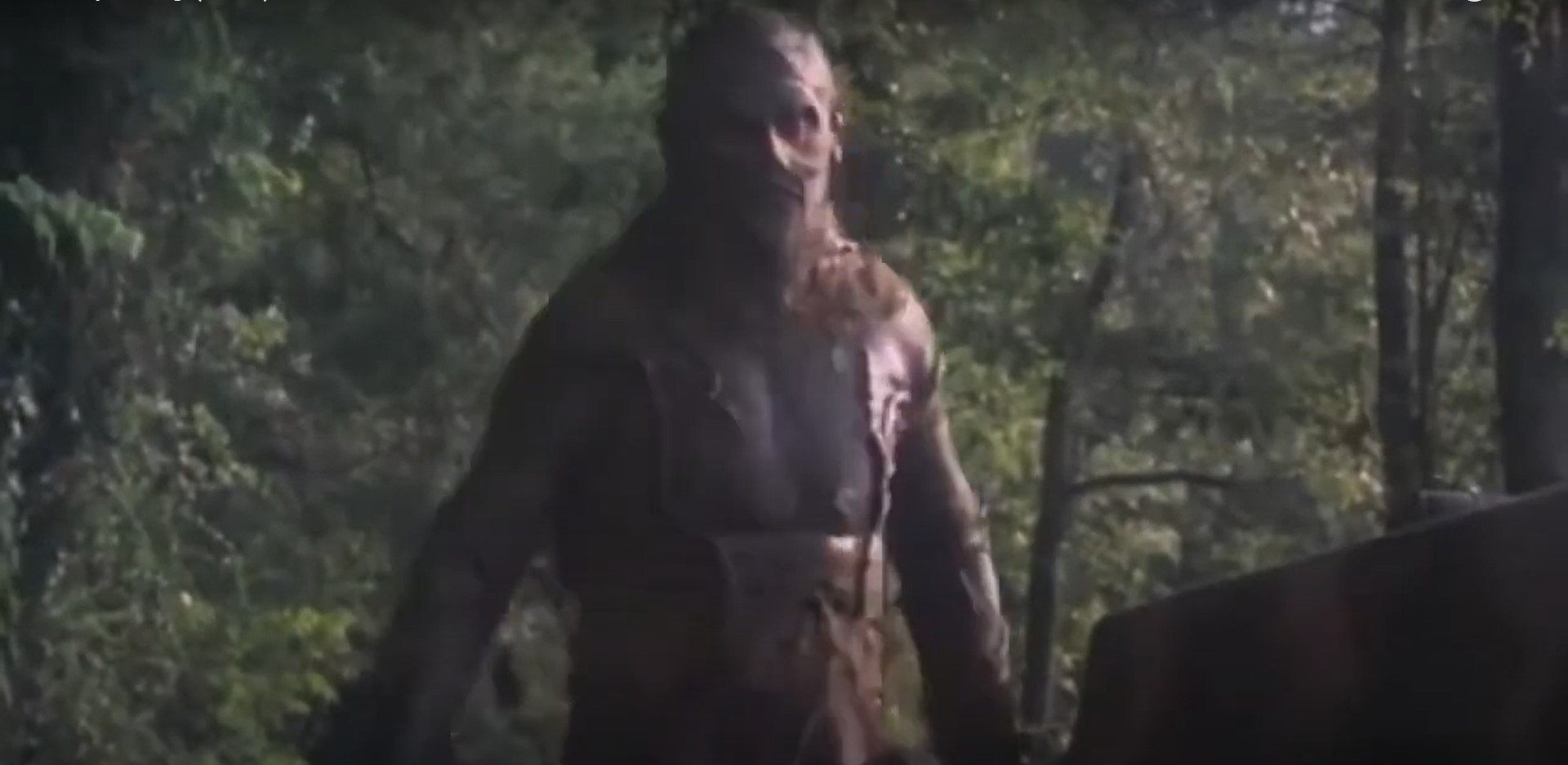
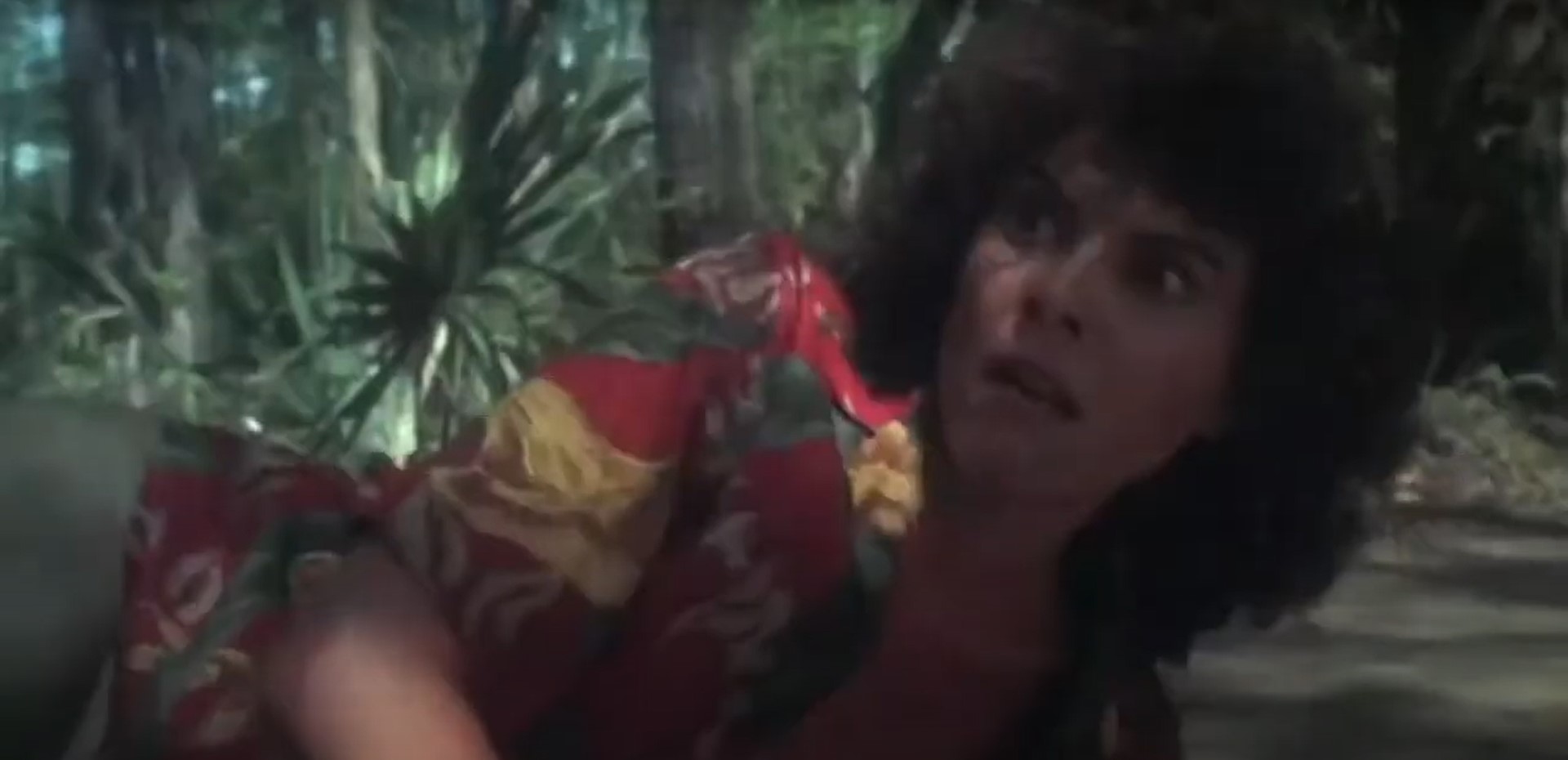
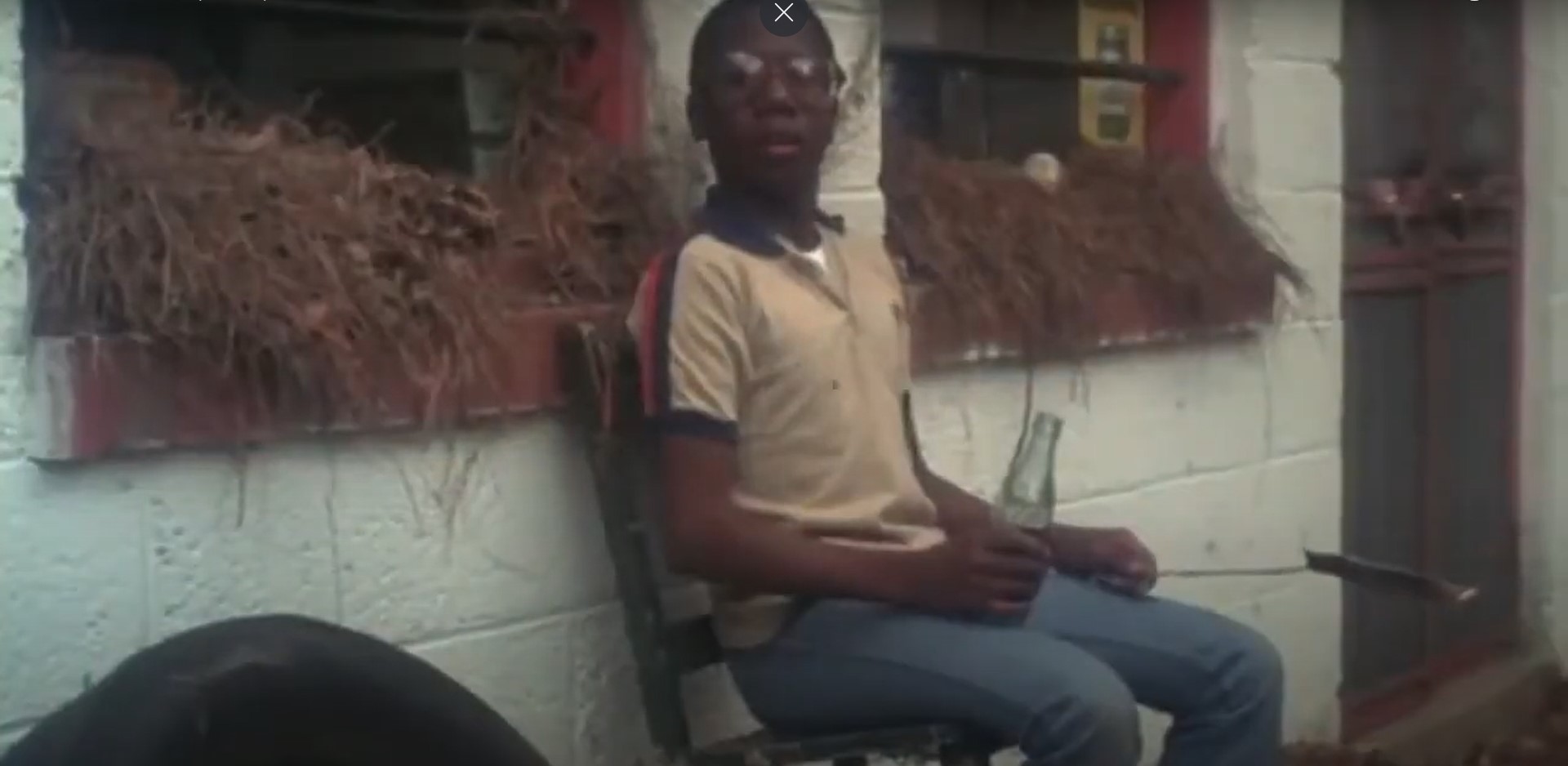
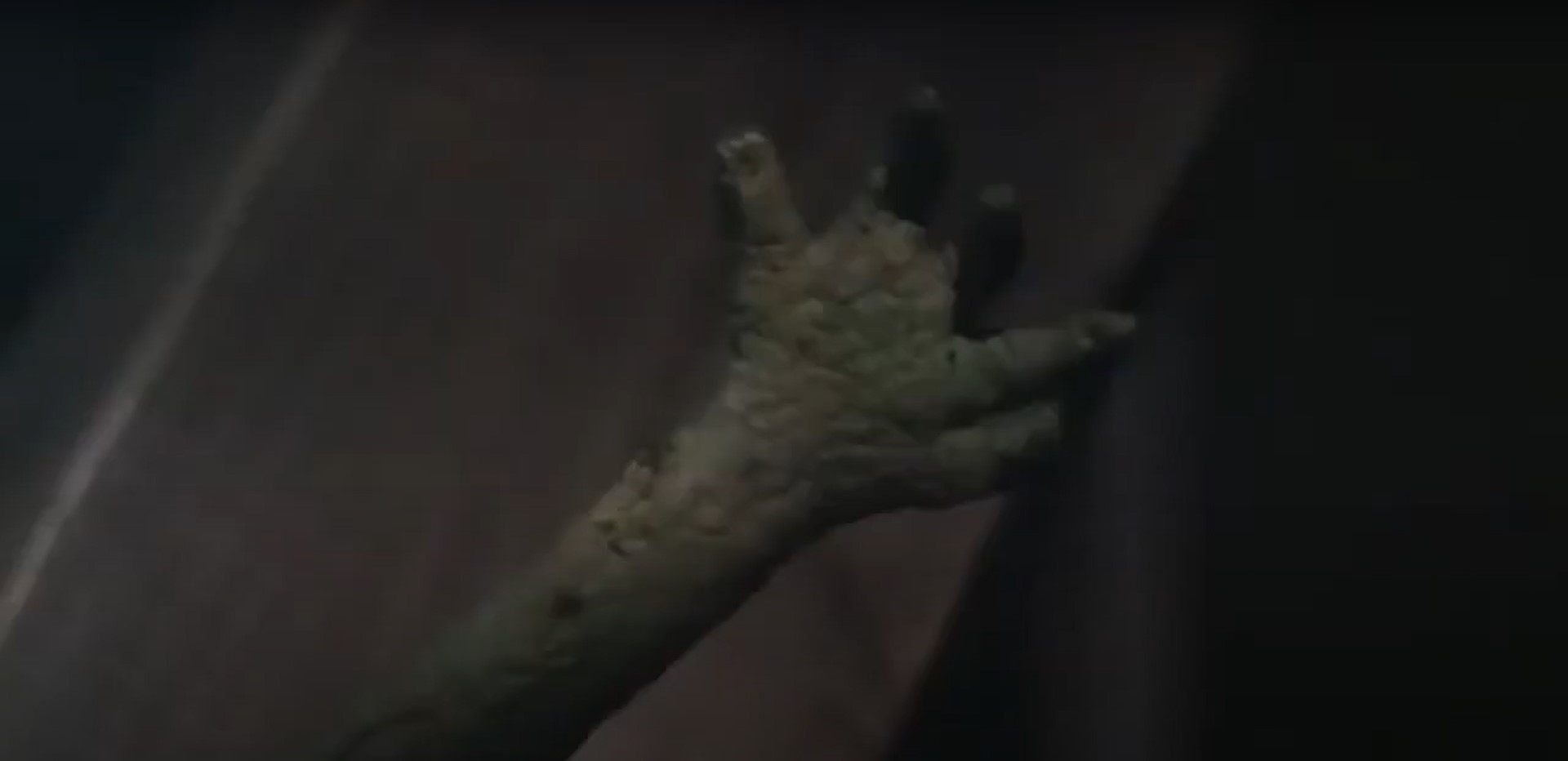
The question of who would bring this monolithic human-hydrangea?  Answer:  Dick Durock.  The 6’5” former Marine Durock was not afraid to jump into character skin, no matter how hairy, tight, or otherwise uncomfortable it might have been.  Durock may not have been the face of Dr. Alec Holland, played by genre cult actor Ray Wise (“Robocop,” “Twin Peaks”) before succumbing to transformational injury and rebirth, but the Indiana born actor certainly became the face of “Swamp Thing” throughout a decade with the sequel and the subsequent television show.  Durock captures not only the strength but also the humanity of the superhero in this origin story, a feat hard to accomplish for a man in a skin-clinging green and bulky suit.  Not to diminish Ray Wise’s performance by any means as the charismatic Wise is charming, passionate, and invested into making his Dr. Jekyll jive with the soon permanent Mr. Hyde to come, but as titular principal, Durock becomes the face of foliage on steroids.  Before solidifying herself as a scream queen, a young Adrienne Barbeau would have more difficulty in her Alice Cable role reflected in having some kind of feelings for essentially the same character in two versions played by different actors.  Yet, Barbeau beats the buggy Carolina heat as well as the differentiate obstacles by being a kickass government agent able to handle herself around the frighteningly new swamp creature and Arcane’s goon squad.  Before he was a James Bond villain in “Octopussy,” Louise Jordan donned the arrogancy of a tyrannical thinker yearning for the unique powers of others.  Jordan’s quite pretentious as the unrelentless Arcane and that makes the actor be the quintessential antagonist but I would not say his performance places his character in complete rivalry as “Swamp Thing’s” archnemesis.  Something is missing from their dynamics within their broad encounters that make the struggle appear impersonal and distant.  Even when Arcane ingests the formula and turns into a werewolf-like beast and the two superpowers clash, I wouldn’t label their conflict personally intertwined.  Perhaps Alec Holland and Alice Cable’s pre-mutation passion wasn’t strong enough or Swamp Thing’s deep-seeded desire for Alice wasn’t rooted well that makes Arcane just whither like a sun-beaten plant without water.  Another character that’s beaten into the ground is Ferret played by David Hess (“The Last House on the Left”) as head mercenary without any real power or absolute authority over his men, turning Hess more into like Tracey Walter in Tim Burton’s “Batman” but not as cool or as likeable.  “Swamp Thing” cast rounds out with Nicholas Worth (“Darkman”), Don Knight (“Death in Space”), Nannette Brown (“My Boyfriend’s Back”), Al Ruban (“1,000 Shapes of a Female”), Mimi Craven (“Last Gasp”), Karen Price, and Reggie Batts as the unlikely best child character in all of the film as an interesting and lone gas station attendant with hilarious, deadpan wisecracks. 

“Swamp Thing” may not be the first comic book superhero to be pulled from the DC lined colorfully illustrated and action-packed pages and adapted to the big screen but what separates the mucky-dwelling plant hero from the other is he’s cape-less, without ray guns and jetpacks, and appears as a monstrous humanoid rather than a regarded normal looking servant of justice as with Superman, Batman, or Wonder Woman.  “Swamp Thing” intrigues viewers with their own internal conflict stemmed from a foundationally laid idea that mutant creatures or unnatural monsters are inherently bad guys.  “Swamp Thing” becomes a part of that trailblazing group of grotesque good guys with hearts of gold.  Yes, the 1982 feature hasn’t held up over time with some of the low on the totem pole creatures suits and makeup I’ve seen, even with the agreeable Swamp Thing suit showing the rubbery creases and fold overs when Dirk Durock has to hold an object; however, to balance out the cut-rate features, special features picks up the tab with stunt boat chases, invisible pull wires, and a man set on fire that’s intense.  With a slashed budget, Wes Craven scripts on the fly to churn out a watered down but still flavorful cinematic origin story that’s full of heart and humanity and partly carried by the sweat and endurances of an eclectic cast and a handful of popcorn action patches.

“Swamp Thing” emerges from out of the muck yet again and onto a 2-Disc 4K/Blu-ray combo set from MVD Visual’s Rewind Collection label, specially marked as the first release on the LaserVision Collection.  The restored 4K UHD Dolby Vision is presented in 2160p and in a 1.85:1 widescreen aspect ratio on a BD100 while the Blu-ray is presented in 1080p high definition with the same aspect ratio on a BD50.  Each format presents two cuts of the film – a PG version and an international Unrated version – both of which have collated from various cuts of the film, resulting in some impressively rich grading that offers refreshed saturation levels of a lusher swamp environment.  More of that richness is conveyed through the UHD with providing deeper tones to make the swamps isolate and swallow characters while also have a sense of being alive amongst the hazy, knee-high fog, opaque waters, and thick vegetation.  Black levels look fine with the amount of grain that can vary from scene-to-scene but not compression issues to talk about on both spectacular approached formats.  The 4K offers a remastered DTS-HD MA 2.0 mono, which is same as on the Blu-ray, that unjustly limits “Swamp Thing’s” audible potential.  Dialogue has some deficiency projecting with all the tracks transmitting through a single channel that’ll force the up arrow on the volume setting or require a punchy soundbar or headphones to get to a clearer understanding of what characters are conversing.  The intrinsic ambience would have been better suited for multi-channel network to extract everything the swampy milieu had to offer, plus punchier fights, but if not an audiophile, these tracks will ultimately sate a viewer’s goal.  Range decently enough limps through despite the surround sound as we receive enough explosions and barrages of bullets to check that box, but depth struggles through the audio layers.  Both formats also include a Spanish language mono track and optional English subtitles.  Special features vary across the two releases with the UHD having limited extras due to storage but what is included is the PG version, the Unrated International version that includes Adrienne Barbeau’s topless scenes, an archive commentary with writer-director Wes Craven moderated by commentary director Sean Clark on both versions of the film, commentary with makeup artist William Munns moderated by Michael Felsher of the commentary/documentary conducting Red Shirt Pictures, also on both versions.  The Blu-ray contains the same extras above plus another Red Shirt Pictures’ interview with Adrienne Barbeau Tales from the Swamp, an interview with Reggie Batts Hey Jude, a discussion with Len Wein, the creator of “Swamp Thing,” the featurette Swamp Screen:  Designing DC’s Main Monster, the featurette From Krug to Comics:  How the Mainstream Shaped a Radical Genre Voice, photo galleries, and theatrical trailer. This must-own set, that caters to paying homage to the Laserdisc, comes retail green 4K Ultra HD snapper that in holds the 4K and Blu-ray on each side of the interior wall. The exterior features an illustrated encirclement of the main players – Dirk Durock and Andrienne Barbeau in comic character – on a single-sided front cover, sheathed inside a cardboard O-slip cover with the same cover art. Both disc presses also represent the original Laserdisc art. The insert contains a folded mini poster of the slipcover design. Two version, one release headline both the 91-minute PG and 93-minute Unrated version of the film with the entire package region locked in A. I may have finally watched Wes Craven’s “Swamp Thing,” but I won’t be the last as I highly recommend this stellar launch into ultra high-definition territory with the original quagmire superhero.

“Swamp Thing” on 4k / Blu-ray Combo!  Now Available on Amazon.com!

On the Verge of a New Millennium, New Faces and Stories Tell Their Terror on the Same Old EVIL Video Format! “V/H/S/99” reviewed! (Acorn Media International / Blu-ray)

Found Footage is all the 90’s Craze These Days! “V/H/S/99” Available at Amazon!

The year:  1999.  The format:  VHS.  The theme:  The most horrifying experiences caught on found footage camera.  A horror anthology for the turn of the century puts together five of the most terror-drenched short films that resurrects the punk-rock dead, turns urban legends into vindictive playthings, televises Lovecraftian game show frights, peers into the stone-cold eyes of a Gorgon neighbor, and goes to Hell and back!  All caught on camera from a first-person view as VHS vicariously relives the glory days through a digital world, capsulated by the horror realm and all its fanatical acolytes for the analogue video format to live undead forever. 

Living in the age of a VHS comeback is admittedly kind of weird.  VHS has become a hot collectible, especially and obvious the rate and obscure that mostly resides in the horror and cult genre.  Most recently, a discovery on a Brazilian VHS cut of Jaws 2 has a couple of minutes of shot footage that no other release holds to this day.  That, being just one example, is sought after power of VHS that saw various versions of one film be disperse far and wide across continents, which the same could be said about DVD that too saw a variety of different cuts due to the diversity of playback formats, distribute cuts, and numerous levels of censorship between countries.  VHS is also making a comeback in format style with gritty, faded, flat colored image veneer and tracking lines and the absent transmission signal of snow statically adorning the screen with beautifully hypnotical and flickering white dots.  So, it’s now surprise that on the heels of 2021’s “V/H/S/94,” another analog anthology is greenlit in 94’s wake with “V/H/S/99” for 2022, written and helmed by newcomers to the series but not necessarily newcomers to the horror scene.  The movie’s sequential lineup Is as follows:  Short filmmaker Maggie Levin writes-and-directors “Shredding,” taking a break from killer sharks is Johannes Roberts to oversee his “Suicide Bid” entry, musician Flying Lotus directs and co-writes with Zoe Cooper with “Ozzy’s Dungeon,” “Tragedy Girls’” director Tyler Macintyre writes-directs “The Gawkers” along with co-writer and fellow “Tragedy Girls’” screenwriter Chris Lee Hill, and the husband and wife tag team of Joseph and Vanessa Winter, filmmakers of “Deadstream,” helms-and-pens “To Hell And Back.”  The Shudder exclusive series latest is produced by Josh Goldbloom (“V/H/S/94”), David Bruckner (director of “Hellraiser” ‘22), Chad Villella (producer of the of 2022’s “Scream”), Bloody Disgusting’s Brad Miska, and “Scream” ’22 and “Scream VI” director Matt Bettinelli-Olpin under the production banner of Studio 71 and presented by Cinepocalypse Productions and Bloody Disgusting.

A new set of five tales of analog rendered terror invoke a new set of actors in each short film that carrier with them a broad range of experience. While a couple of the stories shred the narrative with hectic editing (I’m looking at you “Shredding”), performances throughout come over with blistering consternation and definitely a late 90’s grunge attitude with “Shredding” and “The Gawkers” delivering the full blunt force of period, heckling away in their baggy clothing, bohemian hairstyles, and a penchant for skateboard thrashing. The other films are merely timeless with only mere mentions of date, or their timestamped on the video tape recording, or are just a thematical proverbial nod to the specific point in time, lacking the keep it real essence that is quite idiosyncratic to the hop from a phasing out decade and into a whole new other. The cast of these shorts play their roles with exuberance and wackiness, which if you have lived in or can look back to the converging decades/millennium and see some of the gameshows or cultural shenanigans that defined America as people or, if you want to go smaller, just the pop culture, wacky is a pinpoint descriptor. The short films’ of “V/H/S/99” are comprised of a cast including, selectively, Steven Ogg (“The Walking Dead”), Ally Ioannides (“Synchronic”), Keanush Tafreshi, Jesse LaTourette (“There’s Someone In Your House”), Dashiell Derrickson, Isabelle Hahn, Sonya Eddy (“Blast”), Emily Sweet (“Castle Freak” ’20), Melanie Stone (“Deadstream”), Archelaus Crisanto, Luke Mullen, and Ethan Pogue.

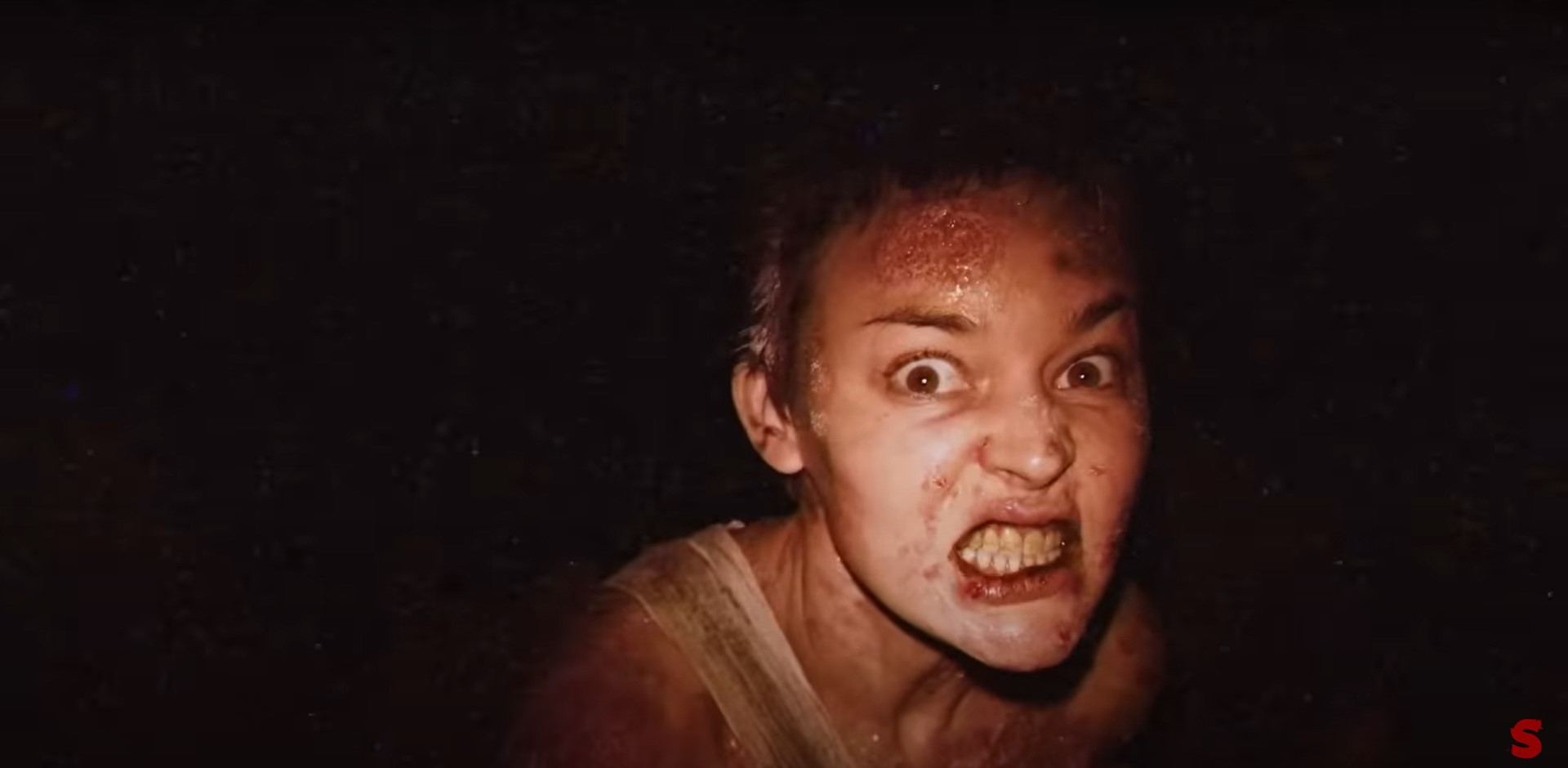
Anthologies have been around for decades and are a great medium to showcase a multitude of individual storytelling from a variety of filmmakers walking different paths in life.  Fans can often salivate over these types of jump-the-shark formats that can start off with the zombie undead, transition 10 minutes later into a supernatural spooky, and then segue into a creature feature with a wraparound bonus story that may or may not connect them all and squeeze each episodic terror vision in a full-length feature runtime.  Though I enjoy a good collection of short and sheer frightful films, anthologies are not my cup of sanguinary tea.  Hopefully, no partisan takes seep out of this review as I attempt to examine “V/H/S/99” objectively.  Out of the five segments, three have landed strong with a right amount combination of style, gore, performance, narrative logic, and, of course, terror, and if you like comedic sugar in your black cup of horror then “To Hell And Back” is a perfect Venti-sized, well-blended mulatto of choice that thrusts two dimwitted demonic ritual documentarians into the pits of dark, gloomy, and malformed creature Hell and fight their way back to their own plane of existence.  Though one flaw some make catch when watching the caboose film of the anthology is that it doesn’t particularly reflect 1999 other than the small caveat, which is pivotal to the story, that at the turn of the millennia is when the veil between our world and Hell is as it’s thinnest.  The other two better entries capture more infinitesimally in detail of the late 90s, early 2000s clothing and discourse.  “The Gawkers” taps hard into the weird aggressive hormones of a teenage boy while exploring the newfound ways to use technology as spyware.   Webcams aboard big boxy desktops chauffeur in a whole new way to be creepy that lands them in hot water not by the law but by the wrath of ancient femme fatale of Greek mythology.  Johannes Roberts rounds out the better half with a sorority haze gone wrong that evokes an urban legend to become more than just a story and Roberts “Suicide Bid” offers, again, that period presence that feels like a tribute throwback to the 1998 “Urban Legend” film itself, but adds a supernatural surprise that utterly creepy and not as deep with only 6 feet underground rather than a 47 meters down, the director is slowing raising his fear to the surface.  The shorts left hanging below the bar are “Shredding” and “Ozzy’s Dungeon” and for reasons that have to do with their style and story. “Shredding” promising premise is plagued not by punk phantasms back from the dead but simply pilfered of focus with a hectic, if not severely chaotic, VHS-graded editing scheme that shocks the perception senses while “Ozzy’s Dungeon” is inspired by Nickelodeon’s Legends of the Hidden Temple gameshow where kids have to compete in toned down ancient society games to race up the temple to win the big prize. “Ozzy’s Dungeon” definitely is weird, sadistic, and Lovecraftian-inspired for sure but its story design loses motivation and often cheats rounding the bases in order to reach the shocking climatic finale.

Acorn Media International brings tape to the United Kingdom with a Blu-ray home entertainment release of “V/H/S/99.” Presented in a widescreen 1.78:1 aspect ratio, though doesn’t cater to the standard 4:3 ratio of video tape, the provided image quality purposefully varies to give audiences the titular analog experience. Faded grading, tracking lines, static and that jittery playback is all part of the visual environmental experience and even a few of the filmmakers shoot the film digitally to then run it through VHS to garnish with unnatural base video turbulence. The English DTS-HD 5.1 surround sound mix heightens the exposure and familiarity to of being that person behind the camera as all of these shorts of short POV. Intense and, often, cacophonous, the audio tracks still manage to level out, be discerned, and manage to relay the chaos no matter how much bedlam is thrown at the screen. From the zoom in-and-outs of the video tape recorder, there’s a clean sense of depth and the range is bountiful as the ambient track runs the gamut of omnifarious sounds that give each episode an individualized stamp. English SHD is optional. Bonus content includes an exclusive panel from New York’s Comic Con with guests producer Josh Goldbloom, “The Gawkers'” Tyler Macintyre, and “To Hell And Back’s” Joseph and Vanessa Winter as well as a total arc gag reel. After that encompassing project feature, the girth of the bonus content breaks down into the individual shorts with “Shredding” having a deleted scene and the complete fictious band BitchCat music video, “Ozzy Dungeon” has two deleted scenes, “The Gawkers” has a deleted scene as well as bloopers, camera tests, and The Making of Medusa, and “To Hell And Back” rounds out the features with a hefty look at the raw footage, scouted location, and a storyboard and blocking rehearsals. There are no bonus features for Johannes Roberts’ “Suicide Bid.” Physical features include a slightly thicker traditional Blu-ray snapper, a Europe standard, with a cover art that matches the North American RLJE release, a city being loomed over by skull made out of colorful galactic stars and a pair of video lenses for blank eyes. The disc art is pressed with the same front cover image. Though no mention of a region playback on the back cover, I suspect a region B encoded release as per usual with Acorn Media Interntional. “V/H/S/99” has a total runtime of 109 minutes and is UK certified 18 for strong blood violence/gore. “V/H/S/99” is not my kind of off the heasy subgenre, but the latest series anthology packs a punch and I would never discourage anyone from not experiencing firsthand an homage trip through terror.

Found Footage is all the 90’s Craze These Days! “V/H/S/99” Available at Amazon!

The EVIL is Inside Me! “Nightmare Man” reviewed! (Ronin Flix / Blu-ray)

“Nightmare Man” Is Here To Haunt Your Dreams in High-Definition!  Blu-ray Available at Amazon.com

To channel mystical help with her and her husband’s fertility issues, Ellen purchases a mask from overseas that supposed to provide fruitful results.   Instead, Ellen is plagued by nightmares of a demon figure, forcing himself onto her with a maniacally grin.  Diagnosed a paranoid schizophrenic and on medication to dilute the vivid dreams, Ellen’s husband chauffeurs her to the mountain isolated Devonshire Institute to commit her for treatment, but when the car runs out of gas and her husband ambles for gas, Ellen finds herself alone in the car at night and with the nightmare man lurking outside,   Escaping barely with her lift now that the physical form of her tormentor is no longer just in her dreams, Ellen takes refuge with a pair of couples celebrating an engagement party.  Rambling erratically about an entity no longer inside her, a debate between the group of friends question Ellen’s sanity until the nightmare man shows up and slaughters anyone in his path, but the party’s just beginning when another killer has been freed from suppression.

Pivot stories are the best!  The investments into a foundation roots a focus, provides a clear understanding of the forthcoming, and can be, for better or worse, an expectation of narrative structure.  What happens when a monkey wrench is thrown into the story and completely bends the storyline at a 90-degree angle onto another totally unexpected path?  Some would be too jarred by the jerk toward another direction, coming out of the film with a severe case of whiplash that joggles and boggles the mind, while others, like myself, would find a refreshing phoenix out of the tired ashes of a stale genre and welcome it with open, grateful arms to keep my rear-end sewn to the couch and eyes glued to the television to see what happens next!  Writer-Director Rolfe Kanefsky (“There’s Nothing Out There,” “Art of the Dead”) alters the early 2000s post-“Scream,” masked-slasher with a twist and never second guesses the decision to bounce from out of one subgenre and into another without skipping a beat.  “Nightmare Man” is a production of Delusional Films and is non-SAG, shot in the area of Big Bear, California, produced film by the father-son team of Rolfe and Victor Kanefsky and Esther Goodstein, and Frederico Lapenda.

What’s very curious as well as fascinating about “Nightmare Man’s” character hierarchy is that there isn’t just one lead principal throughout the film.  In fact, lead principals change hands at least three times and also misleads audiences into thinking someone is going to charge of the situation only to be cut down in a blink of eye and a jolt to the normal hardwires of our cerebral higher functioning.   The titular star of Rolfe Kanefsky’s “Jacqueline Hyde,” Blythe Metz, returns to work with the filmmaker as a woman overwhelmed by dreams of a demonic dybbuk of sorts who chases her and tries to force himself onto her, into her, in a violating way.  Metz convinces much later as someone suffering from delusions and paranoia but her Ellen character, a woman who is supposed to be wealthy from some of the dialogue bits, is a bit more lucid and grounded early into the story with only her frustration to lean back on to warrant being committed, which seems like a harsh and unconvincing setup for the character that also induces early suspicion on her husband’s (Luciano Szafir, “Hopekillers”) eagerness to check his wife into a mental institution.  Before long, we’re introduced to two couples, played by Jack Sallfield (aka Jack Sway), Johanna Putnam (“Feast II and III”), James Ferris (“Jacqueline Hyde”), and every fan’s favorite scream queen, who’s currently playing a reoccurring character in season 3 of “Picard,” Tiffany Shepis (“Abominable,” “The Black Room”), partaking in an intimate celebration and partaking in what mostly early 2000s portrayed characters love to participate in – sex themed conversation, games, and forbidden secrets.   Soon, the two parties collide when Ellen is chased through the woods by her African horn-masked dream stalker (Aaron Sherry) and then the situation turns into mice in a glass cage with a snake circling hungry.  Shepis doesn’t stray terrible too far from her normal cache of credits or Tromaville antics as a provocative, promiscuous, and downright master of her domain with intent.  While Shepis doesn’t necessarily compete with any other onscreen personas, as the long-time horror vet can steal a show with ease, we’re also treated to strong performances from her costars, such as Metz splitting into thirds with her diagnosed paranoid-schizophrenia, and we’re introduced to Johanna Putnam in her debut role as an engaged woman has who a dangling lesbian secret from her past hanging over her head.  The dynamic works not in a dramatic means but rather as a comedy portico tossed into the narrative structure to spruce up character conversing toward something humorous and interesting as arrows plunge into chests and knives are puncturing through lower jaws.  “Nightmare Man” rounds out the cast with Richard Moll.  Yes, Bull from Night Court, as well as “Scary Movie 2” and “Sorority Party Massacre, makes brief cameo appearance as the local sheriff and you need look very closely because the scene is so dark, you can barely tell it’s him. 

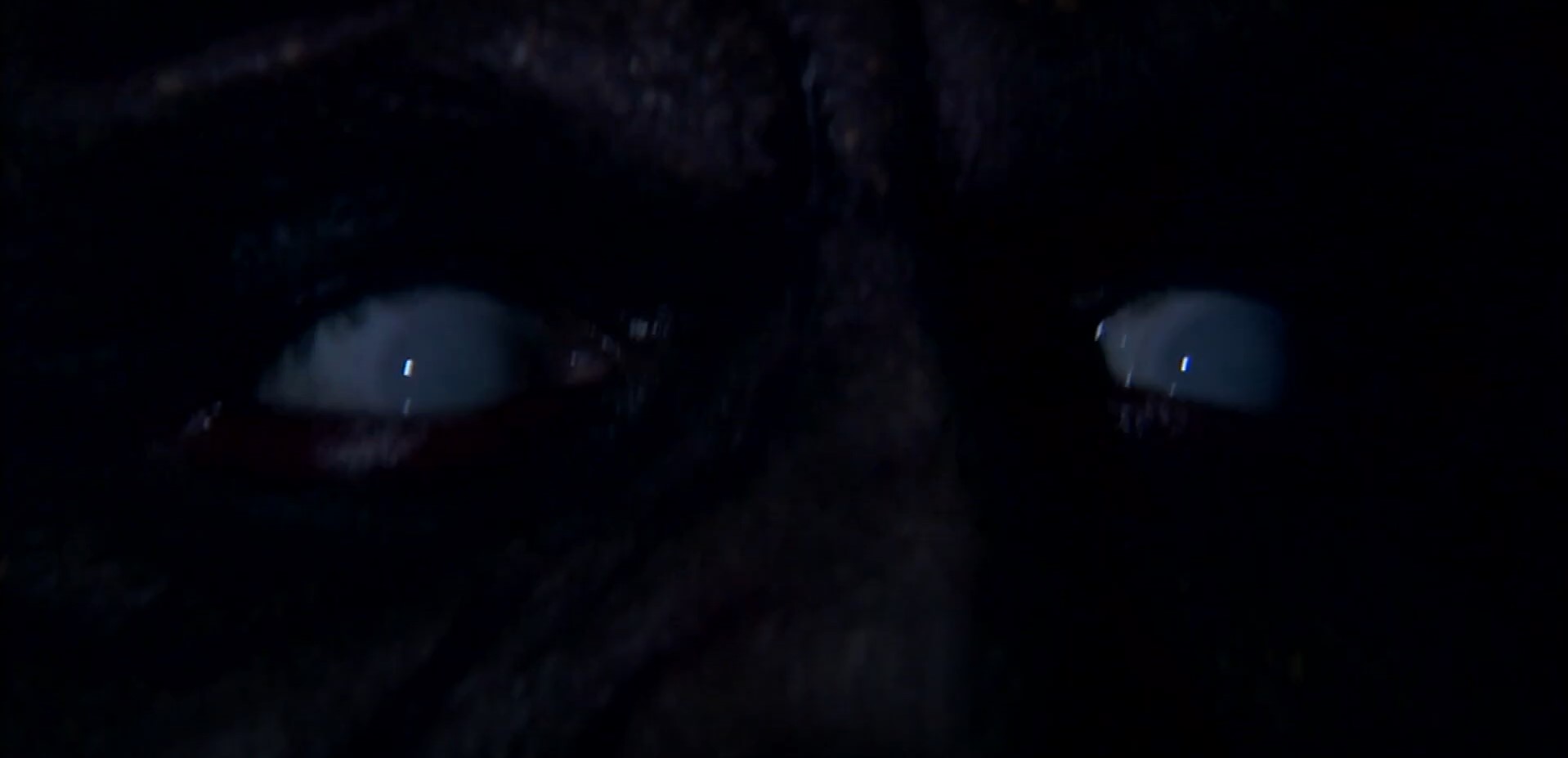
The one theme that keeps popping up in the recess of the mind is perhaps the one theme that eludes being talked enough about when overhauling “Nightmare Man” as a message bearer. Being an early 2000’s horror in the long established and well-dipped into the shadow of the “Scream,” “I Know What You Did Last Summer,” and “Urban Legend” franchises that defined the turn of century before it even happened might have had something to do with “Nightmare Man’s” lack of enticements for distributors to feel love for the man of nightmares and notice it for the novelty and the theme for what it is, an instilled paranoid fear that one’s sexual attacker leaves behind as a post-traumatic stress bomb that is everything all consuming. Kanefsky patterns the hallmarks of rape trauma stealthily into the script, disguised as a shadow, with a teethy mask, and vividly glowing and menacing eyes. Some other scenes are more obvious than others, such as Ellen’s dreams of the sinister smiling figure pinning her to the attic floor and spreading her legs right before she wakes or when she cries out, “I still feel him inside me,” while held up inside the cabin, with Kanefsky painting with a broader brush on “Nightmare Man’s” obscured presence and masked killer with an agenda that attaches itself directly in avoidance of calling a spade a spade. The kills and gore effect gags can stand up against any big budget, Hollywood production and are just unique enough to make the killer interesting in diversity and brutal enough to give “Nightmare Man” an edge sharper than the knife he wields.

If a Tiffany Shepis fan, or a fan of Tiffany Shepis in her underwear holding a crossbow and won’t be rattled by the bent elbow plot pivot, the Rolfe Kanefsky picture is an enjoyable, campy romp that gives homage to the horror films that have set the scene for “Nightmare man” to exist.   Ronin Flix plucks “Nightmare Man” out of standard definition dreamland and into the reality of high-def, 1080p Blu-ray.  Presented in an anamorphic widescreen 1.78:1 aspect ratio, the story is set almost entirely at night with more household lighting for interior shots and not too much exterior lighting to brighten objects or even cast hard-edged shadows.  While this creates more realistic atmospherics of isolating apprehension in the woods horror, Kanefsky and cinematographer Paul Deng (“Trancers 6,” “Song of the Vampire”) bathe many of the night shoots in deep blue tint and the Ronin Flix transfer appears to display in low contrast and is very dark, leaving focal objects nondelineated and obscured.  I haven’t checked out the Lionsgate After Dark DVD print of this film so I can’t compare.  There some dip in the compression decoding as the release hovers in the mid-30Mbps for good periods of time but does dip into the lower 20s and it shows with light phasing macroblocking.  When not bathed in blue, skin tones and grading often look natural and palpable.  The English language DTS-HD 5.1 Master Audio is balanced between all levels tracks, putting the dialogue in the forefront, keeping the range of ambient noises at an appropriate depth, and a soundtrack that maintains tensions rather than over intensifies to a fault.  I will say that the multi-channel lacked a significant stalwart production that didn’t provide the anticipated strength of audio.  Dialogue is clean and clear with no perceptible issues and the overall package track can be said the same.  English SDH are optional.  With the Ronin Flix release, new bonus supplementals extend more background and insight with retrospective discussions and distribution challenges associated with “Nightmare Man,” such has a new interview featurette with director Rolf Kanefsky, producer Esther Goodstein, and star Tiffany Shepis in There’s Something Out There:  The Making of Nightmare Man and a new audio track isolating the film score by Christopher Farrell (“Bus Party to Hell”).  Also included is Creating the Nightmare:  The Making of Nightmare Man – a raw footage behind-the-scenes look at some of special effects, makeup, and off-the-cuff tomfoolery during in between take down time, extended scenes, Tiffany’s Behind-the-Scenes of Tiffany Shepis weaponizing a handheld camera with her flare of sexualized humor and potty-mouth pizazz, an audio commentary track, on the audio setup, with director Rolf Kanefsky, producer Esther Goodstein, and star Tiffany Shepis, Flubbing a Nightmare Gag Reel, still photos, and a promo reel.  The physical features include a David Levine package design of an abract-esque composite of the Nightmare Man mask, Tiffany Shepis in a bra, and a knife all splashed in red lined inside a traditional Blu-ray snapper case with no insert.  The release is locked on Region A playback and the film has a runtime of 87 minutes and is rated R for horror violence, gore, some sexuality/nudity, and language – what Tiffany Shepis release wouldn’t include all of that?  “Nightmare Man” is a dream of a subgenre-bending film; sexy, gory, intense, and unpredictable, all the prefigures of a hell of a good time.

“Nightmare Man” Is Here To Haunt Your Dreams in High-Definition!  Blu-ray Available at Amazon.com