EVIL Wants the Industry Hot and Desired Jana Bates to be in His Movie! “The Last Horror Film” reviewed! (Troma / Tromatic Special Edition Blu-ray)

“The Last Horror Film” is Now Available on Blu-ray to Obsess Over!

Obsessed with horror scream queen Jana Bates, New York City cabby Vinny Durand heads to France’s Cannes Film Festival to cast her in his own horror movie, “The Love of Dracula.”  Halted at every entry point of the private, star-studded events that include Jana Bates and being intercepted and rejected by Bates’s producer ex-husband, a rival producer, current boyfriend-manager, her agent, and a director, all of whom are in an intergroup conflict concerning the starlet, Jana, nothing will deter Durand from his perfect star.  When Jana walks in on the decapitated corpse of her ex-husband, a series of murders and missing persons involving her close friends and colleagues ensues in the days after and in all the while, Durand tries every attempt to meet the actress, stalking her with a video camera to film the perfect leading lady in his secret horror movie, invasively stepping into her life in the same instance the murders began to occur. 
A deranged NYC taxi driver flying to Europe for an aggressive meet, greet, and casting of a totally unaware horror actress to be in his own B-picture is the plotline everyone could, should, enjoy!  What’s not the love?  “The Last Horror Film” takes us from the grimy streets of the Big Apple to the exquisite sights and sounds of the seashore Cannes along the scenic French Riviera.  Helmed by London-born David Winters (“Thrashin’”) and penned by Winters, Tom Klassen, and Judd Hamilton (“Maniac”), “The Last Horror Film,” also known as “Fanatic,” is one of the best obsessed fan thrillers out there, such as containing the same context of the Clint Eastwood picture “Play Misty for Me,” but is lesser known to mainstream audiences because it features genre icons Joe Spinell and Caroline Munroe and has been primarily distributed under the unconventional indie picture and filmmaking risk taker, Troma Films, who at times isn’t everyone’s cup of tea distributor.  David Winters’s Winters Hollywood Entertainment and Shere Productions with Judd Hamilton and David Winters producing the 1982 American feature. 

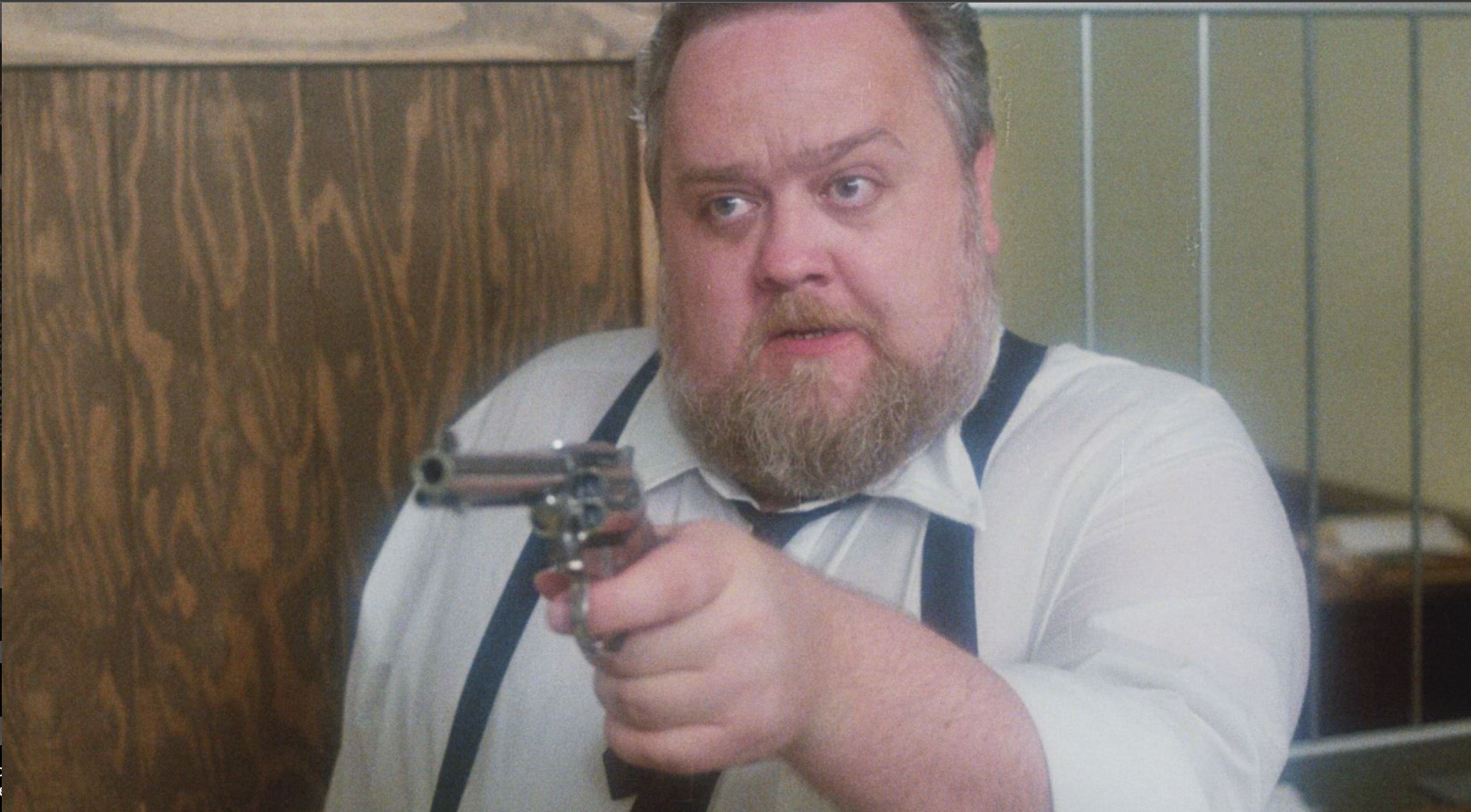
Fans of Joe Spinell (“Maniac,” “Rocky,”) already know this but those who haven’t experienced the New York City-born and bred actor, “The Last Horror Film” role of Vinny Durand is one of his best.  Spinell obviously suits psychosis well, but Vinny Durand takes it down a different path and, believe me or not, Spinell finesse with the character is beyond magnificent in all his mannerisms, expressions, and intonations, in addition to his egg-shaped physical, slick greasy hair, and thin black mustache, that make Vinny Durand a likeable and infatuated with obsessed crazy.  “The Last Horror Film” is the third costar collaboration with female lead, and genre icon in her own right, Caroline Munroe behind “Starcrash” and “Maniac.”  The “Dracula A.D. 1972” and “Captain Kronos:  Vampire Hunter” Munroe essentially plays herself in the role of Jana Bates but with a role that comes with more glamour and prestige as horror actresses rarely received such recognition in the major industry circuits.  Munroe equals Spinell in performance but in her own right as more of normie actress with accolades living it up at Cannes and eventually landing in the final girl trope, exceled into terror within the radius of her killer.  Being embroiled in a different kind of love triangle, one that includes her silver fox husband ex-husband Bret Bates (Glenn Jacobson, “Wild Gypsies”), current boyfriend Alan Cunningham (Judd Hamilton, “Starcrash”), and rival producer Marty Bernstein (Devin Goldenberg, “Savage Weekend”).  As the potential body count rises, so does the continued cast list with David Winters himself in a reflected cameo role as a horror director named Stanley Kline, Susanne Benton (“That Cold Day in the Park”) playing an orthographic variant of her namesake in Susan Archer, and Sean Casey as a rockstar lending his castle to Alan and Jana for retreating safety.  The cast rounds out with Spinell’s mother, Flilomena Spagnuolo, playing Durand’s mother in a convincingly nagging and comedic way that makes me it’s not terrible too far from the truth of their off-screen relationship. 

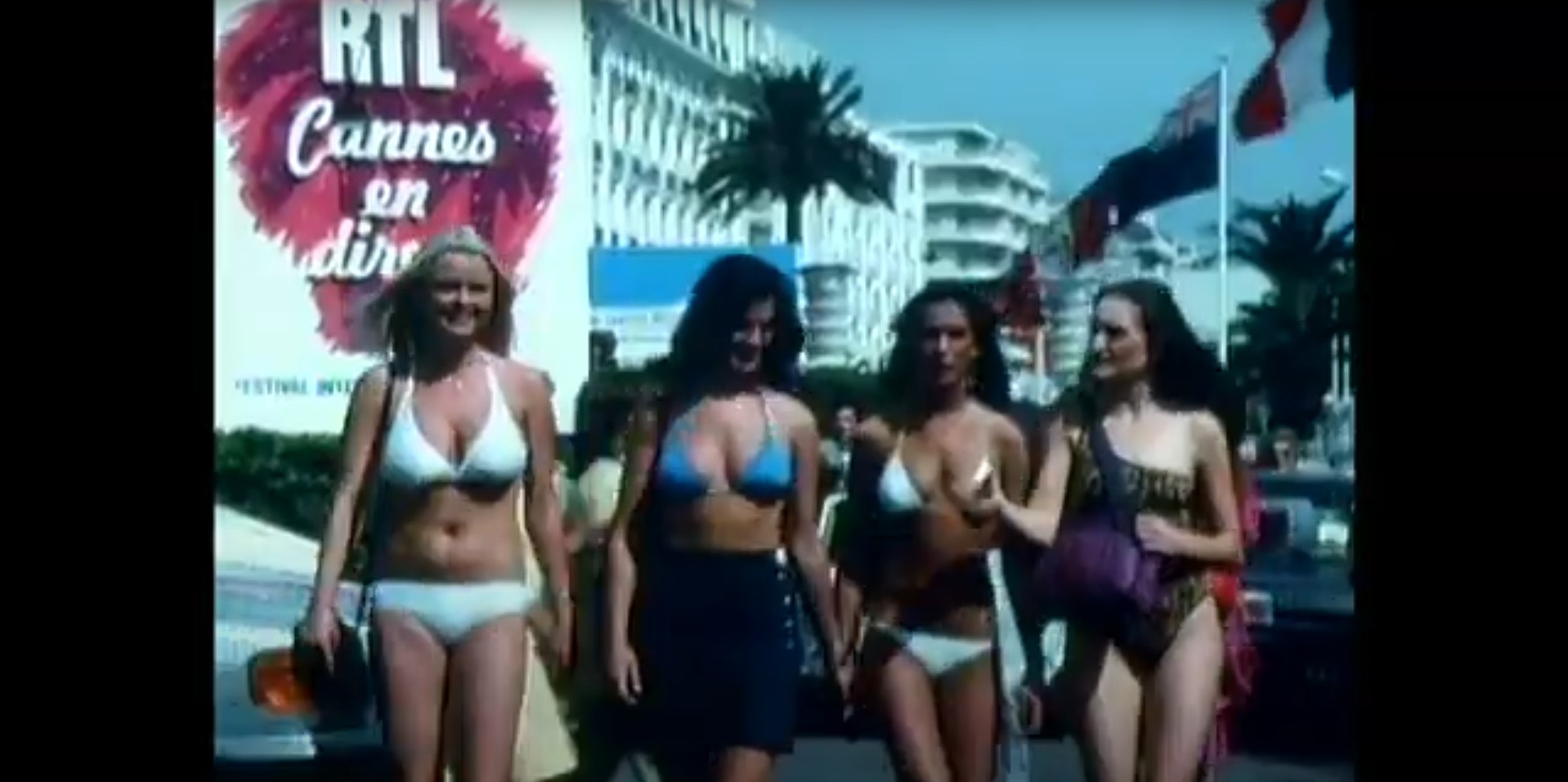
For a Spinell, Munroe, and David Winters production, “The Last Horror Film” is surprisingly vaulting with ambition for an unpermitted guerilla shot feature through the streets of Cannes.  Large parapet roof signs, gothic castles, the ritzy and beachy French Riviera, a score of happenstance and scripted extras,  and lots of topless women on the beach shots, Winters musters moneyed shots to coincide the well-dressed interiors of Durand’s apartment and hotel room and a slew of exteriors to play into the stalking fold.  Couple these manifested scenes of grandeur with the shocking moments of precision and effective gore and Spinell’s theatrically pleasing, creepy behavior performance and you got yourself a halfway decent meta slasher full of red herrings and a high body count, circling and overlapping itself within Duran’s directorial vision, the fake films within the critic panel and festival screenings and, as well as, the gotcha moment ending that gives one pause to think if what was just witnessed was actually the story, but while you’re scratching your head, perhaps feeling like a cinematic dummy of storytelling comprehension, there’s no doubt that David Winters successfully produced one hell of a horror picture starring Joe Spinell.

The new Tromatic Special Edition of “The Last Horror Film” is seemingly a repeat in some ways to the Blu-ray release from a decade earlier down to the exact cover art without the Tromatic Special Edition banner.  The AVC encoded, 1080p resolution and 1.78:1 widescreen aspect ratio, is compressed onto a BD50, an uptick in format storage from the 2015 to warrant it a Tromatic Special Edition.  However, image refinement is not in this re-release’s repertoire with a mirrored result of a lightly anemic look that still fails to color pop the feature in its eclectic set designs.  Darker scenes are in and out based of contrast, losing definition, and are inclined to be grainer negatively in the negative spaces.  In the brilliance of light, details can rooted out, especially in skin textures as Spinell’s pot marked face is exhibited in great detail amongst the other casts’ individual facial features.  Winter’s diverse and organized framing, plus with a little editing garnish, elevates whatever kitschy content there might have been into a grade-A B-picture; yet that doesn’t go without saying that there weren’t any editing flaws in the print that was subsequently transposed to the Troma transfer as horizontal cut lines and breaks in recurrent cells kink the chain ever so slightly.  The release also features the same English Dolby Digital 2.0 mix, a fidelity lackluster that doesn’t reflect the power the action medley and the score, the latter from composers Jesse Frederick, the vocalist of the “Full House” theme, and musical instrument compliment, Jeff Koz.  Dialogue renders above the layers but is on the softer side of volume, diluting the more intense moments of chase and murder without that impact punchiness.  Troma, like in my instances, flaunt a noteworthy tidbit in their releases, if there is one to flaunt, and in “The Last Horror Film’s” case, Depeche Mode’s track Photographic is the quoted feature music, says in big white and yellow font on the front cover.  What primarily separates the 2015 and the 2025 releases are the special features.  Archived commentary with Joe Spinell’s assistant and associate producer Luke Walter commentary moderated by Evan Husney from 2009, “The Return of Dolphin Man” short film by director John Patrick Brennan, a segment entitled “Kabukiman’s Cocktail Party,” the feature scrapped “Maniac II:  Mister Robbie’s” promotional trailer, the theatrical trailer, and a Lloyd Kaufman intro that dresses him in drag in the streets of an uninterested NYC are included on the special edition that features additional supplements with two more, 2023 produced, re-used commentaries from 1) Caroline Munro moderated by FrightFest’s Alan Jones and 2) again with Luke Walter by moderated by Severin Films’ David Gregory for the label’s own 2023 release.  Also from the Severin vault is the Like a Father Figure:  Sal Sirchia Remembers Joe Spinell interview with Sirchia’s memories and phoned tape recordings of Spinel’s voice messages, My Last horror Film Ever audio interview with producer Judd Hamilton, and “The Last Horror Film” location revisit featurette from New York City to Cannes, plus additional trailers under the title “Fanatic” (2) and the main title (1).  There are additional Troma materials with trailers from “Return to Nuke ‘Em High Vol. 1” and “Vol. 2,” The Toxic Avenger,” “Class of Nuke ‘Em High,” and “#Shakespeare Shitstorm.”  Aforementioned, the physical properties of the release nearly identical aside from the special edition banner across the top and the additional bonus content.  The 2015 Troma release is region locked A but a decade later Troma realized region free is the smarter move with the single 87-minute cut defining the release that comes not rated.

Last Rites: Take “Maniac” out of the equation, “The Last Horror Film” is Joe Spinell’s finest performance not taken lightly and though the story’s lurching flashes the check engine light, David Winters is able to still cruise along in his fanatic slasher.

“The Last Horror Film” is Now Available on Blu-ray to Obsess Over!

EVIL Nazis, Mad Lumberjacks, and Insatiable Nymphomaniacs! “Up!” reviewed! (Severin Films / Blu-ray)

It Won’t Be Hard to Get it “Up!” on Blu-ray!

Perverted Nazi, Adolf Schwartz, is murdered in his castle’s hot tub after a masochistic romp with his paid sadists, including male Dom named Paul.  Paul helps run a small restaurant-bar owned by his wife, Alice, and the two have a good thing going about town in working together and making love day-in, day-out.  When busty new neighbor Margo Winchester moves to their quiet, quaint town, she’s immediately raped by the locate hoodlum and kills him defending herself.  Officer Homer Johnson witnesses the entire ordeal and amends his report to reflect the hoodlum was not killed by Margo but rather fell off a cliff in order for him and Margo be constant bedfellows, but when Margo begins to work for Paul and Alice, a quadruple love-triangle ensues and there’s still the matter of who killed Adolf Schwartz in a small wooded community filled up to the brim with massive sexual appetites and ulterior hijinks. 

“Up!” is Russ Meyer’s 1976 released, oversexed gambol bringing with it an explicit nature a polyamorous, sex-for-all, character cast of players riding overtop a threadbare plot of that resembles something along the lines of murder mystery.  Is this Russ Meyer’s attempt the Italian giallo?  Offscreen killer, gloved hands, multiple suspects, most certainly a very vivid fleshy aesthetic, and a big brass jazz orchestra to back it up musically, “Up!” carries most, if not all, of the trademark building blocks that makeup popular thrilling subgenre but tailored in only a pageantry of perversion only Russ Meyer’s knows how to do it from his own imagination and story collaborated with Anthony-James Ryan (“Vixen!”) and the late, esteemed critic Robert Ebert.  Once under the working title of “Over, Under and Up!.” Meyer’s produces his production under his company RM Films International with associate producing credits attributed to long term collaborators Fred Owens and Uschi Digard.

Like most of Meyer’s auteur films, “Up!” is a quirky plotted story with quirky plowing characters converging into idiosyncratic copulating chaos surrounding a singular problem.  The cast of charactes are just as eccentric and eccentrically written as the inside of Meyer’s rapid storytelling and no-nonsense nudist eye.  Multiple principal leads create a confounding multi-string focus with an esemble character contingent that receive their own backstories, their own emphasized subplot tangents, and they crisscross paths with each other through an array of coitus montages that’s it would be no surprise if this small woodland community all had raging case of singularized strain of syphilis.  “Up!” opens with the masochist perversions of a Hitler variant in Adolf Schwartz (Edward Schaaf, “The Flesh Merchant”) in the throes of being self-purposefully exploited by bosomy gimp The Headperson (“Candy Samples, “Beneath the Valley of Ultra-Vixens”), the ball-bustin’ Ethopian Chef (Elaine Collins, “Fantasm Comes Again”), the Asian persuasion Limehouse (Su Ling, “Ilsa, Harem Keeper of the Oil Sheiks”), and whip-master and male dom Paul (Robert McClaine, “A Very Natural Thing”).  Paul’s the only character to continue through the story narrated nakedly through our breaking the third wall maestro, The Greek Chorus, played lively and in a state of fully and forever buff by former Russ Meyer wife and adult film star Kitten Navidad in her first principal acting role.  Paul along with Alice (Janet Wood, “Fangs!”) have a more stable presence in the story and same goes for who would likely be “Up’s!” lead character Margo Winchester (Raven de la Croix, “The Lost Empire”) and one of more prominent male lead characters, officer Homer Johnson (Monty Bane, “Sleepwalkers”) in a fervorous fit of philandering and fuc…I mean sexing…between the four while running the town full of loggers and locals on Alice’s grand opening of her second restaurant jamboree.  There are other side characters too that come and go, have more stage presence than others, but are always circled back to in flashback and in the Greek Chorus’s audience-directed commentating of suspicion and events, such the lesbian truck driver Gwendolyn (“Linda Sue Ragsdale), rapist Leonard Box (Larry Dean), the smoking peace pipe that is the stark naked Pocahontas (Foxy Lae), and Bob Schott (“Gymkata”) as the large grunting logger Rafe.

If what’s been described hasn’t been clear, perhaps to my horrendous descriptive writing no doubt, “Up!” has a political correctness that goes right into the garbage in scene one with a thrust-hard jab right at Adolf Hitler’s sexuality in the most hardcore and kinky perversity and, from there, plenty of other sexual objectifications against men and women, Native Indian American stereotyping, teetering racial commentary, and an overall nonchalant air quality on intimate encounters in Meyer’s inclination for spoof, satire, and sex.  Meyer shows no shame, remorse, or even letting his lead foot off the break toward the highly energetic debauchery between character carnality and his rapid-fire editing style that, as like throughout his career, has been seamlessly well put together to keep continuity integrity and make sense of the whole damn bedlam of frenzied bedding, violence, and fornicating flashbacks, but it must be noted that Meyer’s giallo with gusto storyline is severely stretched thin.  Unlike the “Beneath the Valley of the Ultra-Vixens” that was released a couple of years later, the same harnessed liveliness charged through both films is not as focused in “Up’s!” common core narrative primarily because of the continuously dwelled upon flashbacks of reintroducing characters repeatedly to build suspicion upon those possibly “Clue”-like designed list of suspects.  Campy and a jovial orgy, peppered with some tension and bloodshed excellent junctures, “Up!” is above and beyond a good time sexploitation drivellers will treasure. 

The latest release from Severin’s Russ Meyer’s Bosomania collection is “Up!” now on a 1080p high-definition, AVC encoded, BD50 Blu-ray presented in a widescreen 1.85:1 aspect ratio.  Scanned and restored in 4K from the original 35mm camera negative, “Up!” visually tickles the right spots with a vibrant and naturally granulated presentation, balanced in its color diffusion, and accurately represented and reproduced skin and texture tones to enhance the period’s cinematic appearance.  As far as pristine prints, the 35mm stock has held the test of time in its preservation without any major damage or plight hiccups aside from the more protuberant dust, dirt, and smaller scratches.  Contrast levels are a minor sore point in rendered night scenes that reduce delineation for more the nighttime effect but doesn’t hurt the overall value and restoration efforts.  The English LPCM mono track lacks the vitality as any fidelity true reproduction through a surround mix may offer as “Up!” is a fast-paced, ripping-and-roaring, chorus of sights and sounds meticulously constructed by the auteur himself but the mono honestly enthusiastic and we’re still able to distinct each note and ruckus through Meyer’s rapid-fire A/V design compositions, captured precising and without interference or intrusion through post Foley and dubbing work.  Same goes with ADR that’s always seemingly 2 or 3 layers above the rest of the soundtrack as Meyer’s script is flamboyantly dialogue heavy with Kitten Navidad’s narration of events and plenty of vocal deluge for flirtatious affairs by way of innuendo and blunt channels.  English closed captioning is available on this release.  The special features are not as plenty on “Up!” as they are on other Bosomania releases with an audio commentary by film historian Elizabeth Purchell, who was also on the previous Russ Meyer collection titles, an archived interview No Fair Tale….This! from The Russ Meyer Trust with star Raven De La Croix, and a radio spot for the feature.  Displayed like the rest with a primary red and black board surrounding white padding, “Up!” is down with the deep cleavage of Raven De La Croix on its one-sided cover art.  Inside the black Blu-ray Amaray, the disc is pressed with the same image but with greater resolution detail of Margo Winchester’s best assets in an open cut dress.  The region free release has a runtime of 80 minutes and is unrated.

Last Rites: A romp tour-de-force, “Up!” and the rest of the Russ Meyer’s Bosomania collection is Severin Films’ most bust-filled merry-go-rounds that’s one-part Benny Hill, one-part Fanny Hill, and all parts an sexploitation extravaganza.

It Won’t Be Hard to Get it “Up!” on Blu-ray!

Desert Rats Doing EVIL To Anyone Crossing Their Path! “Motorpsycho!” reviewed! (Severin Films / Blu-ray)

“Motorpsycho!” on a new 4K scan Blu-ray from Severin Films!

Three motorcycle hooligans on their way to Las Vegas through the Mojave Desert ride up on a smalltown Veterinarian named Cory Maddox and his voluptuous wife Gail.  A minor brush with the gang does little harm to the Maddoxes and the couple move on with their life certain the gang has moved on to the next town, but little does Cory know while on a professional checkup of a local mare, the gang invades his home and violently rapes his wife.  Hellbent for vengeance, Cory tracks their transgressive escapades through the arid landscape and comes across Ruby, a beautiful woman left for dead after her husband is gunned down and she herself being grazed by a bullet fired by the same delinquents.  The two track them down into an inescapable, unidirectional corner of the desert but with both sides facing car trouble, injury, and seeping slowly into mental instability, only one side will come out alive. 

By and large, “Motorpsycho!” is the Russ Meyer helmed B-picture that side straddles less explicit content.  The 1965 exploitational action feature, that sported less-than-speedy Honda Trials, flirted with bare-chested women, and immersed itself in light and dark innuendo, is nestled amongst two other Meyer films, “Mudhoney” and “Faster, Pussycat! Kill! Kill!,” released the same year and are showcase of unscrupulous violence and sexual content and innately sets the stage for Meyer’s bosomy and barren set movies that bestowed the former World War II photographer turned sexploitation director accolade success later in his career with the “Vixen!” branded films.  “Motorpsycho!” is co-written by Meyer and fellow “Mudhoney” writer William E. Sprague from an original idea from the screenwriters along with James Griffith (“Russ Meyer’s Lorna”) and Hal Hopper.  The Meyers, being Russ and wife Eve, produce the story in cahoots with Ross Massbaum (“Beach House”) and is produced and distributed theatrically by Eve Meyer’s Eve Productions.

The way Meyer sequences the “Motorpsycho!” story is an ebb and flow of events that culminate into a showdown and audiences, perhaps, won’t know exactly who the leads are until well into the chaos, such as with the female principal lead Ruby, a Cajun woman down on her luck travelling in a forced by necessity marriage to an older man in order ot start a new life in California, played by Haji, a Canadian dancer with a unique face and beautiful curves who caught Meyer’s eye for “Faster, Pussycat!  Kill!  Kill!”   For a new actress, Haji is impeccable and easy on the eyes while working off another first-time actor, principal lead Alex Rocco (“The Godfather”), playing vengeful veterinarian Cory Maddox.  Haji and Maddox have unquestionable sexual chemistry and tension despite their slight platonic relationship of seeking revenge as Meyer provides a great deal of sexual innuendo and reference instead, beating around the bush for the ultimate tease.  Don’t worry, “Motorpsycho!” doesn’t hang around the coquettish scene for entire duration as there’s plenty of one-on-one racy and salivating spiciness to sate sexploitation fans between the playful bedtime arousals of Rocco and on-screen wife Lane Carroll (“The Crazies”) and the playfully aggressive rape of Carroll and a fisherman’s wife a bikini-cladded large bosom.  “Motorpsycho!” has a man to woman ratio that strays from the normal Russ Meyer credits with the female cast rounding out with Sharon Lee in her usual typecasted role of a blonde bombshell and, more specifically in this story, a mare-owning flirt for Cory Maddox’s services.  While not a large breasted woman craving sex in every episodic scenario, this Meyer run has an interesting arc for the three ruffians who initially start with copasetic unity in their troublemaking fun through the Mojave only to end themselves in disbandment of backstabbing and derangement in unswerving performances from Timothy Scott (“Lolly-Madonna XXX”) as the handheld radio melomaniac, Joseph Cellini (“Beyond the Valley of the Dolls”) as a hip cat love-taker, Steve Oliver (“Werewolves on Wheels”) as their military vet leader with a stoic expression but unpredictably violent.  “Motorpsycho!” rounds out the cast with Coleman Francis (“Beyond the Valley of the Dolls”), Steve Masters, Fred Owens (“Supervixens!”), George Costello and Russ Meyer as the unsympathetic, cynical Sheriff.

Not as sordidly sleazy or insatiably randy as many of the Russ Meyer films we all know and love for their perky antics, voluptuous vixens, and zany comedy with a isolated desert town backdrop, “Motorpsycho!” is virtually nudity free in comparison to his thereafter work and shot entirely in black and white that, too, tones down the situationally shaded situations of diverging sexual overdrives that conclude around a centered focus, usually around something sexually themed.  That’s not to say just because production year is in the cinema puritanical early 60s and is in black and white does that mean the film goes without a fair amount of brief nudity as Meyer slips into a couple of nipple slipping instances and countless sideboob that would be deemed too salacious for media content harking back 60-years ago.  Innuendo has always been fair game in all sorts of production sizes and studios but couple what Meyer has done with the sexualized material with the gang violence and what you have is one of the earliest known grindhouse pictures prior to its monikered labeling in the 1970s.  Production value and authenticity floats around the low-budget spectrum with a film titled “Motorpsycho!” that spends what little funds there is to supply Honda Trials that are more the speed and look of Mopeds than motorcycles, but Meyer competently adds and edits fast paced car chases, the discharging of a single pump action rifle, and a curtain calling explosion with body prop fragmenting special effects to level up the value where it counts. 

The Museum of Modern Art and Severin Films restore and scan Russ Meyer’s “Motorpsycho!” onto a new 4K transfer from the original camera negative and encode the transfer onto a new Blu-ray release as part of the Russ Meyer’s Bosomania collection.  The region free AVC encoded, 1080p high-definition, BD25 is a perfect, snug fit for a well-endowed black-and-white feature restored to a virtually free of dust, dirt, and damage.  Meyer’s an eclectic electric editor and every transition is smooth and robust without fading reduction of quality in the rapid, rambunctious edits of his assembling panache.  Though in black-and-white, details don’t suffer from monochromic flattening and every inch of desert is captured with precision, every bodily curve is shapely contoured, and even when a resembled nights dims the lights, there’s plenty of definition of outline to let the mind do the rest of the work with textures and delineation within the presented 1.85:1 widescreen aspect ratio.  The English LPCM 1.0 track is about as expected, flat, but pumps through the single channel with great vitality and strength to be an effective, agreeable sound mix that, again, sees little-to-no distortion or interference.  Dialogue renders over clean and clearly without hissing or crackling in its ADR form with obvious but little asynchronous measure between visual and audio.  Closed captioning English subtitles are available.  Severin Films compiled special features, in association with the Russ Meyer Trust, include an audio commentary with queer film historian Elizabeth Purchell and “Malevolent” editor and filmmaker Zach Clark, archived interviews with stars Haji and Alex Rocco Desert Rats on Hondas, and the film’s trailer.  Primary red boxes in a mustard yellow background cover art with Steve Oliver and Sharon Lee providing the film’s genre caliber with fast bikes and big breasts plastically encased inside a black Blu-ray Amaray with the inside disc pressed with the same image, following suit to the previous first three Bosomania installments of “Vixen,” “Supervixens,” and “Beneath the Valley of Ultra-Vixens.”   The region free release has a runtime of 74-minutes.

Last Rites: “Motorpsycho!” is Russ Meyer convincing us he’s more than just a T&A sex hound with a 100% pure exploitation revved up with revenge, violence, and sordid sexual behavior.

“Motorpsycho!” on a new 4K scan Blu-ray from Severin Films!

Make Do With Your God-Given EVIL! “Bad Biology” reviewed! (Severin Films / 4K UHD – Blu-ray)

“Bad Biology” on 4KUHD and Blu-ray Combo Set. Purchase Here!

Jennifer and Batz don’t know each other and live two totally different lives but they have one thing in common, they are enslaved by their abnormal sexual organs.  Jennifer, a young provocative photographer, embraces her vagina’s biological differences and immensely magnified hormones whereas Batz suffers monstrously from his radical rehabilitation of a once limp manhood.  The contrasts continue as Jennifer must scratch the inflamed itch to be penetrated, luring men with her insatiable lust that ultimately end in their demise with an irrepressible emotional sway, whereas the botted-up Batz’s love life is virtually bankrupt due in fear of his conscious and uncontrollable enlarged penis.  When Jennifer happens upon Batz in her peripheral during a photoshoot, she finds him intriguing enough to break into his home and watch him with a prostitute.  The experience left the prostitute with a continuous orgasm long after penetration was over and left Jennifer with an impression that her vagina has finally found it’s match in life. 

Seventeen years.  That’s how long the inactivity span was between Frank Henenlotter’s last directed film and his next.  Not since 1991 did Henenlotter, the madcap mastermind behind some of the more than unusual creature-esque concepts surrounding sexuality, addiction, and childbirth in a way that sheds light on society’s blatant distaste for the odd and grotesque,  profess his creative talents with his trademark dark humor and unabashed practical effects that campy the content toward much to our enjoyment again until returning to the director’s chair with the 2008 shlock-sleazy horror-comedy “Bad Biology,” cowritten alongside American rapper R.A. “The Rugged Man” Thorburn as the musicians first taste of the film industry.  Shot in and around the New York metropolitan area, “Bad Biology” is also produced by Thorburn alongside associate producers Dario Correale, Nicholas Deeg, Antonia Napoli, Vinnie Paz, and star Anthony Sneed under the LLC created for Bad Biology. 

Not many would take on a role with heightened sexual absurdity, especially one with a puppeteered penis on the hunt for feminine pelvic regions or where a numerous clitorises ramp up sexual drive into murderous overdrive.  Yet, first time actors Charlee Danielson and Anthony Sneed seem game for the roles as lonely sexual misfits Jennifer and Batz.  To debut right out the gate as a character proclaiming to have 7 clits in the very first scene can’t be easy and I’m sure a deluge of thoughts questioning just what in the ridiculous Hell did I get myself into accelerated through her thoughts but Charlee Danielson doesn’t pull punches or need a second to rethink life choices in the feed the need role of lust, sex, kill, labor, birth and repeat.  Same can be said about Anthony Sneed’s slinking and desperate peculiarities for Batz and Sneed’s willingness to browbeat his own anaconda trouser snake to assert back in being control.  Danielson and Sneeds have tough jobs but pull off Henenlotter and Thorburn’s grotesquely envisioned gallows humor and body horror.  While the confidence is there, the experience is not resulting in a stiff, monotone performances in nearly every scene and that can dampen the story’s eccentrical principals who are just delivering the lines instead of taking the lines to heart.  Being that “The Rugged Man” is a rapper, the cast is comprised of other likeminded musical artists, mostly rappers as well, with Remedy, J-Zone, Vinnie Paz, and Reef the Lost Cause along with cameos from other artists and music producers.  And being a film mostly about sex, “Bad Biology” fills out the cast with models and actors very comfortable showing their skin in Vivian Sanchez, Carolyn Thompson, Brittany Moyer, Vicky Wiese, Ginger Starr, Vladislav S., and well-verse indie horror scream queen Tina Krause (“Crimson Nights”, “The Fappening”).

Outrageous with bad taste, “Bad Biology” prides itself with point-blank profaneness and kitschy special effects, a resounding typical Frank Henenlotter production as the director hasn’t seemingly lost a step in 17 years between films.  Yet, the story’s infiltrated by the need to incorporate strong personality cameos and is uneven in a way that hyper focuses on Jennifer’s quest, with inner monologuing, flashbacks, and direct camera speaking surrounding her spiritual search of a satiable schlong for her specialized snatch, becomes subverted by Batz’s less significantly told story quickly summed up in introspection while being pleasured by a homemade, industrial-sized masturbator.  Doesn’t quite feel Batz receives the same valued introduction in contrast to his female counterpart, but he quickly forges a more interesting path having a roid-raging, self-aware, monster cock that’s addicted to large animal anabolic steroids and is isolated from the rest of the world.  As polar opposite in the way Jennifer and Batz view and handle their sexual anomalies, the pair make the perfect odd couple, like “Ghostbusters’ Key Master and Gatekeeper, but at the cost of their own stories and their inevitable hookup that becomes flattened by a steamrolling climatic slasher-esque moment that doesn’t really involve them at all, segregating the leads momentarily from their own catalytic arc that deflates the finale into a flaccidity.  Most of the comedy also falls flat but the dialogue is well bulbous in the skilled rhapsody and written dialogue that shocks and awes with every depraved bluster.

Scanned in 4K from the camera negative, “Bad Biology” receives a UHD plus Blu-ray 2-disc set from Severin Films. The HEVC encoded, ultra high-definition 2160p, BD100 and the AVC encoded, high-definition 1080p, BD50 are both presented in a widescreen 1.78:1 aspect ratio. The 4K scan fills in the gaps of next stage video evolution though the gaps filled are minuscule at best. What makes the real difference is Henenlotter shooting in Super 35mm that provides a gritty grain overlay and similar, if not identical, saturation as film stock. Finer details more in the setting aspects, around darker areas, that are more illuminated by the pixel increase. Skin tones and grading are naturally set without much of a stylistic presence other than the gels used for the giant penis vision and the peering from inside-out Jennifer’s Uterine cavity. I do think facial details are not as firm, possibly smoothed too much during the restoration. The English language audio options include a lossless DTS-HD 5.1 Master Audio and a 2.0 stereo. Presenting flawless dialogue within the heavy soapboxing monologues and philosophical diatribes, “Bad Biology” promenades dialogue as an important part to the film’s machination. This doesn’t mean everything is flounders with a range of outrageous sound effects, including the gushings of childbirth, the whooshing whips of a conscious monster male member, and the squishy ins-and-outs of copulation. Spatial depths have finite proportions that relinquishes true depth to keep audiences near the action audibly. Closed caption English subtitles are optionally available. The 4K disc might have a capacity of 100 gigabytes but the format’s space on this release is quickly depleted for the feature and two audio commentary tracks – one with director Frank Henenlotter, director of photography Nick Deeg, and actor Anthony Sneed while the second commentary also includes Henenlotter and cowriter/producer R.A. The Rugged Man Thorburn. Both commentaries are also on the Blu-ray, housing over 5+ hours of special features which includes interviews with a Spook House entitled segment featuring interviews with Henenlotter, Thorburn, Deeg, production coordinator Michael Shershenovich, production manager Chaz Kangas, and David Henenlotter, an unorthodox interview between a basketball and actress Charlee Danielson In the Basement with Charlee Danielson, a lengthy back and forth question and answer between actor Anothy Sneed and cinematographer Nicholas Deeg, an interview with special effects artist Gabe Bartalos (“Frankenhooker,” “Basket Case 3”) Swollen Agenda, a behind the scenes of the film, photographer Clay Patrick McBride snapping cast and crew O-faces around Henenlotter’s apartment in F*ck Face, short film “Suck” directed by Anthony Sneed, R.A. The Rugged Man Thorburn music video for “Legendary Loser,” an imagine gallery, behind-the-scenes shots, and video covers and death stills. The standard 4K UHD release comes in the traditional black Amary case with an O-face compilation compositional cover art and has a lock-tabbed disc on each side. The release does not come with a reversible covert art or insert. Both idiosyncratic disc arts have whimsically crude caricatures of the main characters. The region free release has a runtime of 84 minutes and unrated.

Last Rites: “Bad Biology” marks a return to ungovernable psychotronic cinema for filmmaker Frank Henenlotter with new blood, a new story, and the same old objectionable orifices and organs of monstrous body horror.

“Bad Biology” on 4KUHD and Blu-ray Combo Set. Purchase Here!

Do EVIL, Get Dead! “A Day of Judgment” reviewed! (Severin Films / Blu-ray)


1930s rural America – the dejected town priest resigns his congregational duties after failing the local townsfolk who have all but returned to the Church and reclaim their faith in the savior lord Jesus Christ and God.  On his exit of the town’s border, the priest crosses paths with a shadowy figure riding an austere wagon and holding a scythe.  A town full of heartless schemers, adulterers, swindlers, and murders have their unforgiving stories told that leave their fellow townsfolk, their friends, and even their families left suffering in their wake.  The shadowy figure tracks each sinning stray down to face retributing judgment.  The righteous and terrible punishments send the unsavable souls to an eternal existence in Hell.

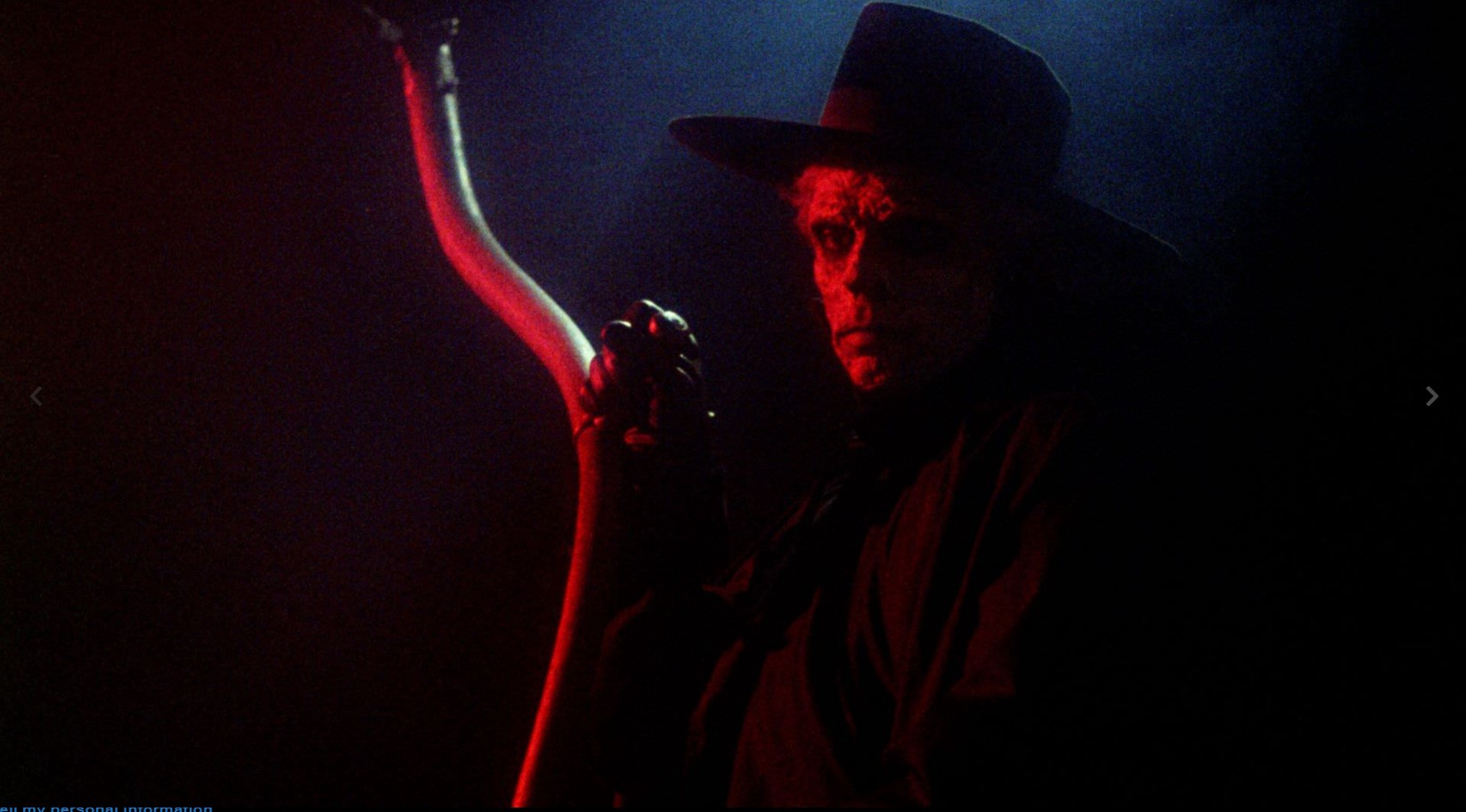
The Grim Reaper cometh. Screen cap courtesy of Severin.

What was once considered to be a Christian-centric educational project had turned into a Christian-centric damnation of horrors in the quasi-anthology “The Day of Judgment,” where the sinners of sin town deviate from the Godfearing path and into a vat of immorality and ungodly aberration.  “The Day of Judgment,” occasionally under the U.S. bootleg title of “Stormbringer,” is the one and only directorial from C.D.H Reynolds (aka Charles Reynolds), an academic educator turned briefly to film working under the legendary, North Carolina based Earl Owensby Studios that produced the 1981 released film.  The script is penned by Owensby Studios’ regular writer, Thom McIntyre, who inked the film between a pair of genre credits, including the incarcerated grindhouse actioner “Seabo,” also known as “Buckstone County Prison” a few years earlier and a snippy flick of a pack killer Rottweilers terrorizing a mountain resort in “Dogs of Hell” a couple of years later.   Owensby, obviously in regard to his own studio work, took part as the fire and brimstone tale’s producer along with associate producer and longtime “Power Ranger” director Worth Keeter curating the final touches as the creative architect of the script’s grimmest portions or more line as the assistant director of adding the bleaker, bloodier fates of the sinners.

William T. Hicks. Screen cap courtesy of Severin.

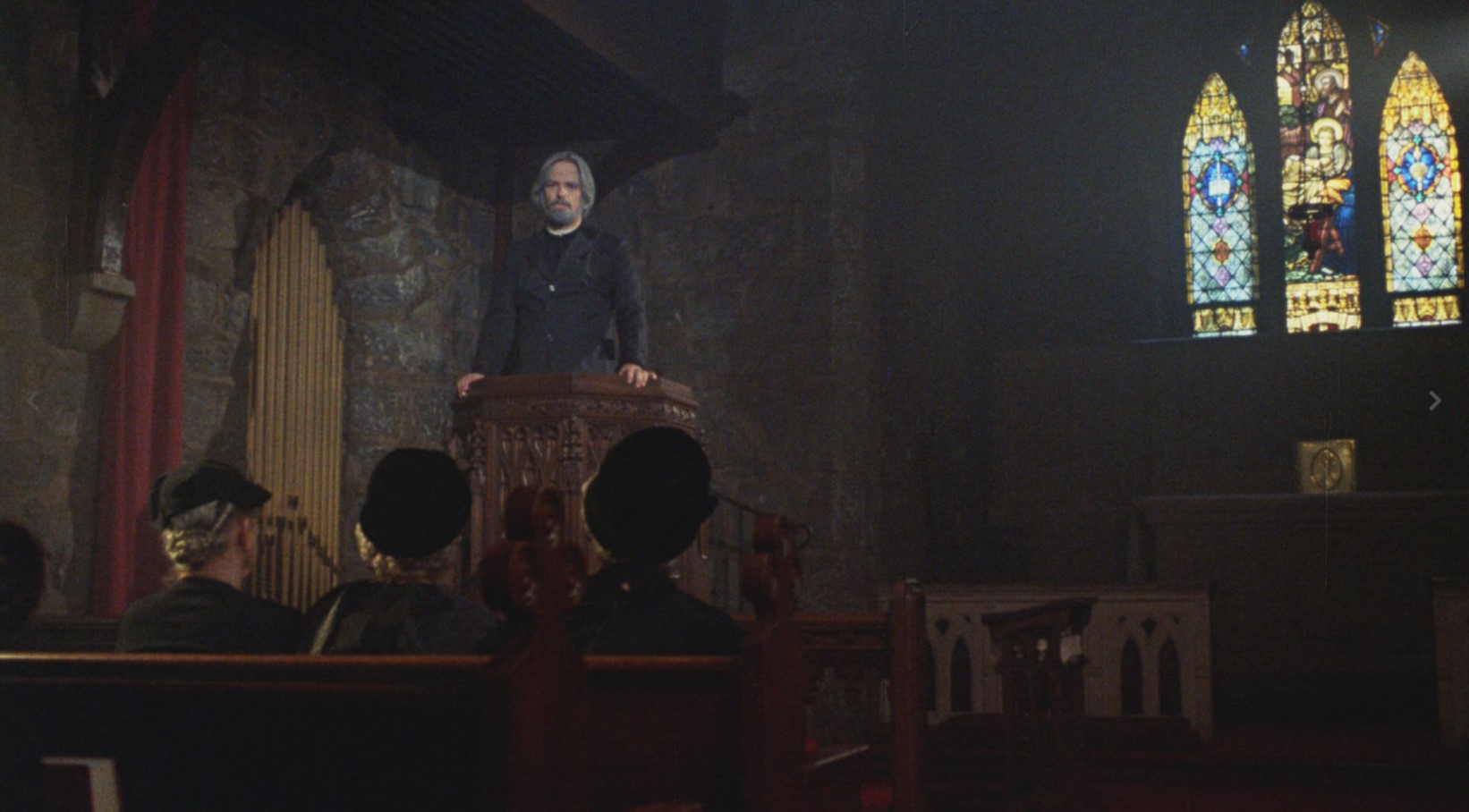
“A Day of Judgment” has a non-linear anthology-like structure that swings back and forth between different character scenarios of wickedness.  You may meet one character at the very beginning of the story and don’t meet them again, until you’re already through having sent a good chunk, if not all, of the sinners to Hell in a handbasket.  But McIntyre hones in well on setting up nicely each character’s backstory, those who the priest crosses paths with as he exits the town and delivering their ultimate demise (with an assistant from Worth Keeter’s gloomier approach).  The director himself Charles Reynolds plays the crestfallen Reverend Cage in a classic expository preacher riding out of town and crossing paths with soon-to-be-troublesome townies in William T. Hicks (“Death Screams”) as a greedy and heartless bank owner, Careyanne Sutton and Larry Sprinkle (“Trick or Treat”) as man slaughtering, pretense adulterers. Toby Wallace as the hometown disparaging mechanic scheming to steal the family business out from his parents noses to sell, Helene Tryon (“Dogs of Hell”) as the frettingly kook and paranoid old lady poisoning the local children’s pet goat, and Brownlee Davis (“Wolfman” ’79) as the delusional and disgruntled former employee of his best friend looking for a finality in revenge.  “A Day of Judgment” had this weirdly transitional acting style for an 80’s released horror that resembled the Golden Age of cinema through the 1950s and 1960s where everything is loud and pronounced without much reflection, pause, or change in tone.  Though the style sticks out like a sore thumb, perhaps Reynolds made a shallow attempt to recapture the 1930s as which the narrative period is set.  The acting isn’t terrible but is more staged and reactionary to the course of events.  The cast rounds out with Carlton Bortell, Richard Dedmon, Inga Dennis, Denise Myers, Jerry Rushing, Harris Bloodworth and Fred Roland.

C.D.H. Reynolds as Reverend Cage. Screen cap courtesy of Severin.

Earl Owensby produced films were not known to be big box office hits as they coursed the grindhouse, drive-in theater circuits with relatively unknown talent nearly strict to the back pockets of the Owensby Studios and still meeting profitable margins on low budgets.  “The Day of Judgment,” which doesn’t feel like a grindhouse film, carried meager success by way of production design and wardrobes alone.  Give credit where credit is due with an Owensby film that can dole out a variety of era appropriate automotive roadsters and specific period garments for the illusion.  Some sets are dressed scarcer than others with lots of blank spaces and sparse knickknacks to build upon the 1930’s décor but the overall impression is quite effective, transporting one out of the 80’s and into the depression era the narrative frequently suggests.  I also favored the non-linear anthology of individual hell bound circumstances as that structure rendered “A Day of Judgment” as a whole rather than a pie sliced into six-even segments with a common core connection that, at times with other films, individual stories can feel untethered to the main theme.  In today’s times, “A Day of Judgment” is severely antiquated but the more “bleaker” character demises often landed with underripe special effects and a fair amount of cheesiness that’s a Loony-Toons illustrated representation of Hell that looks more like Wile E. Coyote’s Southwest American desert home.  I was anxiously awaiting the beep-beep of Roadrunner, speeding across the screen, and the drop an ACME anvil on top of the sinners’ melons. 

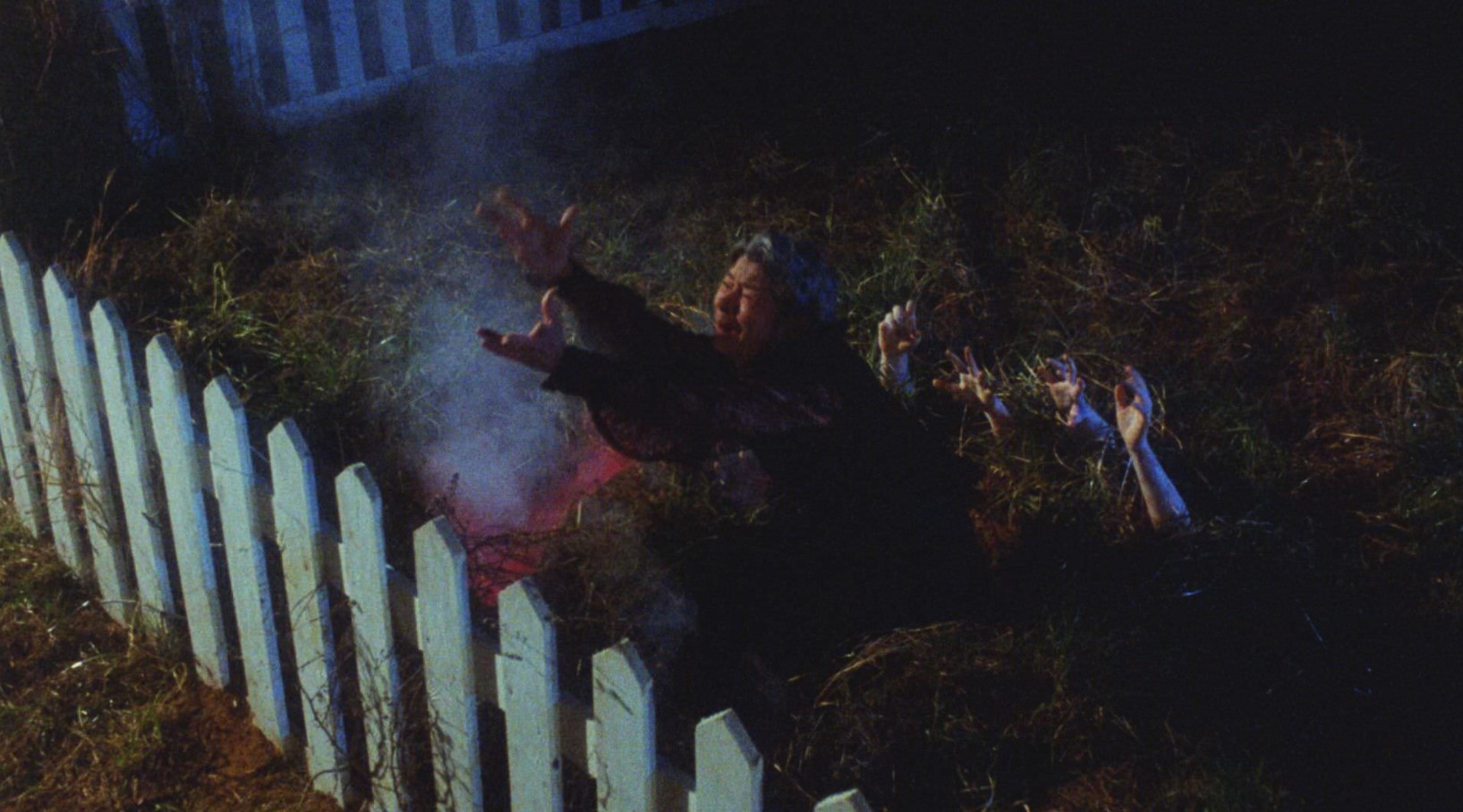
Helene Tryon being dragged to Hell. Screen cap courtesy of Severin.

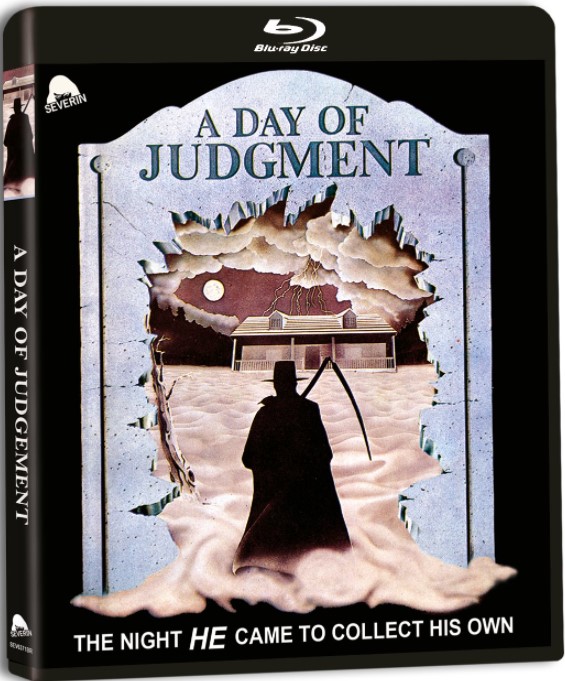
The overall message in “A Day of Judgment” is clear that sin and crime doesn’t pay, and the wrath of God’s retribution will come down hard in the form of a scythe.  Severin Films presents up a new Blu-ray, scanned in 2K of the original interpositive print now in full 1080p HD resolution of the widescreen 1.85:1 aspect ratio. Preserved pristine and having virtually no wear from age, “A Day of Judgment” is an amazing picture to behold for its first Blu-ray release with heightened resolution that extricates more details than possible than any other release can provide, especially when those other releases are the official VHS and DVD bootlegs. Here the color grading excellently pops with deeper hues of prime colors to provide more life into the death that’s onscreen. One thing to note about the release is the immense phosphorescence glow around whites and other lighter colors that can be eye-catchingly distracting when a piece of white paper becomes the main focus due to a conspicuous radiance. Other than that, the picture is clean, the grain is healthy, and no obvious signs of alterations to enhance the visual spectrum. The English language mono audio track, though emitting crystal clarity without any audio blemishes, is not terribly clear on whether Severin went with Dolby Digital or the DTS-HD. Other listings on the web offer up “A Day of Judgment” with a dual channel DTS-HD Master Audio while the back cover displays the Dolby Digital logo with a detached written description as a mono track, which coincides with Severin’s official site. With the film’s outmoded ingrained technology, Dolby Digital would be, to me, the obvious format that produces higher quality sound using a lower bitrate. Special features include a pair of new Severin exclusive interviews with British author Stephen Thrower of “Nightmare USA” in The Atheist’s Sins and snippet interviews from Worth Keeter and Thom McIntyre in Tales of Judgment. Final spec notes on the Blu-ray are a region free coding and has a runtime of 97 minutes. Stuck in stasis of prim and conservatism, “A Day of Judgment” has become this oddball labeled slasher of the 80s era that aimed to explore new and unusual stories and techniques on every avenue, but still leaves this impression of Bible-thumping Christian values that serve as a stern warning for all ye sinners!

“A Day of Judgment” on Blu-ray and DVD from Severin Films.  Click Here to Purchase at Amazon.com