Experimental, Recreational Drug Use in College has Killer, EVIL Effects! “Blue Suneshine” reviewed! (Synapse Films / 3-Disc 4K UHD, Blu-ray, and CD Limited Edition Set)

Trip Out on Synapse’s Limited Edition “Blue Sunshine”

A party between friends turns deadly when one of them goes into a violent frenzy after being reveled his loss of all his hair.  Blamed for the murders, floating through life Jerry Zipkin is evading police investigators while also trying to connect the pieces on why a good friend of his would suddenly turn into a madman with no body hair and with five times the strength of any ordinary man.  His own investigation leads him to Blue Sunshine, an LSD variant connected to every transgressive event similar to the party, and at the center of it all is congressional frontrunner Edward Flemming who peddled Blue Sunshine 10 years ago at Stanford.  The latent consequence is now slowly surfacing to a head and more people are starting to experience the aggressive, alopecia effects, all Zipkin has to do to prove his innocent and a major ticking timebomb is to take a sample from a living specimen to show aberrant chromosome damage caused by the designer drug. 

Before becoming outed and investigated that the U.S. government experimented LSD on human subjects and it’s unknown but possible dormant side effects of years later, writer-director Jeff Lieberman put theory into sensationalized practicality with his post-psychedelic horror “Blue Sunshine” that turned ordinary, friendly people into headache-induced phonophobia sufferers and hairless, homicidal maniacs with super strength.  Lieberman’s 1977 released film snugs in between his killer Earthworm creature feature “Squirm” and one of the better backwoods slashers titled “Just Before Dawn,” tackling with themes of adverse effects from manmade drugs, political corruption, and to never judge a book by its cover.  The film is produced by “Squirm’s” George Manasse with “He Knows Your Alone” and “The Clairvoyant” producers Edgar Lansbury and Joseph Beruh serving as executive producers on the Ellanby Films production.

While the plot point that pushes Jerry Zipkin in the direction of investigation of the sudden fury and death surrounding his friend treads a threadbare rope with little background to suggest Zipkin is characteristically dedicated, loyal, curious, or all of the above to find out what happened, Zalman King’s overall performance as the path unaffixed Zipkin overshadows those missing background pieces and motivations.  In more key precise terms, Lieberman’s misdirection toward King’s erratic and strange behavior puts a lot of the focus on Zipkin rather than obvious derangement of the latent LSD maniacs with corrupted chromosomes in what was meant to puzzle the audiences in believing Zipkin himself might be the loose cannon cause behind the murders or, even perhaps, another ignorant victim of blue sunshine, which the latter would have been more intriguing and powerfully motivating for the Zipkin character as what drives him to solve the mystery and save himself.  None of the relationship resolve any type of secure or genuine interactions, specifically with Alicia Sweeney (Deborah Winters, “Tarantulas:  The Deadly Cargo”) with an unrealistic strong undying love for Zipkin despite only knowing him for a couple of months and the entire Stanford contingent from a decade earlier who Zipkin was able to easily link together within a matter of seconds of either examining a bloody crime scene or meeting a pair of the blue sunshine fiends.  One of the better, solid bonds is between the will-do-what-it-takes congress candidate Ed Flemming (Mark Goddard, Lost in Space) and his towering former college football buddy Wayne Mulligan (Ray Young, “Blood of Dracula’s Castle”) who becomes Flemming’s 6’6” advisor and bodyguard.  While might not seem like a well-rounded bond, Flemming and Mulligan have something tangible one can grab and understand when compared to other dynamic relationships that float in arbitrary.   Robert Walden (“Rage”), Charles Siebert (“Tarantulas:  The Deadly Cargo”), Ann Cooper, and Stefan Gierasch (“Carrie”) costar. 

“Blue Sunshine’s” premise has long stood the test of time because its more relatable now than ever as scientists and medical experts are in a fluid state of studying the effects of drugs digested, snorted, injected, or smoked weeks, months, years, and decades ago.  This premise also translates over to contaminants that cause sicknesses, such as the link between asbestos and cancer were tumors form years after exposure.  Lieberman catches wind early of the dangerous latent effects and manipulates it for the basis his film that is more fact than fiction.  Lieberman’s ability to minimize assurances on who is transfiguring into a killer is all in his characterizing nuances, shading in gray areas with excellently crafted character profile vignettes in between the opening credits that instill suspicion, fear, and some unknown stemmed danger ahead.  The unique setup is the filmmaker’s only real unconventional course in the narrative that plays out mostly a routine hand in a natural style albeit the surrealism of extreme closeups and angles on bald headed balefulness when the rage takes over or the slow, insidious madness that seeps into Zipkin’s mind causing hallucinations to exact an audience experiencing disturbance in the envisaged air.  Engaging and self-security eviscerating, “Blue Sunshine” is carbonated madness in a bottle, shook up and ready to pop. 

Synapse continues to upgrade their catalogue with Blue Sunshine next on the augmentation block with a new and mighty 3-disc Blu-ray and 4K UHD restoration release.  Presented in Dolby Vision HDR10, the restoration of the original 35mm camera negative sees it’s 4K transfer compressed with a HEVC codec that produces 2160p and is stored onto a BD100 while the Blu-ray is a compressed AVC, 1080p resolution, on a BD50.  The restoration will blow you away with diffused color palette and organic details that by far are the best they’ve ever looked with a balanced, natural grain level that keeps the speckling down in darker portions of the film to retain inkiness while securing the authenticity of the film stock without any smoothing over and artificial enhancements.  Vivid coloring, immersive details, and natural skin tones, when not softly grayed by the drug’s effects, throughout are appreciatively stable with no qualitative loss between cuts, creating a pleasurable and seamless visual experience on both formats.  Each format comes with two English audio options, a lossless DTS-HD master audio 5.1 surround sound, supervised and approved by director Jeff Lieberman, and a lossless DTS-HD master audio original theatrical mono 2.0.  While the amplification of the same sound output through the dual channels is inviting for purist, I highly recommend the immersive 5.1 surround sound that retains the genuine article of audio fidelity.   Charlie Gross’s orchestral strings instruments, percussive gongs, and synthesizing score fully engrosses the characters and audiences alike into a fold of unnerving, lingering tingles that evoke the monstrous maniac effect possibilities beyond the Jerry Zipkin tale.  Dialogue renders over with fine precision that hangs on every word and sentence with no hissing and crackling to obstruct it’s sweeping clarity.  A bountiful amount of Mind-Altering special features that fill this limited to 4000 copies set that include a new feature prologue introduction with director Jeff Lieberman.  There are two audio commentaries, an archived 2003 interview with Lieberman, a Channel Z Fantasy Film Festival ”Lieberman on Lieberman” interview with the director hosted by “Sleepwalkers” Mick Garris, a Q&A video from the Fantasia Film Festival 4K premiere moderated by Michael Gingold and Lieberman, an anti-drug scare-film “LSD-25” from 1967 and “LSD:  Insight or Insanity?” From 1968 from the American Genre Film Archive, Jeff Leiberman’s first film “The Ringer” with two cuts of the film, the original uncut version from the projection print source and the final release from the remastered Synapse Films 4K transfer with audio commentary included on the uncut version by Jeff Leiberman and moderator Howard S. Berger, still gallery and theatrical trailers. Synapse’s limited-edition boxset is nothing you’ve ever seen before from the company with not only a rigid slipbox case but there’s also a cardboard O-slipcover, both housing the clear, inch-thick Blu-ray Amaray case and both showcasing new illustrative, compositional, air brushed artwork of some of the key character scenes and expressions by Wes Benscoter, which is a real thing of beauty. The Amaray cover art is the regular 70’s grade cover art seen on previous releases from DVD to Blu-ray with a reverse side an image of the tripped-out Ed Flemming icon photo of his drug peddling days at Stanford. Overlapping 4K and Blu-ray discs display graphic presses in story moment compositions, though I don’t recall a half-naked woman in the film yet is on the cover. Not quite yet done with the bonus material, the 3rd disc is a 13-track Soundtrack CD of the score and laid overtop is the 11-page liner note booklet from Jeff Lieberman’s 2020 memoir “Day of the Living Me: Adventures of a Subversive Cult Filmmaker From the Golden Age,” plus the CD track listing, production credits, and special thanks on the backside. A reproduction of the original one sheet poster is stored in the insert as a mini-folded poster along with Synapse’s 2024 catalogue for your perusing pleasure. The rated-R film has a runtime of 95 minutes, and the limited edition doesn’t limit itself to a confined playback with region free decoding.

Last Rites: In order to snag a copy of this stellar Synapse set, muscles are required as this heavy boxset feels like 5lbs of software and hardware special features regarding Jeff Leiberman’s drugs-are-bad thriller “Blue Sunshine” with chrome dome, blank-stare killers doing the dormant bidding of 10-years-old recessed LSD.
Trip Out on Synapse’s Limited Edition “Blue Sunshine”

The James Brothers’ EVIL May Not Compare in “Killers” reviewed! (Synapse Films / Unrated Director’s Cut Blu-ray)

“Killers” Unrated, Director’s Cut on Blu-ray from Synapse!

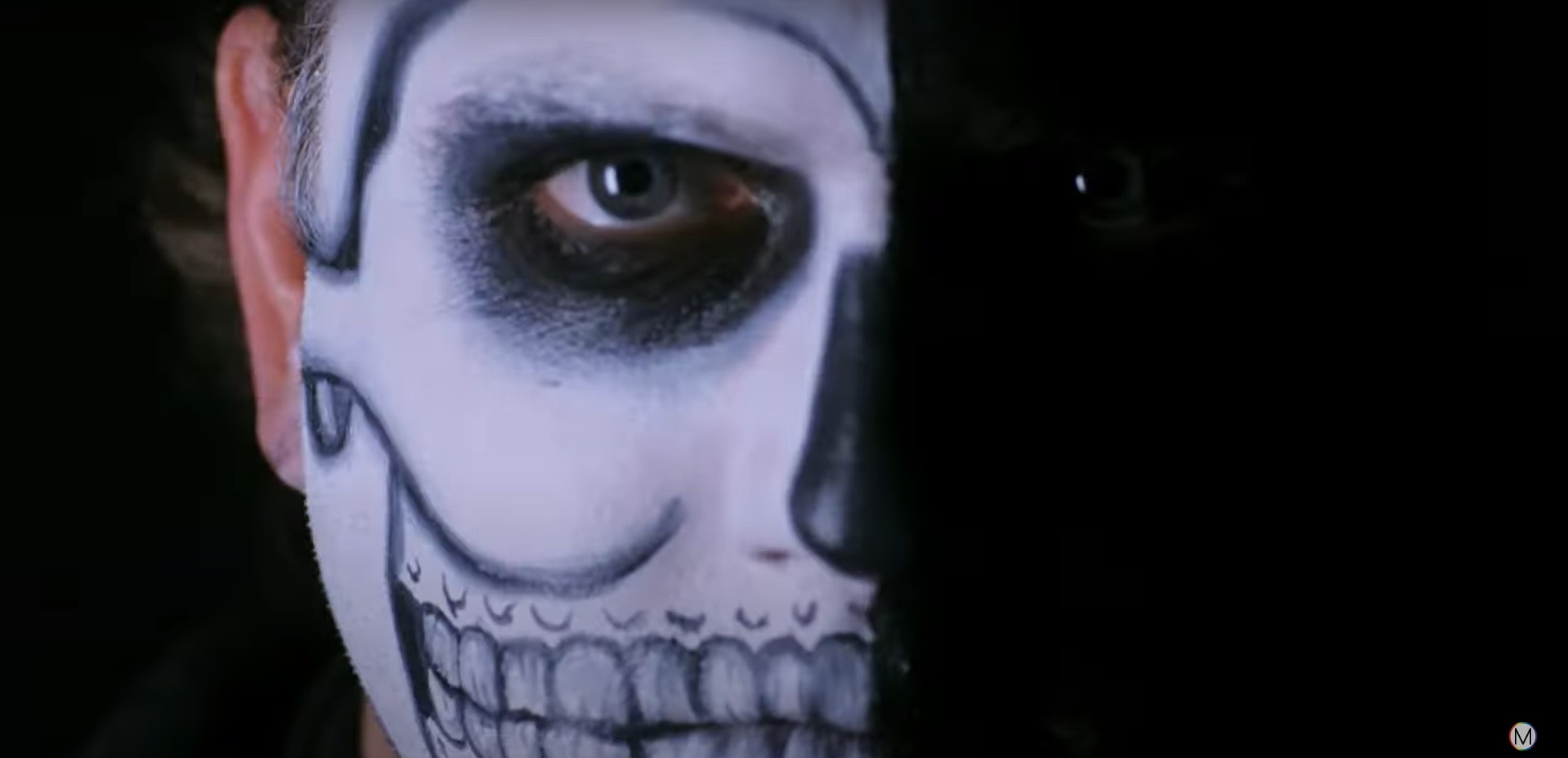
Odessa and Kyle James paint half their faces with skull imagery, don their Santa hats, and load their pump action shotguns and on Christmas Eve, walk into their parents’ bedroom and unload multiple shells into them where they lay without mercy.  A trial sentences them to death row for their crimes despite their calm efforts to dismiss the State and prosecutor’s case against them.  Years later, the brothers escape from the maximum-security prison and are the loose in the town of Beatty where the Ryan family happily watch television and play board games on a stormy night.  With U.S. Marshalls hot on their tail, Odessa and Kyle invade the Ryan home where their strangely more than warmly welcomed by the mother and two daughters.  It quickly becomes clear their usurpation of the Ryan household is more of a sheep in a wolf’s clothing and the meager, goody-two shoes Mr. Ryan will reestablish dominance and show the James Boys the real man of the house.  

1996 marks the year of Mike Mendez’s debut feather-length film, titled simply “Killers.”  “The Covenant” and “Satanic Hispanic” segment director writes and direct a philosophical and brutal home invasion thriller cowritten by one of the film’s principal actors, the late Dave Larsen (“Vampire Centerfolds”), full of unusual twists that can second guess everything you know about storytelling.  “Killers” cements under his greenhorn feet novel elements of twisted character studies while finding homes for bad boy cool characters, stylized shootouts, and a smoky noir and dark dwelling cinematography to commingle with his anarchic structure and tale.  The U.S. produced film is independent funded by star-producer Dave Larsen under the LLC of The Lost Boys, a reference from the film’s story that labels the escaped convicted brothers as such, with Joseph E. Jones-Marion as coproducer.  Most of the funds were secured by Dave Larsen’s father, S.E. Larsen, after remortgaging the family home.  Eventually, the home was foreclosed upon after Dave’s premature death.

Dave Larsen and David Gunn entrench themselves into the sordid souls of sociopathic brothers Odessa and Kyle James, inspired almost to the exact murder by real-life killers the Menendez Brothers who committed parricide in nearly the exact shotgun-loaded manner in Beverly Hills 1989.  Portraying mindful. ruthless killers with intellectual monologues and a panache that’s very Mickey Rourke pastiche, the solemn faces and confidence carrying Larsen and Gunn go greatly above and beyond the call for the titular types.  Thinking the summit has been reached and there could be nothing more grave than two brothers snuffing their own mom and dad without hesitation, who kill Beatty locals with intent, who steal daughters (Nanette Biachi, “The Killer Eye,” and Renee Cohen) and a wife (Damian Hoffer) for their own carnal pleasures, and who bully and insult a respected husband, father, and man (Burke Morgan, “Bloodsucking Babes from Burbank”) of the Beatty community, the tables suddenly and jarringly turn and viewers will be knocked unbalanced when the police storm the door, lead by U.S. Marshal Lorna McCoy, played by the quick and sarcastic lip of Wendy Latta, and discover just then who that two killers are actually more in this seemingly quiet and small suburban house, rivaling the James boys, if not surpassing their malevolence even if just a little.  The “Killers’” cast doesn’t stop there as Ellis Moore (“Femme Fontaine:  Killer Babe for the C.I.A.”), Ivan Vertigo, Chad Sommers, and Carol Baker becomes a part of the fray.

“Killers” defined is simply a conceptual paradox.  If two unstoppable forces collide, the logical result would be an unfathomable outcome as nothing can stop an unstoppable force.  Instead, what may occur is a massive particle explosion, a rift in dimension time and space, or a vast nightmare so bizarre nothing can compare to it.  “Killer” embodies every quality of the latter in its maniacal melting pot of phantasmagoric potpourri, especially through the Mendez lens of engulfing shadows and mostly Duke blue and poker hot red gel tints.  Following the progression is a guessing game unto itself with welcoming and shocking pivots that parade forth a Hell on Earth turn of events.  You think the story’s going one way then it acutely shifts, and this happens more than once to the point where none of the previous groundwork or what’s instore for the future can be taken for granted in this fluid, subversive, kill-or-be-killed home invasion and cannibal bipartite.  For a first-time independent production, weapon props are extensive, gory moments are effective, makeup has grotesque appeal, and the dialogue indulges in shades of conversation complexity that equally match the complexity of the characters’ MacGuffin backgrounds.  Mike Mendez’s impressive start to his career has provocative monologue and stylish notes of Quentin Tarantino and William Freidkin bathed in primary color gels and a tale zigzagging with zeal.

Available for the first time in high-definition, the director’s vision, restored by the Multicom Entertainment Group, is in the hands of Synapse Films, delivering “Killers” to the cult physical media table with an AVC encoded, 1080p high-definition, BD50 Blu-ray. Presented in the 1.78:1 aspect ratio, “Killers” has a stylistic choice of being tenebrous, whether in shadow, in night, or just to over exuded a sense of gloom and doom in tone and in what’s visually shown. Delineated blue and red gel lighting beam through and glow the necessary bits for effulgence effect to contrast the darkness. Another popping source of lighting and colors are the individualized, punchy Christmas colors because, for all who don’t know, “Killers” is actually a Christmas movie. Because of the cheerless grading, details are not inherently sharp but Synapse and Multicom’s restoration enlightens quite a bit than previous versions, putting rightfully on display the details where once shrouded by lower resolution or otherwise mishandled. Skin tones appear natural as well as the grain with a scintilla of white speckle. The lossless English DTS-HD Master Audio 2.0 stereo has an organic dual-channel dynamic, catering a central focus on the monologuing, that translate to the dialogue exchanges also, with great enthusiasm and clarity. Not the best in edited sound design that has layer slippage but pulls enough ahead and into the fold to not be an unsynchronous, incongruous mess. “Killers” could have greatly benefited from a surround mix with the varietal exchanges that emits a full-bodied arrangement of resonations, mostly in the interiors and playing to those specific in locations. English subtitles are available. Special features include a feature-paralleling audio commentary with director Mike Mendez and horror journalist Michael Gingold going over backstory, tidbits, and the goals of making “Killers,” an alternate, pared-down ending that’s loses a lot of the original film’s feasting flavor, and the original promotional trailer. The black Amaray case comes with new illustrative cover art without a reversible option. Inside contains a 6-page essay My Brother Death: Mike Mendez’s Killers by cult film enthusiast Heather Drain, a Synapse 2025 product catalogue, and a disc pressed with Odessa’s half-skull covered face. The region free release has a 96-minute runtime and is unrated.

Last Rites: Synapse Films have brought “Killers” from out of the shadows of obscurity. A schismatic, soulless killer of a film, “Killers” has the heart of madmen and madness meshed together in one seriously sideways story.

“Killers” Unrated, Director’s Cut on Blu-ray from Synapse!

Demonic Nuns Want Virgins to Resurrect EVIL! “The Convent” reviewed! (Synapse Films / 4K UHD and Standard Blu-ray)

4K and Blu-ray “The Convent” Demonically Entering Your Soul! Buy It Here!

A woman strides into a convent carrier a can of gasoline and a shotgun during the sacrament of Eucharist between priest and nuns.  After setting the humble nave ablaze, she unloads shotgun shells into all the screaming bodies.  40 years later, a group of Greek life college students look to make their Greek letter mark on the same derelict convent now swarming with urban legends and ghost stories.  When a virginal student is kidnapped by wannabe Satan worshippers, they accidentally open the gate for dormant demons to arise through the corporeal vessels of the dead.  The possessed dead slaughter all in their way to seek another virgin, one that will embody their unholy master until this plane of existence.  The only chance for survival is to track that now woman from four decades ago to finish what she started after 30 years in an insane asylum, to blow away the demonic beasts of Hell!

At the turn of the century in the year of Lord of 2000, a year some Christians believed marked the 2,000th anniversary of the incarnation of Jesus Christ, saw another reincarnation of Hell passing through Catholic sacred ground from the creative culinary of profanity director Mike Mendez.  The one of a handful of creative talents behind the “Satanic Hispanics” anthology film and the native Los Angeleno helmed “The Convent,” his third directorial in horror behind breakout pyscho-hit “Killers” and the male-chauvinist be damned horror-comedy “Bimbo Movie Bash,” from the Chaton Anderson’s debut script full of sacrilegious imagery, glow-in-the-dark veined demons, and the dark comedic charm of early 2000s.  Shot entirely in Los Angeles, the demon-comedy is produced by Anderson and Jed Nolan (“Jurassic Women”) on a microbudget from executive producers Ryan and Roland Carroll of Alpine Pictures (“Dark Honeymoon”), Elliot Metz, and Rene Torres, who served as associate producer on the cult favorite, “Night of the Demons.” 

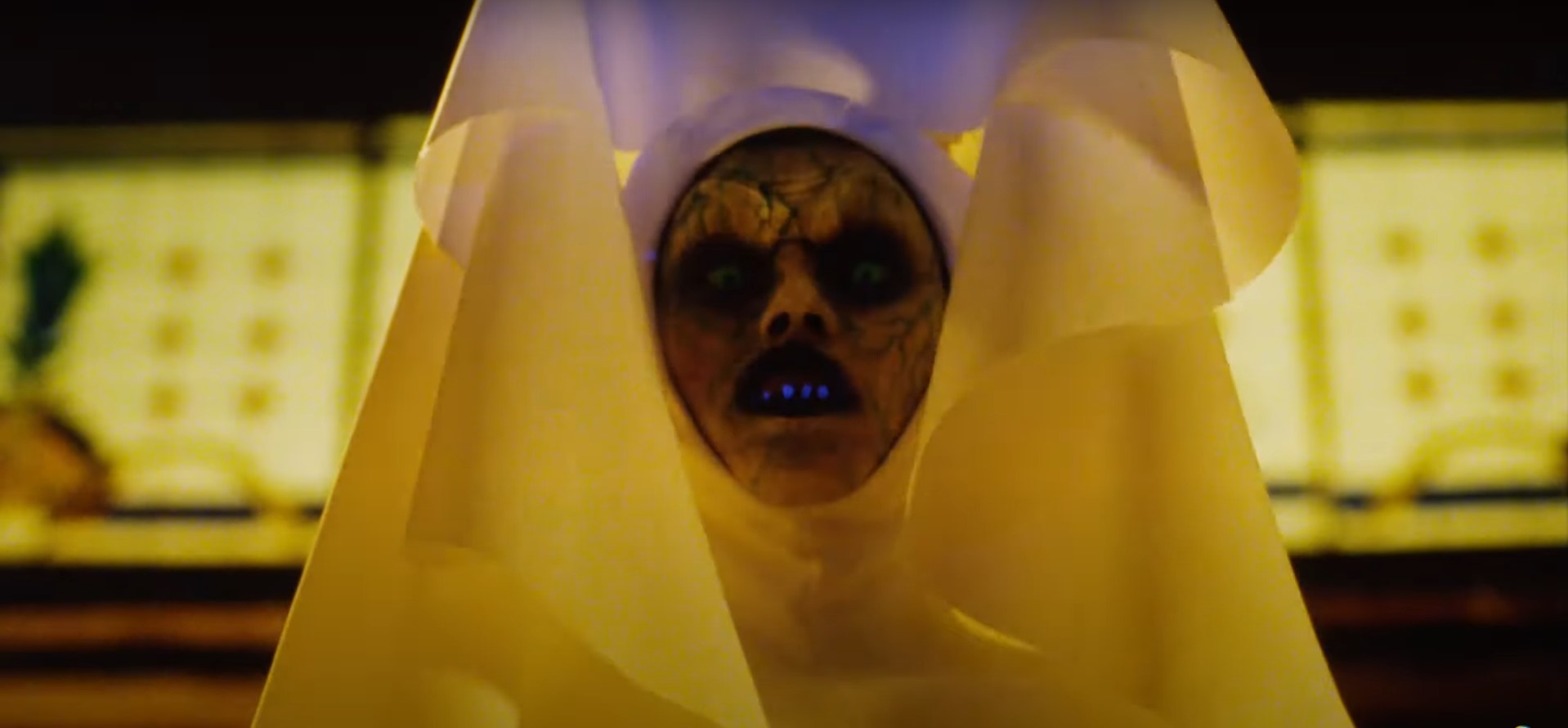
The collegiate characters are not only surrounded by twitching, carnage-dishing demons under the nuns’ habits but they’re also surrounded by headlining genre greats Adrienne Barbeau (“The Fog,” “Swamp Thing”) and, briefly, Bill Moseley (“The Devil’s Rejects,” “Texas Chainsaw Massacre II”) and gangster rapper, the late Coolio.  Barbeau doesn’t lose a step being the beautiful badass we all know and love from her reign as an 80s-90s scream queen, shotgun barreling down demons left and right as her character’s 40-years-senior self from the Nun-torching and blasting opener, the accused certifiable crazy lady called to action in Christine.  She’s called to once again stop a demonic Catholic kerfuffle she immobilized from spreading four decades back by a new set of naïve, older teenagers looking to get high, get lucky, and get the kicks.  Joanna Canton, who had three seasons in her on “That 70’s Show,” battles back-to-back with Adrienne Barbeau as Clorissa, the lead principal of the trespassing teens.  Canton is joined by story boyfriend Chad (Dax Miller, “Blood Surf”), story friends Biff (Jim Golden), Kaitlin (Renée Graham, “Shriek If You Know What I Did Last Friday the Thirteenth”) and Frijole (Richard Trapp, “Re-Cut”), story little brother and abuse-taking pledger Brant (Liam Kyle Sullivan, “Rideshare”), and story gothic bestie of another life time in Mo (Megahn Perry, “The Perfect Host”) whose been ostracized by mostly Clorissa’s friends and even a little by Clorissa trying to escape a gothic lifestyle for more fit in “normal.”  A dark and spooky night in a rundown convent transforms into a night of terror when Satan Worshippers Sapphira (writer Chaton Anderson, “Wither”), Davina (Allison Dunbar, “Browse”), and Dickie-Boy (“Kelly Mantle, “The Evil Within”) are led by so-called Satanist expert and a poorly 17th century speech replicator Saul (David Gunn, “Killers”).  “The Convent” does have dynamic trope characters, ranging from jock, to druggie, to cheerleader, to goth, and to the nerd, following formulaic footsteps to face forces of ferocious, fanged demons and doing it oh not so well and oh so gloriously bloody.  Casting rounds out with Oakley Stevenson, Larrs Jackson, and Elle Alexander.

Mendez’s “The Convent” has a real identity crisis issue walking in the familiar territory that closely resembles Kevin Tenney’s “Night of the Demons.”  Hell, I would go as far as stating Mendez’s Y2K-personified horror is a near step-by-step remake of Tenney’s 1988 demon possession carnage in an abandoned structure film.  However, minutia differences, a fall of Catholicism theme, and the addition of a motorcycling, demon-destroying Adriene Barbeau keep similarity nuances at bay and the acquainted plot lively and entertaining with a glow-party, nightclub maquillage on the demons to give them a fascia of techno-effervescence veins.  Mendez also adjusts the demons’ movements to a rapid twitch with increased frames per second and having the actors jerk their movements in a wild array.  Seems a little bizarre at first but the effect grows on you, and you can’t imagine “The Convent” demon without the spasmatic shots, as their glowing eyes set on seek-and-destroy roam from dilapidated hallway to dilapidated hallway, succumbing to the evil spirit’s will after the life force leaves the body.  Themes of an evil Catholic perspective will challenge those with a Christian value upbringing, especially with nuns and priests being gunned down and torched, and more character specific concepts of personal growth in deciding what’s right versus what’s popular run a paced course of dispersed too late to fix what’s already broken. 

As part of the Mike Mendez 4K UHD double bill release from Synapse that includes his individual inaugural film “Killers,” which we will review soon too, “The Convent” comes in a 2-disc, dual format set, making it’s uncensored, U.S. debut remastered in Dolby Vision 4K from the original 35mm internegative elements.  HEVC encoded, 2160p ultra-high definition, BD66 and the AVC encoded, 1080p, BD50 rockets the previously out of print film right past a standard Blu-ray release and into the land of 4K with 2k hitching a ride.  Both formats presented in a widescreen 1.78:1 aspect ratio, the definition and color saturation advancement are a huge leap from previous DVD releases with more delineate means inside a broadly shadowed interior.  Light and shadow have now divided fully and agreeably to shapes are now more obscured or in illumination.  With that being said, details are not knocked out of this part and that’s especially surprising since director Mike Mendez supervised the 4K remastering.  Facial features do appear smoothed out, more so on the standard Blu-ray release.  UHD has a slightly better rooting out skin details and customer texturing which Adrienne Barbeau leather jacket and tight denim jeans, with all the folds, zippers, buckles, and such, seeing the most promise.  The superimposed glow f/x has rich lamination with the emanating pulses creating reflection being done well on character faces and throughout an enclosed room.  The UHD and standard Blu-ray come with an English DTS-HD master audio 5.1 surround sound from the original 16-track master audio.  Uncompressed fidelity is a complete win here for “The Convent” that seizes side and back channels with monstrous grunts and growls, and not to forget to mention the often-neglected spooky house ambience of creaks, cracks, and killer hits to the body.  A broad range helps diffuse distinct layers to the individual channels.  Dialogue renders clean and clear with no pitchiness of hissing or crackling to note.  English subtitles are available on both formats. While the UHD only has eyes for the feature, the Blu-ray has the movie plus Hell-Raising bonus content, including two audio commentaries with a cast and crew commentary with director Mike Mendez, Megahn Perry, and Liam Kyle Sullivan and a Lords of Hell commentary featuring David Gunn and Kelly Mantle in full character of Saul and Dickie-Boy, a behind-the-scenes featurette, a location featurette, a single deleted scene, gore/kill scene outtakes, the original EPK (Electronic Press Kit), a pair of promotional trailers, and a still gallery. The new primary cover art and the reverse cover art inside the black Amaray case is illustrated by Ralf Krause and Samhain1992. A 6-page essay from Corey Danna has cropped color pictures along with release acknowledgements on the backside. The not rated film has a 80-minute runtime and is region free.

Last Rites: Never intended to take itself seriously, “The Convent” has wicked style, makeup, and effects under an early 2000’s feng shui and is balls-to-the-wall nonstop with demonically dark humor laughs and the barbaric blasphemy of a savagely railed faith!

4K and Blu-ray “The Convent” Demonically Entering Your Soul! Buy It Here!

Blind, EVIL, Undead Templar Knights Hunt for a Bite to Eat! “Tombs of the Blind Dead” reviewed! (Synapse / Special Edition 2-DiscBlu-ray)

“Tombs of the Blind Dead” 2-Disc Blu-ray Available for Purchase Here!

Maria, Betty and Roger take a train across the Spanish countryside to see the landscape sights.  When Maria feels like a third wheel stuck in between Betty and Roger’s flirtations, she jumps off the moving train, leaving her friends aboard, and camping out under the ruins of an old countryside Church.  There’s only one problem, the Church was home to the ancient order of the Knights of Templar who took a blood oath for Satan by sacrificing young virgins by drinking their blood and lynched by the Church for their crimes against man and God.  The Cursed Knights, reduced to rags, bones, and without eyes, rise from underneath their graves every night and roam the countryside on the hunt for anybody in proximity they can feast upon.  Betty and Roger learn of Maria’s strange demise without knowing the details and form a four-person search party only to step into the same dangerous den of the Knights of Templar. 

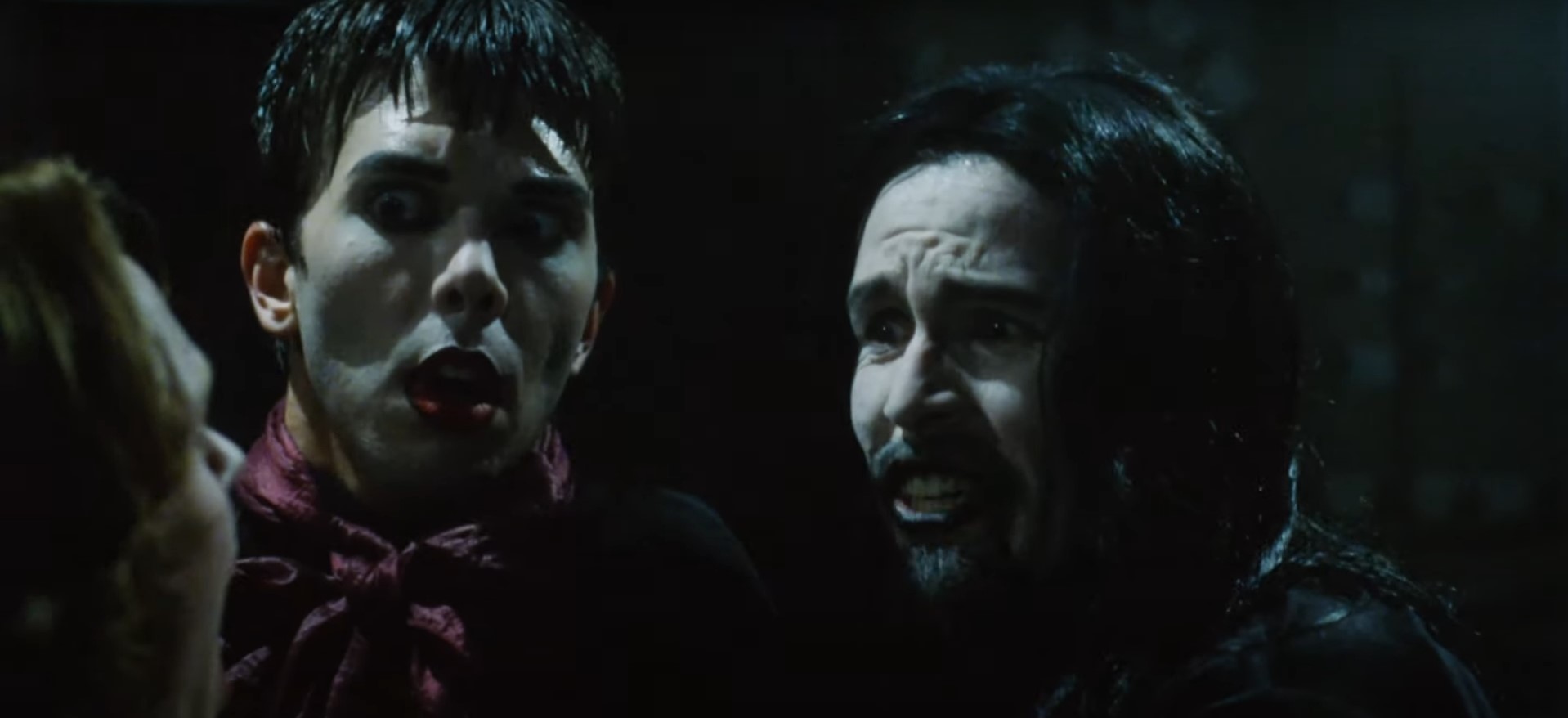
“Tombs of the Blind Dead,” or as known as the U.S. as just “The Blind Dead,” is the first in a series of four undead Templar Knights films that would come to be known as The Blind Dead collection by Spanish filmmaker Amando de Ossorio.  Natively titled “La noche del terror ciego” was released in 1971 and penned by Ossorio who laid a new path of Spanish horror that didn’t involve Paul Naschy or Jess Franco with undoubtedly slow dread of the undead that resembled more of the Italian-bred beyond the grave films where ghouls and ghosts return to life and wreak bloody havoc on the living, a guise for social context and for political dictatorship.  Themes of rebellions, rape, and bisexuality course through the feature’s necrotic veins as the film receives Spanish and Portugal co-production support from Plata Films and Interfilme with executive producer Salvadore Romero (“The Werewolf Versus the Vampire Woman”) spearheading pre-production and behind the scenes.   

Following of a newly formed trio of friends traveling the countryside to take in the sights, an underlying green-eyed trouble brews right from the moment when an enchanted Roger, the debut film and character of 1973’s “Green Inferno’s” César Burner, meets gorgeous red head Betty, “It Happened at Nightmare Inn’s” Lone Fleming,” and Roger’s travel companion and Betty’s Catholic boarding school roommate/best friend, Virginia, “The House that Screamed’s Maria Elena Arpón, feels the twinges of jealousy as her amorous covets for Roger never materializes and she sees her future with relationship with roger forever in the friend zone.  Virginia becomes so intolerant of Roger and Betty’s innocent flirtations that she’s willing to hop off a not-so-speeding train and camp inside the creepy, ruined structures at centerstage of a burial ground.  Arpón’s passive aggressive behavior is quite convincing, even the part where she tucks and rolls off a moving train in what stupid things do when people are frustrated, especially in the gray territory of love.  The love triangle is so simplistically arranged, each behavioral component goes without being farfetched.  From Virginia’s first sexual experience at the caressive, soft hands of her roommate/best friend Betty while at boarding school to Roger and Betty’s blameless attraction to one another that spurs Virginia’s irrational, self-serving behavior, Ossorio’s characters are written very well when homogeneously compared to other outside of cinema love triangles.  José Thelman (“Night of the Sorcerers”) indulges as the smuggler swine Pedro who’s roped into the reconning of the Templar tomb to clear his name with authorities by proving someone else had murdered Roger and Betty’s friend.  Joined by his floosy sidepiece María, played by another María in the iconic Spanish B-horror actress.  María Silva (“The Awful Dr. Orlof”), Pedro brutishly flaunts arrogance and confidence, taking what he wants, especially with the women uncharmed by the male sex, and that’s curious, fluid attribute when he attacks Betty but in the wake of the moment, the two of them are silently surfeited as they share the scene and that’s severely different from what anyone other filmmaker was doing at that time.  Andrés Isbert (“The Kovak Box”), Antonio Orengo (“Love Letters of a Nun”), Francisco Sanz (“Django Kill… If You Live, Shoot!”), Rufino Inglés, and Verónica Llimerá (“Hatchet for the Honeymoon”) round out the cast.

Performances give “Tombs of the Blind Dead” credibility in anxiety-riddled survival and turbulent human interactions but where those performances start to give way coincides with Ossorio’s building of dread.  No doubt the use of slow-motion sets the ghoulish, harrowing tone of the depraved, unabating, skeletally-cursed Templar Knights giving chase on horseback as they track down their flailing fresh meat, but in the process of that spinetingling, in between the Knights self-unearthing and the eventual snare and snack of their human victims, Ossorio doesn’t quite know how to flesh out formidable trepidation.  Pursued, screaming characters stand in the face of danger as if their feet are hardened in cement, stopping at every brief moment when out of sight of the hooded decaying bones and rags with dusty swords, and absentmindedly run right into the exposed radius and ulnas of the slow-moving and blind medieval damned maniacs in sequences that run out too long to be wholly gratifying.  Ossorio better pedestals the ingrained Spanish themes of never escaping your gruesome, haunting past, as seen with the circular narrative of always return back to the Knight’s ruins, and the sexual taboos of bisexuality and rape that lead to destruction.  These course through a more classically presented gothic horror. Perhaps explaining the fervent melodramatics of flamboyant fear, under the dictatorship regime of Francisco Franco and his cult-like ritualization in fascism oversight of Spain.

The sightless, flesh-feasting Templar Knights have found a new home in the Synapse Films’ tomb of terror with a new restoration transfer on a 2-Disc Blu-ray. Refurbished from the uncut original camera negative, the AVC encoded, 1080p high-definition, BD50 capacity suppresses any compression issues to display polychromatic decadence in front of a backdrop of steely graded blues. Plenty of a darker scenes to be affected by artefact corruption but the blacks are greatly dyed-in-the-wood saturated and not delineated or in spectrum of lesser decoding. Scenes never approach being flat, in color tone and in field depth, as beads of glistening sweat can be visually elaborated on and the distinction between color, shadow, and scale discern wonderfully. Two audio option tracks are available: a lossless Spanish PCM 2.0 mono track and a lossless hybrid of Spanish-English (Spanglish?) PCM 2.0 mono track. Both tracks are of a post-production dub with the Spanish option having greater synchrony with the articulating native Spanish actors of this Spanish coproduction. Audibly clean with little-to-no hissing, popping, or crackling, Synapse’s singular restoration is in good company with a high impact, high clarity, and low distortion dialogue track that meets eye-to-eye with the visual components as well as the film’s ambience cluster and Antón García Abril’s breathy and discordant, Gothically canticle score. Option subtitles are available in English on both tracks. Special features on the first disc contains individual audio commentaries by horror film historian Troy Howarth, Betty actress Lone Fleming, and the NaschyCast podcasters Troy Guinn and Rod Barnett. A feature-length documentary Marauders from the Mediterranean go from head-to-toe on not just detail Ossorio’s “Tombs of the Blind Dead” as the Spanish stamp in the juggernauting zombie genre of the times but also going in depth with the Spanish laid in horror from the 1960s to 1980s, featuring interviews with Lone Fleming, John Russo (“Night of the Living Dead”), director Jorge Grau (“The Living Dead at Manchester Morgue”), Sitges Film Festival director Mike Hostench, critics Kim Newman and John Martin, film academics Steve Jones and Calum Waddell, actors Helge Line, Manuel de Blas, Antonio Mayans, and Jack Taylor, and even Paul Naschy’s son, Sergio Molina. An alternate U.S. opening sequence Revenge of Planet Ape gives expositional insight on how the success of “The Plant of the Apes” films influenced the American distribution market to rebrand “Tombs of the Blind Dead” as an ape rebellion piece to ride the coattails of the series’ success on a lower, foreign budget. Rounding out the special features is a featurette Awakening of Spanish Horror Cinema, Salem Pop’s “Templar Tears” music video, the original theatrical trailer, and a still gallery. While Synapse has 3-Disc limited-edition set of only 4000 copies made with all the bells-and-whistles of the visual elements of new artwork, a slipcover, and a 3rd disc audio CD, the 2-Disc standard edition comes with all the same special features and all three versions of the film inside the black Amaray Blu-ray case and classic “Tombs of the Blind Dead” poster for cover art. Inside, you’ll get Synapse’s physical media catalogue and a disc on each side of the Amaray’s interior with disc 1 “Tombs of the Blind Dead” and disc 2 “The Blind Dead,” housing the shortened 83-minute U.S. re-edit on a BD25, that sport their own pressed artworks. The uncut disc 1 has a runtime of 101-minutes and has region free playback.

Last Rites: “Tombs of the Blind Dead” is Spain’s answer to “Night of the Living Dead” with discerning individualities ingrained by director Amando de Ossorio to include his country’s own social and political subtext and while Blue Underground’s The Blind Dead DVD collection is an impressive physical media crown jewel of upscaled 720p, the Blu-ray gods favor Synapse with an impressive hi-def A/V release with stellar bonus features.

“Tombs of the Blind Dead” 2-Disc Blu-ray Available for Purchase Here!

X-rated Adult EVIL Without Any Calling Cards. “Man at the Door” reviewed! (Impulse Pictures / DVD)

X-rated and Exploitational “Man at the Door” on DVD!

Virtuous Anne arrives home after a stretch of day shopping and answers the ringing phone.  On the other line is her more uninhibited sister Jill telling Anne she’ll be working late, undeclaring her naked reverse cowgirl position on top of her equally naked boss’s lap.  Immediately after, Anne receives a phone call asking if Jill or if Anne’s roommate is home.  The stranger quickly hangs up soon after Anne admits their absence.  A following knock at the front door opens to Anne meeting a tall man claiming to be her roommate’s date.  Skeptical, Anne is at first hesitant about letting him inside until he forces his way in, ties her up, and molests her half-naked body before stealing her virginity with one thrust before the opening of the front door and an Anne’s unsuspecting roommate encounters the brute, but she takes his aggressive perversion in stride, eager to partake into his sexual tyranny, and finally able to bed the sweet and innocent Anne after long-lusting after her.  When promiscuous sister Jill arrives, more-the-merry for the horny home invader.

As far as time encapsulated sleaze goes, the 1976 sin-street stag film and home invasion obscener “Man at the Door” is about as obscure and odd as it’s chaste title.  Yet, there’s not a lick of chaste about the beyond-the-canoodle content of X-rated exploitation and the only licking happening here is with the scores of cunnilingus with every new starlet entering from stage left.  The lower-rung adult film has plenty of action in the simplistic of narratives but much of this a film by John Ruyter production is left unknown to the universe with no identifying credits to properly give recognition for the cast’s improper behaviors, with the crew’s dedication to stagnancy yet consistent and staid presentation, and with the sordid studio behind what was likely an obvious low-budgeted blue movie featured only in the darkest, dankest, and stickiest cornered cinemas on the infamous 42nd Street for a measly buck-fifty to get your rocks off.

Where to start with the cast?  I couldn’t even tell you.  The three satisfying starlets, unpretentious with their set dress but heady in their roles, come under the thrusting hips of a two pedestrian, stud-less joes lucky enough to engage coitally with the fairer sex.  Out of the two male performers, the titular “Man at the Door” character could pass for a less-intimidating and skeezier Edmund Kemper in a wet-blanket flesh suit looking like a former military analyst fired for his inability to hack it and tried his luck at philistine porn.  Perhaps my attitude to the casted intruder is a bit harsh, unfair, and hypercritical of some historical schlub with average measurements and downgraded fanfare – I don’t even know the guy or even his name – but my sixth sense knows the type and his type fits the bill to a T, a balding, mid-to-late 30s, man whose onscreen personality is about as dry as an overtoasted piece of stale day-old bread.  However, with much of the triple-X industry, men don’t sell product, women do.  The three ladies gracing the screen outperform above expectations after scanning the undervalue pinning synopsis with their distinct, amongst themselves beauty, able to individualize their roles, and entice with their own energies to make a synergy-coupling during the girl-on-girl scenes.  One blonde and two brunettes even liven up the boy-girl scenes against dull male talent who’s supposed to be knife-wielding sex fiend, but the women wear that personality down, grinding it to a halt as they grind on against each other.  I apologize in the lack of cast detail for this mysterious sleaze, but the DVD also mentions the lack of credits and there’s nothing on the web to match against it, not even doing image search on the actors’ faces and so we’re left with nameless sensualists of the mid-70’s sex scene.

When reviewing porn, especially from the New Hollywood era of the 70s, I always have to remind myself substance and story are going to take a backseat to skin and sex.  That is what’s laid out in “Man at the Door,” a rudimentary home intruder gimmick to extract the ethical-swathed deviancy deep inside us with sexual assault, uninhibited perversions, and even a humiliation peeing scene for those urophilia fanatics who get off on distressed whizzing.  Humdrum performances from a rather unflattering and uncharismatic male lead fashions little enthusiasm and in atypical swanky retro-porn flair, expositional statements, such as Now I’m going to fuck you both, said in perfunctory banality that it takes the story’s wind out of the sails.  Though production studio is unidentified, “Man at the Door” has blueprint echoes of an Avon assembly that prominently reeled in profit by paraphilia with fetishisms and rough-sexual-play shot on 16mm that feels very similar to this John Rutyer film.  Perhaps, John Rutyer was another of Phil Prince’s pseudonyms and “Man at the door” was his trial-by-fire initiation into the Avon Dynasty.  We can’t prove but we do love to speculate!  Avon’s skeletal productions undress the glam of fantasy for more feral roughies and “Man at the Door” has, more-or-less, the same façade with a handful of natural, sparse sets, carelessly visited by the boom mic and a few wandering heads into frame, and so this mysterious adult roughie is about as unspectacular as the next, only finding its way into our physical media devices by the pure unadulterated grindhouse gravitational pull and our extreme curiosity for its archaic and, once considered, sub-rosa period compared to what is today an easily accessible porn industry.

If curious like me or have a knack for any and all types of film, “Man at the Door” can be an interesting minor blast from the past and Impulse Pictures, a subsidiary label of Synapse Films, has secured the relatively unknown and unheard of title for DVD distribution.  Presented in a pillar boxed full screen presentation, 1.33:1 aspect ratio,” size of the storage capacity won’t affect your viewing pleasure with every typification of a dog-eared 16mm print to please the grindhouse appreciators.  To be honest, the print is in relatively good shape with faint vertical scratches pretty much from start to finish, plenty of good grain, dust, dirt, and a pinch of blink-and-you’ll-miss-it frame damage.  Grading is on what I believe to a high-key color saturation because of the heavy fill lighting casting clear shadows onto the backwalls and so skin tones can look more orange than natural but for older celluloid, I’m quite pleased with the finished product look.  The audio is an English Dolby Digital 2.0 mono track.  The collapsed audio channeled through more than one speaker doesn’t amplify the weak dialogue track, likely root issued by inferior commercial equipment or bad boom placement.   The track also has plenty of crackle and pop amongst the constant shushing interference that essentially muffles and muddles the already feeble dialogue so you may not understand half of what is being said on what is more than likely barely a script or half a script for a hour-long porn feature.  Forget about depth and range with the limited setting and confined to the actors’ close vicinity.  There’s some hint of swank laced in the soundtrack that’s feels more like looped bossa nova than like rock or funky bubblegum pop.  There are no subtitles available.  Also not extensively available are special features in this barebones disc that has been set with chapters and a sneak peek at Impulse Pictures’ “42nd Street Forever: The Peep Show Collection” preview; however, I do adore Impulse’s new types of crude color-pencil illustrations on the front cover that roughly represents the narrative concept in what is a blend of childish drawn nightmares and erotic art.  Inside the common DVD amaray case is a Synapse Films product catalogue insert and a disc pressed with the same front cover image.  The region 1 locked playback disc is not rated, obviously, and has feature runtime of 60 minutes.  Impulse Pictures has paraded “Man at the Door” more than the film deserves but it’s a fine, old obscure romp film from the porn of yore now on a contemporary format and with odd-neat packaging.

X-rated and Exploitational “Man at the Door” on DVD!