What Russian EVILS Lie Beneath in “The Lair” reviewed! (Acorn Media International / Blu-ray)

“The Lair” Has a Deadly Secret!  Blu-ray Now Available!  

Royal air force Captain Kate Sinclair is shot down over the arid planes of Afghanistan.  Swarming with Taliban insurgents and her command officer killed, Sinclair takes shelter in an old, abandoned Russian bunker from the Russian Afghanistan invasion of the 1980s.  What she stumbles into is an experiment lair housing numerous stasis chambers and dark secrets.  Sinclair manages to barely escape with her life when one of the creatures inside the capsules is released, tearing to shreds her well-armed pursuers.  Rescued by a ragtag team of U.S. military outcasts based in the middle of nowhere as peripheral punishment and joined up by a trio of British special forces in the area, the Captain attempts to warn her rescuers what’s out in the desert only to be on the receiving end of a monstrous invasion that sees the slaughter of nearly everyone in camp, including the camp commander.  Miles from anywhere and not enough supplies to withstand another attack, those soldiers left alive band together to stage their own last stand assault on the creatures’ Russian bunker lair to ensure hostile eradication.
Acclaimed horror director Neil Marshall (“Dog Soldiers”) returns to his roots with a claustrophobic, high-energy, and violent creature feature known as “The Lair.”  Having experienced underwhelming success with the fiery Dark Horse antihero “Hellboy” remake in 2019, Marshall returns to independent scene for the 2022 released film having been shot in the barren lands of Budapest, Hungary to create the illusionary Afghanistan territory backdrop.  Marshall co-writes the script with “The Lair” star Charlotte Kirk, a reteaming affair from Marshall’s last feature “The Reckoning” from two years prior in which Kirk also produced and starred.  Also returning from “The Reckoning” and into the producer’s chair is Daniel-Konrad Cooper along with “Infinity Pool” producers, Jonathan Halperyn and Daniel Kresmery, and “Lords of Chaos’s”, Kwesi Dickson in this Shudder exclusive collaboration from Rather Good Films, Scarlett Productions Limited, Highland Film Group, and Ashland Hill Media Finance with Neil Marshall and Peter Shawyer’s private equity investment group, Ingenious Media, providing financial support.

Star Charlotte Kirk and Neil Marshall have a seemingly natural rapport that has transposed well from their collaboration on “The Reckoning” to the “The Lair,” crossing subgenre that involve the equivocal occult to a more plainspoken physical presence of foreign experiments gone wildly bloodlust.  Instead of being hunted by a 17th century witch hunters just for being a woman saying no to man, Kirk steps into a role of authority as military captain with loads of smarts and adept at close combat as she’s being, once again, chased by predators, but these uber-predators are unearthly, unremorseful, and ugly.  Marshall provides just enough character backstory for understanding the stakes and strengths of each of them but to reach a little more into their history might have been key to stronger motivations and for something to prove in not just being jarhead screwups.  Sinclair finds commonality and sympathy from Sgt. Tom Hook (Jonathan Howard, “Godzilla:  King of the Monsters”) who bears the guilt of losing men in battle and punishes himself to do better.  Psyche profiles for each soldier makes them rise above being flat by providing depth of flaw but what is vexing and irking about each, and this element may very well be intentional as an international thespian bout of poking fun, is the cast is nearly all British playing Americans with stereotypical drawls, ebonics, and punctuating southern accents so overexaggerated it’s downright sickening to hear, like watching a bad old war film, but what’s even worse and what drives a sharp claw talon into the inane heart of trite-tired audiences is the group slow walk before embarking into the battle of no return.  Again, this might be the work of intentional satire.  Some accents are gargantuanly worse than others, such as with “Titanic 666’s” Jamie Bamber’s pirate-patched Major Roy Finch and the Mark Arend’s Carolina-born Private Dwanye Everett.  From there, the elocution grades get better with less cliché but not by much with a cast rounding out of Leon Ockenden (“The Reckoning”), who I couldn’t understand because his accent was so Scottish-ly thick, Troy Alexander, Mark Strepan, Hadi Khanjanpour, Kibong Tanji, Adam Bond, Harry Taurasi, and Alex Morgan.

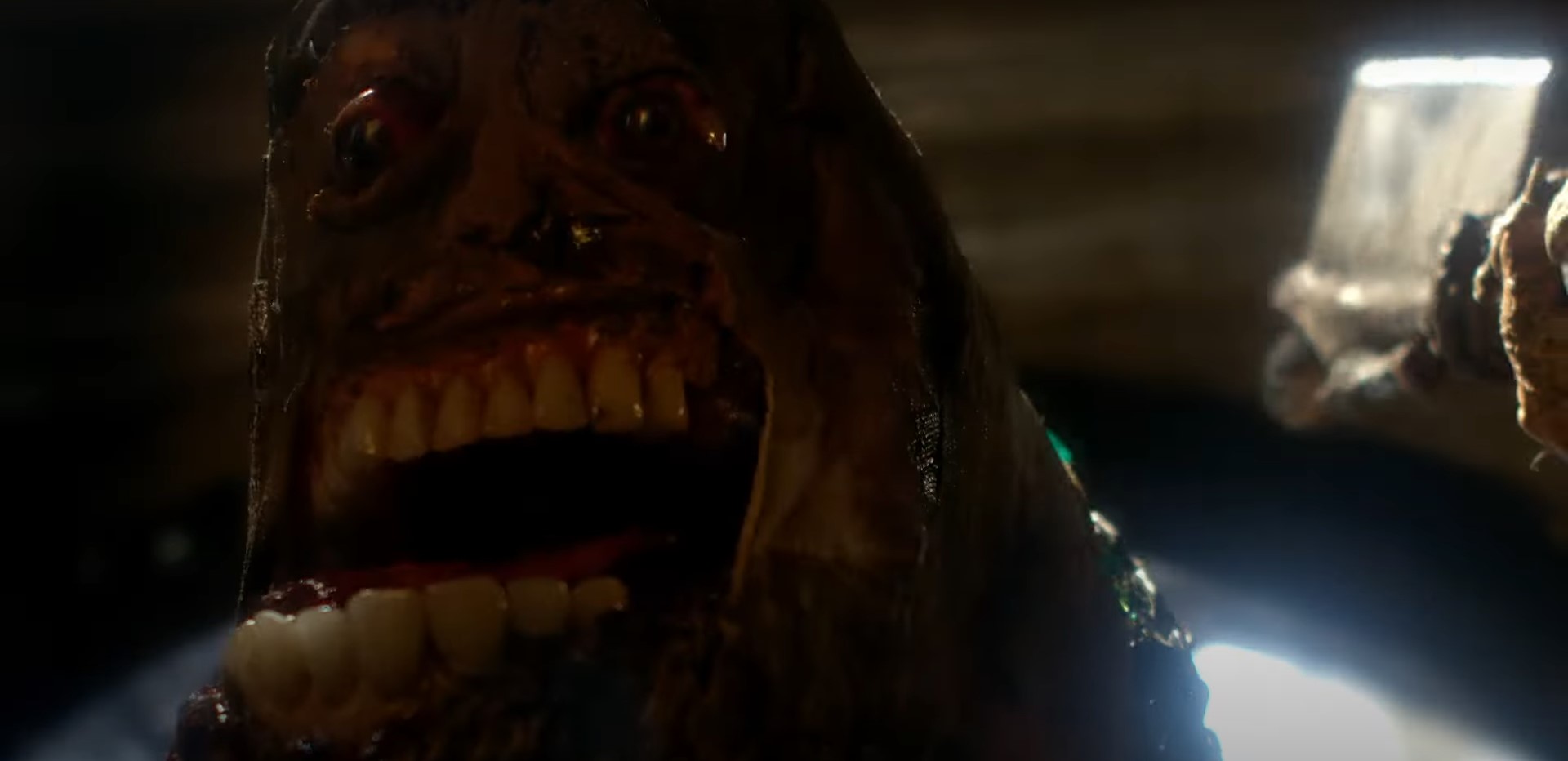
Neil Marshall not only returns to his horror origins but he also returns to the heyday of prime practical effects with inset creatures of a spliced appearance between the build, the dark full body achromia, and the facial configural layout of Marvel’s extraterrestrial antihero Venom with the eye-less, tongue-lashings and grabbings of Resident Evil’s staple adversaries, the Lickers.  Obvious a man in a prosthetic suit, the simplistic, brawny-framed humanoid basks in nostalgia despite being in a modern day movie, pining for the days when large or small men in full body, head-to-toe, terrifying imagery suits were the antagonists of our youthful nightmares while also providing the cast something to act against for a more realistic and rancorous on screen rendezvous.  The smaller scale production limits Marshall’s possibilities with his Kevlar-fleshed and razor-toothed creatures but the veteran director sells every act of “The Lair’s” story with trenchant action with hardly any downtime to catch one’s breath in between because the next blood-laden blitz rollout is upon us in a blink of an eye.  Between the action, the anomalous characters, and the pulsating, downbeat synthesizer score that courses through its veins, “The Lair” leans itself toward being a callback to the late 80s-early 90’s last stand dogfight subgenre and you can’t one second cease your attention for a director who appreciates the narrative surprise more than anticipated predictability.

Become lured into “The Lair” now on Blu-ray home video from Acorn Media International, a UK distribution subsidiary of RLJ Entertainment.  The AVC encoded, 1080p high definition release is presented in a widescreen 2.35:1 aspect ratio.  The BD25 offers sold flexibility for a film with hefty amount of night shoots and action as potential compression problems seem to stay at bay without any severe noticeable banding, blocking, mosquito noise, etc., however, the details are quite flat with a smoother finish, often in the blur of the fast camera workflow and editing because of the action sequences, leaving depth on characters, as well as in the scene, at arm’s length with monocular vision.  The warm hint of chartreuse embedded grading offers industrials color tones with a rich grit of oxidized bunker steel.  Don’t adjust your audio dial on the release’s English DTS-HD Master Audio 5.1 surround sound track, the dialogue only sounds wonky because its deliberate Americanized dialect set at the forefront and prominent amongst the audio layers which has significant range and depth with explosions, rapid gunfire from different calibers, and the guttural growls of the creatures that echo nicely through the rear and side channels when under the bunker or even affixed in a slightly decreased volume of its form in the attack of the basecamp.  There were no interference blights with the audio track, such as hissing, popping, or other discernible issues.  Special features included only a making-of featurette with clipped interviews during the shoot with director Neil Marshall, actors Charlotte Kirk, Mark Strepan, Jamie Bamber, Jonathan Howard, Leon Ockenden, and others regarding their admiration for the project in different aspects.  Acorn Media’s physical release comes in a slightly larger Blu-ray snapper, typical of the UK releases, with the cover art featuring an up-close and personal look at the creature’s ugly mug.  The same art is also on the disc with no insert inside the snapper case.  The release comes region B locked with a runtime of 97 minutes and is certified 15 for strong gory violence, language, and threat.  If you can stomach the fatuity at times, “The Lair” is a fast paced and staunch creature feature with a bunker full of gore.

“The Lair” Has a Deadly Secret!  Blu-ray Now Available!  

Break a Promise with EVIL And Pay the Little-Big Price! “Unwelcome” reviewed! (Well Go USA Entertainment / Blu-ray)

Not the Leprechauns This Time.  It’d Be Goblins that “Unwelcome” You!  

Trying desperately to become pregnant for some time, Jamie and Maya celebrate the news of learning they’re expecting but their jovial rejoice is cut short when three thugs break into their city apartment home, nearly bringing an end to their lives and the baby.  When Jamie’s great aunt Maeve wills him a rural cottage in Ireland, the married couple jump at the chance to start afresh away from the urban chaos and the trauma in hopes for a peaceful life with their child.  The friendly village residents take in Jamie and Maya unconditionally but one stipulation is highly encouraged to be met if living at great aunt Maeve’s cottage:  they must leave out a blood offering for the little people, the Redcaps, of the forest butted up against their home.   Just happy to be out of the city, Jamie and Maya shrug off what they believe to be folkloric wives tales of old Ireland and on such short notice, they hire Mr. Whelan and his children, who come with an unfavorable village reputation, to do much-needed repairs around the house.  When dealings with the Whelan clan go violently sideways, Maya invokes superstitious belief to draw the Repcaps out of hiding and implore their murderous mischievousness for dire neighborly assistance. 

Welcome to the “Unwelcome!”  Pint-sized evil continues to be mondo popular around the world, especially in the Full Moon empire that’s built a kingdom off the backs of supernatural ankle biters.  However, “Unwelcome” is not a Charles Band production that’s rushed straight through to a fast-tracked, direct-to-video release of shoddy, schlocky proportions.  Instead, this release comes from overseas, the UK specifically, with some quality production footing that lands the 2023 released film into a limited theatrical run before hitting the home entertainment market.  Behind the film is Jon Wright, director of dark humored revenge against high school bullies in the “Tormented,” who directs and co-writes “Unwelcome’s” grim fairytale-like narrative of personal growth, inner fight, and underfoot goblins gone wild with Mark Stay, reuniting with Wright for the first time since their script collaboration on the 2014 automaton invasion epic, “Robot Overlords.”  Under the once working title of “The Little People,” “Unwelcome” is a production of the Yorkshire based Tempo Productions Limited, with cofounders by Jo Bamford and Piers Tempest as executive producer and producer, and the private equity investment group, Ingenious Media, with producer Peter Touche along with Warner Bros. and Well Go USA Entertainment distributing. 

“Unwelcome” has such unusual casting in a good way.  The entire Whelan clan consists of actors plucked from successful, multi-seasonal television shows that have essentially shaped their careers from their well-known, fan-adored roles, but the unintended adverse effect in such triumph stamina is being recognized only for that performance.  In my mind, Colm Meaney will forever be embedded in my hippocampus as Engineer Chief Miles O’Brien from “Star Trek:  Deep Space Nine.”  “Con Air,” “Under Siege,” and even as a British Airways pilot doomed for landing in “Die Hard 2,” Chief O’Brien, I mean Colm Meaney, is still in space tinkering with transporter buffers.  Here in “Unwelcome,” Meany is Daddy, aka Mr. Whelan, a rough around the edge contractor who beats his kids, let them get away with whatever they please, and has a real notoriety around town.  When I say kids, I mean grown adults stuck in Daddy’s hooligan wake and are played by more outstanding and familiar faces from Ireland, such as Hodor from “Game of Thrones,” Kristian Naim, Netflix’s “Derry Girls’s” Jamie-Lee O’Donnell, and the “1917” actor and upcoming principals of “Last Voyage of the Demeter,” Chris Walley, make up the trio of terribly laid construction workers who have really no business being around a hammer, a ladder, or anybody’s valuables.  That brings me to “Unwelcome’s” lead actors as the scarred couple who hires out Whelan’s band of delinquent spawns to do the handiwork repairs.  I realize Wright and Stay wrote Douglas Booth (“Pride, Prejudice, & Zombies”) to be an overly optimistic and fairly useless good guy with Jamie, but the insecurities are just ostentatiously oozing out of the husband without a clue.  Jamie’s arc also doesn’t quite flesh out by the end of the film as he’s blocked by the baby mama instincts of Maya, played by “Resident Evil:  Welcome to Raccoon City’s” Hannah John-Kamen, with an unspoken I’ll-do-it-my-damn-self attitude that sends the narrative into a knife-brandishing gob of Redcaps eager to do her bidding for an unfavorable exchange.  Maya sacrifices all for a good man with good intentions who can’t do diddlysquat to save her and, in the end, that doesn’t seem balanced for this ferocious fairytale. 

If there is one aspect, above all us, to note about “Unwelcome’s” shin kicking goblins as a takeaway is that the rambunctious and ravenous Redcaps are not computer generated, are not puppets, and are not even animatronics.  Actors and stuntmen fill those small shows with a little help of disproportionate movie magic, heeding to the ways of a lost art in miniaturizing actors, such as in “Willow” or “Honey, I Shrunk the Kids,” and touching up with some CGI on the tangible face molds for a layered composition that’s super fun to see come to life on screen.  Unfortunately, the Redcaps make a late appearance into a yarn unspooled with mostly the pent up pile of frustrations of Jamie and Maya as an unlucky couple without a chance of peace in the world.  Trouble finds them wherever they go in what’s essentially a trade for city thugs for unfriendly country versions of the same type of ill-mannered.  “Unwelcome” plays very much into it’s title that no place feels welcoming for a couple on the verge of the already daunting premise of parenthood life and everything appears now alien as the world is being upended by concessions for your child in what has turned terrifying in what was supposed to be a warm, welcoming of a new adventure.  That’s the sensation setup for the pair who trust dip into trusting superstitions and magical beings to be their guardians.  Folklore then takes over; its has, in fact, been welcomed to save the day no matter how maligned the backstories.  Wright and cinematographer Hamish Doyne-Ditmas do, in fact, construct an ocular stage crafted out of an ethereal red and yellow fire lit sky with an overall color theory toned to contrast as a mystical storybook set in what is usually flush with greenery around an Irish village, reminiscent of late 70s-early 80’s European horror sets built to detailed scale, built with vibrant backlighting, and yet built to feel distant, apprehensively off, and strange like another world, a Redcap ecosphere.  “Unwelcome’s” ending also pulls from that unabashed time to be creatively mad in an innately mad universe with an unexpected Redcap reason that doesn’t clarify so much their hunger for blood offers, which the diet includes raw store-bought meat and the frothy flesh of felonious individuals, but better explains their twisted promises and intentions for their knife-jabbing services rendered.

With Goblins, there’s always a price to pay but for the Blu-ray release of “Unwelcome,” the price is worth the admission.  The single-layered, AVC encoded, high-definition 1080p Well Go USA Entertainment release presents the film in a widescreen 1.78:1 aspect ratio.  Slightly squeeze onto a BD25, there’s some minor irregular compression patches that degrade solid darker colors and the image loses a bit of sharpness in the background – you can see an example when the Redcaps pop up out of the keep tower appearing more like moving globules than well-defined humanoids.  Goblin facial features and skin and clothes textures have tactile appeal during closeups with the same being said with the cast in their natural color tones.  Computer-generated facial movements have seamless pertinence to the surrounding action and the motion of the Goblin actors themselves with layering of frames looking clean to create their smallness around principal characters.  The English DTS-HD 5.1 Master Audio mix maintains a stout dialogue track but deploys no depth into recordings resulting in all the dialogue tracks to be at the forefront, even when characters are in the background in the scene.  The weird spatiality with the dialogue doesn’t translate over to ambient noise as those tracks are well designed into the scheme with levels of depth that add richness to the storybook atmospherics.  English SDH are optionally available.  Bonus features include a behind-the-scenes cast and crew interviews discussing their time forming the idea and working on the project, a making the Redcaps segment with special effects supervisor Shaune Harrison (“Nightbreed,” “Attack of the Adult Babies”) discussing the step-be-step process of bringing these little devils to life, including showcasing their head and body molds, and the theatrical trailer. The physical property comes in a standard Blu-ray snapper with latch with one-sided cover art of a knife-out Goblin starring up at the new mistress of the house.  Inside, a single-leaf advert of Well Go USA films and the disc pressed art with a blue-graded Goblin looking menacing makeup the inner contents. “Unwelcome” runs at 101 minutes, is rated R for strong violence and gore, pervasive language, some drug use, and sexual material. From an ironic perspective, “Unwelcome” uses the mythological mischievous of Goblins as a gas pedal accelerator to mature a pair of genteel gulls faced with a parlous reality and to be factotum in life in general told inside in the linings of a dark and gory fairytale universe.

Not the Leprechauns This Time.  It’d Be Goblins that “Unwelcome” You!  

Is He an EVIL Vampire or a Just a Disturbed Young Man? “Martin” reviewed! (Second Sight / 4K UHD & Blu-ray)

Note:  Screen Caps do not reflect the Second Sight's A/V on this release.

“Martin” Limited Edition Second Sight Release Available at Amazon.com! 

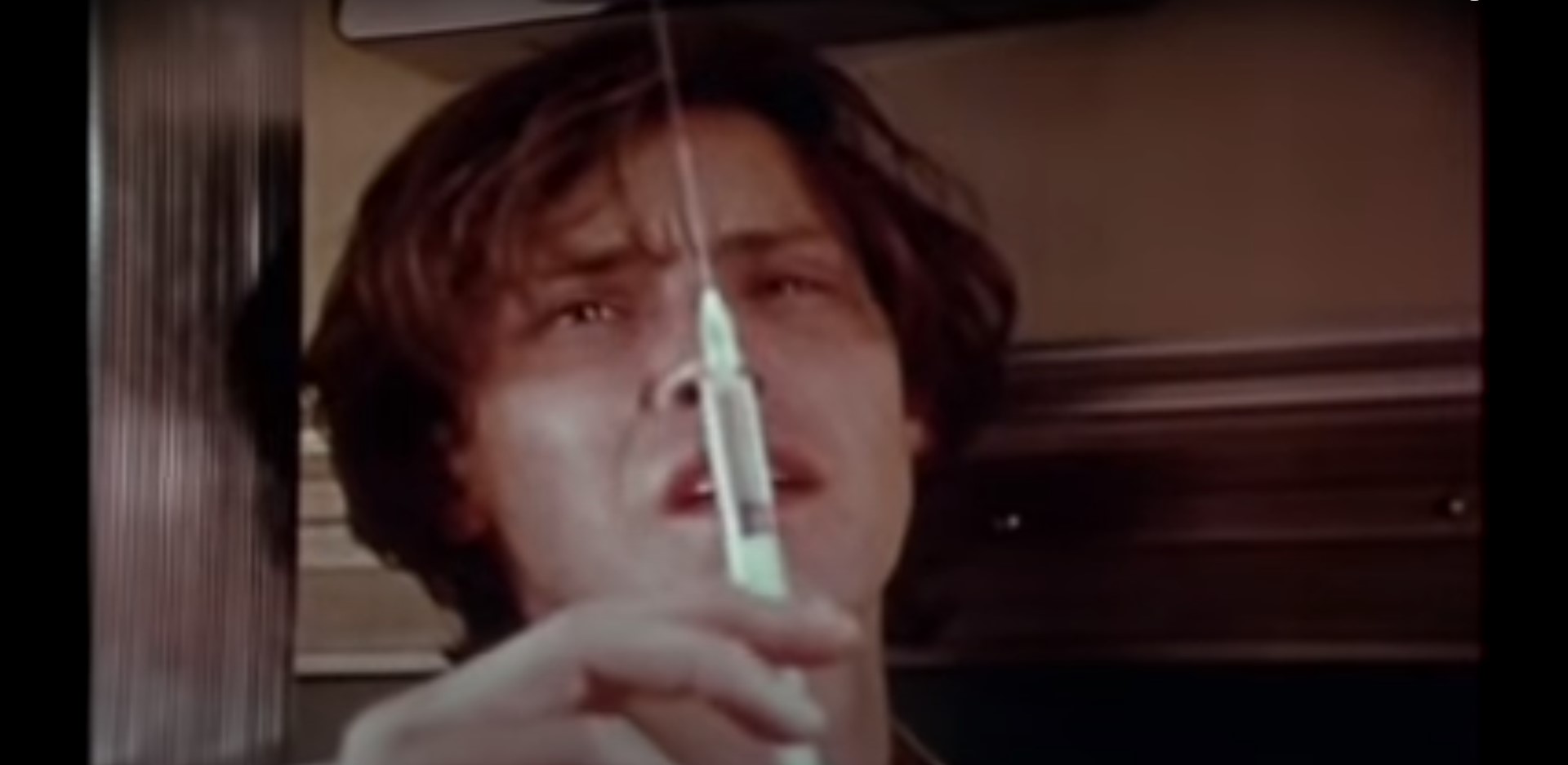
Martin, a young man from Indianapolis and upon recently lost his mother, travels by train to Braddock, Pennsylvania where he’s greeted by his elderly cousin Cuda, an old world believer that Martin has been selectively plagued by the family curse of vampirism and will take Martin in under his roof to cleanse his soul of evil, even if that means destroying him.  Though he doesn’t believe in the vampiric superstitions and the movie depictions, Martin truly believes he’s an 84-year-old vampire and does kill young, beautiful women to intimately drink their blood.  Being reserved and shy gives Martin an advantage to observe his potential victims from afar after gaining employment working as a delivery boy out of his cousin’s shop.  Cuda’s granddaughter, Christina, believes her lonely cousin’s mental illness is being exacerbated by grandfather’s archaic and draconian beliefs, fostered by a family history based off tradition rather than science.  When Martin meets an interested housewife on one of his delivery runs, the need to consume blood trickles when sex enters the picture, but also induces slipups in his well-oiled drug and drink operation whenever the need to feed becomes too much.

By now, “Martin” needs no introduction.  The father of the flesh-eating zombie, George Romero, delivered a neo-realism take on the vampiric mythology nearly 50 years ago in 1977.  “Martin” became the writer-director’s first all around filmic success after being royally screwed by the Walter Reade Organization for having failed to copyright the prints on the trailblazing and timeless classic “Night of the Living Dead,” the reason why you see so many Tom, Dick, and Harry remakes, revisions, sequels, and such of the 1968 black-and-white film that introduced zombies as flesh eaters, and a pair of box office failures that kept Romer in severe debt until slipping into business bed with producer Richard P. Rubinstein, the associate producer for Romero’s “The Amusement Park” and who would collaborate with Romero as a producer for the next subsequent decade years.  Filmed on location in the societal and industrial crumbling Western Pennsylvania town of Braddock, “Martin” remains one of George Romero’s quintessential and provocative pieces of work outside The Living Dead series under Rubinstein and Romero’s The Laurel Group production company.

In the titular role is the introduction of John Amplas who was discovered by Romero after watching Amplas in a play and the entire lead principal was reworked to accommodate Amplas boyish youth.  Amplas is instrumental to Martin’s success in a handful of ways:  the Pittsburgh native knew how to properly slink in an unsuspecting manner, he also didn’t overbear scenes and costars with a larger-than-life presence and could dip into this awkwardly retrieved guilt for the premediated murder to fulfill a need that either’s supernatural or unnaturally mental.  Amplas could walk that thin line that keeps the audience wondering how much Martin says and does is actually true or a misconception because of mental illness and this is coupled nicely with Romero’s direction, splicing in black-and-white scenes of gothic-laden, theater-esque vampire flashbacks that could either be a delusional reality or a very real backstory to Marin’s cursed heritage.  Polarizing external family forces in his elderly cousin Cuda (Lincoln Maazel, “The Amusement Park”) and age akin cousin Christina (Christine Forrest) combat on an emotionally taut and verbal levels between their corresponding character qualities of superstition and science that parallel Martin’s eventual damnation or salvation.  The principal trio are tightly compacted to strain the dynamic with a back-and-forth debate over which truth is behind Martin’s troubles.  Romero pens a good case for both by never fleshing out a legitimate truth all the way through to the end; instead, it’s a battle of save Martin from himself who understands the problem, wants to deal with it, but barely takes up arms to combat or even face his issues.  Special F/X legend Tom Savini, pre-trademark inky black mustache and goatee, makes his debut role as Christina’s boyfriend Arthur who serves only as a device to pull reason away from the table in a conflicted measure to pressurize Christina’s capacity beyond the limits of also caring for herself.  Eventually, Christina has to make a decision and, ultimately, choses herself to save, leaving Martin to fend against a sternly superstitious and old world Cuda.  Sara Venable, Roger Caine (“Dracula Exotica”), Donaldo Soviero, Francine Middleton (“The Love-Thrill Murders”), and Elyane Nadeau make up the supporting cast.

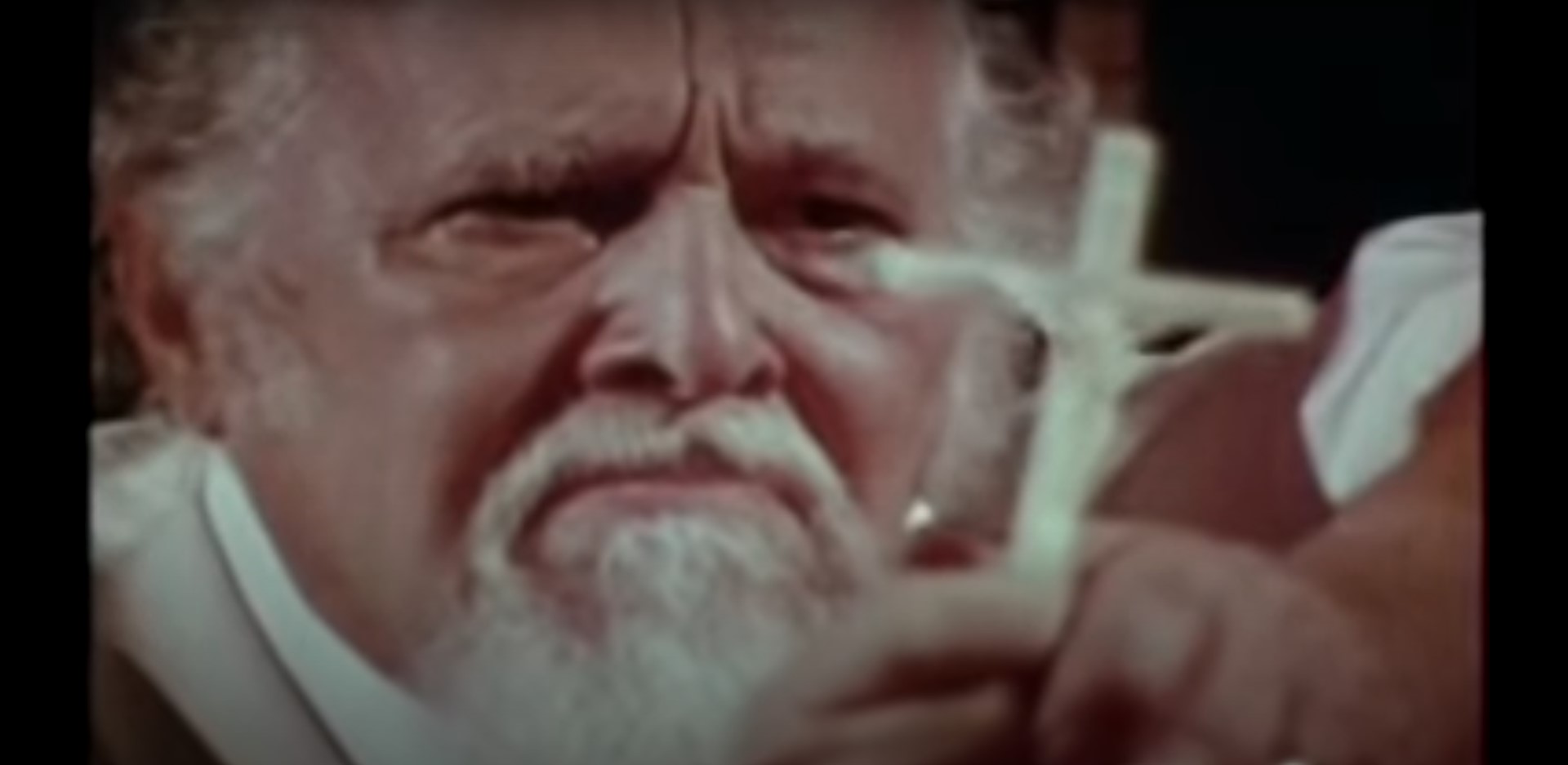
George Romero, again, redefines, or in a more fittingly descriptive – revamps, classic horror villainy that replaces the supernatural element with a realistic approach to weave the very fabric of horror into possibility while still hinting at something beyond the limits of reason.  “There is no real magic.  There’s no real magic, ever!” says Martin about the theatrical stereotypes used to display vampires in attempt by Romero to disenchant us from the ideologized mythos, the habitual characteristics, and the physiognomies of what we consider to be a night bloodsucker.  During that scene between him and Cuda, the words are potently effective in disapproving myths about vampires, but the words are supported with fact as Martin casually debunks garlic, crosses, and sunlight as vampiric weaponry at the expense of humiliating and entertaining Cuda.  “Martin” is at the forefront of being an allegory for loneliness and is a driving reason for presumably the real vampire’s gruesome habit to slice open wrists and drink blood.  Martin only targets young, beautiful women and becomes intimate with them while they are limp under sedation.  When he meets an equally lonely Mrs. Santini, a depressed housewife on the verge of an emotional collapse, and the two embrace each other with comfort against what dispirits them; disinterested in stalking her, Martin’s need to kill dampens and Mrs. Santini unhappy marriage in nullified by the young who listens more than speaks.  Maturity and youth meld together in a moment of peace between them but their bond still shows micro fissures of incompatibility that puts doubts into Martin’s 84-year, carefully planned practice and also doesn’t save Mrs. Santini completely from her too-little-too-late despair.  Braddock, Pennsylvania, a small town sinking into the slumps of becoming forgotten, is a once industrious backdrop integrated as a metaphor for being a forsaken place where things go to die.  Martin is sent to Braddock to paradoxically be cared for by a cousin determined to destroy him because of a family curse that afflicts select generations in what can be perceived as butting of heads between the defiance of angsty youth versus the traditions of an older individual set in the world with their linear ways of thinking.  

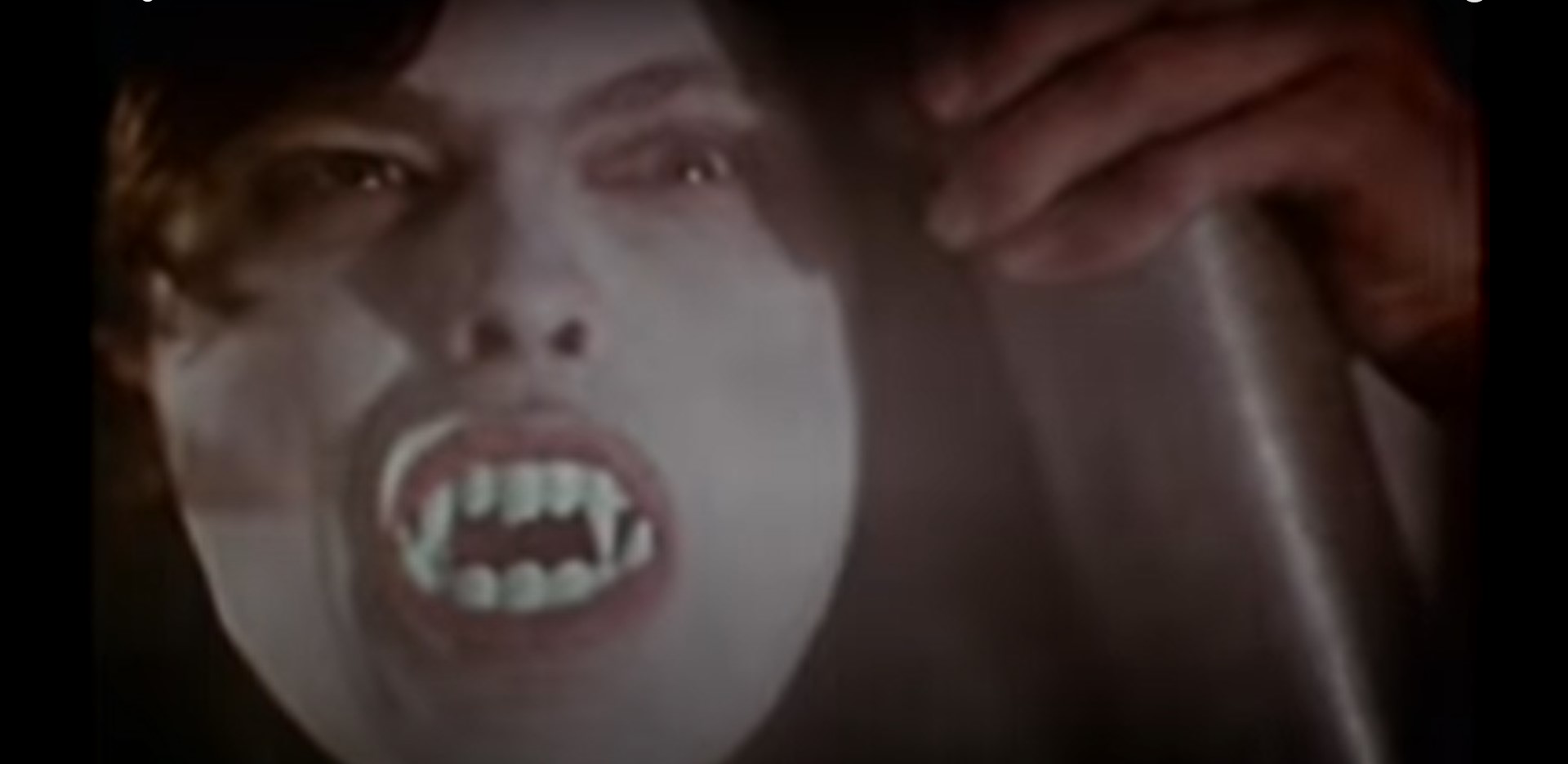
As aforementioned, “Martin” is a cult classic from one of the most notable masters of horror and as a film, “Martin” can stand on its own two feet on any format.  However, with that being said, UK home entertainment distributor, Second Sight, celebrates this early George Romero razor-edged thriller with a definitive 3-disc, 4K and Blu-ray release jammed back with software and firmware bonus content that fans can really sink their teeth into for a lifetime.  The limited edition UHD and Blu-ray O-slip box presents a 4K and 2K scan and restoration of a 35mm duplicate negative (note:  not from the original 16mm source) that has been supervised and approved by director of photography Michael Gornick and presented in the Academy aspect ratio of 1.37:1.  Considering the blown duplicated source of a 16mm grade, the 4K UHD scan on the BD66 won’t live up to 4K potential, as some may expect.  There’s quite a bit of varying levels detail discernibility, some shots look better than others, but the overall restoration renders a better than it’s ever looked product with natural grain and damaged reduced to some blue stock flaring around the side and edges, especially during night scenes.  Shadows looked deeper than previous versions, meaning that tenebrism isn’t lost amongst a softer image but rather creates depth with the additional of better sharpened edges to outline objects between the light source  Some speckle debris filters through at times but not enough to cause major concern with the overall experience watching and enjoying the restoration that has HD enhanced grading to make blood that richer technicolor coral color used in my subsequent Romero “Living Dead” films up to “Day of the Dead.”  The Blu-ray’s 2K works just as well due to the scrappy source equipment of what the budget allowed, delivering a fine product of the best transposed transfer known to fan kind and beating out the Lionsgate’s warming grading with a cooler, more hardline detail and delineation picture. The massive release comes with three audio options – an English DTS-HD 5.1 surround sound, an English DTS-HD 2.0 stereo, and an English DTS-HD 1.0. Though Martin audiophiles will likely gravitate toward a multiple channel output, “Martin” is one of those select features that does better in a less-is-more return by not forcing the limited and stronger signals, such as the dialogue and Donald Rubenstein’s experimentally spiritual score, to encoding competition with the milieu ambient and boom recorded sound effects, that for the most part, are background support for the bigger, better one-two punch of clean, clear, and presently full dialogue and a consciously curated soundtrack to walk with Martin every step of his journey. There’s a pinch of popping and a low-emanating droning that very discreet and negligible that won’t affect the experience on bite…I mean bit. English SDH are optional. Bonus materials are what shape the Second Sight releases to be greatly desirable amongst fans as the company continues to produce high-quality encoded bonus features as well as carefully and professionally organized tangible items inside the box. Both 4K UHD and Blu-ray have the same encoded bonus features that include four audio commentaries of old and new. The two archived commentaries include George Romero, John Amplas, and Tom Savini in one set and the other with Romero, Savini, Richard P. Rubenstein, and Michael Gorrick. The new commentaries are with Kat Ellinger, editor-in-chief of Diabolique Magazine, and the second with the recently deceased film curator, Travis Crawford. A vintage 2004 documentary from the Lionsgate release is included in the set with remarks from Romero, Savini, Gorrick, Donald Rubenstein, and Christine Forrest along with a new documentary echoing much of the 2004 doc, in collaboration with Severin Films, with John Amplas, Michel Gorrick, and Tom Dubensky strolling through Braddock, which hasn’t seemingly changed from the depths of poverty, on a raining day recalling nearly every moment of production during principal photography. The new doc includes other insights from Forrest, Savini, Tony Buba, and Sarah Venable in what feels like a complete celebration and overview of their entire journey through Romero’s personal favorite film. Donald Rubenstein also has a new interview discussing his score and meeting and working with Romero on a positive level. The disc features round out with one of Tony Buba’s short films “J. Roy – New and Used Furniture” revolving around the town of Braddock and the trailer, TV and radio spots. The third disc is the CD form of Donald Rubenstein’s soundtrack laid out in 22 distinct musical numbers. The limited-edition exclusive contents include a rigid O-slip case with a simple, yet effective sterile while and red font color contrast with MADE IN U.S.A. augmented razor blood with vampire teeth and blood dripping from the bottom right corner and a blood dripping cross squarely centered on the back. Inside the slipcase, a thick 104-paged color booklet with new in-depth essays and insights from Daniel Bird, Miranda Corcoran, Heather Drain, Kat Ellinger, Andrew Graves, Alexandra Heller-Nicholas, Elena Lazic, Stephen Thrower, Jon Towlson, Simon Ward, Tony Williams and an interview with Tony Buba by Travis Crawford. The booklet also contains colorized, behind-the-scenes photos of production and numerous one-sheets, promotion poster and ads, and a beautifully, expressionistic illustrated front and back cover. Adam Stothard illustrates 5 character lobby cards, including John Amplas’ Martin, Christine Forrest’s Christina, Tom Savini’s Arthur, Lincoln Maazel’s Cuda, and George Romero’s Father Howard. All 3 disc arts are the same as the front cover the release and contained a trifold, punch-lock case in reverse colors of the slipcase. The 4K UHD is region free but the Blu-ray is confirmed region locked B so you’ll need a region free or region B player. The runtime clocks in at 95 minutes and is certified 18 for sexualized violence and sexual threat. Second Sight must be a Disney fan with their monstrous beast of a limited edition that is also a thing of beauty; “Martin” deserves every square inch of this physical and digital display of expressionistic vampirism of underrated performances and from the mind’s eye of a dauntless George Romero, unafraid to take risks, show blood, and understand the human condition.

“Martin” Limited Edition Second Sight Release Available at Amazon.com! 

EVIL’s Blight is Captured off and on Film. “Cursed Films” reviewed! (Acorn Media International / Blu-ray)

“Cursed Films” Now Available on Blu-ray in the UK!  Purchase at Amazon.com By Click the Cover Below.

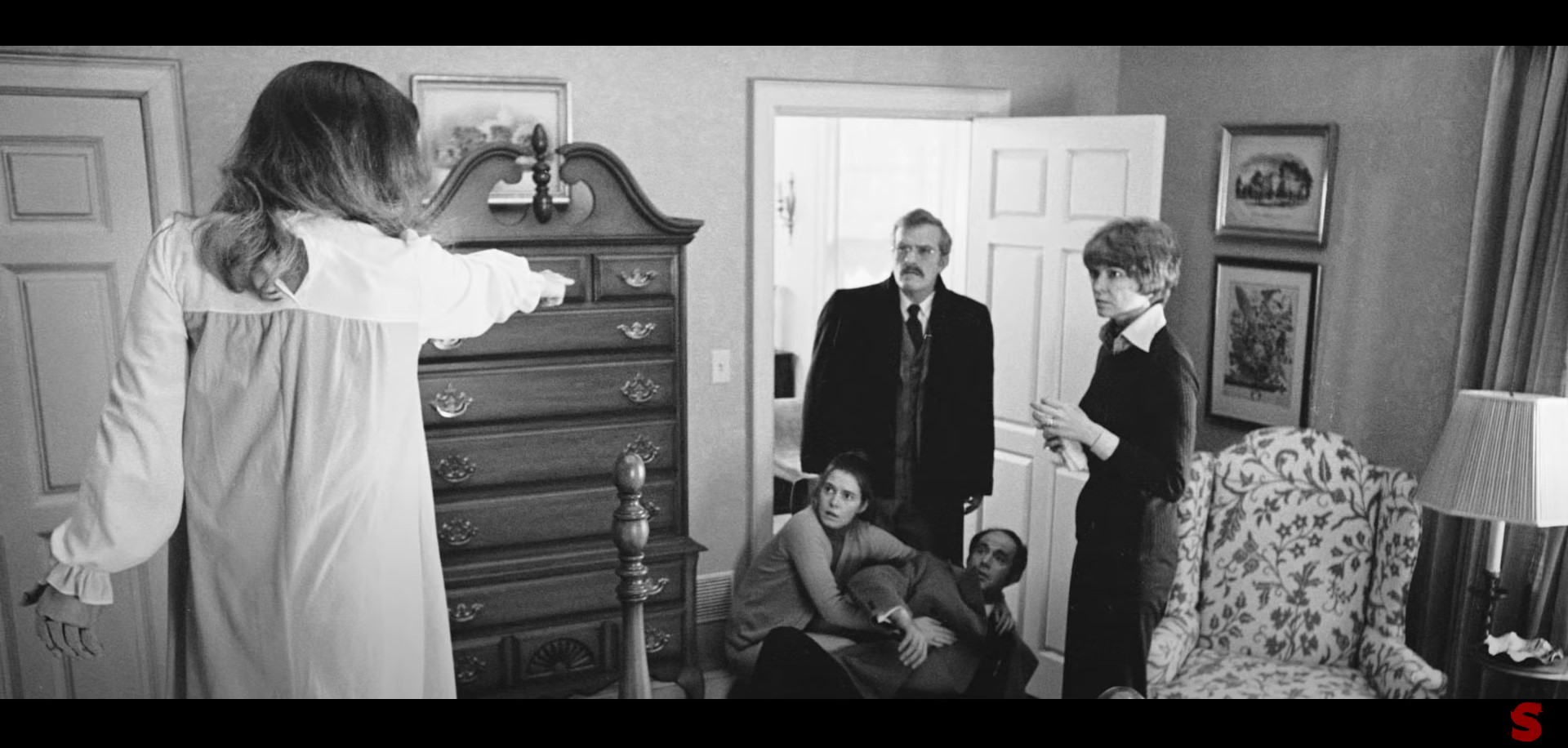
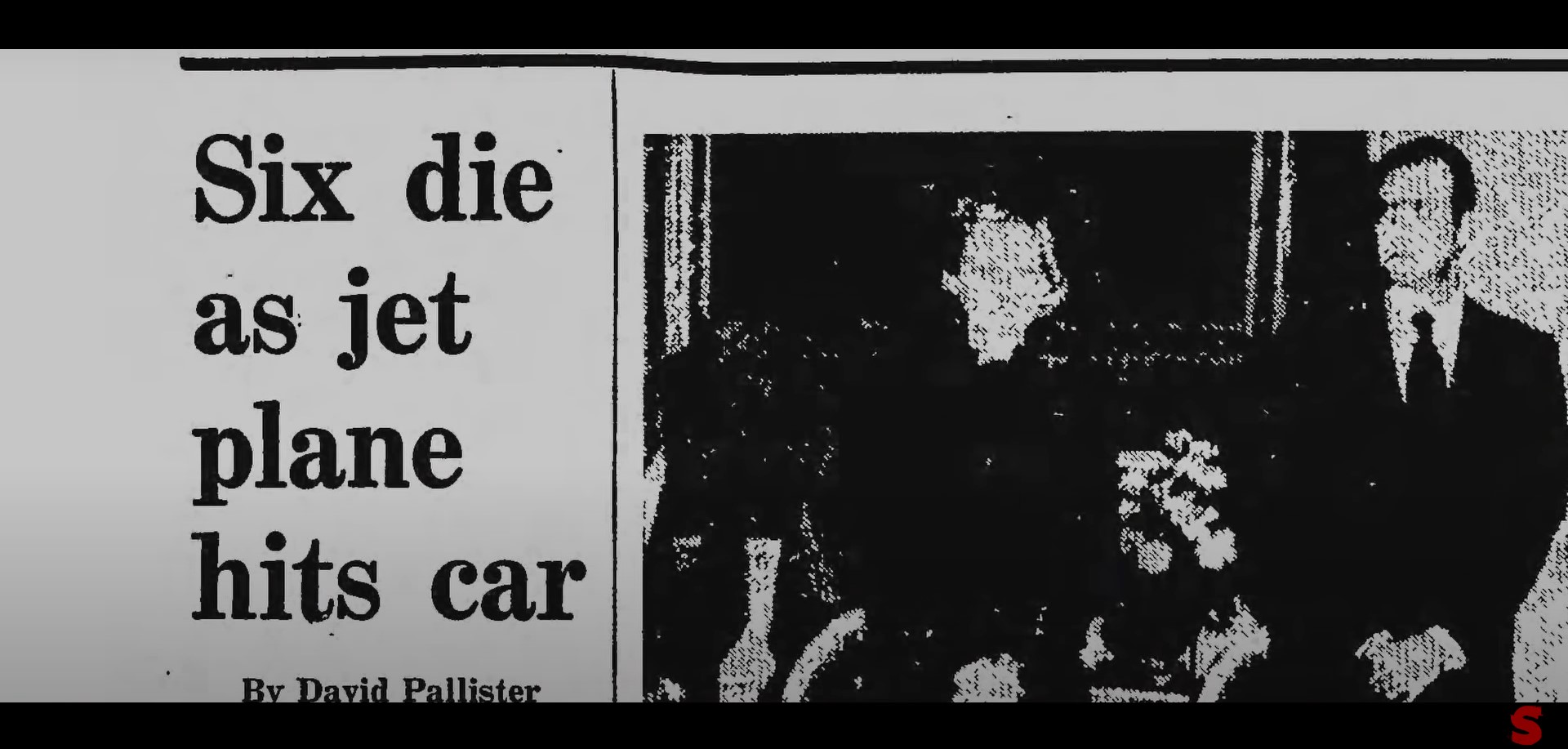
What do “Poltergeist,” “The Omen,” “The Exorcist,” “Twilight Zone: The Movie,” and “The Crow” all have in common? They’re just not successful horror-thrillers with extraordinary actors and directors, they’re also tagged as some of the worst cursed movies of our time. Severe ailments, planes struck by lightning, bombings at previously booked restaurants, egregious injuries, and even death, lots of death, have surmised belief that the otherworldly powers or the omnipotent universe has waged warnings and, if gone ignored, has blown the kiss of the death. For years, these films held power of people because of a string of unfortunate incidences that link back to rumors that possibly incite mystical retribution for using real corpses, telling stories about the birth of the antichrist, and even family lineage curses by ancient Chinese spirits. There’s no shortage of superstition in the world, a country practically built on the idea of a martyred Jesus rising from the grave, and Hollywood is no exception that the bad things that happen in life will always course people to find a reasonable explanation even if that explanation is an untenable supernatural one.

When we think of curses as a whole, we’re generally point and look to the obvious occult brewing with black magic of vindictive witches, ancient incantations to evoke demonic bidding, Gypsy ill-wills that have lycanthropy teeth, or ominous warnings inscribed by long-ago Egyptian priests keep mummified remains from being marauded by intruders.  These hexes and jinxes are storylines popular in movie culture since the beginning of the first movie pictures, used to entertain, excite, and thrill to the furthest extent of the means.  Who would have known there is a reality bound, darker side to the curse mythos that has been insidiously rooted in the illustrious and dream making film industry?  Cursed films have been the talk of Tinsel town, ambulance chasing tabloids, and the short-lived internet fandom for years, decades now even, surrounding the mysterious misfortunes of certain films.  The Shudder 5-episode docuseries, “Cursed Films,” goes into the weeds with retrospective interviews from cast, crew, religious experts and even mavens of black magic and witchery.  Jay Cheel wrote, directed, and edited the series removes the characters from the story and focuses on building the humanity of the affected, dives into possible reasons for the film or individuals involved to be cursed, and the unfortunate outcomes that have resulted in the loss of life surrounding the project.  Muse Entertainment Enterprise, one of the companies behind CBS hit U.S. comedy “Ghosts,” serves as the production company behind the 2020 released Shudder exclusive series.

With any documentary, the cast are plucked right out of history, fast-forward into the present, to tell their firsthand account of events. Directors, producers, special effects and makeup specialists, and those beyond the realm of the film industry recollect and provide their own interpretation of a beleaguered saga with an interviewer, assumed to be “Cursed Films'” writer-director Jay Cheel, posing the questions to get open access to the inner thoughts of the grieved and impressed to give in full detail their wholehearted accounts. Cheel is able to nab different perspectives that play into the divisive nature of the whole cursed narrative, such as with those, mostly cast and crew, who don’t invest into the transcendental nonsense that has sense become either a minor or major stain on their careers. Others see the unexplainable coincidences to be godsent and beneficial to the production. For example, “The Omen’s” star Gregory Peck’s plane and producer Mace Neufeld’s plane were both struck by lightning in route to the London set only a few days apart. Neither plane sustained life-threatening damage and, thus, strokes of good luck and fortune seemed to be attached to the project along with other instances of death and destruction that averted harm from those involved with the film. Still, many still feel “The Omen” is a cursed film, mostly on the internet horror communities where conspiracies, misinformation, and false narratives run rampant like COVID in the early years. Often when Cheel obtains the perspective a black magician or a witch, Cheel’s attempting to gain not only an understanding of that world from real world practitioners but also to embellish a great melodrama into the episodes. Then, there’s the emotionally poignant Richard Sawyer segment. As the production designer on John Landis’s “Twilight Zone: the Movie,” Sawyer saw firsthand the tragedy that befell one of the film’s segment stories. Lead actor Vic Morrow (“Humanoids of the Deep,” “1990: The Bronx Warriors”) was cut down, along with two children, during a scene with a helicopter that went terribly wrong, and Sawyer’s account is powerfully traumatizing and great representation of how this series should be affect and chill viewers to the heart and to the bone.

“Cursed Films” reveals the terrible mishaps and misfortunes of limelight. If a private person is dies due to illness, accident, or foul play, there’s usually not a major production made out of the occurrence and no grand, “Final Destination” design beyond our understanding is erected to give it all meaning. Under the public eye and recorded by every entertainment medium known to mankind at the time of filming presents public scrutiny, public panic, and public speculation that plots points and charts graphs toward a giant, flashing sign that says, in big bold letters, CURSED! To any given horror fan, much of Jay Cheel’s docuseries is already common knowledge for the most part with the fresh and emphatic take from at the scene interviewees who add compassion and empathy as a shield against those who still think the sweet-faced Heather O’Rourke was doomed by some malison brought to fruition by India-removed skeletons. To the non-horror fan, much of Jay Cheel’s docuseries will have that new car smell and can be engrossed by Cheel’s spin of oppositions that never lay claim to either side as truth but only further what Zelda Rubenstein and Richard Sawyer tried to dispel with reason and tangible accounts is that there is some underlying curse reaching up and grabbing the throats of these films to point of choking the very goodness out of the cast and crew’s souls and only provide morbid curiosity to those seeking out the works stuck in a perpetual cycle of occultism.

Become reeled in by the notorious historical compendiums of “Cursed Films” in the first season that aired in 2020 and is now finally on Blu-ray home video in the UK from Acorn Media International. Though listed as a PAL release, the AVC encoded Blu-ray is presented in a 2.39:1 aspect ratio and is in 1080p, high-definition resolution, so a PAL encoding description would be inaccurate for a HD release. Image quality varies between the clean digital recordings with the interviews in interiors and exterior settings, polished transfers snipped from your favorite classic (and “cursed”) movies, and the raw, unpolished frames or clips that were cut from the film or remained as behind-the-scenes supplemental. All-in-all, picture quality is fine and clear in any regard with no issues of compression on the various mediums. The English language DTS-HD 5.1 surround sound stakes prominences on the dialogue for this is a docuseries reliant on firsthand accounts. Some historical footage can be staticky and flat but fits into the documentary design that pulls clip examples from the archives. “Cursed Films” isn’t going to be actioned packed or atmospheric but the composing duo of “Kicking Blood,” Justin Small and Ohad Benchetrit, offer an engaging soundtrack that could tell the story without the interviewee’s tale of sadness, mysticism, etc. English subtitles are available. For each episode a director’s audio commentary is available as a special feature. The physical feature comes in a slightly thicker Blu-ray snapper with the cover art, which is the same as the U.S. RLJE release, of an unspooling film reel displaying iconic tokens from each movie. The 141-minute and region B playback release houses the film’s certified 15 rating for strong horror, strong language, strong injury detail, sex references, domestic abuse, suicide, and bloody images. Whether you believe in curses or not, “Cursed Films” is a peradventure that’s powerful and uncanny to this very day that’ll have you straddling the fence of labeled condemned films.

“Cursed Films” Now Available on Blu-ray in the UK!  Purchase at Amazon.com By Click the Cover Below.

A Stop-Motion EVILscape of Totalitarian Hell! “Mad God” reviewed! (Acorn Media International / Blu-ray)

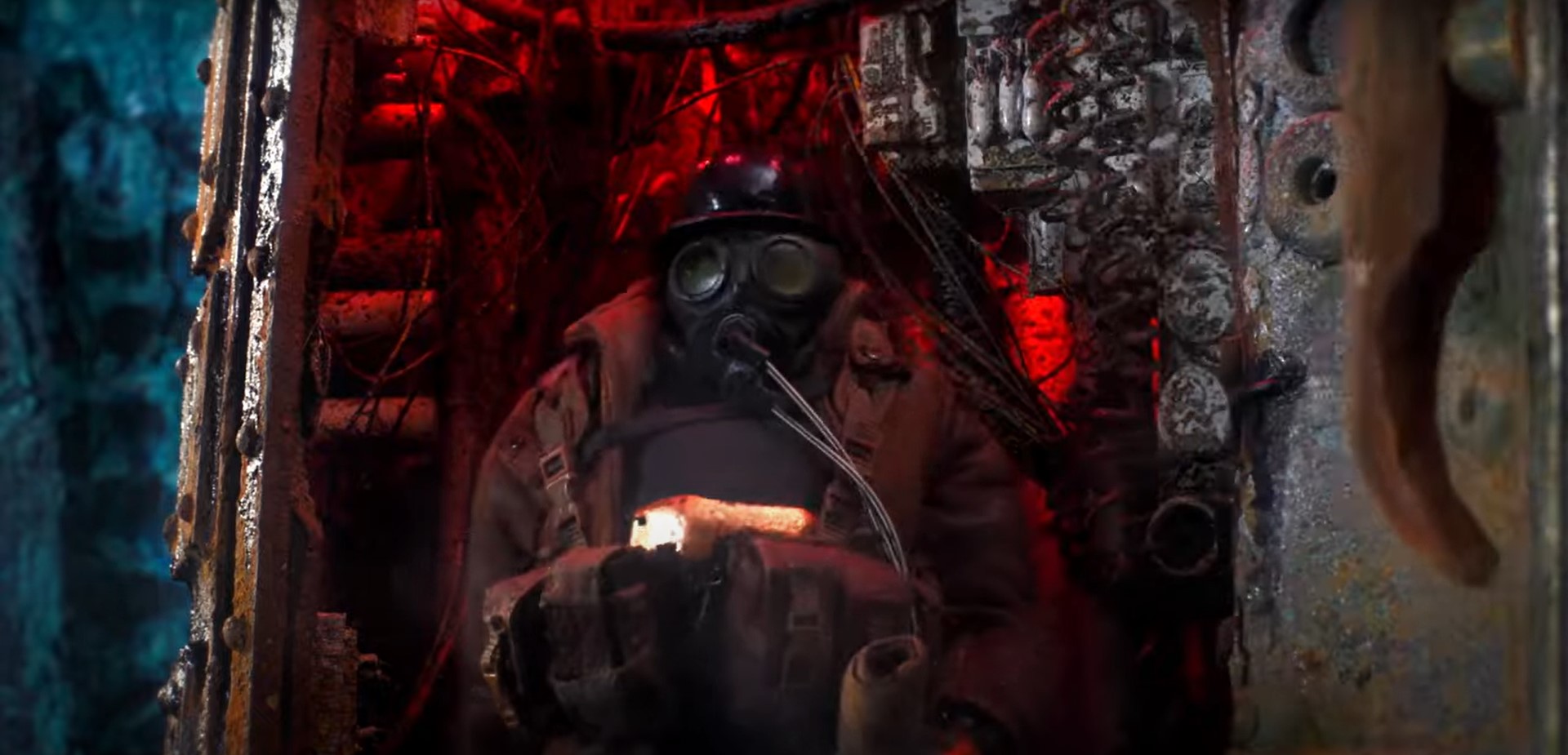
Descending from above into the depths of grotesque terror and suffering, The Assassin steps out of the drop pod with a gas mask, industrial armor, a suitcase, and a crumbling map.  Bearing witness to the surrounding horrors – cruel experimentations, enslaved beasts, tortured manufactured slave laborers, dog-eat-dog atrocities – The Assassin sallies forth, descending deeper into the primordial pit.  The missioned at hand is to set an explosive charge that will eradicate out the ruinous, oppressive filth that aims to corrupt the everything, but there the darkness won’t be so easily wiped away and The Assassin must stay in the shadows and out of sight or else become a tortured fixture in the fray. 

“Mad God?”  More like mad genius!  Phil Tippett’s 34-year, stop-motion, pet-project “Mad God” is the purest Hell I’ve ever seen.  Tippet, famed stop-motion and puppeteer effects artist responsible for the iconic visual effects and stop motion work in fan films such as the original “Star Wars” saga and the “Robocop” franchise as well as cult favorites “Howard the Duck,” “Piranha” and “House II:  The Second Story,” started “Mad God” in 1987 that become more of an ambitious project than originally thought and once the 1993 saw a computer generated effects revolution with a little prehistoric dino-disaster film called “Jurassic Park”, a film Tippett also did work on as dinosaur movement consulting supervisor because of his expertise on the short “Prehistoric Beasts,” the gifted animator had shelved “Mad God” for about 20 years with the though a newer, shiner, computer-driven animation would be the next best thing studios would ardently desire. This two-decade span gave Tippett time to outline objectives and really expand upon ideas of how “Mad God” should look and feel when conveyed. Tippett co-produces the film with Jack Morrissey under Tippett Studios and presented by IFC Midnight and AMC’s Shudder.

Just because “Mad God” is dialogue-less doesn’t make the “Mad God” voiceless. All around, in every scene, is a disturbing commentary or an unhinged metaphor bred mostly out of the animatable inanimate, but there are some live action performances weaved into the mad tapestry of monstrous titans and despot of cruelty. The most clearly discernible face of the lot comes from a director, “Repo Man” and “Sid and Nancy” director Alex Cox to be more exact. Cox plays the long nailed and regime-driven “Last Man,” representing divine leadership of a modest, dieselpunk heaven above a more organic and grotesque hell-type world. Only on screen for perhaps a total of 5-to-10 minutes, Cox grunts and gestures with precision articulation to give off a fair and just ruler impression. Niketa Roman plays the next real person to have some substantial screen time. Less of an actress and more of an animator by trade, with credits including “Blade II,” “Jurassic World,” and “Star Wars: Episode IX – The Rise of Skywalker,” Roman finds an expressive talent in her striking, heavily made-up eyes overtop a surgical mask and gown when whisking away one of the Assassin’s souls to be studied and experimented on by a broodingly ethereal entity. Other micro-performances include minor roles of tortured monkeys, various iron-cladded Assassins, witches, and gnomes from Satish Ratakonda, Harper Gibbons, Arnie Hain, David Laur, Chris Morley, Anthony Ruivivar, Tucker Gibbons, Tom Gibbons, Hans Brekke, and Jake Freytag.

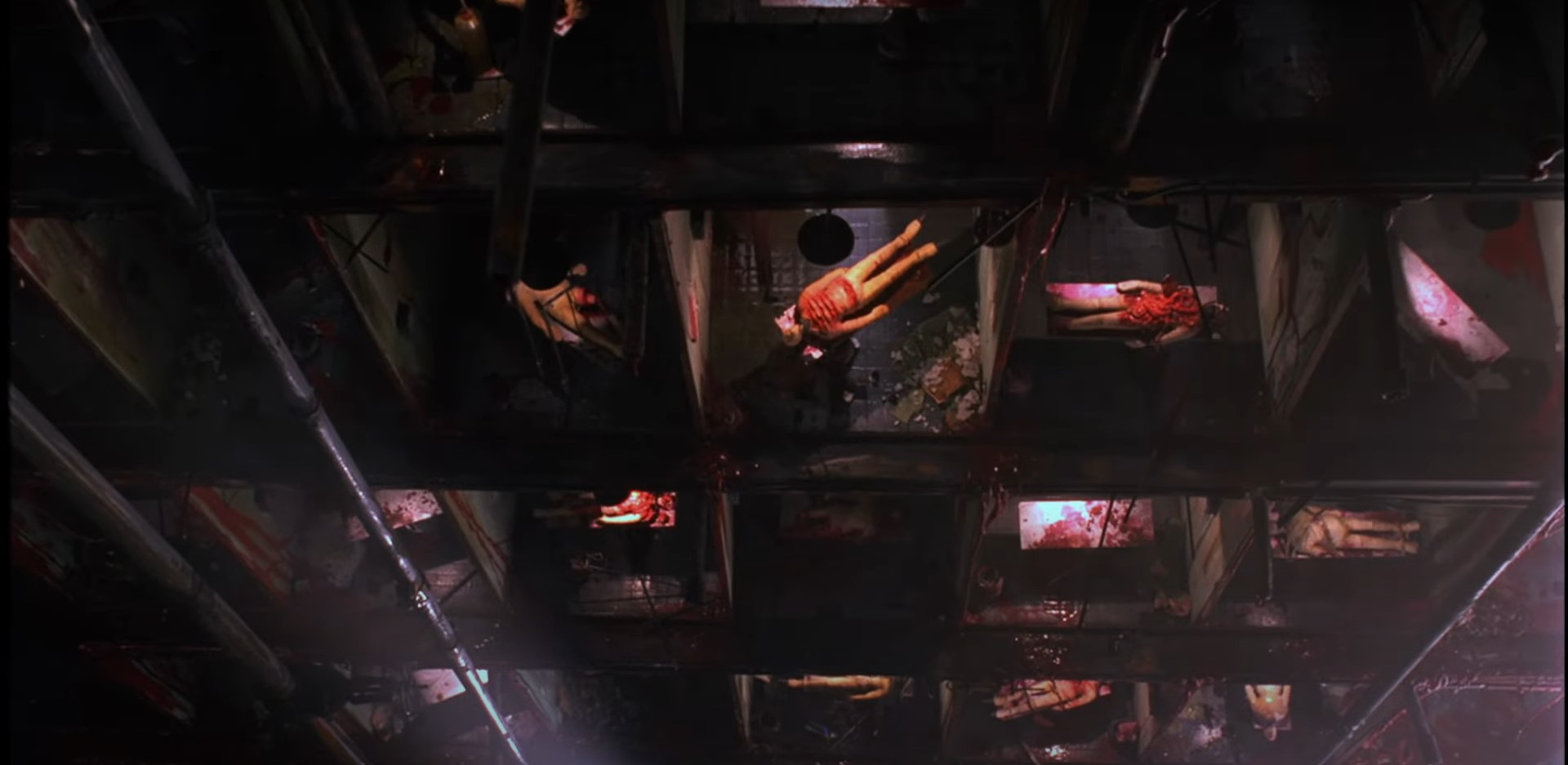
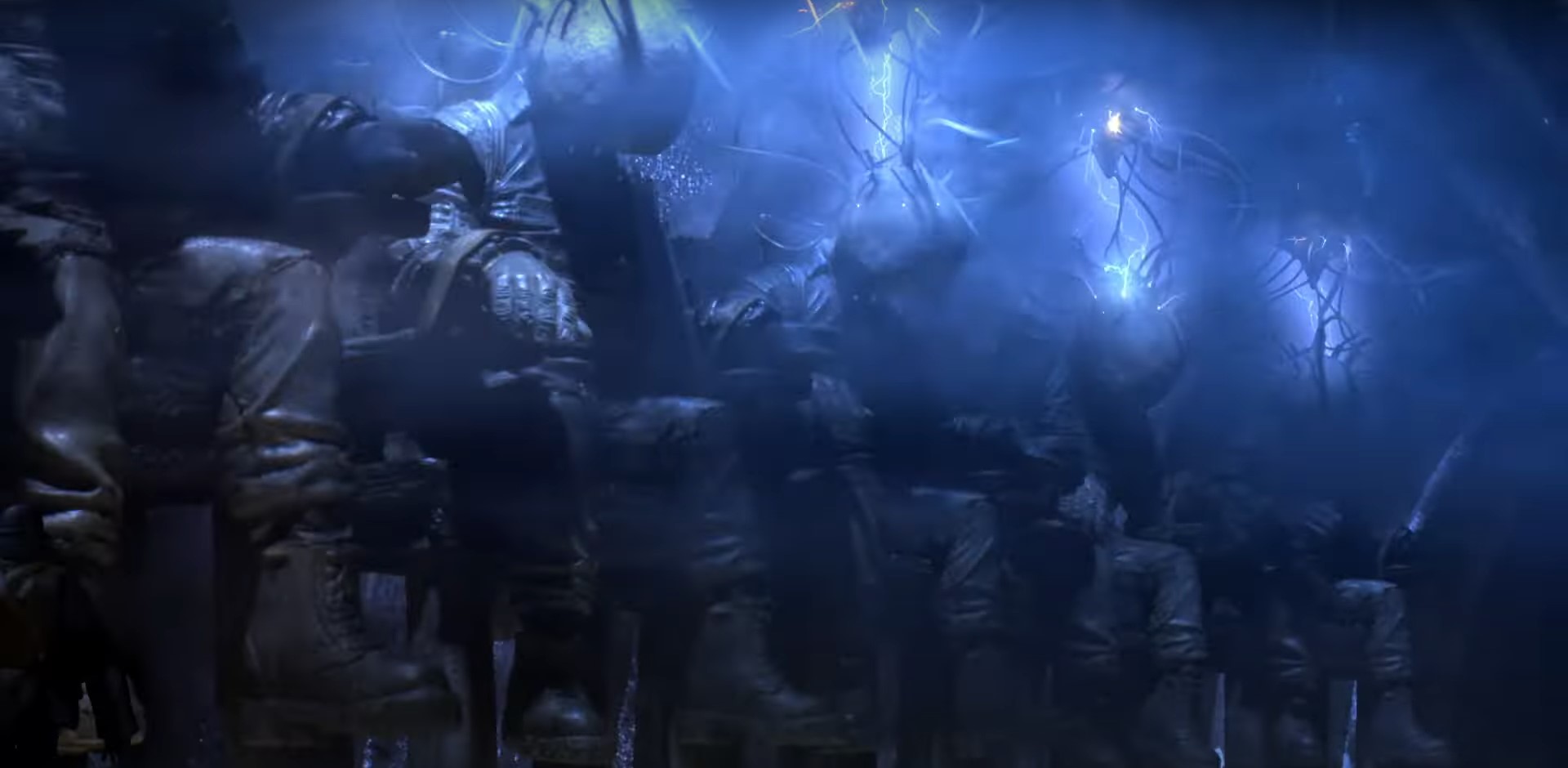
“Mad God’s” possibilities and interpretations are endless. Phil Tippett pulls from a motley of inspiration that includes, but is not limited to the fantastical, sometimes hellish, paintings of Hieronymus Bosch, the wacky, often gonzo animation of Tex Avery, the stop-motion titans of Nathan Juran’s “The 7 Voyages of Sinbad, and Dante’s Inferno. The mind is a deranged and wonderful creator of the macabre and of the aberrant and as a receiving device, the mind can also, if opened up enough, accept such visceral visuals of bowel fluids being jettisoned out by electric shock and into the mouth of an organic machine that manufactures fibrous, lumbering humanoids for slave labor. Like lemmings in a way, these exploited shadows of human beings will succumb under their own demise or at the gnarled and unforgiving hands of their master’s gargoyleish work-whippers. “Mad God’s” eye for detail is greatly disturbing to see cities in monolithic cities and cultures in ruins, the composite depth between foreground and background action in one scene reminds me a lot of older works like “The Neverending Story” or “Clash of the Titans” that create a vast scale with smaller objects, and the playful irony of a nightmare netherworld being commanded over by a baby’s babble doesn’t nearly seem to a stretch from the truth. As the multiple Assassins trek through the chaos and the insanity, an overwhelming sense of life is meaningless scores the landscape as there isn’t an ounce of compassion or empathy to be had or displayed for any of the malformed creatures and wretched humans. A laborer is crushed by a stone – no biggie. A cute and cuddle animal is attacked and whisked away for food storage – all in the day of cruelty. A man is stripped of his armored gear, injected with a mysterious substance, and prepped for exploratory surgery – all for show in front of a live clapping and cheering audience. The only compassion I can make sense is the Assassin’s mission to blow up this God-forsaken world of eternal suffering to restart the heart. Madness grinds bones, fillets spirits, and crushes souls in Phil Tippet’s Godless underworld and can haunt you even while you’re awake.

A surreal stop-motion wonder and excruciation, “Mad God” brings all the horrors of the subconscious mind to the surface with a high-definition, 1080p Blu-ray. The region 2, PAL encoded release from UK distributor Acorn Media International presents Tippet’s tour de force in a widescreen 1.78:1 aspect ratio and the image is purposefully varied to exhibit different strokes of craft as students would assist Tippet with contrastive topographies to carve out an apocalypse-riddled world that’s in a state of a violet retrogression. Tippet and Tippet Studio visual effects artist, Chris Morley, pivot to “Mad God’s” cinematography appearance with brooding, darker tones that illuminate and are erratically sparked with warm neon glows or brilliant voltage streaming through highly conductive bodies. Some earlier scenes from the late 80’s have natural grain from the 35mm stock and then later, more recent scenes have a cleaner, sleeker look with the digital recording. The Dolby Digital 5.1 surround sound mix has an all-embracing range, mostly with sudden and alarming blazons of guttural roars, unnerving baby babble, elongated zaps and shocks, and the indistinct yips and yaps of a mad world, that sustains on a line of being lesser than crisp, which might be contributed to the inexact capture of depth as sometimes all sounds casts like from inside the reverberations of a fishbowl. Descriptive SDH subtitles are available. Bonus features include audio commentary with Phil Tippett and “Pan’s Labyrinth’s” Guillermo del Toro, cast & crew commentary, an interview with Phil Tippett, “Mad God’s” various painter, cartoonist, animator, and psychology inspirations, the making-of “Mad God,” Maya Tippett’s Worse than the Demon – Phil Tippet’s daughter’s 12-minute thesis documentary of her father’s 34-year passion project journey, Academy of Art & “Mad God,” a behind-the-scenes montage, and a behind-the-scenes photo gallery. “Mad God” has a runtime of 84 minutes and is UK certified 18 for strong violence and gore. A motion picture diorama of Phil Tippett’s neoteric psyche, “Mad God” is wrath wrapped in heart and soul, two descriptors not topmost on the surface but are meticulously integrated into every frame of pain, suffering, and despair.