Prudish EVIL Takes on the Arcade in “Joysticks!” reviewed! (MVD Visual Rewind Collection / Blu-ray)

Get Your Herky-Jerkey Hands on “Joysticks’ on MVD Blu-ray!

Arcade manager Jefferson Bailey runs his grandfather’s business like a nonstop party lined with token-operated video game machines, stocked with a complete concession counter, and welcoming beautiful women to enjoy not only the endless entertainment of the arcade machines at all hours but also to gush over his handsome, easygoing demeanor. With an expert gamer and a newly hired dweeb helping to run the arcade, Bailey has a lot of free time to enjoy the perks of popularity until a wealthy businessman, Joseph Rutter, continues to have a hard time keeping his entitled daughter away from the arcade and Bailey which he considers both to be corrupting the town’s youth. Rutter, his two bumbling nephews, and a peevish gamer try everything in their power to shut down the arcade but Bailey, the employees, and the lucrative patronages won’t subside without a fight, even if that means settling everything on a single video game battle.

An obscure and forgotten teen sex comedy from the early 1980s, “Joysticks” is a celebration of the coin-operated video game at the height of the arcade’s heyday. Director Greydon Clark (“Satan’s Cheerleaders,” “Without Warning”) helms the Al Gomez, Mickey Epps, and Curtis Burch screenplay with ton of sex appeal, a display of 8-bit gaming graphics, and a cheesy, chunky storyline of big, bad entitlement versus the small, teen-run business of fun, sex, and videogames. The 1983 film was shot in Los Angeles and had introduced to the big screen not only a few of the more popular game titles – Pac-Man, Millipede, Pole Position, Naughty Boy, and Defender 2 – of the period but also introduced a new game with Midway’s Satan’s Hollow. “Joysticks” is a Greydon Park Production with associate producers in Curtis Burch, Daryl Kass (“Darkman”), and George Perkins (“Teen Wolf”) with also Clair Farley and Raylan D. Jensen serving as executive producers.

Headlining “Joysticks” is legendary, recognizable actor of “Walking Tall” and “The Shadow of Chikara,” Joe Don Baker, as the gruffly, arrogant suit Joseph Rutter going up against the then arcading-entrenched youth, represented primarily by actor-turned-director Scott McGinnis (“Last Gasp”) as the fun-loving arcade manager Jefferson Bailey. Baker fits into that stereotypical group of the out of touch older generation who doesn’t understand new and fascinating entertainment technology that attracts young people and, as he would understand it, these arcades are nothing more than the exterminating flame that attracts the unsuspecting moth. Bailey makes for a good fun while upholding certain convictions that doesn’t entail him being the villain of the story; those attributes fall not only into Baker’s lap but also Jonathan Gries as the eccentric gothic gang-leader King Vidiot. The “Fright Night 2” and “TerrorVision” actor, who outside the horror realm is well known for being Uncle Rico to the titular “Napolean Dynamite,” sports blue-red hair, cladded in leather, and has a hold over four equally garbed and dyed-colored women as his subjects to his peculiar behavior around the arcade. Initially Gries felt like an integrated part of the clientry until miffed by the arcade’s resident joystick and buttons master of gameplay, Dorfus (Jim Greenleaf, “Evil Speak”) in a one-on-one challenge. If “Joysticks” is a film about the joys of an arcade hall that’s precious to protect from overly concerned parents, the Dorfus character is pretty much the antithesis of that theme having once been the high school thin valedictorian now a sloppy, flatulating, and overweight gamer. Another character that doesn’t quite fit into the equation is the nerdy Eugene (Leif Green) whose character predates “Revenge of the Nerds” that released a year later but didn’t quite absorb into the fold of the only other companioning misfit in Dorfus. Where Eugene succeeds, with the help of Green’s performance, is the bumbling dumb-smart guy whose innocence instills more trouble for himself than anything else, especially with the braless women around him with Kym Malin (“Weird Science”), Kim G. Michel, Becky LeBleau (“School Spirit”), Lynda Wiesmeier (“Avenging Angel”), Morgan Lofting, and Corinne Bohrer (“Zapped!”). The supporting cast fills out with John Diehl (“Stargate”), John Voldstad (“Leprechaun”), and Logan Ramsey (“Doctor Hackenstein”).

As far as in the canon of 80’s teen sex comedies, “Joysticks” fits the bill as a nonpolitically correct cinematic lark with all the goofy and raunchy bells and whistles that come standard with these types of movies but there’s something missing from the ’83 feature that doesn’t quite put the categorical entry at the same quintessential high level as “Revenge of the Nerds,” “Private School,” or “Porky’s.” The narrative trajectory often stays in stagnant territory, or in more detailed terms a lopsidedness, instead of a back-and-forth, tit-for-tat jostling contest that hardly challenges the opposition to face dire straits. Also, too often does “Joysticks’s” jokes fall flat, perhaps the lost in flavor is due in part to the film’s 40-year-old comedic gags, that mostly reoccurs with Dorfus passing horrible gas or Eugene stumbling into an unlikely sexpot to his disadvantage. There is substance in a deeply rooted character arc with the once pro-level Jefferson Bailey unable to play his beloved coin-operated machines because of a traumatic event involving a past love of his life that results in him trembling, sweating, and getting into his own headspace but that, too, is obstructed by the warmed-over objective that generally has a loveless love-interest in a mostly male dominated principal cast, a short-fused motivation reasoning for most characters, and a rough patch polish, such as with that ear-throbbing main theme song, that tries to compensate with wacky situational and sexual archetypes which are not unpalatable to say the least but can’t keep “Joysticks” from respawning after all its lives have been used up.

Catalogued as number 58th on the MVD Rewind Collection banner, in conjunction with the Multicom Entertainment Group, “Joysticks” receives special package design that will surely please fans of older video game consoles and cartridges, but the packaging keeps with the Rewind Collection overall theme that is a testament to its label.  The AVC encoded, single-layer BD25 presents the fill in full 1080p HD and in an anamorphic widescreen aspect ratio of 1.78:1, based off a 2015 2K scan and restoration of the 25mm film elements.  This 2015 transfer is likely from the Scorpion Releasing limited number release from nearly a decade ago, licensed to MVD for broader and more easily accessible distribution.  Though an older transfer, the color saturation still pops albeit some heftier grainy frames that stumbles the overall consistency from time-to-time.  This ultimately also affects the details to an extent, especially on medium shots where the action is pulled away from the camera to get a wider view.  Closeups and extreme closeups look better with tighter detail and better contrast.  The English LPCM 2.0 mono is the only available audio track.  The lossless format provides ample volume and is a real pedigree of the original audio recording.  Dialogue has most a firm grasp on the layer design with no inaudible inadequacies but can often be anemic in more noisy settings, such as the arcade where bleeps, bloops, and other video game noises invade the audio field and dilute distinction and depth.  Legion’s “Joysticks” theme track also renders palely in his cheesy metaphorical lyrics that mix sex with video game playing, even if as appropriate as it may be to the context.  English subtitles are available for selection.  Special features include an archival feature length commentary and interview with director Greydon Clark but also has a brand-new roundtable commentary with MVD’s director of acquisition Eric D. Wilkinson, Cereal at Midnight host Heath Holland, and Diabolik DVD’s Jesse Nelson.  There’s a short film “Coin Slots” which is a faux “Joysticks” trailer that costars Eric D. Wilkinson and directed by Youtuber and producer Newt Wallen.  MVD’s physical presence of “Joysticks” is where the fun is at with an Atari themed orange slipcover with boxed in picture of sex-comedy appeal poster art, a more slimdown version design that’s more attuned to the MVD Rewind Collection look for the cover art in the clear Blu-ray Amaray case, and a Blu-ray disc pressed with the coloring and markings of an Atari game cartridge.  A more complete version of the cartridge look is on the reverse side of the reverse cover art, preferably for this reviewer to mix up the designs between slipcover and cover art.  A folded, back-and-front illustrated mini-poster of both cover arts is housed in the inside the case insert.  The region free release has a runtime of 88 minutes and is rated R. 

Last Rites: The packaging alone is worth the cost of this inexplicably obscure and quaintly waxen teen sex-comedy that now breathes new life on a more accessible high-definition Blu-ray release from MVD Visual!

Get Your Herky-Jerkey Hands on “Joysticks’ on MVD Blu-ray!

Press Start to Play EVIL. “First Person Shooter” reviewed!


A nasty viral plague eats and decays victims from the inside out, blood oozes from every poor in the skin and boils fester, and can be transmitted through the saliva and blood. The hot zone spreads fast among the nation’s crumbling society, but one isolated clinic, the also epicenter of the disease, experiments with a cure, testing the trials on the infected. Young, wife Linda, a nurse at the clinic, goes suddenly missing and her husband gears up to search for her at the clinic to only find out that his wife has fell into the grasps of a maniacal scientist exploiting the cure as a baleful booster to create the already plagued-ridden with another side effect – extreme violence. The playing level turns increasingly difficult with maximum carnage when finding himself trapped deep inside the callous clinic straight from hell and must use any melee weapon to his advantage in each ghastly stage if he wants to save his wife from the deranged creatures and the complete governmental noxious gas eradication of the disease in the next 24 hours.

For those of us who’ve fired up a DELL computer with Radeon gaming hardware installed, sat large noise-reduction earphones over our ears, and ran a CD-ROM through the disc drive to start up a MS-DOS video game, a bit of nostalgia will revert the senses back to a more primordial time of a young gaming culture and evoke the obsessive behaviors of our adolescent selves. A game that will inherently put you into the player’s shoes with a weapon at hand and many antagonists to cut down at the whim of a mouse click as the priding first person shooter. That’s what one German filmmaker, Andreas Luetzelschwab, who goes by the credit Andreas Tom, titled his script now film project, “FPS: First Person Shooter,” that harks back to the good, yet not so old days of 8-bit blood, command cheat codes, and with a hero bestowing a snarky, snide tongue. The 2014 action-horror recalls the disk operating system gaming graphics of the early 1990s that’s been long lost and seemingly forever forgotten for nearly 20 years.

Now, since Andreas Tom’s “First Person Shooter” puts the viewer in place as the player, a BDSM gimp dressed hero ready to face the mutated virus head on. No real character takes the stage with only the voice of the iconic voice actor, Stephan Weyte, resurrecting his distinctive and black vocal quips for the player hammering away at the ghoulish zombies. Weyte’s a famous name in the world of first person shooter games being the voice of the antihero Caleb in the excessively violent and demonic “Blood” and “Blood II: The Chosen” horror inspired FPS PC games from the late 90s. Weyte’s deep, sometimes raspy, tone suits the film’s temperament much the same of those gloriously carnage cult classic PC games and he’s essentially doing all the dialogue for the film, with the exception of some in and out characters. The genetic makeup of the remaining cast are relatives of Andreas Tom, including co-producer Atlanta Lützelschwab as the attic’s nurse zombie complete with barbed wire around the eyes, Hans Lützelschwab as a boss-level surgeon zombie, and assistant director Achim Lützelschwab as the cook who whips vats of stew made of human chunks. Obviously, these are German actors being voiced with an overlay language from English speaking actors, such as Stephen Weyte, and so other vocal and action performances come from Tobias Winkler as a tall clown zombie, Sebastian Kettner, Ines Klein, Rick Whelan, Rob Banks, Jürgen Sütterlin, and Sascha Strack.

This past August, another first person shooter was reviewed, Giulio De Santi’s “Hotel Inferno,” which delivered an energetic and chaotic run amuck bloodbath that really sold the experience of playing a FPS and though “First Person Shooter” was released after, the film still provides the same kind of gun-toting, ass-kicking euphoria while on a smaller scale and focusing more on making that connection to the audience that you’re the gamer playing the game. For example, the movie begins with the DOS game’s screen of a static menu and once all your difficult settings are set and in place and the press start button is pressed, a virtual newscaster delivers the backstory of the viral outbreak and dons a principal figure, in the form of a 8-bit man, going to the clinic to search for his missing wife. The, the video game seamlessly transitions into live action, but the attributes of the game are still abound with a life bar, the gaining of objects, autosave, and disappearing bodies (that are a symptom of the virus). At the surface level comparison of “First Person Shooter” and “Hotel Inferno,” both films are akin to characterization, but differ in executions with “Hotel Inferno” just outright more violent without referring to itself outside the context of just another movie whereas the focus here is centered on video game idiosyncrasies inside that very context. The patients in developing scenes out of the virtual combat simulation ethos exhibits remarkable talent to fathom-to-fruition all the nuances like weapon caching, ominous camera angles and interpersonal communications to push the story along menacingly, and splicing the recording of level playing video with the composition of a pair of gesturing and weaponized hands to simulate that type of game play. For a loyal gamer, “First Person Shooter” bares the berserk survival horror instincts while for the loyal cinema goer, the ostentatious design is unique and graphic, even for the casual horror fan.

For the first time on US DVD home video, “First Person Shooter” is distributed by Wild Eye under the Raw & Extreme banner, the same as “Hotel Inferno,” with a widescreen, 16:9 aspect ratio, presentation that’s clean and composed of a double recording, along with an 8-bit Wolfenstein or Doom gameplay edited in for some extracurricular slaughter activity. The colors reduced some, I’d say by 20-30%, to exact a bit of bleakness atmospherics and some details are smoothed over due exact a true video game effect, like in muzzle flashes. The English language stereo dialogue track is an obvious dub on the German made film and another good dead giveaway is that all actors have their mouths covered by surgical masks, gas masks, hockey masks, etc., but Stephen Weyte’s crystal clear derogatory comments show no sign of being muddled. The ambient track’s a little soft at times, especially with the gatling gun, that should be ripping bullets and fling casings with puncturing hundreds of holes into zombie girth. Bonus features include behind-the-scenes outtakes, a walkthrough examination of the set, composing the looming score, and trailers. Wild Eye’s illustrated DVD front cover also pays homage to Duke Nukem with a tall standing and beefy dark hero blasting holes through zombies at his feet. “First Person Shooter” markets goods sold as advertised of intense game play without the need for a single controller and without omitting one single ounce of blood to shed in this mercurial fascination of when gory cinema magic meets gory computer gaming.

Come Get Some!!! Available on DVD today!

EVIL Wants to Feed Off Your Pain & Suffering in “Hotel Inferno” Reviewed!


Gulf War decorated soldier Frank Zimosa uses his particular set of skills as a professional contracted hitman. Frank’s current assign takes him oversees to a luxurious hotel to eliminate a couple of marks, a man and a woman, who are itemized as atrocious serial killers who’ve murdered over 150 people and Frank’s employer seeks to provide the same gruesome retribution in a certain kind of way – remove the brain the skull and the guts from the body. The relatively simple task for Frank turns into a fight for his life and his very soul as he finds himself trapped inside the hotel, owned by a secret organization swarming with putrefying acolytes of an ancient, fire breathing demon known as The Plague Spreader. Frank was ordered to kill to satisfy her pain and suffering hunger pangs, but his tenacious refusal awakens the demon who now hunts him, craving his pain, his suffering, his eternal soul for her own sated gratification and disrupts the organization’s creed to keep her dormant for the sake of humanity.

More, more, more! My internal fireworks outpouring and wanting more from a fire and brimstone gore forged finale from the action-packed first person view feature length horror film, “Hotel Inferno,” could not quell the embodied explosiveness wanting more from writer-director Giulio De Santi! Hailing from Italy, “Hotel Inferno” pulls little-to-no punches when dishing out uber-violence and non-stop carnage that invigorates the sensory and corporeal experience in the first installment of what’s called the Epic Splatter Saga that will total over six films. Two have already been produced with the third in production! De Santi, who is no stranger to the fervid gore film, teams his visual effects knowledge with long time, special effects collaborator, David Borg Lopez (“The Mildew from Plant Xonader”), and makes something shockingly beautiful that’s only been wrongfully teased in predecessors.

What’s also unique about “Hotel Inferno,” other than its first person perspective, is nearly the entire dialogue is layered with a voice over track. Unique as well as cleverly cool, we’ll touch on why later, faces with distinctive dialogue pinpoint main characters, but their faces are either shrouded by some sort of horror-esque mask, turned away toward another direction, or fed through a communication conduit, such as a portable television-radio device. Same goes with lead character Frank Zimosa whose vision never goes eye line with a mirror, never gaining a glimpse see his frantic mug, though Zimosa sounds like a chisel chin, hard-nose, angry-looking ass kicker, especially when voiced vehemently by Rayner Bourton. Playing the arch nemesis that’s quickly established and continuously prominent through duration is not the all-powerful Plague Spreader, but, in fact, the faceless Jorge Mistrandia. Donning the voice is English born actor Micahel Howe (“Solo”) who has one of the more sinister intonations amongst the few; an attribute that can be cool, calm, and inviting and can suddenly transform into a treacherous, malevolent, and vile performance that amplifies the intensity tenfold. Bourton and Howe are essentially the sole two main characters inside a melee of supernatural goons and goblins, amongst them in the cast is the introduction of Jessica Carroll who went on to do more voice work in video games and actors from De Santi’s inner film circle with Christian Riva and Wilmar Zimosa, who without a doubt was the moniker inspiration for Frank.

What sets “Hotel Inferno” apart from other splatter films? The first person shooter style, or FPS, video game structure is it! In literally the first of it’s cinematic kind, “Hotel Inferno” looks, sounds, and feels like a FPS from start to finish, a blended progeny from the ultra-violent horror survival games like DOOM or BLOOD; honestly, everything about De Santi’s film feels like a BLOOD rendition minus the shirtless, axe-wielding zombies and the robe hooded, tommy gun shooting cultists, though the rotting henchmen due speak in a high pitch dialect. Think about it. In BLOOD, a game built on a foundation of iconic horror, the anti-hero, Caleb, is a gunslinger against a unholy cult he once was a part of and then becomes his opposition. Same goes with “Hotel Inferno’s” own anti-hero Frank Zimosa, a hitman hired by an organization who then deceives him for nefarious reasons and then Frank has to blast his way out to save his soul. The story goes right for the throat, throwing Frank almost immediately into peril, and from room to room, layout to layout, the anti-hero has to slice through henchmen and ghastly demons in a very HOUSE OF THE DEAD kind of face-off, weaponizing everything against foes with armaments in the anterior of a cultish backdrop. Super. Fucking. Cool.

MVDVisual distributes Giulio De Santi’s “Hotel Inferno” onto DVD from the Wild Eye Releasing’s Raw and Extreme label. Presented in a widescreen, 16:9 aspect ratio, the Necrostorm produced “Hotel Inferno” engages the viewer into battle, but also invokes slight vertigo and turbid at times, especially the cave-like dungeon that’s almost absolute pitch-black. Again, atmospheric video games are much of the same regard for instant jump-scares and De Santi pulls that off here by not illuminating much of the scenes. The English language Dolby Digital 2.0 stereo audio track is in an opposing stratum to how the film plays out; doesn’t quite sync with the action as the audio track is an obvious track laid on top to emphasis how much “Hotel Inferno” is like a FPS storyline. There’s an array of depth and range from each tier Frank has to painfully endure and willfully live through. English and Italian subtitles are available. Bonus material includes a secret bonus film entitled “Hallucinations,” a rough cut SOV, direct-to-video supernatural gore feature from twin brothers John Polonia (“Feeders”) and Mark Polonia (“Sharkenstein”) and Todd Michael Smith (“Splatter Farm”). Giulio De Santi’s “Hotel Inferno” is only part one of the highly anticipated Epic Splatter Saga, with part 2 and 3 very high on my to-do list The blood splatter is in a doom of mayhem, will quench gore hounds from any walks of life, and reap the collective FPS gamer from their stationary consoles and blow their mind with the most seriously berserk action-horror of this decade. Crudux cruo!

Purchase Wild Eye Releasing’s “Hotel Inferno” today!

Evil Review: Little Nightmares

littlenightmares

Developer: Trasier Studios

Publisher: Bandai Namco Entertainment

Platforms: Xbox One, Playstation 4, PC

Imagine taking Tim Burton and the video game Limbo and just mashing them together. You got yourself a little gem called ”Little Nightmares”. I remember back in 2014 seeing gameplay videos of ”Little Nightmares” and never heard anything after that. The project was originally called ”Hunger” and it was quiet for few years until late 2016, when Bandai Namco announced they were the publishers. After following the game a little bit more I started to get really interested in it. So interested that I even bought the collectors edition on the day it came out. After finishing my first playthrough, I’d like to go into how this little horror game became one of my favorite games of the year.

Little Nightmares_20170428232958

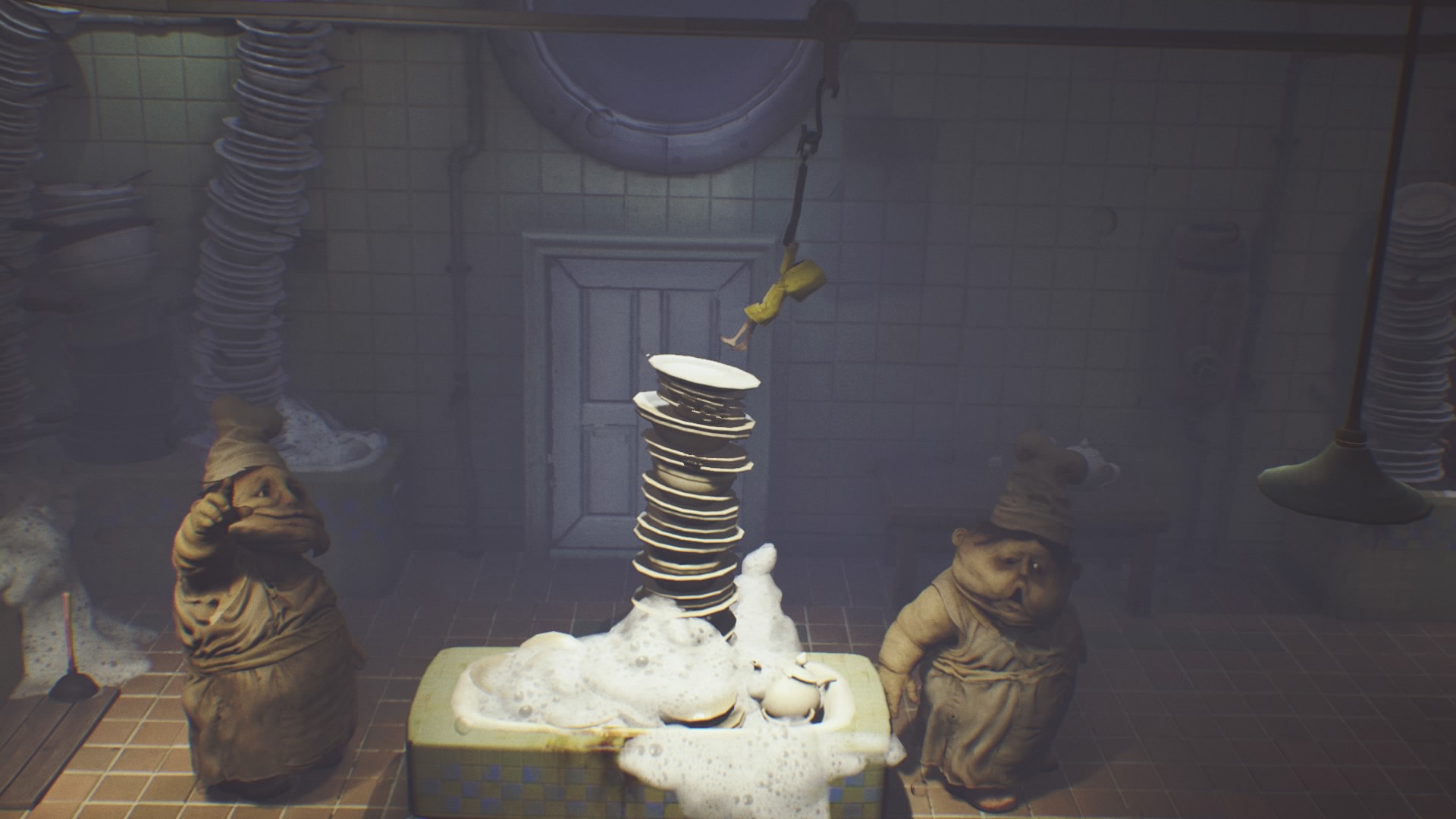
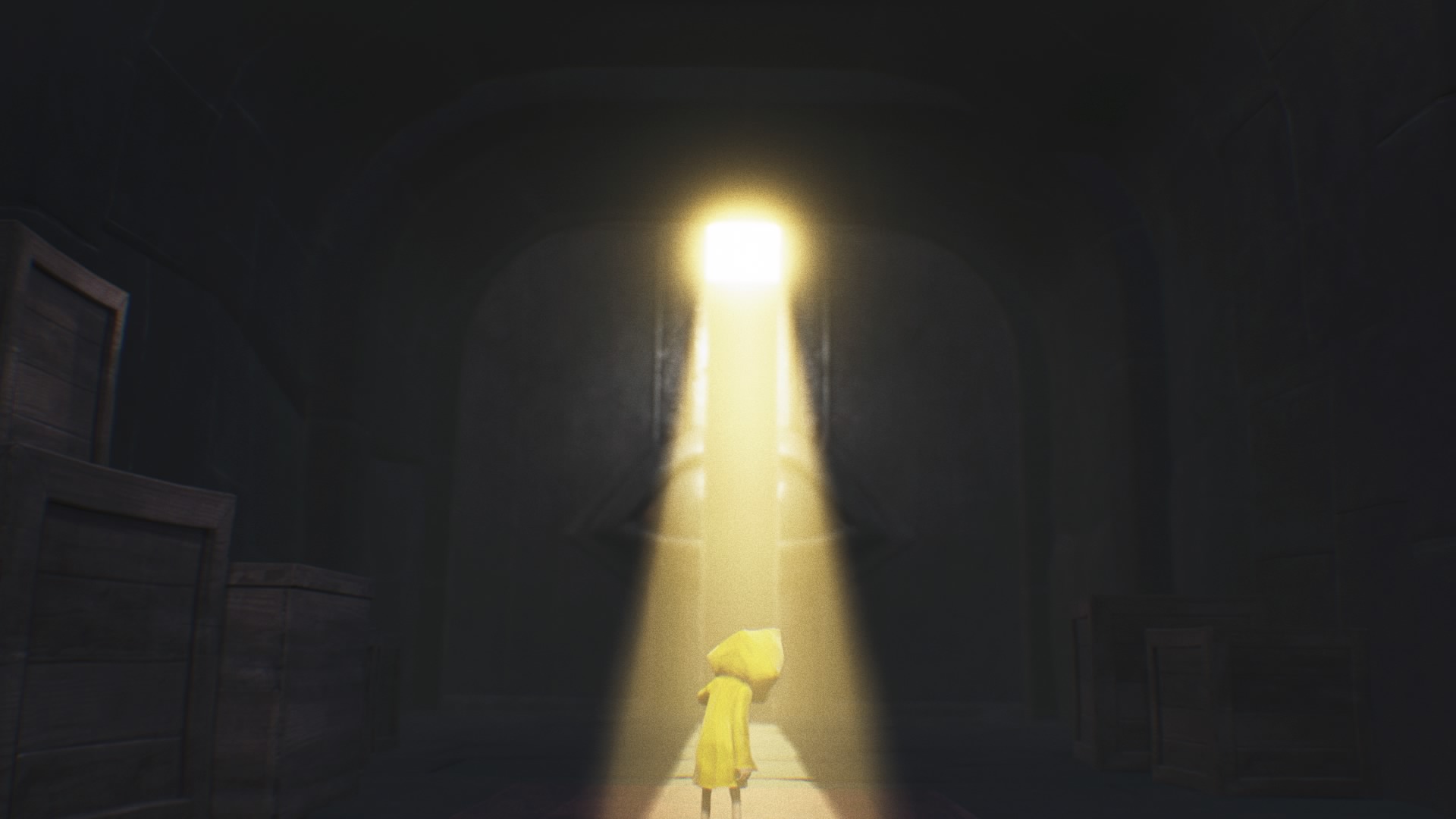
In ”Little Nightmares” you play as a nine-year-old girl named Six, who must journey through a dark and mysterious prison known as the ”Maw”. Armed with just a lighter, Six will have to solve puzzles and use her wits to avoid traps and monsters during her escape.

The one thing that I’m sure caught peoples eyes, especially mine is the games visuals. The level backgrounds and character designs are dark and gloomy and look amazing. The entire game looks like it came straight out of a Tim Burton stop-motion movie. The games soundtrack mixed with the graphics makes this one of the most atmospheric games that I have ever played. Hell even if all the puzzle solving and platforming was removed I still would’ve enjoyed it. Just walking through each level admiring the scenery.

Little Nightmares_20170503214013

like most horror games today. Most of the gameplay is you hiding and running from enemies. Each level has specific enemies that you will have to hide, run, or sneak past in order to beat the level. Other than that there is also puzzle solving and platforming. I kind of wish there were harder puzzles, pretty much every puzzle you’re faced with is incredibly easy and you can get through the game pretty fast if you just blow through all of them. The game isn’t long at all, on your first playthrough it’ll take you an easy 2 hours, but when you play again and just speed through it, I’m sure you can finish it within an hour or even less.

Now of course not every game is perfect and unfortunately ”Little Nightmares” suffers from a slightly annoying flaw. The controls are a bit finicky and some times they’re not all that responsive. Several times I will be walking over pipes or bridges and Six will just randomly fall off or I’ll try to pick up a key item and Six will just stand there. If you play on PC the controls will be pretty annoying and I highly recommend using a gamepad, since that’s what the game seems to be optimized for. But again this was a slight inconvenience and in no way ruined the game for me.

Little Nightmares_20170503225218

”Little Nightmares” is a fantastic game and I am so happy I decided to buy it day one. I enjoyed it from beginning to end. Along with ”Resident Evil 7”, ”Little Nightmares” is going to be right up there with being one of my favorite horror games off all time. It offers an experience that is unique and different from other games and that it should be cherished for it. If you have $20 to spend then I highly recommend you buy this game, it is a must own. I hope in the future, Trasier Studios comes out with a sequel or at least a spiritual successor.

My final score for ”Little Nightmares” is a 9/10


Welcome to the Family. Resident Evil 7: Biohazard Review

I want you all to try to go back to 1996. You just got your Playstation and you picked up the newest game called Resident Evil. You know nothing about it and when you start playing you have a wave of emotions hit you. You feel fear, excitement, and anxiety; but yet you keep playing. You were just introduced to the world of Survival Horror. Now it’s 2017 and we are now into seventh main installment of the Resident Evil franchise and sort of a moment of truth for Capcom. Last few years have been rough for Resident Evil so lets see how the latest installment stands.

Resident Evil 7: Biohazard is a survival horror video game developed and published by Capcom. It is the seventh main installment in the Resident Evil series and was released on the Playstation 4, Xbox One, and PC.

2017-02-07_1456

The game takes place in the fictional town of Dulvey, Louisiana. You play as Ethan Winters who goes searching for his wife 3 years after her disappearance. The only information you have of her location is at the Baker estate, this is where your nightmare begins.

There is no denying that the RE engine is amazing. Resident Evil 7 passes with flying colors when it comes to visuals, the game is absolutely gorgeous. Realistic graphics with so much attention to detail really makes the atmosphere. Paired up with its excellent sound design which really puts you on edge, hearing random foot steps and loud bangs some where in the house can quickly make you stop what you’re doing and check behind you. Unlike older Resident Evil games, there really isn’t much background music. The only time i’ll hear music is either in the save rooms or during cut scenes, which is fine. No music really does build the tension and makes you listen to your environment.

2017-02-07_1455

The most controversial aspect of the game is its change to game play. Resident Evil 7 now puts the player in first person view, which this isn’t the first time they’ve experimented with this. Resident Evil: Survivor being the first one that was in first person, so I was quite interested when they said they were trying it again. As a big Resident Evil fan I can tell the skeptical fans that the first person view works. Resident Evil now feels even more immersive with it. The game still has its slow and sluggish movement, puzzle solving, save rooms , and combat just like the previous titles and the first person view fits perfectly. I haven’t played the game in VR because I’m broke but I have heard that game is even better with it, so now I guess I’ll have start saving up for one.

2017-02-07_1506

I feel I have to talk more about combat since I still see people complain how the game is like other non combat horror games, like Amnesia or Outlast. The combat feels just like an older Resident Evil, except Resident Evil 5 and 6. Thank god Capcom abandon the combat from the previous two and went right back to how Resident Evil 1 through 3 combat worked. Ammo and healing items are extremely scarce and you must manage your inventory to survive in certain situations. Enemies will move unpredictably and you must control your shots and keep your distance if you want to take down your foe. When it comes to difficulty, the game on normal is pretty easy, some parts can be a little challenging but if you’re careful and know where to go, then the game is a breeze.

Now Resident Evil 7 isn’t a long game. It took me about 7 to 8 hours to beat on normal difficulty my first time. It can easily be finished faster when you know where to go and what to do, There have been people who finished it in under 2 hours. But if you’re like me and like to explore then it will take you a while to finish. The story is where this game made me fall in love with it. This is by far my favorite Resident Evil story. The team they have behind this game is solid, the director behind the Revelation games is directing it and the writer behind the F.E.A.R 2 expansions made this a memorable experience and I hope Capcom keeps this team for future installments. Everything about the story is great, every character was interesting, and every location was awesome. The story to Resident Evil 7 is definitely more competent compared to the previous games.

As much as I love Resident Evil 7, I do have some minor gripes with the game. First one isn’t a big deal but I was a bit disappointed. Resident Evil has a tradition, when a player presses start on the main menu, they will hear a loud, deep voice reading the title of the game. Example:

Like I said this isn’t a big deal or a turn off for me but I was a bit bummed they broke tradition. Another gripe I had was the lack of variety with enemies. Before you always fought zombies, mutant dogs, and big hulking monsters. But now the only enemy you fight besides the Baker family are the ”Molded” which look very similar to Resident Evil 4 ”Regeneradors”. Yes these enemies are creepy and hard to take down but after a while you just get tired of fighting them and want something else. Hopefully in Resident Evil 8 we get a bigger cast of monsters.

2017-02-07_1507

In conclusion, Resident Evil 7: Biohazard is a great game. I’m so happy that Capcom put the brakes on the franchise and went back to how it originally was. Unlike other companies that have completely abandon their horror franchises. I’m glad that I stuck with Capcom all these years and going through many disappointments to finally see my favorite horror series come back on top. Resident Evil veterans would love this and for new people I highly recommend it. It is a great starting point for newcomers to get invested into world of survival horror.

My final score for Resident Evil 7: Biohazard is a 9/10