Rage EVIL Leads to A Legion of Drone Dwarfs! “The Brood” reviewed! (Second Sight / 4K UHD)

“The Brood” Available Now from Second Sight!

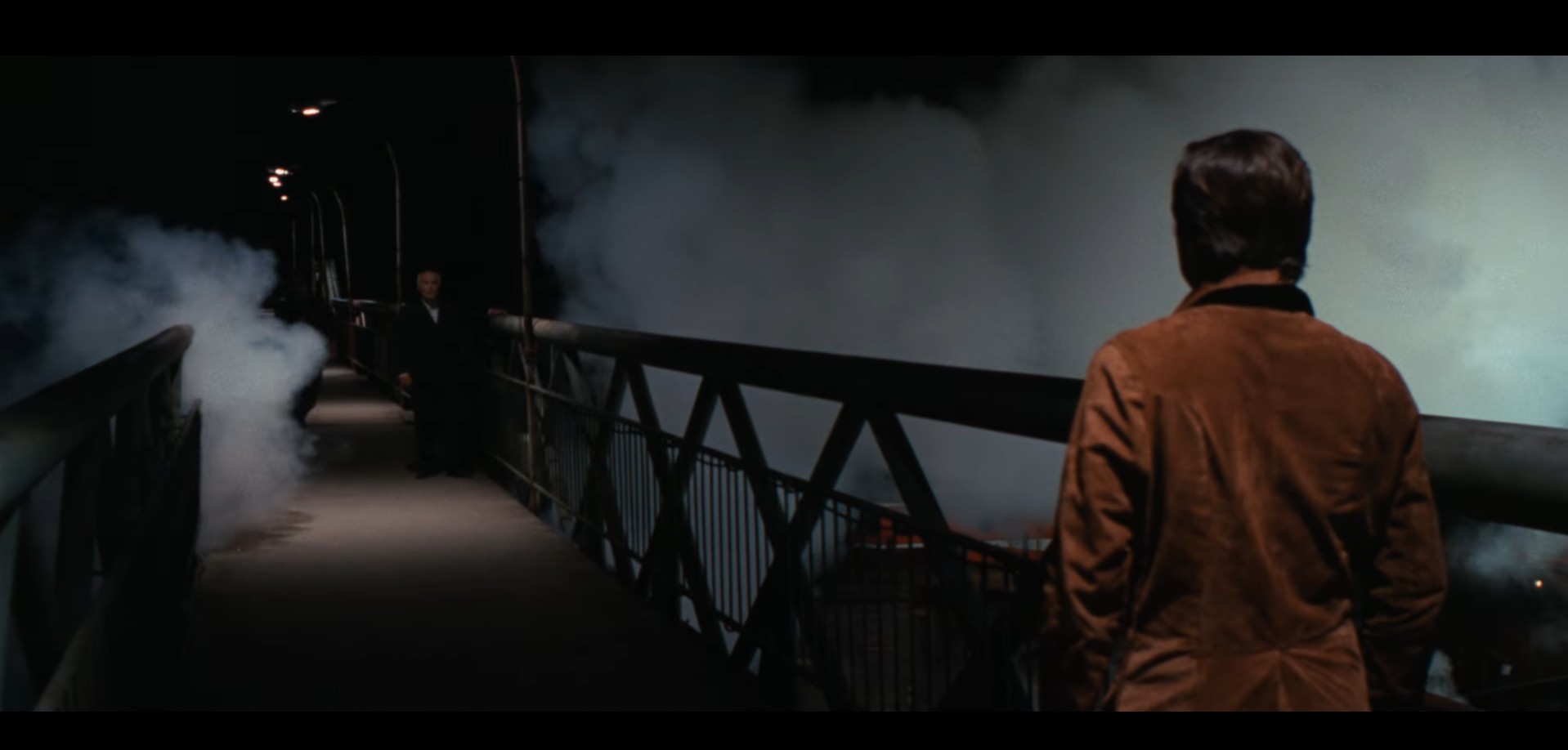
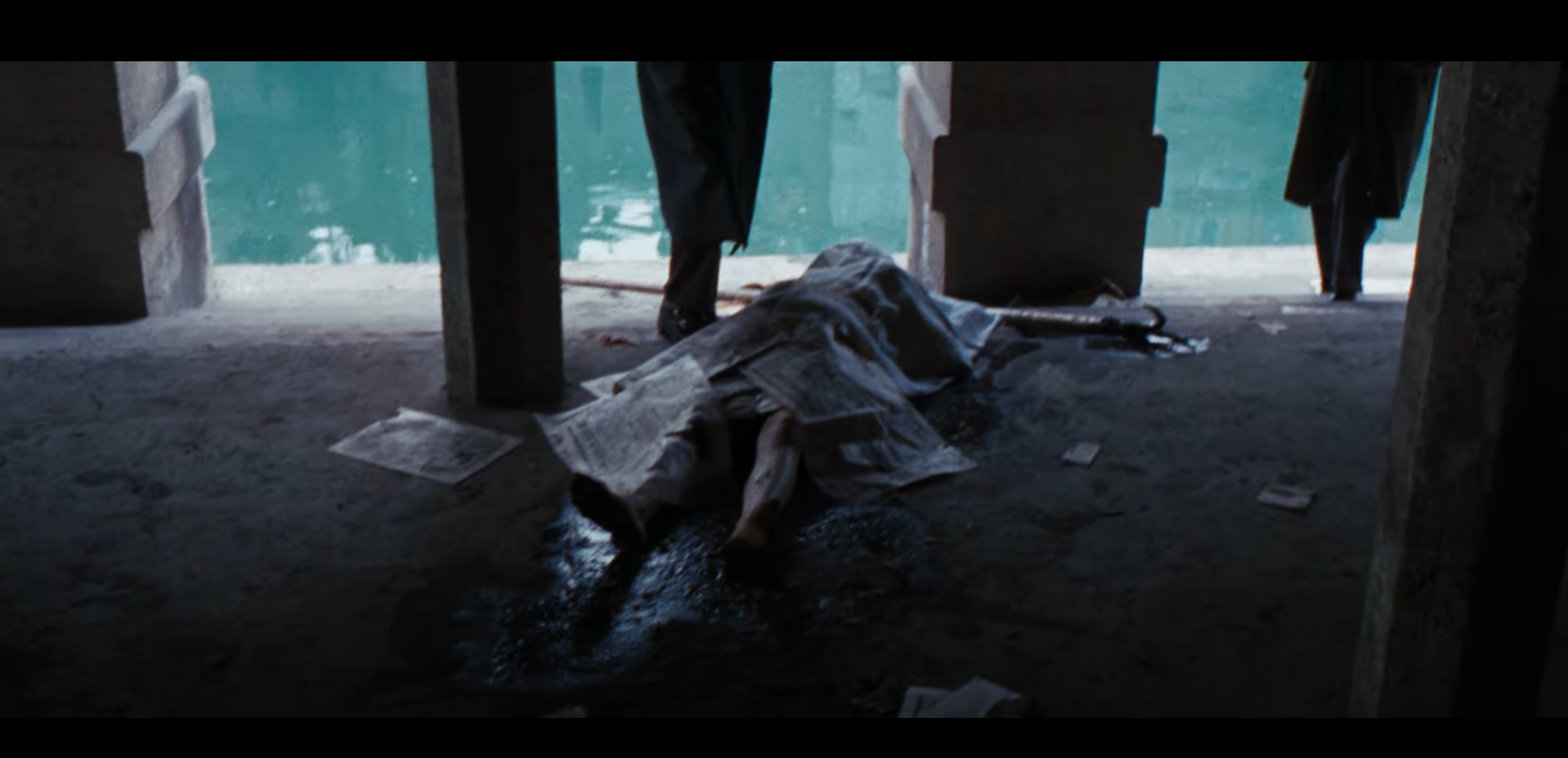
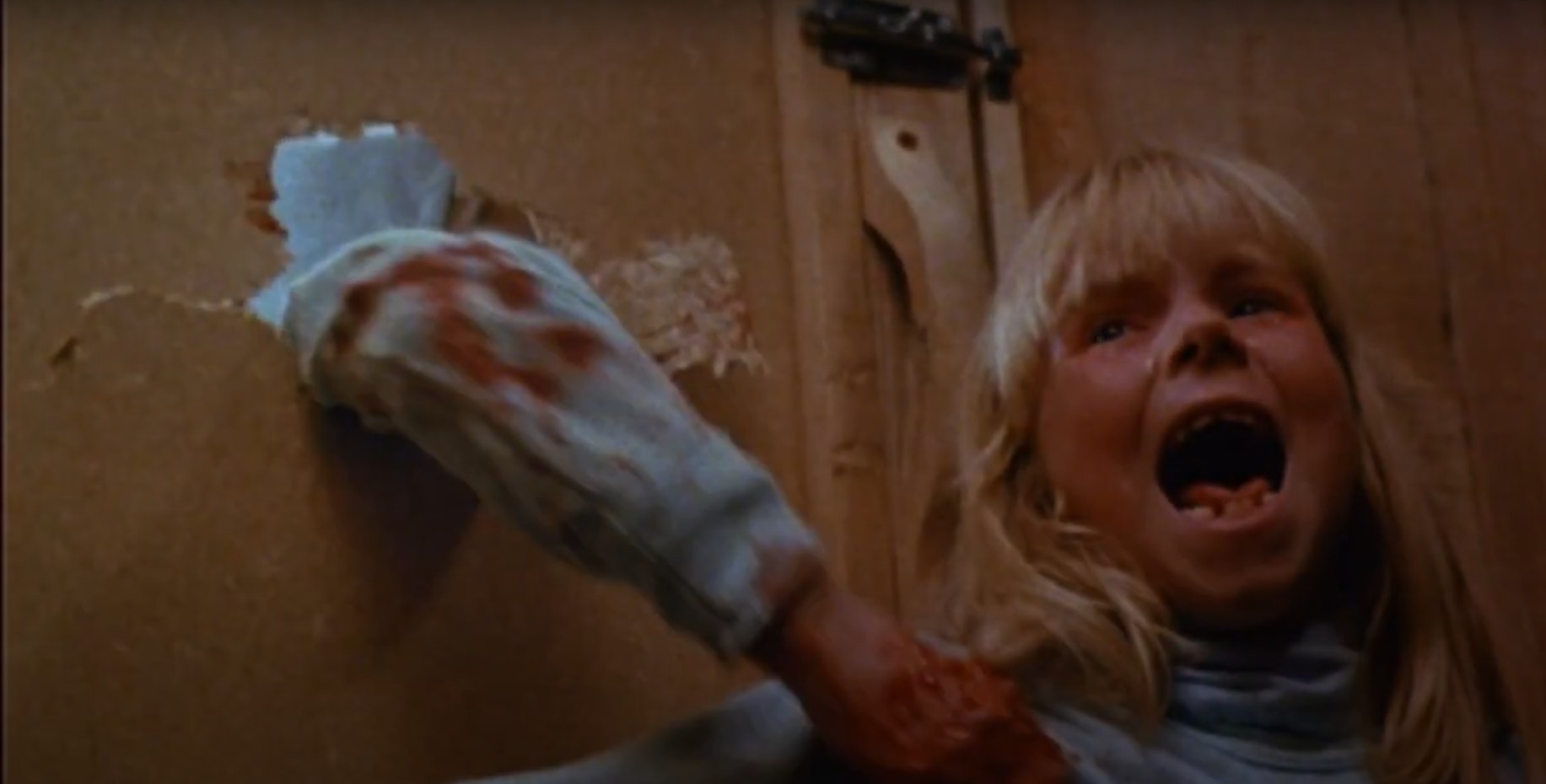
After a series of mentally abusive behavior, Frank Carveth’s wife Nola resides under the unorthodox psychology of Dr. Hal Raglan whose controversial impersonation techniques to break down his patients’ dissociative psychological hangups and destructive blocks.  After months of therapy and witnessing Dr. Raglan’s methods in action, Frank is ready to pull the plug on the doctor’s sideshow sessions he deems are doing more harm than good when his daughter shows signs of physical abuse after a visit with her mother.  The prolonged verbal bout to get his wife out of Raglan’s care leads to Frank confiding in Nola’s mother who is found brutally murdered soon after.  When Nola’s estranged father comes into town to oversee the burial arrangements, he’s also brutally murdered.  Frank begins to connect pieces, theorizing that Dr. Raglan’s procedures and the murders may be linked and as he investigates further, the truth is more terrifying than he could ever imagine. 

Surging with emotional turmoil through a bitter divorce with ex-wife Margaret Hindson, Canadian body-horror director David Cronenberg pulled the rancorous inspiration from that turbulent time to write the originial screenplay for “The Brood,” a 1979 released thriller between an estranged couple, the effect of their ascending troubles upon their only child during the separation, and the sort of radical and systematic behaviors and practices used to reform a relationship bond that actually divides the emotional expanse even further.  Sprinkle a little of the unknown and grotesque abilities of unnatural corporeal world in there and you have yourself one hell of a dysfunctional and undomesticated horror only the unconventional David Cronenberg could conjure.  “The Brood” is produced by Claude Héroux, who would go on to produce Cronenberg’s next series of films, “Scanners” and “Videodrome,” and the Ontario filmed production is a studio venture from the CFDC (Canadian Film Development Corporation), Elgin International Films, and Mutual Productions.

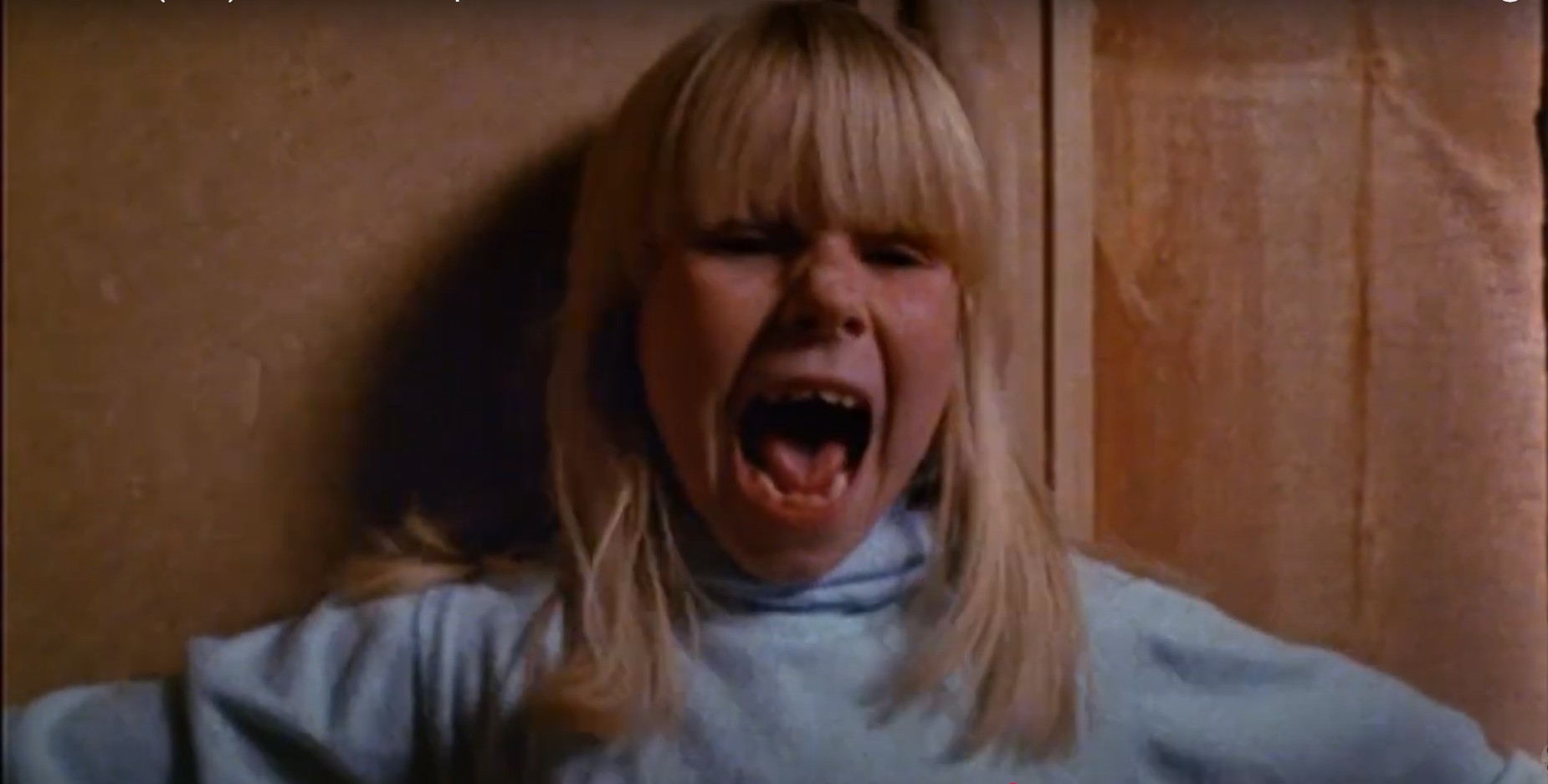
Art Hindle is in the role of Frank Carveth, a father initially skeptical and frustrated with his wife’s supervised treatment and care.  The “Black Christmas” and “Invasion of the Body Snatchers” actor Hindle plays the role of a hinged investigative husband-parent involved into something far more unbelievable than initially imagined.  Next to his on screen dazed and mentally tarnished wife by Samantha Eggar, of “The Exterminator” and “Demonoid,” Hindle enacts normal responses that carry over into extreme situations when those around him – his mother-in-law (Nuala Fitzgerald, “Obsession”), his father-in-law (Henry Beckman, “Side Roads”), and his daughter’s teacher (Susan Hogan, “Phobia”) who might have had a little something-something with while on the rocks with the misses – dies a violent death at the hands of kid-sized mutants that resemble, partially, his own daughter Candace (Cindy Hinds, “The Dead Zone”).  As Nola Carveth, Eggars is only present in a few scenes alongside Dr. Raglan, played by the formidable British actor Oliver Reed (“Paranoiac,” “Gladiator”), as a staring into space, emotionally compromised woman struggling to cope with her past that makes her angry and upset and, in turn, makes her inexplicably conjure do-bidders in the birthing means of advanced evolution or in a parallelism to eusocial insects, like bees or ants.  Reed is the monkey in the middle of all of this between fending off Frank Carveth who challenges the results of his unorthodox psychological methods while also using those methods to unearth the root cause of Nola Carveth’s strange and unusual behavior and, eventual, psychic abilities.  Reeds delivers his typical stoic indifference which makes him ideal for a confident character of the scientific community eager for results rather than feeding his motivations with emotional fodder by empathizing with Carveth’s concerns.  Gary McKeehan (“Rabid”) and Robert A. Silverman (“Naked Lunch”) costar.

In his 50-year plus career, David Cronenberg has evolved in style, substance, and story that dip into more of alternate universes and deliver new ways to blend the future into an organic composite with commercial and social sub context.  While technology and personal and professional growth have developed the director into what he has accomplished and known for today, especially on the verge of his latest release with the living and dead connection theme in “The Shrouds,”  the core of what David Cronenberg does best and still does today has an etiology leading back to his earlier work and “The Brood” is definitely an archetype of his niche.  Cronenberg works the narrative up to his reveal of body horror, and “The Brood” is dangerously on the edge of being atypical, subjecting audiences to more of a buildup in the story and the delimitation of character  disclosure without a steady course of the maladjusted, mutated or modified human body as the villain or the escape, only for that theme to be quasi hinted and then unveiled at the end in a shocking reveal.  “The Brood” plays more of the slasher tones, using the children, dwarfs, or however you want to describe the little, mutant minions to be unknown villain tropes, even when one is laid up on a morgue slab for examination of its biology, or lack thereof.  Cronenberg’s directed ambiguity tees up one of the best endings of his career and, perhaps, even horror cinema as “The Brood” is queen sized stomach-churner, literally.

David Cronenberg’s “The Brood” arrives in 4K on a Ultra HD Blu-ray from UK boutique label Second Sight Films.  The BD100 is HEVC encoded with a 4K resolution or a pixel count of 2160 with Dolby Vision HDR10 and presented in a widescreen 1.85:1 aspect ratio.  On the back cover, the 4K restoration is approved by David Cronenberg.  There’s definitively a more positive treatment of the restored transfer that brightens with a slightly tweaked color grading compared to other DVD or Blu-ray releases, improving delineation as well as rectifying intended details to burst through what’s been long frustrating by a darkened wall of low-resolution definition.  Retaining and sustaining cinema coarse grain, the picture looks and feels incredibly natural without the presence of compromising touchups and smoothing overs that do more harm than good in the plastic-like approach to restoration.  The UHD reinforces the coloring with vibrant richness and range, boosting the once little Canadian film that could into an expensive-appearing optical overhaul that puts to shame previously shelved videos.  Audio fidelity is too retained with a LPCM 1.0 mono that although funnels through a single output is more than an adequate mix all in thanks to the competent sound engineering of Peter Burgess and team to amalgamate recorded sound and post-production ADR into a brawny singular unit that meshes nicely.  Dialogue foots the bill as a clean and clear presentation, the ambient sound design renders distinctly over without ambiguity, and longtime David Cronenberg collaborator and friend Howard Shore conducts an orchestra score that breaks through and keeps the course with an unforgettable amount of tension build.  English subtitles are available.  Special features are aplenty with a new audio commentary by film critics and historians Martyn Conterio and Kat Ellinger, a second commentary with film academic William Beard, interviews with actors Art Hindle and Cindy Hinds moderated by Fangoria’s editor Chris Alexander Meet the Carveths, an interview with executive producer Pierre David Producing the Brood, interview with cinematographer Mark Irwin The Look of Rage, interview with composer Howard Shore Scoring the Brood, an interview with actor Robert A Silverman Character for Cronenberg, a new video essay by film journalist Leigh Singer Anger Management: Cronenberg’s Brood and Shapes of Cinematic Rage, and an archived David Cronenberg interview The Early Years.  The standard Second Sight release comes in the traditional 4K UHD black Amaray case with new unnamed, unsigned illustrated cover art.  The UK certified 18 film is presented region free in this release and has a runtime of 92 minutes. 

Last Rites:  Cronenberg’s play on the word Brood is next level genius with litter rage as a result of mental health and a broken home.  The director’s filmic roots have proved time-and-time again his mastery of moviemaking as his body horror and thought-inducing stories, intermixed with social commentary, are complex visual and narrative devices braised an organic edge. 

“The Brood” Available Now from Second Sight!

Gimme an E. Gimme a V. Gimme an I. Gimme a L. What’s that Spell? EVIL! “Cheerleaders’ Wild Weekend” reviewed! (MVD Rewind Collection / Blu-ray)

“Cheerleader’s Wild Weekend” Now Back Available on Blu-ray!

Three rival school’s cheerleader squads board a school bus heading to Sacramento to face off in an annual cheer competition.  Detoured to an isolated, less-traveled road late at night, the bus is hijacked by members of the National American Army of Freedom, a group of ex-football players given the shaft for their individualized reasons.  The play caller leading the group is Wayne Mathews, former star quarterback cut loose from his team because of a bum arm, kidnaps the bus full of teenage girls to extort a handsome ransom to get him and four of his terroristic teammates back into the game of life.  Not looking to harm one hair on girls’ heads, Wayne attempts to keep his colleagues from exploiting their bargaining chips while also keeping to the well-designed plan to evade capture and still obtain the cash prize, but when Wayne’s away, it’s up to the cheerleaders to put their differences aside, come together with their own plan, and give the kidnapper a school spirited taste of their own devious medicine.

An odd hybrid of a sexualized teen comedy, blackmail crime thriller, and sleazy exploitation, “Cheerleaders’ Wild Weekend,” also known as “The Great American Girl Robbery,” hails as a full out filching and fleshy feature from Jeff Werner as his debut feature before helming the dark comedy surrounding the atomic bomb formula-carrying monkey of “Die Laughing,” starring Charles Durning and Peter Coyote, and his subsequent move from fictional film to documentary for the remainder of his career.  The 1979 film is cowritten between D.W. Gilbert and costar and cult actor Jason Williams, “Flesh Gordon” himself.   Adult film executive producer Bill Osco (“Tijuana Blue,” “The Incredible Body Snatchers”) finances the lesser explicit skin flick after the success of “Flesh Gordon” and intense crime spree thriller “Cop Killers,” both films of which have Jason Williams in significant roles in their long time collaboration, and is produced by an onset Chuck Russell who would later go on to write and direct “The Blob” remake and “A Nightmare on Elm Street 3:  Dream Warriors.”

On the cusp adult film actor Jason Williams who didn’t mind showing some skin for “Flesh Gordon” or the parodical tune of the Lewis Carroll kid’s story with “Alice in Wonderland:  An X-Rated Musical Fantasy,” but “Cheerleaders’ Wild Weekend” was different for Williams who not only kept his clothes on for most of the picture but also tried to keep others from taking their clothes off as well.  As quarterback gone quintessential eyes-on-the-prize kidnapper Wayne Mathews, Williams co-drives the narrative from the perspective of the heist in a focused attention on staying one step ahead of the bumbling and birdbrain detectives (Marc Isaacs and Hugh Brennenman).  Kristine DeBell, who co-starred with Williams as the titular character Alice in “Alice in Wonderland:  An X-Rated Musical Fantasy, copiloted as Debbie Williams who became the representative portion of the defenseless, scared, and quite cheeky cheerleaders held captive in a rural cabin as Matthews hones in on the $2 million in ransom money.  While the black and white plan for Mathews is just that, crime comes in many shades of color, and sexuality, and in intelligence within his accomplice network of failed football teammates, a sexually pent-up buxom chaperone, and even the fleeting desires of his younger brother, Billy (Robert Houston, 77’s “The Hills Have Eyes”).  Mathews right hand man George Henderson (Anthony Lewis), Big John Hunsacker (John Albert), and Frankie (Courtney Sands) become the ultimate problem that buries the original crux of the kidnapping with sordid inclinations for physical abuse toward the girls than what Mathews has in mind and becomes the spur for the cheerleaders, including LaSalle (Tracy King, “Mansion of the Doomed”), Wally Ann Wharton (“Up In Smoke”), Deslyn Bernet, and others, to fight back against their deviant, hornier captors. 

Werner’s debut is literally a wavy rollercoaster of pulled back levity with good-time voluptuousness and a strong browbeating back-and-forth rivalry amongst of a few honkytonk barrels of laughs while, in the same breath, can be deeply troubling with its side dishes of attempted rape, verbal abuse, and sexual grooming of what’s supposed to be high school cheerleaders (or maybe College cheerleaders…it’s not very clear in the narrative).  You don’t know whether to laugh in relief or be tense with the unsettling advances.  Plenty of gratuitous nudity doesn’t help the matter as a handful of select leaders of the school packs are willing to bare skin albeit being held at gunpoint in this twofaced tale.  With lead principals Wayne Mathews and Debbie Williams, a firm position is held, a genuine felt love interest is formed, and their unspoken body language is clear to the end, providing much needed release from the grip of ebb-and-flow emotions.  Another push toward the accolades of comedy are the two detectives and a blatennt archetype of undercover cops who, in football terms, fumble their way through a sting operation to catch the crooks while the crooks, meaning the Mathews brothers, find reward and redemption, such as Wayne’s bum arm comes through tossing a bag full of $2 million through the air and into the getaway car, with their indifferent yet simultaneous compassion for the held cheerleaders.  $2 Million in $20 dollar notes is about 220lbs per my calculations so that’s one heck of a throwing arm! 

Rewind back to 1979 with MVD’s Rewind Collection label and check out “Cheerleaders’ Wild Weekend” on their new Blu-ray release.  The 1080p high-definition presentation comes onto an AVC encoded, BD25 with the widescreen aspect ratio of 1.78:1, cropped slightly from the original 1.85:1.  The print used for the transfer looks to be print from the now defunct label, Scorpion Releasing, for the company’s 2009 Blu-ray that’s been out of print for some time now.  Print care helps define a broader color palette with the occasional pop of red or yellow moments of higher contrast moments and details, such as glass speckling, groove shadows and textures of a varietal of hair color and consistencies, and other miniscule points of the milieu that emerge through, or pork through according to Courtney Sands’ large white shirt pokies, but leading into lesser light lends to a crushed blacks that swallow object definition and shape.  However, there is some print damage in the form of dust and dirt, a few instances of vertical scratching, and what looks to be cutting damage during a scene transition.  Unlike the Scorpion Releasing Blu-ray that encoded the DTS-HD MA audio codec, the MVD release uses an uncompressed English LPCM mono that sizes up fidelity of the original track.  Surprising being a 25Gig capacity, the uncompressed files appear to maximize the audio without compromising quality.  The verbose dialogue has elevated appeal without steeping to an imbalance, making every individual voice seem like they’re on the same plane of existence in the clean and clear rendition.  Ambience noise is inlaid with consideration for medium range and depth that’s required of this production, mostly close-range gunfire, tire screeches, engine noise, and chases through the brush, that are within arm’s length or a stone’s throw from the camera.  English subtitles are available for selection.  Special features are from the Scorpion Releasing’s archive with an audio commentary with director Jess Werner, actress Tracey King, and editor Gregory McClatchy, a second audio commentary with principal actress Kristine DeBell, an interview with Debell, an interview with principal actor Jason Williams, an interview with Tracey King aka Marilyn Joi, an interview with Leon Isaac Kennedy, an alternate title card sequence with “The Great American Girl Robbery,” a photo gallery, and the original theatrical trailer.  The primarily white and red colored, O-slip cover art has a retrograde façade of a VHS rental complete with mock peeling stickers and dirty edges overtop the film’s marketing of a half-naked cheerleader covered just in pom-poms.  Blu-ray Amaray case sports same image but cleaner without the faux VHS trappings. Inside is a folded mini poster of said art in the insert field and the disc is labeled pressed with the textured grooves of a VHS cassette.  The region free release comes not rated and has a runtime of 96 minutes.

Last Rites: Jeff Werner’s first feature is full of spirit and shapely misguided youth and frustrated former football players in this light sex comedy concealing darker, predatory behavior beneath the surface. “Cheerleaders’ Wild Weekend” will cause snickering and titillating excitement while also tense your gut in what’s an amalgamation of a jest and jostling, bare-chested, good-old-fashion American heist film.

“Cheerleader’s Wild Weekend” Now Back Available on Blu-ray!

Disguise as the Dead to Defeat EVIL! “The Shadow Boxing” reviewed! (88 Films / Blu-ray)

Corpse Herding Isn’t Easy in “The Shadow Boxing.” Purchase Your Copy Here!

Corpse herder Fan Chun-Yuen has studied Master Chen for years, learning the ritual incantations and mastering the nuances of getting the dead home to their loved ones for proper burial.  What should have been a routine corpse herding goes astray when the last arrival of a corpse, a bald man, seemingly has issues following the simple incantations and master Chen’s leg is broken during a misunderstanding over gambling winnings at one of their resting pitstops.  Being left with no choice, Fan Chun-Yuen must herd the rest of the hopping corpses, publicly feared as hopping vampires, to their terminus with the aid of aspiring corpse herder and an undeterred woman Ah-Fei.  At the same time, criminal overlord Zhou, a casino owner, and a corrupt military leader are in search of a moral sub-lieutenant who can foil their plans and who has seemingly evaded all military checkpoints in route to Zhou, leaving the corpse herding understudies in the middle of a danger. 

The jiāngshī, or hopping vampire, is the Chinese version of the living dead, whether be a vampire, zombie, or a ghost in the country’s folklore.  In Chia-Liang Liu’s 1979 comedy-actioner “The Shadow Boxing,” the horror element of the jiāngshī is reduced to no more than a few false scares on the Chinese cultural collectiveness of superstitious fears.  Originally known as “Mao shan jiang shi quan” and also known as “The Spiritual Boxer II,” the film is considered a quasi-sequel to also Liu’s 1975 “The Spiritual Boxer” but only in association to the director and one of the principal actors and not a direct, character-connecting sequel by any other means.  The late “Human Lanterns” and “Demon of the Lute” writer Kuang Ni pens the script with Kung-fu comedy in mind amongst seedy corruption aimed to thwart tradition and principles, shot in Hong Kong by Celestial Entertainment on the Shaw Brothers studio lot, and produced by younger Shaw brother, Run Run or Shao Renleng. 

The actor who carries over from “The Spiritual Boxer” is “Dirty Ho” star Yue Wong in the role of corpse herding apprentice with a bad memory, Fan Chun-Yuen.  Wong’s character is a likeable learner who has the skills to be great at his vocation but lacks the confidence without being tethered to his master, played as drunkard and obsessive gambler by Chia-Liang’s brother, Chia-Young Liu, a longtime stunt man (“Once Upon A Time in China,” “The Savage Killers”) and actor (“The Return of the One Armed Swordsman,” “Five Fingers of Death”).  Fan Chun-Yuen tries to keep his sifu on a straighten arrow and focus on the task on hand and Wong and Chia-Liang invest that dynamic wholeheartedly while maintaining their sense of strength outside military force and criminal brutality to be masters under the flags of good and just.  Between them, a level of trust and reliance is displayed through their fighting casino goons and military soldiers where Wong needs his master to shout commands of the vampire style due to his bad memory.  There’s almost zero context on why that is but adds a melted layer of slip-in, slip-out comedy to make it unusually entertaining.  An understudy of the understudy and borderline love interest comes from Cecilia Wong (“The Hunter, the Butterfly and the Crocodile”) as Ah-Fei, a friend of Fan Chun Yuen who doesn’t want an arranged marriage but has an underscoring coyness with Fan Chun but their misadventures delivering the beloved bodies to grieving relatives proves to be difficult and much of their shenanigans to try and make their “mastery” believable in order to deliver the goods gets in the way of that amorous connection.  Also in the way are the corruptive forces hellbent to track down Chang Chieh (another Liu brother in Gordon Liu, “Kill Bill”) before he foils their transgressions, coinciding with performances from Lung Chan, Han Chiang, Wu-liang Chang, and Norman Chu.

“The Shadow Boxing” finely blends the chop-socky action with mystical folklore and comedy that’s not overly slapstick or buffoonery.  A serious layer runs through the middle of story and while the line chart fluctuates between peaks of let-loose Wing Chun and then violent sway the other direction with fleeting spikes of death and ghoulish shades, there’s never a tiresome tone of stagnating acts as Kuang Ni’s script develops and progresses upon the micro and macro dynamics of good versus evil characters, especially how Ni slyly introduces audiences to the last and bald corpse and it’s diverging acts of not exactly following incantational direction, in a mistakenly, humorous way.  The off feeling is there of baldie being of some importance but not until more third-party clues come to light halfway through the runtime and it’s by then the lightbulb begins to flutter and anticipatory wait for exposure begins.  If looking at “The Shadow Boxing” on a more comprehensive scale in the martial arts genre, the pace of fighting emulates too much on the lines of choreography counting.  Slow and herky-jerky, there’s not a smooth transition of moves in either of the individualized faceoffs or in the group skirmishes that doesn’t reflect well upon the stunt department as martial arts is the centerpiece of the action.  Every other aspect of creating tension and levity with the action works perfectly only to be lopsided by the sudden starts, stops, starts of checklist kick and punches. 

88 Films’ North American label lands the new high-definition release of “The Shadow Boxing” with an AVC encoded, 1080p, BD50.  The transfer is processed from the original negative and presented in the original Cinemascope aspect ratio of a 2.35:1.  The anamorphic lens used compresses the image, creating a spherical or rounded out sides on tighter shots, a known issue for the lenses of those times.  The 35mm negative has won the test of time with a near spotless print that 88 Films sharpens the color palette and defines the broader details with texture lacing, decoding the image at an average of 33Mbps.  There are times the details appear too texturally chiseled with the Shaw Brothers’ set backgrounds exposed as obviously painted backdrops, see the final showdown fight.  A single audio, uncompressed output of a LPCM Mandarin 2.0 mono is offered on the release.  The track comprises enough overlapping range of effects to sturdy the sound design almost as if it was an innate recording.  The instilled post effects have the traditional Chinese martial arts flare of whacks and thunks but added with greatly synchronous care whereas the dialogue, though clean and present at the front, has the expected timing issues with an intensity level that doesn’t quite match at times.  English subtitles are optionally available.  Surprisingly, this is one of the few 88 Films releases without special features other than the original trailer.  Instead, the label elevates the physical release with a limited-edition stunning monochromatic and illustrated cover art by Mark Bell with subtle tactile elements on the cardboard O-slipcover.  The same image is showcased as the primary clear Amaray cover art but with slightly more color added to it while the reverse sleeve features the original Hong Kong poster art.  The LE also comes with 4 collectable artcards, though they’re more still image cards than art.  The not rated, 101-minute runtime 88 Films release is encoded for only two of the three regions with an A and B playback.

Last Rites: Hong Kong cinema has been fast, loose, and either furiously funny or folklorically fist over hard-hitting fist and Chia-Liang Liu’s “The Shadow Boxing” takes into account both now on a format pedestal with a new Blu-ray release from 88 Films!

Corpse Herding Isn’t Easy in “The Shadow Boxing.” Purchase Your Copy Here!

Screenland’s Bright Lights Can Turn One Lonely Man EVIL! “Hollywood 90028” reviewed! (Grindhouse Releasing / 3-Disc Blu-ray and CD)

“Hollywood 90028” 3-Disc Collector’s Edition Can Be Preordered Here!

Having moved West from a small Ohio town a few years back, photographer and video cameraman Mark found himself stuck shooting nudie reels for a low-budget porn producer.   A solitary life lends Mark more freedom then most to wonder about and driver around on the streets of Hollywood with ambitions for a legit job of shooting regular material that doesn’t humiliate him.  Troubled about his childhood past involving the death of a younger brother and with his frustrations within his video film capturing vocation, Mark finds himself in the company of young, attractive women who find him easy to talk to and attractive as well, but when Mark reaches a limit, aberrant thoughts take over and he strangles them to death.  When he meets starlet Michele on one of his shoots, Mark believes he’s found the woman for him, one that can relieve the pressures of life and work with nothing more than her beauty.  For Mark’s abnormal mind, love at first sight might not be that easy.

Writer-director Christina Hornisher tackles trauma induced behavior and the Hollywood pull of small-town aspirations chasing dreams in the drama-suspenser character piece of “Hollywood 90028.”  Hornisher’s debut feature film released in 1973 also became her only feature credit as a director who supplied arthouse substance but also embodied a different kind of substance, the grueling confiscation of hope for work, stardom, and love, perhaps even sliding into a bit of escapism, as the bright lights of Hollywood draw the flies to the flame.  Shot on location in and around the Hollywood, Los Angeles area that also had scenes fillmed directly at and underneath of the self-referential hillside Hollywood sign landmark before the iconic, globally recognized attraction had been fenced-off with visitation restrictions post-film in the 1980s and further protected with security systems in the mid-1990s.  Hornisher also self-produced the film which was also known under alternate titles as “The Hollywood Hillside Strangler,” “Twisted Throats,” and “Insanity.” 

Christopher Augustine, who would also have a part in “The Doll Squad” of the same year, played Mark the calm and restrained pornography cinematographer and editor.  Not as sleazy as his title, Mark’s reserved nature doesn’t stop him from photographing and working diligently on splicing film without completely cutting off from the world but does make him quiet, observant, and intriguing, or so does Michelle thought.  Michelle’s a smalltown girl who moved West to work in the fame industry who soon finds herself being financially forced out of legit paying gigs for more sordid, sleazy work.  Played by Jeannette Dilger, who would actually have a role in the adult film “Young, Hot ‘n Nasty Teenage Cruisers” a few years later, she would spark chemistry with the mustached Augustine that allows their Mark and Michelle to fall in love that isn’t amorously glamorous but has innocent notes of flirtation and a lot of walk-and-talk realism onscreen relationships tend to omit.  Hornisher determines Mark to be the centerpiece of her character study.  Every scene caters to Mark’s interactions with Michelle, his professionalism with sleaze producer Jabol (Dick Glass), and the two other women he meets and eventually strangles.  Where Hornisher isn’t her best is in the building up of Mark’s suppressed sociopathic behavior, stemmed from a brief opening montage of a preteen Mark and his large family that implies his involvement in the accidental death of a younger brother, with ever delicate triggering that doesn’t solidify calling back to his aggressive-resulting trauma.  “Hollywood 90028” cast rounds out with Dianna Huntress, Beverly Walker, Kia Cameron, Ralph Campbell, Melonie Haller and Gayle Davis.

Though her first feature credit, Hornisher had the makings of a competent, auteur filmmaker.  “Hollywood 90028” evaded the conventional narrative structure and one-trick pony photography with more arthouse ambition that saw not only panning and tracking in her cinematic cache, but a stunning and incredibly quick finale zoom out from the Hollywood sign of smooth drone quality but completed in 1973 with a helicopter soaring over the Hollywood district.  Use of spliced-in cells of modeled sex representation as well as sign denotations of the character’s dialogue and thoughts, a kaleidoscope lens utilized during an intimate love scene, and the greater use of off-screen dialogue over on-screen conversating creates a thin layer of psychological realism in contrast to the actual realism between Mark and the rest of the characters.  Mark’s sullen display of emotions throughout the story culminates with his unconscious destructive demise after finally expressing a sliver of elation with Michelle but that’s also when he realizes that his tragic past and present psychosis will never let him go and will destroy anything that tries to replace it.  In one theory, Hornisher might have kept Mark in the same clothes throughout most of the picture to depict a deranged mental image; his constant choice of clothes is a hangup that can’t be let go for sharp-eyed viewers who wish he’d change out of his denim, long-sleeved shirt and denim jeans.  Unlike Mark’s unchanging denim statement, Hollywood in Hornisher’s film is a city captured in time; much like the Hollywood sign had gone from an area of loitering to now protected from the public, the fornicated fleapits and the colorful and character-building structures of Hollywood have long since been razed and rebuilt into the more glamourous, if not still snakebitten, Hollywood you see today. 

Grindhouse Releasing has gone the extra mile in not releasing a standard version of “Hollywood 90028” with standard fare and a rink-a-dink, barely passing muster transfer, but releasing a definitive chef-d’oeuvre of this lost Christina Hornisher film.  The new 4K restoration created from the original 35mm negative makes a statement that they underrated, underappreciated and the underbelly of indie cinema will not be ignored and, instead, be celebrated in retrospect, recoloring, and painstaking supervision in the efforts of all areas of rejuvenation.  The 3-disc, Blu-ray and CD set has an AVC encoded, 1080p high-defintion, 50 gigabyte capacity on the feature disc.  Presented in anamorphic widescreen 1.85:1, the Grindhouse Releasing restoration gives “Hollywood 90028” a fresh coat of paint on a precise saturation spectrum and illuminates details from the limitations of untouched, processed 35mm triacetate.  The original negative appears to have survived the test of time with barely perceptible, thin vertical scratches that were more sporadically sparse than a nagging nuisance.  Grain’s healthy and natural looking in the overlap and the contrasts levels clarify stark delineation and depth, attributing to finer details on textures and skin tones when mostly interior scenes.  Exteriors lose some definition because of the natural lighting and contrast levels typically lower to more create deeper shadows and amalgamation between object and background.  Video bitrate decodes a nice low 30s Mbps. The back cover does not provide explicit specs for the audio but my setup picks up the English language mix as a DTS-HD master audio stereo (the menu setup states mono) is the adequate acquaintance to the visual elements with an ADR dialogue recording, that to note has nothing to do with the release’s presentation, does feel detached in some regard to the visual character temperament despite its well-preserved clarity and projection, but the real star of the audio makeup is the Basil Poledouris (“RoboCop”, “Starship Troopers”), remastered by Jussi Tegelman soundtrack that is a delicate and absorbing mix of piano, wind-instrument, and percussive that reflects Mark’s wondering loneliness and reserved longing as well as introducing jazzier sax and guitar tracks for livelier montage moments.  Suddenly, we’re thrust into string-laden, semi-dark and low-tones for Mark’s buried spiraling. English subtitles are available.  Grindhouse Releasing had some so bonus content they added a second disc with the first containing audio commentaries with film enthusiast Marc E. Heuck, the film’s editor Leon Ortiz-Gil, and cult and porn director Tom DeSimone who attended UCLA with Hornisher, the original, unrestored, X-rated alternate scenes, Christina Hornisher’s experimental 16mm short films, cameraman outtakes, still galleries, radio spots and trailers under the “Hollywood Hillside Stranger,” the “Hollywood 90028” trailer, and the Grindhouse Releasing coming attractions.  The second disc contains retrospective interviews with stars Christopher Augustine, Jeannette Dilger, Gayle Davis, and editor Leon Ortiz-Gil in a near feature length making-of, a theater presentation discussion with Christopher Augustine, and a Tom DeSimone retrospect on Christina “Tina” Hornisher.  The third disc, a soundtrack CD of Basil Poledouris eclectic composition, is 17-tracks deep and comes in a customer sleeve inside the beautifully illustrated and tactile slipbox.  Instead, a slightly larger than normal Blu-ray Amaray case without the Blu-ray logo with the original poster art as primary cover with the new slipbox art on the reverse side.  The Blu-rays set on top of each other, staggered, on the right side while the left houses a 24-page booklet filled with color pictures, poster art, and historical, anecdotal, and analytic context essays from Marc E. Heuck, David Szulkin, Richard Kraft, and Jim VanBebber.  Grindhouse Releasing’s region free “Hollywood 20008” hits retail and online stores November 26th and has an 87-minute runtime under it’s not rated package

Last Rites: Grimy Tinsel Town sets the backdrop and insidiously swirls inside the mind of the forefront encased and bejeweled inside a Grindhouse Releasing special that’ll never have you look at Hollywood the same again.

“Hollywood 90028” 3-Disc Collector’s Edition Can Be Preordered Here!

A Boy’s Imagination Can Conjure Up EVIL Death and Sex. “Viva La Muerte” reviewed! (Radiance Films / Limited Edition Blu-ray)

“Viva la Muerte” Limited Edition Won’t Be Around Long. Grab Your Copy Here!

At the peak low of the Spanish Civil War, naïve adolescent boy Fando doesn’t understand what is happening between the Catholic-blessed fascist takeover of his country nor exactly why his father was arrested and what has since happened to him.  He stumbles upon letters written by his mother suggesting that she had something to do with his sudden arrest because of his parents’ rival principles paralleling their nation’s bloody conflict of dividing beliefs.  Fando asks his remaining family questions, especially pelting his mother with detailed inquiries, about his father, death, and the fascist opposition, and while he’s lives under the draconian rule of a fascism reality and his family who abides it closely, the inquisitive boy intersperses his new, complex reality with his own way of comprehending, filling in the blanks with his vivid imagination of childish macabre, oedipal maturing, and an uninhibited interpretation of the evolving revolution surrounding him.   

“Viva la Muerte,” aka “Long Live Death,” is the 1971 surrealistic war horror from then debut filmmaker Fernando Arrabal.  Arrabal, who went on to modest yet esteemed career with such arthouse films such as “I Will Walk Like a Crazy Horse,” “Car Cemetery” and another Spanish Civil War set drama “L’arbre de Guernia,” also wrote the film that cemented his contributions to the surrealistic performance art movement known as the Panic Movement.  Though Arrabal was born in Spain and tells the story of the Spanish Civil War, the filmmaker had lived in France where the movement’s genesis began solely as street shock performances alongside fellow filmmaker Alejandro Jodorowsky (“El Topo”) and writer/actor Roland Topor, the latter had penned the novel of inspiration for what would be Roman Polanski’s “The Tenant.”  Eventually, the Panic Movement slid into cinemas and the French production/language “Viva la Muerte” was designed to not only exhibit chaotic, childlike account of the Spanish Civil War but also shock audiences with bizarre imagery.  Isabelle Films and S.A.T.P.E.C. fund the film under the producing credits of Hassene Daldoul and Jean Velter.

What better way to express an arthouse film than with arthouse performances from a blend of European actors and actresses from the French and Spanish territories.  “Viva la Muerte” couriers a perception through the eyes of a preteen child, a young boy of approx. 10 years of age, in Fando played with infatuation innocence and a model of child-to-adult growth in Mahdi Chaouch.  Fando’s virtue through the Spanish Civil War becomes shaped by not only the sudden loss of his father but also the quick onset of maturity being left and lifted as the man of the house.  Fando slips into a mix of fantasy and disdain for his mother, played by Spanish actress Núria Espert, surrounded and shaped by a political conflict climate as he interprets every statement she makes regarding his father’s irresolute fate between imprisonment and execution and every desirably suggested aspect of her action that drives him to internally create visuals of sex and death.  In the effect of one’s different self is the subtle infusion of the aunt whom Fando lives with for a while, a role by French actress Anouk Ferjac (“Hallucinations sadiques”) and mirrors the mother in appearances and in the same taboo risking amorous ways that creates thick, nearly line-crossing, sexual tension between adult woman and male child, especially topped by its incestuous nature.  Unknowns Jazia Klibi, Jean-Louis Chassigneux, Suzanne Comte, and Ivan Henriques as Fando’s dissident father round out the cast with a sense of authenticity for real world conflict. 

Arrabal’s “Viva la Muerte” becomes a beaconing example of merging stern reality with liberal imagination.  Though starkly apposition in film styles and surreal contrasts against the backdrop of a new world and bleak order of a fascism regime, reality and fantasy do blend to a degree as Arrabal sought to have one and the other bleed into one another to evoke questions of motives and symbolize with child caricaturizing the authoritarian oppression.  The overtly sexual fantasies of a naked mother and aunt in the presence of the boy can be egregiously sensed outside the dreamlike context with paused moments of starring and awkward touching.  Same can be said about Fando’s father’s demise as the boy goes through an array of grotesquely creative possibilities regarding father’s fate with most often being death and while Fando is spoon-fed lesser punitive measures by his mother, the chances of the father being alive after being arrested are likely zero based off earlier graveside executions of military firing squads for those with strong ideology opposition.  Fando’s mother plays a hefty role in his deadly, warped thoughts and just not sexually either as her role in his colorfully constructed explanations pin her as the chief executioner after reading her letters to the church about his dissident behavior.  Catholicism, or rather the Church, plays a huge role in shaping young Fando’s personal arc.  Religious imagery of his mother as the virgin Mary, a priest blessing fascist swords before battle, and also the same priest having his manhood violently removed and fed to him represents a way to explain how Catholicism has essentially failed stand against the violence to which, later exhibited in the story, molds Fando as a trouble instigator or rebel in his Catholic nun run school for the Church’s complicity in his father’s death.  Fando’s rejection of the Church confirms his character’s growth from the story’s beginning of his extreme self-penancing and opposition to such aberrant thoughts; thoughts that are not just sexual in nature but also incline themselves to be dirty, literally, with skin-covering mud and scat in playful mirth to signify enjoyment equates to being sinful and filthy.  Arrabal really does give you lots to unravel and the panic really starts to set in, hence his Panic Movement.

Limited to 3000 copies, “Viva la Muerte” arrives to the U.S. on its first Blu-ray release here in the States from Radiance Films.  The beautiful, new 4K restoration scan, with the collaboration of director Fernando Arrabal, pulled from the best elements of the original 35mm negative, 35mm French sound negative, and 35mm interpositive negative fathoms a rich spectrum of a diffused color palette on the AVC encoded, dual layer, BD50, presented in a high-definition 1080p and in the original European aspect ratio of 1.66:1.  Reality scenes are grounded by natural lighting, brighter contrast of the mountainous desert landscape, and a thorough macro-examination of the details and textures that pop the imagery between the grandfather’s bloodletting scene on the shaved portion of his fibrous head to the wet-slick and soapy naked Fando as he stands to get scrubbed down in the bath.  Blacks are solid without signs of a weaker compression encoding.  The surreal imagery switches gears, harshly, from 35mm film to an interlaced videotape, changing and reducing the quality down significantly but with the tape image is heavily colored in mostly primary colors to denote an artful way of imaginary explanations in Fando’s head.  No other issues arise from the video portion, retaining Radiance Films’ attention to detail and respect intact for their culturally valuable and extensive catalogue.  The French language uncompressed LPCM 2.0 mono track fairs well from a virtually damage free preservation.  A slight background hiss or hum can be found as the only audio blemish to note.  ADR dialogue is clean and clear throughout and with usually any post dialogue recordings there’s a bit of enclosed reverberations that don’t synch well with the scene that should sound airier.  Optional English subtitles synch fine and are error free with seemingly proper translational grammar.  Special features include an audio discussion between Projection Booth podcast’s Mike White, esoteric and horror film writer and former Video Watchdog contributor Heather Drain, and filmmaker-writer Jess Byard whom provide commentary overtop of the feature but not in synch with watching feature, a feature-length documentary on Arrabal by French novelist Xavier Pasturel Barron that contains interviews with friends, family, and fans of the director, an exclusive interview with cinema historian David Archibald, a new cut trailer from Radiance, and an image gallery.  Radiance continues to impress with the encoded special features and, not to be outshined, the physical features are also a bright light that reflects the essence of the Panic Movement with a clear, a millimeter thicker Amaray presenting the yellow and red background with provocative character imagery at the center that speaks the sex and death motif.  The reverse side has the same color scheme mixed up with an illustration of one of the characters displayed infamously in the film.  The insert contains a 35-page color booklet, bounded end-to-end with the strange and uneasy drawings of Fernando Arrabal, with a 1976 Arrabal interview by film critic and historians Peter Brunette and Gerald Peary and an exclusive essay from Sabina Stent.  Transfer notes as well as a complete cast and crew acknowledgement bookends the booklet’s main courses.  The disc is pressed in a solid, canary yellow with black lettering for the title.  Radiance’s 66th title comes region free release has a runtime of 88 minutes and is not rated. 

Last Rites: War is hell. For Fernando Arrabal, war is ambiguous and surreal. Radiance spotlights every ambivalent corner of Arrabal’s “Viva la Muerte” to light up its anti-nondescript digestion of one boy’s survival of his own maturity during a post-war fascist scrub, a task none too simple to undertake much like Arrabal’s storytelling.

“Viva la Muerte” Limited Edition Won’t Be Around Long. Grab Your Copy Here!