Put a Quarter in the Slot to Play EVIL’s Game! “Arcade” reviewed! (Full Moon / Blu-ray)

Insert Coin for “Arcade” on Blu-ray!

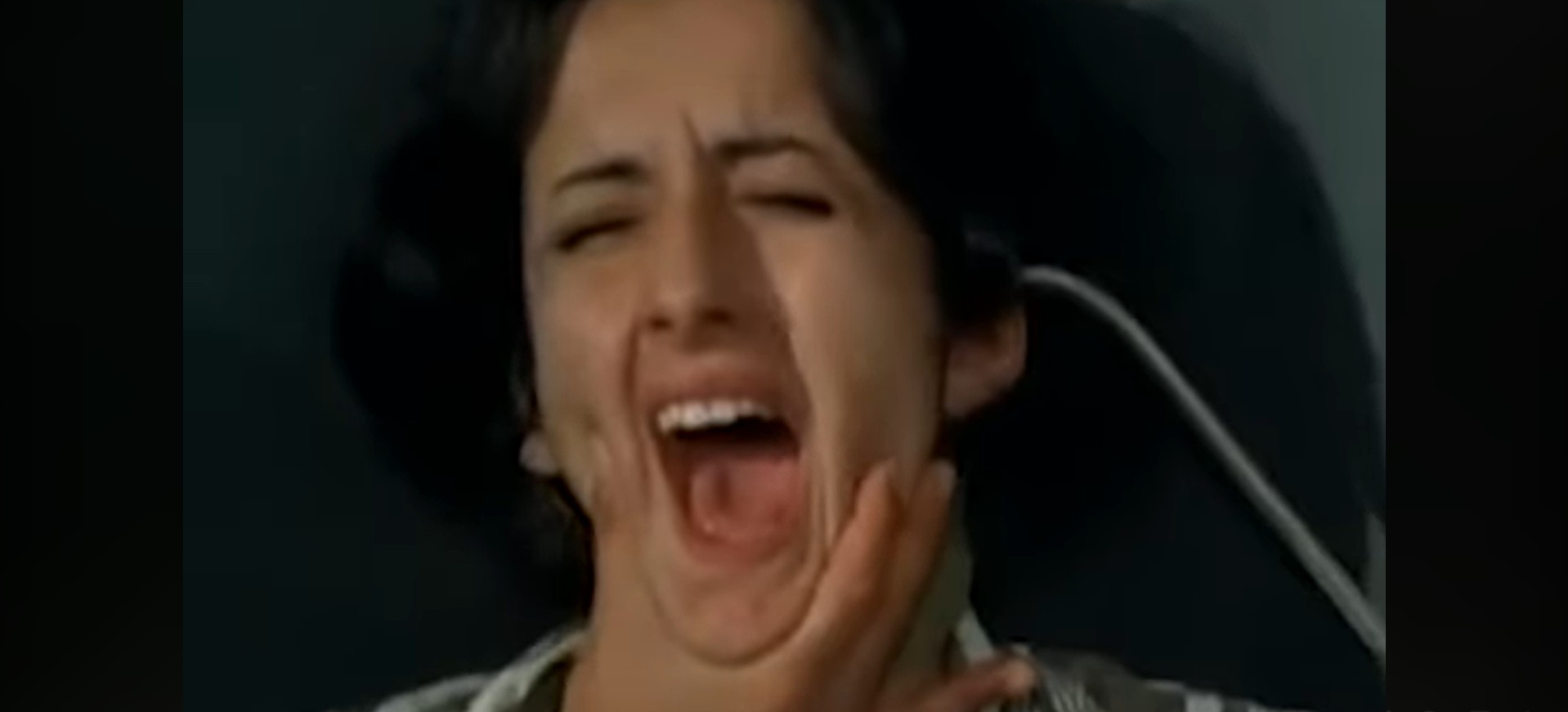
Arcade, the future of advanced, virtual reality-based video games, piques the interest of a group of teenagers eager to beta test the system in an underground arcade.  Vertigo, who engineered and programmed the game, sends the project manager to also hand out at-home editions of the game for continued testing.  When Arcade sucks in Alex’s boyfriend, Greg, into the game, she pleads to video game aficionado and good friend Nick about the game’s sentient dangers.  Nick experiences firsthand the horrors as their friend Laurie becomes entranced by its manipulative power and disappears during Arcade’s reach into reality.  Alex and Nick must venture into Arcade’s world to save Greg and their friends from a malicious machine seeking to invade and takeover the world, but they must find the hidden keys in all seven stages to reach Arcade’s soul and that’s no easy task when the game becomes very real when dying in the game will not grant respawn in the game or reality.

A movie ahead of its time but not ahead of the game, the Full Moon production “Arcade” is a live-action in a CGI-world thriller that’s one part “Tron” and one part “Virtuosity” for independent cinema, directed by the cybernetic and dystopian familiar filmmaker Albert Pyun (“Nemesis,” “Cyborg”).  Charles Band, founder of Full Moon and of a number of low-budget hit franchises, such as “Puppet Master” and “Demonic Toys,” light bulbs “Arcade’s” concept while David S. Goyer, the same David S. Goyer behind “Dark City,” “The Dark Knight,” and the 2022 “Hellraiser,” penned the script, marking the second collaborative production between Pyun and Goyer (“Kickboxer II”) as well as between Band and Goyer (“Demonic Toys”).  Band serves as executive producer alongside Michael Catalano and is show running produced by Cathy Gesualdo, all of whom were involved in the back-to-back productions with Albert Pyun with “Arcade” and “Dollman.”

Early Full Moon films always had an interest cast mix of known and unknown actors and “Arcade” is no exception with the tragically inclined Alex, a teen with nightmares about her mother’s year ago gruesome suicide and her father’s inability to cope since, played by an early 90’s recognizable beauty and then Full Moon regular Megan Ward (“Crash and Burn,” “Trancers II,”), coming off her success costarring alongside Brendan Fraser, Polly Shore, and Sean Astin as the love interest in “Encino Man.”  Ward role isn’t a damsel in distress one as Alex isn’t afraid to take and dive into a game of certain death to be the lone riser up against all odds.  An interesting piece of casting is Peter Billingsley, a name and face that might be familiar as Ralphie from Bob Clark’s “The Christmas Story.”  Instead of pining over a Red Ryder BB Gun that will undoubtedly shoot his eye out, Billingsley embodies the serious gamer amongst his group of friends who pines for the next level of gaming but also pines secretly for Alex, a subplot that’s not explored as well as it was technically setup.  The lone survivors of Arcade’s acute takeover embark into virtual reality to save the rest of their friends, under the cast of Bryan Dattilo as boyfriend Greg, Brandon Rane, A.J. Langer (“The People Under the Stairs”), and Seth Green (“Idle Hands”) in his early years, all of whom either disappear at moment’s notice of the game’s turn to complete evil or have a moment to stand out with dialogue or a pyshical scene.  John de Lancie’s role is small in comparison to his costars but the Q actor for “Star Trek:  The Next Generation” and “Picard” has the gift to protrude positively amongst the cast with Lancie’s quick-wit and timed deliveries as the Vertigo gaming production representative Difford unaware of the game’s conscious, dark design.   Norbert Weisser (“The Thing”), Don Stark (“Evilspeak”), Sharon Farrell (“Night of the Comet), and the voice of Jonathan Fuller (“The Pit and the Pendulum”) as Arcade’s voice round out the film’s amazingly cult chic cast.

In terms of computer-generated graphics of the early 1990s just eking out of the last decade, “Arcade’s” virtual world is of a clunky, chunky enterprise that epitomizes the era’s current technology.  One could argue “Tron” had that same boxiness only forgiven by its award-winning cast.  “Arcade” may not have an accolade-laden cast but the Band and Pyun production does, too, receive a pass for its eclectic and curious cast of well-rounded and peculiar-implanted actors and actresses, and also crew, that gives “Arcade” not only a reason to subdue the heavily-contrasted and bulky CGI but also rises it up to be larger than life, more than perhaps it deserved to be in regard to the story’s influences.  However, this poor man’s version still has a gimmick coating and the third act editing is atrociously choppy to a point where nowhere could possibly know what’s going on as Alex flies through the seven-level pyramid, easily unearthing the hidden keys, and ending in the summit of Arcade’s human brain wave laced soul.  Pieces of the reel were left on the cutting room floor, pieces that would have depicted more rigorous opposition to thwart Alex’s climb in the levels and would explains a whole lot more why she appears bangs up by the end.  Albert Pyun resurfaces some of his best directional work to create unsettling moments of possession or of being unhinged as well as using smoke to diffuse the primary hue vibrance starkly contrasted against the computerized gaming world.

Newly remastered in high-definition with touched up color and detail refinement, “Arcade” now has a new Blu-ray release from the Full Moon Feature catalogue.  Compounding and restoring various elements, the Full Moon team pulls together the best pieces for the best, up-to-date version available encoded on a MPEG-2 AVC, 1080p, BD25 disc.  Honestly, a BD50 would have been better suited for the compression as “Arcade” runs the gamut of effects, coloring, and dark scenes in which, those scenes outside of virtual reality, aka green screen, Albert Pyun’s infuses smoke for the underground arcade to diffuse the colors, spreading them amongst the crowd and the room to create that dive bar atmosphere.  However, there’s a bit of artificial banding surrounding the natural banding that delineates the colors within the darkness.  Details are also impossible to gauge with the choice styles of hazy and CGI but there are moments of clarity that gives “Arcade” a clean bill of image health around the skin textures. “Arcade” must have been made from televisions as the label remasters the ’93 feature inside it’s full screen 4:3 aspect ratio. Full Moon offers two audio formats: an English PCM 5.1 surround sound and a Stereo 2.0. Dialogue has clear projection without any damage or interference for an independent, 30+ year old film from the early 90’s, but the track isn’t as hardy as desired, especially in the multi-channel that doesn’t diffuse anemically through the side and back channels. Separation also can’t decipher between reality and virtual reality with the layers melding together on a level playing field. Range decently plays a wide berth of tonal shades in computerized, “Tron”-like synth-cycling and in-game explosions and distortions. There are no English subtitles available. Special features include an audio commentary with Full Moon found and producer Charles Band and Alex star Megan Ward in a good one-on-one conversational piece about the past production and a little insight rom Ward’s thoughts and Band’s history as a child to a movie mogul but there’s also a lot of Band flirting with Megan Ward. There’s an archival interview with John De Lancie, a rare VFX reel that extends a few scenes plus displays the scrapped original CGI, the typical accompanying Videozone marketing of Full Moon’s streaming catalogue, other Full Moon trailers, and the original film trailer. Inside the blue Amaray case, the cover art features the original VHS composition artwork and a disc concentratedly pressed with one version of “Arcade’s” virtual villains. The region free release is rated R and has a runtime of 101 minutes.

Last Rites: “Arcade” respawns in a newly remastered high-definition transfer that’s greatly cleaned up the flecked rough patches in front of the computer-generated engine but doesn’t smooth out the rocky terrain of the last act that suffers erratic editing for quick pinch pacing instead of really fleshing out the story flow.

Insert Coin for “Arcade” on Blu-ray!

Is Your Disturbing Library This EVIL? “Reality Killer” review! (Treasured Films / Blu-ray)

“Reality Killers” Entering the U.S. Torture Porn Market! Buy it Here!

Serial killer known as “The Sculptor” narrates his obsession and love with documenting the stalking, capturing, torturing, raping, and killing of his victims.  As he watches and video tapes his next target, Mary, from afar, a woman he’s chatted with online extensively about recording home snuff movies, The Sculptor opens up his personal library of snuff movies, labeled and numbered dark web bought tape cassettes exhibiting the videoed brutal deaths of strangers by strangers for their pure sordid joy of taking another life.  An adventurous couple lure a promiscuous young girl on the promise of a threesome, a group of three masked teens take pleasure in the torture of a young woman, a couple enticement a child to their backyard pool, father and son roam the streets for call girl action and a little home invasion, and an underground, all-female rock band’s music video takes male fans to new extremes.

A title and a film unabashed and fully accepting the phrase torture porn, as if it’s a pithy elucidative to be proud of, “Reality Killers” is a shot-on-video, found footage anthology and snuff horror from 2005 helmed by “Witch Story” director and “Body Count” writer Alessandro Capone.  The Italian production contains shorts and a wraparound story that connects them together in an ugly tale of sadism, written by four aspiring, young filmmakers in Pablo Dammicco (“A Deadly Compromise”), Francesco Maria Dominedò (“Dedalus”), Volfango de Biasi (“Help!  My In-Laws Are Vampires”), and a writer simply known as Zedd with Alessandro Capone also contributing with his own screenplay while project managing filmic newcomers as they shoot mostly in Los Angeles using American actors.  Alternatively known under the title of “Project K,” the 2005 film of nihilistic sadism is produced by Eagles Pictures’ Ciro Dammicco and Pablo Dammicco and executively produced by Luca Dammicco and Fabrizio Manzollino.

“Reality Killers” is one of those rare breed films that shares a connection with pictures 70+ years it’s senior with having no after credits.  With no before or after cast credits, acknowledging the cast and their ignoble roles is a challenge to say the least.  If fact, it’s impossible.  The wraparound segment with The Sculptor has some clarifying character elucidation online connected to one of the more well-known Italian extreme violence and horror filmmakers in modern times with Domiziano Cristopharo, director of the surrealistic yet broad-stroked with intense visceral “Confessions of a Necrophile Girl” and “House of Flesh Mannequins,” in a role credited as The Monk.  However, there seems to be some melding overlap between The Monk and the large, oiled-up, and masked concentrated sadist on screen in the wraparound story, played by Valter D’Errico, in a disturbing show of vain and perverse expression.  Alongside D’Errico, in a handful of scenes of being stalked around a metropolitan city and in a naked position of vulnerability on D’Errico’s slab of slaughter, is Cristina Puccinelli (“Phantasmagoria”) playing as the aspiring snuffer enthusiast and killer as well as the online conversationalist Mary who turns prey to her own betrayal going against and essentially humiliating a masterclass maniac like the oily and masked maniac.  After that and within the shorts, none of the other actors are repeated or credited for their work that waver between being exaggeratedly overacted and staged to the point of disingenuous means and the thought of the inflicted violence that spur a subtle creepiness.

The trouble with “Reality Killers” is the inherent topsy-turvy post-production that revamped the anthological storyline with a linear outer story with an anthological storyline connected with a threadbare connected wraparound.  Initially story structured with a sheriff unearthing a library of snuff films and going through selected VHS examples of the killer’s cache with a journalist to explicate the rare breed of butcher.  The videos were also lengthier, more narratively in depth of character and plotline, and have digestible connective tissue with the main shell story that’s redesigned for a body round and glistening, conventionally narcissistic, masked chatterbox, “The Sculptor,” who’s just a physical and commanding orb of a presence in a dark and grimy setting, spouting a deluge of devilish details about his devotion to snuff filmmaking and his own contribution to the perversion.  The told tales vary in degree of both explicit violence as well as story structure as some become more glimpses than a perusal of a three act analog anecdotes to which, in all fairness, found footage, especially pulled from VHS, are only short-lived windows into the lives of others, literally short-lived.  The vignettes are mostly hyper concentrated on the gore, leaving little room for a yard to build, lengthen, and become deeper to invest audiences when the decisive moment comes to take a life with sociopathic heartlessness.  However, “Reality Killers” pales in comparison to the likes of others, such as Fred Vogel’s “August Underground” features that really hammer down on violence and gore with sickening special effects and concentrated shock.  Capone’s entry into the niche subgenre feels reversed at times, never really going for gold in the gutting of precious human life, but the film still evokes a visceral response to the extreme content. 

“Reality Killers” arrives into the U.S. market hailing from the UK label Treasured Films, squeezing itself into the ever tightening commerce of boutique distributors.  Treasured Films’ debut special edition Blu-ray is MPEG-2 AVC encoded, 1080p high-definition resolution, BD50 is presented in a 1.33:1 aspect ratio and either scanned through a VHS record or implements a VHS or commercial handheld camera filer to achieve that passé effect that’s slowly making an aesthetic comeback.  There’s not a ton of other stylistic options used in the vignettes to instill a realism effect and result while the wraparound ups the contrast and grades darkly into its grim substance, leaving attenuated tones of yellows, greens, and reds to be coloring that seep through the oily voids.  The featured presentation carries more of the filtered aspects but in the special features’ Original Production Scenes, the alternate telling of “Reality Killers” embarks on a cleaner, conventional approach in the different outer story with the vignettes either slightly less boxed in by a matte or are outright more defined.  The audio track is an English DTS-HD stereo.  Though an Italian production, the vignette actors are primarily American and the wraparound story is voiced over.  Dialogue coincides with an onboard camera mic that picks up every little detail but also captures varying degrees of volume.  Discerning clarity is, must I say, pretty excellent for the differing sub-productions without an overbearing lopsidedness that usually stems with some who don’t have the technical knowhow to engineer audio precision; each episode achieves what’s strived for without interference, or even with the physical release, compression issues.  English subtitles are available.  Special features include a new interview with director-producer Alessandro Capone From Witch Lore to Snuff Gore in Italian only with English subtitles, a new interview with coproducer Gabriele Pacitto A Killing Reality in Italian only with English subtitles, a new English language essay by Giacomo Calzoni Cutting Deep :  Mapping the Origin of Torture Porn which takes a look at films like “Saw” and “Hostel” that generated the coining of descriptor torture porn and how it influenced horror pop culture, a teaser trailer, storyboards, and an image gallery.  The Original Production Scenes I’ve mentioned previously tells a completely different story and, in my opinion, is more interesting with longer story sequences, more nudity and gore, and the first vignette is scored with music from Nine Inch Nails, specifically “Dead Souls” from The Crow soundtrack, which adds another element to the coarse-riddled subject matter.  Treasured Films standard special edition set comes in a rigid slip box with a hazed face of the masked Sculptor.  The clear Amaray case houses new Ilan Sheady illustrative, compilation cover art in all its explicit detail with the same art pressed onto the disc.  Inserted is a 31-page color booklet with film stills, Blu-ray acknowledgments, and a David Flint essay “The Forbidden Films of the 21st Century” that discusses the films banned in Britian, which includes “Reality Killers’ rejected by the BBFC.  The all-region release has a runtime of 75-minuts and is, obviously, not rated.

Last Rites: Torture porn snuff films are, for a lack of a better world, repetitive in their controversial narrative and “Reality Killers” is no exception but it’s the style choices that and effects that entertain us or makes the sweat run down our brow. Alessandro Capone’s entry to torture porn has a visceral bite but isn’t the repulsive best-of-the-worst. Yet, Treasured Films’ entry into U.S. market is remarkably unforgettable.

“Reality Killers” Entering the U.S. Torture Porn Market! Buy it Here!

Are You Ready for EVILLLLL! “Visceral: Between the Ropes of Madness” reviewed! (Unearthed Films / Blu-ray)

Step Into the Ring with “Visceral: Between the Ropes of Madness” On Blu-ray!

A low-ranking boxer is set up with a match of a lifetime.  Quiet but confident, his manager doesn’t exactly have a faith in the underdog, constantly questioning his training with gambled money on the line.  When the boxer is beaten to a pulp in the ring, he’s immediately disowned by the unsympathetic manager and spirals out of his training and into darkness, finding murdering young women to be more pleasurable than the pain of loss and rejection.   His darkness in death incites a demon, perhaps even the Prince of Darkness himself, if the form of a half-naked woman with a distorted face and places him under her ward, forcing him into submission of pain and suffering while also commanding him to collect souls for her through his own tasting menu of torture.  The boxer’s life is told in three different stages of time on how he becomes evil’s most prized champion.

Accurately titular described, “Visceral:  Between the Ropes of Madness” pushes deviant instinct over everything else, a formidable urge to listen and adhere to those intrusive thoughts, especially after one’s lifelong goal, their most prized position, is creamed and squashed for good and forever in a humiliating way.  Writer-director Felipe Eluti uses hopelessness as pure evil’s plaything, turning a dedicated fighter being managed by Hell for the sake of not only revenge but also to fill the emptiness of the Netherworld with tortured souls.  The Chilean born and film schooled Eluti debut feature also enacts him to star as the demented boxer in a gore-soaked, ringside performance that moderately excites and intensifies with rope bondage as one of his character’s key motifs.  The extreme exploitation thriller is under the producing team of Sebastián Amenábar, Cristóbal Rivera, Andres Palma, and Daniel Vivanco.

Felipe Eluti is a one-man steamroller as the unnamed boxer leaving a laid-to-waste corpse trial in his wake.  Going virtually pantomime through the entire quasi-plotted narrative, Eluti conveys an apathy through blood and body language as well as utilizing his unsettling glare underneath different stages of head and facial hair growth from his time as a slimmed down, smooth-shaven boxer to a Curly-do’d, five o’clock shadowed, and expressionless shell of a human being.  From an outsider’s characteristic perspective, the boxer can be considered pathetic by preying down upon and torturing to kill smaller women in what is almost a result of retaliatory motivation after his brutal loss and he literally uses their bodies as his personal punching bags of stoic anger and hate.  The demon also presents itself in the form of a woman named Judas (Carolina Salles), cladded in bondage ropes, speaks in a whispery, omnipotent voice and visits him with a twisted face to represent the evil, or even the ugliness, she embodies, or the boxer sees in all his feminine victims.  Personified as a woman who tortures, beats, and verbally belittles him into a pacifistic submission only amplifies his dark crusade of soul collection.  Other than the boxer’s manager, a porn addicted, condescending loudmouth by José Manuel García, the remaining cast is filled with fleetingly visited torture victims, mostly women who are also voiceless and have little-to-no fight in them until the boxer works up to courage near the end for revenge which he can call his own, and Gabriela Aranchibia, Valentina Varela, Tamara Zuñega, Daniela Pardo, Pia Cardenas, Claudia Mena, Carolina Palacios, and Felipe Ruiz fill in those fated roles. 

While Felipe Eluti’s boxing themed gory shocker and exploitation rope-a-dope is definitely not a Rocky Balboa prime time fight film, “Visceral:  Between the Ropes of Madness” favors severe mental deterioration over an underdog beating the odds with glorifying the ultra-violence.  The strange-faced Judas pertains only to the Boxer’s vision or presence, conjured by feeding off the fighter’s anguish and indoctrinating him through pain, suffering, abuse, torture, and the most horrible like to do the demon’s bidding without resistance or fear.  The boxer’s kidnap and slasher traits shows a motif dominance over women that could possibly stem from most of the Freudian theorized root of a lot of evil doing, mother issues.  Supporting this scenario is the boxer’s visit to his mother.  Face never shown within the thicket of a deep shadow and directed toward a glowing television set, the avoided boxer seeks self-satisfaction approval and support from presumably his one and only blood relation on this planet, but the attentive mother denounces him, rejects him, and belittles his existence as the worst thing to ever happen to her just before his big match.  Eluti’s arthouse direction focuses on the boxer’s lack of love, support, and concern for his wellbeing and uses that the-world-vs-me detestation as a fuel and resupplied by his submission to Juda’s verbal and physical abuse to carry on his hate-filled and apathetic tear of women.  

Unearthed Films, a leader in producing and distributor extreme, ultra-violent and gory movie content brings “Visceral:  Between the Ropes of Madness” into the squared circle with a new Blu-ray release of Chilean production.  The single layered BD25 is AVC encoded and presented in a high-definition, 1080p resolution, with a widescreen 1.77:1 aspect ratio.  Cinematographer Tomas Smith’s approach to the content serves up stark and severe drab with a lifeless parallel to the apathy spree of the Boxer’s dark undertaking.  Heavy on grays and browns, there’s hardly any pop of aesthetic style or color but is counterbalanced by some interesting just obscure or to the side framing that ignite more imagination than having the scene spelled out for you.  There are also other interesting visuals with Judas and inside the Boxer’s mental state that don’t allow much in the way if finer details but allure to and speak of motivation and context.  The divided darkness through provides plenty of opportunities for compressions issues on a lower capacity disc compression but there’s not a whole lot to speak in way of artefacts.  The Spanish PCM 2.0 mix plays the familiar tones of an arthouse gore film by giving more stock to the soundtrack than to the dialogue.  While the dialogue is apparent despite the Boxer saying very little and Judas’s voice done in post, composer René Roco has free reign to be industrially glum above the whimpers, cries, and screams of the Boxer’s tortured women.  Ambient action is perceived post-product separation as the sounds don’t necessary match or synch in frame with the carnage and the environmental ambience is reduced to near nothing with low levels murmurs of city life stock sounds in the exterior scenes.  The English subtitles appear accurate and match well with in-scene prattle.  Extras include a commentary with director Felipe Eluti, a post-showing speech at the Cineteca Nacional’s Massacre in Xoco, Mexico City circa 2013, a behind-the-scenes gallery, and a teaser trailer.  The reverse cover liner art inside the clear Amaray case has barely safe for work primary of the mad Boxer and a bloodied woman bound in rope and a not safe for work cover that focuses on a bare-chested and rope bound Judas, both in contrasted to a deep inky void background.  There are no insert liner supplements and the disc is pressed with the same NSFW cover art image.  The not rated, region A encoded release has a runtime of 76 minutes.

Last Rites: Glorifying hopelessness through violence, “Visceral: Between the Ropes of Madness” is a round-for-round degression from failure through the dreary lens of director Felipe Eluti and his kink for rope bondage that sets forth an unstable champion amongst the maidenly defeated.

Step Into the Ring with “Visceral: Between the Ropes of Madness” On Blu-ray!

EVIL Sinks Its Teeth into the Reach of the Worldwide Web! (Full Moon Features / Blu-ray)

“Death Streamer” Now on Blu-ray!

A trio of struggling horror video podcasters stumble across a dark web stream while content mining for their derelict house of God set macabre show Church of Chills.  When they stumble upon a bloodcurdling ritual of drugging women and man vampirically ripping out and feasting on their necks, the footage is all too real based on their research and investigation into the underground live streams that rack up thousands of views and subscribers.  Eager to piggyback off the streams’ success, the Church of Chills reveals the callous, artery puncturing content to the world.  The live streaming ancient vampire master, seeking sacrifices to bring the end of days upon the world, is none too happy with the intruders doxing his content that has amassed a large following and warns them with omnipotent power, sending the three into flight or fight for their very lives and the for the sake of the world.

As the famous chorus line from the legendary rock-n-roll band AC/DC once sang, If you want nudity, you got it!  Or was it blood?  Either way, Charles Band’s “Death Streamer” you get plenty of both!  The new tech, modernized vampire lurks from out of the classic, gothic shadows and becomes the next inspirational concept from the longtime, distinguished founder and filmmaker of Full Moon Entertainment and the “Trancers” and “Head of the Family” director, Charles Band.  The 2024 feature is written from Band’s concept into story detail and dialogue by Neal Marshall Stevens, the screenwriter behind “Thir13en Ghosts” remake “Hellraiser:  Deader” and who has since become a Full Moon staff writer with credits going from touching the “Puppet Master” franchise with “Blade:  The Iron Cross” to new content with “AIMEE:  The Visitor,” penned under Stevens’ pseudonym of Roger Baron as so too with “Death Streamer.”  Full Moon Entertainment’s Charles Band and Nakai Nelson produce their latest with a budget aid alley-oop by a crowdfunding campaign.

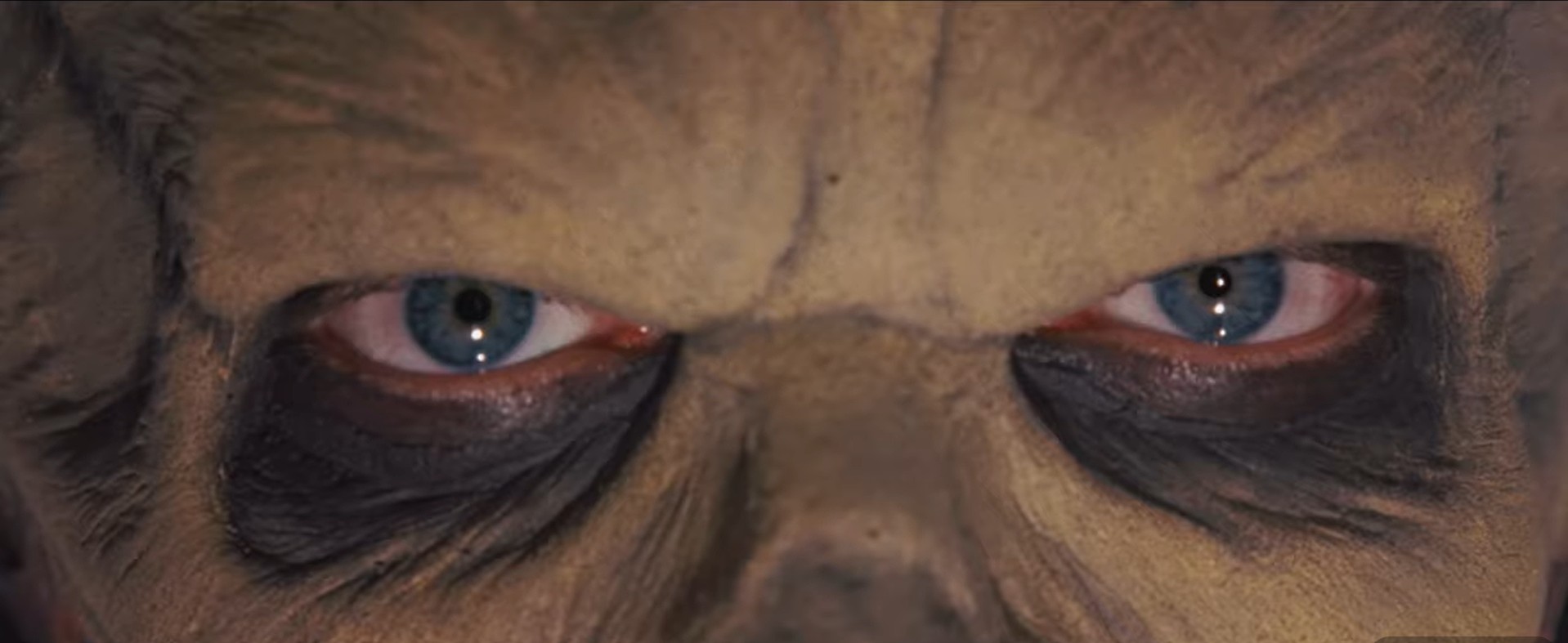
“Death Streamers” core cast has small but mighty with Aaron Michael McDaniel debuting in his feature film role as Alex Jarvis, the egocentric host of Church of Chills, and his two beautiful assistants in Emma Massalone as Edwins and Kaitlin Moore as Juniper struggling in a power dynamic over who has creative control over the show while staying financially afloat being unhoused living inside test in a defunct house of God.  Convincing audiences the trio of being adept and meticulous with computers and a video podcast is a hard sell when they live in popup tents and rariely leave the church grounds without much background other than short spats of the show’s brief history, but nonetheless, the three M’s – McDaniel, Massalone, and Moore – make their character emotions and pangs work to the story’s advantage rarther than have it feel like a detrimental free for all for the spotlight.  Creeping into that bright circle is the dark heart of vampire streamer Arturo Valenor, played Sean Ohlman.  The sex club proprietor, operating in the underground markets, drugs beauties with his own blood, rips their clothes off, and has his way sucking the lifeforce from their tender necks.  This dark web act is unearthed by the Church of Chills team and becomes the focal point for them to piggyback and drive-up subscribers with real life macabre only to be discovered and threatened by Valenor’s ever-present powers. Ohlman makes for a good hip vampire but doesn’t exact that gothic depravity of a classic bloodsucker in Valenor’s more erotically inclined sacrifices.  Only in the very showdown end do all four principals find themselves in the same scene together, previous working separately across the worldwide dark web or through Valenor’s giant floating eyes of foreboding.  Yes, floating giant eyes is pretty trippy and old school.  The rest cast constitutes as one half of Valenor’s vampiric acolytes with Chili Jean as the blood serving barkeep and Travis Stoner as the gimp-masked muscle and the other half half-naked Valenor victims in Llana Barron, Piper Parks, and it wouldn’t be a Full Moon Feature without an adult actress making an appearance with Maddy May going fully nude.

“Death Streamer” follows the same formula Full Moon has been following the last few years by pulling inspiration from the latest and greatest, perhaps even from the ugliest, flavor of the month cultural impact item has to offer.  2020 saw the release of “Corona Zombies” to bank off the pandemic, also from 2020 was “Barbie & Kendra Save the Tiger King” spun from the popular Netflix documentary of the same “Tiger King” title surrounding convicted felon Joe Exotic, “AIMEE:  The Visitor” featured sensationally the dangers of A.I. during the artificial intelligence concern of rise, especially amongst the arts industry, and, lastly, a slew of video content infused storylines as TikTok, Facebook Live, X Live, and many other platforms become an overconsumption of media with “Bad Influencer,” “Attack of the 50ft Camgirl,” and “Subscriber” being a few examples.  “Death Streamer” fits in the latter category as well by following a what seems to be an endless horizon of streaming content from music, to vidcasts, to live feeds in today’s highly consumable media world where everybody, and their brother, has streams to be viral.  “Death Streamer” using today’s tech to try and modernize the mythos of one of man’s longstanding lores, vampires.  Charles Band’s two-prong locations keep costs of the crowdfunded dollars down while pushing much of the cashflow toward effects, both practical with off-screen trickery and blood spurts, and compositional VFX that sees large floating eyes and thousands of chirping bats, as well as getting essentially all the female actresses at least to a bare-chested level with even one using her holy cross chest tattoo, nested right between her mammaries, as the final nail in the coffin for one unlucky, or maybe very luck, vampire with a death by a gratuitous emblematic exposure.  Hands down, “Death Streamer” has the best kill scene I’ve seen this year!

Be a subscriber to the end of the world with Full Moon Feature’s “Death Streamer” now available on Blu-ray. The AVC encoded, 1080p high-definition, BD25 seems adequate for the presentation flushed with warm red, blue, and green color filters. Details are sparse depending on the artistic alleyway inside Valenor’s club or inside his POV camera-specs, brighter the gels, lesser the finer points to the textures. The church setting, or the Church of Chills HQ, puts together a better angled lighting and a starker contrast by way of deeper shadows. Insignificant compression issues despite the single layer format but we’re not receiving the cleanest, most refined, looking picture image that’s presented in a 2.35:1 aspect ratio. Two English encoded audio outputs are both Dolby Digital compressed with a 5.1 surround sound mix and a dual channel 2.0 stereo. Not the strongest or dynamic reproduction of the original, raw audio as it suppresses the action and removes the multiple channel pathways, rendering over mostly in the front channels in what the listing is more 5.1 in name only. Dialogue comes over clean and clearly enough without a spark of obstruction and is layered above the environment as well as what’s usually an overpowering Full Moon carnivalesque or Gothic score. English closed captioned subtitles are available. Special features include a behind-the-scenes of the regularly archived and accompanying Videozone specials, the “Death Streamer” premiere held in Los Angele was cast, crew, and a few select Full Moon friends, such as Barbara Crampton, with a Charles Band pre-movie few words, and a lineup of Full Moon trailers. The standard release of the Blu-ray Amaray has a pulpy illustrative cover art of a bloodied mouth Valenor and his two acolytes splayed in red, blues, and purple. The region free release comes not rated and has a just above an hour runtime of 72 minutes.

Last Rites: As the vampire canon expands with age, new grooves are etched into the classical monster’s lineage tree and “Death Streamer” is a cyber-ghoul knot ready to leave its influential mark only to have its fangs nulled down and overshadowed by the all-powerful naked female figure in another fair-weather Full Moon Feature.

“Death Streamer” Now on Blu-ray!

Trapped Inside His Own Body While EVIL Buries Him Alive! “Short Night of Glass Dolls” reviewed! (Celluloid Dreams / 4-Disc 4K UHD and Blu-ray)

Collector’s Run to Grab Celluloid Dreams’ “Short Night of Glass Dolls” on 4K UHD and Blu-ray!

Gregory Moore’s body is found motionless and wide-eyed in a Prague Plaza and is confirmed deceased by local doctors, but Moore is actually alive, paralyzed and trapped inside with only his inner voice able to cry for help.  As his mind races about how to communicate with those around him, Moore must recall the previous days events to see how he ended up this way.  Days before, the American journalist, currently stationed in Prague and soon to be relocated in another European country once his assignment comes to term, is visited by his beautiful girlfriend Mira and they attend an affluent party hosted by socialite Valinski.  Soon after, Mira disappears from his apartment late a night, leaving all her belongings behind in his apartment and as the police begin to suspect Moore as primary suspect, the journalist uses his trade to discover a powerfully mysterious and sexually depraved organization, known as Klub99, may be behind her disappearance.

Aldo Lado’s written-and-directed murder mystery goes by many Italian and English names:  “Short Night of Glass Dolls,” “La Corta Notte Delle Bambole di Vetro,” “Malastrana,” “La Corta notte delle Farfalle,” “The Short Night of the Butterflies,” and, finally, “Paralyzed.”  Doesn’t matter what you call it, “Short Night of Glass Dolls” needs very little title nomenclature as Lado, a dark sided and rich yarn spinner of Italian cult cinema with credits like “Who Saw Her Die?” and “Last Stop on the Night Train,” debuts his 1971 tale of mystery with precision and style that speaks global themes of affluent power for the sake of retaining that power as well as their youth.  The Italian production is a cross-country affair being filmed in not only Italy but also in Croatia, Slovenia, and Prague and is a production of Doria Cinematografica, Jadran Films, and Dieter Geissler Filmproduktion with Enzo Doria (“Beyond the Door,” “Tentacles”) and Dieter Geissler (“Kill! Kill! Kill! Kill!,” “The NeverEnding Story”) as producers.

“Short Night of Glass Dolls’” American protagonist was actually not played by an American but by French actor Jean Sorel with a handsome stached face, bronze swagger, and whose taste of giallo carried into the Lado film after acting in “The Sweet Body of Deborah” and Lucio Fulci’s “A Lizard in Woman’s Skin.”  It’s not surprising or even uncommon for a 1970s through the 1980s Italian production to cast non-native Italians to star and perform as Italy sought foreign talent to be highly marketable abroad and “Short Night of Glass Dolls” is bursting with international talent from America, Yugoslavia, and Sweden to perform alongside Italians.  The only American in the film is the petite and lovely Barbara Bach whose career was mostly a decade and half of Italian films, including “The Great Alligator,” “The Humanoid,” and “Black Belly of the Tarantula.”  Bach’s short stint as Moore’s girlfriend, Mira, is the epitome of innocence and cherished love, an quality lost by Moore because of his work blindness and his philandering with colleague Jessica, “Salon Kitty’s” Ingrid Thulin entrenched into Jessica’s passion for Moore but also keeping a stark low-profile on her looks against Mira with Thulin’s naturally blond hair contained in a colorful headwrap for most of the film.  The love triangle is downplayed from the early revealing signs that Moore may be playing both sides but from the moment Mira vanishes, Moore and Jessica, along with fellow journalist Jacque (Mario Adorf,  “What Have You Done To Your Daughters?”) become a single unit of vocation to find Mira and they bitterness drains from Jessica to just despair by the shocking finale when all the cards laid upon the table.  Lado neatly keeps a tight lid on Klub99’s patrons with only the assures of Valinski as the organization’s ringleader of undisclosed purpose.  José Quaglio (“The Eroticist”) dons well as the oligarchal head keeping a low profile that emerges out like sordid serpentine of perversion and wickedness.  Daniele Dublino, Fabijan Sovagovic, Relja Basic, Piero Vida, and Semka Sokolovic-Bertok are the Croatian and Italian support actors that fill out the cast. 

Aldo Lado’s debut film pins him as a productional prodigy with a naturally gifted cinematic eye and a phenomenal storyteller.  “Short Night of Glass Dolls” sallies forth in an untraditional, nonlinear narrative through the perceptive procession of a paralyzed man’s thoughts and recollections.  That man being journalist Gregory Moore who audiences are first introduced lying motionless in the bushes of the plaza morning and, from the start, Moore is at the mercy of bystanders, medical professionals, and friends who mostly believe he’s dead but, on the inside, is in his thought’s echo chamber screaming for help.  Every frame captures the act and emotion, amplified even more so when Jean Sorel is absolutely still, eyes open, and withstanding forces upon, such as chest compressions, to which he doesn’t even flinch.  Lado finds beauty in the macabre imagery when dead women are laid out nude, splayed with an arrangement of flowers or juxtaposed wet against a dry paved ground.   Lado also doesn’t cater to a fixed position and, instead, tracks the characters with smooth movements, coalescing at times a back-and-forth or side-to-side to get lengthier, more dialogue and dynamically enriched, scenes with director of photography, Giuseppe Russolini (“Firestarter”), achieving a naturally dissemination of lighting and color.  “Short Night of Glass Dolls” is not a film without flaws as Moore’s investigation takes the easy pickings route as if briefly glancing over the reported missing, naked women list is an automatic ladder to the winner’s circle for unearthing mostly everything of an deprave inner circle of the powerful rich and so Aldo cheats a little to give his story’s theme of flightless butterflies some much needed wings.

Following up on their definitive, carefully curated, stunning release of Giuliano Carnimeo’s 1972 giallo “The Case of the Bloody Iris,” Celluloid Dreams doesn’t pump the breaks delivering their latest “Short Night of Glass Dolls” with an all-encompassing, 4-disc collector’s edition set that includes 4K UHD and Blu-ray. Scanned and restored in 4K from the original camera negative, the UHD is an HVEC encoded BD100 with 2160-pixel resolution and the Blu-ray is AVC encoded BD50 with 1080-pixel resolution. It goes without saying that both transfers are impeccable in their damage and blight free form for those who might have owned or once owned the cropped, VHS-sourced release under one of its many titles, “Paralyzed.” The grading blends a natural, dynamic pop with peppered psychedelic trips down the dark rabbit hole with Klubb99 is open for business and the color is diffused with balanced, natural saturation, adapting to lighting of all varieties. UHD offers a richer depth of focus with the increased pixel Dolby Vision seizing better delimitation around objects, but that doesn’t mean the Blu-ray doesn’t do the same, the UHD just enhances it by a quarter approximate percentage, while still keeping healthy, transpicuous grain. Two fidelity-true 1.0 DTS-HD offers mostly a dialogue entrenched mix that, audibly, has an imbalance against a rather omitted ambience and that’s not the release’s doing but rather a lack of Foley work amongst an ADR English or Italian track. Ambience hits where it counts but there are times when establishing shots or slow pans of Prague go nearly into a coma state, letting the dialogue and the renowned Ennio Morricone’s piano, triangle, and melodic vocal score take flight through the course of the mystery. English subtitles are available for the Italian language track. Disc one and two not only contain the feature but also contain identical extras with writer-director Aldo Lado & and Freak-O-Rama’s Frederico Caddeo feature-running commentary, a second parallel commentary track with Celluloid Dream’s founder Guido Henkel, an assortment of trailers labeled as grindhouse, Italian, English, and the Catalepsis, with an isolated score that pedestals Ennio Morricone’s score. Disc three delves into the Italian-language, English-subtitled feature documentaries and featurettes with a 2015 archived interview The Nights of Malastrana, clocking in over 100 minutes, that have isolated discussions with Aldo Lado and actor Jean Sorel, All About Aldo is another archived interview with the director circa 2018, The Quest for Money is an interview with producer Enzo Doria, To Italy and Back touches base with producer Dieter Geissler’s perspective and historical context, The Most Beautiful Voice in the World interviews Italian singer Edda Dell’Orso’s haunting vocalizations on Morricone’s score, Cuts Like a Knife speaks to editor Mario Morra, the Flying Maciste Brothers’ video essay The Man on the Bridge: Philosophy, Perception and Imprisonment in Aldo Lado’s ‘Short Night of Glass Dolls,’ the alternate title Malastrana’s German export credits, and an image gallery. Finally, disc four brings the encoded special features home with not one, but two alternate cuts of the film, a 35mm Grindhouse version and the cropped Paralyzed VHS version. If you thought the encoded special features weren’t hefty enough, Celluloid Dream’s physical presence is certainly imposing with a rigid slip box with newly designed cover compositional cover art on back and front, a massive 64-page color picture and poster booklet features a retrospective essay from Andy Marshall-Roberts as well as reprinted column and magazine reviews from the film’s initial release, and, of course, the thick Amaray case, which is surprising in the traditional Blu-ray blue rather than the 4K UHD black. The cover art is an original rendition that brings all theme elements of giallo into the illustrated fold in circling chaos of catalepsy with the reverse side displaying the same image but titled in Italian. Inside, an advert for “The Case of the Blood Iris” and their upcoming third title “La Tarantola dal Ventre Nero” is inserted. The 4K is region free while the Blu-ray is hard coded region A. The unrated main feature has a runtime of 97 minutes.

Last Rites: Celluloid Dreams pursues excellence and strikes twice achieving it with a heart-and-soul poured release that by far has blown all other limited-edition copies, collector sets, definitive releases out of the water and “Short Night of Glass Dolls” deserves every bit of the attention.

Collector’s Run to Grab Celluloid Dreams’ “Short Night of Glass Dolls” on 4K UHD and Blu-ray!