The 90’s Played Videotapes by a Different Set of EVIL Rules. “V/H/S/94” reviewed! (Acorn Media International / Blu-ray)

V/H/S/94 Blu-ray Can be Purchased Here!

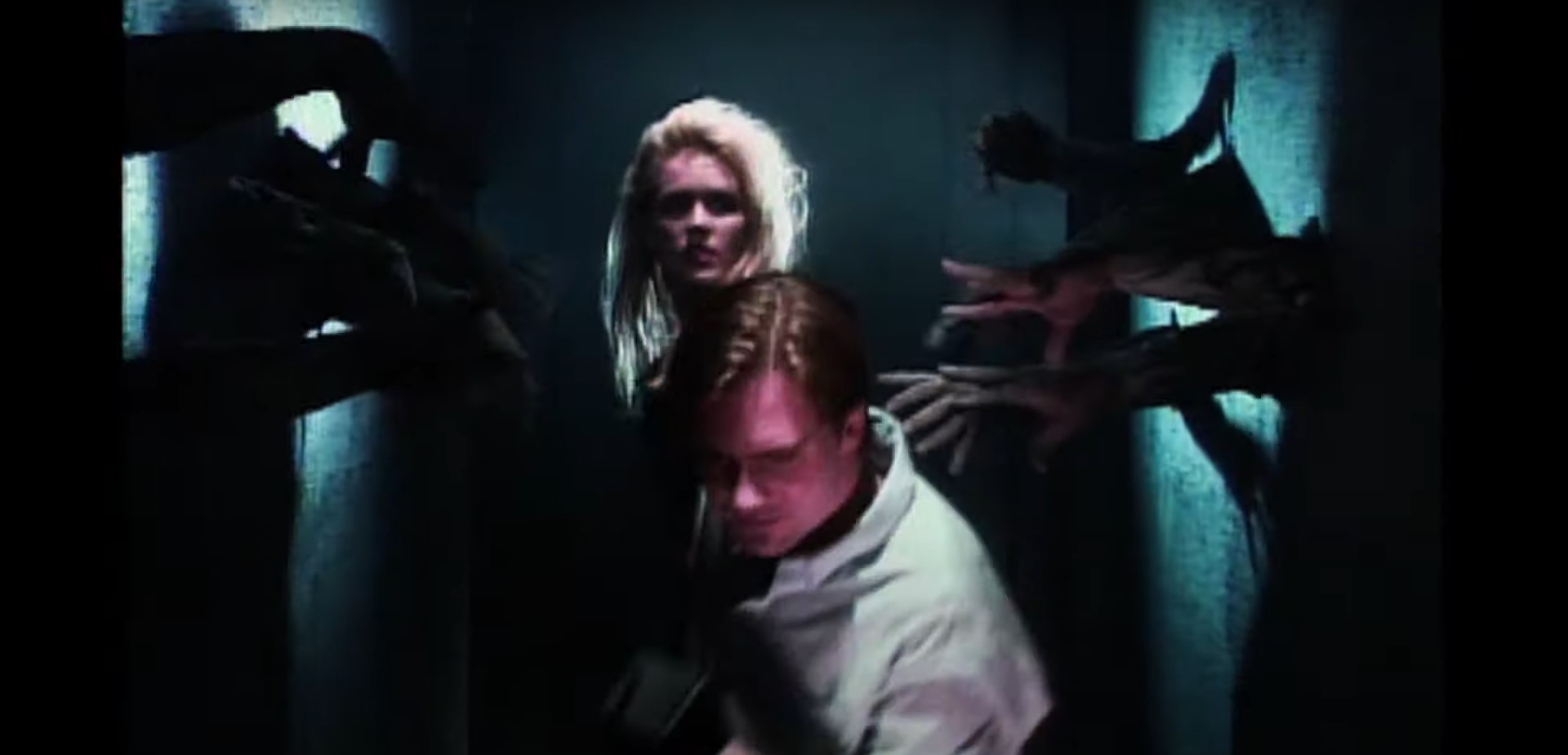
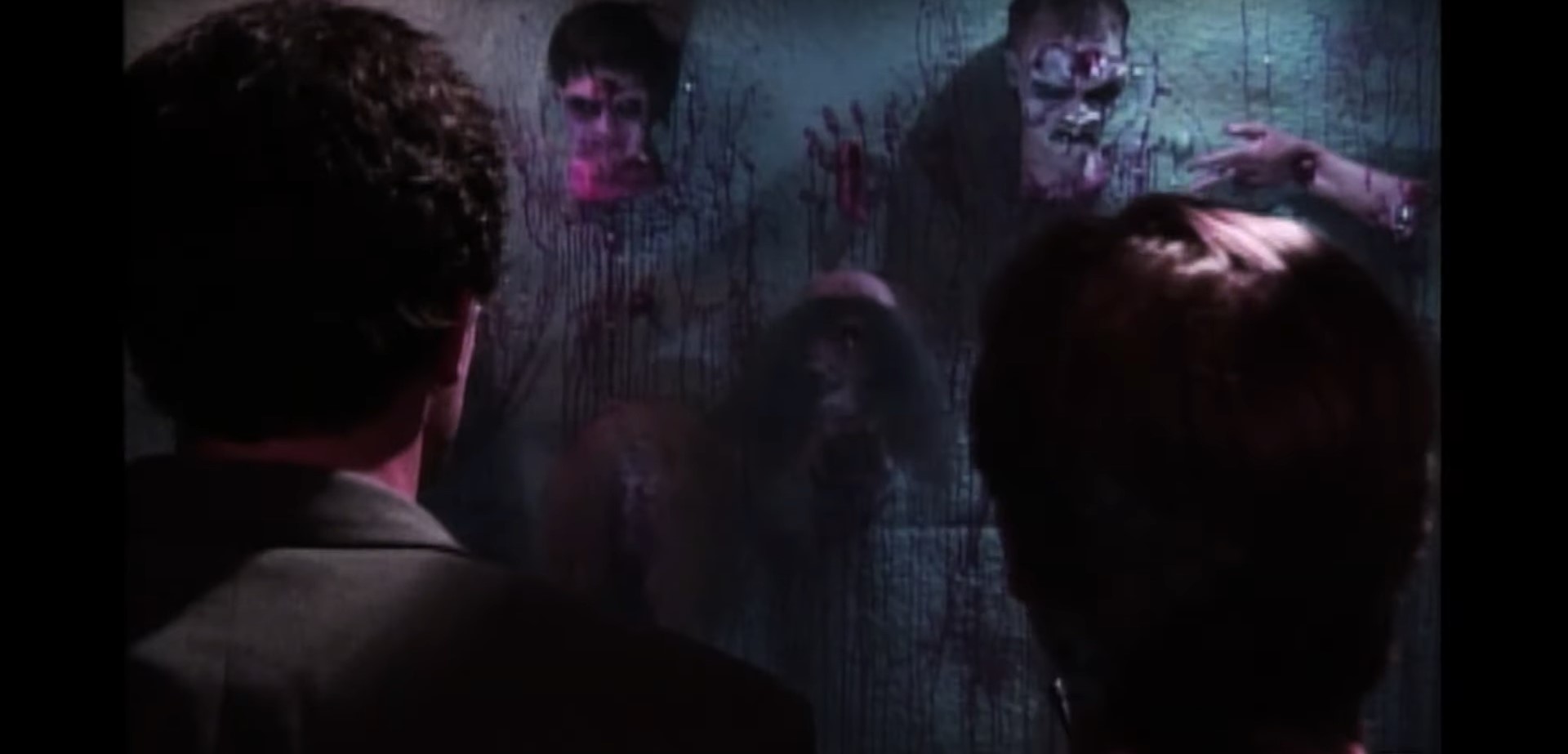
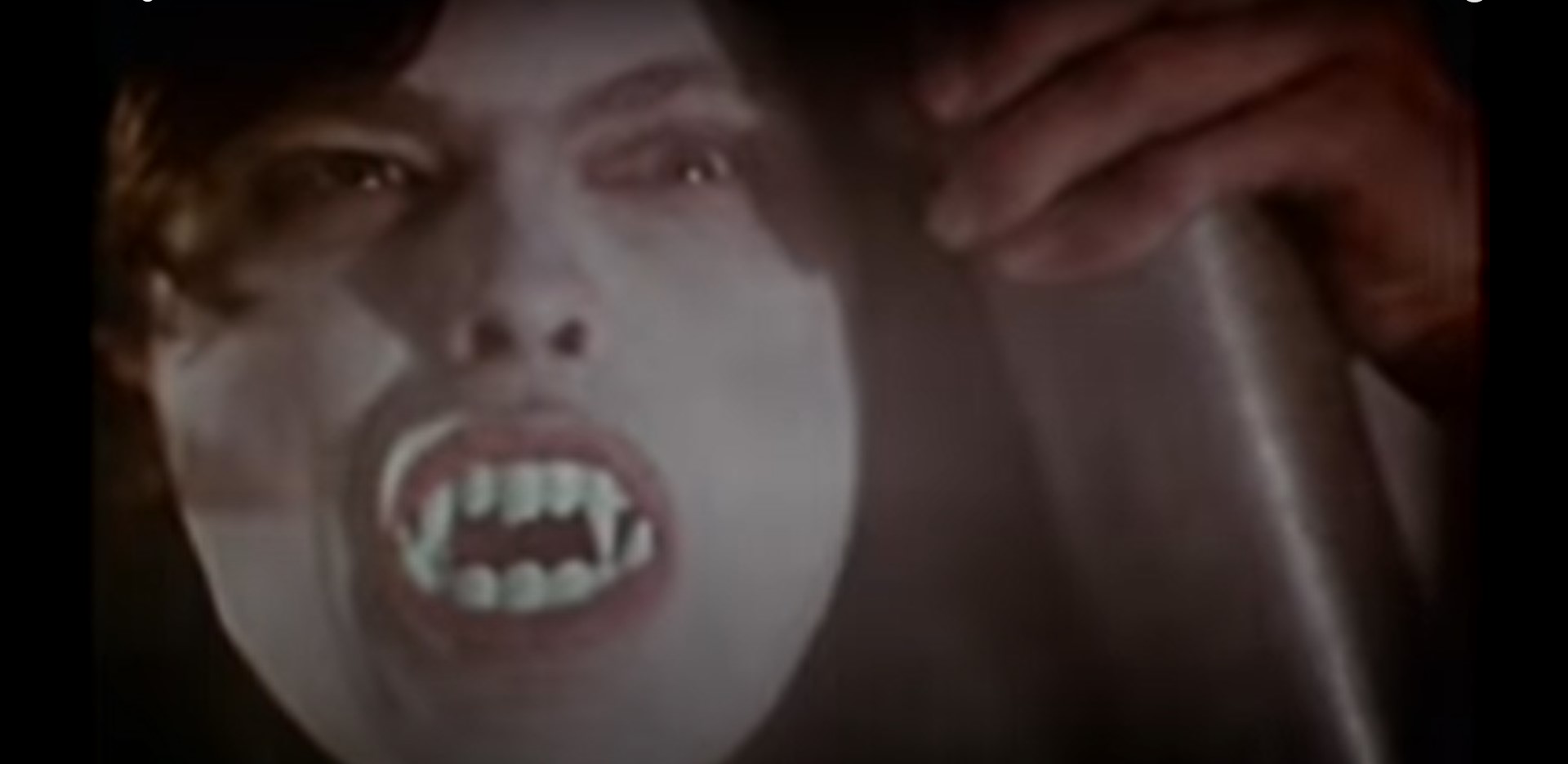
A police S.W.A.T. team raid a large warehouse where suspected drug storage and trafficking is being conducted.  Tagging along a camera man for code of conduct review, what the team discovers inside is more alarming than a stash of street narcotics.  The nearly empty warehouse is filled with gruesomely recorded VHS tapes, snowy television sets in every room, and recently deceased bodies with their eyes plucked from their heads.  As the investigation frantically continues through the labyrinth corridors that turns the capture and arrest mission into a mission of escape, the pre-recorded tapes they come across show vivid, nightmare-fueling horrors, including footage of a sewer-dwelling rat man, a near empty funeral home on a dark-and-story night, inhuman surgeries joining man and machine, and a militia preparing themselves to unleash true evil onto the government establishment.  What the officers see can’t be unseen as analog madness ensues them spurred by the motivations of a deadly cult.

The fourth installment of the David Bruckner and Brad Miska created analog-influenced V/H/S horror anthology.  Known as V/H/S/94, as in 1994 to mark the period of social and cultural influence, six new directors take the short movie helm in a new line of videotape terror.  “Night’s End” director Jennifer Reeder tackles the wraparound story “Holy Hell” that fills in between and shepherds in four frightening tales with “Watcher’s” Chloe Okunols “Storm Drain,” “V/H/S/2’s Simon Barrett’s “The Empty Wake,” “May the Devil Take You’s” Timo Tjahjanto’s “The Subject,” and “Lowlife’s” Ryan Prows’ “Terror.”  “Psycho Gorman” and “Manborg” filmmaker Steven Kostanski also directs a mini-pseudo infomercial entitled “The Veggie Masher.”  Together, the filmmakers for a new lot of under-the-radar talent to showcase an eclectic blend of 90’s set scary stories with Josh Goldboom, Kurtis David harder, and Brad Miska producing, Studio 71, Cinepocalypse Productions, and Hangar 18 Media as the production credits, and Bloody Disgusting and Raven Banner Entertainment presenting the production.

With any type of anthology, a variety of roles are laid out for different scenarios.  From newscasters (Anna Hopkins, “Tin Can”) and cameramen (Anthony Christian Potenza, “Bad Dreams”) to body-transfiguring mad scientists (Budi Ross), to greenhorn funeral home attendants (Kyal Legend), “V/H/S/94 reaches into the far corners of world while also breeding home grown terror right into suburban America.  Each episode develops and nurtures layered characters with fast-setting concrete, quickly building who and what they are in a matter of minutes to which some full-length features have to build in a whole act or in all three acts.  The writing of and the colorful depiction of each character sets the tone for the rest of short and whether the short will be a success hit or not.  An example of this would be in Timo Tjahjanto’s “The Subject” with The Creator, played renationalized and crazy by Budi Ross.  An eccentric acute accent in Ross’s Creator apexes the overall expectation of a mad scientist and in that there is an understanding of what’s coming while there’s still a simultaneous shroud of mystery of how batshit crazy things can really become. The episode that didn’t quite flesh out enough, in character and in story, was the wraparound “Hell Hole” segment that sees a S.W.A.T. team (Kimmy Choi, Nicholette Pearse, Dru Viergever, Thomas Mitchell) and ride-a-long cameraman (Kevin P. Gabel) storm a suspected drug warehouse and find nothing but death and VHS.  Tremendous pandemonium as the team charging into the multi-layered complex is roughly cleaved to not smoothly segue in-and-out with the intercut VHS episodes that also hinder the characters from really being built upon to relate any interest in them.  “Holy Hell’s” climatic reveal has little weight to then stand on without that much needed seething of every detailed bubble that pops in between the short films.  However, the wraparound story doesn’t snuff out the rest of eye-gluing terror you’re witnessing with solid, edge-of-your-seat performances from Donny Alamsyah, Tim Campbell, Brian Paul, Conor Sweeney, Devin Chin-Cheong, Juan Blone Subiantoro, Christian Lloyd, Cameron Kneteman, Steven McCarthy, Brenand McMurtry-Howlett, Slavic Rogozine, and Daniel Willston.

Zombies, cults, body horror, vampires, subterranean creatures, and much more are the selected subgenres that invade insidiously into our visual receptors and straight down to shake and scare stiff our stable core, each one idiosyncratically crafted and tailored by the filmmakers tastes to deliver a unique tale under the guise of those beautiful VHS artefacts.  Whether ran through a VHS recorder or filters are applied, each era-idolized short has a distinct visual approach and feel how the 1990s tape decks presented the goods that can be saturated in horizontal noise strips, tracking lines, and image ghosting.  Granted, and likely subjectively by yours truly, some shorts are better than others with a narrative outline and in special effects.  “Holy Hell” doesn’t let time to breath and let the dust setting to effectively lay in fear and frights because of the constant cacophony of the S.W.A.T. team’s frantic ambling through the complex, seeing each disturbing scene as if breezing through a museum and glimpsing at the exhibits.  I’m fully aware of the short film time crunch Reeder was under but breakneck pacing didn’t have time to elicit any type of reaction or setup a story.  “The Empty Wake,” “The Subject,” and “Terror,” reel in and piece together all the components of their tales and find room to make them thriller and terrifying.  Barrett’s is one of the simplest yet most anxiety-riddled shorts to come out of the V/H/S anthology run, creating a couped up Funeral home atmosphere, the background threat of a tornado out of the story night, and a coffin that goes bump-bump with a sole wake service attendant on the edge of fright for fear of what’s inside trying to get out.  Ryan Prows puts a spin on the whole vampire trope by never mentioning the creature as the living dead bloodsucker held captive by a radical, ring-wing militia under the influence of its power to destroy.  Instead, the creature is just plain and pure evil that, as the militia men find out by the flaws in themselves, can’t be contained.

Acorn Media, the United Kingdom subsidiary label of RLJ Entertainment, releases the Shudder exclusive anthology on Blu-ray home video.  THE AVC encoded, 1080p high-definition, BD50 of “V/H/S/64” goes by the oxymoronic details in the videotape artefacts.  Through various VHS filters and VHS recording deck converter, the widescreen 1.78:1 aspect ratio image is purposefully distorted, worn, and in standard definition to meet the standards of the V/H/S series, providing an anomalous analog outer shell so if you’re expect fine delineation, natural skin tones, or any clear details of any sorts, then the V/H/S franchise is not for you.  For the rest of us, “’94” parades the paltry resolution like gold in a true celebratory style, embracing the chroma spectrum for a maximum retro throwback.  However, the color bands on a couple shorts appear too vibrant, creeping more into digital age with flusher hues rather than tape degraded coloring.  The English and Indian language tracks are ran through a lossless DTS-HD 5.1 surround sound mix that offers punchy kbps decoding filtering through the appropriate side and back channels and right into your ears. The sonic palette has great depth and range in the midst of the crackling and warp-pops of damaged tape. Dialogue is clean, clear, and concise and there’s synched-well, error-free English subtitles for “The Subject.” Bonus features include a behind-the-scenes featurette with the directors speaking about how they were approached and crafted each of their respective shorts, a panel interview at the San Diego Comic Con, deleted and extended scenes, the special effects discussed by Patrick Magee, a quick glimpse at “The Wake’s” visual effects piece to the pie, the full-length Steven Kostanski “Veggie Masher” commercial, behind-the-scenes images, and Hail Raatma!, a special look at the sewer-dwelling creature. There are also two commentaries: a feature-length commentary track with the filmmakers and producers hosted by The Boo Crew and a second commentary track on “The Empty Wake” with writer-director Simon Barrett. There is no mid-credit or after-credit stingers. Sheathed inside a thicker UK Blu-ray casing is the “V/H/S/94” blocky cover art of a face screaming while tape emerges from their mouth and eyes. Inside lies bare with no insert but the disc art is different with a snow-static tube televisions outlining a techno-skull. With PAL encoded playback, the Acorn Media Blu-ray comes region free (tested) despite not proclaiming so on the back cover. The UK certified 18 releases has a runtime of approx. 104 minutes.

Last Rites: If anthologies get your horror rocks off, the “V/H/S” franchise continues to disturb, disgust, and dread with new filmmakers, new stories, and new horrors, but with the same amount of thirst-quenching blood shot on video!

V/H/S/94 Blu-ray Can be Purchased Here!

Sucked Into Hell. Surrounded By EVIL! “Vampires and Other Stereotypes” reviewed! (Visual Vengeance / Blu-ray)

Hell Wants You To Stay for Dinner!  “Vampires and Other Stereotypes” on Blu-ray!

Ivan and his hard-nose partner Harry work between the shadows as protectors of the Earth realm.  The pair of paranormal guardians battle demons attempting to sneak from the Netherworld for more domain and power in the human world.  After thwarting a demon’s reneging plans with a wealthy businessman, they find themselves sucked into a portal to Hell after a group of young partygoers become lost and inadvertently crossover everyone in the abandoned warehouse to the underworld, including the warehouse itself.  Confined to a room with the portal opening, they must band together to survive the night where gnarly demons roam behind every door and are master tricksters with one goal in mind – to breed human women with half-breed demons to procreate more of Hell’s minions.  Its up to Ivan and Harry to see the survivors through until dawn but not everyone is who they seem and when the masks are dropped, real Hell will pounce upon them.  

The northeastern American horror-comedy, “Vampires and Other Stereotypes” is the topsy-turvy and totally-transcendental SOV feature from first-time writer-director Kevin J. Lindenmuth (“Twisted Tales,” “Monsterdocom”).  Shot primarily in Cherry Hill, New Jersey with some exterior city shots of New York City, the film alternatively known as “Hell’s Belles” sought ambitious Hell below Earth undertakings, creating a maze-like dwelling for disfigured dwellers of the demonic kind, and a down-the-rabbit hole story where the head-lopping queen is actually the devil in a leatherjacket playing procreator matchmaker and the Cheshire Cat is a overgrown rat looking to nibble on human flesh rather than cheese.  The rat, as ostentatiously cool as it sound, is simply a slither of one of “Vampires and Other Stereotypes” few themes, which is fear.  Kevin J. Lindenmuth’s production Brimstone Media Productions serves as the studio and Lindenmuth serves as sole producer of his self-funded venture into the vile mouth of the demon world.

“Vampires and Other Stereotypes” follows two difference groups related to the existence of Hell, the demons that inhabit it, and the rogue demons splicing themselves into the human world. One group is the guardians Ivan (Billy White) and Harry (Ed Hubbard) who are very much aware of the esoteric magnitude of the abysmal situation and background while the other group, young Generation X’ers oblivious to the signs of Satan’s underworld seeping into their own. Lead by serial-dater and college girl Kirsten (Wendy Bednarz, “There’s Nothing Out There”) and her two tagalong best friends Linda (Anna Dipace) and Jennifer (Suzanne Scott, “Child of the Sabbat), the ready-to-party trio provide the state of affairs with Kirsten’s nonchalant taste in bad boy boyfriends, believing her courting apathy, treated as an impulse indulgence for the sake of fun, will one day run her out of luck. Enter Erik (Mike McCleery, “Deep Undead”), another misfit miscreant unearthed by Kirsten in her ever unquenching need to be wined, dined, and spoiled by the bottom layers of the dating pool. The two parties clash walking into the epicenter of an open investigation, denoted by an aperture in the middle of the room, where dead, decapitated bodies are strong upside down and Kirsten and her businessman father (Rick Poli, “Blitzkrieg: Escape from Stalag 69) are unexpectedly reunited in an air of something more happening behind the scenes other than Kirsten’s father’s flailing dealings with the demons and Erik’s party-sniffing nose leading them to astray and lost. The rest of the cast comes together with Laura Vale as Rosa the psychic, Monica Batavanis as the wife lost to the dark side, Mike Memphis as the Elvis impersonator, Bean Miller as the Lizard King aka Jim Morrison impersonator, and Sally Narkis as the demon waitress.

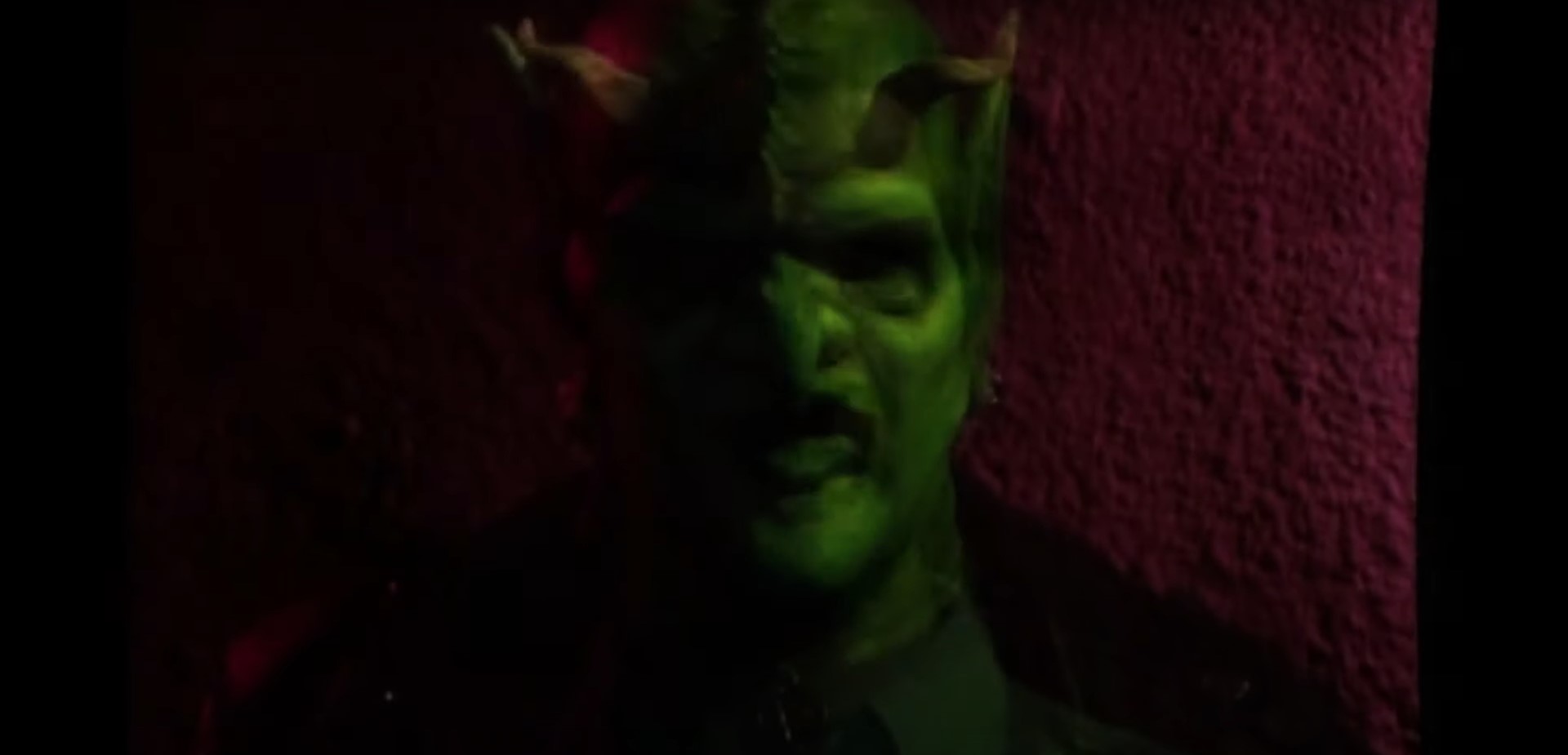
Lindenmuth’s dragged to Hell premise is a neat enough concept to peak the interests of the casual and diehard horror fan. However, the executed result is a whole other animal that tends to claw back, trying to maul away your viewership.  The special effects Scotts – Scott Hart and Scott Sliger – pull off practical prosthetics and latex with some side curb appeal that helps lift up “Vampires and Other Stereotypes” as best as possible, but the effects have a difficult time keeping up with the film’s innate ambitious concept to where much of the story relies on character exposition to fill in the gaps and where I note the exposition has a few cracks and leaks in themselves is in the very first word you see in the title that sets the expectation right off the bat before going far into a narrative that constantly and hurriedly builds upon the demonic construct.  That edifice evolves so high and so quick that the air becomes thin when the very first presence of a vampire insert comes late into the third act.  You nearly forget that the word Vampire was ever in the title.  Where Lindenmuth succeeds in this frenzy of fiends and folly is passively providing verbal cues of one of the character’s monotone-delivered pangs of extreme hunger.  Being a New Yorker and a rather large individual, you believe a NYC pizza or a greasy burger would be in mind here to feed the need but then the gag drops with well-timed revelation albeit the severe tardiness inside the narrative framework that suggests maybe the title should have been reworked or better thought through to really add upon that element of surprise and not sit waiting and waiting until bloodsuckers join the jittery jamboree.  While the demons are jovially wicked, their wily ways are playful to a fault compared to an “Evil Dead” Kandarian demon or a twisted and ugly demon from “Night of the Demons,” a class of demons that craft a special kind of deviance that maniacally fun as they rip you to shreds.  Not to say the “Vampires and other Stereotypes” demons are painfully dull or too good to be terrible, quite the opposite in the variety of severed head yappers or an oversized rodent, but they don’t offer that same fear-inducing merriment of playing with their food before they eat it. 

The 12th release on the Visual Vengeance line of dusted off sidelined SOV horror and cult films with a brand-new Blu-ray release with an AVC encoded, 1080p (note: off the original standard definition master 1-inch tape), BD50 presented in the original pillarbox of a 1.33:1 aspect ratio. Visual Vengeance provides the usual prefatory statement about the using the best possible elements out of consumer grade equipment, but I do think “Vampires and Other Stereotypes” has the best details within the Betacam SP camcorder, which was, at the time, the crème de la crème of videotape, and then have the video run through a millimeter gauge emulator to give it a 16, or even stretched to a 35 mm, appearance at times. Tullio Tedeschi cinematography is soft, light, and dreamy that forsakes stark details but does offer a sheen along the surfaces and textures that size up and adds to depth to the objects, even more so with the film’s hard lighting and deep shadows to provide a diversion away from the cheap sets but also a diversion away from what could be lurking from the horror-set tropes. The English language stereo 2.0 has decent dynamism between the dialogue, ambience, and soundtrack. Dialogue has a voice above the other sublayers, separating its prominence in front of the batty surroundings of a demon-riddled rodeo and against a soundtrack, or lack thereof, that’s repetitively uninspiring to takes away from the spirt of the level Lindenmuth attempts to reach with his debut. Optional subtitles are available. Special features include three new audio commentaries with director Kevin Lindenmuth, actor Mike McCleery and Lindenmuth, and Weng’s Chop Magazine’s Tony Strauss. Also included are new, brief interviews with Lindenmuth on the technical tangents of his film, actress Laura McLauchlin surrounding her role as Rosa and various recollection of principal photography, actor Mike McCleery as bad boy Erik fitting into his skintight, nonbreathable demon mask and having a good time on set overall, Suzanne Turner on playing Jennifer, Sally Narkis in her brief role as demon waitress and her sidetracking fashion career, and plus interviews with makeup effects artist Ralis Kahn, special effects artist Scott Sliger, photographer Sung Pak, and publicist Joe Mauceri with behind-the-scenes image gallery, original trailer, Visual Vengeance trailers, and Lindenmuth early Super 8 films along with commentary by the director. As always, the physical presentation is nothing short of a thing of pure beauty with a rigid slipcover graced with new illustration by Tom “The Dude Designs’ Hodge with a traditionally sized clear Blu-ray amaray case with reversible front cover that includes more new looming demon heads art and the original one-sheet on the reverse side that really relates to the dreaminess of the photography. In the insert pocket is stuffed a color trifold essay from Tony Strauss with behind-the-scene stills, a folded mini poster of the Blu-ray case cover art, and retro VHS stickers. Disc art is pressed with the slipcover art. Region free for the world to see, the Blu=ray is unrated and has a 87 minutes. Nominal and ambitious, “Vampires and Other Stereotypes” fights an uphill battle coming off the heels of an extremely gorified video nasties of the 1980s, but Lindenmuth fulfills with an indiscriminate spread of insanity at every turn with some vivid and vibrant vanward effects to drive this one home to the great people at Visual Vengeance, a boutique distributor of lost, but not forgotten, SOV buried treasure ready to be rediscovered.

Hell Wants You To Stay for Dinner!  “Vampires and Other Stereotypes” on Blu-ray!

Is He an EVIL Vampire or a Just a Disturbed Young Man? “Martin” reviewed! (Second Sight / 4K UHD & Blu-ray)

Note:  Screen Caps do not reflect the Second Sight's A/V on this release.

“Martin” Limited Edition Second Sight Release Available at Amazon.com! 

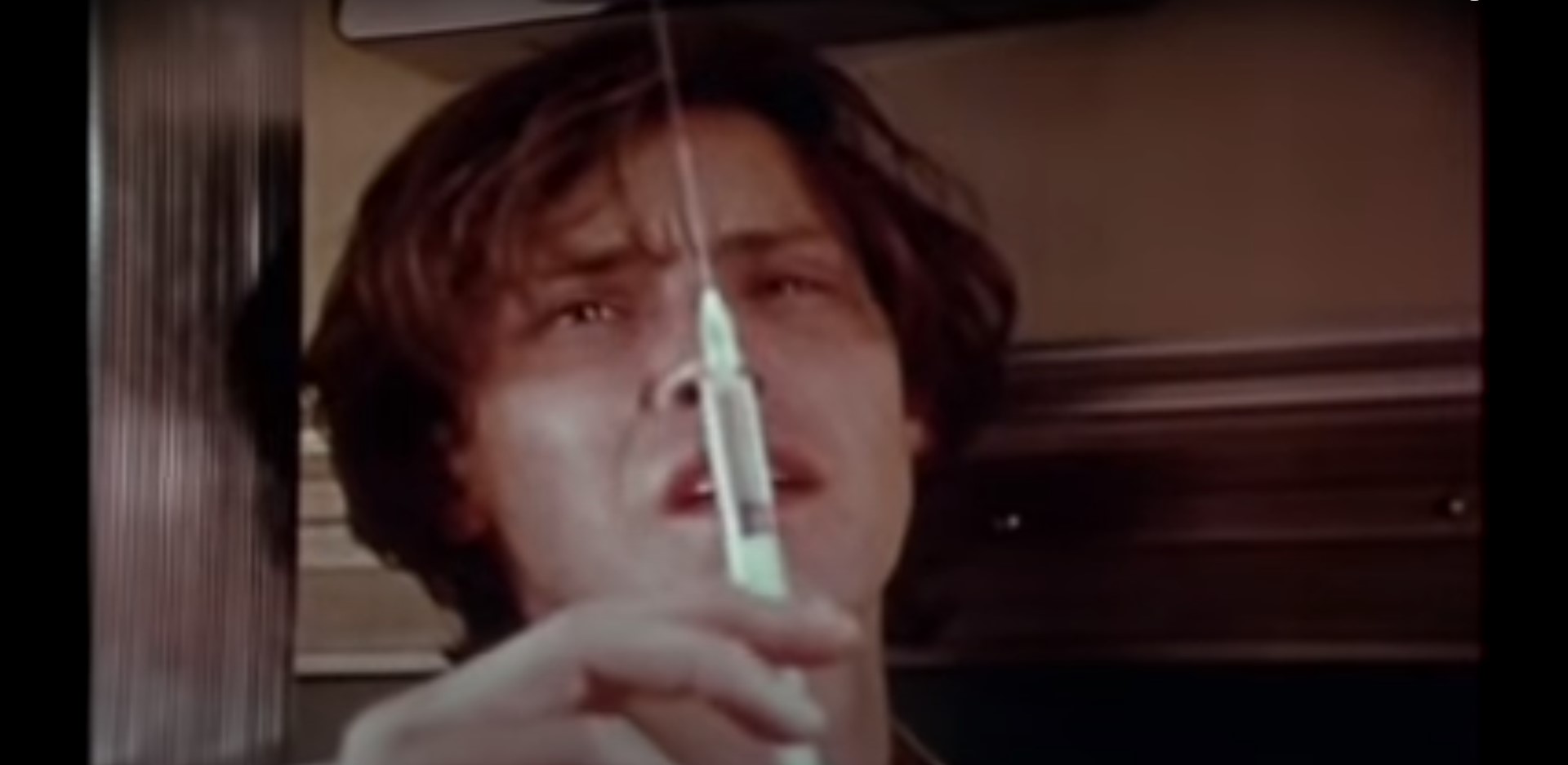
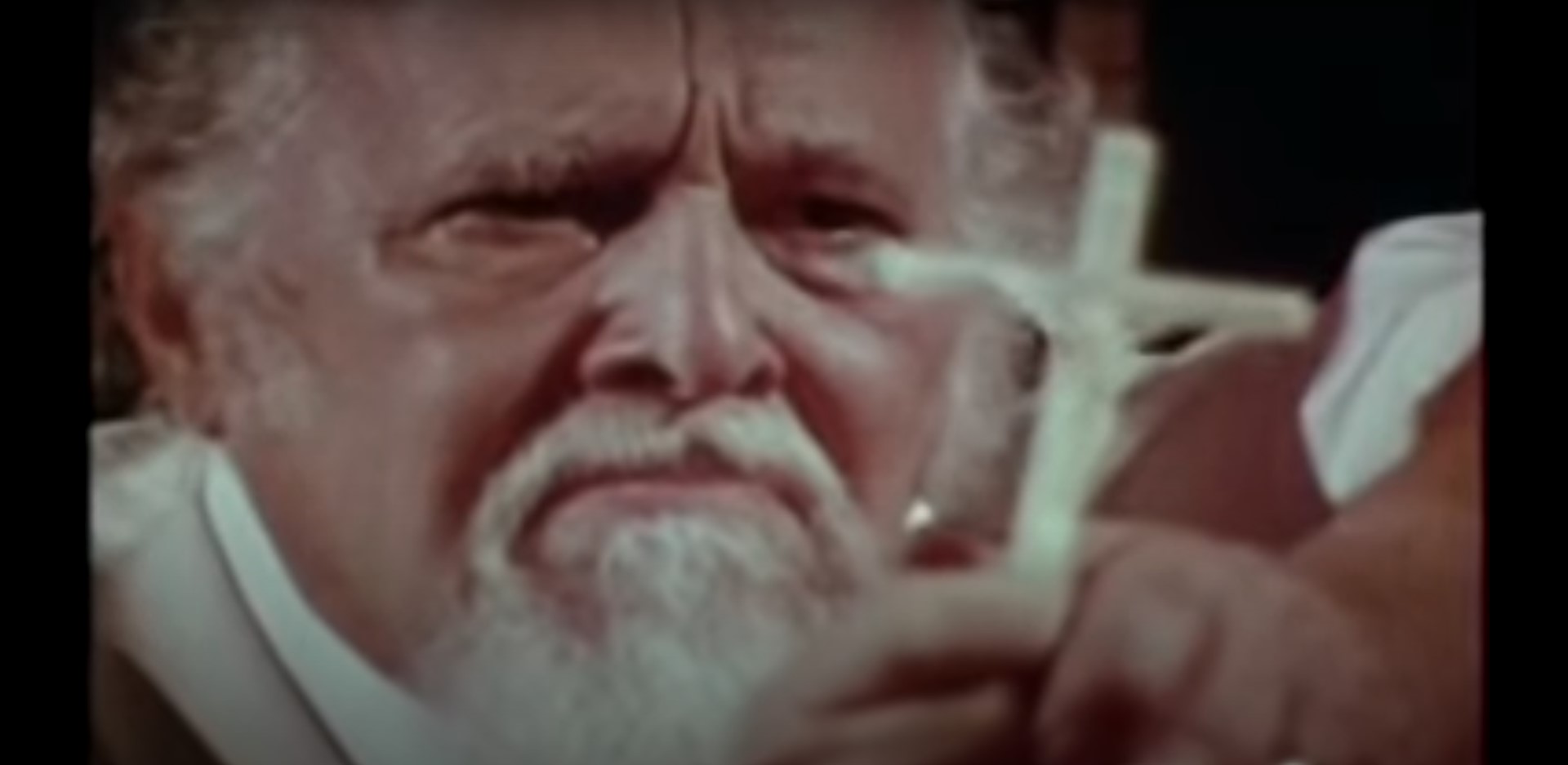
Martin, a young man from Indianapolis and upon recently lost his mother, travels by train to Braddock, Pennsylvania where he’s greeted by his elderly cousin Cuda, an old world believer that Martin has been selectively plagued by the family curse of vampirism and will take Martin in under his roof to cleanse his soul of evil, even if that means destroying him.  Though he doesn’t believe in the vampiric superstitions and the movie depictions, Martin truly believes he’s an 84-year-old vampire and does kill young, beautiful women to intimately drink their blood.  Being reserved and shy gives Martin an advantage to observe his potential victims from afar after gaining employment working as a delivery boy out of his cousin’s shop.  Cuda’s granddaughter, Christina, believes her lonely cousin’s mental illness is being exacerbated by grandfather’s archaic and draconian beliefs, fostered by a family history based off tradition rather than science.  When Martin meets an interested housewife on one of his delivery runs, the need to consume blood trickles when sex enters the picture, but also induces slipups in his well-oiled drug and drink operation whenever the need to feed becomes too much.

By now, “Martin” needs no introduction.  The father of the flesh-eating zombie, George Romero, delivered a neo-realism take on the vampiric mythology nearly 50 years ago in 1977.  “Martin” became the writer-director’s first all around filmic success after being royally screwed by the Walter Reade Organization for having failed to copyright the prints on the trailblazing and timeless classic “Night of the Living Dead,” the reason why you see so many Tom, Dick, and Harry remakes, revisions, sequels, and such of the 1968 black-and-white film that introduced zombies as flesh eaters, and a pair of box office failures that kept Romer in severe debt until slipping into business bed with producer Richard P. Rubinstein, the associate producer for Romero’s “The Amusement Park” and who would collaborate with Romero as a producer for the next subsequent decade years.  Filmed on location in the societal and industrial crumbling Western Pennsylvania town of Braddock, “Martin” remains one of George Romero’s quintessential and provocative pieces of work outside The Living Dead series under Rubinstein and Romero’s The Laurel Group production company.

In the titular role is the introduction of John Amplas who was discovered by Romero after watching Amplas in a play and the entire lead principal was reworked to accommodate Amplas boyish youth.  Amplas is instrumental to Martin’s success in a handful of ways:  the Pittsburgh native knew how to properly slink in an unsuspecting manner, he also didn’t overbear scenes and costars with a larger-than-life presence and could dip into this awkwardly retrieved guilt for the premediated murder to fulfill a need that either’s supernatural or unnaturally mental.  Amplas could walk that thin line that keeps the audience wondering how much Martin says and does is actually true or a misconception because of mental illness and this is coupled nicely with Romero’s direction, splicing in black-and-white scenes of gothic-laden, theater-esque vampire flashbacks that could either be a delusional reality or a very real backstory to Marin’s cursed heritage.  Polarizing external family forces in his elderly cousin Cuda (Lincoln Maazel, “The Amusement Park”) and age akin cousin Christina (Christine Forrest) combat on an emotionally taut and verbal levels between their corresponding character qualities of superstition and science that parallel Martin’s eventual damnation or salvation.  The principal trio are tightly compacted to strain the dynamic with a back-and-forth debate over which truth is behind Martin’s troubles.  Romero pens a good case for both by never fleshing out a legitimate truth all the way through to the end; instead, it’s a battle of save Martin from himself who understands the problem, wants to deal with it, but barely takes up arms to combat or even face his issues.  Special F/X legend Tom Savini, pre-trademark inky black mustache and goatee, makes his debut role as Christina’s boyfriend Arthur who serves only as a device to pull reason away from the table in a conflicted measure to pressurize Christina’s capacity beyond the limits of also caring for herself.  Eventually, Christina has to make a decision and, ultimately, choses herself to save, leaving Martin to fend against a sternly superstitious and old world Cuda.  Sara Venable, Roger Caine (“Dracula Exotica”), Donaldo Soviero, Francine Middleton (“The Love-Thrill Murders”), and Elyane Nadeau make up the supporting cast.

George Romero, again, redefines, or in a more fittingly descriptive – revamps, classic horror villainy that replaces the supernatural element with a realistic approach to weave the very fabric of horror into possibility while still hinting at something beyond the limits of reason.  “There is no real magic.  There’s no real magic, ever!” says Martin about the theatrical stereotypes used to display vampires in attempt by Romero to disenchant us from the ideologized mythos, the habitual characteristics, and the physiognomies of what we consider to be a night bloodsucker.  During that scene between him and Cuda, the words are potently effective in disapproving myths about vampires, but the words are supported with fact as Martin casually debunks garlic, crosses, and sunlight as vampiric weaponry at the expense of humiliating and entertaining Cuda.  “Martin” is at the forefront of being an allegory for loneliness and is a driving reason for presumably the real vampire’s gruesome habit to slice open wrists and drink blood.  Martin only targets young, beautiful women and becomes intimate with them while they are limp under sedation.  When he meets an equally lonely Mrs. Santini, a depressed housewife on the verge of an emotional collapse, and the two embrace each other with comfort against what dispirits them; disinterested in stalking her, Martin’s need to kill dampens and Mrs. Santini unhappy marriage in nullified by the young who listens more than speaks.  Maturity and youth meld together in a moment of peace between them but their bond still shows micro fissures of incompatibility that puts doubts into Martin’s 84-year, carefully planned practice and also doesn’t save Mrs. Santini completely from her too-little-too-late despair.  Braddock, Pennsylvania, a small town sinking into the slumps of becoming forgotten, is a once industrious backdrop integrated as a metaphor for being a forsaken place where things go to die.  Martin is sent to Braddock to paradoxically be cared for by a cousin determined to destroy him because of a family curse that afflicts select generations in what can be perceived as butting of heads between the defiance of angsty youth versus the traditions of an older individual set in the world with their linear ways of thinking.  

As aforementioned, “Martin” is a cult classic from one of the most notable masters of horror and as a film, “Martin” can stand on its own two feet on any format.  However, with that being said, UK home entertainment distributor, Second Sight, celebrates this early George Romero razor-edged thriller with a definitive 3-disc, 4K and Blu-ray release jammed back with software and firmware bonus content that fans can really sink their teeth into for a lifetime.  The limited edition UHD and Blu-ray O-slip box presents a 4K and 2K scan and restoration of a 35mm duplicate negative (note:  not from the original 16mm source) that has been supervised and approved by director of photography Michael Gornick and presented in the Academy aspect ratio of 1.37:1.  Considering the blown duplicated source of a 16mm grade, the 4K UHD scan on the BD66 won’t live up to 4K potential, as some may expect.  There’s quite a bit of varying levels detail discernibility, some shots look better than others, but the overall restoration renders a better than it’s ever looked product with natural grain and damaged reduced to some blue stock flaring around the side and edges, especially during night scenes.  Shadows looked deeper than previous versions, meaning that tenebrism isn’t lost amongst a softer image but rather creates depth with the additional of better sharpened edges to outline objects between the light source  Some speckle debris filters through at times but not enough to cause major concern with the overall experience watching and enjoying the restoration that has HD enhanced grading to make blood that richer technicolor coral color used in my subsequent Romero “Living Dead” films up to “Day of the Dead.”  The Blu-ray’s 2K works just as well due to the scrappy source equipment of what the budget allowed, delivering a fine product of the best transposed transfer known to fan kind and beating out the Lionsgate’s warming grading with a cooler, more hardline detail and delineation picture. The massive release comes with three audio options – an English DTS-HD 5.1 surround sound, an English DTS-HD 2.0 stereo, and an English DTS-HD 1.0. Though Martin audiophiles will likely gravitate toward a multiple channel output, “Martin” is one of those select features that does better in a less-is-more return by not forcing the limited and stronger signals, such as the dialogue and Donald Rubenstein’s experimentally spiritual score, to encoding competition with the milieu ambient and boom recorded sound effects, that for the most part, are background support for the bigger, better one-two punch of clean, clear, and presently full dialogue and a consciously curated soundtrack to walk with Martin every step of his journey. There’s a pinch of popping and a low-emanating droning that very discreet and negligible that won’t affect the experience on bite…I mean bit. English SDH are optional. Bonus materials are what shape the Second Sight releases to be greatly desirable amongst fans as the company continues to produce high-quality encoded bonus features as well as carefully and professionally organized tangible items inside the box. Both 4K UHD and Blu-ray have the same encoded bonus features that include four audio commentaries of old and new. The two archived commentaries include George Romero, John Amplas, and Tom Savini in one set and the other with Romero, Savini, Richard P. Rubenstein, and Michael Gorrick. The new commentaries are with Kat Ellinger, editor-in-chief of Diabolique Magazine, and the second with the recently deceased film curator, Travis Crawford. A vintage 2004 documentary from the Lionsgate release is included in the set with remarks from Romero, Savini, Gorrick, Donald Rubenstein, and Christine Forrest along with a new documentary echoing much of the 2004 doc, in collaboration with Severin Films, with John Amplas, Michel Gorrick, and Tom Dubensky strolling through Braddock, which hasn’t seemingly changed from the depths of poverty, on a raining day recalling nearly every moment of production during principal photography. The new doc includes other insights from Forrest, Savini, Tony Buba, and Sarah Venable in what feels like a complete celebration and overview of their entire journey through Romero’s personal favorite film. Donald Rubenstein also has a new interview discussing his score and meeting and working with Romero on a positive level. The disc features round out with one of Tony Buba’s short films “J. Roy – New and Used Furniture” revolving around the town of Braddock and the trailer, TV and radio spots. The third disc is the CD form of Donald Rubenstein’s soundtrack laid out in 22 distinct musical numbers. The limited-edition exclusive contents include a rigid O-slip case with a simple, yet effective sterile while and red font color contrast with MADE IN U.S.A. augmented razor blood with vampire teeth and blood dripping from the bottom right corner and a blood dripping cross squarely centered on the back. Inside the slipcase, a thick 104-paged color booklet with new in-depth essays and insights from Daniel Bird, Miranda Corcoran, Heather Drain, Kat Ellinger, Andrew Graves, Alexandra Heller-Nicholas, Elena Lazic, Stephen Thrower, Jon Towlson, Simon Ward, Tony Williams and an interview with Tony Buba by Travis Crawford. The booklet also contains colorized, behind-the-scenes photos of production and numerous one-sheets, promotion poster and ads, and a beautifully, expressionistic illustrated front and back cover. Adam Stothard illustrates 5 character lobby cards, including John Amplas’ Martin, Christine Forrest’s Christina, Tom Savini’s Arthur, Lincoln Maazel’s Cuda, and George Romero’s Father Howard. All 3 disc arts are the same as the front cover the release and contained a trifold, punch-lock case in reverse colors of the slipcase. The 4K UHD is region free but the Blu-ray is confirmed region locked B so you’ll need a region free or region B player. The runtime clocks in at 95 minutes and is certified 18 for sexualized violence and sexual threat. Second Sight must be a Disney fan with their monstrous beast of a limited edition that is also a thing of beauty; “Martin” deserves every square inch of this physical and digital display of expressionistic vampirism of underrated performances and from the mind’s eye of a dauntless George Romero, unafraid to take risks, show blood, and understand the human condition.

“Martin” Limited Edition Second Sight Release Available at Amazon.com! 

EVIL Wants You to Be Mindless! “Night Feeder” reviewed! (SRS Cinema / Blu-ray)

“Night Feeder” Is a Brainless Trip Through the New Wave Eighties! 

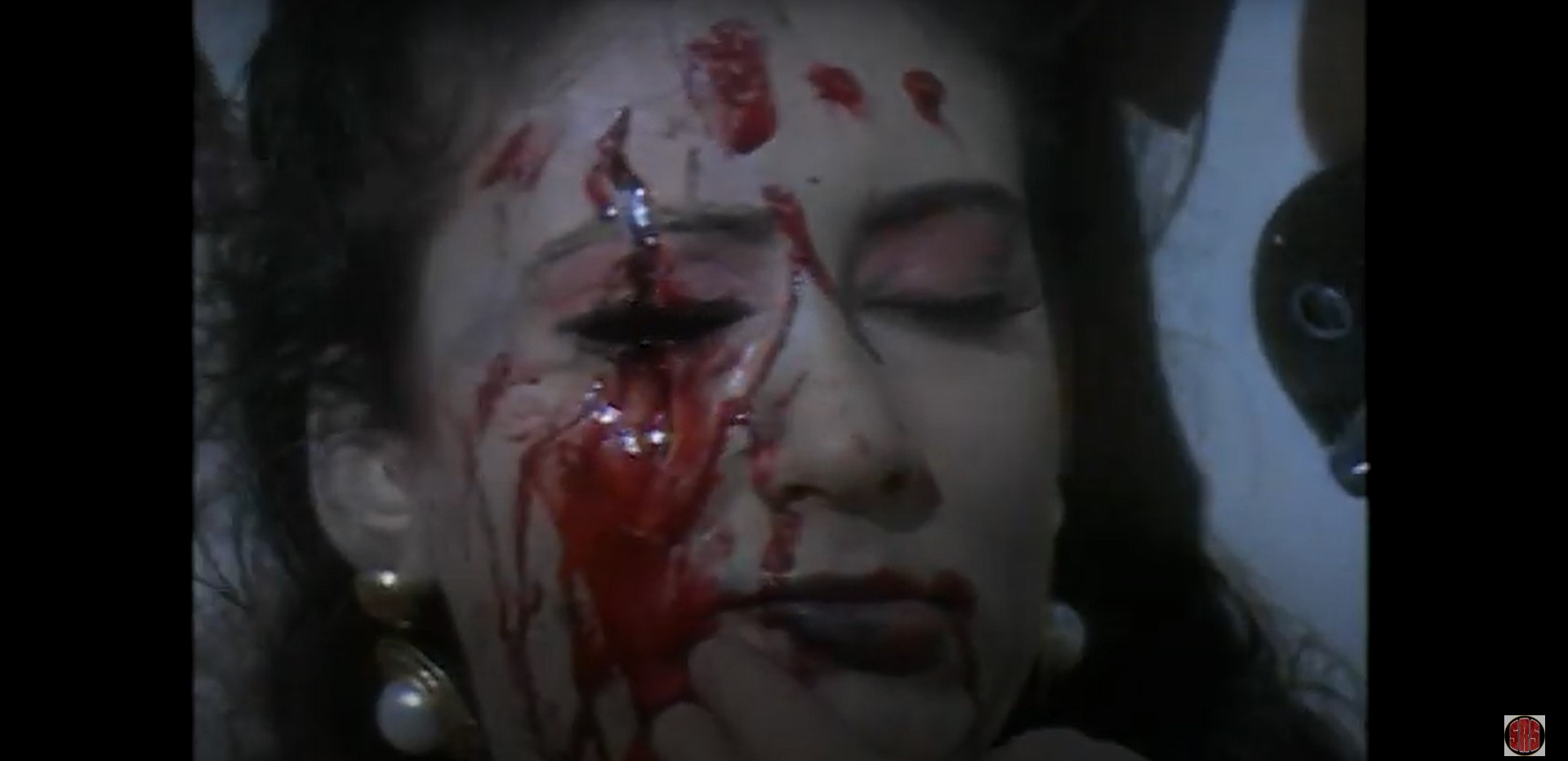
A woman is found dead on the city streets.  The cause of death is the same as two others before with similar wounds; their brains are sucked out completely through a slit in the eye socket.  As the neighborhood community cowers in fear, Jean Michaelson, a female magazine journalist and who also just moved to the residential city district, takes it upon herself to uncover the truth before her new home becomes an unlivable nightmare.  At the center of suspicion is Bryan Soulfield, a musician a part of the band Disease, previously involved in the death investigation of three women groupies who overdosed on a drug called DZS that shares the same phonetic name Soulfield’s band.  Inspector Alonzo Bernardo spearheads the investigation with an ever-watchful eye on his best suspect, Bryan Soulfield, and an even keener interest in Jean Michaelson as they both feel the grip of public pressure and come intimately closer to each other and to the unsuspecting and shocking truth as the bodies become more frequent around Jean’s apartment.

Obscure, one-and-done horror can often be worth the viewing calories and 1988’s “Night Feeder” is definitely the epitome of those hidden gem genre films from America’s exploration into the video format and stemming into another branch of liberal arts.  “Night Feeder” was the result of an assemblage of a painter and a pair of novelists who, out of the blue, decided they wanted to make a movie.  A gouache and oil painter of portraits, often nude, Jim Whiteaker tries his talented brush stroking hand at directing a full length shot-on-video feature with mystery writers Linnea Due and the late Shelley Singer crafting a murder whodunit in a grisly brain slurping fashion that conveys heavily on the theme of misjudging a book by its disfigured and notorious cover and end with a killer you never see coming – because it’s sucking out your brain through your eye socket!  “Night Feeder” is also emblematic amongst other spoiler-inducing concepts that we’ll dive into later in the review.  Shot in the dark corners of the San Francisco Bay area at the liberal arts focused Dutch Boy Studios, “Night Feeder” is glam horror ripe for attention, produced by James and Jo Ann Gillerman under the production banner of Gillerman-Whiteaker-Gillerman.

For an investigative horror-thriller in the crevices of a phasing new wave and post-punk era, the low-budget production has a remarkably versed cast of unknown, likely hyper regional, actors.  Kate Alexander (“Kamillions”) cut her teeth as principal character, journalist Jean Michaelson, and instills a healthy dose of raw emotion into an unlikely B-flick, tamping her performance firmly into the role caught in a love triangle between punk musician and prime brain-sucking suspect number one, Brian Soulfield  (Caleb Dreneaux) and by-the-book police inspector, Alonzo Bernardo (Jonathan Zeichner) confounded by killer’s strange methods.  Not to forget to mention the ominous presence that possible lurks around every corner that drives shivers up Michaelson’s tattered spine, making her vulnerable and blind to what’s really in front of her, romantically and threateningly.  We’re briefly introduced to support characters, aka soon to be victims, and then eventually snowball into the quickly dispatched before having a chance to steal or swallow the protagonist predicament for their own, but these support characters are engaging enough to be either drug pushing scoundrels, intolerant jerks, or spaced-out mothers so you can tell from the beginning their level of likeableness before their fatal end, but at least they’re not benign, vanilla cogs in the machine. The cast fills out with Lissa Zippardino, Jac Trask, Ginger Seeberg, Roger J. Blair, Robert Duncanson, Robert Hogan, and the Bay-born cultural critic Cintra Wilson and a special soundtrack performance by the new wave rock band, The Nuns as the fictitious band, Disease. On top of that, Dutch Boy artists fill the gaps in minor roles like waiters, party guests, and concerns citizens as a public gathering.

Despite playing out like a police procedural investigation that narrows down suspects until the killer is unearthed and either arrested or gunned down in a harrowing, desperate moment, we all know ahead of time “Night Feeder” is cladded with more than just plainclothes of cops and robbers.  The big tell is the brain being liquified and sucked out from the eye cavity like a Slurpee minus the brain freeze because, well, there’s no brain!  “Night Feeder” sounds like a mindless Z-grade film and while the narrative involves mindlessness in a way, the 80’s creature feature is anything but a ponderous film with an immense underground punk presence, eccentric personalities, and a standoffish and reticent romance brewing in the background sandwiching the strange deaths of unconnected murders piling up around the heroine’s noir-esque, urban jungle neighborhood and perplexing the lone law authority on the case.  Whiteaker and his writing team thoroughly include the residents and residents’ concerns which makes “Night Feeder” bigger than it really is as it is often with lower-budget creature features will neglect to include the angry, scared mobs into the conversation.  The narrative intends to spark public fear and uses it to drive Jean into a rabbit hole of truth that has now become more personal than professional since her space has been affected by an invading killer.  Her best friend ending up dead in the tub of her apartment during a neighborhood party and with her ex-husband found slumped out of the driver’s seat of his car shepherds violently out her old life into a new, scary territory of relationships.  A director having an artistic background and working with creative storytelling minds lends to a more than average physical special effects and becomes a Jonathan Horton (“Enemy Mine”) showcase of skill that removes “Night Feeder” from the average pool of shoddy effects films and into a higher class of eye-catching, detailed creepiness that is unique and can’t be unseen with an autopsy that’s all too realistically educational and with its climatically exposed humanoid creature and it’s protruding cerebral sucking device.

Strong effects, strong story, and a strong female character serve the “Night Feeder” as a secret menu item in the SRS Cinema catalogue!  The Cursed to Crave Forbidden Flesh tag lined film is presented on a single disc, AVC encoded, 1080p high definition Blu-ray with a letterboxed full frame aspect ratio of 1:33:1.  One of the better looking 80’s film on a budget, “Night Feeder” is tremendously insignificant SOV interference, which makes me believe Whiteaker and director of photography, Paul Kalbach, had their hands on non-commercial grade video camcorder and after doing some research, the camera used was a BetaCam SP that increased the horizontal likes to over 340, likely from to Whiteaker and Gillermans’ artistic music videos and seemingly at the advantage of Kalbach’s Artichoke Productions in the Bay area that gained him a reputation as a visual artist and “Night Feeder” very much plays into being a vision of New Wave horror with a glowing aura, vibrant warm, almost neon-like lighting hues, and, of course, the two semi-music videos of The Nuns making their way in front of the camera.  Virtually no technical issues with the image albeit a flat coloring, a blip here and there with a brief blip screech, and softer details with the glow haze outline that provides the movie a prolonged dreamy coating or an inescapable nightmarish ethereal within the context of the scene.  The English language Dolby Digital 2.0 stereo carries a lo-fi but sustainable level that celebrates the dialogue and divvies the other tracks to accommodate the little depth it can muster with the BetaCam recording. English subtitles are not available on this release.  Special bonus features include a commentary by director Jim Whiteaker who provides the genesis of the film and gives background on the characters and actors, a movie still slide show, and SRS trailers that include “Day of the Reaper,” “Garden Tool Massacre,” “The Son of the Devil,” “Hellbox,” “Truth or Dare?” Physical features are housed in a traditional Blu-ray snapper case with new composition artwork with the original embossed title and a still one of the more gory-ladened victims, but the reversed side carries the one of the original key arts that embodies the true essence of “Night Feeder” in illustration of a monstrous hand in the foreground of skyscrapers, reaching up and over a sensuously positioned lifeless woman who resembles the lead actress. The disc art is printed with the same illustrated image. The region free Blu-ray has a runtime of 95 minutes and is region free but is listed as a 2020 film in the same design grouping where usually the date listed is in the production release date, which in this case would be 1988. Tidied up and polished, SRS Cinema Blu-ray of “Night Feeder” is a quarried gem by a group of diverse artists bringing their leathery inlaid and new wave touch of artistic licenses to develop a subgenre standout in the 80’s creature feature category.

“Night Feeder” Is a Brainless Trip Through the New Wave Eighties! 

Out With the Old EVIL. In With the New! “Modern Vampires” reviewed! (Ronin Flix / Blu-ray)

“Modern Vampires” available for purchase on Blu-ray at Amazon.com

Blacklisted for not killing the vampire nemesis Dr. Van Helsing, Dallas is shunned by most of the underground Los Angeles vampire scene now presided over by Count Dracula himself, but as he returns to the city after decades of being gone and gathers with old – very old – dear friends, Dracula threatens him with being burned alive if he overstays his begrudged welcome.  When a newly turned rogue vampire under the pretense of a corner prostitute starts ripping the throats out of unsuspecting Johns, Count Dracula doesn’t want the potential public attention drawn on his species.  Taking a shine to this mysterious woman’s insubordinate nature, Dallas finds her, cleans her up, and introduces her to his inclusive friends, but little do any of the bloodsuckers know is that the Van Helsing is in town and has recruited local Crips to be the holy servants of God in wasting away the vampiric filth that plagues humanity.

Here I thought Casper Van Dien’s only good film was 1997’s galactic war with the extraterrestrial bug species in “Starship Troopers!”  Nope, one year later, Dien follows up his iconic global militant-nationalism and gory-filled sci-fi blockbuster with the little-known American comedy-horror “Modern Vampires.”  Better known around the world as “The Revenant” to not confused American audiences with a highly ingrained British term, “Modern Vampires” is directed by a principal one-half of the 80’s American new wave band Oingo Boingo in Richard Elfman.  The other half of that duo is Richard’s brother, who we all know and love in his unmistakable musical scores of “Batman” ’89 and “Edward Scissorhands,” Danny Elfman who also scores the opening theme to “Modern Vampires” with recognizable and trademark notes from those previously stated Tim Burton pictures.  The script was also penned by a fellow Oingo Boingo original member and the Kiefer Sutherland and Reese Witherspoon “Freeway” film, and its sequel, screenwriter Matthew Bright.  Bright and Richard Elfman had previously collaborated on the comedy-musical “Forbidden Zone” surrounding sixth dimensions and damsels in distress as well as the Charles Band produced “Shrunken Heads.”  “Modern Vampires” is produced by Elfman, Brad Wyman (“Barb Wire”), and Chris Hanley (“American Psycho”) under the Storm Entertainment and Muse/Wyman productions.

Ladies, if you thought you’ve seen the last of Casper Van Dien’s backside in “Starship Troopers,” then worry not! As the hunky, cigar-smoking, former World War II pilot Dallas, Van Dien, once again, shows off his hind parts in a steamy sex scene one top of Dallas’s car with costar Natasha Gregson Wagner (“Vampires: Los Muertos,” “Urban Legend”). As the indifferent vampire Nico under the pretense of a prostitute who seduces men into vulnerability before gashing open their necks, Wagner adds a bloodthirsty ferocity to her uncouth, undead character’s tremendous and tragic depth surrounding a trailer park trash childhood of sexual abuse and a grandstand mother. As a pair, Dallas and Nico are essentially made for each other or, rather, Dallas turned Nico because under all that pretty boy veneer, Dallas still has a beating heart for compassion and friendship as noted with Dr. Frederick Van Helsing’s crippled son, Hans, and the choice made between the two young men before the whole debacle of nixing to the fearless and relentless vampire killer of all time. Rob Stieger plays that character beautifully manically. “The Amityville Horror” and “End of Days” actor graces the production with seasoned vitality while also trying something new himself, a slightly fascist German vampire hunter who hires L.A. gangsters to help him do his dirty work and has to be the butt of the joke at times at the hands of Count Dracula (“Striking Distance”) as well as Dallas. Stieger does his scenes with great earnest yet great fun that puts the legendary actor into a new perspective. “Modern Vampires'” star-studded cast doesn’t end there was Dallas’s friends include performances from Kim Cattrall (“Big Trouble in Little China”), comedian Greg Furgeson, Natasha Lyonne (“Slums of Beverely Hills”), and the legendary Udo Kier (Andy Warhol’s “Dracula”) as well as a cast round out with Natalya Andreychenko, Gabriel Casseus, Peter Lucas, Victor Togunde, Cedric Terrell, Flex Alexander, and Conchata Ferrell.

Gory, sexy, and overflowing with politically incorrect humor, Richard Elfman’s “Modern Vampires” more than likely would not be a film made today, but definitely suits the 90’s scene.  There are stereotypes and jokes radically exaggerated for comical effect and land with such insouciant ease that the entire production felt at peace with the humor, emitting “Modern Vampires” as an enjoyable, blood-soaked, outrageous vampire comedy unearthed from over 20-years ago and landing onto a new Blu-ray release where the Elfman film deserved an upgraded treatment.  Los Angeles in ’98 didn’t look extremely different than what’s depicted in the film – late night clubs with half-naked patrons doing all sorts of weird and bloodletting fetishes, leeching prostitution on the delinquency riddled streets, and unsavory, unwilling gang bangs but, in “Modern Vampires’ case, the one tied to the bed is a female vamp fully-transformed into a human-sized bat and those who have sex with her, turn into a vampire themselves.  See the humor and symbolism in that?  Almost as if having unprotected sex with a creature of night is akin to contracting a sexually transmitted disease.  Despite the waggishness, “Modern Vampires” holds other staid themes as well with an arteria one being reflective in the title.  The genesis of the species emerged from Count Dracula who had moved from his old Germanic country to the hip and upcoming L.A. area. With each generation of vampire, the loyalty gap becomes wider until the turned from the 20th century are fully unmanageable by the Count’s supreme power. Nico, the youngest turned is in her vampiric infancy often noted throughout the film, can’t be contained and won’t be told what to do, much like teenagers butting heads with their parents on every little subject. Traditions are broken, heads are severed, bodies are burned, and the “Modern Vampires” is a wildly funny and gruesomely gnarly.

“Modern Vampires” is now the vintage vampires that hit the silver screen some 24 years ago and is now basking with the great 90’s flair of special effects, clothes, and hair on a new Blu-ray release from Ronin Flix in association with Quiver Distribution (“To Your Last Death”). Newly scanned in 2K of the Richard Elfman’s personal film print, the picture retains an unsullied quality with impeccable detail delineation for a story that’s mainly set/shot at night. There’s quite an overlay of purple flush that I’m fairly positive is not intended that pulls away, at times, from clearcut contrasting and blend the objects in the scene together. The film is presented in full high definition1080p in a widescreen aspect ratio of 1.85:1 with an English language DTS-HD master audio 2.0 stereo that retains the amplitude of every categorical track. Dialogue track provides a clean depth and clarity that doesn’t swerve into boxy territory like many indie productions do. Ambient and foley range is quite limited for a bunch of different locational shots and in a crowded location full of extras but the extent of the quality is good enough. The 91-minute film comes not rated and has an exclusive extra with an introduction by director Richard Elfman plus archival features, such as audio commentary with Richard Elfman and star Casper Van Dien, a behind-the-scenes featurette with on set mini-interviews with the cast and crew. and the theatrical trailer. “Modern Vampires” might now be long in the tooth (get it?) but has the classic campy escapades of an unpretentious good time and, that my friends, is timeless.

“Modern Vampires” available for purchase on Blu-ray at Amazon.com