EVIL’s Coaxial Cord Right into Your TV Set! “HeBGB TV” reviewed! (Scream Team Releasing / DVD)

Contact Your Local Cable Provide to Upgrade Your Box for “HeBGB TV” on DVD!

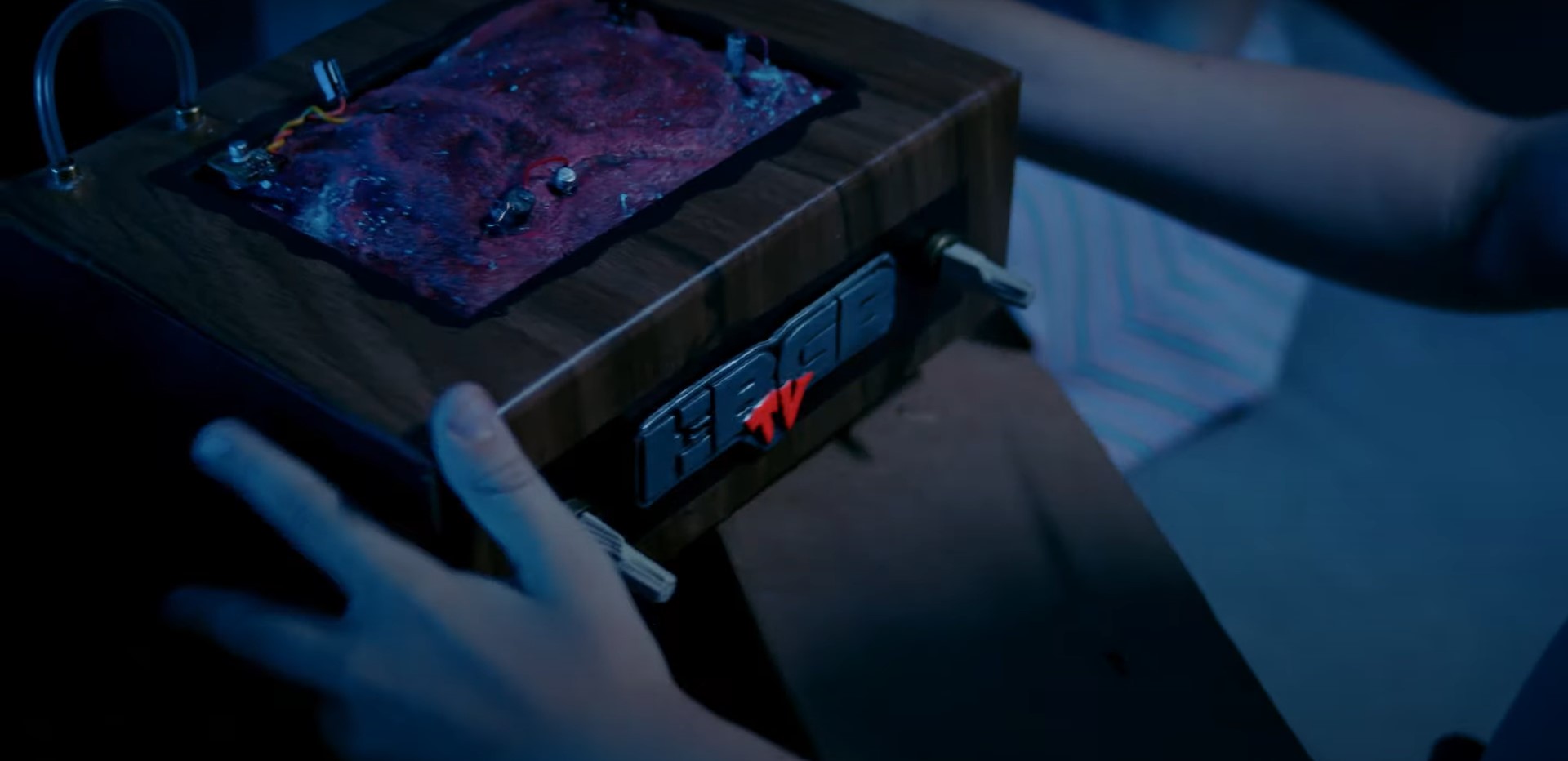
In a world of streaming devices, the cable box era has become nothing but a memory until mysterious HeBGB cable boxes sudden appear on retail shelves and on homeowner doorsteps.  The what looks to be a brain in a box with some wiring quickly self-installs right into the cable jack and manifests a gaudy-dressed tangible host, The Purple Guy, right into your living room.  Promising a guaranteed fun time, The Purple Guy is eager for souls, I mean viewers, to subscribed to the endless commercial content of HeBGB TV, promising nothing but the best entertainment from the other side of the dimension has to offer.  Sordid horror, 90s-inspired carving infomercials, grotesque commercials, monstrous sexy hotlines, demonic feature films, and more provide a source of endless brain-rotting consumerism over the TV broadcast waves.  Eye-glued patrons of senseless horrors become slave to the screens that send their very souls to a machination machine from another world.  Who can stop the evils of doom channel surfing? 
Those who are now in their late 30s, early 40s likely remember how awesome and nearly uninhibited cable television was back in the day.  Money and creative talent were invested in turning the most ordinary retail product into a mini-movie of ostentatiousness, imbued with vividly stark colors and an insanity of pure energy.  Television didn’t coddle, it shaped the very fabric of impressionable children of that era, resulting in imagine and inspiration.  That is what comes to mind when speaking of “HeBGB TV,” a comedy-horror anthology of sorts of shorts written-and-directed by Eric Griffin, Adam Lenhart, and Jake Mcclellan.  The trio’s initial concept, prior to the creation of “HeBGB TV,” was something along the lines of an interactive variety show with short films, standup comedy, and puppetry held in front of a live audience.  When COVID hit in 2020, their idea pivoted toward a movie, eventually a script evolved into a drivable wraparound narrative chalked-full of some of the prefabbed material as well as some other new zany, horror-inspired skits, shorts, and string-pulling puppetries.  Griffin, Lenhart, and Mcclellan produce the feature under their LLC of HeBGB TV productions and PatchTown Films, based right in my regional backyard of Lancaster, PA.

Credited in the film as Knucklehead, Jake Mcclellan may act to the very definition of pseudonym but, in the lack of better words, is the face of “HeBGB TV” by having scores of roles and personalities at his disposable to dress up and become a totally new and grotesquely phantasmagoric character.  Whether be The Purple Guy, PU News’ greasy anchorman, the Blue Monster, or just desperate dieter with a health-hazard late night snacking problem, Mcclellan goes all out with makeup, costuming, and prosthetics in what could be considered a one man drag show and its gorgeously panache and over-the-top but doesn’t stray terribly too far from the outrageous era the horror-comedy emulates.  “HeBGB TV” is full of caricatures of late-night television and oddities of live TV and marketing campaigns, even Eric Griffin and Adam Lenhart get involved in front of camera as a hobo watching a portable antenna TV and as Smokie, the exterminator of potheads with noxious weed, as seen on TV, or rather “HeBGB TV.”  Most of the enthusiasm, and eccentrics, are within film’s faux television programming but the cast of performances flesh out with Ian Sanchez, Curtis Proctor-Artz, Josh Dorsheimer, Zenobia Decoteau, Michael Garland, Mike Madrigall, Ellen Tiberio-Shultz, Kristie Ohlinger, Colleen Madrigall, and Willow and Van Reiner as the kids who The Purple Guy connivingly entertains and Andrew Bowser reprising his most beloved YouTube persona, Onyx the Fortuitous.

Cut from the same cloth as Weird Al’s “UHF, Peter Hyams’s “Stay Tuned,” and Jeff Lieberman’s “Remote Control,” the cable box antics of the 80s-90s TV is quickly fading the analog years into nothing more than static snow of broadcast noise.  However, “HeBGB TV” is the answer, the recollection, and the nostalgia-driven film that delivers better than trying to get a glimpse of the vague outlines of adult actresses in the static noise of premium adult channels.  Directors Griffin, Lenhart, and Mcclellan combine their creative geniuses, incorporate their sentimental love of 90’s media, and integrate their own other interests into a cinematic cannonball of colorful comedy-horror.  While the wraparound stories outside the HeBGB TV box proves able with the inexplicable mass rollout of the brain-in-a-box cable program provider and rotting, killing, and transfiguring viewers into mindless gawkers, overdosed smokers, and malevolent demons, the real star of the feature is flipping through the channels for the go-hard mock-commercials and other putrid programming laced with horror themes and capturing the spirit of television culture of 20-to-30 years ago.  While most of the visual effects reside around the wraparound story, contributing to the alloying of the story, Adam Lenhart’s practical effects more than make up for it a DIY initiative of can-do sculpting, molding, and crafting ingenuity below the embraced realm of unreality.

Don’t touch that dial as Scream Team Releasing delivers cable television like never before with “HeBGB TV” now on DVD! Though the Scream Team Releasing DVD back cover lists the format as a Blu-ray, the data file is actually a MPEG2 encoded, singer-layer DVD5 that has a widescreen 1.78:1 aspect ratio presentation. A combination blend of interlaced and digital video swirl “HeBGB TV” into a time warp of the past and present. The filmmakers captured not only the feel of rambunctious, eccentric, and vividly brilliant 90’s commercials but were also able to capture the look of it too with the interlacing horizontal lines indicative of video frame rates of the time. The wraparound narrative portions are digitally cleaner in juxtaposition, factionalizing present and TV programming with distinction until the culminating plan comes to conclusion. Some of the digital visual effects gags crumble under the practical elements of an analog airing, proving once again that the tangible and practical outstage the digital composition, but the crumbling doesn’t stem from compression issues. The English language Dolby Digital 2.0 mix is a symphony of frenzied chaos, pinpoint advert jingles, and deliciously distasteful horror gags facsimiled perfectly, as if it was plucked straight from the pre-millennium. Dialogue is quick but renders clean and clear in a blend of inset and ADR vocal recording, per the commentary. No issues with depth, range, or any kind of compression side effects. Well scored with a catchy main theme and topnotch sound designed to add to “HeBGB TV’s” romp commercial content. English subtitles are optionally available. Bonus features are aplenty with a retrospective interview with the three directors and short clips going in-depth with behind-the-scenes movie magic, a HeBGB TV video installation guide, a world-premiere pre-show, the first interactive show prior to COVID, and the theatrical trailer in the motion menu option shaped like a retro tube television with right side buttons. Inside the setup option along with the English Subtitle toggle, a directors’ commentary can be selected and played from there. The standard edition encased inside an Amaray comes with faded hues on an illustrated composition cover art of most of the “HeBGB TV’s” wacky pastiches and a disc pressed with the pulsing brain-loaded cable box. The release comes not rated, region free, and has a copasetic runtime of 78 minutes. ”HeBGB TV” is couch potato worthy that syndicates together hilarious travesties and transvestites for timeless television touting, stitched together from previously shot short films, puppetry depravities, and a new sci-fi fiction.
Contact Your Local Cable Provide to Upgrade Your Box for “HeBGB TV” on DVD!

Never Trust a Script Written by an Egotistically EVIL “Scream Queen” reviewed! (Visual Vengeance / Blu-ray)

This Chainsaw’s Made for Cutting! “Scream Queen” on Blu-ray!

Malicia Tombs, an acclaimed horror actress known for B-movies and bad attitude, bursts into a wreckage of flames when her car sudden explodes after storming off the set of her new movie, “Scream Queen,” in which she wrote and starred as the titular character.  Part of the cast and crew were devastated by the accident that had cut their own career short while others were relieved the egotistical Tombs had perished despite publicly feigning grief over the loss of a genre fan-favorite.  Months later, the small cast and crew receive a mysterious invitation to gather at a creepy mansion butlered by Runyon.  When their host is unveiled as to be a very much alive Malicia Tombs, she offers them a lucrative sum of money to finish the film they’ve started but with a new script.  As the guests read through the new treatment, the cast and crew realize their present moments read just as their being played out in the script, even their deaths. 

If there was ever a single face deserving the representative distinction within an overpopulated categorized scream queen genus, Linnea Quigley would be that green-eyed, blonde-topped, beautiful face with an infectious smile.  Quigley worked with an array of filmmakers, ranging from some of the most renowned cult films of all times amidst reams of horror movies for nearly half a century (yes, we’re feeling old now) to the most independent of the independents films never having really receive the proper exhibition format or audience attention.  To what would be a delight to Quigley’s fanbase, one of those obscure features is Brad Sykes’ “Scream Queen,” a late 90’s filmed, 2002-released, SOV, U.S. slasher written-and-directed by the “Camp Blood” and low-budget filmmaker with Quigley in mind to play the scream queen character Malicia Tombs, now available, officially, on Blu-ray.  “Scream Queen” is the first major project for Brad Sykes in a collaborating effort in not only as a director but also as a co-producer alongside David Sterling of Sterling Entertainment.

“The Return of the Living Dead” and “Night of the Demons” Quigley puts on another memorable and wickedly fiendish performance as the haughty genre scream queen Malicia Tombs who superiority has gone to her head as she embraces her designation to an exact mania, displayed early on when her character’s character attempts to choke-kill another actress despite the numbered scene not being a death scene and Malicia harps on wanting to continue with the resembling act of murder.  As much as Malicia Tombs embraces the killer instinct inside of her, Linnea Quigley very much embraces Malicia Tombs without having to take her top off and despite having less screen time than her costars.  While Quigley fades in and out of the linear story, the narrative progresses with livelihood hardships of the now out-of-work cast and crew who relied heavily on that small film to boost their acting and filmmaking careers.  That crop of characters falls short tipping into their expectations, aspirations, and even their relations to be just slasher fodder for the mysterious maniac roaming the house.  Jenni (Emilie Jo Tisdale,” Escape from Hell”) and Devon (Nova Sheppard) are inferred romantic roommates who sell clothes on the side of the street to make ends meet post failed film but don’t have surmountable direction to either be a full-fledged couple to sympathize or seem terribly concerned about opening their own clothing shop other than what would be a bad decision to reside at the mansion overnight.  Again, no sympathy there either.  The special effects goof Squib (Bryan Cooper churns chuckles relentlessly by relating more to his crafted effects dummy more than people, marking him conclusively comedy relief as well as fated for death that, like in life, no one takes him seriously when he shows up gruesomely mutilated.  The other principal actress across from Tombs is Christine (Nicole West, “Dimension in Fear”), a buxom blonde tired of secretary work succumbing to lead man flirtations in a dark and scary house where every shadowy corner is lodged with threat.  The pair fall into that horror character cliché of have sex, will die, quickly downgrading their pre-professional relationship into nothing more than dark house desire.  Director Eric Orloff (Jarrod Robbins, “Evil Sister 2”), a presumed spin on the Awful Dr. Orloff and perhaps hints at his motives, seems to be stuck in angsty avoidance and melancholy stemmed by what could have been with Scream Queen but that also peters to a gross negligence end of an arc waste.  Rounding out the cast are a couple of special bit parts played by prolific Full Moon Entertainment and overall horror movie screenwriter C. Courtney Joyner (“Puppet Masters III,” “From A Whisper to Scream”) as a televised homicide detective and Kurt Levee in a quasi-return of his character Runnion from “Evil Sister” but alternatively spelled “Runyon” in “Scream Queen.”  

Though obviously and definitely not the first to do this, “Scream Queen” humors metacinema measures built upon horror tropes and spherical plot points that redirects the story back upon itself for a killer effect.  The feature has no issues making and poking fun at itself within a campy context albeit the usually grave apprehensions of a true scary slasher movie that’s less campy of which a scream queen is born – think Jamie Lee Curtis in “Halloween” or Neve Campbell in “Scream.”  Bryan Cooper not only portrayed the foolish effects guy persona but also actually did a lot of the gore gags for the film, achieving very detailed inlaid gore prosthetics for a smalltime picture with an axe embedded into a chest and a mangled face to name a few.  The story itself feels a bit rough and ready as it slips into supernatural obscurity and, as aforementioned, character setups flounder to a stagnation, killing instantly the miniscule arcs that were structured prior to their mansion gathering in what becomes a slapdash of serial offing that wraps up the story post-haste without much cat-and-mouse tension.  With that said, “Scream Queen’s” unpolished plot had once mirrored its fallowed physical release until recently but now witnessing its birth out of twilight has been multitudinous worth the wait. 

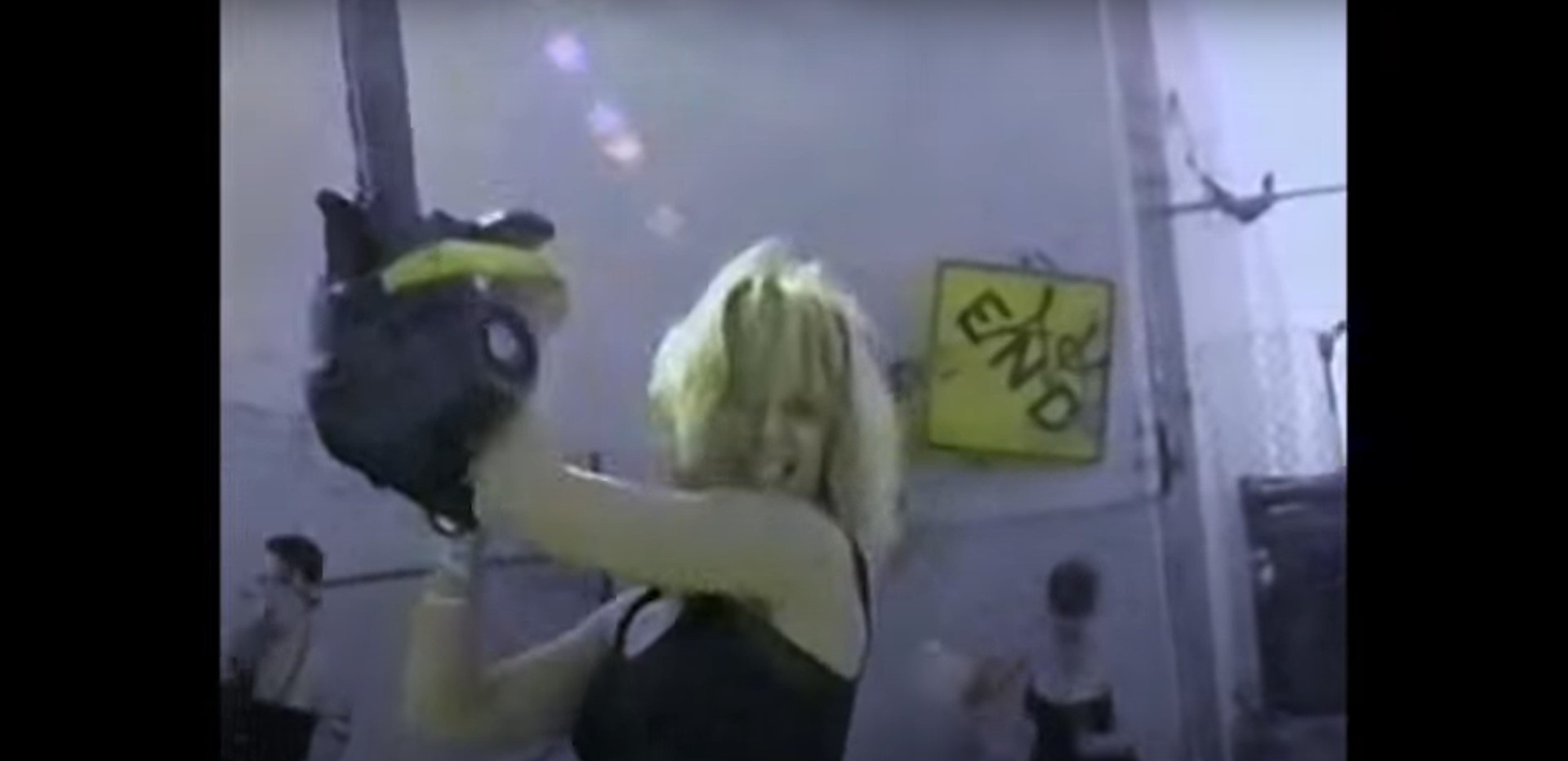
Another of Linnea Quigley’s lost films has been resurrected from the format graveyard by Visual Vengeance with a new Blu-ray release of “Scream Queen.”  The Wild Eye Releasing sublabel release comes with an AVC encoded, high definition interlaced scanned and director approved 1080i transfer from the 480p tape elements on BD50 capacity and comes also with the qualitative joys of a standard definition shot on video experience.  SOV tape upconversion can never completely eradicate the imperfections associated with tape and we also know this going in courtesy of Visual Vengeance’s standard practice of a fair warning before the film, but the overall “Scream Queen” presentation passes as clear content despite some minor tracking blips, 1.33:1 aspect ratio, original lower resolution, and scan line visibility, which is smoothed out nicely by the 1080i conversion. Exteriors and brightly lit scenes take on more shape compared to darker and low-lit areas that become like a void in standard DEF, which also hits the natural grading into a washed-out drab.  The English Dolby Digital 2.0 stereo labors to maintain some form of auricular strength but often nearly goes dark to where certain Linnea Quigley monologues periodically go silent for a few seconds, so the dialogue isn’t entirely clear but when it is, it’s relatively clean. There’s no hardiness pop in the audio track, staying suppressed throughout, and having little-to-no range or depth to the compile contexture. Some electro-interference throughout but nothing to be bothered by considering the grade of the SOV. Optional English subtitles are available. Special features include a commentary with writer-director Brad Sykes, a new behind-the-scenes documentary Once Upon A Time Horrowood that’s mostly Brad Sykes going through the stages of making “Scream Queen” and his recollections of his first big time produced film, a new interview with star Linnea Quigley, a new interview with one of the three various editors Mark Polonia (director of “Splatter Farm”), an original full-length feature producer’s cut of “Scream Queen,” a behind-the-scenes image gallery, Linnea Quigley image gallery, snippets from the original script, original trailer, and other Visual Vengeance distribution trailers. Along with the hearty software special features, hardware physical features include a six-page trifold with behind-the-scenes color photos notes by Weng’s Chop Magazine’s Tony Strauss and beautifully illustrated with dripping blood, a chainsaw, and Linnea Quigley on the front cover, a folded up mini color poster of a scantily-leathered Linnea holding one of the film’s murderous weapons, retro stickers, and your very own Four Star Video plastic rental card. All of this great stuff is stuffed inside a clear Blu-ray Amary case with a pressed disc art of a bloody illustrated Linnea sawing some unknown guy’s face off. The same illustrated graces the front cover in an expanded form and under a different hue. If you don’t like it, which I would be hard-pressed if you don’t, the reverse side contains one of the original cover arts with, again, a scantily-leathered Linnea holding that murderous weapon. The entire package is sheathed inside a rigid O-slipcover with an extended view of that chainsaw scoring with a bloody spray the eyeball from some guy’s face. The 13th Visual Vengeance release comes region free, unrated, and has a runtime of 78-minutes. Lost vintage now found and digitally revived to give us even more Linnea Quigley than we knew we needed with a meta-film shows initiative and fit special effects but swerves off trajectory into a more-of-the-same pathway. 

This Chainsaw’s Made for Cutting! “Scream Queen” on Blu-ray!

Eating Disorder? More Like EVIL Disorder! “Binge and Purge” reviewed! (SRS Cinema / DVD)

“Binge and Purge” on SRS DVD Home Video!  This One Is Hard to Keep Down!

Three former police officers now private sector detectives find themselves embroiled in a cannibalistic frame up by the police state in a near dystopian future.  Their no choice, self-preservation investigation leads them to a group of models who consume people in order to stay vibrant and young as if frozen in time.  The mastermind behind the models’ ravenous new diet is a former Nazi science experiment-turned-fashion designer who has not only spread his indelicacies throughout the fashion world but also into a corrupt authoritarian police department helmed by a sordid chief.   As more and more people succumb to the ghastly craving of human beings, the rebellious detectives embark on an ambitious plan to cut off the head of the snake by working up the fashion designer’s human-hungry hierarchy but are they too late to stop the meat-eating madness?  Has the world been forever infected by the touch of pure evil? 

The first Christmas horror film review of 2023!  Brought to you by the Canadian-born, “Meat Market” trilogy director Brian Clement, the filmmaker’s written-and-directed third feature, “Binge and Purge,” is the 2002 genre melting pot of action, horror, and comedy set in an undisclosed urban jungle of North America where a person’s legal rights no longer exist, beauty and fashion insidiously influence, and normalcy becomes rebel factions’ reason to fight tooth and nail to hang on to it despite the coursing corruption and taking refuge from repressive authorities on their tail.  While sounding glum and despondent, Clement’s addition of black humor adds a loose layer of lurid levity to the bizarro-world society mirroring our own that teeters toward a path of culture and humanity deterioration with radical political and influential figures.  Once considered being the third film in the “Meat Market” series and alternatively known as “Catwalk Cannibals” in other countries, “Binge and Purge” is produced by Clement under Frontline Films. 

One thing to note about SOV independent production is the impressive number of cast involved.  The large cast helps manifest Clement’s ambitious dystopia and chaos-riddled world.  Without it, “Binge & Purge” would have been too anorexic to sustain selling grandiose on the cheap.  Typical formula for flesh-eater films persists with secluding a handful of principal roles, majority only speaking roles, fleshed out with an epic apocalypse contextualization of little-to-no dialogue, story arc, or any other sort of prominent screen time stock or background characters in a horde of the undead in crude bloodstained suits.  Clement establishes good guys and bad guys clearly but doesn’t necessarily the focal characters with an ebb and flow pattern between the three detectives May (Tamara Barnard), Vanzetti (Stephan Bourke, “Exhumed”), and Number 11 (Fiona Eden-Walker), who we gather was a former highly trained operative so engrained into the training and operations that her name was lost or forgotten, reduced to a number and the troupe of man-eating models under the eternal fashion designer Karl Helfringer (Gareth Gaudin). The models consist of not your slender-hip vixens with shaved down noses and hungry-looking figures but rather the curvy, pin-up types to wet a seemingly heathy appetite. Moira Thomas, Samara Zotzman, Amy Emel, Becky Julseth, Terra Thomsen and Melissa Evans lavish in so much delight over the sticky glop and spilling intestinal scenes of shoulder-to-shoulder cannibal chow downs that there isn’t an ounce of hesitation or disgust before enamel stabs into the fresh viscera but where the enthusiasm mostly falters is with the monotone dialogue deliveries with hardly any swing in inflection, tone fluctuations, or any kind of gesturing during the more emotive occurrences. “Binge and Purge” rounds out with Robert C. Nesbitt and Chuck Depape respectively as a fashion magazine reporter turned human hungry minion and the coke-snorting corrupt police captain.

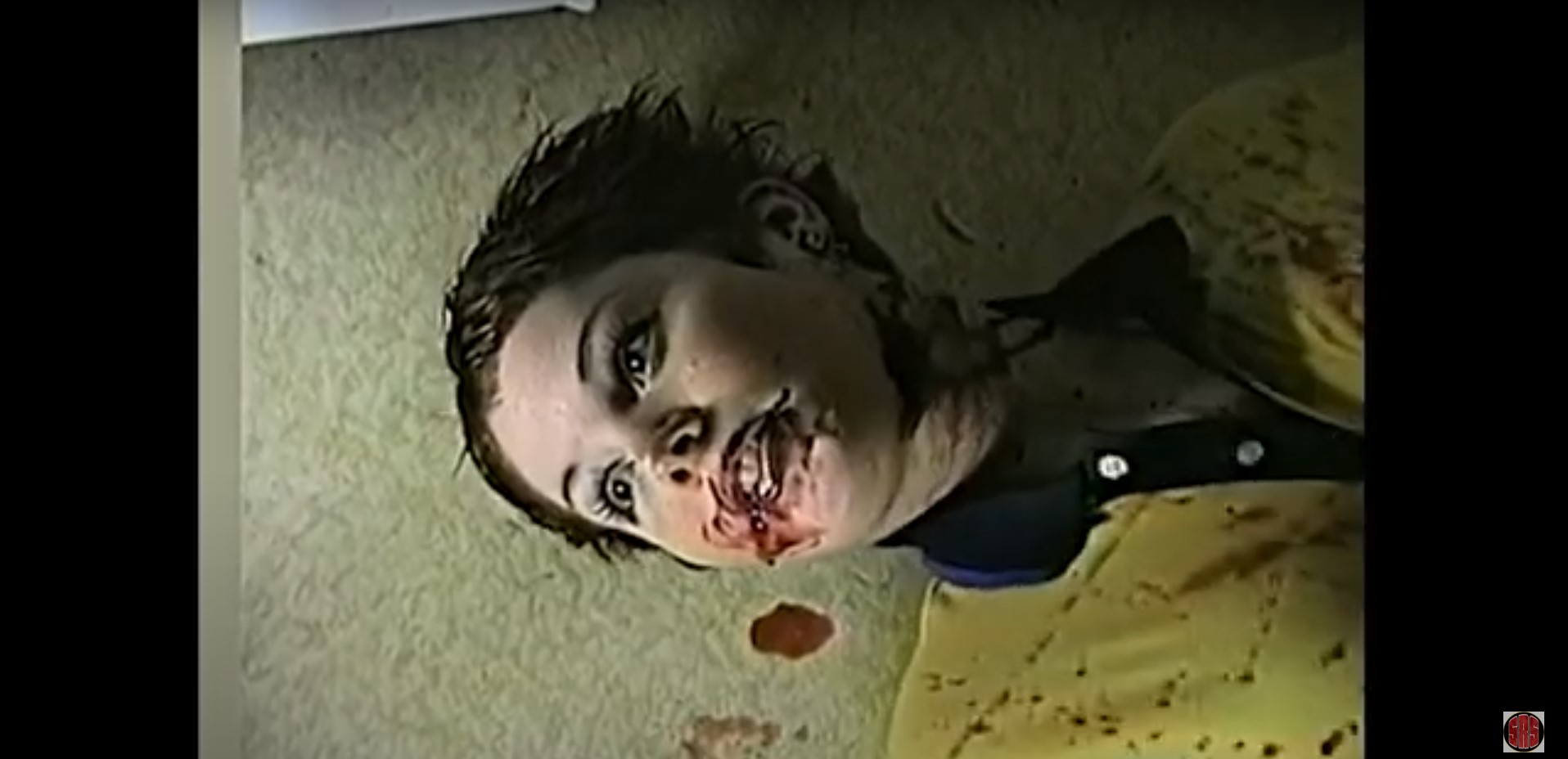
“Binge and Purge” is more than just a Christmas horror.  Amidst the meandering storyline of touching points in time and space with numerous characters and flashbacks skating on thinly laid context ice, such as the Spanish Civil War of the 1930s, Nazi experiments of the 1940s, and how America became a police state, the girth of “Binge and Purge’s” main coarse actually spans across the end of the holiday season in that week between Christmas and New Year’s, approximating a Y2K scare vibe of total chaos and confusion by way of cannibalism contagion instead of a feared computer bug, but that’s one area lacking in Brian Clement’s production laced with insatiable consumerism and consumption with in regard to really hyping up the cheerful holiday atmosphere to become besmirched by the corrupted filth of dirty cops, a plague of death, and a conspiratorial coup by high fashion.  The occasional Santa hat makes an appearance in a model shoot and the end of the year countdown denotes the pinnacle of a MP5 massacring finale, and though I can’t be certain, even the soundtrack sound to be distorted versions of the perennial Christmas classics, but that’s the extent of Clement’s holiday backdrop that would have easily fissure a chasm between “Binge and Purge” and the next low-budget cannibal shocker.  If you’re going to set the film during Christmas, deck the freaking halls, man!  Where Clement bedecks the film is with blood and gore that sees stringy sinew and a high body count’s insides become outsides over an encircling of edible entrails and on literally finger food trays.  Another shining highlight area is the action with agreeable submachine gunfire and the creative pyrotechnic-flares for explosion special effects that does rich up production value, inching the film more toward a magnetic, practical effect-laden, SOV spectacle worth the viewing calories. 

Shot on S-VHS, SRS Cinema gets their hands on the best master print director Brian Clement could carve out of his body of work. The MPEG2 encoded DVD presents the feature in 1.33:1 pillarbox aspect ratio in a 480p resolution. S-VHS master looks pretty darn good despite the caliginous reflection that produces more shadows and illumination on the tape, even if S-VHS offered better illumination as a format, and a lower, poor resolution than S-VHS’s Betamax predecessor. Still, this print has enough delimiting factors to produce a well-oiled image suitable for public distribution with a mix of neon warm and soft color capturing and crude lighting for maximum gritty-palpable product. The English LPCM mono track also has admirable lossless fidelity with a bitrate decoding of 192kbs, that has come typically standard, and greatly appreciated for audiophiles, on SRS releases. Some scenes are better than others, but the dialogue does retain some tail-end hissing and can be soft in spot. Otherwise, dialogue renders clearly enough. The release offers no subtitles. Bonus features include an archived audio commentary and a new SRS cinema produce audio commentary both of which include a self-deprecating Brian Clement going through his “least favorite” work’s production wishful do-overs, where the cast are nowadays, and his favorite gags and setups, a handful of deleted scenes, a slideshow, a new SRS cut trailer, and other previews for other SRS distributions. SRS Home Video release is mocked up with a retro VHS box-impression Amaray DVD case complete with graphically printed-in Please Be Kind, Rewind and Horror stickers. The not rated film has a runtime of 83 minutes and is region free. Nowhere near being a bulimic gorge for expulsion to empty one’s cinematic capacity, “Binge and Purge” is fully digestible grubby grub of horror, action, and comedy. 

“Binge and Purge” on SRS DVD Home Video!  This One Is Hard to Keep Down!

EVIL Loves to Clown Around. “The Jester” reviewed! (Dread / Blu-ray)

“The Jester” on Blu-ray Home Video!

Days before Halloween, a man hangs himself from off a bridge.  His funeral not only services the wake for his grieving daughter Jocelyn but also brought out his estranged and aggrieved daughter Emma, Jocelyn’s half-sister from a failed marriage their father had abandoned when Emma was very young.  Jocelyn reaches across the aisle to connect and to bond with the peripheral Emma, but the scorned older half-sibling only expresses anger and confliction over feeling grief for man who no longer wanted to be a part of her life until the very end after reaching out a few times to make amends.  Emma and Jocelyn soon discover that a malevolent, supernatural trickster, known as the Jester, was somehow involved with their father’s untimely demise and now, on Halloween night, the Jester is following and toying with them in a playfully sadistic manner, preying on the one thing that bonds and also disconnects the sisters from being content. 

Based on his 2016 three chaptered shorts of the same name, writer-director Colin Krawchuk pulls from the best parts of those shorts, sprinkles a little more sadism on top, and creates his debut into full-length feature film with this titular antagonist, “The Jester,” at the center.  Co-written with longtime collaborate on various shorts as well as “The Jester” shorts is Michael Sheffield, who also brings to life the Jester’s amusing animated animosity and flamboyant cryptic personality from script to screen.   “The Jester” represents a theme of tormenting guilt for this afflicted and those surrounding the person and is symbolized by the absurdity of a clown masked fool in a gaudily colored top-hat and cheap suit with a deviant chip on his shoulder.  Film in and around the Frederick, Maryland area, “The Jester” is a product of Cinematic Productions, based in local Maryland region, and the Dread Central acquiring entertainment company, Epic Productions, under the Dread genre label with Carlo Glorioso, Patrick Ewald, and Katie Page producing with Mary Beth McAndrews and Eduardo Sánchez (director of “Satanic Hispanics”) executive producing.

Through the years of cinema, a plethora of personalities have emerged all vying for our entertainment seeking eye and while most, especially in the indie market, recycle the very idiosyncratic eccentricities of notable characters or extract some inspiration for blatant misappropriation into their own performance, every once and awhile comes a role that can be undeniably fresh, engaging, and unpredictable.  That’s how Michael Sheffield’s Jester presents to me as a versatile villain with broad expressions and precise stratagem that even by not saying a single word in the entire runtime still manages to have us on edge with just what’s up the Jester’s playful, prestidigitate sleeve.  Sheffield’s tall and lanky stature greatly suits the Machiavellian complimented by the outlandish vestments and wooden cane.  As an unceremonious symbol of guilt, the Jester becomes the obstacle between half-sisters from both sides of their father’s railroad tracks.  Delaney White’s introductory feature film begins her off as Jocelyn, a well-liked, sympathetic, and balanced young woman who can’t help but want to connect with an older half-sister she never knew.  Lelia Symington (“Brut Force”) couldn’t portray older sister Emma anymore opposite as a daughter holding onto a rightful grudge against a father who abandoned here at a young age.   That same bitterness extends to the more affable and kept cherished extension of her father, to Jocelyn, but an innate emotion eats at Emma, an inexplicable pang for his death that drives her to pique when she shouldn’t care less about her deadbeat dad and that manifests into deadlier, dastardlier demons, or at least one dressed-up, duplicitous, and dapper demon.  Matt Servitto, Lena Janes, Mia Rae Roberts, Sam Lukowski (“You’re F@#K’n Dead!”), and Cory Okouchi (“Ninjas vs. Zombies”) fill out “The Jester’s” roles.

Once the end credits started roll, I immediately research “The Jester” like I do with all the films I review to try and go beyond just the film with information, trivia, connections, see other reviews and public opinion, etc.  Why?  Because I’m a hardcore nerd, but what I found in the public comments about the film, especially on Letterboxd, is that many compared “The Jester” as a rip of Art the Clown from “Terrifier.”  Initially, a small voice inside my mind, processing the images from my visual cortex, thought the very same the mass majority did, or does rather.  Quickly, I nipped that fleeting resemblance in the bud because of a couple of reasons: “Terrifier’s” whole gag is gore-drenched for purely shock value as Art the Clown terrorizes and kills those in his path whereas “The Jester” represents more between the lines of guilt, loss, and connecting with what matters between the disfiguration of a dysfunction relations and the other reason is both films nearly sprout at the same time.  Yes, “All Hallows Eve” was released three years prior to Krawchuk’s short films and while it’s unknown whether the director was inspired by Damien Leone’s first pass, “All Hallows Eve” didn’t quite overflow the social media cup like “Terrifier” did a few years later.  Many in the horror community compare “The Jester” to “Terrifier” despite the latter not having been coined until the same year as “The Jester’s” shorts films were released.  Sure, Art the Clown and the Jester share similarities, such as a form of a clown mask and have malevolent supernatural abilities, but the blanket comments are like saying just because Jason Voorhees wears a mask, uses a knife, and doesn’t say a word that he is a clone of Michael Myers.  Overall, “The Jester’s” understated tone with a no holds barred harlequin has decent dark humor due in part to Michael Sheffield’s charade of an act and precision special effect, editing, and camera angles.  Where “The Jester” struggles is where it hurts the film the most and that is with an ending that just drops off the edge of the cliff without a ton of closer that really wraps Jocelyn and Emma’s story neatly nor offers a satisfyingly open-ended dangler for more violent jest.   Perhaps 7-years too late after the release of the shorts, “The Jester” will see push back as a facsimile but I implore you, the readers, to give the Colin Krawchuk feature more than just a bias-gazing once over. 

Epic Pictures’ genre label Dread releases “The Jester” on an AVC encoded, 1080p high-definition, BD25 that’s presented in a widescreen 1.85:1 aspect ratio.  As much of the film takes place at night, details are heavily reliant on the lighting and the compression encoding.  While “The Jester” is not the epitome of sharp edge delineation and detail with a supercharged color palette, the encoded shingles retain a pullulating scheme of adequate grading and detail keeping artifacts to a reduced level within the slightly softer image. The heavier image compression is fastened to the three shorts in the bonus content with horrendous basins of splotchy patches. Two English Dolby Digital audio tracks come with the release: a 5.1 surround sound and a 2.0 stereo. Each render about the same with the 5.1 slimming down and isolating channels for specific back, front, and center audio assignments. No issues with the clean and clear dialogue through the digital, interference-free registering though most of the conversations are one-sided with the Jester’s mime expressions. English closed caption subtitles are available. The three Colin Krawchuk and Michael Sheffield 2016 shorts, as I said multiple times already, are included in the special features along with the official trailer and other Dread previews. The standard Blu-ray Amary has a hard-lit Jester face to exact ever fold of the mask smack on the front cover with a bare insert pocket and the pressed disc art fanned out with the Jester’s antique playing cards imprinted on top. The region free release has a runtime of 80 minutes and comes not rated. Clever, entertaining, and devilish, “The Jester” acts the whimsical clown of conscience-stricken torment with an indelible joker different from the rest of the villainy pool.

“The Jester” on Blu-ray Home Video!

Amusing Little EVIL Enjoying the Carnival Rides! “Ghoulies II” reviewed! (MVD Visual / Blu-ray)

Next Time You Sit On the Can, Check the Bowl First!  “Ghoulies II” on Blu-ray!

The travelling Hardin Family carnival has been on a steady decline through the years.  The Hardin Holdings group, aka Mr. Hardin, dispatches his young senior accountant and son, Philip Hardin, as authoritative proxy to ensure sustainable profit.  One of the longstanding attractions, Satan’s Den, lies headfirst on the chopping block with a dismal profit rate.  Determined to recover and avoid being permanently shut down, Larry, his drunk uncle Ned, and actor Sir Nigel Penneyweight won’t give up so easily despite needing a miracle.  That miracle comes in the form of the Ghoulies who hitch a ride on Satan’s Den’s trailer while escaping persecution.   The pintsized demons bring the slowly withering Satan’s Den back to lucrative life but at the deadly cost of the patrons and carneys who fall victim to the Ghoulies impish behavior.  Larry vows to rid the amusement on their infestation after uncle Ned perishes at the demons’ tiny hands but Philip has glimmering money signs in his eyes. 

They’re back!  The Ghoulies return as masterless nomads after a failed attempt of abduction by a devout crusader aiming to destroy the pagan evocations and wreak mischievous havoc on a two-bit amusement park suffering from low attendance.  The late Albert Band, father of Full Moon’s Charlie Band and director of “Dracula’s Dog” and “I Bury the Living,” took over the reins from first film director Luca Bercovici and helmed “Ghoules II,” a vastly different kind Ghoulies tale of terrorizing totality based off the Charlie Dolan story and a polished script from “Re-Animator’s” and “From Beyond’s” Dennis Paoli.  Filmed entirely in Rome, and mostly in a soundstage, where Empire Pictures headquarters were located, the 1987 sequel was the last Ghoulies venture from executive producer Band and his Empire Productions empire before Vestron oversaw the subsequent sequels.  Albert Band produced the feature with Frank Hildebrand (“Once Bitten,” “Project Metalbeast”) serving as associate producer. 

With the contestable exception of the five prosthetic creatures receiving a dust off and sprucing up paint job, none of the lively characters from the first film return for the sequel in what becomes a principal clean slate.  The story starts off with who appears to be a man of God fleeing on foot with a bag over his shoulder from three cloaked cult acolytes.  There’s never a reference to this escaping man (Anthony Dawson) or the shrouded cultists in torch-in-hand tow but does arouse a bit of enigmatic energy around the Ghoulies misadventures through the human plane and happening upon the likes of two opposite side of the spectrum carneys who are also related between the long-in-the-tooth and drunk Ned by the loveable character actor in Royal Dano (“Killer Klowns from Outer Space,” “Spaced Invaders”) and his big top tenderfoot nephew Larry played by Damon Martin.  Ned’s alcoholism combined with stress over possibly losing Satan’s Den makes causes him complexity within his closest confidants for when he happens upon the Ghoulies after citing an incantation, he’s also in a drunken stupor, and so he words of exciting, or maybe even warning, fall on deaf ears as intoxicated imaginations that result in a pity for his dependency.  As Larry and the Shakespearean line spewing Sir Nigel Pennyweight (Phil Fondacaro, “Willow”) continue with setting up the ragamuffin that is the antiquated Satan’s Den, they let Neg wander despite suspecting his delusions of demons due to the pressures of one carnival hotshot Phil Hardin (J. Downing, “Robot Wars”) who has come to town to clean up his family’s carnival act with threatens of shutdowns and layoffs.  Hardin’s your typical weight-throwing antagonist with a pompous attitude and wandering eye for the most gorgeous girl under the tent, in this case it’s with Larry’s love interest Nicole (Kerry Remsen, “Pumpkinhead”), a once great high-wire performer turned belly dancer for the departmental freakshow act.  Nichole’s hidden talents, buried deep beneath past personal pain, will undoubted be utilized for climatic gain as all chaos breaks loose on carnival grounds with the Ghoulies break free of Satan’s Den menagerie of cardboard and latex-crafted horrors.  “Ghoulies II” rounds out the cast with Jon Pennell, Sasha Jenson, Donnie Jeffcoat, Donald Hodson, Dale Wyatt, Romano Puppo, Ames Morton, Michael Deak, and Full Moon actor-turned-director William Butler (“Night of the Living Dead” ’90, “Baby Oopsie”).

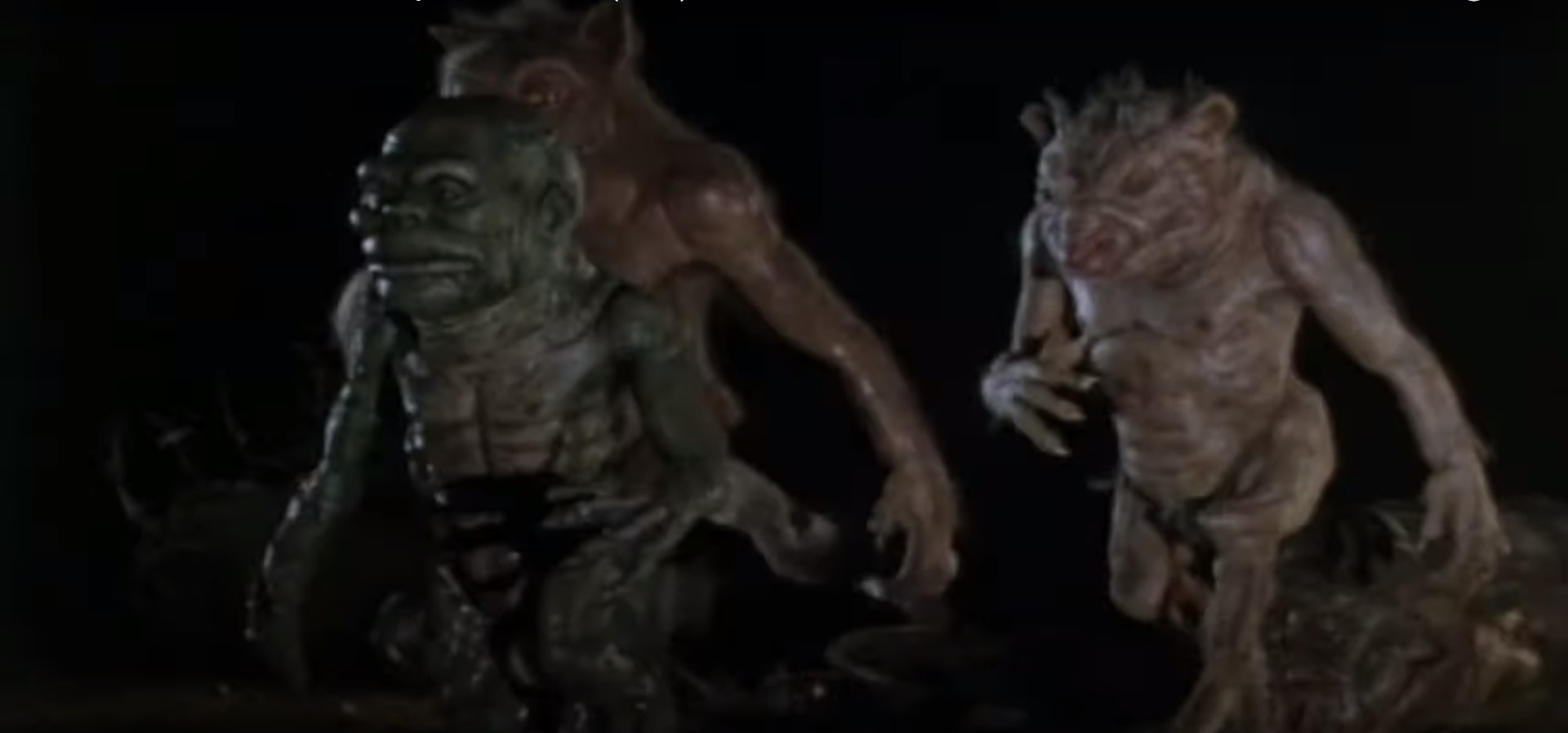
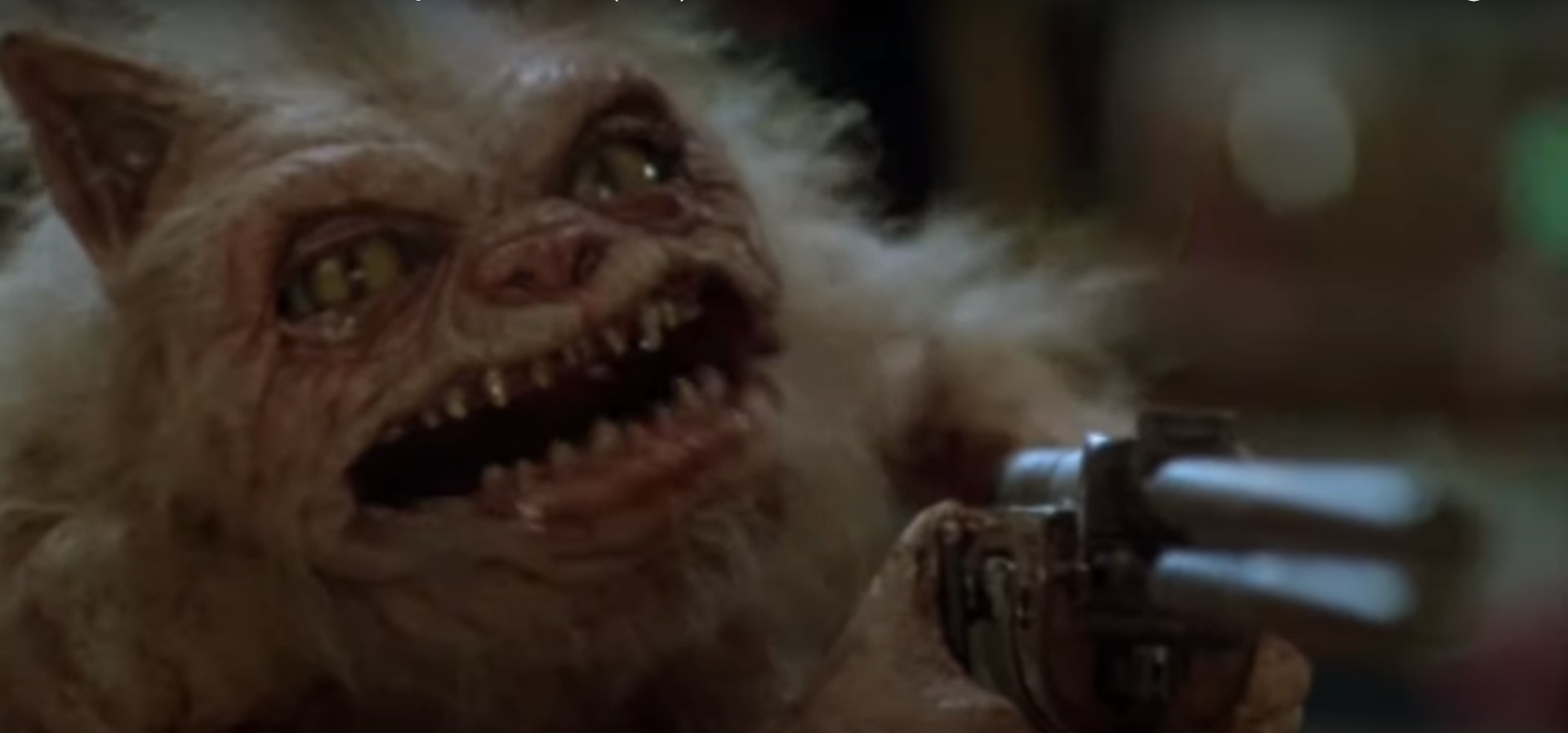
Along with a new set of human characters, “Ghoulies II” also freshens up the trajectory by focusing less on the black magic that saturated the plot of the first film and relying more on the gremlin-like playfulness of the Ghoulies themselves, rightfully giving way into the very creatures of the title. There’s some magic involved but only to the extent that doesn’t have the Ghoulies rely on a master to evocate them from the Netherworld or for the dark powers to be used to perpetuate wickedness upon others.  Instead, the ghoulies are depicted utilizing their skillsets, such as flying, oral expelling sticky-gunk, super-strength, and chomping, which obviously lead to more of a micro-level apocalypse of carnage; however, the print obtained for the MVD Blu-ray release is the edited down version for theatrical circulation so some, not a lot mind you, of the gory bits have been taken out and this makes the storyline stutter with misplaced time with rough segues and an imbalance of edits that aren’t as smooth.  From what I’ve seen, the minuscule timed deleted scenes are not much more violent or gory but add just that tad more context to the next scene instead of our brains working to connect the dots on what should be a brain shutoff, entertaining creature feature.  Yet, you can’t deny the sequel’s appeal that has turned to center around the little demons assiduously but managing to keep the same, steady pace of ferity and gothic skim of mise-en-scene from the first.  Puppetry is retained for that palpable product while also introducing stop-motion, a visual effect that has served Empire/Full Moon well throughout the years and is only used sparingly to wet the limitless capabilities of our miniature monsters to roam free in open spaces. 

“Ghoulies” return with the sequel to MVD’s Rewind Collection as Blu-ray release number 53 on the spine. The AVC encoded, high-definition, 1080p Blu-ray is presented in a widescreen 1.85:1 aspect ratio. A virtual carbon copy of the first film in regard to a well-preserved print, the sequel isn’t noted in having a 4K restoration scan like the antecessor release number 52 but the 2K scan offers an abundancy of positive picture rendering with a seamless color grading that isolates distinction and range as well as a tangible details, especially on characters and the ghoulies alike who are often gleaming and show off every nook and cranny ridge on their dark, hairy bodies. Aforementioned, this print is the theatrical cut, missing some gruesome elements for the sake of a broader audience, and while most of the print is near flawless, there is one dunk tank scene that’s cropped and noticeably marred with horizon creases in the brief airtime. The English LPCM uncompressed 2.0 stereo mix caters to every audible necessity of the “Ghoulies” soundtrack, ambience, Foley, and dialogue. The latter is clean and clear with prominence over the rest of the layers though I wouldn’t label it flawless with some echoey segments, almost a doubling effect, that might be due to the soundstage vibrations at Empire. Ambient track provides a wide range with exact depth with the example being inside Satan’s Den of horrors where doors creak, motorized bats fly overhead, and other models of haunted house spookery, along with an underlining carnivalesque soundtrack by Fuzzbee Morse (“Dolls”), is the epitome of a great sound design suffused together. English, French, and Spanish subtitles are optionally available on this release. Special features include an introduction by screenwriter Dennis Paoli, which is also available as a standalone at the play feature option, More Toilets, More Terror: A Making of Ghoulies 2 is a retrospective lookback with select cast and crew, an interview with Dennis Paoli Under a Magic Moon, the gruesome deleted scenes, a photo gallery, and theatrical trailer. Physical attributes include a VHS retro-esque mockup of the original poster art on a cardboard O-slipcover, fitting for the sub-bannering Rewind Collection. The same image graces the front cover of the clear Blu-ray Amary case, but the cover art is also reversible with one of the film’s most memorable smoochy-kiss moments plus title above. The disc is art pressed similar as the first film, a laser disc veneer on the Blu-ray top. Opposite side is the folded poster insert of the slipcover front image. The region A playback release has a runtime of 90 minutes and is rated PG-13. “Ghoulies II” retains that same diabolical energy as the first film but channels it very differently into the very titular creatures that puts them at the forefront instead of being just an afterthought in a sequel that celebrates their uncontrollable knavery and loving every second of it.

Next Time You Sit On the Can, Check the Bowl First!  “Ghoulies II” on Blu-ray!