To Bring Life into Existence, One Must Go Through the unscrupulous EVIL Trials and Tribulations. “The Last Frankenstein” reviewed! (DiabolikDVD / Blu-ray)

“The Last Frankenstein” on Blu-ray from DiabolikDVD

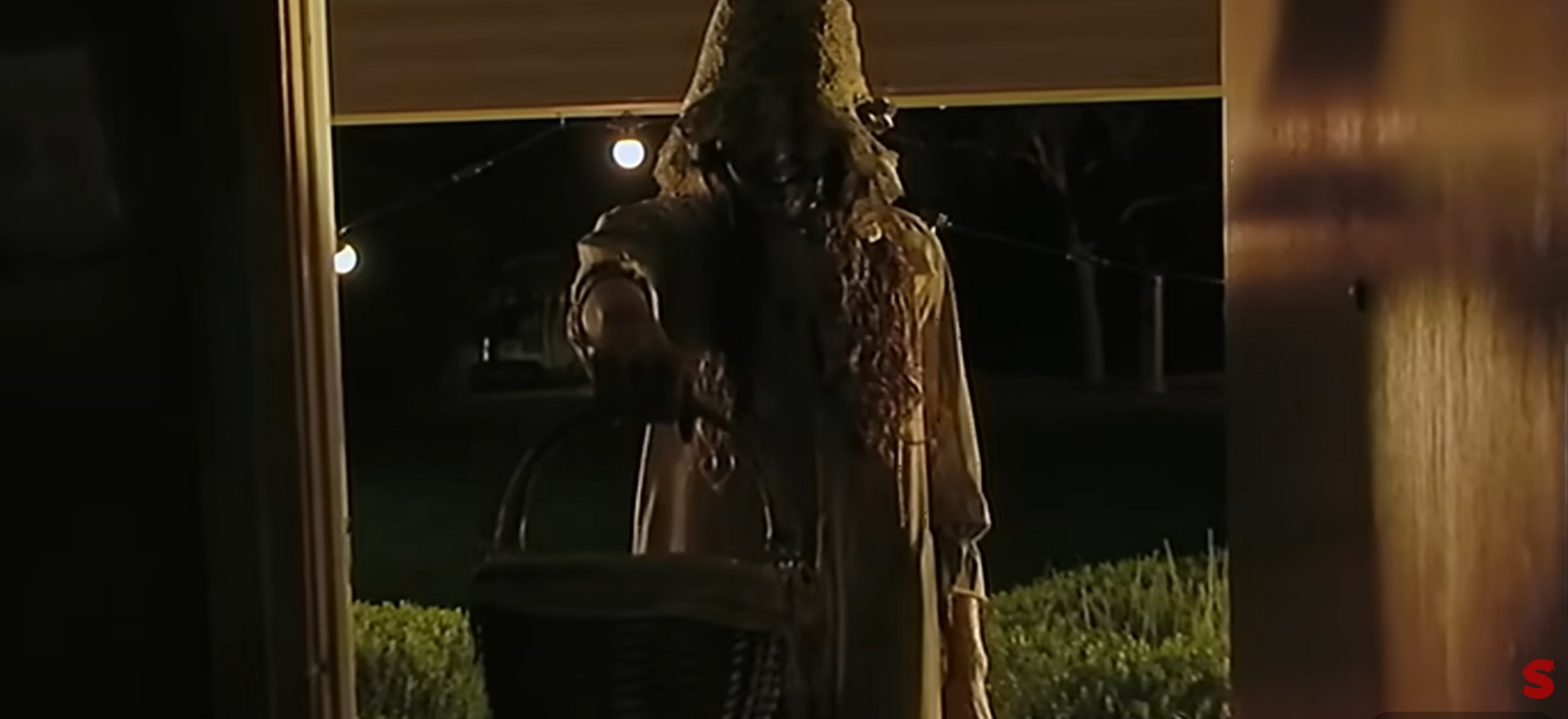
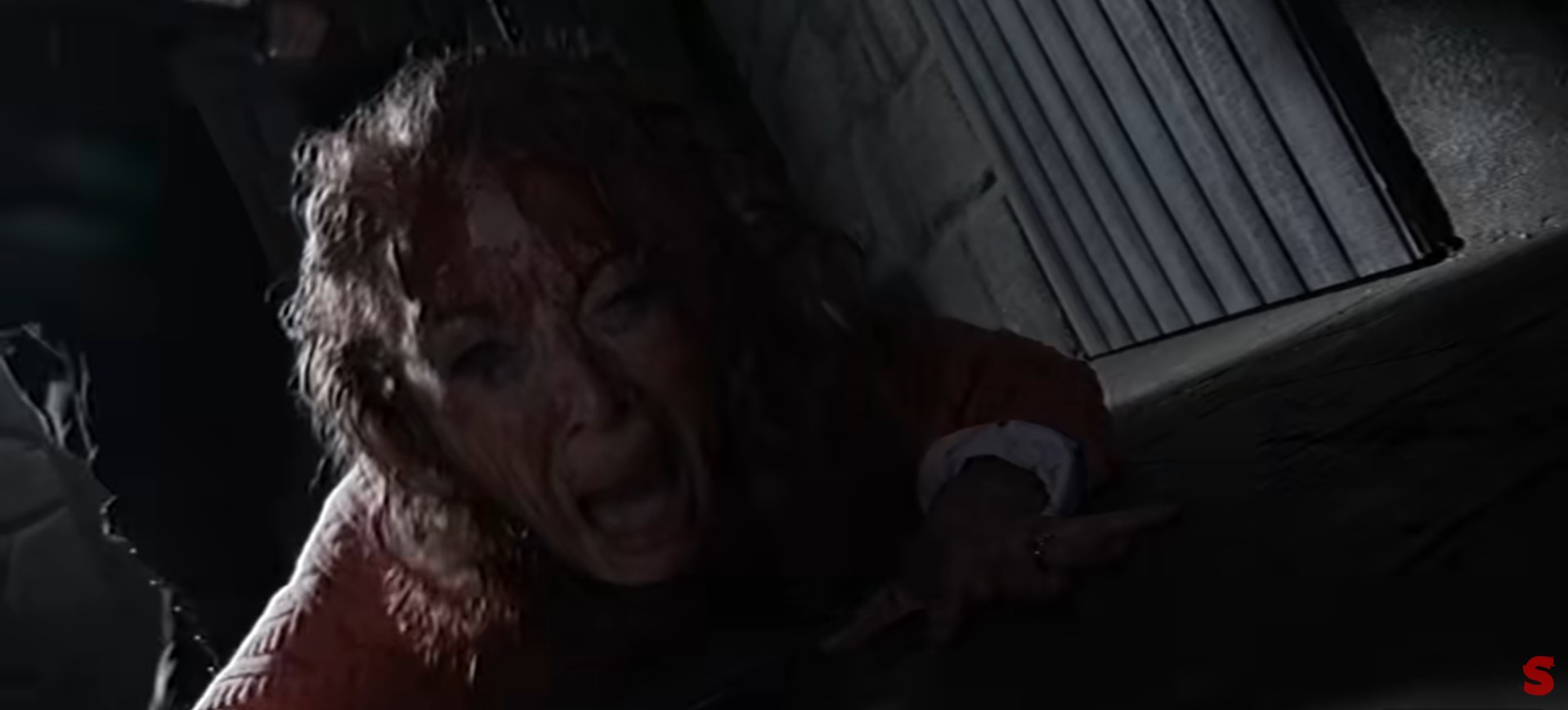
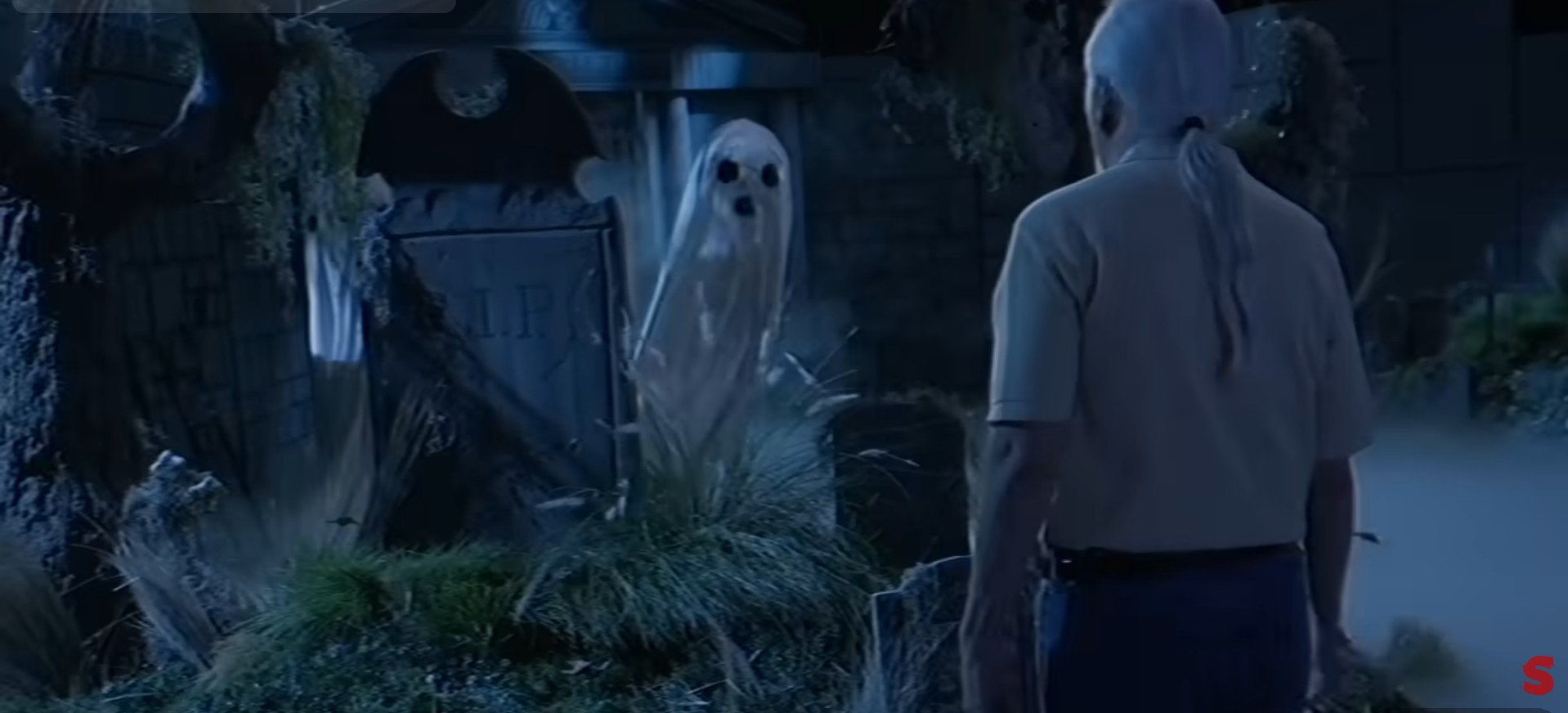
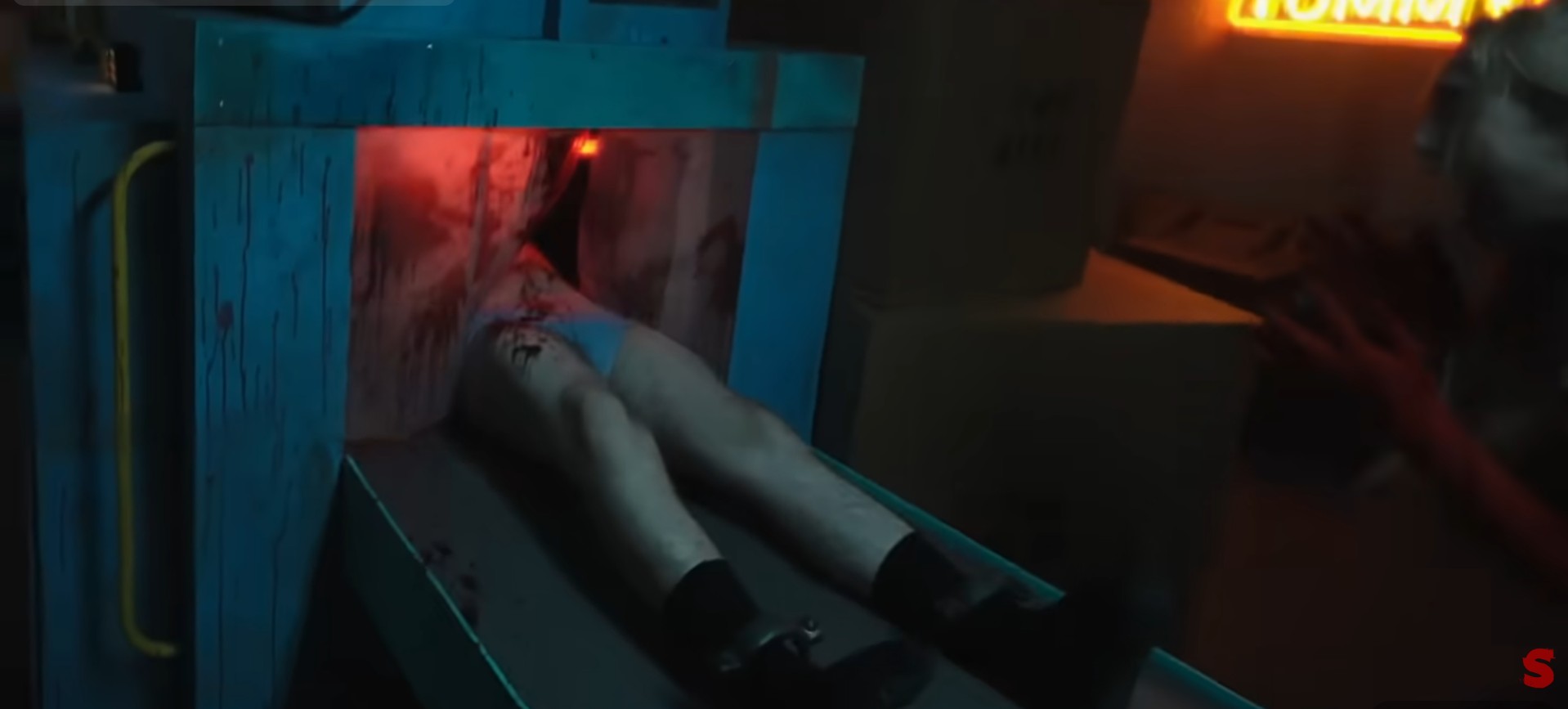
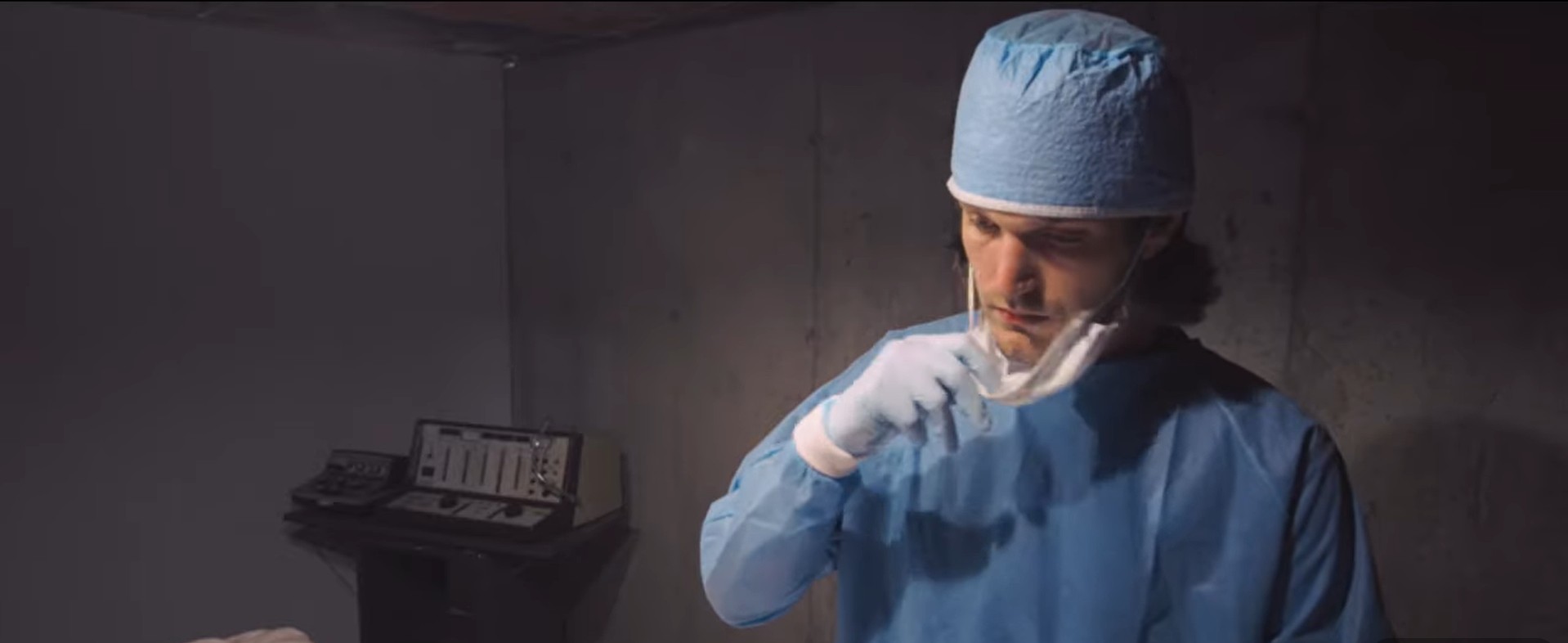
Jason Frankenstein is the great grandson from a long ancestorial line of corpse reanimators.  Feeling unfulfilled in life and his destined legacy, Jason goes through the motions of being a hospital’s physician assistant and putting up with his less ambitious girlfriend, Penny.  When a disfigured serial killer is brought into his hospital, Jason immediately recognizes the shell of a man as his grandfather’s reanimated corpse brought back to life with the family’s secret elixir, Adrenarol.   Hiring two crooked, drug-dealing EMTs to do his kidnapping bidding in exchange for medical grade drugs and with the assistance of a confidential nurse with a disreputable past, Jason sets to complete what his grandfather started by creating his own living, breathing, thinking monster with the family reanimating formula.  Selective hacked up body parts, double-crossing henchmen, and a troublesome manmade man goes against his birthright grain with the only path forward soaked in the blood created by his own hands. 

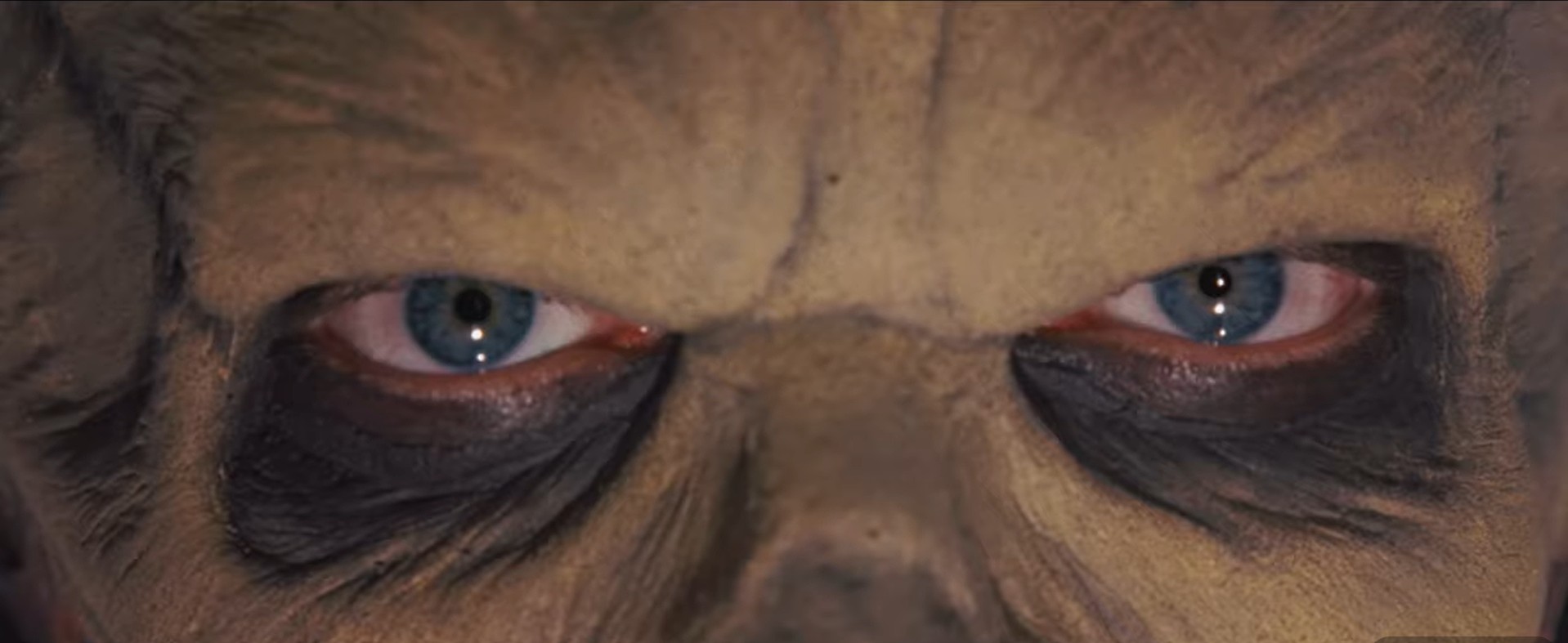
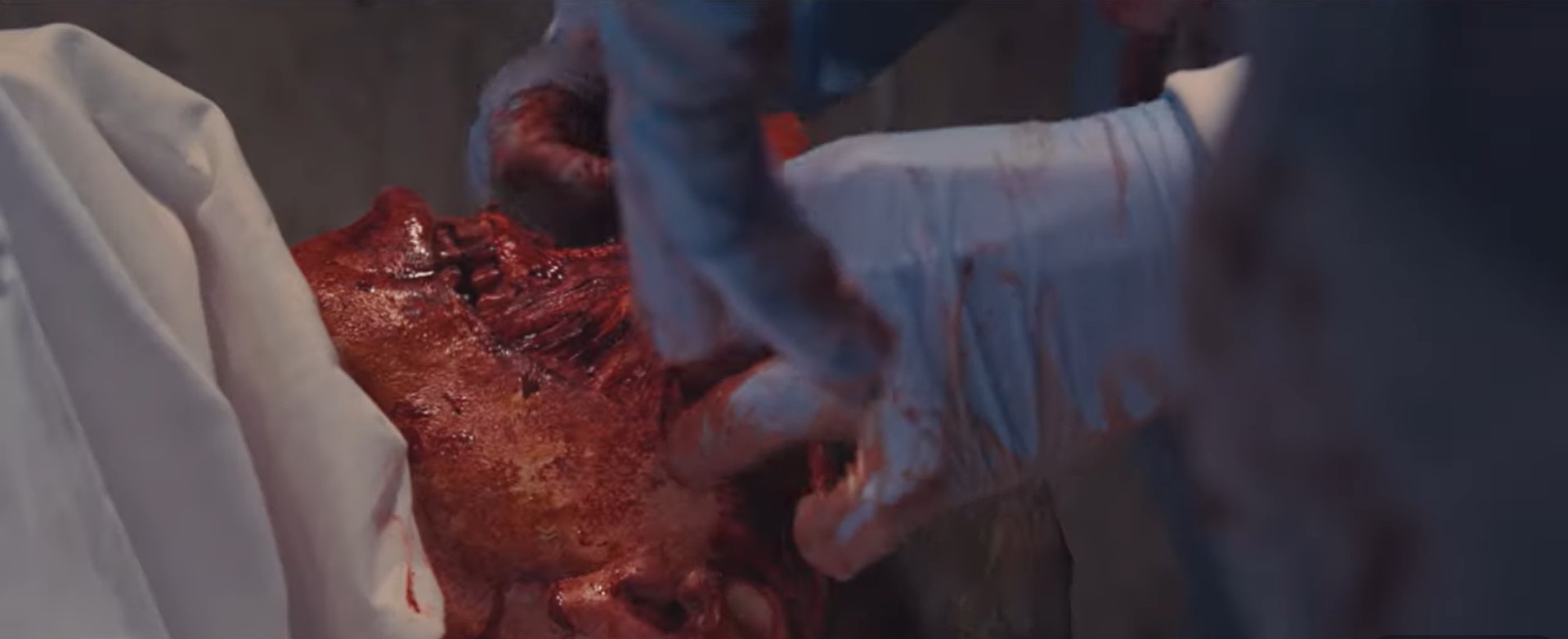
Resurrected from the depths of just a concept and electrified by crowdfunded, “The Last Frankenstein” is alive, ALIVE!, from writer-director David Weaver in his debut feature length film.  The U.S. film from 2021 was set and shot in Weaver’s hometown of Amsterdam, New York, just northwest of the state capital of Albany.  Labeled as an existential slasher, extracted from Mary Shelley’s classic gothic novel, Weaver sought to recreate exploitation films of the 1970s-1980s with a raw façade, gruesome practical effects and gore, and an assortment of cynical characters in a story that tells of generational expectations, the pressures of living up to greatness, being the last of one’s family surname.  The Kickstarter production raised $13,500 for mostly the shooting costs with much of the post work being completed by Weaver to maintain low costs and is a production of Gila Films with Jay Leonard producing.

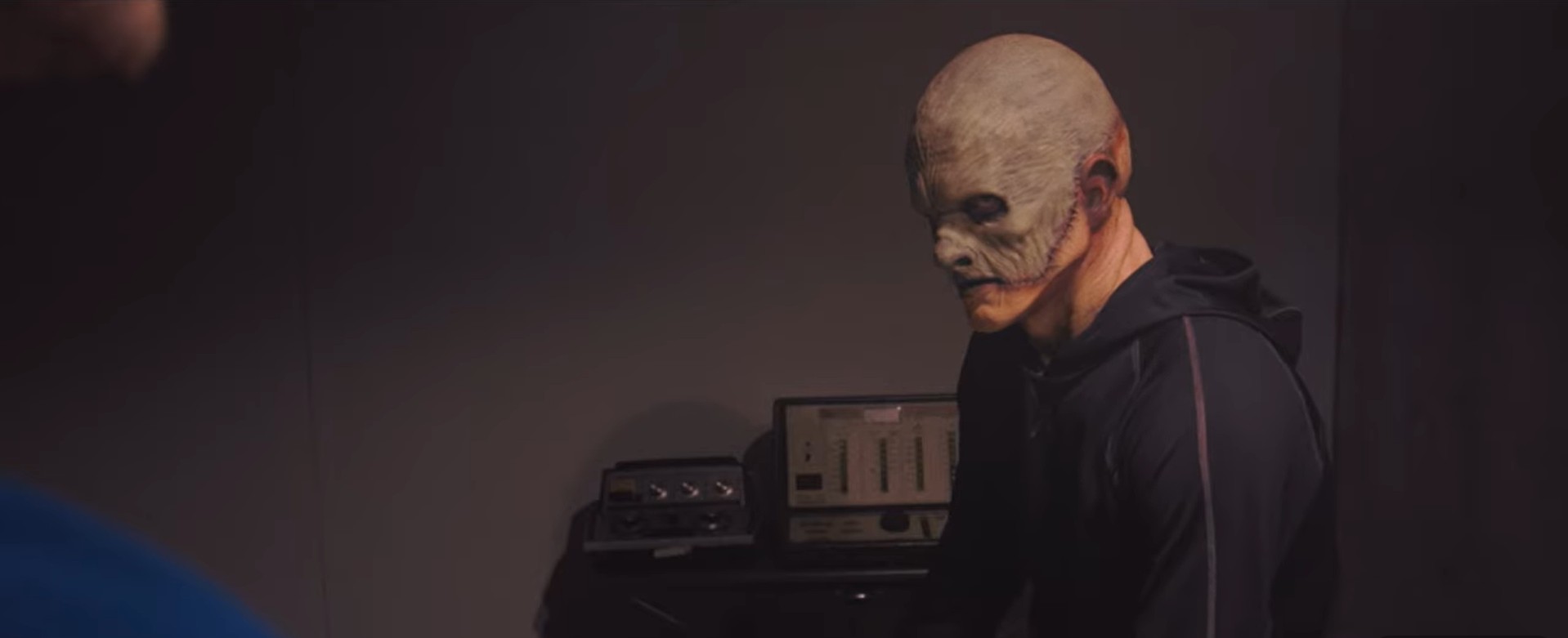
“The Last Frankenstein’s” acting tone is a curious one.  Complex with the desire to conquer death with footnotes of drug peddling and murderous EMTs, longing relationships and carnal stress releases, and death, much death, there’s a severe lack of emotion amongst the character pool, delivering a consistent and constant cadence of flat intonations.  The same expression is pretty much splayed onto each face with attitudes and personalities to match in a widespread of white bread acting.  In a way it works toward the story’s apathetic and cynical nature but while Frankenstein’s monster lives with a new life, “The Last Frankenstein” cast utterly is lifeless, beginning with the lead actor William Barnet in the titular role and though a doctors are conventionally attributes plainspoken, carry an unbiased inflection, and eve have some sense of being on the spectrum, perhaps, Barnet’s lukewarm woodenness extends beyond his reach and to the rest of the lot.  There’s no concern or fear in Nurse Paula’s (Keelie Sheridan) eyes when her acquaintance is killed by Jason Frankenstein or that the doctor is trying to resurrect the dead, no anger, resentment, or guilt from the two stoic ambulance drivers (Jeff Raiano and Ulisses Gonsalves) covertly dealing drugs and doing Frankenstein’s dirty work, and there’s definitely no life behind Frankenstein’s monster’s eyes, neither his grandfather’s nor his, that’s very opposite to the legacy portrayals by Boris Karloff’s sadness, Robert De Niro’s revenge, or Peter Boyle’s joy and fear.  This different take on the canopied story has the creature boiled down to a Jason Voorhees type, especially with eldest creature (Roderick Klimek) that looks very much like hockey mask slasher from the backside and even kills like him too.  Jason Frankenstein’s version, played by Michael Wetherbee, at least shows some reserve, some kind of calculation happening behind the flesh-stitched face, and does abide by his apathetic opportunity to kill but also resists the juggernaut chase to slaughter even if detrimental to his existence.  What that resistance is that holds him back goes without exposition or a vague sense of implicit explanation but it’s a performance that renders the most feeling in a rather frozen stiff guild of actors.  Jana Szabela plays Jason’s girlfriend Penny, Brett Owen plays Jason’s father in flashbacks, and cult actors Jim Boelsen (“Strange Behavior,” “The Curious Case of the Campus Corpse”) and the late Robert Dix (“Forbidden Planet,” “Horror of the Blood Monster”) also costar.

The creature’s Gothically enriched surroundings, darkly and bleakly trimmed with elaborate castles inside sinister castles and grotesque in unordinary shapes, styles, and hauntings, are more than replaced by David Weaver’s backwoods entry into the electrified monster.  Trading castles for cabins and grandiose laboratories for makeshift surgical rooms, “The Last Frankenstein” utilizes what’s immediately around, and in this case it’s Weaver’s hometown of Amsterdam, New York, a quaint, post-industrial smalltown surrounded by brick homes, rundown factories, and woodland that gives the story an unconventional look and approach while keeping true to the basic principles of Frankenstein and his monster.   With the idea that small towns hold secrets, “The Last Frankenstein” leans into the problematic drug problem less populated areas encounter with most turning a blind eye or ignorantly keeping their blinders down to the transgressions that are happening right underneath their noses.  In this instance, the drug dealing EMTs are utilized via blackmail but deal to come out better than before with more peddling product than before without risking exposure through a doctor approved sign out sheet for narcotics, which is how Frankenstein caught onto their scheme.  To dig deeper into that latter statement, Frankenstein is the smartest amongst his living peers but can’t seem to understand and figure out his and his ancestor’s creations that go against his family tree in a visceral and violent protest of what it means to live, promoting once again that anti-God actions spoil the fruits of man.  There’s a show of arrogance and false omnipotence to cheat the natural course of death found in all the Frankenstein subject films and those who create variations of the filmography, such as with “Re-Animator” and “The Lazarus Effect.”  

The film may be called “The Last Frankenstein” but it’s the first title with the DiabolikDVD label as a company release.  The AVC encoded, 1080p high-definition, BD50 Blu-ray is presented in the original widescreen aspect ratio of 2.35:1.  “The Last Frankenstein” favors a neutrally saturated raw image, capturing a lot of the natural greenery and aesthetic of nearby woods, creeks, and other characteristics of rural America, including trailer parks, post-industrial buildings, and wood paneling interiors.  The surrounding intricacies of a clearly puttied and latex mask used for the Frankenstein grafted facial skin looks like a true mask instead of skin but that’s the very intention of a created being, pieced together in slapdash stitchwork to add a layer of differentiation much like the original monster’s scars or bolt.  General particulars around exteriors and interiors are clearly defined with the consistent laid out image quality that produces ordinary smalltown charm contained to limited landscapes and mostly the direct environs that are not exactly cinematically picturesque but does depict the visual boredom of the vicinity.  The sole audition option is an English LPCM 2.0 stereo that reproduces faithful fidelity of the dialogue and diegetic action within the front channels.  The foley and Steve Noir’s poignant trance of a synth score are a little more girthier bodied to fill the entire medium that get to being comical in action (in foley) yet powerfully bleak and hypnotic (in score).  Dialogue is clean, clear, and in the forefront mostly, often vying for position with Noir’s repetitive and pulsing soundtrack portions. English SDH are optionally available.  Special features include feature-length commentary with writer-director David Weaver and producer Jay Leonard, a second commentary track with Weaver, a making-of featurette Reanimating the Last Frankenstein that goes through cast and crew interviews, the Kickstarter campaign, and a creation thought process for the concept and its materialized conception, deleted scenes, outtakes, still gallery, and a mentioned bonus easter egg listed on the back cover but unable to locate it on the disc. The reviewed copy isn’t the DiabolikDVD exclusive with limited slipcover, but the standard Blu-ray comes one-side cover art that actually requires the slipcover in its muted and dark composition of characters with no title, only the subtitle Nothing Lasts Forever, which makes me believe the slipcover is the one and only primary cover art. The 102-minute featured release comes not rated and region free.

Last Rites: Not to be a wash, rinse, and repeat of the canonical Frankenstein films, “The Last Frankenstein” is creature feature-lite in toneless, small-town adversities of creating an existence that requires life and limb…many, many limbs.

“The Last Frankenstein” on Blu-ray from DiabolikDVD

An EVIL Alien Blob Storms Earth in Search for Space Feline! “The Cat” reviewed! (88 Films / Limited Edition Blu-ray)

If you missed the Blu-ray, “The Cat” Standard Edition is Available!

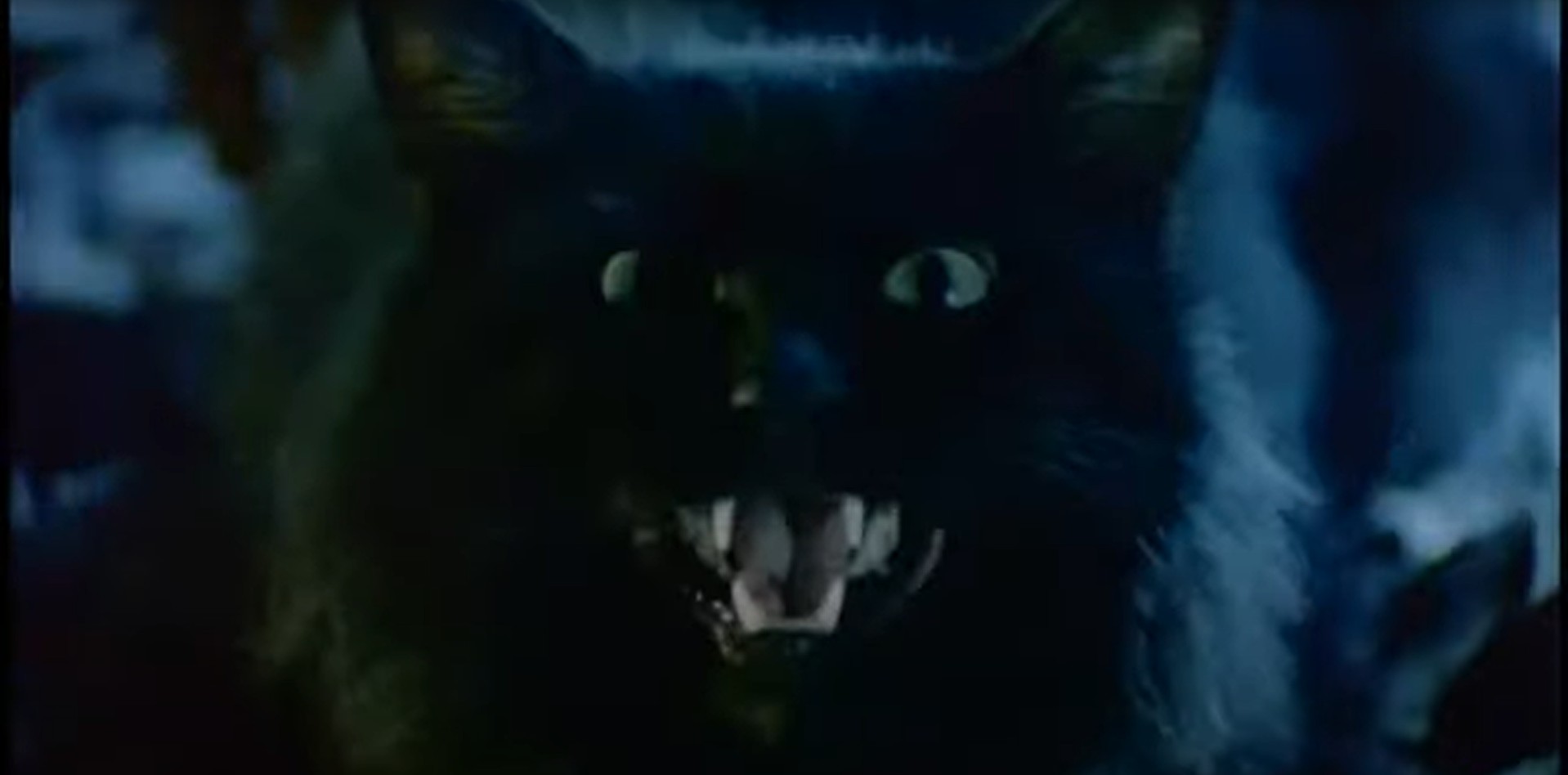
Storytelling author Wisely recounts one of his more fantastical pieces originating from more truth than fiction.  The writer reminisces investigating the mysterious occurrences surrounding a black cat and a young woman involved in a museum heist of an ancient, unknown artifact and, previously, in a strange encountering with Wisely’s friend Li Tung involving strange hammering noises and strewn about cat guts in an adjacent apartment.  Wisely soon discovers he’s bitten off more than he can chew becoming mixed up in extraterrestrial battle between the gentile but fierce fighting space cat and the young woman from another world versus a vicious and imposing orange alien blob that can inhabit dead humans and slip through tight confining spaces, leaving a burn trail of electrified bodies in its wake.  Wisely and his girlfriend, Pai so, decide to help the girl retrieve a second piece of the artifact that be used as a weapon against the relentless alien aggressor before the cat and girl can return to their home planet.

A strange science fiction thriller hailing from Hong Kong, “The Cat,” or “Lo mau,” is the 1991 filmic adaptation of author Ni Kuang’s “Old Cat” from a part of the Wisely adventure series of novels.  Written by frequent collaborating screenwriters Hing-Ka Chan and Gordon Chan (“Cat and Mouse,” “Behind the Yellow Line”) as well as numerous team-ups of Hing-Ka penning Gordon director helmed works (“Beast Cops,” “Thunderbolt”) and directed by “Riki-Oh:  The Story of Ricky” director Ngai Choi Lam, “The Cat’s” bizarrely unraveled as it is unrivaled but evokes a commingling of Hong Kong mysticism, science fiction, horror, and creature personification that’s hard to find not entertaining in its converging Daoism with creature feature movies!  Golden Harvest and Paragon Films, in association with Japan’s Nippon Television Network as a Hong Kong-Japanese alliance, are the companies behind the picture production with Chan Tung Chow (“Riki-Oh:  The Story of Ricky”) and Seiji Okuda (“Pulse”) as producers.

Hong Kong beauty Gloria Yip (“Riki-Oh:  The Story of Ricky,” “The Blue Jean Monster”) took Hong Kong cinema by storm in the early 90s before quietly taking a step back from acting to focus on building a family when newly married in 1995.  Since her divorce, Yip has been active in the last decade and half but to experience her best, early work, “The Cat” is a good start to behold her natural girl-next-door charisma and attractive attributes as an alien inside a human body.  Where she obtains this human form is unknown and her species social status, her name or how she became trapped on Earth is also vague, but Yip’s character can float waltz and is seemingly the caretaker of the Cat, who is a general of sorts in the alien race.  Her alien sidekick, Errol (Siu-Ming Lau, “Shaolin vs Evil Dead:  Ultimate Power,” “A Chinese Ghost Story”), too has an equivocal backstory as they search for weaponry relics and evade the caustic and electrically charged blob monster that threatens their world.  The story falls in more in tune with the three friends buried by the extraterrestrial struggle for survival and dominance with “A Chinse Ghost Story II and III’s” Waise Lee as principal lead character Wisely, a humble story writer living off the riches of girlfriend Pai So (Christine Ng, “Crime Story”), at least based on their dialogue of her owning a big house, playing tennis, and providing.  It’s an oddly laid out relationship that shows no quarrel or being tested when up against alien beings.  Li Tung (Lawrence Lau, “3-D Sex and Zen:  Extreme Ecstasy”) is Wisely’s first friend to encounter the girl and cat as noisy above neighbors but it’s their cop friend, Wang Chieh-Mei (Philip Kwok, “Hard Boiled”) who takes the unfortunate brunt being inhabited by the alien blob and becoming a Rambo-arsenal assassin.  The last piece to “The Cat’s” cast is actually the “Old Cat” author Ni Kuang having a cameo appearance as a warrior dog handler, Processor Yu.

Did I mention already that “The Cat” is beyond bizarre?  The campy story suffers from connective tissue deficiency syndrome, meaning there’s not enough exposition or explanation in the subdued, mild-manner interactions to really bring together and segue the really cool action and creature sequences that involve, but not limited to, pyrotechnics, forced perception effects, stop-motion, blood squibs, prosthetics and makeup, and high-flying wire acts involving not only people but cats and dogs!  The cat versus dog fight is a rough-and-tumble showstopper.  The special effects and choreographic teams of Hong Kong’s special makeup effects artist Chi-Wai Cheung (“Riki-Oh:  The Story of Ricky”) and stunt coordinator Philip Kwok taking their cogs and working into the grand effects design along with Japan’s f/x crew from visual effects artist Takashi Kawabata (“Dark Water”) and special effects Shinji Higuchi (“Gamera, the Guardian of the Universe”) is a masterful amalgamation of two cultures and two styles into one, blending high-flying acrobatics with the strange, bold stop-motion and visual effects that incorporate puppets and molds is optical buffet aimed stimulate and confound.  Nearly experimental in its narrative and effects while bordering being derivative, such as from the 1988 “The Blob” remake, “The Cat’ prowls, growls, and meows as a welcoming hot mess of feline phantasmagoria. 

On a new limited-edition Blu-ray set with exclusive, new artwork by graphic artist Sean Langmore, “The Cat” purrs with a fully-loaded, out of this world high definition release from UK label 88 Films and distributed by MVDVisual in the North American market.  A new 2K restoration of the original 35mm negative is encoded on a AVC encoded BD50 with a 1080p resolution in an aspect ratio of 1.85:1 widescreen.  Image presentation has the stellar glow of regular Hong Kong film stock, a stock that doesn’t dilute the defining particulars but only softens them slight.  The original negative has withstood the test of time and any improper handling providing the restoration effort with a focus-driven goal of grading and detail. The other side of that coin is that all the rubbery and irregular textures are now more in the spotlight instead of being lost in the lower resolution and more opaque video qualities.  Brilliant gel lighting and a comprehensive range of primary reds and blues coupled with an electric orange and blood red of the antagonistic monster seduces contrastingly inside a dark atmosphere with a story mostly told during the nighttime hours.  Remastered with a Cantonese DTS-HD mono track, the compositional track is about as good as it’s going to get but that’s not saying the audio is bad at all.  Clean and clear in ADR dialogue and distinct in the ambience and action, “The Cat’s” remastering is mighty without being punchy with broad-range, consistent audio that doesn’t have any holes poked into it and has an epic, original score by Phillip Chan (“Her Vengeance”).  Newly translated English subtitles are burned onto the only video file feature.  The encoded special features include an audio commentary by Asian film expert Frank Djeng of the NY Asian Film Festivial, a new interview with writer Gordon Chan in Cantonese with an English introduction, the Japanese cut of the film in standard definition, an image gallery, and theatrical trailer.  All of the encoded features will be available on the limited-edition and standard release sets.  Langmore’s artwork graces the LE O-ring slipcover and rigid slipbox with a crazy illustrative arrangement that details how bonkers “The Cat” gets.  Inside the slipbox, a full-bodied colored and detailed booklet with more original Langmore artwork, one sheets, stills, and other contents that include cast and crew acknowledgements, a Paul Bramhall retrospective essay on director Ngai Choi Lam That Cat is Dangerous, a second essay in regard to Nai-Choi’s niche cinematic credits by Matthew Edwards entitled Body Horror, and a special thanks roundup and more acknowledgements in the making of the Blu-ray release.  There’s also a collectible art card stuffed in between the clear Amaray case and the booklet.  The reversible cover art’s secondary slip-shell is of an original poster art, a good alternative to an already overused Langmore illustration that’s on the O-Ring and slipbox.  While not a numbered limited-edition release, news of the set already being or nearly sold out at most retailers is circulating, but there will be a standard edition slated for release late November ICYMI!  The not rated release has a 89-minute runtime and is encoded region A and B for playback.

Last Rites: Ngai Choi Lam’s science fiction, body horror, and creature feature inundated “The Cat” has all the weirdness and practical prosthetics, including deeply bizarre force perception visuals, that’s beyond our galaxy and capacity for understanding, landing with great precision onto a well-deserved, highly anticipated, and must own 88 Films’ limited-edition boxset!

If you missed the Blu-ray, “The Cat” Standard Edition is Available!

Let EVIL Give You a Hand! “The Beast Hand” reviewed! (Cleopatra Entertainment / Blu-ray)

“The Beast Hand” Grabs A Blu-ray Release! Buy it Here!

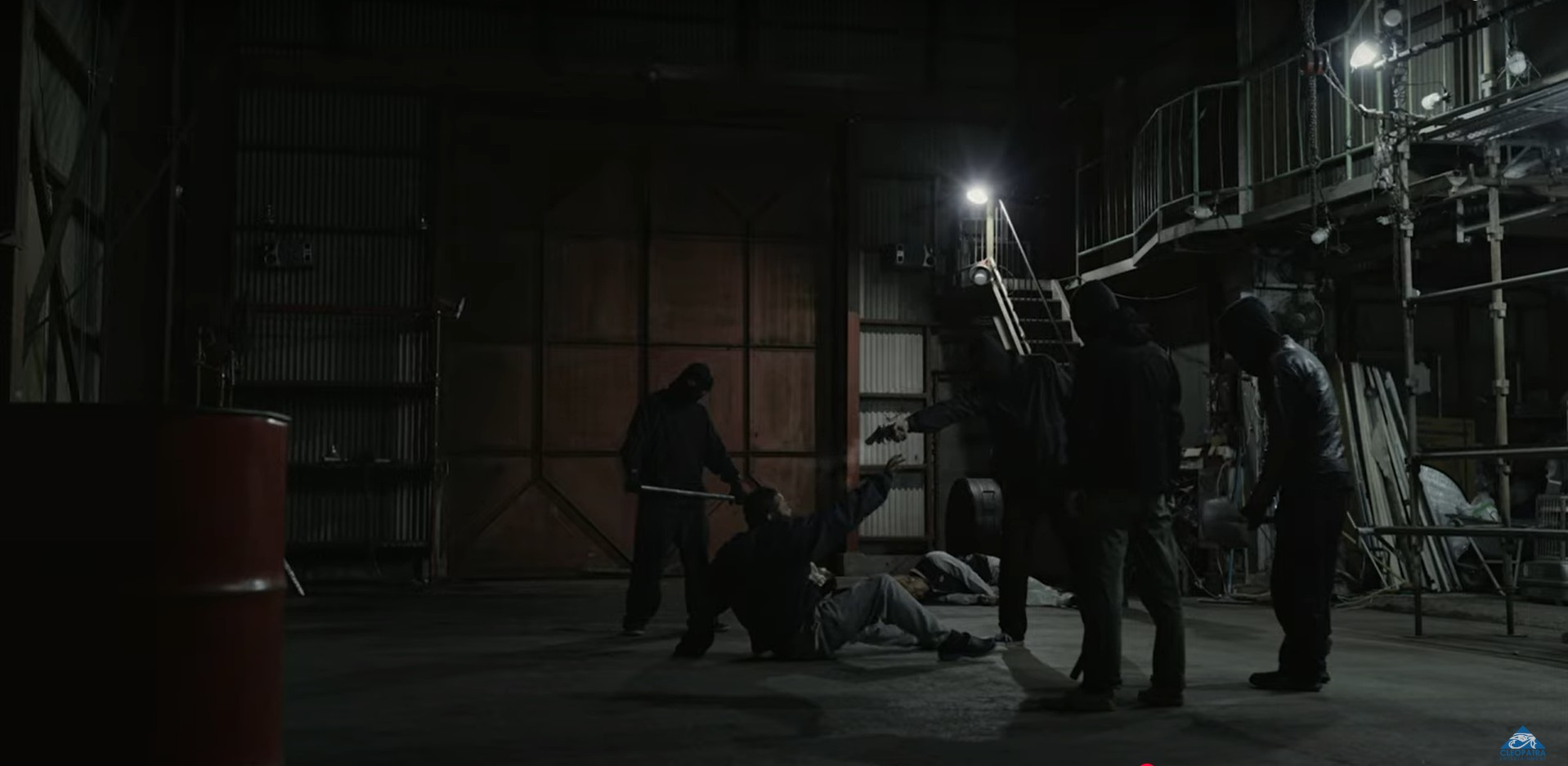
A derelict criminal Osamu Kogure finds himself back in the company of his jumped parole crime boss Akira Inui, Kogure is back to being a manipulated puppet at the whims of a conceited and aggressive Inui.  When Inui persuades Kogure to give up the whereabouts of an old, reluctant fling Koyuki Igarashi, who went through full body surgery to wipe away her past with Inui, Kogure and Igarashi are trapped by Inui’s bull-headed intimidation, forcing them into a rushed heist that ends with Korgure’s hand being severed.  A syndicate surgeon grafts a deformed, experimental monstrous limb on his wound that turns Kogure into a superhuman beast when provoked.  Now gone rogue out of the surgeon’s reach, Kogure and Igarashi are hunted down across the region by a powerful crime boss’s clan to extract the success of Kogure’s new, powerful extremity but the once timid and submissive delinquent will no longer go down without a fight. 

Taichiro Natsume, the director behind the Big Summer Psychic Team shark series, such as “Ring Shark,” “Love Shark,” and “Last Shark,” moves away from the supernaturally swimming maneater terrorizing the sands and lands surrounding the creature’s resident watering well and popping up out of the bathwater of those clutched in its curse, forgoes another shark infested entry for a monstrous transplant tentacle in his latest outrageous indie horror, “The Beast Hand,” aka “Koletise käsi,” or original titled “Kemonote.”  The Japanese film is one part science-fictional body-horror thriller and one part yakuza splatter strife and is all part penned from the mixed-up monstrosity and melancholy swirling inside Natsume’s mind with cowritten efforts from Yasunori Kasuga.  Lead actor Takahiro Fukuya wears multiple production for producing the production under his studio company Eigabatake that foots the partial budget combined with the crowdfunding remaining purse pieces to bring this splatter dream to reality. 

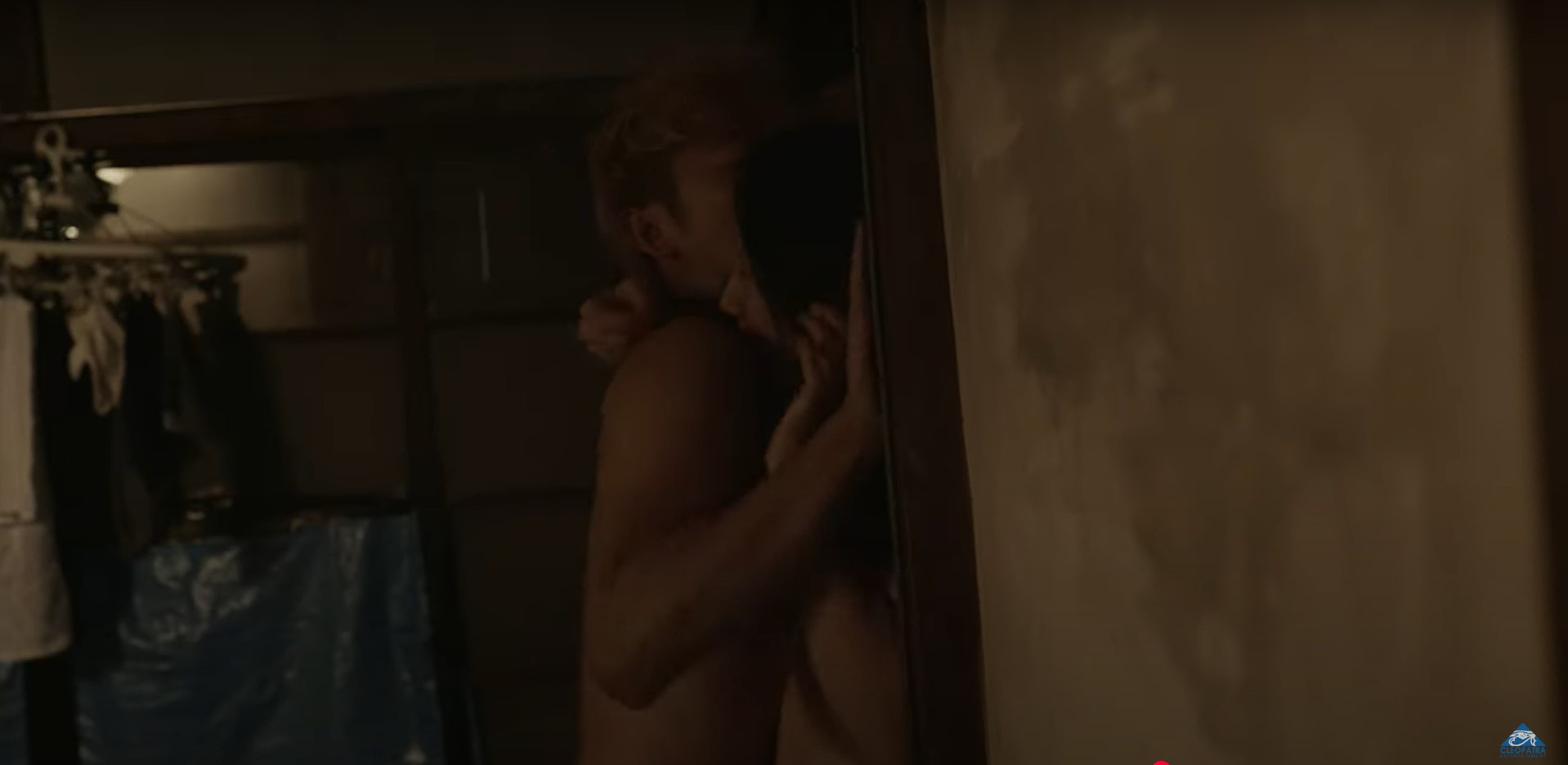
Takahiro Fukuya invests himself full throttle into the role of Osamu Kogure leading to his real life and role to nearly be parallel to each other as Fukuya quits his day job, spends most of his money, and, likely, leads a temporary pauper lifestyle, much like his character, in order to get his vision off the ground and into production.  Fukuya embodies the weak-minded aspects of a fragile delinquent, submissive to a much more apex predator in the recently prison released, escaped parolee Akira Inui (Yôta Kawase, “Slave Ship,” “Maniac Driver”) in a take-all, give-nothing leader position in what Inui considers is his gang, completed by Misa Wada’s objectified into sexual slavery of Koyuki Igarashi.  The pink eiga actress, of such hits as “Corpse Prison” and “Black Tears,”  has lingering anxiety and timorous defensiveness for her character’s subject of sexual and verbal abuse by Inui only for it to transfigure it into a slap-across-the-face affection for the even more cowardly Kogure in an unforgettable sex scene prior to the monstrous hand augmentation.  The second half of the story rather abruptly butts into Korgure and Igarashi’s departure of the city and into more humble means of making a go of their relationship, especially now Igarashi is months pregnant after their slappy-rollick on top of the sleeping bag sack.  Character exposition of the couple’s circumstances at this point is nonexistent as Natsume uses images and exterior shaping scenes to fabricate their current, still poor, state trying to make it work until the surgeon and the gang leader come to collect their handy work.

“The Beast Hand” embarks into different subcategories of splatter subgenre filmmaking.  Natsume certainly pays homage to the Japanese gore-and-splatter films in his own miniscule way but keeps the blood down to the minimal level allowed for labelling as such, but the filmmaker invests into the hardships of the accounted characters without unleashing too many background details or story dynamic particulars to that doesn’t allow audiences to become too involved leaving characters banally wrapped in their strife from point A-to-Z.  Instead, Natsume concenters around two sides of the story;  the first being the elegancy of Kogure and Igarashi’s unlikely and oddly misshapen relationship with scenes of beach walking, comforting, cheap meals in a humble home, and of course, the slap-happy sex scene of two belittled and downtrodden people tying one off in expressive fit of passion while the second part is more tension-riddled hearty with a yakuza hunt for Kogure’s one-of-a-kind beast hand.  Both sides balance awkwardly along a sporadically dotted line of limited detail and time passed but ultimately collide at a culminating point of a beast hand slaughterhouse when Igarashi’s safety boils up the beast from within Kogure, tracking “The Beast Hand” as a horror with to some extent a rivulet of romantism often clunky and riddled with holes. 

Cleopatra Entertainment distributes in association with Reel Suspects the Blu-ray release of Taichiro Natsume’s “The Beast Hand.”  The AVC encoded, 1080p high-definition resolution, BD25 decodes an anemic picture presented in widescreen 1.78:1 aspect ratio.  Visually, “The Beast Hand” has nothing going for it other than a clean experience with no aliasing, minor banding, and other immaterial compression issues.  The lack of color pop and the feather washed grading dampen with a lifeless aesthetic toward a Japanese splatter subgenre that’s literally soaked in a manga style or pop art.  Dialogue renders over cleanly and with clarity in a Japanese Dolby Digital 2.0 stereo that syncs timely with the forced, grammatically errorless English subtitles.  Immersive qualities are limited to the two front channels that are vigorous only during the intermittent action full of Lou Ferringo Hulk snarls and growls when Kogure goes full milky-eyed beast mode and good squishy Foley as stomachs and heads are eviscerated and sliced down.  Bonus features are typical run of the mill for Cleopatra Entertainment with a cache of trailers for the company’s recent releases.  There’s also marketing promo clips for “The Beast Hand” but in Japanese without English subtitles.  The standard Blu-ray Amaray encases a decent, and uncredited, original photoshop illustration that is, however, partly inaccurate, and awkwardly arranged with a beast hand resembling nothing like the body horror hand transplant in the movie.  The cover feels like right off the commercial printer, raw homemade art.  Inside is the same art pressed to the disc with no other accompaniments.  The region free, not rated Blu-ray has a runtime of 77 minutes. 

Last Rites: As far as J-horror goes, “The Beast Hand” has average appeal inside a strung along story and not enough absurd Japanese off-the-wall concepts and violence to stand out amongst the crowded subgenre.

“The Beast Hand” Grabs A Blu-ray Release! Buy it Here!

Mesozoic Era EVIL and the Cavegirl Beauties! “Dinosaur Valley Girls” reviewed! (Visual Vengeance / Blu-ray)

“Dinosaur Valley Girls” Visual Vengeance Collector’s Set Available Here!

Action movie superstar Tony Markham’s relationships exploit him of his actor status as women will only surround him for even just a bit part in one of his films.  Tony continues to have reoccurring dreams of a prehistoric place where a beautiful cavewoman allures him with mysterious passion.  Unable to get the images out of his head, he visit’s a natural history museum that conjures familiarities within the dinosaur bones and cave drawings that look awfully similar to the cavewoman of his dreams.  When he wishes upon a supposed magically talisman, Tony is transported to prehistoric past where he encounters dangerous dinosaurs, brutish cavemen, and bosomy cavewomen looking for love, even Hea-Thor, the one from his nightly visions.  As Tony tries to figure out a way to return home, he finds Hea-Thor has become infatuated with the man from the future for not his movie stardom and seeks to reestablish relationships between the men and women tribes after years of loveless contention.

A time-travelling, dino-tastic romp with also a whole lot of rumps, “Dinosaur Valley Girls” is the voluptuous, velociraptor sex-comedy of the mid-1990s during the post-Jurassic Park Dinosaur craze.  Filmmaker and paleontology enthusiast Donald F. Glut combined his love for making practical movies and the inscrutable dinosaur biota together into one hairbrained comedy “Dinosaur Valley Girls.”   Glut, who established himself as a short film and television writer, especially in animation, had worked on “Spider-Man and His Amazing Friends,” “The Transformers, and even “Scooby-Doo” and “Captain America,” and then, after his feature length debut on “Dinosaur Valley Girls,” continued on to write and direct more sexploitation features, such as “The Erotic Rites of Countess Dracula” and “The Mummy’s Kiss.”  Film in mostly in the Bronson Canyon and Dinosaur Valley State Park of California and Texas, “Dinosaur Valley Girls” is produced by Kevin M. Glover (“Sisterhood of the Shewolf”) and is a production of the Donald F. Glut, Kevin M. Glover, and Executive Producer Daniel J. Mullen cohort company Glut Mullen Productions in association with Frontline Entertainment for distribution rights.

Jeff Rector, who has a classic look circa 50s or 60s in style and mannerisms, principally leads as Tony Markham, the hot flavor of the month actor within a franchise of martial arts films and is in the weeds of women yearning to be with him only in hope for a small role in one of his hit movies.  The “Hellmaster” and “Legion of the Night” actor hams up the humble, good-lookin’ good guy act with smooth as butter suaveness and silky speech that drives his dream cavegirl Hea-Thor up a Brachiosaurus neck.  Actress turned television and column journalist Denise Ames rocked out with her chest out for nearly all her filmic career before going into the celebrity news reporting profession with securing her only principal lead in Hea-Thor to head Glut’s “Dinosaur Valley Girls,” a gaggle of fed-up cavewomen who have separated from their male counterparts because of their abusive, brutish behavior.  Denise Ames (“Danger Zone III:  Steel Horse War,” “Slash Dance”) was typically typecasted as the sexy girl and as Hea-Thor, the role is no different with a big hair-don’t care, easy-on-the-eyes early woman whose half nude or topless for much of her scnees.  Glut’s comical pen plays as much into the satirist spirit as it does into the gratuitousness of a rather harmless sexploitation.  For instance, all the cavegirls have that play on stereotypical valley names like Hea-Thor with Bran-Dee (Staci B. Flood), Tor-Ree (S.G Ellison), Bar-Bee (Caree), Tam-Mee (Tammy Lee Jackson), Mee-Shell (Donna Spangler), Bam-Bee (Lauryn Vea), and Buf-Fee (Michelle Stanger).  There’s also Ro-Kell, played by the late cult actress Karen Black  (“Trilogy of Terror,” “House of a 1000 Corpses”), trying to keep her girls safe from a longing Ur-So, played by Ed Fury in a name homage role to his days playing the titular hero Ursus.  Black and Fury are fine apart but together they’re like two playful puppies enjoying each other company and making their characters be the catalyst for change Tony strives for amongst the long feuding cave people.  In the casting mix, Harrison Ray plays Beeg-Mak, leader of the semi-food monikered cavemen, the late “Blacula” actor William Marshall as a museum scientist, and softcore actress Griffin Drew (“Sex Files,” “The Blair Wench Project 2:  Scared Topless”) showing off her breast assets as Tony’s hand-and-foot, yet superficial, girlfriend.

“Dinosaur Valley Girls’ is not rocket science but it is science-fiction at its genre core with an ancient magical talisman transporting Tony to a bosomy, featherheaded, primordial time where stop motion and forced perspective dinosaurs roamed and the people population live simply in what is considered a primal culture that’s more creature than comfort.  You can see the fun Glut instills into the writing and the filming with little-to-no serious peril thrusted upon the characters in either facing off in a gender war or going toe-to-toe with an allosaurus.  Instead, Glut focuses more effort into the sexy and lighthearted campiness by theme of running gags and a love story plotline between a man and a woman from different time periods.  Does Glut explain why Tony is haunted by dreams of Hea-Thor and the prehistory.  No.  Do we need to care about that?  Nah.  Suggestive and silly sexploitation is genetically trimmed to be less tensioned and more stimulating with comedic relief and attractive nudity and “Dinosaur Valley Girls” delivers both commodities inside a lost world, fantasy-driven framework bred out of the mid-90s out from the wake of the mega blockbuster and special effects Tyrannosaur that was Steven Spielberg’s “Jurassic Park.” 

Visual Vengeance, masters of the ostentatious obscurity and understated SOV films, transport us to the past with “Dinosaur Valley Girls” on a New American debut Blu-ray collector’s release! The BD50 is AVC encoded, 1080i upconverted from 720p, transferred from the original standard definition tape elements, with the pre-film caveat of potential A/V issues to set the bar. Presented in a 1.33:1 aspect ratio, the image is a mix of 35mm and tape that produces a mixed bag of quality standard with some scenes harnessing the film grain while other scenes get a sense of the interlacing aspects of tape. The grading if often muted yellow or a warm greenish tint inside and outside caves that often indicates the yellowing effect caused by either an aging tape or poor record quality but “Dinosaur Valley Girls” is actually one of Visual Vengeance’s better looking products when considering the image. The English Dolby Digital 2.0 stereo mix offers front channel effects without seemingly too fixed. Instead, there’s plenty of distinct isolation between ambience, Foley (including non-diegetic sound effects), dialogue, and soundtrack. Ripping farts and boob-dropping boings take precedence in the layering scheme for the running gags unless there is dialogue than that’s untouched and unmolested with a clear and clean track that can take an anemic turn at times through the dual channels. Optional English subtitles are available for selection. Visual Vengeance supplies substantial supplementals with a new 2023 commentary with director Don F. Glut and director of “Lurking Fear” C. Courtney Joyner along with an archive commentary with same two. Extras continue with a 2023 interview with Dinosaur Valley Guy Don F. Glut, Don Glut: The Collection a look inside Don’s home that doubles as a dinosaur museum, deleted and alternate scenes, the Making of Dinosaur Valley Girls, a music video reel Dinosaur Tracks, Jurassic Punk film soundtrack with music and lyrics, Dinosaur Valley Girls soundtrack music and lyrics, the original storyboards, production stills, go-go dancer and model Mu Wang in Don F. Glut music videos Mu-Seum and Dance Prehistoric, original promotional trailer along with other Visual Vengeance trailers, and a PG-13 (boo) cut of the film. Visual Vengeance’s encoded animated loop menus are always a joy to just watch as well. If you want to talk about marketable physical media content, the limited o-slipcover on this collector’s set alone will turn head and catch eyes with illustrated, half-naked cavegirls running and following over as a monstrous, man-eating Dinosaur roars in the backdrop, credited to graphic artist Rick Melton. If you missed out on the slipcover, the same artwork is pressed on the Blu-ray disc and is on a mini-folded poster tucked in the insert. The clear Blu-ray Amaray case has additional, uncredited artwork that’s more sensationally adventurous than the actual film and the reverse side has the original cover art of a smiling Denise Ames as Hea-Thor pulled from previous releases. Inside is packed with the aforenoted poster plus a “Dinosaur Valley Girls” sticker, retro VHS sticker sheet, and a plotline, release acknowledgement, and Denise Ames image insert sheet. The unrated release is region free and has a runtime of 94-minutes.

Last Rites: Campy, schlocky, and plenty of T&A, “Dinosaur Valley Girls” beats out the Flintstones any day of the week with another Visual Vengeance awesomesaurus release.

“Dinosaur Valley Girls” Visual Vengeance Collector’s Set Available Here!

Black Mamba Wriggles Only for EVIL! “Venom” reviewed! (4K UHD and Blu-ray / Blue Underground)

Slither into “Venom” on 4K UHD and Blu-ray Combo Set!

American family, the Hopkins, live in London and while Mr. Hopkins travels the globe to attend to his international hotel business, Mrs. Hopkins and son Philip, live wealthy in their three-story row home along with visiting, Safari-expert grandfather Howard Anderson.  When Mrs. Hopkins plans a trip to see her husband after a month a part, she’s worries for Philip’s severe asthma attacks but with the assurances of the grandfather, the housekeeper, and Philip’s rudimentary zoo in his room, full of furry creatures in vivarium cages, Mrs. Hopkins half-heartedly boards her international flight.   Not everything is going to fine, however, when the housekeeper schemes with the family chauffeur and an Interpol criminal Jacmel to kidnap Philip for ransom.  The foolproof plot commences to plan with departure of Mrs. Hopkins and the arrival of Jacmel but one little mishap causes the plan to quicky unravel when a Black Mamba, one of the most aggressive and poisonous snakes in the world, is mistakenly crated and provided to exotic animal enthusiast Philip instead of his harmless ordered common variety garden snake and when the Black Mamba gets loose, it slithers in the house’s ventilation system, the house they’re all hold up in when the police swarm the outside perimeter. 

What was once going to be a Tobe Hooper (“Texas Chainsaw Massacre”) directed production before his eventual and sudden departure from the film after a few weeks, the 1981 crime-thriller with a creature feature twist, “Venom,” is then picked up by the late director of  “The Blood on Satan’s Claw,” Piers Haggard, to finish the Robert Carrington (“Wait Until Dark”) adapted screenplay off the Alan Scholefield novel of the same title.  The American screenwriter Carrington writes nearly a faithful iteration of the Scholefield novel but with more emphasis on the serpent’s over-lurking presence as an important reptilian character to the story, serving as a catalyst for the upended kidnapping plot and determining the fate of certain characters.  The UK film is American produced by Martin Bregman, the spear runner for “Dog Day Afternoon” and “Serpico” as well as “Scarface” and “The Bone Collector” later in his career.  Morison Film Group served as production company on the mostly LLC entrusted venture.  

If the American Tobe Hooper did helm this picture, directing Leatherface as an actor would been child’s play in comparison to what would had been if he had to corral a pair of strong-willed, A-type personality Europeans in Germany’s Klaus Kinski and Britain’s Oliver Reed, both with well-known and formidable career of not only in genre films but also to be problematic and difficult to work with.  The “Nosferatu the Vampire” and “Aguiree, the Wrath of God” Kinski was perhaps mostly misunderstood for his not understanding of inflections, innuendos, and gestures of the English language that made him often sounds gruff and antagonistically questioning the director’s every choice whereas the “Paranoiac” and “The Brood” Reed was plagued with alcoholism and was equally gruff in his own right as a dedicated actor saturation with austere method stratagem.  Yet, on screen, Piers Haggard manages to get the two hurricane forces to be on-the-edge cooperating, backed-into-a-corner kidnappers without cutting any tension when interacting with each other.  Distinct in demeanor, Kinski as a calm, trench coat KGB-type and Reed as an anxiously and trigger-happy, hotheaded brute put on a good show in their respective performances and beat the odds of two notorious personas colliding.  Haggard doesn’t coddle them either and lets them loose to exact the carrier in their own right even if off-book and they’re even more vilified by taking hostage a young boy Phillip, the introduction of Lance Holcomb (“Christmas Evil,” “Ghost Story”), his Safari-seasoned grandfather Howard Anderson, played by beard-laden and serial gesticulating Sterling Hayden (“Dr. Strangelove,” “The Long Goodbye”), and a zoo toxicologist named Dr. Marion Stowe who is caught in the middle when checking up on the mishap switcheroo of the snake, played by Sarah Miles (“Blow-up”), neither in shape or in vigor to be a proactive hero.  The no-nonsense Police Commander William Bulloch, shoed with “The Exorcist III” actor Nicol Williamson, a brazen candor and stoic expression with Williamson offering frank wit and a sarcastic dryness that barely gets him one step into the house; instead, it’s the Black Mamba that’s the real and unintentional hero that seemingly only has a fork tongue and fangs for villains, leaving the other hostages alone.  “Venom’s” also has Susan George (“Straw Dogs”) as the traitorous housekeeper, Mike Gwilyn, Paul Williamson, Hugh Lloyd, and the first Butler of the 1980s-1990s Batman quadrilogy Michael Gough playing real life snake wrangler David Ball in tribute. 

From the pages of Alan Scholefield’s novel to the big screen, “Venom” has a slithery way about slipping into between the crosshairs of a crime-thriller and a venomous creature feature.  Leading “Venom’s” charge is an undoubtedly great, if not iconic, cast giving their all to a farfetched plot of bad luck Ophidiophobia.  While the snake seems to have heat vision eyes only for the Klaus Kinski, Oliver Reed, and Susan George trio of kidnap-for-ransom criminals, who amongst themselves are in a deceitful love triangle that’s doesn’t quite come to a head as one would expect, there’s no animal kingdom peril to the other victimized threesome who, on a physical, first glance surface, are less equipped to handle a dangerous snake with a young, asthmatic-plagued boy, an elderly grandfather, and a nerve-bitten woman but, in reality, Phillip Hopkins, Howard Anderson, and Dr. Marion Stowe are respectively the best equipped to handle the black mamba as an small animal atrium hobbyist, a former African safari survivalist and animal expert, and a venomous snake toxicologist.  Perhaps, this is why the Black Mamba avoids these three at all costs and never interacts with them on a perilous level.  The fantastical mist that’s sprays us lightly with a crimefighting snake has comical properties that standout against what is a palpable thriller involving an international criminal, cop killing, child abduction, and the mutilation of a corpse. 

Blue Underground continues to update their catalogue with a 2-disc, 4K UHD and Blu-ray combo set of ‘Venom.” The UHD is HVEC encoded, 2160p ultra-high-definition, BD66 and the Blu-ray is AVC encoded, 1080p high-definition, BD50. In regard to picture quality, both formats are nearly identical transfer that’s stems from an all new 4K 16-bit restoration from the original 35mm internegative, with the UHD receiving Dolby Vision HDR. UHD is slightly sharper around delineation when gliding between dark and light, which is often inside a merge of a half-lit house to draw more tension toward the potential presence of a deadly snake. The 1080p presentation also provides a pleasing clarity that offers little to negatively note. Color grading and saturation between the two formats show signs of varying quality by a thread with the 4K saturating that much more intently across the board with a better control over the grain levels with the Blu-ray appearing a touch thicker for the pixels to flare optically. The native 4K and 1080p come with an English Dolby Atmos as well as options for either an English DTS-HD 5.1 or a DTS-HD 2.0 stereo. Speaking only to the Atmos, the all-encompassing mix shepherds in a clean, discernible quality without any audible seams. Skirmishes, dialogues, and all the commotions in between find isolated channels of distinction that can put you immerse you into the action. And there’s plenty of action to be had coupled with a Michael Kamen’s brass horn and string score that’s both memorably building with excitement and thrilling that preludes Kamen’s orchestrated composition work of “Die Hard,” starring Bruce Willis. Despite the circumference of sound spaced mostly in interiors with a hodgepodge medley of a street full of police, reporters, and gawkers, the dialogue is equally distinct, discernible, clean, and clear without signs of hissing and crackling strains. Subtitles included are in English, French, and Spanish. The 4K special features include a new audio commentary with Film Historians and Blue Underground commenting regulars Troy Howarth, Nathniel Thompson, and Eugenio Ercolani, an archived commentary with director Piers Haggard, and film trailers. The Blu-ray disc contains the same commentaries and trailers but extends further with new exclusives in an interview with editor-second unit director Michael Bradsell Fangs For the Memories, an interview with makeup artist Nick Dudman A Slithery Story, a film historian point of view interview with British critic and author Kim Newman, and an interview with The Dark Side’s Allan Bryce providing his in-depth two cents and historical surveying. TV Spots are finish out the encoded extras. “Venom” 4K and Blu-ray combo set is physical appeasing to hold and behold with a muted black slipcover with tactile elements on both sides of embossed letters and stark coloring that’s striking in its simple snake fang design arraignment. The black, thick Amaray case has the original “Venom” artwork with the optional reverse cover art. I’m not a fan of the inside design that houses a disc on both sides as there is no room place for 18-page collectible, color picture booklet which just floats inside. The booklet features an essay by Michael Gingold, cast and crew acknowledgements, and chapter selection on the back. The discs are pressed with one or the other cover arts. This gorgeous-looking release, on the outside and inside, comes region free, has a runtime of 92 minutes, and is Rated R.

Last Rites: “Venom” might have been snakebitten back when selling book adaptations of crime capers stopped by a single snake might have seemed farfetched but, today, the 1981 film remains a cult classic of the ophidian nature being one of the earliest serpentine creature features with an imposing, impressive cast. Blue Underground proudly presents the film with a new, and improved, ultra high-definition release.

Slither into “Venom” on 4K UHD and Blu-ray Combo Set!