Second Sight Delivers the EVIL Goods Yet Again! “You’re Next” reviewed! (Second Sight Films / Blu-ray)

Limited Edition and Standard Edition Sets of “You’re Next” Available At Amazon!

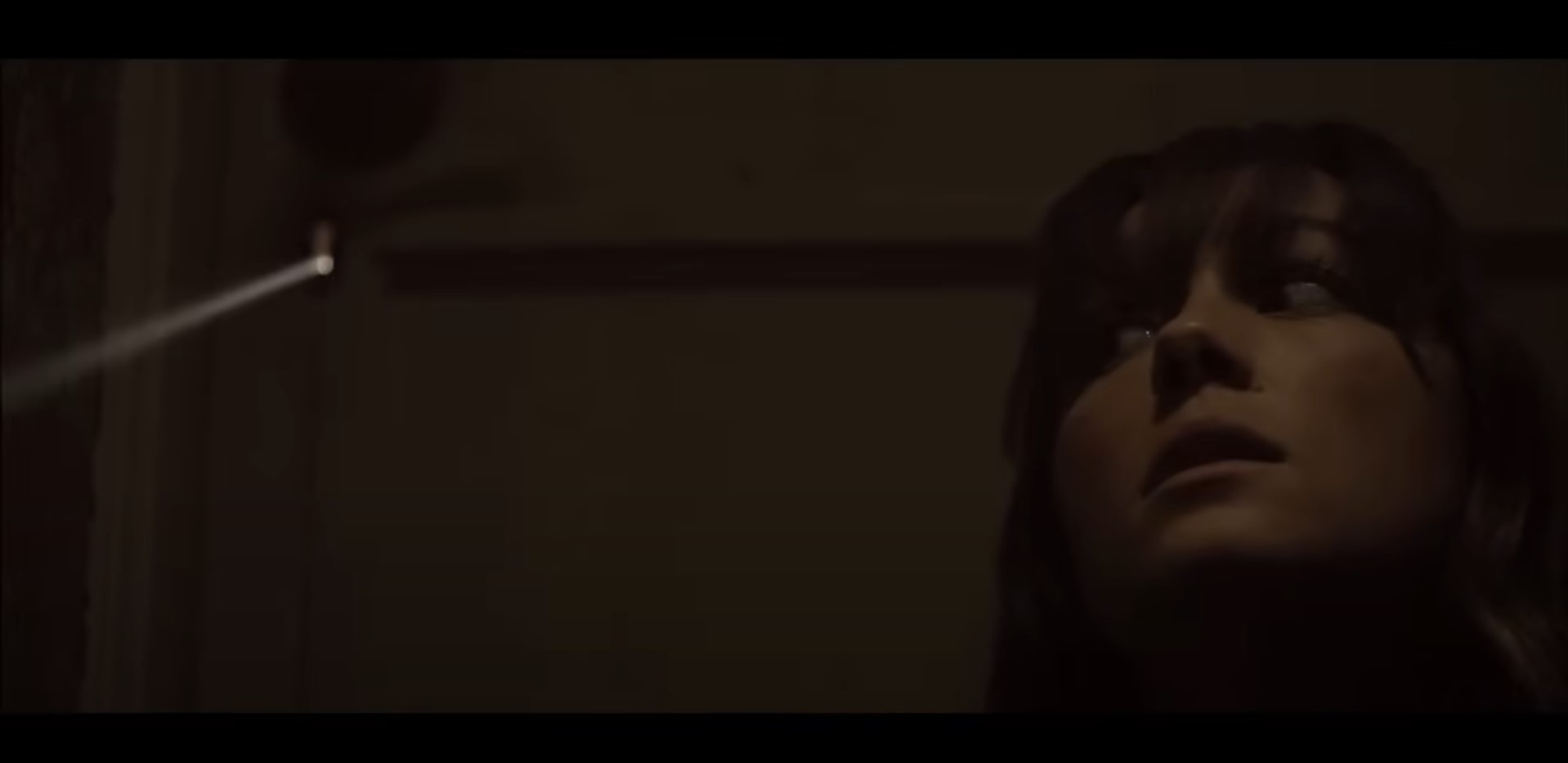
Celebrating 35 years of marriage, Paul and Aubrey Davison invite their four children – Drake, Crispian, Aimee, and Felix – to their rural weekend manor along with their respective spouses for the occasion.  Tensions amongst strained family ties begin to boil over as siblings quarrel before they even share the first meal all together.  Yet, that’s the least of the family’s problems when animal masked intruders shoot crossbow arrows through the windows and are found hiding, waiting under the bed with machetes.  The surprising attack sends a surge of shock through them but not Crispian’s girlfriend Erin who intends on fighting back and defending herself with survival knowhow.  As the night carries on, the family is being brutally executed one-by-one in what is seemingly random acts of violence.  Unsure how many assailants are outside and the cell service not working, Erin and the rest of survivors attempt to survive the night until help arrives. 

Before being the directorial face behind the recent string of mega blockbusters, literally, in the “Godzilla vs. Kong” films, Adam Wingard had more humbling beginnings as an original horror storyteller.  From working with “Texas Chainsaw Massacre: Part II’s” Bill Moseley as a demented door-to-door salesman in “Home Sick,” to interlacing themes of drug addiction and haunting visions in “Pop Skull,” to thrill with an abusive pursuit of an escaped convict tracking down his ex-girlfriend in “A Horrible Way to Die,” Adam Wingard had a knack for extracting small time horror in a big way.  Although all three of those examples saw success at some level, the glass ceiling never really broke until a juncture point just after the turn of the decade in 2010 with “You’re Next.”  Screenwriter Simon Barret, who also before writing “Godzilla x Kong:  The New Empire,” wrote the U.S. home invasion and slasheresque horror-comedy as the fourth film under Wingard’s direction, following “A Horrible Way to Die,” “Autoerotic,” and “What Fun We Are Having;” however, Barrett has found moderate success of his own with “Frankenfish” and, one of my personal favorites, “Dead Birds,” with an early performance from Michael Shannon.  Barrett, alongside Jess Wu and Keith Calder of Snoot Entertainment, Chris Harding, Kim Sherman, and Brock Williams produce the Snoot Entertainment in association with HanWay Films production.

“You’re Next” reunites a cast of Wingard regulars, interchanged with good friend and fellow horror filmmaker Ti West (“The House of the Devil”) that has all but nearly faded the higher the filmmaker climbs the Hollywood latter.  The entourage includes “Hatchet II” and “The House of the Devil’s” A.J. Bowen as the pacifist academic Crispian, “Alien:  Covenant” and “Pet Semetary’s” Amy Seimetz as Crispian’s starving filmic sister Aimie, “The Sacrament” and Autoerotic’s” Joe Swanberg as the pompous older brother Drake, and “Pop Skull,” and “V/H/S’s” Lane Hughes as the Fox masked killer all of whom were in Wingard’s “A Horrible Way to Die” a year earlier.  Plus “Home Sick” and “Pop Skull’s” L.C. Holt dons a killer’s mask and director and friend Ti West of the highly popular X film series also has a brief role that plays into their whole dark nature of storytelling.  The inner circle of friends and usual casting smooths out to fills voids by adding a couple of marketable and genre renowned names to add a solidifying agent to “You’re Next’s” magnetism with “Habit” and “The Last Winter” actor-director Larry Fessenden as well as un-retiring one of the genre’s more respected and timeless scream queens and final girls in Barbara Crampton (“Re-Animator,” “Frome Beyond”) to be playing matriarch and host of the family being invaded upon.  Though marking her return back to horror, Crampton relinquishes her reins on the final girl trope, swallows her stardom by moving aside, and letting have that particular subcategory role to Australian actress Sharni Vinson (“Bait”) in one of her first handful of roles in a feature film.  Vinson will send shockwaves through audiences on her quick turn of character from a lovely, liberal oblique woman to a complete cutthroat badass that not only turns the tables on the attackers but also shepherds in a new fear or thrill – a worriment encompasses over the sociopathic bad guys.  “You’re Next” puts up a high body count with the rest of the cast body including the late Nicholas Tucci (“Choose”), Wendy Glenn (“11-11-11”), Margaret Laney (“Absence”), Rob Moran (“There’s Something About Mary”), and Kate Lyn Sheil (“She Dies Tomorrow”).

Before the film’s release in 2011, the home invasion genre saw an explosion of examples from class that wasn’t exceeding in quantity but rather rocketing skyward in quality.  The French had a good handle on concept with a bleak, ultra-violent coating that completely engrossed viewers as well as rocked their core with how nihilistic and cynical characters could become without a heroic, saves-the-day, or survival outcome, such as is the cast with 2007’s “Inside” and 2008’s “Martyrs.”  The American industry also attempts to capitalize on the niche market with “Funny Games” released in 2007 but that too is based off a European script from Austrian filmmaker Michael Haneke’s original film a decade earlier of the same title.  In all fairness, Haneke also helmed the remake starring Tim Roth and Naomi Watts.  Yet, American audiences adored their own success with Bryan Bertino’s “The Strangers” in 2008 and a remake of Wes Craven’s “The Last House on the Left” by director Dennis Iliadis in 2009 that conveyed that sort of callous violence and anarchial analogies.   Then in steps Adam Wingard and Simon Barrett’s entry of “You’re Next” of shared sadism and pessimism but sprinkles it gallows humor through the dialogue exchanges and impressions of character attitudes to make a hybrid that pulls inspiration from the likes of “Funny Games,” “The Strangers,” and “The Last House on the Left” and still finding individuality amongst the like without suffering from an identity crisis.   Protagonists and antagonists swerve through an interchangeable junction, flipping the script just when you think you’ve plotted the course of the storyline, and yet, a found sense of cold cock shock lands squarely when all is said and done and bits and pieces of the royale rumble characters are strewn about the battled ground mansion. 

“You’re Next” arrives at the UK label and friend to physical media Second Sight Films.  Second Sight’s single disc Blu-ray comes AVC encoded with 1080p hi-def resolution and dual layered with a BD50, projecting a consistent 24FPS.  There’s not much to terribly note about Second Sight’s quality release of Adam Wingard’s over 20-year-old, 4K shot film as digital stock hasn’t necessarily changed significantly for the better over the last two decades.  Presented in a widescreen 2.39: aspect ratio, Wingard and cinematographer Andrew Droz Palermo (“The Green Knight”) choose a warmer color pallet of mustard yellows and burgundies, accentuated by enveloping three-point lighting and the tweed dinner jackets and turtlenecks, to give it a retro 70s or 80s veneer in a modern time.  No banding issues or digital compression anomalies with the ample disc space.  Range is fine but limited to mostly the aforementioned color scheme.  Depth is almost limited in what is mostly a series of medium to closeup shots in an interior setting, but we’re treated to a mixed melee of close-up violence that sees splatter scatter the dark syrupy blood.  A DTS-HD 5.1 Master Audio mix layers a lossless fidelity consistency.  Dialogue has no issues with obstructions, favoring a clean and clear presentation of exchanges without losing inflection, tone, and vitality during the chaos, calmer moments, and tensioned exchanges.  A fugitive depth doesn’t sustain any kind of depth; again, with the close quarters action, we tend to forget Larry Fessenden’s blaring music left on repeat and noted to have at least three layers of depth from within the stereo’s room, between rooms, and outside the house.  Organic and inorganic ambience and action have seamlessly admixed without a sense of artificial notice.   A compilation of artist soundtrack isn’t invasive or intrusive with the assailants and that kind of dampens the effect but it’s an overall workable mix from Mads Heldtberg, Jasper Justice Lee, Kyle McKinnon, and Wingard himself.  Optional English subtitles are available.  Second Sight Films reliability to earn the right to re-release another modern production stands through again another special features laden release that includes a brand-new audio commentary with director Adam Wingard and writer Simon Barrett as well as archive audio commentary with Wingard, Barrett, and actresses Sharni Vinson and Barbara Crampton.   Another new feature is an approx. hour long interview Children of the 80s with Wingard and Barrett recollecting and going through the details for the genesis of the story and film.  Other new interviews include producers Keith and Jess Wu Calder the Most of Us, actor AJ Bowen Script is a Blueprint, actor Joe Swanberg Down in the Basement, actor Amy Seimetz Be Funny or Die, and production designer Tom Hammock Falling into Place.  Animated storyboards, an archival making of What’s Next?, and a video essay from Tim Coleman Slashers Don’t Die fill out the immensely packed second layer.  House in the standard Second Sight green Blu-ray Amaray for their standard lot, the front cover is gruesomely beautiful with a blood illustration of Sarni Vinson in character that’s also very telling of the film’s tone.  Like all their standard releases, this one comes with no inserts inside or other tangible bonus content.  The disc is pressed with another illustration of one of the masked killers.  The UK certified 18 release contains strong bloody violence, as well as language and brief nudity for those of us Americans wondering at home, in a 95-minute duration to which is encoded with a region B playback. 

Last Rites:  “You’re Next” denounces the helpless and the defensive character topes aimed to be slaughter like cattle in an abattoir.  Instead, this final girl and ferocious slasher and home invasion thriller goes against the grain and has gruesomely fun with its kills and thrills.   

Limited Edition and Standard Edition Sets of “You’re Next” Available At Amazon!

Weak Meekness Leads to One’s Own EVIL Destruction. “Catacombs” reviewed! (Imprint / Blu-ray)

Own Your Copy of Imprint’s “Catacombs” on Blu-ray!

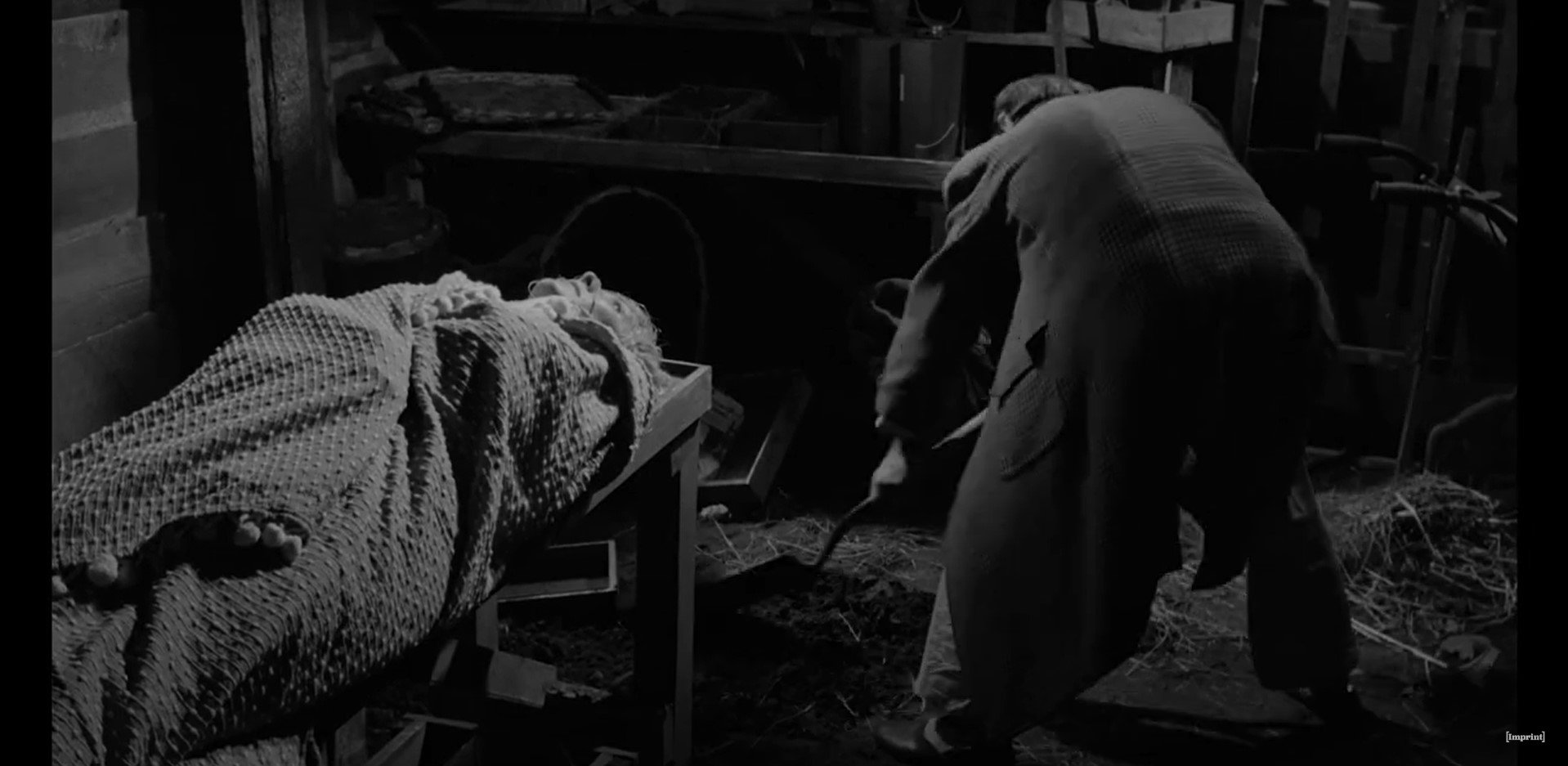
Ellen Garth, a strong willed and wealthy but physically afflicted businesswoman devotes her all her love to an enervated doormat of a husband, Raymond.  When Ellen’s beautiful young niece, Alice, returns to London from Paris after a year abroad, Raymond is smitten by her flirtations for older men and strikes up an affair behind his very perceptive and sly wife’s back who catches them in each other’s embrace.  Tired of being a slave to his wife’s controlling behavior and wanting to be free to court Alice, Raymond kills Ellen and buries her in the potting shed behind their honeymoon house in a plot conceived with Ellen’s right-hand secretary and former con, Dick Corbett.  Believing he’s free of her and having been willed her fortune to share with Alice, Raymond suddenly suspects, after a series of strange events, that he’s being haunted by Ellen’s ghost, or even worse, the undead Ellen herself. 

Black and while horror from half a century or more ago always leaves a lasting impression that terror and suspense can be created by virtually story and acting alone instead of a heavily reliance of special effects and visceral coloring, such as with gore or grotesqueness of the unfathomable creature.  The British film “Catacombs,” or otherwise known as “The Woman Who Wouldn’t Die” in America, is one of those fear manufacturing films generated by pure acting talent and the managing cleverness behind the camera.  The 1965 film is directed by “The Oblong Box” and “Scream and Scream Again” director Gordon Hessler with American screenwriter Daniel Mainwaring (“Invasion of the Body Snatchers”) penning the script based off an American novelist Jay Bennett’s novel of the same UK title.  Shepperton Studios served as house of operations for the Parsons-McCallum production under Neil McCallum and Jack Parsons and distributed by the BLF, British Lion Films.

There’s no such thing as wasted parts or throwaway performances in Hessler’s murderous-revenge haunt with precision-acute actors and actresses chin deep in their characters’ cruelty, callousness, conformity, and control.  Twists and tension-riddle rods help elevate this nearly 60-year-old film to refrain from aging poorly.  Gary Merrill, former husband of silverscreen actress Bette Davis and star of “All About Eve,” plays the meek husband Raymond wed into money but at the cost of his manhood.  Merrill plays convincingly into Raymond’s submissive, passive nature under the more dominant but fair and kind mogul lady Ellen Garth, a hip-afflicted women that doesn’t feel the ailment impede her wealth or attitude in life by way of British actress Georgina Cookson.  In the mix is Ellen and Raymond’s parentless niece Alice who has returned from her studies in Paris seemingly transfigured from a chubby child to a beautiful lady.  Jane Merrow, who co-headlines “Catacombs” with Merrill, finds her stride as the elder-entangling Alice secretly at-odds with her aunt by seducing Raymond behind her back.  Rounding out the principal foursome is Neil McCallum (“Dr. Terror’s House of Horrors’) as Ellen Garth’s sneaky secretary Dick Corbett who has a façade of a hard worker, but Corbett can’t keep up with boss’s demanding energy and is itching to subvert her.  When the story’s peak turning point hits, the expectation of character change recedes back to status quo as if Ellen’s death changed nothing other than open the door of opportunity for Raymond and Alice to connect without concern.  Yet, that inkling of shame, guilt, and fear, mixed under a plot of deception and murder, has the reverse effect of a now burdenless happiness, producing a very little capricious life-change, especially in Raymond who is still as amiable as ever.  “Catacombs’” fills out the intimate cast with Rachel Thomas and Frederick Piper.

The actual use of catacombs, or subterranean burial grounds, has little do in the film other than in its infinitesimal moment of being a key piece of evidence toward something amiss, a tell for foreboding or already doomed health, and serves as one playful, paralleling reason to Ellen’s resurrection, though not reflected in plain sight as playful or parallel by Hessler.  What’s intended the most is building the mysterious dread around Ellen Garth’s return in a semi-gloss gothic polish aimed to crack Raymond and Alice’s psyche in half.  Hessler breeds tension after tension to engulf the characters in an unrelaxing state of disgrace and distrust and what makes the matters worse for Raymond and unscrupulous company is while Ellen Garth may have held all the cards being an authoritative woman of status and wealth, she showed loyalty, humility, and adored her family, friends, and lover despite their flaws and circumstances.  That unjustifiable murder stings audiences the most, a straight shot to the sympathetic heart that creates a need to see those responsible punished by Ellen’s earth-soiled, grave-escaping, dead-cold hands with edge of your seat anticipation.  Is Ellen Supernaturally haunting her killers or is the guilt driving them mad? 

The only way to find out in glorious high-definition is to pick up a copy of Imprint Film’s definitive Blu-ray version of “Catacombs” on an AVC encoded, 1080p, BD50 presented in a 1.66:1 European aspect ratio. The black and white picture receives a 4K scan from the original nitrate negative for its worldwide Blu-ray debt and though not much to mention in regard to colorization and black levels, the monochrome remains sharp at all times in a pristine negative that sees no damage. Usually, black and white can issue fuzziness, heavy grain, and ghosting during spliced cell overlap but this print, or rather this scanned print, looks amazingly fresh, holding patterns and transitioning seamless to the highest of restorative care. The English language is a mix between American and British English encoded with an uncompressed LPCM 2.0 mono, rendering a dialogue centric audio with composter Carlo Martelli brass band that’s minor keys taut tension to swell during the height of suspense. Dialogue is clean and clear with very minimal crackling; there’s no wispy or hissing detected. Although the mono feed vectors flatly, the range surrounding “Catacombs” is vast and timed to tackle distinction between the audio idiosyncrasies. Optional English subtitles are available. Special features include an exclusive feature-length audio commentary with authors Jonathan Rigby (“English Gothic: Classic Horror Cinema 1897-2015”) and Kevin Lyons, a new interview with co-star Jane Merrow on her experiences in “Catacombs” Merrow & Merrill, new interview with continuity supervisor Renee Glynne and sound designer Colin Miller The Glynne-Miller Story, a new interview with composer Carlo Martelli Martelli & Martell, and with a still gallery ending the bonus material. Housed in a Hammer blood red cardboard slipcase designed with a rendition of the original poster, the Imprint release is it’s 317th title. The clear Blu-ray Amaray case is even more colorful with a giallo-colored title and back cover, overtop a frightened scene with stars Merrow and Merrill. The reverse side of the cover has more of the psychotronic photo of Ellen Garth (Georgina Cookson) staring blankly into a pocket mirror to submit herself under a trance. The BD is pressed with the same red coloring and half-woman, half-death figure as the slipcase with no inserts included. One thing I will say on the negative side of the package is that the Amaray case is a bit difficult to extract from the slipcase; you kind of have to shimmy and shake it out enough to pull the case out. The 90-minute feature is unrated and did play on our region free player without having to setup flip to the desired region for playback.

Last Rites: Gorgeously macabre yet classic packaging, Imprint’s Blu-ray release of “Catacombs” is must-own Machiavellian umbra of greed and foul play, a timeless tale yarned to yield a megaton of shadow-lurking, supernatural suspense.

Own Your Copy of Imprint’s “Catacombs” on Blu-ray!

Gaudy, Superfluous EVIL Sits in Your Living Room and Destroys Your Family. “The Coffee Table” reviewed! (Cinephobia Releasing / DVD)

“The Coffee Table” Would Look Good in Your Living Room! Purchase It Here Today!

Jesús and Maria are new parents with a beautiful baby boy.  Maria has been eager for a baby and sent through several medical treatment for the bundle of joy while Jesús continuous rides the fence about being a father.  When the baby arrives, the boy becomes a source of usually one-sided bickering and jabbing contention as Maria feels Jesús could be a better father to their newborn son.  When they move into a new apartment, they find themselves in a furniture store looking at a gaudy glass coffee table Maria can’t stand the sight of, but Jesús very much can’t live without.  While Maria steps out to shop for an upcoming luncheon with Jesús’s brother and young girlfriend, Jesús briefly stops assembling the table to take care of the baby until a tragic accident happens that reshapes everything and everyone Jesús cares about, and impels him to bottle in the tragedy, hiding it in extreme guilt from his wife and guests, as he struggles to find the right moment to relieve his soul. 

Marriage is hard.  Parenting is even harder.  Choosing a coffee table should be a delicious piece of decision-making cake but for director Caye Casas choosing living room décor can be deadly.  The “Killing God” director follow up his debut feature with the 2022 released domestic disturbing comedy-horror “La Mesita Del Comedor,” aka “The Coffee Table.”   Casas cowrites the film with Cristina Borobla, her first screenwriting credit but not her first collaborative effort working with the director as the vocational Art Director has been involved in Cases’s other works, such as “Killing God,” his 2017 short “RIP,” and amongst others.  Maria José Serra (“Amigo Invisible”) and Norbert Llaràs (“Killing God,” “The Perfect Witness”) put their producer café mugs onto “The Coffee Table” with the hailing from Spain production companies La Charito Films, Alhena Production, and Apocalipsis Producciones. 

Much of “The Coffee Table” is set inside the tiny, newly moved into apartment of Jesús and Maria who even though rag on each other’s opinions and one of them don’t necessarily favor being a parent, deep down the unlikely pair do have a strong love attraction that swims upstream against the repelling.  In the roles of Jesús and Maria are David Pareja, whose worked with Casas inner circle before with “Killing God,” and Estefanía de los Santos with an unforgettable, characteristic raspy voice that magnifies the role tenfold.  Both Pareja and de los Santos are comedically bred with a long list of hilarious Spanish features to prep them to see the gut-punching, black humor of what’s to come in “The Coffee Table.”  Frankly, there’s nothing negatively to report in Pareja and de los Santo’s flawless, funny, and unfortunate family dysfunctional performances surrounding their love-hate relationship and the knot of culpability and the bliss ignorance contrast that’s delineated between them.  Floating into the mix of repressiveness are side stories that become assimilated by the untold tragedy, such as the neighbor’s daughter (Gala Flores) with an intense belief Jesús loves her, the smarmy coffee table salesman (Eduardo Antuña, “Killing God”) who also have an interest in Jesús, and Jesús’s brother Carlos (Josep Maria Riera, “RIP”) and his barely 18-year-old girlfriend (Claudia Riera, “The Communion Girl”) being ribbed for their own odd couple relationship and giving a surprise announcement of their own. 

Though a comedy and a horror, I didn’t find “The Coffee Table” all that funny but more so quirky, outrageously bold, and shockingly hard-hitting instead.  Horror, definitely without a doubt, comes through but not in a typical to be scared or to exact fear way with any of the conventional themes to support its harrowing weight.  The horror that uncoils is every parent’s worst scenario, the underlying nightmare that grabs the soul and squeezes until every drop of anxiety is wrung out of our wet bag of bones and meat.  The incident itself is gnarly and unspeakable but the post-trauma slithers in a nasty case of guilty conscious, shame, and fear that can freeze someone to the spot to where they clam up, sweat profusely, stomach twisted, and have self-harming thoughts from the conjoined cause and effect of having to tell your partner the most terrible of news and see their composure, their affection flush away in a blink of an eye.  Casas able to string along the aftermath to extract a feature length film without it ever approaching critically forced or farfetched, adding on and expanding upon the luncheon or Jesús’s wiggling through painfully with excuses on why Maria should leave the baby sleeping peacefully in their room.  The passively aggressive sparring atmosphere quickly turns into colossal tension and hopelessness through the mechanism of dark black comedy.  As a parent myself, “The Coffee Table” evokes great sadness and mental strife of the situational possibility, the greatest horror of all time.    

The cruel film by Caye Casas arrives onto a Cinephobia Releasing DVD. The MPEG2 encoded, upscaled 720p, DVD5 comes in at being the eleventh release for the Philadelphia based, eclectic independent film distributor. And, boy, is it a doozy. For “The Coffee Table’s” image, not the two, artificially gilded naked women holding an oval shape, unbreakable pane of glass, the feature’s picture quality renders about as good as any single layer capacity unit can decode in a digital age with modest details, muted hues, hard lit, and a good amount of spectrum banding in the darker areas. Not to fret, however, as there’s plenty to discern with a film that isn’t reliant on details but more reliant on hitting you wear it hurts, heavyheartedly. The Spanish language Dolby Digital 5.1 uses a lossy compression that, again, suitable to the movie’s means of conveying a contortioned, ruthless story defining the very meaning of a no way-out, no-win situation. Dialogue really is key for this type of narrative to work and progress and does come through fine without an ounce of earshot hinderance. Also, not that type of film that provides a breadth of range or depth as much of the layers express in a very near arrangement, as expected in a concentrated setting of Jesús and Maria’s apartment home. English subtitles are optionally available, and they synch up and pace well with only one noticeable grammatical error. Not much in the way of special features as only Cinephobia Releasing trailers fill that spot and there is not mid or end credits scene. The 90-minute film’s DVD release comes not rated and has region 1 playback. Other regions are untested, and the back cover does not state the official region playback capacity.

Last Rites: Caye Casas and Cinephobia Releasing has the cajónes to not table this wonderfully bleak black comedy-horror from reaching audiences far and wide. “The Coffee Table” is a painful reminder of just how fragile life can be, much like a cheapy made piece of tawdry decor from China.

“The Coffee Table” Would Look Good in Your Living Room! Purchase It Here Today!

EVIL Sentences You to the Torture Dungeon and his Bedroom! “Night of the Blood Monster” reviewed! (Blue Underground / 4K UHD + Blu-ray)

“Night of the Blood Monster” on 4K + Blu-ray is Here and On Sale!

After the death of King Stewart, 17th century England went into asunder chaos with the ruthless, usurping King James and the rightful, exiled King William of Orange who sought to return and topple King James’s authoritarian rule of a false claim to monarchy.  During the beginning and at the height of the revolution, Chief Justice George Jefferies presides over witchcraft cases with extreme and unethical prejudice, subjecting them to the torture chamber for what is labeled a ‘thorough examination” of their heretic ways, and eventually sentencing to public execution.  When the sister of one of the condemned women attempts to flee the country with a nobleman’s son, Jefferies learns of their dissidence and sends his henchmen to fetch the lovely woman to exploit her within the context of his own licentious litigiousness but closer and closer do the rebels and William of Orange’s men come to men like Chief Justice Jefferies who believe their power, influence, and proximity to God will save them from the noose.

A 17th century Eurotrash period piece forged out of mostly flesh and wolfish self-importance, “The Night of the Blood Monster” is yet another reteaming of Jesús (Jess) Franco and Sir Christopher Lee based loosely on historical context despite Lee’s best efforts for the contrary.  Also wildly and otherwise known as “The Bloody Judge,” and not to neglect mention the exorbitant unofficial titles from around the globe like “Witch Killer of Broadmoor,” “Throne of the Blood Monster,” and “Trial of the Witches” to name a few, the Spanish-German-British coproduction, cowritten between Jess Franco and Enrico Columbo (“Hell Commandos”) is a biographical interpretation of the Chief Justice George Jefferies and the brief span of his cruel litigator’s life set against an epic regime kerfuffle and grimy, exploitation barbarity.  The storyline concept was imagined by longtime Jess Franco producer and overall B-movie votarist Harry Alan Towers (“99 Women,” “The Blood of Fu Manchu”) alongside Columbo and Arturo Marcos (“She Killed in Ecstasy”) under production firms of Fenix Cooperative Cinematografica, Prodimex Film, and Towers of London Productions.

In yet another instance similar to Jess Franco’s “Eugenie” of a prior year or two where Christopher Lee channels the spiritual embodiment of a pain-and-pleasure pundit connected to the Marquis de Sade yet is unaware of the actual skin-and-sleaze that’s happening all around him while he crafts his melodramatic character, “The Night of the Blood Monster” has Lee conduct a stern symphony for Chief Justice George Jefferies’ conceited righteous carnage, living true to the factual George Jefferies designation of a hanging judge.  Lee is ruthless and cold while proper in public as he peeps beautiful bosoms and skirts from afar.  His costar, the gorgeous blonde with soul pierce eyes in fellow “Eugenie” thespian, Maria Rohm, who was also Harry Alan Towers wife at the time, definitely wasn’t clueless about the more undressed scenes, going full frontal in a couple of occasions with one of the supposedly with Lee as the exploiter of her beauty and circumstances.  However, Lee is never shown and only Jefferies’ hands are seen caressing Rohm’s character’s, Mary Gray, bare skin with post-event moments alluding to the implied affect.  Yet, there’s plenty of well-scripted dynamic play for Lee to bounce off against, which Franco is good at in his work as long as his at least 75% of the work makes it to the screen and not too terribly chopped up and spliced for the sex appeal and gratuitous blood.  Milo Quesada (“The 10th Victim”) swings a mean bastard sword as one of Jefferies head knights of dirty work, Hans Hess (“X312 – Flight to Hell”) is more vanilla than complex as the rebellious nobleman son and Mary Gray paramour Harry Selton, and Leo Genn, who initially wasn’t supposed to play the Lord Wessex, really cements Lee’s genuine performance with his own as the aristocratical, oppositional counterpart to Jefferies sadism.  “Night of the Blood Monster” rounds out with Peter Martell (“The French Sex Murders”), Margaret Lee (“Asylum Erotica”), Howard Vernon (“Angel of Death”), and Maria Schell (“99 Women”) as the clairvoyant old woman Mother Rosa living in the hills. 

Like “Eugenie,” “The Night of the Blood Monster,” and most of Franco’s scripts and films, the historical accuracy you must take with a grain of salt.  Though the underline basis of historical figures and perhaps time periods are more-or-less on point, there’s a greater number of misrepresentation of events or an imprecise use of period appropriate props and costuming that is deemed close enough by a fast-and-loose industry standard. Yet, with any Jess Franco film, the modern-day consumer is not expecting award-winning and emotionally moving cinema but rather fleapit flicks of the fleshy kind with handfuls of equally perversive cruelty.  “The Night of the Blood Monster” fits the bill perfectly with a dressing that, to the untrained eye, would pass historical surroundings, give tribute to sordid bygone figures, and revel in its own unabashed filth outside the interpretations of its own core group of filmmakers.  On one hand I feel bad for Christopher Lee who didn’t know, maybe, that the edification of the character was being twisted into something more carnal but on the other hand, the man has been in quite a few Franco and Towers productions to have learned by then.  However, Franco does depict a remarkable presence of a low-level epic with fabricated Classicism set dresses and interior architecture while keeping the budget down by having multiple scenes of men on horses gallop through an unrecognizable, middle-of-world forest.  With that said, the story doesn’t have perfect fluidity with a choppy sense of tempo that fails to coordinate our specific concepts of time.  Seasons don’t change yet months pass between the wrongful execution of Alicia Gray and the impending arrival of William of Orange’s invasion. In all, there’s a brilliance in the behind the face value and a heart to make Chief Justice George Jefferies the worst person possible yet the timing feels off and the story suffers for it.

I’m curious to understand why Blue Underground used the title “Night of the Blood Monster” on their new 2-Disc 4K UHD and Blu-ray set instead of their previous DVD that had the less-generic-more-fitting title “The Bloody Judge.” No judge-ment here really other than “Night of the Blood Monster” isn’t as catchy. The 4K UHD is HVEC encoded, 2160p high-definition, on a double layered BD-66 presents a new 2023 Dolby Vision HDR 4K scan that is gorgeously sharp in detail of interior structures, brighter exteriors, and even the dungeon scenes invoke the dewy coldness and bloodletting squirms. The skin tones can get a little funky at times with an overly warm, and orange-ish, glow not conducive to elements around the ambiance. Other than a few instances of the skin tones, the grading is overall rich in saturation where we get some really nice and thick contrasting reds and yellows with no artefact inference that cause distraction in darker spots or around the edge of objects. The Blu-ray format offers a lesser immersive picture with a lower pixel count but the compression decoding around 35-38Mbps and the compilation of transfer as well as the high-definition pixels is worth the combo set alone. The English language DTS-HD Master Audio Mono track has lossless compression that renders a clean and unfiltered fidelity in dialogue and in the other audio composited audio layers. Granted, some actors are dubbed due to the international co-production with German and Spanish natives not speaking their native tongues but the dub itself, especially in Lee’s own dubbed track, is one of the better inlaid and integrated tracks compared to most with not a load of static feedback. Blue Underground was able to obtain a cut that is the complete and uncensored version of “Night of the Blood Monster” by combining multiple transfers but in adding additional scenes of nudity and blood from a German transfer, the English dialogue track does briefly switch over to German with burned in English subtitles for two segments. English, French and Spanish optional subtitles are available. The 4K UHD carries with it three historian audio commentaries: 1) Troy Howarth and Nathaniel Thompson, 2) Kim Newman and Barry Forshaw, and 3) David Flint and Adrian Smith. The Blu-ray carries a bit more. Including the aforementioned commentaries, there is also deleted scenes and alternate scenes that rework scenarios or add stylistic choices, an archival interview Bloody Jess with Jess Franco and Christopher Lee, an interview with Stephen Thrower, author of “Murderous Passions: The Delirious Cinema of Jesus Franco, in Judgement Day, an interview with Alan Birkinshaw and Author Stephen Thrower as they discuss producer Harry Alan Towers in In the Shadows, and rounds off with trailers, TV spots, and still galleries. What I love about this new Blue Underground UHD+Blu-ray combo release is not only the picture but also the cardboard slipcover, a remarkable blend of film factuality and gratuitous sleaze of half-naked and scared women chained up in the dungeon with the embossed tactile title “Night of the Blood Monster” in bold gothic lettering. The same image graces the front cover of the black 4K UHD Amary case but if you do want “The Bloody Judge” title, you can reverse the cover art and there it is but with a different, less fun front cover art that’s more in tune with the narrative. Each disc, punch locked into its own side of the interior case, is pressed with a different illustrated image, 4K being the same as the slipcover while the Blu-ray is more Lee and Executioner focused. No inserts or books included. The not rated, 103-minute release comes region free on both formats.

Last Rites: The verdict is in! “The Night of the Blood Monster” now has the best-looking, most-complete version possible with a new, uncensored cut from Blue Underground. Christopher Lee heralds in hopelessness in squalid measure while holding his nose up high as one of England’s most notorious magistrates to ever rule and the brazen Jess Franco brandishes brilliance that glints through the cracks of an overrun production.

“Night of the Blood Monster” on 4K + Blu-ray is Here and On Sale!

EVIL Has Now Been Digitized. “August Underground’s Penance” reviewed! (Unearthed Films / Blu-ray)

“August Underground’s Penance” on Blu-ray/DVD Combo Set. Purchase Here!

Armed with a digital camcorder and a dark desire to kidnap and brutally torture, rape, and murder random people, deranged serial killers Peter Mountain and his girlfriend Crusty are now a gruesome twosome after the demise of Crusty’s brother Maggot.  The couple’s documentarized carnage continues forward near Pittsburgh where fooling around in metal clubs and on the isolated outskirts of city is balanced out with a healthy dose of basement snuff as body after body after body begins to strain their warped relationship.  What unveils is a descent of their paired destruction as Peter’s rage and undying fascination with female flesh, and internal organs, gaslights Crusty’s simmering and unhinged toxicity.  During the stretch of the Christmas holiday season, the gift of gory packages will be unwrapped and sexualized cookies will be enjoyed before the festive filleting of body parts and December dismemberments trail off into a tale of grim totality. 

Fred Vogel’s third and final film to shut the book on the story around the atrocious Peter Mountain and his extreme exploitation and degrading of people is back on limited-edition physical media for snuff salivating audiences as “August Underground’s Penance.”  Nothing short of gratuitous ultraviolence, the final chapter of “August Underground” marks another successful viscerally visual installment in a clearly digitized effort, elevating the graphic nature with ooey-gooey detail in a vividly discernible image resolution.  A reuniting four years later between Fred Vogel and his cowriter/costar Cristie Whiles after their collaboration on “August Underground’s Mordum,” the second sequel provides a level of continuity, a very low level at that, not seen between the 2001 series starter and “Mordum.”  Under Vogel’s Toe Tag Pictures banner, the company behind the trilogy, the shock realism filmmaker co-produces the film with wife, Shelby Lyn, and Cristie “Crusty” Whiles and special effects artist Jerami Cruise servce as associate producers. 

Aforementioned, Peter Vogel and Cristie Whiles lace up yet again for the Peter Mountain and Crusty show of sadism.  Vogel returns as the mania screaming and overall brute Peter Mountain, a juggernauting maverick amongst murderers with no moral principles, a cynical constitution, and a weak-ish stomach that can’t handle his own gutting of bodies as Mountain, like in the first two features, wretches and coughs and nearly loses his lunch in most graphically intense scenes of spilled blood and guts and other appalling perversities.  Whiles’s Crusty is a carbon copy counterpart, a demented love interest under a loveless veneer, but the Crusty character certainly has evolved between “Mordum” and “Penance” as the coquettish amoralities at the beginning devolve shown in an unconventional narrative way with rough-hewn rough cuts that avoid structuring time and guiding in segues.  It also doesn’t help that the two often have screaming matches or are yelling at their lifeless victims to get a better understanding of melting down mutual relationship based on common callousness and, probably, rough sex, just the way they individually like it.  This is how Peter Vogel circumvents a “Mordum” repeat; not that “Mordum” was terrible as it did convey a Mountain, Crusty, and Crusty’s on the suicidal brink brother Maggot breaking down whatever threadbare bond that kept them for killing each other, but “Mordum” departs with uncertainties surrounding the characters in that memorably haunting final sequence.  “Penance” then takes the two remaining nihilists out in the backyard to basically shoots them, figuratively speaking, to put them out of their misery in an artistic way, as if to say, “that’s it.  I’m done.”  Like previous “August Underground” films, killers are centrically focused with not a lot of repeat characters popping in and out (because they’re all being snuffed out by the killers)  but those played victims round with Selby Lyn Vogel, Jeremi Cruise, Anthony Matthews, Rob Steinbruegge, Ed Laughlin, Matt Rizzutto, Autumn Smith, and Trevor Collins.

While Vogel and Whiles psychopathic performances will make your skin crawl, the real star of “Penance” spurts onto the floor, oozes from the entrails, and has a nasty crunch sound when being sawed into.  I’m speaking of none other than Jerami Cruise’s nauseating blood, guts, and all the colorful viscera in between practical effects that extinguish any kind of comfortability you might have had going into the scene.  Animal intestines are once again used to for seamless builds.  The lines between what’s real and what’s not has no definition, is smoothed over well into the folds, or is vaguely blurry at worst that when the cutting, gouging, severing, perforating, slicing, or whatever other harmfully human puncturing wound words come into the scene, your mind is your greatest enemy unable to tell the differences in the gruesomeness acts all of which are accentuated by Vogel’s dry heaves.  While the story itself begins to shutdown “August Underground’s” pseudo snuff run, the third entry is as much as a regurgitation of the previous two installments peppered with noticeable yet minor differences that less often than more separate themselves from each other.  One of the biggest, advantageous differences in “Penance” is the move away from the fuzzy standard definition analog tape and into the digital world with a widescreen ratio camcorder that details more of the ghastly dissections and without any modifications to the camera, a cleaner sense of raw realism is better conveyed. 

I remember a time, not too long ago, when the “August Underground” films were nothing more than rumor, urban legends of the physical media world, lost archetypes of extreme horror seemingly nonexistent to the everyday joe, like me, and only those who are close to Vogel and his Toe Tag family or willing to fork over large amount of money for a long out of print and rate copy were the lucky ones to ever experience the trilogy. Yet, now, we’re living in the golden age of physical media, paradoxically smackdab at the height of new age and ever-growing streaming platforms, and Unearthed Films has released all three films onto a 2-disc Blu-ray and DVD limited collector’s set. The Blu-ray is an AVC encoded, 1080p high-definition, 2K scan on a BD50 while the DVD is a MPEG2 encoded, dual-layered, DVD9. Obviously, switch from tape to digital video makes is a tremendous step for image processing and clarity as “Penance” tops the trilogy with a better pixel resolution, a wider angle (1.78:1 aspect ratio), and much less quality degradation than analog. All the nasty bits and pieces are visual described in great realistic detail in what is an ungraded showing of a full-on display not for the weak of stomach. The raw image, even with all it segued pauses in between scenes, punctuates practicality over the conceptual nihilistic serial killer construct. Unearthed Films preserves that through the looking glass, unfiltered video with more than sufficient capacity. The English language uncompressed PCM 2.0 stereo mirrors the same caliber with a home video disharmony of an onboard camera mic that manages well to create distance where needed also while capturing every innate surrounding sound element, such as the whooshing of passing cars, Mountain’s echoed screams in a confined basement, or the overburdening decibels of daunting death metal. There’s a steady amount of low-level interference too that doesn’t hurt the variable levels of dialogue depending on where the principals are and what they’re doing. Between the Blu-ray and DVD, the hi-def format has more capacity for bonus features with most of the new bonus material on the Blu-ray. What’s on both formats are a new audio commentary by special effects artist Jerami Cruise, producer Shelby Lyn Vogel, director Fred Vogel, and Ultra Violent Magazine editor Art Ettinger, a second commentary with Vogel and editor Logan Tallman, a third commentary with the Toe Tag Team, and a fourth commentary with just Fred Vogel. Also included of both formats are a behind-the-scenes documentary Disemboweled and the feature’s very own commentary track, deleted and extended scenes, music video Poppa Pill – “The Murderer is Back,” music video Rue – “The Locust,” original trailer, and new extended photo gallery and teaser outtakes. Exclusively to the Blu-ray is a conversational interview with editor Logan Tallman, going through the nuts and bolts of the most disturbing scene with Peter Vogel, superfan Rob Steinbruegge’s experience and bit role in “Penance,” a new Zoë Rose Smith, creator of “Zobo with a Shotgun” and editor-in-chief of Ghouls Magazine, interview with Peter Vogel, a second new interview with Peter Vogel Voyage to Perdition with Severed Cinema’s Chris Mayo, a discussion roundtable with Peter Vogel, wife Shelby, Logan Tallman, and Ryan Logsdon moderated by Dave Parker, and Unearthed Films’ Stephen Biro’s new interview with Peter Vogel to wrap it up. The physical presence of the release clearly states its homicidal intentions with the thin cardboard O-slipover of Peter Mountain caressing power of his bound and bloodied victim. The clear Blu-ray Amary case displays new, religious art spoofed cover illustration by San Diego artist Paul Naylor; the religious art also continues on the reverse side of the cover with a marred icon of the Virgin Mary being engulfed by the darkness. With the DVD punch-locked at the right and Blu-ray at the left, there’s really no room for an insert to be crammed in but the silver lining there is the pseudo data-cast captures of notable scenes that are the disc pressed art. Unearthed Films’ release is region A locked (region for the DVD is not listed but assumed to be region 1), is not rated, and has a runtime of 81 minutes.

Last Rites: While ever so slightly different from the previous films, “Penance” is more of the same snuff but in its truest, purest form legally allowed on video. Unearthed Films are match made in a human abattoir, like the tacky peanut butter and bloodred jelly. Their collaborated, limited collector’s set release of “August Underground Penance” is nothing short of phenomenal and, if you’re lucky and quick enough, grab all three before they disappear back into obscurity.

“August Underground’s Penance” on Blu-ray/DVD Combo Set. Purchase Here!