An Odyssey through the Phantasmagoria EVIL. “Moon Garden” reviewed! (Oscilloscope Laboratories / Blu-ray)

Take a Stroll Through the “Moon Garden” on Blu-ray

Five-year-old Emma is caught in the middle of her beleaguered parent’s marital strife.  When Emma witnesses one particular heated and nasty argument between mom and dad, she flees to escape the anger only to slip and fall down the stairs, hitting her head that puts her into a comatose state.  She awakes lost, confused, and consumed in an industrialized gray zone, loomed over by strange land’s dark gloom and also curious wonderment that both frighten and amuses her.  As Emma looks from the inside out, seeing her parents come together from the struggles to cope and worriment surrounding her comatose body, the young girl is determined to make it back to her parents by trekking through the bizarre land, but a menacing, chattering being feeding off her fear and tears pursues her and she has to rely on the amiable ambivalence of unique strangers that inhabit this world to help her escape the nightmare and return home.

Cut with relatable bleak themes of family dysfunction, Ohio-born filmmaker Ryan Stevens Harris undertakes fantasy rarely seen in this day and age of computer visuals and special effects, probably not since “Labyrinth” or “The Never Ending Story” of the 1980s.  Stevens, chiefly an editor in the movie industry with credits ranging from indies like “What’s Eating Todd?” to big-budget blockbusters like Roland Emmerich’s “Moonfall,” writes and directs “Moon Garden,” a wayfaring grim fairytale with visual ferocity in a practical DIY-fashion and without major studio help.  The 2022 fantasy envelopes elements of difficult navigation surrounding nuclear family problems through the quivery, unguarded eyes and immense imagination of a very young child still developing those rationality and interpretation skills to make it all make sense.  Based off Harris’s proof-of-concept 13-minute short film “Every Dream is a Child with Teeth,” “Moon Garden” is a production of Harris’s Fire Trial Pictures and is self-produced alongside Fire Trail Picture’s co-founded John Michael Elfers and wife, Colleen.

“Moon Garden” is truly a family affair with not just the husband-and-wife collaboration behind the camera but also the couple’s young daughter, Haven Lee Harris, at the forefront as the enchanted young Alice in Wonderland-esque wanderer named Emma.  Haven, who also starred in the “Every Dream is a Child with Teeth” short,” fully embraces Emma’s forming schism between her parents and being engulfed by an intimidating atmosphere that’s often bursting with melancholy and acrimony, a credit to the father-director who can turn the darkness to light by making behind-the-scenes an engagingly fun atmosphere for his impressionable, yet talented, daughter to thrive as an untrained actor in her debut performance.  As Emma travels through the eclectic settings of sewers and steam pipes, dilapidated houses, swampy overgrowth, and towering observatories, she comes across equally eclectic figment inhabitants that help her, a hammering string musician (Phillip E. Walker, “13 Mysteries”), a sullen groom (Timothy Lee DePriest, (“BnB HELL”), a budding mud witch (Angelica Ulloa, “Gnome Alone”), and a lonely Princess (Maria Olsen, “Vile”), but not all seek the wellbeing of Emma as a haunting levitating and sinister pursuer (Morgana Ignis, “Satanic Hispanics”), garbed in inspired militarism and a void where only sharp, chattering teeth makeup it’s face.  Each character is bred out of Emma’s emotional states brought to fruition by her extensive imagination, correlated by her playing with resembling toys before her accident.  Mom and dad are played by Augie Duke (“The Badger Game”) and Brionne Davis (“Mom and Dad”) for the first act and through flasbacks of the second and third.  The parents inadvertently inject sorrow into the heart of their daughter caught in the middle of the martial affliction.  Duke saturates leadenly into the mother’s depression with poignancy and potency, fueled by Davis’s uncompassionate workaholic for the father, and this sparks the tension that requires a forced happy family face around Emma whose brimming at the edge of her imagination for a better existence.  Filling in the cast gaps are Téa Mckay and Emily Meister. 

If Phil Tippett directed a movie from a script by Lewis Carroll, “Moon Garden” would be the outcome.  Pure imagination and creativity ignite a new world to travel down toward the rabbit hole, utilizing a series of practical techniques to show how grotesquely and beautifully grandiose this world can be erected and the odd characters can come alive all without breaking the bank.  With any abstract art, grasping concepts and correlating visual expressions can be difficult but with “Moon Garden” there’s a sense of celebration for movie magic.  Between detailed miniatures, visual compositing, manipulative time and camera techniques, practical special effects, etc., Ryan Stevens Harris promenades the audience through the different levels, stages, and exhibits of what is a carefully curated museum of ingenuous imagination, which sounds like something Willy Wonka would melody about, and does so while tapping into our own fears as not only having once been children ourselves with vivid imaginations looming in ever crevice of our minds but also in us lucky enough to be parents as Harris interposes clips of Emma peering in reverse through the looking glass, into reality, to see her parents reformulating a bond through the muck of grief, worry, and love for their child in what is a parents’ worst nightmare to experience.  “Moon Garden” can be intense and scary at times but certainly could be kid friendly and empowering for little tykes afraid to take on the daunting outside world or the inside of uncertainty. 

Our first venture into an Oscilloscope Laboratories release is anything but paramnesia. “Moon Garden” arrives onto an AVC encoded, high-definition 1080p, 50-gigabyte Blu-ray transferred and processed from the original 35mm print, as Fire Trial Films is a 35mm production company, and presented in a widescreen 2.39:1 aspect ratio. Having scored age-worn film stock, Harris achieves some unusually neat prints that saturate the colors differently than if the stock was in brand new, pristine condition. An ingrained darkness from the stock adds a pinch of otherworldly tincture that accentuate the already overwhelming serrated slumberland atmospherics coupled with a filmy layer of good-clean grain. Primary colors don’t often appear like primary due to the aged film stock but pop in distinct crush, nonetheless. Emma’s unconscious dimensional detour is full of pocket voids, shadowy symmetrical shapes, and dreamy in exact detail on all accounts without being empyrean or wistfully. The English language DTS-HD 5.1 master audio and the film’s original uncompressed stereo 2.0. The lossless surround sound mix options to deliver the identical audio measures in comparison the uncompressed audio while also slinking through the side and back channels for full-bodied immersion into Emma’s tribulating trek back home. Dialogue comes through exceedingly well-enough albeit the multi-faceted improved industrial soundtrack sneaks in staggering oversteps at times. Speaking of the soundtrack, an original score by composer Michael Deragon, the transitional tunes, melodies, discordances, and synths are just a taste of the eclectic, haunting sounds that navigate Emma’s journey and the elegant, melancholic, and even comforting lullabies by Augie Duke as the mother bring a sort of peace and tranquility that resets the intensity and fear of the child in peril. The chattering teeth, though comically inclined to an extent, are especially effective as a looming, omnipresent pursuant. Optional English subtitles are available. Special features on the Blu-ray include a making of “Moon Garden” featurette that lets director Ryan Stevens Harris be giddy-as-school boy proud to show off and explain the how-tos of his masterclass piece of creativity as well as to dote on his sweet daughter Haven, Harris’s 12-minute proof-of-concept short film “Every Dream is a Child with Teeth,” a single deleted scene, and the theatrical trailer. Oscilloscope’s Blu-ray comes in a clear Amaray case with a what looks almost to be an innominate water-colored cover art composition, with gothic overtures, of a few characters with the reverse side bathed in a blue landscape setting that Emma crosses which is shown in the film. The disc art is curiously plain with the Oscilloscope Laboratories logo and the title “Moon Garden” above it. The not rated Blu-ray comes region free and with a 93-minute runtime.

Last Rites: Ever since post-credits, The M Machine’s Moon Song and Promise of a Rose Garden has regained ground in my mind and it’s a very fitting pair of tracks not only for their keyword titles but also for its industrial beats and unconventional sonority structures similar to the cadence of the deep space wandering that is “Moon Garden” as visually the imagery confounds the senses and surrealism takes hold of us as this sweet and innocent little girl confronts alone a world much bigger than anything than we could ever imagine, and only she can pull herself through while the discordant parents can only be a unifying beacon of light and hope. Highly recommended.

Take a Stroll Through the “Moon Garden” on Blu-ray

Sadomasochism and Decapitation Seen by a Child Turns Him into An EVIL Adult! “Nightmare” reviewed! (Severin / 4K UHD – Blu-ray)

Your “Nightmare” Should Be in 4K! Own it Here!

A schizophrenic patient continues to have reoccurring dreams of a young boy chopping the head of a woman in the midst of rough sexual fetishism.  The intense nightmares send him into violent stints, delusional states, and severe seizures.  As a test subject for an experimental behavior drug, the troubled man shows promise of recovery and enough so that he’s released from the mental hospital with continued outpatient therapy sessions.  Not long after his release does he skip his sessions to hightail it from New York City to Daytona Beach, Florida, killing people along the way after decapitating nightmare continues to plague and force him to murder.  In Daytona Beach, single mother of three becomes his obsession as he stalks the youngest boy, a mischievous troublemaker, and even breaks into their house when it’s not occupied , but as the bodies begin to pile up on the hands of his need to kill, the more brazen he becomes to entering while they’re home alone. 

Based loosely on the improprieties of government spy agencies using drugs to bend the minds of home and oversee terrorism to their wills, “Nightmare” sensationalizes the concept for the public sector involving a mental patient, experimental drugs, and exasperating an already instable person’s constitution into a hyperdrive of bloodletting carnage.  The U.S. production is written-and-directed by Italian filmmaker Romano Scavolini who came to America to shop around his scripts having failed to secure financial support in Europe, including, you guessed it, “Nightmare.”  Shot in New York and mostly around the Cocoa Beach Florida, the crime thriller filmmaker flexes his muscle with his first attempt at horror and the outcome is nothing short of unadulterated madness.  Once considered to be titled “Dark Games,” and goes loosely by “Blood Splash” and “Nightmare in the Damaged Brain,” the 1981 film is a feature of Goldmine Productions with John Watkins and Bill Milling (“Silent Madness”) producing.

The man behind the nightmare is George Tatum and the man behind George Tatum is Baird Stafford in one of his only two roles as an actor.  “Nightmare” wouldn’t be as skin-crawlingly shocking if it wasn’t for Stafford’s distressing performance of a man whose psychology is being peeled away and you can see Tatum physically fighting the urge, fighting to stay sane, but losing the battle as the grisly terror replays over and over inside his mind.  Stafford’s asunder of Tatum’s equilibrium has unequivocal transference to the audience.  Parallel Stafford is a child, a young child by the name of C.J. Cooke who essentially played his own version of himself in C.J. Temper, a mischievous prankster that ran babysitters up a wall mad and frightened and frustrated the living daylights out of his mother.  C.J. is part of the family Tatum is hellbent on driving down from New York to Florida to see for a reason that isn’t made clear yet until the shocking reveal.  C.J.’s single parent, a mother desperate for love and affection, is played by Sharon Smith who has become romantically involved with nice guy, and yacht owner, Bob Rosen, with Mik Cribben in the role.  Cribben was actually part of the cast but the original actor for Bob Rosen dropped out and Cribben quickly filled into the role that suited him well enough as a suitable suitor for C.J.’s mother.  “Nightmare” rounds out the cast with Danny Ronan, Scott Praetorius, Christina Keefe, William Kirksey, Tammy Patterson, Kim Patterson, Kathleen Ferguson, Candese Marchese, Tommy Bouvier, and producers John L. Watkins and Bill Milling as drug trial executive and psychologist tracking down Tatum to clean up their mistake. 

“Nightmare” combines excellent U.S. thespianism with an Italian way of suspense and violence glued together by the success of the late Leslie Larraine and team’s special effects albeit the controversial assertion on the film’s posters that Tom Savini (“Dawn of the Dead” ’78, “Friday the 13th, ’80) had been the effects supervisor on the film albeit Savini’s adamant claims of the opposite and denying the credit being false and liable for using his name to draw in audiences.  Savini continues to state his contribution “Nightmare” was limited to best to the action of a decapitating swing of the axe.  Ultimately, the whole ordeal mars Larraine’s due recognition for some of the more up-close and personal gory effects this side of the early 80s.  Scavolini also deserves well-received credit for his narrative vision of Tatum’s psychosexual struggles that drive him to kill.  Robert Megginson’s editing and the re-recording mixing team tackle a form of character plummeting that’s unlike any other from the intercut concatenation of events between Tatum’s horrific, blood-soaked nightmares and his antagonizing, sweat-inducing impulses that propel him without a choice.  The simultaneous parallels between Tatum and young C.J., as Scavolini aims to connect the two against-the-grain personalities as a singular link with back-and-forth subplots, leach the shock out of Sharon Smith’s acme line as mother Susan Temper that uncovers the truth when the chaotic smoke clears.  Why Tatum would drive so far from New York City to Daytona Beach, Florida with reason to stop and make roost on this one particular family fails to form mystery around what’s often crafted to be an arbitrary target with some minute hints that may provide clues to the audience is because even without those inklings, the shooting script defines the rationale right from the beginning thus bringing the viewers out from a shrouded suspenser and into being buckled in just along for the ride. 

Severin Films’ 4K scan of the 35mm internegative compositions the print with various foreign element sources for a comprehensive version of Romano Scavolini’s “Nightmare” on a 4K UHD and Blu-ray 2-dsic set.  The UHD is on a HEVC encoded, ultra high-definition 2160p with a 4K resolution, BD66 and the Blu-ray is housed on an AVC encoded, high-definition 1080p, BD50.  What’s released is a very enriched saturation of the technicolor process that defines and differentiates the innate hues.   Details are more than consistent throughout as we’re able to pinpoint the beads of sweat down Tatum’s face or feel the palpable slick sinew of a decapitated head amongst the examples.  Blood is a deep, glossy red and contrasts strikingly in the more sopping moments despite Savini’s claim that it needed more green dye to better pop for the camera.  A consistent layer of agreeable grain runs throughout from the 35mm film stock, as it should, without any inimical dust, dirt, scratches, flares, or of the like to obstruct viewing or cause lapse in the narrative, as it shouldn’t.  Between the resolution diverse formats, there’s a slightly more grindhouse look to the Blu-ray whereas the HDR10 crisps the image for better vibrancy.  Both formats retain inky blacks without shimmering or banding.  The English language audio tracks are available in two lossless options:  DTS-HD 5.1 and a DTS-HD Stereo 2.0.  The surround mix’s dialogue has resounding infusion, spread through the multi-channels to encompass a multi-directional approach to centralize.  The design is effective as it’s prominent to not understate the vocals but leaves little room for spatial distant to which no matter where characters stand, they are almost audible on the same audio plane.  Jack Eric Williams warping harmonica and twangy guitar, intrinsically integrated with piano notes, a variety of percussion, interjecting funk bass chords, and hints of string instruments, that ebb and swell with great intensity and favorable discordance is a real celebration of Williams’ score on Severin’s latest restorative edition of “Nightmare.”  English subtitles are optionally available.  The Ultra HD release comes the film’s trailers and a pair of audio commentaries as the only accompanying special features; commentary one has features star Baird Stafford and special effects assistant Cleve Hall with Lee Christian and David Decoteau and commentary two features producer William Paul.  The Blu-ray also has the commentaries and trailers plus an extended lot of interviews, such as a feature length (71-minute) Kill Thy Father and Thy Mother interview with director Romano Scavolini (Italian with English subtitles), Dreaming Up A Nightmare interview with cast and crew, a brief interview with Tom Savini discussing his role, or rather his not role, in The Nightmare of Nightmare to which Savini looks a little tired of answer the same question about his inaccurate involvement, an interview with makeup artist Robin Stevens The Stuff that Nightmares Are Made of.  Also included is an open matte peepshow as well as untouched deleted scenes, extending beyond the already newly achieved 99-minute runtime for the film.  “Nightmare” from Severin comes in a standard 4K Amaray case with original poster art used for the front cover.  The discs are separated and tab locked on either side of inner casing and this particular release, the 2-disc set, does not come with any insert or content.  The front cover is reversible with the European title “Nightmares in a Damaged Brain” and a different image composition of the European poster art. The disc has region free playback and is not rated.

Last Rites: “Nightmare” on a new, extended restoration in 4K and Blu-ray is a dream of a release. A nerve-wracking performance in Baird Stafford’s schizo vilifies the very classification of the mentally ill in what is sure to go down in history as one of the most disturbing, and disturbed, characters of the video nasty era.

Your “Nightmare” Should Be in 4K! Own it Here!

This Little Pit Stop of EVIL Doesn’t Have Gumdrops and Lollipops. “Candy Land” reviewed! (MVD Visual / Blu-ray)

Visit “Candy Land” On Blu-ray. Purchase Here!

Candy Land is the bestowed designation of a truck stop at one of the last exits through Bible Belt country.  The monikered hotspot is home to four prostitutes, Sadie, Riley, Levi, and Liv, who work for ends meet, servicing all the needs of commercial truckers, those passing through, and even the local sheriff as long as they can cough up the cash.  The only ones not seeking pitstop sex worker services at Candy Land is a religious cult trying to spread the world of the lord around the same stretch of space.  When one of the members, a young and naïve Remy, shows up ostracized from the zealot sect, the sex workers take her in, treat her with kindness, and convince her to be worked into their profession.  Shortly after, gruesomely murdered bodies are found in and around the truck stop turning the once desired Candy Land into a life-threatening place to work, and enlightening the lot lizards that Candy Land is more seedy than once believed.

Shot in the foreground of the scenic Montana mountains, John Swab’s “Candy Land” is a lewd offering that screams the ugly part of something beautiful.  The 2022 USA horror-thriller is a written-and-directed by the “Run with the Hunted” and “Body Brokers” filmmaker Swab in the director’s first go at fringe horror that involves sex work, crazy cults, and hidden knife sheathed inside a large wooden cross.  Swab’s script takes a path less trodden perspective to most similar narratives and pulls inspiration heavily from the 70’s grindhouse era with lots of skin and lots of blood.  Swab produces his own film alongside fellow “Run with the Hunted” and “Body Brokers” producer Jeremy Rosen (“I Am Fear”), with Robert Ogden Barnum (“31”) and Michael Reiser (“Abandoned”) as executive producers, under the production banner of Roxwell Films.

The ensemble cast is comprised of Hollywood veterans, up-and-coming actors, and even a famous last name.  The latter would be then 29-year-old Eden Brolin, daughter of Josh Brolin (“No Country for Old Men”) and granddaughter of James Brolin (“The Amityville Horror”), who is quickly paving her own path having landed as a season regular on the widely popular modern western series “Yellowstone.”  The “Blood Bound” actress is joined by equally young and hungry talent of Sam Quartin, a multi-time John Swab collaborator with roles in “Run with the Hunted” and “Body Brokers,” Virginia Rand (“I Am Fear”), and Owen Campbell (“X”) who are definitely not shy showing of their bodies, simulating explicit sex acts, and step into a compromising prostitute’s shoes as “Candy Land’s” unashamed lot lizards, or that’s what they portray for their characters on screen.  Together, a bond is formed between the working stiffs of sex workers, leaning on each other for support while seemingly living a free and uninhibited life with a good chunk of change in their pocket, but their profession is no walk in the truck lot as taxing moments in sidestepped affairs of the main plot show the darker side of prostitution, mostly involving Owen Campbell’s Levi as a straight man willing to anything for cash in a male dominated over-the-road trucking industry.  Their chimera’s end of the beginning is when Remy strolls into their lives like a lost puppy.  “It Follows’” Olivia Luccardi plays the meek and underestimated cult girl turning tricks as a way get a foot-in the door to cleanse damned souls to send to Gods’ pearly gates in Heaven and while Luccardi has the substantial feign madness well set in her eyes and actions, her story slips below that of the original four truck stop hookers as much of Luccardi’s backstory or even her perpetual motion through her perspective loses to the arbitrary wanes of killing for the sake of killing when the chance is at hand.  Cast rounds out with Guinevere Turner (“American Psycho”), Brad Carter (“The Devil to Pay”), Bruce Davis (“Agnes”), Billy Blair (“What Josiah Saw”), Mark Ward, and another famous last name from William Baldwin (“Flatliners”) as the daunting, downlow Sheriff Rex who has a strong, affectionate thing for Levi. 

The very first opening scene and montage of a sandy-blond Sadie going truck-to-school bus-to-bathroom stall to give a sense of what to expect and the down-and-dirty daily workload for our principal prostitutes sets the tone of Swab’s lickerish thriller with grindhouse endowments.  “Candy Land” is more than just a nutso cult film with all the hallmarks of sordidness as the interpretation received from the story is this temporariness in these characters’ lives.  From the transient paying clients of a truck stop, to living in the impermanence of a hotel room, to even the things they ingest, such as the smoke of incessant drags of cigarettes as a brief coping mechanism and the food they eat with the Hostess Snowballs that have fleeting substance in them to stave off hunger for a little while and only provide negligible nutrition, the temporarily speaks volumes toward the plot of a killer under the influence of a radicalized cleansed ideology wasting away those in provisional moments.  Swab finely sets up character quirks, an unsavory, realistic world, and distinct dynamics to enmesh the characters in a life they attempt to put a pretty face on only that pretty face is a pig wearing lipstick, forcing them into uncertainty and wearing them down to a point they can’t face what’s important and dangerous right in front of them – a young, confused girl led astray and looking for answers.  Instead, that girl, teetering on the edge of purity and dissolution having nowhere to call home, is not safeguarded and is folded into their own licentious lives and, like a Trojan horse, she ultimately become their downfall. 

For “Candy Land’s” inaugural home video release, VMI Distribution and MVD Visual releases the John Swab horror onto Blu-ray.  The AVC encoded, high definition 1080p, BD25 conscripts not a single compression issue in the breathtaking, mountainous landscapes of Montana, affixing great distance between Candy Land and the rest of the world to describe the troubled brief getaway from reality without actually saying it. Presented in a widescreen 1.78:1 aspect ratio, details are greatly appreciated here with the graphic and vulgar markings inside the restrooms, skin tones fair a natural coloring, and a good amount of the whole film is lit naturally with the occasional greenish-yellow gel work to enhance the dinginess of a seedy truck stop. The English language, lossy Dolby Digital 5.1 surround track settles the best fidelity that it can muster, reining in unbridled tracks for a more subdued approach that befits more the lowkey motel suspenser than a fueled high-rise stimulator. Dialogue is clean and clear enough; a few instances cause for mumbling concern but quickly pass and that link is quickly made in the off word that’s missed. Soundtrack contains well-blended, well-intermingled snippets of classic rock, alternative and R&B from the 90s, and a quaint Christmas selection. Yes, “Candy Land” could be considered a Christmas movie! English subtitles are optionally available. Special features are limited by the disc capacity that houses only John Swab’s commentary track and retroesque, in-character stills of a digital zine. The standard Blu-ray Amaray snapper case for this limited-edition release is nothing short of pedestrian with a homage cover art that, I must admit, made me suspect Candy Land” was more a vampire film than a cultist’ coup of truck stop sex workers because of my lack of doing any kind of film prep for any of the screeners I receive – keeps me objectively aligned. You’ll find the same image pressed on the disc itself with no insert accompanying. Not rated and locked on a region A playback, this release has the film clocked in at 93 minutes.

Last Rites: “Candy Land’s” sweetness derives from its in-your-face sexual audacity that rings a certain truth inside the unsavory cash-making aspects of the oldest profession and Swab takes us out from the game’s usual vivarium of the darkened streets and the dingy underpasses into the brightly lit and very populated desert with a different breed of the species. The instilled cult angle feels more slapdash in comparison that sunders the acts more acutely and without a clear reason, leaving the finale unsatisfactory like a $20 handy.

Visit “Candy Land” On Blu-ray. Purchase Here!

Might Be Dressed as a Fool, but EVIL Can’t Outwit This Jester! “The Wrong Door” reviewed! (Visual Vengeance / Blu-ray)

“The Wrong Door” Collector’s Set Available at Amazon!

Ted, a radio sound design student, has to perform a singing telegram dressed in a jester costume on the very evening of having to pull an all-nighter to finish his final college class project.  After his melodic duties are fulfilled and the guests are entertained, he discovers a girl’s unconscious, bleeding body in an adjacent, dark apartment, a girl that he recognizes from campus.  Frightened by the sight and the shadowy figure in the apartment with him, Ted goes for help only to discover the girl vanished with no one else inside the apartment.  His drive back home is full of contemplation on the shocking memory when he notices the girl lying lifeless in the backseat of his car.  From then on out, Ted becomes embroiled into a murder mystery and pursued by the killers who are hellbent on tracking down the Jester-cladded man to cover up incrimination evidence and tie up loose ends.

Even though our unlucky protagonist wears a court jester outfit, there’s nothing funny about the 1990 thriller, an intense bird-dogging murder-mystery, known as “The Wrong Door.”  Helmed by the creative ensemble of friends, the film is written and directed by James Groetsch, Shawn Korby, and Bill Weiss who eagerly sought to make a feature film on a strapped for cash budget after success of their Super 8 short films.  Contemplating using tape for their inaugural throes into feature film land, the auteurs revert their thinking back to film, settling on a faithful celluloid format to which they have experience with in, the ever gritty Super 8.  What results is a tenebrous yet effectively taut confrontation of frenetic hunting and a shocking homicide driven more with ambient sound than character dialogue.  The three creative minds behind “The Wrong Door” formed Sandman Films and coproduced alongside John Schonebaum for the Minneapolis Twin Cities’ production.

Cast locally around Minneapolis area, “The Wrong Door” is chock full of directors’ acquaintances who turned out to be really quite good at the parts they play.  Matt Felmlee stars in his debut performance as Ted, the class assignment under the gun student looking to knock out one last paying singing telegram gig before cutting and splicing audio for a final exam.  Felmlee isn’t given much dialogue to work with and his credibility relies burdensomely on nearly a vocally silent rundown from Jeff Tatum and Chris Hall respectively as deranged stalker and ransacking lunatic Jeff and his accomplice Vic.  Jeff Tatum makes for a good hardnosed psycho in a subtle yet menacing take of a trench coat robed coup de grâce kind of thug but the thug’s partner Vic is left as an nearly obscured sidekick and we don’t get to see Chris Hall ever come out and shine independently from Tatum’s enormous shadow.  Concluding on the three talking roles, unless you consider Loreal Steiner’s mostly dead body popping up performance where she speaks only in Ted’s nightmares, “The Wrong Door” instruments of interaction circulate around the three male principals peppered with Steiner’s maybe lifeless, maybe lively body stringing Ted along in order to slip him damning evidence on who and why she is being brutally murdered, in a nod of Hitchcockian hamboning.  A cast of supplementary, locally sourced pop-ins, including Jeanine Bourdaghs as Ted’s Radio classmate bestie, Stephanie.

Obscured to the depths of regional relevance, “The Wrong Door” is opened only to adventurous cinephiles who are willing to spend hours upon hours scouring through the vastly lower-to-no budget, independent films lost behind the borders of zonal solitude  A Hitchcockian thriller venerated on a humble scale in regard to the storytelling’s use of focused sound design to narrate a chased protagonist under the gun, literally and figuratively, that turns a studious radio sound design student with a final exam project to complete into a marked man hunted down in a foolish jester suit.  Bookend by dialogue setup and a tense, skirmishing climax, the near omission of dialogue in order for sound to reign supreme as atmospheric tensions force viewers, and force them appealingly I might add, into Ted’s chest-tightening, alone-in-fear experience with not only being incognizant of the particulars of the murder surrounding the young woman he was once smitten with but also to his being pursued by goons that hangs us on tenterhooks.  There’s also pulsing paranoia of where the dead set antagonists are hot on his trail and will suddenly appear unforeseen out of the blanketing darkness of an exterior cat-and-mouse game.  This leads into ambiguity near the end that asks the question, did Ted experience all of this strife or was it a clever cut and splice of imaginative audio files to create a whodunit thriller?  A brief sense of hesitation brings a sigh of relief from the nightmare and also onsets a different kind of anxiety of not knowing what truly went down until the very last shot that explains it all. 

Wrong place at the wrong time is the theme for “The Wrong Door” which is the right door to open if looking to walk-through to an understudied tensioner. Well versed in greatly misunderstood, profound stepped over, and overall underdog pictures is the smaller picture championing Visual Vengeance, the distributor behind the collector’s edition Blu-ray release of “The Wrong Door” with an AVC encoded, 1080p high-definition, BD50 product presented in a full screen 1.33:1 aspect ratio. For the first time on disc anywhere, the Super 8mm film receives a brand new, director approved 2K HD transfer from the original elements. The perception of Super 8mm does not hold water here with a relatively pristine image quality for the sized celluloid with a mighty clean image. Other than the white speckles of dust, other signs of minute debris, and the natural amount of grain of Super 8mm, no cigarette burns, light emitting on the frame edges due to perforation alignment, and hardly any scratches hinder quality. Poor lighting conditions in the exterior, and even some interiors, plays to the strengths of negative voids but, in my opinion, adds to the gloomy puzzler filled with action, suspense, and acrimony. While 8mm’s grasp on a grittier saturation, the tonal shading refuses to pop inside the faded film stock. The English Dolby Digital 2.0 stereo doesn’t do the new transfer justice. The lossy format likely not the best choice on a sound gimmicky, indie film that uses more innate ambient sound and Foley to tell the story rather than through dialogue. Though manageably capable to pull through to the end, the already lo-fi standard now compressed audio file has anemic energy through the dual channels but while the distinctions are dainty, some distinct distancing between more than two effects does convey. Switching between ADR and boom, there’s never a sense of uniformity with the dialogue that can sounds lively and volumes with post-production recordings yet also be frail within natural earshot of a recording device. Optional English subtitles are available. What’s most impressive about this 14th release from Visual Vengeance amongst 13 titles before it is the seemingly incalculable number of special features within the submenu of the flat, rodded colorful cutouts on the fluid main screen. New grouped audio commentaries with directors Bill Weiss and Shawn Korby in one and the third director James Groestsch and John Schonebaum on the second kick off the content followed by a new documentary with interviews from all three directors in Men Make Movie, If Not Million$, individual interviews with James Groetsch, Shawn Korby, Bill Weise, and actor Bill Felmlee, an interview with Film Threat founder Chris Gore who was one of the few in the field to put the film in his magazine, an alternate, director’s cut of “The Wrong Door” coming in as a second feature, Super 8 shorts: Raiders of the Lost Bark and The Pizza Man, a 20-minute television episode from The Gale Whitman Show, the original unedited Muther Video VHS intro, image gallery, original storyboard gallery, the original ran print from Film Threat, a Visual Vengeance 2023 cut trailer of “The Wrong Door,” and other Visual Vengeance trailers. Tangibly, the release comes with a rigid O-slipcover hypnotically graded in Jester colors of subtle pink and purple. Inside is a clear Amary Blu-ray case with the illustrated cover art that also does double duty for the motion menu and the folded mini-poster insert. Also inserted is a double-sided Blu-ray acknowledgment one sheet, a Visual Vengeance exclusive “Do Not Disturb …The Disturbed!” doorknob hanger, and a retro sticker sheet that’s come standard with every release to date. Reversible cover art displays the original VHS cover, and the disc is pressed as a mock play of a cassette tape’s supply reel teeth – neat! The region free Blu-ray comes unrated and has a runtime of 73 minutes.

Last Rites: Do you hear what I hear? No longer lingering in the vacuous space of radio static, “The Wrong Door” was once another shamefully sidestepped film that has been resurrected by Visual Vengeance for the first time anywhere on disc and, all I can say is, it’s about damn time.

“The Wrong Door” Collector’s Set Available at Amazon!

Backyard is Spacious, Green, and has an EVIL Portal to the Underworld! “The Gate” and “The Gate II” reviewed! (Via Vision / Blu-ray)

Better Hurry! Amazon Has a 20% Coupon for This Very Release! Limited to 1500 Copies.

The Gate

A severe storm brings down Glen’s treehouse, leaving a giant hole in his background.  Discovering what looks to be precious geode rocks, Glen and his friend Terry continue to dig hoping to strike larger, more valuable, geodes.  When they come upon a sizable rock, breaking it open unveils a crystalized liner of colorful minerals as well as a strange gas that unearths an incantation to open a gate to the underworld.  With Glen’s parents gone for the weekend, he, his teenage older sister Al, and Terry must somehow reverse the opening of the gate but demonic-serving, pint-sized minions hunt down a pair of human sacrifices in order to unleash their powerful demon master, an old God reemerging from being locked away from Earth for billions of years.  Serving the night is a fight for their very lives as the minions use their cunning tricks and supernatural powers to deceive the home alone kids into traps in order for there to be Hell on Earth. 

Created in mind to appeal to children with the limitless possibilities of a child’s imagination, “The Gate” caters to a wide audience of all ages.  Hungarian-born Director Tibor Takács and American-born writer Michael Nankin bring out of the shadows the scary corners of a young mind into the light with a demonic tale, a portal from another plane of existence, and a theme of growing up and being accountable in a context of taking head on a doomsday event without mommy and daddy.  The 1987 released Canadian production, shot mostly around Ontario, is the first of two “The Gate” films under the studio flag of Alliance Entertainment.  Presented by New Century Entertainment, as one of the company’s limited credits, “The Gate” is produced by fellow Hungarians in Andras Hamori, who went on to produce fellow Canadian filmmaker David Cronenberg’s “eXistenZ,” and “Quest for Fire” and “The Wraith’s” John Kemeny.

The Gate II:  The Trespassers

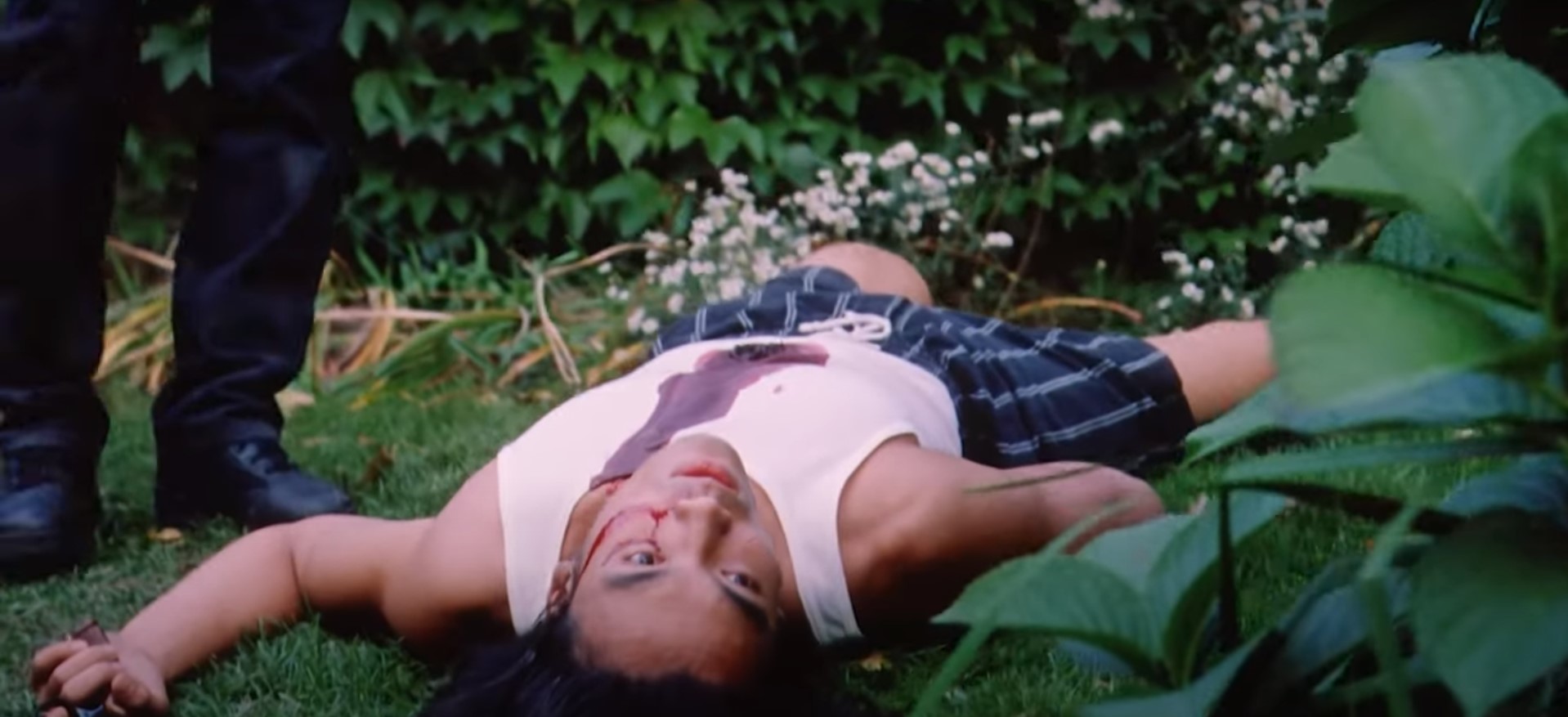
Five years after narrowly surviving near Hell of Earth, Terry’s obsession to return to Glen’s abandoned and dilapidated home and resurrect the demonic powers of wish granting stems from his jobless father’s dwindling livelihood, drinking himself into a stupor every night at the bottom of a bottle.  With equipment powered to project his incantations and protect him from evil, Terry is about to begin his summoning when interrupted by three teens led by bad boy John who mostly ridicules his fixation until one of the pint-sized minions comes out of the shadows and is quickly gunned down by John.  The injured minion self-heals and is captured for wish granting exploitation but when the wishes turn into a disastrous chimera, Terry soon realizes that his summoning has not just been answered for selfish motives, but it also re-opened the portal for three power demons to transmogrify from within him and his friends. 

The success of “The Gate” sought the fast tracking of a follow-up story produced within two years’ time after that spoke a different tone and came in a different approach to the nightmarish content and the age of the kids.  Takács and Nankin reteam for “The Gate II:  The Trespassers” who, at the authoritative behest of executive powers, had to take the fantastical lining of a child’s imagination to more extreme measures that evolved the original film’s grotesquely saturated PG-13 rating into a lighter, water downed R rating, removing a good chunk of the viewer base from a theatrical run.  The 1990 released venture was also shot at some of the same sets in Ontario Canada as the first film with Alliance Entertainment returning as producing studio and Vision International presenting to the world.  Andras Hamori and John Kemeny also return as producers.

Doesn’t take the understanding mechanisms of rocket science to discern “The Gate’s” cinematic victory.  Demons were all the rage in 80’s from Italian eurotrash to American grindhouse and why shouldn’t the Canadians get into the action?  Special and makeup effects, in themselves, are tremendously impressive, as aspect we’ll go thoroughly more into later in the review.  Yet, the one golden ticket area that deems “The Gate” as an unsullied hero of PG-13 horror is the unaccompanied children misadventure narrative coupled with, or maybe elevated by, good dialogue sanctioned by even better performances.  The 80’s saw scads of children in danger storylines that either had no responsible adult in sight or the adult party was the adversarial danger.  “Explorers,” “Adventures in Babysitting,” “E.T.,” and, one of the biggest examples of all, “The Goonies,” caddied the action-adventure and thrills-and-chills long game for the better part of the 80s decade and “The Gate” teed up on the opportunity, bringing together a trio of varying degrees of adolescents to go toe-to-toe with an ancient evil in what would have been seen as a no-win situation.  In his feature film debut, the barely teenage Stephen Dorff (“Blade”) lead the trio as the highly impressionable and model rocket enthusiast Glen, the youngest of the cast to be the one to save them all, including big sister Al, played by Christa Denton, and best friend Terry, played by Louis Tripp.  Tripp would go on to be principal lead in the sequel that veered away from the fantastically supernatural misadventures of innocence into a more older teen intrinsic narrative that no longer saw the world warp through youthful eyes.  While Tripp segues seamlessly in his role, he finds himself in new territory as the heavy metal and demonology aficionado sparks potential romantic interest in Liz (prolific voice actress Pamela Adlon, “Vampire Hunter D:  Bloodlust”) and is seized by arrogant bullies with two pot smoking hooligans Moe (Simon Reynolds, “P2”) and John (James Villemaire, “Zombie 5:  Killing Birds”), both instances a premiere example of the raw rite through to adulthood.  Again, “The Gate II” keeps adults at an arm’s length away, forsaking youth the challenge of cleaning up their own mess.  Both films fill out their respective performances from Kelly Rowan (“Candyman:  Farewell to the Flesh”), Jennifer Irwin (“Another Evil”), Deborah Grover (“Rated X”), Scot Denton (“Murder in Space”), Carl Kraines (“The Slayer”), and Neil Munro (“Murder by Phone”).

Special effects by the team of Randall William Cook, Craig Reardon, and Frank Carere couldn’t have pulled off an ambitiously suburban horror hyper focused inside Glen’s home any better.  Fashioning mind-bending illusions that are still marveled at to this day, Cook’s forced perceptions eliminates mostly the use of stop motion tactics for the miniature sized minions, replacing the rigid effect with a more lively physical man-in-suit option that smooths out the actions, attributing the creatures idiosyncratically with not only depth of perception to contrast sizes but also shot in a faster camera speed compared to which the seemingly normal sized actors would have to slow down their performances to become level with the creature.  The whole process is crazily multifaceted and mind-boggling effective if pulled out in great detail and “The Gate” team does so, twice, in face, between the two films, with Reardon’s fleshy creature designs enhancing the hideous zeal in the bulbously decaying Workman zombie and even in Reardon’s blamelessly slapped together endgame demons for the ordered change of a quickly surmised climax in the sequel.  As a collaborating unit, the special effects crew pulls off seamless transitions in what is captivatingly pure eye-candy of movie magic.  The stories themselves, especially in “The Gate,” are enchanting, full of mysterious and unpredictability, and stretches the imagination beyond the confining limit as we’re led to inevitable showdown only to be pleasantly accosted on the optics.  The sequel has a rougher go with the story as the narrative feels like a wound-up toy twisted tight to the threshold only to be released spinning in all different types of directions that ultimately lead to an exhausted stopping point. The stark contrast between the two films doesn’t offer a lot of subsequential continuity in narrative and even in some areas of the special effects but the silver lining in that last statement can be a sigh of relief in not receiving a rehashed product sought to recap or repeat off the back of the original’s success. Instead, “The Gate II” begs to be separated to be its own entity and does so while being a homage to the practical illusions that sparks awe, joy, and terror!

If looking to physically own both “”The Gate” and “The Gate II” in one deluxe package, the Australian based distributor Via Vision has set the bar high with their 2-disc, numbered limited edition, Blu-ray collector’s set. Both films, shown in a widescreen 1.85:1 aspect ratio, are AVC encoded with a high-definition, 1080p resolution on a BD50 (“The Gate”) and BD25 (“The Gate II”) and we’ll come to the reasoning to that split later on. Shot on 35mm and scanned into a 2K print, not many details are noted about what film negative or other print element is scanned to 2K but most of the bonus content on this particular release is Vestron produced, leading to believe the same Vestron print is also used here. Between the two pictures, “The Gate II” has a better saturated image whereas the original film almost seems ungraded with a slight gray concealer that somewhat mutes the hues. The forced perception shots are seamless yet are also delineated nicely that curves into a believable and pleasing symmetry without an inkling of divisional depths. Skin tones are natural looking and textures, such as practical prosthetic masks and molds, score high in all the nooks and crannies of the folds and surface level haptics. The English encoded tracks include a lossy DTS-HD 2.0 stereo codec on “The Gate” and an uncompressed, lossless PCM 2.0 stereo on “The Gate II.” These sole options provide suitable stereophonics without significant compression issues, other than “The Gate’s” minor fidelity data loss, or original source damage or technical gaffs, such as hissing or popping. Dialogue design sees the “The Gate” come out on top over the course of layering and projecting atmospheric augmenting. I don’t get that same sense from “The Gate II” that modulates the dialogue with a redounding heavy-handed echo effect in locations it does not make sense for reverberations. “The Gate” has English and Spanish subtitles with the sequel reduced to just English subs available. “The Gate’s” greater format capacity holds most of the special feature cards with a number of duplicated Vestron produced bonus content, including two audio commentaries: commentary one with director Tibor Takács, screenwriter Michael Nankin, and special effects designer/supervisor Randal William Cook and second commentary with Cook again along with his f/x crew Graig Reardon, Frank Carere, and Bill Taylor. Composer Michael Hoenig and J. Peter Robinson discuss the score with selected isolated tracks to enjoy, a conversation between Takács and Cook in The Gate: Unlocked, Craig Readon in an interview about creating the pint-sized creatures in Minion Maker, an interview with co-producer Andras Hamori From Hell it Came, an interview with actor Carl Kraines aka The Workman aka Terry the Demon The Workman Speaks!, an interview compilation from the local Toronto talent involved Made in Canada, a 2009, archival retrospective look and discussion from Reardon and Cook at their monstrous being handiwork From Hell: The Creatures & Demons of The Gate with Randall William Cook and Craig Readon, a 2009, archival retrospective look and discussion with director and writer Tibor Takács and Michael Nankin The Gatekeepers, a vintage making-of featurette, teaser and theatrical trailers, TV spots, and storyboard and behind-the-scenes galleries. In what is a David and Goliath size imbalance, “The Gate II” special features ultimately will not trump with smaller disc capacity and the lack thereof content but the second disc sequel does contain a new, 2023 audio commentary by Tibor Takács and film historian Jarret Gahan as well as a documentary with Takács, Nankin, and Cook Return to the Nightmare: A Look Back at The Gate II that discusses how and where the film strayed off the intended course, an interview with make-up effects artist Craig Reardon From the Depths, the theatrical trailer, and retain video promo. Via Vision’s limited-edition packaging is another world chic and cool with a rigid sleeve box and a lenticular “The Gate II” front cover art. Slipped inside from the right is a single Amary Blu-ray case with a center stationed second disc attachment. While the front cover on the sleeve box showcases the sequel cover, the Amaray’s reversible cover sports the original “The Gate” cover art with a Glen still image and film cast/crew credits on the other side. Also inside the sleeve box are six fully colored glossy photo cards! Both films are Australia certified Mature for moderate violence and moderate course language and have a runtime of 84 minutes (“The Gate”) and 93 minutes (“The Gate II”). The Via Vision release is region B locked (note: the release did play on my region A setting).

Last Rites: Digging a hole to open “The Gate” and the contradistinctive sequel unburies a pair of underrated underworld-creeping-toward-the-surface 80’s phantasmagorias, a regular doomsday fait accompli with children standing between Hell of Earth and saving the world, and what better wait to see the world potentially burn to the ground than with a beautiful new Blu-ray collector’s set from Via Vision!

Better Hurry! Amazon Has a 20% Coupon for This Very Release! Limited to 1500 Copies.