Next Gen to Regain What EVIL Took. “The Walking Dead: World Beyond” reviewed! (Acorn Media International / Blu-ray)

Ten years after the sky fell and the undead walked the Earthed, a new generation of survivors live comfortably behind gated walls at the Nebraska University campus.  Sisters Iris and Hope sometimes counteract each other’s position on campus hardly see eye-to-eye and, especially when dealing with the clandestine Civic Republic Military who has recruited their scientific father to do research in New York, but when secret messages about their father’s safety in potential jeopardy, Iris and Hope come together, along with campus outcasts Elton and Silas, to trek East on foot through the hordes of undead and the dangerous obstacles that separate them from their father.  The first generation to grow up in the apocalypse must learn to survive in the ravaged world of today and battle not only the dead and evad the mighty Civic Republic Military but also confront their individual haunting pasts. 

“The Walking Dead” executive showrunners Scott Gimple, Robert Kirkman, Brian Bockrath, Matthew Negrete and David Alpert envision a vast Walking Dead universe filled with endless storylines searing with undead mayhem on the precipice a human emotional depth charge explosion.  In 2020, a new and limited two-season spinoff series of AMC’s “The Walked Dead” lumbered forward with “The Walking Dead:  World Beyond” that aimed to explore the untapped emotive locomotive with teenagers having grown up naïve of usual adolescent behavior while also learning how to survive the outside world having been safe behind guarded walls most of their young lives living inside a smaller-scale social structure and guidelines like pre-apocalypse.  While “The Walked Dead” focused on the mid-Atlantic, stretching from George to West Virginia, and “Fear of the Walking Dead” went to the West Coast in Cali, down the border to Mexico, and finally landing near the Gulf coast, “World Beyond” takes the Pacific Northwest beginning inside Nebraska then stretching our main character’s journey to New York state, through the upper areas of what’s left of the country, but filming is actually shot in yours truly home state of Virginia surrounding the capital Richmond area.  Based not off the popular graphic novel series by Robert Kirkman, albeit with a few minor connections, “World Beyond” is a production of AMC, Idiot Box, Skybound Entertainment, Circle of Confusion, and Valhalla Entertainment.

A younger, fresher cast of faces grace “The Walking Dead:  World Beyond” with an innocence facade and juvenile decision making that lifts the series into that rite of passage in adolescent-hood where the children of the apocalypse must explore their own needs and desires as if the evolutionary behavior of growing up has never changed.  Only this time, someone’s trying to bite your face off or actually steal everything you possess off your back.  Aliyah Royale and “Unfriended: Dark Web’s” Alexa Mansour play the contrasting adopted sisters Iris and Hope with an underlining bond that’ll blossom sluggishly forward to season one’s conclusion.  Iris has always conformed to safe living behind the campus walls, but takes a page out of Hope’s book of radical ideas to venture out against policy to find their CRM recruited, and possibly distressed, father.  Through the series, I found Royale to be slightly unauthentically preachy in her delivery that never fastens an emotional connection to her saintly-turned-intrepid persona.  Hope has more complexity turmoil tinned up inside of her pulled and worked very delicately by Mansour in becoming the wild card amongst the group.  “Nine Perfect Strangers’s” Hal Cumpston and voice actor Nicolas Cantu join Iris and Hope as the reserved Silas and the ever hopeful pessimistic Elton, searching for a fresh start and answers to their philosophical questions.  Silas and Elton add more dramatic complications than friendly assistance on the journey with personal violent demons resurging out form Silas’s past to the death of Elton’s mother in which Hope hesitant disclosure of her involvement in the killing of his mother back during the first days of apocalypse sets the tension for a good portion of their travels.  As supporting characters, Silas and Elton also provide sub-storylines “The Walking Dead” thrives on along with two more characters, a pair of campus security details in Nico Tortorella (“Scream 4”) and Annet Mahendru (“The Americans”) playing close friends and colleagues Felix and Huck venturing out to rescue the four inexperienced youngsters from a fate far worse than being a gnawed on scrap of undead jerky. Mahendru’s pulled up hair, facial scar, and widely inflated draw is quite a far cry from her dolled up and partial nudity espionage performance in “The Americans,” a performance that makes her nearly unrecognizable, while Tortorella shoulders a lot of personal baggage in self worth and difficult promises to his makeshift family built on friendship – a regular theme throughout not just with Felix but with the youth group searching for answers.  “World Beyond” rounds out the cast with Ted Sutherland (“Fear Street:  Part Two” and “Part Three”), Natalie Gold (“Birdman or (The Unexpected Virtue of Ignorance”)), Joe Holt, Jelani Alladin, and Julia Ormond (“Inland Empire”) as the CRM spearheading a covert operation.

The enormity of the “TWD” universe and with end in sight of the undead not working the Earth would inevitably bring up the question of how young children would grow up and face old world teenager issues.  Their not-so-normal childhood forged when the sky fell, as phrase that use to describe the day the dead risen, has ultimately molded who they are when we meet the characters 10 years after that doomed day, but the series dives into backstories on the regular with flashes back, turning every episode of the 10 episode series into a non-linear segment, something that strays, but is not completely foreign, to the “TWD” universe.  Another aspect that’s different, and is terribly detrimental, is the lack of graphic bloody violence, especially against the living.  “World Beyond” tries very hard to shield the viewers from gruesome dispatching of the undead by offscreen kills to implied deaths and not until the latter half of the season does “World Beyond” begin to ooze out of it’s conservative shell as the story becomes more complicated and into more adult themes from lies and betrayals to violence and loss, a parallel of the passage from childhood to adulthood when reality of the real world hits you in the face.  What does stay true to it’s origins us the same is the overgrown sets, the detailed decay, and same beautiful morbid imagery that really compliments to effort in production value and budget.  My only gripe is that many of the actors look fresh out of the shower with perfect hair and loads of makeup in a scenario that would harried and haggard any individual. The story also connects to it’s more fierce bigger brothers with a broader introduction of the Civic Republic Military whose symbol shows up in “The Walking Dead” when whisking Rick Grimes away in one of their helicopters and also in “Fear of the Walking Dead” in the troops who were the bite impervious suits, sleek black helmets, and the assault rifles with dual piercing bayonets. “World Beyond” builds upon their mysterious nature by giving an wider, longer look into their enigmatic, cavillation building window.

With the series finale, aka season two, in full swing this fall at AMC, Acorn Media International concurrently delivers the first season onto an UK 2-disc Blu-ray. The region 2, PAL encoded, BD50s are presented in a televised widescreen 1.78:1 aspect ratio with a total runtime of 453 minutes. Not discernable issues with the digital image that renders virtually the same veracious tone as the other two “Walking Dead” series with “World Beyond” being a tinge bit more colorful as if the saturation provided more youthful characteristics. There really is some nice imagery happening in certain episodes, such as in episodes “Brave” and “The Blaze of Gory,” that work the dead into being connected with the surrounded elements as if the dead are now the more natural bond with Earth. The English language Dolby Digital 5.1 surround sound audio channels with clarity and equally amongst the five points. Dialogue is clean and unobstructed with a balanced breadth of depth and range amongst the various scenarios of death and deception they stumble into. English subtitles are also optional. Bonus features include A Look at the Series that dives into what “World Beyond” aims to accomplish with a fresh young cast, A Meet the Character segment that, obliviously, dives into the actors going over their character profiles, and the Making of Season 1, split into two parts with one on each disc, with the cast and creators provided a deeper understanding of character headspaces. “World Beyond” is rated 15 for the violence, some language, and some gore. Diluted decimation of the dead with a softer complexion in an overall comparison, “The Walking Dead: World Beyond” is the naïve little brother of two juggernauting series macheting a path of blood and guts for the less traumatic to have a spot in the world. Yet, the sluggish first few episodes clears out for a much more palatable and gripping series that we’ve come to expect from a universe built on rotting corpses and collective violence.

Catch Up on “The Walking Dead: World Beyond” season 1.  Purchase the Blu-ray/DVD here!

The Most EVIL Being in the Galaxy Doesn’t Stand A Chance Against Little Mimi. “Psycho Goreman” reviewed! (Acorn Media International / Blu-ray)

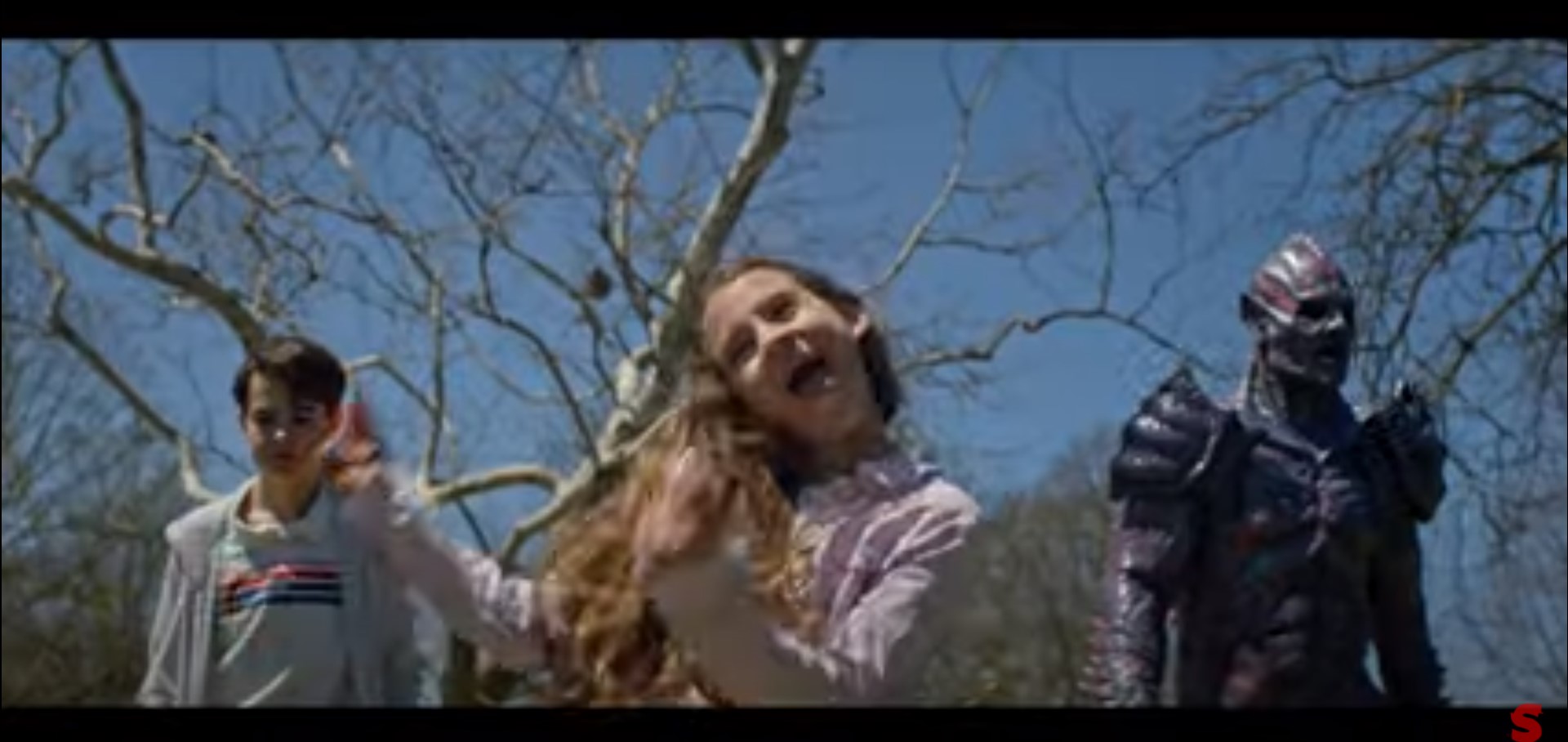
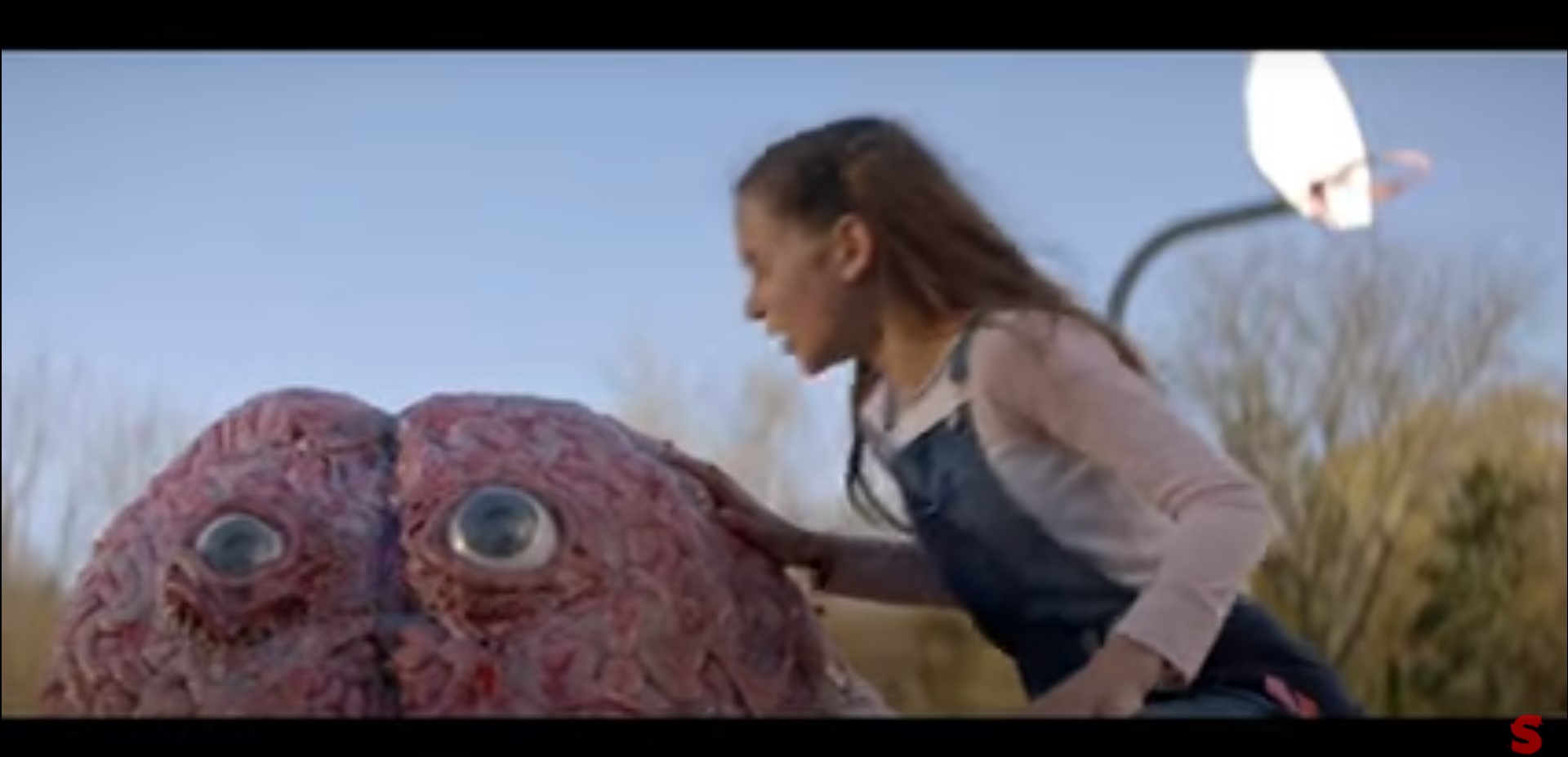
Brother and Sister, Luke and Mimi, discover a gem that unimprisons a dark alien warlord destined to destroy worlds.  The gem and the being are one, connected by the ancient forces powering the talisman, and whoever wields it can control the evil one.  Fortunately for now, the gem is in young Mimi’s possession.  The bossy and sassy preteen sees the alien, dubbed Psycho Goreman, as a new friend and toy, gallivanting around town catering to every Mimi whims.  Lightyears away on a distant planet, a council comprised with the forces of good, who banished Psycho Goreman to eternal banishment and imprisonment, learn of their once terrorizing tormentor having escaped his confines.  Leader of the council, an elysian warrior named Pandora, vows to track down their adversary and put an end to his existence, bringing a destructive showdown of good versus evil in Mimi and Luke’s small-town. 

The anomalous mind of filmmaker Steven Kostanski is vacillatingly distinctive and churning adulation for the late 1980’s to early 1990’s high camp, metal-infused horror films that heavily inspired him.  His latest written and directed Sci-Fi horror-comedy, “Psycho Goreman,” fits perfectly into Kostanski’s brand of stupidity, nonsensical, animation-saturated, bizarro reality horror that has made us, or at least me, fall heads over heels for his previous credits, such as “Manborg” and the “W is for Wish” segment of “The ABCs of Death 2.”  Kostanski is also a special effects guru having worked delivering gruesome terror and insane imagination skills to the big and small screen, but makeup FX artist takes a backseat to his employer, the Ontario-based MastersFX managed by Todd Masters, and they grab the reins by providing a slew of mixed bag practical and visual effects and animation styles that is a time warp back to the tangibly ridiculous and forged every follicle freakshow horror and science fiction celluloid from 30 some odd years ago.  “Psycho Gorman,” or “PG” for short, is a production of the pseudonym Crazy Ball Productions, as in the Crazy Ball game Mimi and Luke play, and Raven Banner, presented as an exclusive acquisition by RLJ Entertainment and Shudder.

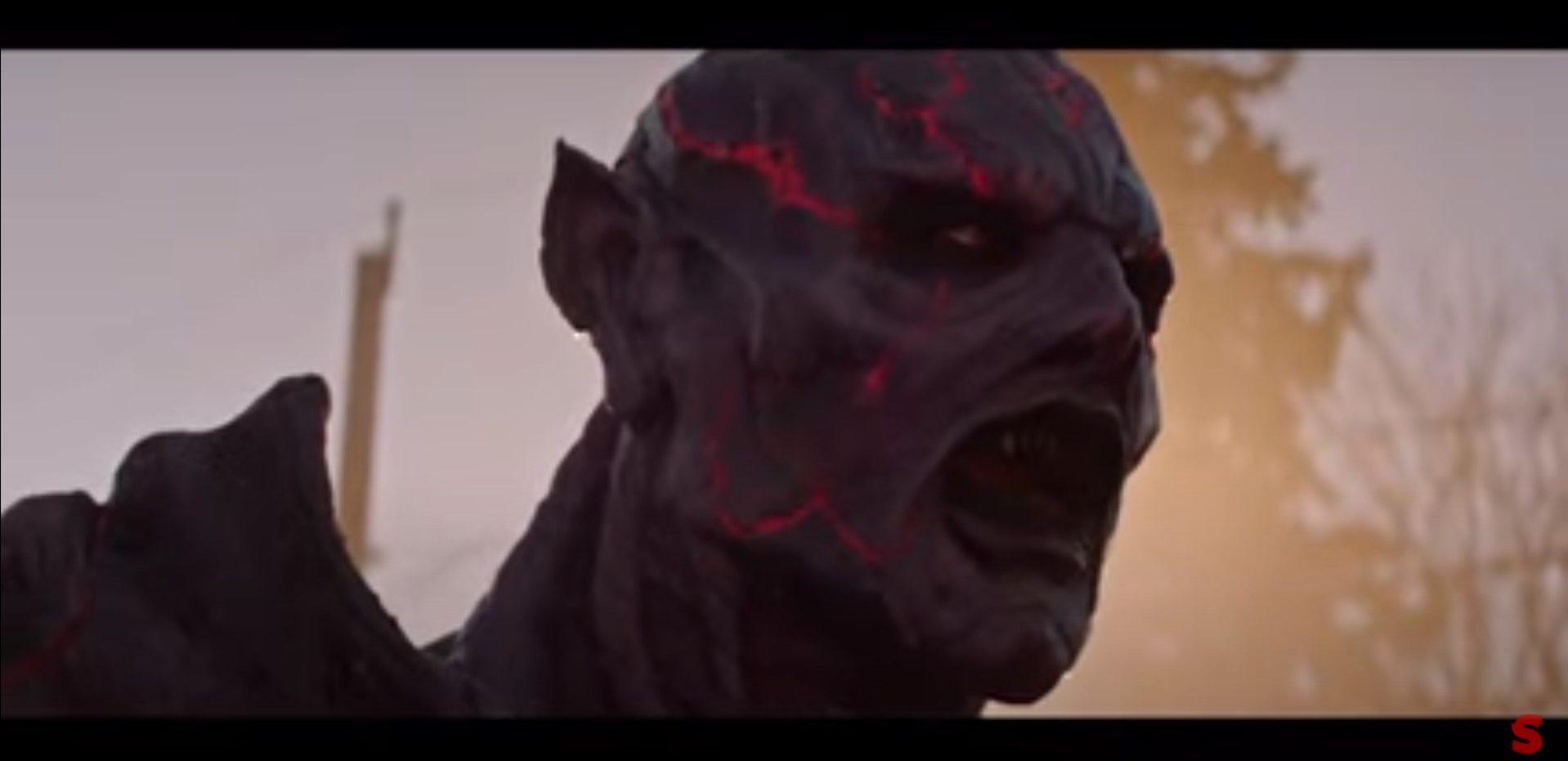
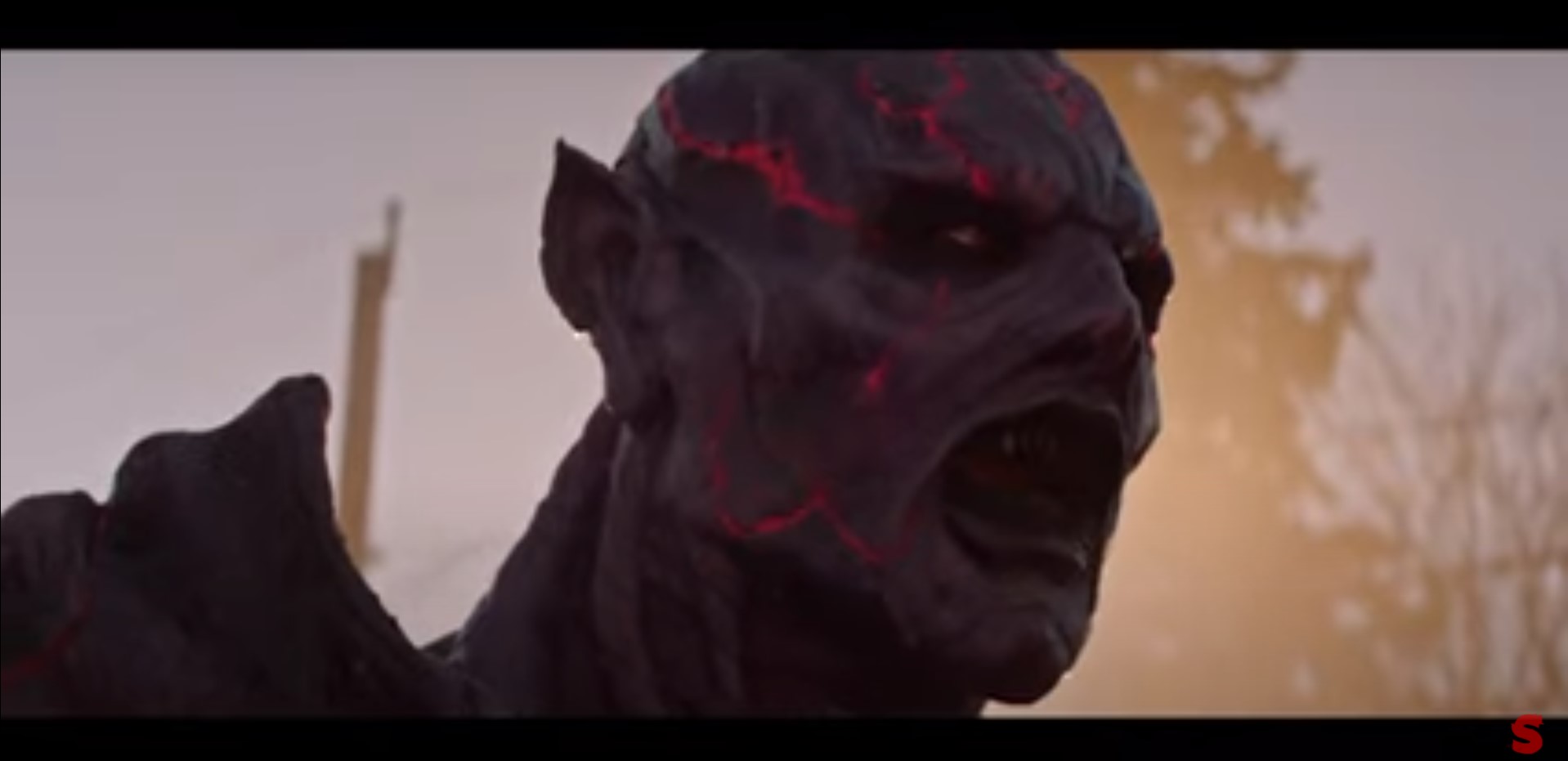
To make something as ridiculous as PG to work, you need a colorful, wildcard cast to pull off every microfiber of manic personalities you can muster and sticking out with the wildest personality is not the titular character who is neither the brightest highlight nor the leader of the pack.  That spot was filled far before PG makes an unearthing introduction by the film’s smallest, youngest, and most delightfully sarcastic and ostentation lead in newcomer Nita-Josee Hanna as Mimi, who’s roughhouse and snarky sassiness goes unparalleled even up against the Arch Duke of Nightmares.  The dynamic plays on that whimsical idea of little girls with big personalities can be the center of attention.  In this case, Mimi requires the world, no, the universe to revolve around her ultra-spoiled nurturing.  Her possession of the gem gives her unlimited power with her possession of PG, played by undoubtedly hot and bothered by the latex suit, but otherwise good sport, Matthew Ninaber (“Transference”).  Hanna and Ninaber are an absolute joy to watch together with their contrasting comedic deliveries:  Hanna’s aggressive flamboyance compared to Ninaber’s subtle and solemn stewing.  Then there’s Mimi’s brother Luke, played by Owen Myre, who will have a role in the upcoming “Terrifier” sequel and one of the film’s running jokes is PG can never remember Luke’s name.  That lack of standout presence for Myre’s character is quite literal and not because Myre’s performance is forgettable and a complete wash (in fact, Myre is fantastic is the meek, submissive older brother), but between Mimi and PG, those overwhelming characters totally consume much of the attention.  Adam Brooks (“Manborg,” “Father’s Day”) and Alexis Kara Hancey fill in as Mimi and Luke’s lackadaisical father and frustrated mother while Kristen MacCulloch (“Motherly) suits up as the PG’s holier-than-thou arch nemesis, Pandora, in Templar species form while Roxine Latoya Plummer blends in with the rest of the population with Pandora’s human form.  “Pscyho Goreman” rounds out with Alex Chung, Scout Flint, Robert Homer, Conor Sweeney, Matthew Kennedy, Asuka Kurosawaw, and Scott Flint.

“Psycho Goreman” necessarily fills a pivotal void.  Most genre films aim to pass along a message, sometimes important to the filmmakers, to convey a lesson, an idea, a political or social protest, or to spark awareness on an issue, but with Steven Kostanski, watching his work is like taking a vacation with an immense clearing of any and all undercurrents and obvious messages for pure, unadulterated, frequently mindless entertainment that just looks cool.  Underneath the composited animation and practical effect layers is an anything goes, no strings attached, brutally-caked, dopamine drip that causes glossy-eyes and a warm wash over of all the senses.  Side effects I can definitely live with and be refreshed by when needing a break from reality.  The amount of space medieval practical effects alone makes “Psycho Goreman” feel like “He-Man and the Masters of the Universe” and while that Gary Goddard 1987 science-fiction fantasy starring Dolph Lundgren, perhaps, heavily inspires Kostanski’s intergalactic battle-royale on Earth, the story mirrors much to the tune of “Suburban Commando” with Hulk Hogan.  Hear me out.  Rogue-vigilante, played by Hogan, crashes into Earth where he winds up with the unsuspecting Wilcox family who melts the big, bad commando’s heart and simultaneously fix, mostly unwittingly, what’s broken with the family while alien bounty hunters track him down.  “Psycho Goreman” is the same storyline with less gore; hell, “PG” is even kid dialogue friendly.  If you know “Suburban Commando,” you know, and now you can’t unsee it! 

As part of Acorn Media International’s RLJ Entertainment and Shudder exclusive line, “Psycho Goreman” is destined for darkness onto Blu-ray home video with over 2 hours of special feature content.  The UK region 2, PAL encoded, BD50 is presented in a widescreen 2.39:1 aspect ratio with a runtime of 96 minutes.  Nothing noteworthy to terribly point out from the digital picture shot on an ARRI Alexa Mini with Angenieux Optimo Lens that produces a spherical image you’ll optically notice that seemingly has a rounded surface to bring wide framed objects closer together.  Kostanski utilizes a blend of stop-motion and green screen with seamless results and even though slightly on the caricature side of alien landscape and creature production, everything befits “Psycho Goreman’s” extensive universe.  The English language DTS-HD Master Audio 5.1 has excellent acoustical output in a vast array of vocal timbres and epic ambiance on and off of Earth.  Dialogue is clean and prominent on both the actors and voice actors with the latter sometimes, unfortunately, masked by the voice manipulator.  The Blu-ray release packs a punch with over 2 hours of special features including a director’s commentary, interviews with cast and crew including Steven Kostanski, Nina-Josee Hanna, Owne Myre, Adam Brooks, Alexis Hancy and Matthew Ninabar, different fight chirography records from location and in practice at a martial arts studio, behind the scenes featurettes with character backstories, a trading card gallery, concept art, a behind-the-scenes photo gallery, and the animation creation.  “Psycho Goreman” is rated 15 for strong bloody violence, gore, and injury detail.  Sit back, relax, and let Steven Kostanski speak to your childhood senses with his adult antihero, “Psycho Goreman.” 

Own “Psycho Goreman” on UK Blu-ray (Region 2)

One EVIL Deed Doesn’t Correct The First EVIL Deed! “Cannibal Man” reviewed (Severin / Blu-ray)

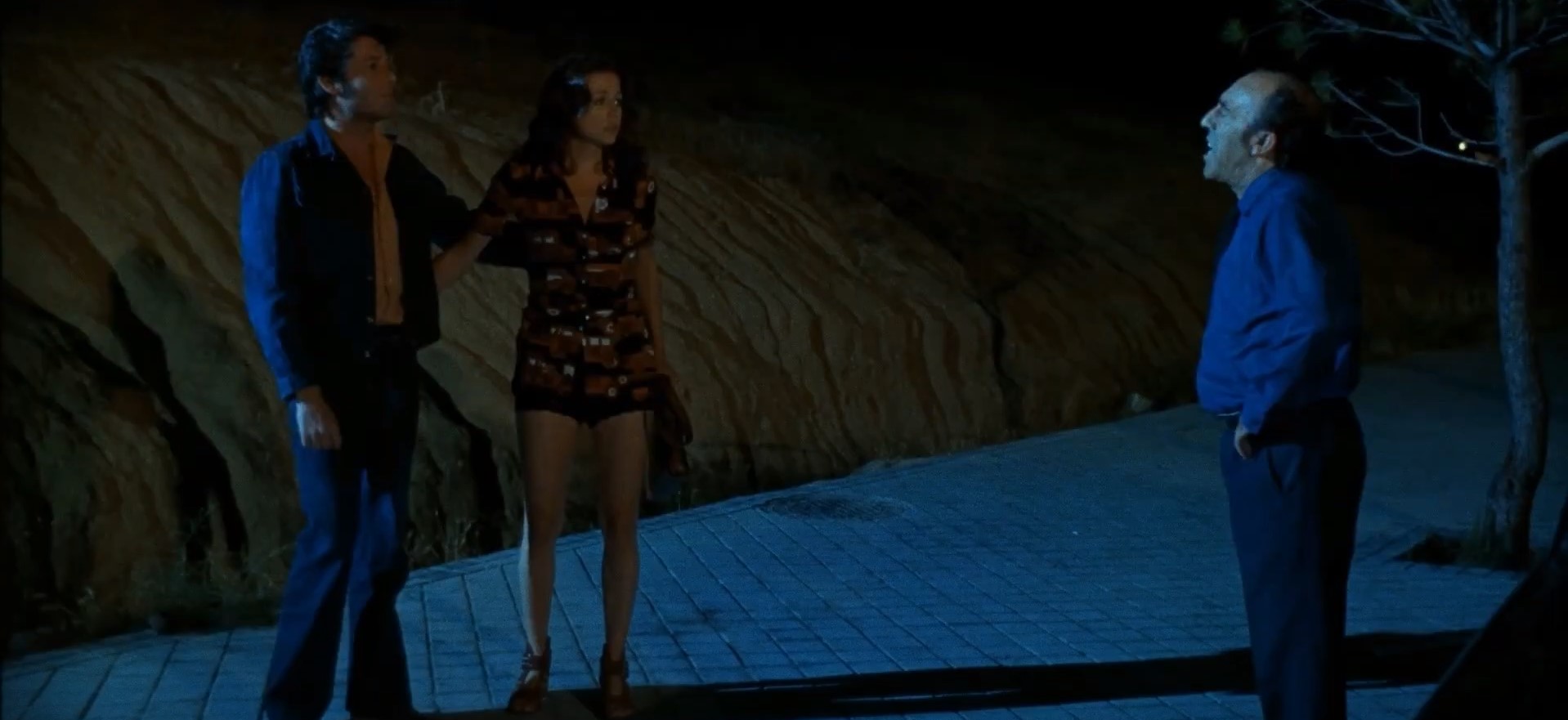
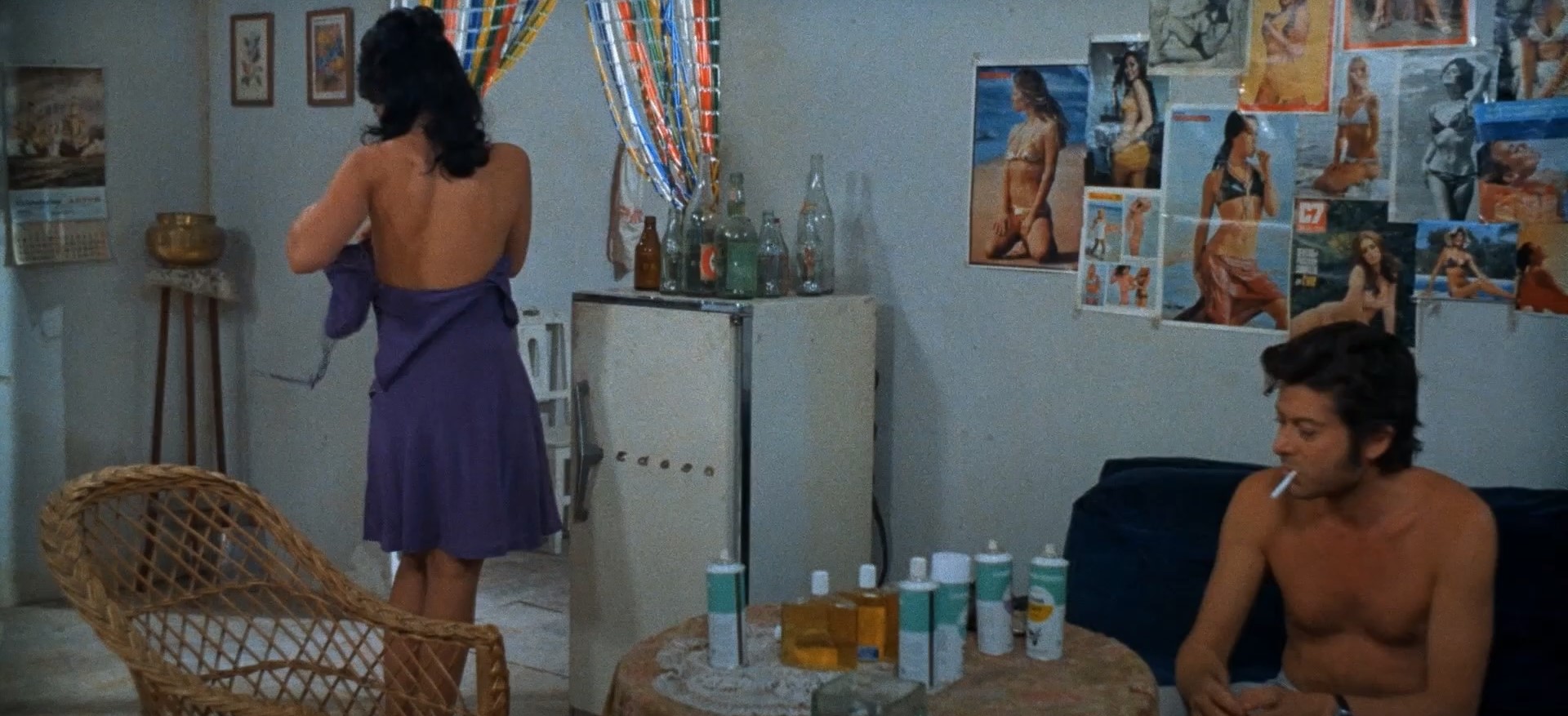
Marcos, a middle-aged abattoir worker, resists the pleas of Paula, his young girlfriend, to confess their self-defense killing of a taxi driver.  When Paula decides she’s inform the police without him, Marcos strangles her and stows her body in the bedroom of his outworn house.  The killing continues when loved ones come poking around to find answers about the disappearance or discover the macabre scene in Marcos bedroom.  Bodies pile up, the smell reaches decaying levels, and Marcos is plagued with nervous guilt.  Every day using his meat clever, he chops up bits and pieces of each victim and takes them to the slaughterhouse processing to rid the evidence and the smell, but no matter how many body parts he unburdens or how much fragrance he sprays, the sweet smell of death sticks with him. 

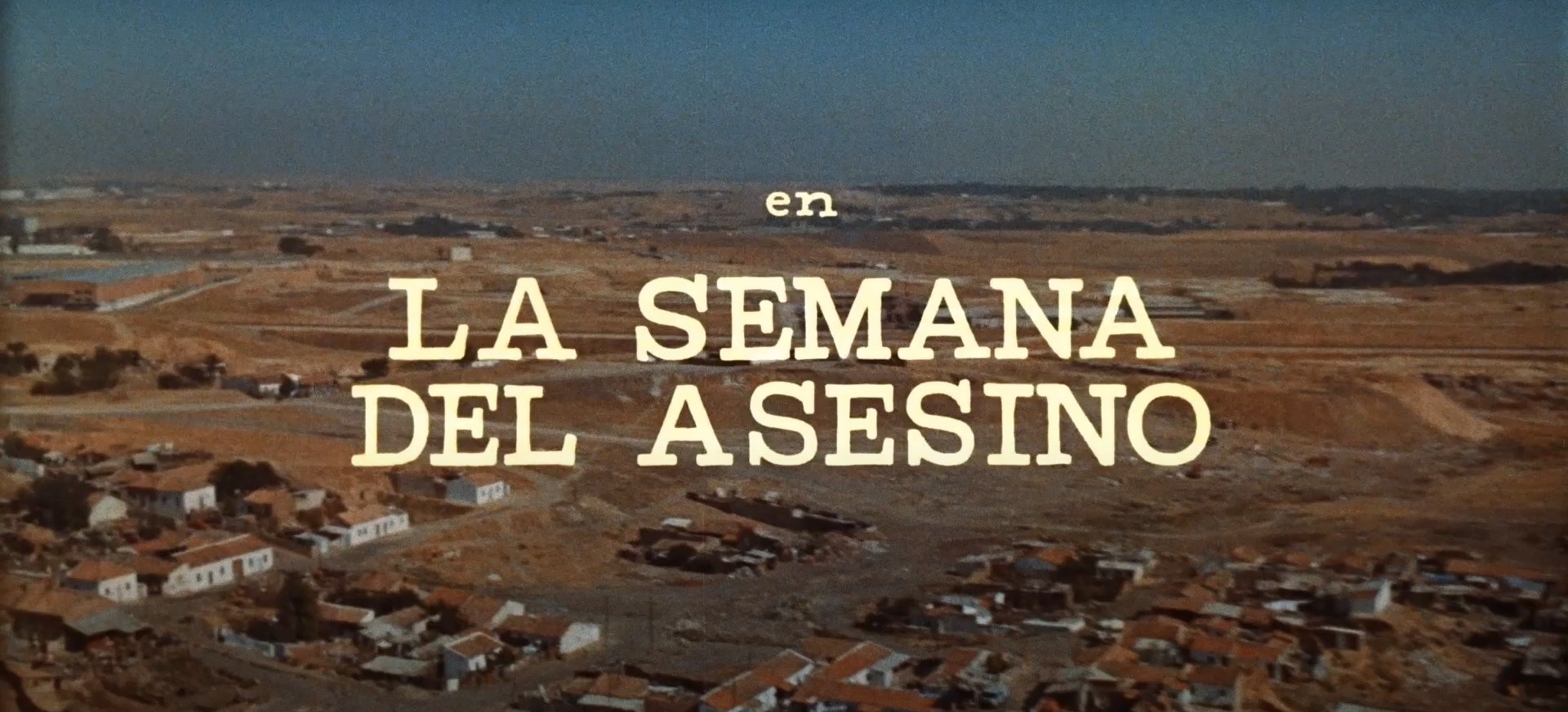
If someone would have said to me – you need to see a flick from Spanish director Eloy de la Iglesia – would you have ever guessed my first stop would be with his 1972 “The Cannibal Man” shocker?  To get to know a filmmaker’s directorial style and personal themes, the most gruesome horror can sometimes be a reflection into the soul of full disclosure because life, as most of us know from our own personal accounts, demons, and happenstances, can be ugly, nasty and unfair and can be cathartically expressed through film by a wretched shell navigating an undercurrent message to others.  That’s how Eloy de la Iglesia’s “The Cannibal Man” speaks to me.  Also known as “La semana del asesino,” or “The Week of the Killer,” as well as “The Apartment on the 13th Floor,” don’t expect an archetypical slasher and cannibal framework from this picture with many names.  “The Cannibal Man” is no “Texas Chainsaw Massacre” or similar to that of “Wrong Turn” as the film stands alone, conveyed as unsurmountable struggles of renewing oneself, a social commentary of class structures, and, also, dabbles in homosexuality suggestion.  Executive producer José Truchado, who also produced “Hundra” and had bit roles in Jesús Franco’s “The Mistress of Dr. Jykell” and “Killer Tongue,” finances the film under his self-titled production company and presented by Atlas International Film (“The Blind Dead Collection”).

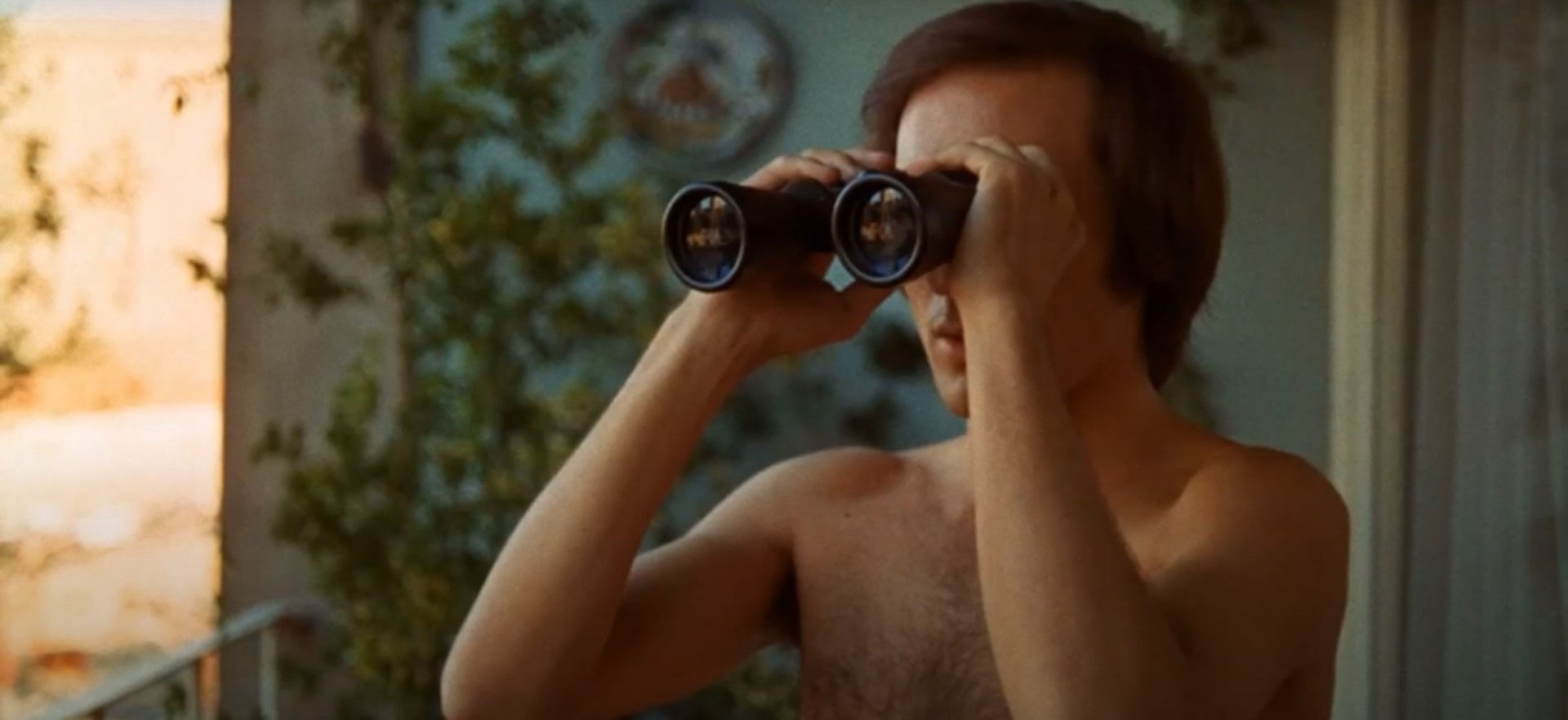
Looking to separate himself from strapping hunk typecasting and to show the world he can do more than just romantic comedies and action, the Madrid born Vincente Parra undertook a massive risk with the lead role Marcos, a meat processing factory worker in his, presumably, late 30’s to early 40’s with little education and social status who’s keeping company with a younger woman still living with and under the rules of her parents.  Let’s not to forget to mention Marcos’s grisly acts of murder and the homosexuality suggestions during his middle of the night rendezvouses with new best bud and neighbor Néstor (Eusebio Poncela, “The Death of the Scorpion).  Nothing sexual happens but the innuendo is there as, aside from his dog, the single bachelor Néstor often invites a tense Marcos out for a late night café visit, an afterhours swim at the local late night pool, and up to his swanky apartment where Néstor often watches Marcos from his high-rise balcony through Marcos’s makeshift skylight with binoculars.  Iglesia, who is gay, puts his own spin on the characters to allude to, and often over played as well, the two men as equally interested parties without ever having to speak a single word or make visible a single touch that would confirm otherwise.  Parra and Poncela couldn’t have acted better a disinterested-interested pair full of sexual tension and naïve foreplay.  Aside from the significant love interest characters from Vicky Lagos, who plays local waitress, Rosa, at the eatery Marcos patrons and “Night of the Walking Dead’s” Emma Cohen, Marcos’s girlfriend Paula, no other character have reoccurring scenes and are simply drafted as what should be major roles in the story to then be cut down by Marcos’s undervaluing psychopathy.  Charly Bravo, Fernando Sánchez Polack, Goyo Lebrero, and Lola Herrera fill in the rest of the cast list.

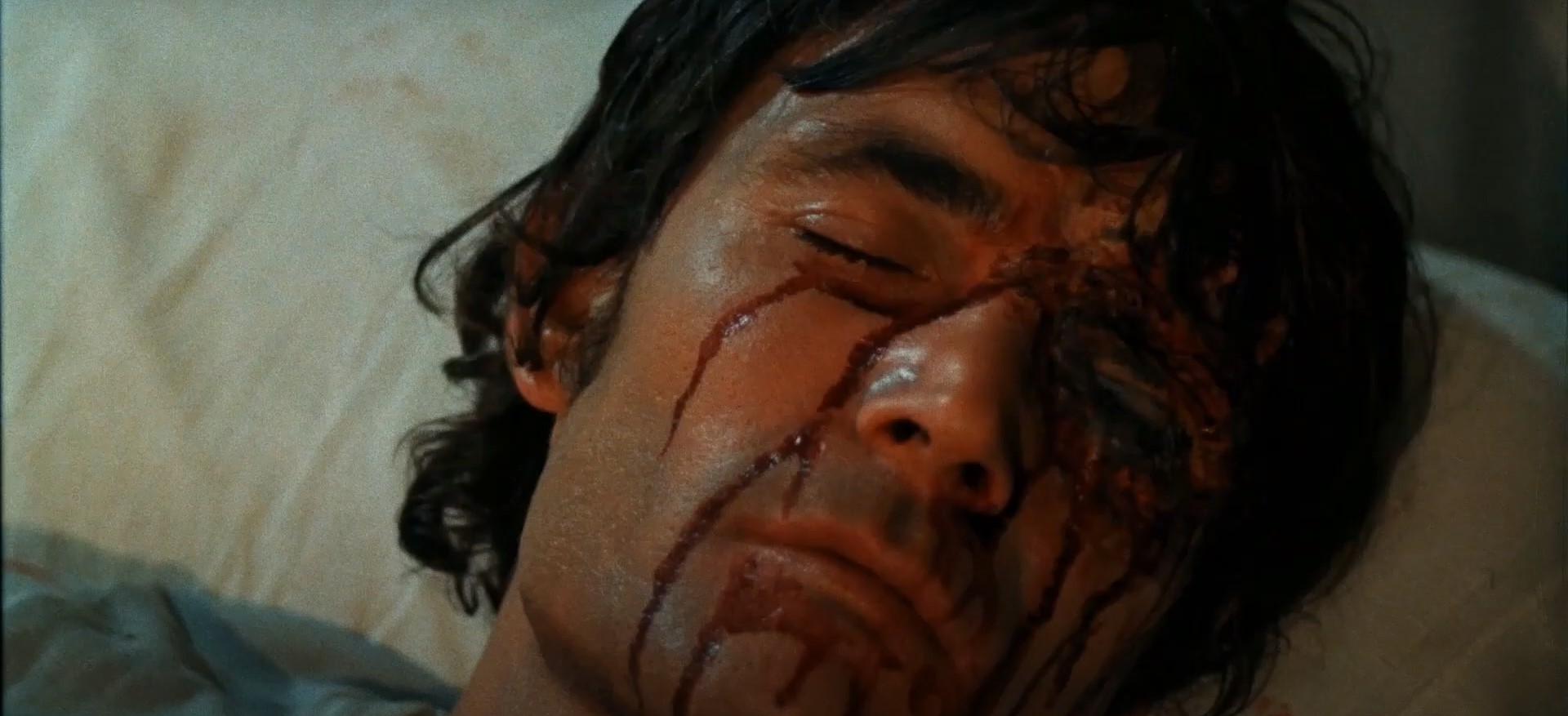
Strike out the slasher category for “The Cannibal Man” as Iglesia offers more than just a mindless, demented, hack’em up killer.  Behind Marcos brown eyes lies a reason of cold truth about his place in the world as a man who is ultimately and foremost stuck.  Stuck at a dead-end job.  Suck in his relationship with Paula.  Hell, Marco is even stuck living in a small bygone bungalow sticking out like a sore thumb right in the middle of new and wealthy high rise buildings.  He’s unskilled and uneducated, living in his brother’s house, and with no end to his personal wedging between his lackluster coursed life and his own short failings as a man until all that mediocre and mundane misery begins to ooze and shape into the one thing he tries to control – murder.  Even murder starts to spin out of control and heavy, burdensome guilt sets as seen in scenes with Néstor who’s choice of words perk up Marcos’s jumpy ears with fear of being caught.  Iglesia is a master at scene compositions that use audio cues, along with a jarring, tonal reversing soundtrack, to accentuate Marcos’s ascending paranoia as well as accentuating the scenes of the more period radical grasping social commentary on homosexuality and the unthinkable back-to-back-to-back-to-back murders.  Editor José Luis Matesanz also slyly cuts transitional scenes together in a stunningly seamless and crafty way that resemble close to Robert Wise (“Citizen Kane,” “The Andromeda Strain”) with harsh cuts that form a directional track and utilizes semi-abstract panning and reverse panning to fill in less significant gaps between the action.  Don’t expect a large amount of cannibalism in the story either.  Marcos isn’t gnawing on bones or baking a flesh brisket; instead, his act of cannibalism falls upon irony in that the bodies he tries to purge from his home ends up coming back to haunt him in more ways than one. 

If you love obscure, foreign horror that sustains a fresh packaged air about it, in story and in a remastered transfer, I highly recommend checking out Severin’s newly scanned, region free Blu-day distributed by MVD Visual.   The BD50 comes with two versions of the film, the 98-minute international cut and the 107-minute Spanish version extended cut, newly scanned from the original 35mm negatives for the first time.  Both transfers have excellent picture quality, some of the best I’ve ever seen come out of Severin, presented in 1080p in a widescreen 1:85:1 aspect ratio.  Not a lot of age wear and tear on the either transfer with each cut having only minor and light scratches scarcely throughout.  There’s sufficient, natural grain in both versions, but the extended cut’s grain flattens up, looking coarser, in the extra scenes.  Coloring grade is gorgeous with natural looking skin tones and you can see the details were refined and redefined.  Both versions come with an English dub and Spanish language DTS-HD Master Audio 2.0 track with some back-and-forth forced English dub in those coarser grained scenes that make the flow unsettling.  Both versions render hearty range and fidelity with a strong dialogue track that syncs well with the option English subtitles, but slightly off sync with image unity.  Underneath the double-sided cardboard sleeve, Severin’s special features include Cinema at the Margins – a Stephen Thrower (author of “Beyond Terror: The Films of Lucio Fulci”) and Dr. Shelagh Rowan-Legg (author of “The Spanish Fantastic: Contemporary Filmmaking in Horror, Fantasy and Sci-fi” on director Eloy de la Iglesia, The Sleazy and the Strange – interview with Spanish film scholar Carlos Aguilar on director Eloy del la Iglesia, deleted scenes, and trailer.  An engrossing bodega of vile Euro horror is what “The Cannibal Man” presents as a first-rate cutthroat thriller from the shamefully underrated filmmaker, Eloy de la Iglesia.

Own “The Cannibal Man” on Blu-ray!  Buy at Amazon.com

The EVIL Next Door Invites the Urban Decay. “Terrified” reviewed (Acorn Media International / Blu-ray)


A young boy is hit and killed by a bus.  A housewife is found hung in her bathroom.  A man has disappeared in his home.  Three incidences, three houses, three souls have one thing in common.  They’re neighbors.  The unusualness surrounding each tragedy grabs the attention of former forensics investigator Jano who’s own experience with the paranormal thrusts an unquenchable desire to examine the supernatural.  In a matter of coincidence, Dr. Mora Albreck, a vocational psychokinetic researcher, follows up on the disappearance of the man who called her countless times for help, but then just vanishes.  Accompanied by Dr. Albreck’s assistant, Dr. Rosentock, and Detective Funes, a weary, on-the-edge officer with a bad heart, the divide themselves to stay the night in each house and experience the paranormal phenomena calling from the beyond, but the entities calling just might terrify them. 

Hailing from Argentina comes the shivering, cross dimensional unknown from writer-director Demián Rugna’s 2017 properly titled, “Terrified.”  Originally known as “Aterrados,” the Buenos Aires filmmaker, who’s helmed hell bound thresholds previously with his introductory feature film, “The Last Gateway,” remains inside the grindhouse and horror bubble with another slit between realities thriller.  This particular bubble bursts with a whirlwind of nebulous outbreak of terror while providing microbe commentary about the potential dangers of Latin America’s water system and a perspective theme that speaks volumes on the issues of duality in what really happened and what the general public is told. Don’t trust your eyes! Nothing is what it seems! That’s the whole premise of “Terrified’s” knee-quivering appall, produced by Fernando Díaz under Machaco Films and the Instituto Nacional de Cine y Artes Audiovisuales (INCAA).

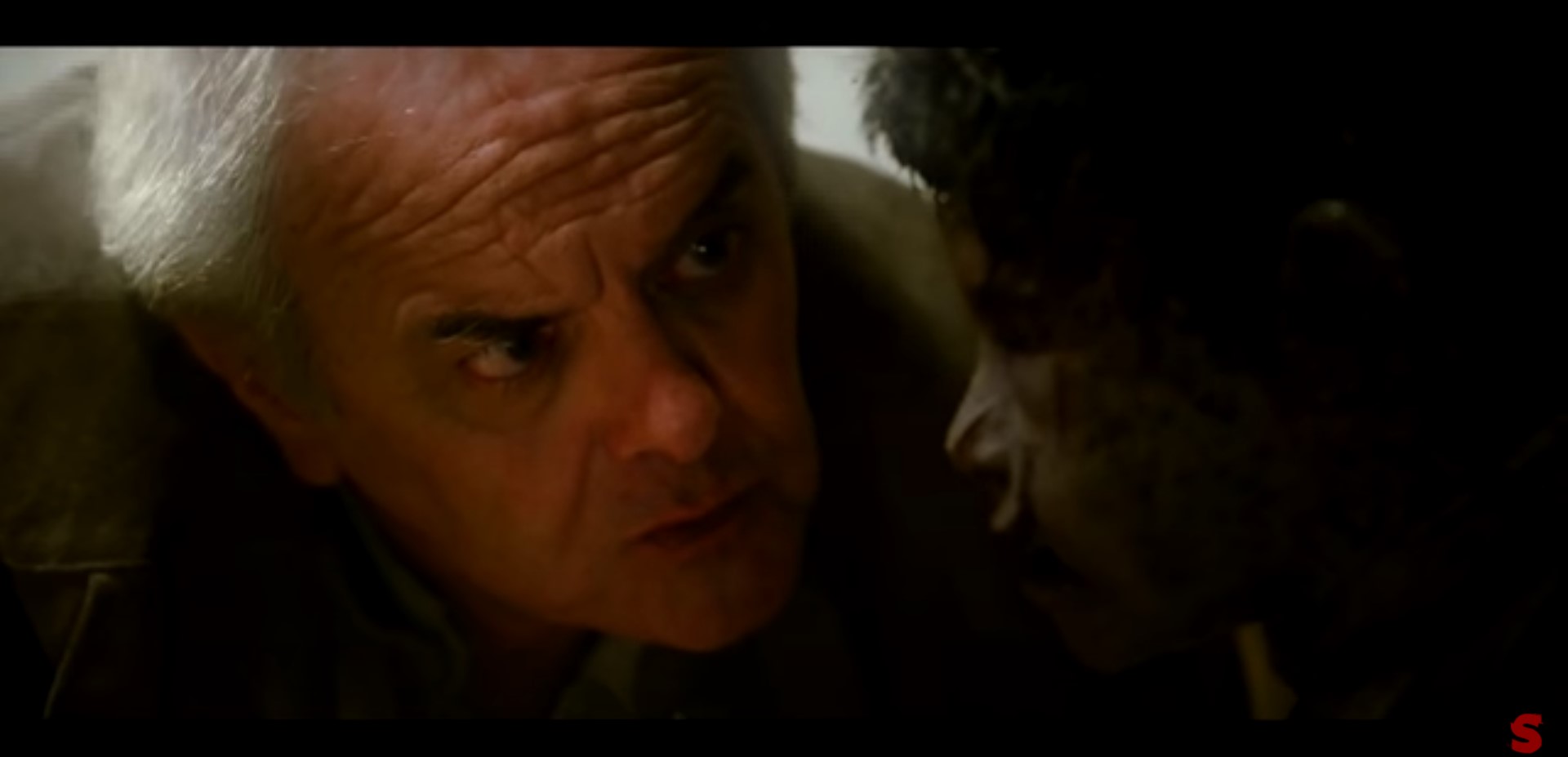
Rugna’s paces “Terrified’s” entropic buildout near the edge of an anthology, ghosting us the one reason for a neighbor’s supernatural experience for the next to eventually bring the heart of the cast together as a motley group of paranormal investigators. Starting with retired forensic specialist Jano who has a morbid curiosity for the unknown that fascinates him more than the abnormal mortifies him with fear. In his first feature length performance outside of television, Norberto Gonzalo understudies the very concept of the character Jano with objective eye for curiosity and knowledge much like any scientist. Jano is invited by Detective Funes, played by another television regular, Maximiliano Ghione, to the investigation of a recently deceased boy’s corpse having returned to his childhood home and is now a rigor mortis statue sitting upright at the dining room table. Though through exposition about their training and partnership over the years, Jano and Funes sit on the opposite sides of the fear spectrum with Funes’s engendered nervousness to the whole uncanny event and mentioning his bad ticker which comes into play later on in the story. Opposite side of the street, in walks into frame Elvira Onetto, an appropriate name for the film at hand. The “Jennifer’s Shadow” actress is Dr. Mora Albreck, renowned paranormal psychologist checking in on a manic patient who recently disappeared. Rugna really appreciates the mindset of the kindred spirits in Jane and Dr. Albreck with their sense of childlike giddiness toward the whole matter while those around them – like Funes or the boy’s mother – shiver with fear or break psychologically. While Jano and Dr. Albreck naturally work their way into the story, Dr. Rosentock is left with being the odd eccentric out. While just as enthusiastic about the phenomena that’s swallowed souls around the neighbor, Rosentock just appears as Dr. Albreck’s assistant who has traveled from a great distance to study…something like what’s happening…so is said in the film. Played by George L. Lewis in his only credited role, Rosentock is as much as self-assured, unafraid, and matter-of-fact as he is a caricature of old Hammer Horror style scientists when dealing with otherworldly entities, imposing a need for a little weight to his story, but, unfortunately, his participation lives and breathes only as participate to Albreck’s project. There are many fine performances around with the ebb and flow of minor characters, played by a talented cast that includes Julieta Vallina, Demián Salomón, Agustín Rittano, and Natalia Señorales.

“Terrified” is one of those movies where the silence and the stillness can have a higher affect on the spine-prickles.  Rugna’s gold standard patience establishes a tense tone without the supplementary tumultuous, ear-splitting chaos that usually grinds teeth and curls toes as the sediment of panic begins to settle at the pit of the stomach.  Marcus Berta and Lionel Cornistein’s blend of practical and visual effect are near seamless, but ultimately land the one-two knockout punch of anxiety-riddled scares with tall, crumpled monsters skulking under the bed shadows, glowing eyes peering through wall cracks, and a the stiffly rotten decomposing boy popping into frame in a split second.  Cornistein’s composite designs are not too shabby for the editor and visual effects artist’s first feature rodeo let alone generated a complex olio of otherworld oddities.  In regards to “Terrified’s” themes, in my travels to Central and South America, I’ve been advised to be cautious in drinking the tap water that’s filtered differently compared to the U.S., leaving local microorganisms to swim in the guts of those unaccustomed to them, and Rugna points in that direction by consistently focusing on the water taps, drains, showers, the action of drinking water, and, also, literally spelling it out for us by Dr. Albreck to not drink the water in these spirit plagued houses due to microbes traversing from beyond through the water system.  Dual perspectives becomes important as well.  After the gruesome discovery of the boy corpse sitting at the dining table, Funes needs a rational explanation to report in contrast to the unexplained grisliness, something that makes sense and wouldn’t frighten the daylights out of him, his colleagues, or the general public.  Coincidingly, Rugna creatures also exist on two different planes, sliding between the panes, and not always visible; this is another verbally illustrated facet that unsuitably reaffirms the theme.

“Terrified” scales the expansion of dimensions with bottomless creepiness and shock value, rifting from Shudder’s streaming service and right onto a UK Blu-ray home disc distributed by Acorn Media International.  The region 2, PAL encoded, BD25 disc houses a presentation displayed in a widescreen, 2.35:1 aspect ratio, with a 15 rating for strong horror, bloody images, and language. The 1080p, HD resolution is an indifference concern with the already blemish free digitally shot film, but director of photography, Mariano Suárez, heeds every shot taking Rugna’s perspective theme to heart with lowlight and obscurities as fear-fodder. The Dolby Digital 5.1 surround sound mix flexes a full-bodied, channel defining muscle with clear, prominent dialogue, a diabolical range in sound design, good depth, and an off-key canorous soundtrack because every horror fan eats up an inharmonious and creep tunes. Unfortunately, much like the “Belzebuth” release, “Terrified” comes with no special features other than a menu with the animated trailer of the film. “Terrified” is the chef’s kiss of Latin American horror, an epitome of jaw-clenching terror that’ll have you sleeping with the lights on tonight.

Buy “Terrified” on Blu-ray (Region 2) from Acorn Media International!

A Cop, a Paranormal Investigator, and a Priest Walk Into an EVIL Extermination Plan! “Belzebuth” reviewed!


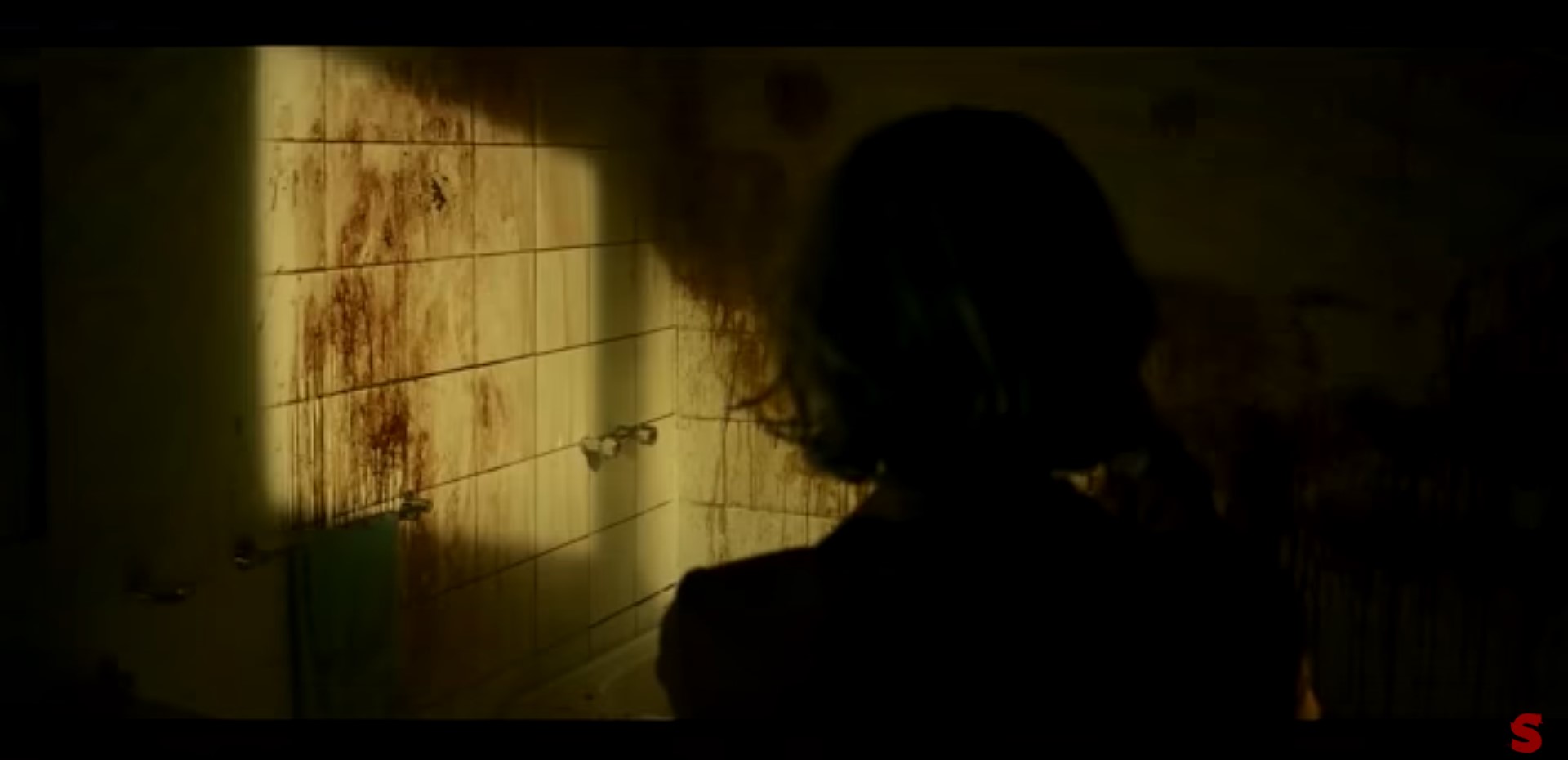
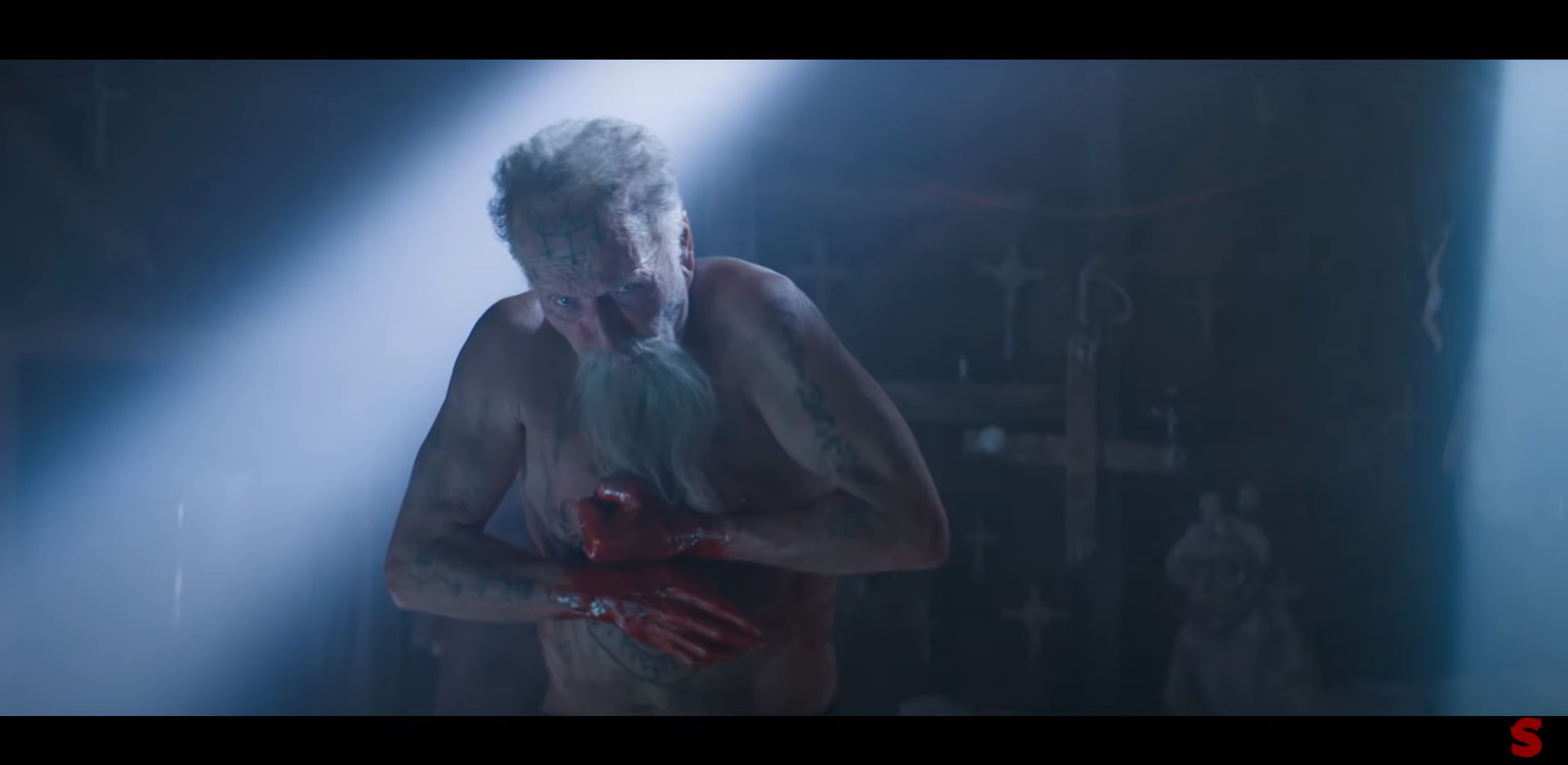
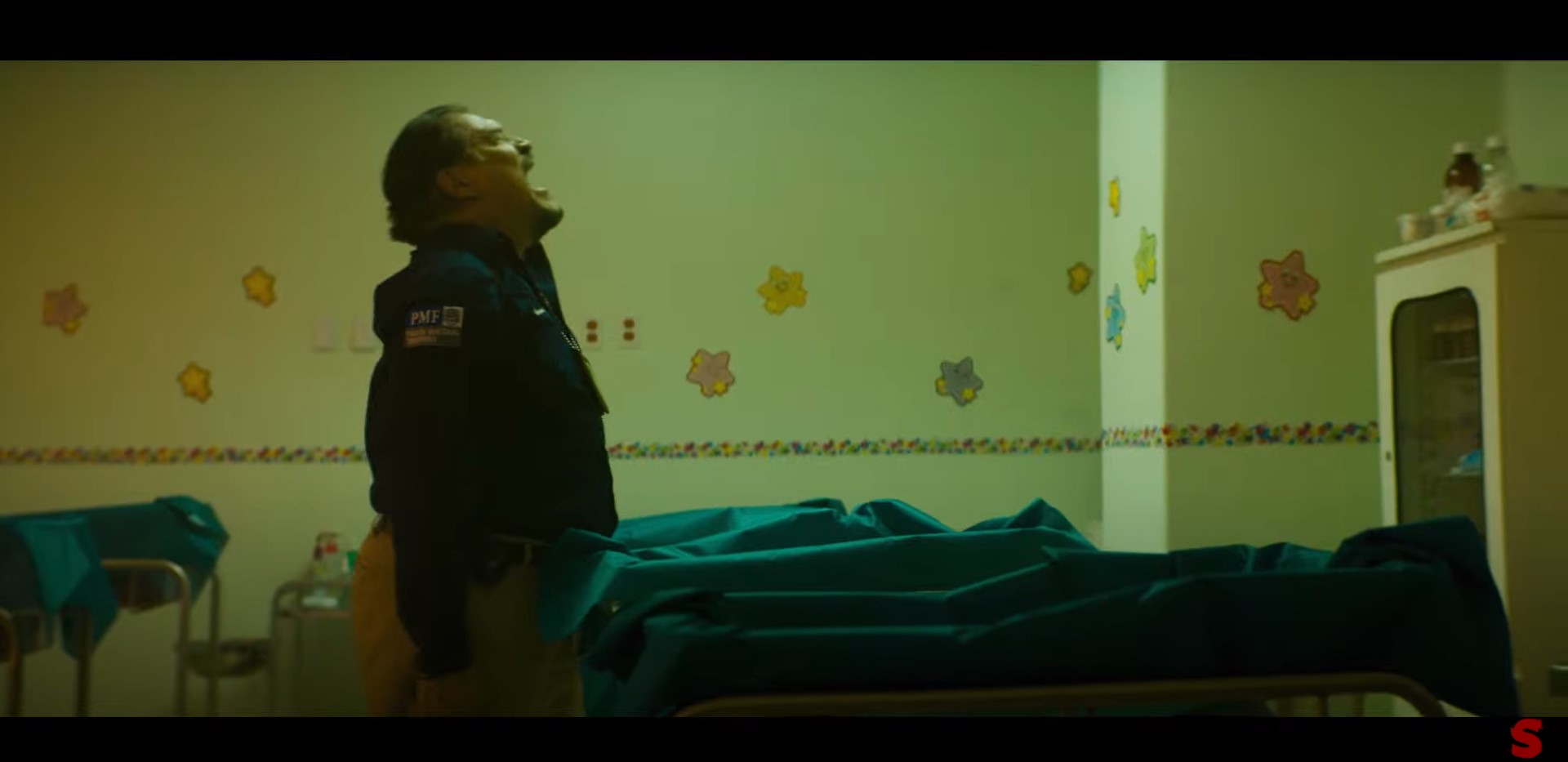
The joy of a new baby is cut short for Detective Ritter who bares the tragedy of his little boy viciously killed in a massacre of nursey infants by a psychotic nurse before taking her own life.  Five years later, and losing not only his child but also his wife to severe depression, a disheveled Ritter is called in to investigate a mass murder involving a 12 year old boy slaughtering young children in a preschool classroom.  To him, the two events don’t spark similarities, but to a paranormal investigating Catholic priest, Ritter’s tragedy and the events in the classroom are linked by the unorthodox priest’s examination.  All the evidence points to an excommunicated Catholic priest practicing demonology that sends the two men down a path of unholy darkness in a series of murderous catastrophes influenced by the rebirth of the Messiah.

When the first scenes from “Belzebuth” open with a maternity ward nurse stabbing with vigorous force every single infant child in their crib with a scalpel, you know nothing wholesome is sacred and everyone is fair game in what is to be a grim story of infinite barbarity and darkness.  “Belzebuth” falls in the line of fire of Mexico City born writer-director Emilio Portes with an augmented, dark humored social commentary loaded with evil entities and grimace-laden gore.  The “Meet the Head of Juan Pérez” filmmaker cowrites “Belzebuth’s” irrational rational for the unfortunate real world trend of mass murders and touches upon, sensationally, the evolution of Catholicism extremities to battle evil in the world with first time feature length film screenwriter Luis Carlos Fuentes.   The Mexico/American film is produced by Rodrigo Herranz, Michelle Couttolenc, and Jaime Basksht, with Ana Hernandez as executive producer and Pastorela Peliculas in cooperation with patriotic promotion from the Instituto Mexicano de Cinematografia, aka IMCINE, serving as the production companies.

If you Google Mexican actors, the power of artificial intelligence and ignorant manual input couldn’t separate Mexico form any other Latin American country as the powerhouse search engine provided me results like Danny Trejo, John Leguizamo, Jennifer Lopez, Javier Bardem, and Penélope Cruz.  Now, while I respect each and every one of these performers who provide a variety of lush character and emotional erudition to each of their roles, not one of them is born in Mexico.  Some that listed do not even share the same heritage.  But do you know what the most astonishing, most outrageous, and most shameful aspect of my search was this?  The Tepic, Nayarit, Mexico born Joaquín Cosio was not among the top 50 results.  From captivating television with Guillermo del Toro small screen adaptation of vampiric apocalypse of “The Strain” and the intense drug-fueled drama of “Narcos: Mexico” to his Hollywood presence in the star-studded, James Gunn directed “Suicide Squad” to his humbler beginnings that includes Bond, James Bond, in “Quantum of Solace,” Cosio’s a strong and versatile candidate for intense thrillers and “Belzebuth” is right in the actor’s wheelhouse as a downhearted Detective Rigger with a short fuse.  As a supernatural skeptic, Ritter’s forced into confronting his past demons with the demons of the present by tracking down rogue priest Vasilio Canetti (Tobin Bell, “Saw” franchise) with the help of Father Ivan Franco (Tate Ellington, “Sinister 2”) of the Paranormal Forensic Department, which sounds kind of silly because Franco’s squad is an extension of the Church.  Bell brings his delightful deadpan bedside manner as the excommunicated priest in guerilla warfare with a determined, demonic evil trying to massacre as many children as possible to find the reincarnated Messiah in what would be the Third Coming as the Second had come and failed during the Crusades.  Bell is the yin to Cosio’s yang until circumstances rear-end last ditch efforts and all Hell breaks loose in a drug smugglers’ tunnel.  Aida López, José Sefami, Yunuen Pardo, and Liam Villa round out the cast.

If possession-fueled carnage and the antiheroic archetype weaponizing demonology for good tickles all the right places, “Belzebuth” can be the feather tickler of dreams.  Fans of Clive Barker’s “Lord of Illusions,” Peter Hyams’ “End of Days,” and the graphic novel “Constantine” can indulge into Portes’ explicit nihilism and lack of public conviction in religion in the director’s allegoric telling of something really big and really satanical happening right under people’s noses while a small motely crew of conversant peons try to stop a wall of Deviltry.  Portes also consistently touches upon Mexico’s unsystematic corruption, even among Ritter and other protect and serve officers, and the once firm-handed political system of the Institute Revolutionary Party (PRI) as potential cause for all the suffering enacted demon-rooted abscessations.  The mentioning of drug cartels pop up frequently, too, symbolizing the seemingly random acts of violence are just never just random acts, but an perpetrated hit on a human target much like the cartels’ unsavory methods to either take out competition, eliminate obstacles, or to silence whistleblowers.  Portes does a phenomenal job using his film as an allegory in making a political statement but lacks balance in favoring gore over profile with some characters who rather feel written in just for the sake of a broader English audience.  Father Ivan Franco is such character with interesting combinational vocations as a paranormal investigator and a holy man of the cloth.  Yet Franco, who wields a gun and has supercool video and audio recording specs, spearheads a larger suborganization shielded away from the public eye and, unfortunately, the viewer eye that never feels like a cog in the entire “Belzebuth” machine.  Franco and his team of spook-sleuths, who, by the way, vanish completely from his side early into the investigation, supposedly follow and investigate peculiar tragedies connected to misaligned presences leaving spiritual residue on the real world plane, but how his team comes about connecting the dots exclusively to just the first two tragedies, five years separated, is a bit of stretch and a letdown in fabricated continuity and weight behind Franco’s existence to be involved.  Pockets of plot holes pop up here and there on other facets but generally speaking, “Belzebuth” works black magically as a spiritually and culturally vivisecting detective thriller.

The Shudder original 2017 release, “Belzebuth,” scares up onto an UK Blu-ray release from Acorn Media International. The region 2, PAL encoded, single layer BD25 presents the film in a widescreen, 2.35:1 aspect ratio, with a runtime of 109 minutes.  Ramon Orozco’s cinematography flashes with a gorgeous red and blue color palate that fits the iniquitous tone and adds an ethereal, hazy backlighting to only enhance the tone to more sinister levels.  Acorn’s Blu-ray sharpens Orozco’s already byzantine schemes that enriches the details in the skin as well as a the sacred relic artifact-cladded locations that become claustrophobic and entombing.  Even Juan Martínez Espín visual special effects casts a solid effort of barely a smooth surface computer generated phoniness, especially in one crucifying scene of psychological torment.  You’ll know it when you see it.  “Belzebuth’s” powerful Dolby Surround 7.1 audio track is an assault on the eardrums of the best kind with a husky, industrial melodic soundtrack and hefty sound design with accompanying diverse range and proper depth that could be described as literally placing every creak, stab, and cackling laugh sound right into the darkest corners of your ears.    An unfortunate surprise about the Acorn release is that there are no special features aside from the animated menu that is essentially chaotic “Belzebuth’s” trailer plastered with menu options.  Possession films tend to stale at a dime of dozen, but Emilio Portes’s freshly terrifying “Belzebuth” entertains and scares to the very last morsel.