A nasty viral plague eats and decays victims from the inside out, blood oozes from every poor in the skin and boils fester, and can be transmitted through the saliva and blood. The hot zone spreads fast among the nation’s crumbling society, but one isolated clinic, the also epicenter of the disease, experiments with a cure, testing the trials on the infected. Young, wife Linda, a nurse at the clinic, goes suddenly missing and her husband gears up to search for her at the clinic to only find out that his wife has fell into the grasps of a maniacal scientist exploiting the cure as a baleful booster to create the already plagued-ridden with another side effect – extreme violence. The playing level turns increasingly difficult with maximum carnage when finding himself trapped deep inside the callous clinic straight from hell and must use any melee weapon to his advantage in each ghastly stage if he wants to save his wife from the deranged creatures and the complete governmental noxious gas eradication of the disease in the next 24 hours.

For those of us who’ve fired up a DELL computer with Radeon gaming hardware installed, sat large noise-reduction earphones over our ears, and ran a CD-ROM through the disc drive to start up a MS-DOS video game, a bit of nostalgia will revert the senses back to a more primordial time of a young gaming culture and evoke the obsessive behaviors of our adolescent selves. A game that will inherently put you into the player’s shoes with a weapon at hand and many antagonists to cut down at the whim of a mouse click as the priding first person shooter. That’s what one German filmmaker, Andreas Luetzelschwab, who goes by the credit Andreas Tom, titled his script now film project, “FPS: First Person Shooter,” that harks back to the good, yet not so old days of 8-bit blood, command cheat codes, and with a hero bestowing a snarky, snide tongue. The 2014 action-horror recalls the disk operating system gaming graphics of the early 1990s that’s been long lost and seemingly forever forgotten for nearly 20 years.

Now, since Andreas Tom’s “First Person Shooter” puts the viewer in place as the player, a BDSM gimp dressed hero ready to face the mutated virus head on. No real character takes the stage with only the voice of the iconic voice actor, Stephan Weyte, resurrecting his distinctive and black vocal quips for the player hammering away at the ghoulish zombies. Weyte’s a famous name in the world of first person shooter games being the voice of the antihero Caleb in the excessively violent and demonic “Blood” and “Blood II: The Chosen” horror inspired FPS PC games from the late 90s. Weyte’s deep, sometimes raspy, tone suits the film’s temperament much the same of those gloriously carnage cult classic PC games and he’s essentially doing all the dialogue for the film, with the exception of some in and out characters. The genetic makeup of the remaining cast are relatives of Andreas Tom, including co-producer Atlanta Lützelschwab as the attic’s nurse zombie complete with barbed wire around the eyes, Hans Lützelschwab as a boss-level surgeon zombie, and assistant director Achim Lützelschwab as the cook who whips vats of stew made of human chunks. Obviously, these are German actors being voiced with an overlay language from English speaking actors, such as Stephen Weyte, and so other vocal and action performances come from Tobias Winkler as a tall clown zombie, Sebastian Kettner, Ines Klein, Rick Whelan, Rob Banks, Jürgen Sütterlin, and Sascha Strack.

This past August, another first person shooter was reviewed, Giulio De Santi’s “Hotel Inferno,” which delivered an energetic and chaotic run amuck bloodbath that really sold the experience of playing a FPS and though “First Person Shooter” was released after, the film still provides the same kind of gun-toting, ass-kicking euphoria while on a smaller scale and focusing more on making that connection to the audience that you’re the gamer playing the game. For example, the movie begins with the DOS game’s screen of a static menu and once all your difficult settings are set and in place and the press start button is pressed, a virtual newscaster delivers the backstory of the viral outbreak and dons a principal figure, in the form of a 8-bit man, going to the clinic to search for his missing wife. The, the video game seamlessly transitions into live action, but the attributes of the game are still abound with a life bar, the gaining of objects, autosave, and disappearing bodies (that are a symptom of the virus). At the surface level comparison of “First Person Shooter” and “Hotel Inferno,” both films are akin to characterization, but differ in executions with “Hotel Inferno” just outright more violent without referring to itself outside the context of just another movie whereas the focus here is centered on video game idiosyncrasies inside that very context. The patients in developing scenes out of the virtual combat simulation ethos exhibits remarkable talent to fathom-to-fruition all the nuances like weapon caching, ominous camera angles and interpersonal communications to push the story along menacingly, and splicing the recording of level playing video with the composition of a pair of gesturing and weaponized hands to simulate that type of game play. For a loyal gamer, “First Person Shooter” bares the berserk survival horror instincts while for the loyal cinema goer, the ostentatious design is unique and graphic, even for the casual horror fan.

For the first time on US DVD home video, “First Person Shooter” is distributed by Wild Eye under the Raw & Extreme banner, the same as “Hotel Inferno,” with a widescreen, 16:9 aspect ratio, presentation that’s clean and composed of a double recording, along with an 8-bit Wolfenstein or Doom gameplay edited in for some extracurricular slaughter activity. The colors reduced some, I’d say by 20-30%, to exact a bit of bleakness atmospherics and some details are smoothed over due exact a true video game effect, like in muzzle flashes. The English language stereo dialogue track is an obvious dub on the German made film and another good dead giveaway is that all actors have their mouths covered by surgical masks, gas masks, hockey masks, etc., but Stephen Weyte’s crystal clear derogatory comments show no sign of being muddled. The ambient track’s a little soft at times, especially with the gatling gun, that should be ripping bullets and fling casings with puncturing hundreds of holes into zombie girth. Bonus features include behind-the-scenes outtakes, a walkthrough examination of the set, composing the looming score, and trailers. Wild Eye’s illustrated DVD front cover also pays homage to Duke Nukem with a tall standing and beefy dark hero blasting holes through zombies at his feet. “First Person Shooter” markets goods sold as advertised of intense game play without the need for a single controller and without omitting one single ounce of blood to shed in this mercurial fascination of when gory cinema magic meets gory computer gaming.
Category Archives: Just fucking awesome
High School Musical Meets EVIL in “Anna and the Apocalypse” reviewed!

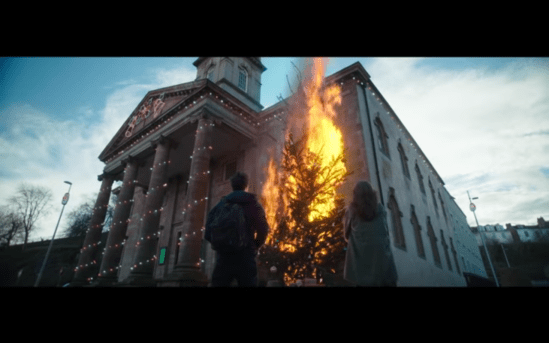
Anna’s a senior at Little Haven high school whose not thinking about what University to attend after she graduates. Instead, Anna focuses on working all the time as a shoe counter girl at the local bowling alley to pay off a year’s worth of traveling despite her father’s wishes, even working through Christmas, but when a sudden zombie apocalypse derails her and the worlds’ plans, Anna’s friends and father are her first priority. With her father trapped at the high school, Anna and her closest friends must trek and battle through a horde of the undead from the bowling alley before striking out dead themselves. Despite social differences and teenage angst, they must dance and sing to put now frivolous juvenile issues aside and work together if to not become one of the living dead.

Timed just right from 2019’s Christmas holiday season is Second Sight Films’s two-disc set of “Anna and the Apocalypse,” a contagiously fun, well performed, and cheekily gory musical comedy-horror by the United Kingdom’s John McPhail directing a script written by Alan McDonald and the late Ryan McHnery, based off McHenry’s short student film “Zombie Musical.” As true to the marketing behind the film, “Anna and the Apocalypse” is certainly the “High School Musical” with teeth-gnashing, putrid-walking, and flesh hungry zombies. The Scottish bred production comes from Blazing Griffin Films, Parkhouse Productions, Constellation Creatives and Creative Scotland to flash mob dance and sing in chorus through the apocalyptic melee while figuring out their complicated adolescent troubles, such as what to do after graduation, turbulent romantic emotions, and being different and alone.

The ensemble cast is heftily made up of unknown talent beginning with, then 17 year old, Ella Hunt in her debut lead performance as the titular character. Hunt’s a fresh, young face with an astonishing amount of acting range with Anna whose defiant against the wishes of her father, but, deep down inside, still wholeheartedly cares for him as he’s her only parent left alive, and Hunt has natural poppin’ dance moves and pop-star vocals. In Anna’s core group of friends, Sarah Swire’s Steph North stands amongst them as the LGBTQ representative whose strongly portrayed as courageous, caring, and independent while her characterization at the beginning of the films focuses on downing her life to the pit of despair with parents, who Steph claims wants nothing to do with her, are on holiday in Mexico and her romantic partner won’t be spending the holiday with her. Swire’s choreographic and musician background, along with an edgy look, make her a perfect fit for Steph. There’s also Anna’s best friend, a boy named John, played by Malcolm Cummings in his first feature film. Cummings has to be the hapless friend zone boy that remains sidelined when trying to find the opportune time in expressing his true feelings for Anna, but finds himself the third wheel in a high school love triangle conscripted with Nick, a hot-to-trot prick and bully colorfully depicted by Ben Wiggins. Christopher Leveaux and Marli Siu are the gang’s love birds, Mark Benton is Anna’s custodian father, and “Game of Thrones'” Paul Kaye antagonizes with a power hungry assistant headmaster gone crazy!

Honesty, I wasn’t sure how “Anna and the Apocalypse” was going to work, or be successful, or be entertaining at all as a horror movie. Horror-musicals are a rare breed that come with a mind-boggling quantitative algorithm to make them truly work wonders and, somehow, John McPhail dusted off his abacus, powered up his TI calculator, and put note to pen to paper and delivered a holiday spectacular on a horror scale stage. The horror, though very prominent and unmistakable, takes a backseat to the powerful soundtrack by the ensemble cast, ranging from caricatured with Fish Wrap to the desolation of personal connectivity with Human Voice to a couple of Christmas satires to bring a little joy with the merry mayhem. The mayhem is absolute with all the trimmings of a zombie apocalypse, even right down to the military being the butt of a joke when they’re overrun by a slow-moving force, but while there’s some gore early on with a dead head decapitated by a see-saw and a pair of bowling balls pop the top of one alleyway corpse, the blood flows downward to a little more than a dribble and “Anna and the Apocalypse” cobbles together a mere mediocre zombie film from then on out.

Already seen a couple of standard releases from other distributors, Second Sight Films reserved “Anna and the Apocalypse” to the royal treatment with a special features heavy region B, two-disc Blu-ray set containing two versions of the film – the theatrical release cut and the extended version which will include a musical number that didn’t make the theatrical cut. The Arri Alexa SXT shot film is presented in 1080p and in the film’s original aspect ratio, a widescreen 2.37:1, with a featured ProRes 3.2k format that allows upscaling to UHD quality providing a high resolution output that’s clean and bright. The color palate has real vibrancy under the director of photography’s, Sara Deane, direction to use colorful outfits and neoned and darkened sets. Some scenes become a little choppy with some sloppy editing work, but as a whole, the story remains coherent. The English language DTS-HD Master Audio 5.1 vivaciously energizes the soundtrack with alternative pop numbers, harmonious melodies, and a synchronized chorus, but there are times the dialogue falls into a lossy grey area. A stereo 2.0 track is also available as well as optional English SDH subtitles. The Second Sights Films’ release is chock full of extras with disc one including an audio commentary with director John McPhail, writer Alan McDonald, composers Roddy Hart and Tommy Reilly, a behind-the-scenes featurette, an alternate opening scene, a deleted song “What Side Are You On?”, a deleted bathroom scene, the Hollywood Ending cast and crew lip dub, footage from the EdinBurgh Film Festival, and, of course outtakes. Disc two includes a brand new feature-length documentary with new interviews by the actors and filmmakers. Plus, the original short film – “Zombie Musical.” A definite definitive two-disc set from Second Sight Films goes hand-in-hand with “Anna and the Apocalypse’s” feel good charm and unruly undead charisma complete with catchy tunes and bloody zombie goons in a modern day holiday cult classic.
No More EVIL Circling the Cage in “47 Meters Down: Uncaged” reviewed!

Mia and her family have moved from Chicago to Mexico’s Yucatan. As she struggles to acclimate into her surroundings and survives being the school’s most unpopular student, her father flourishes with his archeological findings of an ancient Mayan burial temple hidden under rising waters just off the coast. Mia and stepsister Sasha skip an unflattering weekend boat trip to join friends Alexa and Nicole who are privy to the underwater entrance of the remote ruin. The four use Mia’s father’s scuba gear to go exploring through the numerous narrow passageways and shrined openings of the burial temple, but their innocent adventure turns deadly when the sudden collapse of the entrance traps them inside. As they save every last breathe running dangerously low on oxygen, they come face-to-face with blind, monstrous Great White sharks with heightened senses of smell and hearing to track them down.

Terror has defined new depths with Johannes Roberts’ sequel to his critically praised and genre fan pleasing 2017 shark-horror “47 Meters Down.” Along with the return of screenwriter Ernest Riera and The Fyzz Facility team providing production and financials, Roberts once again dives into the murky waters of deep sea productions with “47 Meters Down: Uncaged,” working mainly underwater once more to capture weightless fear in the eyes of the actors to perform in a tough environment and perform against, what will be, computer generated adversaries. The success of “47 Meters Down” helped stem a sudden revival that swam from being a dwindling and cheap demonizing of sharks that have plagued the direct-to-video market for over a decade to bestowing the respect the man-eating fish rightfully deserve, showcasing that man does not rule the water. “47 Meters Down: Uncaged” continues the trend by chomping serrated jaws through the chummed waters of the great white shark schlock and crest with a heart pounding suspense and scares.

A couple of big names star in the sequel and by big, I don’t mean actresses who are mega superstars in their own rite. What I mean are the well-established and globally recognizable last names of Corinne Foxx and Sistine Stallone, the respective daughters of Academy Award winning actor and singer Jamie Foxx (“Ray”) and of one of the world’s biggest action stars of our lives, Sylvester Stallone (“Rambo”), debuting into the big time as one-half of the group of girls exploring the underwater temple. Across the aisle, the other two actresses that take a joy swim are Brianne Tju (“The Crooked Man”) and Sophie Nélisse, the latter being the high school oppressed and timid Mia who battles through her adolescent problems by being a leader in the shark infested tunnels. As four girls looking for a good time on the Yucatan, they’re tediously whimsical without the virtue of substance behind them aside from Mia’s brief bullying encounter and heart-to-heart moment with step mom. Joh Corbett is the most recognizable face sans just having a famous name. The “Sex in the City” actor – don’t ask me how I know that – has fatherly intentions in the role of Mia’s dad, the archeologist who discovers the flooded temple. Rounding out the cast is Khylin Rhambo (“Teen Wolf” television series) and Davi Santos (“Polaroid”).

All that is right with “47 Meters Down: Uncaged” is the isolating suspense and lurking terror that carries over seamlessly from the first film, despite both films’ pre-judging killjoy that is a PG-13 rating, and with the return of Mark Silk’s beautifully murky cinematography and Roberts’ choice of focal direction that engulfs the actors, the story sharpens to completely detach the real world from this shark threatening one. “47 Meters Down” had an equally beautiful, haunting, and industrially trance score, pitched perfect for the lethal space-like expanse, from Tomandandy and the musical duo return for another round with a broody audio vision that can be taken with you long after the credits roll. However, Roberts’ second installment has some issues. For instance, why keep the initial title? The 47 meters doesn’t exist as the protagonists go up and down through burial shafts without the utilization of a depth meter and could have benefited better with a standalone title. Not even a wet suit is worn so the hunt is not too deep where the frigid waters rules. The trend of those scenes that make you go huh? continue in a form of a plot hole of exactly where did those ghostly Great White sharks come from? There isn’t enough food down in the tight confines to sustain such eating machines, but they don’t seem to be crippled by the fact as they appear from out of nowhere after one of the characters makes their presence noisily known.

Like a persevering slasher, the jaws of death just keep on coming for you in “47 Meters Down” Uncaged” onto a 2-disc Blu-ray and DVD home video, with a digital download available, distributed by Lionsgate. Presented in a widescreen, 2.40:1 aspect ratio, with the Blu-ray BD-50 in 1080p High Definition, the digitally recorded, shot on an Arri Alexa according to IMDB, image captures, through the some fields of darker tints, the warranted definition and enough softness to maximize the aqua effect of a hazy and shadowy sunken ruin with silhouette inducing dark spots, corners, and passageways. Moments of vibrancy pop, especially with emergency beacons, to dazzle like a neon marquee in the pitch-black night sky. The ruin’s sharks themselves, though ghostly depicted and riddled with scaring, appeared too soft, an inescapable side effect from the visual FX team, and the same can be said with the sharks out in the open ocean that have unnatural movements along with their too clean look as if the light above surface wasn’t bouncing off them correctly. The English language 5.1 DTE-HD Master Audio mix has power and girth in an environment where sound is virtually stiffened. The Tomandandy score is absolute and denotes what it means to have an eloquently disruptive soundtrack to peak fear in conjunction with looming, flesh-ripping presences inside a dooming labyrinth. And what impeccable timing to have one of the recently passed Marie Fredriksson’s Roxette tracks showcased as the main song. #RIP Marie. Dialogue is clean and clear in the depthless communications of opened face scuba masks. Audio accessories include an English descriptive audio option, English SDH subtitles, and Spanish subtitles. Par for the course in the Lionsgate special features department with an audio commentary from writer-director Johannes Roberts, co-writer Ernest Riera, and producer James Harris. Plus, interviews with the cast in the making-of featurette entitled “Diving Deeper: Uncaging 47 Meters Down.” “47 Meters Down: Uncaged” is far from perfect and nearly drowns with an uncouth story that doesn’t represent Johannes Roberts first film’s good name, but the frenzy-laden successor has high energy, an olfactory for good PG-13 scares, and monstrous sharks that makes for an entertaining and terrifying swim.
Nihilism Brings Out the Evil in All of Us! “The Vicious Sweet” reviewed!

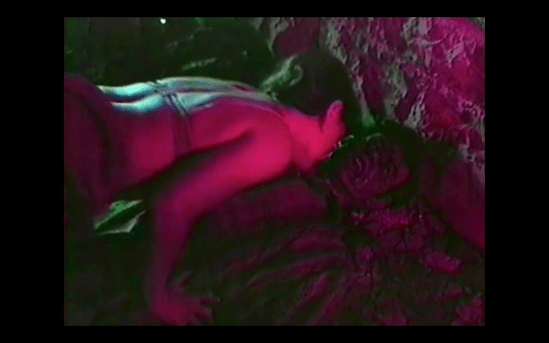
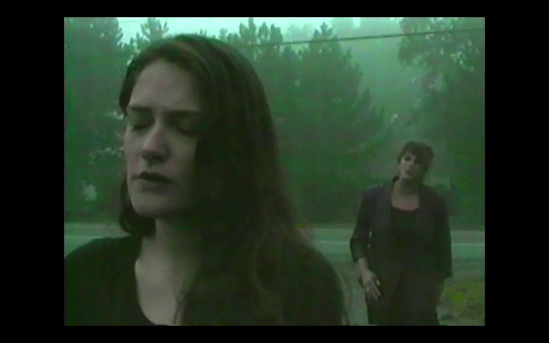
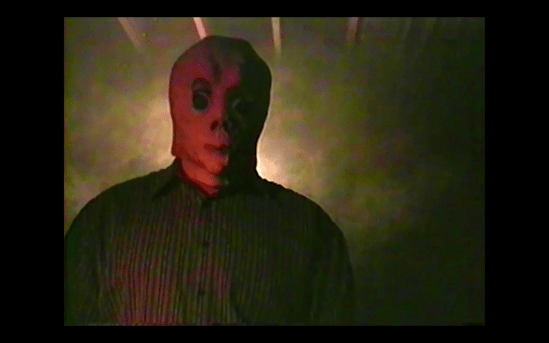
Popular B-movie scream queen, Tyler Phoenix, just walked out belligerently from the latest screening for her new schlocky horror film. Fed up with worrisome managers, pressuring producers, and hot-headed directors, the leading lady glazes over her career as the past creeps back into her life, sourly affecting the platonic, one-sided relationship with her boyfriend. Tyler’s downward spiral toward the depths of depression and frustration attractively consider suicide by pills, but when Tyler awakes, she finds herself handcuffed to a bed with a mysterious masked man looming over her. What the man wants is unclear to Tyler, but one thing is absolute, he’s an adoring fan of hers who seemingly knows more about Tyler than she knows about herself. Hours seem like days, days seem like weeks, and weeks seem like months as Tyler is continuously drugged and asked personal questions about her past and about the disparage campaign to capsize her life. Tyler begins to hallucinate and can’t tell what’s real or not as she confronts internal demons while being completely forthcoming to her dangerously devoted captor.

“The Vicious Sweet” captures visceral surreal existentialism from Sub Rosa Studio’s own Ron Bonk in the shoes of writer and director. The 1997 thriller is a cinematic blend of psychological horror, self-deprivation, and coming to terms with one’s own identity. All shot on analog video and on a micro budget, Bonk’s able to depict dreamlike scenes hauntingly and pragmatically without the assistance of costly visual effects that often cheap in appearance on video transfers. Shot in Syracuse, New York, “The Vicious Sweet” could be set anywhere, USA and with locations that set the main characters in close knit quarters for nearly most of the 90 minute runtime, the “House Shark” is able to fashion an under the radar overwrought mystery. Though the SRS Cinema retro DVD cover is lustfully tasteful with an illustrative Tyler Phoenix handcuffed to the bed and in her underwear, “The Vicious Sweet” isn’t about abduction for sexual exploitation. Yes, one scene does represent the DVD cover; however, Bonk’s story tickles the frayed and blurry realm of the mortal coil that can push the limits of not only the story, but also Bonk’s ability to explore that plane of existence that inhibits zombies, large rat-faced looking creatures, and the intangibility of time.

Tyler Phoenix whirls as an angsty actress with a chip on her shoulder and a metaphorical duffle bag full of internalized secrets. Sasha Graham straps herself right into the role, exhorting all the right kinds of anger and cynicism into her seemingly successful character’s career. Graham has seen her fair share of mid to late 1990’s lowballed b-movie films, such as having a substantial role in “Polymorph” directed by “The Dead Next Door” director J.R. Bookwalter and in “Bloodletting” helmed by the “Witchhouse” screenwriter Matthew Jason Walsh, but “The Vicious Sweet” marks the debut of leading lady, a true scream queen role, and Graham wears it well. She’s complimented by the debut performance of the late Bob Licata as the mysterious tormentor who goes by the name of Grimaldi, one of the performers from Phoenix’s early, short-stinted porn career. Grimaldi, who repeatedly notes, is a part of Phoenix and, for a lack of a better term, symbolizes the actresses betwixt past and present on a conscious level of trying to make sense of all that’s entangled in that screwed up and complex mind of hers. Licata, in regards to his character, is cold and consistent, playing the act of a passionately solemn and unpredictable serrated fan hellbent on trying to expose Tyler Phoenix’s true self. “The Vicious Sweet” also stars Jason Wicks, Theresa Constantine (“Bloodletting”), Jeffrey Forsyth (“Gut-Pile”), Al Marshall, Steve Wood, and Jeff Jones.

The story progression through Tyler’s figuratively personal hell hardly goes stagnant despite, for most of the her status, being manacled to a bed for relentless interrogation. Tyler’s put through a variant ringer of drug induced hallucinations and cerebral caprices and much of the credit, alongside Sasha Graham, should go to writer-director Ron Bonk who is able to translate from script to screen his vision. Contrary to the restraints of a SOV production, the creativity of Bonk’s camera work in masking, in more ways than one, Grimaldi’s stoic façade and centralizing Tyler’s and her experiences is evocative , the antiquated practical effects are still appositely poignant, and the diverse content holds “The Vicious Sweet” to a larger scale than the finances suggests. I’m not trying to elevate Ron Bonk’s film up to being the Holy Grail of low budget horror held in the vibrancy of limelight, but in my opinion, to dismiss the appreciation for producing something out of nothing would be a tremendous disservice to all auteurs. “The Vicious Sweet” leaves us with an open for interpretation perspective that somehow manages a jaw-dropping mound of shock and perplexity, nothing short of the likes of Christopher Nolan’s “Inception” ending.

The SRS Cinema DVD home video release of Ron Bonk’s “The Vicious Sweet” is presented region free, 1.33:1 aspect ratio from a S-VHS Betacam SP, that mostly result with black bars on each side of your 16:9 HD television. The limited edition Blu-ray is marketed as remastered, but the DVD image quality is awfully poor from the analog master transfer and doesn’t seem to have a smidgen of touch up where marco-blocking artifacts and aliasing run rampant. What also doesn’t help matters is the faded coloring and the blacks nearly void of any shape of definition as if you’re in a bright room and the light is shutoff and nothing but a blurry black void is present between the light and the time you’re eyes can adjust. The English language lossy 1.0 uncompressed mono track is frail and shaky, but still manage to push through without an obfuscate obstacles. Dialogue cozily lies low on the audio totem pole and the range and depth lack during more fantastical moments of zombies and monster swarming about. Bonus features include a director commentary, a director and Sasha Graham commentary, and SRS Cinema trailers. The best DVD feature, along with the film itself, is the illustrated, VHS letterbox DVD cover of the aforesaid Tyler Phoenix beautifully bound to the bed with candles lit by her table side and dressed scantily with a nice Please Be Kind, Rewind cherry on top. Despite the technical woes, “The Vicious Sweet” remedies the longstanding misinformed notion that independent b-horror movies are a hack and burden to the cinema fuselage with vast imagination and sturdy ambition.
EVIL’s Brush Stroke of Genius in “Art of the Dead” reviewed!

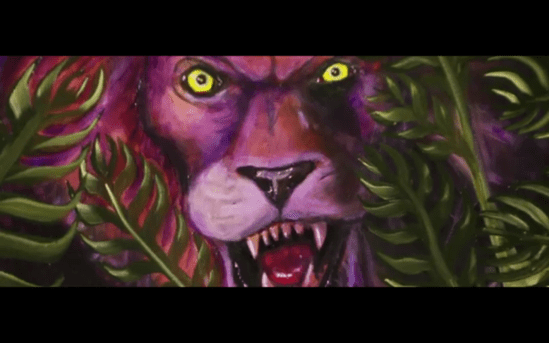
The Wilsons’ are the perfect portrait of a nice family; they’re wealthy but charitable and kind without exploiting the humility of others. However, when Dylan and Gina Wilson bid and win on the SinSational art collection at auction and hang the enchanted paintings strewn through their mansion estate, a strange succumbing to sin overwhelms their moral fiber. The paintings of Dorian Wilde, an eccentric and obsessive 1890’s painter who achieved eternal soul longevity by making a pact with the devil, created the art, depicting primal animals symbolic of the seven deadly sins, by using canvas and paint out of flesh and blood of his victims. The Wilsons’ become corrupted and carry out the sins of Pride, Lust, Gluttony, Sloth, Greed, Envy, and Wrath and the only way to save the family from damnation lies in the hands of a former priest, Father Mendale, and a girlfriend, Kim, of the oldest Wilson boy engulfed by Wrath.

“Art of the Dead” is what people call when art comes to life, or in this case, death. From the selective “Emmanuelle” film series and “There’s Nothing Out There” writer-director, Rolfe Kanefsky comes a story woven with the seven deadly sins theme as a foundation that approximates a 90’s grade thriller of epically gory proportions. With a catchy, yet dead horse beaten “of the Dead” title, “Art of the Dead” uses the seven deadly sin theme and blends it with an obvious homage to the gothic literary novel, “The Picture of Dorian Gray,” by Oscar Wilde. The main antagonist, Dorian Wilde, is the merging of the author and his fictional creation. Oscar Wilde wrote the novel in 1891, the same era the story enlightens in which Dorian Wilde makes a pact with the devil. Unlike another notable film, “Se7en,” where a practical killer exploits the capital vices to thwart a pair of detectives, “Art of the Dead” introduces dark, supernatural forces of Oscar Wilde’s work into the fold that are not only abject in what makes us human, but also biblically condemning, spearheaded by a satanic maniac who will do everything and anything to maintain his precious work and eternal soul, Produced by Michael and Sonny Mahal of Mahal Empire productions, the financial investors have also backed a previous Kanefsky film, another occult gone astray thriller entitled “Party Bus to Hell,” and in association with Nicholas George Productions and Slaughtercore Presentations.

Another pair of producers are also a couple of headlining actors who are household names – “Sharknado’s” Tara Reid and “21 Jump Street” actor and avid painter, Richard Grieco. Reid plays a snooty and shallow art gallery curator who sells willingly the Dorian Wilde set knowing well enough of their malignant history, but Grieco has a personal connection toward a film regarding art more so than the dolled up Reid because of his nearly 20 year passion as an painter of Abstract Emotionalism. His character, Douglas Winter, is obsessed with the SinSational collection to the point where it uses him as an instrument to kill his artistically unappreciative family; a sensation washed over as parallel and broad among all artists alike fore sure. Jessica Morris (“Evil Bong 666”) and Lukas Hassel (“The Black Room”) also headline. Morris provides the sultry and lustful-influenced mother, Gina, and her golden hair and blue eyes has a fitting innocence that’s is tainted and provocatively shields the cruel intentions of lust and power while Hassel, a giant of a man, immediately becomes capitulated to greeds’ warty influence. Each actor renders a version of their paintings and each dons the sinful presence gorgeously with individual personalties and traits; those other actors include Cynthia Aileen Strahan (“Dead End”), Sheila Krause, Jonah Gilkerson, and Zachary Chyz as well as “The Black Room’s” Alex Rinehart and Robert Donovan along with Danny Tesla playing the demonic proxy of Dorian Wilde.

“Art of the Dead” embodies an innovated spin on a classic tale of self-absorption and deferring one’s own detrimental sins upon others to carry the burden. Kanefsky grasps the concept well and visually sustains a contextualized 98 minute feature that carries a straightforward connection to the Gothicism of Oscar Wilde while cascading a family tree (pun intended) of problems that pinpoint each sin’s affecting destruction upon the soul through a wide burst of dispersive poison. While the idea is sound enough, the script and narrative channelling hardly carries the equivalent weight of the idea and comes off clunky, cheap, and sometimes uncharismatic. “The Black Room” was the last Kanefsky film critiqued at ItsBlogginEvil.com and the script was noted with the characters that hardly progress up toward and out of the despondent and deviant muck and it was the filmmaker’s softcore cinema background that attributed to the characters over-saturated girth of lust, which elevated and hindered “The Black Room’s” incubus storyline. With “Art of the Dead,” Kanefsky redresses the lust to quench just the respective sin with the right amount of perversion, represented by the mythical, sex driven Satyr that was created beyond being a nice touch of storytelling, disturbance, and meta kinkiness. Kanefsky continues to proportionally feed each sin the same manner with the exception of Pride that lures in a specific victim; however, the paintings’ insidious nature wonders to a circumstantial level at best with Kanefsky’s tongue-and-cheek dialogue and uncouth playfulness of Dorian Wilde while possessing the flesh of a black-laced, Fredrick’s of Hollywood-cladded Gina.

Umbrella Entertainment and ITN distribution release “Art of the Dead” onto a region 4 DVD home video and is presented in a widescreen, 2.35:1 aspect ratio. The sterile and polished look of the image renders doesn’t invite stimuli to visual senses, but is superbly clean and free of blotchiness that can routinely be a contrast issues with darker, indie productions; however, the digital source is nicely maintained and the darker scenes and colorfully deep portions of the paintings, the viscous blood, the modernized Wilson house, and the anywhere else have quality caliber. Visual and practical effects are necessarily key for “Art of the Dead” to be successful and the film scores a combination of talent to enhance the ho-hum photography with renaissance man Clint Carney, whose visual effects work on his own written and starred in film “Dry Blood” was flawless and who also painted Dorian Wilde’s works of art, and some solid practical and Satyr creature effects work by “Child Play’s 3” Victor Guastini and the VGP Effects team. The English language Dolby 5.1 surround sound audio is clear, precise, and no inkling of issues with the range and depth of ambient sound. Like most standard DVD releases from Umbrella Entertainment, this release comes with no bonus material or even a static menu. To observe his work as a whole, filmmaker Rolfe Kanefsky has nothing to prove with a body of work spanning over nearly three decades, but in reducing “Art of the Dead as a singular film, there in lies a double edged sword. A true sin is to headline a film with actors with brief roles just to draw in investors and an audience, yet “Art of the Dead” also finds innovated modernism out of classical creativity, giving new life by homage, and displaying some maximum carnage fun with plenty oil and water color.