To be a Rich and Famous Rockstar, You Must Sign with EVIL! “Hell’s Bells” reviewed! (SRS Cinema / Blu-ray)

Sign Your Soul To Satan for the “Hells Bells” on Blu-ray!

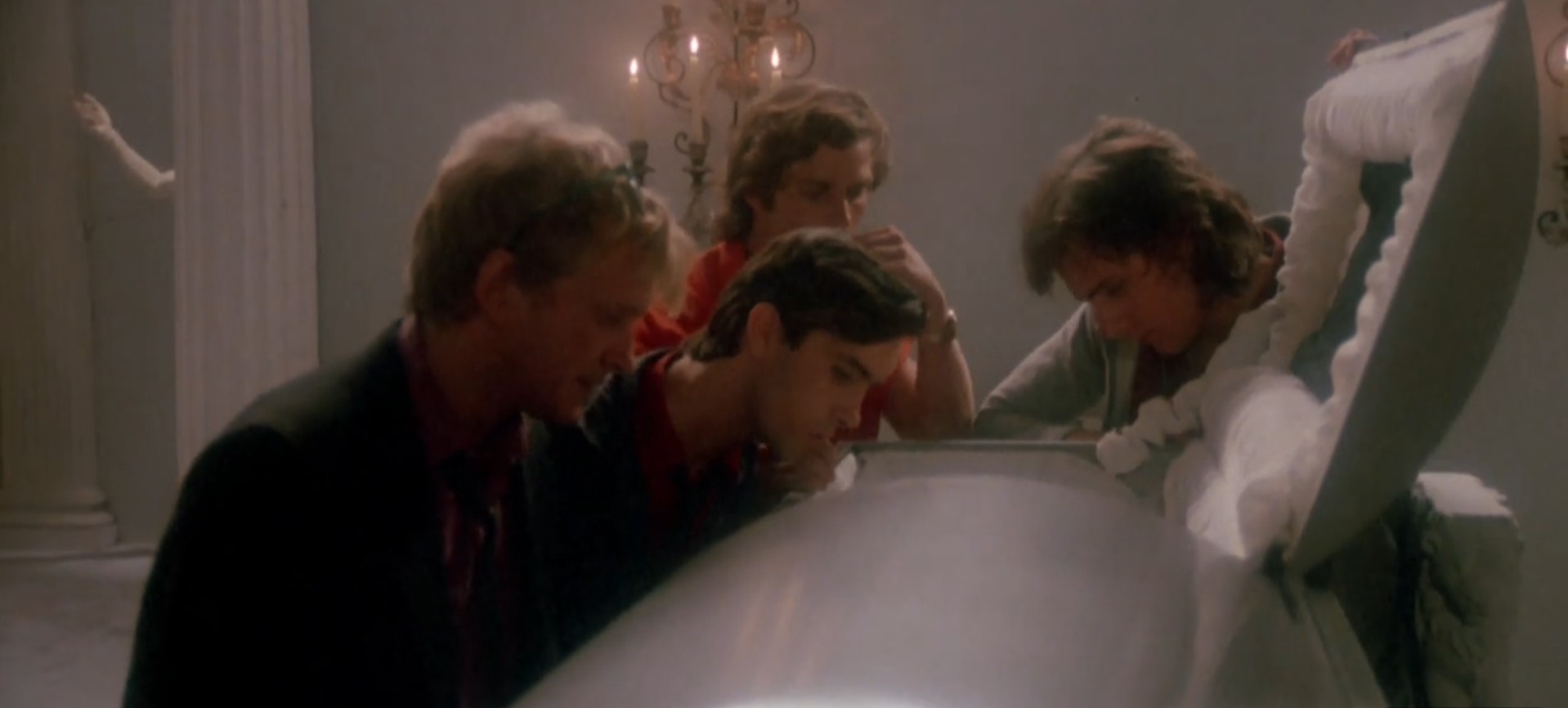
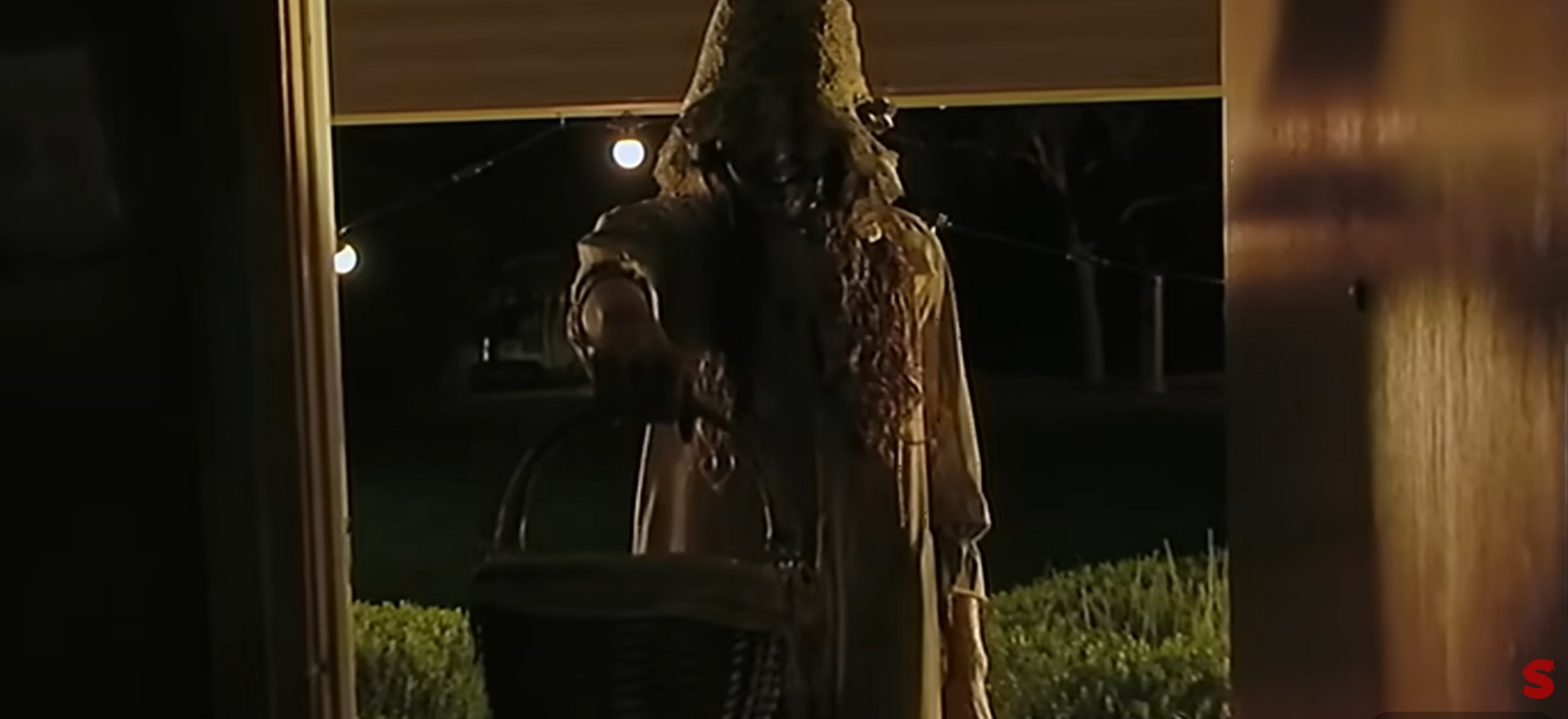
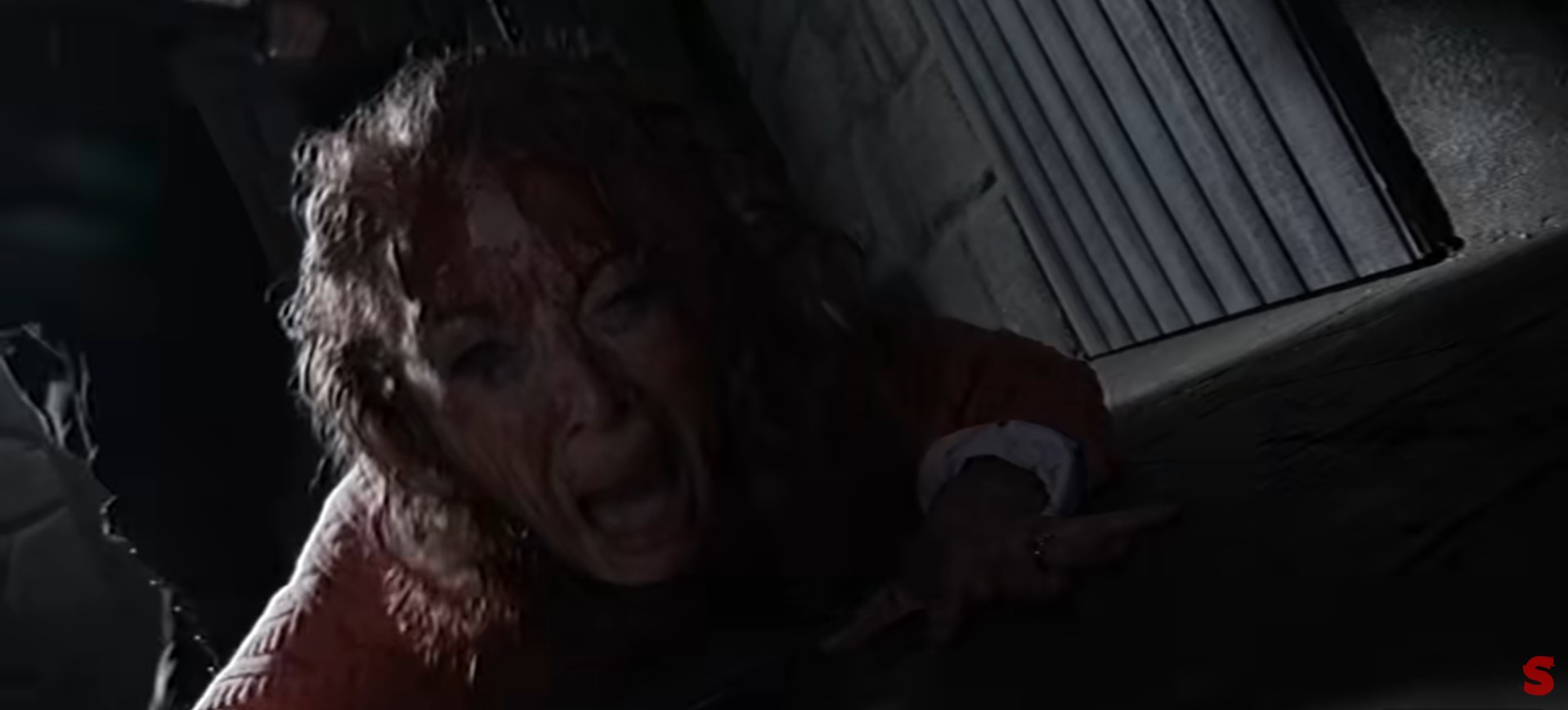
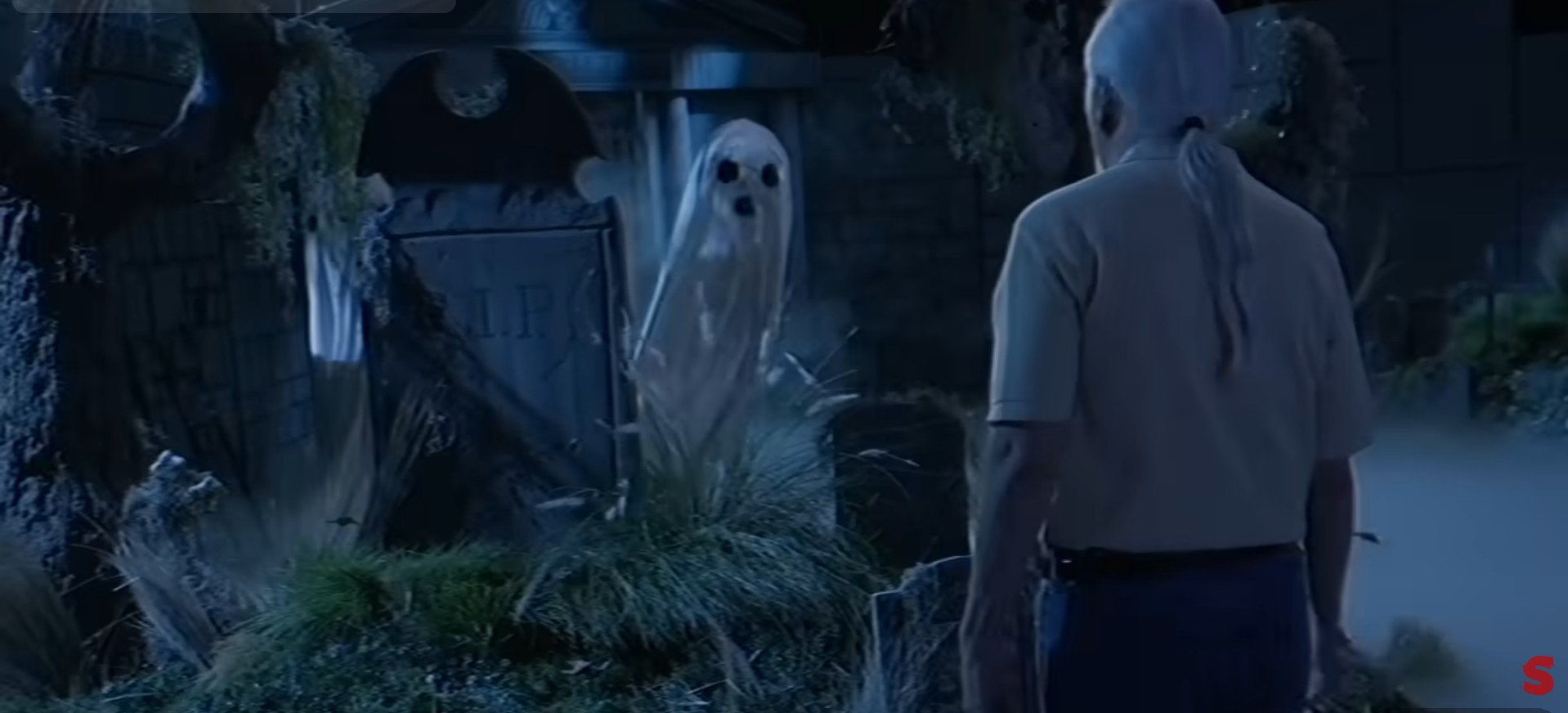
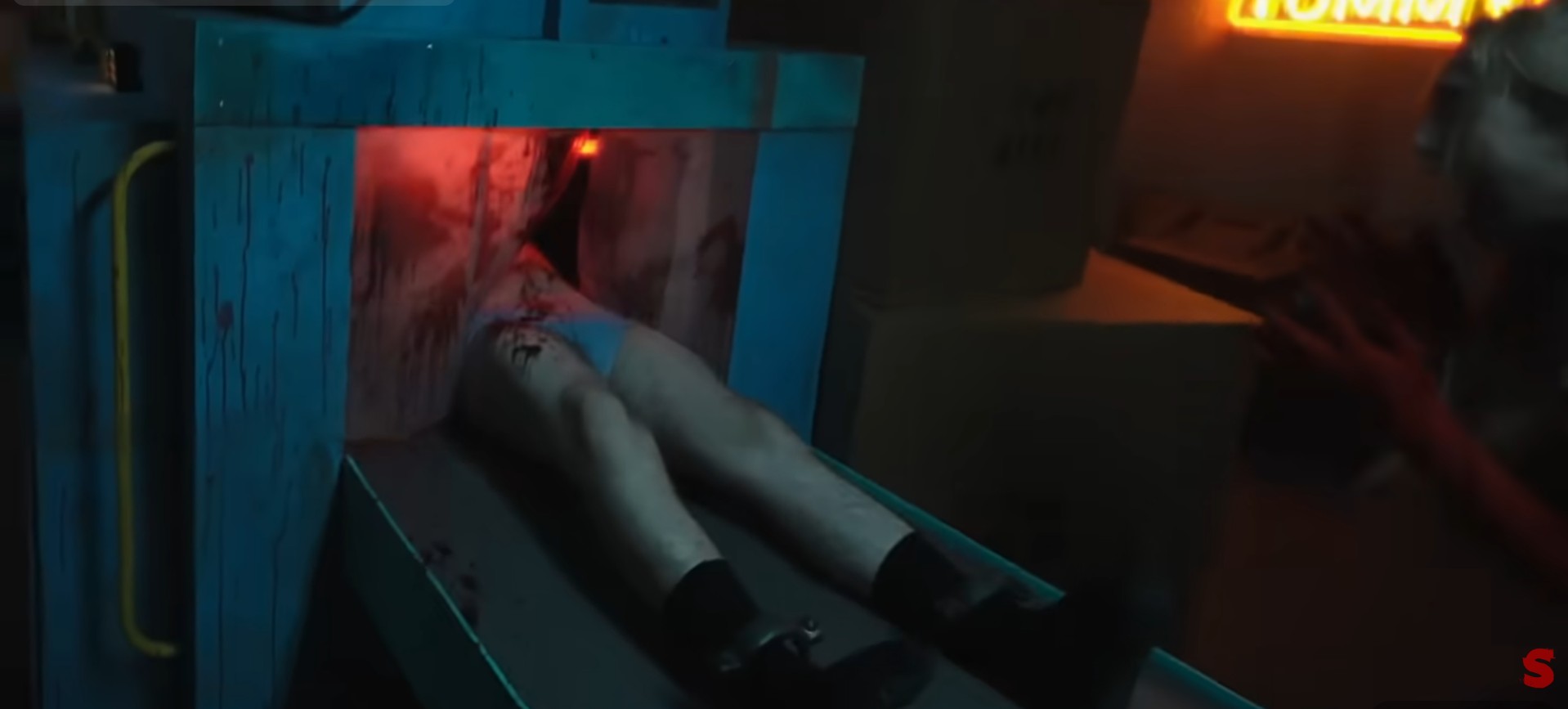
A pair of middle-aged best friends and rockers named Arthur and Herb have minimum waged jobs, no ambitions, and two level-headed wives on the brink of divorcing them if nothing changes.  All the friends have is their band, Devil Music, and their glam rock music. Out of the blue, a music talent agent signs them in a heartbeat and before they know, Devil Music is rocking out to a packed-full arena full of adoring fans and obsessed groupies, raking in money beyond their capabilities of higher counting.  What they’re oblivious to is the band’s collective souls now belong to the Devil under the contract terms with the servile music agent doing the Devil’s fear-based bidding and whose life and soul hangs in the balance.  When the Devil comes to collect, sending his demonic minions to slay each member of the band, Arthur and Herb must find a way to save themselves from the Devil cancelling their life show forever. 

For over a decade now, filmmakers Jim O’Rear, who’s minor zombie role in George Romero’s “Dawn of the Dead” has launched a career in indie horror in front and behind the camera with “Hayride Slaughter,” “Three Tears of Bloodstained Flesh,” and the “Cruel Summer” trilogy,” and Scott Tepperman, who’s more recent filmography into the indie market also saw highlights of horror, have been in business together ever since co-starring in the 2013 haunted hospital flick, “Hospital.”   From then on, the two had formed their own production company, Los Bastardz Production, specializing in low-budget horror with a select entourage of talent.  The devil and his contract film, underscored with a rock-n-roll fame theme, released in 2020 is duo’s “Hell’s Bells,” a horror-comedy built around if it seems too good to be true, it probably is narrative.  “Hell’s Bells” is also produced by the two filmmakers.

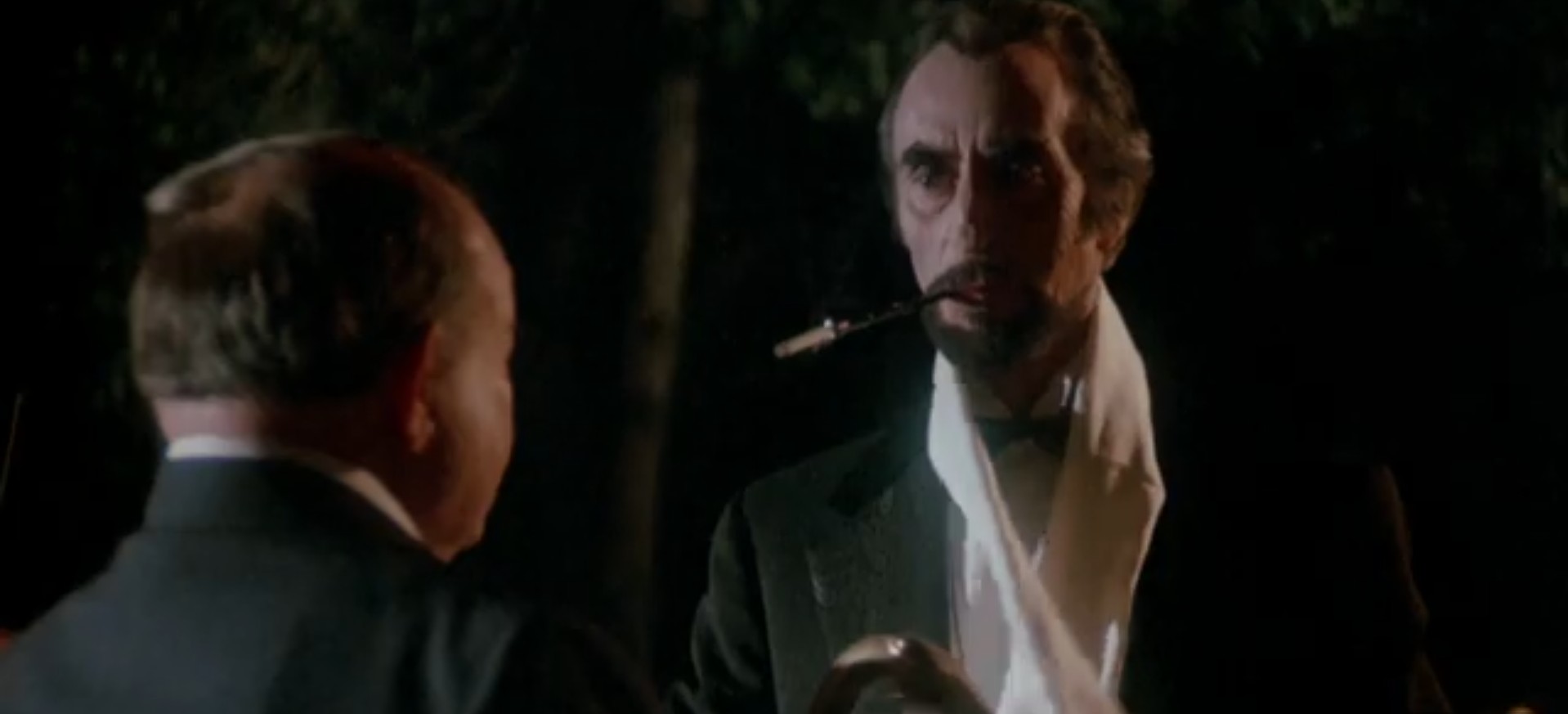
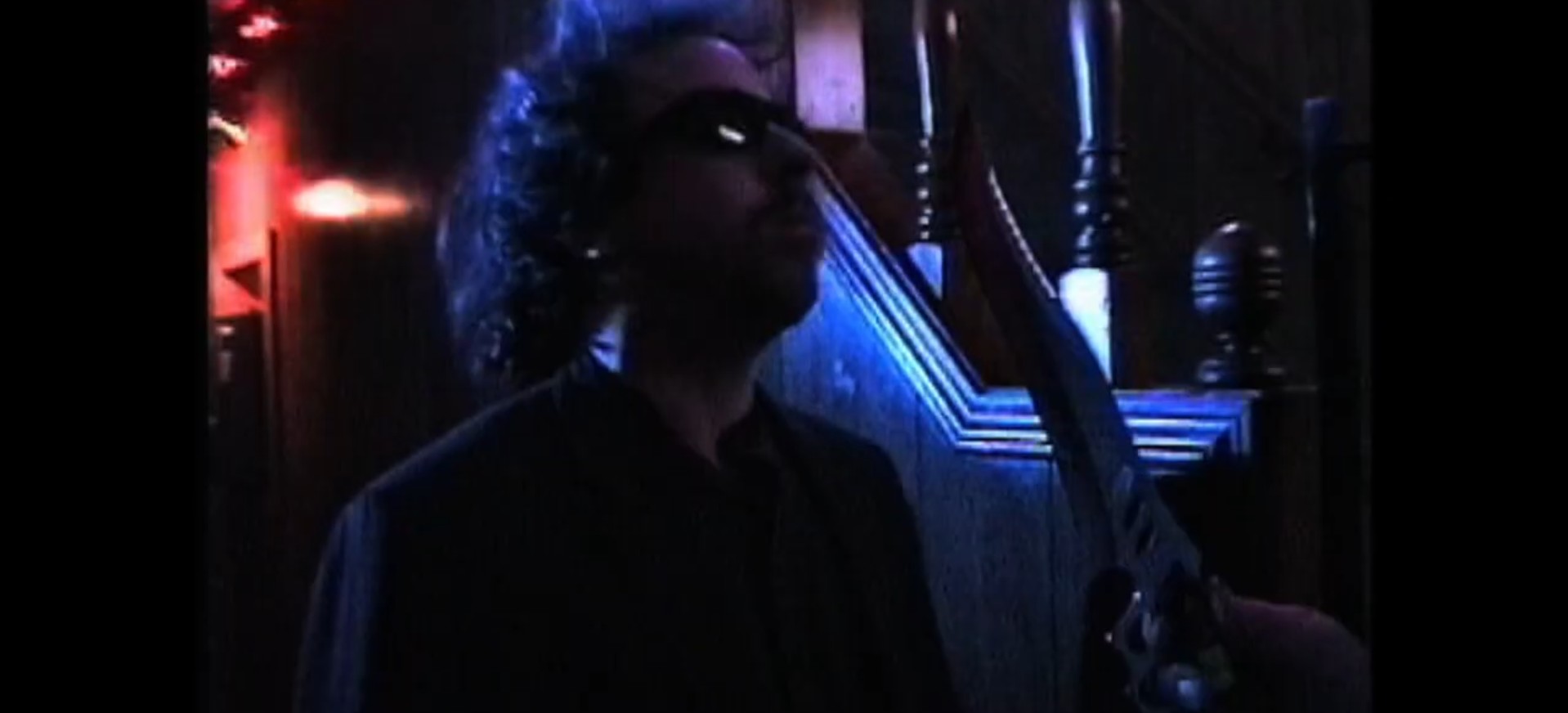
Like most of their produced product, it comes to no surprise that the Los Bastardz themselves, Jim O’Rear and Scott Tepperman step in the principal leads of a Beavis & Butthead or Bill & Ted type of heavy metal music centric duo who are daft beyond repair.  Any innovation aimed for the setup is instantly dissolved by the derivative tepidness as we’ve seen these characters before over the decades now, but O’Rear and Tepperman make for a good dimwitted and guileless pair with a gullibility and an innocence that makes them appear sympathetically simpatico, even when their levelheaded wives (Rebekah Erb, “Death Care,” and pornstar Layla Dawn. “Slumber Party Slaughter Party”) use threatening divorce language to motivate their one-track mind toward another desire in life.  The jokes are a bit long in the tooth and there are a handful of needless fart jokes, but the overall gags do land even if the terrain they contextually touch down on is rocky at best as they play to their individual character strengths of being a grocery bagger enthusiastic about making it big and a loafer who actualy has some intelligence underneath his Jesus hairstyle.  Their band mates, the cocky loudmouth drummer Vic (Paul Van Scott), the butch backup singer Shirley (Lisa Kirk), and the catatonic bassist Gary (Cameron Scott), all have their own quirks, and all are played by actors familiar with El Basterdz having donned roles in previously produced films from the company, such as the “Cruel Summer” series.  As the band Devil Music, they are targeted for soul reaping as a part of a contract byproduct against their music agent Caleb (Tom Komsar), drawn up by the devil himself in Marc Price (“Trick or Treat”) by duplicitous means with deceitful promises.  Without the horns, pitchfork, and red skin, Marc Price makes for a good Devil in human skin with only the economized visual effects fashioned glowing eyes.  Harold McLeod II preludes the story as a victim of contract, Cayt Feinics draws attention with a show of toplessness as Shirley’s lover, Jerry Reeves plays the demon x many going after Devil Music, and a sorely underutilized Jimmy Maguire, as the exasperated grocer manager tired of Arthur and Herb’s lack of common sense, fill out “Hell’s Bells” cast.

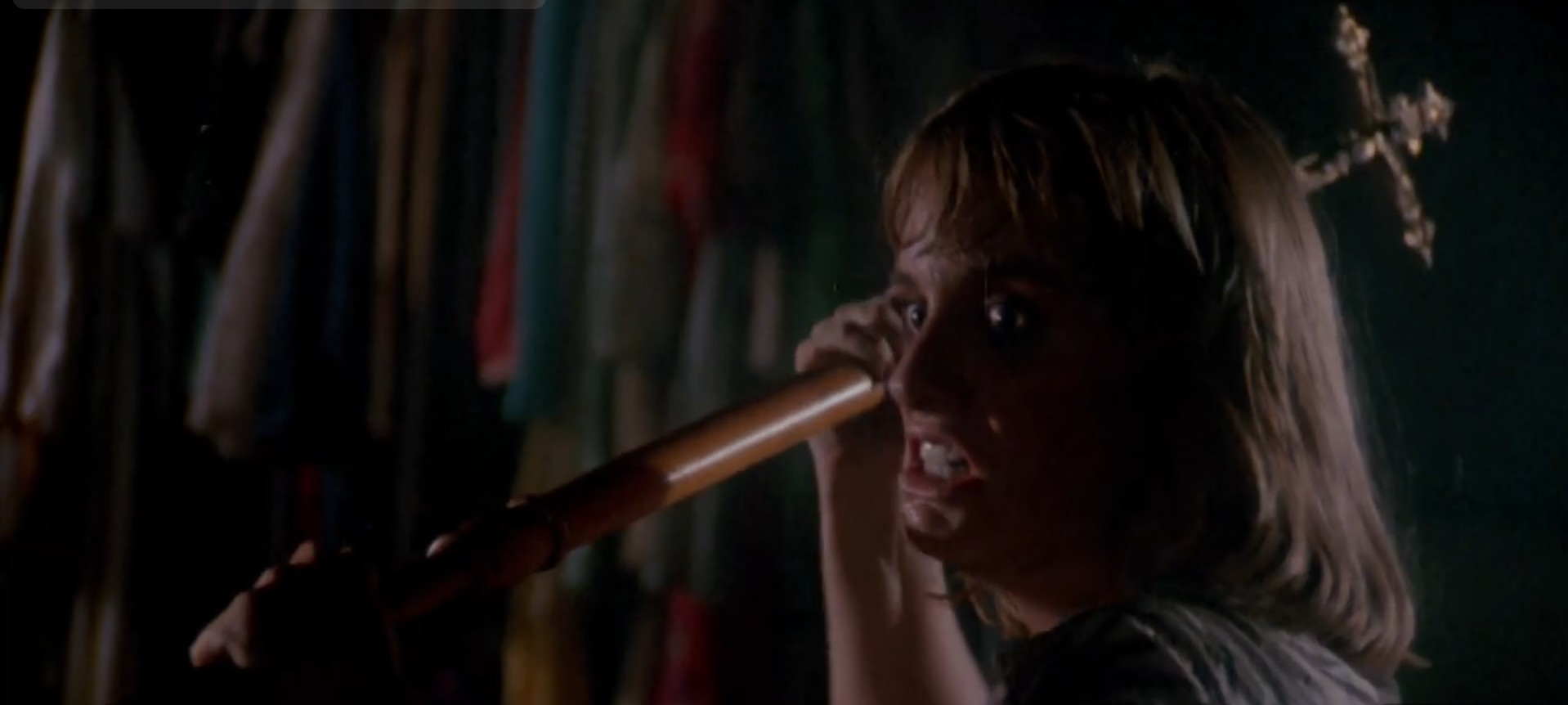
To preface with my previous experience with El Basterdz films, “Cruel Summer” didn’t do it for me with a dowdy slasher that’s didn’t leave impression.  Yet, “Cruel Summer” has two sequels plus a 4th soon to be on home video, making this series their most popular commodity.  What can I say?  Cinema is subjective.  That bad taste didn’t deter “Hell’s Bells” from the ever-growing review pile and a second chance to get this long-time horror fan aboard with Jim O’Rear and Scott Tepperman’s blithe outlook toward the horror genre, one that doesn’t take itself too seriously.  With that understanding, going into “Hell’s Bells” was rather easy with no expectations for commentative material and top-notch gags and laughs, but what El Basterdz provides has been long appreciated and continuously favored in genre films:  decent VFX, decent practical effects, and, of course, the provocation of nudity.  There may be times when films can get away with having only one of those key elemental pieces present with great immensity and intense projection that the film can’t be denied it’s due right to seen and heard as a well-made film but have all three and the formula works like a charm amongst genre fans no matter how bad the storyline gets and no matter how bad the acting is portrayed, leveling up a mediocre production to potentially the penthouse of the independent skyscraper.  To be fair, neither the story nor the acting in “Hell’s Bells” is atrocious but the technical aspects during principal photography and post-production throw the film off-balance into slapdash hogwash and that can be rather off-putting right out the gate for most audiences.

“Hell’s Bells” finds itself being a story having been told before, many times over in its airheaded budding duo faced with great task none think possible to complete, but O’Rear and Tepperman manage to befit themselves satisfactorily in archetype with a rock-n-roll nightmare by sticking to their character quirks and incorporating the backbone preferences of shoestring genre filmmaking.  SRS Cinema is a distributing house built on shoestring films and “Hell’s Bells” is another brick in its schlock-sturdy foundation with a Blu-ray release.  Encoded with AVC compression, presented with 1080p high-resolution, on a 25GB BD-R with the purple underbelly, “Hell’s Bells” looks pretty good for commercial grade encoding and minimal capacity.  Details are sharp enough to cause no concern to capture skin variations, the contrasting wardrobe textures, and the shifting compositions between reality and fantasy stemmed from visual effects and fade-in/fade-out montage sequences.   Scenes are mixed bag of grading, some more intense than others that are set with a brighter natural veneer, but all retain their intended quality without any substantial issues from compression.  The English language LPCM 2.0 stereo renders a mix of feeble commercial equipment and green technical knowledge that permits a large noticeable swing in all areas of principal sound recording with most of the pain points affecting dialogue with retreated vocal presence in certain scenes while robust in others, and even an in-moment change of the same scene at times.  Post sound design isn’t marred by the same scenarios that’s a clear as crystal with the added rock soundtrack, crowd cheers, and demonic gutturals.  No English subtitles are offered.  Special features include a commentary track with writer-directors Jim O’Rear and Scott Tepperman, a behind-the-scenes featurette, Arthur and Herb’s Devil Music music video, blooper reel, the feature trailer, and SRS Cinema catalogue trailers.  SRS Cinema’s Blu-ray mirrors their limited 100 count release without the director’s signatures, retailed with a regular Blu-ray Amaray case with illustration composition artwork of mostly the chief principal characters, and as always, the graphic artistry SRS uses is always 100x better the film.  There are no other physical accompaniments.  The not rated release has a runtime of 80 minutes and has region free playback. 

Last Rites: Throw up the sign of the devil horns for “Hell’s Bells’s” comedic contract with a hair metal Satan, but don’t let this narrative fool you by hawking new something old and done before.

Sign Your Soul To Satan for the “Hells Bells” on Blu-ray!

Protect Yourself from EVIL Because “Tonight She Comes!” reviewed! (Jinga Films – Danse Macabre – MVDVisual / DVD)

“Tonight She Comes” is Now Available on DVD! Purchase Here!

Two women looking to spend quality debauchery time with their friend at her family’s rural cabin arrive find their friend is nowhere to be seen or heard from but they do discover a lost mailman asleep on the cabin porch on his first day.   As the trio yuck it up with plenty of booze and flirtation around the campfire, locked out of the cabin with still no sign of their girlfriend, the day turns to night and they’re eager to get into each other’s pants for an alcohol fueled fling.  Unfortunately for them, their lost friend just showed up naked out from the adjacent lake.  What usually would be an invitation for an extended good time, the naked friend is stained head to toe in blood and determined to kill anyone in her path.  In their escape, they run into a backwoods family of black magic occultists trying to fix their titanic satanic mistake before everyone dies.

If a campy, gory, backwaters horror engulfed in occult get your filmic scary movie juices flowing, then “Tonight She Comes” should be at the top of your must-watch list.  The 2016, American-made feature from writer-director Matt Stuertz takes the cabin-in-the-woods trope to the extreme to the likes of a farcical feat many have tried but only a few achieve.  “Tonight She Comes” is Stuertz’s sophomore picture behind the cleverly titled found footage horror “RWD,” or “<<RWD,” as in the rewind symbol you’d typically see on VHS players, and has since his bloodthirst for horror with the practical effects-driven and supernatural terrorizing of a young woman in this year’s “Human” and is currently in production with a gory vampire flick, “Wake Not the Dead.”  Gory is Stuertz niche tinged with a repulsive tone that’s not just splatter nor intestinal evisceration.  Cinematographer Chris Benson and sound designer Jamison Sweet, of the St. Louis-based production company Lamplight Films, and Twenty Eighteen Seventy-Six’s Stuertz produce the film.

What’s neat about the progressing script, acutely angling 90 degrees to keep the story fresh and unsuspecting, is the principal leads constantly change hands.   By conventional standards, the young, good looking, white male mail with a pleasant disposition in James (Nathan Eswine) places audiences on that path with a post title opening of the inexperienced, first-day-on-the-job James doing his route diligently despite difficulties locating an address.  Also, in comparison to his dimwitted and degenerate best friend Pete (Adam Hartley, “The Slender Man”), James is a pedestalled prince.  As the day turns to night, James begins to show cracks in his gallantry and the baton is roughly passed to the rough around the edges but tough as they come Ashley (Larissa White, “Charlatan”).  In another dynamic duo curiosity, her best friend in Lyndsey (Cameisha Cotton) drunkenly sluts her way to the end of the whiskey bottle and toward the inside of James’ pants, demarcating the horror tropes between the two pairings by sticking up and out the perverted goofball and the alcoholic promiscuous while keeping in protagonist good graces and staid James and Ashely up until the baton is passed along again inside the trio of an occult practicing backwoods family who messed up a reincarnation spell and inadvertently resurrected a powerful, murderous demon.  Between the family-first Pa, Frances (Frankie Ray, “Bad Haircut”), the near silent big brother, Philip (Brock Russell) and the rational sister, Felicity (Jenna McDonald), the protagonist shift lands in the lap of the younger sister who takes charge in a show of no nonsense command and force that deserves respect for a role that’s usually diluted or wasted in isolated cabin horror.  Each actor performs exactly on Stuertz given script with the cast rounding out with former model Dal Nicole in her full birthday suit for most of her screentime as the Kristy inhabited demon plodding to kill in a nonstop wrath.  

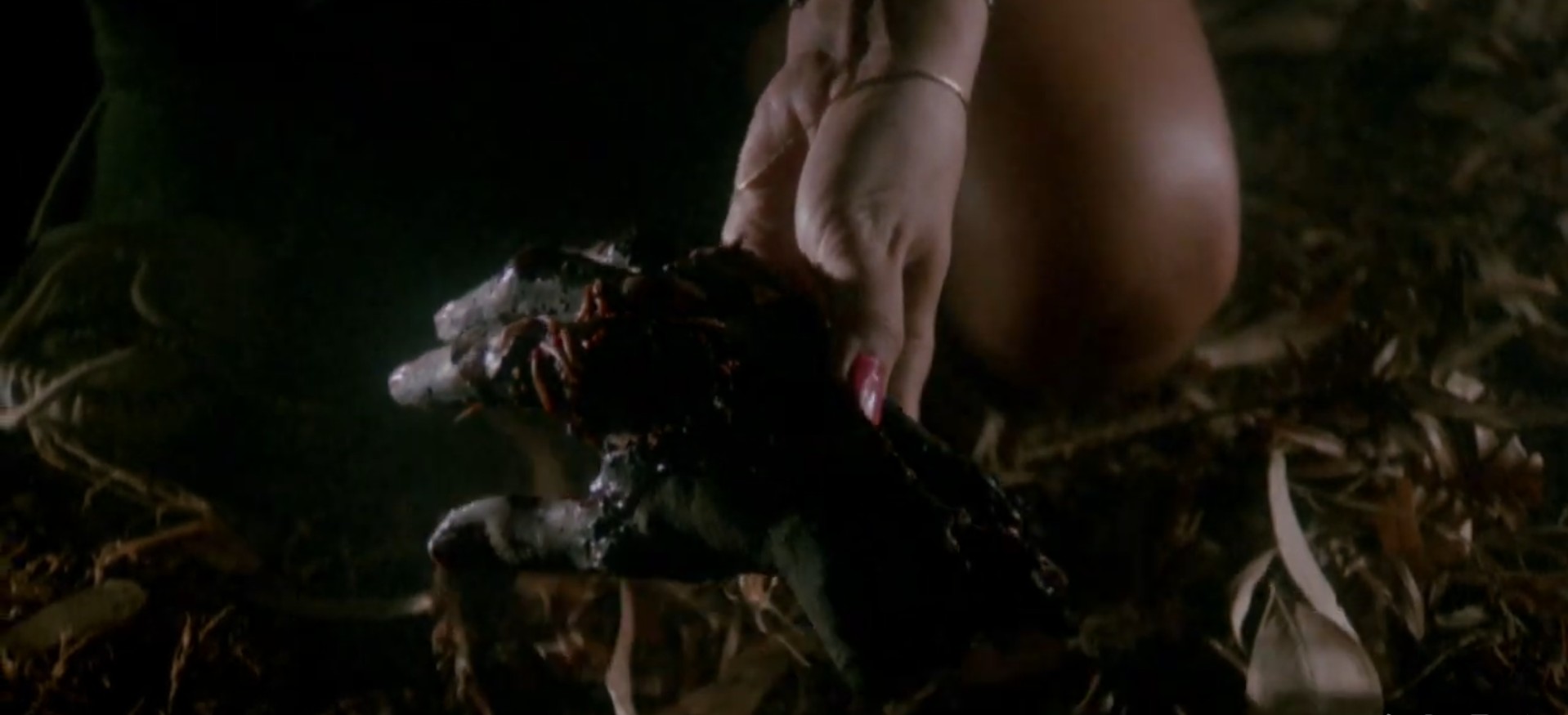
Most audiences and critics will pan “Tonight She Comes” as nonsensical drivel touting a gauntlet of gore and a fixed nudity to carry it into a favorable edge with fans.  All I have to say about Matt Stuertz script and vision is it breaks the conventional stereotypes into shattered shards and uses those shards as gouging, bloodletting weapons.  On it’s face, “Tonight She Comes” appears to be another run-of-the-mill cabin-in-the-woods horror with throwaway characters and many vague plot points that don’t have an encircling reference.  Stuertz purposefully throws cation to the wind and makes the movie he wants to see, a no-holds barred blood fest geared to obliterate the tropes and only provide slivers of important information, just enough to pass the bar to the next round of ironfisted thrashings.  The story never allows the sediment to settle between the character action and dialogue debauchery, the eclectic and interesting POV shots, the diabolical practical effects, the sparingly used but effective visual effects, the continuously guess where this story is heading and, of course, the unabashed eye candy that is Dal Nicole fully nude in full time.  The other thing that can bog down viewers, and rightfully so, is the time check title cards that are supposed to tick down to the moment the demon emerges into the fold, turning the events of youth fun into a grind of survival. Randomized and spelled out, literally, the interjected times don’t seemingly match the span of time passed on screen.  What should take a few minutes between scenes, the title card states hours had passed; I’m not positive if this is part of Stuertz’s trope lampooning or not but this portion excels as more distracting from its theme-bombing track.

Another great and gory to the extreme release from the collaborating collective of Danse Macabre, Jinga Films, and MVDVisual.  “Tonight She Comes” comes to a new DVD release that’s MPEG2 encoded, 720p standard resolution, on a DVD5 and presented in a widescreen 1.78:1 aspect ratio.  Not peak image quality by any means of available formats out today, solidifying this DVD release a roll back to a lesser picture quality, but digital capturing goes without saying that DVD can still be a formidable format in regard to picture quality.  Likely, you will not see too much different between standard and high-definition but there are subtle areas of contrast, such as the black areas does contain faint banding and the details don’t inlay a zing of crispness like they should.  A film that starts off with a title card reading, THIS FILM SHOULD BE PLAYED LOUD… AS HELL, the DVD does the statement and Stuertz’s film justice with an uncompressed English 5.1 surround sound mix that highlights on and hits upon the important sound effects, screams, and building discordance, tumbling minor tone, and spiny synth-rock and 80’s horror-inspired score of Wojciech Golczewski (“We Are Still Here”).  Dialogue lands with prominence amongst the clatter and chaos layers that gives a real sense and elevation to the dialect of Jenna MacDonald’s tough backwoods occultist.  Not much in the way of depth as mostly everything is taken to the extreme volume, actions far and near, but range is aplenty by spanning the innocent swashing of alcohol in a bottle to the splatter of brains on the wall, from the crackling of fire to the gnarly rip of flesh being torn apart, and the robust force of bullets being fired to the deluge of menstrual blood filling a cup.  Yes, it’s one of those movies!  English subtitles are available for selection.  Special features include a Matt Stuertz commentary track, deleted scenes, a behind-the-scenes and raw footage look with cast and crew interviews with some still in character wardrobe, the Stuertz’s short film “Slashers,” and the teaser and theatrical trailer.  The DVD packing is about as generic as they come with the naked silhouette of the titular villainess standing in front of not the cabin the film in not the forest this movie takes place.  The arrangement is reminiscent of an “Evil Dead” knockoff.  The tall DVD Amaray case has nothing more to note in terms of physical prowess.  Aforementioned, this DVD is a rollback release in a few ways, and one is, unfortunately, the rating with a Rated R cut with a runtime of 84 minutes whereas previous releases were not rated clocking in at 90 minutes.  However, as far as I can tell, the Jinga Films, Danse Macabre, and MVDVisual does offer region free playback unlike early editions locked in at region 1.

Last Rites: If looking for something not too serious, checks all the gory and gross boxes, has decent practical and visual effects, and bares skin, “Tonight She Comes” is a fierce, ferocious, and fight-to-the-death option worth the viewing calories!

“Tonight She Comes” is Now Available on DVD! Purchase Here!

Midnight Showing of the Lost EVIL Tape Will Be the Last Thing You’ll Ever See! “Transmission” reveiwed! (Jinga Films, Danse Macabre, MVDVisual / DVD)

“Transmission” Transmitting to Your Television on DVD!

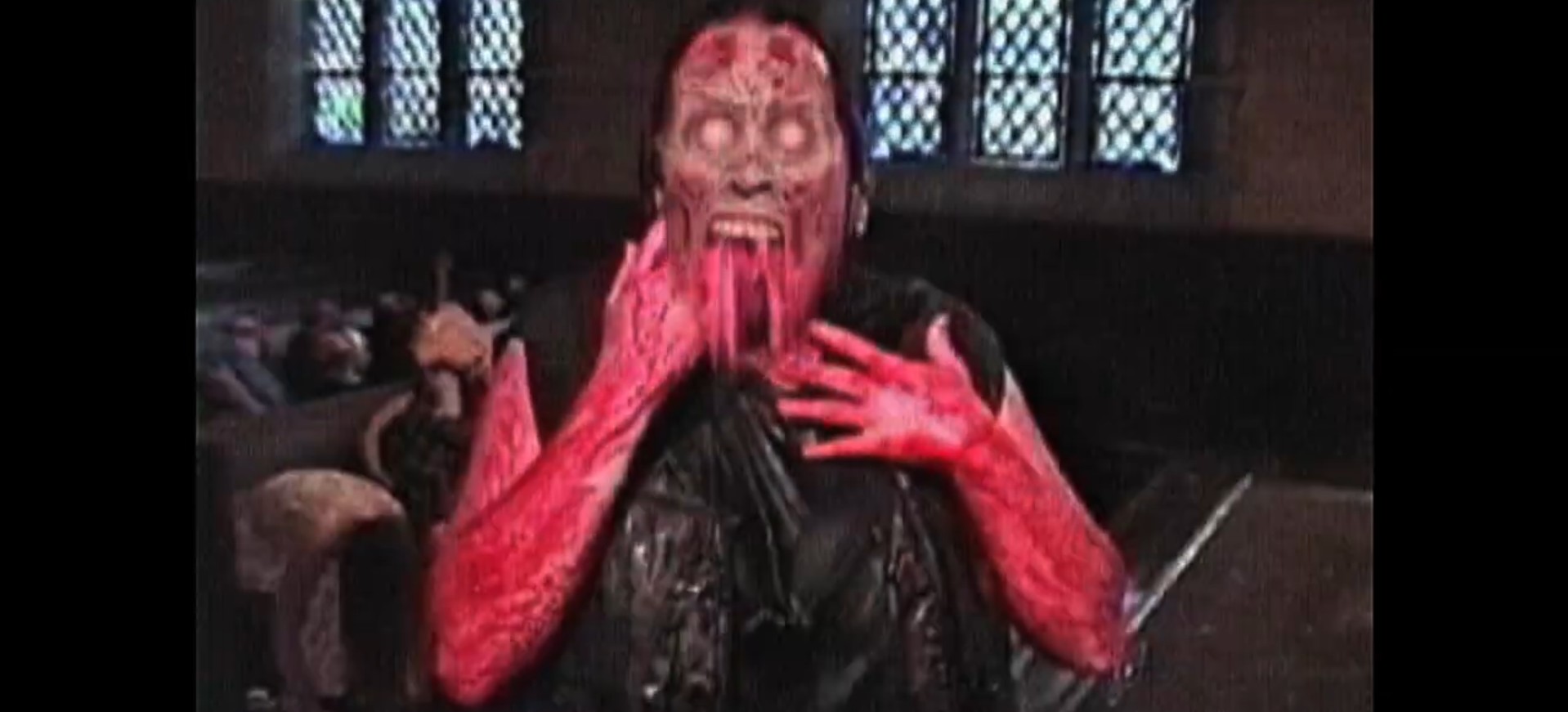
A Santa Mira elderly man sits in a dark room with a glowing television illuminating his silhouette.  As he channels surfs through the night, amongst what’s being broadcast over the airwaves is a bible-thumping televangelist, a children’s puppet show, an 80’s teen romance comedy, a live local news broadcast of a hostage situation and a documentary on the investigation of the disappearance of notorious cult horror film director Frank Tadross Roth pursued by his granddaughter Rachel and her boyfriend.  Going deeper into Ross’s disappearance through archived interviews with the director and crew, on set raw behind-the-scenes footage, and the examination of Ross’s quest for an obscurely treasured videotape by an occult group, the director’s pursuit of, and his eventual unearthing, of the tape become the push for his last and recently discovered film Transmission, thought to have been lost in a building fire after his suspected involvement of the film’s lead actress murder.  Going back and forth between the channel programs builds a sinister, terrible dread that will soon be revealed to terrorize all those glued to the set. 

Late night television has never been so bodingly evil!  Channel surfing transmits an anthological approach between mockumentary and found footage in this uniquely crafted scrolling of boob tube terror entitled “Transmission.”  The 2023 horror is from writer-director Michael Hurst, the English director behind a pair of franchise sequels in “House of the Dead 2” and “Pumpkinhead 4:  Blood Feud.”  His latest venture takes twist to a whole new level different from his repertoire of linear independent horror with backlot dark legend surrounding an occult obsessed horror filmmaker.  Hurst also produced the film, his first in over a decade since 2017 with Andy Hurst’s (“Are You Scared?,” “Wild Things: Foursome”), alongside other self-employed filmmakers with the How to Kill Your Roommates and Get Away with It” producing duo Robbie Dias and Pat Kusnadi.  New Blood Productions serves as the production studio.

“Transmission” traverses in guile under TV guide pretenses of local channels, channeling the horror through the back and forth of unsettling, televised channels that have a familiarity of broadcast shows – sponsor subsidized children shows, perfunctory local news, and black and white sitcoms – but there’s more than what meets the eye.  The film uses recognizable genre names to get the message across with “Sleepaway Camp’s” Felicia Rose in her most vanilla action news reporter role, “Scary Movie’s” Dave Sheridan as an over-the-top protective father caricature in a teen romance comedy, and “The Road Warrior’s” Vernon Wells at the center of the amassing occult suspense as the missing notorious horror director Frank Tadross Roth.  Over the years, Wells’ performance has tapered to a subtle crawl of expression as if the veteran actor is now just running through the motions of the everyday hired gig that’ll headline his name, unlike his former wide-eyed and eccentrically villainous roles in “Commando” and “Innerspace,” but “Transmission” suits his stern act portrayed in video flashback as an occult maniac and peculiar director gripped by the search of an arcane, dark sect’s perniciously videotape.   Spearheading the effort to track down the filmmaker is his granddaughter Rachel, played by Nicole Cinaglia (“Death House”) with an inexplicable character shifting of gears from curiosity and intrigue from the documentary to the frantic and fearful ramblings of a paranoid hostage taker in the new story stemmed by her findings surrounding her grandfather’s disappearance.  There’s potential gap there in the lack of development, or rather the lack of acknowledgement overall, with Rachel’s parents as it’s just a grandfather and granddaughter affair without the recognition of those in between.  There’s also a gap in Rachel’s attained information about the sect, the videotape, and her grandfather’s endgame as she seemingly has more knowledge about the insurmountable otherworld evil on the horizon but how she got there is a few clicks short to fully bridge.  Sadi Katz, Del Howison, Marcella Di Pasquale, Ben Kaplan, Hunter Johnson, Raymond Vinsik Williams, Jennifer Nangle, McKensie Lane, Jessica Cameron, Charles Chudabala, Michael Glenny, Christopher Bryan Gomez, Ruby Reynolds, Ben Stobber, Mark Schaefer, and Robin Hill fill out the channel surfin’ cast of characters.

“Transmission” has a neat story structure built upon components with the premise being a movie inside a documentary while amongst a flipping through the broadcast waves that coincide with another movie as well as television shows, podium preaching, puppet skits, etc., to which is then wrapped up inside and latched onto another movie, a metanarrative with a preamble setup.  The Roth directed Transmission, presented for the first time on Malvolia’s spooky late night show (an Elvira rip) is a space horror off-brand for the filmmaker that mirrors vaguely the reality outside the boob tube but told through the Rachel Roth investigative documentary that builds the timeline pieces while flipping back and forth between the late night movie and the documentary as well as the scroll through every other broadcastings of paralleling programming in what feels like an antiquated prelude to the cable guide button on a tube television with depicted content that resembles much like what programmed over-the-air decades ago down to the very staticky outlines of porn stars expertly doing their fleshy vocational craft in snowy pixelations.  The edited series of a varietal shows creates an erratic unsettlement with an atmosphere churning over the idiosyncrasy content of what’s eventually to spoil or come to chaos by Transmission’s, or rather ”Transmission’s,” twist ending and what a fairly good twist ending it is, even with the slightly ham-fisted acting, by pulling off misdirection as you think you know where the finale is heading but the forces of evil seep through with a backup plan. 

Jinga Films, Danse Macabre, and MVDVisual present “Transmission” onto a MPEG-2 encoded, upscaled 720p (but upconverted on my player but since this title is shot digitally the image appears fairly good to begin with), DVD5 and presented in a widescreen 1.78:1 aspect ratio.  As stated, imagine quality has a fair amount of detail and intended panache interference amongst a broad range of different aesthetic styles and gels through the varied televised broadcasts from static and grain filters to colorless sepia, to filming scenes on television screens, and to other mock-electrical afflictions inside a digitally shot story truck to intermittently snap normality and cause a rising fear of curiosity amongst the TV goers.  Throughout the picture, there were no noticeable true compression issues with the picture.  Some scenes felt slightly stretched by that I chalked that up to filmmaker style when rendering various programming for the narrative.  Though not listed which format is used, the player registers an English Dolby Digital 2.0 Stereo.  With imitating the perspective of someone watching television, audio tracks are distinguished with a flat concave that elevates the pitch but disperse through a single channel.  Emitting through a dual channel stereo, the audio can discern potently through, providing clarity.  When looking at the perspective, we’re either the old man watching the television or when inside the show itself watching from the fourth wall in and subsequently the strength and tone change often quite a bit, creating a rich depth when done correctly.  English subtitles are optionally available through the moving menu.  The DVD is essentially a feature release but there are other Jinga Film trailers that include, “Iconic,” “Tonight She Comes,” “The Protos Experiment,” and this film, “Transmission.”  The DVD comes in a standard single, push-lock, black DVD case with single-side cove art that I personally found gratifying when considering the film as it speaks to the abnormal and drawing glow of a brightly illuminated television in place of a head on top of the shoulders of an opened-armed cultist with a pleasingly red and black contrast.  The DVD is pressed with the same yet cropped image.  “Transmission” has a R rating (no singled-out rationales but there is some language and nudity), has a runtime of 74 minutes, and is region free for all players.

Last Rites: There are no mixed signals from “Transmission’s” gradual rise to impending cosmic doom with an exceptional Lovecraftian twist to nightcap this Michael Hurst channel-hopping and ominous occult production.

“Transmission” Transmitting to Your Television on DVD!

EVIL’s Brew Just Needs a Severed Head! “The House of Witchcraft” reviewed! (Cauldron Films / Blu-ray)

“The House of Witchcraft,” a part of The Houses oof Doom series, Now on Blu-ray!

Luca Palmer has experienced the same reoccurring nightmare for months of him finding shelter from being chased inside a large countryside house with an ugly hag boiling his severed head in a large cauldron.  The dreams have required him to find professional help in a psychiatric ward but without any real mental or physical health concerns, he’s released to his incompatible, witchcraft practicing wife Martha who sets up a country house getaway in a last ditch effort to save their dwindling marriage.  When they pull up to the house, Luca immediately recognizes it from his nightmares.  From then on Luca believe he’s seeing the malicious old woman from his dreams around on the estate grounds and urges his psychiatrist, who is also his late brother’s wife, to visit him to assess his state of mind, but the visions keep coming and those around him keep dying a horrible death with his wife being the key suspect of witchcraft related deaths.

“La casa del sortilegio,” aka “The House of Witchcraft” is a made-for-television, witch-centric movie for the four-film series The Houses of Doom concept created under the companies of Dania Films and Reteitalia’s producing team Massimo Manasse and Marco Grillo Spina.  The 1989 witchy-slasher hybrid and the third film of the series is helmed by another notable Italian schlock and shock director, Umberto Lenzi (“Seven Blood-Stained Orchids,” Cannibal Ferox”), as well as Lenzi writing the script from the story of The Houses of Doom envisaging duo Gianfranco Clerici and Daniele Stroppa.  “The House of Witchcraft” speaks the very essence of what to expect in a traditional sense regarding witches while really stepping up with Italian nastiness inside the slasher principles, filmed in the heart of Italy in the popular Chianti wine municipality of Rufina where the landscape is lined with vineyards, churches, and castles.

Luca Palmer is committed to his mental health by committing himself to his sister-in-law’s psychiatric hospital after months of nightmares involving a witch and his severed head as the main ingredient for her boiling stew.  Perhaps, because of his rocky relationship with wife Martha, played by French actress Sonia Petrovna (“Flashing Lights”), Luca just needed a break from her witchcraft obsession and loveless aloofness to clear his head.  Either way, the American-born and ‘Naked Rage” actor Andy J. Forest is one of Umberto Lenzi’s go-to action stars, of such Lenzi’s war films “Bridge to Hell” and “The Kiss of the Cobra”, whose taken off the film battlefield and positioned as the confounded centerpiece of a cackling witch tale, completing his task as a the tall, handsome, and flawed hero of a man haunted and driven by unpleasant night terrors of the long face, broad features of the fittingly named Maria Cumani Qausimodo as the dolled-down witch.  Quasimodo is no stranger to the filth and frights of Italian schlock with roles in “Behind Convent Walls,” “Five Women for the Killer,” and even the notoriously porn augmented “Caligula” and her physical traits, long stare of blue eyes, and pandering of character’s wickedness transform her into an ideal archetype of the original folk-acholic Brewmeisters.  Characters for the slaughter tin this supernatural slasher and to be intertwined into the suspect and innocent pool are played by Paul Muller (“Lady Frankenstein”), as the sixth sense blind homeowner Andrew Mason, Marina Giulia Cavalli (“Alien from the Deep”) as Andrew’s visiting niece Sharon, Susanna Martinkova (“Fracchia Vs. Dracula”) as the psychiatrist sister-in-law Dr. Elsa Palmer, and Maria Stella Musy as the doctor’s daughter Debra tagging along with her mother to visit the barely mentally managing Luca. 

Umberto Lenzi’s rollercoaster career has seen its fair share of misses overtop what are today considered trashy, cult triumphs that lure fans to seek out his even lesser known, poorly critiqued titles more often than required for any more than the casual horror moviegoer. However, “The House of Witchcraft” is not one of those latter, threadbare produced pictures as Lenzi instills more aesthetic style and cinematic substance of searing phantasmic enthrall and danger with an unwavering villainess vile down to her very rotten teeth and scraggly, gray hair.  Offing houseguests left and right is the witch’s supernatural birthright but why exactly Luca Palmer, a stressed out journalist, to be the target of precognitive events is more opaque than it is clairvoyantly evident but we get some great malevolent manipulation and sleight of hand with black cat familiars, bulgy maggot-infested corpses, unusual indoor freezing precipitation, severed heads, and a face transfiguration that’s pretty damn good that has no right to be in a Lenzi film, mostly in part to special f/x and makeup artist Giuseppe Ferranti (“Anthropophagus,” “Nightmare City’), his favorable, collaborative relationship with Lenzi, and the fact he’s locked into the 4-part film series The Houses of Doom provides him creative freedom, flexibility, and fluctuation in diversity.  “The House of Witchcraft” is not the one-all, be-all witch story but does scratch that warty itch in the foulest of cloak-wearing evils without flying a broomstick! 

The second of four Blu-rays for The Houses of Doom lineup produced by Cauldron Films, “The House of Witchcraft” is an AVC encoded, 1080p high-definition, BD50 with a transfer scanned into 2K, uncut and restored, from the original film negative.  Very similar to Lucio Fulci’s “The House of Clocks,” Cauldron Films scan is quite impeccable.  A pristine picture with no wear or tear and age deterioration, “The House of Witchcraft” is deep and rich with immense coloring timing efforts, defining an authentic look without overcorrecting to a fault.  There’s no perfunctory enhancing or extreme variability with contrasting, retaining a smooth, consistent picture quality throughout its European aspect 1.66:1 presentation.  Even in the more stylistic lighting work that creates clear tone of how the indoor snow should feel cold or the lightning strikes and wind brings a chill of ominous doom, there’s plenty of delineation to provide space and demarcations of depth between objects.  There are two DTS-HD 2.0 mono mixes with an ADR Italian and an ADR English dialogue.  Synchronously smooth, a noticeable dialogue separation between audio and video is not easily perceptible, which is kudos to the post work on the post-crew efforts, and Cauldron’s mixes have clarity without a fault in the compression means.  The two channel funneling of the mono output separates the dialogue and ambience/score.  Backing of the boiling cauldron stew or the knife swipes that severe heads and stab fleshy trunks, leaving impacting thuds and thwacks, are good examples of the conveyed foley audio that leaves a lasting impression through component construction in the audio design.  There are optional English subtitles on both language tracks.  Special features include Cauldron Films’ produced interviews with FX artist Elio Terribili Artisan of Mayhem, cinematographer Nino Celeste The House of Professionals, and a commentary track with Eugenio Erolani, Nathaniel Thompson, and Troy Howarth.  Also like “The House of Clocks” release, Matthew Therrien and Eric Lee compose a composition of illustrative graphic artistry of film’s decomposing and maniacally laughing madness and logo design for The Houses of Doom series on the front cover inside the clear Scanavo case.  Reverse cover has a still image of the black cat and the disc is pressed with the same front cover artwork but cropped to focus primarily of the witch with title and company logos at the bottom half.  The region free release has a runtime of 89 minutes.

Last Rites: Umberto Lenzi’s “The House of Witchcraft” casts a spell over the hex canon, beguiling it with mystery, enchanting it with surrealism, and bewitching it with blood. Cauldron Films’ Blu-ray is topnotch for an obscure made-for-TV Lenzi production.

“The House of Witchcraft,” a part of The Houses oof Doom series, Now on Blu-ray!

Luther the Berserk has EVIL Plans in the Bayou! “The Naked Witch” reviewed! (VCI / Blu-ray)

A string of horrific murders of beautiful women becomes the study of a six-person team of paranormal researchers who head down to the Louisiana swamplands surrounded by notorious superstition and urban legend for once being the home of witchcraft.  One of the researches, Tasia, is a sensitive, a highly psychic receptive woman and student of team leader, Dr. Hayes, to sense the area’s extrasensory waves thought to be behind the murders, especially the ones of a satanic ritualized nature.  On the isolated island, encircled by swamp and gators, a powerful Satan acolyte known as Luther the Berserk seeks to spellbound Tasia to complete his coven of witches and evokes the help of Jessie, a haggard crone with the ability of mind control over those with sensitive abilities.  One-by-one, the researchers are being picked off for the blood ritual and it’s up to the survivors to stop Luther before it’s too late.

A bold psychotronic of the 1960s, “The Naked Witch” has a tingly macabre aura about it that’s not swinging, swanky, nor is it groovy.  Also known primarily as “The Witchmaker,” there’s a thick circumference of dread and darkness surrounding the William O. Brown written-and-directed picture.  Brown’s sophomore film behind the 1965 “One Way Whaine” comedy about Hawaiian babes and bank robbers is a stark 180 degrees four years later that showcased the filmmaker’s range from laughs to terror on the cusp of the early days of the Satanic scare.    “The Naked Witch” has also been reissued as “Witchkill,” The Witchmaster,” and “The Legend of Witch Hollow” and while Brown’s film goes by many monikers, one thing is for certain is the film was shot partially on location in the mucky swamps of Louisiana during exterior locations whie the remaining interiors were in a Los Angeles studio.  The U.S.A. made film was produced by Brown with L.Q. Jones serving as executive producer and released independently under LQ/JAF Productions.

Personally, horror films like “The Naked Witch” that were produced through the 1950s and into the 1960s always share mixed feeling that can only be described as from “the content is revolutionary for Americana horror post-World War II cinema” to “the stiff, exposition acting just doesn’t work with the grim nature of the ahead of its time story,” and as Marty McFly once said back in 1955, “I guess you guys aren’t ready for that yet.”  There’s nothing inherently bad about “The Night Witch’s” acting other than the lack of emotional weight from the troupe needed to lift up and be on the same level as the story that includes hanging half-naked women upside, slitting their throats, and drinking their blood out of chalices in a coven on satanic confluence.  “Revenge is my Destiny’s” John Lodge is the exception that goes against the stagey type of stilted acting grain as lead satanist apostle Luther the Berserk, flashing devil hand gestures and acting like a wild man in his ravaging role that’s ambitiously true to character and subtly perverse in blood and in lust. The same passion portrayal of character is not extended the principal leads of “Green Acres’” Alvy Moore and “Deep Space’s” Anthony Eisley playing a pair of opposing scientists – Moore as the more supernaturally open-minded Dr. Ralph Hayes and Eisley has the rigid in rationality Dr. Victor Gordon.  Their conflict of beliefs creates another subplot satellite that abides by superstition and lore as well as the division it produces, a decent representation of the overall contrarianism inside people as a group, then you have Tasia, a medium struggling with her powers being pulled in two different directions.  The European heritage and Canadian born blonde knockout Thordis Brandt steps out of the saucy side role and into one of her more prominent performances as the Sensitive who is manipulated by Luther’s unholy powers over the coven.   The coven and researcher cast rounds out with Shelby Grant, Tony Benson, Robyn Millan, Burt Mustin, Warrene Ott, Helene Winston, Carolyn Rhodimer, Larry Vincent, Patricia Wymer, Del Kaye, Diane Webber, Valya Garanda, Gwen Lipscomb, Nancy Crawford, and Sue Bernard. 

“The Naked Witch” is not as graphic as one would assume with such a scandalous, provocative title.  Again, you must remember, the film is originally titled “The Witchmaker.”  Yet, for a 1960’s horror, William O. Brown’s satanic sorcery picture is too advanced for the era’s mostly puritanical audience.  I’d even go as far as saying “The Naked Witch” borders the line between the foggy and gloomy atmospherics and set productions of Gothic Hammer and the ever-close-to-the-edge designed no nudity or graphic death coverups of an early Russ Meyer production sans the zany cartoon sounds and the rapid-fire editing.  An abundant of dread hangs in the air of starched collars and secretary skirts that conjures more than just the Devil’s presence in the bayou but a heavy dealt hand of a no-win situation full of desperation and death.  The story itself evolves from the brutal, ritualistic killings of strung up and stripped naked young, beautiful women to a more focused objective of converting Sensitive Tasia into a full-fledged witch that completes Luther’s coven and resurrects his master for a diabolical Hell on Earth.   The broader strokes of “The Naked Witch’s” narrative places the fate in the hands of a group of students and naïve ignoramuses playing catchup to what’s really happening under their noses.  Of course, alarm bells never go off and panic never really sets in for the group of survivors after each death in what is more like an aw-shucks and move on reaction.  Granted the team is stuck on the island for a few days with no way to call for help but that doesn’t mean being not proactive or being crippled by fear doesn’t have a place amongst them and in the story, especially missing opportunities within the researchers to turn on each other by way of Luther’s manipulating witch, Jesse, who herself has her own drastic motivation with a blood ritual that make her young again. 

“The Naked Witch” is fairly cladded with atmosphere and ghoulish intentions instead of the mentioned nudity but the new VCI 2-Disc Format Blu-ray and DVD release provides the bare essentials with a restored 35mm archival print into 4K-UHD scan.  Presented in a widescreen 2.35:1 aspect ratio, the grading is rich and overall image and details look pleasing with depth in most scenes and grain is era appropriate appeasing.  Skin tones shade a little more toward orange but maintain within spec but on the higher end of a RGB.  The print has sustained some damaged with a slew of scratches, dust and dirt, and cell burns peppered throughout and can be a nuisance but nothing terribly critical to warrant narrative loss or a complete loss of viewing pleasure.  The English Dolby Digital Mono track offers little to try and immerse viewers into the swampy bayou and that’s a real shame since visual elements are detailed.  There’s minor background noise is palpable but not distinct to warrant attention.  Dialogue and the Bolivian born and “The Town that Dreaded Sundown’s” Jaime Mendoza-Nava’s gypsy-esque and minor key brass and percussion score are the heavy hitters in this presentation.  Dialogue has insignificant hissing and crackling but as a whole, the track comes over clean enough to firm pass well over grade.  Option subtitles are available.  The only encoded bonuses are a 2024 commentary track by film enthusiast and artist Robert Kelly and a poster gallery that include not just “The Naked Witch” but other 60’s horror pictures.  VCI’s standard Blu-ray incasement has one-sided still picture and illustrated compositional artwork that roughly produces the madness incarnated with the DVD on right and the Blu-ray on the left inside, individual pressed with images from the front cover.  The region free disc has a runtime of 99 minutes and the film is rated R.

Last Rites: “The Naked Witch” has no skin in the game in its necromancy ways but finds the fog of dread easy to become lost in with interesting characters and a ghoulish witch and ritual vise gripping it on both ends on a verge of being something more.

“The Naked Witch” on Dual Format DVD/Blu-ray from VCI!