Screenland’s Bright Lights Can Turn One Lonely Man EVIL! “Hollywood 90028” reviewed! (Grindhouse Releasing / 3-Disc Blu-ray and CD)

“Hollywood 90028” 3-Disc Collector’s Edition Can Be Preordered Here!

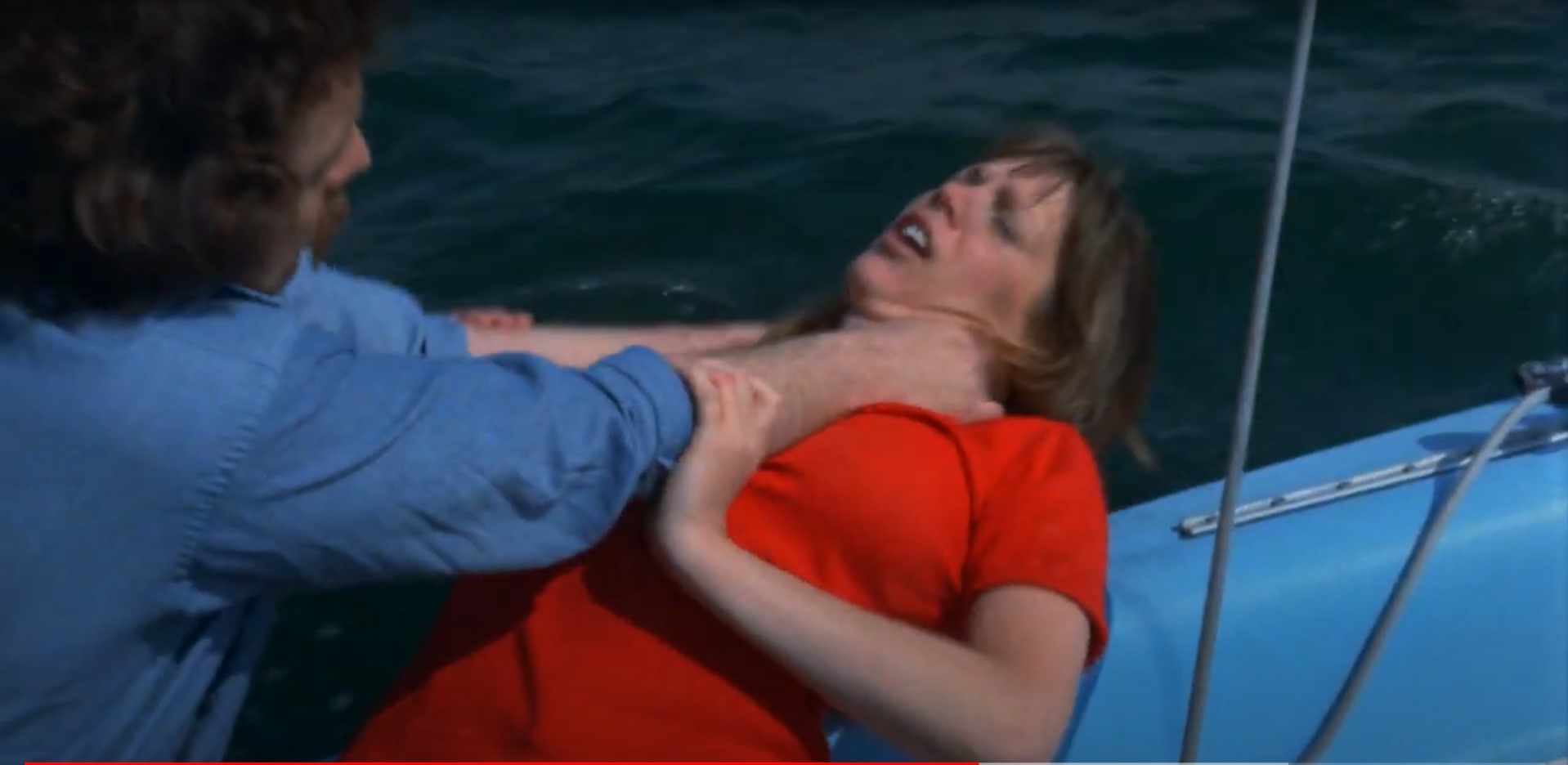
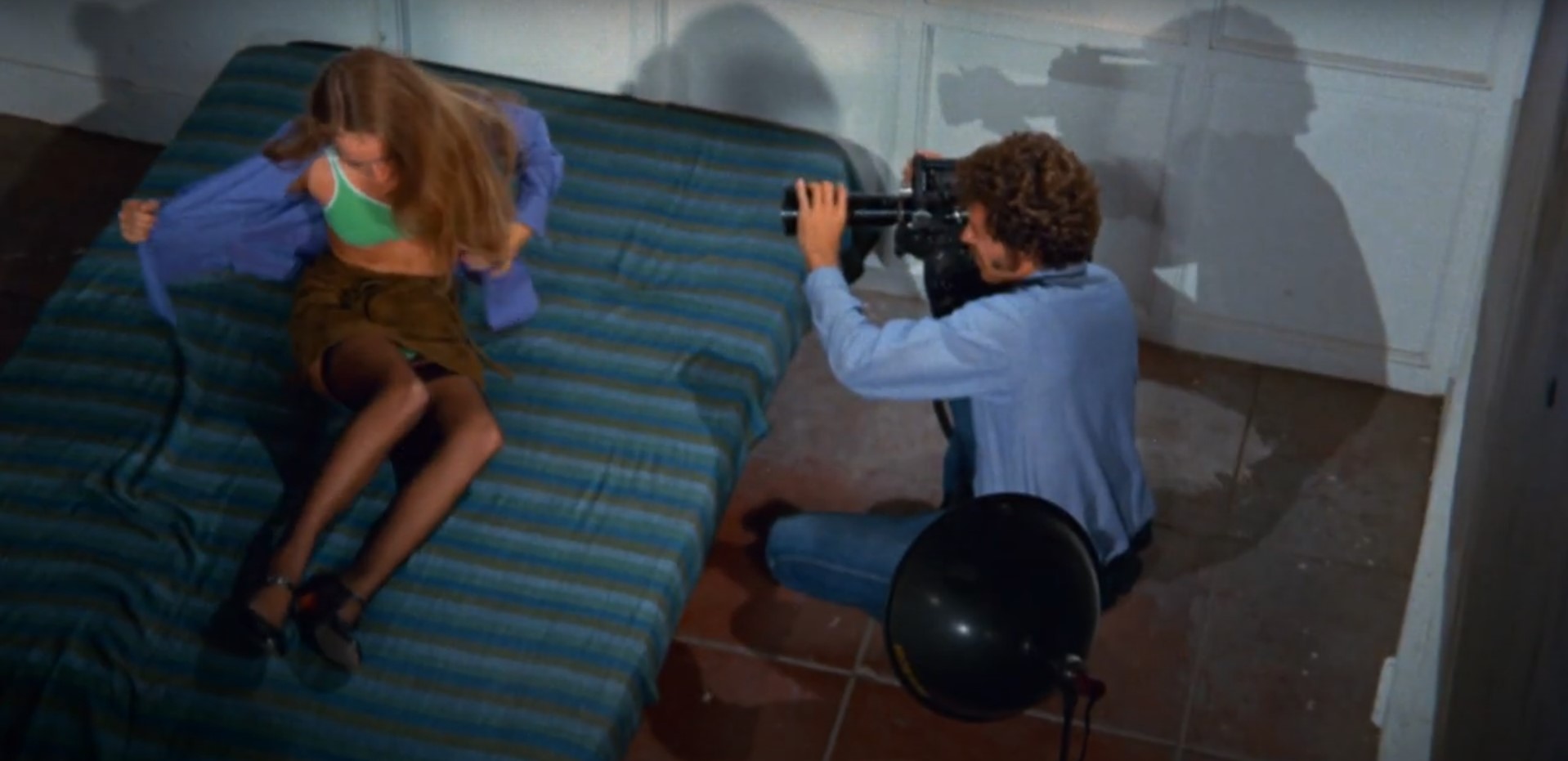
Having moved West from a small Ohio town a few years back, photographer and video cameraman Mark found himself stuck shooting nudie reels for a low-budget porn producer.   A solitary life lends Mark more freedom then most to wonder about and driver around on the streets of Hollywood with ambitions for a legit job of shooting regular material that doesn’t humiliate him.  Troubled about his childhood past involving the death of a younger brother and with his frustrations within his video film capturing vocation, Mark finds himself in the company of young, attractive women who find him easy to talk to and attractive as well, but when Mark reaches a limit, aberrant thoughts take over and he strangles them to death.  When he meets starlet Michele on one of his shoots, Mark believes he’s found the woman for him, one that can relieve the pressures of life and work with nothing more than her beauty.  For Mark’s abnormal mind, love at first sight might not be that easy.

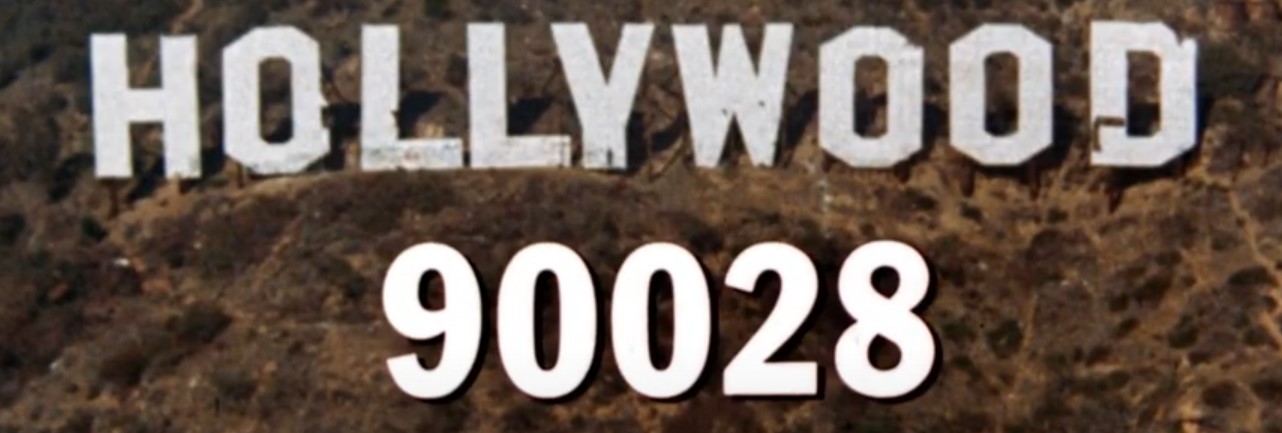
Writer-director Christina Hornisher tackles trauma induced behavior and the Hollywood pull of small-town aspirations chasing dreams in the drama-suspenser character piece of “Hollywood 90028.”  Hornisher’s debut feature film released in 1973 also became her only feature credit as a director who supplied arthouse substance but also embodied a different kind of substance, the grueling confiscation of hope for work, stardom, and love, perhaps even sliding into a bit of escapism, as the bright lights of Hollywood draw the flies to the flame.  Shot on location in and around the Hollywood, Los Angeles area that also had scenes fillmed directly at and underneath of the self-referential hillside Hollywood sign landmark before the iconic, globally recognized attraction had been fenced-off with visitation restrictions post-film in the 1980s and further protected with security systems in the mid-1990s.  Hornisher also self-produced the film which was also known under alternate titles as “The Hollywood Hillside Strangler,” “Twisted Throats,” and “Insanity.” 

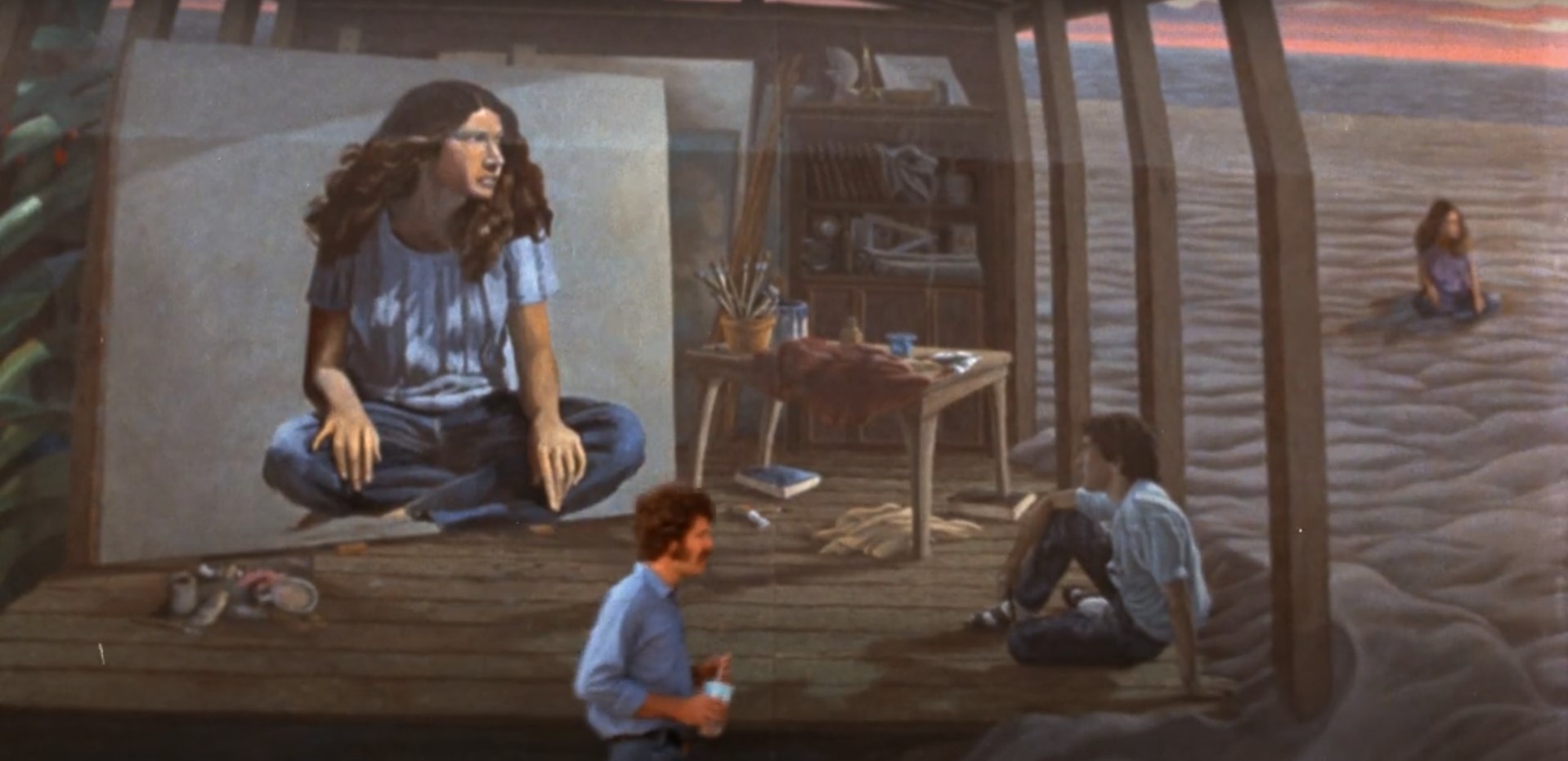
Christopher Augustine, who would also have a part in “The Doll Squad” of the same year, played Mark the calm and restrained pornography cinematographer and editor.  Not as sleazy as his title, Mark’s reserved nature doesn’t stop him from photographing and working diligently on splicing film without completely cutting off from the world but does make him quiet, observant, and intriguing, or so does Michelle thought.  Michelle’s a smalltown girl who moved West to work in the fame industry who soon finds herself being financially forced out of legit paying gigs for more sordid, sleazy work.  Played by Jeannette Dilger, who would actually have a role in the adult film “Young, Hot ‘n Nasty Teenage Cruisers” a few years later, she would spark chemistry with the mustached Augustine that allows their Mark and Michelle to fall in love that isn’t amorously glamorous but has innocent notes of flirtation and a lot of walk-and-talk realism onscreen relationships tend to omit.  Hornisher determines Mark to be the centerpiece of her character study.  Every scene caters to Mark’s interactions with Michelle, his professionalism with sleaze producer Jabol (Dick Glass), and the two other women he meets and eventually strangles.  Where Hornisher isn’t her best is in the building up of Mark’s suppressed sociopathic behavior, stemmed from a brief opening montage of a preteen Mark and his large family that implies his involvement in the accidental death of a younger brother, with ever delicate triggering that doesn’t solidify calling back to his aggressive-resulting trauma.  “Hollywood 90028” cast rounds out with Dianna Huntress, Beverly Walker, Kia Cameron, Ralph Campbell, Melonie Haller and Gayle Davis.

Though her first feature credit, Hornisher had the makings of a competent, auteur filmmaker.  “Hollywood 90028” evaded the conventional narrative structure and one-trick pony photography with more arthouse ambition that saw not only panning and tracking in her cinematic cache, but a stunning and incredibly quick finale zoom out from the Hollywood sign of smooth drone quality but completed in 1973 with a helicopter soaring over the Hollywood district.  Use of spliced-in cells of modeled sex representation as well as sign denotations of the character’s dialogue and thoughts, a kaleidoscope lens utilized during an intimate love scene, and the greater use of off-screen dialogue over on-screen conversating creates a thin layer of psychological realism in contrast to the actual realism between Mark and the rest of the characters.  Mark’s sullen display of emotions throughout the story culminates with his unconscious destructive demise after finally expressing a sliver of elation with Michelle but that’s also when he realizes that his tragic past and present psychosis will never let him go and will destroy anything that tries to replace it.  In one theory, Hornisher might have kept Mark in the same clothes throughout most of the picture to depict a deranged mental image; his constant choice of clothes is a hangup that can’t be let go for sharp-eyed viewers who wish he’d change out of his denim, long-sleeved shirt and denim jeans.  Unlike Mark’s unchanging denim statement, Hollywood in Hornisher’s film is a city captured in time; much like the Hollywood sign had gone from an area of loitering to now protected from the public, the fornicated fleapits and the colorful and character-building structures of Hollywood have long since been razed and rebuilt into the more glamourous, if not still snakebitten, Hollywood you see today. 

Grindhouse Releasing has gone the extra mile in not releasing a standard version of “Hollywood 90028” with standard fare and a rink-a-dink, barely passing muster transfer, but releasing a definitive chef-d’oeuvre of this lost Christina Hornisher film.  The new 4K restoration created from the original 35mm negative makes a statement that they underrated, underappreciated and the underbelly of indie cinema will not be ignored and, instead, be celebrated in retrospect, recoloring, and painstaking supervision in the efforts of all areas of rejuvenation.  The 3-disc, Blu-ray and CD set has an AVC encoded, 1080p high-defintion, 50 gigabyte capacity on the feature disc.  Presented in anamorphic widescreen 1.85:1, the Grindhouse Releasing restoration gives “Hollywood 90028” a fresh coat of paint on a precise saturation spectrum and illuminates details from the limitations of untouched, processed 35mm triacetate.  The original negative appears to have survived the test of time with barely perceptible, thin vertical scratches that were more sporadically sparse than a nagging nuisance.  Grain’s healthy and natural looking in the overlap and the contrasts levels clarify stark delineation and depth, attributing to finer details on textures and skin tones when mostly interior scenes.  Exteriors lose some definition because of the natural lighting and contrast levels typically lower to more create deeper shadows and amalgamation between object and background.  Video bitrate decodes a nice low 30s Mbps. The back cover does not provide explicit specs for the audio but my setup picks up the English language mix as a DTS-HD master audio stereo (the menu setup states mono) is the adequate acquaintance to the visual elements with an ADR dialogue recording, that to note has nothing to do with the release’s presentation, does feel detached in some regard to the visual character temperament despite its well-preserved clarity and projection, but the real star of the audio makeup is the Basil Poledouris (“RoboCop”, “Starship Troopers”), remastered by Jussi Tegelman soundtrack that is a delicate and absorbing mix of piano, wind-instrument, and percussive that reflects Mark’s wondering loneliness and reserved longing as well as introducing jazzier sax and guitar tracks for livelier montage moments.  Suddenly, we’re thrust into string-laden, semi-dark and low-tones for Mark’s buried spiraling. English subtitles are available.  Grindhouse Releasing had some so bonus content they added a second disc with the first containing audio commentaries with film enthusiast Marc E. Heuck, the film’s editor Leon Ortiz-Gil, and cult and porn director Tom DeSimone who attended UCLA with Hornisher, the original, unrestored, X-rated alternate scenes, Christina Hornisher’s experimental 16mm short films, cameraman outtakes, still galleries, radio spots and trailers under the “Hollywood Hillside Stranger,” the “Hollywood 90028” trailer, and the Grindhouse Releasing coming attractions.  The second disc contains retrospective interviews with stars Christopher Augustine, Jeannette Dilger, Gayle Davis, and editor Leon Ortiz-Gil in a near feature length making-of, a theater presentation discussion with Christopher Augustine, and a Tom DeSimone retrospect on Christina “Tina” Hornisher.  The third disc, a soundtrack CD of Basil Poledouris eclectic composition, is 17-tracks deep and comes in a customer sleeve inside the beautifully illustrated and tactile slipbox.  Instead, a slightly larger than normal Blu-ray Amaray case without the Blu-ray logo with the original poster art as primary cover with the new slipbox art on the reverse side.  The Blu-rays set on top of each other, staggered, on the right side while the left houses a 24-page booklet filled with color pictures, poster art, and historical, anecdotal, and analytic context essays from Marc E. Heuck, David Szulkin, Richard Kraft, and Jim VanBebber.  Grindhouse Releasing’s region free “Hollywood 20008” hits retail and online stores November 26th and has an 87-minute runtime under it’s not rated package

Last Rites: Grimy Tinsel Town sets the backdrop and insidiously swirls inside the mind of the forefront encased and bejeweled inside a Grindhouse Releasing special that’ll never have you look at Hollywood the same again.

“Hollywood 90028” 3-Disc Collector’s Edition Can Be Preordered Here!

EVIL, Over a Decade in the Making! “Profane Exhibit” reviewed! (Unearthed Films / Blu-ray)

“The Profane Exhibit” is Finally Here! Come And Get It!

Forged, smelted, and baked from the fiery grounds of hell, 10 stories of bleak and utter horror crimson the soul with blood and pale it with terror.  Ten directors, ten stories, ten obscure unfathomable depictions tell of a draconian religious sister matron with a despotic rule over a child orphanage, a daughter held prisoner by her parents in her own home basement, a cult willing to sacrifice newborns for the sake of their demonic tribute, the Third Reich submitting to extreme measures to keep their ranks pure, a reenactment of a father and son’s unnatural skin-to-skin bonding, a nightclub’s underground bloodletting witchery, and more unnervingly bizarre ballads.  These tales of torment tatter the life force piece-by-piece until there’s nothing left to exhibit, nothing left of one’s humanity, nothing left of being human.  A cruel anthology awaits just beyond the play button, ready to shock, appeal, and maybe even stimulate the perverse, primal nature in us all.   

An anthology a decade in the making or, to be more specific, a decade plus one year in the making in the long awaited “The Profane Exhibit.”  The 10-short film anthology is the brainchild of Amanda Manuel that began principal production in 2013 and finally saw completion and release in 2024 after a slow slog of shoots, edits, and post-production this-and-thats to finally crossover the finish line.  Varying from micro shorts and to average length short films, the anthology employed 10 different in degree genre directors from all over the world to make the mark in what would become a manic syndrome of monsters, mayhem, and molestation.  Yes, we’re talking about some really gross things, some terrifying things, and some other abnormal, abstract, and abysmal things that could be happening right now in your nightmares, or under your nose.  Anthony DiBlasi (“Malum”), Yoshihiro Nishimura (“Tokyo Gore Police”), Uwe Boll (“Bloodrayne”), Marian Dora (“Cannibal”), Ryan Nicholson (“Gutterballs”), Ruggero Deodato (“Cannibal Holocaust”), Michael Todd Schneider (“August Underground’s Mordum”), Nacho Vigalondo (“Timecrimes”), Sergio Stivaletti (“The Wax Mask,”) and Jeremy Kasten (“Attic Expeditions”) helm shorts they’ve either written themselves or by contributing screenwriters Carol Baldacci Carli (“The Evil Inside”) and Paolo Zelati (“Twilight of the Dead,”).  Harbinger Pictures and Unearthed Films, who also premiered it’s at-home release, co-produced the anthology.

Much like the diversity of directors, the cast is also an assortment of aggregated talent that stretches the global gamut.  Popular and classic horror figures like Caroline Williams (“The Texas Chainsaw Massacre 2”) and Clint Howard (“Ice Scream Man”) play the normal couple next door conversating about politics, date night, and work while all the while they’ve locked their daughter away from the world and use her as daddy’s little sex slave in Uwe Boll’s “Basement,” depicting the normal and safe is actually abnormal and danger right in the middle of suburbia.  Others such as the underrated scream queens Monique Parent (“The Witches of Breastwick”) as a fully naked and willing “Goodwife” to her sadistic husband, Mel Heflin (“Queen Dracula Sucks Again”) donning a pig mask, naked by the way, in a rave club along with Tina Krause (“Bloodletting”), Elhi Shiina (“Audition”) and Maki Mizui (“Mutant Girl Squad”) finding happiness amongst death, and notable global genre actors Thomas Goersch (“Voyage to Agatis”) as the German father crippled by his son’s retardation, Dan Ellis (“Gutterballs”) as the hardworking husband who has everything but it all means nihilistically nothing, and Art Ettinger, the editor name and face of Ultra Violent Magazine doing his part with a bit patron part in the nightclub.  Mostly all listed have previously worked with their short film directors previously that denotes a sense of ease and expectation from their performances but that still makes their acts nonetheless shocking.  “The Profane Exhibit” also sees a few newer faces in the conglomerated cast with Christine Ahanotu, Tayler Robinson, Tara Cardinal, Mario Dominick, Witallj Kühne, Valentina Lainati, Josep Seguí Pujol, Dídac Alcaraz, and Stephanie Bertoni showing us what they can dish out disgustingly. 

Was the 11-year wait worth it?  Over the last months years, “The Profane Exhibit” received substantial hype when Unearthed Films announced its home video release, pelting social media with here it comes, get ready for it posts, tweets, and emails and for fans who’ve been following the decade long progress, director Amanda Manuel’s “The Profane Exhibit” does not disappoint as the content storyline harks back to the lump-in-your-throat, gulp-swallowing roots of general discomfort from an Unearthed Films release.  While it may not “Slaughter Vomit Dolls” level gross of upheaved bile and whatever was ingested moments before shooting, the filmmakers go deeper into the viscerally ignorant, ugly truths.  We’re not talking monsters or supernatural entities tearing Hell a new rectum, but “The Profane Exhibit” delineates the sordid nature of the human condition in an egregiously behavioral way that some of these ideas are not so farfetched.  A select few of the filmmakers incorporate surrealism into their shorts, such as with Yoshihiro Nishimura’s aberrant Mary Poppins, known as Hell Chef, replaces a spoon full of sugar with a bowl full of cooked human when turning a frown upside down of a young girl who just killed a man who she suspected tried to rape her.  The Geisha-garbed Hell Chef flies through the air holding up her Wagasa, Japanese umbrella, when her job is done.  Most others are grounded by realism with sadism being the primary culprit – “Basement,” “Goodwife,” and, to an extent, “Sins of the Father” and “Mors of Tabula.”  And then, there are shorts like the late, and great, Ruggaro Deodato’s “The Good Kid’s” that feels hackneyed and unimpressive coming up short amongst the others and makes one think if his name alone awarded the short a spot in Manuel’s lineup. 

In all, “The Profane Exhibit” delicately caters to the indelicate and is a visual instrument of visceral imagery curated for pure shock value. Unearthed Films’ Blu-ray release has finally arrived and is now in our bone-exposed and gory fingertips. The AVC encoded, 1080p high-definition, BD50 allows for dual-layer capacity for not only to squeeze in the 108-minutes’ worth of micro shorts, but allow for extended extras, deserving to fans who’ve waited years for this production to see the light of day.  Like any other anthology, a mishmash of styles but up against each other with the assemblage of different stroke directors and cinematographers but there seems to be no issues with compression, such as banding, blocking, aliasing, or any abundance of blurry noise, in the flexing widescreens aspect ratios of 2.35:1 and 1.78:1.  A good example of Unearthed Films’ codec processing is Deodato’s bridge scene; while I don’t care for the short all that much, the long shots of the bridge are nicely detailed in the nighttime, lit only be the bridge’s powered light poles, creating a downcast of warm yellow along a solid shadow-spotty bridge.  You can see and realize the stoned texture without even using your imagination on how it should look and that tell me there’s not a ton of lossy codec at work here.  An English, Spanish, Italian, and German mix of uncompress PCM 2.0 audio serves as the common output to be as collective and unified as possible.  No issues with hampered dialogue with a clear and focused track.  There dual channel quality is robust and vibrant, living up to Yoshihiro Nishimura’s surreal energy and a commanding Japanese tone while still finding voice prominence in other shorts, if dialogue exist.  Depth is fleeting without the use of a surround mix with an anthology that’s centered around the human condition rather than atmospherics, but I do believe Jeremy Kasten’s Amuse Bouche would have greatly benefited from the distinct gnashing, squirting, and smacking sound elements of a pig being processed to consumption in his wraparound.  English and Spanish subtitles are optionally available. Years of bonus content has been produced and collected for this special release which includes an audio commentary Director Michael Todd Schneider, Producer Amanda Manuel and Ultra Violent Magazine’s Art Ettinger, a world premiere interview with creator Amanda Manuel and short director Michael Todd Schneider at the Buffalo Dreams Fantastic Film Festival, a world premiere Q&A, a 15-minute mini documentary Ten Years Later with “Mors in Tabula” director Marian Dora, an extended short entitled “Awaken Manna” with introduction and discourse, PopHorror’s Tiffany Blem Zoom interviews select directors with Michael Todd Schneider, Uwe Boll, Jeremy Kasten, and showrunner Amanda Manuel, image gallery, and trailer. The 2024 release has a runtime of 110 minutes, is not rated, and is region free.

Last Rites: Worth it. That’s the bottom line for this long-awaited film imbuing with bottom-feeders. Unearthed Films returns to roots with rancidity and fans will find their bloodlust satisfied.

“The Profane Exhibit” is Finally Here! Come And Get It!

Interrogating EVIL Mounts to Hundreds of Deaths. “Confessions of a Serial Killer” reviewed! (Unearthed Films / Blu-ray)

An Unearthed Classic Now Available on Blu-ray! “Confessions of a Serial Killer”

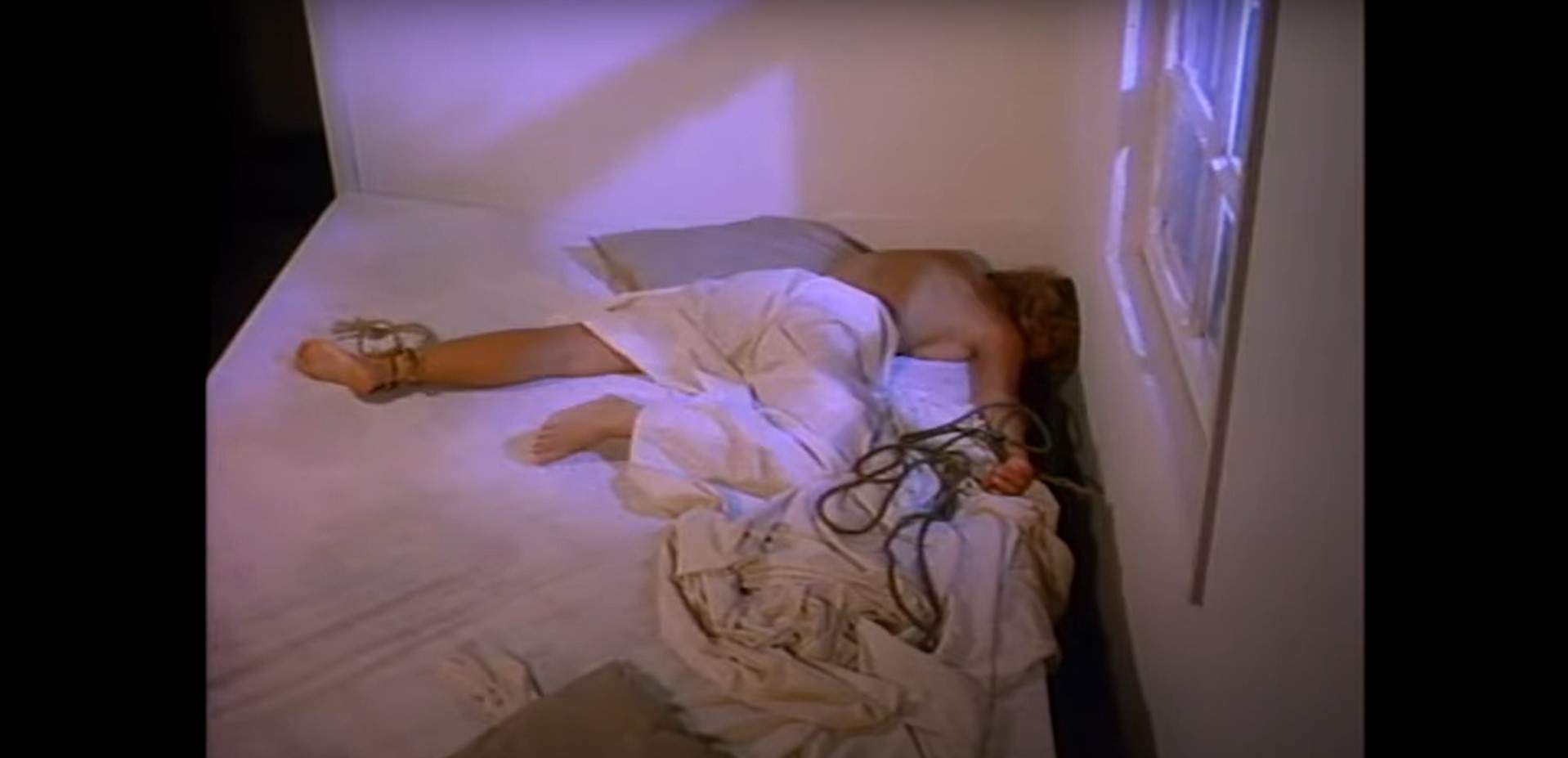
Daniel Ray Hawkins drives an unsettling, nomadic lifestyle as he travels across different parts of the country.  With no money, no place to call home, and little friends, Hawkins lives a life of mostly solitude, odd jobs, and equally as strange as him acquaintances spurred from his childhood, shaped by his promiscuously prostitute mother and a war veteran disabled father who gruesomely took his own life, both of which displaying their iniquities right in front of him.  Hawkins also lives a life of torture and murder, being one of the most prolific American serial killers ever of mostly young women.  When caught by authorities, Hawkins is willing to confess to everything and help unearth bodies from over decades on the road to ensure families he’s stolen from receive some sliver of solace.  His anecdotal accounts of individual disappearances and murders shock authorities to the core, so much so that Hawkins may just be unstable and not telling the truth.  That is until he informs them of and leads them to the cached polaroids and decaying corpses. 

Based on the American serial killer Henry Lee Lucas, who notoriously claims killing over 200 people has earned him a trio of film adaptations, at least, with “Henry:  Portrait of a Serial Killer,” directed by John McNaughton and starring Michael Rooker in the titular role, the subsequent lesser part II, and the more obscurely known Mark Blair written and directed production, “Confession of a Serial Killer.”  Much like “Armageddon” and “Deep Impact,” or “End of Days” and “Stigmata,” both movies fall into the paradoxical twin film phenomena of sharing the same them and having both been released approx. within a year of each other.  While “Henry:  Portrait of a Serial Killer” may have taken the top spot with a bigger budget played in more widespread venues, Blair’s rendition was released prior and closer to Lucas’s active killing spree that saw an end in 1983, just didn’t get released in America until a few years later to not duel with McNaughton’s film and thus didn’t succeed as much.  The Cedarwood Productions film was produced by Cecyle Osgood Rexrode, distributed by Roger Corman and his company, Concorde Pictures. 

While he was not the first choice for the titular character of Daniel Ray Hawkins, production designer, the late Robert A. Burns, filled in the sociopathic shoes with great monotonic conviction.  Burns, who has ties as Art Director and makeup effects on some of the most iconic and seminal genre films, such as “The Texas Chain Saw Massacre,” “The Hills Have Eyes,” and “Tourist Trap,” matches the makings of an unempathetic, unsympathetic, natural born killer with a glazed deadpan austere and matter-a-fact knowledge and every evil committed.  “Confessions of a Serial Killer” would not be as laced with depravity if Burns didn’t push the demented drugs to keep audiences hooked on overdosed deviancy.  Not a tall or broadly muscular stature, curly outstretched and receding hair, scruffily unshaven with a consistent 5 o’clock shadow, and wide rimmed glasses, Daniel Ray Hawkins epitomizes the very essence of a creep and accentuates the behavior even further with his leisurely composure and straight-faced simplicity.  Other side characters exist around Hawkins’ maniacal run with the bisexual Moon Lewton (Dennis Hill) and his sister Molly (Sidney Brammer), who marries the pansexual Hawkins out of necessity rather than sexual desire, and while Moon and Molly share Hawkins deranged apathy, they are completely overshadowed by the more controlling and interesting lead principal character due to half the murderous anecdotes are solo ran and all of the perception in the stories is through Hawkins’ recollection, giving him more power in the trio in perceptional self-interest, if Hawkins is capable of such consciousness.  The cast fleshes out with lawmen and victims in Berkley Garrett, Ollie Handley, DeeDee Norton, Demp Toney, Eleese Lester, Colom L. Keating, and Lainie Frasier in the opening stranded motorist scene that sets up Hawkins diabolical reach in turning a car into a trap. 

Bathed in realism, “Confessions of a Serial Killer” does not embellish with surrealistic temperament.  The story never dives into Hawkins’ head to show any indication or any kind of visual mental degradation or reality breakage toward being a coldblooded killer.  His violence is spartan, acidic, and raw to the bone, leaving a gritty taste in your mouth, with only a bleak childhood to blame for his adult obsessions to kill that he describes as necessary as breathing.  Blair distills the story to a “Mindhunter’” episode in trying to understand the killer and recover skeletons from his past, literally, through rational and respect ways rather than boiler room beatings and power-tripping threats.   Blair’s concept humanizes the inhuman and having Hawkins’s reminiscence each account is like recalling childhood memories with a smirk and fond remembrance splayed across his face adds another layer of iciness.  Grounded by pedestrian scenarios, “Confessions of a Serial Killer” disrupts the routine, the familiar, and the unscripted ways we live our lives unconsciously to the fiends living among us that look like you or me.  It’s a very palpable fear Blair conveys under the semi-biopic film.  The director does eventually let loose the reigns in the final third act with a finale account of Hawkins, Moon, and Molly shacking up with an amiable doctor, his suspicious assistant, and his shapely young daughter that boils to a head when one bad decision leas to another. 

For the first time on Blu-ray anywhere as a part of Unearthed Films’ Unearthed Classics sub-banner, “Confessions of a Serial Killer” receives a high-definition, 1080p release on an AVC encoded, single ring BD25.  Higher contrast and a lesser diffusion to create a harsher, flatter color scheme, the intention is to fully base the story in reality as much as possible, to structure an abrasive look of grain and low lighting that parallels the seediness the tale touts. inspired from the facts of an American serial killer without having to fully give recognition to the actual killer.  Shadows are key to Hawkins nightly runs, adding back-alley value to his viciousness, and the more lighter scenes, such as brighter-by-color interiors or day exteriors, are ample with natural grain that cut into the details but don’t necessarily knock them out entirely.  With the lesser capacity disc, compression doesn’t appear to be an issue with no sign of macroblocking, banding, or posterization. The English language LCPM 2.0 mono possesses lo-fi aspects kept true to the original audio master. The dual-channel conduit amasses the layers mostly in the forefront without ascendancy in the environment, creating a flat approach, rendering the audio mostly fixed and depthless with the action creeping onto the dialogue, but this also adds the realism of a real world chaos where cacophony reigns. William Penn’s effectively, inlaid soundtrack has hallmarks of Wayne Bell and Tobe Hooper’s “Texas Chain Saw Massacre in the minor key with added notes of an otherworldly tune fork keyboard and lingering bass elements that’s just infests with the sounds of deceit and death, reminding me also a lot of a George A. Romero’s “Night of the Living Dead’s” atmospheric arrangement. English SDH are an available option. The collector’s edition contents include a commentary with director Mark Blair, aka John Dwyer, director of photography Layton Blacklock, and actor Sidney Brammer (Molly), The Henry Lee Lucas Story by author and former TV news reporter James Moore, and a full-lengthy documentary Rondo and Bob examines Robert Burns being the foremost expert on uniquely deformed actor Rondo Hatton as well as examines Burns’ own career, a polaroid gallery, promotional gallery, and the trailer. Displaying the iconic poster, a profit from rip of Hannibal Lector with a devilishly masked killer behind bars, Unearthed Films’ releases the stark image onto a planar cardboard slipcover. Same image is used from the standard Blu-ray Amaray case with no reverse side. Disc is pressed with a memorable and anxiety-filled chase scenes. There are no inserts material included. The region A encoded Blu-ray has a runtime of 107 minutes and is unrated.

Last Rites: One of the better biopics on U.S. serial killers even if a little bit of speculation and sensationalism increases the already verbose notoriety of one Henry Lee Lucas. Scary and bleak, “Confessions of a Serial Killer” continues to remind us that no one is safe from the everyday sociopath.

An Unearthed Classic Now Available on Blu-ray! “Confessions of a Serial Killer”

If the Tenants Keep on Dying, Better Get Out of that EVIL High-Rise! “The Case of the Bloody Iris” reviewed! (Celluloid Dreams / 2-Disc Blu-ray and 4K UHD Set)

Own Your 4K and Blu-ray copy of “The Case of the Bloody Iris” today!

A pair of beautiful women are heinously murdered in a respectable high-rise apartment building.  As the case remains unsolved, a real estate architect, Andrea Antinon, is looking for models to market his new property, happening upon models Jennifer Langsburgy and Marilyn Ricci during his photographer friend’s photoshoot, and entices them by offering a sublet of the now vacant apartment in the building where one of the girls was murdered.  Jennifer, who finds herself slowly falling for the Andrea, is stalked by her polyamorous sect past and the group’s leader, her ex-husband, Adam who refuses to let her go and while he proves himself dangerous, attempting to kill Andrea after one of his dates with Jennifer, Adam is found dead in her new apartment.  The suspect pool grows as police are continuing to be baffled by an elusive killer remaining at large and set their sights on Andrea with his brief connections in two of the three victims.  Evidence against Andrea swells as those around Jennifer wind up dead and she’s next on the kill list. 

“The Case of the Bloody Iris,” the Iris represented as the delicately beautiful flower that symbolized the bound between Jennifer and her deranged, sex cult ex-husband Adam, is the 1972 giallo thriller from the prolific spaghetti western, Italian director Giuliano Carnimeo (from the previous “Sartana” series and would later helm “The Exterminators of the Year 3000″) and prolific giallo screenwriter Ernesto Gastaldi (“Your Vice is a Locked Room and Only I Have the Key,” “Torso,”) shot in the city of Genoa doubling as Milan.  Full of eccentric suspects, taboo desires, and handsome principals, “The Cast of the Bloody Iris” is a very attractive, violent, and superbly shot whodunit.  Under the original native title of “Perché quelle strane gocce di sangue sul corpo di Jennifer?” aka “What Are Those Strange Drops of Blood on the Body of Jennifer?” Galassia Films serves as the production company with Luciano Martino (“The Strange Vice of Mrs. Wardh”) having produced the giallo. 

The story floats back-and-forth between a pair of co-headlining stars, one of them being the retrospective cult and sex icon actress Edwige Fenech in one of her earlier performances, and who has starred in “Strip Nude for Your Killer” and “The Strange Vice of Mrs. Wardh.  Co-star George Hamilton also stars in that latter giallo, reteaming the handsome-faced “The Case of the Scorpion’s Tail” actor born in Uruguay, and whose birth name is Jorge Hill Acosta y Lara, with Fenech in their respective roles of model Jennifer and architect Andrea intertwined into what is a romantic tale of love at first sight that becomes mangled by a crazed killer on a murder spree and they’re at the heart of the matter.  If revisiting Giuliano Carnimeo, comedies and watching some of his interviews, you can see why he folds in subtle comedic elements that doesn’t allow “The Case of the Bloody Iris,” or a good chunk of his credits, to be a totally engaged, heart-racing murder mystery; those comedic elements come in the form of bumbling police, a too dead-set on commissioner (Giampiero Albertini, “Commandos”) and his more ungainly assistant (Franco Agostini, “The Sex Machine”), who are always one step behind and in the wrong direction.  The juxtaposition may be too evident yet it’s also welcoming, breaking up the forbidding business with a little levity, and creates a backend sense of assurance knowing police, just like today, can be human and clueless on serious natured instances.  The suspect pool and other salient supporting principals include Paola Quattrini as Jennifer’s roommate Marilyn (no doubt based loosely on Marilyn Monroe), Ben Carra as Jennifer’s sex cultist ex-husband, Jorge Rigaud as the professional violinist neighbor, Annabella Incontrera as the professor’s lesbian daughter, Oreste Lionello as a sleazy photographer, Carla Brait as a nightclub’s dominating femme, and Maria Tedeschi as the unfriendly neighbor.

Even though giallos did not appeal to him nor did they really become a staple of his oeuvre, director Giuliano Carmineo had a different perspective than most and that closely aligns with masterclass filmmakers like Dario Argento.  Carmineo and cinematographer, who’ve collaborated previously on a pair of Sartana westerns, had purpose in their odd and first person camera shots and movements, such as laying the camera down and sideways as characters perform routine events before being attacked or looking up and doing a 360-degree turn as if scanning a stairway, that coincided with the usual first person perspective of the conventionally masked and gloved killer wielding a deadly blade.  The technique engages the viewer, as in a sort of tell that something is about to happen or is amiss in a scene to create breath holding, heightened anxiety, but the multi-faceted narrative itself doesn’t need assistant in keeping viewers glued to the edge of their seats with the eclectic mix of sultry and taboo eroticism, lampooning the authority figures, designed seamless red herrings, unique characters, a variety in murder, and an elaborate, mysterious complexity that’s downright deviant. 

If you’re a distributor looking to shoot your shot on your first release, new boutique physical media label, Celluloid Dreams, hit the bullseye with a 2-disc 4K UHD and Standard Blu-ray release of “The Cast of the Bloody Iris” on a HVEC encoded, 2160p resolution, 100 gigabyte 4K UHD and on an AVC encoded, 1080p, 50 gigabyte Blu-ray, scanned and restored brand new in 4K on a pin-registered Arriscan from the film’s original 2-perf Techniscope camera negative, and presented in the original widescreen aspect ratio of 2.35:1.  Coloring grading and restoration is noted on the interior insert being entirely completed by Celluloid Dreams Studios to remove all the celluloid and age imperfections and stimulate a vivid, vibrant picture quality and, by the giallo-Gods, this has to be one of the more flawless image presentations I’ve seen on 4K and Blu-ray in a very long time, or ever!  Meticulous precision techniques reveal a straight from-farm-to-table quality, organic for its era with a balanced, natural grain and color saturation.   Details have delineated trim and higher contrast leveling where appropriate for darker scenes, such as an unilluminated bedroom or a basement boiler room, that retains the rich inkiness of the negative space.  No signs of compression issues in the negative spaces as well and no signs of unnecessary enhancing.  Two, lossless audio options are available for selection:  an Italian 1.0 DTS-HD and an English 1.0 DTS-HD.  Both remastered tracks from the optical sound negative provided full fidelity through the single channel.  Concise and crisp dialogue renders through in full, robust effect with ample detail in the ambience and depth to create a dynamic space.  No hissing, crackling, or popping in the ADR dialogue or ambient tracks and swanky tuned by Bruno Nicolai’s multi-instrumental base, drum, sintir-like guitar, and more score.  English subtitles are available on the Italian track.  With the larger capacity on the UHD, both formats are able to handle the included three featurettes with star George Hilton, principal actress Paola Quattrini, and director and writer, Guliano Carnimeo and Ernesto Gastaldi in Italian language.  Also included is a new commentary track from film critic and Celluloid Dreams co-founder Guido Henkel, an outtake reel that extend out certain scenes, photo gallery, the original Italian Opening Credits that beginning of the feature, and Italian and English theatrical trailers. Inside a dual-sided cardboard slipcover with both the feature’s baptized titles and illustrated cover art representation of Edwige Fenech, the black 4K UHD Amaray case possesses a second and more fleshy-erotic illustration of Fenech. The same art and arrangement are on the reverse side but with the Italian title. Each disc is housed on either side of the interior snapped firmly on a press-lock on with a release acknowledgements and an advert for their next physical feature, “La Tarantola Dal Ventre Nero” aka “Black Belly of the Tarantula.” The region A playback release has a runtime of 94 and is not rated.

Last Rites: Showing such diligence in the restoration efforts, Celluloid Dreams is the new kid on the block, the promising young boutique label with the Midas touch, with a killer first presentation in “The Case of the Bloody Iris.” We can’t wait to see more!

Own Your 4K and Blu-ray copy of “The Case of the Bloody Iris” today!

Classic Sequel Gets a Lenticularly EVIL! “Halloween II” reviewed! (Via Vision / Limited Edition Blu-ray)

“Halloween II” Limited Edition Blu-ray + 6 Photo Lobby Cards! Order here!

The horrific Halloween night massacre in Haddonfield where a masked escaped mental patient named Michael Myers murdered the close friends of Laurie Strode has not yet ended.  Hurt and in shock after narrowly escape Michael’s relentless pursuit, Laurie is rushed to Haddonfield Memorial Hospital to receive treatment from a skeleton shift while Dr. Loomis, who shot Michael six times, continues his hunt for the hard-to-catch, hard-to-kill killer.  Frantic about the evil inside his former patient, Dr. Loomis will not stop at nothing to track him down with police assistant and try to puzzle together just why Michael had returned to his hometown in the first place.  As Laurie recovers from her injuries and copes with her friends’ deaths, The Shape arrives at the hospital, continuing his emotionless killing spree of hospital staff in order to get to Laurie, and with nowhere to run, Laurie’s only hope is in the hands of a determined Dr. Loomis. 

Picking up where the highly successful independent horror, John Carpenter’s “Halloween,” that changed the slasher genre to what we know it as today, “Halloween II” provides more illumination on The Shape, Laurie, and shuts the door on the significant open-ended and fear-inducing mystery at the finale of Carpenter’s masterpiece.   The 1981 sequel, released three years after the first film, was not helmed by Carpenter whose success skyrocketed post-“Halloween.”  Instead, Carpenter and creative producer Debra Hill agreed to the executive producer title with some creative control in penning the script that would be a what-happens-immediately-next continuation with newcomer Rick Rosenthal sitting in the director’s chair.  The director who would helm later the follow year’s “Bad Boys” with Sean Penn had a goal to retain the same Carpenter stylistic choices to make the sequel seemingly seamless.  Alongside Carpenter and Hill in the melting pot of producers, the more narratively opinionated Moustapha Akkad and Dino De Laurentiis served as executive producers along with Joseph Wolf (“A Nightmare on Elm Street”) and Irwin Yablans (“Tourist Trap”) in what became a coproduction between Universal Studios and Dino De Laurentiis’s production company.

“Halloween” converted the then unknown Jamie Lee Curtis into a couple of things.  She instantly became a household name that at the same time also made Laurie Strode a household icon.  Curtis also became what was a relatively new coined term at the time of a scream queen, propelling her career in the horror genre with “Halloween” subsequent films such as “The Fog,” “Prom Night,” “Terror Train” and, of course, the more recent titular television series “Scream Queens” and the contemporary “Halloween” sequels.  What also emerged post Lee’s performance is the actress was eager for the role and effortless to work with making the 23-year-old daughter of Janet Leigh and Tony Curtis a treat to work with, malleable toward her role, and enthusiastic about returning as Laurie Strode for the sequel.  Curtis falls right back into the role as if filming didn’t stop rolling with Strode in a confounding state of shock and injury from her the relatively short scuffle with Michael Myers until Dr. Loomis intervenes with six gunshots into The Shape at the key and climatic moment, saving Strode from being strangled.  The difference in the sequel is Curtis’s instilled knowledge for her frightened character.  It’s that kind of touch that doesn’t hesitate to react to a force of evil.  Returning as Dr. Loomis, and again as if he never stopped performing as the paranoid and fervent good psychiatric doctor, is the iconic and late Donald Pleasence tracking down his former patient with trench coat sagacity, an understanding that no one else shares except for maybe Myers’ ultimate prey, Laurie Strode.  A new cast of relegated kill fodder magnifies part two’s grislier death count with Lance Guest (“Jaws: The Revenge”), Pamela Susan Shoop (“The One Man Jury”), Leo Rossi (“Maniac Cop 2”), Tawny Moyer (“Looker”), Ana Alicia (“Romero”), Gloria Gifford (“Virgin Paradise’), Hunter Von Leer (“Trancers III”), Cliff Emmich (“Hellhole”), Ford Rainey (“The Cellar”), and Dick Warlock putting on the mask as The Shape with Charles Cyphers and Nancy Stephens returning in their respective roles as Sheriff Brackett and Marion Chambers.

What new can be said about “Halloween II” that hasn’t been already said?  Dichotomously, “Halloween” and its sequel share a single narrative that emanates the same stylistic tone; however, both films couldn’t be more different in their surface level and underlying intentions and that gnaws raggedly on the connective tissue that binds them.  Carpenter’s original embraces the mystery enshrouding Michael Myers motivations with a merciless, yet nearly bloodless, killing spree of horny hopped-up teenagers who wiggle themselves out of responsibility for a little trick-or-treat fun under the sheets or for just being alone in their house.  Myers unneeded and unheeded explanation formed The Shape as evil personified, an incarnate force compelled to return home where the light switch was flipped to an expressionless compassion for human life.  Rosenthal’s part two subverted the unknown by providing Michael reason and that reason being Laurie Strode, anyone else who gets in his way, could foil his plans, or are just in the vicinity of the hunt are eliminated with extreme prejudice, and that leads into the ramped-up gore with large pools of blood and other gratuitous displays of damage to unsuspecting soon-to-be stiffs.  Despite the different strokes, the sequel is not bad by a longshot.  In fact, “Halloween II” is just an extension spiraling in intensity and terror, a product of its time when everyone and their brother had directed gore-ladened slashers during the steep beginnings of the slasher renaissance. 

Though a many number of “Halloween II” video media exists between the current formats, the collaboration of Via Vision and Lionsgate release from Australia is beyond reproach for any kind of transfer print woes, lackluster bonus features, and drab packaging.  The limited edition and numbered 2-Dsic Blu-ray set is a physical media thing of beauty with an AVC encoded, full high-definition 1080p, BD50 on both discs.  Disc one houses the theatrical cut of film, presented in a widescreen 2.35:1 aspect ratio, from pristine print, likely the original negative licensed through Universal Pictures for this very release, with the Via Vision caveat of every effort has been made to produce the highest quality on the back cover.  Not a single reason comes to mind on that statement being false as the Dean Cundey’s cinematography retains an undiluted facsimile of the original “Halloween,” represented here with phenomenally suitable contrast that can presumably hide Micheal Myers in every shadow and create the apprehension in every darkly lit scene with minimal key lighting in various, sometimes neon, shades of red, yellow, and white.  The 35mm film grain has a pleasant consistency of a low-to-medium low visual viscosity that never reaches levels of blotting out picture quality, presenting no issues with zoomed in images or any other touchup enhancements to note for that matter.  Perceptible details sanction The Shape’s tactile and weathered look of a rough night in Haddonfield.  Colorfully warranted scenes, such as the Nurse Alves on a gurney in the middle of a pool of her blood, are robust to display the carnage whereas other, more minimalistic approaches detail just enough for the imagination to take over.  Disc two contains the standard-definition, upscaled to 1080p, television cut of the film, presented in a made-for-TV 1.33:1 aspect ratio, that omits some of the gorier moments, suitable for broadcast viewers.  Audio options include two lossless English language selections with a DTS-HD Master Audio 5.1 and a DTS-HD Master Audio 2.0.  The audio codec distributes punchier ambiences of Myers’s rhythmic breathing through the mask, the jarring alert of a hospital room buzzer, and the impactful moments of Myers slamming his fist-loaded weapon into the skull, back, and….a pillow with the cringe-worthy associated crunch and thud.  No impediments on the dialogue track that’s free of crackling, hissing, and popping and is consistently prominent and mixed well within more chaotic, milieu-mania scenes, such as with the finale with hissing air tanks and scalpel swoops.  Optional English subtitles are available.  Special features are consolidated to the theatrical cut disc only with Shout Factory’s inaugurated 2012 documentaries – The Nightmare Isn’t Over:  The Making of Halloween II and Horror’s Hallowed Grounds:  The Locations of Halloween II – featuring cast and crew interviews with director Dean Cundey, Tommy Lee Wallace, Dick warlock, Leo Rossi, and more as well as visiting locations in a modern time with host Sean Clark, and two commentaries featuring director Rick Rosenthal and Leo Rossi in one and stunt man/The Shape Dick Warlock in the other.  There’s a brand new 2024 commentary with author Dustin McNeill, co-author of Taking Shape:  Developing Halloween from Script to Scream.  The encoded features round out with the alternate ending with more explanation on the fate of a certain left ambiguous character, deleted scenes, a theatrical trailer, TV and radio spots, and a still gallery.  What makes the Via Vision a limited, numbered set is the neat package and physical goodies inside.  The rigid lenticular cardboard sleeve of the skull pumpkin has eyes that follow you at every angle.  Inside is a slightly thicker Blu-ray Amaray casing with reversible cover art displaying notable stills from the feature.  The extra disc, disc 1 likely, is in a clear push-lock, page-turner disc holder.  Six photo lobby cards featuring stills from the movie come alongside the Blu-ray.  Via Vision’s release has a region B playback encoding, a runtime of 93 minutes on both cuts, and rated R.

Last Rites: Michael Myers has been slashing away in the cinema for nearly half a century and “Halloween II” has been a staple entry that, to this day, is a memorable fan-favorite in the grand scheme of most of the franchise’s sequels. Via Vision’s limited edition, lenticular Blu-ray packaging just sweetens the deal with a crystal clear and top-tier quality release worthy in any physical media collection.

“Halloween II” Limited Edition Blu-ray + 6 Photo Lobby Cards! Order here!