Not a Plague of Rats Could Stop EVIL’s Obsession. “Nosferatu” reviewed! (Universal Films / Extended Cut Blu-ray)

Experience “Nosferatu” in 4K UHD or Blu-ray. Purchase Here!

Wisborg, Germany, 1838 – Thomas Hutter is a promising real estate apprentice appointed travel six weeks to the Carpathian Alps to settle on Wisborg real estate for the reclusive and mysterious Count Orlok.  Thomas Hutter is also a newlywed, married to the lovely Ellen Hutter whom together Thomas plans to solidify their proper social status with the wealth of this trip away from his wife despite her pleas for him to stay.  Upon meeting Count Orlok in his dark castle, Thomas is overcome by his host’s undying evil presence that confines him to the grounds while Orlok psychically holds spellbound Ellen’s mind to a fretful state.  When Thomas escapes, he makes it back home at the same time Orlok arrives by ship that brings a plague of rats to the city of Wiseborg as well as a nasty blood-loss disease affecting population.  As Thomas warns of Orlok’s intentions, discredited Prof. Albin Eberhart von Franz knowledge of the occult sees through the rat-plague and into the dark heart that has cast its shadow over the city and into Ellen Hutter’s soul.   

The acclaimed folkloric horror director of “The Witch” and “The Lighthouse” sinks his teeth into one of the most renowned classical villains of our time, a vampire known to most as Dracula and revised, at times, up to the Robert Eggers take on the timeless “Nosferatu” tale.  Eggers’s 2024 adaptation of Bram Stoker’s novel and the 1922 F.W. Murnau silent picture, “Nosferatu:  A Symphony of Horror,” written by Henrik Galeen, is also penned by the director, revamped to tell both classic narratives in a way that is his own and that’s reflective of his slow burn gothic dread style.  “Nosferatu” is a Focus Features presentation from the productions of Birch Hill Road Entertainment and Studio 8 as well as produced by Eggers alongside the industry esteemed Chris Columbus (“Home Alone,” “Harry Potter”) and daughter Eleanor Columbus under their Maiden Voyage Pictures co-founded company.

Stepping into the tall, slender, blood slurping role of the titular character, under a full-body prosthetic suit of what is essentially a rotting corpse with a wicked mustache, is Bill Skarsgård, the actor who is quickly rising to the top of heavy makeup and effects characters while making the star-studded Skarsgård name synonymous with horror in his breakout film playing the maniacal demon-clown Pennywise in the film remake adaptation of Stephen King’s “It.”  Skarsgård’s baby face is completely enveloped in the ancient Transylvania nobleman Count Orlok with a high-bridge nose, protruding and high cheekbones, a vertically elongated face, and a sparse hair straggling through presumably a latex mock of decaying skin.  Skarsgård also modulates his vocal chords to reach deep, resonating levels that gives Count Orlok an additional tier of terror.  Undoubtedly, Count Orlok is an omnipotent, powerfully entrenched presence brought to existence by Skarsgård and accentuated and elevated even further by Lily-Rose Depp in Orlok’s obsessive muse of Ellen Hutter.  Through choreographed body manipulation and control, the daughter of Johnny Depp has since put the gum-chewing, wise-cracking, convenient story clerk “Yoga Hosers” role behind to redefine herself as an austere period and physical role actress willing to go the extra mile for the story.  Nicholas Hoult (“Warm Bodies,” “Mad Max:  Fury Road”) updates his Dracula film resume with another after having just come off the heels of playing the titular character in “Renfield” to Nicholas Cage’s grotesquely campy version of the Prince of Darkness, but there’s nothing intentionally campy about this Stoker story nor his role as Thomas Hutter with first-hand experience of Count Orlok’s monstrous dysphoric plague in what would be, too, another physical, yet less so, role for Hoult as a concerned husband fighting for his wife.  Speaking of roles, or films, that come around again for certain actors, Willem Dafoe passes the torch of Count Orlok from his Max Schreck performance in “Shadow of a Vampire” and takes on the elder Professor von Franz, a once esteemed learned man of science and knowledge now a discredited scientific explorer of the occult brought in to see to Ellen Hutter’s feverish nightmares and hallucinations.  Dafoe’s just as spasmodic and expressive as ever to be a part of those knowledgeable opposition of the vampyr realm, giving prominence to the character Dafoe has bordering as a mad genius of sorts with eccentric behavior that never allows to be compassionate or otherwise emotionally driven, like a true scientist.  Principal cast rounds out with Aaron Taylor-Johnson (“Kickass”), Ralph Ineson (“The Witch”), Emma Corrin (“Deadpool & Wolverine”), and Simon McBurney (“The Conjuring 2”).

As much as Eggers wanted to make “Nosferatu” a scary film while staying to the themes of obsession and Stoker and Munrau’s core elements, the film only manages to scare up a couple of true moments of hold-your-breath terror with panning shots and swelling scores that composition a seat jumping jolt.  Like most of Egger’s previous work, a continuous course of dread, which the filmmaker produces well in droves, meanderingly streams through the narrative that slowly builds with each closing in step Count Orlok takes toward obtaining Ellen Hutter’s willing submission to him.  Between the 1922 and 2024, both films play the love-triangle card of a married couple’s happiness being compromised by a tall and dark outsider entrancing, enthralling the wife, diverting her loyalty by any means possible.  In this case, those means are to blackmail her by holding the city hostage to plague of rats and draining her of the loved ones surrounding her.  However, the genesis of Orlok’s obsession is built upon brittle sticks with a prologue that hamstrings a powerful, psychic ability unwittingly used by Ellen Hutter to awaken the ancient evil.  The whole origin of events feels threadlike and happenstance, perhaps to instill more mysterioso of the antediluvian universe on a smaller scale obsession story.   Aesthetically, “Nosferatu” follows the Robert Eggers’ cinematography trend of blacks, grays, and a reduction to dull of primary colors for a gloomy period piece of cold weathered melancholy and bleakness under the continuous collaboration camerawork eye of Jarin Blaschke, marking their fourth feature together that implements inventive, complicated shots to sell practicality as fantasy in an early 19th century European context.  Blaschke’s aesthetic style would not have worked without the makeup and prosthetics for Count Orlok as a decrepit evil nobleman juxtaposed against the period costuming and elevated higher by the massive set designs of creating the Wisborg city as well as all of the other sets built to scale on acres of movie lot land. 

Robert Eggers and “Nosferatu” is the match made in dark heaven to give that classical rebirth the kick in the Dracula cape it desperately needed for Universal.  The at-home, Blu-ray release brings the darkness into living room television sets and other media players with an AVC encoded, 1080p high-definition, BD50.  Eggers is also so fine and particular on detail, such as with all the production value listed above and the retro design company opening credits, “Nosferatu” is also presented in a European widescreen 1.66:1 aspect ratio used in antiquated times of the 60s to early 90s in Europe, to which this story is fictionally set.  The Universal Films release houses both the theatrical version and extended cut at their respective runtimes of 132 minutes and 136 minutes, which is pretty incredible being both versions compressed onto one disc and, in the same breadth, had me concerned for artefacts in what’s surely a beautifully dark and tenebrous veneered Egger feature.  However, low and behold, no signs of posterization or banding to speak of with a saturated void to keep the shadows menacing rather than murky or milky.  The overall grading is quite dark with a deep bluish hue that enriches the time piece as well as the gothic tones.  The unnatural density of color saturation leaves natural skin tones to sake of reality, but the details do emerge here and there when shadow play, mostly around the presence of Count Orlok, is abridged for quotidian life without the encroaching dread of supernatural omnipotence.  Both formats are encoded with lossy audio mixes, a quite of a bit of them actually, with an English Dolby Atmos, Spanish Dolby Digital Plus 7.1, a French Dolby Digital Plus 7.1, and, lastly, an English Dolby Virtual Speaker (DVS) 2.0.  The Dolby Atmos is tuned for a 7.1 configuration, emitting immersive and resonating sound to which “Nosferatu” laps up in luxury.  The most notable aspect of the entire design goes, without question, to Skarsgård voice modulation for Count Orlock, a deep, guttural, European-accented assertion of all-encompassing faculty highlighted in every scene when, even more so when Orlock is not physically in frame.  I like to think Robert Eggers is the Wes Anderson of horror when it comes to dialogue and entourage of ensemble casts and with dialogue range and depth that’s dynamic to flow with the ever-presence of physical change or to swell or diminish a moment.  Dialogue is also stable, clear, and without dodgy interference, the spatial environment diffuses and disperses nicely through side, back, and even upper channels in Atmos and, the illusion provided, in DVS, and LFE finds a proper level without overwhelming cataclysmic plagues, fever dreams, or Orlok’s dreadful lust.  Opted subtitles are available in English SDH, Spanish, and French.  Bonus content includes a feature length parallel commentary with writer-director Robert Eggers, a lengthy behind-the-scenes featurette with interviews from cast and crew, and deleted scenes that can be seen in the extended cut.  The Blu-ray, plus digital code, release comes with white-black and grayscale in between cardboard O-slip with the same Lily-Depp Rose’s face being caressed by Orlok’s sharp-nailed and decrepit hand image also as the cover art on the Amaray case.  Inside, you’ll find the digital code stage right while the disc is pressed like most of all of Universal’s home video Blu’s with a near translucent quality to them.  Theatrical cut is rated R for bloody/violent content, graphic nudity and some sexual content and the extended cut comes not rated.  Though not listed anywhere on the cover or disc, the Blu-ray is encoded with region A playback only.

Last Rites: Robert Eggers shoots his shot working his dream story under a major Hollywood studio providing him with a major Hollywood sized budget. “Nosferatu” is every bit of Eggers, carved out and etched to the gothic and folkloric perfection that has quickly skyrocketed his brief career and the eclectic cast stuns in their own right with otherworldly and creepy performances that revives ole’ Count Orlok back to from the celluloid dead.

Experience “Nosferatu” in 4K UHD or Blu-ray. Purchase Here!

A Memory Fuels EVIL’s Sexualized Resurrection. “Scream of the Blind Dead” reviewed! (Full Moon Features / DVD)

“Scream of the Blind Dead” Now on DVD!

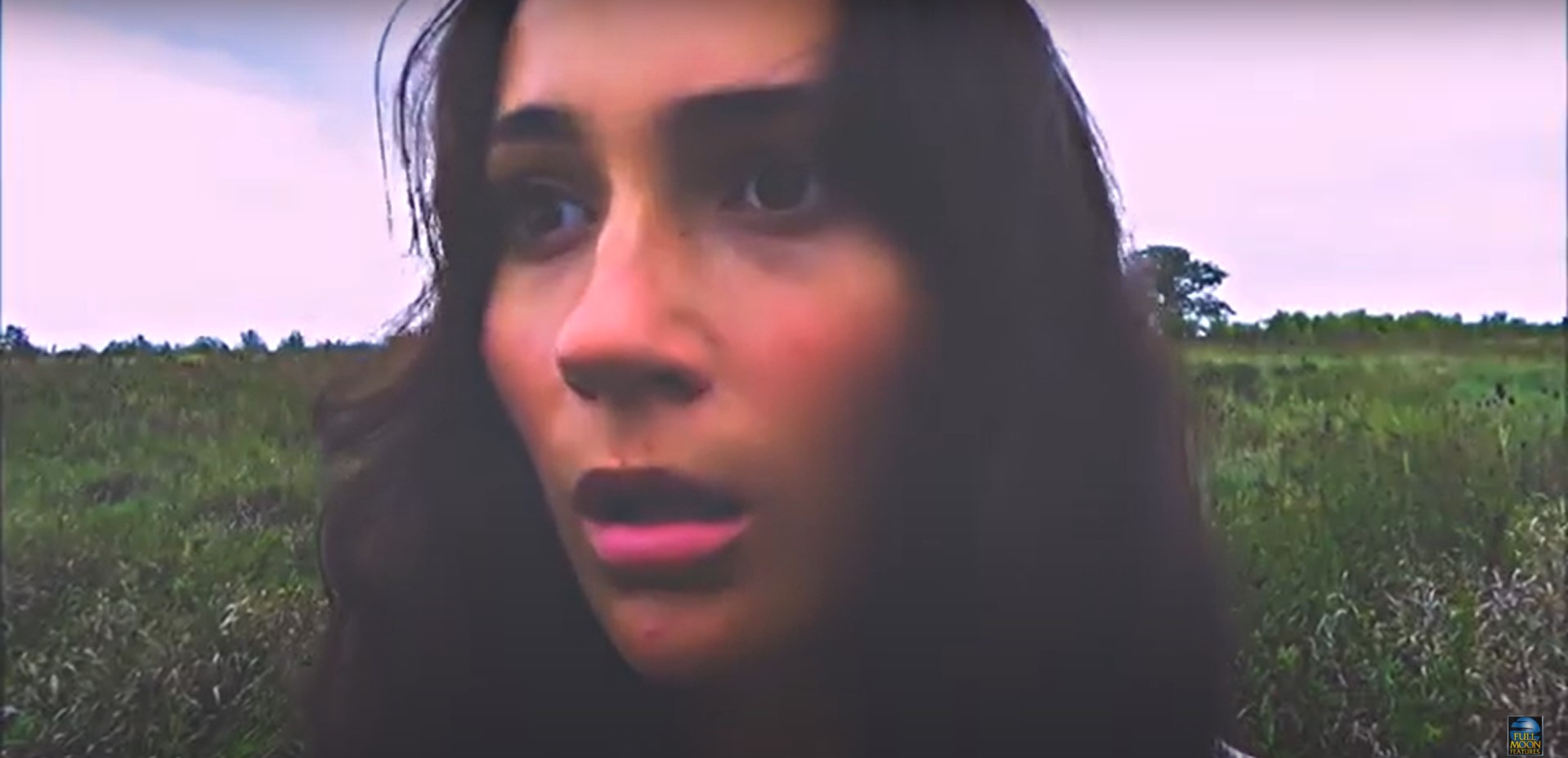
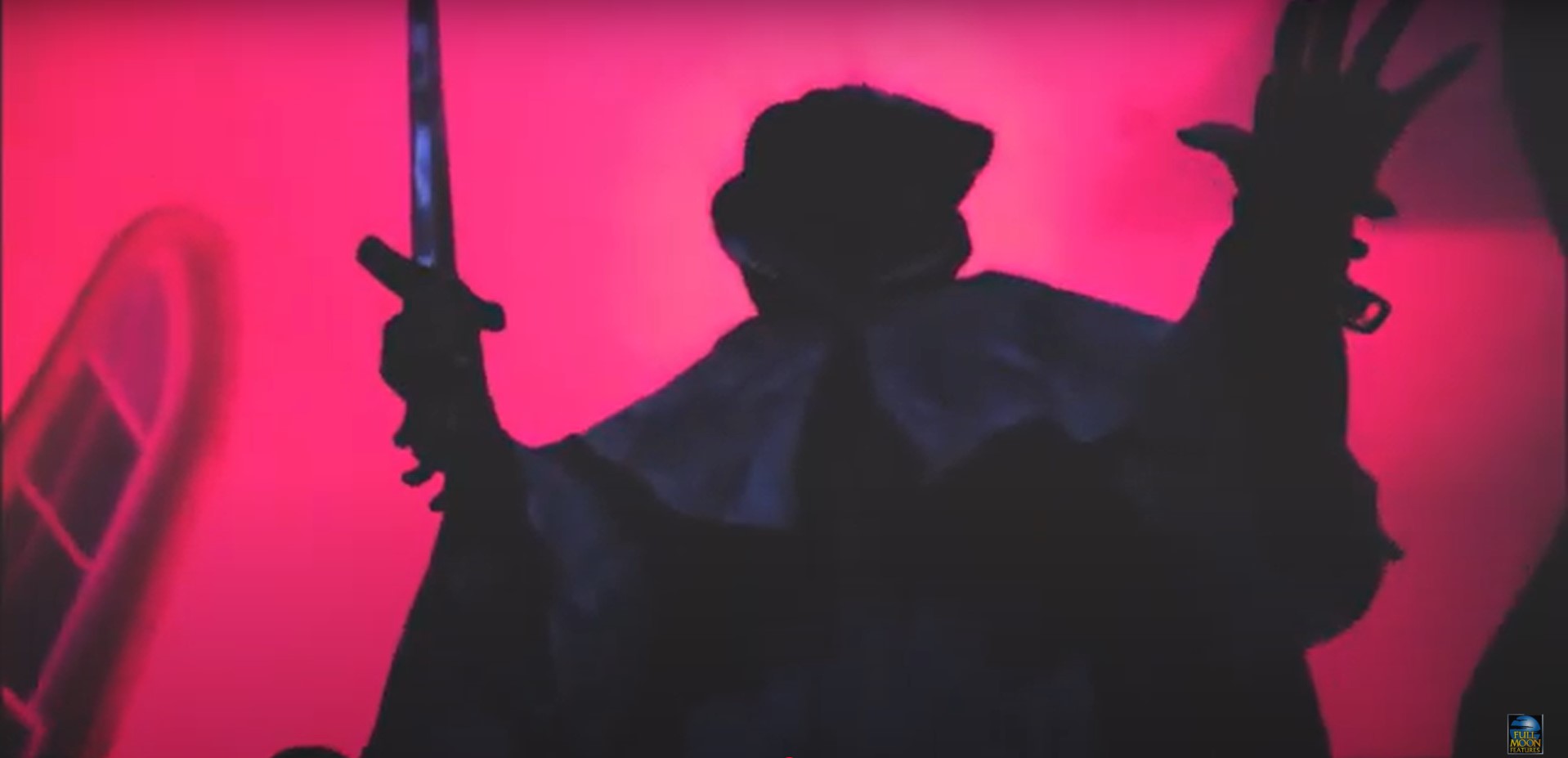
Arriving by train to the deserted, medieval ruins of a once great 14th century town, a woman wanders aimlessly through the dilapidated structures left standing and eventually finding a peaceful resting spot on a church pew before the Holy Trinity.  Alone with her amorous thoughts for another woman, her very presence stirs the awakening a blind undead corpse out from the slumbering, Earthly tomb, the resting place of a once righteous Templar knight of a prestigious order once assigned to protect Christian values with sword and shield but disbanded and accused of occult heresy.  Being chased from dark corner to dark corner inside the ruins’ isolated, labyrinth wall, the woman narrowly escapes the relentless knight’s bloodlust blade.  She is not only frightened by the razor-sharp sword of the ghostly, ghastly figure, a dirtily shrouded, mummified corpse, but what evokes within her, her own dark, secretive past of love, murder, and vengeance, will haunt her to death.  

Director Chris Alexander has settled himself in the realm of the homage.  The Canadian filmmaker is well-known for his tribute films toward specific directors and trope styles within the creepshow genre that allow him to express his own artistic take on a classic.  “Scream of the Blind Dead” is Alexander’s latest to follow suit based off the original concept and characters by Amando de Ossorio and the Spanish director’s Blind Dead series, beginning with “Tombs of the Blind Dead” in 1972 which is the featured inspiration of Alexander’s short remake film.  The 2021 homage is penned by the “Girl with a Straight Razor” director but is also progresses forward without dialogue in what is like a music video for Ossorio’s original film, slimmed down to the principal character and one blind undead knight for much of the story.   Alexander created Delirium Films, a Full Moon sublabel to release his own productions under, conjoining the once Fangoria editor to the hip of Charles Band, as coproducer, to stretch the imagination of terror even further.  Kevin Cormier and Cheryl Singleton also coproduce the short.

You won’t see a herd of horses or a horde of blind, rotting knights on horseback in the “Scream of the Blind Dead” nor will you there be a collective degree of humans fighting for against the dead for their very lives.  Instead, two women and one knight consist of the entire cast, pared down to the two chief female characters Betty and Virginia, though they’re not explicitly named in the story, but the gist of designation is there.  Betty is played by Ali Chappell, a mainstay regular in many of Chris Alexander directorial repertoire, having roles in “Necropolis:  Legion,” “Girl with a Straight Razor,” and “It Knows Your Alone” while also being quite the scream queen in other horror projects from the 2019 anthological “The Final Ride” to last year’s “Malediction” which she debuted as a director as well.  As Betty, the short-lived role sets the dark synth soundtrack-driven tone lengthened by use of slow-motion and additional edits to build suspense and does harp back to the premise and spirt of Ossorio’s brand of Spanish horror.  Not as seasoned as Chappell in credits, the casting of Virginia goes to Stephanie Delorme, a brunette in contrast to Chappell’s blonder shade, who finds herself being chased, melodramatically I might add, by an undead knight.  Delorme’s frightful face and lumbering getaway cadence have the hallmarks of a good final victim being pursued on common horror of past, present, and future but her direction to stop and stare, almost waiting in frozen terror, is reminiscent of yore when the act of escape is negated by the sheer shock.  These are the moments audiences yell at the screen, pleading for movement, to do something other than just stand there and gape at the monster before them.  Chasing Virginia is no ordinary templar knight but a female templar knight, played by all-things-horror enthusiast, musician, and another of Alexander’s on-screen regulars Thea Faulds, under her showbiz name of Thea Munster.  Munster dons two parts connected by death as Virginia’s lover in flashback and the ghoulish knight chasing Virginia. 

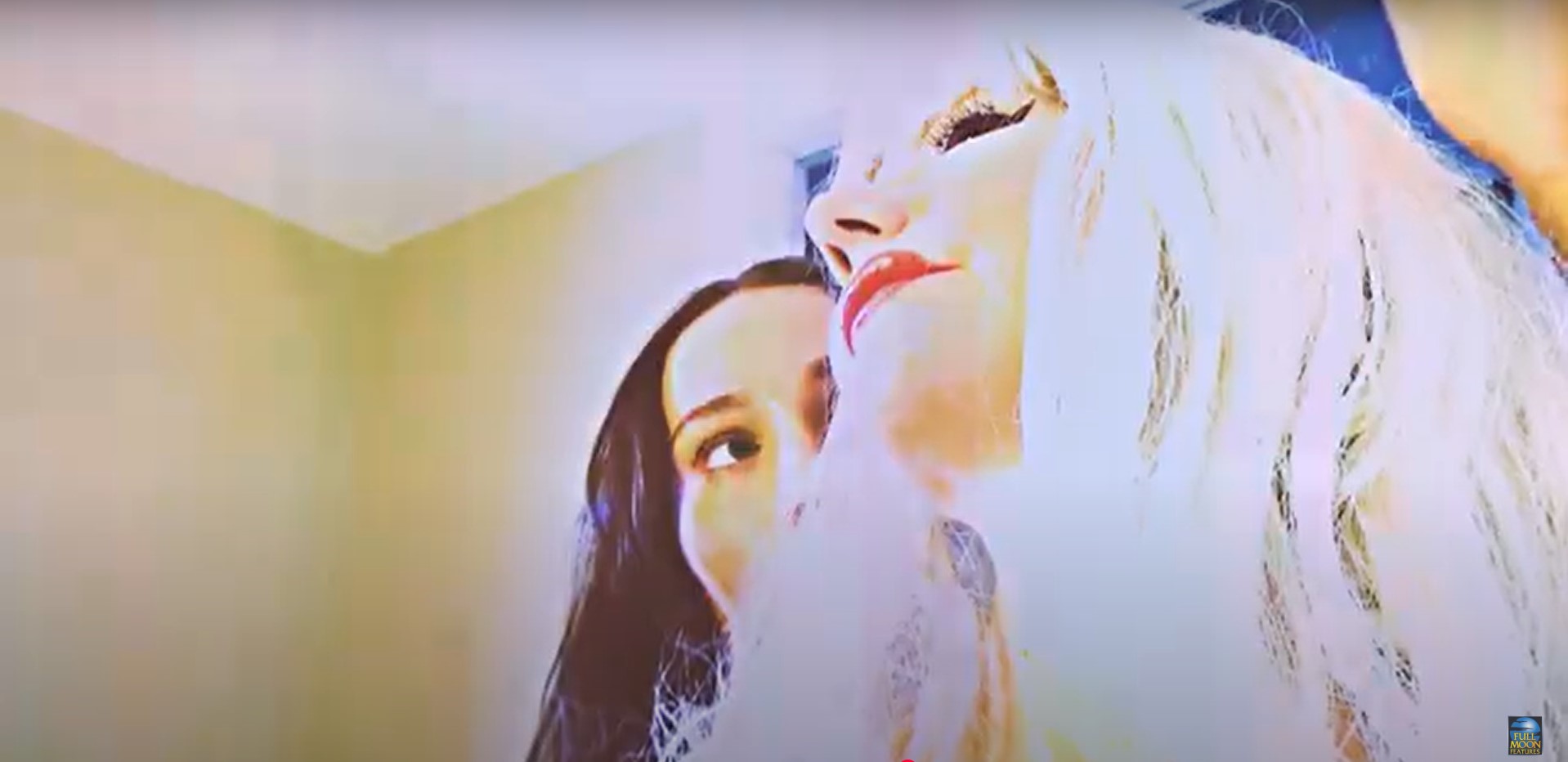
“Scream of the Blind Dead” has haunting connotations of past guilt or along the lines of the soul-touching past catching up to one’s beleaguered conscious, hence why Virginia wanders the countryside in search for answers, stopping or resting along the way into a state of pain or melancholy of a memory, and comes upon a church, perhaps unintentionally to confess her darkest sins or find solace in forgiveness.  However, it wouldn’t be a horror show without some fort of graveside penance from an unearthing corpse, slowly sauntering to seek eviscerating Virginia’s regret from her exposed, beach chic-cladded abdomen.  Right before being engrossed in the standard chase fair, scenes of Virginia self-groping from fantasizing the physical touch her female lover add a layer of sensuality yet to have context other than a strong passion within Virginia, whether it’s in her heart or loins is indeterminable, but shortly after singlehandedly pleasuring herself, a female knight, with pursed mummified lips, resurrects from inside the church where Virginia rests and the slow-motion macabre begins, moving about different backdrops within the ruins and field exteriors that are basked in neon gelled key lighting that creates a smokey psychedelic, or hallucinogenic, fever dream atmosphere, a nightmare experience only fabricated in deep-seeded guilt-trips.

“Scream of the Blind Dead” short salute to Amando de Ossorio and the “Blind Dead” series is honorable enough to keep the always nitpicking fanbase from picketing. Full Moon Features distributes the MPEG2 encoded DVD5 presented in 720p resolution and a widescreen 1.78:1 aspect ratio. Picture quality through a lower resolution and a patchwork of sizzling vibrant neon lights scores across a refined image with fuzzy details and indiscernible outlines. On the color scale, there’s plenty of range through the assortment of abrasive key lighting that illuminates the rustic, rundown church and surrounding area of mostly greens and browns. Sound selection offers a lossy English Dolby Digital 5.1 and Stereo 2.0 that absolutely has a soundtrack that trades the tings of a fortepiano for a theremin but still digs into the familiar tones of Antón García Abril’s ominous industrial-synth score that lingers eerily with resonating vocals. Very few moments do in-frame sounds from the actresses come over, entirely all screams in what was mostly done in post with a clear separation from action. Because of the music video approach with no dialogue, the lossy format is nulled by what’s really a psychosexual visual experience. English closed captioning is available. Special features a feature-length director’s commentary with Chris Alexander, two music videos including Thea Munster with her thermin solo entitled Werewolfry and the other track Burial Ground from her band Night Chill, the official trailer, and the Delirium Films’ trailers. Full Moon’s No. 355 title comes in a standard DVD Amary with a mixed illustration and live photo cover art that befits the body of work. There are no slipcovers, inserts, or other tangible materials set next to the disc pressed with the same knight silhouette but with a buzzing blue outline. At feature length, “Scream of the Blind Dead” would have been too long with Alexander’s stylistic outlet but at a crisp 40 minutes has a greater success rate for a not rated, region free releases that mostly lambent lights and ethereally evil sans actor dialogue.

Last Rites: “Scream of the Blind Dead” is not blind to the Ossorio source material and captures the core center of the Spanish director’s picture of history crusades on the ignoble never dies while Chris Alexander twists into it a fever dream of sexual fervor, slenderized for a post-impressionist style.

“Scream of the Blind Dead” Now on DVD!

Is this EVIL Real or is it a “Deathdream” reviewed! “(Blue Underground / 4K UHD and Blu-ray Combo)

The Nightmare is Here. “Deathdream” on 4K UHD Blu-ray!

The Brooks family just sat down for dinner before receiving a personal house call by a military commander, conveying the tragic killed in action telegram of their son Andy during a Vietnam War skirmish.  Very early next morning, Andy inexplicably arrives at their doorstep and the whole family is elated with his return and relieved in the military’s gross error about his death.  But something isn’t right with Andy; he isn’t the same affable young man his family and friends knew.  All day, every day Andy sits in his room, gliding back and forth in his rocking chair, won’t eat or drink anything, and has the social personality of a slug.  While his father can’t grasp Andy’s bizarre behavior, his mother defends him, being overjoyed, comforted, and relieved by her son’s safe return.  Anybody who comes close to discovering what Andy has done or has become is preyed upon by Andy’s need for concealment and need for blood. 

If there was ever the quintessential anti-Vietnam War film, Bob Clark’s “Deathdream” is it.  The 1974, Alan Ormsby (“Cat People,” “The Substitute”) scribed grindhouse classic introduces combat shock to audiences through a macabre and ghoulish lens as the U.S. involvement in the Vietnam War came to an official end in 1973.  Before becoming one of the holidays’ household names with “A Christmas Story” and “Black Christmas,” Bob Clark sat in what would be one of his first films as a director, a film that wasn’t sold in taking just one title having also been bestowed “Dead of Night,” “The Veteran,” “Night Walk,” and “It Came from the Grave.”  The U.S.-based shot and crewed feature, filmed in and around Brooksville, Florida, is a production of Quadrant Films and Impact Films with United Kingdom producers Gerald Flint-Shipman, Peter James (“Children Shouldn’t Play with Dead Things”), and Geoffrey Nethercott (“Blue Blood”) with John Trent and Bob Clark coproducing.  

For the ambiguous terror of “Deathdream” to work without baffling audiences to a nonsensical death, the cast had to really give it their all and not only that but also sell the deteriorating dynamics of an American nuclear family when the son returns home strangely different from then when he left for war.   The debut film of Richard Backus, playing the reclusive and uncharacteristic Andy who has returned home from the battlefield, is complimented by the heart-wrenching performances miseries of his onscreen parents in John Marley (“The Dead Are Alive!”), as the distraught father over Andy’s peculiar behavior, and Lynn Carlin (“Superstition”), as the denialist mother who can’t or won’t see the issues with Andy, the gift of her little boy returning home. Not only does Andy’s return ignite a slow-burning divisive wedge between parents and child but it also exposes pre-war schisms that were long established years ago.  We’re initially introduced the family sitting around the dinner table filled with compassion, hope, and happiness but Andy’s return kicks the wasp’s nest and we can see their true nature.  The father is a crotchety, dogged man who can’t connect with a more sensitive son and the mother spoils his only boy the point where Andy must enlist himself voluntarily to prove something to toward his father’s disappointment.  Then, there’s sister Cathy.  Poor sister Cathy, the gentle, positive, and sweet daughter who is all buy nearly forgotten by her parents as they push her out of the way by her father stating to mind her own business or is exclaimed in so many words of her little worth in compared to her brother by her mother.  Yet, Cathy, played softly and attractively by Alan Ormsby’s then wife, Anya Ormsby (“Children Shouldn’t Play with Dead Things”), continues a cool and level head about her shoulders as the only true family member willing to give Andy time, to let him be himself, while acclimating back into society, let alone his family.  However, the family’s opposing forces is ultimately what destroys them in conjunction with Andy’s terrible, morbid secret.  Henderson Forsythe, Jane Daly, Arthur Anderson, Michael Mazes, and David Gawlikowski fill out the cast.

All of the costly signs of shell shock and PTSD are present within the context of “Deathdream,” blanketed under a sensationalized, representational guise, but the film’s cinematic façade of Tom Savini’s rot and decay special effects and the appalling imagery of living death doesn’t alleviate or even dilute the horror of the revenant in the actual disorder.  In fact, it pales in comparison if you ruminate on it for a while.  Andy’s withdrawn from the likes of acquaintances, friends, and family alike and is severely impassive at signs of cordiality.  Director Bob Clark emphasizes the effect even further in one scene where a World War II veteran anecdotally describes in nonchalant detail the death of a brother in arms and this flashes images in Andy’s mind of him and his friend’s own mortal wounds in the jungles of Nam, sending the young man into a minor fight or flight moment, two of the associated signs of shell shock:  fight and flight.  Within the sensationalized horror context, Andy requires blood to keep his body from decaying, like a reanimated corpse trying to hang on a little long before his skin and muscle tissue just seep and ooze off, and in one scene of attack, Andy shoots up his victim’s blood with a hypodermic needle in a reminiscent drug addiction scene of shooting up narcotics right into the vein of one’s arm, an experience afflicted on many PTSD vets. Ormsby’s script might be specific in the anti-Vietnam War propaganda but is not so detailed in the narrative’s whys and wherefores as much of Andy’s unlikely, and undead, return to his family falls into that inexplicable, ambiguous, “Twilight Zone,” and “Tales from the Crypt” category to foster a greater cloud of mysticism and darkness around the story, one in which has a hopeful, desperate mother conjure will and desire in order to see her son come home again.

In continuing to upgrade their catalogue to the best possible format currently available, “Blue Underground” pulls an Andy and returns “Deathdream” from the dead, heading home to the nearest ultra high-definition player. The 2-disc 4K Ultra HD and Blu-ray combo set arrives with a brand-new restoration, scanned in 4K 16-bit from the 35mm negative with Dolby Vision HDR in honor of its 50th anniversary. The UHD is HVEC encoded onto a 66GB Blu-ray with 2160p resolution while the Blu-ray is AVC encoded, 1080p resolution, on a BD50, both presented in a widescreen 1.85:1 aspect ratio. A grainy 35mm print is ingrained with superior color saturation and understanding of how to manage the perceptibility of image. Blue Underground’s previous restorations show a spectrum, step-by-step improvement to get to where the film is today in a higher, upgraded format. “Deathdream” can be a very dark film at times and often, but this release eliminates speculation of events without collapsing the contrast integrity, providing a clear and concise image for its spot in history. Blu-ray is a step down albeit only minorly and with some color stability shimmer, more notably in the finale with a less than standardized and wear-showing deleted scene that is integrated back into the story. A single, English DTS-HD master audio mono track is available. The lossless option doesn’t need any more or any less to effectively be the overlaid track. Distinction runs through the single channel with managed assurances that dialogue, ambience, and soundtrack divide and conquer their respective uniquities. English SDH, Spanish, and French subtitles are available. Due to space on 4K UHD disc, all of the package’s special features are encoded onto the standard Blu-ray. The UHD Blu-ray includes an archival commentary from director Bob Clark, a commentary by writer Alan Ormsby, and a brand-new commentary with a pair of film historians Troy Howarth and Nathaniel Thompson, plus the theatrical trailer. All that and a slew of previously recorded content, including a recollection featurette with Alan Ormsby and star Anya Liffey (Ormsby), an interview with composter Carl Zittrer Notes for A Homecoming, an interview with production manager John “Bud” Cardos Flying Down to Brooksville, an interview with star Richard Backus Deathdreaming, an interview with Tom Savini regarding his early years in special effects, a screen test of the original Andy actor Gary Swanson, an alternate opening title sequence, Alan Ormsby’s student film, theatrical trailer and still galleries. The only other new content is an interview with the original Andy actor Gary Swanson The First Andy. The same illustrated cover art composite from the 2017 Blue Underground Blu-ray is recycled for the 4K UHD Blu-ray with tactile elements of a raised title and taglines on the cardboard slipcover. The primary art also resides on the black UHD Amary but the reverse side has retro traits of the film’s starkly contrasted yellow and blue poster art and the “Dead of Night” title to which, once again, is preferrable for me to have diverging slipcover and case cover arts. The two discs reside on their respective sides of the interior with the 4K UHD pressed with the illustrated art and the Blu-ray going contrarily retro like the reverse cover art. There are no loose insert materials. With an 88-minute runtime, Blue Underground release comes region free and is rated R.

Last Rites: Andy didn’t destroy his family. He was only the last straw, a catalyst that tipped the boat over into a sea of slowly brewing tempest. Doesn’t help that he was also decaying right before their eyes as the embodiment of walking death and looked good doing it too with the help from Blue Underground’s sharp-edged and solidly sound 4K upgrade.

The Nightmare is Here. “Deathdream” on 4K UHD Blu-ray!

Blind, EVIL, Undead Templar Knights Hunt for a Bite to Eat! “Tombs of the Blind Dead” reviewed! (Synapse / Special Edition 2-DiscBlu-ray)

“Tombs of the Blind Dead” 2-Disc Blu-ray Available for Purchase Here!

Maria, Betty and Roger take a train across the Spanish countryside to see the landscape sights.  When Maria feels like a third wheel stuck in between Betty and Roger’s flirtations, she jumps off the moving train, leaving her friends aboard, and camping out under the ruins of an old countryside Church.  There’s only one problem, the Church was home to the ancient order of the Knights of Templar who took a blood oath for Satan by sacrificing young virgins by drinking their blood and lynched by the Church for their crimes against man and God.  The Cursed Knights, reduced to rags, bones, and without eyes, rise from underneath their graves every night and roam the countryside on the hunt for anybody in proximity they can feast upon.  Betty and Roger learn of Maria’s strange demise without knowing the details and form a four-person search party only to step into the same dangerous den of the Knights of Templar. 

“Tombs of the Blind Dead,” or as known as the U.S. as just “The Blind Dead,” is the first in a series of four undead Templar Knights films that would come to be known as The Blind Dead collection by Spanish filmmaker Amando de Ossorio.  Natively titled “La noche del terror ciego” was released in 1971 and penned by Ossorio who laid a new path of Spanish horror that didn’t involve Paul Naschy or Jess Franco with undoubtedly slow dread of the undead that resembled more of the Italian-bred beyond the grave films where ghouls and ghosts return to life and wreak bloody havoc on the living, a guise for social context and for political dictatorship.  Themes of rebellions, rape, and bisexuality course through the feature’s necrotic veins as the film receives Spanish and Portugal co-production support from Plata Films and Interfilme with executive producer Salvadore Romero (“The Werewolf Versus the Vampire Woman”) spearheading pre-production and behind the scenes.   

Following of a newly formed trio of friends traveling the countryside to take in the sights, an underlying green-eyed trouble brews right from the moment when an enchanted Roger, the debut film and character of 1973’s “Green Inferno’s” César Burner, meets gorgeous red head Betty, “It Happened at Nightmare Inn’s” Lone Fleming,” and Roger’s travel companion and Betty’s Catholic boarding school roommate/best friend, Virginia, “The House that Screamed’s Maria Elena Arpón, feels the twinges of jealousy as her amorous covets for Roger never materializes and she sees her future with relationship with roger forever in the friend zone.  Virginia becomes so intolerant of Roger and Betty’s innocent flirtations that she’s willing to hop off a not-so-speeding train and camp inside the creepy, ruined structures at centerstage of a burial ground.  Arpón’s passive aggressive behavior is quite convincing, even the part where she tucks and rolls off a moving train in what stupid things do when people are frustrated, especially in the gray territory of love.  The love triangle is so simplistically arranged, each behavioral component goes without being farfetched.  From Virginia’s first sexual experience at the caressive, soft hands of her roommate/best friend Betty while at boarding school to Roger and Betty’s blameless attraction to one another that spurs Virginia’s irrational, self-serving behavior, Ossorio’s characters are written very well when homogeneously compared to other outside of cinema love triangles.  José Thelman (“Night of the Sorcerers”) indulges as the smuggler swine Pedro who’s roped into the reconning of the Templar tomb to clear his name with authorities by proving someone else had murdered Roger and Betty’s friend.  Joined by his floosy sidepiece María, played by another María in the iconic Spanish B-horror actress.  María Silva (“The Awful Dr. Orlof”), Pedro brutishly flaunts arrogance and confidence, taking what he wants, especially with the women uncharmed by the male sex, and that’s curious, fluid attribute when he attacks Betty but in the wake of the moment, the two of them are silently surfeited as they share the scene and that’s severely different from what anyone other filmmaker was doing at that time.  Andrés Isbert (“The Kovak Box”), Antonio Orengo (“Love Letters of a Nun”), Francisco Sanz (“Django Kill… If You Live, Shoot!”), Rufino Inglés, and Verónica Llimerá (“Hatchet for the Honeymoon”) round out the cast.

Performances give “Tombs of the Blind Dead” credibility in anxiety-riddled survival and turbulent human interactions but where those performances start to give way coincides with Ossorio’s building of dread.  No doubt the use of slow-motion sets the ghoulish, harrowing tone of the depraved, unabating, skeletally-cursed Templar Knights giving chase on horseback as they track down their flailing fresh meat, but in the process of that spinetingling, in between the Knights self-unearthing and the eventual snare and snack of their human victims, Ossorio doesn’t quite know how to flesh out formidable trepidation.  Pursued, screaming characters stand in the face of danger as if their feet are hardened in cement, stopping at every brief moment when out of sight of the hooded decaying bones and rags with dusty swords, and absentmindedly run right into the exposed radius and ulnas of the slow-moving and blind medieval damned maniacs in sequences that run out too long to be wholly gratifying.  Ossorio better pedestals the ingrained Spanish themes of never escaping your gruesome, haunting past, as seen with the circular narrative of always return back to the Knight’s ruins, and the sexual taboos of bisexuality and rape that lead to destruction.  These course through a more classically presented gothic horror. Perhaps explaining the fervent melodramatics of flamboyant fear, under the dictatorship regime of Francisco Franco and his cult-like ritualization in fascism oversight of Spain.

The sightless, flesh-feasting Templar Knights have found a new home in the Synapse Films’ tomb of terror with a new restoration transfer on a 2-Disc Blu-ray. Refurbished from the uncut original camera negative, the AVC encoded, 1080p high-definition, BD50 capacity suppresses any compression issues to display polychromatic decadence in front of a backdrop of steely graded blues. Plenty of a darker scenes to be affected by artefact corruption but the blacks are greatly dyed-in-the-wood saturated and not delineated or in spectrum of lesser decoding. Scenes never approach being flat, in color tone and in field depth, as beads of glistening sweat can be visually elaborated on and the distinction between color, shadow, and scale discern wonderfully. Two audio option tracks are available: a lossless Spanish PCM 2.0 mono track and a lossless hybrid of Spanish-English (Spanglish?) PCM 2.0 mono track. Both tracks are of a post-production dub with the Spanish option having greater synchrony with the articulating native Spanish actors of this Spanish coproduction. Audibly clean with little-to-no hissing, popping, or crackling, Synapse’s singular restoration is in good company with a high impact, high clarity, and low distortion dialogue track that meets eye-to-eye with the visual components as well as the film’s ambience cluster and Antón García Abril’s breathy and discordant, Gothically canticle score. Option subtitles are available in English on both tracks. Special features on the first disc contains individual audio commentaries by horror film historian Troy Howarth, Betty actress Lone Fleming, and the NaschyCast podcasters Troy Guinn and Rod Barnett. A feature-length documentary Marauders from the Mediterranean go from head-to-toe on not just detail Ossorio’s “Tombs of the Blind Dead” as the Spanish stamp in the juggernauting zombie genre of the times but also going in depth with the Spanish laid in horror from the 1960s to 1980s, featuring interviews with Lone Fleming, John Russo (“Night of the Living Dead”), director Jorge Grau (“The Living Dead at Manchester Morgue”), Sitges Film Festival director Mike Hostench, critics Kim Newman and John Martin, film academics Steve Jones and Calum Waddell, actors Helge Line, Manuel de Blas, Antonio Mayans, and Jack Taylor, and even Paul Naschy’s son, Sergio Molina. An alternate U.S. opening sequence Revenge of Planet Ape gives expositional insight on how the success of “The Plant of the Apes” films influenced the American distribution market to rebrand “Tombs of the Blind Dead” as an ape rebellion piece to ride the coattails of the series’ success on a lower, foreign budget. Rounding out the special features is a featurette Awakening of Spanish Horror Cinema, Salem Pop’s “Templar Tears” music video, the original theatrical trailer, and a still gallery. While Synapse has 3-Disc limited-edition set of only 4000 copies made with all the bells-and-whistles of the visual elements of new artwork, a slipcover, and a 3rd disc audio CD, the 2-Disc standard edition comes with all the same special features and all three versions of the film inside the black Amaray Blu-ray case and classic “Tombs of the Blind Dead” poster for cover art. Inside, you’ll get Synapse’s physical media catalogue and a disc on each side of the Amaray’s interior with disc 1 “Tombs of the Blind Dead” and disc 2 “The Blind Dead,” housing the shortened 83-minute U.S. re-edit on a BD25, that sport their own pressed artworks. The uncut disc 1 has a runtime of 101-minutes and has region free playback.

Last Rites: “Tombs of the Blind Dead” is Spain’s answer to “Night of the Living Dead” with discerning individualities ingrained by director Amando de Ossorio to include his country’s own social and political subtext and while Blue Underground’s The Blind Dead DVD collection is an impressive physical media crown jewel of upscaled 720p, the Blu-ray gods favor Synapse with an impressive hi-def A/V release with stellar bonus features.

“Tombs of the Blind Dead” 2-Disc Blu-ray Available for Purchase Here!

Necrophiliac EVIL Until the Eyes Open Awake. “The Corpse of Anna Fritz” reviewed! (Invincible / DVD)

Get “The Corpse of Anna Fritz” While Available! Purchase here!

Renowned actress Anna Fritz steals the hearts of millions as fan adorn her beauty and her acting performances that invite her to galas and red-carpet events.  Young and promising, Anna’s career is at its peak until her untimely death upon discovering her lifeless body in the bathroom of a private party.  This is where we begin Anna Fritz’s story, at her death as her body is wheeled and stored into a hospital morgue, naked on a metal gurney and under a white sheet.  In the hands of a late-night shift orderly, Pau, Anna’s beauty and body becomes the ultimate temptation as he sends his party rowdy friends Ivan and Javi pictures.  As soon as Ivan and Javi show up, curious and eager to see the once famous Anna Fritz in all her glory, Pau leads them down to the basement morgue where Ivan and Pau decided to have a once in a lifetime experience of molesting and penetrating her corpse at the disagreement and discouragement of Javi, but in the middle of the necrophiliac act, Anna wakes up in a temporary paralyzed state of shock.  Now that she has seen their faces, the three men have to come together to decide on her fate or theirs. 

By the very title alone, you know “The Corpse of Anna Fritz” is going into the dark territory of sick perversion with unnatural molestation of a human corpse.  The 2015 Spanish film, natively titled “El cadáver de Anna Fritz,” is the debut feature written and directed by Hèctor Hernández Vicens (“Day of the Dead:  Bloodline”) and cowritten with Isaac P. Creus.  An unofficial re-envision or just reminiscent of Marcel Sarmiento and Gadi Harel’s “Deadgirl” where young hormonally aggressive young men find themselves immorally pants down with a presumed dead body of a beautiful young woman without the supernatural element, and sprinkled with similar imagery and energy to that of the following year’s “The Autopsy of Jane Doe,” even with the DVD cover art and film title, “The Corpse of Anna Fritz” is more grounded in reality in comparison but still retains the theme of what aberrant people will do when they believe no one is watching, no one is getting hurt, and believe they’re doing nothing wrong when in fact everything they’ve done is completely deviant and a price has to be paid.  Produced by Bernat Vilaplana, Marc Gomez del Moral, Xavier Granada, and Marta and Albert Carbó, the film is a co-production of Silendum Films, Plató de Cinema, and the Instituto de la Cinematografia y de las Artes Audiovisuales. 

Like most of these autopsy or morgue pictures, they come standard with intimate casting of less than a handful of actors to create a sense of dreadful isolation and loneliness far from public view and safety.  Vicens’s basement of dead body debauchery follows suit with a quad-principal of three men – Cristian Valencia (“Atrocious”), Albert Carbó (“Beach House”), Bernat Saumell (“Eloïse’s Lover”) – and the one lone woman Alba Ribas (“Diary of a Nymphomaniac,” “Faraday”) mainly secluded to the morgue and its cramped backroom.  Valencia, Saumell, and Ribas have worked previously together a couple of years prior on the rom-com “Barcelona Summer Night” and that possible familiarity may have contributed to a feeling of ease when shooting the disturbingly portrayed necrophilism scenes where Ribas’s amazingly still life proneness is physically being rocked back and forth until her head eventually slides off the back of the gurney in a truly sub-rose moment of a cold-fact reality in one point in time, I’m sure.  The three men run the gamut of being trio of separate personalities to which the respective actors deliver the tension into with Ivan (Valencia) as the coked up party boy game for anything except being caught, the orderly Pau (Carbó) has a deep, dark yet timid obsession with molesting the dead of the fairer sex, and Javy (Saumell) exacting some measure of level-headedness and reason despite going along in the first place.  Opinions and concern perspective clash between them with Anna Fritz’s undead consciousness comes around yet the whole back-and-forth does become too long in what is a crap-or-get-off-the-pot stymie of progression in the second act.

Other confounding instance continuous slip banana peels under the feet of “The Corpse of Anna Fritz’s” extreme depravity and violence.  Aside from waltzing right into the hospital morgue without being spotted by personnel or security cameras (there’s CCTV in Spain, right?), Anna Fritz being dead for hours and then suddenly wake up could be considered a medical miracle. With no signs of brain damage other than a temporary nerve paralysis that alleviates segments of her body at a time, Anna appears to be completely recovered and showing no signs of being dead for hours.  She’s even noted as being cold to the touch before the turning point.  If you can stomach the indecent touching of a dead body and then the subsequent risen of said dead body, in what could be considered a parallel to the resurrection of Christ as Anna is this beloved figure killed by self-destruction by her own fame, the Spanish thriller picks up with the ever-growing cascade of bad decisions and no-turning-back moments and with that, those obfuscated moments can be pushed aside with the shocking, disturbing, if not sickening basement-dwelling behavior that’s sought taboo television. For a near stationary storyline, “The Corpse of Anna Fritz” paces particularly well within limited oscillation, especially with the first act and half without Anna Fritz being, lack of a better word, alive.

The 2015 released Spanish film finally sees its day back in the U.S. market with a re-release DVD from Invincible Entertainment. The MPEG-2 encoded, 480p, on a DVD-9 that decodes the data decently at an average of 7Mbps and presenting it in a widescreen 1.78:1 aspect ratio. Yet, therein lies still some evident compression issues such as banding in the darker image regions. Skin tones and details, however, are favorable and delineated nicely. The Spanish uncompressed PCM stereo 2.0 has and shows no trouble of making itself heard with a lively dialogue track overtop an ambient secondary that’s a little on the softer side for an echoey basement, if you ask me. English subtitles are forced with no optional menu. In fact, there is no menu at all as the film starts up from the very moment you hit play on your physical media device. Translation appears accurate and errorfree with my knowledge of the language and the Spanish dialect. Aforementioned, there is no DVD menu, resulting in no special features to peruse. I quite like the simplistic, yet provocative cover image on Invincible Entertainment’s release; it may not be as graphically explicit as the Dutch Blu-ray but does still immediately direct one’s brain to the depravity to come with an eye-opening twist. Inside holds a nearly identical image on the disc press with only a slight facial change. There is also no inserts, booklets, or slipcovers with this release. Invincible’s release comes not rated, has a playback of region 1, and has welcomingly brisk runtime of 76 minutes.

Last Rites: “The Corpse of Anna Fritz” doesn’t sprinkle a coating of sugar over what it set out to do – to gorge viewers with real world ghoulish, post-mortem coprolagnia and necrophilia – and like those very few titles in existence across cinema land, a universal theme of those who mess with the dead get theirs in the end.

Get “The Corpse of Anna Fritz” While Available! Purchase here!