This Casting Couch Has Something Far More EVIL Planned Than Some Sleazy Fetish Videos! “Maskhead” reviewed! (Unearthed Films /Blu-ray)

“Maskhead” on Blu-ray from Unearthed Films!

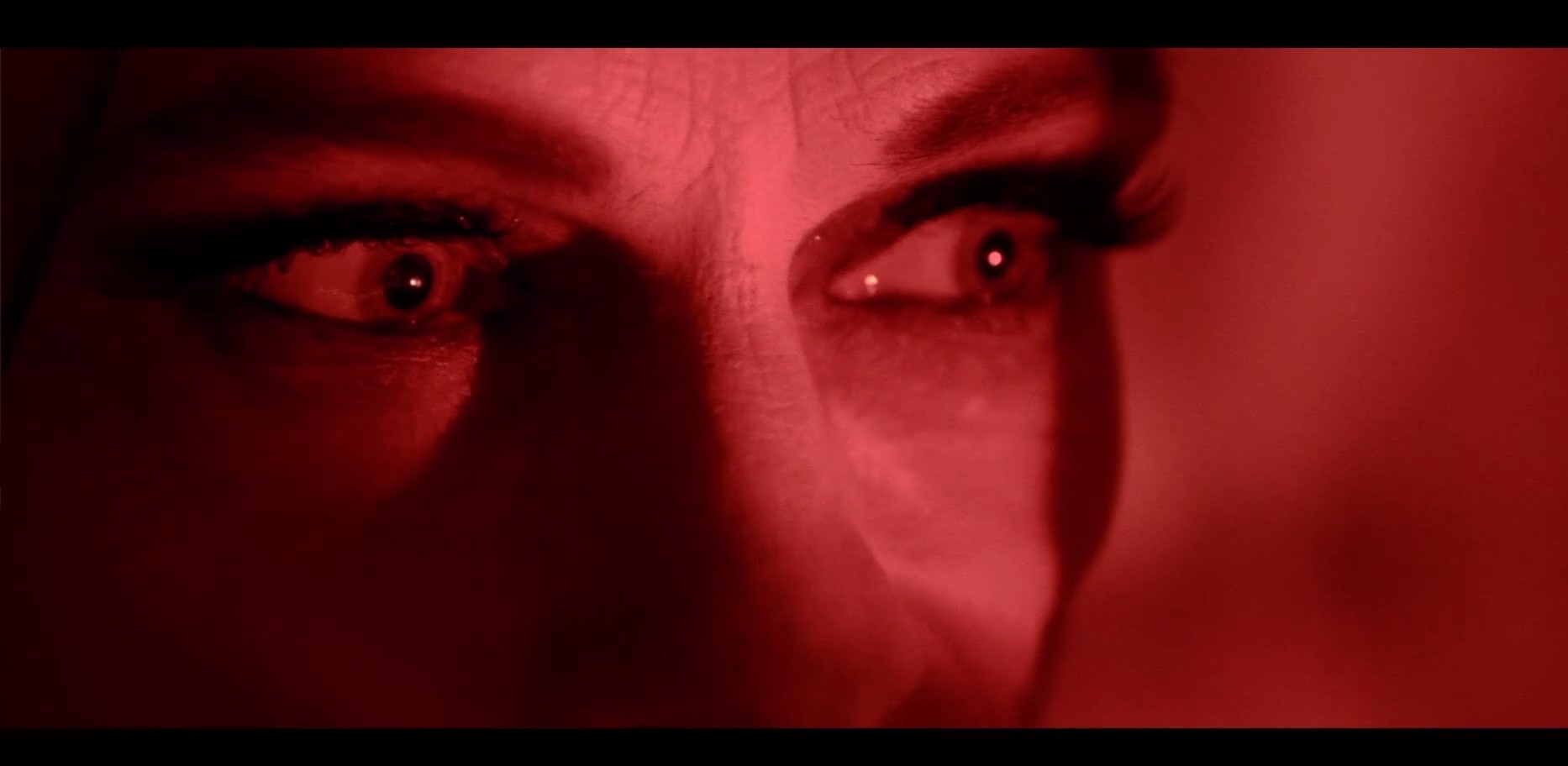
Syl and Maddie are lesbian lovers and producers of adult fetish films.  Always seeking new talent and models, they continuously invite potential performers to their casting couch for a little background interview and test the waters of their willingness to be humiliated or dominating on camera.  When the camera rolls, the plot is about as normal as any fetish produced adult feature can be to get a viewer’s rocks off but when the imposing, metal face gear-wearing Maskhead enters frame, the change of perversion goes from sexualized fetishes to snuff material as Maskhead torments, tortures, and kills the models as Syl and Maddie enthusiastically continue to capture it all on camera with great relish in their pain and suffering.  At the bidding of the sociopathic lesbians, their associate named Cowboy purveys potential performers with his southern charm and witty storytelling as well as supplying them with jet fuel-infused weed.  With shoots lined up, Syl and Maddie are extremely tickled for the soon-to-be tortured talent ahead of them. 

After his stint of SOV sickness and violence with the August Underground trilogy, writer-director Fred Vogel continues his expedition through videotape exploitation with a codirector effort in the 2009 extreme horror “Maskhead.”  Written-and-codirected with Scott Swan, who has since transitioned into a transgendered woman Rebecca Swan, the “Extremity” and “Big Junior” filmmaker Swan folds into Vogel’s guerilla-esque scripted joy for the juggler through a nihilistic lens.  “Maskhead” is hot-rodding sadism at its nastiest in the underground world of ultra-violent and extreme horror, produced by Vogel under his Toe Tag Pictures alongside wife and costar Shelby Lyn Vogel and once frequent collaborator and special effects guru Jerami Cruise whose gruesome squibs and bloody prosthetics of August Underground’s “Mordum” and “Penance” opened the door for specialty costuming for Hollywood blockbusters, especially in the MCU with “Avengers:  Infinity War,” “Captain Marvel” and “Black Panther.”  “Maskhead” might not be a morally just superhero but can be definitely feared as superhuman with his nail protruding through a plank strap-on! 

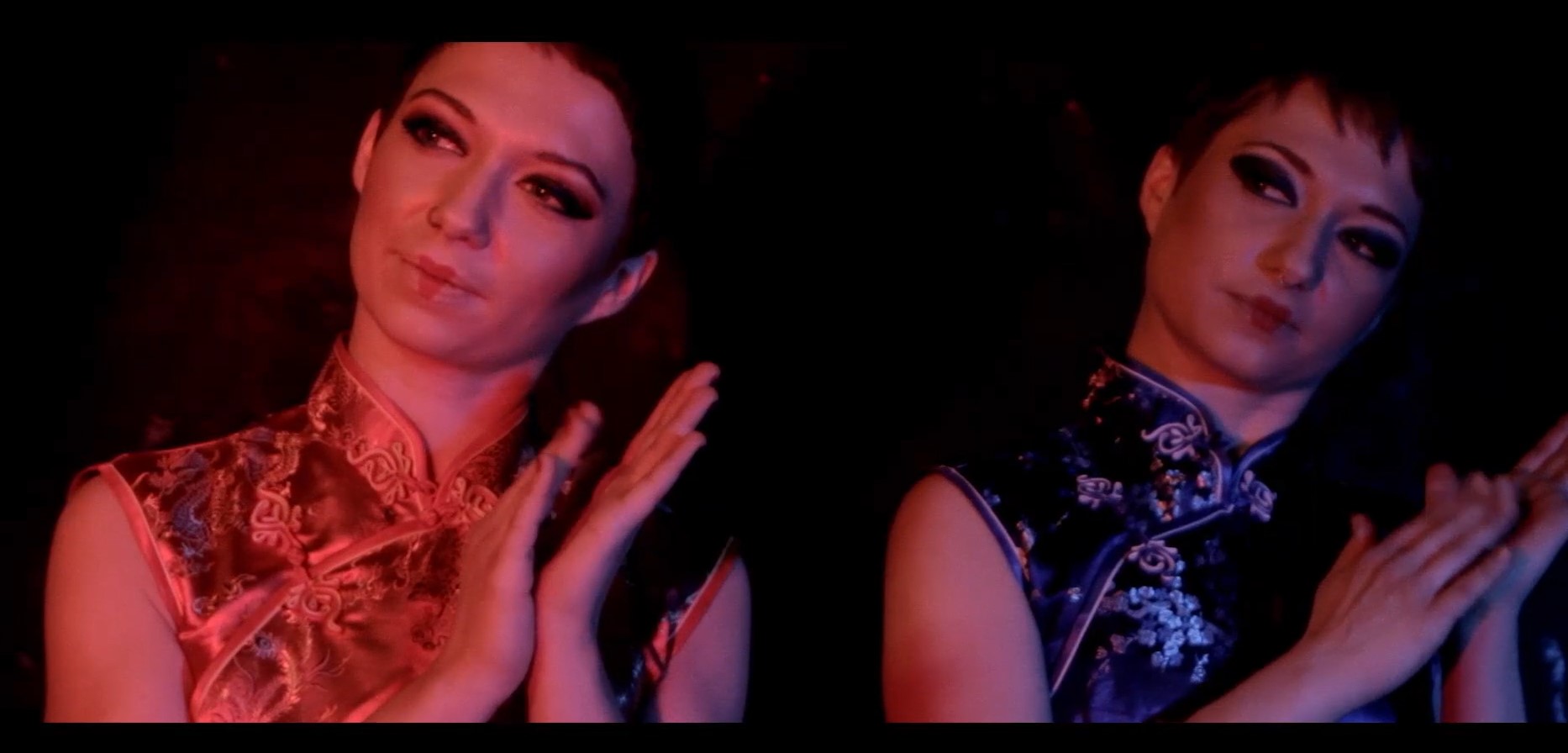
Maskhead is essentially the executioner you don’t want to meet on an isolated porn set, caught vulnerable in your unmentionables.  The titular character is played voicelessly Michael Witherel having just come off the set of Vogel’s “Murder Collection Volume 1” released the same year.  Wrapped in bloody bandages around his upper torso, chest and head, encased with a strapped metal mask with spikes around the mouth area, Maskhead is virtually a ghost without background, without a wound explanation, and we don’t know what makes the grunting brute tick to do the cruelties he does in the unexplained relationship with Syl and Maddie who rely on Maskhead to splatter their stars into full potential.  Syl and Maddie have a little more breadth:  they’re lovers, fetish smut producers, and total sociopaths.  The women speak romantically about their auditioners coupled with immense torture-kill innuendo as a preponderance of their relationship foreplay.  Shelby Lyn Vogel and Danielle Kings have certifiable chemistry between them as lovers and portray crisp killers of apathetic character as they lap up laughter, love, and the loose morals in the face of someone’s life in their hands or behind their camera.  Shelby Lyn Vogel has worked around Vogel’s catalogue for the most of his career with roles in “The Redsin Tower” and “The Final Interview” while Danielle Inks (“My Uncle John is a Zombie!”) inaugurates herself into extreme film, and film altogether in her debut, without missing beat being the dress-wearing famine next to Vogel’s more butch lesbian.  While Vogel and Inks make an interesting pair of murderers, the more fascinating character Daniel V. Klien’s Cowboy, a charming supplier of casting couch talent with the gift of gab and the occasional backdoor fisting.  Klein (“Murder Collection V.1,” “The Final Interview”) adds to Cowboy’s mysteriousness debonair with a great twang, bearish mustache, and slightly portly figure in cowboy boats, black vest, and tight underpants when getting his kink on.  Cowboy’s persuasive manner and false promises build the character who’s to meet Syl and Maddie’s wishes.  Now, whether the couple plays Cowboy or not is not elucidated, one thing is clear the character does the Cowboy way when it comes to fetish desires and traversal wandering.  “Maskhead” is fairly carte blanche in casting their onscreen kill list with actors John Ross, Chris Krzysik, Mary Shore, Nicole Divley, David P. Croushore, Janelle Marie Szczypinski, Donna MacDonald, Lacey Fleming, and Damien A. Maruscak breaking more than a leg in their character acts. 

Suitable for those with bloodlust eyes, “Maskhead” meets niche criteria as an extreme gore and shock feature that’s all exploitational style and no narrative substance.  This type of film is very much similar to Fred Vogel’s “August Underground” series of randomized bits and pieces of not only the poor unfortunate’s filleted flesh and exposed bones but also with the disconnected scenes compiled together to meet at most the full-length feature runtime requirements.  The bare plotline to “Maskhead” are lesbian lovers Syl and Maddie signing unsuspecting actors to their doom for the sake of their snuff movies, that’s the extent and stoppage point of “Maskhead” to move forward with any sort of three act narrative. The rest intends to shock with one-sided, visceral violence that is the epitome of torture porn with bound people being merciless put in the wrath of “Maskhead” and other extreme moments of provocativeness, including Syl and Maddie’s footsy foreplay under a public restaurant table or Cowboy’s elbow deep fisting of a local gay bar tweaker.  While ultra violence and deviancy doesn’t go without merit, everyone knows I enjoy a good uncensored bloodsplatter and sexpot debauchery scene, the film is just a continuous string of nothing but that can be utterly monotonous, especially in the length of 89-minutes as it is with “Maskhead.” 

“Maskhead” is a course in sexual deviancy, a killer perversion that’ll speak to few but be repugnant by many.  You can test your ethic caliber by owning a copy of “Maskhead” on the new Unearthed Films’ Blu-ray.  The AVC encoded, 1080p high-definition, BD50 is packed with extras and presents the feature in the original aspect ratio 1.77:1 widescreen.  Vogel and Swan use polar quality to convey their narrative with a downgraded resolution, around a true 480p, with Syl’s perspective, capturing every gruesome event on her camcorder, much the same as found footage, while the rest of the film is shot in a higher, digital resolution with a third person perspective.  There’s certainly no singular picture quality approach as even third picture rollercoasters with an inconsistent, and slightly unstable, look under low-lit scenes, such as with the Syl and Maddie restaurant scene, and this unfavored condition is not a compression issue but rather a result of equipment and poor lighting, hence gore-and-shock’s conventional bantam budget.  Depth is not really a thing with the quality and a maximization of extreme closeups to get all the uncomfortableness of personal bubble space and grisly slaughter into the frame.  Color grading is also pretty much nonexistent with a raw and natural flat aesthetic palette, adding to the strived realism aspect extreme horror usually attempts to achieve.  The only audio option available is an uncompressed English PCM 2.0 that services these types of films well enough as dialogue comes over cleanly and relatively clear when on-board and commercial on-board mics are placed appropriately.  No hissing, crackling, or popping to note.  If screaming bloody hell is a high-frequency vocal modulation that gets you off than, of course, there’s plenty from the “Maskhead” track to go around.  Again, not much depth or range because of the near proximity of most of the scenes.  English subtitles are optionally available.  Much like Unearth Films’  “August Underground”  release, “Maskhead” comes packed with plenty of new and a few returning special features.  There are two new feature length commentary tracks with 1) directors Fred Vogel and Scott Swan and 2) with Vogel again with wife Shelby Lyn Vogel, special effects artist Jerami Cruise, and Ultra Violent Magazine’s Art Ettinger.  A third 2009 commentary precedes and seeks to replace the first new commentary with Vogel and Swan.  An exclusive Unearthed Films introduction by Toe Tag’s Fred Vogel provides a little gratitude from Vogel about the new release.  Swan also has his own feature cut of the film which may be more favorable for those looking for a story as the codirector’s cut seeks to build more context through editing and pacing toward the story rather than Vogel’s emphasis on the torture/gore.  Interviews with Vogel Frankenstein’s Maskhead, the titular character himself Behind the Mask, and the Cowboy Below the Brim offers that slither of realism and behind-the-scenes bibelots that makes “Maskhead” tick.  There’s also a plethora of new featurettes of raw behind-the-scenes footage:  the first test footage for “Maskhead,” the creation of the titular character, an extended death scene of Food Girl (Janelle Marie Szczypinsk), as well as on set with Food Girl, fun with special effects at Toe Tag Studios, moments from the recording room to flesh out those sound details, such as Cowboy’s whistling and some growling, grunting, and groaning techniques, I Will Break Your Fucking Arm takes you behind the scenes of the arm rack’s special effects and setup, the infamous rape scene with a 2×4 is more raw footage of preparation with a little more skin time from both Mary Shore and Michael Witherel, The Room ganders the old hotel room where Cowboy gets fisty, the character elements – mask, gauze, and 2×4 – that make Maskhead Maskhead, and an extended photo gallery.  Archive extras round out the massive list with the Jerami Cruise commentated short “Dildo:  The Creation of Maskhead,” a blooper reel, Cowboy’s Whistling Clinic to be the best professional whistler as you can be, and the trailer.  Physical elements of Unearthed Films’ latest has a cardboard O-slip featuring green graded image composition of the primary cast of characters.  The same image is displayed on the one-sided cover art of the conventional Blu-ray Amaray case.  I’m curious about one thing though, did Unearthed Films get permission from Rebecca Swan to use her then biological male name Scott Swan for credit?  I assume so with the rational of that was who created the film back in 2009.  The region A locked release and is not listed as not rated but is not rated. 

Last Rites: Most will consider “Maskhead” senseless depiction of pseudo-torture but I’m glad Unearthed Films and Fred Vogel were able to supply and add supplemental raw footage on this upgraded release. Hours upon hours of reel that shows careful preparation and setup and the dedicated cast and crew examining every shot and listening to cast suggestions that humanizes the film a little more on a relatable level and demonize it less as just junk food for gorehounds.

“Maskhead” on Blu-ray from Unearthed Films!

Babysitter Wanted….by EVIL! “The House of the Devil” reviewed! (Second Sight Films / Blu-ray)

University student Samantha is strapped for cash when trying to express her independence from an invasive and inconsiderate college roommate by renting a house.  In need of quick money to put down the first month’s rent by upcoming Monday, Samatha answers a babysitting billboard ad that leads her to an isolated house outside city limits on a night when the moon is going to be fully eclipsed.  Misled by her employers, the Ulmans, that the care job is not for a child, but rather Mrs. Ulman’s elderly mother and in her desperation, Samantha accepts the odd job for the money needed to secure her new home.  Alone in a dark old house, Samantha’s nerves quickly tingle and recoil at every sound and strange occurrence, quickly coming to realize the Ulmans may be lying to her more than she knows, especially behind the locked rooms where satanic secrets reside and she’s the key to their black practices during the occultation. 

Perhaps one of the hottest directors in the horror genre today with his “X” trilogy, within the trilogy is also “Pearl” and “MaXXXine,” Ti West has been a consistent genre filmmaker since his first feature “The Roost” two decades ago.  Yet, before the “X” trilogy, the year was 2009 when West caught the attention of horror fans with his 198’s inspired and veneered satanic panic film, “The House of the Devil.”  Shot in Connecticut, primarily in an older woman’s gothic Victorian style home, West wanted to bring back the alone babysitter and old dark house theme from decade the story is set, shooting entirely on 16mm that, too, provides that grainy image and darker aesthetic through each frame of the stock.  Initially called just “The House” in initial script treatments, Ti West’s completed film is a production of Larry Fessenden’s Glass Eye Pix (“The Last Winter”) in association with RingTheJing Entertainment and Construtovision with MPI Media Group (“Henry:  Portrait of a Serial Killer” presenting and is produced by Fessenden, Josh Braun (“Creep”), Derek Curl (“Stake Land”), Roger Kass (“A History of Violence”), and Peter Phok (“X”).

In her western, button-up plaid shirt and high-rise mom jeans, Jocelin Donahue (“Doctor Sleep,” “The Burrowers”) epitomized the look of young college girl of the 1980s and with her dialogue and her eclectic 2-minute dance session through the Ulman house proved she has the speech and movements that resemble the timeframe as well.  Donahue is extremely good of taking her character, Samantha Hughes, from a panic scale of one straight up to panic scale of ten in this slow burn, tension-building thriller that isn’t a rollercoaster ride of the next attention deficient disorder event but rather a steady increase of anxiety and anticipation that nags in the back of one’s mind.  Donahue has good reason to be as frightened as she appears on screen with the towering presence of the ever something’s-terribly-off-about-this-character portrayal by “Manhunter’s” Tom Noonan and the malicious grim of a steely wolf under a pearly sheep’s wool from “Night of the Comet’s” Mary Woronov as a pair of satanists.  Noonan and Woronov don’t have immense screentime and are behaviorally underused in the interactions with their babysitter Samantha as West intended target is for Samantha to dynamically degrade within the shadows and creaks of a creepy old house rather have characters be the foremost formidable, focused fear.  In the peripherals is Samatha’s wealthy and vocally blunt friend Megan (Greta Gerwig and, yes, the same Greta Gerwig who wrong and directed that “Barbie” movie) who provides that calling of rationality toward a strange situation only to find herself too wrapped up in her friend’s choices rather than seeing the danger that’s in front of her and there’s also fellow Satan cultist Victor (AJ Bowen, “You’re Next”) who is more or less the son in this Ulman trio of terror.  The cast rounds out with Heather Robb (“The Roost”) as Samantha’s inconsiderate roommate and the genre actor Dee Wallace (“Cujo”) in a small cameo role of the Landlady who, refreshingly, isn’t part of the core plot to burden the actress as an accelerant to pulse the heart of the story faster.

Ti West really did harness and recreate the dark, solemn energy of the alone babysitter and/or the old dark house subgenres that propelled films such as “When a Stranger Calls,” “Black Christmas,” and even “Halloween” into the cult favorite cosmos.  These particular horror categories are obviously nothing new to diehard fans but they have unfortunately been, for a lack of a better term, forgotten, conjured up only in stored memory banks of those old enough, like me, to have lived consciously through the 70s and 80s and, maybe because of West, audiences starting to see a revival of sorts with modern day retrograding to relive the golden age of the slasher renaissance, popularized by hardcore and gory scares with films like “All Hallows Eve” and the “Terrifier” trilogy,.  Yet, “The House of the Devil” is not an overly gory and squirmy disgusting feature as West meticulously structures the narrative to be evidently tense in an uncomfortable, unfamiliar environmental setting of an antiquated house owned by equally antiquated, and frankly weird, bunch in Tom Noonan and Mary Woronov and West guides audiences step-by-step very slowly up to craggy edge before pushing us violently into the infernal grips of satanists and the demons that seek a female vessel for, whom we presume will be, their unholy lord and destructor.  The third act rips ferociously in contrast to earlier acts in a spiral fit of rite and sacrifice that incorporates more characters, more blood, and a cynical ending that requires no more exposition, no more scenes, and no further explanation in its wayward wake. 

Second Sight Films delivers Satan to us with a new UK Blu-ray release.  The AVC encoded, 1080p high-definition, BD50 is jam-packed with bonus content and a more than satisfactory A/V package.  Presented in a widescreen aspect ratio of 1.78:1, the colorist reproduction leans into that of an 80s horror with a diffused, mid-level saturation of frame cells on 16mm stock, bestowing the image quality with more noticeable grain elements because of its smaller size blown up.  The seemingly white fleck-riddled darker areas or clustering grain experience may discourage audiences of a broad digital generation but for those who know, know how great “The House of the Devil” aesthetically looks as a whole, complete with era appropriate wardrobe and set dressings.  Textures and details do come through despite the stock naturalities but they’re not terribly overpowering or as substantially present an a mostly tan or brown color scheme in a lower contrast.  The English language DTS-HD 5.1 Master Audio offers superb audio reproduction and spatial dissemination, especially through the wood-laden house to where the strain creaks of wood floors and doors offer a side and back-channel chill.  There’s plenty of front loaded, two channel action between the dialogue and the rest of the meium-to-close range shots with a range of diegetic effects – i.e. gunshots, telephone rings, and other actionable movements within the frame – and non-diegetic effects that include demonic whisper through moveless lips and, of course, those creaky noises amongst the empty house.  Dialogue is clean, clear, and prominent throughout.  There are English subtitles optionally available for selection.  Second Sight films did a ton of legwork here for special features, conducting and encoding new interviews with director Ti West The Right Vibe, actress Jocelin Donahue Satanic Panic, actor AJ Bowen Slowing Down is Death, producer Peter Phok A Level of Ambition, producer Larry Fessenden An Enduring Title, director of photography Eliot Rockett It All Feels Appropriate, and composer Jeff Grace Hiding the Seams, sound designer Graham Reznick Writing Through Sound.  There are also a pair of audio commentaries with 1) writer-director Ti West and actress Jocelin Donahue and 2) West with producers Larry Fessenden and Peter Phok along with sound designer Graham Reznick and the rounds out with a making-of featurette, deleted scenes, and original trailer.  Since we’re reviewing the standard Blu-ray release from Second Sights, this version does not call with all the physical bells and whistles associated with the limited, rigid slipbox releases that contain lobby cards and booklet, usually.  Instead, the standard release is a streamlined, green-hued Blu-ray Amaray with uncredited illustrated artwork of Donahue’s character overtop of the titular house with the dark and spooky moon in the background.  Instead, is just the disc pressed with the same front cover image of the house sans Donahue and the moon.  The UK certified 18 release contains strong violence and gore, is hard encoded B for regional playback, and has a runtime of 95 minutes.

Last Rites: The 80’s knock back with Ti West’s satanic panic inspired alone babysitter thriller with a sleek new Blu-ray, overflowing with new retrospective interviews, from Second Sight Films!

To Do EVIL, You Must Pay EVIL a Ton of Euro. “La Petit Mort 2: Nasty Tapes” reviewed! (Unearthed Films / Blu-ray)

Step Back into La Maison de “La Petit Mort” for a Sequel that’s Hard to Stomach!  

La Maison de la Petit Mort’s doors remain open under new management, continuing to serve the dark web public interest with a wide variety of snuff services.  For the right price, a fantasy-driven in-person torture show can be arranged for your liking, and one can be an commanding observer or one can get their hands dirty in participatory play where anything goes and pleasures are on-demand.  The German snuff house expands their reach to a global level with live webcam shows that can be directed by the high price paying patron and the leather-cladded vixen staff carry out their illicit instructions exactly.  A robust menu of dark pleasures, displayed on a new showreel of select gruesome services, are available at the simple transfer of a money wire or cash in hand for the depraved to make their fantasies a reality.

In 2009, German born director Marcel Walz helmed a linear, three-act narrative of tourists laid over in the big city winding up at patronizing a dark and dingy dive bar, La Maison de la Petit Mort, only to be abducted as inventoried stock for the rich to exploit in a slew of murder perversions.  Five years later in 2014, Walz returns for a sequel, “La Petit Mort 2:  Nasty Tapes,” with reprising principal actress Annika Strauss co-writing the film alongside Walz as well as stepping back into the sadistic black platform shoes of Dominique, one of the two lovely ladies with a lecherous and violent vocation.  The direct sequel that follows a day-in-a-life of the snuff house’s employees making an advert showreel does not follow suit in the way the first film was structured.  Instead of a linear, chronological narrative, “Nasty Tapes” evolves into an anthology of different kill archetypes for the marketing video. Walz’s Matador Films serves the production oversight with Harald Schmalz (“Collar”) coproducing the anthological torture porn feature.

“La Petit Mort 2: Nasty Tapes” doesn’t seen a whole lot of return on the original cast.  The tourists were all mangled, mutilated, and murdered, the original Monique bit the dust in an escape attempt, and the first Maman rode off into the sunset rich with blood money.  Instead, and among other things, “Nasty Tapes” folds a new treatment of terror with the same old eggs and flour by reinventing itself into an anthology type, introducing a new, blonde Monique (Yvonne Wölke, “Bad End”) into the batter, and disclosing the new owner of the freaky, fetish club, a feminine man by the name Monsieur Matheo Maxime (Mika Metz, “The Curse of Doctor Wolffenstein”).  Annika Strauss is the only original cast member to reprise her original role of Dominique, the brunette to Monique’s blonde and who showed slight inkling of hesitation before being summoned to torture and murder.  Strauss doesn’t buck the character trend as Dominque still displays disgust on her face when slicing a man’s facial features in a Picasso style portrait.  Yet, Dominique remains loyal to the Monsieur and to the La Maison de la Petit Mort by committing the atrocities without question, unlike the regular administrative bookkeeping and housecleaning she regularly remains vocal in opposition in what’s a slither of dark humor contrast between her gruesome work compared to mundane work.  Unlike Cyanide Savior singer Manoush, who was a very convincing merciless club owner Maman, Mike Metz plays a very different, more layered proprietor portrayed as someone who sees the work as a paycheck to fund his deepest desire – to be a beautiful woman just like his wife Jade Maxime (Micaela Schäfer, “Sky Sharks”).  That’s about the gist of complexity the sequel has to offer with much of the thinly laid foundation is bricked up by a compilation of back-to-back kill scenarios that involve some extreme genre directors as special guests, such as Uwe Boll (“House of the Dead”), Dustin Mills (“Bath Salt Zombies”), Mike Mendez (“Big Ass Spider!”), and the late Ryan Nicholson (“Gutterballs”), taking part in the clandestine, underground activities in-person or on the web.  The film fills out the cast with victims and victimizers in Armin Barwich (“The Terror Stalkers”), Bea La Bea, Babriela Wirbel (“Plastic”), Nichol Neukirch, Marc Rohnstock (“Necronos”), Thomas Pill (“Moor-Monster!”), Kai Plaumann, Markus Hettich (“No Reason”) and the twins, Barbara and Patrizia Zuchowski.

When going into a German gore film, such as “La Petit Mort 2:  Nasty Tapes,” you have to go into It having an affinity for, or at least an understanding of, complete shameless representation of torture and killing of another human being for the simple and pure joy of the act.  In other words, you have to be somewhat sick in the head.  For me, personally, the sickness is rooted out of admiration for special effects and how the F/X artist(s) can create a realistic depiction of an unofficial autopsied anatomy. Filmmaker Ryan Nicholson, who passed away in 2019 of brain cancer, not only had a role in the Marcel Walz sequel, but was also the special effects artist, following in the footsteps of one of the notable German underground special effects artists, Olaf Ittenbach (“Premutos:  The Fallen Angel”) who had done the graphic gags on the first film with head turning results.  Nicholson, with a credit list that has a foot in independent productions and more mainstream, Hollywood productions, such as “Final Destination” and the remake of “Blair Witch” from 2016, doesn’t disappoint and keeps the blood, guts, and stringy sinew seamless in a gruesome pageantry of death that rivals and continues Olaf’s original stamp.  Beyond the glossy surface of a blood glaze, “Nasty Tapes” is nothing more than a kill-after-kill anthology with no concrete premise for either of the individual slaughter vignettes.  Title cards setup the kill moments with basic victim descriptors, such as married status, age, and how much their life has been paid for, but doesn’t humanize them in the least, creating zero compassion for the unsuspecting abductee fated for something far worse than death.  Instead, Walz flips the script with more background on the clients with ipre-and-post interviews of their most intimate time at La Petit Mort.  This structure can be monotonous as there’s nothing else to look forward to or to absorb empathetically as a viewer in an anthology that simply glorifies the leisure time of an undisturbed murder.  

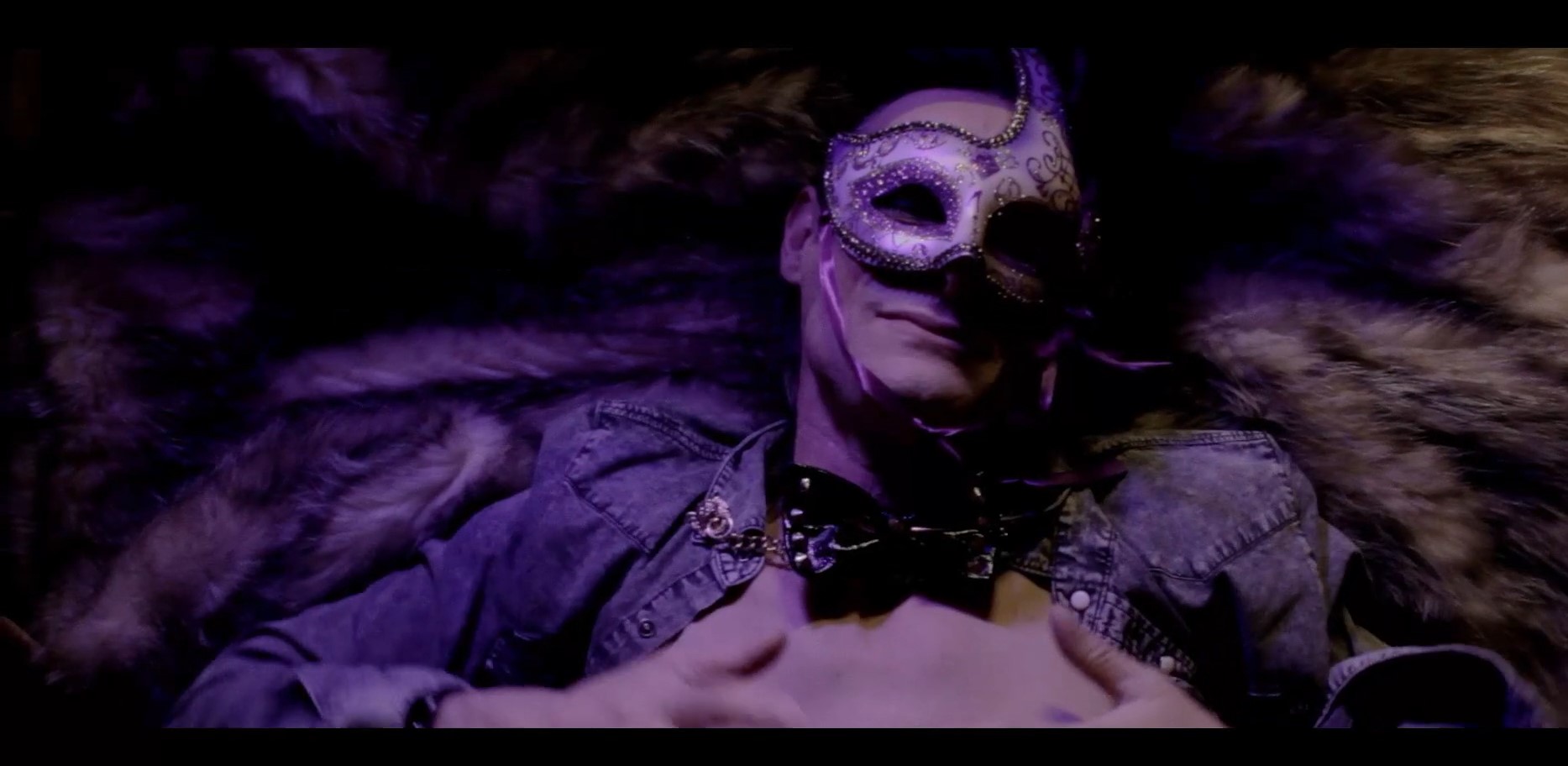
As a nail-pulling, nose-cutting, drill-holing, lip-stitching, dick-scissoring, gut-stabbing anthology, “La Petit Mort 2: Nasty Tapes” is a gory, good time and is even better now in high-definition with a 1080p Blu-ray release from Unearthed Films The AVC encoded BD25 looks as good as can expected for a shaky cam, hectically edited, and filthy dark German gore film presented in a 2.35:1 widescreen aspect ratio.  Details are oleaginous wet with blood and tissue that incongruently with the Roland Freitag’s gloomy yet suppressed cinematography and Kai E. Bogatzki discordance and chaotic editing technique that is supposed to elicit extreme shock but consequently results in a loss of the intended grisliness.  Unearthed Films‘ release exhibits no issues with compression, but the hues and tones appear to fuse in the near eliminate of some contours where there should be some.  The German-English DTS-HD 5.1 mix can be score heavy, especially a hard and energized Tekkno title credits from composer Klaus Pfreundner that’s distinctive German, but “Nasty Tapes” has profound focus on its core selling point – torture.  The very few scenes of intercut dialogue shots spliced into the client’s sociopathic session are well understood and do have prominence over the score, as well as the ambient milieu of screams and the integrated flesh destroying Foley, despite the cam-esque quality of the pseudo-testimonials.  The burned-in English subtitles under the German Language only are synced well without error and with consistently good pacing.  Disc extras include a behind-the-scenes making of cut out from the main camera, an alternate torture scene, a behind-the-scenes still gallery, a short advert of a naked woman strung up by her arms and being stapled with signs, and Unearthed Films trailers.  The Blu-ray physical features don’t stray to far from normal Unearthed Films releases with a standard Blu-ray snapper case with grisly cover art of a marred victim’s plucked out eye and a Jade Maxime holding a bone saw and wearing ripped fishnet stockings and black lingerie.  The pressed disc art has the rehashes the back cover image of Monsieur Maxime wearing a venetian mask.  The Blu-ray comes unrated, region A locked, and has a manageably sufficing runtime of 83 minutes to not overkill the overkilling.  Transparent in its surreptitious atrocities, “La Petit Mort II: Nasty Tapes” subsists as Marcel Walz charnel house of horrors with a new revamped anthology approach to razzmatazz special effects wetwork without any due remorse. 

Step Back into La Maison de “La Petit Mort” for a Sequel that’s Hard to Stomach!  

Write Down Your EVILEST Desire and Have It Become Reality. “Invitation Only” reviewed! (Unearthed Films / Blu-ray)

Have the “Invitation Only” Blu-ray Stapled to Your Face!  Purchase by Clicking the Cover Art Below!

Chauffeur driver Wade Chen wasn’t born with a silver spoon in his mouth.  The humble, low-on-the-totem pole young man has dreams and aspirations of super models and sports cars but can’t even afford a new suit.  When Wade’s accidently catches his wealthy construction tycoon passenger, Mr. Yang, sexually engaged with the beautiful model of his dreams in the backseat of the limousine, the nice guy in him didn’t think too much of it, but Mr. Yang surprises Wade with an invitation to an exclusive, high-brow party.  Unable to attend the party himself, Mr. Yang sends Wade under the pretense of being the tycoon’s cousin and hooks him up with nice clothes and money for gambling.  At the party, Wade is joined by four others who are also first timers amongst the high-class guests and are greeted with welcoming arms by the host, Mr. Warren, who offers them their wildest dreams, whatever they desire, by manifesting them into reality, but their reality turns quickly into a nightmare when the party is a façade for the opulent to put on a stage show of hunting down, torturing, and gruesomely murder the poor who believe envying the rich degrades their lives.

A class dividing social commentary where the disillusioned rich continue to believe the lower-class are exploiting their pedestaled luxuries when, in reality, the wealthy continue to take an unfair advantage for their own benefit and whimsical desires!  Labeled as Taiwan’s very first slasher, Kevin Ko’s debut pecking order demarcating film specializes in serrating into the other half a sort of social class justice.  Ko, who continues to work in and around the East Asian market having just released last year his written and directed Chinese folkloric thriller “Incantation,” helms the gore heavy script from the screenwriting duo Sung In and Carolyn Lin as their only credited treatment.  Shot near entirely inside a dilapidated converted warehouse in Taipei City, “Invitation Only” becomes the entrapment and last straw abattoir for all classes looking up and salivating over the greedy greener grass separated by that invisible, money-driven, societal line.  Maxx Tsai (“Memoria”) and Michelle Yeh (“The Heirloom”) produce what some critics and fans might denote as torture porn and, truth be told, “Invitation Only” is very “Hostel”-esque with its plot revolving around deep pockets getting away with murder, literally.  The 2009 released film is a production of principal producer Michelle Yeh’s Three Dots Entertainment company.

What’s admirable about Kevin Ko’s “Invitation Only” is its hyper local aplomb. From Taipei City location to the mostly local cast from Taiwan, Ko’s feature is a celebration of Taiwan’s filmmaking life despite the plot being about taking lives. In the lead role, Bryant (Ray) Chang (“The Perfect Girl”) plays the passive doormat that is Wade Chen, a nice and principled guy but has no gumption to claw himself out of just scraping by in life. Chang’s no confidence spell over Chen is just want the doctor ordered when casting a bumbling nobody lost in the crowd and touching elbows with plutocrats eating escargot Tapas and drinking champagne. Chen immediately meets the sweetly awestruck Hitomi with a provided backbone persona by “The Ghost Tales” Julianne Chu. At this point you’re thinking Chen and Hitomi will hit it off, become love interests, and be the Formulaic heroes of the story at stemming from this connection.  Partially, that’s true, but then Chen quickly becomes beguiled by that very same supermodel of his dreams, the same supermodel he stumbled upon in the car with Mr. Yang (Jerry Huang, “49 Days”), who is now eating from his lucky-streaked hand at the roulette table.  Former JAV starlet Maria Ozawa is the delicate tigress who beds Chens in an offshoot room of the party to bring the on cloud nine chauffeur a taste of high society to a culminating head.  Ozawa, who left the adult industry and went on to have a modest genre film career to this day with principal roles in “Erotibot” and “Geisha of Death,” is intoxicating on screen in her debut mainstream feature, but the actress doesn’t speak a lick of Mandarin and forces English to the dialect conversation to which then Bryant Chang has forced the dynamics with poor English reciprocation.  In bed, Chang and Ozawa connect charismatically, but other than that, the dialogue exchanges can be painful to get through.  Other invitees on the “Invitation Only” casting list include Joseph Ma, Ying-Hsuan Kao, Vivi Ho, and another English speaker Kristian Brodie in the mix to balance out with Ozawa to make the film a Mandarin-English hybrid.

Being a product of the early 2000’s, at the backend of the first decade after the turn of the millennium, “Invitation Only,” with Kevin Ko’s quick, erratic editing style, very much epitomizes the era of time as a party-hardy, balls-to-the-wall, slasher with a survivalist edge. “Invitation Only’s” social commentary all but surely smacks you in the face with the fairly common theme of social class division, but the story twists the biding inner dark thoughts of the one percent upper class. The story evokes this justifiable fear amongst them where those willing to cheat, scam, and steal to obtain wealth from off the back of the wealthy deserve an unmerciful, unrelenting, and unpardoning execution with an affluent audience clapping and cheering their horrible mutilation and demise. With an unlimited cash at their disposal, to them, there are an unlimited number of ways to die, and Ko certainly illuminates that ragbag of weapons of bodily destruction every chance he gets. The annual gathering of denotes a “Purge” like affect that for once a year, for the last five years as the host, the English-speaking Mr. Warren, states, the Rich handpick lowly schemers for excruciating extermination. This year, however, a simple misjudgment of character foils a night of brain bashing and staple facing into the downfall of the Rich’s unscrupulous principles and steadfast convictions as Wade is a humble nice guy at the wrong place, wrong time blundering into Mr. Yang giving Ms. Supermodel the wang. The whole annual affair is the rich cathartically getting their hands dirty, purging their distaste with a medieval axe or with jumper cable attached to a car battery. Ko invites not only the wealthy getting away with murder but being utterly brutal about it without shame or guilt as if they are truly on top of the world. The kill scenes are gorgeously horrific with the Hollywood trained special effects artists to provide that it-factor when considering blood, guts, and dismemberments.

“Invitation Only” is exclusive extreme horror not for just for anyone. Gore genre distributor “Unearthed Films” knows this and rejoices in the niche market of everything that would usually make one squeamish. “Invitation Only” is the survival horror that refuses to be a party-pooper as the Kevin Ko film arrives onto a high definition, 1080p, AVC encoded Blu-ray. Presented in a widescreen aspect ratio of 1.78:1, this particular Unearthed Films product doesn’t convey my favorite transfer quality. The codec bitrate for a high-definition release is all over the place as there are severe dips in the Mbps that can be as high as mid-to-low 30Mbps to upper DVD quality around 9-13Mpbs. With that breadth of range, the transfer supplies an inconsistent quality in waves; some scenes are sharp and very delineated while when in the dip, the scenes fall from grace into a sea of pixel blocks in low-lit scenes that nearly wash out the image entirely. Color graded virtually nonexistent as Ko keeps the scheme along the lines of neutral coloring. There are three audio options for selection: a Mandarin, with some English, 5.1 DTS-HD, a Mandarin, with some English, 2.0 PCM, and an English 2.0 PCM. Discerning between the pair of Mandarin options proves less distinctive compared to the distinct dub, for oblivious reasons, but there’s an edge more deepening into the surround sound mix with an intensity richer soundtrack. The lossy dialogue tracks often sound flat and muted as the screams and frantic getaways never pierce the ear’s soul, but for the most part, dialogue is clear and clean. There’s also an issue with the release’s coding on the in-feature audio selection as I toggle between the three audio options, they’re all listed as English with their respective format and channel output. Bonus features include behind the scenes discussions from select cast, such as Bryant Chang, Maria Ozawa, and Jerry Huang, a photo gallery, and theatrical trailers. Unearthed Films’ release comes in a clear Blu-ray snapper case with latch and reversible cover art in which both art styles reflect the dark and grim brutality of the film’s thematic nature. With a runtime of 95 minutes, the unrated and region A coded release does have an evolving story to tell unlike its likeminded brethren that usually gets in and through the dirty, ugly business in just above an hour’s time to keep the gore porn from getting stale. For a feature debut, Kevin Ko goes all in on the knife’s edge with commentary-laden “Invitation Only,” a viciously cold take on the extreme cruelty genre when money, the root of all evil, divides our common sense against one another.

Have the “Invitation Only” Blu-ray Stapled to Your Face!  Purchase by Clicking the Cover Art Below!

Catalepsy EVIL Blended with Japanese Folklore! “Snow Woman” reviewed! (Darkside Releasing / Blu-ray)

Beware the “Snow Woman!”  She Just Might Just Leave You With the Cold Shoulder!  Amazon.com

Trekking up a mountain side are three male villagers hauling up a wooden casket.  Inside the casket is thought to be the malevolent Yuki Onna, the urban legendary beautiful snow woman spirit who roams the snowy landscape enticing men to their death.  Found seemingly dead and half naked amongst the village at the bottom of the mountain, this will mark the second trip up to the crag with her corpse that suddenly comes back to life.  Feared by the men, her casket is left abandoned and stranded atop of the icy, cold mountain yet the thing inside the casket isn’t a ghost, but rather a shunned woman, Yuki, with a thought supernatural evil power that’s actually a death-trance condition where her intense sexual climaxes render her unconscious and not breathing for long stretches of time.  Lodge owner Hyubei discovers her predicament firsthand after bedding the strange woman and the two use her condition to feign the killing of the “Snow Woman” when other persecuting-seeking male villagers coming calling for her head.

Many unusual, but still erotically stimulating, pink films have come across my desk for a professional review and for personal viewing.  Shintaro Sasazuka’s “Snow Woman” might be the goofiest, nonsensical one, and threadbare storied one yet.  Based off the Japanese folklore of Yuki-onna, various versions of Yuki-onna revolve around the freezing harm or death of children as well as succumbing those near the child to an icy grave.  For Sasazuka’s “Snow Woman,” the 2009 released adaptation follows more closely to the Ojiya region of Niigata Prefecture where a beautiful and mysterious woman sought out a man to marry for her own sensual desires only to dissipate into frozen droplets when forced into a bath.  While there’s no forced bathing in the film, the writer-director does pull inspiration of a woman immediately eager to please and marry the first man who doesn’t expel her permanently from companionship upon her climatic death-trance and is, in fact, more inexplicably inclined, aka an inkling of amorousness, to keep her around despite her unsettling disorder that locks their genitals together until she awakes from her stupor.  “Snow Woman” is produced by Takeyuki Morikakuo (writer of “Rika:  The Zombie Killer” and producer of “Legend of Siren XXX”) and is a production of the AMG vintage erotic catalogue.

“Tokyo Gore Police,” “Grotesque,” and JAV model actress Tsugumi Nagasawa stars in the folkloric titular role or Yuki. Nagasawa’s a bit all over the board, which is usually the case with all Japanese pink films, with her misjudged ghostly “Snow Woman” that loses all the pizazz when much of the mysticism is removed almost instantly when the immediate revelation of her sexual catatonic disorder renders her into a rigor mortis like state. Nagasawa doesn’t exactly sell the ethereal quality of the folklore of a presence able to float above sheets of snow without a trace left behind or burst into icicles surrounding heat. Yes, yes, I know pink films are strapped with very little cashflow, banking on the nudity and the bump-and-grind of exploiting popular and historical culture. Takishi (listed as Takashi on other platforms) Okabe opposites Nagasawa as the lonely lodger Nyubei who saves Yuki from an icy death by trying to charge her warmth and shelter. Okabe and Nagasawa fail to bring any kind of chemistry to the screen, romantically or sensually, that render themselves far short of saving this pink’s film vitality rebound on the home video market. The villagers who are seemingly more interested in destroying the Snow Woman as well as contemplating speculative conjecture on whether having intercourse with a monster is better than having intercourse with a woman who eats a lot is better. That whole section of the dialogue arc to the portrayed monster in the story, the Snow Woman, and when the virginal deft villager sees the Snow Woman for the first time, he immediately ravages her in a rape-eseque moment to prove no matter how monstrous she is he’s going to conquer by way of copulation. The other villagers round out with a cast in Takehisa Futagawa, Daisuke Tamaru, Horiken Fumio Yamamoto, Tetsu Teraoka, and Nami Uehara.

As mentioned, “Snow Woman” is considered a pinksploitation parody of a well-known folklore and as stated, the film’s financial support leaves much to be desired in the finish product to the point that there’s really not a story here to be told. Ostentatiously goofy without a morsel of A-for-effort lore or supernatural suspense to call a foundation, the struggle is inherently real to get through the entire film, a film that’s only approx. 1 hour long. The humor doesn’t stick and that would have flipped “Snow Woman” to a more advantageous experience coinciding with the one-on-one action that’s puts pink films on the erotica map. “Snow Woman” ultimately is a double flop on both fronts with the humor missing marks in its ultra-dry deliveries and miscued moments to the romping that’s not stimulating, titillating, or satisfying in the positioned choreography or character heterogeneity as a basic setup and cycle that inches toward only a chip of difference between the sexual scenes by adding the accompaniment of villagers with only the usual outcome results. The scenic views are actually pretty and breathtaking in see the snow-covered landscape with plenty of long and wide shots to capture Japan wilderness and while the location becomes only important in its aesthetic beauty, the b-roll footage never becomes important to the storyline as should with any Snow Woman themed media adaptation. I, personally, just wanted the characters to vamoose the lodge, or rather the overly large hut, that kept becoming the place of Yuki’s catalepsy trances because the location is the only interior location and gets old really quick.

For the first time, Shintara Sasazuka’s romantic-pink-comedy, “Snow Woman,” has a North American release from Darkside Releasing and distributed by MVD Visual. The region A coded Blu-ray release is an AVC encoded BD-R 25 presented in a widescreen 1.78:1 aspect ratio. There are two versions of “Snow Woman” available for viewing: the vintage version retains the Japanese orb of censorship around the nether regions and a newly restored version that basically means the removal of the those said orbs. Both transfers are identical in a clean and free from blemishes and damage eyesores. However, banding is a real issue that creates visible clear lines across a shade washed picture. The Japanese language Dolby Digital 2.0 soundtrack renders over quite well with discernable and clean dialogue, but the English subtitles are slightly out of synch and have at least one error that I saw. Special features include the original “Snow Woman” trailer, an erotic trailer reel that contains erotica and horror from select Italian productions, and a pink trailer reel that includes classic and modern pink films from PinkEiga. I guess in a world where pink films are outrageously perverse and can be downright sleazy and horrific, a necessity for balance would come in the form of goofy-romanticism and that’s what “Snow Woman” offers humbly by exemplifying passion and compassion as a cure for the mobbing disorderly and the ones with misunderstood disorders.

Beware the “Snow Woman!”  She Just Might Just Leave You With the Cold Shoulder!  Amazon.com