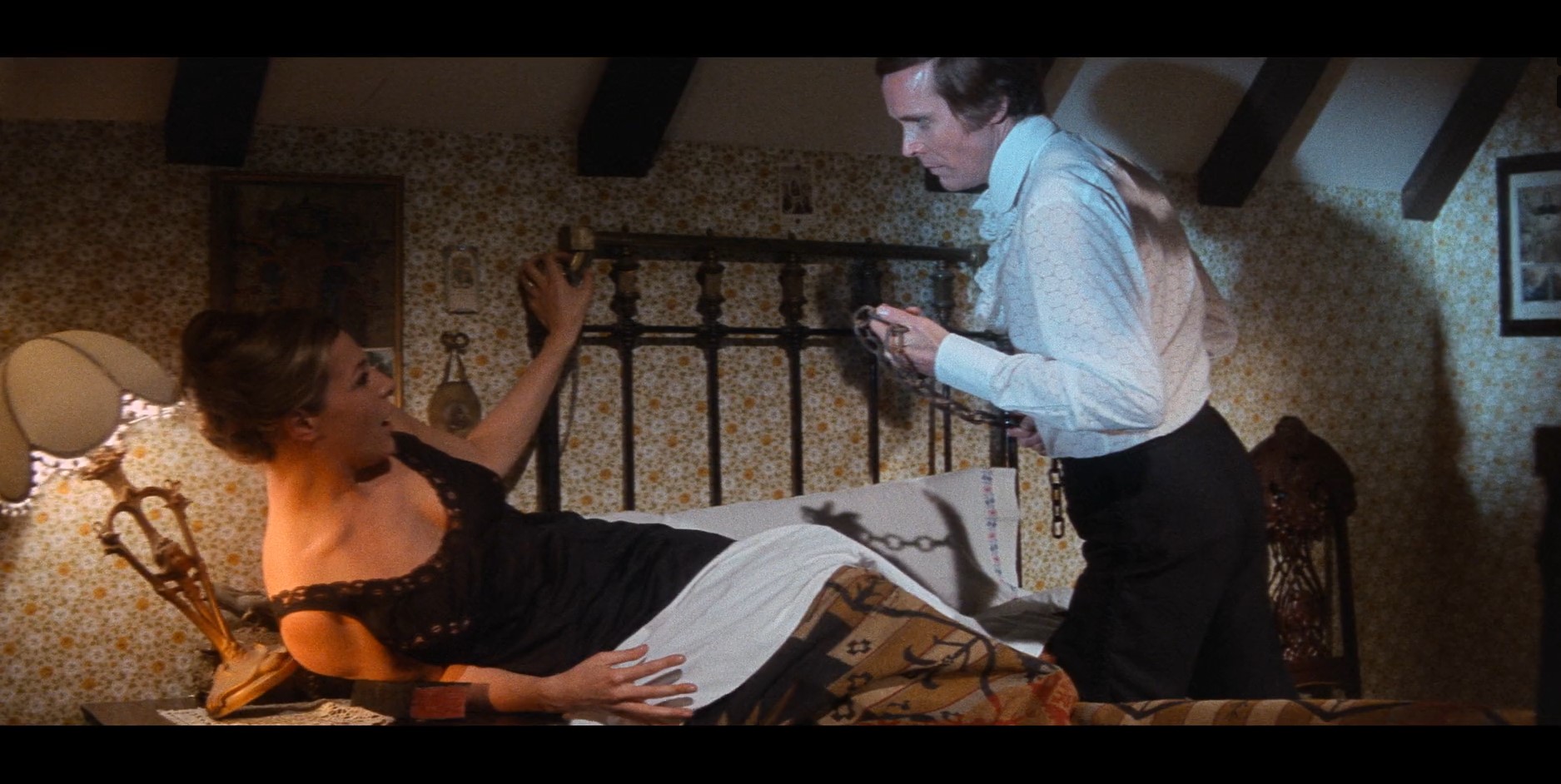
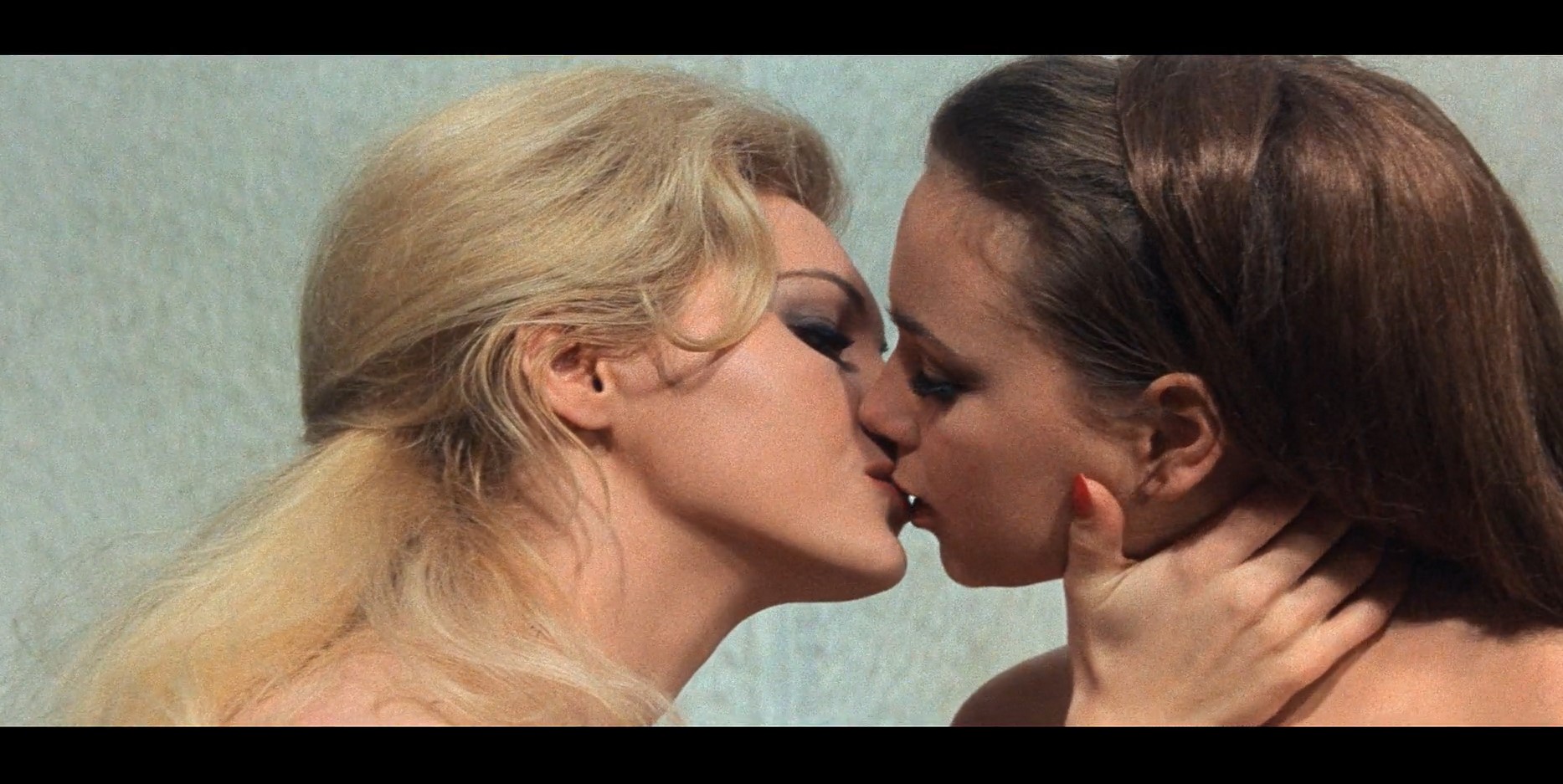
EVIL Will Always Get You in the End! “Ghoulies” reviewed! (MVD Visual / 4K-Blu-ray set)

“Ghoulies” Will Get You in the End With a 4K-Blu-ray set!

When a satanic ritual of sacrificing an infant boy is foiled by the acolyte mother, the child is taken far away from the fathering dark warlock who attempted to harness the boy’s youth for his own.  Fast forward 25-years-later, the malevolent father dies and the curse of the fiendish family tree has thought to be lifted.  The mansion is bestowed to very same young boy, Jonathan Graves.  Now a man in graduate studies and with Rebecca, his longtime girlfriend and love of his life, the inherited gothic mansion quickly entrances him into the urge for dark rituals, finding fascination in drawing and calling out the spirits and demons to do his bidding as their exclusive master.  In spite of Rebecca’s concerns and hoodwinking his unsuspecting close friends into a dark rite, Graves unwittingly resurrects his deceased and powerful father who seeks to pick up where he left off with his own callous ceremony from 25 years ago. 

If there are pint sized characters with a mischievous, devious edge, you better believe it that Charles Band is more than certainly behind the little terror-tykes hellbent on hell’s work.  One of the more successful ventures to come out of Charles Band’s empire, literally out from his Empire Production studio, is the 1984 released “Ghoulies.”  Written-and-directed by Luca Bercovici, as his debut feature film and who would later direct “Rockula” and “The Granny,” and co-written with Jefery Levy, who would go on to inevitably write a pair of sequels off the original film, the American-made production masters a flawlessly edited and sound designed layer composition mixed with the imprudence of 80’s stereotyped horror-teen character and nostalgic lighting and matte effects that make “Ghoulies” a travel-sized cult classic.  “Ghoulies” is produced and distributed by Empire pictures with Charles Band as executive producer, Jefery Levy as producer, and Debra Dion (“Oblivion”) as associate producer.

You can’t have a story about necromancing sorcery and demonic disinterring without big personalities and, fortunately, “Ghoulies” has a few that standout with memorable dark magic melodramatics.  Opening scenes of a ritual’s beginning introduces Malcolm Graves, an infernally flamboyant, wide-eyed, and animated with his hands sorcerer who likely won’t win the father of the year award.  “Mulholland Drive” and “Waxwork II:  Lost in Time” actor Michael Des Barres lights up the lurid life of Malcolm Graves with great enthusiasm and piercing eyes.  Graves eccentricity is balanced by another Lynchian actor Jack Nance as the acolyte turned mansion caretaker who oversees the Jonathan Graves’ wellbeing.   Nance meticulous eye gazes and gestural articulation combat and numb down Barress over-the-top dark magic ringmaster.  The “Eraserhead” and “Blue Velvet” actor definitely transposes his defined and evident presence of idiosyncrasies over to this little monster movie with manipulating occultist mascara that make “Ghoulies” that much more special.  The third actor is principal lead Peter Liapis who swings the pendula between normalcy and obsessive occultist as Jonathan Graves quickly swept up by an invisible force that drives him to become an intermediate master of miniature minions.  Liapis has that on/off switch ability to be sane one second and completely maniacal the next and when acting tranquil and the boyfriend of nicety to Rebecca (Lisa Pelikan, “Jennifer”), you better believe that we are convinced by his prosaic act.  Jonathan’s friends are an mixed lot of stereotypical lambs for the slaughter, to be used as pawns, and never know their role in the ritual of resurrection.  Stoners buds Mike (Scott Thomson, “Parasite”) and Eddie (David Dayan) fill “Ghoulies” with comedic jokester relief, rockabilly rake Dick (Keith Joe Dick) has eyes on the bedding prize with promiscuous Anastasia (Victoria Catlin, “Maniac Cop”), and an awkward dork Mark aka Toad Boy (Ralph Seymour, “Just Before Dawn”) tries to tickle swoon hottie Donna (a very young Mariska Hargitay, “Law & Order:  SVU”) are the paired up friends to fall into the, pun-intended, Graves trap.  “Ghoulies” round out the cast with the blonde and busty “Evil Spawn” and “Mausoleum” actress Bobbie Bresee as an open-armed invitation for sex and sacrifice while persons of short stature, Peter Risch (“Malibu Hot Summer”) and Tamara de Treaux (“Don’t Be Afraid of the Dark”), credited as the smallest actress in the world, made up a pair of mischievous, quarrelling minions fed up with the current incumbent of infernal dealings. 

For a 1984, Charles Band production, especially one of his first to be distributed under his Empire Productions, “Ghoulies” establishes the bar for the miniature maniac mogul’s subsequent earlier films that may have been the peak era for Empire and even Full Moon pictures, having and hitting all the hallmark tropes of effectual horror.  A fog permeating production design with enough gothic hulk in the mansion and in the out-the-window small gravesite to immerse atmospherics, a matte composition of brilliantly simple visual effects blended with the catastrophe force inspired practical effects that aggrandizes the budget, the fantastic editing by now longtime Full Moon filmmaker Ted Nicolaou (director of “Subspecies,” “Don’t Let her In”) to piece together a more-than-palatable sound design and image, the carnivalesque soundtrack by Charles Band’s brother, Richard Band, to enrich impish latency around the characters, and, of course, the icky-coated and reptilian-rinded puppet demons by creator John Vulich (“Dolls,” “From Beyond”) in dynamic surroundings with the living, breathing characters.  What “Ghoulies” could use is fine tuning on was to further the story development.  A little more exposition into the background of who Malcom Graves is or who Jonathan Graves was calling from the slither of beyond could go a long way.  The ending transition also took a lighter approach, an additional aspect in this pre-Full Moon, Empire Production we don’t typical see in the ensuing works that grinds the desolation gears by shifting the clutch into third gear of blood, boobs, and bodies. 

Coming in at number two on the spine of the MVD Rewind Collection, as part of the 4K UHD LaserVision line, “Ghoulies” comes a 2-disc UHD and Blu-ray set. Presented in a 4K Dolby Vision HDR restoration from a16-bit scan of the original camera negative in 2460p and a sister 1080p Hi-Def restoration for the Blu-ray, both transfers exhibit in the original widescreen aspect ratio 1.85:1. Both transfers cherish the source material and even celebrate it with a clean print scan that elevates the definition of a gloomy, brooding abode under the cast of many a shadow. No issues with compression as black levels remain inky and the in-lined picture isn’t blighted by artefacts, revealing the natural grain without a combover to smooth out any original veneer from the 35mm acetated celluloid. Both discs come with an English DTS-HD 2.0 master audio that’s stark as it is clear and orderly with a prominent dialogue track and a ridiculously good sound design edit that enhances the rituals and rambunctiousness of the cult and kids. Boosted levels are balanced and well overlayed to provide max composition as we get a good range and depth of sound and space with the eye lasers, atmospheric house creaks, and an Earth-rattling finale. English subtitles are available on both formats. As usual due to the vast number of gigabytes needed, the Blu-ray special features outnumber the 4K UHD. The 4K special features include once Shout Factory! exclusives, such as a 2015 archival audio commentary by director Luca Bercovici, a 2016 audio commentary with Bercovici moderated by Terror Transmission’s Jason Andreasen. With the Blu-ray, you receive the 4K content plus a video introduction by Bercovici, which is quick, simple, and not much too an opening recollection of the keystone of his career, an interview with editor Ted Nicolau Editing an Empire that more so Nicolau’s career from beginning to current, an interview with actor Scott Thomson A Mind Is a Terrible Thing to Waste as he exchanges his “Ghoulies” remembrance in that same stoner-fog as his character, an interview with Luca Bercovici Just for the Chick Man, a half-hour behind-the-scenes featurette From Toilets to Terror, a photo gallery, four television spots, and the theatrical trailer. The physical contents include a faux crumpled cardboard slipcover of the iconic Ghoulie in the toilet marketing ploy complete with security tag at the bottom. Sheathed inside is a black Blu-ray amaray with an ironed version of the cardboard O-slip. Inside, both discs are pressed with laserdisc-esque pattern art, and the insert contains a folded collectible mini-poster of the faux crumpled slipcover. The 80-minute, region A locked release doesn’t list a rating on the back cover but I suspect an unrated feature like with most Empire/Full Moon products and this seems to be the complete, unedited version. “Ghoulies” is a must-see for the casual horror fan, “Ghoulies” is a must-see for die-hard fans, and this MVD 4K and Blu-ray Rewind Collection release of “Ghoulies” is a must-own for the collector at heart.

“Ghoulies” Will Get You in the End With a 4K-Blu-ray set!

DCU Can’t Handle this EVIL! “Swamp Thing” reviewed! (MVD Visual / 4K & Blu-ray)

“Swamp Thing” on 4k / Blu-ray Combo!  Now Available on Amazon.com!

A top-secret government project in the Louisiana swamps concern the combination of aggressive animal genes into plant DNA to result in creating super food for the potential famine and overpopulated future.  Agent Alice Cable becomes assigned to the project when her predecessor is unexpectedly devoured by a gator and becomes acquainted with the passionate head scientist, Dr. Alec Holland.  However, the government isn’t the only interested party in obtaining a formula when a faction of cutthroat mercenaries invade the swampy compound in the name of Arcane, a mastermind sociopath looking to hold the fate of the world in his hands.  Storming the compound with force, all the government agents are slaughtered except for Cable who managed to escape while Dr. Holland suffers a tragic accident of combusting with his volatile formula during the attack.  Believed to be dead, Dr. Holland returns transformed into a half-man, half-vegetal thing with superhuman abilities.  Now, Arcane is after him with Cable trapped in the middle. 

Having success in the grisly rape-revengers and mutant-cannibals section of his career in the 1970s, Wes Craven tussled with creating and securing another hit film to pay the ever mounting bills.  Before “A Nightmare on the Elm Street,” one of two biggest titles that have gone synonymous with the director’s name, the other being “Scream,” Craven dived into a DC Universe project before the DC Universe ever existed as such with the script adaptation and the helming of “Swamp Thing,” a vegetational anthropomorphic superhero inhabiting elemental powers, such as regrowth and superhuman strength.  What Craven originally scripted may not have been the same as the finished product on screen but the 1982 captured audiences attention and created lifelong fans of an underappreciated hero still germane to what is now a large universe of revitalized superheroes films and television shows.  Film in and around Charleston, South Carolina in the Cypress Gardens doubling as deep South everglades, “Swamp Thing” is produced by long time DC films coproducers Benjamin Meiniker and Michael E. Uslan as their first DC superhero venture as a Melinker-Uslan production and distributed by Embassy Pictures and United Artists.

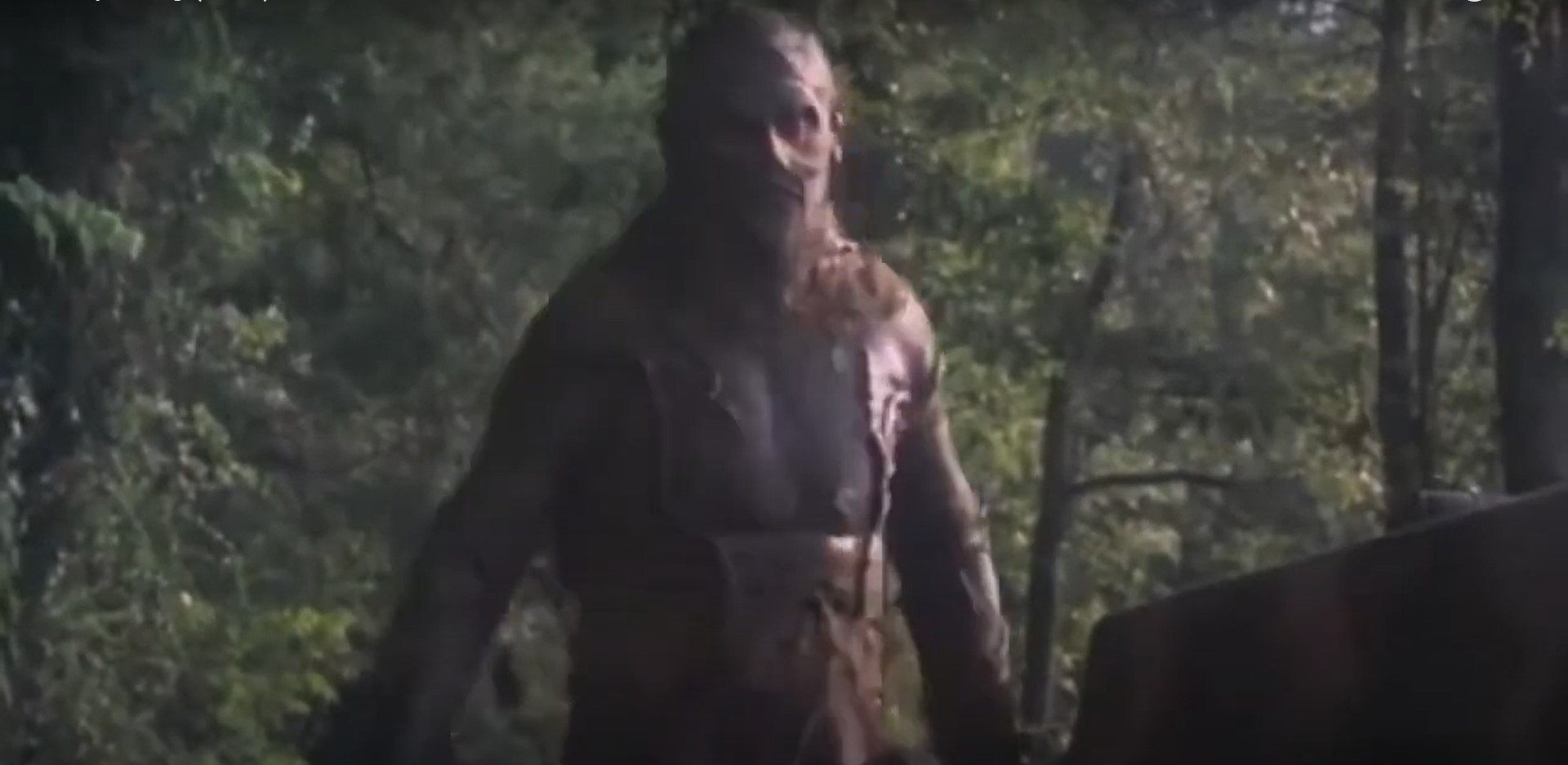
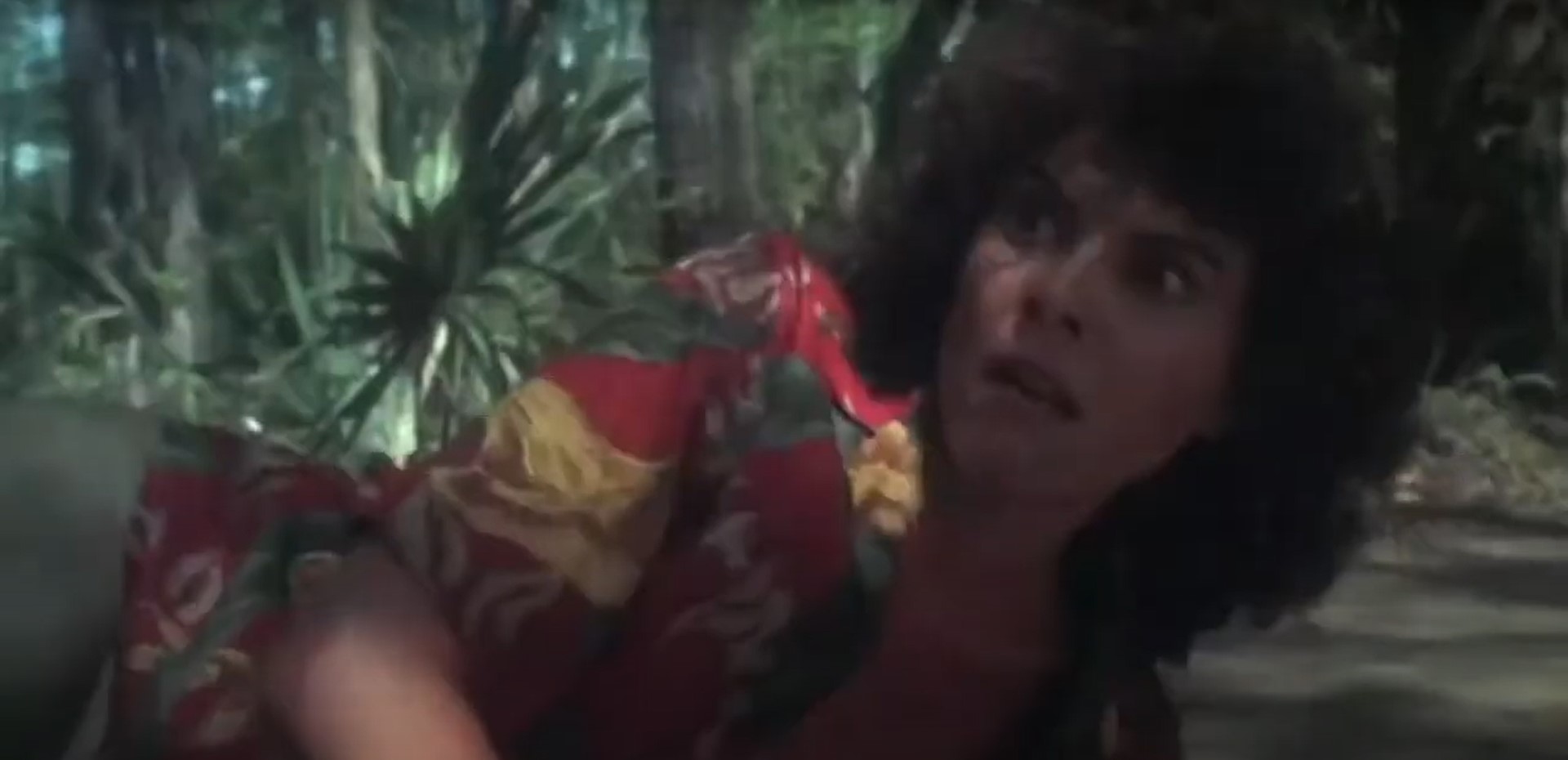
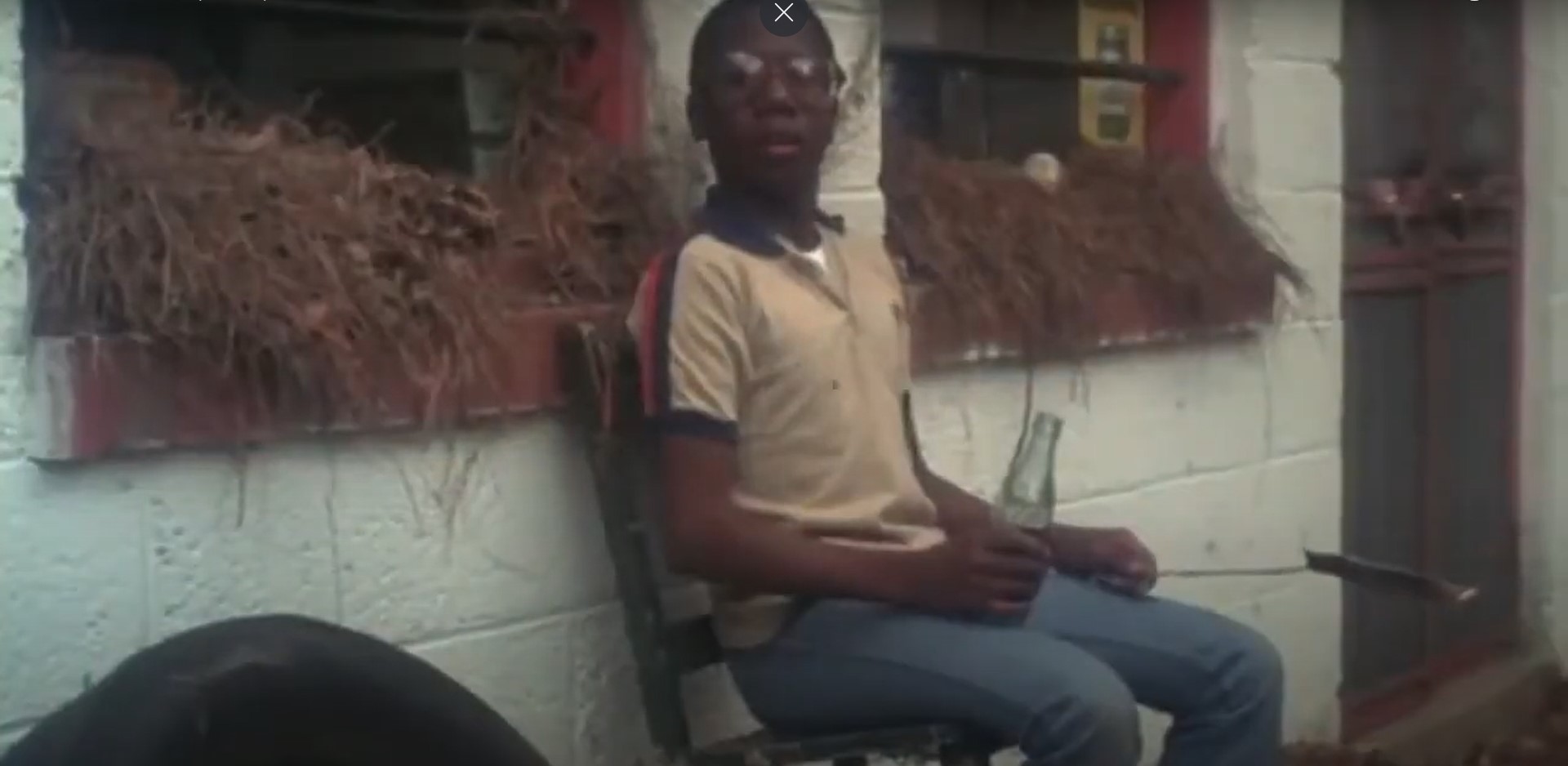
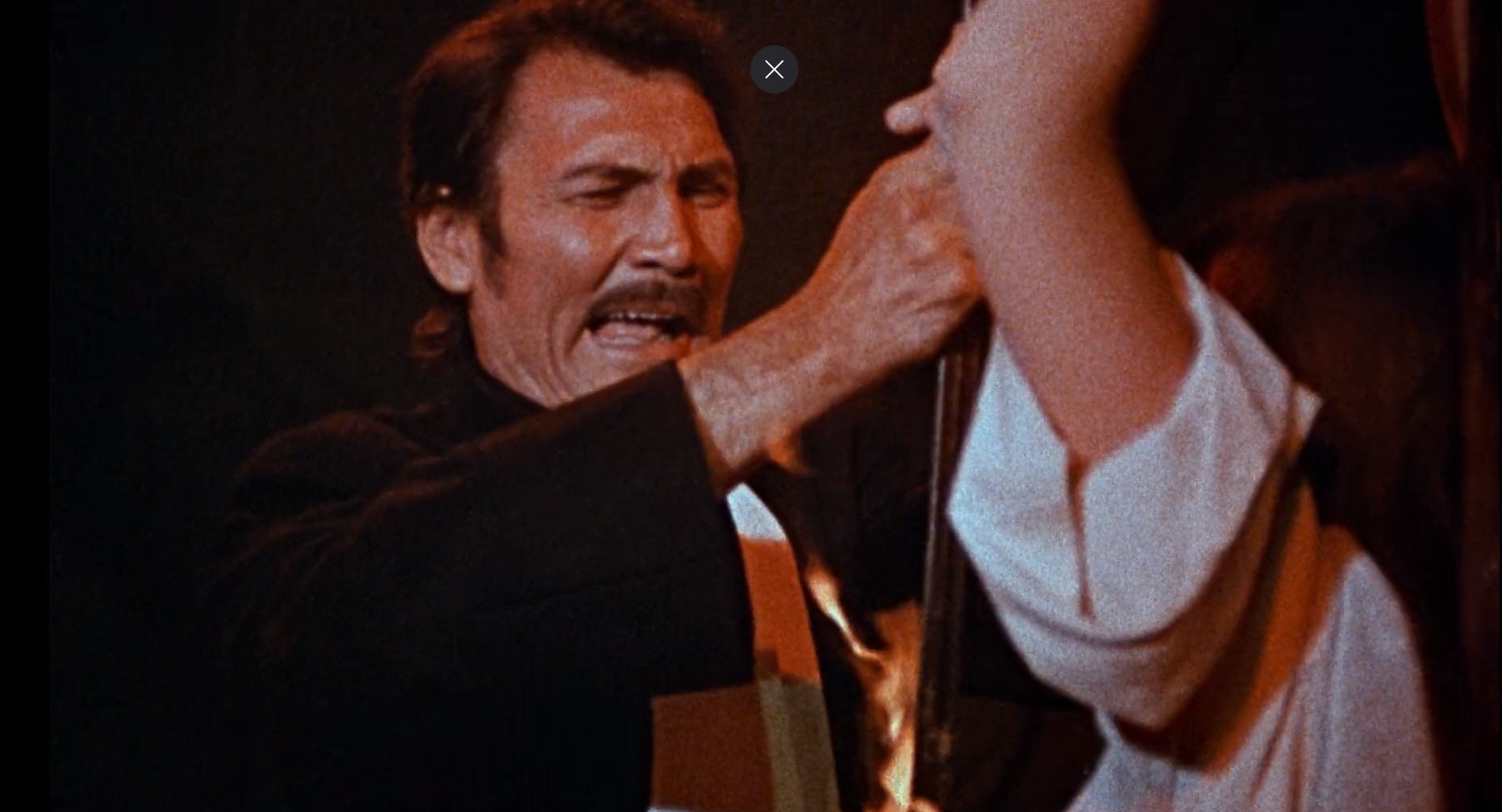
The question of who would bring this monolithic human-hydrangea?  Answer:  Dick Durock.  The 6’5” former Marine Durock was not afraid to jump into character skin, no matter how hairy, tight, or otherwise uncomfortable it might have been.  Durock may not have been the face of Dr. Alec Holland, played by genre cult actor Ray Wise (“Robocop,” “Twin Peaks”) before succumbing to transformational injury and rebirth, but the Indiana born actor certainly became the face of “Swamp Thing” throughout a decade with the sequel and the subsequent television show.  Durock captures not only the strength but also the humanity of the superhero in this origin story, a feat hard to accomplish for a man in a skin-clinging green and bulky suit.  Not to diminish Ray Wise’s performance by any means as the charismatic Wise is charming, passionate, and invested into making his Dr. Jekyll jive with the soon permanent Mr. Hyde to come, but as titular principal, Durock becomes the face of foliage on steroids.  Before solidifying herself as a scream queen, a young Adrienne Barbeau would have more difficulty in her Alice Cable role reflected in having some kind of feelings for essentially the same character in two versions played by different actors.  Yet, Barbeau beats the buggy Carolina heat as well as the differentiate obstacles by being a kickass government agent able to handle herself around the frighteningly new swamp creature and Arcane’s goon squad.  Before he was a James Bond villain in “Octopussy,” Louise Jordan donned the arrogancy of a tyrannical thinker yearning for the unique powers of others.  Jordan’s quite pretentious as the unrelentless Arcane and that makes the actor be the quintessential antagonist but I would not say his performance places his character in complete rivalry as “Swamp Thing’s” archnemesis.  Something is missing from their dynamics within their broad encounters that make the struggle appear impersonal and distant.  Even when Arcane ingests the formula and turns into a werewolf-like beast and the two superpowers clash, I wouldn’t label their conflict personally intertwined.  Perhaps Alec Holland and Alice Cable’s pre-mutation passion wasn’t strong enough or Swamp Thing’s deep-seeded desire for Alice wasn’t rooted well that makes Arcane just whither like a sun-beaten plant without water.  Another character that’s beaten into the ground is Ferret played by David Hess (“The Last House on the Left”) as head mercenary without any real power or absolute authority over his men, turning Hess more into like Tracey Walter in Tim Burton’s “Batman” but not as cool or as likeable.  “Swamp Thing” cast rounds out with Nicholas Worth (“Darkman”), Don Knight (“Death in Space”), Nannette Brown (“My Boyfriend’s Back”), Al Ruban (“1,000 Shapes of a Female”), Mimi Craven (“Last Gasp”), Karen Price, and Reggie Batts as the unlikely best child character in all of the film as an interesting and lone gas station attendant with hilarious, deadpan wisecracks. 

“Swamp Thing” may not be the first comic book superhero to be pulled from the DC lined colorfully illustrated and action-packed pages and adapted to the big screen but what separates the mucky-dwelling plant hero from the other is he’s cape-less, without ray guns and jetpacks, and appears as a monstrous humanoid rather than a regarded normal looking servant of justice as with Superman, Batman, or Wonder Woman.  “Swamp Thing” intrigues viewers with their own internal conflict stemmed from a foundationally laid idea that mutant creatures or unnatural monsters are inherently bad guys.  “Swamp Thing” becomes a part of that trailblazing group of grotesque good guys with hearts of gold.  Yes, the 1982 feature hasn’t held up over time with some of the low on the totem pole creatures suits and makeup I’ve seen, even with the agreeable Swamp Thing suit showing the rubbery creases and fold overs when Dirk Durock has to hold an object; however, to balance out the cut-rate features, special features picks up the tab with stunt boat chases, invisible pull wires, and a man set on fire that’s intense.  With a slashed budget, Wes Craven scripts on the fly to churn out a watered down but still flavorful cinematic origin story that’s full of heart and humanity and partly carried by the sweat and endurances of an eclectic cast and a handful of popcorn action patches.

“Swamp Thing” emerges from out of the muck yet again and onto a 2-Disc 4K/Blu-ray combo set from MVD Visual’s Rewind Collection label, specially marked as the first release on the LaserVision Collection.  The restored 4K UHD Dolby Vision is presented in 2160p and in a 1.85:1 widescreen aspect ratio on a BD100 while the Blu-ray is presented in 1080p high definition with the same aspect ratio on a BD50.  Each format presents two cuts of the film – a PG version and an international Unrated version – both of which have collated from various cuts of the film, resulting in some impressively rich grading that offers refreshed saturation levels of a lusher swamp environment.  More of that richness is conveyed through the UHD with providing deeper tones to make the swamps isolate and swallow characters while also have a sense of being alive amongst the hazy, knee-high fog, opaque waters, and thick vegetation.  Black levels look fine with the amount of grain that can vary from scene-to-scene but not compression issues to talk about on both spectacular approached formats.  The 4K offers a remastered DTS-HD MA 2.0 mono, which is same as on the Blu-ray, that unjustly limits “Swamp Thing’s” audible potential.  Dialogue has some deficiency projecting with all the tracks transmitting through a single channel that’ll force the up arrow on the volume setting or require a punchy soundbar or headphones to get to a clearer understanding of what characters are conversing.  The intrinsic ambience would have been better suited for multi-channel network to extract everything the swampy milieu had to offer, plus punchier fights, but if not an audiophile, these tracks will ultimately sate a viewer’s goal.  Range decently enough limps through despite the surround sound as we receive enough explosions and barrages of bullets to check that box, but depth struggles through the audio layers.  Both formats also include a Spanish language mono track and optional English subtitles.  Special features vary across the two releases with the UHD having limited extras due to storage but what is included is the PG version, the Unrated International version that includes Adrienne Barbeau’s topless scenes, an archive commentary with writer-director Wes Craven moderated by commentary director Sean Clark on both versions of the film, commentary with makeup artist William Munns moderated by Michael Felsher of the commentary/documentary conducting Red Shirt Pictures, also on both versions.  The Blu-ray contains the same extras above plus another Red Shirt Pictures’ interview with Adrienne Barbeau Tales from the Swamp, an interview with Reggie Batts Hey Jude, a discussion with Len Wein, the creator of “Swamp Thing,” the featurette Swamp Screen:  Designing DC’s Main Monster, the featurette From Krug to Comics:  How the Mainstream Shaped a Radical Genre Voice, photo galleries, and theatrical trailer. This must-own set, that caters to paying homage to the Laserdisc, comes retail green 4K Ultra HD snapper that in holds the 4K and Blu-ray on each side of the interior wall. The exterior features an illustrated encirclement of the main players – Dirk Durock and Andrienne Barbeau in comic character – on a single-sided front cover, sheathed inside a cardboard O-slip cover with the same cover art. Both disc presses also represent the original Laserdisc art. The insert contains a folded mini poster of the slipcover design. Two version, one release headline both the 91-minute PG and 93-minute Unrated version of the film with the entire package region locked in A. I may have finally watched Wes Craven’s “Swamp Thing,” but I won’t be the last as I highly recommend this stellar launch into ultra high-definition territory with the original quagmire superhero.

“Swamp Thing” on 4k / Blu-ray Combo!  Now Available on Amazon.com!

Is He an EVIL Vampire or a Just a Disturbed Young Man? “Martin” reviewed! (Second Sight / 4K UHD & Blu-ray)

Note:  Screen Caps do not reflect the Second Sight's A/V on this release.

“Martin” Limited Edition Second Sight Release Available at Amazon.com! 

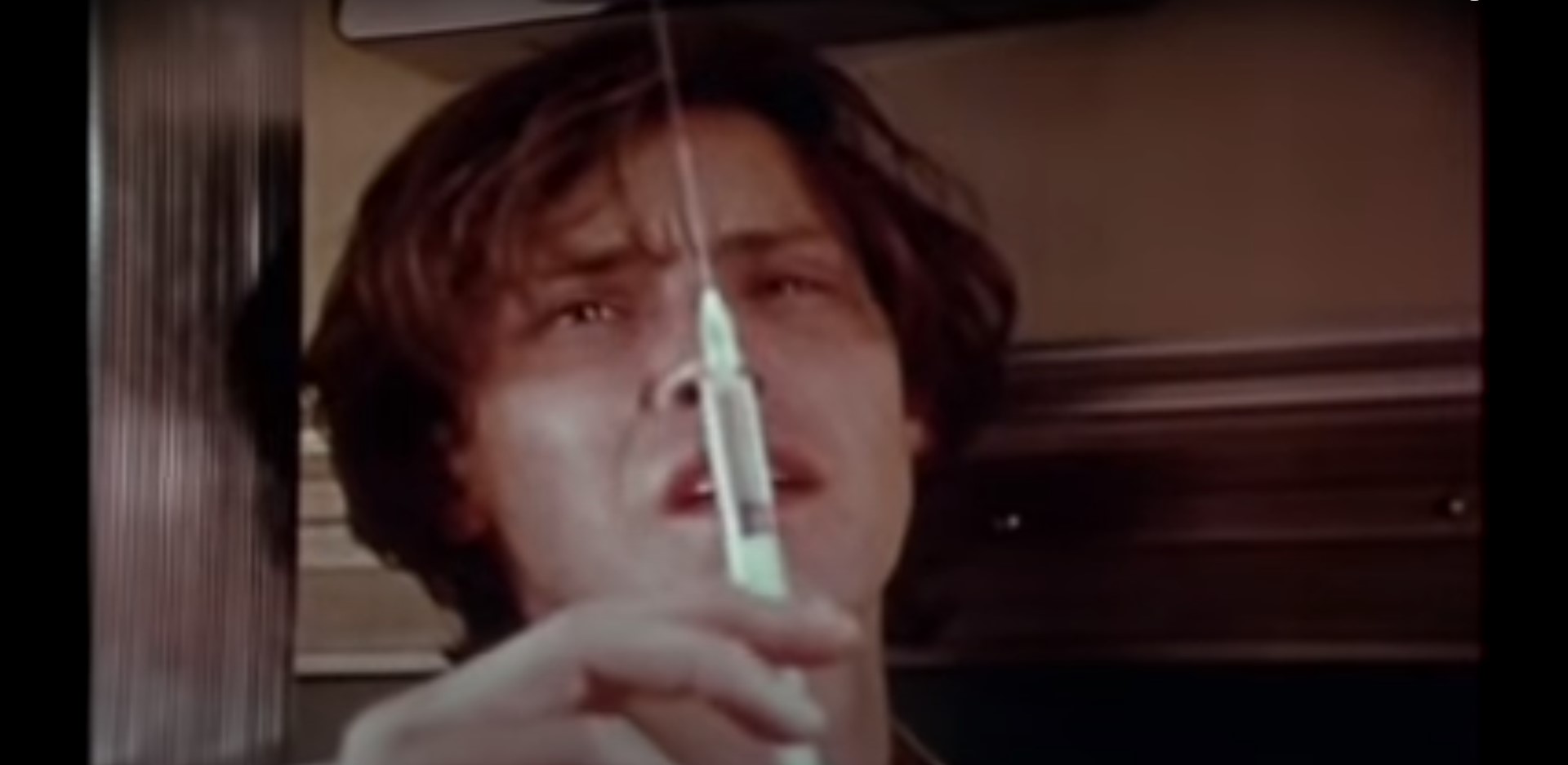
Martin, a young man from Indianapolis and upon recently lost his mother, travels by train to Braddock, Pennsylvania where he’s greeted by his elderly cousin Cuda, an old world believer that Martin has been selectively plagued by the family curse of vampirism and will take Martin in under his roof to cleanse his soul of evil, even if that means destroying him.  Though he doesn’t believe in the vampiric superstitions and the movie depictions, Martin truly believes he’s an 84-year-old vampire and does kill young, beautiful women to intimately drink their blood.  Being reserved and shy gives Martin an advantage to observe his potential victims from afar after gaining employment working as a delivery boy out of his cousin’s shop.  Cuda’s granddaughter, Christina, believes her lonely cousin’s mental illness is being exacerbated by grandfather’s archaic and draconian beliefs, fostered by a family history based off tradition rather than science.  When Martin meets an interested housewife on one of his delivery runs, the need to consume blood trickles when sex enters the picture, but also induces slipups in his well-oiled drug and drink operation whenever the need to feed becomes too much.

By now, “Martin” needs no introduction.  The father of the flesh-eating zombie, George Romero, delivered a neo-realism take on the vampiric mythology nearly 50 years ago in 1977.  “Martin” became the writer-director’s first all around filmic success after being royally screwed by the Walter Reade Organization for having failed to copyright the prints on the trailblazing and timeless classic “Night of the Living Dead,” the reason why you see so many Tom, Dick, and Harry remakes, revisions, sequels, and such of the 1968 black-and-white film that introduced zombies as flesh eaters, and a pair of box office failures that kept Romer in severe debt until slipping into business bed with producer Richard P. Rubinstein, the associate producer for Romero’s “The Amusement Park” and who would collaborate with Romero as a producer for the next subsequent decade years.  Filmed on location in the societal and industrial crumbling Western Pennsylvania town of Braddock, “Martin” remains one of George Romero’s quintessential and provocative pieces of work outside The Living Dead series under Rubinstein and Romero’s The Laurel Group production company.

In the titular role is the introduction of John Amplas who was discovered by Romero after watching Amplas in a play and the entire lead principal was reworked to accommodate Amplas boyish youth.  Amplas is instrumental to Martin’s success in a handful of ways:  the Pittsburgh native knew how to properly slink in an unsuspecting manner, he also didn’t overbear scenes and costars with a larger-than-life presence and could dip into this awkwardly retrieved guilt for the premediated murder to fulfill a need that either’s supernatural or unnaturally mental.  Amplas could walk that thin line that keeps the audience wondering how much Martin says and does is actually true or a misconception because of mental illness and this is coupled nicely with Romero’s direction, splicing in black-and-white scenes of gothic-laden, theater-esque vampire flashbacks that could either be a delusional reality or a very real backstory to Marin’s cursed heritage.  Polarizing external family forces in his elderly cousin Cuda (Lincoln Maazel, “The Amusement Park”) and age akin cousin Christina (Christine Forrest) combat on an emotionally taut and verbal levels between their corresponding character qualities of superstition and science that parallel Martin’s eventual damnation or salvation.  The principal trio are tightly compacted to strain the dynamic with a back-and-forth debate over which truth is behind Martin’s troubles.  Romero pens a good case for both by never fleshing out a legitimate truth all the way through to the end; instead, it’s a battle of save Martin from himself who understands the problem, wants to deal with it, but barely takes up arms to combat or even face his issues.  Special F/X legend Tom Savini, pre-trademark inky black mustache and goatee, makes his debut role as Christina’s boyfriend Arthur who serves only as a device to pull reason away from the table in a conflicted measure to pressurize Christina’s capacity beyond the limits of also caring for herself.  Eventually, Christina has to make a decision and, ultimately, choses herself to save, leaving Martin to fend against a sternly superstitious and old world Cuda.  Sara Venable, Roger Caine (“Dracula Exotica”), Donaldo Soviero, Francine Middleton (“The Love-Thrill Murders”), and Elyane Nadeau make up the supporting cast.

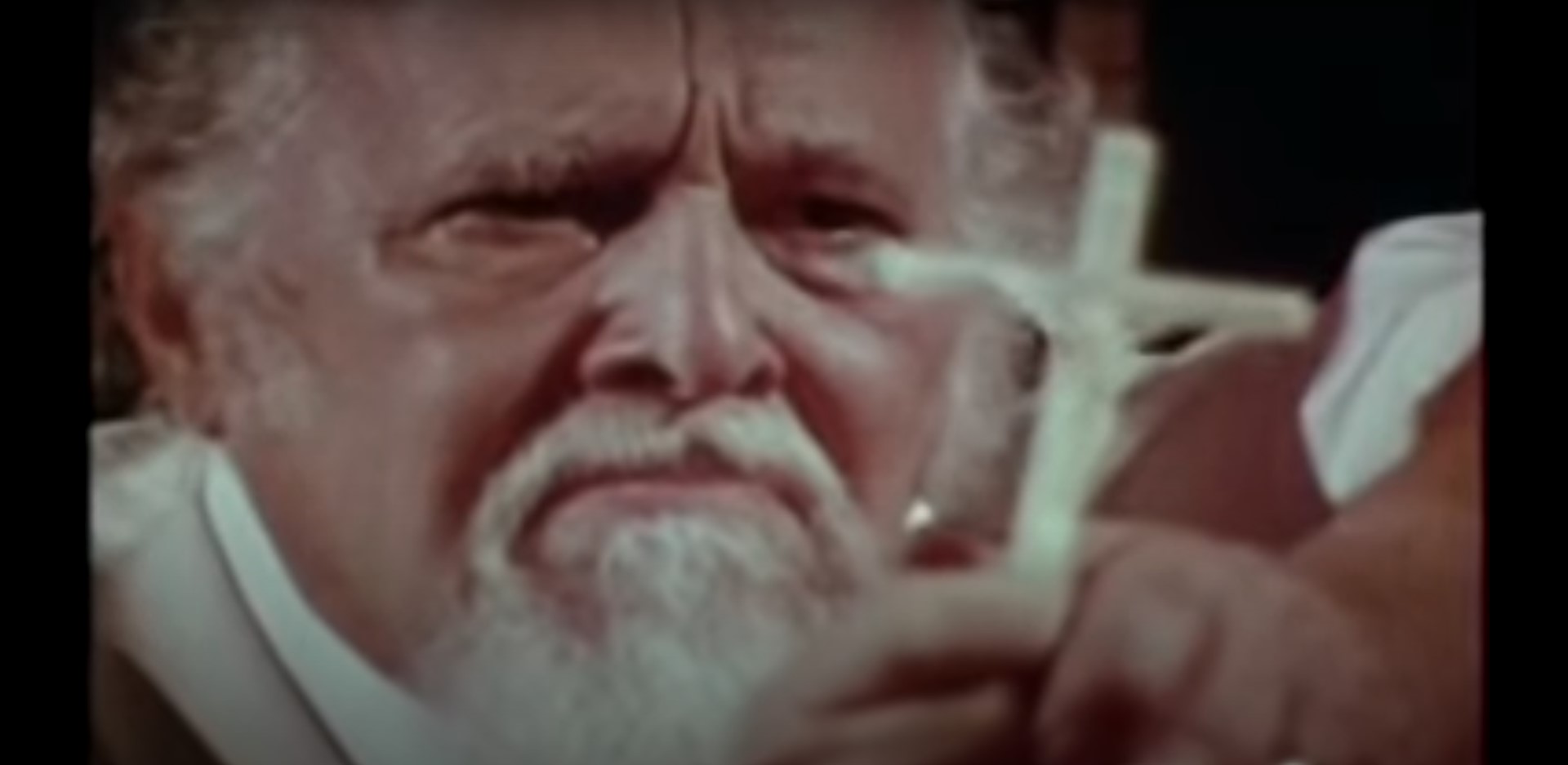
George Romero, again, redefines, or in a more fittingly descriptive – revamps, classic horror villainy that replaces the supernatural element with a realistic approach to weave the very fabric of horror into possibility while still hinting at something beyond the limits of reason.  “There is no real magic.  There’s no real magic, ever!” says Martin about the theatrical stereotypes used to display vampires in attempt by Romero to disenchant us from the ideologized mythos, the habitual characteristics, and the physiognomies of what we consider to be a night bloodsucker.  During that scene between him and Cuda, the words are potently effective in disapproving myths about vampires, but the words are supported with fact as Martin casually debunks garlic, crosses, and sunlight as vampiric weaponry at the expense of humiliating and entertaining Cuda.  “Martin” is at the forefront of being an allegory for loneliness and is a driving reason for presumably the real vampire’s gruesome habit to slice open wrists and drink blood.  Martin only targets young, beautiful women and becomes intimate with them while they are limp under sedation.  When he meets an equally lonely Mrs. Santini, a depressed housewife on the verge of an emotional collapse, and the two embrace each other with comfort against what dispirits them; disinterested in stalking her, Martin’s need to kill dampens and Mrs. Santini unhappy marriage in nullified by the young who listens more than speaks.  Maturity and youth meld together in a moment of peace between them but their bond still shows micro fissures of incompatibility that puts doubts into Martin’s 84-year, carefully planned practice and also doesn’t save Mrs. Santini completely from her too-little-too-late despair.  Braddock, Pennsylvania, a small town sinking into the slumps of becoming forgotten, is a once industrious backdrop integrated as a metaphor for being a forsaken place where things go to die.  Martin is sent to Braddock to paradoxically be cared for by a cousin determined to destroy him because of a family curse that afflicts select generations in what can be perceived as butting of heads between the defiance of angsty youth versus the traditions of an older individual set in the world with their linear ways of thinking.  

As aforementioned, “Martin” is a cult classic from one of the most notable masters of horror and as a film, “Martin” can stand on its own two feet on any format.  However, with that being said, UK home entertainment distributor, Second Sight, celebrates this early George Romero razor-edged thriller with a definitive 3-disc, 4K and Blu-ray release jammed back with software and firmware bonus content that fans can really sink their teeth into for a lifetime.  The limited edition UHD and Blu-ray O-slip box presents a 4K and 2K scan and restoration of a 35mm duplicate negative (note:  not from the original 16mm source) that has been supervised and approved by director of photography Michael Gornick and presented in the Academy aspect ratio of 1.37:1.  Considering the blown duplicated source of a 16mm grade, the 4K UHD scan on the BD66 won’t live up to 4K potential, as some may expect.  There’s quite a bit of varying levels detail discernibility, some shots look better than others, but the overall restoration renders a better than it’s ever looked product with natural grain and damaged reduced to some blue stock flaring around the side and edges, especially during night scenes.  Shadows looked deeper than previous versions, meaning that tenebrism isn’t lost amongst a softer image but rather creates depth with the additional of better sharpened edges to outline objects between the light source  Some speckle debris filters through at times but not enough to cause major concern with the overall experience watching and enjoying the restoration that has HD enhanced grading to make blood that richer technicolor coral color used in my subsequent Romero “Living Dead” films up to “Day of the Dead.”  The Blu-ray’s 2K works just as well due to the scrappy source equipment of what the budget allowed, delivering a fine product of the best transposed transfer known to fan kind and beating out the Lionsgate’s warming grading with a cooler, more hardline detail and delineation picture. The massive release comes with three audio options – an English DTS-HD 5.1 surround sound, an English DTS-HD 2.0 stereo, and an English DTS-HD 1.0. Though Martin audiophiles will likely gravitate toward a multiple channel output, “Martin” is one of those select features that does better in a less-is-more return by not forcing the limited and stronger signals, such as the dialogue and Donald Rubenstein’s experimentally spiritual score, to encoding competition with the milieu ambient and boom recorded sound effects, that for the most part, are background support for the bigger, better one-two punch of clean, clear, and presently full dialogue and a consciously curated soundtrack to walk with Martin every step of his journey. There’s a pinch of popping and a low-emanating droning that very discreet and negligible that won’t affect the experience on bite…I mean bit. English SDH are optional. Bonus materials are what shape the Second Sight releases to be greatly desirable amongst fans as the company continues to produce high-quality encoded bonus features as well as carefully and professionally organized tangible items inside the box. Both 4K UHD and Blu-ray have the same encoded bonus features that include four audio commentaries of old and new. The two archived commentaries include George Romero, John Amplas, and Tom Savini in one set and the other with Romero, Savini, Richard P. Rubenstein, and Michael Gorrick. The new commentaries are with Kat Ellinger, editor-in-chief of Diabolique Magazine, and the second with the recently deceased film curator, Travis Crawford. A vintage 2004 documentary from the Lionsgate release is included in the set with remarks from Romero, Savini, Gorrick, Donald Rubenstein, and Christine Forrest along with a new documentary echoing much of the 2004 doc, in collaboration with Severin Films, with John Amplas, Michel Gorrick, and Tom Dubensky strolling through Braddock, which hasn’t seemingly changed from the depths of poverty, on a raining day recalling nearly every moment of production during principal photography. The new doc includes other insights from Forrest, Savini, Tony Buba, and Sarah Venable in what feels like a complete celebration and overview of their entire journey through Romero’s personal favorite film. Donald Rubenstein also has a new interview discussing his score and meeting and working with Romero on a positive level. The disc features round out with one of Tony Buba’s short films “J. Roy – New and Used Furniture” revolving around the town of Braddock and the trailer, TV and radio spots. The third disc is the CD form of Donald Rubenstein’s soundtrack laid out in 22 distinct musical numbers. The limited-edition exclusive contents include a rigid O-slip case with a simple, yet effective sterile while and red font color contrast with MADE IN U.S.A. augmented razor blood with vampire teeth and blood dripping from the bottom right corner and a blood dripping cross squarely centered on the back. Inside the slipcase, a thick 104-paged color booklet with new in-depth essays and insights from Daniel Bird, Miranda Corcoran, Heather Drain, Kat Ellinger, Andrew Graves, Alexandra Heller-Nicholas, Elena Lazic, Stephen Thrower, Jon Towlson, Simon Ward, Tony Williams and an interview with Tony Buba by Travis Crawford. The booklet also contains colorized, behind-the-scenes photos of production and numerous one-sheets, promotion poster and ads, and a beautifully, expressionistic illustrated front and back cover. Adam Stothard illustrates 5 character lobby cards, including John Amplas’ Martin, Christine Forrest’s Christina, Tom Savini’s Arthur, Lincoln Maazel’s Cuda, and George Romero’s Father Howard. All 3 disc arts are the same as the front cover the release and contained a trifold, punch-lock case in reverse colors of the slipcase. The 4K UHD is region free but the Blu-ray is confirmed region locked B so you’ll need a region free or region B player. The runtime clocks in at 95 minutes and is certified 18 for sexualized violence and sexual threat. Second Sight must be a Disney fan with their monstrous beast of a limited edition that is also a thing of beauty; “Martin” deserves every square inch of this physical and digital display of expressionistic vampirism of underrated performances and from the mind’s eye of a dauntless George Romero, unafraid to take risks, show blood, and understand the human condition.

“Martin” Limited Edition Second Sight Release Available at Amazon.com! 

EVIL Follows the Virtuous. “Justine” reviewed! (Blue Underground / 4K UHD & Blu-ray)

Own Your Piece of Virtue with this 2-Disc “Justine” set from Blue Undergrounda and MVD Visual!  

Unable to continue their religious education, left with a meager currency to afford room, board and food, and holding no station or options for social pursuit, Justine and her sister Juliette are put out to the streets of 18th century France.  While Juliette recruits herself into a Madame’s established brothel for money, shelter, and sleight of hand opportunities, leading a life sinful in flesh, murder, and exploit that reaps luxurious benefits into high society, a more chaste Justine finds her path to be far less desirable.  Her virtue becomes the object of obsession, lust, and is taken advantage of for other’s personal gain.  No longer protected by her parents or the convent’s shelter, Justine is exposed to the wickedness of the world in every form and fashion with only slithers of bliss here and there as a reward of her decency only to be immediately snatched from her grasp before she can even enjoy a second.  Accused of stealing and murder, tortured and branded, imprisoned and convicted, labeled an escaped enemy of France, and with her virtue corrupted by a cult of pleasure seekers, Justine questions a life led in chastity and overall goodness that has brought her nothing but pain and strife. 

On the heels of my own personal overseas trip to France, a trip for pleasure if you must know, I found it timely and fitting that the Jess Franco directed film, the Marquis de Sade’s “Justine,” would be the next celluloid critique of enticing pulpy obscura.  A part of a pair of Marquis de Sade-themed productions from producer Harry Alan Towers, the other being “Eugenie,” the Eurotrash sexploitation is based off Marquis de Sade’s 1791 novel Justine, or The Misfortunes of Virtue and is adapted for screen by Towers from an original treatment penned by Arpad DeRiso (“Death Steps in the Dark”) and Erich Kronte. “Justine” is one of Franco’s most ambitious visual epics with ornate time period customers, elaborate and grand locations, and an anthology of sorts of the titular character’s misadventures through France that disenchant her chastity. Corona Filmproduktion and the Aica Cinematografica S.R.L. served as the co-productions of this Italian-Spanish 1969 film.

Perhaps the most recognizable and most notable adaptation of Marquis de Sade’s novel, “Justine” is also popularized by its identifiable cast with big names in not only Europe but also in America. The opening scenes with Klaus Kinski, in a wraparound narrative as the Marquis de Sade himself imprisoned and suffering visions of bloodied and bound naked women, immediately draws you into the “Nosferatu the Vampyre” and “Schizoid” actor’s character plight and muted damnation into writing about virtue, a misfortunate respectability. The other famous face in the film, one that spans from Europe to the U.S., is Romina Power as the titular “Justine.” Power, daughter of actor-songwriter Tyrone Power, was, in her own right, a well-known Eurovision singer after the release of the Franco film, but it was her father’s musical talents who landed the sweet-faced Romina into the denigrated young woman role. While Kinski acts on pure facial expression alone, using his iconic, distinct facial features, Power offered a more rigid approach like a child locked by confusion and while unintentional and usually not what any filmmaker wants in a devoid of relaying vicarious expressive emotions, Power naive innocence proves key to Justine’s, well dare I say it, naive innocence. Power’s beauty alone could have stood ground in making the attack from angles perversity film work like a charm. One of the more surprising casted members is Jack Palance. Yes, Curly from “City Slickers” or Jake Stone from “Cops and Robbersons” outlines the formidable pleasure-seeking cult leader Brother Antonin with such gusto flamboyance, the must-see and most-enjoyable performance seemingly feels alien to the usual stoic and stern typecasted actor who could rival Clint Eastwood with a fierce thousand-yard stare. Having co-starred in the Franco-de Sade film “Eugenie” a few years later, Maria Rohm, aka Harry Alan Towers wife, plays the role of Juliette and while the story is ultimately a dichotomy of virtue and sin, there’s an imbalance between the two characters for screen time. The Marquis de Sade’s novel was named “Justine” after all. For her alotted screen time, Rohm provides a suitable sinful scarlet woman climbing the aristocratic ladder by cheating, stealing, and killing her way to the top. The cast fills out with Harold Leiptnitz (“The Brides of Fu Manchu”), Horst Frank (“The Cat o’ Nine Tails”), Gustavo Re (“Horror Story”), Sylva Koscina (“Uncle was a Vampire”), Akim Tamiroff, Rosalba Neri (“The French Sex Murders”), and “99 Women’s” Mercedes McCambridge in an unforgettable role as a nasty gang-leading woman whose high-velocity cruelty rockets are so homed in on Justine it’s explosively devastating to watch.

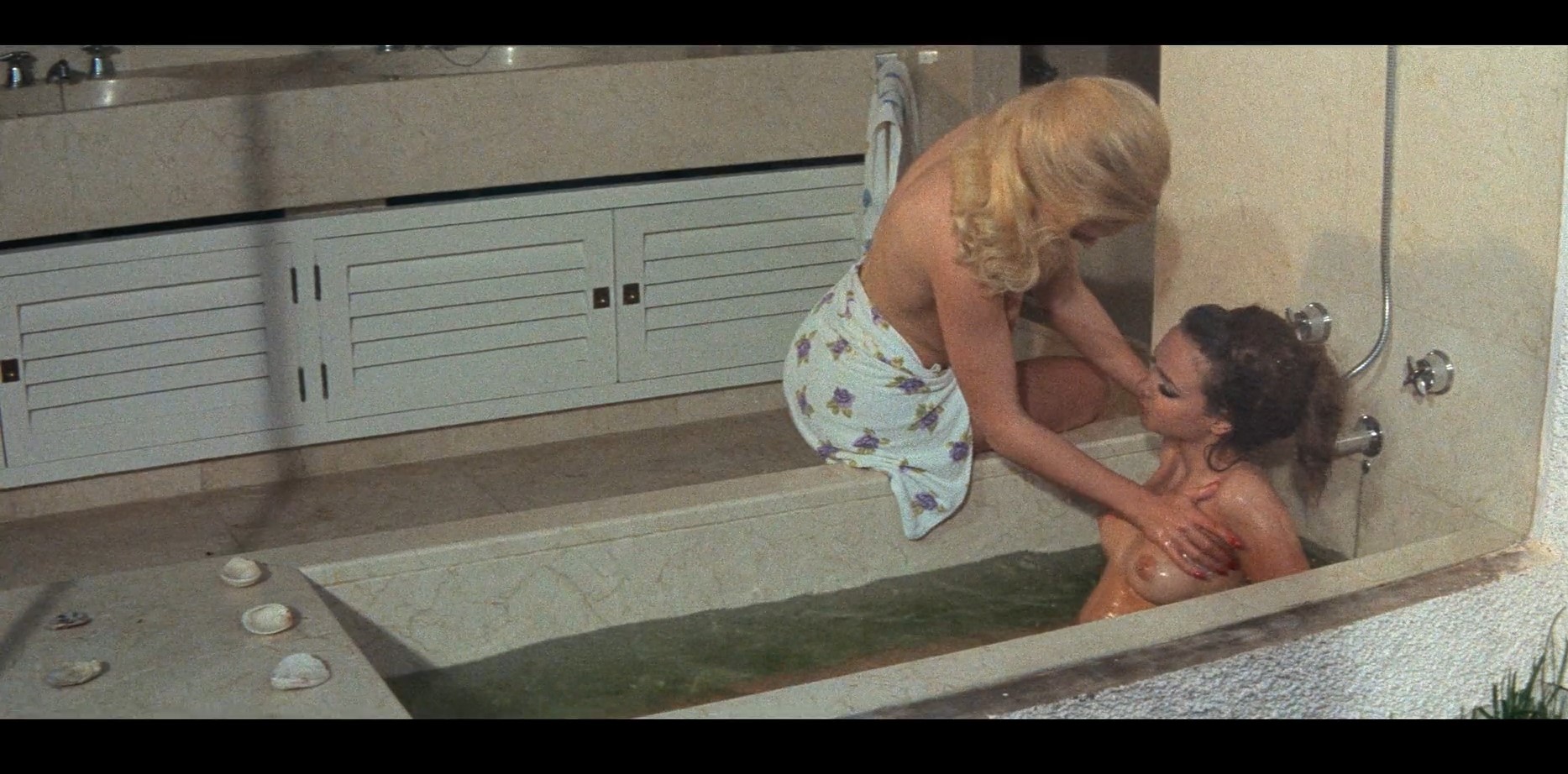
Having seen the elegance of interior architectures inside Paris’s Opera house, walked the cobblestone streets surrounding the monumental Eiffel Tower, and taking in the laissez-faire of the French way of life, I can honestly say Jess Franco captures France impeccably well for an self-exiled Spaniard known more for his sleaziness and horror than his efforts in cinematic expressionism.   Arching with one big showcase revolving around the idea that virtue will get you nowhere and will be nothing but trouble, ultimately putting to question the validity of the decency concept, the narrative is broken up into a mini-scenarios, mostly of Justine being completely subjugated to the wicked whims of others and a handful of Juliette erecting a better life off the backs of others she’s duped or snuffed.  Franco mastered false hope and misconceptions with each of Justine’s encounters as they lure her in with promises of salvation to then only kick her when she’s down and reap full advantage of her inexperience and gullibility that the world is full of good people.  Sordid and cruel, “Justine” is a contradiction of actionable cynicism in the foreground of depicted magnificence in location, costume, and cinematography choices that hews into the coarse callousness; one particular scene comes to mind involves Jack Palance’s Antonin arranged with hand positioning that abbreviates the name Jesus Christ and as Antonin is holding this hand arrangement, he seemingly glides or floats down the stone corridors toward Justine, demonstrating religious imagery as a form of abusive power or corrupted guidance to serve one’s own deviant devices.  Though labeled in some circles a sexploitation film and certainly full of skin from Romina Power, Maria Rohm, and Rosalba Neri amongst others peekabooing their assets through cut potato sacks during the sex slave orientation scene, much of the sex is heavily implied with a limited gratuitous outcome.  Before going fully into an Eurotrash market by the late 70s and all the way through to the 90s, Franco made every effort to be a considerable filmmaker for a broad audience in numerous countries and his dislike for censorship shines through to his work, despite the likelihood of costing him acclaimed fame as a director. 

“Justine” arrives on 4K UHD in a Blu-ray combo set from Blue Underground.  The two disc set is AVC encoded Blu-ray 50gig and a triple layered Blu-ray 100gig with 1080p (standard BR) and 2160p (UHD) high-definition resolution, and presented in the original European widescreen aspect ratio of 1.66:1.  The brand new 4K restoration from the uncensored original camera negative of the 35mm film with Dolby Vision HDR is a foremost upgrade to the highest power, an ultra-balanced grading that reels in a wide variety of colors from interior to exterior that helps bring the ornamentation of 18th century France to a vivacious life on screen.  The saturation is enriched and finitely retuned to deliver the best and naturalistic grading as humanly possible, or as current technology allows.  The Blu-ray offers a just as reasonable presentation but does lack that high attention to detail because of the lower pixel count.  Bitrate decades are a comfortable average in the high 30s to low 40s.  The UHD and standard Blu-ray offer a clean and free from compression artifacts with immeasurable format capacity to render an unimpeachable picture. Both formats come with an English DTS-HD mono, dubbed in English by voice actors and not the original cast. No hissing, popping, and only a slight interference hum. Dialogue is dub boxy but clean, clear, and right forefront without question of what’s being discoursed and is well-folded into the ambient and Bruno Nicolai epic vein-coursing score that triumphs a military march over a classical base. English SDH are optional. In regard to special features, both formats include a new audio commentary with film historians Nathaniel Thompson and Troy Howarth and the French trailer, but the Blu-ray contains archive interviews with director Jess Franco and writer-producer Harry Alan Towers, an interview with author Stephen Thrower of Murderous Passions: The Delirious Cinema of Jesus Franco, a new interview with actress Rosalba Neri, in Italian with English subtitles, On Set With Jess, a newly expanded poster and still gallery, and a Jess Franco dreaded censored cut of the Americanized shorter version of the film under the “Deadly Sanctuary” title in HD and clocking in at 96 minutes, a nearly 30 minutes shorter. The physical features mirror the “Eugenie” 4k/Blu-ray release with a black Blu-ray snapper case with similar thickness. A shackled Justinne graces the front cover, as with the previous DVD Blue Underground release, and has the same cardboard slipcover with an oval shaped like mirror cutout to not block the half-naked Romina Power. Back covers are both the snapper case and cardboard cover have the same layout design but different still images on each. Inside, there is a disc on each side of the case held in by a push lock. The UHD is a sizzling infrared and sultrier posed version of the snapper cover while the Blu-ray, in the same red hue, is a composition of characters clustered together in a circular design. The film comes not rated, region free, and has the presentation feature with a runtime of 124 minutes. The Marquis de Sade divulges a sardonic, topsy-turvy belief that the more you stay virtuous, the more trouble follows as it’s the way of the world and the more you swindle, the more headway you make in life. Jess Franco brings the Marquis’s vision to cinematic life with a grand and sordid tale, dissevering the two ways toward their individual soul crushing path, and discovering morality within the immoral.

Own Your Piece of Virtue with this 2-Disc “Justine” set from Blue Undergrounda and MVD Visual!  

Never Weekend on Sadomasochists’ EVIL Private Island Alone! “Eugenie” (Blue Underground / 4K UHD and Blu-ray)

“Eugenie” is Waiting to Tell You Her Story of Perversion!  See It Now on 4K UHD at Amazon.com

A wealthy, sexually sadistic Madame St. Ange, a specialist in the Marquis de Sade’s teachings, entices to coerce the father of a young and beautiful innocent girl, Eugenie, St. Ange befriends to permit the naïve teenager to visit Madame’s private island for the weekend.  Excited and overjoyed with the idea of feeling like an adult indulging in mature activities, Eugenie is unaware that Madame and her equally as cruel stepbrother and lover Mirvel, who has been beguiled by Eugenie’s beauty, have ulterior motives and lured the unsuspecting youth into a ritualistic trap of sexual corruption and sadomasochism.  The step-siblings drug and rape Eugenie for their unspeakable gratifications only for her to awake in what only be explained as horrible nightmares of phantasmagorical encounters but when the nightmares unveil a disturbing reality when the dogmatic Dolmance and the rest of his Marquis de Sade acolytes arrive to initiate Eugenie into more than just pain and pleasure educations but to be a pawn in a murder scheme that tears the very fabric of virtue. 

Spanish director Jesús Franco, or widely known as Jess Franco, helmed an excessive number of provocative-pushing films over his nearly 60-year-career as a filmmaker before his death in 2013.  Many of the once labeled video nasties director were crafted on a tight budget with an even more so tight timeline as Franco churned out regularly mostly trashy horror and sexploitation that would more than often wind up in the projection booth of local red light district theaters for a dime and a wank.  Yet, “Eugenie” strokes a different kind sensation, one that lies in the ethereal concept of sexploitation and the ruin of youth made to order by the Marquis de Sade himself and artfully stitched by Jess Franco’s profundo knowledge of cinematic sculpturing.  “Eugenie,” or “Eugenie…. The Story of her Journey into Perversion” in the extended title, is based off the French 1795 novel, La Philosophie dans le boudoir (Philosophy in the Bedroom) written by de Sade and the script adaptation is penned by “99 Women” and “Christina” screenwriter and profound producer of film, Harry Alan Towers.  Towers also produces “Eugenie” under the pseudonym of Peter Welbeck for Video-Tel International Productions and was theatrically distributed by Distinction Films.

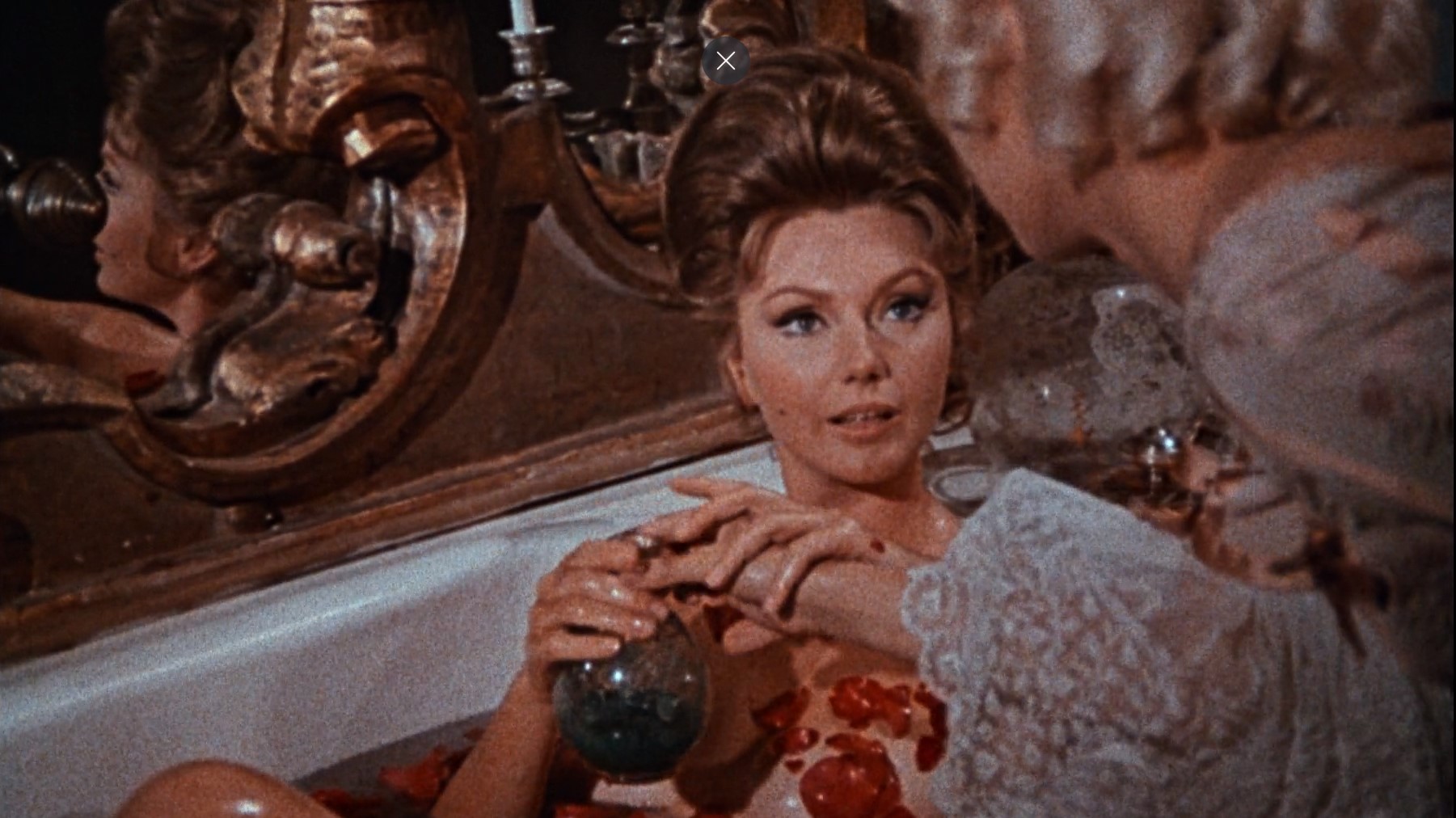
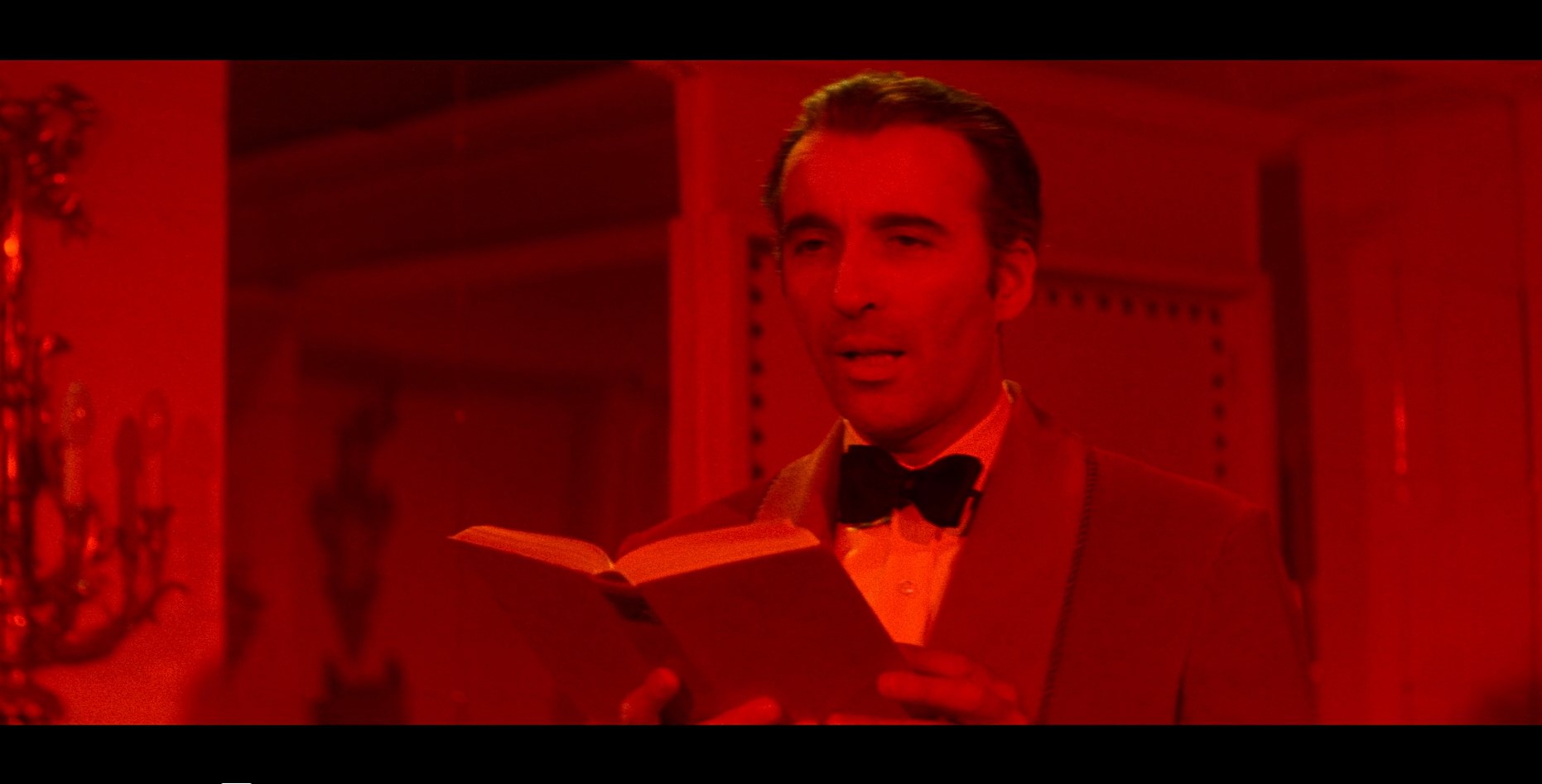
At the frayed edge of an already soul crusher subject matter, “Eugenie” repels against the grain of easily digestible roles,  Marquis de Sade’s characters are sadomasochist with abhorrent qualities of deception, malintent, and insatiability for a cathartic release from sexual pleasure and punishing pain.  On the other side of the coin, Franco and Towers film calls for the characters to push beyond the limits of their comfortability around the idea of drugging and raping, or being the victim of such, as well as violence and murder as part of a cult normalizing and rationalizing unrestrained freedom and ideology.  Swedish born actress Marie Liljedahl had a brief stint in erotica, as a power-seductress as the titular Inga, and only dabbled with sexploitation, “Eugenie” being that dabbled powder only once snorted to warrant a sudden disinterest in the theme altogether.  Liljedahl plays the titular character and she looks every bit the age later-aged teen with a round, youthful face, vibrant demeanor, and curvaceous like a ripe peach.  Like that knot forming in your gut spurred from anxiety, watching Eugenie exploited while in a stupor is the equivalent imaginations of what the deplorable effects and actions of a roofied drink that produces vague and foggy recollections and disbeliefs in what is reduced down to a vivid dream gone wild.  The two inveiglers at the heart of Eugenie’s virtuous destruction quickly become despicably loathed by not only their debauchery plans to corrupt good embodied but also by their snooty affluency and their acrid arrogance with the help.  “The Blood of Fu Manchu” and “99 Women” blonde beauty, Maria Rohm, and the stern faced “Succubus” and “The Vampires Night Orgy” actor Jack Taylor exemplify the essence of evil as the de Sade principled lovers and step-siblings Madame Saint-Ange and Mirvel.  The opened-ended lust Mirvel has for Eugenie morphs into a determined, nagging desire to have her at all costs, kept close to the chest by Taylor but knowing it’s simmering quickly to a head, and you can see in the Madame’s eyes that she’s either really internally pissed about Mirvel’s narrowed focus on a new toy or she’s basking in her ideology’s unchained gratification.  Rohm’s nonaligned decision maintains Madame’s sensual composure and undisclosed intentions until the shocking end.  The presence of Sir Christopher Lee in a Jess Franco film isn’t all that surprising.  The legendary, late British actor – “The Blood of Fu Manchu,” “The Bloody Judge,” and “Count Dracula” – where a handful of euro trashy and exploitative horror that were released around the same time as “Eugenie,” but “Eugenie” garishly bathed in the idea of sexual misappropriations and Lee being a last minute addition due to another actor’s ill-fate, agreed to fulfill the role without knowing how involved the nudity would ultimately land perverted cuts of the film into spank cinema houses.  Lee’s red smoking jacket, elegantly stoic composure and dialogue delivery, and his incredible ability to perform an intimidating figure without as much as lifting a finger compounds the value of Franco’s filmic adaptation to the point where I firmly believe with the original slated actor George Sanders (“Village of the Damned, 1951) in the ringleader and adherent role of Dolmance would likely have not have been half as good.  Anney Kablan, Paul Muller (“Vampyros Lesbos”), Uta Dahlberg, and Maria Luisa Ponte (“El Liguero Mágico”) costar.

Through an ocean of film filth, “Eugenie” may be the very film that proves Jess Franco is a cinematic genius in his own rite by capturing de Sade in the flesh, so to speak, with a plain-sighted fetish that diabolically hatches a scheme within a scheme.  In addition, “Eugenie,” dare I say it, almost feels like a Hammer film, especially with Lee in the picture.  The interior sets are modernly gothic with sleek and sterile furniture but garnished with large candle holders and the Marquis de Sade era sartorial worn by Dolmance’s muted followers. There’s a cadence to Franco’s story, one that leaves breadcrumb plot aspects to go against divulging a straightforward story right from the start, and the history between acquainted characters is contentious and fraught with unpleasant emotions in the act nice, play nice master sadists and the subservient help hierarchy that hints at a fraction of degrading minorities. Saint-Ange and Mirvel boatman Augustine, a black man who has his life reborn from the ashes of poverty only to be toiled as their attendant and frivolous plaything when the mood is right. There’s also deaf and mute woman brought on to be the new maid in a moment’s conversation between the siblings just to drop a dab of her presence amongst them. Augustine and the maid represent the lower class of people, a man of color and a woman of disability, to easily take advantage of just like Saint-Ange and Mirvel do with Eugenie’s innocence. France shies away being overly showy in slipping in this unjust dynamic that unfolds bit by bit as mentioned earlier of Franco’s revelation design. “Eugenie” not only dangles the attractive set locations and nudity carrot to draw attention but also invests in its talent as Frnaco the cherishes the cast of individual portrayers with longer shot moments to speak volumes of their unique objective or to pedestal them in their own keynote scene of power and, subsequently, obliteration that makes every occurrence worth noting and not just something to write off. “Eugenie” has no tears or apologies to spare but only inhuman indecencies separated by a blurred, unfettered line of sex and sadism satisfactions. This is Jess Franco at his finest.

The 1970 “Eugenie” print takes on more pixels, 2180p to be exact, with 4K UHD transfer and a re-release 1080p high-definition Blu-ray in a 2-disc set from Blue Underground. The 4K restoration from the original camera negative with Dolby Vision Hi-Def resolution on a 66GB, double layer UHD and is also on an AVC encoded Blu-ray that are both presented in an anamorphic widescreen 2.40:1 aspect ratio. Both transfers execute their respective program, offering an average frame rate of mid-high 30s Mbps, but there’s a focus issue with the transfer brought upon likely at the origin of filming and we know this because the frame rate never drops, staying consistent throughout the issue. Periods of unfocused detail come and go between edits and often in the same shot as if attempting to render delineation between the foreground and the background in order to get the shot on the fly (there are many instances Franco had limited time to shoot). Color grading, including skins tones, are natural appearing until the red tint, a symbol of when the subject matter becomes dark, eliminates and reduces vast color palette to one single hue. Both formats offer an English and French dub language 1.0 mono mix that buff enough to be ample; in fact, the mix is rather good considering the single channel with substantially clarity with no hissing, popping, or other blights on the dialogue track, Foley, or any track for that matter. Subtitles are offered in English, French, and Spanish. If you’re looking for special features, they mostly encoded onto the second disc, the Blu-ray, with Perversion Stories, a retrospective interview with the late Jess Franco, writer Harry Alan Towers, and stars Christopher Lee and Matrie Liljedahl discussing the behind-the-scenes measures and understandings of the sexploitation classic, Stephen Thrower on Eugenie, an interview with the author of “Murderous Passions: The Delirious Cinema of Jesus Franco,” a new interview with costar Jack Taylor Jack Taylor in the Francoverse, a newly expanded poster and still gallery, and theatrical trailer. The 4K disc also has a new commentary with film historians Nathaniel Thompson and Troy Howarth, plus a theatrical trailer. A two-disc UHD case holds a disc on each side of the interior and the case itself sports the class naked Eugenie pose with her brown locks draped over her shoulders, covering her chest. Speaking of covering, the snapper case is sheathed in a O-slipcover with oval cutout of the front to display Eugenie with a Victorian-aged mirror border. The darkened slipcover is also prominently titled under Marquis de Sade’s novel English moniker, “Philosophy in the Boudoir” that has a regal and classic aesthetic. The unrated, 87-minute film has an all-region playback. Jess Franco distills revolutionary extravagance and couples it with the notion that youth will inevitably be corrupted by family, friends, and a group of cruel Marquis de Sade cultists in what can be construed as one of the director’s most prestigious sexploitation and melodramatic films of his oeuvre.

“Eugenie” is Waiting to Tell You Her Story of Perversion!  See It Now on 4K UHD at Amazon.com