EVILFormers: Robots in Disguise! “Crash and Burn” reviewed! (Full Moon Features / Remastered Blu-ray)

“Crash and Burn” on Blu-ray from Full Moon Features!

In the year 2030, the global economy has collapsed and the most powerful organization on the planet, Unicom, controls most of the national markets with scrutinizing oversight.  What makes matters worse is years of pollution and nuclear naivety is dissipating the ozone layer, exposing the Earth and its denizens to altering ultraviolet rays that scorch the Earth with thermal storms, turning much of the terrain into wastelands. Out in the middle of nowhere in one of those barren lands, Unicom errand boy Tyson Keen delivers freon to an isolated Unicom television station fabricated from an old powerplant.  An impending thermal storm forces Keen to stay overnight with the motley crew of station personnel and televised guests.  When the thermal storm knocks out the power, they discover the station chief has been murdered, revealing the chief’s involvement with the Independent Liberty Union, a rebellion group against the mighty repressive Unicom, and secret plot involving Unicom’s illegal use of synthetic people to infiltrate the station to stop dissident behavior. 

2030.  That’s only five years away, folks!  Get ready for the global financial downfall and fallout when the ozone also says peace out after years of abuse.  Giant robots and subverting T-800s, I mean synthetic androids, are exploited for corporate gain and power over the few who resist.  Actually, if you think about it, the premise of 1990’s “Crash and Burn” might actually be happening now, today, five years earlier by the sound of it!  The Full Moon production, helmed by company founder Charles Band, (“Trancers,” “Doctor Morbid”) and written by J.S. Cardone (“Shadowzone,” “The Forsaken”), is seemingly ahead of its time with the exceptions of mecha robots and a vastly dusty wasteland of the Earth’s surface, complete with temperature rising thermal storms.  Unofficially considered a sequel to Stuart Gordon’s “Robot Jox,” another Full Moon production released the year prior, “Crash and Burn” is produced by “Nightmare Sister’s” David DeCoteau and John Schouweiler with Band and Debra Dion serving as executive producers.

The futuristic dystopian thriller plays out much like a slasher with a group of people hunkered down safely in shelter until one-by-one they’re picked off.  Paul Ganus (“The Monolith”) acts as the Unicom outsider Tyson Keen, a motorcycle-riding delivery boy just needing cash to get by in turbulent times, inside an established dynamic of a reclaimed power station used for Unicom television broadcasting where Ralph Waite dons the station chief shoes of Lathan Hooks, Megan Ward (“Arcade”) in the role of Lathan’s tech expert, teenage daughter Arren, Bill Moseley (“House of a 1000 Corpses”) as the station’s handyman Quinn, Eva LaRue (“Robocop 3”) educating the children over the TV waves as Parice, and Jack McGee (“Rumpelstiltskin”) in the blowhard and perverse egotistical TV host role Winston Wickett.  There are also two Winston Wickett guests, flesh and blood adult actresses who came back into the business after Unicom banned robot porn star and are being roasted by Wickett for their licentiousness, played by Elizabeth Maclellan (“Puppet Master II”) in the non-nude role of Sandra and Katherine Armstrong (“The Arrival”) in the topless required role of Christie.  Sandra and Christie are opaquer when it comes to their purpose as the two seemingly nomad women obviously need the money Wickett promises them to do the show to continue moving from place-to-place, but they put up with Wickett’s pompous and chauvinistic degrading being, even sleeping separately in the same quarters as the television host without wearing clothes.  There are dialogue moments between them that suggest there’s more to their relationship than what’s in exposition but never fleshes out; instead, Christie fleshes out in a shower scene with Bill Moseley’s Quinn for a brief cleansing.  The above cast of characters set the same for a “The Thing” similar mistrust when one of them is suspected to be a sabotaging, murderous robot in human skin, they even do a blood test too.  Solid performances all around with Moseley outshining most and Megan Ward’s innocence really comes through in her debut as a teenager while Ganus can be a suitable leading man but lacks the presence where it matters.  Jon Davis Chandler (“Carnosaur II”) and Kristopher Logan (“Puppet Master III:  Toulon’s Revenge”) round out the cast as two wasteland gas attendants close to the isolated power station.

“Crash and Burn” is an enjoyably campy, science-fiction horror that derivatively cherry-picks from other films in the genre.  From “The Thing” to “Aliens,” to even Full Moon’s own production “Robot Jox,” “Crash and Burn” puts other sci-fi cult films’ best elements together to form something new that instills a sense of isolating tension and heart-racing thrills from the man versus machine narrative.  Charlie Band adds his localized flavoring of beautiful women, sometimes teasing to bare it all, to zhuzh it up in a different light.  Like most of Full Moon’s earlier productions, and what separates the company’s catalogue from the modern features of today, is the practical effects.  Greg Cannom (Francis Ford Coppola’s “Dracula”) and his assistant Larry Odien’s make up effects, plus “Terminator 2’” Steve Burg’s robot design with the puppeteering, have longevity over the decades rather than today’s fly-by-the-seams visuals that often look cheap and mismatch against the live action with no tangibility and hardly anything the actors can work off against.  The under skin, robot skull exposure looks phenomenal for the era and budget with multiple layers peeling off in its prosthetic application and makeup arrangement. 

Full Moon continues to remaster their catalogue into high definition with their 1990 title “Crash and Burn” next on the docket. Remastered from the original 35mm negative, that was recently unearthed, the image has greatly improved from the flat colored transfers of previous positive prints, AVC encoded with 1080p high-definition resolution on a BD25. Full Moon’s remastering adds richness to the color pallet and a fine texture point that discrete objects the internal boiler room of the television station and, in contrast, the arid desert of Alabama Hills, California doubling as the futuristic wasteland. Skin textures are filled with stubble, ridges, imperfections, sweat, and robotic skin peels in every frame without the softening or smoothing over process to work quicker rather than precise. Full Moon offers two English Dolby Digital audio tracks, a Stereo 2.0 and a surround sound 5.1, which has been standard fair with the re-released remastered lineup. As fidelity reproduction goes, the layers perceive repressed for a bigger approach, especially one that has giant mecha action and a whipping thermal storm that causes a giant satellite crashing into a building. There’s nothing innately substandard about the Dolby mix, it’s perfectly adequate to handle the action, ambience, soundtrack, and the forefront dialogue and exact clear prominence without the lift in its intermediate range. English SDH are optionally available. Charles Band and actor Bill Moseley launches off the special features portion with a feature parallel audio commentary that’s entertaining between Moseley’s quips and Band’s stories in relation to the “Crash and Burn.” Also included is the making of the film, a blooper reel, the original trailer, and other trailers from Full Moon. Housed in a traditional Blu-ray Amaray, the original VHS art is reiterated, again, for the Blu-ray that’s more mecha oriented rather than stealthy robot assassins. There are no inserts inside or other physical features with the release that has a runtime of 85 minutes, is unrated, and is encoded as region free.

Last Rites: “Crash and Burn” does not do just that, crash and burn, but has real world dystopian concepts underscoring a Full Moon slasher reanimated by remastering for high-definition fanatics.

“Crash and Burn” on Blu-ray from Full Moon Features!

Demonic Nuns Want Virgins to Resurrect EVIL! “The Convent” reviewed! (Synapse Films / 4K UHD and Standard Blu-ray)

4K and Blu-ray “The Convent” Demonically Entering Your Soul! Buy It Here!

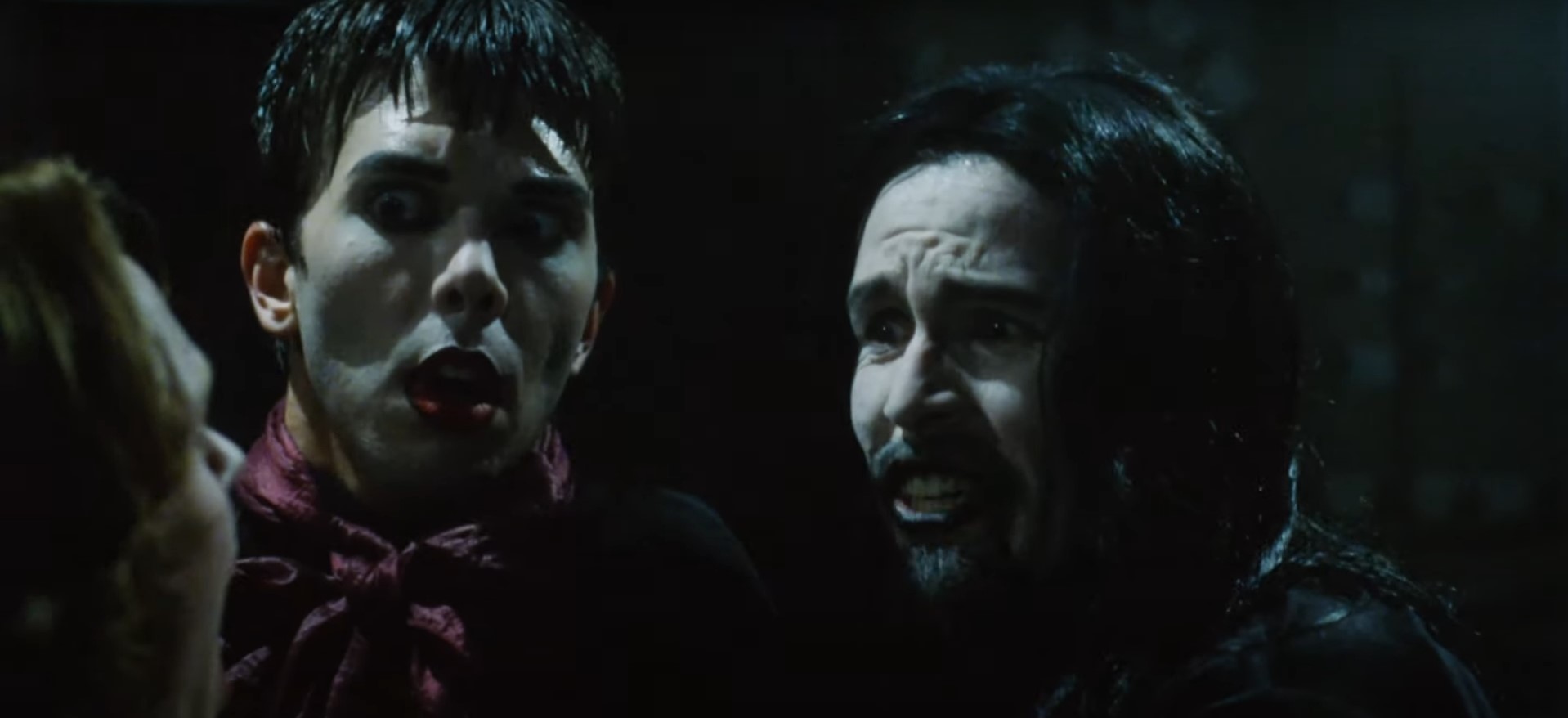
A woman strides into a convent carrier a can of gasoline and a shotgun during the sacrament of Eucharist between priest and nuns.  After setting the humble nave ablaze, she unloads shotgun shells into all the screaming bodies.  40 years later, a group of Greek life college students look to make their Greek letter mark on the same derelict convent now swarming with urban legends and ghost stories.  When a virginal student is kidnapped by wannabe Satan worshippers, they accidentally open the gate for dormant demons to arise through the corporeal vessels of the dead.  The possessed dead slaughter all in their way to seek another virgin, one that will embody their unholy master until this plane of existence.  The only chance for survival is to track that now woman from four decades ago to finish what she started after 30 years in an insane asylum, to blow away the demonic beasts of Hell!

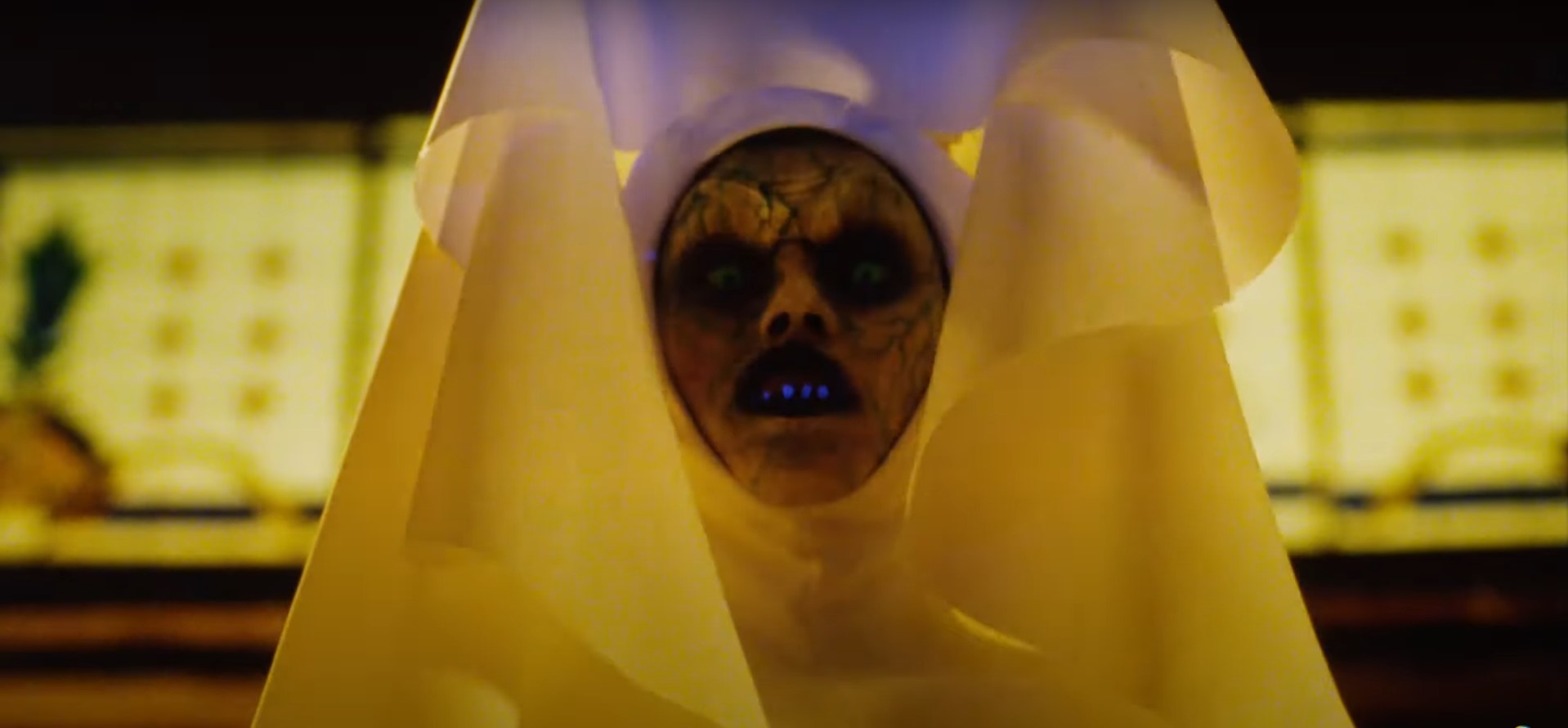
At the turn of the century in the year of Lord of 2000, a year some Christians believed marked the 2,000th anniversary of the incarnation of Jesus Christ, saw another reincarnation of Hell passing through Catholic sacred ground from the creative culinary of profanity director Mike Mendez.  The one of a handful of creative talents behind the “Satanic Hispanics” anthology film and the native Los Angeleno helmed “The Convent,” his third directorial in horror behind breakout pyscho-hit “Killers” and the male-chauvinist be damned horror-comedy “Bimbo Movie Bash,” from the Chaton Anderson’s debut script full of sacrilegious imagery, glow-in-the-dark veined demons, and the dark comedic charm of early 2000s.  Shot entirely in Los Angeles, the demon-comedy is produced by Anderson and Jed Nolan (“Jurassic Women”) on a microbudget from executive producers Ryan and Roland Carroll of Alpine Pictures (“Dark Honeymoon”), Elliot Metz, and Rene Torres, who served as associate producer on the cult favorite, “Night of the Demons.” 

The collegiate characters are not only surrounded by twitching, carnage-dishing demons under the nuns’ habits but they’re also surrounded by headlining genre greats Adrienne Barbeau (“The Fog,” “Swamp Thing”) and, briefly, Bill Moseley (“The Devil’s Rejects,” “Texas Chainsaw Massacre II”) and gangster rapper, the late Coolio.  Barbeau doesn’t lose a step being the beautiful badass we all know and love from her reign as an 80s-90s scream queen, shotgun barreling down demons left and right as her character’s 40-years-senior self from the Nun-torching and blasting opener, the accused certifiable crazy lady called to action in Christine.  She’s called to once again stop a demonic Catholic kerfuffle she immobilized from spreading four decades back by a new set of naïve, older teenagers looking to get high, get lucky, and get the kicks.  Joanna Canton, who had three seasons in her on “That 70’s Show,” battles back-to-back with Adrienne Barbeau as Clorissa, the lead principal of the trespassing teens.  Canton is joined by story boyfriend Chad (Dax Miller, “Blood Surf”), story friends Biff (Jim Golden), Kaitlin (Renée Graham, “Shriek If You Know What I Did Last Friday the Thirteenth”) and Frijole (Richard Trapp, “Re-Cut”), story little brother and abuse-taking pledger Brant (Liam Kyle Sullivan, “Rideshare”), and story gothic bestie of another life time in Mo (Megahn Perry, “The Perfect Host”) whose been ostracized by mostly Clorissa’s friends and even a little by Clorissa trying to escape a gothic lifestyle for more fit in “normal.”  A dark and spooky night in a rundown convent transforms into a night of terror when Satan Worshippers Sapphira (writer Chaton Anderson, “Wither”), Davina (Allison Dunbar, “Browse”), and Dickie-Boy (“Kelly Mantle, “The Evil Within”) are led by so-called Satanist expert and a poorly 17th century speech replicator Saul (David Gunn, “Killers”).  “The Convent” does have dynamic trope characters, ranging from jock, to druggie, to cheerleader, to goth, and to the nerd, following formulaic footsteps to face forces of ferocious, fanged demons and doing it oh not so well and oh so gloriously bloody.  Casting rounds out with Oakley Stevenson, Larrs Jackson, and Elle Alexander.

Mendez’s “The Convent” has a real identity crisis issue walking in the familiar territory that closely resembles Kevin Tenney’s “Night of the Demons.”  Hell, I would go as far as stating Mendez’s Y2K-personified horror is a near step-by-step remake of Tenney’s 1988 demon possession carnage in an abandoned structure film.  However, minutia differences, a fall of Catholicism theme, and the addition of a motorcycling, demon-destroying Adriene Barbeau keep similarity nuances at bay and the acquainted plot lively and entertaining with a glow-party, nightclub maquillage on the demons to give them a fascia of techno-effervescence veins.  Mendez also adjusts the demons’ movements to a rapid twitch with increased frames per second and having the actors jerk their movements in a wild array.  Seems a little bizarre at first but the effect grows on you, and you can’t imagine “The Convent” demon without the spasmatic shots, as their glowing eyes set on seek-and-destroy roam from dilapidated hallway to dilapidated hallway, succumbing to the evil spirit’s will after the life force leaves the body.  Themes of an evil Catholic perspective will challenge those with a Christian value upbringing, especially with nuns and priests being gunned down and torched, and more character specific concepts of personal growth in deciding what’s right versus what’s popular run a paced course of dispersed too late to fix what’s already broken. 

As part of the Mike Mendez 4K UHD double bill release from Synapse that includes his individual inaugural film “Killers,” which we will review soon too, “The Convent” comes in a 2-disc, dual format set, making it’s uncensored, U.S. debut remastered in Dolby Vision 4K from the original 35mm internegative elements.  HEVC encoded, 2160p ultra-high definition, BD66 and the AVC encoded, 1080p, BD50 rockets the previously out of print film right past a standard Blu-ray release and into the land of 4K with 2k hitching a ride.  Both formats presented in a widescreen 1.78:1 aspect ratio, the definition and color saturation advancement are a huge leap from previous DVD releases with more delineate means inside a broadly shadowed interior.  Light and shadow have now divided fully and agreeably to shapes are now more obscured or in illumination.  With that being said, details are not knocked out of this part and that’s especially surprising since director Mike Mendez supervised the 4K remastering.  Facial features do appear smoothed out, more so on the standard Blu-ray release.  UHD has a slightly better rooting out skin details and customer texturing which Adrienne Barbeau leather jacket and tight denim jeans, with all the folds, zippers, buckles, and such, seeing the most promise.  The superimposed glow f/x has rich lamination with the emanating pulses creating reflection being done well on character faces and throughout an enclosed room.  The UHD and standard Blu-ray come with an English DTS-HD master audio 5.1 surround sound from the original 16-track master audio.  Uncompressed fidelity is a complete win here for “The Convent” that seizes side and back channels with monstrous grunts and growls, and not to forget to mention the often-neglected spooky house ambience of creaks, cracks, and killer hits to the body.  A broad range helps diffuse distinct layers to the individual channels.  Dialogue renders clean and clear with no pitchiness of hissing or crackling to note.  English subtitles are available on both formats. While the UHD only has eyes for the feature, the Blu-ray has the movie plus Hell-Raising bonus content, including two audio commentaries with a cast and crew commentary with director Mike Mendez, Megahn Perry, and Liam Kyle Sullivan and a Lords of Hell commentary featuring David Gunn and Kelly Mantle in full character of Saul and Dickie-Boy, a behind-the-scenes featurette, a location featurette, a single deleted scene, gore/kill scene outtakes, the original EPK (Electronic Press Kit), a pair of promotional trailers, and a still gallery. The new primary cover art and the reverse cover art inside the black Amaray case is illustrated by Ralf Krause and Samhain1992. A 6-page essay from Corey Danna has cropped color pictures along with release acknowledgements on the backside. The not rated film has a 80-minute runtime and is region free.

Last Rites: Never intended to take itself seriously, “The Convent” has wicked style, makeup, and effects under an early 2000’s feng shui and is balls-to-the-wall nonstop with demonically dark humor laughs and the barbaric blasphemy of a savagely railed faith!

4K and Blu-ray “The Convent” Demonically Entering Your Soul! Buy It Here!

Second Sight Delivers the EVIL Goods Yet Again! “You’re Next” reviewed! (Second Sight Films / Blu-ray)

Limited Edition and Standard Edition Sets of “You’re Next” Available At Amazon!

Celebrating 35 years of marriage, Paul and Aubrey Davison invite their four children – Drake, Crispian, Aimee, and Felix – to their rural weekend manor along with their respective spouses for the occasion.  Tensions amongst strained family ties begin to boil over as siblings quarrel before they even share the first meal all together.  Yet, that’s the least of the family’s problems when animal masked intruders shoot crossbow arrows through the windows and are found hiding, waiting under the bed with machetes.  The surprising attack sends a surge of shock through them but not Crispian’s girlfriend Erin who intends on fighting back and defending herself with survival knowhow.  As the night carries on, the family is being brutally executed one-by-one in what is seemingly random acts of violence.  Unsure how many assailants are outside and the cell service not working, Erin and the rest of survivors attempt to survive the night until help arrives. 

Before being the directorial face behind the recent string of mega blockbusters, literally, in the “Godzilla vs. Kong” films, Adam Wingard had more humbling beginnings as an original horror storyteller.  From working with “Texas Chainsaw Massacre: Part II’s” Bill Moseley as a demented door-to-door salesman in “Home Sick,” to interlacing themes of drug addiction and haunting visions in “Pop Skull,” to thrill with an abusive pursuit of an escaped convict tracking down his ex-girlfriend in “A Horrible Way to Die,” Adam Wingard had a knack for extracting small time horror in a big way.  Although all three of those examples saw success at some level, the glass ceiling never really broke until a juncture point just after the turn of the decade in 2010 with “You’re Next.”  Screenwriter Simon Barret, who also before writing “Godzilla x Kong:  The New Empire,” wrote the U.S. home invasion and slasheresque horror-comedy as the fourth film under Wingard’s direction, following “A Horrible Way to Die,” “Autoerotic,” and “What Fun We Are Having;” however, Barrett has found moderate success of his own with “Frankenfish” and, one of my personal favorites, “Dead Birds,” with an early performance from Michael Shannon.  Barrett, alongside Jess Wu and Keith Calder of Snoot Entertainment, Chris Harding, Kim Sherman, and Brock Williams produce the Snoot Entertainment in association with HanWay Films production.

“You’re Next” reunites a cast of Wingard regulars, interchanged with good friend and fellow horror filmmaker Ti West (“The House of the Devil”) that has all but nearly faded the higher the filmmaker climbs the Hollywood latter.  The entourage includes “Hatchet II” and “The House of the Devil’s” A.J. Bowen as the pacifist academic Crispian, “Alien:  Covenant” and “Pet Semetary’s” Amy Seimetz as Crispian’s starving filmic sister Aimie, “The Sacrament” and Autoerotic’s” Joe Swanberg as the pompous older brother Drake, and “Pop Skull,” and “V/H/S’s” Lane Hughes as the Fox masked killer all of whom were in Wingard’s “A Horrible Way to Die” a year earlier.  Plus “Home Sick” and “Pop Skull’s” L.C. Holt dons a killer’s mask and director and friend Ti West of the highly popular X film series also has a brief role that plays into their whole dark nature of storytelling.  The inner circle of friends and usual casting smooths out to fills voids by adding a couple of marketable and genre renowned names to add a solidifying agent to “You’re Next’s” magnetism with “Habit” and “The Last Winter” actor-director Larry Fessenden as well as un-retiring one of the genre’s more respected and timeless scream queens and final girls in Barbara Crampton (“Re-Animator,” “Frome Beyond”) to be playing matriarch and host of the family being invaded upon.  Though marking her return back to horror, Crampton relinquishes her reins on the final girl trope, swallows her stardom by moving aside, and letting have that particular subcategory role to Australian actress Sharni Vinson (“Bait”) in one of her first handful of roles in a feature film.  Vinson will send shockwaves through audiences on her quick turn of character from a lovely, liberal oblique woman to a complete cutthroat badass that not only turns the tables on the attackers but also shepherds in a new fear or thrill – a worriment encompasses over the sociopathic bad guys.  “You’re Next” puts up a high body count with the rest of the cast body including the late Nicholas Tucci (“Choose”), Wendy Glenn (“11-11-11”), Margaret Laney (“Absence”), Rob Moran (“There’s Something About Mary”), and Kate Lyn Sheil (“She Dies Tomorrow”).

Before the film’s release in 2011, the home invasion genre saw an explosion of examples from class that wasn’t exceeding in quantity but rather rocketing skyward in quality.  The French had a good handle on concept with a bleak, ultra-violent coating that completely engrossed viewers as well as rocked their core with how nihilistic and cynical characters could become without a heroic, saves-the-day, or survival outcome, such as is the cast with 2007’s “Inside” and 2008’s “Martyrs.”  The American industry also attempts to capitalize on the niche market with “Funny Games” released in 2007 but that too is based off a European script from Austrian filmmaker Michael Haneke’s original film a decade earlier of the same title.  In all fairness, Haneke also helmed the remake starring Tim Roth and Naomi Watts.  Yet, American audiences adored their own success with Bryan Bertino’s “The Strangers” in 2008 and a remake of Wes Craven’s “The Last House on the Left” by director Dennis Iliadis in 2009 that conveyed that sort of callous violence and anarchial analogies.   Then in steps Adam Wingard and Simon Barrett’s entry of “You’re Next” of shared sadism and pessimism but sprinkles it gallows humor through the dialogue exchanges and impressions of character attitudes to make a hybrid that pulls inspiration from the likes of “Funny Games,” “The Strangers,” and “The Last House on the Left” and still finding individuality amongst the like without suffering from an identity crisis.   Protagonists and antagonists swerve through an interchangeable junction, flipping the script just when you think you’ve plotted the course of the storyline, and yet, a found sense of cold cock shock lands squarely when all is said and done and bits and pieces of the royale rumble characters are strewn about the battled ground mansion. 

“You’re Next” arrives at the UK label and friend to physical media Second Sight Films.  Second Sight’s single disc Blu-ray comes AVC encoded with 1080p hi-def resolution and dual layered with a BD50, projecting a consistent 24FPS.  There’s not much to terribly note about Second Sight’s quality release of Adam Wingard’s over 20-year-old, 4K shot film as digital stock hasn’t necessarily changed significantly for the better over the last two decades.  Presented in a widescreen 2.39: aspect ratio, Wingard and cinematographer Andrew Droz Palermo (“The Green Knight”) choose a warmer color pallet of mustard yellows and burgundies, accentuated by enveloping three-point lighting and the tweed dinner jackets and turtlenecks, to give it a retro 70s or 80s veneer in a modern time.  No banding issues or digital compression anomalies with the ample disc space.  Range is fine but limited to mostly the aforementioned color scheme.  Depth is almost limited in what is mostly a series of medium to closeup shots in an interior setting, but we’re treated to a mixed melee of close-up violence that sees splatter scatter the dark syrupy blood.  A DTS-HD 5.1 Master Audio mix layers a lossless fidelity consistency.  Dialogue has no issues with obstructions, favoring a clean and clear presentation of exchanges without losing inflection, tone, and vitality during the chaos, calmer moments, and tensioned exchanges.  A fugitive depth doesn’t sustain any kind of depth; again, with the close quarters action, we tend to forget Larry Fessenden’s blaring music left on repeat and noted to have at least three layers of depth from within the stereo’s room, between rooms, and outside the house.  Organic and inorganic ambience and action have seamlessly admixed without a sense of artificial notice.   A compilation of artist soundtrack isn’t invasive or intrusive with the assailants and that kind of dampens the effect but it’s an overall workable mix from Mads Heldtberg, Jasper Justice Lee, Kyle McKinnon, and Wingard himself.  Optional English subtitles are available.  Second Sight Films reliability to earn the right to re-release another modern production stands through again another special features laden release that includes a brand-new audio commentary with director Adam Wingard and writer Simon Barrett as well as archive audio commentary with Wingard, Barrett, and actresses Sharni Vinson and Barbara Crampton.   Another new feature is an approx. hour long interview Children of the 80s with Wingard and Barrett recollecting and going through the details for the genesis of the story and film.  Other new interviews include producers Keith and Jess Wu Calder the Most of Us, actor AJ Bowen Script is a Blueprint, actor Joe Swanberg Down in the Basement, actor Amy Seimetz Be Funny or Die, and production designer Tom Hammock Falling into Place.  Animated storyboards, an archival making of What’s Next?, and a video essay from Tim Coleman Slashers Don’t Die fill out the immensely packed second layer.  House in the standard Second Sight green Blu-ray Amaray for their standard lot, the front cover is gruesomely beautiful with a blood illustration of Sarni Vinson in character that’s also very telling of the film’s tone.  Like all their standard releases, this one comes with no inserts inside or other tangible bonus content.  The disc is pressed with another illustration of one of the masked killers.  The UK certified 18 release contains strong bloody violence, as well as language and brief nudity for those of us Americans wondering at home, in a 95-minute duration to which is encoded with a region B playback. 

Last Rites:  “You’re Next” denounces the helpless and the defensive character topes aimed to be slaughter like cattle in an abattoir.  Instead, this final girl and ferocious slasher and home invasion thriller goes against the grain and has gruesomely fun with its kills and thrills.   

Limited Edition and Standard Edition Sets of “You’re Next” Available At Amazon!

Entombed With an EVIL Loneliness. “Alone With You” reviewed! (Dark Star Pictures / DVD)

“Alone With You” on DVD at Amazon.com

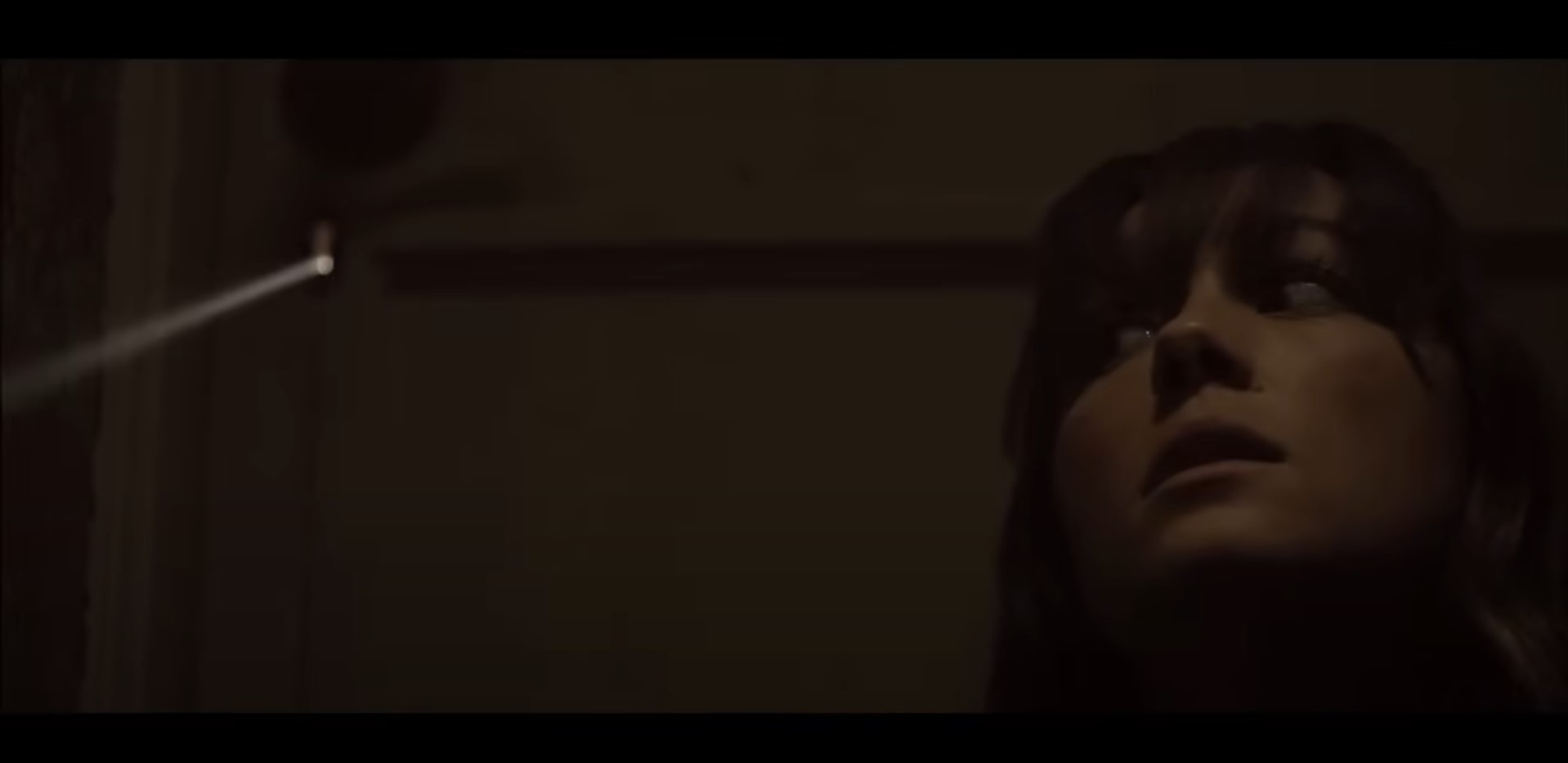
Charlene anxiously awaits the return of girlfriend Simone who has been away on a photoshoot.  Today is their anniversary and Charlene wants everything to be perfect by creating a lovely evening together for just the two of them in their New York City apartment.  As the night progresses and still no sign of Simone, despite her flight landing hours ago, Charlene begins to worry but her phone suddenly malfunctions and her apartment front door jams, locking her inside with no way out.  To make matters worse, the outside is blacked out from something covering her widow to where no light can penetrate and she can’t see anything exterior.  Throughout the night, voices and shadows slowly surround her, dark silhouettes stand motionless in her storage basement and outside her jammed door, and the video calls with her mom and friends turn to an unnerving end as it seems Simone nor anybody else is coming to recuse her.  Intermittent flashbacks of her at the beach and a neighboring voice are her only company that menacingly mess with Charlene’s mind as she quickly realize that something is terribly wrong. 

If you’re looking for a compact, close-quartered, psychological barrel of scutter apprehension and fear, I wholeheartedly believe filmmakers Emily Bennett and Justin Brooks have what you need to inject that tar black cathartic dread right into your emotionally hungry veins with their latest film “Alone With You.”  Born and bred out of strict COVID times, “Alone With You” is the 2020 filmed mind-torturing, hell in a cell shot inside Emily Bennett’s NYC apartment during most of the shoot, using telecommunication technology to invite other actors into the spatial bubble and interact with the main lead without physically being on set.  We’ve seen a ton of other COVID-created content over the past two years, but “Alone With You” definitely shines as not only isolating madness but also a fear of disconnect in reality, mental struggles over brittle relationships, and an illusionary life stemmed out of disenchanting circumstances.  “Alone With You” is written and directed by Emily Bennett and Justin Brooks as their first feature film and is produced by “Underworld:  Awakening” actor Theo James and Andrew D. Corkin of the 2019 created production label, Untapped.

With a small indie feature film during pandemic pandemonium, the odds the cast and crew are downsized, probably meagerly paid, and limited by the pandemic-stricken environment and lack of funds.  “Alone With You” is just that film because at the principle lead is none other than Emily Bennett, one of half of the directing duo.  Bennett, who has a solid acting career with even a role alongside “The Devil’s Rejects’” Bill Moseley in the “House of the Witchdoctor,” gets cozy in her own two story apartment that suddenly becomes an ensnarement of unveiling and disturbing truth.  Bennett hits every level of descension without an immediate belief that something isn’t right with her surroundings.  Charlene takes multiple gradual hits of paranormal punches and Bennett executes her fear with great poise without any lopsidedness to give away too much too early that can sometimes kill momentum before the spookiness starts to really get good.  Through flashbacks and video calls, other actors interject moments of levity, different sides of tension, and, frankly, break up the Bennett monotony and from those brief moments, we get a sense of who Charlene is and a slither piece of her backstory.  The amazingly talented “Bliss” and “VFW” actress, Dora Madison, plays Charlene’s inebriated-uncouth friend Thea over a cell phone video call, zooming in is Charlene’s rightwing mother played by the ever versatile and extremely lovely Barbara Crampton, and, lastly, Emma Myles, in an unrecognizable role in contrast of a greasy haired addict and former Amish turned inmate performance in “Orange is the New Black,” is the always beyond arm’s length away love interest Simone.

What I like most of about “Alone With You” is the atmospherics of being in your safe, cozy place that has instantly turned in a prison of peripheral moving shadows, an invasion of privacy, and, most frighteningly of all with most millennials, none of the modern technology is working properly.  The story design feels extremely pushed toward a wash, rinse, and repeat cycle with no other areas in the apartment to explore other than the handful of main rooms and so we’re constantly in the bedroom, then living room, then front door, then basement, and then repeat for most of the 1 hour and 22 minute runtime but do you know what happens with that?  Bennett and Brooks strategize and outline the snowball of bad feelings inside the ominous compact, starting small and working up to a cacophony of madness to where Charlene is literally moving back and forth between truth and deception induced by being scared to shivers of her own apartment’s clad and taken for granted discomforts, such as the front door sometimes being stuck or the crying lady neighbor who you can hear clearly through the air register.  “Alone With You” fiddles with the theme of disconnection.  Here you have Charlene, a small town girl who moves into the big city, has discovered her sexuality, and has found a vocation that suits her to which all this change go against her mother’s approval, and she feels strongly attached, like an extension of herself, to girlfriend Simone and as the story progresses, we get the sense that not everything is lovey-dovey between the two and Charlene’s dependent world is slowly being severed.  Simple, yet effective, “Alone With You” is an undoing nightmare of personal happiness, a sentiment we all share and relate to during height of the pandemic.   

Now, we all suffer in Charlene’s insufferable loneliness and disconnection with the “Alone With You” DVD home video courtesy of Dark Star Pictures. The region 1, dual layer DVD is presented in a 2.39:1 aspect ratio of standard 480p resolution definition, but the DVD image renders nicely on screen with digital sharpness unaffected by any compression issues, especially with much of the space saving special effects coming in practical and mostly done in the editing room. The video calls vary in quality which is pleasantly dispersed to the appropriate electronic devise, i.e. television, phone, etc. Details are clearly there but only slightly softer around the edged delineation. Two audio tracks are available with an English language Dolby Digital 5.1 and a stereo 2.0, but the 5.1 track is an allocating alicorn for a low-budget DVD. Shawn Guffy and Nicole Pettigrew’s sound design is meticulously on point and on cue with every synchronous audio nudge to point Charlene in the right direction for another round of dread. The varying levels of the Phil Mossman’s soundtrack adds a blended flavor of melancholy and fear. Dialogue output renders clearly and cleanly with no issues. English SDH subtitles are available. DVD comes stocked with special features including a blooper reel, a bit of a waste of space on the deleted scene reel that doesn’t add much to either the character or story, a lengthy and in-depth filmmaker and cast interviews, a behind-the-scenes featurette of Emily Bennett and Justin Brooks remarking on the struggles of feature filming around their apartment during COVID spikes, and a director commentary with the duo. “Alone With You” has a heavy artsy side to it that can leave viewers wandering for answers but if pieced together, if paying close enough attention, the correlation between the story in the camera and the life behind the camera are really not terrifyingly different. One just happens to be more of a representation hyperbolized with terror of a crashing down reality than the other.

“Alone With You” on DVD at Amazon.com

All Hail the EVIL Slumbering One! “Sacrifice” reviewed! (101 Films / Digital Screener)

Years after being quickly whisked away to America as a small child from his remote Norwegian island birthplace, Isaac returns nearly 30-years later with his new, pregnant wife, Emma, after the death of his mother leaves the empty family home in his inheritance.  With their heart set on fixing up and selling the house before the birth of their child, Isaac and Emma learn that marketing the seaside and scenic estate comes with a tragic past when the local sheriff discloses the brutal murder of Isaac’s father inside the home.  The dreadful information and the bizarre locals with their customary traditions doesn’t alarm Isaac who, instead, feels a strong connection and is drawn to staying whereas Emma, plagued by terrifying nightmares ever since stepping onto the island, is eager to sell and return to American as soon as possible, fleeing a community that worships an aquatic deity beneath the water’s surface.   

Based off dark fantasy and science fiction writer Paul Kane’s short story, “Men of the Cloth,” found in the author’s “The Colour of Madness” collective works, “Sacrifice” is an alienating folklore horror bound by the influence of a Lovecraftian core under the direction of a filmmaking due in Andy Collier and Toor Mian.  As their sophomore film as collaborating directors, following their 2017 psychological cop horror “Charismata,” Collier and Mian tackle Kane’s short story head-on by changing only a few details, such as location, family structure, and the title from formally known as Kane’s “The Colour of Madness” to “Sacrifice”, but keep rooted the foremost principles of “Men of the Cloth’s” cultish discomfort that’s greatly inspired with the otherworldly sensation of an amiss atmosphere akin to Robin Hardy’s “The Wicker Man.”  Filmed around the idyllic and mountain enclosed shore town of Bjørk, Norway and in the town of Volda, Norway, the 2020 film seeks to plop strangers into a strange land as a production of the London-based companies, Loose Canon Films and Hydra Films RKM, in association with Dread.

Over two years ago was the last time we reviewed a Barbara Crampton movie with “Death House,” that included a plethoric cast of her all-star genre brethren with Kane Hodder, Bill Moseley, Dee Wallace, and others, and, now, Crampton makes her glorious return to the Lovecraftian turf that nostalgically brings most of us horror fans back to the New York-born actress’s “From Beyond” and “Re-Animator” days.  “Sacrifice’s” Cthulhu spirit finds Crampton playing a small town Norwegian sheriff, Renate Lygard, in which Crampton, under the training of a dialect coach, surprises us with a fair Norway accent as she provides a quasi-warm hospitality set of manners upon island outliers in Isaac (Ludovic Hughes) and Emma (Sophie Stevens) Pinkman. Hughes and Stevens nudge their way into a solid man-and-wife, but their dynamic density becomes crispy at times and pale from their initial arrival soon after rustling with the natives. The lack of vitality doesn’t stem from the wedge being driven between from the lure of Isaac being called by the natural phenomena of the Northern Lights, the drunken friendly benevolence of Gunnar (Lucas Loughran) and Ledvor (Jack Kristiansen), and the full frontal skinny dipping of Renate’s beautiful daughter, Astrid, an eye-opening film introduction from Johanna Adde Dahl; instead, the Pinkman’s bond held together about as tight as using kindergarten grade craft glue that bled into the performances as well that came off stiff and unnatural. Aside from Hughes and Stevens hailing from the United Kingdom and Crampton from the U.S., the remaining cast was curtailed to Norway nationals, as such with Loughran and Kristiansen, rounding out the cast with Erik Lundan, Dag Soerlie, and Ingeborg Mork Håskjold.

“Sacrifice’s” cult mania lays on a thick coating of grass roots that really set the tone for an foreboding outcome.  An idyllic Norway fishing village propped between the eclipsing mountain range and marine inlet intrinsically obscures an already unspoken secret that’s only been rendered on the faces and actions of the residents.  At the center of village’s idiosyncrasies are the two hapless protagonists venturing into unknown territory with only an inherited house in their back pocket and a vague sense of youthful recollection; this sets up for an obvious antagonism theme of locals with a sense of xenophobic nationalism, especially against two Americans.  The initial friction opens the flood gates for cultural customaries to be weaponized against Isaac, who wants to strongly embrace his heritage, and Emma, who can’t seem to grasp the village’s peculiar beliefs and even goes as far as being naïve of and mocking the village’s traditions and deity.  The tension is compounded by the ominous presence of the labeled slumbering one, sleeping beneath the glossy surface of the inlet waves, but conjuring up tangible and intense nightmares that plague the every island inhabitant, a mystery Emma can’t explain, won’t entertain, and ignores exploring that turns Emma floundering more into Isaac’s sudden disinterest in her albeit soon-to-be-parents.  “Sacrifice’s” climatic, tell all scene harbors more secrets regarding Isaac and Emma’s purpose on the island that are to be interpreted by the audience, but don’t connect back to any string along clues leading up to a poignant and sharply-shocking ending.  Instead, “Sacrifice” acutely wraps up not only the story but also the characters like a paper wrapped fish at the fish market ready for sale without any huff about where, why, and how that particular bug-eyed fish became the gutted victim of man’s delicacy.

“Sacrifice” shores folklore horror swelled with Lovecraftian roots and is docking digitally today, March 15th, in the UK courtesy of 101 Films. The film has a runtime of 87 minutes and is presented in a widescreen 2.35:1 aspect ratio, shot on a Sony CineAlta Venice camera. Co-director Andy Collier tackles his first credit director of photography gig with interesting shots looking up through all different angles and vessels that hold water. Whether boiling eggs, taking a bath, or in small cove, Collier, and Mian, put eyes on the bottom surface, promoting all varieties of water within it a lurking presence and the imagery is done extremely well with depth and space to pull off the illusion. A fair amount of soft lighting, moments of bright primary color glow, and the specs of well-placed lighting to barely illuminate a scene is broodingly worthwhile. Tom Linden’s original score is fiercely compliment as a folklore staple, harsh-chord intensity that lingers well after the boiling blood levels drop to a mere tentacle dwelling simmer. There were no extra features or bonus scenes included with the digital screener. While the build up didn’t pay off at the bloody end, the two-tone terror of “Sacrifice” wrecks the nerves and frays warm pleasantries with wicked wallowing, slumbering, nearby in the shallows.