The EVILs that Lie Behind the Mask. “2551” Trology reviewed! (Deaf Crocodile / 4-Disc Blu-ray)

This One You’ll Need to See to Believe! “2551” Trilogy on Blu-ray!

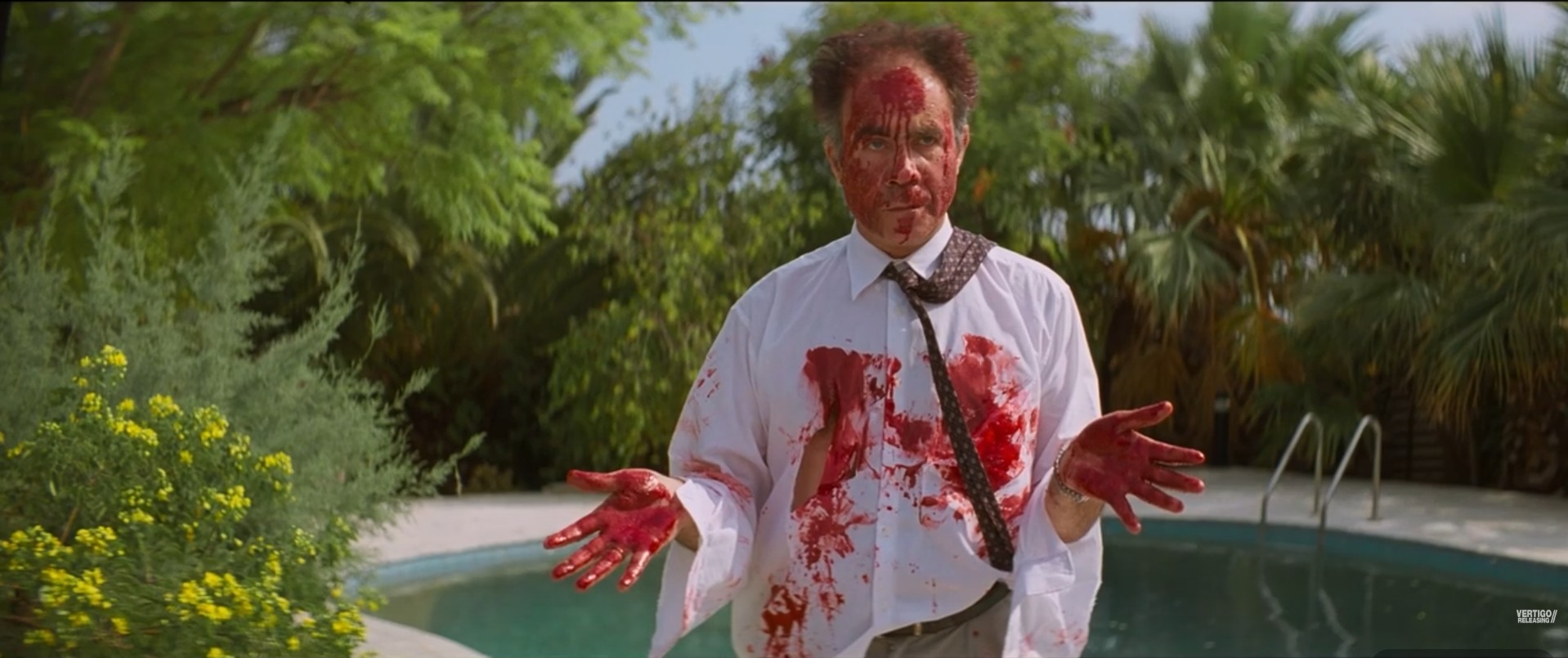
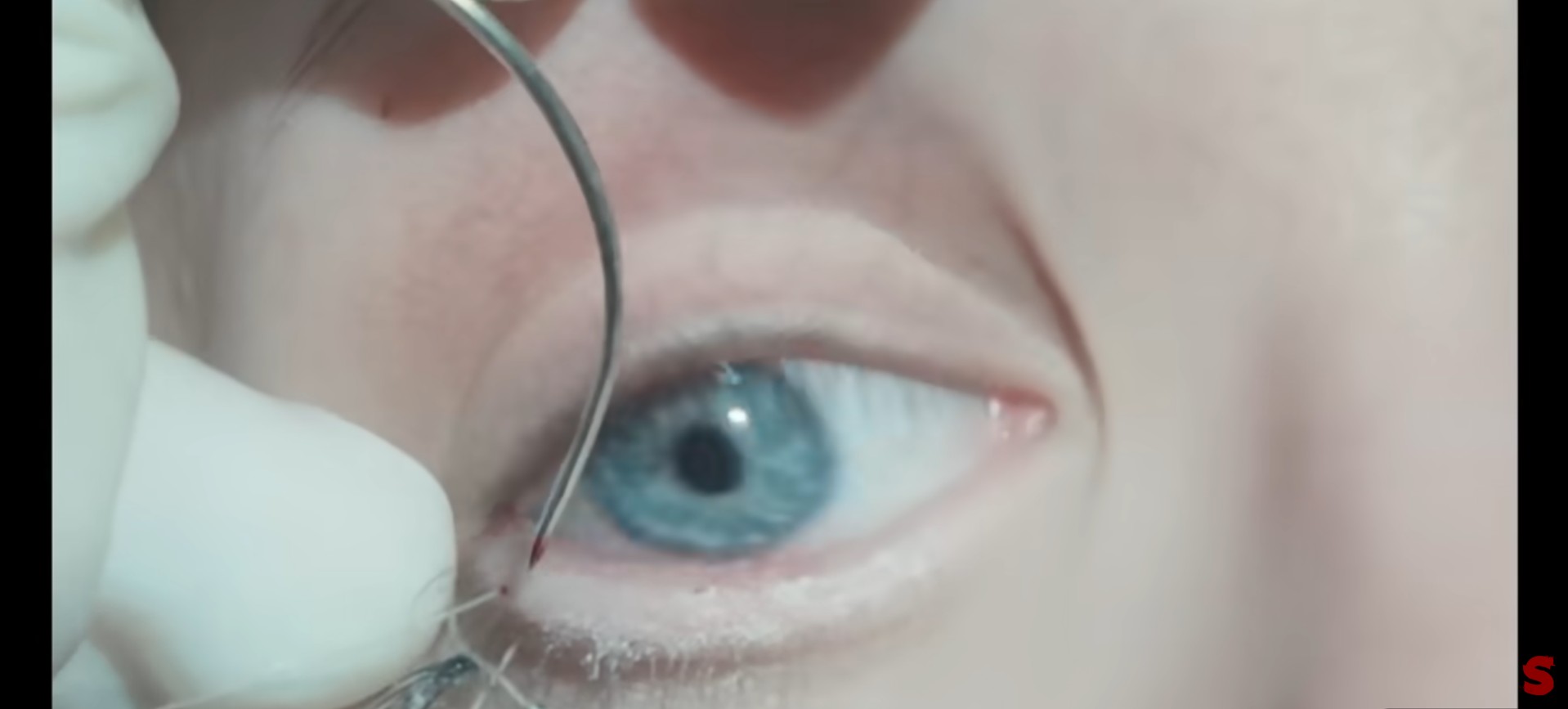
In an underground dystopia ruled with by an ironfisted police state, dwelling creature-noid mutants violently clash with white-suited, gas-masked tactical units of a cruel despot.  One of the rioters, an Apeman, rescues a child with a burlap mask from being trampled between the two groups, injuring his hand in the process.  The child desperately clings to him, unwilling to part far from the Apeman who tries to turn over the child’s care to others, but as soon as the child is taken by the despot’s men, the Apeman goes through the depths of grotesque seediness to rescue the child forced into the training ranks of the police state.  He befriends and falls in love with luchadora who joins forces with him to rescue the child, but her betrayal whisks the child away from his grasp yet again.  Years later, the Apeman has become a salvaging source for an art purveyor’s gallery, but arrogant high society dismisses his efforts, and he’s thrust into violence, resulting him to face the despot’s capital judgement.  He’s saved from death by the child, now ga grown adult employed as a despot inspector, and when the inspector is given a traitorous execution, the Apeman’s immense adoration for the child sends him on a path of retribution to which there’s no coming back from.  

Born into an immense pro-fascism Austrian society a few years after World War II, influenced by political and societal unrest and protest of his time, and a devout mask collector, Norbert Pfaffenbichler construct a dystopian world unlike any other seen before.  Inspired by silent movie slapstick and black-and-white films, Pfaffenbichler channels the likes of Charlie Chaplin, Boris Karloff, and Lon Chaney into his trilogy of experimental grotesquerie of “2551.”  “2551” potentially references a futuristic, numerical year where a post-apocalyptic society, as we know it, has broken down into a sparring duality of survival, either as a penniless mutant driver to beg, sell, or give one’s body to live or a merciless enforcer to be wielded by an authoritarian ruler.  Set as a trilogy that began in 2021 and ended in 2025, Pfaffenbichler also wrote the screenplay for each installment, chaptered with decimal designations and subtitles: “2551.01:  The Kid,” “2551.02:  Orgy of the Damned”, and 255.03:  The End.”  Shot in Vienna, the trilogy is a production support of the BKA (Bundeskanzleramt), The City of Vienna’s Department of Cultural Affairs, and Land Oberosterreich with Pfaffenbichler producing “Orgy of the Damned” and “The End” while coproducing with Bianca Jasmina Rauch on “The Kid”

The ”2551” trilogy goes through the entire three features without a single piece of dialogue spoken from the main cast.  Though the characters may be roughly silent, albeit some added grunts, groans, and wails, added Foley action and movements along with an eclectic and often brooding industrial, punk-rock soundtrack ultimately tell the story coincided with impressive body expression and language.  At center stage, in his own petite personal plight in the aftermath of a devastated and derelict dystopia, is Apeman, a rebellious scavenger just trying to survive like all other half-creature, half-man mutants.  Played by Stefan Erber in all three films, Apeman is the only credit to Erber’s short breadth career but Erber’s very important to “2551’s” storytelling because even though he’s wearing a mask the entire time, his actions and reactions convey a broad range of emotions to where there’s no ambiguity in the scene.  Erber has a number of unique characters to interact with and each do not repeat across the films, such as David Ionescu in “2551.01:  The Kid” as the gunny masked child who clings in desperation to the initially reluctant to care Apeman, and after years passed into “2551.03:  The End,” the now grown child is an adult with Ben Schidla donning the mask as one of the despot’s inspector who helps Apeman escape the grasps of a tyrannical police state gunning for dissidence.  Both Ionescu and Schidla play into the different stage of their child and adult life; Inoescu’s awkward child movements and possessive need for Apeman is true child antics while Schidla provides the maturity and responsibility of being his own, self-reliant person now, one who doesn’t forget Apeman’s selfly act of rescuing him.  Veronika Susanna Harb wrestles as Apeman’s warring love interesting and street fighter in “Orgy of the Damned” and Manuela Deac is another strong female presence in the trilogy in a duel role in “The End” as the Apeman transitions into Apewoman in an anti-matter, alternate dimensional space that looks into the soul and she also is the hypnotic dancing deity near the beginning audience encircling with Apeman being chosen, or perhaps reminded, of his ward. 

When I say you’ve never seen a world like the one Pfaffenbichler pieces together, literally with pieces of severed limbs, stitched flesh, and an eclectic mix of masks, I mean it.  We’ve seen dystopian worlds before of desolate terrains, destructive and cruel authoritarian regimes, hunger, famine, and a dying race and there are obvious signs of influences pulled into “2551” from the likes of Phil Tippett animated and stop motion style to the comical ties of Charlie Chaplin, and the overall components of certain silent movie scenes and improvised, jaunty scores make the disgusting and derelict dark alleys and strange creatures more light-hearted and whimsical.  “2551.01:  The Kid” is a direct homage to Chaplin’’s 1921 “The Kid” by following along the lines of the same premise of a nomadic loner finds and cares for an abandoned child, their relationship jeopardized by their own problems with the law.  The sequels have a different direction but maintains the same bizarre world behind grotesque masks, a normalized consumption of dead animals and body parts, body horror fetishism beyond our comprehension, and a systematic oppression based off one person’s version of Tindr’s swipe right.  “Orgy of the Damned” mines the carnal shale with simulated sexual acts that go beyond missionary ways and into the sordid surgery and beastly BDSM while “The End” explores existentialism through past, present, and future that ultimately leads to a self-destructive revenge, hence the subtitle.  Bazaars of skulls, organic trinkets, and edible organs, flesh, and bone are a traversing theme of near desperation and survival within a concreted underground life where nothing grows, nothing thrives, and all succumb to its darkness.  Motifs of monkeys, including in the protagonists, are strung strongly through the trilogy in perhaps a reflection of the homo sapien within the de-evolved primate, aka the hidden humanity inside the beast.  Masks are the true and standard icon that obscurely hides the fact whether these people are real or whether their mask is their reverse personified reality.   Pfaffenbichler’s metaphorical social commentary is beautiful in its misproportioned and mutated state of mass oppression and the little good that glints through is all the hope in the world, and even in upside-down worlds, the need to recover its benignity is more important than ever.

In today’s society, especially in the U.S., autocratic governance is king or at least thinks it’s king.  For Norbert Pfaffenbichler, his “2551” trilogy parallels the present as well as the past.  Deaf Crocodile, under the playful label guise of Dead Crocodile because of the film’s subject matter, releases Pfaffenbichler’s trilogy on a 4-disc Blu-ray set that’s AVC encoded, 1080p high-definition resolution, on single layer BD25s.  The post-apocalypse is grim looking with a slightly tinged monochromatic experience, often with high levels of grain, and a fluttering of crisp detail through stroboscopic and rotoscope effects but that’s the entire intention of Pfaffenbichler and his cinematographer Martin Putz on all three films, creating a gritty, grungy, bunker-laden, desolate atmospheric that’s a hypogean house of horrors.  Most of the more grainer moments are when the image is blown up to focus on characters and some distress, alien scenes of a grotesque nature.  The black-and-white goes through periods of tint, muted coloring that run the hue gamut, with more traditional colorless scenes fining solace in their antecedent silent films.  Compared to a more austere impressed first film, the sequels do have a more polished appearance than “The Kid” when traversing through the sordid muck of a hazy underworld of flesh and fetishism in “Orgy of the Damned,” laced in tight leather, elegant lace, pastel pasties, and a myriad of masks and rags, while “The End” trades out tint for pure while in the interdimensional void Apeman navigates to find himself.  Each entry adds something a little different to mix up what could be a monotone milieu with bits of experimental panache that’s sustain the post-apocalypse colony.  Entirely shot without any production dialogue, Deaf Crocodile’s release comes with a DTS-HD 2.0 stereo mix to punctuate the action and to provide vitality through its punk and metal soundtracks and dark industrial whir and hum from composers Wolfgang Frisch and Simon Spitzer.   The added in effects applied after in the post sync very well and with the appropriate echo of being in tunnels and dark, hollow spaces.  So well in fact that you don’t realize it’s post-production sound.  The 4th disc is bonus features that include Pfaffenbichler’s seven short films, five new, individual interviews (Dir. Norbert Pfaffenbichler, Apeman actor Stefan Erber, cinematographer Martin Putz, stop motion and visual effects artist Paul Lechmann, and a Q&A hosted by Rolf Giesen with Pflaffenbichler answering), two visual essays (Angel of the Abject:  The 2551 Trilogy as a Necropolis of Cinema by film scholar Stephen Broomer and Don’t Let it Fester:  (Anti)Sentimentality in 2551.01 by Ryan Verrill), each film has its own commentary track that include input from film scholar Shelagh Rowan-Legg, film historian Eva Letourneau, artist and writer Anne Golden, and podcaster Mike White, a “2551.03:  The End” featurette Jam of the Damned is a behind the scenes look into the last film, the soundtrack score on all three films, three new trailers, new art by Beth Morris, and a prelude warning that states:  Trigger Warning:  all 3 films contain nightmarish images featuring simulated sexual and violent acts, as well las strobe lights and stroboscopic effects.  For adult viewers only.  The four-disc standard release is laid out two on each side and one overlapping one of the other in the thicker, clear Amaray with new cover art that’s a composition of stills arranged in a nonconformist arrangement that’s truly unnerving to behold.  The reverse cover art has an equally intense image but more simplistic red and black image with the film and Blu-ray spec info backside.  With a runtime total of 227 minutes, “2551” trilogy is not rated and is encoded for region A playback only.

Last Rites: “2551” is a myriad trilogy of influence and expression through Norbert Pfaffenbichler’s endless mask of hope in a world of oppression. The worldwide debut Blu-ray release from Deaf (Dead) Crocodile respects the subterranean story filled to the brim with sadomasochism, odd creatures, and authoritarian subjugation and the auteur’s unconventional and pallor style in its comprehensive 4-disc set of experimental, cinematic encomium.

This One You’ll Need to See to Believe! “2551” Trilogy on Blu-ray!

This Serial Killer is the Mother of all EVILs. “Ed Kemper” reviewed! (Dread / Blu-ray)

“Ed Kemper” on Blu-ray Home Video

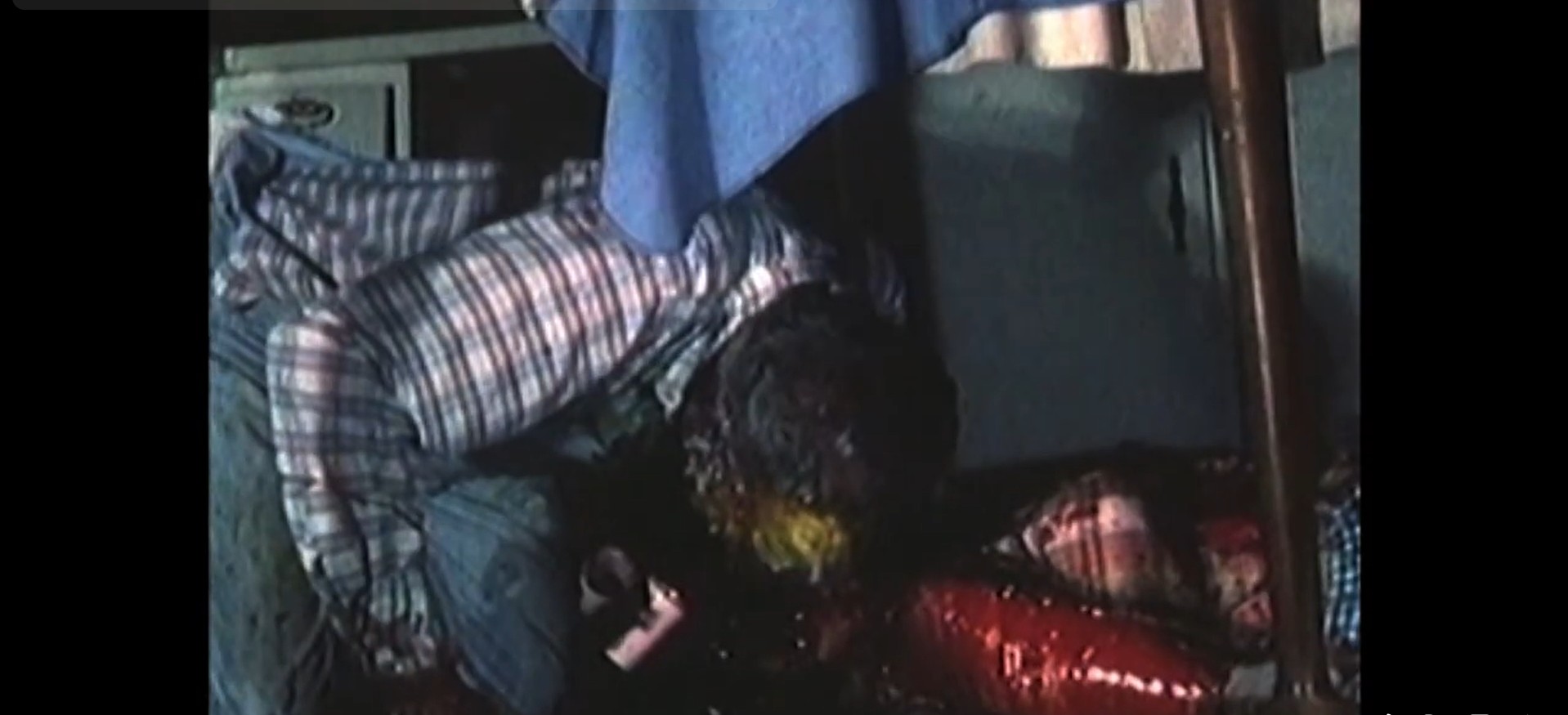
Edmund Kemper at the age of 15 tortured animals and killed his grandparents just to see what it was like.  For five years, Kemper was held at and subsequently released from a psychiatric ward where he was deemed not harmful to society.  His acrimonious relationship with his mother as a child did not stop Kemper from living with her as an adult man after his release and her abusive, alcoholic ways continued on him as well.  After some time, Kemper’s aggressive sexual urges sought out hitchhiking women and in the months between 1972 and 1973, Kemper had abducted multiple school age women and either strangled, stabbed, or shot them in isolated areas of arid California.  From there, Kemper satisfied his depravities with dismembering their bodies and committing necrophiliac acts with the sawed-off parts.  Before turning himself in to authorities, Kemper’s killing spree culminates back to his very existence with the death of his abusive mother and he does not spare her from receiving the same kind of posthumous dismemberment and sexual acts he done upon the young women before her.

American Edmund Kemper is the titular subject of the latest film from director Chad Ferrin, horror director known for pushing eyelids open for atrocity-laden films, such as “Someone’s Knocking at the Door,” “Pig Killer,” and “Scalper.”  Ferrin also cowrites the biographical horror drama with Stephen Johnston, a serial serial-killer screenwriter who has painted with font some of America’s most notorious serial murderers from Ed Gein to Ted Bundy, to Kenneth Bianchi from “The Hillside Strangler.”  The tall, dark complexioned, round glasses framed, and pitched mustached Kemper is the next subject for Johnston and the first serial killer biodoc from Ferrin that takes him from fiction to nonfiction while still retaining his admiration for graphic content, produced under Ferrin’s production company of Crappy World Films in association with Dance On Productions and Laurelwood Pictures.

In the role of Kemper is Brandon Kirk who is a by all comparisons a beefier Ed Helms and Kirk has worked with Ferrin on numerous projects since their first collab in 2021’s “Night Caller,” marking “Ed Kemper” as their sixth film together in Ferrin’s rapid release method.  Initially, Kirk seemed to not fit the role that started off with Kemper suitcase in hand being escorted out of the psych hospital and back into society.  His presence felt shallow, unimportant, and a punching bag for his mom’s barrage of boozy hate with little kickback from Kemper’s large and formidable frame and his deadly past which was only half a decade ago.  Kirk has the tall stature and framework to resemble Kemper in that department but didn’t quite fit the bill instill a confident killer that can chill to anyone to the bone with a simple smirk.   By the end, Kirk proves our conceptions incorrect by becoming a delusionally composed killer that no longer needed a smirk to make blood curdle but rather just look into the camera with his plain eyewear frames and mile stare when casually conversing atrocity as if noting the weather.  It’s plain to see how Kemper came to be with a mother like Clarnell Strandberg and her incessant physical and verbal abuse through and beyond Kemper’s youth; Susan Priver, who has also worked with Ferrin and Kirk since “Night Caller,” nails worst mother of the year being in Strandberg’s constant drunken tirade.  Kirk and Priver’s mother-son dynamic has no and is not depicted to have such traditional warmth or merit and, instead, is a one-sided browbeating at Kemper’s expense is fueled by necessity, and perhaps a little bit of masochism on Kemper’s part because if it really got under the skin of either one of them, I’m sure living on the street would have been better.  Repeat scene principals are laid with only a few with Brinke Stevens (“Nightmare Sisters,” “Slave Girls from Beyond Infinity”) in the role of Clarnell’s closeted lover Sally Hallett, adding a bit more complexion to Clarnell’s life choices and fueled bitterness after failed heterosexual marriages, and Joe Castro (“Blood Feast 2:  All U Can Eat”), special effects makeup artist on the film, also down the traditional black horn, red-caped devil that influences young Kemper’s abused mental state.  The co-ed of the Co-Ed Killer include roles filled in by Erin Luo (“Feral Female”), Patty Hayes, Isabelle Morgan, Autumn Rose Ruch, Gloria Therese, and Katie Silverman (“The Exorcists”).  Familiar faces of Lew Temple (“The Devil’s Rejects”), Robert Miano (“Chained Heat”), and Cassandra Gave (“Conan:  The Barbarian”) pop in supporting parts. 

If you’ve seen the deeply studio underappreciated and fan-favorite “Mindhunter” Netflix television series that was prematurely and devastatingly cancelled, Cameron Britton’s performance may have already seared a first impression of Kemper.  The David Fincher crime drama was dark, bleak, and interesting in what makes serial killers tick as the series investigators sat down with Kemper and utilized him as a source of knowledge, much like novelist Thomas Harris had done with his Hannibal Lector character to track down the Red Dragon killer.  Britton’s large stature and soft-spoken delivery made for a terrifying persona when Kemper goes bluntly, coldly, and without expression into detail of his own exploits and methodology with women and corpses.  Side-by-side, Britton and Kirk are starkly different portrayals and those familiar with “Mindhunter,” like me, may already have an impressed idea of Ed Kemper, but Kirk manages to reign in that initial impression and engrave his own version of the murderer into the solidified stone.  In contrasting stylistic and storytelling choices, Ferrin’s film also strays away from reality quite a bit with the Devil inside Kemper’s mind as a child, his frequent disconnection with time, and delusions with seeing things, like John Wayne knocking on his driver side window and giving him sage advice.  There’s more cinematic universe with “Ed Kemper” the feature film than reality-gripping realism to tell his tale without sensationalism, but the story does get down and dirty in Kemper’s Co-Ed killing days.  Initially, the feature felt watered down and wouldn’t go into the darkest of territories inside Kemper’s skeleton closet and deranged mindset but Ferrin, true to form, gets weird with Kemper and his sexualized obsession with dismembered corpses, unafraid to flash gore and nudity that couldn’t go untold with this type of nonfictional narrative, and to be honest, being the nudity shy Dread Presented film, I was shocked with their green light of certain scenes. 

Dread and Epic Pictures Group present true crime horror-drama “Ed Kemper” on Blu-ray that’s AV encoded with 1080p resolution on a BD25.  Presented in a widescreen 1.85:1 aspect ratio, Jeff Billings cinematographer handles the 70’s aesthetic of an arid brown California scenery melded perfectly with 70’s period specific avocado green, mustard yellow, and a singed orange while also tackling the black-and-white representing Kemper’s childhood past.  No compression issues to note, blacks are solid, the colors saturate and diffuse nicely throughout, and details are on the softer side but stick the detailed landing unequivocally in the color scenes with the black-and-white harnessing what it can through lack of color.  The English language audio track is compressed with a Dolby Digital 5.1 and Dolby Digital 2.0.  The sole compressed options hangs back the full potential of disorienting muscle, such as with Joe Castro’s basement dwelling devil who’s aimed to be an intense, delusional provocateur of Kemper’s evildoings and also Kemper himself when he goes into full-throttle turmoil within himself, when he can’t take his mother abuse or when he’s grinning ear-to-ear with killing, hacking up, and necrophiliac-loving co-ed victims.  Dialogue comes through clear and clean with optional English and Spanish subtitles available under the title menu.  What’s additional interesting about the “Ed Kemper” score is it’s orchestrated by Richard Band, brother of Charles Band, and is a stray away from his conventional carnivalesque tone into a more traditionally dark that swells tension when needed and coddles the more abusive scenes to picture Kemper as the victim of abuse.  Special features contain an audio commentary track with director Chad Ferrin, co-ed victim audition tapes, deleted scenes, a Kemper 70’s Psycho featurette documentary that’s a raw look behind-the-scenes and get a real sense of Chad Ferrin’s all-in, guts and all, directing style, a Lost Ending providing an alternate finale to the sensationalized Kemper tale for this release, “The Devil’s Slide” music video, the official theatrical trailer, and trailers for other Dread Presents films.  The traditional Blu-ray case has a mustard yellow covert art of Kemper’s face close up but does not appear to be Kirk’s Kemper mug.  The cover art is one sided and there are no other physical trimmings with a disc printed with Kirk’s Kemper mug split down the middle expressing two different faces and incorporated into a personnel file like design.  Not rated with a runtime of 92 minutes, “Ed Kemper” is encoded with a region free playback compatibility. 

Last Rites: To put all of his immoral and depraved transgressions into just over 90 minutes is simply skimming the odious surface but the Chad Ferrin and Dread / Epic Picture Group collaboration condense the irreverence and the ickiness of “Ed Kemper” onto a platform that reminds us all there is true pure evil in this world.

“Ed Kemper” on Blu-ray Home Video

Alien EVIL Will Suck Your Blood and Tear You From Limb-to-Limb! “Vampire Zombies…From Space!” reviewed! (Cleopatra Entertainment / Blu-ray)

“Vampire Zombies…From Space” Invades Physica Media! Check it Out Here!

One night in the small U.S. town of Marlow, a flying saucer beams down a bloodthirsty invader and obliterates to smithereens the wife of Tobacco farmer Roy MacDowell’s wife and their two daughters.  Labeled crazy and perceived a wife murderer, Roy and his daughters must contend with the suspicious townsfolk years later until strange occurrences of UFO sightings, unkillable humanoids, and a string of grisly half-eaten corpses pop-up all-around Marlow.  New to the force Officer Wallace suspects an alien encounter from his own similar experience in the big city but the local leadership are hard pressed to believe what’s really happening under their noses, or rather above their heads as an alien race of vampires are planning to take over Earth, beginning with the town of Marlow now they have been inoculated from the ill-effects of the crucifix.   The only side effect is it turns any human bit into a mindless vampire zombie.  With Marlow in jeopardy with an all-out invasion, Wallace and those with previous encounters with the otherworldly invaders lead the town to defend itself from a vampire attack and domination. 

A tributing throwback to the 1950’s science fictional B-movies, “Vampire Zombies…From Space!” is the 2024 Michael Stasko (“Iodine”) directed and cowritten, black-and-white shot picture that recalls McCarthyism fears of a communism invasion in the United States in complete metaphor fashion by replacing the Soviets with vampires not of this world.  However, the film is not a pure-bred homage to the antiquated subgenre of miniatures and elaborate sets as it applies satire and farce comedy, excessive foul language not used during that period of time, and gore…lots of vampire, zombie, man-made gore. Co-written alongside with comedic duo Jakob Skrzypa and Alex Forman (“Luke’s House of Spooks”), “Vampire Zombies…From Space!” is a whole new breed birthed from a historical outréness meant to strike fear and awareness through a science fiction medium.  The Canadian production is from Stasko’s The Dot Film Company, produced by the director, both writers, and fellow “Iodine” filmmaker Ted Bezaire, and representatively sold worldwide by Michael Kraetzer and Nicholas Onetti’s company, Black Mandala (“Francesca,” “Abrakadabra”).

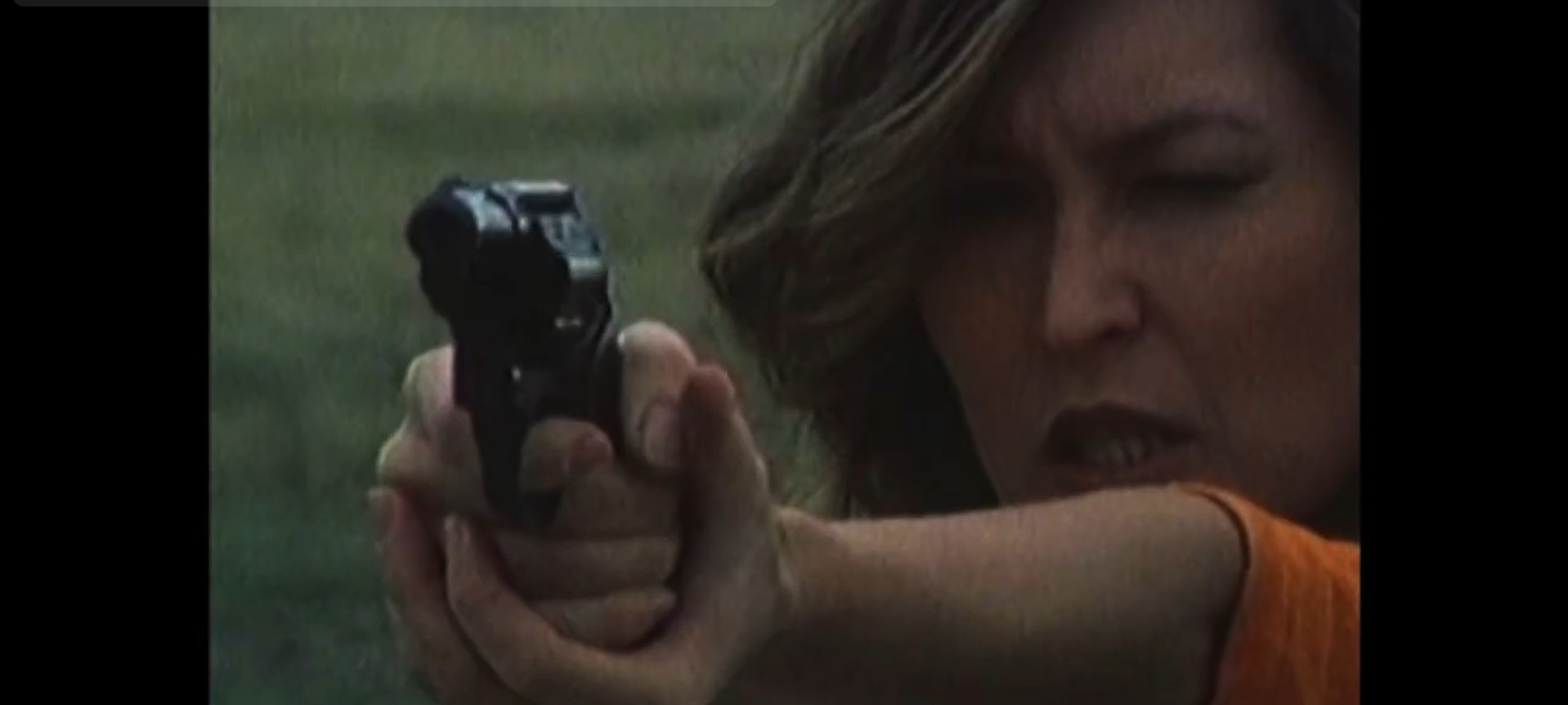
The story essentially follows three groups of characters.  Beginning with the human side of things, new to town Officer Wallace, played by Rashaun Baldeo, finds himself assigned to Marlow after witnessing what he claims are aliens who killed his partner, and he’s subordinate to the resident Chief Ed Clarke with an enacting alcoholic cynicism by Andrew Bee (“A Taste of Blood.” ).  The veteran actor Bee is lopsidedly more comfortable in his role than newcomer Baldeo is rather stiff around the officer’s gills, especially for a backstory consisting of personal death and aliens at the forefront of it but Baldeo and Bee compliment each other enough to pull off good cop and rough around the edges cop.  The next set of Earthlings come from Jessica Antovski (“The Dread”) as the single MacDowell left alive after Mary’s family falls victims to the initial landings of a vampire invasion and she’s joined Oliver Georgiou as a 50’s greaser Wayne who also faced firsthand an extraterrestrial tragedy with the loss of his brother but knows the method of how to kill them.  Antovski and Georgio represent the opposite end of the spectrum – the girl from the family who’s a town joke and the hip, cool kid with friends – but fall for each other in time of crisis, even more so when Wayne’s hand-in-hand instruction with Mary to put into real-time, stake-perforating practice that has an ecstasy emulation effect provided when there’s sexual intercourse.  The last grouping is amongst the vampiric villains and who being the best example of a vampire other than Count Dracula.  Played in a classic, Bela Lugosi-style by Craig Closter (“The Eternal Present”), Dracula’s on the verge of being out of the vampire empire, with a council by an Elvira-like Vampira, A Francis Ford Coppola Dracula-esque version with the large white rotunda for hair, and a classic Nosferatu with a round misshapen head, elongated and pointy ears, and two large fangs front and center, who are not pleased at Dracula’s handling of the Earth appropriation tactics.  With the help of his crucifix-nullifying vaccine creating son, Dylan, Dracula has a chance to change his fate, at least for now.  Robert Kemeny’s first acting role perfectly suits the nerdy and angsty teen vampire, one who very much wishes to be left alone and bemoans his pushy and workaholic father Dracula until his dad’s life is on the line.  Closter’s a passable Dracula for this story’s comedic purpose, but perhaps not as terrifying as others in the same cloak and white makeup shoes prior to his performance.  There are a pair of genre cameos that come up with Troma founder Lloyd Kaufman (“The Toxic Avenger”) as the public masturbator and the original Barbara from George Romero’s “Night of the Living Dead” Judith O’Dea as Vampira, plus the cast completes with Simon Reynolds (“The Gate II: The Trespassers”), Erik Helle, Mark Lefebvre (“The Eternal Present”), David Liebe Hart, and Martin Quellette.

“Vampire Zombies…From Space!” black-and-white homage to the mid-20th century science fiction film works on multiple levels.  As a science fiction film, practical miniatures are used for the droning flying saucers complete with visual effect laser blasts and its collective beehive space station where Dracula formulates and spearheads all his diabolical plans and convenes with council on holographic communication in a “Star Wars” fashion.  As a horror, a quintessential classic Dracula and general collective of timeless vampire pale face and fangs on every bloodsucker co-armed by the George Romero claw and disembowel flesh and organ eating zombie make for a gory good time.  As a comedy, dark humor gags of ostentatious gore and death using practical effects, social commentary satire surrounding tobacco and ambiguous double-entendres of pedo-politicians, over-the-top era specific dialect and expressions, and, of course, Lloyd Kaufman jerking around on the Marlow laws as the menacing public masturbator.  Stasko shows an understanding of the 1950s B-picture and aggrandizes the hell out of it by folding its absurd premise into the antiquated, monochrome aesthetic that removes the monotony often times those picture can produce and replaces it with more modern but subtle approaches that don’t dull contemporary genre fans.  The third act sprawls the chaos with vampire helmed attack saucers, zombies ripping the shreds out of Marlow’s residents, individualized and isolated scuffles between principals provide microbreak beats in between the major carnage, and ends with an all classic good-guy turnaround when all is thought lost.  Stasko lays all the cards out with “Vampire Zombies…From Space!” by never introducing mystery into the mix.  With all the work done in frame, audiences can literally sit back and just watch an old timey bloodbath of vampire and zombie invasion pandemonium. 

Cleopatra Entertainment, the filmic subsidiary to music label Cleopatra Record, reigns down terror from the skies with “Vampire Zombies… From Space!” on Blu-ray home video . The AVC encoded, 1080p high-def resolution, BD25 is presented entirely in black-and-white but while the black-and-white is a nice touch for honoring science fictions from half a century ago, the feature is not presented in a 1.33:1 full screen that was the common aspect ratio of the time.  Instead, the film has a widescreen 1.85:1 aspect ratio, which is not going to make or break the overall aesthetic but it’s a thoughtful touch that’s forgotten.  Without the dynamic range of color, the lower capacity disc provides sufficient compression with no signs of artefacts.  Even with the green screen elements, which there are many, doesn’t show signs of variability when the action is high, fast, and full of components.  Details are beholden the monochromatic scale but looks quite elaborate in every inch of the frame from the shooting sets, real and fabricated, to the period outfits.  Audio consists of a compressed English Dolby Digital 5.1 and a Stereo 2.0.  The 5.1 mix seizes the cacophonic cluster when the vampires and vampire zombies invade Marlow where land and air attack emanate a wide range of sounds from military gunfire to UFO laser blasts, plus all the melee skirmishes and squish gore, worked in and around the clean and forefront dialogue track.  Ian McGregor Smith’s score harks back to the harrowing brass and percussion of big band compositions with a few more unconventional minor key instruments specific to the science fiction and horror elements.  English subtitles are optionally available. Special features include an audio commentary from director Michael Stasko and producers Jakob Skrzypa and Alex Forman, a 16-minute cast and crew interviews that goes behind the scenes into principal production moments (not listed as a special feature on back cover), a Judith O’Dea online video-conference interview about her experience working on the film (not listed on the back cover), a Lloyd Kaufman video conference interview about his experience (not listed on the back cover), five deleted scenes, a 90-second clip of the film’s premier at the Windsor International Film Festival held at Chrysler Theater, a still slide show, and the official trailer with promotional clips.  There’s also trailers for other Cleopatra Entertainment presented films.  The Blu-ray comes in standard Amaray with one-sided cover art, a character composition arranged in a flying V with Dracula largely in the middle and designed in a classic approach font and format.  The not rated film has a runtime of 98 minutes and is encoded for all regions.

Last Rites: Fans of “Zombies from the Stratosphere,” “War of the Worlds,” and “Planet of the Vampires,” will get a kick out of “Zombie Vampires…From Space” in all its blend of horror and science fiction glory of golden era B-pictures.

“Vampire Zombies…From Space” Invades Physica Media! Check it Out Here!

Ai Nu the Most Beautiful Woman to Capture the hearts of both Men and Women’s but EVIL Has Other Plans for Her. “Intimate Confessions of a Chinese Courtesan” and “Lust for Love of a Chinese Courtesan” reviewed! (Imprint Asia / Blu-ray)

Order the #34 and #35 of a “Chinese Courtesan” from Imprint Asia’s Boxset!

Taken against her will while living off the streets, Ai Nu’s kidnappers take her and other snatched girls to the Four Seasons Brothel where the once homeless young girl is greeted by the elegant Chun-yi, the brothel head mistress whose cold and ruthless, but Chun-yi, despite letting Ai Nu be whip beaten and raped by her prestigious paying clients, falls for Ai Nu’s beauty.  The two women form a close, sexual relationship while Chun-yi continues to sell Ai Nu’s body to the wealthiest bidder.  All the while, Ai Nu plans her revenge, slow and steady to get back to those who exploited her.  That’s the harrowing and melodramatic exploitation premise, streaked with reality-defying Kung-Fu, from a Shaw Brothers production and its reenvisioned remake that diverges itself from the original story with additional elements that influence what type of revenge Ai Nu is plotting and provides alternate emotional context to the principal characters. 

“The Intimate Confessions of a Chinese Courtesan” and “Lust for Love of a Chinese Courtesan” are the 1972 original and the 1984 remake violent martial arts and brothel underbelly love, rape-revenge narratives brought together by Via Vision’s Imprint Asia sublabel.  These films pushed the moral fiber envelope with prostitution decadence, scandalous lesbian themes, and sexual violence displayed on Hong Kong’s cinematic screen.  “Haunted Tales’” Yuen Chor, credited as Chu Yuan, helmed the Kang-Chin Chiu (“Finger of Doom”) script of “The Intimate Confessions of a Chinese Courtesan” with Chor returning over a decade later to sit back in the director’s seal for the remake, “Lust for Love of a Chinese Courtesan” in which he wrote the script that keeps most of the core similarities that mildly varies yet significantly differs the emotive motivations that affect the finale and character outcomes.  Both films are a production of Shaw Brothers with Runme Shaw producing “Intimate Confessions” and Mona Fong, wife of Runme’s brother Run Run Shaw, produced the “Lust for Love” sequel of the “Chinese Courtesan.” 

Power, under an affluential and admired ruling thumb backed by the wielding of Kung-fu arrogance, is what Chun-yi of “Intimate Confessions” embodied and, eventually, is what blinded her to her undoing.  In her debut role, Betty Pei Ti creates an unforgettable impression that cements Chun-yi as a fierce and fixated force being a corruptor of young women and a criminal kingpin with her deadly mitts in just about every provincial authority and lawmaking body.  The “Police Woman” and “Succubare” actress seizes one-half control of the story with her beauty, acting command, and dynamic and complicated relationship with on screen actress Lily Ho as Ai Nu, a homeless young woman with equally fierce fight in her but not backed by any kind of authority or station.  Ho, a veteran actress with stardom success as the titular character from Chih-Hung Kuei and Akinori Matsuo’s female fatale picture “The Lady Professional” the year prior, brings a vulnerable ferocity to Ai Nu.  Like a scared cat back into a corner, Lily Ho claws the character through a no-win-scenario of survival in a tough role that involves multiple men thrusting themselves onto her but like a switch, Ho’s able to turn off Ai Nu from being an erratic rebel to save her life to actually saving her life by calmly weaponizing love.  Kuan-Chen Hu portrays the Ai Nu character a little bit different in the 1982 version.  Not as feisty and more brittle, Hu’s uno card reversal on the brothel mistress turns into a ménage à trois of greed in it’s underlaying of revenge.  Chun-yi, too, has varying traits to the “Intimate Confessions” counterpart as On-On Yu (“Black Magic with Buddha”) gives the brothel mistress, who goes by Lady Chun, a softer harshness when it comes to delicate and delegating dastardly business and personal affairs.  Lady Chun also doesn’t have a martial arts bone in her body unlike Betty Pei Ti’s fighters-of-death Chun-yi who is a more of a typical well-rounded, boss-level antagonist, but what Lady Chun does come with more is contextual backstory, a woman who rose from power but sees much of herself in Ai Nu and makes promises of reciprocal care with fellow orphan and childhood friend, and skillful hired sword assassin, Hsiao Yeh (Kuo-Chu Chang, “Killer Rose”).  On-On Yu’s version can be cruel but be cruel while exacting a tender heart to her fixation on Ai Nu, adding a deeper and different complexion to what we’ve seen Chor produce before more than decade before.  The cast of each film round out with kidnapping scoundrels, crooked officials, and one lone decent constable within a supporting cast that includes Yueh Hua, Lin Tung, Wen-Chung Ku, Fan Mei-Sheng, Chung-Shan Wan, Shen Chan, Alex Man, Miao Ching, and Kuo Hua Chang.

Watching the two films back-to-back can throw one for a loop as the remake is not a carbon copy of the original, but there is a lingering familiarity that can’t be shook as it hooks itself to “Intimate Confessions’” key plot and forcibly exclaims its remake existence.  Like many things that have a sense of duality, there are also stark and contrasting differences between them.  If personally favoring sadist measures, rougher sexual confiscating, and a confident villainous vixen, the original “Intimate Confessions” will be more to your like.  If personally favoring a slow-and-steady wins the race melodrama, brewed and stewed in romance and storytelling, with more wuxia fighting and swordplay, the “Lust for Love” checks the boxes.  Compositionally, Chor’s vivid backlighting through a hazer fog with different spectrum colors is evident in both films but “Intimate Confessions” has profound designed objects and background combinations that work with the choreography that tells the mood of the story:  the windy and hazy night of Ai Nu and the good natured constables first meet that tells of a foreboding fate, the the bright and joyous revelry of exciting patrons of on the verge of copulating with exploited, kidnapped young women, or the darker streaked toned of betrayal and death in the finale showdown between principal players.  “Lust for Love” also has a tone about it that’s more in tune with the melodrama with expensive looking sets accompanied by a delicate palette of gold, white, and softer reds and yellows.  Plenty of third act loving making from the love triangle showcase told through a sequence of surrealism and teeing up fantasy desires heightened by the glisten outdoor tub water sloshing side-to-side in their passion, on the dewy moss the half-naked roll in, and in the gold rimmed adorned bedrooms where lesbianic lovers flirt.  Chor first ventures the rough rape-revenge thriller only to chuck the indelicacies of the original film and replace with swirling succulence of sex and self-indulgence, a contrasting brilliance formed and reshaped only a dozen years apart.

Imprint Asia knows all about courtesans, or at least about the Yuen Chor courtesans, in “Intimate Confessions of a Chinese Courtesan” and “Lust for Love of a Chinese Courtesan” with a new 2-disc Blu-ray boxset from Australia.  The 1080p high-definition transfers are pulled from the original 35mm negatives and are AVC encoded onto a BD50s and presented in their original aspect rations of 2.40:1 (“Intimate Confessions”) and 2.35:1 (“Lust for Love”), compressed by spherical anamorphic, widescreen lens with the noticeable curvature in the image.  Both presentations offer an ideal image experience with neither damage showing signs of damage or age, palpable textiles of the silk-spun and cotton blend garbs that sheen as expected and absorb a gratifying amount of reflected light within its respective fabric.  Grain appears light yet organic with skin tones and textures with an organic display, unlike in the Shaw-Shock Volume 2 set where skin coloring appeared orange in quite a few scenes.  The spherical lends offers depth despite its slightly warped edging as if looking in a corner convex mirror.  The audio formats include a Mandarin LPCM 2.0 Mono mix with burned-in English subtitles.  There’s also a Cantonese language option of the same spec but the English subtitles are optional.  Subtitles synchronization is on point with the ADR track that’s retains a clear and discernable dialogue albeit the gurgling quality of recording interference present through. The over exaggerated transcript on top of its equal over exaggerated performances, especially with the googly-eyed and giddy older village officials looking to score handsomely with the courtesans, is present in every inch of a less-than-seductive prostitution rendezvous.  Soundtracks boast a melodramatic and action pack score with an extremely westernized design only fiddling slightly with traditional Chinese melodies and with Fu-Liang Chou adding some harsh guitar during the spicier segments of Ai Nu’s lesbian grooming.  Chin-Young Shing and Chen-Hou Su provide a more classic and harmonically sound for “Lust for Love” to exact more passion and heart and less depravity.  Special features or “Intimate Confessions” include a new audio commentary by author Stefan Hammond and Asian film expert Arne Venema, a new informational and highlight discussion from film historian Paul Fonoroff, an archived featurette directed by Frederic Ambroisine Intimate Confessions of 3 Shaw Girls takes the female perspective and review from journalistic critics and actresses including one actress for the films, an archived interview featurette with critic and scholar Dr. Sze Man Hung, critic Kwan King-Chung, and filmmaker Clarence Fok, and rounds out with the original theatrical trailer and DVD trailer.  “Lust for Love,” in comparison, is more barebones in bonus content with an audio commentary by film historian Samm Deighan and the DVD trailer.  The physical presentation is similar to Shaw-Shock Volume 2 but just a slightly be slimmer with a jagged tooth topped, rigid slip box with a line split down the middle of the front cover depicting illustrations of characters for each film in either a contrasting blue or pink background.  The backside has a compilation of melded together pictures from both films.  Inside, two clear case Amaray, complete with their own original one sheet as cover arts with a reverse side having pulled a scene from their respective film, sit snug inside the slip box.  The boxset has a total run of 3 hours and 6 minutes, is not rated, and is region free.

Last Rites: Yuen Chor’s dichotomy of the two films is an odd and rare accomplishment of the filmmaker’s re-envisioning of his own work but “Intimate Confessions of a Chinese Courtesan” and “Lust for Love of a Chinese Courtesan” have idiosyncratic merit despite the same underlining premise and now it’s showcased in a brilliant boxset from Imprint Asia for you to decide Ai Nu’s revenge and motivations in the fray of brothel captivity.

Order the #34 and #35 of a “Chinese Courtesan” from Imprint Asia’s Boxset!

Creating the Perfect EVIL Race Takes Needless Amounts of Surgery and a Good Pair of Balls! “S.S. Experiment Love Camp” reviewed! (88 Films / 4K UHD and Standard Blu-ray)

“S.S. Experiment Love Camp” 4K and Blu-ray is Ripe for the Taking!

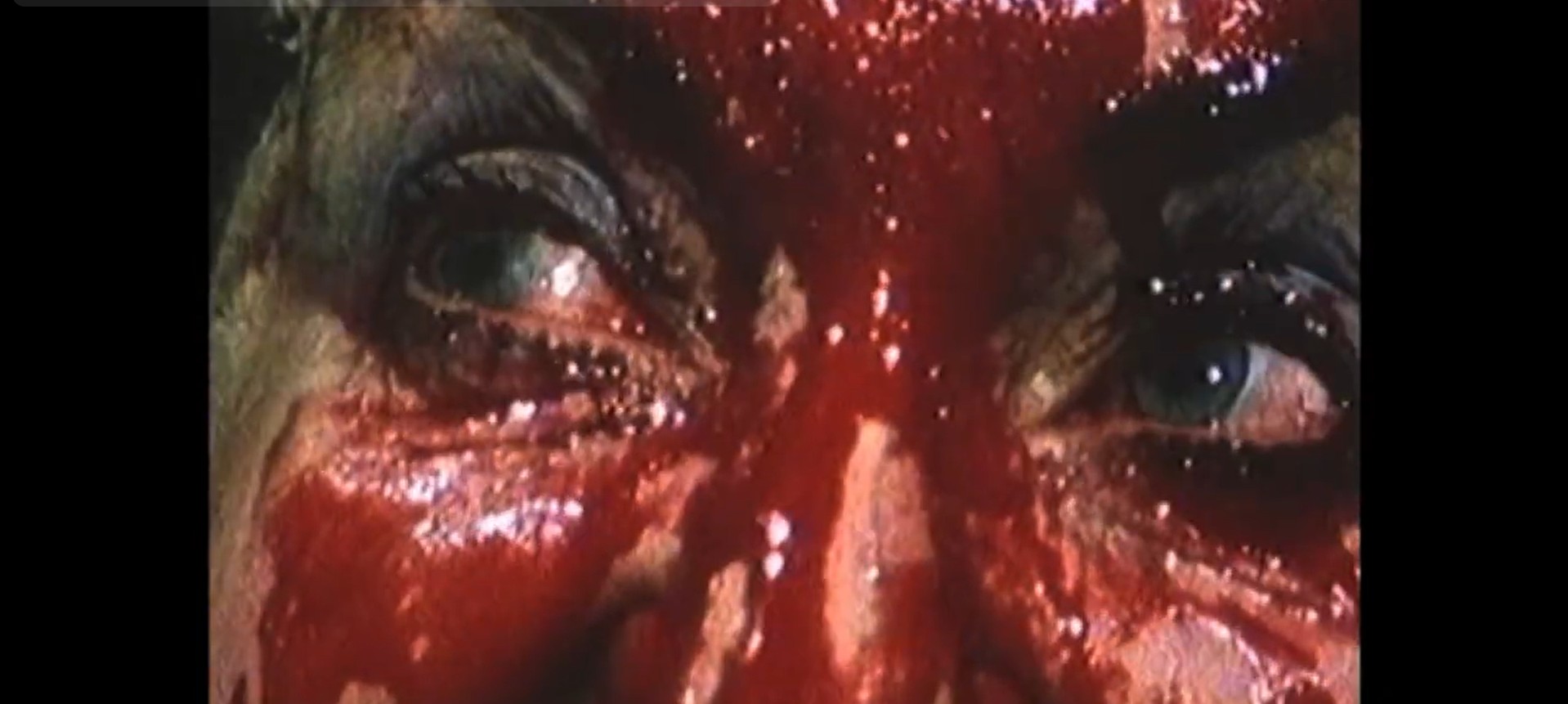
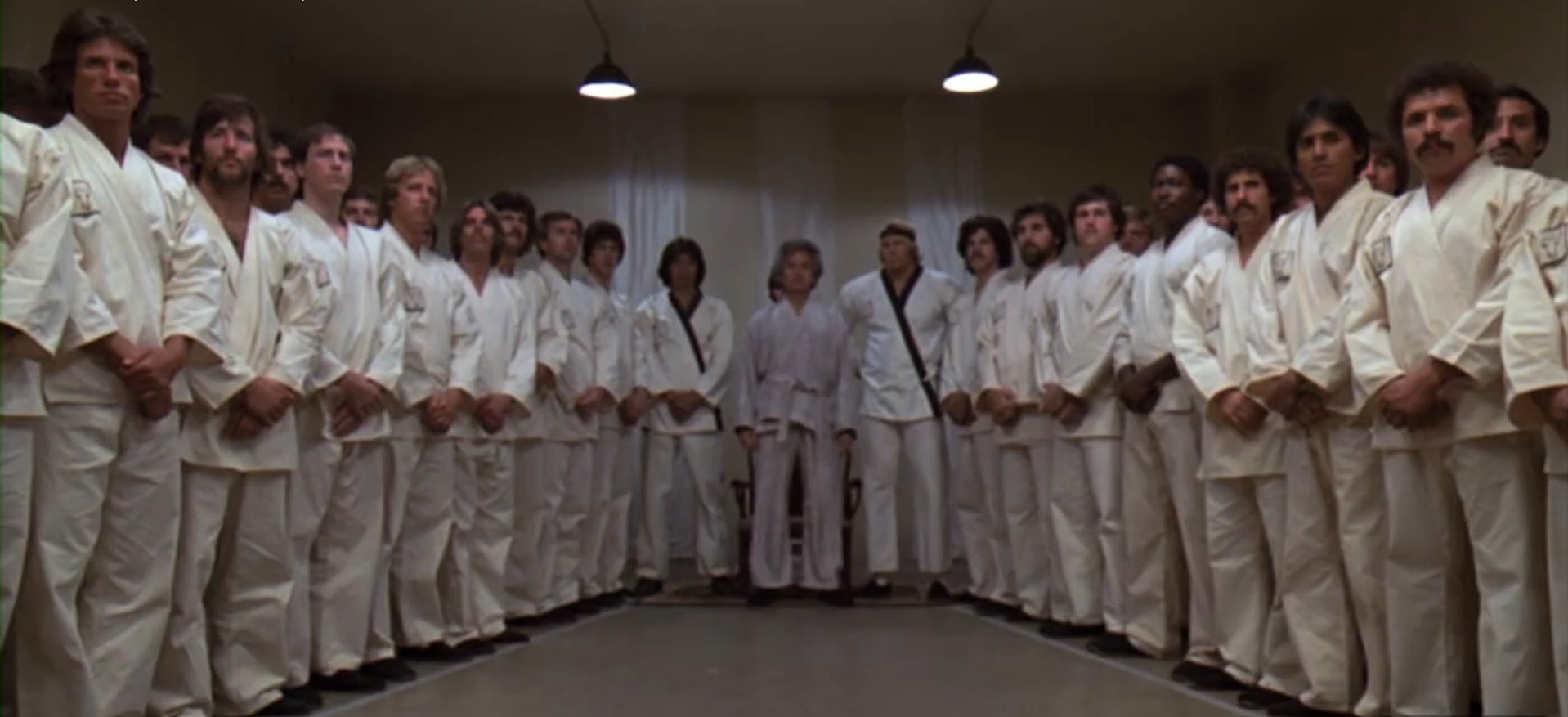
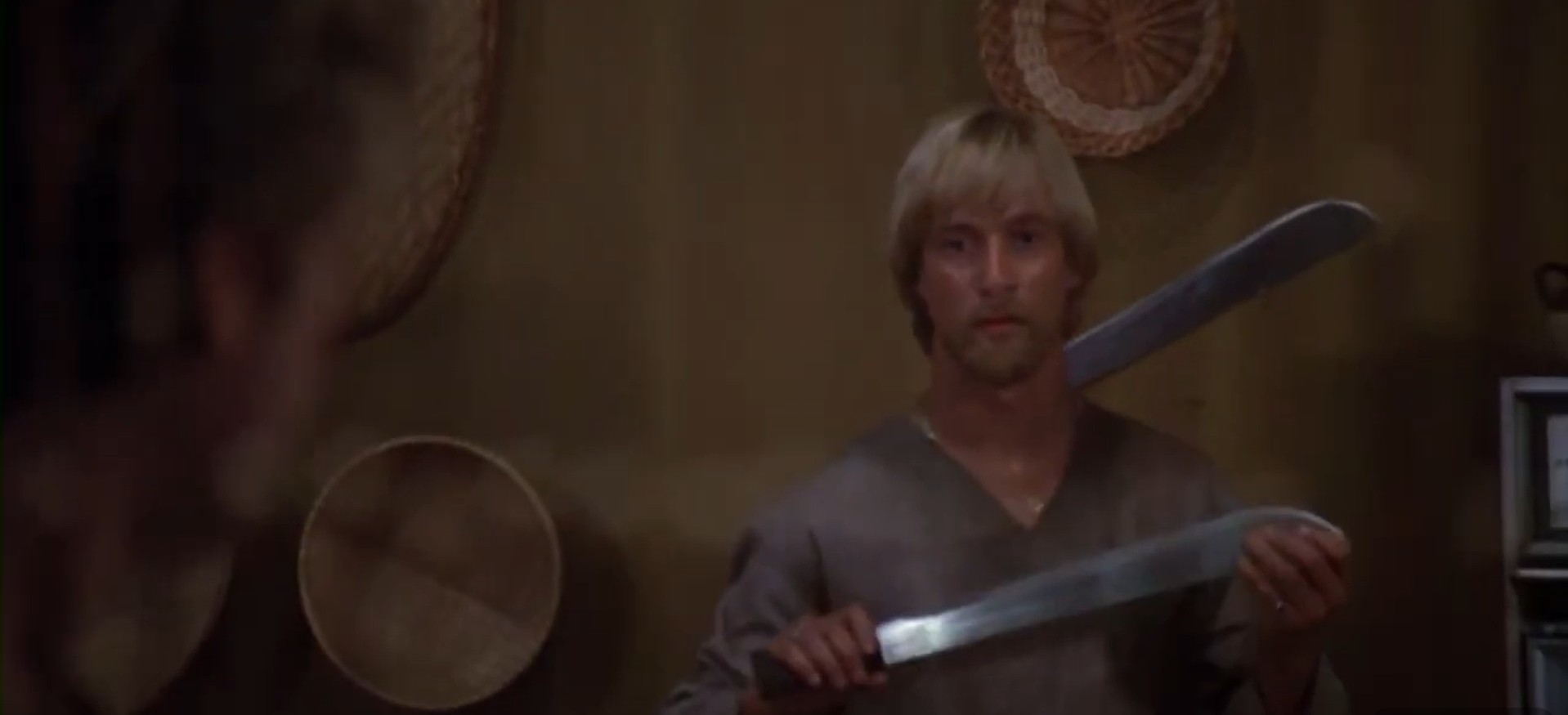
Nazi officer Colonel von Kleiben heads a concentration camp where he experiments of young Jewish and Russian female prisoners.  His experiments bore through the encampment lot with unconventional reproductive system surgery for the good of and in the name of purifying the Aryan race, experimentations that also including nonconsensual sexual activities between the women captives and the top physical specimens of the Nazi ranks.  Kleiben’s masked, real intentions are to practice for his own sake in a testicle transplant after a Russian woman castrates him during his attempted raping of her during conflict.  Woman after woman is sacrificed for the surgeon’s rigorous rehearsal by having their uteruses removed and replaced by another and when they expire on the table, their corpses are discarded into the camp’s incinerating ovens.  One Nazi solider is earmarked to be Kleiben’s hope to be whole again and uses the soldier’s affections toward a female prisoner to gain power and control in coercing him blindly into the experiment. 

If pleasure seeking banned films from certain sovereign states, then perhaps “S.S. Experiment Love Camp” should be on your short list.  The 1976 Nazisploitation film from Italy depicts a semblance of torture simulations used from Hitler’s Reich and lays the groundwork for total absurdity with a plot coursed with nonsense motivation at the disadvantage of a minority group under the threat of torture and death.  Also known as “Captive Women II:  Orgies of the Damned,” as more of a sequel in the collective Naziploitation subgenre popular in the 70’s, or most widely known as simply “S.S. Experiment,” the film is from the “Django the Bastard” and “Kill Django… Kill First” director Sergio Garrone, who co-wrote the script alongside “The Weapon, the Hour, & the Motive” co-screenwriter Vinicio Marinuci.  The Società Europea Films Internazionali Cinematografica produced the video nasty venture and expressed no regret the depictions of Nazi terror with the continuation of the subgenre by producing “S.S. Camp 5:  Women’s Hell” as well as other rape-inclined exploitation, such as “Mandinga” between master and plantation slaves and the caged women narrative of “Barbed Wire Dolls.”  

Sifting through the atrocious Nazi experiments, the unabashed sum of nudity, and the ridiculously selfish plot of one Colonel’s lengths to restore his manhood, “S.S. Experiment Love Camp” has a handful of mainstay principals key to the premise’s perpetuation encircled around Colonel Kleiben’s clandestine reasons to willingly and uncompassionately order a new type of surgical procedure on innocent civilian women prisoners.  Played by the square jawed, blonde haired Italian Giorgio Cerioni, who after “S.S. Experiment Love Camp” went on a string of playing a woman abusing Nazi in nazisploitation films between ’76 and ’77 with “Deported Women of the SS Special Section,” “SS Camp:  Women’s Hell,”  “The Red Nights of the Gestapo,” Kleiben’s a stoic, behind-the-scenes force and Cerioni dons the decadence evil well behind German medals and sense of false soldier duty as he works both the known to Kleinben Jewish world class surgeon Dr. Steiner (Attilio Dottesio, “The Sinful Nuns of Saint Valentine”) pretending to be German and Kleiben’s targeted German solider Helmet (Mircha Carven, “Death Will Have Your Eyes”) sought for his textbook testicles.  Dottesio’s Dr. Steiner is a conflicted man brought to do surgery on his fellow Jews that will result in their certain death and while he knows this, and it weighs on his conscious, the stuck doctor keeps himself from being exposed from other than the Colonel who knows and exploits his little secret for advantage; Dottesio wears a burden upon the surgeon’s face but doesn’t do enough to provide the body language of resistance in being doctor death against his will.  Yet, Carven wholly depicts an outlier amongst the typical German national who rather read books than shoot the sexual gab of his countrymen, which is in itself a nice slice of visual irony with the Nazi being known for burning literature.  Carven keeps Helmut relatively quiet, reserved, and a watcher from afar, noticing blonde prisoner Mirelle as the two fall for each other at the moment of locking eyes.  Carven and Paolo Corazzi (“SS Camp:  Women’s Hell”) sizzle with chemistry that’s left pieced too far apart and with not enough relationship context toward their insta-love connection.  There are other peripheral dialogue characters that keep the story spicy in their debauchery with Serafino Profumo (“Escape from Hell”) who had that perfect thin mustache and bald and stout look that makes him a formidable slimeball as the Nazi Seargent, Patrizia Melega (“SS Camp:  Women’s Hell”) as Dr. Steiner’s sadistic lesbian colleague Dr. Renke, and a handful of German soldiers to be the plug to the female prisoner outlet, such as with Matilda Dall’Agilio, Agnes Kalpagos, and Almina De Sanzio.  One of the more details to gripe about the cast is that they’re all Italian bronze that dilutes the allusion of the nationalities their portraying. 

“S.S. Experiment Love Camp” comes with a smidgen of notoriety having been banned in select western European countries over its depiction of violence, especially at the hands of Nazis, and its controversial poster of a naked woman crucified upside.  To this day,  Garrone’s film is still shocking and abhorrent with the aforesaid but also the emotion confliction etched into characters like Dr. Steiner or Helmut who must make a choice, weighing the balance of self-preservation over the salvation and safety of others, and that’s what really drives this nazisploitation to have tremendous impact in an absurdist plot of colonel cajones.  Garrone favors a more realistic approach to the tortures and horrors of a Nazi concentration camp by including close reenactments to their torture methods and Garrone also lingers ever so uncomfortably on the complete discard of corpses into the oven without any dialogue, expression on any faces, and even adds a surrealist glance into the oven of the bodies moving, in an artful dance way, when the flames are ignited.  There’s also the given, often gratuitous nudity that accompanies most nazisploitation films and while nudity usually arouses, stimulation stalls under the barbarism that’s present in the air, the context of which the sex acts are being conducted for, and the outcome of ghastly blood and sinew that follows to the end of the mortal coil.  There’s sensuality between lovers and transactions between prostitution and paying customers but even those innocuous instances rapid degrade into unnerving anticipation. 

88 Films’ new 2-disc, dual format 4K UHD Blu-ray and Standard Blu-ray set is a marvel of physical media engineering.  The 4K UHD is HVEC encoded and presented in Dolby Vision HDR10, 2160p ultra high-definition, and stored on a BD100 while the Standard Blu-ray is AVC encoded with a 1080p resolution on a BD50, both brand new 4K remastered transfers stem from the original negatives and displayed in a widescreen 1.85:1 aspect ratio.  Between the two formats, there’s identical visuals to the naked eye but the 4K UHD does provide a slightly sharper image that has more an immersive pop when comparing the two formats side-by-side.  Colors are rich with a complete hue saturation that isn’t present in previous, more muted DVD or other Blu-ray editions.  Darker scenes have an intention rough quality about them as well as the concrete and unpigmented concentration camp as intended by director Sergio Carrone to put forth as much realism as possible.  No identifiable issues with compression as the picture quality looks clean through-and-through with blacks retaining an inky bide, grading remains consistent and stable, and the minutiae of fabric and skin color doesn’t contest with any ambiguity as Nazi uniforms distill a gray cotton-wool blend, you can also touch the little fuzzies on their garb, and the stubble and sweat greatly show the length of detail on strained and tense faces during torture or combat scenes.  The formats both have the same audio mixes:  an ADR English 2.0 LPCM and an ADR Italian 2.0 LPCM.  The uncompressed audio brings an unfiltered and considerate quality to the front channels with clean and clear dialogue under a diminutive amount of interference and an ambience track that puts its best foot forward, or rather the front, with distinct, sundry range of electronic voltage, machine gun fire, and the surgical slippery stickiness of organs being handled.  The new translated English subtitles are paced well and have no grammatical or misspelling issues.  Special features include a feature tandem audio commentary with Italian film experts Eugenio Ercolani and Nanni Cobretti.  Plus, Italian audio only interviews subtitled in English, including an interview with the late director Sergio Garrone Sadistically Yours, Sergio G., an interview with music historian Pierpaolo de Sanctis SSadist Sound, an interview with editor Eugenio Alabiso The Alibiso Dynasty (a back cover misspelling error perhaps?), an interview with cinematographer Maurizio Centini Framing Exploitation.  The special features conclude with the Italian title credits for the opening and closing of the film and the original Italian trailer.  88 Films and Joel Robison bring a newly illustrated, censored and uncensored cover art with the censored version on the rigid dual-sided slipcover that’s crazily detailed in all its tempestuous glory with the backside depicting the original poster art of a reverse crucified naked woman, both images are impressed with a pop-pulp coloring and chrome effect. The uncensored version lies within the plastic slip of the black 4K Amaray with a reverse side depicting also the original cover in its more traditional coloring of the horrendous and country-banning portrayal.  Inserted on the left interior is an uncensored illustrative cover, of the original poster art, atop of a 11-page English essay from Tim Murray entitled “Nazisploitation, Punks, and The Nasties…”  The Not rated, 95-minute film is region free for global player use. 

Last Rites: If nazisploitation or Eurosleaze just isn’t what tickles your movie mania, any cinephile can appreciate the pristine transfer, the raw and uncompressed audio, and its physical accoutrements that rise “S.S. Experiment Love Camp” into a must-have release.

“S.S. Experiment Love Camp” 4K and Blu-ray is Ripe for the Taking!