You’re Not Going Crazy. EVIL Has Snuck in Its Egg! “Cuckoo” reviewed! (Neon / Blu-ray)

Fresh Horror for the Taking! “Cuckoo” Available on Amazon!

Moving to the Bavarian Mountains can be breathtaking, relaxingly scenic, and peacefully remote.  For Gretchen, however, the involuntary move comes shortly after the death of her mother, and she’s forced to leave the U.S. with her father, stepmother, and half-sister to now live at the base of the German Bavarians where an isolated vacation resort is overseen by Herr König who has hired Gretchen’s father to architecturally design an extension to the resort’s vast campus.  Reluctant to make the best of an undesirable situation, Gretchen attempts to run away with another woman and go back to America but on the way, an accident lands Gretchen in the nearby hospital and the odd, omnipresent and oppressive sensation that has surrounded her upon her arrival begins to unravel around Herr König and the resort grounds.  Disorientating visions and sounds, entranced female guests vomiting in the hotel, and an aggressively cloaked women pursing her in the shadows, a battered and bruised Gretchen can’t convince her family of the oddities around her or the ones that have plagued her mute half-sister without warning like a flash flood but with the help of a police detective, the only other person who believes her, the two investigate the strange threat that’s closing in on Gretchen’s family.

For fans of the 2018 under-the-radar, mighty mite demonic possession film “Luz,” director Tilman Singer helms another inimitable horror that’s literally for the birds.  “Cuckoo” is Singer’s this year’s released production in which he penned the script.  His sophomore feature-length film, a plotted preservation of a quickly diminishing deadly, infiltrating species, keeps in line with his Germanic heritage by filming on site at the base of the Bavarian Mountains around the North Rhine-Westphalia region of Germany.  “Cuckoo” is a production of Neon, Fiction Park, and Waypoint Entertainment, spearheaded by producers Thor Bradwell (“Saint Clare”), Emily Cheung, Maria Tsigka, Josh Rosenbaum, Ken Kao (“Rampart”), Markus Halberschmidt, and Ben Rimmer (“Midsommar”).
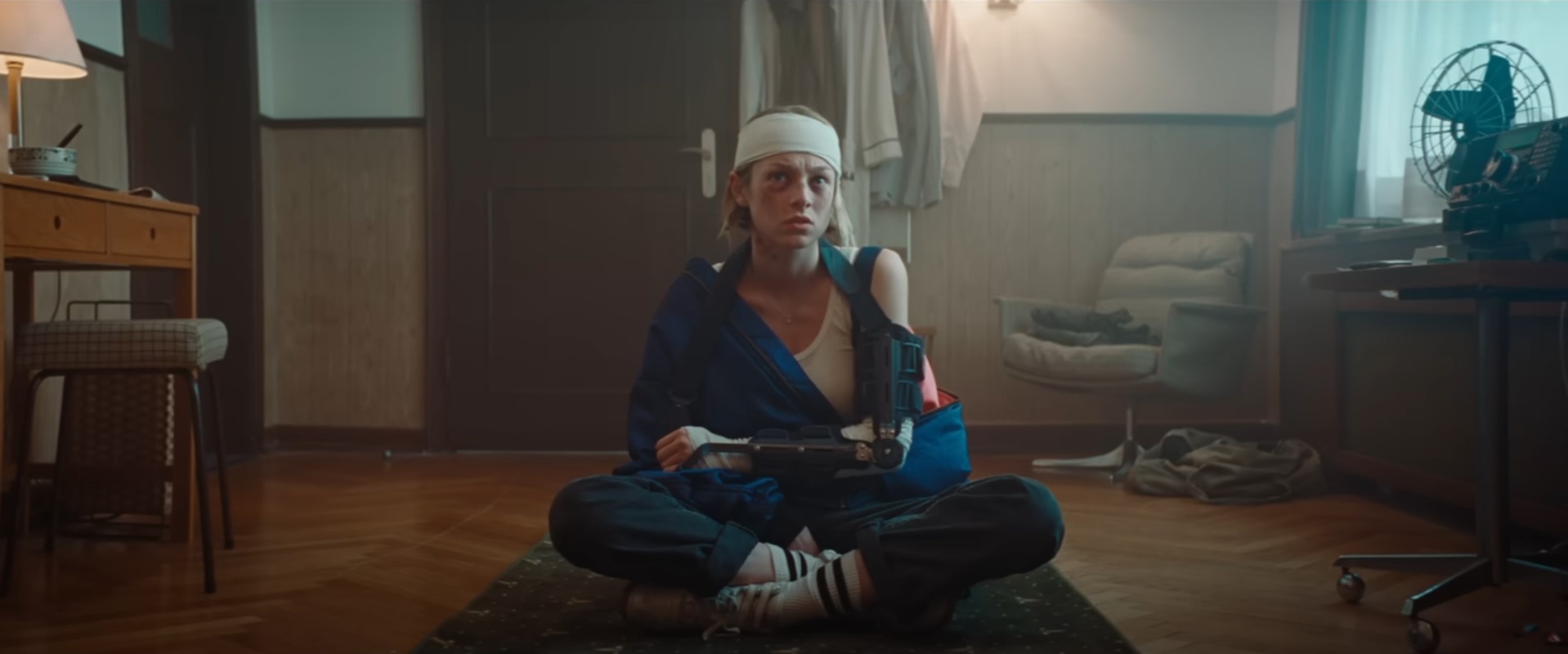
Having established himself as a refined and charming British actor in the widely popular BBC series “Downton Abbey,” Dan Stevens has slowly but surely infiltrated himself in what Lydia Deetz might describe as strange and unusual films.  Shortly after the untimely demise of the Matthew Crawley character, the principal love interest to Lady Mary (for those who know, know), Stevens jumped right into the Adam Wingard thriller “The Guest” where the then slightly over 30-year-old actor proves himself capable of portraying so much more than a stiff socialite.  As resort owner, nature preservationist, and the overall prototype of Zen in Herr König, Stevens displays another side of his deranged splits while showcasing his perfection of the German language.  Opposite Herr König in the teen heroine role is the rising star from “The Hunger Games:  The Ballad of Songbirds & Snakes” and the provocative HBO series “Euphoria,” Hunter Schafer.  As Gretchen, Schafer instills a grappling of grief for a mother she was not ready to let go, institutes steadfast judgements about her father’s new family, and impresses a level of loneliness when having to move away from familiar America to the foreign and alienating grounds of Eastern Europe which all evoke the epitome of teenage angst who can’t see beyond her music, her longing for home, and her new family aversion to see that all those negative, destructive traits innately push her away from what’s important, her family.  Herr König embodies Gretchen’s impediment to move forward while another, Henry the detective (Jan Bluthardt, “Luz”), is stitched to ground Gretchen as the past representation of events you can’t change and the anger it has over you.  Jessica Henwick (“Love and Monsters”), Marton Csokas (“Evilenko”), Greta Fernández (“Embers”), Proschat Madani, Kalin Morrow, Astrid Bergès-Frisbey (“Pirates of the Caribbean:  On Stranger Tides”), and the introduction of Mila Lieu as the mute Alma rounds out the cast.

There are no Coco Puffs to go for here in what will be Tilman Singer’s signature breakthrough hit in the cult genre.  “Cuckoo’s” unique spin on the certain genus of the titular bird is next to none as it radicalizes extreme measures to save a mimicking, infiltrating, surrogate-forcing species from extinction.  The story, which takes on the play God and find out narrative, is a perfect prefect of cutting your nose off despite your face in both the sensationalized horror element and in the rite of passage of teenager squabbles that oxymoronically favors a contrasting parallel.  “Cuckoo” falls into area of weirdness that could be an episode of the “Twilight Zone” in its earthbound peculiarity hidden from public view for decades, if not centuries, blending the once unforeseen man and animal into one and trying to keep that unity intact no matter what the natural process of survival decrees; the story goes between the shadows into its lockbox of nature’s little dirty secrets left in the dark recesses of the forgotten closet and what’s found there is unnatural, wrong, and perhaps even prehistoric.  “Cuckoo” might be too weird.  Understandably, audiences may find “Cuckoo’s” birdy thriller too intractable and maybe too, too far-fetched for a horror film that tiptoes around political hot topics, such as with the violation of women’s bodies and the pregnancy genetics that ensues.  Yet, that controversial conversation starter inside a soupy mixture of on-your-toes tension and the solid acting from Schafer, Stevens, Bluthardt, Bergès-Frisbey, Lieu, Henwick, Csokas, and Morrow develop a much needed off-the-wall and cacophonous-stirring horror that offers a new breed of horror.

The unbelievably scary ordeal arrives onto Neon’s standard Blu-ray set with an AVC encoded, 1080p high-definition resolution, BD50, presented in the anamorphic widescreen aspect ratio 2.39:1 CinemaScope.  Graded with a lower contrast, “Cuckoo’s” antiquated, perhaps wall-to-wall 70’s or 80’s veneer, elevates the finish with bolder conventional colors, enriching wood paneling, gaudy wallpaper, and the like to pop out rather than blend in.  Textures are retained in finer fabrics but appear to be lost on much of the skin surfaces with the revolving door of lighting.  Cinematographer Paul Faltz’s play on light, shadow, and depth creates tension, mood, and a lasting impression.  The lossless English (and some German, which isn’t listed) language DTS-HD Master Audio 5.1 mix provides favorable fidelity, especially when a partial of the film’s story revolves around immersive sound – Gretchen’s music, vibrating vocal sirens, Herr König’s recorder tune, etc.  Depth and range hit on the exact spatial amalgam, diffusing nicely and dynamically into the back and rear channels when scenes play out to a chase or civilly devolve into gunfire.  The second, accompanying audio option is an English Descriptive Audio 2.0 mix that provides same quantity without much of the immersive quality.  English and Spanish subtitles are optionally available.  Bonus features include the making-of “Cuckoo” with snippet interviews and behind-the-scenes look, a video diary series, on-set interviews with actor Hunter Schafer, costume designer Frauke Firl, and production designer Dario Mendez Acosta, a handful of deleted scenes, and a teaser and theatrical trailer.  Neon’s hard-encoded region A, standard Blu-ray comes in the traditional blue Amaray case with the poster art as primary cover design.  Disc is pressed with a black background and “Cuckoo” in red font.  There are no inserts or other tangible features.  The R-rated film, for violence, bloody images, language, and brief teen drug use, has a runtime of 102 minutes.

Last Rites: “Cuckoo’s” a devouringly devilish and deranged nightmare discording from the pattern to breach onto a new form of terror.
Fresh Horror for the Taking! “Cuckoo” Available on Amazon!

EVIL Lies in Ancestral Ties! “Dogra Magra” reviewed! (Radiance Films / Limited-Edition Blu-ray)

“Dogra Magra” on Limited Edition Blu-ray! Purchase Here!

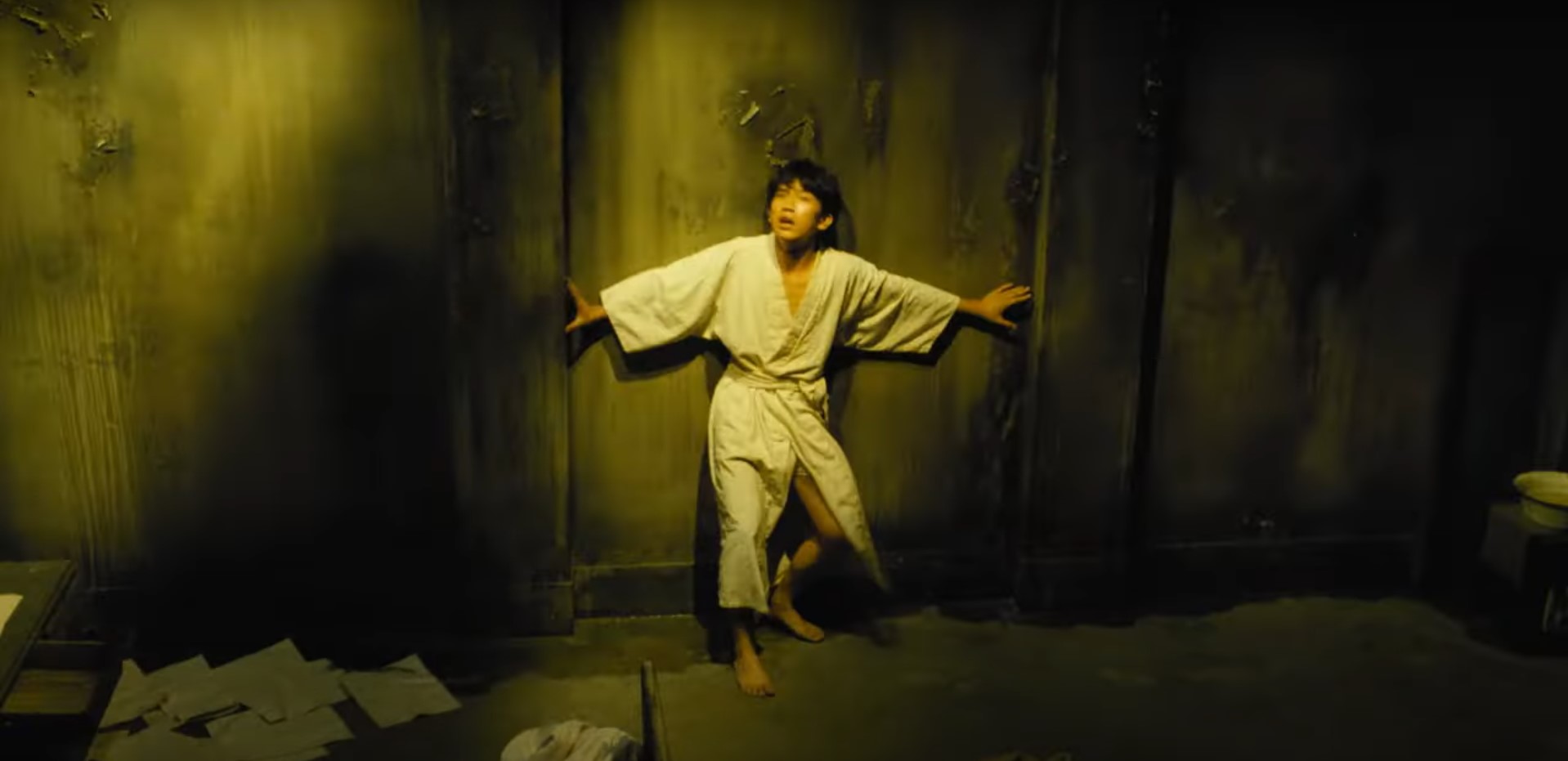
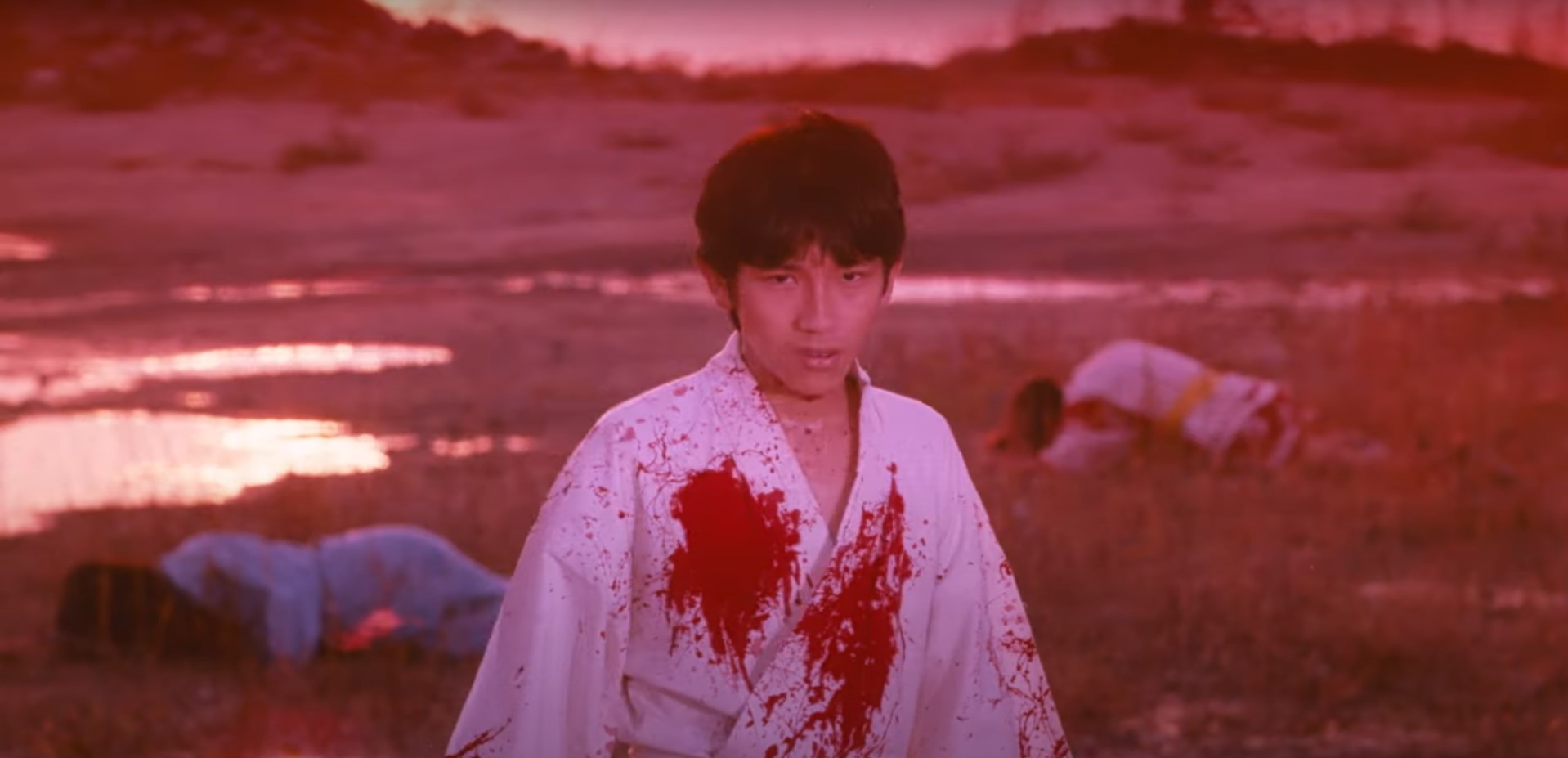
A young man wakes up in an asylum cell, unable to remember how he got there, his name, and doesn’t even recognize his face.  The asylum supervisor, Prof. Wakabayashi, has been overseeing his condition ever since the suicidal passing of former experimenting director, Dr. Masaki, nearly a month ago.  Disoriented, the young man is toured around the hospital grounds where Wakabayashi tells him the tragic tale of a 9th century man who kills his bride the day before their wedding day to capture the stages of her decomposition recorded onto a sacred scroll.  Distancing himself from the possibility of being murderous man, Wakabayashi informs him he is Kure Ichiro, the direct descendent of the groom and he enacted the very same events his ancestor committed long ago.  When the sudden reemergence of Dr. Masaki covertly corners Ichiro in his office, Masaki divulges his and Wakabayashi’s theories about Ichiro’s case but how the events came to fruition just may be plain and simple murder. 

Nature versus Nurture and the psychosis that ensues when discussing Pre-World War II context of Empirical Japan and their either inherent tendencies to repeat a violent past or to be triggered, poked, and prodded toward repeating history is the surmised and experimental plot of writer Yumeno Kyūsaku and his psychoanalytical novel “Dogura Magura.”  The title rearranged to “Dogra Mogra” is used for the film adaptation of Kyūsaku’s novel with the script written-and-directed by the avant-garde filmmaker Toshio Matsumoto (Japan’s “Demons” of 1971).  Matsumoto cowrites the script with Atsushi Yamatoya (“Story of David:  Hunting for Beautiful Girls”) written primarily from the distressed perspective of the protagonist Kure Ichiro only to switch hands when the experimenting Masaki enters the fold.  Shuji Shibata and Kazuo Shimizu inpendently produce the 1988 film under production companies Katsujindo Cinema and Toshykanky Kaihatsu AG.

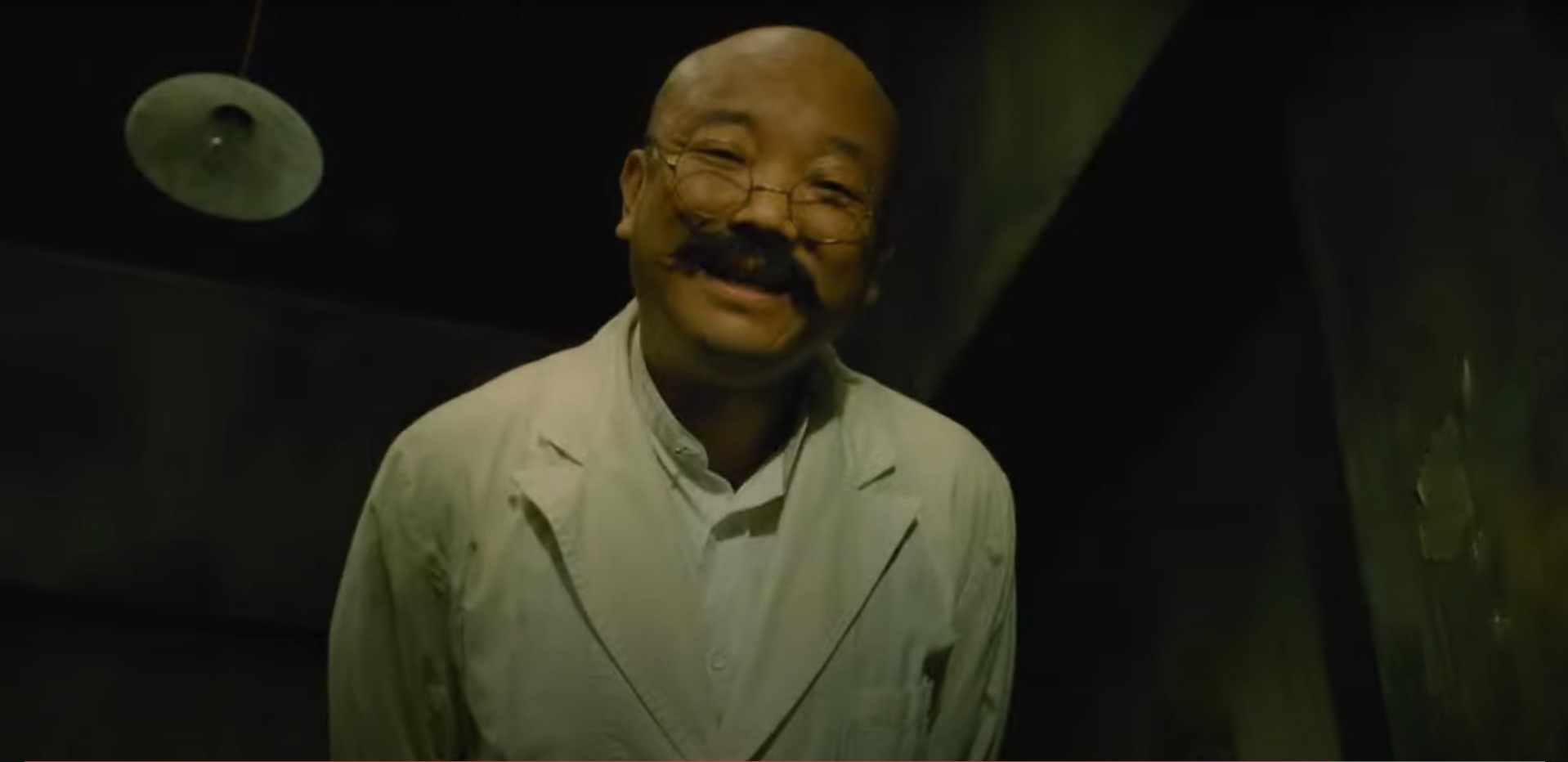
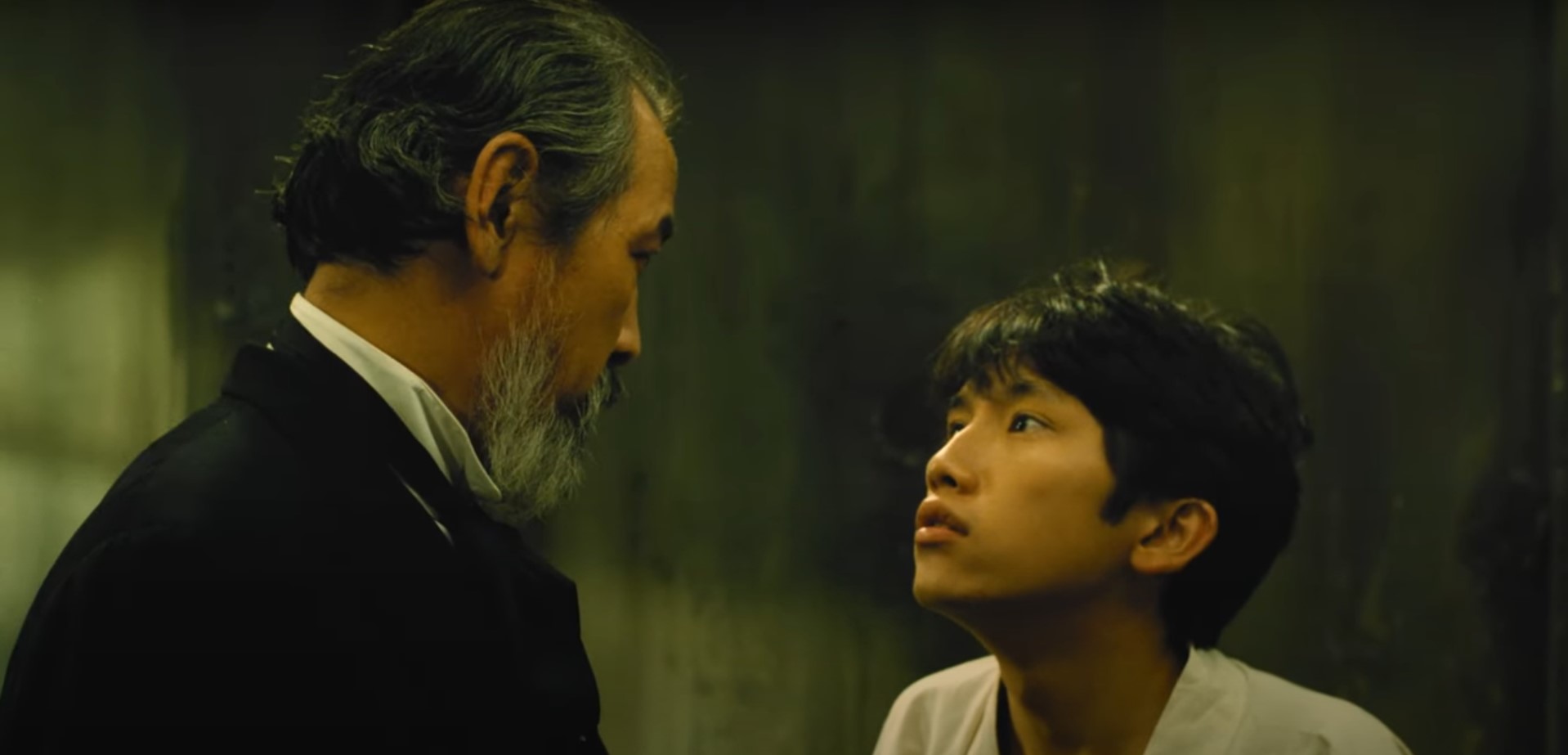
Principal players of “Dogra Magra” boil down to a three-prong outfit centered around Kure Ichiro and his theorized amnesia.  Before being the lead voice actor in “Prince Mononoke,” a decade earlier Yôji Matsuda was waking up with an inexplicable unawareness of who he was or what he had done as Kure Ichiro.  Matsuda feigns forgetfulness with shock and surprise, that will too place audiences in situational darkness, with the young Ichiro arousing in a powerful moment of unfamiliarity.  A shaken, discombobulated Ichiro becomes the object of obsessional mark between two theoretical and experimental-competing psychoanalysts in Prof. Wakabayashi and Dr. Masaki, played respectively by a collectively calm and bearded Hideo Murota (“Rape and Death of a Housewife,” “Original Sin”) that emits a sense of academia and medical security and reason and a hyenic-laughing, bald and glasses-wearing Eri Misawa who is more maniacal and unconventional to the likes of a mad-scientist   Yet both men have motivation that stirs the enigmatic pot of Kure Ichiro’s plight, stemmed from the very same source that drives the brutal murder of his beautiful bride one day before their wedding that eerily follows the footsteps of his macabre ancestral history.  There’s an inarguable difference between Wakabayashi and Masaki’s approach handling the curious case of Kure Ichiro; Wakabayashi’s hides in the clandestine shadows that aims to subvert the thought dead Masaki’s work whereas Masaki, under his blunt-force mania, is straight forward, almost apathetically.  In either case, both psychoanalytical professionals are indifferent to the crux of human life by focusing solely on whether either one of their theories is correct in an odd game of deception and death.  “Dogra Magra” rounds out the cast with Kyôko Enami (“Curse, Death & Spirit”) and Eri Misawa.

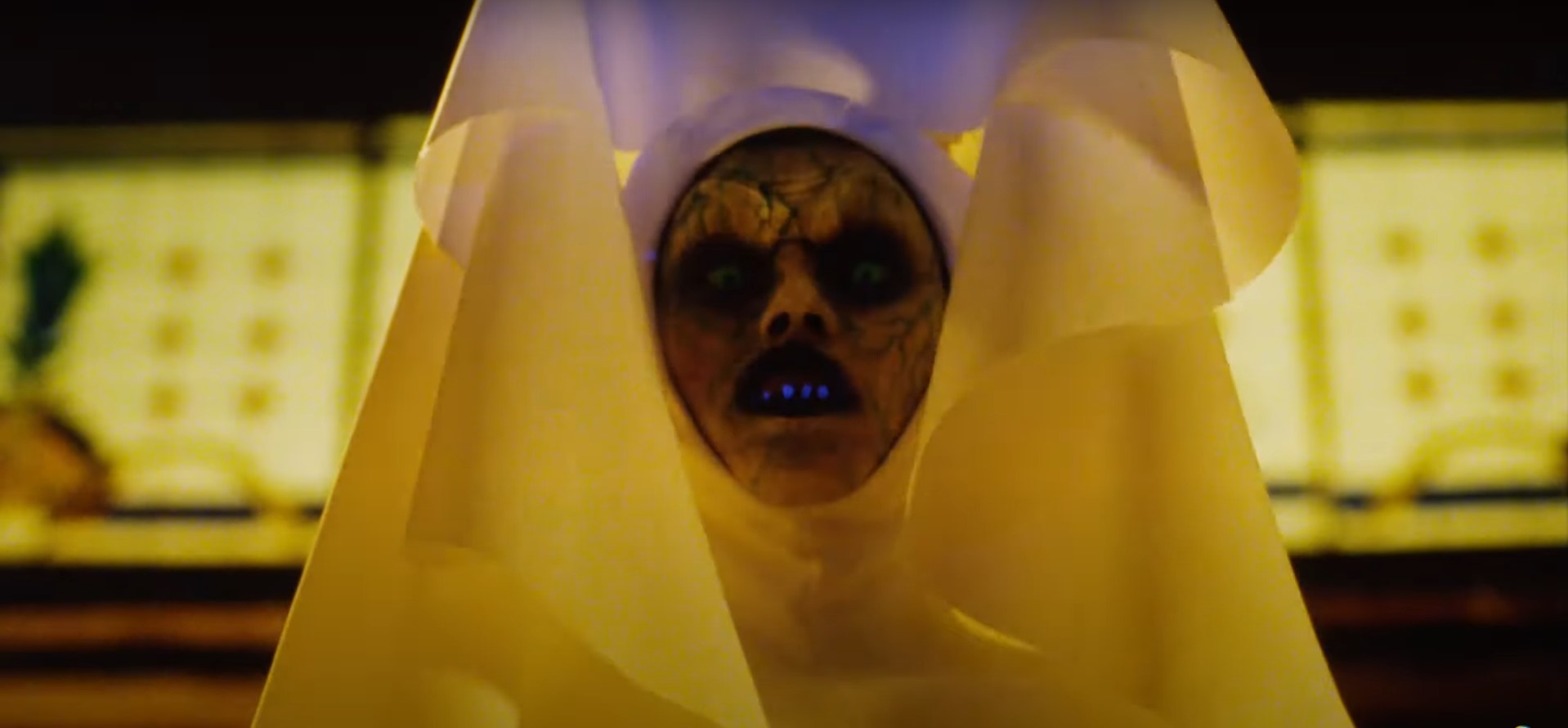
An attribute for audiences to become lost in “Dogra Magra’s” ethereal can be contributed by Toshio Matsumoto’s accosting avant-garde disorientation that swallows Kure Ichiro past, present, and future, plays tricks on his mind and eyes, and that also fishes patiently for a conclusion that rarely seems apparent.  The experimental qualities of “Dogra Magra” seep out of the tap of dark comedy and amnestic thriller and into a basin of spreading horror and exploitation.  “Dogra Magra’s” surreal storytelling and interesting, visceral visuals often reminds us of an old-dark house film a decade prior with the Nobuhiko Obayashi film, “Hausu,” and while not based in satirical foreplay like “Hausu,” “Dogra Magra” begins to unravel more questions than answers with a fleeting sense that nothing is real, nothing is as it seems, and maybe perhaps were all stuck in Kure Ichiro’s herded and scrambled mind that may or may not be his inherent, innate doing after all and that changes the narrative entirely.  Themes of historical repetition, ancestral culpability, forgetting the past, and empirical brainwashing are churned intrinsically into “Dogra Magra’s” constitution as well as within Japanese legacy with a formidable and prophetical proposition for no hope on horizon through a chimerical lens of learning and growing into the truth.

Radiance Films continues to starkly highlight underscored and wayward films from around the globe and “Dogra Magra” is no exception with a beautifully curated Blu-ray release.  The AVC encoded, 1080p high-definition, BD50 features the original widescreen aspect ratio of 1.85:1 filmed by cinematographer Tatsuo Suzuki.  The Radiance print for the limited-edition Blu-ray is pulled from the original 35mm elements and transferred in Hi-Def by producer Shuji Shibata and supervised by Tatsuo Suzuki.  The stunning upgrade leaves nothing to the imagination with a starkly harsh color grading that appears rawer than air or bright, leaning into grayscale more with darker tones of a greenish-yellow to accentuate the morbid, maybe even grittier, side of this tale, but often has naturally flourishing landscapes, such as the beach cove and the asylum yard that provides a good stretch of depth when not filtered through a POV celluloid handheld.  What’s a real winner here are the textural details that emerge through a blanket of consistent, healthy stock grain with dust and dirt retained to an extreme minimum.  The Japanese LPCM Mono mix disperse a sure-designed composition between natural audio elements layered upon or spliced with the incongruous tunes of one going through a hallucinogenic and dissociative state.  Dr. Masaki’s maniacal laughter has a sharp authoritarian jest that makes it even more frighteningly surreal.  Dialogue withholds that same sharpness and clarity throughout channeled through a single output, harnessing all the action into a funnel but clearly distinct.  English subtitles are optionally available.  The static menu’s special features store an achieved commentary track from late director Toshio Matsumoto, a 2003 interview with the director, programmer and curator Julian Ross’s visual essay on the cinematography Dogra Magra Through the Eyes of Tatsuo Suzuki, a featurette Instructions on Ahodara Sutra on the subject of the chant used in the story, a still gallery of production sketches, and the trailer.  A 51-page, color book weighs the Blu-ray package with contents that include a director’s statement from 1988, exclusive essays and an interview by Hirofumi Sakamoto Late-Period Toshio Matsumoto and Dogra Magra, Jasper Sharp The Pen is Mightier than the Sword:  The Life of Atsushi Yamatoya, and Alexander Fee and Karin Yamamoto Memory traces:  Interview with Producer Shuji Shibata, and rounding out with transfer credits and release acknowledgements.  The reversible sleeve is housed in a clear Blu-ray Amaray with new illustration compositional art and the original, more traditionally composed, Ukiyo-e artwork on the reverse.  Encoded only for regions A and B, Radiance Films’ limited-edition release to 3000 copies has a runtime of 109 minutes and is not rated. 

Last Rites: “Dogra Magra” psychosomatic surrealism is mind games on methamphetamines and Radiance Films does the 1988 Japanese picture justice rekindling its worth to the world of cinema.

“Dogra Magra” on Limited Edition Blu-ray! Purchase Here!

Dump Buckets and Buckets of Water Back into this Dry EVIL Well. “Ring Shark” reviewed! (SRS Cinema / DVD)

“Ring Shark” Now Curses the DVD Market! Own It Here!

For the subscribers of her Youtube show, vlogging social media influence Kanamasa and her co-host search for a stone well rumored to be in a haunted forest surrounded by unfriendly villagers who aggressively ward off unwelcomed visitors.  Upon discovering the well, a shark-like creature emerges suddenly and bites Kanamasa, scaring them off.  A few days later, another pair of Youtube investigators of the Psychic Investigations Big Summer learn of Khana’s disappearance after her last video surfaces of what looks to be a shark fin and then a ghastly body surfaces from within her bathtub, attacking her bikini-garbed body.  Seeking the truth and eager to find Khana, the investigators conduct interviews with “shark” experts and attempt to visit the same well only to be shooed off by the villagers until, finally, they’re able to reach the same spot and experience the same sharp-teethed horror lurking within it.  Unknowingly, that same supernatural terror of the well had follow them home. 

Sharksploitation has admittedly gotten out of hand.  The beloved horror subgenre that began with Steven Spielberg and Bruce the mechanical monstrous shark who terrorized the beaches of Amity Island have since drowned in its own watery subcategory of the ocean’s maneater predators with microbudget ineptitude that takes the shark from its natural ecosystem and rehomes it in a miscellany of nonsense locations, such as on land, in the weather, and even circling in toilets.  Well, today is the day we’ve come across a movie been assimilated into that same fatuous collective with “Ring Shark,” aka “Well Shark,” aka “Ido Shark.”  The Japanese, found-footage comedy-horror is the first of a trio of incongruous shark films released between 2023 and 2024 by Taichiro Natsume with “Love Shark” and “Last Shark” to follow, connected by the Big Summer team of Psychic Investigators.  Natsume also wrote and produced the feature.

Unfamiliar with the Psychic Investigator Big Summer series, which there’s uncertainty if Big Summer is a Japanese comedic troupe, equivalent to the Broken Lizard of America, what “Ring Shark, or “Ido Shark” begins is a series of various haunted case probes by the Big Summer team, which in this film in particular include actors using modifications of or using their actual names as characters in the story, such as director Taichiro Natsume being the single male lead in the group under character name Daiichiro Natsume.  Daiichiro Natsume can be a bumbling, yet persistent fool when it comes to the mysterious case of Kana-san with his steady motif of exclaiming his love for big boobs and determination to resolve the mystery.  He’s joined by colleagues on-and-off screen in Momoka Asahi and Chihiro Nishikawa, the latter not to be confused with Chihiro Nishikawa of JVA.  While Nishikawa and Natsume continue the running gag conversating about big breasts, Momoka Asahi enters the picture much later as the third investigating team member when Natsume goes down with a well shark bite infection that haunts him from the inside out and puts him in the hospital.  From there, Nishikawa and Momoka take the reigns on investigation by not only tending to Natsume’s dwindling health but also interviewing internet paranormal sleuths Hiroshima Freddy, a Japanese horror influence in real life, as well as Black Story Kuro, who I imagine is another influencer but couldn’t confirm it.  Typically, the Japanese language has a ton of fluid inflections and tones that dictates situations and mood, but “Ring Shark” avoids much of the vocal ups-and-downs with a consistently level tone of flat and dry humor peppered with fear, arbitrary bickering, and a pinch of kawaii to sustain a semi-serious documentary style investigation.  Maya Mineo, Issei Kunisawa, Yacch Chara, Daiki Mizuno, Honey Trap, Umeki, and the wrestler known as The Shark fills out the cast.

“Ring Shark” is “Blair Witch Project” meets “The Ring.”  The latter having the most prominent appearance as the at home media, that was once titled, or probably is likely titled in Japan, as “Ido Shark,” is marketed for U.S. consumption because every moviegoer is either well versed or knows of Hideo Nakata’s “The Ring” series and its heebie-jeebies Samara spirit.  Instead of a cursed tape that summons Samara out of the depths of her murdered resting spot, a well, to kill anyone after a week of viewing said tape, “Ring Shark” only real connective tissue to “The Ring” is that there is a well in the story and a murdered girl’s body was dumped inside.  That’s it.  From there, the structure is more to the tune of “Blair Witch Project” with a pseudo-found footage of one social media’s disappearance igniting the Psychic Investigator Big Summer team to check it out after the tape is brought to their attention form Kanasama’s co-host.  The docu-style incorporates dry wit of interviewing shark experts, creature academics, urban legend connoisseurs, and thorough analysts and researchers, as well as themselves as angry villagers and a supernatural hand puppet shark head subverts their stratospheric sublayer with soul-chumming results.  Yet, none of everything just said really clicks in a flimsy and slapdashedly put together microbudget story derived for effect for true and absurd exploitation of sharks gone wild. 

“Ring Shark” swims right into SRS Cinema’s well-house with a brand-new DVD from the microbudget cult film distributor.  Upscaled to 1080p, the MPEG2 encoded, single layer DVD5 presents the Big Summer production ion a widescreen 1.85:1 aspect ratio.  Though upscaled to 1080p, the cell phone footage renders stretched limitations under the light of low-budget constraints.  Night vision and poor lighting coupled with closeups-to-extreme closeups, and shaky camera work dematerializes story-important images.  Natural lit and stationary camera work provide cleaner visuals in what is mostly a deluge of exposition and regular camera angles without atmospheric makeup.  The Japanese language Dolby Digital 2.0 stereo provides lean composition with ample inherent surrounding ambience, picking up the natural wildlife chirping in the background, the vocal amplification of someone talking through a microphone, the hustle and bustle of a restaurant, etc. Dialogue isn’t impeded by the commercial phone camera recording that creates a rather good reproduction and diffusion of sound amongst the space.  Added audio effects, such as the shark’s growling or snarling, does feel unnaturally alienated from the rest of the audio but works to the film’s advantage despite the obvious hand puppetry.  English subtitles are burned in but do synch well and appear error free. There’s also what looks to be double English subtitles along with Japanese title cards or subtitles that are a part of the Youtube investigation and often coincide with the main English subtitles in a distracting, screen space absorbing real estate. The Japanese electro-rap graced static menu, which samples Lil Jon’s Yeeeah, contains no bonus feature selection; instead, the bonus content is right on the main menu with short film “Shark of the Dead” (8.26 minutes) and the “Ring Shark” trailer.  I love bad movie cover art and SRS Cinema’s “Ring Shark” is no exception with smokey-eyed, electrically charged, and monstrously toothy shark breaching from a little stone well underneath “The Ring”-font film title.  The disc is pressed with the same image and there are no inserts included.  The barely hour-long film, clocking in at 63-minutes, comes not rated and has a region free playback.

Last Rites: “Ring Shark” is a monumental prosaic mockumentary aimed to swell Sharksploitation into further ill-repute and disrepair with an unfunny and uninteresting undertaking of underwhelming pastiche.

“Ring Shark” Now Curses the DVD Market! Own It Here!

Daddy’s EVIL Little Secret. “The Beast Within” reviewed! (Well Go USA Entertainment / Blu-ray)

“The Beast Within” is Calling! Own Your Copy Here!

Infirmed 10-year-old girl Willow witnesses one night a month her mother whisking away her rather distant father into the dense woods deep within the English countryside.  When brought home the next day, her father must be helped carried in, appearing haggard and weak from his strange and mysteriously kept overnight departure far from home.  The secret festers between the parents, as well with her grandfather, to a point where tensions rise to the surface and the family is slowly falling and drifting apart.  One night, Willow decides to sneak onto one of those one-a-month egresses and discovers her father, left chained inside a dilapidated structure in the middle of the wooded nowhere, transforms into a horrible beast.  From that point on, the family secret was no more, and she must come to terms with her parents’ deception and their struggling family cohesion before the next full moon rises above their isolated home compound.

Lycanthrope films are on the rise with the anticipation of two new theatrical releases that have seen positive reactions just by their trailers alone with “The Invisible Man’s” Leigh Whannell staying in the Dark Universe with “Wolf Man,” slated for the silver screen January of 2025, and “Scream of the Banshee’s” Steven C. Miller going wild and hair near this Christmas season with his chaotic and carnage-ladened “Werewolves.”  Kicking it off in the werewolf category however is English director Alexander J. Farrell making his debut fictional feature with “The Beast Within.”  The 2024 released conceited thriller plays on a child’s perception of events, especially when she sees her parents joyless faces, co-written by Farrell and more seasoned screenwriter Grear Ellison (“A Woman At Night”) and both have worked previously on Farrell’s last two projects, a documentary entitled “Making a Killing” that sheds like an antiquated law that results in capping financial need after preventable medical negligence and another cowritten session, a RomCom in “How to Date Billy Walsh” that was also released in 2024.  The UK production comes from a conglomerate of companies in Paradox House, Future Artist Entertainment, and private equity group Filmology Finance and is produced by the father-son duo Gary and Ryan Hamilton of Archlight Films who oversaw global sales of the film, Martin Owen, Tammy Batshon, Spencer Friend, Evan Ross, Sebastian Street, and Paolo Pilladi.

Looking for his next big hit to branch out from the shadow of “Game of Thrones’” bastard hero, Jon Snow, is Kit Harrington taking the headlining role as an intermittent explosive disorder father struggling to keep his family whole because of his own family curse.  Often resembling the HBO role that made him a household name when donning that iconic large fur coat that became an innate symbol of the Stark family, Harrington’s Noah character fails to become uniquely recognized as he’s quite the mystery with little background to his compound abode and his occupation of what seems to be a lumberjack of sorts, always cutting down trees in the nearby forest.  What’s even more mysterious is the family lineage of temporarily transmogrifying into an aggressive, animalistic beast when the full moon is high.  His reason for being cursed stems mostly from anecdotal knowledge of his own grandfather’s tragic history with being plagued by the same condition.  This places Noah’s family onto spider-cracking eggshells as his wife Imogen (Ashleigh Cummings, “NOS4A2”) finds herself loyal to a fault by caring for Noah’s condition but taking the brunt of his abusive behavior all the while daughter Willow (“Caoilinn Springall, “Stopmotion”) initially doesn’t know what’s truly happening but has this underlining fear of her father, noted by wedging her rocking horse underneath her room’s door handle every night.  Willow’s grandfather and Imogen’s dad Waylon (James Cosmo, “Highlander”) serves as a buffer between Noah and his family, maybe even perhaps the voice of reason.  Performances are mostly strong with Harrington forcing Noah’s hand a little to be brutish, a quality that doesn’t quite stick as intended.  There’s also some finale unresolve essentials with Waylon that doesn’t determine his fate as we’re left with only a threadbare implied outcome, an unfortunate state for one of the handful of principal characters.  The supporting actors rounds out with Ian Giles and Martina McClements (“When the Lights Went Out”) who never share scenes with the key intimate cast.

Aforementioned, “The Beast Within” is from the perspective of a child, in this case a child with great imaginative qualities as seen with her hobby of matchitecture of her home and nearby buildings, but the story is also definitively an allegory for an abusive husband and father that uses the lycanthrope mythology as a bestial symbol for one man’s vile nature.  Noah’s deceptive behavior lures in what the family wants, a loving husband and adoring father providing, protecting, and caring for them, but Farrell strings along a hidden truth with spot visual clues of Noah’s true self.  Those clues are terribly evident to the family devolution but there’s also a stasis of hope when Noah’s charm and smile glimmer through the cracks of his monstrous shell that’s mostly kept at bay from the audience.  The allegory keeps well until the end and then the allegory loses its legs and not mounting to much when everything laid before our eyes in the story is suddenly washed away by Farrell’s inability to stick with his metaphorical story and go explicit in the last few scenes when the child’s perspective veil is dropped, as if the new feature director couldn’t trust audiences to come to their own conclusions.  Yet, timeless set locations in the expansive English countryside, the compound set design, performances, and the limited but practical effects of the wolf man add to the independent film’s slow burn horror-dramaturgy that seizes the opportunity to label man a beast under his worst genetical conditions. 

A terrible, dark, ancestral secret can never be contained and now the terrible animal is loose onto Blu-ray home video from Well Go USA Entertainment.  The AVC encoded, 1080p high-definition, BD25 stacks up against the rest of the label’s catalogue as par for the course with a slightly softer image mostly under natural daylight and key night lighting and foundationally based with a mixture of yellow and red hues.  Though soft, details are not lost.  There’s an abundance of sharper medium to closeup shots, especially in darker scenes, where granular textures surface and the layers separate more distinctly.  Where the softness prevails is in the exterior wide shots of the 1.78:1 aspect ratio that can’t seem to not only create a greater sense of space but also can’t fathom the finer diversities of road, land, forest, and structure in what is likely a dovetail diffusion of color around the edges.  Ultimately, your brain figures it out but to the eyes the landscape is a bit one noted.  There is a pinch of splodgy murkiness in the shadows that doesn’t affect the presentation immensely.  The English DTS-HD Master Audio 5.1 diffuses the layers with solid balance.  There’s plenty of isolated audio capillaries to carry over the ambiance denotations of an ever-present fear, such as the howling wind, the violent banging of a fortified gate, or even the animalistic sounds deep in the distance, creating the depth needed to present danger from afar.  This is also coupled with tighter tension of closer vibrations, the hacking of the trees, the creaking of a floors, etc., for heightened lossless reproduction.  Dialogue renders clearly and cleanly throughout.  English and French subtitles are available for preference.  In the special features department, this Well Go USA release only comes with the film’s trailer plus pre-feature previews of other label releases.  The Blu-ray disc is pressed with a clawed imagery inside a standard Blu-ray Amaray with snap-lock and has only an advert card in the insert for this film, sharing space with “Twilight of the Warriors:  Walled In” and “You Gotta Believe.”  Rated R for Strong Violent Content and Language, “The Beast Within” has a runtime of 97 minutes and is listed as region A playback only but I was able to play the disc in Region B. 

Last Rites: “The Beast Within” is a by-the-book and subdued English allegory for fearsome behavior and Farrell’s debut is finely drawn but up to a point when audiences are quickly subjected to an unnecessary and redundant end-all, tell-all of daddy’s true being.

“The Beast Within” is Calling! Own Your Copy Here!

Demonic Nuns Want Virgins to Resurrect EVIL! “The Convent” reviewed! (Synapse Films / 4K UHD and Standard Blu-ray)

4K and Blu-ray “The Convent” Demonically Entering Your Soul! Buy It Here!

A woman strides into a convent carrier a can of gasoline and a shotgun during the sacrament of Eucharist between priest and nuns.  After setting the humble nave ablaze, she unloads shotgun shells into all the screaming bodies.  40 years later, a group of Greek life college students look to make their Greek letter mark on the same derelict convent now swarming with urban legends and ghost stories.  When a virginal student is kidnapped by wannabe Satan worshippers, they accidentally open the gate for dormant demons to arise through the corporeal vessels of the dead.  The possessed dead slaughter all in their way to seek another virgin, one that will embody their unholy master until this plane of existence.  The only chance for survival is to track that now woman from four decades ago to finish what she started after 30 years in an insane asylum, to blow away the demonic beasts of Hell!

At the turn of the century in the year of Lord of 2000, a year some Christians believed marked the 2,000th anniversary of the incarnation of Jesus Christ, saw another reincarnation of Hell passing through Catholic sacred ground from the creative culinary of profanity director Mike Mendez.  The one of a handful of creative talents behind the “Satanic Hispanics” anthology film and the native Los Angeleno helmed “The Convent,” his third directorial in horror behind breakout pyscho-hit “Killers” and the male-chauvinist be damned horror-comedy “Bimbo Movie Bash,” from the Chaton Anderson’s debut script full of sacrilegious imagery, glow-in-the-dark veined demons, and the dark comedic charm of early 2000s.  Shot entirely in Los Angeles, the demon-comedy is produced by Anderson and Jed Nolan (“Jurassic Women”) on a microbudget from executive producers Ryan and Roland Carroll of Alpine Pictures (“Dark Honeymoon”), Elliot Metz, and Rene Torres, who served as associate producer on the cult favorite, “Night of the Demons.” 

The collegiate characters are not only surrounded by twitching, carnage-dishing demons under the nuns’ habits but they’re also surrounded by headlining genre greats Adrienne Barbeau (“The Fog,” “Swamp Thing”) and, briefly, Bill Moseley (“The Devil’s Rejects,” “Texas Chainsaw Massacre II”) and gangster rapper, the late Coolio.  Barbeau doesn’t lose a step being the beautiful badass we all know and love from her reign as an 80s-90s scream queen, shotgun barreling down demons left and right as her character’s 40-years-senior self from the Nun-torching and blasting opener, the accused certifiable crazy lady called to action in Christine.  She’s called to once again stop a demonic Catholic kerfuffle she immobilized from spreading four decades back by a new set of naïve, older teenagers looking to get high, get lucky, and get the kicks.  Joanna Canton, who had three seasons in her on “That 70’s Show,” battles back-to-back with Adrienne Barbeau as Clorissa, the lead principal of the trespassing teens.  Canton is joined by story boyfriend Chad (Dax Miller, “Blood Surf”), story friends Biff (Jim Golden), Kaitlin (Renée Graham, “Shriek If You Know What I Did Last Friday the Thirteenth”) and Frijole (Richard Trapp, “Re-Cut”), story little brother and abuse-taking pledger Brant (Liam Kyle Sullivan, “Rideshare”), and story gothic bestie of another life time in Mo (Megahn Perry, “The Perfect Host”) whose been ostracized by mostly Clorissa’s friends and even a little by Clorissa trying to escape a gothic lifestyle for more fit in “normal.”  A dark and spooky night in a rundown convent transforms into a night of terror when Satan Worshippers Sapphira (writer Chaton Anderson, “Wither”), Davina (Allison Dunbar, “Browse”), and Dickie-Boy (“Kelly Mantle, “The Evil Within”) are led by so-called Satanist expert and a poorly 17th century speech replicator Saul (David Gunn, “Killers”).  “The Convent” does have dynamic trope characters, ranging from jock, to druggie, to cheerleader, to goth, and to the nerd, following formulaic footsteps to face forces of ferocious, fanged demons and doing it oh not so well and oh so gloriously bloody.  Casting rounds out with Oakley Stevenson, Larrs Jackson, and Elle Alexander.

Mendez’s “The Convent” has a real identity crisis issue walking in the familiar territory that closely resembles Kevin Tenney’s “Night of the Demons.”  Hell, I would go as far as stating Mendez’s Y2K-personified horror is a near step-by-step remake of Tenney’s 1988 demon possession carnage in an abandoned structure film.  However, minutia differences, a fall of Catholicism theme, and the addition of a motorcycling, demon-destroying Adriene Barbeau keep similarity nuances at bay and the acquainted plot lively and entertaining with a glow-party, nightclub maquillage on the demons to give them a fascia of techno-effervescence veins.  Mendez also adjusts the demons’ movements to a rapid twitch with increased frames per second and having the actors jerk their movements in a wild array.  Seems a little bizarre at first but the effect grows on you, and you can’t imagine “The Convent” demon without the spasmatic shots, as their glowing eyes set on seek-and-destroy roam from dilapidated hallway to dilapidated hallway, succumbing to the evil spirit’s will after the life force leaves the body.  Themes of an evil Catholic perspective will challenge those with a Christian value upbringing, especially with nuns and priests being gunned down and torched, and more character specific concepts of personal growth in deciding what’s right versus what’s popular run a paced course of dispersed too late to fix what’s already broken. 

As part of the Mike Mendez 4K UHD double bill release from Synapse that includes his individual inaugural film “Killers,” which we will review soon too, “The Convent” comes in a 2-disc, dual format set, making it’s uncensored, U.S. debut remastered in Dolby Vision 4K from the original 35mm internegative elements.  HEVC encoded, 2160p ultra-high definition, BD66 and the AVC encoded, 1080p, BD50 rockets the previously out of print film right past a standard Blu-ray release and into the land of 4K with 2k hitching a ride.  Both formats presented in a widescreen 1.78:1 aspect ratio, the definition and color saturation advancement are a huge leap from previous DVD releases with more delineate means inside a broadly shadowed interior.  Light and shadow have now divided fully and agreeably to shapes are now more obscured or in illumination.  With that being said, details are not knocked out of this part and that’s especially surprising since director Mike Mendez supervised the 4K remastering.  Facial features do appear smoothed out, more so on the standard Blu-ray release.  UHD has a slightly better rooting out skin details and customer texturing which Adrienne Barbeau leather jacket and tight denim jeans, with all the folds, zippers, buckles, and such, seeing the most promise.  The superimposed glow f/x has rich lamination with the emanating pulses creating reflection being done well on character faces and throughout an enclosed room.  The UHD and standard Blu-ray come with an English DTS-HD master audio 5.1 surround sound from the original 16-track master audio.  Uncompressed fidelity is a complete win here for “The Convent” that seizes side and back channels with monstrous grunts and growls, and not to forget to mention the often-neglected spooky house ambience of creaks, cracks, and killer hits to the body.  A broad range helps diffuse distinct layers to the individual channels.  Dialogue renders clean and clear with no pitchiness of hissing or crackling to note.  English subtitles are available on both formats. While the UHD only has eyes for the feature, the Blu-ray has the movie plus Hell-Raising bonus content, including two audio commentaries with a cast and crew commentary with director Mike Mendez, Megahn Perry, and Liam Kyle Sullivan and a Lords of Hell commentary featuring David Gunn and Kelly Mantle in full character of Saul and Dickie-Boy, a behind-the-scenes featurette, a location featurette, a single deleted scene, gore/kill scene outtakes, the original EPK (Electronic Press Kit), a pair of promotional trailers, and a still gallery. The new primary cover art and the reverse cover art inside the black Amaray case is illustrated by Ralf Krause and Samhain1992. A 6-page essay from Corey Danna has cropped color pictures along with release acknowledgements on the backside. The not rated film has a 80-minute runtime and is region free.

Last Rites: Never intended to take itself seriously, “The Convent” has wicked style, makeup, and effects under an early 2000’s feng shui and is balls-to-the-wall nonstop with demonically dark humor laughs and the barbaric blasphemy of a savagely railed faith!

4K and Blu-ray “The Convent” Demonically Entering Your Soul! Buy It Here!