Master Chen and his EVIL, Alien Clan Try to Take Over the Powers of the Astral Plane! “Furious” (Visual Vengeance / Blu-ray)

Get “Furious” Now on Blu-ray from Amazon.com!

After the murder of his sister who sought pursuit and protection of the astral plane power, the mourning and grief-stricken Karate instructor Simon is summoned to Master Chan’s space-age dojo where’s he’s tasked to track down four connecting pieces of a necklace artifact that will lead him to his sister’s murderer.  As soon as Simon leaves the building, his friends join his quest only to be confronted by Howard, a martial arts henchman with a throng of skilled fighter to descend upon Simon and killing his friends.  Simon finds himself in constant battle against not only Howard but also other highly skilled sub-bosses with ties to Master Chan in a devious and traitorous plot to obtain the power of the astral plane for himself.  Simon uses his Karate discipline to kick and punch his way through hordes of trained fighters to reach Master Chan to stop him and exact revenge for his sister. 

A martial arts movie with aliens, astral plans, a dragon’s head, evil fire-shooting magicians, and more, “Furious” lives up to the moniker as one punch after another action and completely ambitiously and guerrilla style on a miniscule 30K budget.  Entirely helming “Furious’s’” creative control and securing actors and stuntmen willing to take risks on their own accord and dime are USC film students Tim Everitt (visual effects animator and composite artist who would go on to work on “Deep Blue Sea” and “Red Planet”) and Tom Sartori (a career film editor) looking to break into the film industry with their own rapscallion production of a marketable chopsocky genre film at the tail end of its string of success coming out of the 1970s and into the early 1980s when horror began it’s rise.  Everitt and Sartori produced the all-American made martial arts production with funding from a motel entrepreneur.

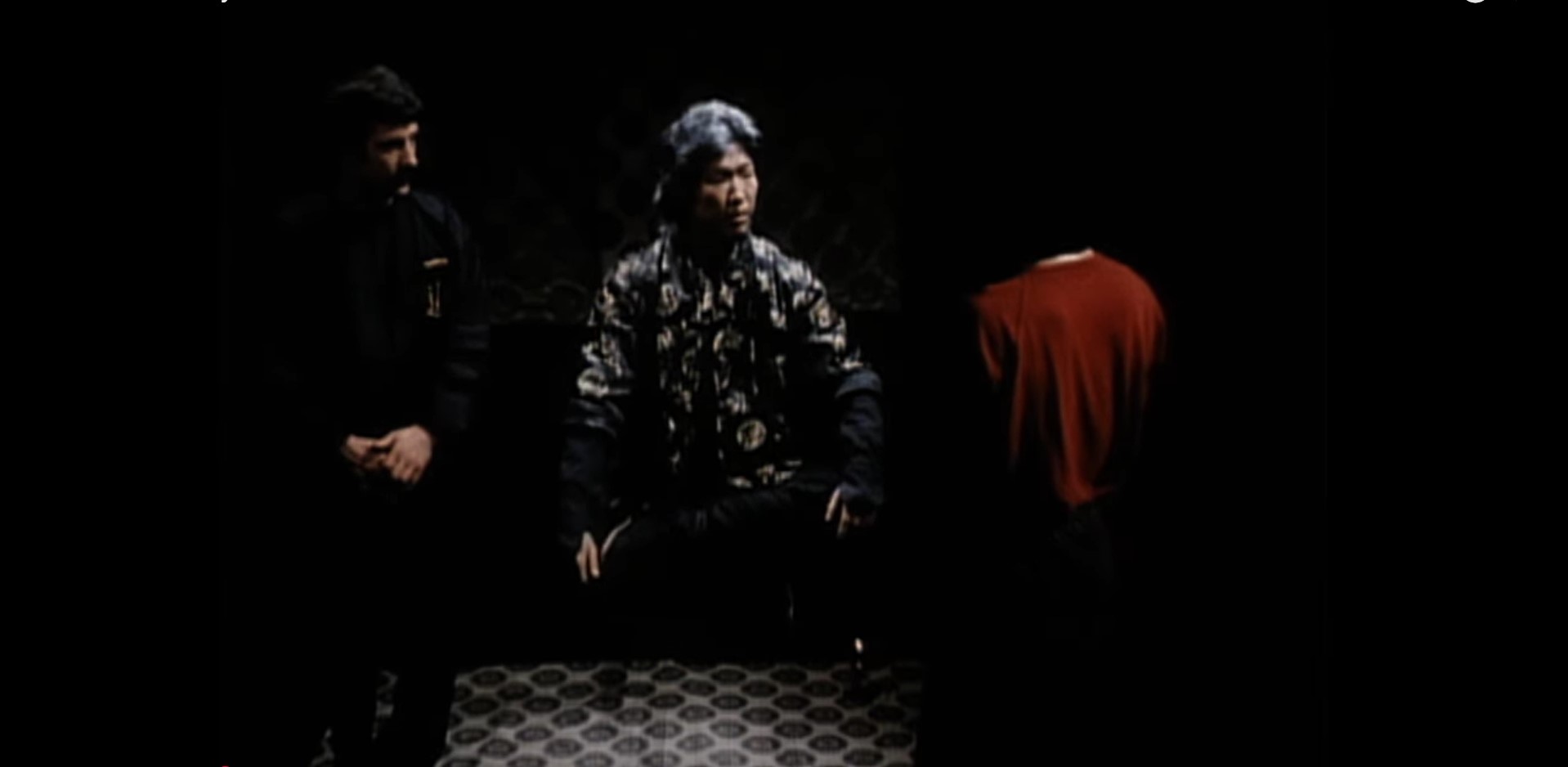
At the center of “Furious” are two Korean-American brothers, Simon and Phillip Rhee, experts in Karate and dojo sensei who, like Everitt and Sartori, were looking break into the business.  The California-born Rhee brothers play the protagonist and antagonist roles with Simon playing the namesake hero thrust into doing evil’s biding while avenging his sister’s death and Phillip donning Master Chen’s white hair and manically, ruthless plot to exploit not only Simon to obtain astral plane summoning necklace pieces but also his henchmen who carry the pieces that must hold the essence of death.  Virtuosos in karate, the Rhee brothers show and pull off incredible difficult moves done practically, especially in the early 1980s without the help of high-flying wires and only a little help with some camera angle movie magic.  The sparring is fast and realistic without being pull-punching obviousness.  All of the sound was done in post, so the Rhee’s real voices are not used to either replicate the martial arts jagged voice synchronicity or sound design was not in the budget.  Likely, a little of both.  The lower-level bosses are a medley bunch and have a range of talents from a staff wielding wilderness man (Bob Folkard), to a tiger style soul fighter (Howard Jackson, “The Delta Force”), to a crazed wizard (Mika Elkan) with flaming projectiles Simon has deal with, one-on-one, in order to reach the pyramidal top, Master Chen.  “Furious” is purely an action film, casting no love interest for Simon resulting in no emotional or romantical arch.  The former is emphasized more intently by Simon’s lack of expressiveness for revenge; there’s a sliver of poignant energy when Simon has visions of his dead friends’ severed heads served to him on a food platter that could warrant retribution attributions.  Jon Dane, John Potter, and Joyce Tilley who are quicky established as character friends to Simon and are equally as quickly dispatched to place Simon in a world of loneliness against an aliens and evil karate master alliance for astral plane domination.
From the depths of Tubi comes a curation for the ages release of “Furious” for the first time ever having a proper package that’s not related to pornography, as was the first and only VHS issuance by VCII, a well-known adult film distributor at the time who released “Debbie Does Dallas.”  “Furious” is an odd, unpredictable, mashup of throwing darts to see what sticks and in that volatility, anticipation of what’s to come next is considerably high, especially when a shoestring budget production surprisingly opens with incredible helicopter shots tracking a foot chase sequence.  From there, “Furious’ keeps astonishment alive with high-level increments of bizarre alien in human skin behavior, punitive human to animal transformations, talking pigs, astral plane battles, Superman flying, and Devo band mania coupled with extensive and coherent editing to flesh out a feature on the front and back ends.  Granted, the plot’s very puzzling and motives are dubious at best to why Master Chen would task a competent fighter like Simon to track down pieces of a unifying necklace when Chen’s own men possess all of them and could easily have killed them himself for the death essence.  There’s also the alien aspect that goes by the wayside in a lack of explanation or exposition by jumping into assumption just by weird behaviors and flashy, ultra-modern buildings to serve as extraterrestrial evidence.  Even with that ambiguity, seeing Simon Rhee perform a triple-hit kick amongst a slew of other highly impressive stunts and special effects relative to the budget has “Furious” become a cult fan favorite. 

Visual Vengeance curates another title from out of the shadows and into our Blu-ray players with “Furious,” encoded with AVC, presented in a high-definition 1080p of the original fullscreen aspect ratio 1.33:1, on a BD50.  Sourced from the original tape elements, which I’m assuming was the original VHS release a few years later as the film was shot on an Arriflex camera that used film stock, the Blu-ray contains a new, director-approved SD master print.  Cleaned up to get some color saturation into the anemic picture, the image doesn’t look as washed as the monochromic qualities of VHS and this is a vast improvement in picture quality as well with some better delineation around objects.  There’s quite a bit of aliasing and ghosting that leaves object trails and rough edging but not enough to warrant visual concern for texture properties, such as the pig stubble or the decapitated heads on a pater that show coarseness where it matters.  Print damage, such as virtual scratches and some rough editing room splices and re-tapings, are present but not profound.  All of this is covered in the technical forewarning, regularly at the beginning of ever Visual Vengeance film so the expectation is set.  The English language LPCM stereo is all postproduction additions with ADR and foley artistry.  The first instances of dialogue don’t come up in the mix until the 13-minute mark, leaving much of the opening left to Foley work to build kinetic and atmospheric sound.  With any early postproduction work, three will always be space in between the synchrony and that can be said here but on slightly jagged edge which says something positive about Everitt and Sartori’s handling of the audio track.  Optional English subtitles are available.  Obscurity doesn’t mean less supplement goodies either and Visual Vengeance has proved that over time again and again with their amazing stockpile of exclusive and archived special features.  New interviews with directors Tom Sartori, High Kicking in Hollywood, and Tim Everitt, The Kung Fu Kid begin the exclusive content with length editing discussions from the directors about their time before, during, and after “Furious.”  Filmmaker and podcaster Justin Decloux provides a slew of material, including a feature length commentary, cohosted with Peter Kuplowsky of Toronto International Film Festival.  Decloux does a pair of video essays – North American No-Budget Martial Arts Cinema Primer and Rhee Brothers career overview. The buck doesn’t stop there with an archive commentary with co-director Tim Everitt, an archive podcast with Everitt circa 2013, Super 8 behind-the-scenes footage of “Furious,” Scorched Earth Policy 1987 EP with full six tracks, Cinema Face live in concert, Tom Sartori’s 80’s music video reel and Super 8 short films, original film trailers, and Visual Vengeance trailers. That’s not all! New slipcover artwork brings together an illustrated compilation of what to expect with the same art on the inside Amaray case. The cover art is reversible, depicting the original VHS cover art that’s not as charismatic, or good. Insert section houses a folded mini-poster reproduction of the original one sheet, a double-sided acknowledgement advert with alternate art, Visual Vengeance’s retro VHS sticker sheet, and a ninja star keychain accessory! The 17th Visual Vengeance title comes region free, has a runtime of 73 minutes, and is unrated.

Last Rites: Anomalously action-packed with a fantasy element, “Furious” is a one-of-a-kind, indie martial arts production that has everything, even the kitchen sink, thrown at with a journeyman tale of alien butt-kicking, astral plane dogfighting, and anthropomorphic black arts.

Get “Furious” Now on Blu-ray from Amazon.com!

Gaudy, Superfluous EVIL Sits in Your Living Room and Destroys Your Family. “The Coffee Table” reviewed! (Cinephobia Releasing / DVD)

“The Coffee Table” Would Look Good in Your Living Room! Purchase It Here Today!

Jesús and Maria are new parents with a beautiful baby boy.  Maria has been eager for a baby and sent through several medical treatment for the bundle of joy while Jesús continuous rides the fence about being a father.  When the baby arrives, the boy becomes a source of usually one-sided bickering and jabbing contention as Maria feels Jesús could be a better father to their newborn son.  When they move into a new apartment, they find themselves in a furniture store looking at a gaudy glass coffee table Maria can’t stand the sight of, but Jesús very much can’t live without.  While Maria steps out to shop for an upcoming luncheon with Jesús’s brother and young girlfriend, Jesús briefly stops assembling the table to take care of the baby until a tragic accident happens that reshapes everything and everyone Jesús cares about, and impels him to bottle in the tragedy, hiding it in extreme guilt from his wife and guests, as he struggles to find the right moment to relieve his soul. 

Marriage is hard.  Parenting is even harder.  Choosing a coffee table should be a delicious piece of decision-making cake but for director Caye Casas choosing living room décor can be deadly.  The “Killing God” director follow up his debut feature with the 2022 released domestic disturbing comedy-horror “La Mesita Del Comedor,” aka “The Coffee Table.”   Casas cowrites the film with Cristina Borobla, her first screenwriting credit but not her first collaborative effort working with the director as the vocational Art Director has been involved in Cases’s other works, such as “Killing God,” his 2017 short “RIP,” and amongst others.  Maria José Serra (“Amigo Invisible”) and Norbert Llaràs (“Killing God,” “The Perfect Witness”) put their producer café mugs onto “The Coffee Table” with the hailing from Spain production companies La Charito Films, Alhena Production, and Apocalipsis Producciones. 

Much of “The Coffee Table” is set inside the tiny, newly moved into apartment of Jesús and Maria who even though rag on each other’s opinions and one of them don’t necessarily favor being a parent, deep down the unlikely pair do have a strong love attraction that swims upstream against the repelling.  In the roles of Jesús and Maria are David Pareja, whose worked with Casas inner circle before with “Killing God,” and Estefanía de los Santos with an unforgettable, characteristic raspy voice that magnifies the role tenfold.  Both Pareja and de los Santos are comedically bred with a long list of hilarious Spanish features to prep them to see the gut-punching, black humor of what’s to come in “The Coffee Table.”  Frankly, there’s nothing negatively to report in Pareja and de los Santo’s flawless, funny, and unfortunate family dysfunctional performances surrounding their love-hate relationship and the knot of culpability and the bliss ignorance contrast that’s delineated between them.  Floating into the mix of repressiveness are side stories that become assimilated by the untold tragedy, such as the neighbor’s daughter (Gala Flores) with an intense belief Jesús loves her, the smarmy coffee table salesman (Eduardo Antuña, “Killing God”) who also have an interest in Jesús, and Jesús’s brother Carlos (Josep Maria Riera, “RIP”) and his barely 18-year-old girlfriend (Claudia Riera, “The Communion Girl”) being ribbed for their own odd couple relationship and giving a surprise announcement of their own. 

Though a comedy and a horror, I didn’t find “The Coffee Table” all that funny but more so quirky, outrageously bold, and shockingly hard-hitting instead.  Horror, definitely without a doubt, comes through but not in a typical to be scared or to exact fear way with any of the conventional themes to support its harrowing weight.  The horror that uncoils is every parent’s worst scenario, the underlying nightmare that grabs the soul and squeezes until every drop of anxiety is wrung out of our wet bag of bones and meat.  The incident itself is gnarly and unspeakable but the post-trauma slithers in a nasty case of guilty conscious, shame, and fear that can freeze someone to the spot to where they clam up, sweat profusely, stomach twisted, and have self-harming thoughts from the conjoined cause and effect of having to tell your partner the most terrible of news and see their composure, their affection flush away in a blink of an eye.  Casas able to string along the aftermath to extract a feature length film without it ever approaching critically forced or farfetched, adding on and expanding upon the luncheon or Jesús’s wiggling through painfully with excuses on why Maria should leave the baby sleeping peacefully in their room.  The passively aggressive sparring atmosphere quickly turns into colossal tension and hopelessness through the mechanism of dark black comedy.  As a parent myself, “The Coffee Table” evokes great sadness and mental strife of the situational possibility, the greatest horror of all time.    

The cruel film by Caye Casas arrives onto a Cinephobia Releasing DVD. The MPEG2 encoded, upscaled 720p, DVD5 comes in at being the eleventh release for the Philadelphia based, eclectic independent film distributor. And, boy, is it a doozy. For “The Coffee Table’s” image, not the two, artificially gilded naked women holding an oval shape, unbreakable pane of glass, the feature’s picture quality renders about as good as any single layer capacity unit can decode in a digital age with modest details, muted hues, hard lit, and a good amount of spectrum banding in the darker areas. Not to fret, however, as there’s plenty to discern with a film that isn’t reliant on details but more reliant on hitting you wear it hurts, heavyheartedly. The Spanish language Dolby Digital 5.1 uses a lossy compression that, again, suitable to the movie’s means of conveying a contortioned, ruthless story defining the very meaning of a no way-out, no-win situation. Dialogue really is key for this type of narrative to work and progress and does come through fine without an ounce of earshot hinderance. Also, not that type of film that provides a breadth of range or depth as much of the layers express in a very near arrangement, as expected in a concentrated setting of Jesús and Maria’s apartment home. English subtitles are optionally available, and they synch up and pace well with only one noticeable grammatical error. Not much in the way of special features as only Cinephobia Releasing trailers fill that spot and there is not mid or end credits scene. The 90-minute film’s DVD release comes not rated and has region 1 playback. Other regions are untested, and the back cover does not state the official region playback capacity.

Last Rites: Caye Casas and Cinephobia Releasing has the cajónes to not table this wonderfully bleak black comedy-horror from reaching audiences far and wide. “The Coffee Table” is a painful reminder of just how fragile life can be, much like a cheapy made piece of tawdry decor from China.

“The Coffee Table” Would Look Good in Your Living Room! Purchase It Here Today!

Killed by Your Monstrous, EVIL Twin Set on Repeat. “Island Escape” reviewed! (Dread / Blu-ray)

“Island Escape” Available Here at Amazon.com

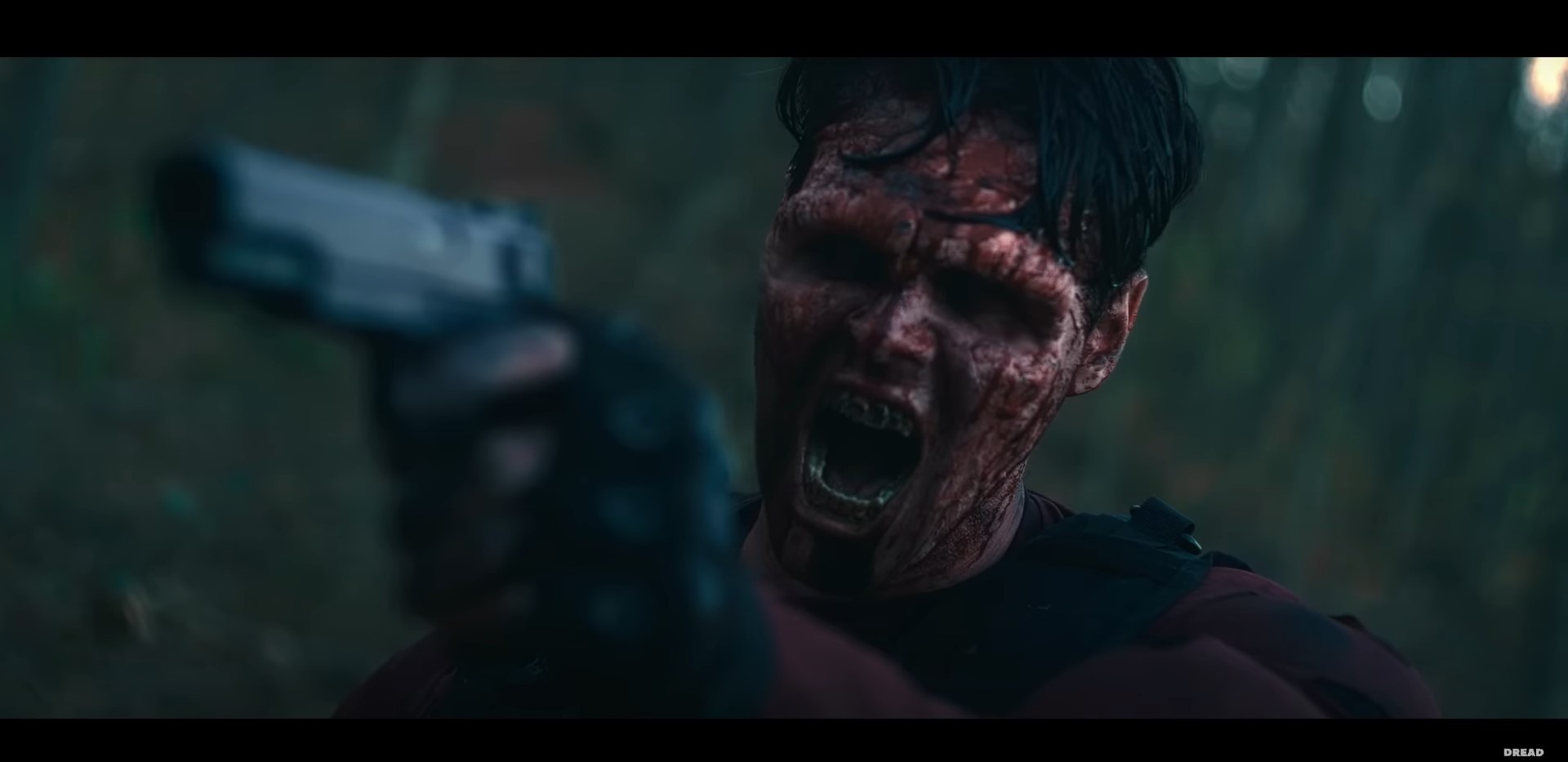
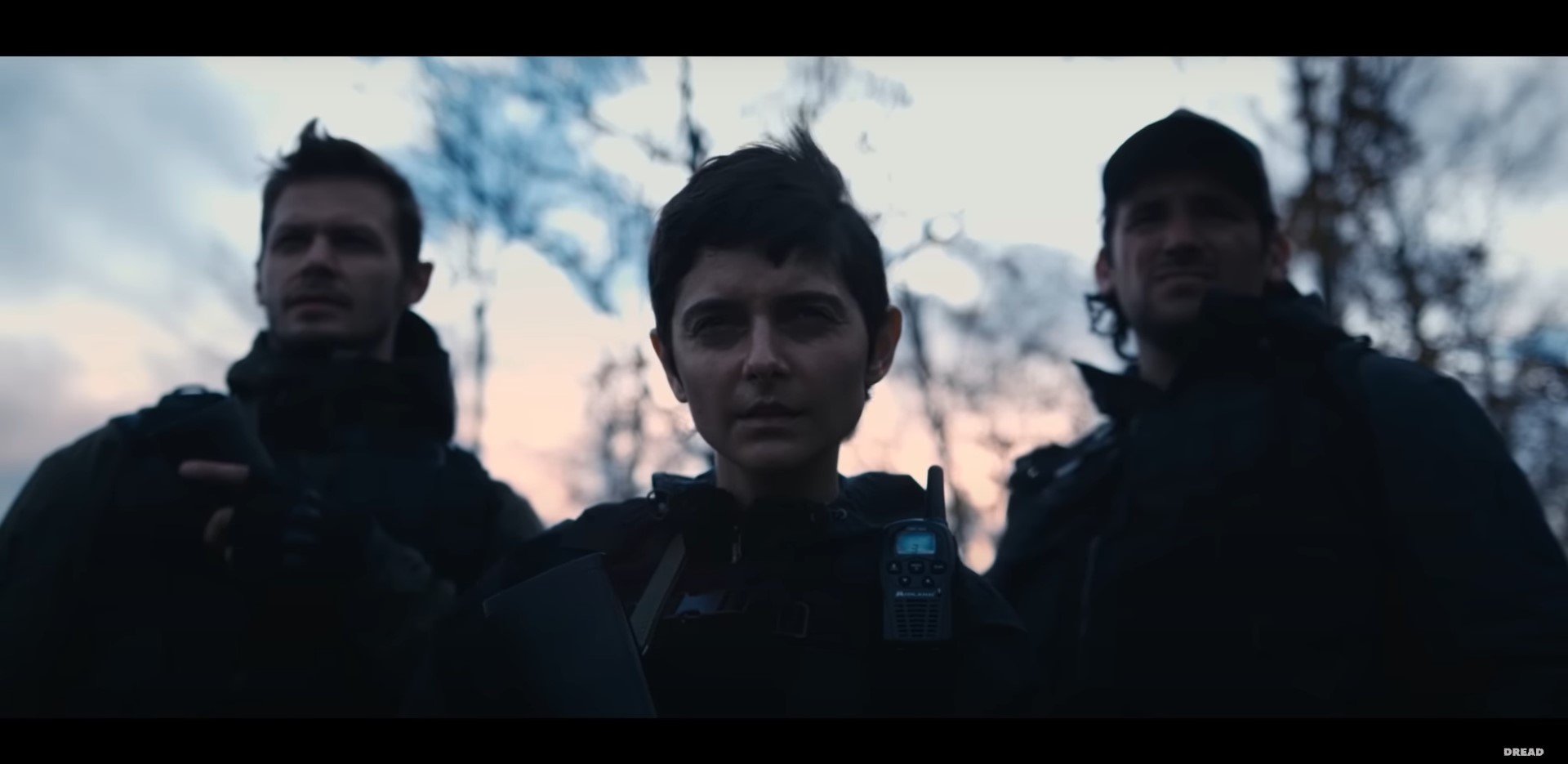
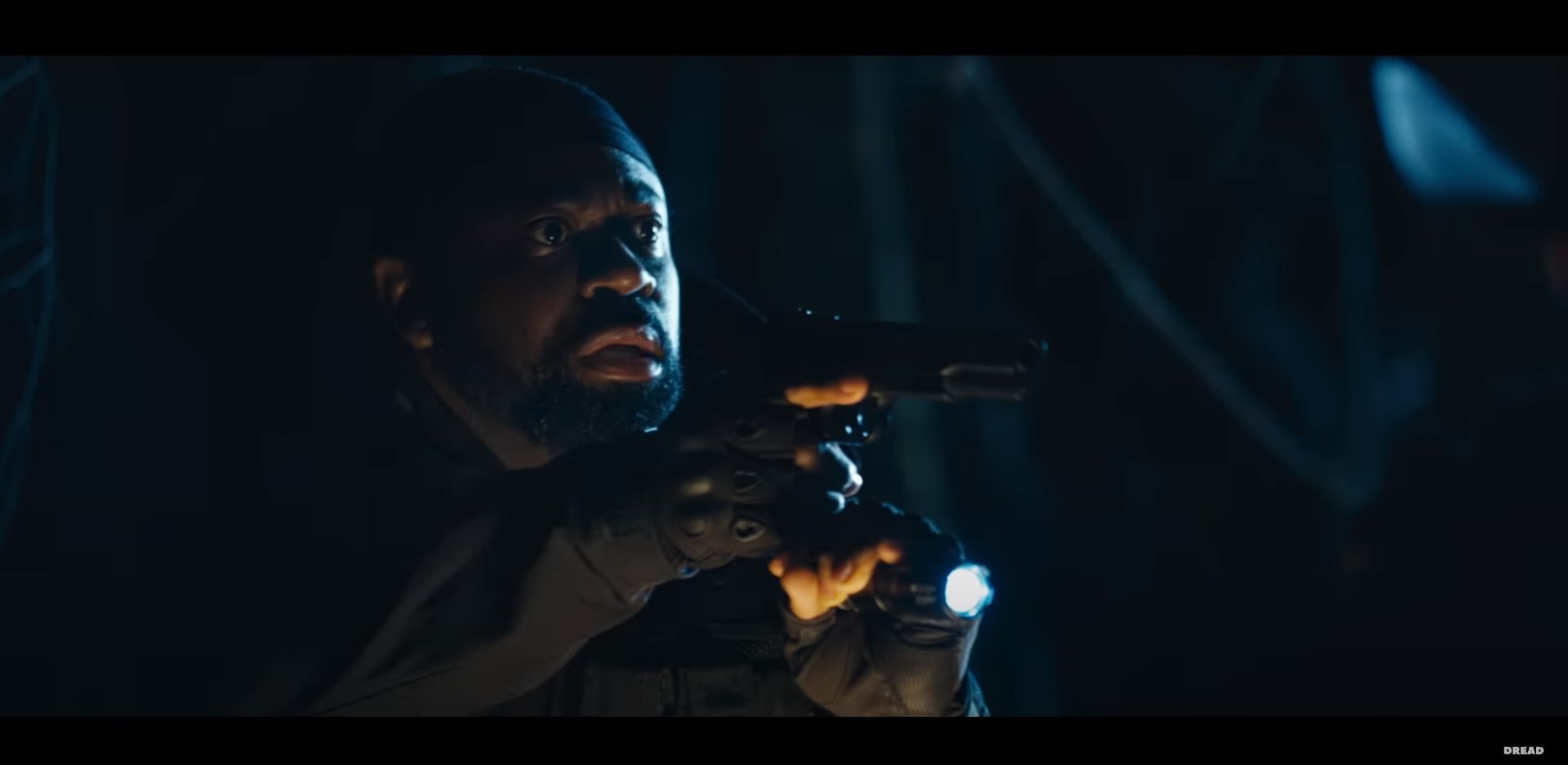
Chase, a washed up mercenary with touch of amnesia regarding his past, is hired to round out a six-person team for a rescue mission on the Isle of Grand Manan where a top secret TSL research facility has gone dark and a high-level CEO’s daughter has gone missing.  Ordered to retrieve the daughter inside a 48-hour window, the team arrives on the seemingly deserted island to find multiple dead scientists having been torn to shreds.  The team soon learns they’re not alone when attacked by bigger, aggressive, monstrous versions of themselves.  Unable to believe their eyes, the one scientist left on the island has determined they’ve been trapped inside an encircling wormhole that resets the island and it’s inhabitants every 3 days, turning those left alive after the third day into these humongous, blood-hungry creatures.  With the mission quickly dissolution, it’s quickly being pieced together that the rescuing mercenaries are the ones who actually need rescuing and their only way to escape would nearly destroy them all.

I’ve said this once before and I’ll say it again.  Weaving wormholes, time loops, time travel, and the like into a narrative is a tricky, tricky business.  Bending time and space can calamitously collapse a story so bad that every internet warrior and science fiction nerd, including myself, will pick apart and ridicule the film until the end of time, but if the portent collapse can be averted and little-to-no complaints with the time travel aspect of the story can go unscathed for a better part of the runtime, then the power of the multi-dimensional space time continuum can be magical and enthralling.  Writer-director Bruce Wemple (“Altered Hours,” “My Best Friend’s Dead”) wraps his hand around a wormhole-driven action-horror “Island Escape” to grasp ahold of the unruly concept of time.   The Traverse Terror production, a division of producers Cole Payne and Mason Dwinell’s Traverse Media in association with Wemple’s 377 Films, and presented and produced by Patrick Ewald’s Dread Central, “Island Escape” rounds out the producer set with Vincent Conroy.

Bruce Wemple carries with him a cast entourage, a staple of actors who have worked years with the filmmaker through a number of project.  “Island Escape” is no different as Wemple signs aboard his trusted troupe to tackle the terror on TLS island with a rescue gone wormhole wrong.  The story has a trifold focus Chase (James Liddell, “Hell House LLC Origins:  The Carmichael Manor”) as the washed up gun for hire with memory loss, Addison (Ariella Mastroianni, “My Best Friend’s Dead”) as team lead and recruit of the Isle of Gran Manan mission, and Russ (Grant Schumacher, “My Best Friend’s Dead”) as the dithery team member not in Chase’s good graces based of fragmented memories of a failed mission.  Between the three characters there lies a fleeting tautness that’s not tremendous carried out as expected from initial introductions.  Instances such as Chase expressing his distrust for Russ never has the tension reach open air in any time they’re together or in the case of Addison as a melancholic memory for Chase that eventually evolves into mid-misison romance that’s more spontaneous than building momentum to in the first and second act.  The undercooked characters fail to establish boundaries, positions, and progressing or regressing dynamics and arcs.  There’s more headway with supporting staff in Tag, a self-penancing father doing dirty, dangerous work to support his young daughter and this consistently shows throughout his screen span, hitting upon the nerve of a father trying his best for the sake of his child.  The cast rounds out with a handful more of mercenaries and scientists to become minced meat by their devilish doppelgangers with Chris Cimperman (“First Contact”), Michael L. Parker (“First Contact”), Andrew Gombas (“The Tomorrow Job”), William Champion (“The Tomorrow Job”), and the feature length debut of Renee Gagner filling those roles. 

Wormholes.  The suspended openings in space let the Dominion race invade Star Fleet in the Alpha Quadrant of “Deep Space Nine,” dropped a fiery plane engine on top of the titular character “Donnie Darko,” and brought back something alien and terribly evil in the titular ship “Event Horizon.”  For Bruce Wemple and his “Island Escape,” wormholes have become more earthbound thanks to a shady research corporation delving into dangerous methods and unscrupulous science practices for the go-to cover up slogan of a better world tomorrow.  While Wemple spins an intriguing yarn needled quick to be full of cankerous clones coming from all corners of the island to attack their uncorrupted selves while trying to survive and flee, the filmmaker skip stitches during his knitting of a tight narrative, fashioning an uneven story that can’t quite get the pattern right for in some of the more restlessly difficult areas of trouble island.  Fleshing out Chase’s blank slate produces no reason to light, Russ’s lack of motivation in divulging life-and-death information, the deep dive into Island experiments fall to the wayside, the CEO’s daughter seemingly dead to all of a sudden be alive, and I could go on with all the loose ends that kneecap the better parts of story, such as the creature action and the wormhole aspect, but the fact won’t escape that there’s a mishandling of the island’s treacherous overgrowth that’s severely underplayed and the epic scale Wemple tries to impress is torpedoed by omitted small cogs that turn the bigger, weight-bearing gears. 

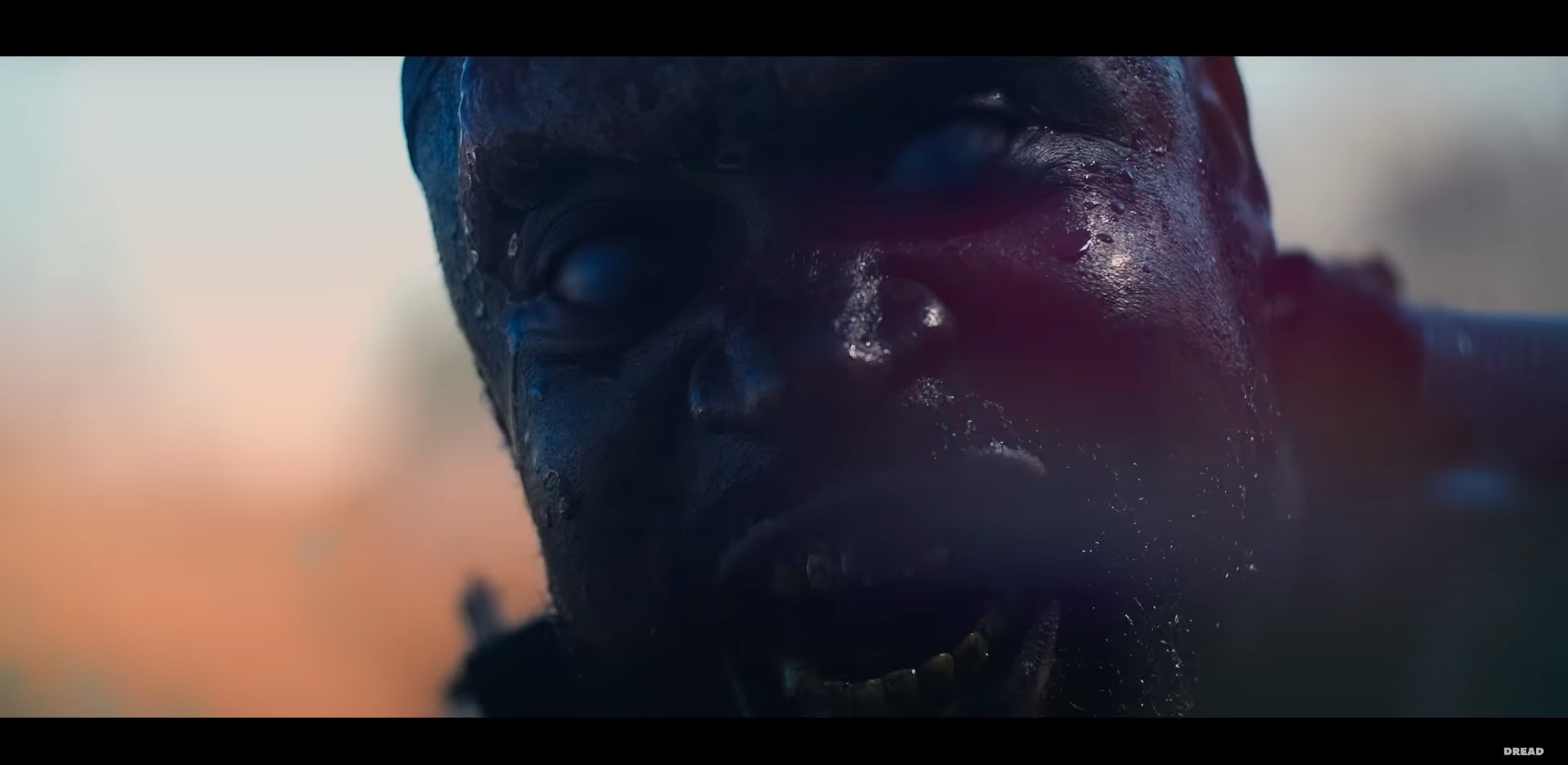
Dread presents Island Escape onto a high-definition Blu-ray distributed by Epic Pictures.  The AVC encoded, 1080pm, BD25, presenting the film in an anamorphic 2.35:1 aspect ratio, is a slurry of personal style and cinematography issues.  Capacity-wise, not a ton of wall-bearing issues that would make the visuals crumble; a few fleeting areas of dark side banding and quick movement aliasing pop up occasionally.  Where most of the issues stem are stylistically with poor VFX compositions that stymie any high-action utile climaxes.  The light pink/fuchsia grading replaces much of the island’s, or island-like setting’s, innate green foliage for a broad one-tone that has an adverse effect of unnaturally darkening the characters.  Two English audio options are available to select:  a Dolby Digital 5.1 and a Dolby Stereo 2.0.  Both lossy formats offer what this particular films needs, a fast and loose sufficient mix that gets the job done without causing too many waves.  Most of the dialogue has a ADR pretense that I would take a wild guess and say is more a sound design issue of not creating space in the depth field.  Each character sound to be on the same audio plane that forces a full-on push of dialogue right to the front of the audio layering that makes ever channel in the 5.1 the same.  Ambience Foley is harshly isolated from other tracks so if a character is walking through the forest, you hear nothing else but the lonely crunching the tree litter that doesn’t mesh with onscreen movements.  With most digital recording, no interference and damage flaws are present.  Optional English SDH and Spanish subtitles are available.  Special features include a roundtable commentary with writer-director Bruce Wemple at the helm with most of the cast speaking through Zoom or some kind of video chat program.  In addition, the commentary is greatly colorful with more jokes and jabs at one another and at themselves that reflect how much of a good time they have working with each other on this film and previous Wemple credits.  Also included in the special features are a few deleted scenes, the making of “Island Escape,” feature trailer, and other Dread presented film trailers.  Like most Epic Releasing products, a standard Blu-ray Amaray case displays an intriguing cover art for Dread’s 47th at-home title with a wormhole opening to an skull-faced Island and a helicopter and four soldiers walking toward it.  Disc art renders the same image and there’s no insert included opposite side of the case.  With a region free playback, “Island Escape” has a runtime of 86-minutes and is not rated. 

Last Rites:  The haphazardly executed science-fictional survival film “Island Escape” has good plot bones underneath the shambled edifice of an ambitious façade with only decent monster mayhem and creature effects dwelling inside. 

“Island Escape” Available Here at Amazon.com

Under an Urban Club Scene, EVIL Horrors Connect Us All. “Flesh City” reviewed! (Wild Eye Releasing / DVD)

“Flesh City” Yearns for Connection on DVD!

An insomnious city pulsates with an industrial soundtrack and claws cantankerously at denizens without pity. Under one of the raging night club scenes, enamored raver Vyren follows the beautifully alluring Loquette, an inspiring electronic DJ, down into the club’s labyrinth of old stone corridors. Their coquettish play becomes the monitored study of Professor Yagov, a glowingly cadent and mad experimenter of anthropology. The two lovers are drugged and abducted by the Yogav with the intent of genetic mutating the couple’s anatomy that renders Vyren’s hand displaced with a bulbous nub and Loquette impregnated with an ingestible sludge. What becomes of their affliction insidiously infects the entire city population with a flesh tentacle curling through the city’s underground sewer and drainpipe infrastructure in what amasses to a single connection of brain-invading techno-horror.

“Flesh City” annexes our individuality for the sake of connective solidarity conveyed in an electronically infused and alternatively aesthetic experimental film from Germany’s own jack of all independent media and artistic trades, Thorsten Fleisch. The 2019 released feature is Fleisch’s first and only written-and-directed full-length film depicting his feverish analog avant-garde, reflecting the filmmaker’s menagerie of orthodox-shredding short films, video art, and written and produced music. Overseeing “Flesh City’s” cinematography and special effects, Fleisch has complete and utter autonomy of the visuals to obtain a harshly discordant image melody edited together, which Fleisch also manages, into an agglomerate of acetic aesthetics to shock and stress the audio and visual cortexes. Once under the working titles of “Berlin Blood” and “Zyntrax: Symphony of Flesh,” “Flesh City” is entirely shot in Berlin, Germany, produced by the director and United Kingdom producers Arthur Patching and Christian Serritiello, and is a feature of Fleischfilm and Tropical Grey Features.

One of the film’s coproducers and musical artists, Christian Serritiello (“Streets of East L.A.”), is at the front lines of “Flesh City’s” afterthought cast of characters with Vryen as essentially the naïve and lured-in Alice chasing the white rabbit Loquette, played by Eva Ferox (“Love Songs for Scumbags”), down the twisted rabbit hole of a cellar dwelling doctor.  I say afterthought because the characters take a backseat to Fleisch’s contortion of reality and the analogical subtext generated by Fleisch’s love for analog anomalies, using them as supporting pawns to carry out his visceral vision of vitality.  Music videos, psychedelic montages, and grotesques images of beetles absorb screen time like formless or arthropodal principals.  Even Professor Yagov (Arthur Patching”) is obscured by a rainbow shimmer, never visually seeing his face as an individual seemingly between two dimensions.  “Flesh City” is a very multiverse, multidimensional nightmare-scape of unconventional color that has culminated from Fleisch’s imaginative idiosyncrasies over the years and that’s what being intently showcased here with more evident display of a less-character driven, shapeless story within the technical aspects of the DVD release where the soundtrack drowns the dialogue into a muffled deaf tone, like any good loud music venue would subdue.  “Flesh City’s” urbanites fill out with Marilena Netzker (“Love Songs for Scumbags”), Shaun Lawton (“Possession”), Denis Lyons (“German Angst”), Anthony Straeger (“Call of the Hunter”), Maria Hengge (“Love Songs for Scumbags”), Helena Prince (“12 Theses”), and Thorsten Fleisch in a Max Headroom meets Total Request Live-like host role of Quantum 1337.

“Flesh City” will not be everyone’s approx. 90 minutes of how to spend their time choice.  The experimental film will only speak to a few select souls with a filmic affinity for Lynchian peculiarities, Terry Gilliam’s bold fantasy, David Cronenberg’s body horror, and a hellish capriccio along with an eclectic music palate for noise rock, henpecking alternative, and strident industrial bass.  I wouldn’t go as far as saying Fleisch’s film is akin to nails on a chalkboard but can be boisterously unpleasant to the ears at times while, in the same breadth, be stimulating visually, even if that stimulation may induce a photosensitive epileptic seizure.  Fleisch’s non-traditional narrative design splices in music videos from various underground and indie artists with him providing introduction as an illusionary host in a virtual world, breaking up the Vyren and Loquette’s post-punk-adelic core quandary with a teetering melodic cacophony of feedback rock electronic, a hostile rhythm, and bizarre lyrics and visuals.  Fleisch pushes the taboo envelope with not only liberal nudity, to which Germans are very at ease with their body image, but also within the unconfined stylistic creativity of multi-formats that razzle-dazzles like the innards of radiant plasma globe; the Tesla coil electrons that’s drawn to your conductive flesh won’t hurt you but provide a feeling of captivated wonder.  Yet, don’t expect to be thrilled in a traditional predator-and-prey sense as “Flesh City” appeals more to our disconnect from each other and how to reconnect must be through some kind of inclemency. 

Likely to transmit under the radar, “Flesh City’s” biomorphic body horror arrives onto unrated director’s cut DVD home video courtesy of cult and independent distributing label Wild Eye Releasing in association with Tomcat Films.  The DVD5 presents the transfer in a widescreen 2.35:1 aspect ratio with varying levels of image quality due to different types of equipment and methods used to create Fleisch’s tripped out vision that contains, but isn’t limited to, black and white, color, stylistic lighting, analog equipment, digital equipment, stock footage, and so forth.  This mishmash movie makes for divisible degrees of signal quality that can be look crystal clear in one scene and then heavy noise interference the next, but the overall clarity is remains stable without any scenes being rifted because of visual vagueness.  The audio comes in two formats:  a English Dolby Digital 5.1 surround sound and a English Dolby Digital 2.0.  Frankly, the original English dialogue track is feeble under the tremendously potent soundtrack and sound design that makes comprehending Vyren and Loquette subterranean exchanges under the industrial rumble of the score virtually impossible to discern.  Even Quantum 1337’s cyber-stutter chat softly introduces us into his world, essentially leading the blind into a mound of musical mania. Bonus features only include other Wild Eye Releasing trailers with the physical aspects of the DVD come with a misconception cover art that has a terrifying gaunt and fleshy, humanoid creature front and center, but that creature doesn’t exist in the film until maybe at the climax that’s nebulously discernible at best what viewers are supposed to see. Inside the standard DVD snapper, the disc art is pressed with the same front cover image but with no accompanying insert. The region free disc features the unrated film with a runtime of 84 minutes. “Flesh City” is a delicacy of distortion, but the Thorsten Fleisch film is an acquired taste that general audiences won’t have taste for but, then again, general audiences are not Wild Eye Releasing’s target audience, now are they?

“Flesh City” Yearns for Connection on DVD!

Prostitution Might Be the Oldest Profession but Killing People on Camera is the Evilest! “Snuff Tape Massacre” reviewed! (SRS Cinema / DVD)


Pick Up This Nightmare Fuel of “Snuff Tape Massacre” on DVD at Amazon!

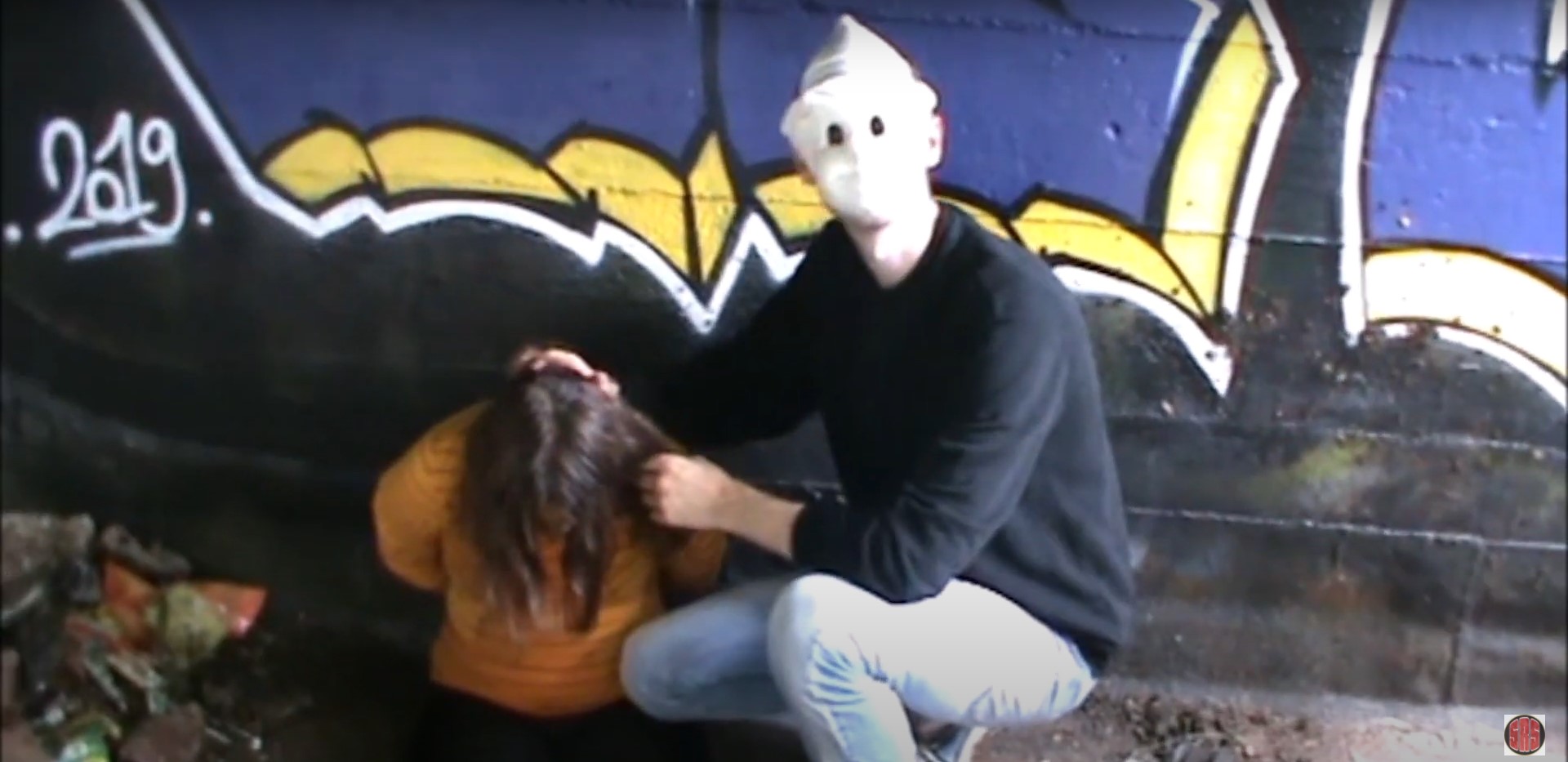
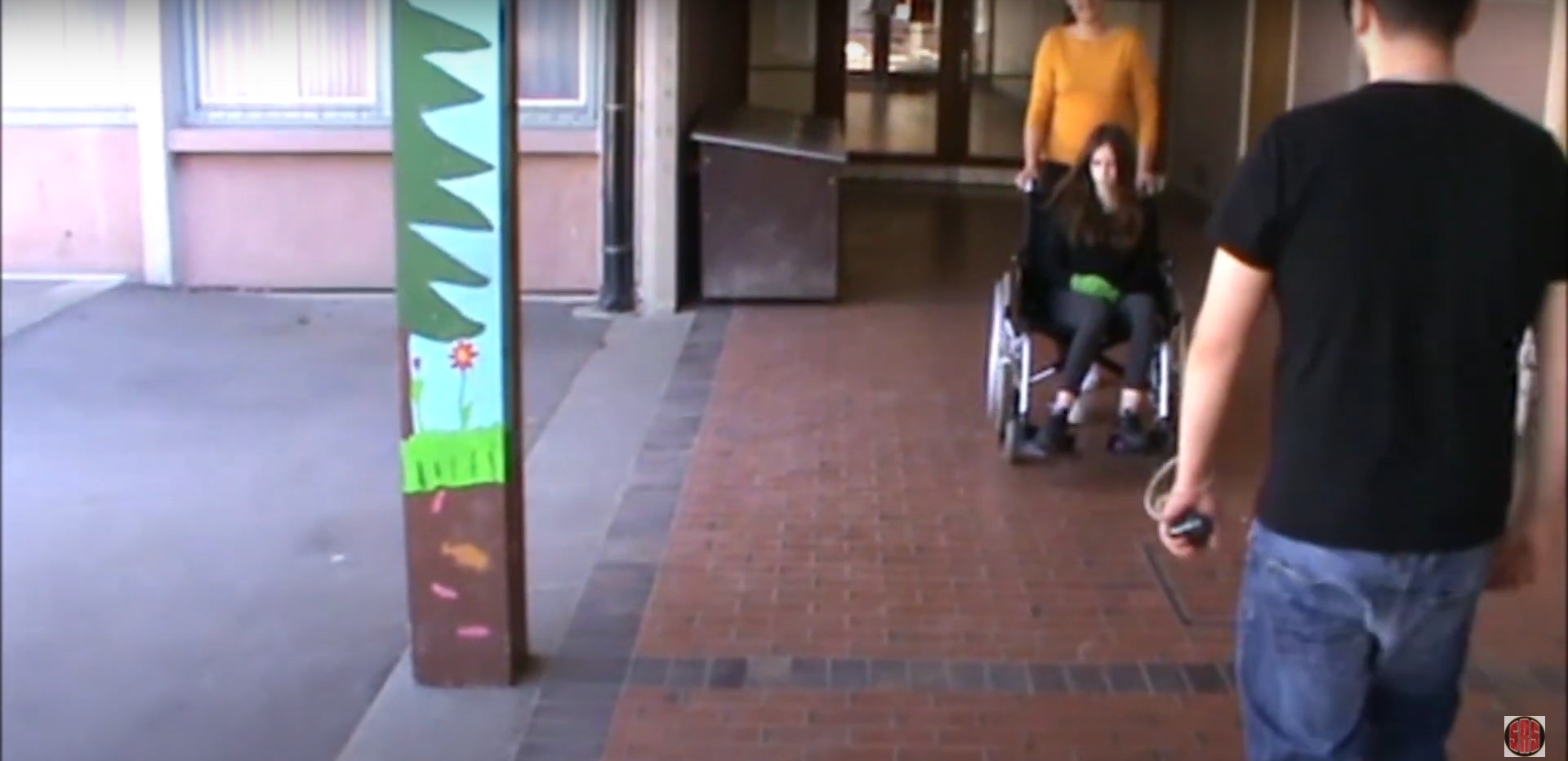
Two killers are employed to do what they do best, to make a snuff tape.  Brokering the deal is Brand, a middleman serving on the behalf of a unknown client and relaying the job’s details to his contracted filmmakers.  The casted stars of their next production is a young pregnant woman who works at the home for the disabled and one of the residents, a 15-year-old deaf-mute girl who can’t utter a single sound due to her extreme incapacitated condition.  Pretending to be making a documentary about the disabled, the two killers were able to gain the women’s trust, easily drug them, and move them to a secluded location where the sadistic torture and affectionless murder show begins.

Straight torture and gore with no cinematic style or undertone depth is not every moviegoers preferred cup of tea.  For this gore hound, I can take it or leave it but would enjoy the darkest recesses of human sadisms and fantasies more if something was more germane to the reason for gore, but as far as Juval Marlon’s “Snuff Tape Massacre” is concerned, what you receive is a single perspective propelled by unsympathetic maliciousness, nihilism, and a taste for that metallic sweetness of blood.  The Germans are fairly well known for their insensitive, uncouth, and extreme films from the likes of directors Olaf Ittanbach and Jörg Buttgereit.  Does Juval Marlon have the blood and guts to be on the same level?  His written and directed 60-minute independent feature, also known as “Stermgewehr,” (“rifle” in German), aims to be a gruesome shocker under Marlon’s own befitting Beheading Films banner.

Obviously, none of the following names will be a part of a familiar, household cast fixture.  These types of gorging gore films usually have a small and conversant with each other cast of at approximately a hand full of willing actors and actresses to possibly mar, or better yet castrate, their acting aspirations with needless disturbing content that’s ironically overstated as well as understated.  “Snuff Tape Massacre” has a total of five members in the cast and out of the five members, only one uses a first and last name. The others go essentially dark with their real or full names anonymous to the world because who would ever in their right mind want to be associated with a movie about a snuff film? Thomas Goersch is the only full name credited and the only actor who a respectable credit list. However, Goersch has had many publicly and critically panned low-rent features with “The Curse of the White Woman,” “Bloody Shadows,” and “Poltergeister Experiment” being just some of his most recent samples that fallen into the depths of unsalvageable dumpster fires (and this has perked my darkly morbid and unusual curiosity in bad, bad movies!). As businessman Brand, Goersch never gets his hands dirty, leaving the role and his name unscathed and to leave all death-dealings to his hired hands in a pair of automaton teenage terminators including the head Snuff Filmer (Navarro) and his unnamed companion on the trail of blood. At least Goersch has a bit of Bill Zebub underground star power in Germany, Navarro exists only in this film as the one of the two mostly shaded and masked killers who kidnap actresses Tanja and Maria V. to exploit. The ruse surrounding the kidnapping leaves what ever little effort there was to be, to make the ordeal more engaging and exciting, was left back on Brand’s phone call as the Snuff Filmer’s plan to be pseudo-interviewers for a documentary goes off without a hitch. Maria V. does find as an interviewee of a second-year social worker enthusiastic about helping but her fellow co-kidnappee in binds Tanja literally serves as a second body to humiliate, torture, and execute by two desensitized individuals that isn’t a far stretch from their rigid performances as high and tight killers.

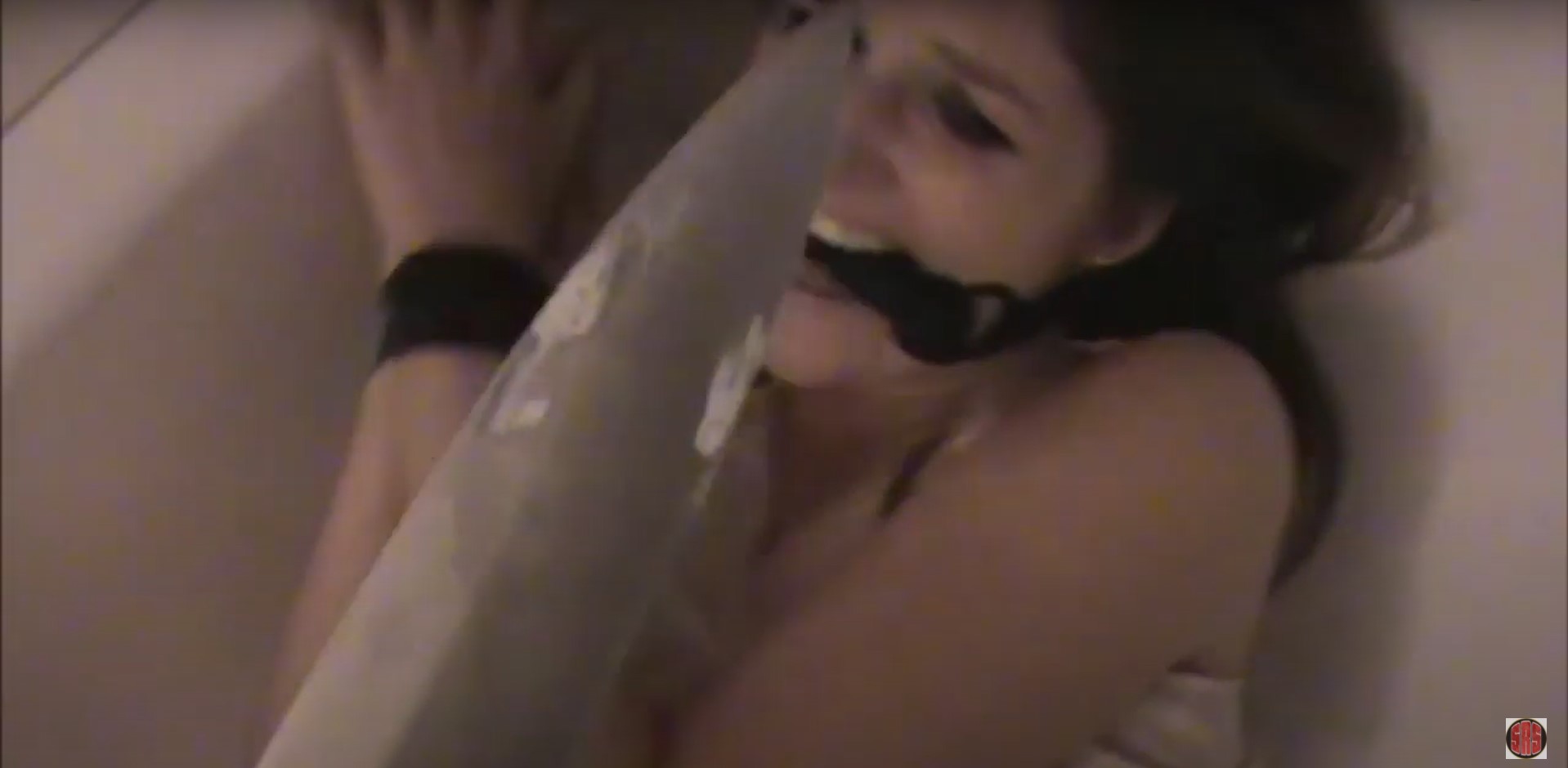
The crux of the problem with “Snuff Tape Massacre” is that the movie is just too long. Right now, you’re sitting there, reading this, cross-eyed by confusion, and thinking to yourself, “Steven, didn’t you say this was a 60-minute movie?” The answer is, yes, I did say that, but Marlon’s previous work, of similar extreme fetishisms, have been short films and “Snuff Tape Massacre” feels very much like a short film that’s been mishappened by a rack, stretched beyond its limits to where the possibility of being recognized for what it is, an orthodox gore and shocker, no longer factors into the equation. Scenes run too long and are over kneaded to the point of losing its impactful rise. For instance, when the young 15-year-old mute-deaf girl is being threatened by the Snuff Filmer’s automatic rifle barrel as he stuffs it into her mouth in an unspoken, simulated act of fellatio, the scene drags on for minutes upon minutes. As aforementioned, “Stermgewehr” in Germain is rifle and so these scenes should have some significance importance but overall feels juvenile and executed with poor time management. Marlon obviously doesn’t have two Nickels to rub together to fund this film, using old compact, pocket-sized digital cameras to record the varying levels of video and audio quality, but the one thing us gore hunds can appreciate is the gore. We can certainly tell a fake leg, arm, and even penis when one comes on screen and “Snuff Tape Massacre” is not exempt from using more-so than obvious inner details with no arterial or vascular details whenever a leg or arm is chopped (or even sawed) off with a dull hatchet, but what can be admired is the seamless look of the leg and the arm to the actresses. We’re not talking about a mannequin’s appendages or a plastique digits here when the dragged-on interview has finally wrapped, and the real raw material begins with decent prosthetics and blood pumping mechanisms that squirt blood longer and for the duration. The most effective effect is dick-hole jab stuck on repeat until the snuffer hits what we all presume is the back off the prosthetic piece but in the back of our mind, we’re really thinking bone. It’s a crotch-grabbing, leg-crossing, dick mangling moment no guy will ever forget.

SRS Cinema is well-known for bringing schlocky shockers to the table under the guise of really fantastic and detailed artwork for the banner’s DVD covers. “Snuff Tape Massacre” is no exception here as Juval Marlon’s film is juicy enough to make the company’s Nightmare Fuel line with an unrated and extreme release presented in widescreen 1.85:1 (16:9) aspect ratio in a lower resolution of 720 pixels (due to the compact digital cameras). Though unable to tell what cameras are being utilized, there are two different cameras are being used based on the vast difference in picture compressions with one looking stronger and more detailed than the other. The onboard microphone for the English language dual channel stereo mix is a lossy MPEG audio format that really takes a hit with the inconsistent background noise and electronic interference with a straight hum throughout when Marlon’s industrial sampler score is not substituted for sole audio dominance. Like many other SRS titles, the only special features included are SRS trailers for their catalogue unless you count the aforesaid artwork design of an illustrated half-naked bathtub victim with eyes of kitchen knife-stricken terror as part of the special features package – see below. “Snuff Take Massacre” is considerably low for a repeat viewing, but there are enough scenes that will undoubtedly make you recoil and squirm and that, my gory compadres, is worth the sole price of admission.

Pick Up This Nightmare Fuel of “Snuff Tape Massacre” on DVD at Amazon!